

New Order are an English electro-pop band that made five albums and twenty singles between 1981 and 1990 on Factory Records. They formed in late 1980 when three/fourths of Joy Division — guitarist Bernard Sumner, bassist Peter Hook, and drummer Stephen Morris — carried on after the death of singer Ian Curtis. With added keyboardist/guitarist Gillian Gilbert, Sumner became their singer.
New Order debuted with “Ceremony,” a composition from the final days of Joy Division, whose sound looms over the new band’s first album, Movement. They embraced dance music with their 1983 single “Blue Monday,” a European club hit followed by the album Power, Corruption & Lies. Their profile reached global heights with the 1985–87 albums Low-Life, Brotherhood, and Substance 1987 (a compilation) and the singles “Bizarre Love Triangle,” “State of the Nation,” “Shellshock,” “True Faith,” and “Touched By the Hand of God.”
Members: Bernard Sumner (vocals, guitar, keyboards), Stephen Morris (drums, keyboards), Peter Hook (bass, keyboards, 1980-2007), Gillian Gilbert (keyboards, guitar, 1981-2001, 2011-present), Phil Cunningham (guitar, keyboards, 2001-present), Tom Chapman (bass, 2011-present)
Joy Division
New Order sprung from the ashes of Joy Division, a Manchester post-punk band formed in 1976 as Warsaw. They evolved with the 1978 EP An Ideal for Living and the 1979 album Unknown Pleasures, followed by the singles “Transmission” and “Atmosphere.”
Between the completion and release of their second album, Closer, singer Ian Curtis committed suicide on Sunday, May 18, 1980, at his Macclesfield, Cheshire, home. The singer was two months shy of his 24th birthday. Joy Division’s label, Factory Records, issued the posthumous single “Love Will Tear Us Apart,” a Top 20 UK hit.
Shortly before Ian’s death, Joy Division made a pact to continue under a different name if any member left the band. His bandmates attended the inquest into his death on Thursday, May 22, the day before Ian’s ashes were cremated and buried at Macclesfield Cemetery.
On Monday, May 26, surviving members Bernard Sumner, Peter Hook, and Stephen Morris convened at T. J. Davidson’s, the band’s rehearsal space at 35 Little Peter St. in Knott Mill, Manchester. Here, Hook introduced a new song idea, “Dreams Never End,” their first post-Curtis composition. The band rehearsed for two months in an unnamed state of constant microphone rotation.
New Band
On July 29, 1980, the nameless trio made their live debut at Manchester’s Beach Club for a “Printed Noises” benefit, which billed them as “The No Names,” a pun on the originally scheduled act, Belgian new wavers The Names.> Their setlist featured “Dreams Never End” and another new number (“Truth”) plus two songs demoed in Joy Division’s final weeks, “In a Lonely Place” and “Ceremony.”
Joy Division’s manager, Factory Records co-founder Rob Gretton, suggested the name New Order, taken from a recent Guardian headline (“The People’s New Order of Kampuchea”) on post-Pol Pot Cambodia. Ex-Stooges guitarist Ron Ashton used the name for his mid-Seventies proto-punk trio, The New Order. The phrase stems from the Third Reich’s imposed social system on conquered territories.
New Order premiered their new name on September 9, 1980, at the Preston Warehouse on the north bank of River Ribble. The next evening, they appeared at Scramps in Blackpool with a Hook-fronted set comprised of “Dreams Never End,” “Truth,” “Ceremony,” and three new songs (“Mesh,” “Homage,” “Cries and Whispers”), plus the Velvet Underground cover “Sister Ray,” a staple of Joy Division’s set.>
On September 21, New Order made their American debut at Maxwell’s in Hoboken, New Jersey. Later that night, as the band lodged at Manhattan’s Iroquois Hotel, a thief drove off in their U-Haul with their uninsured instruments. In desperation, they held a seance for guidance from their late frontman.
On September 27, they finally played New York’s Hurrah club, supported by A Certain Ratio, a fellow Mancunian Factory act. After a nearby 9/28 show at Pier 3, they played the Underground club in Boston.
As further songs took shape, they agreed that Sumner would be the new frontman. At Gretton’s suggestion, they on-boarded Morris’s girlfriend, guitarist/keyboardist Gillian Gilbert, whose presence restored the band’s four-piece format and allowed Sumner better concentration on vocal passages.
Gillian (b. January 27, 1961) grew up in Whalley Range and Macclesfield. As punk took hold in Manchester, she drew inspiration from Banshees frontwoman Siouxsie Sioux and Adverts bassist Gaye Advert. She formed her first band, The Inadequates, with three local girls. They rehearsed in a unit near the space used by Joy Division, who drove the girls home after practice.
New Order played their first show with Gillian on October 25, 1980, at the Squat in Manchester. On January 26, 1981, New Order cut their first session for BBC Radio One DJ John Peel, a staunch Joy Division supporter, whose February 16 broadcast aired Maida Vale studio takes of four upcoming album tracks: “Truth,” “Senses,” “I.C.B.,” and “Dreams Never End.”
“Ceremony” / “In a Lonely Place”
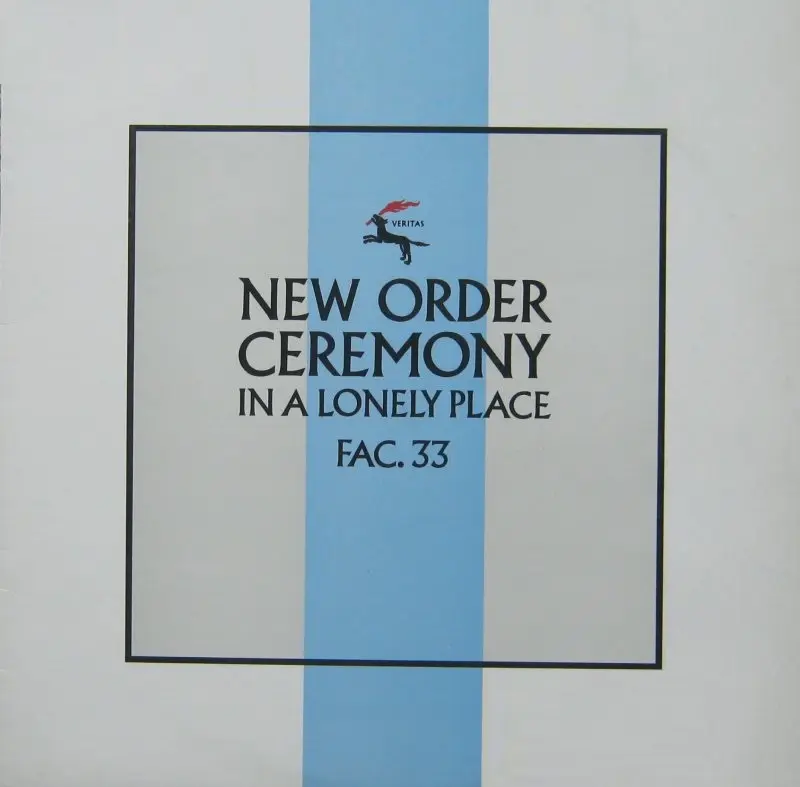 On March 6, 1981, New Order released their first single: “Ceremony,” an upbeat bass-driven song backed with “In a Lonely Place,” a slow, moody piece. Both songs date from Joy Division’s final weeks of existence.
Sumner, Hook, and Morris wrote “Ceremony” with Curtis, who made up lyrics for the song during an April 1980 demo session at Graveyard Studios in Prestwich, where they also demoed “In a Lonely Place.” When they conceived “Ceremony,” they hoped to restore Ian’s faith in the band, which Curtis feared had peaked with the just-completed Closer. To recover the non-transcribed lyrics, Sumner graphic-equalized Ian’s barely audible vocals on the primitive Graveyard demo.
A. “Ceremony” (4:34)
B. “In a Lonely Place” (4:35)
Factory issued “Ceremony” on 7″ and 12″ formats (both FAC 33). In September, they issued a second 12″ studio recording of the song (4:23) with Gillian Gilbert on guitar, backed with an alternate mix of “In a Lonely Place” (6:12). The 7″ appeared in a beige, embossed sleeve. Both 12″ versions show the name and title in serif all-caps in schemes of gold-on-capri (March) and blue-striped black-on-gray (September). Joy Division’s visual artist, Peter Saville, designed the three variations and all subsequent New Order sleeves.
“Procession” / “Everything’s Gone Green”
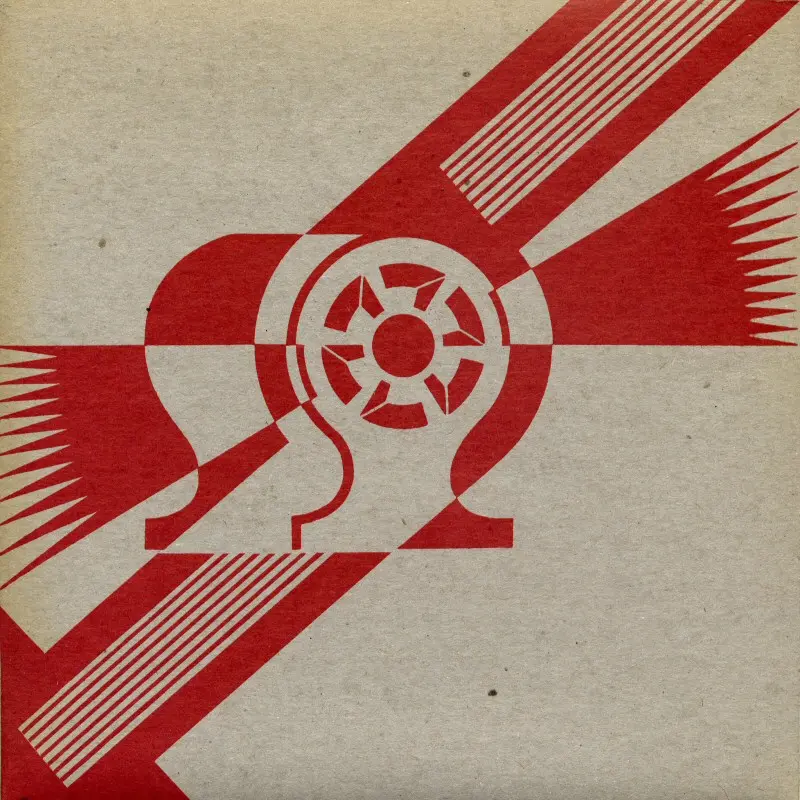 On September 25, 1981, New Order released their second single: “Procession,” a synth-laden vivace (in A minor) backed with “Everything’s Gone Green,” a bass-grounded number with staccato guitar and synth arpeggios.
A. “Procession” (4:25)
B. “Everything’s Gone Green” (4:11)
“Procession” appeared in a card-stock sleeve printed (in variable colors) with a vintage graphic illustration by Italian futurist Fortunato Depero (1892–1960). The back sleeve shows another detail imprinted with the Factory catalog number (53).
In December, Factory Benelux issued a issued an extended version of “Everything’s Gone Green” (5:33) as a 12″ a-side backed with “Cries and Whispers” and “Mesh,” two of the earliest originals in New Order’s set.
B1. “Cries and Whispers” (3:25)
B2. “Mesh” (3:00)
New Order recorded the 12″ between the completion and release of their debut album. The 12″ art depicts radio waves on a beige background. “Everything’s Gone Green” ended their relationship with Joy Division producer Martin Hannett, who opposed their wish for louder drums.
“Procession” reached No. 1 on the UK Indie Singles Chart and No. 38 on the main UK Singles Chart.
Movement
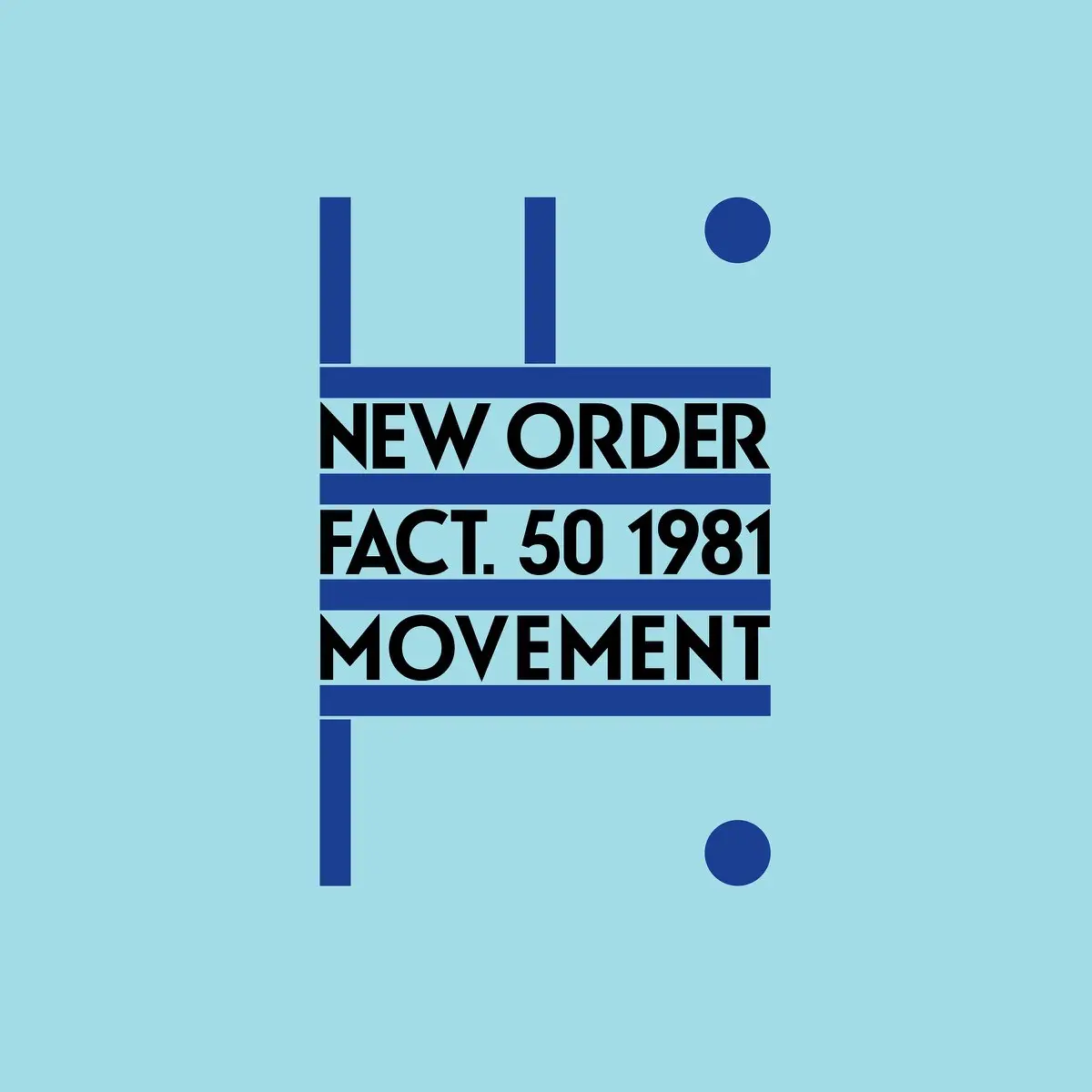 New Order released their debut album, Movement, on November 13, 1981, on Factory. It features eight songs that express their grief and newfound resolve after the loss of Ian Curtis, eulogized in the track “IBC.”
Movement opens with their two earliest post-Curtis compositions: “Dreams Never End” and “Truth.” The remaining songs debuted in New Order’s repertoire between late 1980 and early 1981, after Gillian Gilbert’s entrance into the band.
Peter Hook plays 4- and 6-stringed bass and sings lead vocals on “Dreams Never End” and “Doubts Even Here,” which features spoken words from Gillian, who shares multi-instrumental roles (guitars, synthesizers and programming) with Bernard Sumner, who plays melodica and makes his full-length debut as primary vocalist.
1. “Dreams Never End” (3:13)
2. “Truth” (4:37)
3. “Senses” (4:45)
4. “Chosen Time” (4:07)
5. “ICB” (4:33) is an acronym for ‘Ian Curtis Buried.’
6. “The Him” (5:29)
7. “Doubts Even Here” (4:16)
8. “Denial” (4:20)
Sessions occurred between April 24 and May 4, 1981, with Martin Hannett, who produced Movement in sequence with titles by Kissing the Pink, Magazine, The Psychedelic Furs, and Factory labelmates A Certain Ratio, Durutti Column, The Names, Section 25, Orchestral Manoeuvres In the Dark, and the Bronx trio ESG.
Strawberry North soundman Chris Nagle engineered Movement with assistance from Mark ‘Flood’ Ellis (The Associates, Girls At Our Best!) and studio vet John Leckie, a longtime XTC and Bill Nelson soundman with recent credits behind Simple Minds, The Human League, Cuban Heels, and De Press, Norway’s leading post-punk band.
As with the “Procession” sleeve, Peter Saville based the Movement cover design on the Futurist poster art of Fortunato Depero. Movement displays the band name, title, date, and catalog number (Fact. 50) in bold sans serif all-caps between a 90° left-horizontal F (for Factory) and a 90° right-horizontal L (for Limited). The LP labels identify each side (>>Movement 1<< and >>Movement 2<<) with no track info. Factory used the same cover with different schemes in the UK (blue-on-gray), Europe (navy-on-mint), and the US (brown-on-ivory). Saville also designed 1981 sleeves for Duran Duran, Lounge Lizards, King Crimson (Discipline), OMD, and Ultravox (Rage In Eden).
Movement reached No. 1 on the UK Indie Albums Chart and No. 30 on the main UK Albums Chart. Abroad, the album reached No. 8 in New Zealand. New Order greeted its US release with another stateside visit that included a filmed November 11 performance at New York’s Peppermint Lounge.
“Temptation”
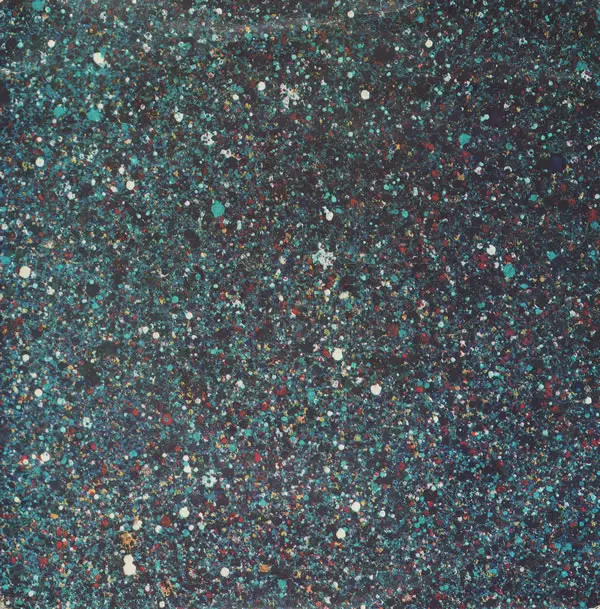 On May 21, 1982, New Order released their third single: “Temptation,” an electro-dance number backed with “Hurt,” a minor-key track with glacial synths. Factory issued the single on 7″ and extended 12″ formats (FAC 63).
A. “Temptation” (5:21 / 8:47)
B. “Hurt” (4:47 / 8:13)
“Temptation” topped the UK Indie Singles Chart and reached No. 29 on the main singles chart. This was New Order’s first self-produced release.
Factory issued “Temptation” on the opening day of the label’s own nightclub, Haçienda, conceived by New Order manager Rob Gretton in partnership with Factory boss Tony Wilson.
The Haçienda (1982–97) was situated inside a curved Accrington brick building (demolished in 2002) that once housed a yacht warehouse at 11–13 Whitworth Street West, south of the Rochdale Canal. For the club’s grand opening, New Order performed “Prime 5 8 6,” a 23-minute Sumner/Morris instrumental and prototype of the future album track “5 8 6” — later released in its original form as “Video 5 8 6” (with rhythmic roots of “Blue Monday” and “Ultraviolence”).
New Order cut an undated 1982 BBC session for John Peel’s June 1 broadcast, which aired two future album tracks (“We All Stand,” “5 8 6”) and two exclusives: “Too Late” and their cover of “Turn the Heater On,” a song by reggae artist Keith Hudson, whose 1975 original was an Ian Curtis favorite, hence their tributary rendition.
Meanwhile, Hook produced the 1982 Factory maxi-single “Art” (b/w “Dream” / “Dominion”) by The Royal Family and the Poor, a Liverpool funk/punk combo. Under the collective pseudonym Be Music, New Order added ‘synth f/x’ to the August 1982 Factory single “Look Into My Eyes” (b/w “Express”) by 52nd Street, a Manchester soul/funk combo.
“Blue Monday”
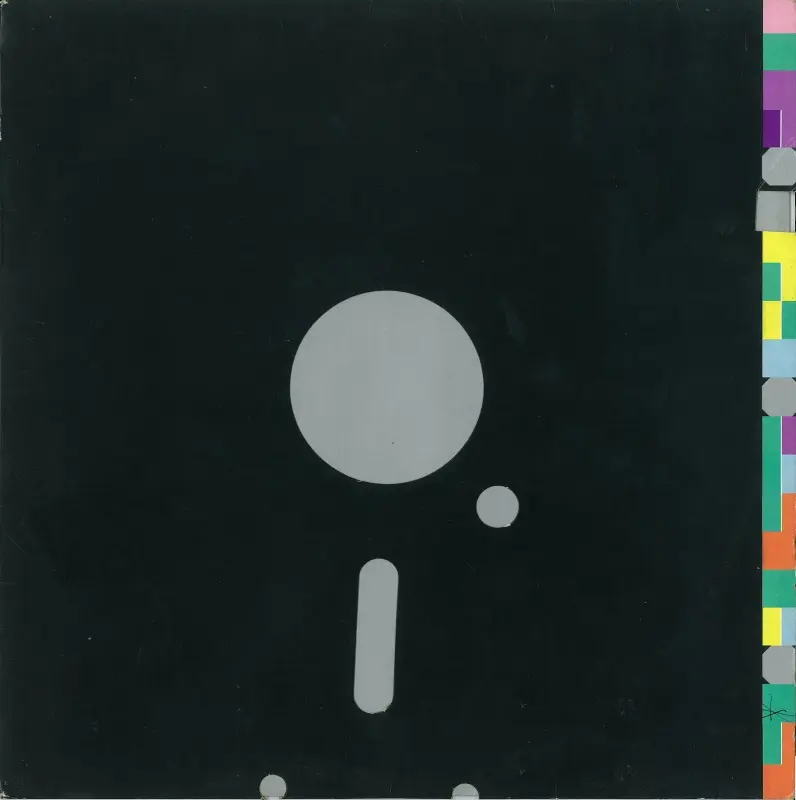 On March 7, 1983, New Order released their fourth single: “Blue Monday,” a throbbing Euro-dance number backed with “The Beach,” an instrumental variant. Factory issued the single exclusively as an EP-length 12″ (FAC 73).
A. “Blue Monday” (7:29)
B. “The Beach” (7:19)
Hook performed the synth bassline through Sumner’s self-constructed sequencer. For the rhythm track, Morris combined a pattern on the Oberheim DMX drum machine with a snare beat played through a studio monitor. “Blue Monday” also features choral sounds from Kraftwerk‘s 1975 song “Uranium,” sampled with an E-mu Emulator.
“Blue Monday” reached No. 12 on the UK Singles Chart. New Order performed the song on Top of the Pops for the BBC music program’s March 31 broadcast, which also featured in-studio numbers by the Style Council (“Speak Like a Child”), U2 (“Two Hearts Beat as One”), Kajagoogoo (“Ooh to Be Ah”), and Tracey Ullman (“Breakaway”). New Order performed live amid neon grids and cagey slanted fixtures under blue/pink lights. Due to soundboard limitations on the part of TotP (a miming program), the band’s performance was rendered flat and rhythmically out of sync.
In 1988, American industry legend Quincy Jones remixed the song as “Blue Monday 1988” (4:09, b/w “Beach Buggy”), released on Quincy’s Qwest Records, New Order’s stateside label.
Power, Corruption & Lies
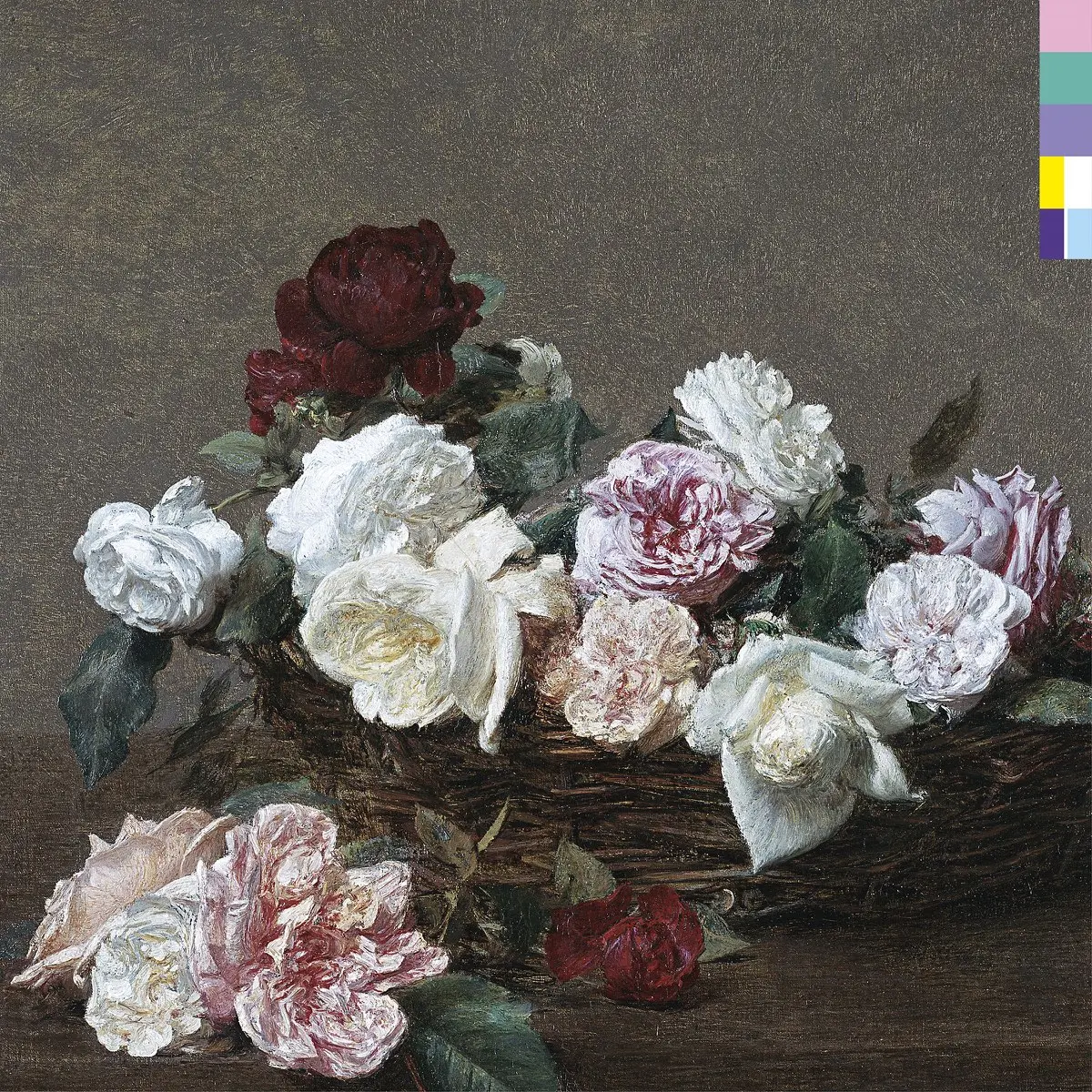 New Order released their second album, Power, Corruption & Lies, on May 2, 1983, on Factory.
Power, Corruption & Lies links New Order’s post-punk roots with their newfound embrace of techno Euro-dance music, inspired by Giorgio Moroder‘s work with Donna Summer and Sparks.
The album features electronic percussion by bassist Peter Hook and synthesizer programming by drummer Stephen Morris and guitarists Gillian Gilbert and Bernard Sumner, who handles all vocals plus melodica.
A1. “Age of Consent” (5:15)
A2. “We All Stand” (5:14)
A3. “The Village” (4:37)
A4. “5 8 6” (7:31)
B1. “Your Silent Face” (5:59)
B2. “Ultraviolence” (4:52)
B3. “Ecstasy” (4:25)
B4. “Leave Me Alone” (4:41)
New Order self-produced the album in October–November 1982 at Britannia Row Studios, an Islington, North London, facility opened by Pink Floyd (circa Animals) and used beforehand by Joy Division for their Closer session. Recent users included the Birthday Party, Modern Eon, Nash the Slash, Michael Mantler, Section 25, and Tears for Fears.
Britannia staffer Michael Johnson engineered Power, Corruption & Lies amid bookings by Jon Lord and Cozy Powell. The album featured assistant sound work by Michael Johnson, an engineer on Seventies classics by Brian Eno (Another Green World), Automatic Man (self-titled), and Caravan (Blind Dog at St. Dunstans), plus recent titles by The Vapors, Slow Children, and Peter & The Test Tube Babies.
The album’s cover displays A Basket of Roses, an 1870s realist painting by French floral painter Henri Fantin-Latour (1836–1904). Tony Wilson secured permission for the painting by its reluctant owner, the National Heritage Trust, which conceded on the grounds that NHT property is effectively public property.
Power, Corruption & Lies topped the indie chart and reached No. 4 on the UK Albums Chart. Abroad, the album reached No. 3 in New Zealand and went Top 20 in the Netherlands (No. 14), Sweden (No. 16), and Germany (No. 18).
“Confusion”
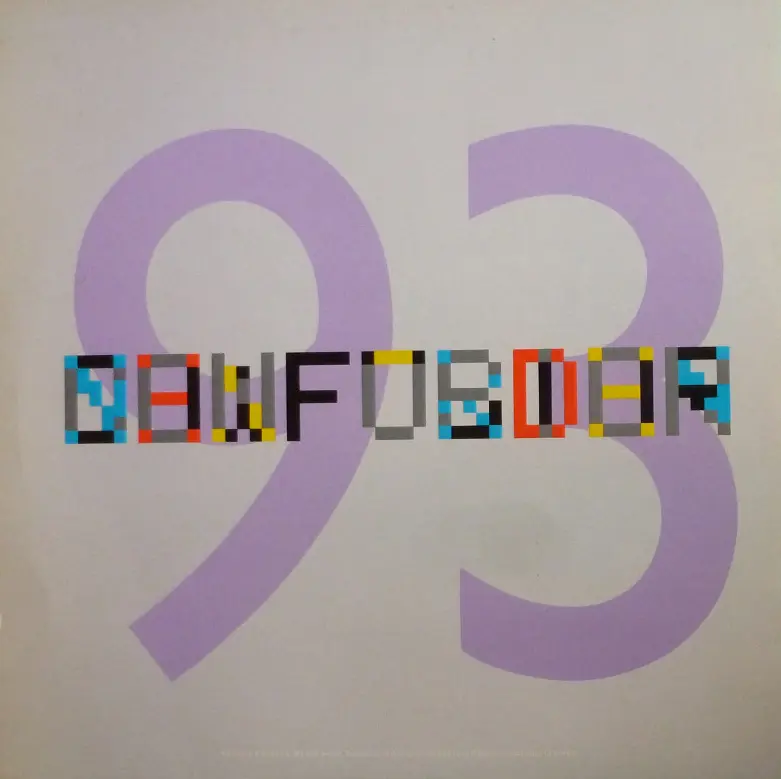 In August 1983, New Order released their fifth single: “Confusion,” a techno andante in D minor. Factory issued the song on 12″ (FAC 93) with four variants. New Order wrote and recorded “Confusion” in New York with DJ and Freeeze soundman Arthur Baker, a credited co-writer.
1. “Confusion” (8:12)
2. “Confused Beats” (5:19)
3. “Confusion Instrumental” (7:38)
4. “Confusion” (Rough Mix) (8:04)
Sessions occurred at Unique Recording Studios, located at the top floor of the Cecil B. DeMille building on 48th St. near Times Square. Baker mixed “Confusion” with fellow NYC DJ (and early Madonna mastermind) John “Jellybean” Benitez, a remixer of 1983 sides by The English Beat, Elvis Costello, Earth Wind & Fire, and the Pointer Sisters.
“Confusion” topped the indie chart and reached No. 12 on the UK singles chart. Abroad, the song reached No. 7 in Ireland and New Zealand. In the US, “Confusion” reached No. 5 on the Billboard Dance/Disco Top 80.
Meanwhile, Hook produced the 1983 single “Truth to Tell” by Some Now Are, a Blackburn synthpop combo. He also played bass on “Light Years From Love,” the third and final solo single by Martha Ladly, the erstwhile Martha + The Muffins keyboardist and Associates/Roxy Music auxiliary. Elsewhere, Sumner produced 1983 singles by labelmates Section 25 (“Back to Wonder”) and Foreign-Press (“The Great Divide”), a Mancunian techno act on EMI.
“Thieves Like Us”
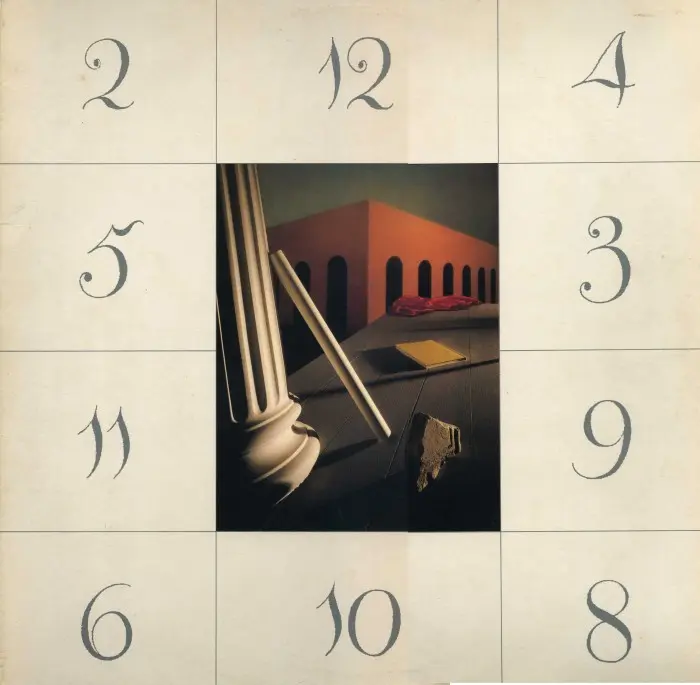 In April 1984, New Order released their sixth single: “Thieves Like Us,” another mid-tempo dance co-write with Arthur Baker. The b-side, “Lonesome Tonight,” is a self-contained coldwave number reminiscent of the Movement era.
Jellybean suggested the title, taken from director Robert Altman’s 1974 film Thieves Like Us, a period crime drama (set in the 1930s) starring Keith Carradine and Shelley Duvall. Factory issued “Thieves Like Us” as a promo 7″ and a more widely available extended 12″ (FAC 103).
A. “Thieves Like Us” (3:54 / 6:36)
B. “Lonesome Tonight” Gilbert, Hook, Morris, Sumner (3:52 / 5:11)
New Order self-produced both sides in December 1983 at Brittania Row. They performed “Thieves Like Us” on the May 3 TotP broadcast, which also featured in-studio numbers by OMD (“Locomotion”), Jocelyn Brown (“Somebody Else’s Guy”), and The Human League (“The Lebanon”), plus videos by Blancmange (“Don’t Tell Me”), Duran Duran (“The Reflex”), and Kenny Loggins (“Footloose”). New Order appeared amid blue-lit scaffolding with Sumner and Hook (both clad in 501s and leather) in front of Gillian and Morris (both at keyboards in casual Fifties attire). This time, their live performance faced no audio glitches on the mime-oriented program.
“Thieves Like Us” reached No. 5 in Ireland and No. 14 in the Netherlands and New Zealand. At home, the song peaked at No. 18 on the UK Singles Chart.
In May 1984, Factory Benelux released “Murder,” an instrumental outtake from the winter 1982 PLC sessions with sampled dialogue from 2001: A Space Odyssey. An instrumental version of “Thieves Like Us” appeared on the b-side.
1984 Side Credits
Hook produced the 1984 Factory single “Telstar,” a techno update of the 1962 Tornadoes classic by Ad Infinitum, a one-off project with Lindsay Wilson (wife of Tony). The b-side, “Telstar In a Piano Bar,” gives the theme a Fifties lounge spin with A Certain Ratio keyboardist Andy Connell, who later formed Swing Out Sister.
Sumner produced the Factory single “Triangle” (b/w “Atom-Rock”) by Quando Quango, a Mancunian/Dutch dance trio.
Morris drummed on the 1984 Factory release Too Crazy Cowboys by the NYC coldwave combo Thick Pigeon, a prior singles act on Les Disques du Crépuscule, the sister label of Factory Benelux. He also backed erstwhile Tuxedomoon singer Winston Tong on the 1984 Les Disques single “Theoretical China,” which features ex-PiL bassist Jah Wobble and former Associates guitarist Alan Rankine. The same cast appears on Tong’s 1985 album, which includes the Marianne Faithfull cover “Broken English.”
Under their Be Music moniker, New Order produced “Tell Me,” the first of two Factory singles by Life, a Mancunian synthpop combo with Andy Robinson, New Order’s roadie and later manager.
Low-Life
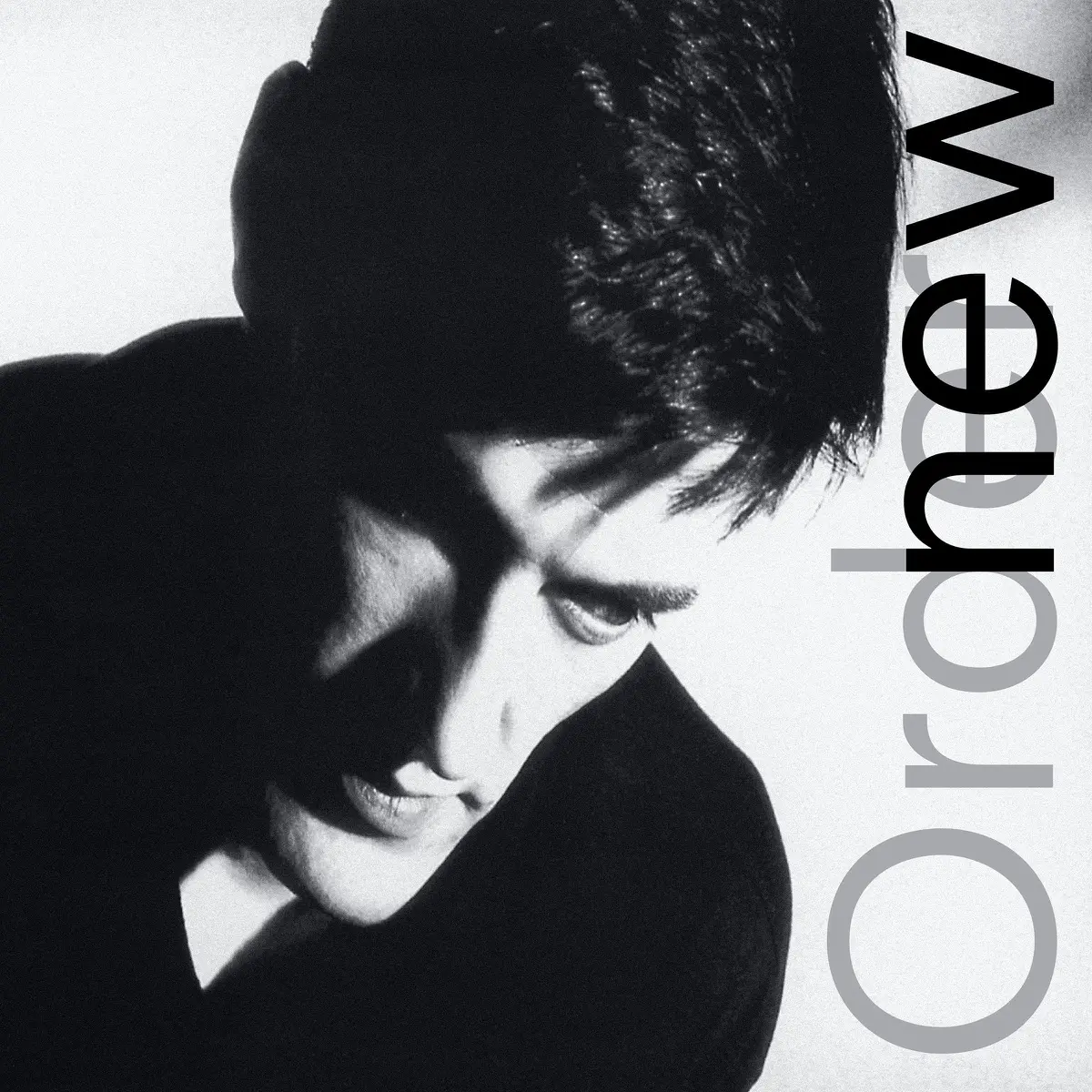 New Order released their third album, Low-Life, on May 13, 1985, on Factory.
Low-Life features eight group-written originals that range from guitar pop (“Love Vigilantes”) to Euro-disco (“The Perfect Kiss,” “Sub-culture”) with traces of EBM (“This Time of Night”) and ambient (“Elegia”).
They draw upon their post-punk roots on “Sunrise,” a spinning presto (in D minor) with the whirlwind intensity of the Joy Division classic “Transmission.”
A1. “Love Vigilantes” (4:16)
A2. “The Perfect Kiss” (4:51)
A3. “This Time of Night” (4:45)
A4. “Sunrise” (6:01)
B1. “Elegia” (4:56)
B2. “Sooner Than You Think” (5:12)
B3. “Sub-culture” (4:58)
B4. “Face Up” (5:02)
New Order plugged the album with “The Perfect Kiss,” released in extended 12″ form (8:46) with “The Kiss of Death” (7:02), a remix titled after the line “the perfect kiss is the kiss of death.” Factory issued the single (FAC 123) in plain gray, red, and ivory sleeves. In November, Factory lifted “Sub-Culture” as a 7″ edit (3:28) and extended 12″ mix (7:26) backed with “Dub-Vulture,” an instrumental mix (7:57).
New Order self-produced the album in late 1984 at Brittania Row, where Michael Johnson engineered Low-Life in sequence with titles by SPK, Stockholm Monsters, Paul Haig (ex-Josef K), and Soft Cell‘s swan song This Last Night… In Sodom.
Low-Life was housed in an onion-skin sleeve with Morris on the front inner-sleeve. Veteran photographer Trevor Key (Tubular Bells) took downward profile pics of each member on instant film. The four images (stretched vertically) appeared as separate inserts, allowing buyers to choose the cover subjects. Key’s photography also appears on mid-Eighties sleeves for Jethro Tull, Midge Ure, Peter Gabriel, and Phil Collins.
Low-Life topped the UK Independent Albums and reached No 7 on the main UK Albums Chart. Abroad, the album reached No. 11 in New Zealand and No. 20 in Sweden. In the US, Low-Life reached No. 2 on the College LP’s chart (tabulated by Gavin Report) and marked their debut on the upper-half of the Billboard 200.
In advance of the album’s release, New Order performed five Low-Life songs on May 2 at Shinjuku Koseinenkin Hall in Tokyo. Factory issued the nine-song concert as Pumped Full Of Drugs, a 1985 Japanese VHS video, later released abroad for PAL and NTSC systems.
“Shellshock”
On March 17, 1986, New Order released their eleventh single: “Shellshock,” a hi-tech dance track in D minor. Factory issued “Shellshock” as a standard 7″ (b/w the instrumental “Thieves Like Us”) and an extended triple-time remix, backed with a dub version titled “Shellcock.” New Order co-produced the song with NYC mixer John Robie, a credited fifth writer.
A. “Shellshock” (4:19 / 9:41)
The song first appeared in February on the multi-artist soundtrack to Pretty In Pink, a 1986 teen romantic comedy by director John Hughs (Sixteen Candles, The Breakfast Club) and starring Molly Wingwald, Jon Cryer, Annie Potts, and Andrew McCarthy. The soundtrack also features songs by Belouis Some, INXS, Nik Kershaw, The Smiths, Echo & the Bunnymen, and OMD, whose ballad “If You Leave” became their sole US Top 10 hit. The Psychedelic Furs re-recorded their 1981 song “Pretty In Pink” especially for the film.
“Shellshock” reached No. 8 in New Zealand and No. 18 in Ireland.
Brotherhood
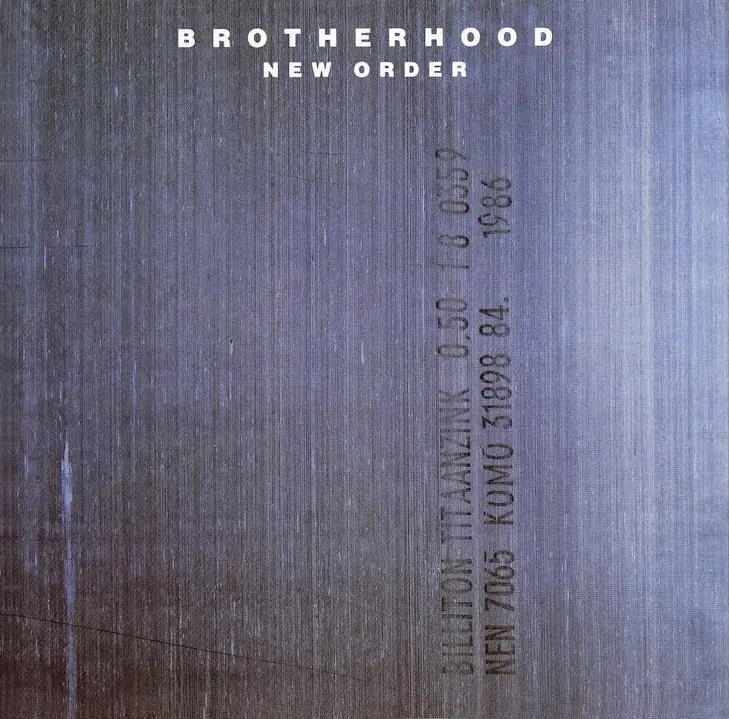 New Order released their fourth album, Brotherhood, on September 29, 1986, on Factory.
Brotherhood contains “Bizarre Love Triangle,” a melodic dance number that became their signature song. CD versions contain “State of the Nation,” a dance/funk track issued simultaneously as a single. The album’s melodramatic opener, “Paradise,” also received US alternative airplay.
The album also contains hints of sprightly C86 guitar pop (“Weirdo”), semi-acoustic balladry (“As It Is When It Was”), and spinning post-punk in the Joy Division vein (“Broken Promise”).
1. “Paradise” (3:50)
2. “Weirdo” (3:52)
3. “As It Is When It Was” (3:46)
4. “Broken Promise” (3:47)
5. “Way of Life” (4:06)
6. “Bizarre Love Triangle” (4:22)
7. “All Day Long” (5:12)
8. “Angel Dust” (3:44)
9. “Every Little Counts” (4:28)
CD edition bonus track
10. “State of the Nation” (6:32)
“State of the Nation” appeared a fortnight ahead of Brotherhood as a 7″ edit (3:27) and album-length 12″ backed with “Shame of the Nation,” a remix co-credited to John Robie. In November, Factory lifted “Bizarre Love Triangle” as an extended 12″ single (6:44) backed with “Bizarre Dub Triangle” (7:02). Both singles reached No. 4 on the US Dance charts.
Brotherhood topped the UK Indie Albums Chart and reached No. 9 on the main UK Albums Chart. In Oceania, the album reached No. 15 in Australia and No. 22 in New Zealand.
Meanwhile, Stephen and Gillan played on the 1986 Factory Benelux single “Wheels Over Indian Trails” by former Thick Pigeon frontwoman Stanton Miranda.
“True Faith” / “1963”
On July 20, 1987, New Order released their fourteenth single: “True Faith,” a euphoric dance pop song (in D minor) backed with “1963,” a re-imagined account of JFK’s assassination. “True Faith” co-wrote “True Faith” with producer Stephen Hague.
A. “True Faith” (5:53)
B. “1963” (5:55)
Factory issued “True Faith” as a 7″ edit (4:10), a 12″ maxi (5:53) and a longer 12″ remix (8:59) with an alternate version, “True Dub” (10:41). “1963” remained the same length on all releases (5:35) apart from the first maxi (5:55). In the US, Qwest gave “True Faith” a parenthetical subtitle (‘The Morning Sun’) after the catchphrase in the chorus.
 Both songs appeared as new tracks on Substance 1987, a New Order compilation released on August 17 on Factory.
1. “Ceremony” (4:23) September 1981 version with Gillian on guitar.
2. “Everything’s Gone Green” (5:30)
3. “Temptation” (6:59) re-recorded in 1987
4. “Blue Monday” (7:29)
5. “Confusion” (4:43) re-recorded in 1987
6. “Thieves Like Us” (6:36)
7. “The Perfect Kiss” (8:02)
8. “Sub-culture” (4:48)
9. “Shellshock” (6:28) edited down from the 12″ remix.
10. “State of the Nation” (6:32)
11. “Bizarre Love Triangle” (6:44)
12. “True Faith” (5:55)
“True Faith” reached No. 5 in Ireland and No. 4 on the UK Singles Chart. Abroad, the single reached No. 4 in New Zealand and No. 8 in Australia and West Germany. In the US, the “True Faith” video received high MTV rotation while the song reached No. 3 on the Billboard Hot Dance Club Play chart and peaked and No. 30 on the Cashbox Top 100.
Discography:
- Movement (1981)
- Power, Corruption & Lies (1983)
- Low-Life (1985)
- Brotherhood (1986)
- Substance (comp, 1987)
- Technique (1989)
Sources:
- Discogs: New Order
- 45worlds: New Order
- 45cat: New Order
- RYM: New Order
- MusicBrainz: New Order
- John Peel Wiki: New Order
- TVRDb: New Order
Artist/Album Pages:
Nara Leão (January 19, 1942 — June 7, 1989) was a Brazilian singer and actress who carried Rio bos...
Bloodstone was an American soul-psych group from Kansas City that released eight albums on Decca/L...
Joy Division was an English post-punk band from Manchester, formed as Warsaw by guitarist Bernard ...
Mecano was a Dutch New Wave/art-punk band that issued a standalone single on No Fun in 1978, follo...
Graduate was an English mod-ska band from Bath, Somerset, that released the 1980 album Acting My Age...
Georges Rodi is a French studio musician who released numerous library albums between 1975 and 198...
The Work was an English avant/art-punk band that issued the single "I Hate America" on self-press ...
Glatter Wahnsinn was a German jazz-rock band that released a 1980 self-titled album on Anvil Recor...
It's Immaterial was an English sophisti-pop band from Liverpool that released five 1980–85 shortpl...
Kirsty MacColl (1959–2000) was an English singer and songwriter who released three albums and twen...
Zauberfinger was a German NDW band that released the 1981 albums Schizzo-Rock and Zauberfinger 2. ...
Dalis Car was an English art-pop duo comprised of former Japan bassist Mick Karn and ex-Bauhaus vo...