

Donna Summer (December 31, 1948 — May 17, 2012) was an American soul-funk singer.
She began performing in the late 1960s with soul and R&B ensembles before relocating to Europe, where she joined the Munich-based musical Hair cast and recorded her early solo work. Her breakthrough came with the 1975 single “Love to Love You Baby,” produced by Giorgio Moroder, which showcased her extended vocal phrasing over disco rhythms and established her as a defining voice of the genre.
Throughout the late 1970s, Summer collaborated extensively with Moroder and Pete Bellotte, producing a string of international hits including “I Feel Love,” “Last Dance,” “MacArthur Park,” and “Hot Stuff.” She blended disco, funk, and pop with electronic instrumentation, and her albums Love to Love You Baby (1975), I Remember Yesterday (1977), Once Upon a Time (1977), and Bad Girls (1979) demonstrated both vocal virtuosity and adventurous production. These works solidified her position as the “Queen of Disco” while expanding her sound into narrative-driven concept pieces and dancefloor anthems.
In the 1980s and 1990s, Summer adapted to post-disco pop and dance styles, releasing albums such as She Works Hard for the Money (1983), Cats Without Claws (1984), and Another Place and Time (1989), often working with Michael Omartian, Stock Aitken Waterman, and other producers. She continued to explore gospel, rock, and electronic textures, earning Grammy Awards for both dance and inspirational performances.
Background
She was born LaDonna Adrian Gaines on December 31, 1948, in Boston, Mass., the third of seven children born to butcher Andrew and schoolteacher Mary Gaines. At age 10, Donna performed for the first time at her Mission Hill church. In high school, she performed in musicals and earned praise from her classmates.
A few weeks shy of her 1967 graduation date, she went to New York City to join the blues-psych outfit Crow, which disbanded after failing to land a recording deal. Meanwhile, she auditioned for the musical Hair and won the part of Sheila in its Munich production. She settled in Germany, where she learned the language and sang in the musicals Godspell and Show Boat.
As Donna Gaines, she issued her first single, the Hair number “Aquarius,” on German Polydor in 1968. The following year, she released “If You Walkin’ Alone” (b/w “Can’t Understand”) on Philips, followed in 1971 by “Sally Go Round the Roses” (b/w “So Said the Man”) on MCA. Under the name Gayn Pierre, she sang two songs on the German soundtrack to Godspell, released in 1972 on Reprise. She also did uncredited backing vocals on “Mama Told Me (Not To Come),” a 1970 hit by Three Dog Night.
In 1973, she married Austrian actor Helmuth Sommer and bore a daughter, Mimi. That same year, she sang backing vocals on the single “Heaven Helps the Man (Who Helps Himself),” credited to Italian producer Giorgio Moroder and co-produced by English lyricist Pete Bellotte. They formed a working alliance that first yielded a demo, which got her signed to the Dutch Groovy Records label.
Lady of the Night
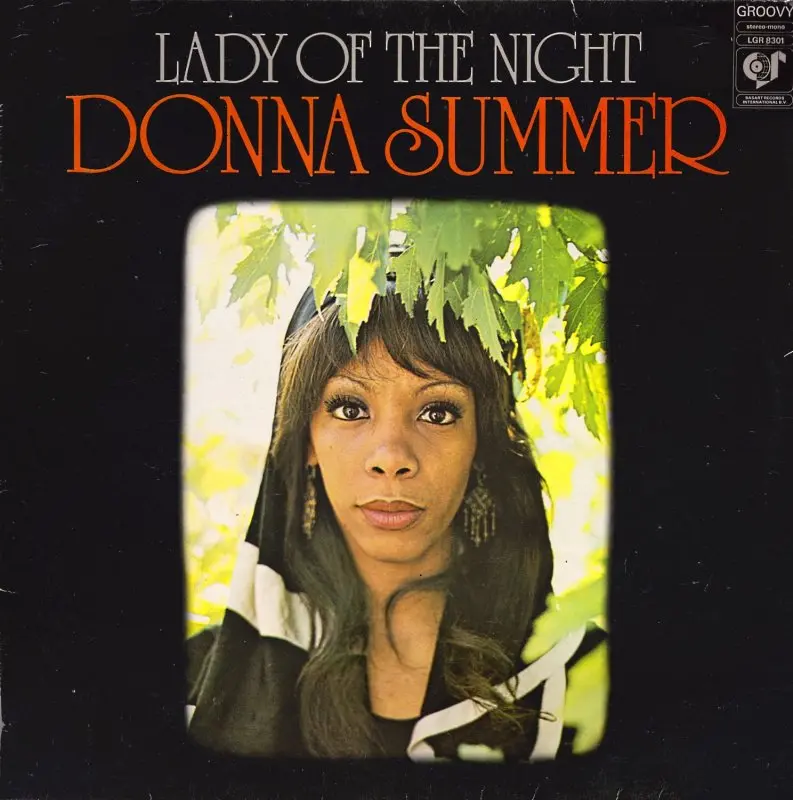 Donna Sommer released her debut album, Lady of the Night, in the Netherlands on February 26, 1974, on Groovy, which misspelled her last name as Summer — her surname on subsequent albums.
The album pairs her theatrical alto voice with folk-pop, country rock, and European pop stylings. Producer Pete Bellotte shaped the record with composer Giorgio Moroder, who co-wrote most of the material. Their early work together displays none of the electronic textures that later defined Summer’s disco period but highlights her command of story-driven songs.
Bellotte and Moroder wrote seven of the ten songs, including the singles “The Hostage” and “Lady of the Night.” Bellotte supplied three additional numbers: “Domino,” “Let’s Work Together Now,” and “Sing Along (Sad Song).”
The title track recalls the dense arrangements of 1960s girl-group pop. “The Hostage” plays like a mini radio drama, complete with phone-call interludes. “Born to Die” borrows from country rock with somber pacing, while “Domino” and “Sing Along (Sad Song)” reflect folk idioms. “Wounded” leans closer to rock, anticipating elements she revisited later in her career.
Sessions occurred between July and November 1973 with producer Pete Bellotte and engineer Jürgen Koppers.
Groovy promoted Lady of the Night with “The Hostage” (b/w “Let’s Work Together Now”), which reached No. 2 on Dutch and Spanish charts and went Top 3 in Belgium. “Lady of the Night” followed in November 1974 (b/w “Wounded”) and reached No. 4 in the Netherlands and Top 10 in Austria and Belgium.
“Full of Emptiness” reappeared in a reworked version on her 1975 follow-up Love to Love You Baby.
Love to Love You Baby
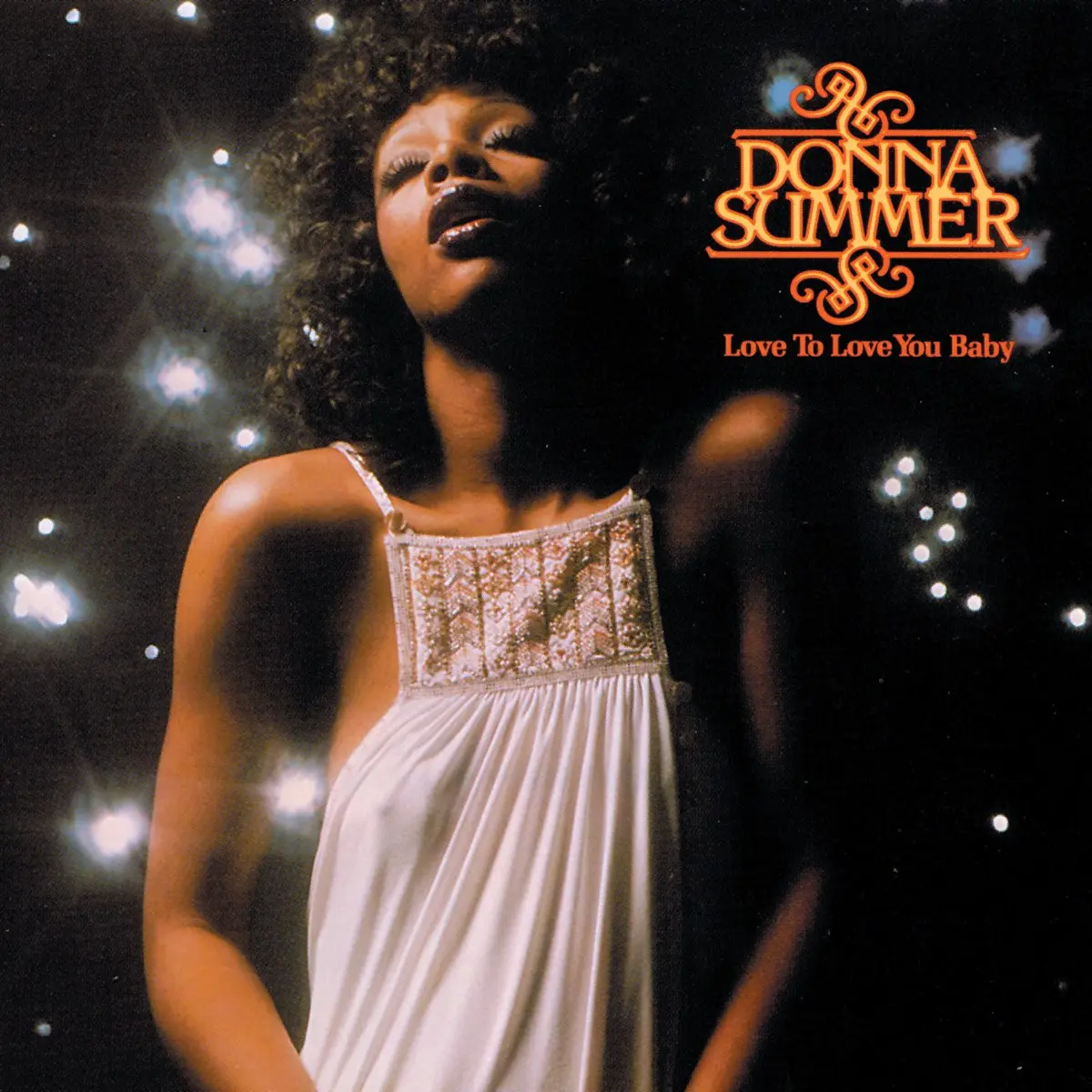 Donna Summer released her second album, Love to Love You Baby, on August 27, 1975, on Groovy. Outside the Netherlands, this became her debut album on Atlantic (Germany), Oasis (US), and GTO (UK).
The album established Summer’s partnership with producers Giorgio Moroder and Pete Bellotte, who crafted a sustained Eurodisco sound centered on the title epic. Side one is occupied by the 16-minute “Love to Love You Baby,” a recording that defined the sensual side of disco and set the template for extended club mixes. Side two alternates between torch ballads and uptempo tracks in a soul-pop frame. Summer’s supporting band includes guitarist Pete Bellotte, bassist Dave King, keyboardists Giorgio Moroder and Michael Thatcher, and drummer Martin Harrison, with a string section arranged by Thatcher.
Summer, Moroder, and Bellotte co-wrote the title track, which became her first international hit. Moroder and Bellotte supplied the remainder, except for “Full of Emptiness,” originally cut for Lady of the Night. In the Netherlands, “Virgin Mary” replaced that track, while German and French editions reshuffled songs from her debut, including “The Hostage” and “Lady of the Night.”
“Love to Love You Baby” plays as a slow-burning, near-symphonic suite, its four-on-the-floor rhythm and phased guitars underscoring Summer’s breathy vocal performance. Side two contrasts this centerpiece with yearning ballads (“Full of Emptiness,” “Whispering Waves”), funk-tinged struts (“Need-a-Man Blues”), and icy dramatics (“Pandora’s Box”).
A1. “Love to Love You Baby” (16:48) – A continuous suite of sensual release and restraint, framed by an unwavering pulse and shimmering textures. Summer’s performance blurs the line between sound and sensation, unfolding as a study in repetition, breath, and delayed resolution.
B1. “Full of Emptiness” (2:22) – A stark ballad of emotional depletion, its slow phrasing and sparse accompaniment reinforcing the lyric’s quiet ache. Summer’s delivery conveys solitude through restraint rather than outcry.
B2. “Need-a-Man Blues” (4:30) – A midtempo declaration of longing shaped by clipped guitar phrasing and tense rhythmic undercurrent. The lyric’s directness contrasts with Summer’s measured, almost detached delivery, suggesting need without surrender.
B3. “Whispering Waves” (4:50) – A drifting reflection set against imagery of the sea, where intimacy is imagined but never reached. The soft rhythmic sway and layered harmonies evoke both closeness and distance.
B4. “Pandora’s Box” (4:56) – A confrontation between desire and consequence, driven by sharp rhythmic exchanges between voice and guitar. The tension in Summer’s phrasing mirrors the mythic warning embedded in the title.
B5. “Full of Emptiness (Reprise)” (2:20) – The closing reprise reduces the earlier lament to its barest form, its repetition turning the theme of loss into quiet acceptance.
Sessions took place at Musicland Studios in Munich with Bellotte producing and Giorgio Moroder co-arranging alongside Thatcher. Reinhold Mack and Hans Menzel engineered the recordings.
Casablanca issued “Love to Love You Baby” as a single in November 1975. The track reached No. 2 on the US Billboard Hot 100 and topped the Dance Club chart, becoming Summer’s first hit in America. UK label GTO issued the song in January 1976, where it peaked at No. 4 despite limited airplay. Dutch pressings also lifted “Virgin Mary” (b/w “Pandora’s Box”) as a single prior to Summer’s international breakthrough.
A Love Trilogy
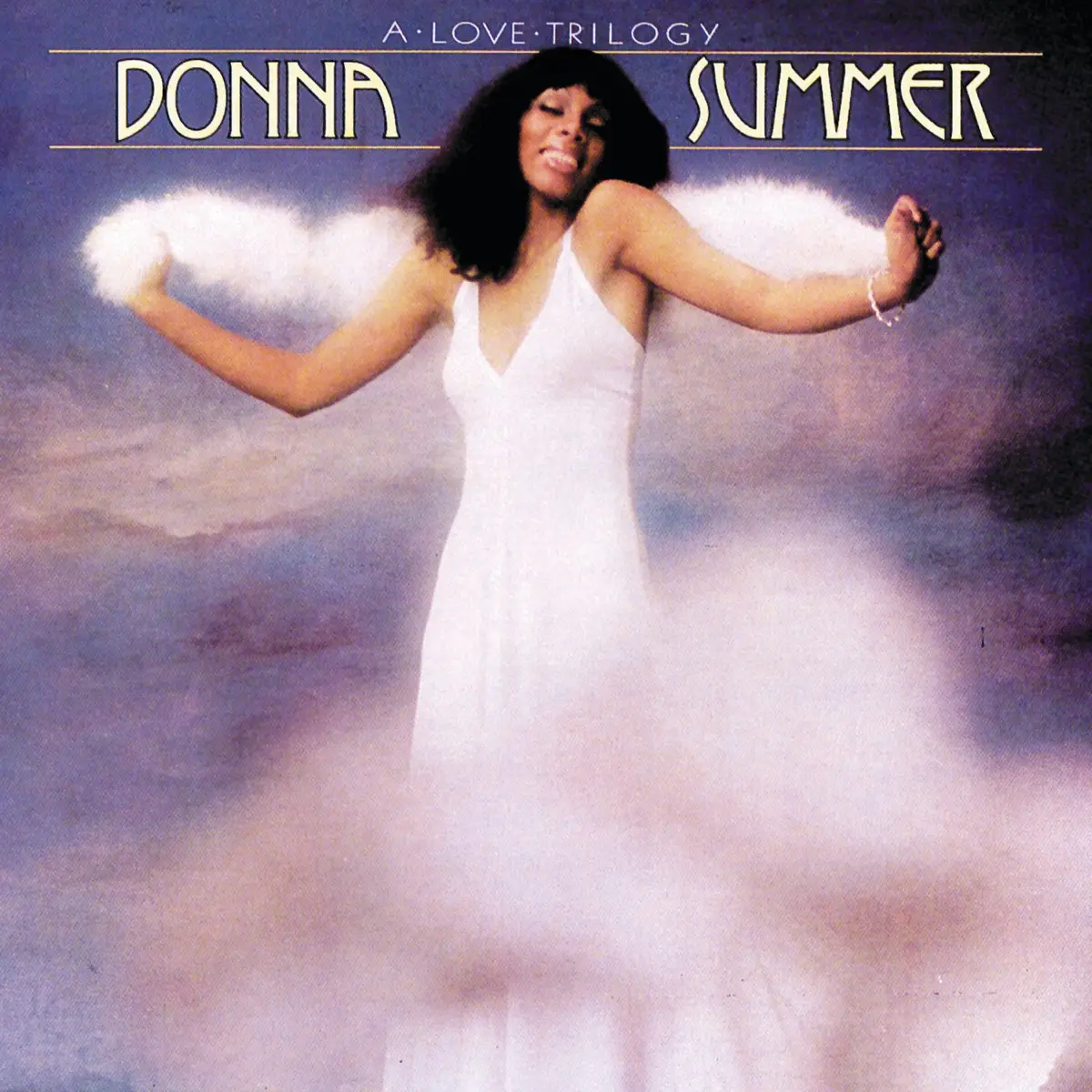 Donna Summer released her third album, A Love Trilogy, on March 5, 1976, on Atlantic, Groovy, GTO, and Oasis.
The album follows the format of its predecessor with one extended disco piece on side one and shorter selections on side two. Summer’s voice hovers between airy falsetto and sultry phrasing over orchestrations and synthesizer layers by Giorgio Moroder and Pete Bellotte.
Summer co-wrote two numbers with Moroder and Bellotte, including the 18-minute title piece. Side two includes their original “Wasted” and “Come With Me,” along with a cover of Barry Manilow’s epic ballad “Could It Be Magic.”
Side one is dominated by “Try Me, I Know We Can Make It,” a three-part composition that escalates from tentative invitation to exuberant release. On side two, “Could It Be Magic” transforms Manilow’s piano ballad into a brisk disco anthem with altered lyrics directed at her then-partner Peter Mühldorfer. “Wasted” broods on emotional depletion over a fast rhythm, while “Come With Me” closes with a coaxing minor-key plea.
A1. “Try Me, I Know We Can Make It” (17:57) – Structured as a three-part suite, the track builds from a tentative plea into mounting affirmation. The continuous pulse acts as a measure of endurance, while Summer’s voice alternates between coaxing and commanding, embodying persistence as both desire and belief.
B1. “Prelude to Love” (1:06) – A brief invocation of intimacy, it frames romance as anticipation rather than fulfillment. The short form heightens the sense of suspended expectation before the album’s shift in tone.
B2. “Could It Be Magic” (5:19) – A reimagining of Barry Manilow’s ballad, reshaped into a spiraling dance narrative. Summer transforms the original’s reflective melancholy into sensual immediacy, her phrasing moving from whisper to assertion across its rhythmic ascent. She alters the “sweet Melissa” lyric to “sweet Peter.”
B3. “Wasted” (5:09) – A reflection on emotional depletion, its lyrics frame love as an effort misspent. The deliberate pace and layered arrangement suggest a slow unraveling rather than abrupt loss.
B4. “Come With Me” (4:22) – A closing invitation to abandon caution, the song joins seduction with spiritual yearning. The minor-key turns and drawn-out phrasing lend the plea a hypnotic gravity, completing the album’s cycle from pursuit to surrender.
Sessions took place at Musicland Studios in Munich with producers Giorgio Moroder and Pete Bellotte and engineer Jürgen Koppers. Moroder played synthesizer and bass, with Thor Baldursson handling keyboards and string arrangements, Frank Diez and Molly Moll on guitar, Gary Unwin and Les Hurdle on bass, and Keith Forsey and Martin Harrison on drums. Backing vocals came from the Midnite Ladies: Madeline Bell, Sunny Leslie, and Sue Glover.
A Love Trilogy features cover photography of Summer adrift in clouds, reinforcing her image as a fantasy figure.
Oasis issued “Could It Be Magic” as the lead single in January 1976 (b/w “Whispering Waves”), which reached No. 52 on the Billboard Hot 100, No. 21 R&B, and No. 3 on the Disco chart, and hit the Top 5 in the Netherlands. “Try Me, I Know We Can Make It” followed in March (b/w “Wasted”) and topped the Billboard Disco chart for three weeks, also reaching No. 80 Hot 100 and No. 35 R&B.
Four Seasons of Love
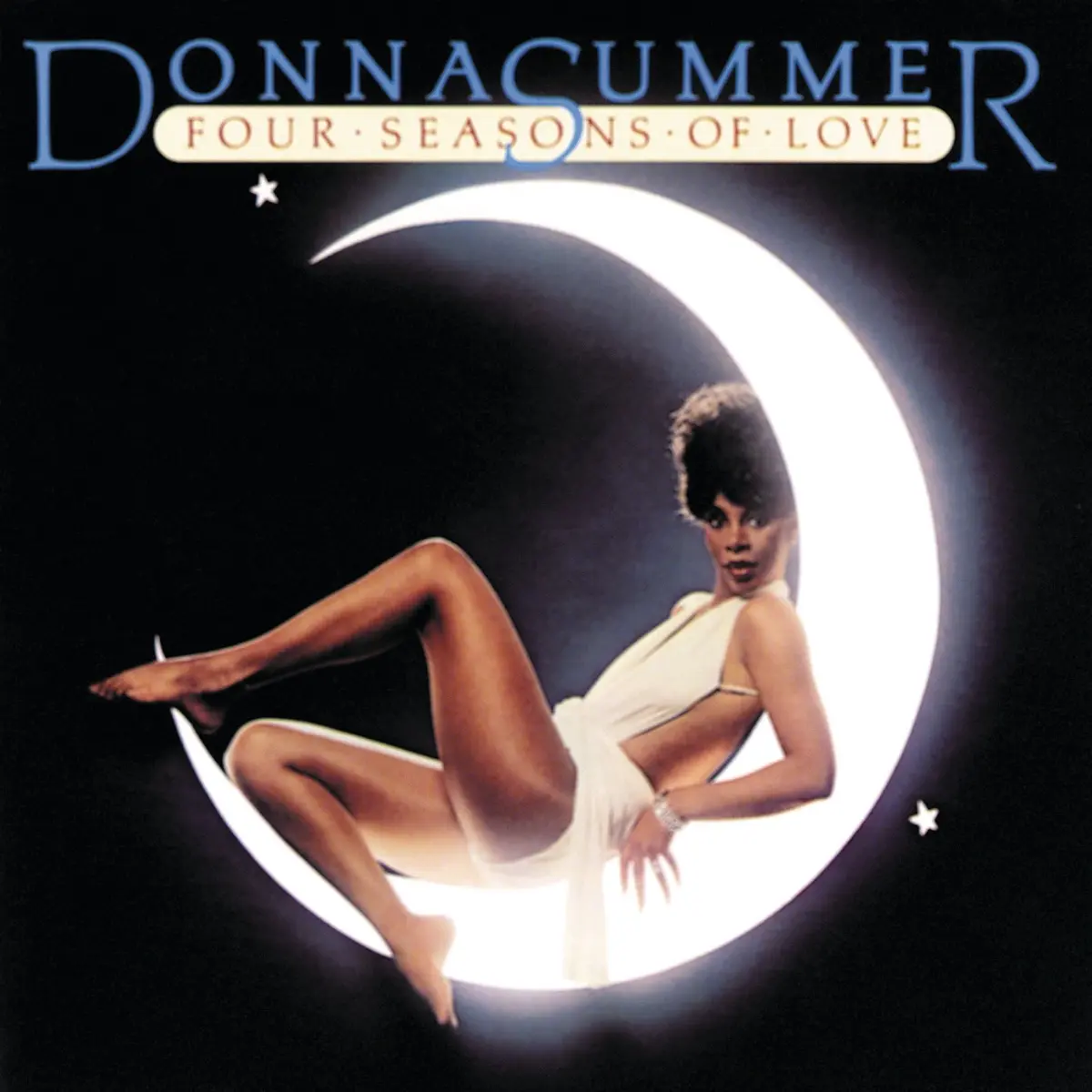 Donna Summer released her fourth album, Four Seasons of Love, on October 11, 1976, on Atlantic, Groovy, GTO, and Casablanca (US, Canada).
The album plays as a concept suite that charts the course of a romance through the four seasons. It balances two extended disco workouts on side one with two shorter pieces and a reprise on side two. Summer sings in a higher, more ethereal tone on the uptempo tracks and softens to a reflective style on the slower numbers.
Summer co-wrote all five tracks with Giorgio Moroder and Pete Bellotte. Keyboardist Thor Baldursson arranged the string and horn charts, while drummer Keith Forsey, bassist Les Hurdle, guitarist Nick Woodland, and saxophonist Dino Solera provide the core backing. Baldursson also played keyboards with Geoff Bastow on synthesizer. Backing vocals are by Madeline Bell and the duo Sue & Sunny.
“Spring Affair” opens with a brisk rhythm and brightly colored strings that introduce the cycle of attraction. “Summer Fever” intensifies with a heavier pace and sharper textures. Side two begins with “Autumn Changes,” where the atmosphere cools into tension. “Winter Melody” slows further into ballad form, reflecting on a relationship’s dissolution. The sequence concludes with a reprise of “Spring Affair,” closing the cycle.
A1. “Spring Affair” (8:29) – A portrayal of renewal and anticipation, where the first spark of romance unfolds through shifting rhythmic layers. The lyrics trace attraction as a seasonal rebirth, with Summer’s phrasing capturing both curiosity and invitation.
A2. “Summer Fever” (8:06) – Desire intensifies as warmth replaces restraint. The song’s constant motion mirrors rising emotion, while its measured pace turns infatuation into endurance, evoking heat as both physical and emotional state.
B1. “Autumn Changes” (5:28) – A turn toward reflection as affection begins to cool. The lyrics observe fading connection without accusation, while the phrasing and instrumental texture convey movement from fullness to decline.
B2. “Winter Melody” (6:33) – The story’s stillest moment, where loss settles into quiet acceptance. The steady rhythm frames a lament for love’s end, and Summer’s voice carries both clarity and ache in equal measure.
B3. “Spring Reprise” (3:51) – A cyclical close that restores the opening theme, suggesting renewal beyond conclusion. The familiar motif returns with softened energy, completing the narrative of love’s passing and return.
Sessions occurred at Musicland Studios in Munich with Moroder and Bellotte producing and Jürgen Koppers engineering. Giorgio Moroder handled the final mix.
Four Seasons of Love appeared with a fold-out 1977 calendar featuring Summer in seasonal costume themes. The cover photo, by Mario Casilli, shows her as the “Summer” image, seated in white against a starry backdrop.
Casablanca promoted the album with “Spring Affair” in August 1976 (b/w “Come With Me”), which topped the Billboard Disco chart and reached No. 58 on the Hot 100 and No. 24 on the R&B chart. It also placed in the Top 30 across Spain, Italy, and the Netherlands. “Winter Melody” followed in January 1977 (b/w “Wasted” in the UK, “Full of Emptiness” in the Netherlands), peaking at No. 27 on the UK Singles Chart, No. 43 on the Billboard Hot 100, and No. 8 on the Adult Contemporary chart.
I Remember Yesterday
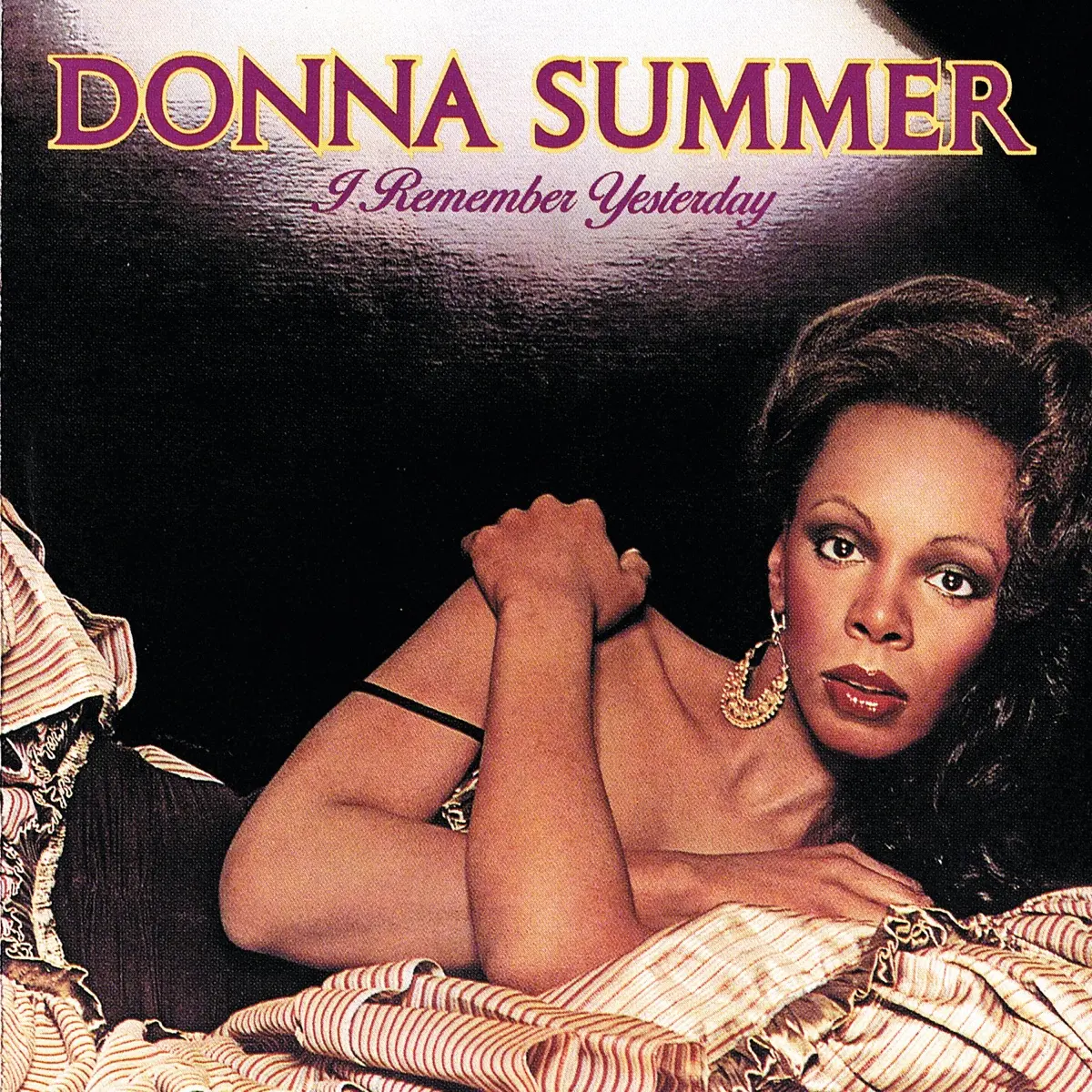 Donna Summer released her fifth album, I Remember Yesterday, on May 13, 1977, on Atlantic, Groovy, GTO, and Casablanca (North America, Japan).
The album functions as a concept piece, with each track evoking a different era while incorporating disco as the unifying base. Side One pairs modern rhythm sections with references to swing, doo-wop, and girl-group pop, while Side Two returns to contemporary disco with one ballad and closes with the forward-looking “I Feel Love,” a landmark of electronic dance music.
Summer co-wrote seven of the album’s eight tracks with Giorgio Moroder and Pete Bellotte, who also produced the sessions. British songwriter Tony Macaulay supplied “Can’t We Just Sit Down (And Talk It Over),” an outside ballad that contrasts the otherwise Moroder–Bellotte–Summer originals.
Songs divide between the playful pastiche of Side One and the more modern stylings of Side Two. The title track and its reprise blend swing brass with disco pacing, while “Love’s Unkind” draws from teen pop melodrama with lyrics about school crushes. “Back in Love Again” adapts girl-group harmonies into disco phrasing. Side Two includes the funk-inflected “Black Lady,” the orchestral disco of “Take Me,” and Macaulay’s ballad before the closer “I Feel Love,” which uses Moog sequencing, syncopated percussion, and Summer’s head-voice phrasing to anticipate house and techno.
A1. “I Remember Yesterday” (4:45) – Opens the album’s time-travel concept by merging big-band phrasing with disco rhythm. The lyric looks fondly on romance past while the brass and strings animate nostalgia through movement rather than sentiment.
A2. “Love’s Unkind” (4:29) – A teenage narrative of jealousy and longing told through brisk pacing and conversational phrasing. The light rhythm masks emotional frustration, turning high-school yearning into a study of everyday heartbreak.
A3. “Back in Love Again” (3:54) – Reflects on reconciliation after distance, written with the cadence of early 1960s pop. Summer’s voice alternates between reassurance and hesitation, tracing renewal as both relief and risk.
A4. “I Remember Yesterday (Reprise)” (3:02) – Returns to the title theme with condensed instrumentation and more assertive tone. Its repetition transforms nostalgia into closure, linking the past’s warmth to the album’s forward momentum.
B1. “Black Lady” (3:47) – A portrait of defiance within social expectation, framed by clipped rhythms and syncopated phrasing. The lyric balances pride and vulnerability, its terse energy conveying motion and self-possession.
B2. “Take Me” (5:03) – Expresses the surrender of desire through alternating restraint and urgency. The rhythm’s steady insistence mirrors the lyric’s negotiation between invitation and control.
B3. “Can’t We Just Sit Down (And Talk It Over)” (4:25) – A quiet plea for reconciliation, stripped of disco rhythm. The slow pacing centers the vocal’s nuance, presenting emotional fatigue without embellishment. Originated as a 1977 side by American soul singer Bill Brandon, covered in 1978 by Linda Lewis.
B4. “I Feel Love” (5:53) – Concludes with a vision of the future built entirely on synthesized rhythm. The lyric reduces affection to its simplest phrase, while repetition and electronic pulse turn emotion into physical sensation. It features a Moog Modular 3P, whose sequenced bassline and layered oscillations were synchronized by hand before MIDI technology existed. Every rhythmic element, aside from the kick drum, originated from the Moog, with precise filtering and delay creating the illusion of shifting percussion. Summer’s vocal, recorded in a single session, contrasts the mechanical pulse with human warmth, turning minimal lyricism and electronic repetition into a physical experience of emotion.
Sessions occurred at Musicland Studios and Arco Studios in Munich with producers Giorgio Moroder and Pete Bellotte, arranged by Thor Baldursson and engineered by Jürgen Koppers.
I Remember Yesterday features backing by keyboardist Thor Baldursson, bassist Les Hurdle, drummer Keith Forsey, five guitarists, eight brass players, and Brooklyn Dreams with additional singers on backing vocals. Moroder and Robby Wedel handled Moog synthesizers.
The cover design is by Gribbitt! with photography by Victor Skrebneski.
Casablanca first promoted the album with “Can’t We Just Sit Down (And Talk It Over)” (b/w “I Feel Love”), which reached No. 20 on the Billboard R&B chart. When “I Feel Love” gained momentum, it was reissued as the A-side in July 1977 and reached No. 6 on the Hot 100 and No. 1 in the UK. “I Remember Yesterday” followed in September 1977 (b/w “Spring Affair” in the UK) and charted at No. 14 in Britain. “Love’s Unkind” appeared in November 1977 (b/w “Autumn Changes” in the UK), where it hit No. 3. “Back in Love Again” closed the run in April 1978 (b/w “Black Lady”), reaching the UK Top 40.
“I Feel Love” was later extended by American DJ Patrick Cowley in a 15:43 remix (1978) that circulated on the Disconet service. The track has since been covered by Bronski Beat.
“Down Deep Inside”
Summer sings guest vocals on “Shut Out,” the title track to the May 1977 album by Paul Jabara, a subsequent songwriter for Donna.
She also contributed lyrics and vocals to “Down Deep Inside,” the theme from the 1977 film The Deep, with a score by John Barry. Released as a single in August 1977, the song reached No. 3 on the US Billboard Dance chart, No. 5 on the UK Singles Chart, and No. 5 on the Dutch Top 100. A slower version appeared on the film’s soundtrack LP, and an extended version was later included on Summer’s 1978 Live and More album. “Down Deep Inside” earned a Golden Globe nomination for Best Original Song.
Once Upon a Time
 Donna Summer released her sixth album, Once Upon a Time, on October 31, 1977, on Philips (Netherlands) and Casablanca (most other territories). This was her third straight concept album and her first of three consecutive double albums.
The two-record set unfolds as a “disco opera” based on a modern-day Cinderella narrative, staged across four acts. Summer conceived the story with Joyce Bogart and Susan Munao, building on an idea by Al Bogatz. The musical setting alternates between pulsating disco, Moroder’s electronic suites, and soulful balladry, presenting a seamless dramatic arc from fantasy through struggle to triumph.
Summer co-wrote all sixteen tracks with Giorgio Moroder and Pete Bellotte. Bob Esty arranged the orchestral sections while Moroder supplied the electronic textures.
Act One introduces the dreamlike state of longing with “Once Upon a Time” and “Fairy Tale High.” Act Two shifts to a mechanized backdrop on the extended “Now I Need You” and “Working the Midnight Shift,” often cited as precursors to synth-driven new wave. Act Three slows with the reflective “A Man Like You” and the hymn-like “Sweet Romance.” Act Four closes the tale with the single “Rumour Has It,” the radiant “I Love You,” and the bittersweet reprise of the title theme.
A1. “Once Upon a Time” (4:02) – Opens the narrative with the dreamer’s voice emerging from confinement into imagination. The steady pulse and ascending phrasing evoke motion from limitation toward possibility, establishing the album’s theme of pursuit and belief.
A2. “Faster and Faster to Nowhere” (3:34) – Portrays the restless chase of ambition without destination. The taut rhythm reflects urgency, while Summer’s phrasing mirrors the lyric’s tension between progress and exhaustion.
A3. “Fairy Tale High” (4:25) – Presents fantasy as refuge, where illusion momentarily eclipses hardship. The contoured rhythm and layered vocals blur reality and invention, portraying the heroine’s temporary escape into wonder.
A4. “Say Something Nice” (4:44) – A plea for kindness in a world of indifference. The deliberate pace and understated phrasing draw focus to empathy as quiet strength within the character’s journey.
B1. “Now I Need You” (6:09) – Expresses emotional dependency through cyclical rhythm and extended phrasing. The repetition mirrors yearning that deepens rather than resolves, its electronic backdrop emphasizing isolation within desire.
B2. “Working the Midnight Shift” (5:07) – Follows the protagonist into fatigue and disillusionment. The persistent rhythm embodies endurance, while the sparse lyrics trace a worker’s silent negotiation with survival.
B3. “Queen for a Day” (5:59) – Imagines fleeting triumph before reality’s return. The stately arrangement contrasts glamour with fragility, turning self-celebration into momentary reprieve.
C1. “If You Got It Flaunt It” (4:43) – Marks a shift toward self-assertion, framing confidence as both armor and display. The brisk pacing underscores the lyric’s insistence on visibility and self-possession.
C2. “A Man Like You” (3:34) – A direct address to longing, where affection meets uncertainty. The clipped rhythm and measured delivery convey intimacy contained within restraint.
C3. “Sweet Romance” (4:31) – Blends spiritual appeal with romantic devotion. The lyric reaches outward for connection beyond material reward, while Summer’s phrasing bridges yearning and faith.
C4. “(Theme) Once Upon a Time” (0:48) – A brief instrumental reflection on the opening motif, signaling transition between disillusionment and rebirth.
C5. “Dance into My Life” (4:10) – Invites communion through rhythm, portraying movement as liberation. The alternation between voice and electronic texture suggests unity forged through shared motion.
D1. “Rumour Has It” (4:57) – Captures the moment hope re-enters the story. The lyric’s hearsay motif frames anticipation, while shifting rhythm patterns echo the uncertainty of expectation.
D2. “I Love You” (4:43) – Serves as the emotional summit, a declaration free of artifice. The steady rhythm and ascending structure convey fulfillment as clarity rather than excess.
D3. “Happily Ever After” (3:51) – Envisions completion with understated tenderness. The light rhythmic pace supports the lyric’s calm resolution, turning fantasy into acceptance.
D4. “(Theme) Once Upon a Time” (3:58) – Closes the album by returning to its opening melody in expanded form. The repetition completes the cycle, suggesting that the fairy tale’s truth lies in endurance and belief rather than illusion.
Sessions took place between July and September 1977 at Musicland Studios in Munich with Moroder and Bellotte producing and Juergen Koppers engineering.
Once Upon a Time features cover design by Stephen Lumel and Gribbitt! with photography by Francesco Scavullo.
Casablanca lifted “I Love You” (b/w “Once Upon a Time”) as the lead single in December 1977. It reached No. 37 on the Billboard Hot 100, No. 28 R&B, and No. 10 in the UK. The same month, Germany issued “Fairy Tale High” as a single. In early 1978, “Once Upon a Time” appeared as a single in Japan. “Rumour Has It” followed in March 1978 (b/w “A Man Like You” in Italy, “Now I Need You” in Germany, “Once Upon a Time” in the UK), reaching No. 53 in the US, No. 21 R&B, No. 19 UK, and No. 20 Netherlands.
The album reached No. 26 on the Billboard 200, No. 13 R&B, No. 24 in the UK, and topped the Billboard Dance chart as a unified entry across all four sides.
Live and More
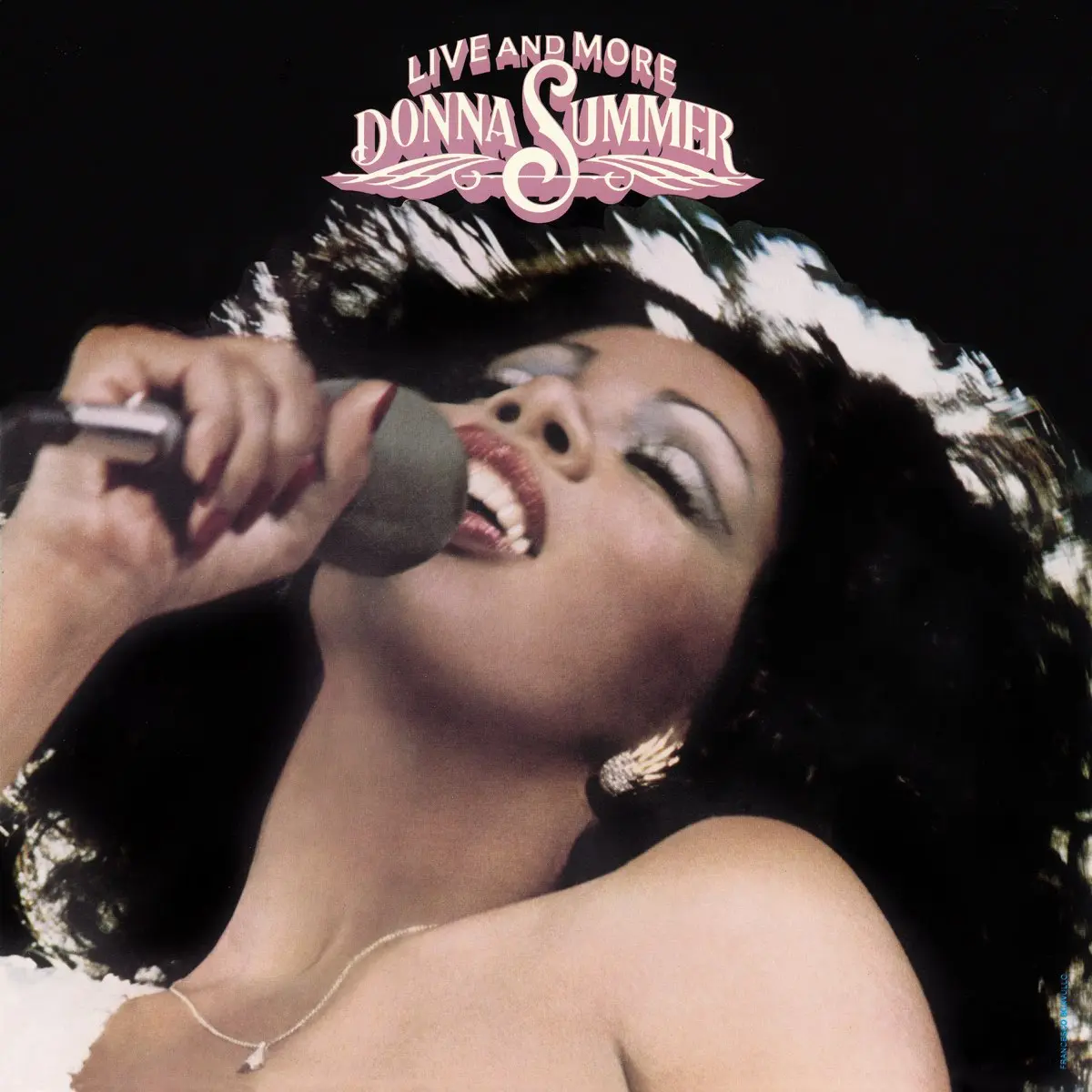 In August, Donna Summer released Live and More, a live and studio set. The first three sides showcase her June 17 concert at the Universal Amphitheater in Los Angeles. Side four features a seventeen-minute medley of the Jimmy Webb classic “MacArthur Park.”
Most of the live numbers were co-written by Summer with Giorgio Moroder and Pete Bellotte, her principal collaborators across the Love to Love You Baby, I Remember Yesterday, and Once Upon a Time albums. Percussionist Bob Conti and keyboardist Virgil Weber co-wrote “Only One Man” with Summer.
The concert also introduced Summer’s covers of songs popularized by George and Ira Gershwin (“The Man I Love”), Duke Ellington (“I Got It Bad (and That Ain’t Good)”), Sophie Tucker (“Some of These Days”), and Barbra Streisand (“The Way We Were”). She also premiered the self-penned ballad “Mimi’s Song,” dedicated to her daughter. Side four’s studio material features Jimmy Webb’s “MacArthur Park” alongside two new Summer/Moroder/Bellotte compositions, “One of a Kind” and “Heaven Knows,” the latter a duet with Joe “Bean” Esposito of Brooklyn Dreams.
The live program opens with six numbers from Once Upon a Time, then moves into selections from I Remember Yesterday and the title track of Love to Love You Baby. “Last Dance,” introduced in the film Thank God It’s Friday, closes the set before segueing to the disco-epic “MacArthur Park Suite.”
A1. “Once Upon a Time” (3:04) — from Once Upon a Time (1977); driving disco rhythm and contoured synthesizer lines frame a narrative of optimism and renewal.
A2. “Fairy Tale High” (2:20) — from Once Upon a Time; angular keyboard motifs and brisk pacing evoke whimsical, dreamlike imagery.
A3. “Faster and Faster to Nowhere” (2:09) — from Once Upon a Time; staccato synth phrases and escalating tempo mirror the lyrical sense of urgency and entrapment.
A4. “Spring Affair” (2:34) — from Four Seasons of Love (1976); flowing rhythm and shifting keyboard textures convey fleeting romance and seasonal transition.
A5. “Rumour Has It” (2:34) — from Once Upon a Time; contoured synth lines and crisp pacing accompany lyrics exploring gossip and social perception.
A6. “I Love You” (3:38) — from Once Upon a Time; measured rhythm and layered keyboard textures support a heartfelt declaration of affection.
B1. “Only One Man” (2:06) — new exclusive song by Bob Conti, Virgil Weber, Donna Summer; succinct rhythm and angular synth motifs underscore a plea for emotional fidelity.
B2. “I Remember Yesterday” (3:52) — from I Remember Yesterday (1977); steady pace and layered textures evoke nostalgia and temporal reflection.
B3. “Love’s Unkind” (2:37) — from I Remember Yesterday; contoured keyboard lines and measured rhythm frame themes of unreciprocated desire.
B4. “My Man Medley: The Man I Love / I Got It Bad (and That Ain’t Good) / Some of These Days” (6:25) — George Gershwin, Ira Gershwin / Duke Ellington, Paul Francis Webster / Shelton Brooks; jazz-inflected arrangement with shifting tempo and expressive phrasing highlights romantic longing across the medley’s standards.
B5. “The Way We Were” (3:23) — Alan Bergman, Marilyn Bergman, Marvin Hamlisch; contemplative pace and contoured harmonies render introspection and wistful memory. A hit for Barbra Streisand hit from the 1973 romantic drama The Way We Were.
B6. “Mimi’s Song” (4:28) — new exclusive song by Summer, Virgil Weber; tender rhythm and delicate synth layers convey maternal affection and intimate dedication.
C1. “Try Me, I Know We Can Make It” (4:14) — from A Love Trilogy (1976); angular synth lines and driving pace express romantic insistence and determination.
C2. “Love to Love You Baby” (3:34) — from Love to Love You Baby (1975); layered textures and steady rhythm amplify sensuality and vocal expressiveness.
C3. “I Feel Love” (6:56) — from I Remember Yesterday; pulsating electronic rhythm and contoured synths convey futuristic intimacy and emotional intensity.
C4. “Last Dance” (5:32) — Paul Jabara; begins as a reflective ballad before transitioning into brisk disco pace, narrating romantic desire and liberation. Introduced on the soundtrack to the 1978 disco musical comedy Thank God It’s Friday.
D1. “MacArthur Park Suite: MacArthur Park / One of a Kind / Heaven Knows / MacArthur Park (Reprise)” (17:47) — Jimmy Webb (“MacArthur Park”), Summer, Moroder, Bellotte; Brooklyn Dreams with Joe “Bean” Esposito; extended suite combines theatrical ballad intro, soaring disco rhythms, horn stabs, and layered electronic percussion to interweave longing, celebration, and narrative resolution across the medley’s multiple songs. “MacArthur Park” originated as a 1968 single by Richard Harris, covered in 1972 by Beggars Opera.
Summer’s band featured Keith Forsey (drums), Sal Guglielmi (bass), Bob Conti (percussion), Mike Warren (lead guitar), Peter Woodford (rhythm guitar), Doug Livingston (keyboards), Virgil Weber (synthesizer), and Greg Mathieson (Moog synthesizer, clavinet). A horn section of Bobby Shew, Rich Cooper, Dalton Smith (trumpets), Bruce Paulson, Bob Payne (trombones), and Dick “Slide” Hyde (bass trombone) augmented the set along with reedists Dick Spencer (alto saxophone), Don Menza (tenor saxophone), and Joe Romano (baritone saxophone). Michael Warren conducted a string section led by John Santulis (concertmaster).
Casablanca issued Live and More with “MacArthur Park” (b/w “Once Upon a Time”) as the first single, released September 24, 1978, which reached No. 1 on the US Billboard Hot 100. “Heaven Knows” (b/w “Only One Man”) followed on December 9, 1978, and reached No. 4 on the Hot 100 and No. 3 in Canada.
Bad Girls
 Donna Summer released her seventh studio album, Bad Girls, on April 25, 1979, on Casablanca.
The double album expands Summer’s disco base into a broader mix of rock, R&B, and electronic dance styles. Its sound blends synthesizer-driven arrangements with brass, guitar, and string sections, creating one of the most varied and ambitious works of her career.
Summer co-wrote half the album, including the title track with members of Brooklyn Dreams and “Dim All the Lights,” her only solo-written hit. She also co-wrote “On My Honor” and “Our Love” with Bruce Sudano and “All Through the Night” with Bruce Roberts. Pete Bellotte co-wrote several cuts with Harold Faltermeyer and Keith Forsey, including “Hot Stuff” and “Walk Away.” Bellotte also worked with Giorgio Moroder on multiple selections.
The album divides between uptempo numbers and ballads. “Hot Stuff” and “Bad Girls” feature driving beats and sharp brass accents, while “Dim All the Lights” and “On My Honor” favor extended vocal phrases and soulful piano. “Our Love” anticipates later electronic dance music with its sequenced rhythm and synth textures.
A1. “Hot Stuff” (5:14) — Pete Bellotte, Harold Faltermeyer, Keith Forsey; Summer commands a rock-infused disco track with angular synth lines and a sharp guitar solo by Jeff Baxter, conveying desire and restless energy.
A2. “Bad Girls” (4:55) — Summer, Bruce Sudano, Joe “Bean” Esposito, Edward Hokenson; explores the pressures and dangers faced by women navigating urban nightlife, with punctuated rhythm reflecting the city’s pulse.
A3. “Love Will Always Find You” (3:59) — Bellotte, Giorgio Moroder; a contoured ballad emphasizing persistence of affection, contrasting the album’s tougher themes with a tender, melodic arc.
A4. “Walk Away” (4:27) — Bellotte, Faltermeyer; narrates the conflict between longing and self-preservation, the pacing rising and falling to mirror indecision and emotional tension.
B1. “Dim All the Lights” (4:40) — Summer; shifts from soft balladry to disco propulsion, featuring Summer’s sustained 16-second note and layered vocals that dramatize a plea for intimacy.
B2. “Journey to the Center of Your Heart” (4:36) — Bellotte, Moroder; uses flowing synth lines to explore emotional depth, alternating between restraint and urgency.
B3. “One Night in a Lifetime” (4:12) — Bellotte, Faltermeyer; chronicles fleeting desire through rhythmically propelled verses, highlighting impermanence and yearning.
B4. “Can’t Get to Sleep at Night” (4:45) — Bob Conti, Sudano; tracks restless desire, the measured tempo emphasizing insomnia as a metaphor for unfulfilled longing.
C1. “On My Honor” (3:34) — Summer, Sudano, Faltermeyer; blends soft harmonies with steel guitar touches, framing promises and ethical reflection within romantic encounters.
C2. “There Will Always Be a You” (5:07) — Summer; evokes enduring devotion, the lyrical narrative unfolding over contoured synth and restrained percussion.
C3. “All Through the Night” (6:01) — Summer, Bruce Roberts; chronicles yearning and separation, tension built through sustained vocal lines and alternating rhythmic patterns.
C4. “My Baby Understands” (4:03) — Summer; portrays intimate trust and emotional communication, layered over restrained instrumentation.
D1. “Our Love” (4:51) — Summer, Moroder; synth lines and staccato rhythms depict romantic persistence; the track later inspired New Order’s “Blue Monday.”
D2. “Lucky” (4:37) — Summer, Moroder, Esposito, Hokenson, Sudano; examines chance and fortune in relationships, the rhythm alternating to convey unpredictability.
D3. “Sunset People” (6:27) — Bellotte, Faltermeyer, Forsey; narrates the nocturnal spectacle of Los Angeles nightlife, rhythmic shifts and layered percussion embody urban decadence.
Sessions occurred at Rusk Sound Studios in Los Angeles with producers Giorgio Moroder and Pete Bellotte. Jürgen Koppers engineered the recordings with assistance from Steven D. Smith and Carolyn Tapp. Harold Faltermeyer arranged most tracks and contributed keyboards.
Casablanca promoted Bad Girls with “Hot Stuff” (b/w “Journey to the Center of Your Heart”), which topped the Hot 100 for three weeks. “Bad Girls” followed in June (b/w “On My Honor”) and stayed No. 1 for five weeks. “Dim All the Lights” appeared in October (b/w “There Will Always Be a You”) and reached No. 2. “Walk Away” and “Sunset People” followed as singles in 1980.
Several songs from Bad Girls inspired later covers and derivations. New Order adapted elements of “Our Love” in their 1983 single “Blue Monday.”
On the Radio: Greatest Hits Volumes I & II
Donna Summer released On the Radio: Greatest Hits Volumes I & II on October 15, 1979, as her fourth consecutive double album.
The set compiles sixteen sides from Summer’s four-year run with Casablanca, sequenced in continuous mixes that showcase her evolution from extended disco pieces to concise crossover pop numbers. It introduces two new songs, “On the Radio” and her duet with Barbra Streisand, “No More Tears (Enough Is Enough).”
Summer wrote or co-wrote ten of the included tracks with Giorgio Moroder and Pete Bellotte, her core collaborators since 1975. Paul Jabara contributed “Last Dance” and co-wrote “No More Tears” with Bruce Roberts. Jimmy Webb is represented by Summer’s live take on “MacArthur Park,” and Tony Macaulay by “Can’t We Just Sit Down (And Talk It Over).” Streisand shares lead vocals on “No More Tears,” produced with Gary Klein.
The album balances familiar hits with the two exclusives. “On the Radio” appears in both single and extended versions, combining sequenced synth rhythm with layered strings and a refrain that builds on repetition. “No More Tears” stretches into an eleven-minute suite of orchestral and disco elements, punctuated by alternating lead lines between Summer and Streisand. The compilation otherwise draws six songs from Bad Girls (1979), three from Once Upon a Time (1977), two each from Love to Love You Baby (1975) and I Remember Yesterday (1977), and single cuts from A Love Trilogy (1976), the Thank God It’s Friday soundtrack, and Live and More (1978).
A1. “On the Radio” (4:00) — from the Foxes soundtrack (1980); Summer, Moroder; bright, driving rhythm and contoured synth lines accompany lyrics reflecting on communication, memory, and the ubiquity of music.
A2. “Love to Love You Baby” (4:07) — from Love to Love You Baby (1975); layered textures and steady rhythm enhance vocal expressiveness and intimate narrative.
A3. “Try Me, I Know We Can Make It” (3:24) — from A Love Trilogy (1976); angular synth lines and persistent pace convey romantic insistence and determination.
A4. “I Feel Love” (3:20) — from I Remember Yesterday (1977); pulsating electronic rhythm and contoured synths evoke futuristic intimacy and sustained emotional intensity.
A5. “Our Love” (3:43) — from Bad Girls (1979); contoured synth motifs and controlled rhythm articulate the complexities of partnership and connection.
B1. “I Remember Yesterday” (4:46) — from I Remember Yesterday (1977); steady pacing and layered textures evoke nostalgia and temporal reflection.
B2. “I Love You” (3:12) — from Once Upon a Time (1977); measured rhythm and layered keyboard textures support a heartfelt declaration of affection.
B3. “Heaven Knows” (3:30) — duet with Brooklyn Dreams; Summer, Moroder, Bellotte; interweaving vocal lines and smooth pacing dramatize longing and relational tension.
B4. “Last Dance” (4:56) — originated on the Thank God It’s Friday soundtrack (1978); Paul Jabara; begins as a reflective ballad before accelerating into brisk disco pace, narrating desire and liberation.
C1. “MacArthur Park” (3:54) — Jimmy Webb; first recorded by Richard Harris (1968); theatrical ballad rhythm and contoured instrumental layers emphasize narrative of lost love and longing.
C2. “Hot Stuff” (2:54) — from Bad Girls (1979); driving tempo and angular synth accents underline assertive desire and personal empowerment.
C3. “Bad Girls” (3:05) — from Bad Girls; rhythmic propulsion and tight instrumentation underscore themes of independence and societal perception.
C4. “Dim All the Lights” (4:11) — from Bad Girls; controlled pacing and layered textures convey intimate negotiation and emotional complexity.
C5. “Sunset People” (4:32) — from Bad Girls; pulsating rhythm and angular synth textures depict nocturnal urban life and observation.
D1. “No More Tears (Enough Is Enough)” (11:43) — duet with Barbra Streisand; Paul Jabara, Bruce Roberts; expansive arrangement blends dramatic pacing, layered percussion, and harmonized vocals to express confrontation, release, and empowerment.
D2. “On the Radio” (long version) (5:50) — Summer, Moroder; extended instrumentation and sustained rhythmic energy reinforce reflection on memory and connection through music.
Sessions occurred at Village Recorders and Rusk Sound Studios in Los Angeles with producers Giorgio Moroder, Pete Bellotte, and Gary Klein, engineered by Juergen Koppers and John Arrias. Greg Mathieson arranged the Streisand–Summer duet, supported by bassist Neil Stubenhaus, drummer James Gadson, and guitarists Jay Graydon and Jeff Baxter.
Casablanca first promoted the album with “No More Tears (Enough Is Enough)” (b/w “Wet”), released October 1979 on both Casablanca and Columbia. It topped the Hot 100 for two weeks and also reached No. 3 in the UK. “On the Radio” followed on November 23, 1979 (b/w “There Will Always Be a You”) and peaked at No. 5 on the Hot 100 and No. 9 on the R&B chart.
The Wanderer
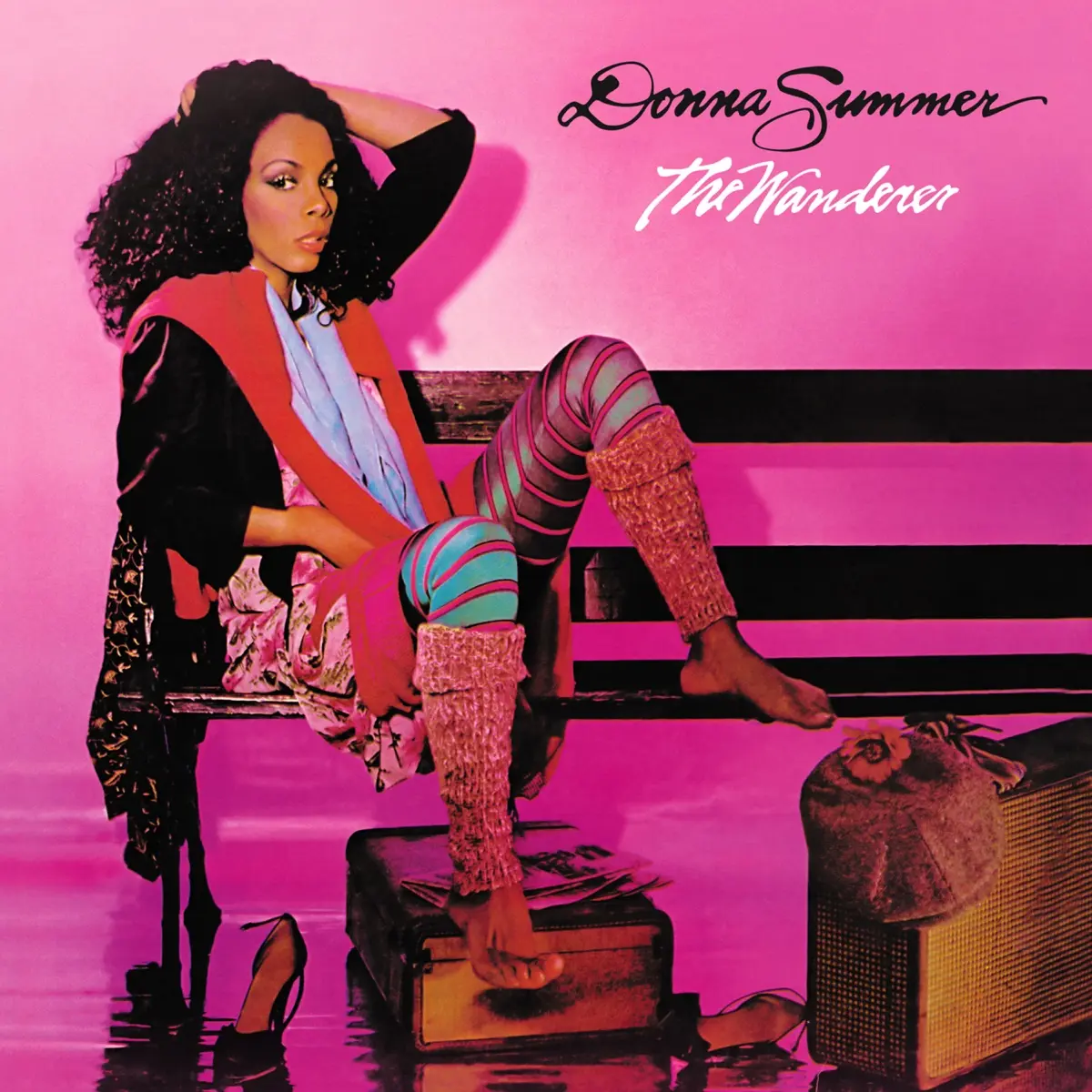 Donna Summer released her eighth studio album, The Wanderer, on October 20, 1980, on Geffen.
The Wanderer marked Summer’s first release for Geffen Records and a conscious departure from disco, moving into rock and new wave territory while retaining select dance-oriented elements. The album blends driving four-on-the-floor beats, AOR-style power chords, and synth textures reminiscent of early 1980s pop-rock and proto-MTV new wave.
Summer co-wrote five tracks with Giorgio Moroder, Pete Bellotte, and Harold Faltermeyer contributing additional songwriting. Notable collaborations include Bellotte, Levay, and Jerry Rix on “Who Do You Think You’re Foolin’,” and Faltermeyer, Forsey, and Bellotte on “Cold Love.”
The album opens with the title track, a soft, whispery performance over angular, new wave-styled synths and a shuffling beat. “Looking Up” and “Running for Cover” reflect her transitional disco-pop tendencies, while “Breakdown” and “Grand Illusion” explore more theatrical, synth-driven textures. Harder-edged rock dynamics dominate “Cold Love,” and “Who Do You Think You’re Foolin’” juxtaposes disco-era pacing with AOR energy. The final track, “I Believe in Jesus,” channels Summer’s gospel roots in a reflective, structured arrangement.
A1. “The Wanderer” (3:47) — Donna Summer, Giorgio Moroder; angular synth riffs and shuffling beats frame a lyrical search for purpose and self-direction, Summer’s restrained vocal phrasing evoking a reflective wanderer.
A2. “Looking Up” (3:57) — Pete Bellotte, Moroder, Summer; rising synth lines and a brisk pace underline aspiration and striving, lyrics depicting a quest for clarity amid transition.
A3. “Breakdown” (4:08) — Harold Faltermeyer, Bellotte; contoured keyboard figures and punctuated rhythms mirror the narrative of emotional fracture and vulnerability.
A4. “Grand Illusion” (3:54) — Moroder, Summer; restrained synth textures and staccato instrumentation evoke disillusionment and the disparity between image and reality.
A5. “Running for Cover” (4:01) — Summer; steady rhythms accompany a lyrical depiction of evasion and cautious withdrawal from relational entanglements.
B1. “Cold Love” (3:38) — Keith Forsey, Bellotte, Faltermeyer; sharp guitar lines and driving tempo convey the tension of desire intertwined with emotional detachment.
B2. “Who Do You Think You’re Foolin’” (4:18) — Sylvester Levay, Jerry Rix, Bellotte; layered synths and dynamic shifts underline deception and self-examination in romantic entanglements.
B3. “Nightlife” (4:00) — Bellotte, Moroder; contoured rhythms and angular synth passages depict nocturnal exploration and the seductive pull of urban escapism.
B4. “Stop Me” (3:44) — Bellotte, Forsey; staccato instrumentation and abrupt tempo changes reflect interruption and the cyclical nature of temptation.
B5. “I Believe in Jesus” (3:37) — Summer; flowing keyboard lines and measured pacing frame the affirmation of faith, with vocal phrasing conveying devotion and spiritual grounding.
Backing musicians included Jeff Baxter, Steve Lukather, and Tim May on guitars; Les Hurdle, John Pierce, and Leland Sklar on bass; Harold Faltermeyer and Sylvester Levay on keyboards and synthesizers; Keith Forsey on drums and percussion; and Gary Herbig on saxophone. Vocal backing was provided by Bill Champlin, Carmen Grillo, Tom Kelly, and Stephanie Spruill.
Sessions occurred at Westlake Audio and Rusk Sound in Hollywood, California, with Pete Bellotte and Giorgio Moroder producing and mixing, and Harold Faltermeyer, Jürgen Koppers, and Brian Reeves engineering. Mastering took place at A&M Studios in Hollywood.
Geffen promoted the album with three singles. “The Wanderer” (b/w “Stop Me”) led on September 20, 1980, peaking at No. 3 on the Billboard Hot 100 and No. 2 on Cash Box. “Cold Love” followed on November 29, 1980, reaching No. 33 on the Hot 100, while “Who Do You Think You’re Foolin’” (b/w “Running for Cover”) appeared February 21, 1981, briefly entering the Top 40 and charting on the dance chart.
I’m a Rainbow
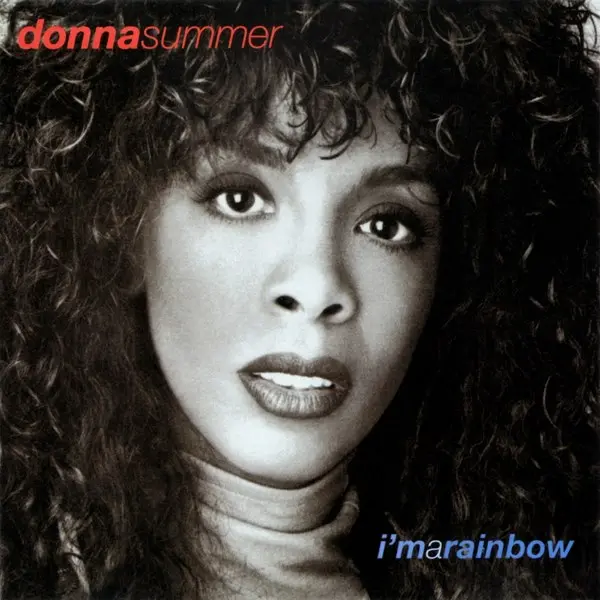 In July 1981, Donna Summer readied I’m a Rainbow, a two-record set intended as her ninth studio album.
The album blends dance-oriented tracks with synth-driven pop, funk, ballads, and rock-inflected new wave, marking one of Summer’s most stylistically diverse projects. It features her signature emotive vocals across angular synth lines and contoured melodies, with themes ranging from personal introspection to love and optimism. Summer performed duets and solos across tracks that explore both uptempo rhythms and reflective balladry.
Backing musicians include keyboardists Harold Faltermeyer and Sylvester Levay, guitarist Giorgio Moroder, and Joe “Bean” Esposito (vocals). The sessions also feature contributions from Pete Bellotte and Bruce Sudano on songwriting and production.
Summer wrote several tracks herself and co-wrote with Moroder, Bellotte, Faltermeyer, Levay, and Sudano. Covers include Andrew Lloyd Webber and Tim Rice’s “Don’t Cry for Me Argentina.” Duets and collaborations, like the opening track with Esposito, emphasize the album’s breadth across pop, funk, and synthpop styles.
Songs divide into ballads (“I Believe (In You)”, “You to Me”, “Melanie”), dance-rock numbers (“Leave Me Alone”, “Highway Runner”, “Romeo”), synth-driven tracks (“People Talk”, “A Runner With the Pack”), and intimate personal songs (“Brooklyn”, “I’m a Rainbow”). “To Turn the Stone” experiments with Celtic-tinged new age textures.
A1. “I Believe (In You)” (duet with Joe Esposito) (4:31) — Faltermeyer, Forsey; flowing synth lines and measured rhythm underscore a duet of trust and affirmation, vocal interplay emphasizing mutual support.
A2. “True Love Survives” (3:38) — Bellotte, Summer; contoured keyboard textures accompany lyrics of enduring affection, rhythms rising and falling to convey persistence through trials.
A3. “You to Me” (4:40) — Bellotte, Levay; angular synth phrases and deliberate tempo shifts depict intimate connection and vulnerability.
A4. “Sweet Emotion” (3:45) — Bellotte, Levay; steady pulses and subtle chordal turns reflect nuanced affection and reflective longing.
A5. “Leave Me Alone” (4:06) — Faltermeyer, Forsey; sharp instrumental turns and brisk pacing narrate the assertion of independence and boundary-setting.
B1. “Melanie” (3:40) — Moroder, Summer; synth-driven textures and shifting rhythms convey affection and gentle guidance, lyrical focus on a child’s presence.
B2. “Back Where You Belong” (3:53) — Faltermeyer, Forsey; staccato keyboards and measured tempo support lyrics of reconciliation and returning to one’s roots.
B3. “People Talk” (4:16) — Moroder, Summer; flowing synth patterns and alternating pace frame reflections on gossip and societal judgment.
B4. “To Turn the Stone” (4:21) — Bellotte, Moroder; contoured instrumentation and subtle tempo variation evoke a mystical search and self-realization.
B5. “Brooklyn” (4:36) — Bellotte, Levay, Summer; rhythmic pulses and soft synth accents narrate maternal affection and celebration of a newborn.
C1. “I’m a Rainbow” (4:07) — Sudano; flowing textures and modulating rhythm convey self-affirmation and the spectrum of personal emotion.
C2. “Walk On (Keep On Movin’)” (3:51) — Bellotte, Moroder; angular synth lines and forward-driving tempo emphasize perseverance and onward motion.
C3. “Don’t Cry for Me Argentina” (4:29) — Rice, Lloyd Webber; subtle keyboard shifts and gentle pacing underscore narrative reflection and emotional restraint.
C4. “A Runner with the Pack” (4:08) — Bellotte; staccato synth patterns and brisk tempo depict ambition and determined pursuit.
D1. “Highway Runner” (3:29) — Moroder, Summer; driving rhythms and angular synths illustrate momentum and fleeting freedom.
D2. “Romeo” (3:19) — Bellotte, Levay; contoured keyboard lines and rhythmic accents explore obsession and infatuation.
D3. “End of the Week” (3:39) — Bellotte, Levay; shifting rhythms and bright synth textures evoke relief and optimism at week’s close.
D4. “I Need Time” (4:24) — Bellotte, Moroder, Summer; measured pacing and layered synth turns frame introspection and desire for personal space.
Sessions occurred March–July 1981 with Moroder, Bellotte, and Faltermeyer producing. Engineering details are limited.
The 1996 release by Casablanca and Mercury presented the shelved album in mostly demo form, highlighting Summer’s vocals amid stripped-down synths and percussion. No singles or videos were issued at the time.
Several tracks later appeared through other artists: The Real Thing released “I Believe in You” (1981), Anni-Frid Lyngstad recorded “To Turn the Stone” (1982), Joe Esposito included “To Turn the Stone” on Solitary Men (1983), Helen St. John covered “To Turn the Stone” and “Melanie” (1982), and Amii Stewart recorded “You to Me” and “Sweet Emotion” (1983).
Donna Summer
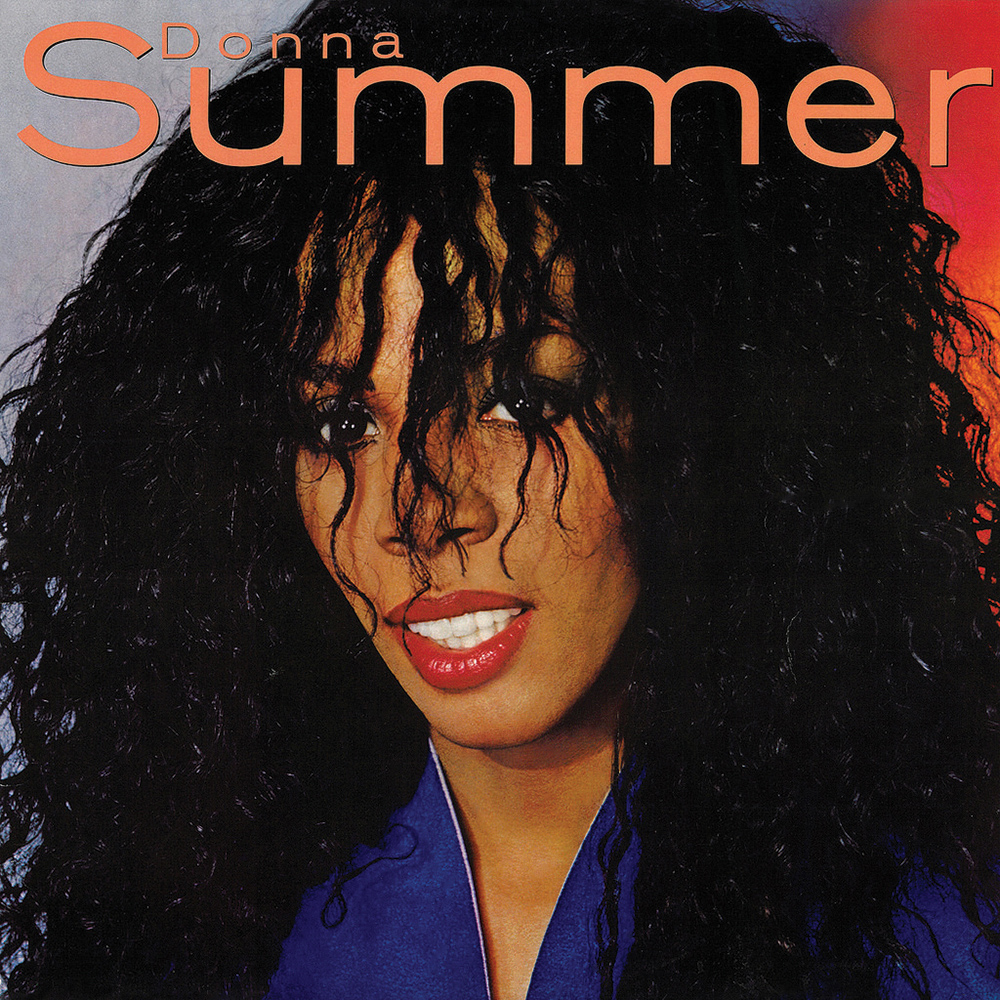 Donna Summer released her tenth-recorded studio album, simply titled Donna Summer, on July 19, 1982, on Geffen.
The album shifts away from the disco-focused sound of her 1970s output, emphasizing soul, pop dance, and post-disco textures. Several tracks integrate gospel-inspired arrangements, while others lean on rock and jazz standards, creating a diverse sonic palette across the record. Notable elements include multi-layered synths, horn arrangements, and choral vocals that expand the scale of the sound.
Summer wrote or co-wrote several tracks herself, collaborating with prominent songwriters, including David Foster and Rod Temperton. She also sings submissions by Bruce Springsteen, David Batteau, Richard Page, and producer Quincy Jones. The album features the Jon and Vangelis cover “State of Independence” and a jazz standard interpretation of Billy Strayhorn’s “Lush Life.”
Musically, the album alternates between polished pop-dance numbers, contemplative ballads, and spiritually-inflected anthems. “Love Is in Control (Finger on the Trigger)” employs tight, syncopated rhythms and layered vocals. “Mystery of Love” incorporates a Bach prelude in its keyboard introduction. The gospel-leaning “State of Independence” and “Livin’ in America” feature all-star choirs that punctuate the tracks with grandeur. Ballads like “The Woman in Me” and “Lush Life” showcase Summer’s vocal nuance against rich harmonic backdrops.
A1. “Love Is in Control (Finger on the Trigger)” (4:18) — Jones/Temperton/Ross; lead single, Grammy-nominated; rhythmic pop-dance with layered vocal arrangements and horn accents, blending driving synths with punctuated percussion.
A2. “Mystery of Love” (4:25) — Lang/Meyers/Page; incorporates opening material from Bach’s Well-Tempered Clavier, featuring contoured synthesizer textures and measured rhythmic shifts supporting reflective lyrics.
A3. “The Woman in Me” (3:55) — Bettis/Clark; mid-tempo ballad with contoured keyboard turns, emphasizing warmth and expressive vocal phrasing to convey intimate reflection.
A4. “State of Independence” (5:50) — Anderson/Vangelis; gospel-styled track with an all-star choir including Michael Jackson, Lionel Richie, Dionne Warwick, and Stevie Wonder, layering rhythmic variation and spiritual lyricism.
B1. “Livin’ in America” (4:41) — Foster/Jones/Lukather/Summer/Temperton; choral anthem celebrating Americana, supported by layered synth textures, percussion accents, and dynamic pace shifts.
B2. “Protection” (3:35) — Springsteen; rock-inflected composition with angular guitar lines, Springsteen on backing vocals, and measured tempo framing lyrics of personal safeguarding.
B3. “(If It) Hurts Just a Little” (3:52) — Batteau/D. Sembello/M. Sembello; uptempo, gospel-influenced track with bright synthesizer flourishes, rhythmic propulsion, and lyrics conveying gentle reassurance.
B4. “Love Is Just a Breath Away” (3:55) — Foster/Summer/Temperton; introspective ballad with subtle harmonic shifts and contoured instrumentation reflecting longing and quiet reflection.
B5. “Lush Life” (6:26) — Strayhorn; jazz standard interpretation, tender vocal phrasing over rich arrangements, featuring shifting tempo and angular harmonic turns to accentuate lyrical melancholy.
Sessions occurred at Westlake Studios (Los Angeles), Ocean Way (Nashville), and Allen Zentz (Hollywood) with Quincy Jones producing, Bruce Swedien engineering and mixing, and Bernie Grundman mastering.
“Donna Summer” features artwork by David Alexander and design by Jeff Lancaster and Chris Whorf.
Geffen promoted the album with the single “Love Is in Control (Finger on the Trigger)” (b/w “Sometimes Like Butterflies”), which reached No. 10 on the Billboard Hot 100 and No. 4 on the R&B chart. “State of Independence” followed (b/w “Love Is Just a Breath Away”), reaching No. 41 on the Hot 100 and topping the Netherlands chart. “The Woman in Me” (b/w “Livin’ in America”) reached No. 33 on the Hot 100 and No. 17 on Adult Contemporary. “Protection” was issued as a single in Japan in December 1982.
She Works Hard for the Money
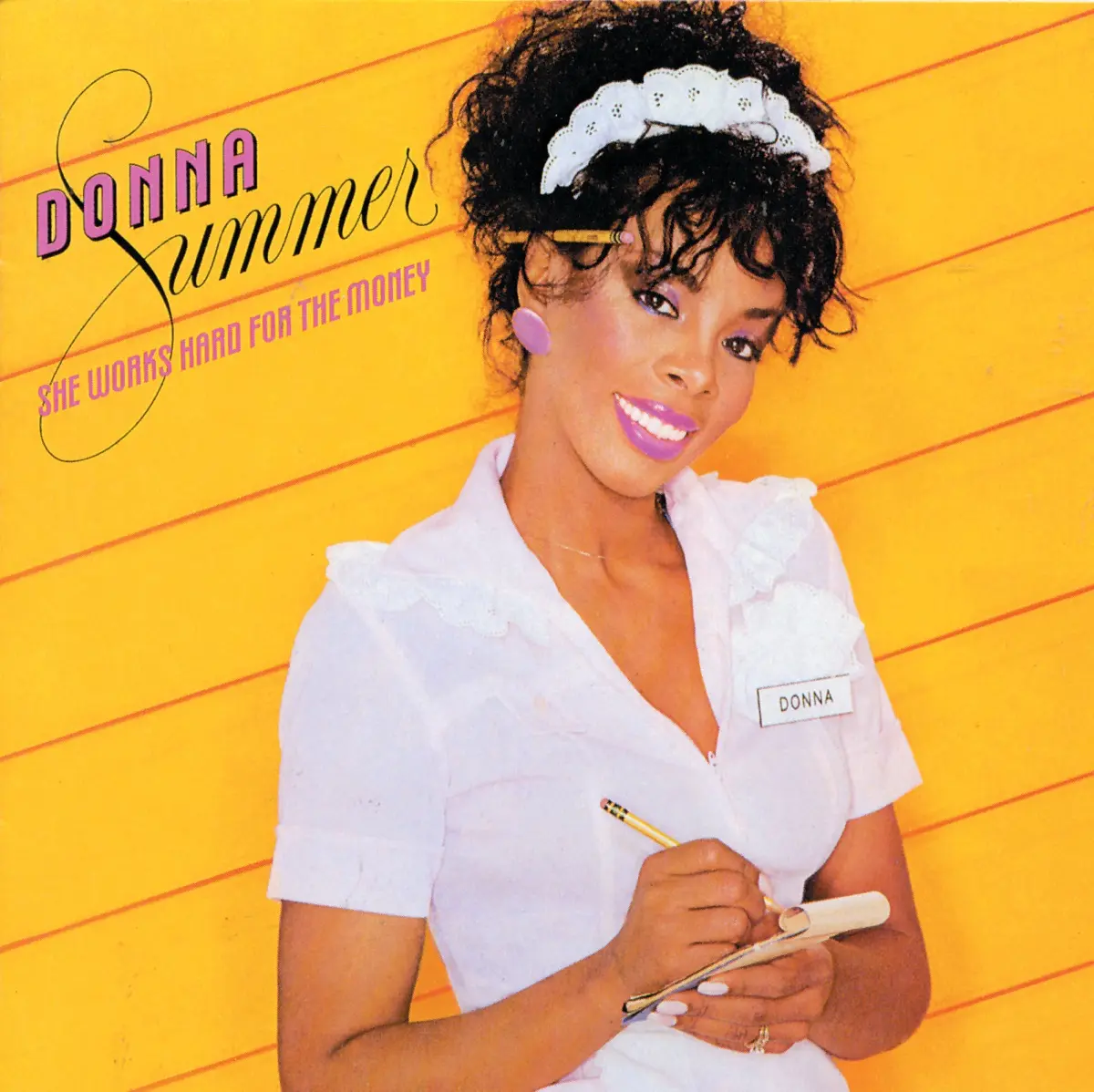 Donna Summer’s tenth-released studio album, She Works Hard for the Money, appeared on June 13, 1983, on Mercury.
Summer co-wrote the album with producer Michael Omartian. Three songs feature additional co-writers: Greg Phillinganes, Bruce Sudano, and Jay Graydon.
Musically, the album divides into dance-oriented tracks, soulful duets, reggae-inflected songs, and ballads. Lyrical content addresses work, social issues, spirituality, and love.
“She Works Hard for the Money” celebrates working women with assertive rhythms and layered backing vocals. “Stop, Look and Listen” blends funk-leaning keyboards and percussion. The reggae-styled “Unconditional Love” features Musical Youth, while “Love Has a Mind of Its Own” presents a tender duet with Matthew Ward. Synth-driven pop-rock tracks like “Tokyo” sit alongside spiritually focused songs such as “People, People” and the closing ballad “I Do Believe (I Fell in Love).”
A1. “She Works Hard for the Money” (5:19) — Donna Summer, Michael Omartian; dance-pop anthem inspired by waitress Onetta Johnson, driving keyboards and layered rhythm emphasize empowerment.
A2. “Stop, Look and Listen” (5:52) — Omartian, Greg Phillinganes, Summer; mid-tempo track with layered keyboards and rhythmic variations, reflecting careful attention and awareness.
A3. “He’s a Rebel” (4:22) — Jay Graydon, Omartian, Summer; energetic pop-rock track exploring spiritual themes, with dynamic pacing and contoured synth lines.
A4. “Woman” (4:19) — Graydon, Omartian, Bruce Sudano, Summer; uptempo synth-driven number emphasizing layered rhythm and keyboard textures, asserting strength and confidence.
B1. “Unconditional Love” (4:42) — Michael Omartian, Summer; reggae-styled composition featuring Musical Youth, bright synth accents and rhythmic propulsion frame lyrics of universal care.
B2. “Love Has a Mind of Its Own” (4:16) — Omartian, Sudano, Summer; duet with Matthew Ward, mid-tempo ballad with contoured keyboard lines and harmonic interplay conveying intimate reflection.
B3. “Tokyo” (4:15) — Omartian, Sudano, Summer; dance-rock track with rhythmic emphasis and synthesizer textures, presenting a vibrant, kinetic narrative.
B4. “People, People” (4:09) — Omartian, Sudano, Summer; spiritually themed ballad with measured pace and subtle harmonic shifts, inviting introspection.
B5. “I Do Believe (I Fell in Love)” (4:34) — Summer; closing ballad featuring lush arrangements and expressive vocal phrasing, evoking heartfelt emotion and devotion.
Backing vocals include contributions from Musical Youth and Matthew Ward, with instrumentation by Michael Omartian (piano, synthesizers, guitars, drum programming), Marty Walsh (guitar), Ray Parker Jr. (rhythm guitar), Jay Graydon (guitar), Steve Lukather (guitar solo), Nathan East (bass), Mike Baird (drums), and a horn section including Jerry Hey, Gary Grant, Dick Hyde, Charlie Loper, and Gary Herbig.
Sessions occurred at Lion Share (Los Angeles), Hollywood Sound Recorders (Hollywood), and Rhema Studio (Beverly Hills) with Michael Omartian producing, John Guess engineering and mixing, Larry Ferguson and Ross Pallone on additional recording, and mastering handled by Bernie Grundman and Steve Hall.
The album features artwork by Chris Whorf and art direction by Whorf and Harry Langdon. The cover depicts Summer alongside waitress Onetta Johnson in diner attire, reflecting the title track’s narrative.
Mercury promoted the album with “She Works Hard for the Money” (b/w “I Do Believe (I Fell in Love)”), which reached No. 3 on the Billboard Hot 100, No. 1 on the R&B chart, and No. 3 on the Dance chart. “Unconditional Love” followed in August 1983, peaking at No. 43 Hot 100, No. 9 R&B, and No. 14 UK. “Love Has a Mind of Its Own” released in December 1983, reaching No. 70 Hot 100, No. 35 R&B, and No. 19 Adult Contemporary. “Stop, Look and Listen” charted at No. 57 in the UK.
Cats Without Claws
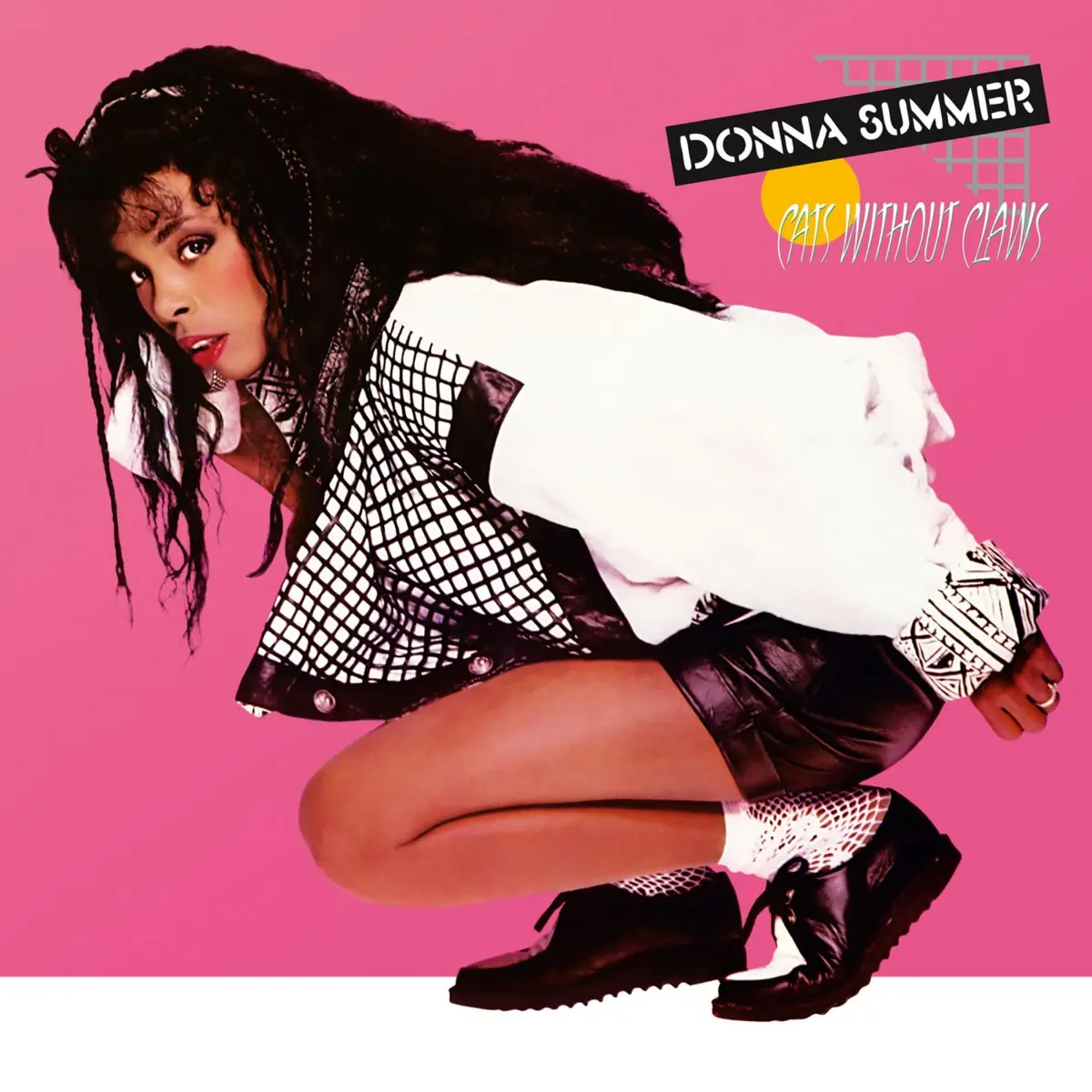 Donna Summer’s twelfth-recorded, eleventh-released studio album, Cats Without Claws, appeared on September 11, 1984, on Geffen.
The album mixes rhythm-driven pop and dance tracks with soulful ballads and gospel-inflected numbers, including a cover of The Drifters classic “There Goes My Baby.”
Summer and producer Michael Omartian co-wrote eight tracks. Bruce Sudano contributed to “I’m Free” and each side opener. Ballads like “Maybe It’s Over” (a Donna solo composition) and “Forgive Me” contrast with up-tempo, synth-driven tracks such as “Supernatural Love” and “Eyes.” “There Goes My Baby” blends electro-pop with narrative lyrics, while “Forgive Me” emphasizes gospel harmonies and earned Summer a Grammy.
A1. “Supernatural Love” (3:33) — synthesizer layers and brisk rhythmic variations drive a narrative of urgent, fated connection.
A2. “It’s Not the Way” (4:22) — angular synth motifs and steady pacing underline lyrics warning against misguided choices in relationships.
A3. “There Goes My Baby” (4:05) — The 1958 No. 2 Drifters hit, written by Benjamin Earl Nelson, Lover Patterson, and George Treadwell. Here, electro-pop textures frame the story of love lost and remembrance.
A4. “Suzanna” (4:29) — contoured keyboard lines and flowing rhythm support lyrics exploring a woman’s inner reflection and self-determination.
A5. “Cats Without Claws” (4:20) — driving keyboard accents and shifting pace accompany a meditation on independence and personal strength.
B1. “Oh Billy Please” (4:55) — synth and percussion patterns create tension around a plea for reconciliation, phrased through urgent vocal turns.
B2. “Eyes” (4:45) — calypso-infused rhythm and angular synth lines evoke a playful, searching perspective on romantic attention.
B3. “Maybe It’s Over” (4:43) — measured tempo and layered keys accompany introspective lyrics of closure and emotional transition.
B4. “I’m Free” (4:29) — contoured synth textures and brisk rhythmic shifts reinforce lyrics celebrating liberation and self-expression.
B5. “Forgive Me” (4:30) — written by Christian gospel artists Dony McGuire and Reba Rambo, first released in 1980 on their album, The Lord’s Prayer. Summers’ gospel-infused arrangement with measured pace conveys themes of spiritual repentance and grace.
Summer recorded vocals over keyboards, guitars, bass, drums, percussion, and programmed synthesizers handled by Omartian, Erich Bulling, Paul Jackson Jr., Michael Landau, Nathan East, Mike Baird, and Paulinho da Costa, supported by a dozen backing vocalists.
Sessions occurred at Lion Share (Los Angeles), Rhema (Beverly Hills), and United Western (Hollywood), with Omartian producing and John Guess engineering and mixing select tracks. Mixing also involved Jürgen Koppers; Steve Hall mastered at Future Disc (Hollywood, California).
Cats Without Claws produced three singles. Geffen promoted “There Goes My Baby” (b/w “Maybe It’s Over”), which reached No. 21 on the US Hot 100. “Supernatural Love” followed (b/w “Face the Music”), peaking at No. 75 on the Hot 100 and No. 39 on the Hot Dance Club Play chart. “Eyes” (b/w “It’s Not the Way”) reached No. 97 in the UK and included a remix by John “Jellybean” Benitez.
2014 Demon Music Group bonus tracks:
11. “Face the Music” (4:14) — Bruce Sudano, Summer; layered synths and moderate tempo frame a narrative of accountability and facing consequences.
12. “Eyes” (Jellybean 7″ Remix Edit) (3:46) — remixed textures and concise pacing highlight playful observation and pursuit.
13. “Supernatural Love” (Extended Dance Remix) (6:12) — extended synth passages and evolving rhythmic patterns amplify the song’s sense of fated urgency.
14. “Eyes” (Extended Mix) (6:58) — elongated synth phrases and shifting pace intensify the playful, searching narrative.
15. “I’m Free” (Extended Mix) (6:18) — extended contoured synths and dynamic rhythm variations emphasize liberation and assertive self-expression.
Discography:
- Lady of the Night (1974)
- Love to Love You Baby (1975)
- A Love Trilogy (1976)
- Four Seasons of Love (1976)
- I Remember Yesterday (1977)
- Once Upon a Time (2LP, 1977)
- Live and More (2LP live, 1978)
- Bad Girls (2LP, 1979)
- The Wanderer (1980)
- Donna Summer (1982)
- She Works Hard for the Money (1983)
- Cats Without Claws (1984)
- All Systems Go (1987)
- Another Place and Time (1989)
- I’m a Rainbow (1996, recorded 1981)
Sources:
Artist/Album Pages:
Pulsar was a French space-rock band that released the albums Pollen (1975) and The Strands of the ...
American Tears were an American hard-rock trio behind the 1974–77 Columbia albums Branded Bad, Tea...
Genfuoco was an Italian symphonic-rock band that released the 1979 album Dentro l'invisible on Cit...
Bloodstone was an American soul-psych group from Kansas City that released eight albums on Decca/L...
H.P. Lovecraft were an American psych-rock band from Chicago that released two albums with accomp...
Banzai was a Belgian jazz-rock that released three singles and the 1974 album Hora Nata. Members:...
The Doobie Brothers were an American rock band that released nine albums between 1971 and 1980 on...
Wanka was the Canadian hard-rock band behind The Orange Album, a 1977 release on Axe Records. Me...
Cozy Powell (Dec. 29, 1947 — April 5, 1998) was an English rock drummer who emerged in the early 1...
Didier Bocquet is a French electronic musician who released the 1977 album Eclipse on Le Kiosque D...
The Landress / Hart Group was an American jazz-rock band behind the 1981 album Dancing Moments on...
Nil's Jazz Ensemble was a Peruvian Latin-jazz sextet behind a 1976 self-titled album on Mag. Mem...