

Dalis Car was an English art-pop duo comprised of former Japan bassist Mick Karn and ex-Bauhaus vocalist Peter Murphy. The project yielded the album The Waking Hour on Beggars Banquet-imprint Paradox in 1984.
Members: Mick Karn (bass, keyboards, guitar, saxophone, programming), Peter Murphy (vocals), Paul Vincent Lawford (drum programming, electronics)
Background
Andonis Michaelides was born in Cyprus and emigrated to London at age three. He took up the chromatic mouth organ at seven, the violin at eleven, and later the bassoon, playing in the London School Symphony Orchestra; working entirely by ear, he had never learned to read music. After someone stole the bassoon following an LSSO concert broadcast on BBC Radio 4, and his school declined to replace it, he bought a bass guitar for £5 from a classmate and abandoned formal study. By that point he had already befriended David Sylvian and Steve Jansen, and he removed all the frets from his bass to reproduce the slides and bent notes he had developed on violin. Japan performed for the first time on June 1, 1974, when Karn was fifteen, and released five studio albums between 1978 and 1981 before disbanding. Karn’s fretless bass work during that period operated as a lead melodic voice, drawing on the sustained lines and microtonal inflection that the instrument allowed. He released his debut solo album, Titles, on Virgin in November 1982, performing nearly all instruments himself, and in July 1983 collaborated with Midge Ure on the single “After a Fashion”; plans for a full album with Ure collapsed when Ure’s Ultravox commitments intervened.
Peter Murphy grew up in Northampton and in the autumn of 1978 guitarist Daniel Ash recruited him to front the newly formed Bauhaus 1919, despite Murphy having no prior singing experience. Murphy co-founded the band with Ash, bassist David J (Ash’s brother), and drummer Kevin Haskins, and contributed his first lyrics—”In a Flat Field”—at the group’s first rehearsal. Bauhaus debuted in January 1979 with “Bela Lugosi’s Dead,” recorded at Beck Studios, and released four studio albums between 1980 and 1983 on 4AD and Beggars Banquet: In the Flat Field, Mask, The Sky’s Gone Out, and Burning From the Inside. Murphy concentrated his contributions to Bauhaus on vocal performance and lyric writing; Ash and David J largely wrote the band’s music. By the time sessions for Burning From the Inside began in 1983, Murphy had contracted pneumonia and spent time hospitalized, reducing his involvement in the recording; the remaining members wrote and recorded the bulk of the album before he recovered. Bauhaus disbanded before the album’s release.
Murphy and Karn each recalled different circumstances around their first contact. In one account, Murphy mentioned Karn’s name in a post-Bauhaus interview conducted by a Japanese journalist for the magazine Music Life; the journalist, who had recently interviewed Karn, passed along his telephone number, and Murphy called. In Karn’s account, his agent identified Murphy as a complementary collaborator—where Karn lacked experience as a lyricist and vocalist, Murphy lacked instrumental facility—and brought the two into contact. Both accounts agree on the outcome: a meeting and dinner, followed by a decision to record together. They named the project Dalis Car after a dream—reported as Murphy’s own or a friend’s depending on the source—in which someone offered a car belonging to Salvador Dalí. Some attribute the name to a Captain Beefheart song, an origin both Murphy and Karn disputed.
The collaboration was strained from the outset. Both preferred to work in isolation, exchanging tapes rather than recording together. Where Karn built instrumental passages with the expectation that Murphy’s vocals would take over, Murphy tended to hear those passages as self-sufficient and resisted singing over them. Paul Vincent Lawford, initially recruited as a full third member to play live drums, proved unable to perform under studio conditions and ended up programming most of the rhythmic patterns instead.
(Note: The name Dali’s Car—with an apostrophe—was also used for a German issue of the unofficial 1979 mini-album Floating In Sequence, a document of Brian Eno‘s February 1974 BBC sessions with his live backing band, The Winkies.)
The Waking Hour
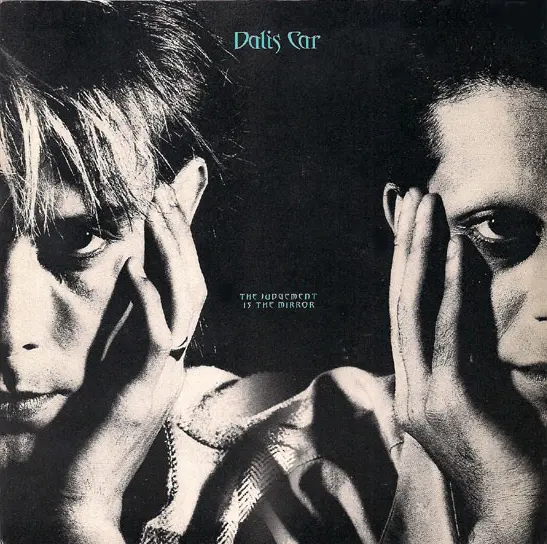
 Dalis Car released The Waking Hour in November 1984 on Paradox.
Karn’s instrumentation—fretless bass, keyboards, guitar, and saxophone—forms the near-entire foundation of the album, with Paul Lawford’s programmed rhythms and occasional live percussion providing the rhythmic frame. Murphy’s vocals sit above the instrumental texture, which tends toward slow to mid tempos and open, layered arrangements. The bass lines move with melodic independence, operating across registers rather than anchoring a fixed pulse; keyboard textures shift between arid, spare voicings and denser harmonic beds, with recurring traces of Middle Eastern tonal color. Karn and Murphy co-wrote six of the seven tracks; “Artemis” carries a sole Karn credit, and a traditional source claims “Moonlife.”
“Dalis Car” opens the album with Lawford’s drum programming establishing a rigid, forward pulse against which Karn’s bass moves in slower, arcing figures. “His Box” centers on a sustained, Middle Eastern-flavored keyboard line that recurs throughout the track, with the bass moving underneath in a more restrained register and Murphy’s harmonies stacking in the upper range. “Cornwall Stone” builds from deep bell tones and spare synths, sustaining a slow, deliberate forward motion with Murphy’s vocal set low in the mix.
“Artemis” moves at a slightly faster tempo, with the bass more prominent against a reduced keyboard presence. “Create and Melt” incorporates live tabla alongside the programmed rhythms, the two percussion sources working in and out of phase with each other. “Moonlife” carries a traditional melody set over a mid-paced arrangement with plucked string texture. “The Judgement Is the Mirror” closes with a denser synth presence than most of the album and Murphy’s vocal carrying more melodic movement than on earlier tracks.
A1. “Dalis Car” (5:12) – Karn/Murphy
A2. “His Box” (4:42) – Karn/Murphy
A3. “Cornwall Stone” (5:19) – Karn/Murphy
A4. “Artemis” (4:37) – Karn
B1. “Create and Melt” (5:36) – Karn/Murphy
B2. “Moonlife” (4:56) – Traditional
B3. “The Judgement Is the Mirror” (4:40) – Karn/Murphy
Dalis Car co-produced The Waking Hour at The Manor, AIR Studios London, and Hernplace Studios with producer–engineer Steve Churchyard, assisted by Matt Butler, Stuart Breed, and Rory Lonemore.
Paradox issued “The Judgement Is the Mirror” as a 12″ single in September 1984 with two non-album b-sides, “High Places” (3:30) and “Lifelong Moment” (4:08), both instrumentals that Karn alone produced and engineered at Fitz Studios with engineer Jonathan Miller.
“The Judgement Is the Mirror” reached number 66 on the UK Singles Chart. Karn and Murphy filmed a video for the single on location at the Ballycorus Leadmines in Dublin and at Fort St. Elmo and Ghħajn Tuffieħa Tower in Malta; Geoff Lowe directed.
Postlude
 Dalis Car did not tour, though Murphy and Karn appeared on BBC2’s The Old Grey Whistle Test to perform “His Box” over a backing track. After its release, Murphy withdrew from the project while Karn completed the two b-sides.
Murphy went solo with Should the World Fail to Fall Apart in 1986. Karn resumed his solo career with Dreams of Reason Produce Monsters in 1987. The two did not work together again until 2010, when Murphy—having heard that doctors had diagnosed Karn with terminal cancer in June of that year—contacted him by email and proposed recording a second Dalis Car album. Murphy committed to funding and organizing the project; Karn agreed. In August 2010, Murphy announced on Twitter that the two would enter the studio in September.
Karn’s health deteriorated before they could complete a full album. He died on January 4, 2011, at the age of 52. They finished five tracks, including a reworking of “Artemis” from The Waking Hour with vocals by Murphy, drums by Steve Jansen, and guitar by Jakko M Jakszyk added, retitled “Artemis Rise.” Karn’s Burning Shed MK Music store released the track as a download on July 24, 2011—what would have been Karn’s 53rd birthday.
InGladAloneness
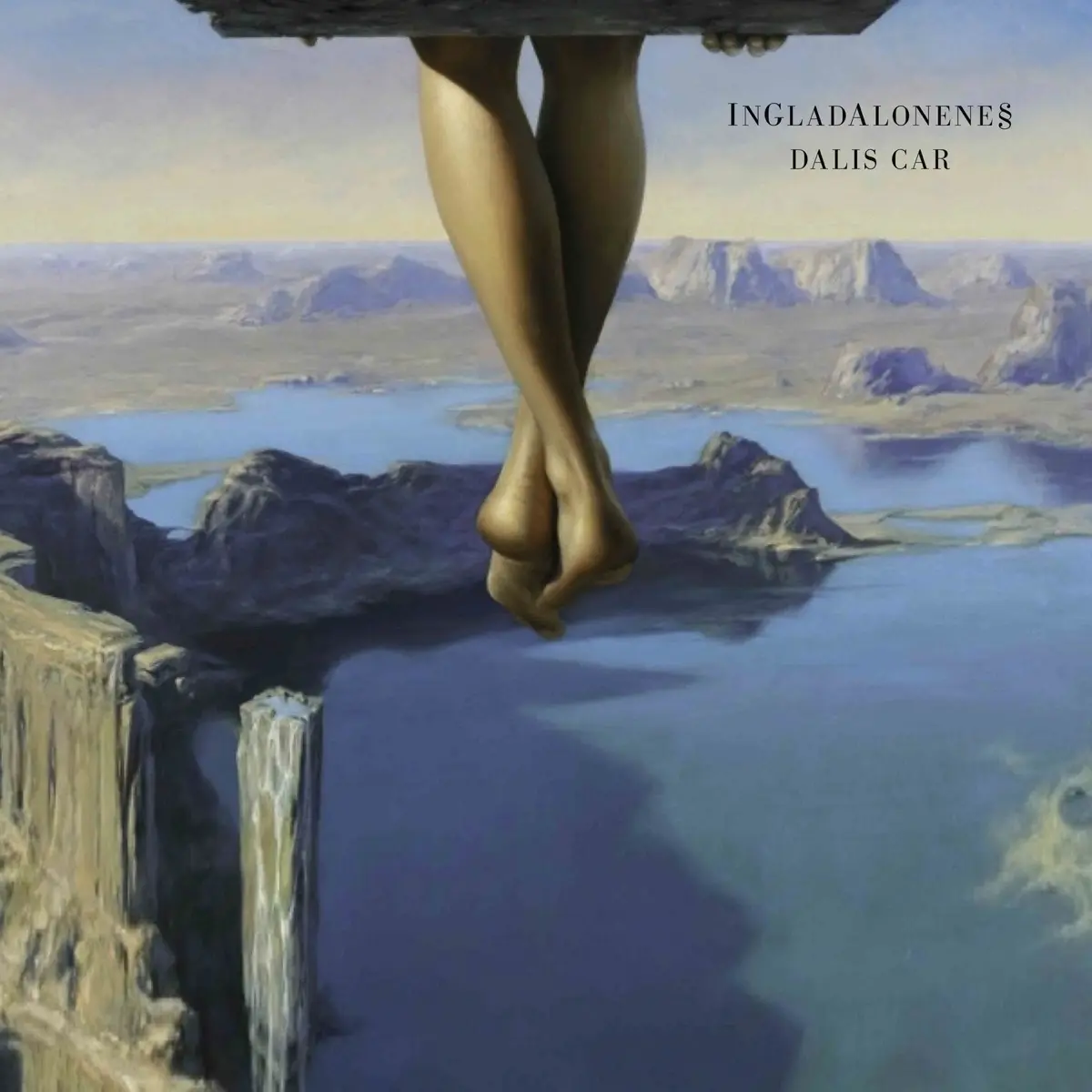 Dalis Car released InGladAloneness as an EP on April 5, 2012.
The five tracks were recorded in 2010 at Silesia Sound in Berkhamsted, Malt Barn in Oxford, and Vestry in Ealing. The lineup expands on the original Dalis Car core: Steve Jansen drums on most tracks, Jakko M Jakszyk contributes nylon acoustic and electric guitars and guzheng, Theo Travis plays saxophones and flute, and Paul Lawford returns on congas. Karn plays bass, bass clarinet, and additional guitars; Murphy sings and plays keyboards. “Artemis Rise” reworks “Artemis” from The Waking Hour with new overdubs and Murphy’s vocals added where the original was instrumental. The remaining new tracks—”King Cloud,” “Sound Cloud,” and “Subhanallah”—came out of the 2010 sessions. The EP closes with a cover of Jacques Brel’s “Ne Me Quitte Pas” under the title “If You Go Away,” featuring a string arrangement and acoustic guitar.
“King Cloud” opens at a measured tempo with Karn’s bass in a low, unhurried register beneath layered keyboard and guitar textures; David Hornsby wrote the lyrics. “Sound Cloud” carries a similar pace and weight, with Travis’s woodwinds adding harmonic color above the bass. “Artemis Rise” builds from the original “Artemis” framework and extends it with added string and guitar overdubs, Murphy’s voice moving above the structure rather than alongside it. “Subhanallah”—a traditional Turkish dua credited to a traditional source—runs under two and a half minutes, with additional vocals by Şengül and a sparse arrangement. “If You Go Away” closes the EP with soft acoustic guitar and a string arrangement by Jansen, Murphy delivering at his most unornamented.
1. “King Cloud” (5:01) – Karn/Murphy (lyrics: Hornsby)
2. “Sound Cloud” (4:25) – Karn/Murphy
3. “Artemis Rise” (4:52) – Karn/Murphy
4. “Subhanallah” (2:16) – Traditional
5. “If You Go Away” (2:51) – Jacques Brel
Jansen mixed the EP, mastered in Istanbul by Pieter Snapper. Thomas Bak designed the artwork around a painting by Jarosław Kukowski. The Japanese pressing added a memorial photo booklet with photographs by Jansen and written contributions from artists who had collaborated with Karn. Jansen signed the first 250 copies of the standard release. On July 24, 2013—what would have been Karn’s 55th birthday—Murphy signed 100 copies made available that day, with proceeds directed to the Mick Karn Appeal Charity.
Discography:
- The Waking Hour (1984)
- InGladAloneness (EP, 2011)
Sources:
Artist/Album Pages:
Trickster was an English rock band that released the album Find the Lady on Jet in 1977, followed ...
Bob Welch (July 31, 1946 — June 7, 2012) was an American singer, guitarist, and songwriter from Lo...
Patrice Meyer is a French jazz-rock guitarist behind the 1983 Müsic'Al album Racines Croisées, fol...
National Pastime was an English rock band that released three singles in 1984 on Spellbound Record...
Howard Riley (born Feb. 16, 1943) is an English jazz pianist and composer from Huddersfield, West ...
Alcatraz was a German jazz-rock band that released the 1971 Philips album Vampire State Building. ...
Josef K was a Scottish post-punk band that released five singles and the 1981 album The Only Fun i...
The Smoke was an English mod-rock/freakbeat band responsible for the 1967 singles "My Friend Jack," ...
Boa was a Yugoslav new wave band from Zagreb in modern-day Croatia. They released three albums in ...
Kashif Saleem (Dec. 26, 1956 — Sept. 25, 2016) was an American R&B singer, songwriter, and key...
Noir was an English soul-psych band that cut one album, We Had to Let You Have It, released in 197...
Quiet Sun was an English jazz-rock band from London, initially active circa 1970/71 and briefly re...