

It’s Immaterial was an English sophisti-pop band from Liverpool that released five 1980–85 shortplayers and the 1986 album Life’s Hard and Then You Die, which contains the UK hit “Driving Away from Home.” Their second album, Song, appeared in 1990 on Virgin–Siren.
Members: John J. Campbell (vocals), Martin Dempsey (guitar, 1980-84), Henry Priestman (keyboards, 1980-84), Paul Barlow (drums, 1980-84), Jarvis Whitehead (guitar, keyboards, 1982-90)
Background
It’s Immaterial formed in late when original Yachts vocalist John J. Campbell teamed with two former bandmates: guitarist Martin Dempsey and keyboardist Henry Priestman. Campbell appears on the 1977 debut Yachts single “Suffice to Say.” Dempsey and Priestman continued with the four-piece Yachts lineup responsible for the 1979–80 Radar albums Yachts and Without Radar.
Early Singles
I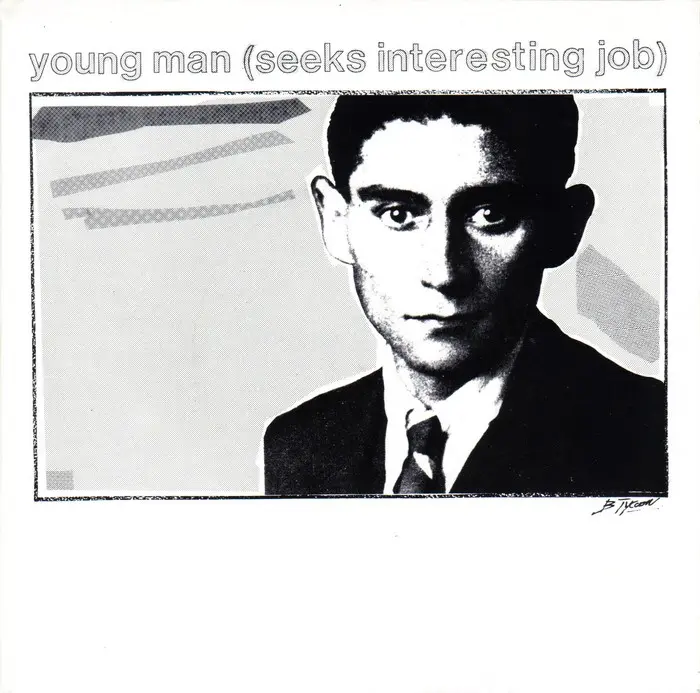 n late 1980, It’s Immaterial released their first single: “Young Man (Seeks Interesting Job)” backed with the group original “Doosha (A Success Story).”
A. “Young Man (Seeks Interesting Job)” (2:56) is a song, credited to Terry Britten, is a two-chord ditty featuring punchy horns and yobbo harmonies.
B. “Doosha (A Success Story)” (-)
It’s Immaterial recorded and produced the single on May 14, 1980, as the ‘Four Executives,’ a business moniker for their label, Hit Machine, operated at 5 Harvgreaves Rd, Liverpool. The picture sleeve shows a young photo of Czech novelist Franz Kafka (1883–1924).
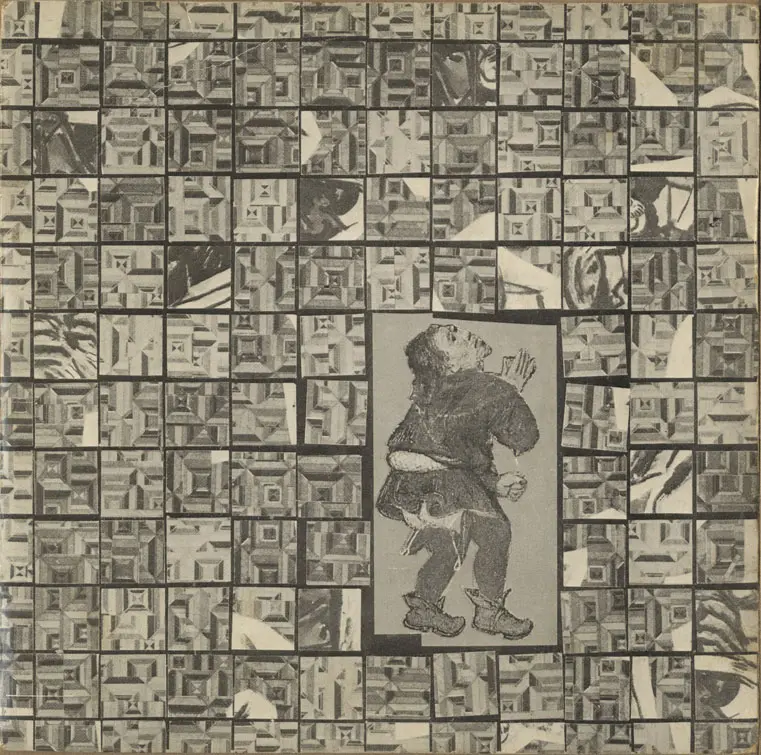 In 1981, It’s Immaterial released one single (“Imitate the Worm”) on one-press IHM and another (“A Gigantic Raft In the Philippines”) on Liverpool indie Inevitable, the label of Eric’s Club (former Cavern) manager Pete Fulwell.
A. “Imitate the Worm” (2:49)
B. “The Worm Turns” (-)
A. “A Gigantic Raft In the Philippines” (2:32) This track features a galloping precision with an octave-darting bassline, and guitar work that is alternately slashing, matted, harmonic, and tremolo, all set against a loutish chorus.
B. “No Place for a Prompter” (2:28) Characterized by four distinct wallops per bar, a crisp circular bass, ’50s vibrato twang, and echoey chords, with remote, wordless vocals.
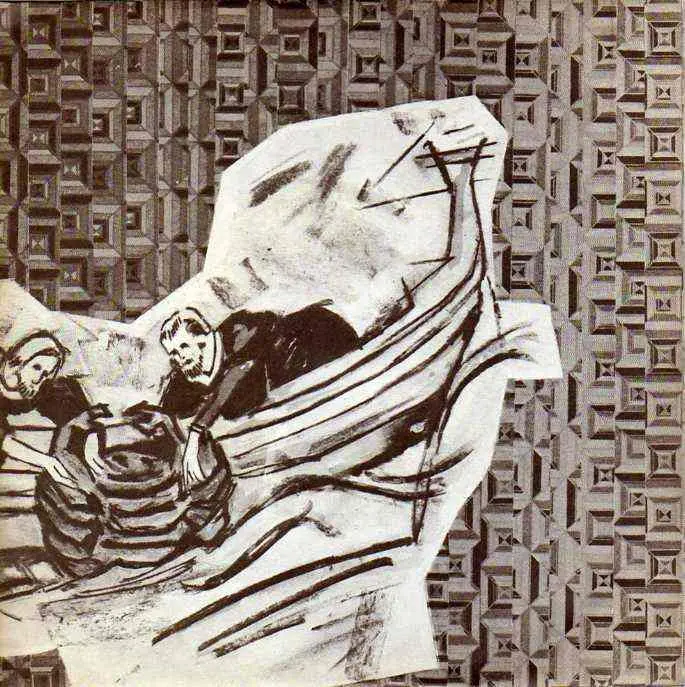 Inevitable issued “A Gigantic Raft In the Philippines” as its ninth release (cat# INEV 009), between the second Dead Or Alive single (“Number Eleven”) and the debut by China Crisis (“African and White”).
On November 4, 1981, It’s Immaterial recorded their first session for BBC Radio One DJ John Peel: “A Gigantic Raft (In the Philippines),” “Imitate the Worm,” “White Man’s Hut”, and “Rake.”
In 1982, “A Gigantic Raft In the Philippines” reappeared on two-press The Wonderful World Of.., which issued the second Black single “More Than the Sun.”
 It’s Immaterial welcomed guitarist–keyboardist Jarvis Whitehead. In 1983, they released their first of two singles on Fulwell’s Eternal label.
A. “White Man’s Hut” (-)
B. “The Worm Turns” (-)
Their second Eternal single is a 1984 re-recording of “A Gigantic Raft” with a new b-side.
A. “A Gigantic Raft (In The Philippines)” (5:05)
B. “The Mermaid” (5:14)
By 1985, It’s Immaterial trimmed to the duo of Campbell and Whitehead. In April, they cut their final Peel sessions: “Rope,” “Hang On Sleepy Town,” “Space,” and “Festival Time.”
Fish Waltz
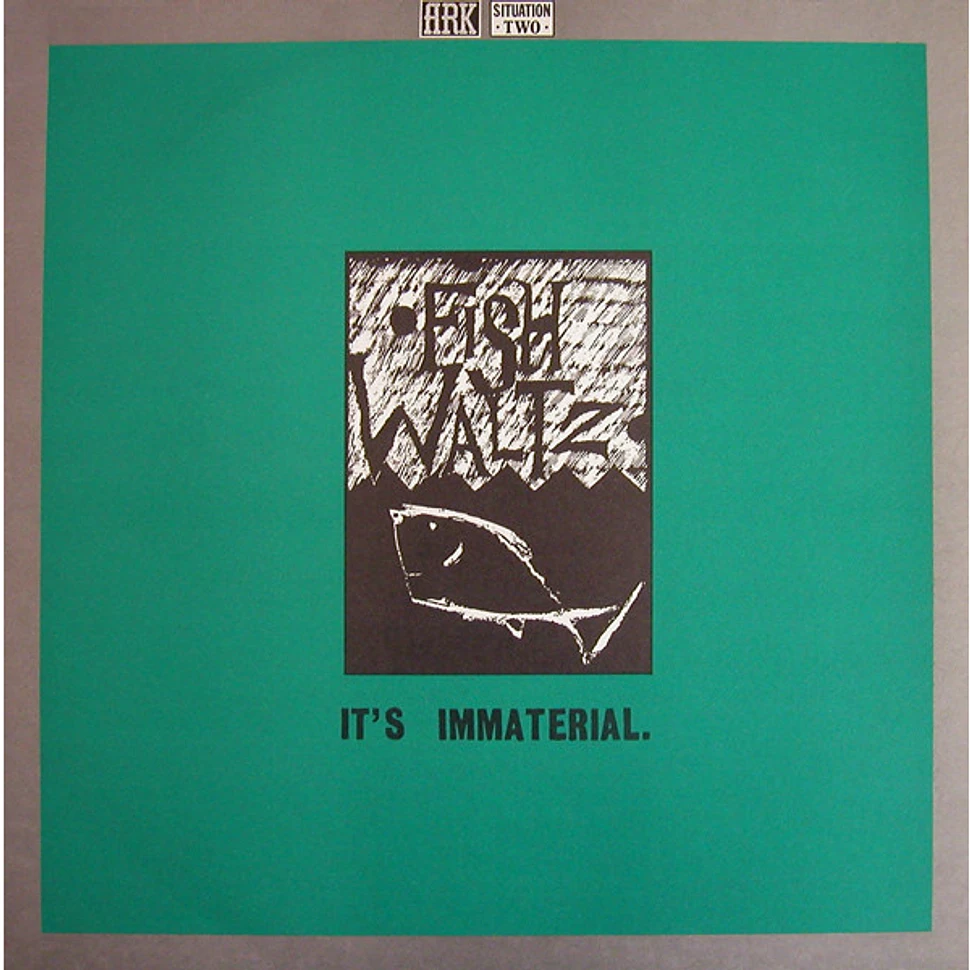 In April 1985, It’s Immaterial released the EP Fish Waltz on the Liverpool indie ARK. It features four Campbell–Whitehead numbers:
A1. “The Better Idea (Push The Boat Out)” (5:04)
A2. “Several Brothers” (3:47)
B1. “Lullaby” (5:50)
B2. “Fish Waltz” (4:13)
In October 1985, It’s Immaterial released “Ed’s Funky Diner” as their fifth unique b-side, backed with “Washing the Air.”
A. “Ed’s Funky Diner”
B. “Washing the Air”
1986–1987
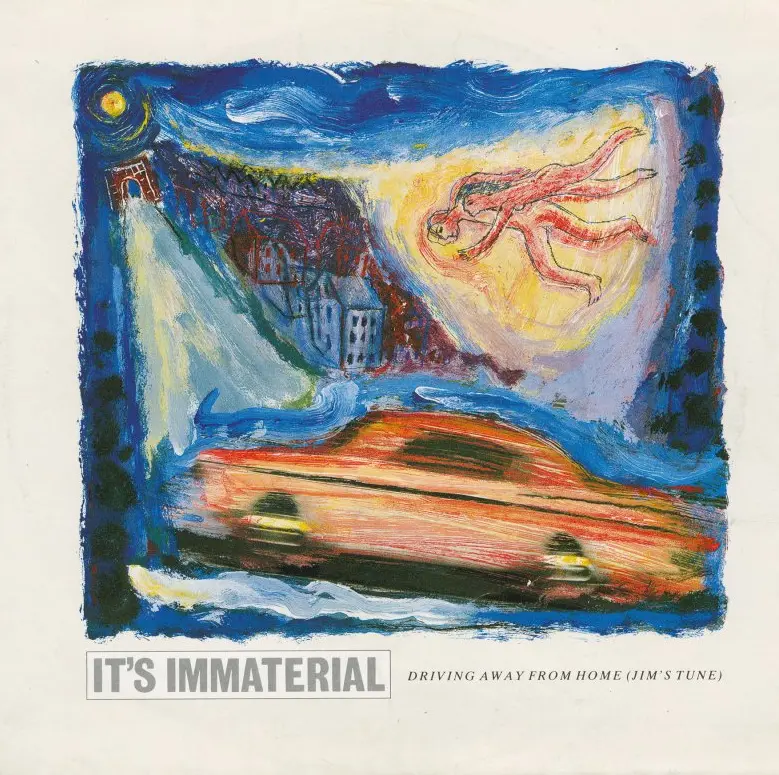 In March 1986, It’s Immaterial released their sixth unique single: “Driving Away from Home (Jim’s Tune)” backed with “Trains, Boats, Planes.”
B. “Trains, Boats, Planes”
The music video for “Driving Away from Home (Jim’s Tune)” primarily features lead singer John Campbell driving a car through various landscapes. Interspersed shots of everyday objects and actions complement the song’s contemplative tone about journeys and personal reflection.
“Driving Away from Home” reached No. 18 on the UK Singles Chart. It’s Immaterial mimed it on the April 17 broadcast of Top of the Pops, which also featured in-studio numbers by a-ha (“Train of Thought”), Big Country (“Look Away”), and Suzanne Vega (“Marlene On the Wall”).
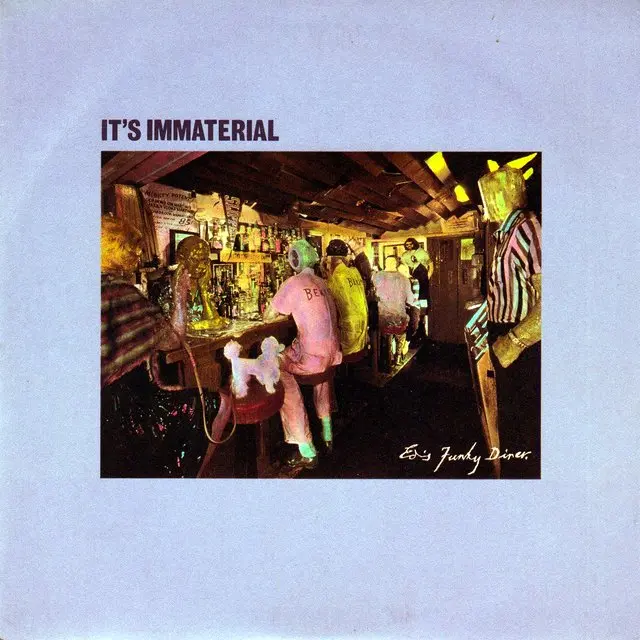 In July 1986, “Ed’s Funky Diner” reappeared with a new b-side, “Only the Lonely.”
B. “Only the Lonely” (3:42) is an original (not the Roy Orbison song) with flowing vocals, faint percussion, and brisk acoustic strum.
The music video for “Ed’s Funky Diner” by It’s Immaterial presents a surreal and eclectic scene within a diner, featuring the band members alongside a cast of unusual characters. Among these are an angel, an astronaut, an animated cat, a lady in leopard fur, men wearing vintage diver masks, and a drag burlesque dancer, all contributing to the video’s quirky and whimsical atmosphere.
Life’s Hard and Then You Die
 It’s Immaterial released their debut album, Life’s Hard and Then You Die, in September 1986 on Siren, a subsidiary of Virgin.
The album contains the recent a-sides “Driving Away From Home (Jim’s Tune)” and “Ed’s Funky Diner” and the followup singles “Space” and “Rope,” plus seven additional Campbell–Whitehead originals, including “Happy Talk,” “The Sweet Life,” and the original “Funky Diner” b-side “Washing the Air.”
Life’s Hard and Then You Die features Whitehead and Campbell on vocals and guitars, with additional musicians including Brenda Kenny, Gillian Miller, Henry Priestman, Merran Laginestra, Roddy Lorimer, Steve Wickham, Tarrant Bailey Jr., and The Christians.
Musically, Life’s Hard and Then You Die mixes uptempo pop with more reflective, atmospheric pieces. Tracks like “Driving Away From Home” and “Festival Time” offer energetic rhythms with prominent horns and guitars, while songs such as “Happy Talk” and “The Better Idea” utilize lighter instrumentation like accordion, kalimba, and piano to convey narratives of dissatisfaction and lost community. The album also delves into darker, more contemplative territory with the misty mandolin and violin of “Hang On Sleepy Town” and the lengthy, ethereal textures of “Lullaby,” showcasing the band’s varied approach to addressing themes of escape, societal critique, and personal space.
A1. “Driving Away From Home (Jim’s Tune)” (4:12) Drives on a locomotive rhythm (in C minor), featuring a piano and acoustic churn, a prominent chorus, and distinctive harmonica lines. The song describes a desire to escape the confines of suburban life, embarking on a spontaneous road trip without a fixed destination. It emphasizes the freedom and carefree spirit found in simply driving away from home, leaving worries behind. “Cause we’ll go driving away from home / Thirty miles or more / And we’ll go moving away from home / Without a care.”
A2. “Happy Talk” (5:29) This song is airy and light, built on an accordion and a 6/4 piano-accented rhythm. The narrator expresses profound dissatisfaction with a sales job and shallow social interactions, feeling that these experiences are draining and unfulfilling. He yearns for a fundamental change, stating a firm resolve to leave before being broken by the superficiality and empty “happy talk” around him. “But no, it’s not for me / I have to leave before they break me.”
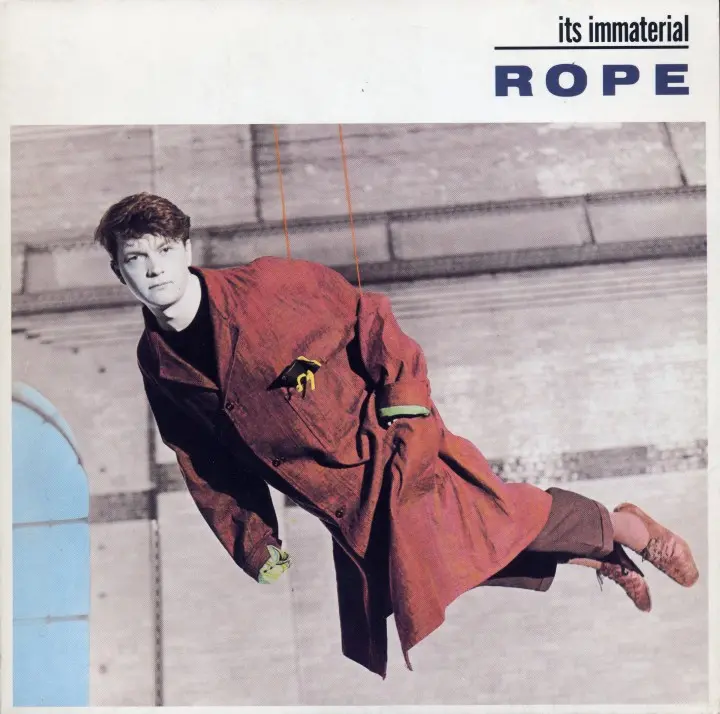 A3. “Rope” (3:37) This song conveys a sense of impending disaster and widespread deception, with rumors spreading and truth being disregarded. The narrator feels their world is falling apart, desperately calling for help as they witness a symbolic “rope breaking” and a “house burning down.” “Look! The rope is breaking / Saints alive, we’ll fall.”
A4. “The Better Idea” (5:42) Features a dropping 1/5 bassline in B, a metronome-like beat, piano-accented key changes, subdued vocals, and the distinct sound of a kalimba. The lyrics lament the decline of a once-thriving community, focusing on the loss of work and the growing division between those who have and those who do not. It recalls a past “better idea” for collective success, contrasting it with the present hardship and the grim reality of limited opportunities. “Some of the older ones can remember the better idea.”
A5. “Space” (3:59) The song explores the universal human need for personal space, defining it as a fundamental requirement for relaxation, work, and individual expression. It delves into how people define and utilize their personal boundaries, from simple belongings to mental sanctuaries. “Space is what we need / Room to breathe / Call your own.”
B1. “The Sweet Life” (4:38) A mid-tempo track (in E), laced with flamenco touches and prominent trumpet. The lyrics muse on the transient nature of memory and the allure of false promises, while celebrating a resilient human spirit that finds joy in life despite its challenges. It suggests that enjoying life and embracing its offerings, even in the face of doubt, is paramount. “How my brother sings for everything / For the love of life and what life brings.”
B2. “Festival Time” (3:52) An uptempo song with punchy sax, pizzicato cocktail guitar, and a droning/open-cadence bass amid a constant pulse, all supporting flowing vocals. This song paints a vivid picture of chaotic and often wild celebrations during carnival or festival time, marked by drunken revelry and a sense of frenzied abandonment. The narrator observes the madness, questioning whether the boisterous fun truly brings joy or merely serves as an escape. “Oh, it’s festival time this year / On beer street ’round here.”
B3. “Ed’s Funky Diner” (3:05) Characterized by soft harmonies, a snare drive, Hammond organ sustain, and an ascending horn refrain. The song depicts a vibrant and eccentric diner as a haven where diverse characters gather to share stories and find a sense of belonging. It portrays the diner as a unique space where “dreams are bought” and genuine connections are made amidst lively interactions. “Serve it up / This food for thought / Serve it up (chalk it up) / In Ed’s place, where dreams are bought.”
B4. “Hang On Sleepy Town” (4:20) A dark and misty track (in B♭), built around a mandolin/violin waltz with drawn-out vocals. The lyrics convey a deep attachment to a tranquil “sleepy town” and a plea for it to remain unchanged amidst external pressures. The narrator urges steadfastness and warns against drifting away, desiring to cling to the familiar comfort of the unchanging environment. “Stay here with me, don’t drift, no please / While this town sleeps, hang on to the breeze.”
B5. “Lullaby” (6:21) A lengthy track featuring gentle vocals, a rubbery 1/5 bassline, an echoey rhythm box, and the sounds of celesta and glockenspiel. This song is a melancholic reflection on life’s inevitable journey from birth to death, offering a somber perspective on human existence and the solace found in dreams. It advises finding peace in sleep amidst life’s struggles, with parental guidance being a lasting comfort. “Every man must lay his thoughts to rest / Finding his solution in a dream so blessed.”
CD only
11. “Washing the Air” (5:29) The lyrics express a firm refusal to accept blame or responsibility, coupled with a sense of hopelessness regarding future expectations. The narrator questions the purpose of waiting and trying when conviction is absent, reiterating a stance of non-engagement. “I refuse to take the blame / So why should I try?”
12. “Ed’s Funky Diner (The Keinholz Caper)” (5:53)
13. “Driving Away From Home (I Mean After All It’s Only ‘Dead Man’s Curve’)” (6:30)
The album was produced by Dave Bascombe and engineered by Felix Kendall.
Life’s Hard and Then You Die appeared in a sleeve designed by It’s Immaterial and Red Ranch, with special photographic treatment by Tansy Spinks and photography by Alastair Thain.
In October 1986, “Space” became the album’s third single, backed with the exclusive “Hereby Hangs a Tale.”
B. “Hereby Hangs a Tale” (-)
In February 1987, It’s Immaterial lifted “Rope” as the fourth Life’s Hard single, backed with the non-album “Festival Time.”
B. “Festival Time” (-)
Song
 It’s Immaterial released their second album, Song, on October 21, 1990, on Siren (UK) and Virgin Japan. The album contains ten songs by singer John J. Campbell and guitarist/keyboardist Jarvis Whitehead.
Song delves into themes of personal reflection, disillusionment with modern life, and the enduring pull of home. Musically, the album maintains the band’s signature atmospheric and subtly intricate sound, reminiscent at times of The Blue Nile and The Beautiful South, with vocals that can recall Hugh Cornwell on Stranglers ballads.
The arrangements range from fragmentary piano and acoustic strums on “An Ordinary Life” to delicate marimba and techno sequencing on “Heaven Knows.” Tracks like “In the Neighbourhood” feature darting keys and galloping electro-acoustic precision alongside echoey piano and Spanish guitar, while “Homecoming” is built on pizzicato guitar and light harp filigree, creating a rich and varied sonic backdrop for its introspective lyrical journeys.
1. “New Brighton” (5:51) The song paints a desolate picture of a coastal town in decline, observing closed shops, empty boarding houses, and a pervasive sense of quiet decay. Despite the familiar setting and cherished memories, the narrator senses an inevitable departure, acknowledging that “Nothing’s gonna keep you here.”
2. “Endless Holiday” (5:35) The lyrics depict a reluctant “house husband” living on his wife’s income, struggling with the boredom and societal judgment that come with unexpected unemployment. Despite endlessly searching for work and feeling a sense of lost purpose, he’s stuck in an “endless holiday.”
3. “An Ordinary Life” (5:04) This track opens with a desolate, windy intro before solidifying around fragmentary piano, a faint yet resilient acoustic strum, and subtle syncopated rhythmic accents. This song tells the story of Mr. Hart, an older, lonely man infatuated with Bernice, a young checkout girl, whose life is characterized by aimless waiting and unrequited affection. Despite his hopeful dream, the narrative consistently warns that “Bernice will break his heart.”
4. “Heaven Knows” (4:29) Characterized by a soft snare and bass foundation, delicate marimba and piano touches, and faint techno sequencing, all supporting ethereal, angelic vocals. The song offers solace to someone who has moved to an unideal, child-unfriendly location and fears missing out on life’s opportunities. Despite anxieties about the future, the narrator reassures them that “Heaven knows it’s gonna be / It’s gonna be alright.”
5. “In the Neighbourhood” (5:20) Features darting keys and a galloping electro-acoustic precision, creating an understated yet dynamic sound. The track evokes a windy underground tunnel with echoey piano and concludes with a Spanish guitar outro. The narrator expresses deep dissatisfaction with their suburban life, marked by stagnant conversations and a pervasive sense of apathy, contrasting it with a longing for the city’s vibrant past. This yearning culminates in a firm declaration to leave the stifling suburban existence behind: “Goodbye, suburbia / I’m leaving.”
6. “Missing” (5:20) The song tells the unsettling story of Alistair and Carol, who disappear after planning a Hollywood future, leaving behind a car found abandoned in a lake. The narrator desperately pleads for their return, emphasizing that despite being gone, “Even though you’re missing / You’re not alone.”
7. “Homecoming” (4:36) Built around pizzicato guitar and light harp filigree, with airy, low-key vocals. Looking down from a night plane, the narrator feels a strong sense of returning to familiar roots in Manchester, observing unchanging landscapes and the consistent presence of home. They reflect on how the world, despite travel, remains the same through the eyes of a “small town boy,” and ponder why “the hometown rain / Can wash our cares away.”
8. “Summer Winds” (4:40) An airy, breezy, and softly barren piece, featuring faint vibraphone-like keys and concluding with a trumpet outro. The song describes the gentle, almost eerie presence of summer winds moving through the quiet, empty spaces of a Chinatown at night. This nocturnal observation evokes a universal feeling of calm and warmth, suggesting that “Like a tropical heatwave / Tonight, somewhere in the world” the wind blows.
9. “Life On the Hill” (6:12) The narrator recounts an unexpected encounter with a long-lost “brother” who questions the value of the narrator’s comfortable but isolated life in a “house on the hill,” viewing it as ugly and greedy. This reunion forces a re-evaluation of wealth and family, leading to a surprising moment of shared recognition and laughter over a picture of their shared father. “Is that what money amounts to / A house on the hill, ugly and new?”
10. “Your Voice” (5:18) On sleepless city nights, the narrator yearns for the simpler days of youth spent driving to green fields where they felt free under the moonlight. Even across vast distances and years, they still hear a comforting, “half-forgotten song,” a voice calling out that feels like “the closest thing to heaven.”
Sessions occurred in 1990 at various studios, with production by Calcum Malcolm.
Song appeared in a sleeve designed by It’s Immaterial and Red Ranch, with special photographic treatment by Tansy Spinks and photography by Alastair Thain.
It’s Immaterial lifted “Heaven Knows” as a single, backed with the non-album “River.” The 12″ contains a third exclusive, “Faith.”
A2. “River” (3:07)
B2. “Faith” (4:30) This track features a Dm chord with an oft-emphasized fifth, light accordion, faint piano, and pizzicato strings/guitar. It includes echoey ivory sounds and a slightly more emphasized vocal delivery on the line “hey Frankie, I almost died for you.”
Discography:
- “Young Man Seeks Interesting Job” / “Doosha (A Success Story)” (1980)
- “A Gigantic Raft (In the Phillipines)” / “No Place For A Prompter” (1981)
- “Imitate The Worm” / “The Worm Turns” (1981)
- “White Man’s Hut” / “Solid Piles of Food” (1983)
- “Ed’s Funky Diner” / “Washing the Air” (1985)
- Fish Waltz (EP, 1985)
- Life’s Hard and Then You Die (1986)
- Song (1990)
Sources:
Artist/Album Pages:
Leaf Hound was an English hard-rock band from London that released the album Growers of Mushroom o...
Flotsam and Jetsam are an American metal band from Scottsdale, Ariz., that released the album Doo...
The Orange Bicycle was an English psychedelic pop-rock band that released five 1967–68 singles on ...
The Dog That Bit People was an English four-piece that released a self-titled album on Parlophone in...
Aerial FX was an English coldwave band from Oxford, Oxfordshire, that released a single apiece on...
Real Life was an Australian new wave/synthpop band behind the dance evergreen "Send Me An Angel" f...
Brian Auger & The Trinity was an English jazz-rock/soul band that released three albums betwee...
Asia was an English rock supergroup formed in 1981 by singer-bassist John Wetton (King Crimson, U....
The Members were an English punk-pop/reggae band that debuted with the track "Fear of the Streets"...
The Slits were an all-female English post-punk combo that made the 1979 album Cut on Island/Antill...
Emerson, Lake & Palmer — alternately known by the acronym ELP — were an English symphonic-rock t...
Shabby Tiger was an English hard-rock/pop band that released five 1974–76 singles on RCA Victor, c...