

 I’m No Hero is the 23rd studio album by Cliff Richard, released on September 1, 1980, on EMI Records. It was the first of Richard’s two consecutive albums produced by Alan Tarney, who wrote eight of the ten songs. Tarney wrote Cliff’s prior hit “We Don’t Talk Anymore,” a UK #1 that consolidated the singer’s career renaissance (launched by his 1976 hit “Devil Woman.”) This album follows in the vein of that song and reflects Tarney’s contemporary work with Leo Sayer and Barbara Dickson.
I’m No Hero generated two hits, “Dreamin'” and “A Little in Love.” Between those, Richard charted with “Suddenly,” a ballad duet with Olivia Newton-John from the 1980 romantic musical comedy Xanadu. All three singles entered the Billboard Top 20 and marked the height of Cliff’s profile in the US market.
Tarney plays guitar and bass across the album, supported by his longtime musical partner, drummer Trevor Spencer, who co-wrote two songs.
Recording and Production
Sessions for I’m No Hero spanned May 12 through June 27, 1980, at Riverside Recordings, London. Mixing occurred at Roundhouse Studios, London, with engineer Ashley Howe. Tarney produced this album months after the transatlantic success of “We Don’t Talk Anymore,” a 1979 single written by Tarney and produced by longtime Richard associate (and Shadows guitarist) Bruce Welch. That single, though stylistically more in line with the I’m No Hero material, was added at the last minute to Richard’s 1979 album Rock ‘N’ Roll Juvenile, a rockier set produced by Terry Britten.
I’m No Hero was the first of two back-to-back Richard albums produced by Tarney, who also produced his 1981 release Wired for Sound. Their ties extended eight years prior, when Cliff recorded Tarney’s “Living in Harmony” for a 1972 single. Starting with his 1977 release Every Face Tells a Story, Richard used at least one Tarney song per album. Every Face contains the Tarney/Spencer composition “Give Me Love Your Way” and the Tarney/Welch “Hey Mr. Dream Maker,” also recorded by Newton-John. Tarney also supplied the title-track to Cliff’s 1978 release Green Light.
As a producer, Tarney’s profile had risen gradually since 1976, when he co-produced the first Tarney & Spencer album on Bradley’s Records (their subsequent two albums on A&M were produced by David Kershenbaum). In 1979, he produced the album Where to Now for singer/songwriter Charlie Dore. That and the final (non-album) Tarney/Spencer single, a rearranged version of the Everly Brother’s “Cathy’s Clown,” marked Tarney’s move away from the American west coast influence of the 1978/79 Tarney/Spencer albums Three’s a Crowd and Run for Your Life. “Cathy’s Clown,” with its glowing keyboards and airy vocals, is most indicative of the sound Tarney created on his subsequent work with Richard.
Just prior to the I’m No Hero sessions, Tarney produced the albums Living in a Fantasy by Leo Sayer and The Barbara Dickson Album by Scottish singer Barbara Dickson. Sayer co-wrote “Dreamin'” with Tarney, who presented the song to Cliff. With the chart success of “Pilot of the Airwaves” (Dore), “January February” (Dickson), “More Than I Can Say” (Sayer) and the three Cliff singles, Tarney had his hands on six transatlantic Top 20 hits during 1979/80.
I’m No Hero features two session keyboardists: Michael Boddicker and Living In a Fantasy sessionist Nick Glennie-Smith, a onetime member of Wally. The US-born Boddicker played on numerous albums from 1975 onward, including titles by Candi Staton, Elkie Brooks, Manhattan Transfer, Freda Payne, Norman Connors, Johnny Bristol, Lakeside, Jimmy Ponder, Terry Callier, and Michael Jackson, who employed the Iowa native for his 1979 multi-Platinum solo breakthrough Off the Wall.
Songwriters
Alan Tarney wrote six songs for the I’m No Hero sessions, including the non-album b-side “Keep On Looking.” He co-wrote “Dreamin'” with Sayer and two songs with Trevor Spencer, who co-wrote the title track and “A Heart Will Break Tonight,” a ballad that first appeared on Run for You Life.
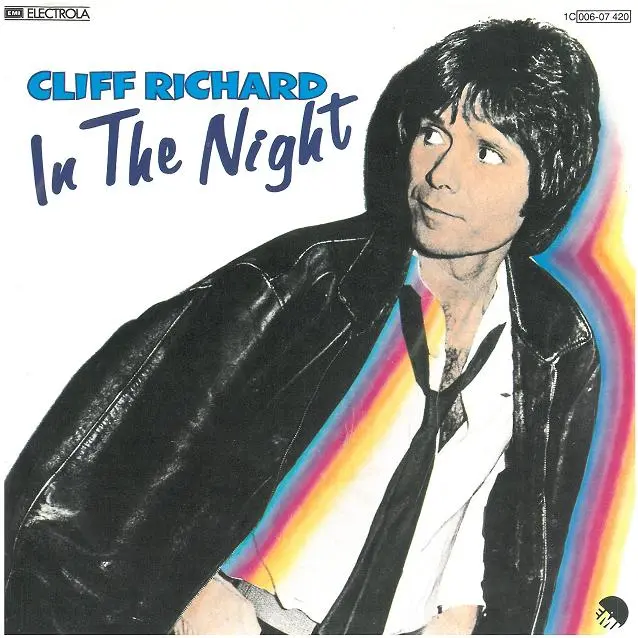
I’m No Hero contains two outside compositions. “In the Night” was composed by ex-Stackridge bassist Rod Bowkett, who also wrote 1979–81 songs for Cheryl Lynn (“Don’t Let It Fade Away”), Patti Austin (“Symphony of Love”), and Fern Kinney (“I Want You Back”). Ironically, Tarney produced a different song titled “In the Night” for The Barbara Dickson Album.
“Give a Little Bit More” came from the team of Andy Hill and veteran jingle writer Jonathan Hodge. Irish balladeer Johnny Logan cut a simultaneous version under the title “Too Much Too Soon.” Hill also co-wrote songs for Eruption singer Precious Nilson (“Stop Runnin”’) and partnered with then-wife Nichola Martin in Gem (aka Paris), a studio combo behind the 1981 Song for Europe entry “Have You Ever Been in Love?” Nichola assembled the vocal quartet Bucks Fizz, which won the 1981 Eurovision Song Contest with the Hill/Martin number “Making Your Mind Up.”
A1. “Take Another Look”
4:11 | Tarney | pop-rock | dramatic, heavy, direct
The lyrics depict a moment of emotional crisis in a relationship, where the narrator urges his partner to drop her pretense and reconsider the value of their connection before ending things.
- I hear you say hello
- Now is there something the matter
- Oh won’t you tell me so
- Don’t you know that it’s better to
- Tell me if you’re feelin’ sad
- Nothin’ should be quite this bad
- We’re playing (silly games)
Cliff notices his partner’s distress despite her superficial greeting, sensing an underlying problem. He urges her to be honest and express her sadness, pointing out that their current guarded behavior is a useless, painful deception.
- Take another look
- Please another look
- At just who you’re talking to tonight
- Maybe there’s a chance
- Please another chance
- That we won’t be wastin’ time tonight
- (take another look)
- Oh won’t you- oh won’t you (take another look)
- Oh please (take another look)
The chorus is a plea for his partner to stop and truly see him and their relationship for what they are. He is asking her to recognize their genuine connection and give them one last opportunity to salvage the time they have together.
- You wonder for tonight
- ‘cos you say you need to
- Well don’t you know it’s alright
- Pretty soon you’ll be free to go
- Wherever you need to go
- But there’s something that we both should know
- We’re playin’ (silly games)
The narrator acknowledges her desire to leave or find someone else, but he tries to reassure her that she is free to go soon. However, he insists that before she does, they must both admit the insincerity of their current interactions.
- Take another look
- Please another look
- At just who you’re talkin’ to tonight
- Maybe there’s a chance
- Please another chance
- That we won’t be wastin’ time tonight
- (take another look)
- Oh won’t you-oh won’t you (take another look)
- Oh please (take another look)
-solo-
The repeated chorus emphasizes his desperation for her to halt her decision and engage with him authentically. The musical interlude allows the emotional urgency of his plea to fully resonate.
- I hear you say hello
- Now is there something the matter
- Oh won’t you tell me so
- Don’t you know it’s better to
- Tell me if you’re feelin’ sad
- Nothin’ should be quite this bad
- We’re playin’ (silly games)
The return to the first verse highlights the cyclical nature of their problem: the superficial greeting and the refusal to communicate honestly are the core issue he is fighting against.
- Take another look
- Please another look
- At just who you’re talkin’ to tonight
- Maybe there’s a chance
- Please another chance
- That we won’t be wastin’ time tonight
- (take another look)
- Oh won’t you-oh won’t you (take another look)
- Oh please (take another look)
- Take another look-just another look baby
- Take another chance-just another chance
- Baby maybe-come on baby
- Take another look another-
- Just another look another
- Maybe there’s a chance-maybe just a chance
- Take another look-just another look
- Take another look baby
The final, extended repetition is a desperate outpouring, simplifying his plea to the absolute basics: he just wants her to pause, look at him, and give them one more chance to save the relationship.
A2. “Anything I Can Do”
4:01 | Tarney | pop-rock | uptempo, lively, positive
The lyrics are an ardent and reassuring declaration of unconditional support, urging the partner to openly share her burdens and accept the narrator’s dedicated help.
- Oh darlin’ I can see that there’s something
- Gettin’ to you inside
- Well just remember you got nothing to hide
- Cause darlin’ I’m just sitting here waiting
- Waiting till you give me a sign
- Make it soon and baby you’ll make it on time
Cliff immediately recognizes his partner’s hidden distress and encourages her to be completely open, assuring her there is nothing she needs to conceal. He makes it clear that he is patiently ready to help as soon as she is ready to signal her need.
- Cause if there’s anything that you want
- Just come running to me
- And if there’s anything that you need
- Just come running to me
- If there’s anything I can do then I’ll do it
- Anything to make you see
- If there’s anything I can do (darling)
- Just come running to me
The chorus is a sweeping promise of unconditional availability and action. He pledges to fulfill any desire or need she has, emphasizing that he will do absolutely anything necessary to convince her of his dedication.
- And darling just keep on believing
- Never let the feeling go
- Take it easy you’ll do the right thing I know
- Cause darling there’s a dream I’ve been dreaming
- Telling me that you’re on your way
- We’re gonna make it we’re gonna make it today
The narrator offers encouragement, urging her to maintain her faith and inner conviction. He reveals his own deep confidence, based on a personal dream, that she is nearing a moment of success or commitment, and he is sure of their future together.
- Cause if there’s anything that you want
- Just come running to me
- And if there’s anything that you need
- Just come running to me
- If there’s anything I can do then I’ll do it
- Anything to make you see
- If there’s anything I can do (darling)
- Just come running to me
The repetition of the chorus re-establishes the core message of the song: he is her unwavering and available resource, waiting for her to simply accept his help.
- (If there’s anything that you want)
- Come runnin’-runnin’ runnin’ runnin’
- (And if there’s anything that you need)
- Come runnin’-runnin’ runnin’ runnin’
- If there’s anything I can do then I’ll do it
- Anything to make you see
- If there’s anything I can do (darling)
- Just come running to me
This section amplifies the urgency and speed of his willingness to help, urging her to act instantly. The rapid, repeated plea to “come runnin'” underscores his eagerness to resolve her distress.
-solo-
- Cause if there’s anything that you want
- Just come running to me
- And if there’s anything that you need
- Just come running to me
- Come runnin’ come runnin’ ooh ooh
- Don’t you hesitate you just come running
- Run run run come runnin’
- Just gotta run my way
- Anytime night-day…
The final lines serve as a decisive, round-the-clock commitment. Cliff promises that he is ready to help at any moment, day or night, solidifying his role as her dedicated protector and supporter.
A3. “A Little in Love”
3:42 | Tarney | soft rock | mid-tempo, lush, breezy
The lyrics detail a conversation where the narrator observes his partner’s confusion and gently diagnoses her emotional state as the beginning of falling in love, while admitting he is in the same tentative position.
- It’s been so long, you say you’ve had fun
- And you’ve been happy with the things you’ve done
- Now you feel strange and a little unreal
- Well I can understand the way you feel
- You’re just a little in love (just a little)
- You’re just a little in love (just a little)
Cliff notes the partner’s admission of feeling an unsettling change, despite her recent happiness and freedom. He explains that her current strange, unreal feeling is a familiar sign of the initial stages of falling in love.
- Well I can see what’s happening to you
- You feel alone, but it’s just not true
- And there’s one thing you ought to know
- Whoo, I need you so
- I’m just a little in love (just a little)
- I’m just a little in love (just a little)
The narrator clarifies that her feeling of isolation is incorrect and then matches her emotional revelation with his own. He confesses his desperate need for her and admits that he, too, is in the cautious, early stages of being in love.
- You say you’re willing to learn
- You need a friend, a friend who will help you
- ‘Cause you’re just a little in love, oh yeah
- A little in love, you are
- A little in love with someone, you’re just like me
- Like me, you’re in love, oh yeah
- A little in love
Cliff recognizes her willingness to embrace this new emotion but notes she needs a guide through the unfamiliar experience. He assures her that her feelings are perfectly mirrored in him, emphasizing their shared emotional journey.
- You know sometime you look somewhere
- You’re not alone but there’s no one there
- No one to turn to, no one to see
- The way you’re feeling, you’re just like me
- You’re just a little in love (just a little)
- You’re just a little in love (just a little)
The narrator describes the specific feeling of being mentally preoccupied and emotionally isolated, even in a crowd. He connects this internal experience to his partner’s confusion, reiterating that her strange feelings are simply the symptoms of nascent love.
- Now you say you’re willing to learn
- But you need a friend, a friend who will help you
- ‘Cause you’re just a little in love, oh yeah
- A little in love, you are
- A little in love with someone, you’re just like me
- Oh, you’re in love, you’re in love, you’re in love
- A little in love with someone, you’re just like me
- Like me, you’re in love
- A little in love, you are
- A little in love with someone, you’re just like me
The song concludes by reinforcing their shared state of being “a little in love.” The repetition emphasizes that her feelings are not singular or strange, but a mutual experience of tentative, dawning love with him.
A3. “Here (So Doggone Blue)”
3:50 | Tarney | ballad | slow, melancholy
The lyrics express the persistent, yet distant, presence of a desired love, leading the narrator to feel trapped in a state of hopeful longing and “doggone blue” sadness.
- Seems to me that you’re always near
- Close enough so I know when you’re here
- Just when I think I’ve got to know you-you disappear
Cliff notes the maddening pattern of his loved one’s presence: she is emotionally or physically just close enough to sense, but always vanishes before he can truly connect or know her.
- And so I walk along building all my dreams
- I’ve every hope as I plan all my schemes
- And just when I think I’ve found the right one you disappear
The narrator expresses his life’s purpose as an active pursuit of love, full of hope and planning. The disappointment is magnified because every attempt to secure his future is foiled by her constant, frustrating withdrawal.
- But still I’m (here) here waiting for you
- I’m (here) here still holding on
- I’m (here) here waiting for you baby
- (Here) but it won’t be too long
- ‘Cause I’m planning a song that will tell you
- Oh why I’m here
The chorus reveals the narrator’s stubborn persistence. He is stuck in place, “holding on,” but promises that his vigil will soon end because he is composing a song to finally communicate the intensity of his presence and longing.
- I’ve even wished on a falling star
- I’ve carried moonbeams home in a jar
- Only one thing wrong
- You’re where you belong
- And that’s too far
Cliff uses whimsical, impossible imagery to show the extent of his effort and longing for magic to bridge the gap. He concludes that the only true barrier is her physical or emotional distance, which is simply “too far.”
- If only there was some way of reaching you
- Holding you ‘cos I’m so doggone blue
- Only one thing I really want to do
- Is sing to you
The narrator’s frustration culminates in a simple, emotional desire to break the distance, expressing the depth of his sadness (“so doggone blue”). He decides the most powerful and desired action is to deliver his feelings through song.
- That’s why I’m (here) here waiting for you
- I’m (here) here still holding on
- I’m (here) here waiting-baby I’m
- (Here) but it won’t be too long
- ‘Cause I’m planning a song that will tell you
- Oh why I’m (here) here I’m waiting for you baby
- (Here) here and I’m still holding on
- I’m planning a song that will tell you
- Oh why i’m here
The final chorus repeats his patient, yet definite, position. The planned song is the key to resolving his static situation, as it will be the ultimate statement of his presence and love.
- (oh wanna tell you now)
- Oh wanna tell you, tell you tell you oh
- Gotta tell you tell you it’s true that I’m blue doggone it
- Ah I’m here and I’m blue
The song breaks down into an emotional, unpolished admission of his specific pain. The repetition of “doggone it” emphasizes the simple, frustrating truth: he is present, but deeply unhappy.
- Gotta tell you now gotta tell you now
- That I’m here and it’s true and I’m blue oh oh
- Gotta tell you now gotta keep on telling you I’m blue
- Keep on, keep on, keep on telling you I’m here and I’m blue
The final lines become a plea for her to understand his truth. He resolves to relentlessly communicate his simple reality: he is here, his feelings are true, and he is deeply sad until she recognizes him.
A5. “Give a Little Bit More”
3:35 | Hill, Hodge | pop-rock, synthpop | uptempo, dramatic
The lyrics express the narrator’s painful realization that his partner has become emotionally detached and unfaithful, leading him to demand a return to their initial commitment.
- Well I can see – that you weren’t givin’ enough
- That you weren’t givin’ as much as me
- With all your small talk – bendin’ the rules
- Are you runnin’ before you can walk
- I’ve got the feelin’ you’ve been runnin’ around
- You’ve gone and left behind the feelings we’d found
- Too much too soon too much too soon
- Too much too soon
Cliff directly accuses his partner of emotional imbalance and insincerity, noting her shallow communication and rule-bending behavior. He suspects she is being unfaithful (“runnin’ around”) and has prematurely discarded the genuine connection they established.
- Well can you get excited by what you see
- You’ve been takin’ my love
- You should be giving it back to me
- Give a little bit of love like you did before
- Give a little bit more (give a little bit more)
- Give a little bit more (like you did before)
- Give a little bit more
The narrator challenges her to find excitement in their relationship, pointing out the one-sided dynamic where she only takes his love. He pleads for her to reinstate the passion and commitment she showed at the beginning, asking for a renewed effort.
- In a photograph you didn’t put me in the picture
- My lovin’ just made you laugh I was wide eyed
- Taken right in and I can’t understand why you lied
- I’ve got the feelin’ you’ve been runnin’ around
- You’ve gone and left behind the feelings we’d found
- Too much too soon too much too soon
- Too much too soon
Cliff provides concrete examples of her detachment and deceit, feeling mocked and naive for believing her lies. He again voices his strong suspicion of infidelity and the premature abandonment of their connection.
- Well can you get excited by what you see
- You’ve been taking my love
- You should be giving it back to me
- Give a little bit of love like you did before
- Give a little bit more (give a little bit more)
- Give a little bit more (like you did before)
- Give a little bit more
The repeated chorus emphasizes the core conflict: the lack of reciprocity. Cliff demands that she actively participate in the relationship again by giving him the love and attention he has freely given her.
- I’ve got the feelin’ you’ve been runnin’ around
- You’ve gone and left behind the feelin’ we’d found
- Too much too soon too much too soon
- Too much too soon
- Well can you get excited by what you see
- You’ve been taking my love
- You should be giving it back to me
- Give a little bit of love like you did before
- Give a little bit more (give a little bit more)
- Give a little bit more
- (like you did before)
- Give a little bit more
The final section combines the accusation of running around with the plea for reciprocal love. This emphasizes that he is fully aware of the problem but is still desperately hoping that she can resurrect the love they once shared.
B1. “In the Night”
3:48 | Bowkett | pop-rock, modern rock | dramatic, stark, sensual
The lyrics are a stark warning to a departing lover, predicting her future loneliness and regret after she realizes the extent of her mistake in leaving him.
- You waken from a dream
- You step outside
- To find the world is changing
- Under your feet
 Cliff begins by suggesting the partner is leaving under a false sense of hope or fantasy (“waken from a dream”). He foretells that the reality she steps into will be unstable and frighteningly different from what she expects.
- Somewhere in the past
- Is the world you knew
- Soon you’ll find that freedom
- Is not so sweet
The narrator implies that her familiar, comfortable life will soon be gone, belonging only to the past. He cynically predicts that the independence she seeks will be a disappointment, leading to regret.
- I can’t imagine why you’d throw it all away
- After everything I’ve said to you today
- When you turn around to find there’s
- No one then you finally realize what you’ve done
Cliff expresses disbelief at her decision after his final attempts to talk to her. He prophesies a moment of chilling isolation when she is truly alone, which will force her to confront the gravity of her mistake.
- In the night when there’s no one there at all
- In the night do you hear somebody call
- You see someone and you tell yourself you’re wrong
- You hear a voice and you know it must belong
- To the night just a shadow on the wall
- And there’s no one there at all
The chorus describes her future, lonely state. He predicts she will be haunted by her guilt and regret, experiencing phantom signs of his presence (“shadow on the wall,” “somebody call”) but ultimately realizing she is utterly alone.
- I gave you everything
- Everything I had endlessly
- Believing your love was true
- And you will never know just how it hurt
- To find that you were turning to someone new
The narrator confirms the cause of the breakup was her infidelity (“turning to someone new”). He details the depth of his devotion and the immense pain of her betrayal, emphasizing the cost of his unwavering belief in her.
- I know that we can’t ever change
- What has been said but how can I
- Believe our love is really dead
- When you turn around to find there’s no one
- Then you finally realize what you’ve done
Cliff acknowledges the finality of their conversation but reveals his own struggle to accept the end. He repeats his central theme: her true realization of their lost love will only occur when she is completely isolated.
- In the night when there’s no one there at all
- In the night do you hear somebody call
- You see someone and you tell yourself you’re wrong
- You hear a voice and you know it must belong
- To the night just a shadow on the wall
- And there’s no one there at all
The repeated chorus underscores the predicted, inevitable horror of her loneliness, where the echoes of her past love will only remind her of the emptiness of her present.
- And when you turn around to find there’s no one
- Then you finally realize what you’ve done
- In the night
The final lines offer a stark, final summation: the moment of truth and deepest regret for her betrayal will arrive when she is most vulnerable, alone “in the night.”
B2. “I’m No Hero”
3:25 | Tarney/Spencer | country-rock, pop | uptempo, gritty
The lyrics are a self-deprecating acknowledgment of failure in a relationship, where the narrator realizes he was not the strong figure his partner needed and was too blind to see the inevitable ending.
- I had a chance for glory
- Ooh, oh wouldn’t tell you no lies
- Same end on another story
- I, I could have prophesied
- I, I’d lose the prize
- I’m gonna raid the future
- Ooh, oh and I wanna know why
- Everything is so temporary
- Ooh, those I’ll let you know eyes
- I, I should have realized
Cliff reflects on a failed opportunity for triumph, admitting he could have foreseen his loss based on past patterns. He is haunted by the impermanence of the relationship, realizing only in hindsight that her non-verbal cues (“I’ll let you know eyes”) clearly signaled the relationship’s fragile nature.
- I’m no hero, I won’t get the glory
- I’m the one who’s left behind
- I’m no hero, no place in your story
- I’m the man who’s left behind
- I must have been blind
- Must have been
The chorus is a blunt, pained acceptance of his role as the loser in the emotional battle. He realizes he was not the protagonist (“hero”) she wanted, and he is now relegated to the role of the abandoned man, concluding that his failure was due to his own emotional blindness.
- I needed understanding
- Ooh, oh you didn’t sympathise
- Left me here, left without a warning
- Oh, you left me paralyzed
- I, I should have realized
Cliff details the specific way she ended the relationship: a lack of sympathy and a sudden, paralyzing abandonment. This sudden shock intensifies his regret that he did not recognize the signs of her detachment sooner.
- I’m no hero, I won’t get the glory
- I’m the one who’s left behind
- I’m no hero, no place in your story
- I’m the man who’s left behind
- I must have been blind
- Must have been, oh, so blind ahh, blind
The repeated chorus cements the narrator’s self-pity and frustration. His recurring lament that he “must have been blind” is the final, painful explanation for why he was so easily left behind.
[solo]
- I’m no hero, I won’t get the glory
- I’m the one who’s left behind
- I’m no hero, no place in your story
- I’m the man who’s left behind
- I must have been blind, yeah
- Must have been blind
- Ooh, just must have been blind
- I must have been blind, can’t see
- Must have been blind
- Just must have been blind
- Ooh just must have been
- Just must have been blind
The outro is dominated by the repetitive, desperate admission of blindness. The music and repetition emphasize his lingering disbelief and the harsh reality of his failure to be the hero or even a permanent fixture in her life.
B3. “Dreamin’”
3:40 | Tarney, Sayer | pop-rock, synthpop | uptempo, hopeful
The lyrics depict a narrator consumed by a one-sided longing, relying on vivid dreams to bridge the gap between his painful reality and his desperate desire for his partner’s love.
- Four o’clock, I’ve been walking all night
- It’s the time I always think of you
- If you could only see through my eyes
- Then you’d know just what I’m going through
 Cliff sets a scene of sleepless obsession, suggesting that his deepest thoughts of her occur when he is alone in the early hours. He wishes she could understand the intense emotional torment he suffers because of her.
- Here am I, I’m taking a chance
- In running around with stars in my eyes
- Here am I, I’m looking for you
- Wondering why do I feel so blue
The narrator sees his pursuit of her as a long-shot gamble, one filled with wide-eyed, optimistic hope despite the pervasive sadness he feels. He is actively searching for her while simultaneously questioning the source of his misery.
- I’m dreamin’, dreamin’ of me and you, oho
- I’m dreamin’, dreamin’ will see me through
- Never lettin’ chances pass me by
- I’m gonna dream you right into my life
- Yeah, dream you right into my life
The chorus reveals his coping mechanism: he is using the power of fantasy and visualization to make his love a reality. He is actively and persistently willing his partner into his life through the strength of his dreams.
- (Dreamin’, dreamin’ will see me through)
- Woman, you better believe that I’m
- (Dreaming you into my life)
This short interjection is a direct, emphatic address to the woman, insisting that his efforts are not passive fantasy but a determined, active force to bring them together.
- Five o’clock still walking around
- I call you up but you just bring me down
- I guess you’d say I’m gettin’ nowhere
- But in my dreams you always come around
The time advances, showing his persistent, unproductive pursuit in the real world, which is met with rejection. He contrasts this failure with the reliability of his dreams, where she always accepts him.
- Here am I, I’m taking a chance
- I’m walking on air, flyin’ so high
- Here am I, I’m facing the truth
- There’s no other way, I’ll ever make you mine
Cliff expresses the exhilarating highs of his imaginary world versus the stark reality that his only option for winning her is through this form of emotional projection. He accepts that his love is currently limited to fantasy.
- I’m dreamin’, dreamin’ of me and you, oho
- I’m dreamin’, dreamin’ will see me through
- Never lettin’ chances pass me by
- I’m gonna dream you right into my life
- Yeah, dream you right into my life
The repeated chorus re-emphasizes that his dreams are not merely escapism but a committed, unwavering strategy to transform his desire into reality.
- (Dreamin’, dreamin’ will see me through)
- Woman, you’d better believe that I’ll be
- (Dreaming you into my life)
The conviction grows stronger; the belief in his power to manifest the relationship is now absolute.
- Woman, you’ve got to believe me, woman
- Oho, woman, you’ve got to believe me, woman
- I’ll be (Dreaming you into my life)
- You’ve got to believe me, woman
- Woman, oho, you’ve got to believe me, woman
The song ends with a desperate, repeated plea for her to acknowledge and accept the intensity of his dream-fueled love, emphasizing her need to believe in his unique method of commitment.
B4. “A Heart Will Break Tonight”
3:59 | Tarney/Spencer | ballad | dramatic, melancholic, resigned
The lyrics portray a relationship stuck in a destructive cycle, with the narrator fully aware that staying is agonizing but unable to leave due to his persistent love.
- I’m better off without you
- I’m better off you know
- We’re nothing more than strangers
- With nowhere else to go
- But like a fool I’ll stay by your side
- Knowing that you won’t believe me
- When I say I’ve tried
Cliff starts with a rational assessment: he knows he should leave because their relationship has become hollow. Yet, he admits his foolish weakness in staying, knowing that his partner will never acknowledge his efforts to change their dynamic.
- A heart will break tonight
- Make no mistake I’ll lie awake tonight
- A heart will break and I won’t feel the same
- Cause you stay just the same as you are
- And a heart will break tonight
The chorus is a definitive prediction of emotional collapse, emphasizing that the pain is inevitable and will cost him his sense of self. The core problem is revealed to be his partner’s unwavering stagnation, which forces the heartbreak.
- We made no commitment
- We made only words
- It’s no consolation that we’re free like the birds
- Cause who needs to fly like they do
- There’s only one reason I’m staying
- It’s cause I love you… I do
He clarifies that their relationship lacked true commitment, consisting only of empty promises. He dismisses the freedom gained from their non-binding relationship, stating that his only motivation for enduring the pain is his genuine and overriding love for her.
- A heart will break tonight
- Make no mistake I’ll lie awake tonight
- A heart will break and I won’t feel the same
- Cause you stay just the same as you are
- And a heart will break tonight
The repeated chorus underscores the finality of the emotional damage. Cliff asserts that his heart’s pain will be caused by her refusal to evolve or change for the relationship.
- A heart will break tonight
- Make no mistake I’ll lie awake tonight
- A heart will break and I won’t feel the same
- Cause you stay just the same as you are
- And a heart will break tonight
- Tonight it’s gonna break
- Don’t know if I’ll make it
- Thru’ the night… Oh oh oh oh…
The song concludes with the dramatic escalation of his fear. The predictable heartbreak is now an immediate, terrifying threat, and he questions whether he can even survive the emotional impact of the night.
B5. “Everyman”
4:11 | Tarney | modern rock, synthpop | dramatic, stark
The lyrics serve as a reminder that regardless of wealth or status, everyone shares the same fundamental human experiences of loneliness, struggle, and emotional pain.
- Looking around nowhere to go
- Looking high but you’re feelin’ low
- Ready or not you got to run when you can
- Stealin’ time just like everyman
Cliff establishes a universal condition of feeling lost and dejected despite outward appearances. The phrase “stealin’ time” suggests everyone is secretly trying to survive or make the most of their limited existence, a struggle common to all.
- Oh oh wanna let you know
- You can’t hide you can’t hide
- Oh-oh wanna tell you so
- Well you tried I think you lied
This serves as a direct address to those who attempt to conceal their true struggles. The narrator insists that inner turmoil is impossible to hide, implying that external facades are ultimately dishonest.
- Everyman you get lonely
- Saw you crying just the other day
- Everyman it’s not your money
- You and I get to feel this way
- We can feel the rain
- We’re like everyman
The chorus delivers the core message: everyone, regardless of financial status, experiences loneliness and sadness. He asserts a shared humanity, comparing universal emotional pain to the common experience of feeling the rain.
- Spend your time spend your money too
- Spend your life if it gets you through
- Look around see you everywhere
- Stealin’ love we’ll it’s just not fair
The narrator describes the pervasive human activity of grasping and striving, even attempting to “steal love” to get by. He acknowledges the unfairness of this desperate pursuit, which he observes everywhere.
- Oh oh wanna let you know
- You can’t hide you can’t hide
- Oh-oh wanna tell you so
- Well you tried but I think you lied
The repeated warning emphasizes that attempts to mask vulnerability are futile.
- Everyman you get lonely
- Saw you crying just the other day
- Everyman it’s not your money
- You and I get to feel this way
- We can feel the rain
- We’re like everyman
-solo-
The musical break and repeated chorus reinforce the central, humbling truth: loneliness is an inherent part of the human condition, making everyone equal in their emotional vulnerability.
- Everyman you get lonely
- Saw you crying just the other day
- Everyman it’s not your money
- You and I get to feel this way
- We can feel the rain
- We’re like everyman
- The final repetition drives home the universality of emotional experience.
- See you everywhere I go, looking high but you’re feeling low
- Everyman everyman
Cliff concludes with a final observation: the contradiction between outward appearance (“looking high”) and inner reality (“feeling low”) is the common, defining characteristic of every person he encounters.
11. “Dynamite”
3:12 | Samwell | synthpop | hypnotic, airy, bubbly
The lyrics use explosive metaphors to convey the narrator’s intense, passionate, and dangerously unstable desire for his partner’s immediate return.
- Well send me love in a package labelled dynamite
- I wanna feel an explosion when I hold you tight
- I got a powerhouse reception waiting for you
- When you come back to your loving baby’s arms again
- Come back I’m dynamite
- Come back I’m dynamite
Cliff uses “dynamite” to describe the potent, volatile intensity of the love he is demanding. He is not seeking gentle affection but a full-force, powerful emotional impact, indicating his readiness for an overwhelmingly passionate reunion.
- Well give me kisses that explode before my very eyes
- I know the sight of you could generate a million sighs
- I’m all set for detonation baby don’t you know
- Three two one zero there I go
- I’m dynamite
- I’m dynamite set to explode
- Come back I’m dynamite
- Come back I’m dynamite
He elevates the sensual experience with language of combustion and countdown. The sight of his partner is enough to trigger a massive reaction, and his body is physically ready for an emotional “detonation.”
- Sail across the stars and to a silvery moon
- If you wanna know what heaven’s like you’ll be there soon
- Come back I’m dynamite
- Come back I’m dynamite
The narrator promises an experience of heavenly ecstasy, using cosmic imagery to suggest that the intensity of their passionate reunion will be otherworldly and immediate upon her return.
- Well give me kisses that explode before my very eyes
- I know the sight of you could generate a million sighs
- I’m all set for detonation baby don’t you know
- Three two one zero there I go
- Come back come back ‘cos I’m dynamite to be with
- Come back to your loving baby’s arms again
- Come back I’m dynamite
- Come back I’m dynamite
The repeated themes reinforce the promise of explosive passion, with Cliff directly stating that his nature makes him a thrilling partner and begging her to return to his loving embrace.
- Sail across the stars and to a silvery moon
- If you wanna know what heaven’s like you’ll be there soon
- Come back I’m a time bomb
- Come back my fuse is lit
- Come back I’m dynamite
- Come back if you don’t come back to me
- Come back I’m going to self-destruct
- Come back I’m dynamite
The final section escalates the metaphor from passionate intensity to a dire threat, revealing the emotional volatility beneath the desire. Cliff is now a “time bomb” and a lack of contact will lead to his emotional “self-destruct,” emphasizing the urgency of her return.
12. “Keep On Looking”
3:40 | Tarney | pop-rock | uptempo, concerned
The lyrics describe a reckless, continuous search for love, driven by a narrator who acknowledges his past mistakes but is now focused only on the high of the search, willing to forget any consequences.
- I’ll admit that I had my chance
- I never gave it a second glance
- I’ve seen her road and I stop and stare
- I wasn’t nervous when it said, “Beware”
Cliff confesses to squandering a past romantic opportunity due to his own indifference and recklessness. He acknowledges he saw the danger signals (“Beware”) but was willingly blind to the risks of his choices.
- But right now I’m thinking to myself
- What is the matter with feeling high
- When you know that soon
- I’ll be forgetting all the things I’ve done
- Because I’m, I’m just looking for love
- I’m just looking for love
He justifies his current hedonistic mindset by arguing that the temporary euphoria of the search is worth it. He plans to simply forget any negative actions or consequences as his sole focus is the immediate thrill of finding love.
- Wo-o, gonna keep on looking
- Wo-o, gonna keep on looking
- Wo-o, gonna keep on looking
- Looking for love
This refrain is a declaration of his resolute, non-stop commitment to the chase. It establishes the action of the song as a continuous, almost compulsive pursuit.
- Never thought I was this kind of mad
- Never knew the need to understand
- Maybe once I may have felt this way
- Maybe that was only yesterday
Cliff expresses surprise at the intensity of his current emotional drive, suggesting this level of “madness” is new or newly recognized. He implies that his current desperate need for love is a powerful, urgent feeling.
- But right now I’m thinking to myself
- What is the matter with feeling high
- When you know that soon
- I’ll be forgetting all the things I’ve done
- Because I’m, I’m just looking for love
- I’m just looking for love
The narrator returns to his internal justification, prioritizing the immediate emotional rush over any moral or ethical consideration. His singular, overriding motivation is the pursuit of love.
- Wo-o, gonna keep on looking
- Wo-o, gonna keep on looking
- Wo-o, gonna keep on looking
- Looking for love
The persistent repetition emphasizes the cyclical and determined nature of his quest, showing that he is fully invested in the search regardless of previous outcomes.
- But right now I’m thinking to myself
- What is the matter with feeling high
- When you know that soon
- I’ll be forgetting all the things that I’ve done
- Because I’m, I’m just looking for love
- I’m just looking for love
The final recurrence of his self-justification solidifies the theme: his pursuit is fueled by a desire for a euphoric feeling, and he has successfully rationalized away any sense of guilt.
- Wo-o, gonna keep on looking
- Wo-o, gonna keep on looking
- Wo-o, gonna keep on looking
- Looking for love
- Yeah, yeah
- Wo-o, gonna keep on looking
- Wo-o, gonna keep on looking
- Wo-o, gonna keep on looking
- Looking for love
- I’m just looking for love
- Got me looking for love
The song ends with an extended, almost mantra-like repetition, reinforcing the inescapable, driven, and perhaps obsessive nature of his continuous hunt for love.
Singles and Videos
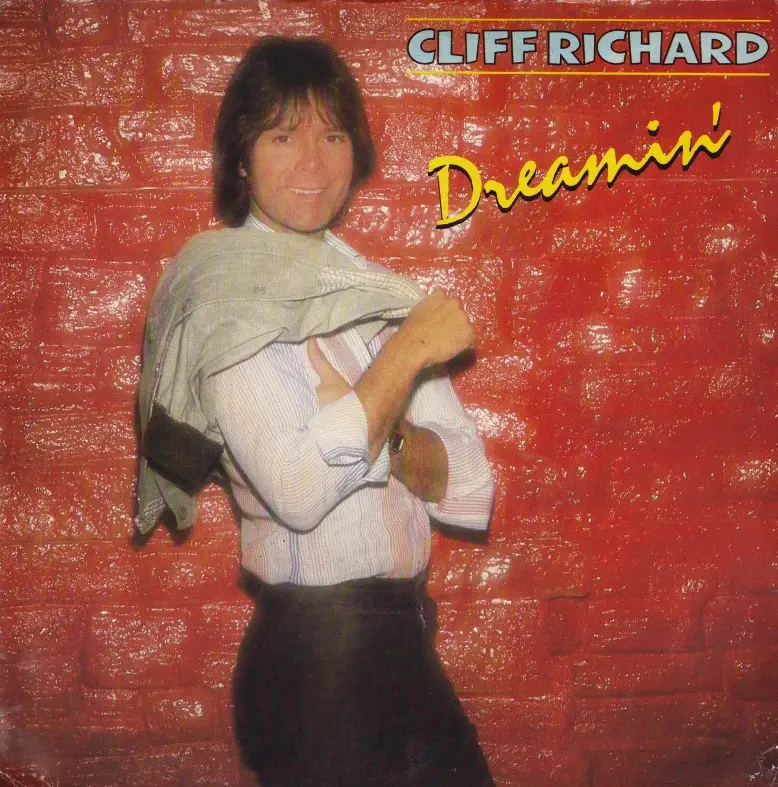
“Dreamin'” appeared as an advance single on August 8, 1980, two weeks ahead of its parent album, backed with the modernized remake of “Dynamite,” originally the b-side of “Travellin’ Light,” a 1959 UK No. 1 for Cliff Richard and the Shadows.
In the “Dreamin'” video, cliff mimes in a dark blue-lit mirrored space with pink-lit rings.
Cliff filmed the “Dreamin'” clip with Brian Grant, the director of Richard’s prior “We Don’t Talk Anymore” and “Carrie” videos and 1979/80 clips for M (“Pop Muzik”), Queen (“Play the Game”), and Sparks (“Beat the Clock”).
Cliff mimed “Dreamin'” in sharkskin wintergreen slacks and a matching short-sleeved button-up for the September 11 broadcast of Musikladen. He twice mimed the song for the August 21 and September 4 broadcasts of Top of the Pops, which aired the song four times amid late summer in-studios numbers by Hazel O’Connor (“Eighth Day”), Nick Straker Band (“A Walk In the Park”), The Piranhas (“Tom Hark”), Randy Crawford (“One Day I’ll Fly Away”), and Sheena Easton (“Modern Girl”).
“Dreamin'” reached No. 8 on the UK Singles Chart and No. 9 in Ireland. The single reached No. 1 in Denmark, No. 2 in Belgium and Portugal, and also went Top 5 in Austria, Germany, and Switzerland. Down under, “Dreamin'” reached No. 4 in Australia and No. 12 in New Zealand. In North America, “Dreamin'” reached No. 9 on the Canadian Top Singles chart and No. 10 on the US Billboard Hot 100, making it Cliff’s third and final solo stateside Top 10 hit.
Between I’m No Hero singles, MCA Records issued “Suddenly,” a duet between Cliff Richard and Olivia Newton-John for the romantic musical comedy Xanadu, which co-stars Olivia as Kira, the mythical muse of Sonny, a struggling boomer illustrator (played by Warriors actor Michael Beck) who befriends Danny, a sentimental ’40s big band clarinetist (played by song-and-dance legend Gene Kelly). Sonny falls for the Kira as the two men have clashing visions for a vintage auditorium (the Deco-style Pan-Pacific Auditorium in Los Angeles).
Olivia’s longtime musical director, John Farrar, composed “Suddenly,” the Kira/Sonny love ballad for the Xanadu soundtrack, which also contains her US No. 1 “Magic” and contributions by The Tubes and Electric Light Orchestra, whose frontman Jeff Lynne wrote five songs for the movie, including the Olivia-sung title theme. “Suddenly” reached No. 15 on the UK Singles chart and No. 20 on the US Hot 100 (No. 4 AC).
On December 9, 1980, “A Little In Love” became the second I’m No Hero single in the US (b/w “Everyman”), where it reached No. 17 on the Billboard Hot 100 (No. 6 AC). In the UK, EMI lifted “A Little In Love” on January 12, 1981, backed with the non-album “Keep On Looking.” The song reached No. 15 on the UK Singles chart and No. 16 in Ireland. “A Little In Love” gained its highest placements in Canada, where it reached No. 4 on the national RPM chart and No. 2 on Toronto’s CHUM Radio Networks chart. In the song’s video, a brown-suited Cliff meanders on the grounds of an old English estate.
In Germany, EMI lifted “In the Night” (b/w “Keep On Looking”). In North America, “Give a Little Bit More” became the album’s third single in April 1981 (b/w “Keep On Looking”) and reached No. 30 in Canada and No. 41 on the US Hot 100. This would be his penultimate of ten US Top 50 hits.
I’m No Hero reached No. 4 on the UK Albums chart and certified Gold.
On August 1, 1981, “Dreamin'” and “A Little In Love” became the respective 44th and 68th videos aired by MTV on the US cable music channel’s first day of broadcast. MTV twice-aired both videos within its first 24 hours along with “We Don’t Talk Anymore,” a first-hour clip (6th aired).
Album Cover
 Original UK copies of I’m No Hero are housed in a gatefold sleeve with airbrushed images of Cliff in a boxing match. The front depicts him nervously approaching his larger opponent. On the vertical inner-spread, he smiles down at the viewer with a winning gesture, his opponent down on the ground. The back shows him from behind in a Letterman jacket (red with yellow trim) that sports the slogan “I’m no hero.” The artwork is credited to one Karen Mezek.
The UK EMI release (cat# EMA 796) includes lyrics on the vertical inner-spread. The LP sides are labelled Round I and Round II.
In the US, I’m No Hero was issued on EMI America in a single sleeve with an alternate cover. The front shows a medium shot of Cliff (blue shirt) looking sideways before a dim-lit blue backdrop, his outline highlighted by an off-camera pink light. The back shows a close-up of Cliff (white dotted shirt), again looking sideways in the same setting; a jagged green strip cuts this image along the left edge. The lighting and color scheme are similar to his video for the lead-off single, “Dreaming.”
 The American cover was designed by UA art director Bill Burks, responsible for more than 200 cover visuals between 1975 and 1989. His prior credits include albums by the Ebony Rhythm Funk Campaign, Bobbi Humphrey, Jorge Dalto (Chevere), Bobby Hutcherson, Robbie Krieger, Noel Pointer, Maxine Nightingale, Tina Turner, Dusty Springfield, Horace Silver, and Whitesnake.
Visually, Burks’ design on I’m No Hero is most similar to his work on 1980/81 albums by Ronnie Laws (Every Generation), Unity (s/t), and Kwick (To the Point), which all use angled lighting in dim settings. Cliff’s pose is reminiscent of another Burks cover, the 1979 EMI America release This Is Hot by Philly disco singer Pamala Stanley.
Complementary 1980 Albums
Leo Sayer – Living In a Fantasy
Barbara Dickson – The Barbara Dickson Album
Steve Winwood – Arc of a Diver
Paul Davis – Paul Davis
Robert Palmer – Clues
The Korgis – Dumb Waiters
Tracklist:
A1. Take Another Look (4:10)
A2. Anything I Can Do (4:00)
A3. A Little in Love (3:38)
A4. Here (3:47)
A5. Give a Little Bit More (3:33)
B1. In the Night* (3:45)
B2. I’m No Hero (3:22)
B3. Dreaming** (3:37)
B4. A Heart Will Break Tonight (3:56)
B5. Everyman (4:06)
b-sides:
*Keep On Looking
**Dynamite
Credits:
Cliff Richard – vocals
Alan Tarney – bass, guitars, arrangements
Trevor Spencer – drums
Michael Boddicker, Nick Glennie-Smith – keyboards
Artist/Album Pages:
Things are More Like They are Now Than They Ever Were Before is a collaborative album between avant-...
Metamatic is the debut solo album by former Ultravox frontman John Foxx, released in 1980 on his tra...
The James Taylor Move was an Australian psychedelic rock band from Adelaide that issued two single...
Pauline Murray and the Invisible Girls is the singular album recorded by ex-Penetration vocalist Pau...
Seventeen Seconds is the second album by English New Wave/mood rockers The Cure, released in 1980 on...
Ardeur is the first-released/second-recorded album by French Zeuhl ensemble Eskaton, self-released i...
British Steel is the sixth studio album by English metal band Judas Priest, released in 1980 on Colu...
Cliff Richard (born Oct. 14, 1940) is an English pop vocalist with a career that has spanned more th...
Are You Glad to Be in America? is an album by American avant-garde jazz guitarist James Blood Ulmer,...
Sons and Lovers is the second album by English New Wave vocalist/performance artist Hazel O'Connor, ...
Cliff Richard (born Oct. 14, 1940) is an English pop vocalist with a career that has spanned more ...
Faces is the tenth studio album by American soul/funk ensemble Earth, Wind & Fire, released in 1...