

Kwick was an American soul-funk band from Memphis that released two albums on EMI America in 1980 and 1981, followed by a third on Capitol in 1983. Three-fourths of the band had been in the Stax/Volt singles act The Newcomers during the early 1970s.
Members: William Summers, Bert Brown, Terry Bartlet, Vince Ricari Williams
Background
Bertram Brown and Randy Brown formed the Newcomers in Memphis with Terry Bartlett and William Sumlin. Stax signed the quartet in 1969 and issued “Open Up Your Heart (Let Me In)” on Volt that August. Subsequent singles moved from Volt to Stax, then Truth, where “(Too Little in Common to Be Lovers) Too Much Going to Say Good-Bye” closed their October 1974 label run. Producer Allen A. Jones brought the Newcomers to Mercury for a final single, “More (Than the Greatest Love),” as a July 1978 release. Bertram Brown and Bartlett regrouped with Sumlin and Vince Ricari Williams as Kwick in 1980. The quartet retained Jones as producer-manager and entered Ardent Recordings for an EMI America debut.
Kwick
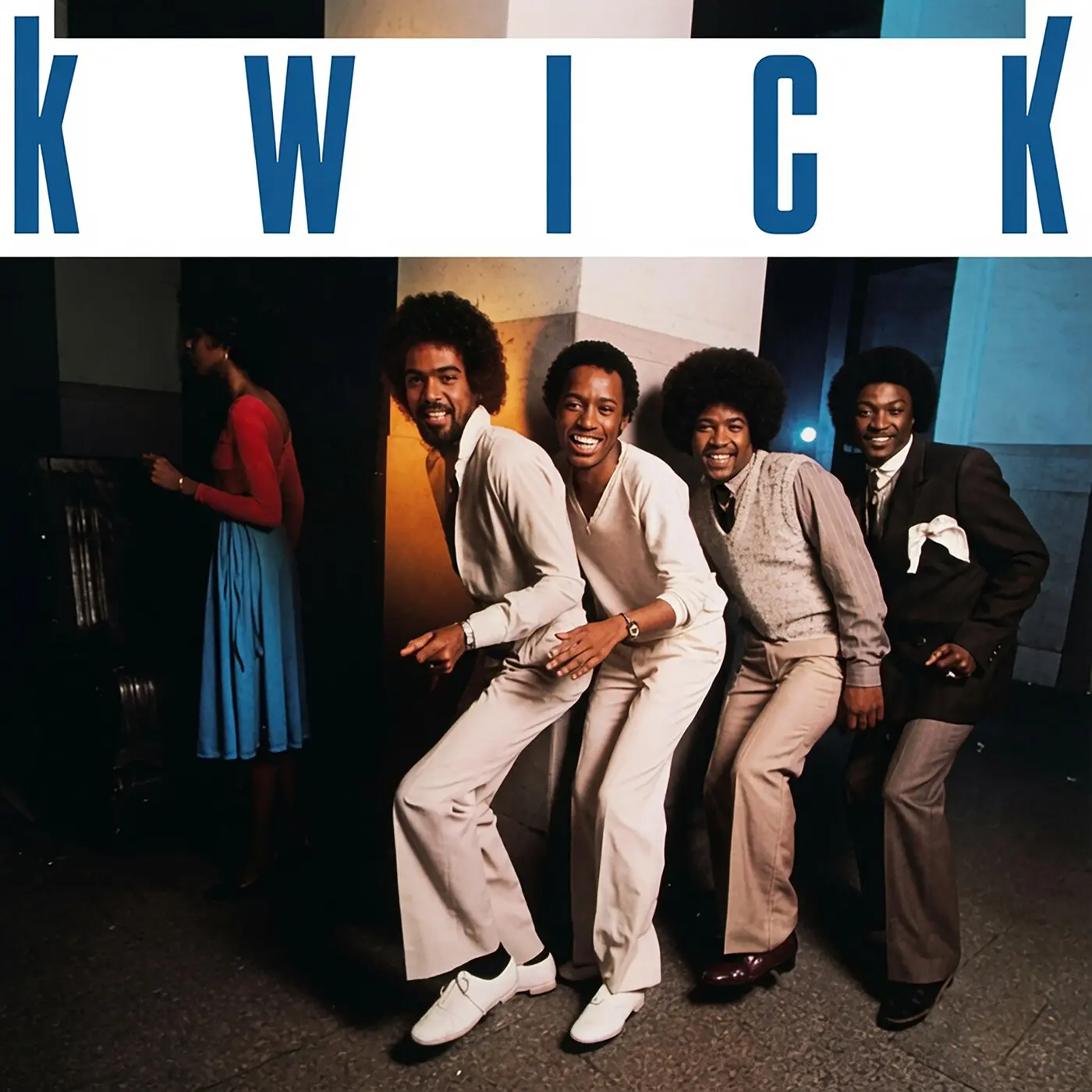 Kwick released their self-titled debut album, Kwick, in 1980 on EMI America.
The Memphis Rhythm Section supported the quartet under horn and string arrangements by Carl Marsh. Jim Lang supplied “Why Don’t We Love Each Other,” while Jones wrote “Serious Business” and “Let This Moment Be Forever” without co-writers.
“Let This Moment Be Forever” lingers through upper-register lead exchanges and close-knit harmony, with measured phrasing and controlled sustain.
A1. “I Want to Dance With You” (6:43) – Bartlett, Brown, Jones, Sumlin, Williams
A2. “Why Don’t We Love Each Other” (4:45) – Lang
A3. “Can’t Help Myself” (3:58) – Bartlett, Brown, Jones, Sumlin, Williams
A4. “Serious Business” (4:14) – Jones
B1. “We Ought to Be Dancing” (6:04) – Bartlett, Brown, Jones, Sumlin, Williams
B2. “Here I Go Again (Another Weekend)” (4:05) – Bartlett, Brown, Jones, Sumlin, Williams
B3. “Let This Moment Be Forever” (4:16) – Jones
B4. “Tonight Is the Night” (4:33) – Bartlett, Brown, Jones, Sumlin, Williams
Sessions took place in 1980 at Ardent Recordings in Memphis, where producer Allen A. Jones worked with recording engineers William C. Brown III and Robert Jackson. Jones also produced the Bar-Kays album As One at Ardent that year; Brown and Jackson came to the studio from the Stax engineering staff.
Bill Burks directed the sleeve, and Jeff Lancaster designed the package. Tom Gibson photographed the four members beside a woman in a red top and blue dress. Burks and Gibson also worked on the 1981 EMI America package for the Marty Balin album Balin.
EMI America led with “Let This Moment Be Forever” in March 1980 (b/w “Tonight Is the Night”), and the single reached No. 20 on the Billboard Hot Soul Singles chart. “Can’t Help Myself” followed in August (b/w “Serious Business”) and reached No. 68 on the same chart. EMI America later issued “I Want to Dance With You” as a November single (b/w “Why Don’t We Love Each Other”), following a No. 64 showing on the Billboard Disco Top 100.
To the Point
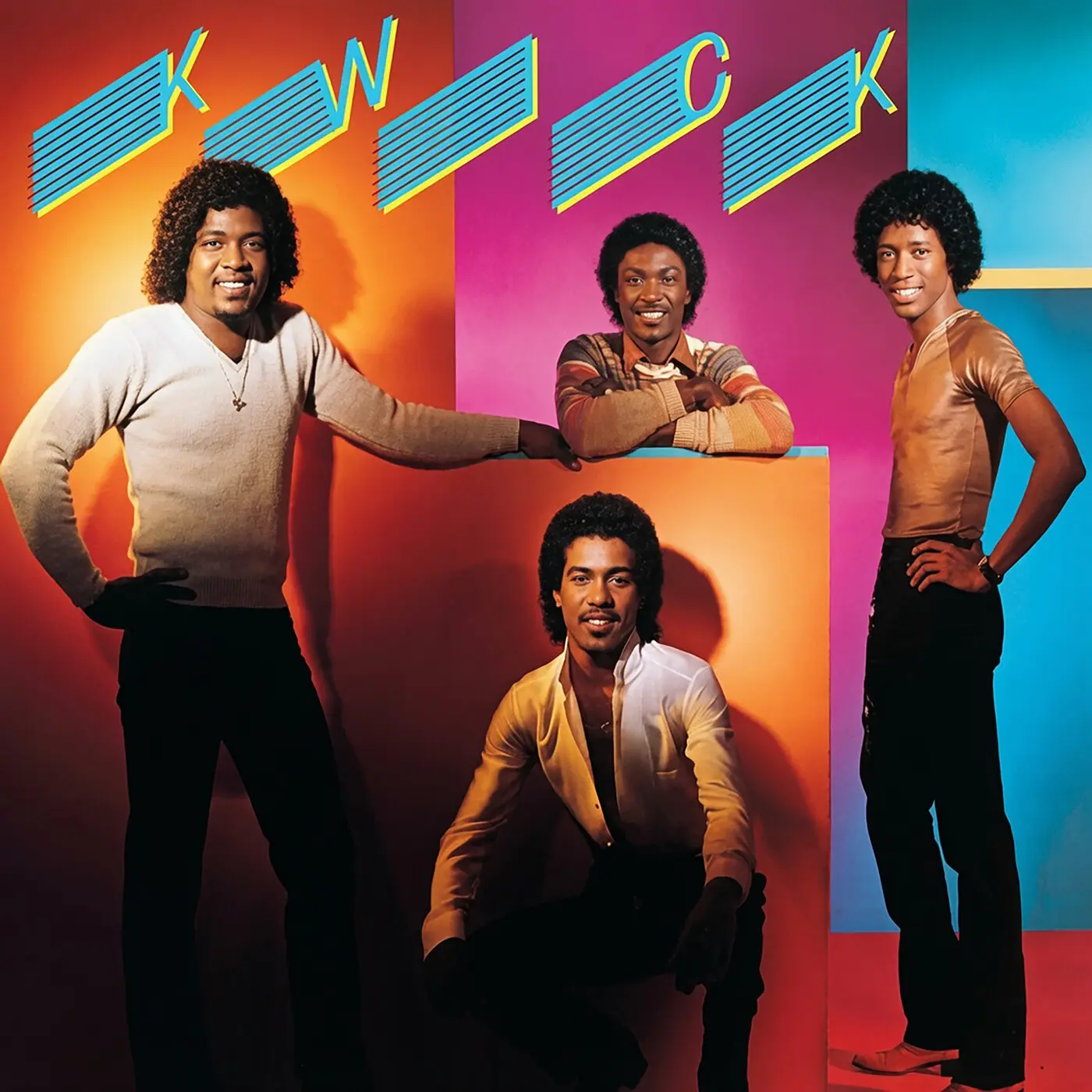 Kwick released their second album, To the Point, in 1981 on EMI America.
Winston Stewart returned on keyboards and synthesizers, now sharing production with Jones. Michael Toles wrote “Nightlife,” while Jones supplied “You’re the Kind of Girl I Like.”
“Shake Till Your Body Break” surges over a recurring figure, energetic strings, percussive splashes, and falsetto exchanges with group replies. “Split Decision” belts forceful tenor lines across a rough-edged accompaniment. “Nightlife” tightens when a late bass entrance lands heavier beat accents.
“You’re the Kind of Girl I Like” bounces on tight group lines and a buoyant recurring phrase. “We’re Saying Goodbye Again” mourns through a formidable baritone lead and sustained lament. “No Winner, No Loser” flashes bright group responses against firm horn accents.
A1. “Shake Till Your Body Break” (5:51) – Bartlett, Brown, Jones, Sumlin, Williams
A2. “Split Decision” (3:40) – Bartlett, Brown, Jones, Sumlin, Williams
A3. “You’re the Star of My Show” (4:01) – Bartlett, Brown, Jones, Sumlin, Williams
A4. “Nightlife” (3:57) – Michael Toles
B1. “You’re the Kind of Girl I Like” (4:39) – Jones
B2. “We’re Saying Goodbye Again” (4:39) – Bartlett, Brown, Jones, Sumlin, Williams
B3. “No Winner, No Loser” (3:45) – Bartlett, Brown, Jones, Sumlin, Williams
B4. “I Choose You” (4:15) – Bartlett, Brown, Jones, Sumlin, Williams
Sessions took place in 1981 at Ardent Recording Studio in Memphis, where Jones and Winston Stewart produced with recording engineers William C. Brown III and Robert Jackson. Horn and string sessions occurred at the Power Station in New York under Carl Marsh. The same Ardent team worked on the Bar-Kays album Nightcruising, which Jones produced with Stewart on keyboards.
Bill Burks again directed the sleeve. Jonathan Louie designed the package, and Thomas Gibson posed the quartet around an orange cube against segmented color fields. Burks and Louie also shared the 1982 EMI America package for the Michael Stanley Band album MSB.
EMI America lifted “Nightlife” in October 1981 (b/w the prior-album track “Here I Go Again (Another Weekend)”), and the single reached No. 64 on the Billboard Hot Soul Singles chart. In December, “Shake Till Your Body Break” followed (b/w “I Choose You”) and reached No. 73 on the same chart the following February.
Expansion Records paired both EMI albums on the 2012 UK CD Kwick/To the Point.
Foreplay
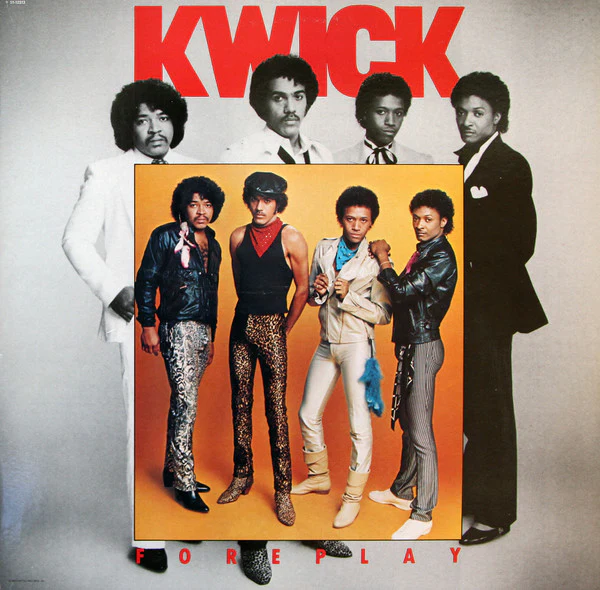 Kwick released their third album, Foreplay, in 1983 on Capitol.
Jones and Stewart drew the songbook from the Unisound circle for Foreplay, ending the earlier emphasis on quartet co-writes. Bar-Kays singer Larry Dodson and saxophonist Harvey Henderson formed the principal outside pair. Trombonist Frank Thompson joined them on four selections, while Howard Redmon Jr. and percussionist Michael Beard contributed to the remaining combinations.
“Too Lonely To Be Alone” drifts across a slow beat as confessional lines repeat an explicit solitary plea. “Stuck Up” taunts through repeated accusations and comic character sketches. “Will You” barrels over a bombastic uptempo beat.
A1. “M-TV” (5:32) – Jones, Henderson, Redmon, Dodson, Stewart
A2. “Too Lonely to Be Alone” (5:40) – Thompson, Redmon, William C. Brown III, Stewart
A3. “Stuck Up” (5:03) – Jones, Thompson, Henderson, Dodson, Stewart
B1. “I’ve Been Watching You (Watching Me)” (5:31) – Jones, Thompson, Henderson, Dodson, Stewart
B2. “Don’t Know What to Do About You” (4:46) – Redmon, Beard, Stewart
B3. “I’ll Get You Right” (4:48) – Jones, Thompson, Henderson, Dodson, Stewart
B4. “Will You” (4:14) – Jones, Thompson, Henderson, Dodson, Stewart
Sessions took place in 1983 at Ardent Recording Studio in Memphis, where Allen A. Jones and Winston Stewart produced with recording engineers Henry Bush and William C. Brown III. Jones and Stewart also joined Bush and Brown on the Bar-Kays album Dangerous, recorded across the same period.
Roy Kohara directed the Capitol sleeve, and Peter Andrew Alfieri designed the package. Morgan S. Murrell photographed the quartet for a cover that combines an inset color group image with enlarged monochrome figures on a gray field. In 1983, Kohara also directed the Capitol package for the O’Bryan album You and I, while Alfieri co-designed the Mtume sleeve for Juicy Fruit. Murrell later photographed Shirley Brown for the 1984 album Intimate Storm.
Capitol lifted “Stuck Up” in November 1983 (b/w “Will You”). In March 1984, “Too Lonely to Be Alone” followed with the same B-side.
Discography:
- Kwick (1980)
- To the Point (1981)
- Foreplay (1983)
Sources:
Artist/Album Pages:
Roger Powell is an American keyboardist who released the 1973 electronic album Cosmic Furnace on ...
Malicorne was a French folk band from the namesake commune of Malicorne in Auvergne, formed in 197...
The Moon Riders are a Japanese art-pop band from Tokyo that debuted on the 1974 multi-artist live...
Nazareth are a Scottish hard-rock band from Dunfermline, formed in 1968 with Dan McCafferty, Manny...
Brass Construction was an American soul-funk band from Brooklyn, best known for their crossover hi...
Jaguar was an English hard-rock/metal band that emerged with the 1981/82 sides "Chasing the Dragon...
Kim Carnes (born July 20, 1945) is an American country and pop vocalist from Los Angeles, best kno...
Richard Evans (Dec. 30, 1932 — Oct. 5, 2014) was an American jazz-funk bassist, composer, arrang...
Manu Dibango (Dec., 12 1933 — March 24, 2020) was a Cameroonian saxophonist, malletist, and compos...
Cheryl Lynn is an American soul-funk singer who released six albums on Columbia between 1978 and 1...
Los Abuelos de la Nada was an Argentinian rock band, active briefly in the late Sixties and resurr...
Barclay James Harvest was an English symphonic-rock band from Oldham, Greater Manchester, that ini...