

Brass Construction was an American soul-funk band from Brooklyn, best known for their crossover hit “Movin’.” They released six numerically titled albums (1975–80) on United Artists, followed by four titles (1982–85) on Liberty and Capitol.
Members: Randy Muller (keyboards, vocals), Michael Grudge (saxophone), Jesse Ward Jr. (saxophone), Wayne Parris (trumpet), Morris Price (trumpet), Joseph Arthur Wong (guitar), Wade Williamson (bass), Larry Payton (drums), Sandy Billups (percussion)
Background
The band evolved from an R&B/rock quartet called Dynamic Soul, formed in 1967 by keyboardist/singer Randy Muller. As the lineup expanded, newer members brought in elements of jazz and Latin music. By 1970, they’d expanded to a nine-piece with two trumpeters and two saxophonists. To reflect their new sound, Muller renamed the band Brass Construction.
Drummer Larry Payton (the only pre-credited member) co-arranged the single “(Funky) Four Corners” (b/w “Soul Lover”) by Jerry O, released in 1968 on White Whale.
Brass Construction debuted on 7″ with two Muller compositions, “Two Timin’ Lady” (b/w “Take It Easy”), released in 1970 on one-press Docc Records. Both songs later surfaced in vocal and instrumental form along with two contemporary tracks, “Got to Be Love” and “Orpheus,” on the 2005 archival mini-album Take It Easy (The Kenny Dope Mixes).
The original single was produced by Jeff Lane, who later produced the first six Brass Construction albums. Through this liaison, Lane employed Muller as the arranger on 1974 recordings by Isis, Gene Toone, and fellow Brooklyn funksters the B.T. Express. By now, Muller was majoring in music theory at Hunter College. The success of B.T.’s “Do It (‘Til You’re Satisfied)” (R&B No. 1, Pop No. 2) prompted United Artists to sign his band.
Brass Construction
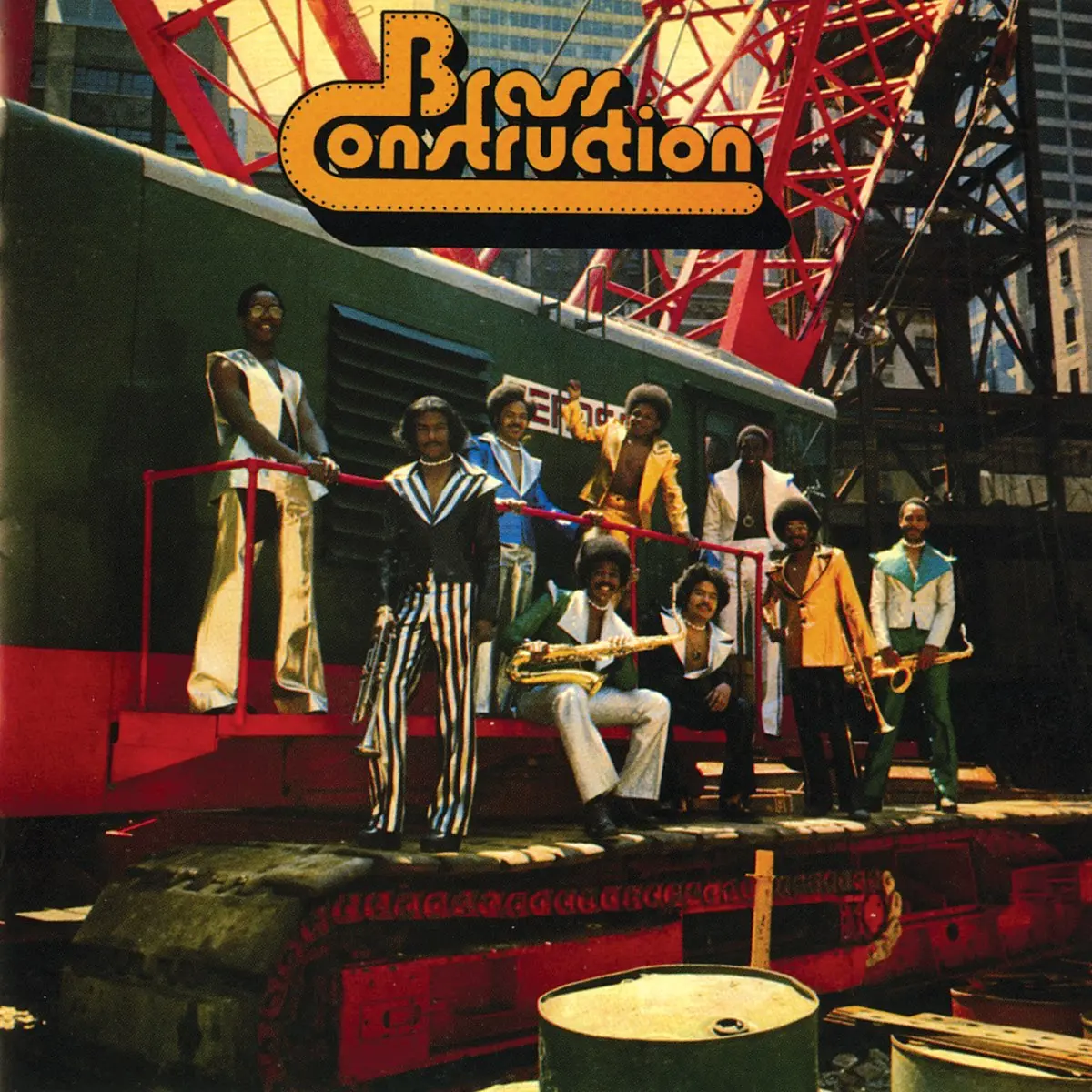 Brass Construction released their self-titled debut album in December 1975 on United Artists.
The record introduced the group’s large-ensemble funk sound, built on layered horns, driving bass figures, and tightly orchestrated percussion. Across six extended tracks, the band balanced chant-like vocals with shifting instrumental textures that emphasized rhythm and ensemble interplay.
Keyboardist, flutist, and arranger Randy Muller wrote four tracks, including “Changin’,” “Love,” “Talkin’,” and “Dance.” Bassist Wade Williamston co-wrote the opener “Movin’” with Muller, while saxophonist Larry Alexander composed “Peekin’.”
“Movin’” stretches across eight minutes with chant vocals, intersecting brass riffs, and a rhythm section powered by Larry Payton’s heavy drumming and Joe Wong’s clipped guitar. “Changin’” follows a similar framework at a slower pace, layering brass lines against extended instrumental passages. “Love” drops to a restrained tempo, closing with a horn fanfare, while “Dance” runs nearly ten minutes, building momentum through repeated vocal chants and alternating horn figures.
A1. “Movin’” (8:39)
A2. “Peekin’” (3:55)
A3. “Changin’” (8:12)
B1. “Love” (6:35)
B2. “Talkin’” (4:02)
B3. “Dance” (9:36)
Sessions occurred at Ultra-Sonic Recording Studios and Groove Sound Studio in New York with producer Jeff Lane and assistant engineer Margaret Finn.
Brass Construction features cover photography by Jeremiah Bean, with art direction by Flashmaurer Productions and Mike Mendel.
“Movin’” became the group’s breakthrough single, topping the Billboard R&B chart and reaching No. 14 on the Hot 100, No. 1 on the dance chart, and No. 23 in the UK. “Changin’” followed, peaking at No. 24 R&B and No. 3 on the dance chart.
The album itself peaked at No. 10 on the Billboard 200, spent three weeks at No. 1 on the R&B albums chart in spring 1976, and reached No. 9 in the UK, making it one of the earliest disco LPs to break the UK Top 10.
Brass Construction II
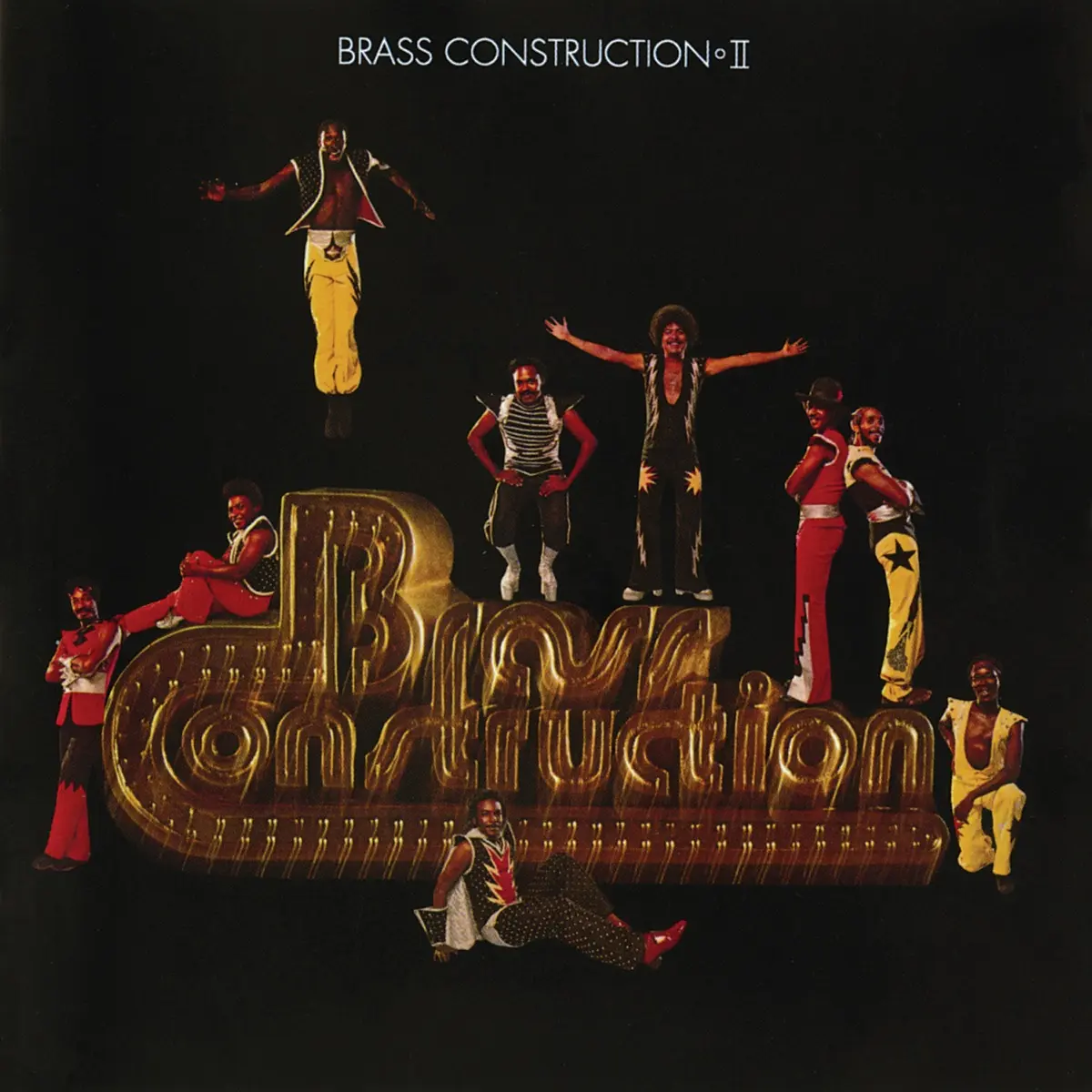 Brass Construction released their second numerical album on October 29, 1976. on United Artists.
The record expands the band’s horn-driven funk into Latin- and Afro-Cuban-inflected rhythms while retaining chant-based vocals and tight percussion. Compared with their debut, the album explores more lyrical content and includes mellow passages alongside upbeat, layered arrangements.
Keyboardist, flutist, and arranger Randy Muller wrote seven tracks, including “Ha Cha Cha (Funktion),” “Sambo (Progression),” “Screwed (Conditions),” “The Message (Inspiration),” “Now Is Tomorrow (Anticipation),” and “Blame It On Me (Introspection).” Guitarist Joe Wong, drummer Larry Payton, bassist Wade Williamston, and trumpeter Wayne Parris co-wrote the closing track, “What’s On Your Mind (Expression).” Strings were arranged and performed by The Irving Spice Boys.
Side one opens with the instrumental-heavy “Ha Cha Cha (Funktion),” featuring dense horn and string textures over a double-time rhythm. “Get To The Point (Summation)” layers deep vocalizing over brassy punctuation, while “Sambo (Progression)” emphasizes social themes with driving bass and percussion. “Screwed (Conditions)” blends layered horns with a swirling string backdrop. “The Message (Inspiration)” slows the pace, pairing piano motifs with guitar interplays, while “Now Is Tomorrow (Anticipation)” uses Fender Rhodes, flute, and plucked strings to accent a pulsating rhythm. “Blame It On Me (Introspection)” fuses Caribbean influences and jazz-inflected phrasing, and “What’s On Your Mind (Expression)” closes with collaborative horn and rhythm arrangements.
A1. “Ha Cha Cha (Funktion)” (5:51)
A2. “Get oo ohe Point (Summation)” (4:18)
A3. “Sambo (Progression)” (5:18)
A4. “Screwed (Conditions)” (5:47)
B1. “The Message (Inspiration)” (4:42)
B2. “Now Is Tomorrow (Anticipation)” (5:55)
B3. “Blame It On Me (Introspection)” (3:20)
B4. “What’s On Your Mind (Expression)” (3:24)
Sessions occurred at Ultra-Sonic Recording Studios in New York with producer Jeff Lane.
Brass Construction II features photography by Don Hunstein, with album art direction by Sid Maurer and design by Anna Novikoff.
The lead single, “Ha Cha Cha (Funktion),” reached No. 51 on the Hot 100, No. 37 in the UK, and the Top 10 on the R&B chart. “The Message (Inspiration)” and “What’s On Your Mind (Expression)” were released together as a single, reaching No.’s 42 and 69 on the Hot Soul Singles chart, respectively.
The album achieved RIAA Gold status, marking the band’s second certified LP, and further established Brass Construction’s influence on funk, disco, and later acid jazz movements.
Brass Construction III
 Brass Construction released their third numerical album in October 1977 on United Artists.
The album broadens the band’s funk and disco foundation with layered horns, strings, and diverse rhythmic textures. Randy Muller arranged horns throughout and contributed string arrangements on select tracks, maintaining chant-driven vocals while introducing more intricate instrumental interplay.
Randy Muller wrote six tracks, including “We,” “L-O-V-E-U,” “Happy People,” “Celebrate,” “Yesterday,” and “Get It Together.” Guitarist Joe Wong and saxophonist Michael Grudge co-wrote “Top of the World.” Strings were performed by The Irving Spice Boys with additional arrangements by Michael Goldberg on four tracks.
Side one opens with “We,” featuring a staccato circular bass line, ARP synthesizer tones, zither accents, and darting string and brass flourishes over an upbeat, dance-oriented rhythm. “L-O-V-E-U” relies on mono-chordal funk in F minor, propelled by deep-pocketed bass and spiraling guitar. “Happy People” interweaves chromatic sliding patterns, arpeggiated organ, and soaring vocal and saxophone refrains. “Celebrate” combines taut claps, clipped horns, wah-wah guitar, and a fuzz-laden solo carried into fluttering strings. Side two moves through collaborative compositions: “Top of the World” layers horn and rhythm interplay, “Yesterday” and “Get It Together” continue the upbeat, layered arrangements, while strings enhance harmonic contours throughout.
A1. “We” (6:08)
A2. “L-O-V-E-U” (3:37)
A3. “Happy People” (5:04)
A4. “Celebrate” (5:09)
B1. “Top of the World” (3:54)
B2. “Yesterday” (4:20)
B3. “Wake Up” (4:44)
B4. “Get It Together” (4:43)
Sessions occurred at Music Farm Studios, Sigma Sound Studios, Ultra-Sonic Recording Studios, United Sound Systems, The Music Centre (Wembley), and Sound Ideas Studios in New York, with Jeff Lane producing. Engineers included Eddie Youngblood, Jerry Block, John Bradley, Jim Vitti, and assistants Peter Robbins and Carla Bandini. Mastering was handled by Fred Frank and Dominick Romeo.
Brass Construction III features photography by Don Hunstein with album art direction by Maurer Productions and Michael Mendel.
The album continued the band’s dance-oriented direction, combining funk, disco, and chant-based arrangements with layered horns, strings, and ARP synthesizers, solidifying their multi-dimensional sound.
Brass Construction IV
 Brass Construction released their fourth numerical album in 1978 on United Artists.
The record maintains the band’s funk and disco foundation, with chant-based vocals, layered horns, and rhythmic percussion, while branching into mellow soul and Philadelphia-influenced sounds on select tracks. Randy Muller arranged horns, keyboards, flute, timbales, and vocals, continuing his role as the band’s primary composer.
Randy Muller wrote five tracks, including “Get Up,” “One To One,” “Perceptions (What’s The Right Direction),” “Help Yourself,” and co-wrote “Sweet As Sugar” with drummer Larry Payton. Guitarist Joseph Arthur Wong and saxophonist Michael Grudge co-wrote “Pick Yourself Up.” Chuck Jackson and Marvin Yancy composed “Night Chaser,” and Darryl Carter and Jonah Ellis wrote “Starting Tomorrow.”
The album opens with “Get Up” and “One To One,” featuring upbeat funk-disco arrangements with chant-driven vocals over layered horns and percussion. “Perceptions (What’s The Right Direction)” carries rhythmic phrasing reminiscent of the Ohio Players. “Pick Yourself Up” mixes guitar and saxophone interplay, while “Help Yourself” continues the energetic horn-led dance patterns. Side two includes the smoother “Starting Tomorrow,” incorporating Philadelphia-style strings and rhythmic accents, and “Sweet As Sugar,” a mellow soul ballad with softer textures. “Night Chaser” delivers concise, horn-accented funk, and the album closes with the vocal-driven chant of “Sweet As Sugar.”
A1. “Get Up” (8:00)
A2. “One to One” (5:00)
A3. “Perceptions (What’s the Right Direction)” (3:47)
A4. “Pick Yourself Up” (4:42)
B1. “Help Yourself” (4:04)
B2. “Night Chaser” (3:40)
B3. “Starting Tomorrow” (4:34)
B4. “Sweet As Sugar” (4:20)
Sessions occurred at Music Farm Recording Studio in New York City with Jeff Lane producing. Engineers included Eddie Youngblood and Jerry Solomon. Mastering was completed by Domenick Romeo at Frankford/Wayne Mastering Labs.
Brass Construction IV features photography by Hal Wilson with art direction and design by Michael Mendel.
Brass Construction 5
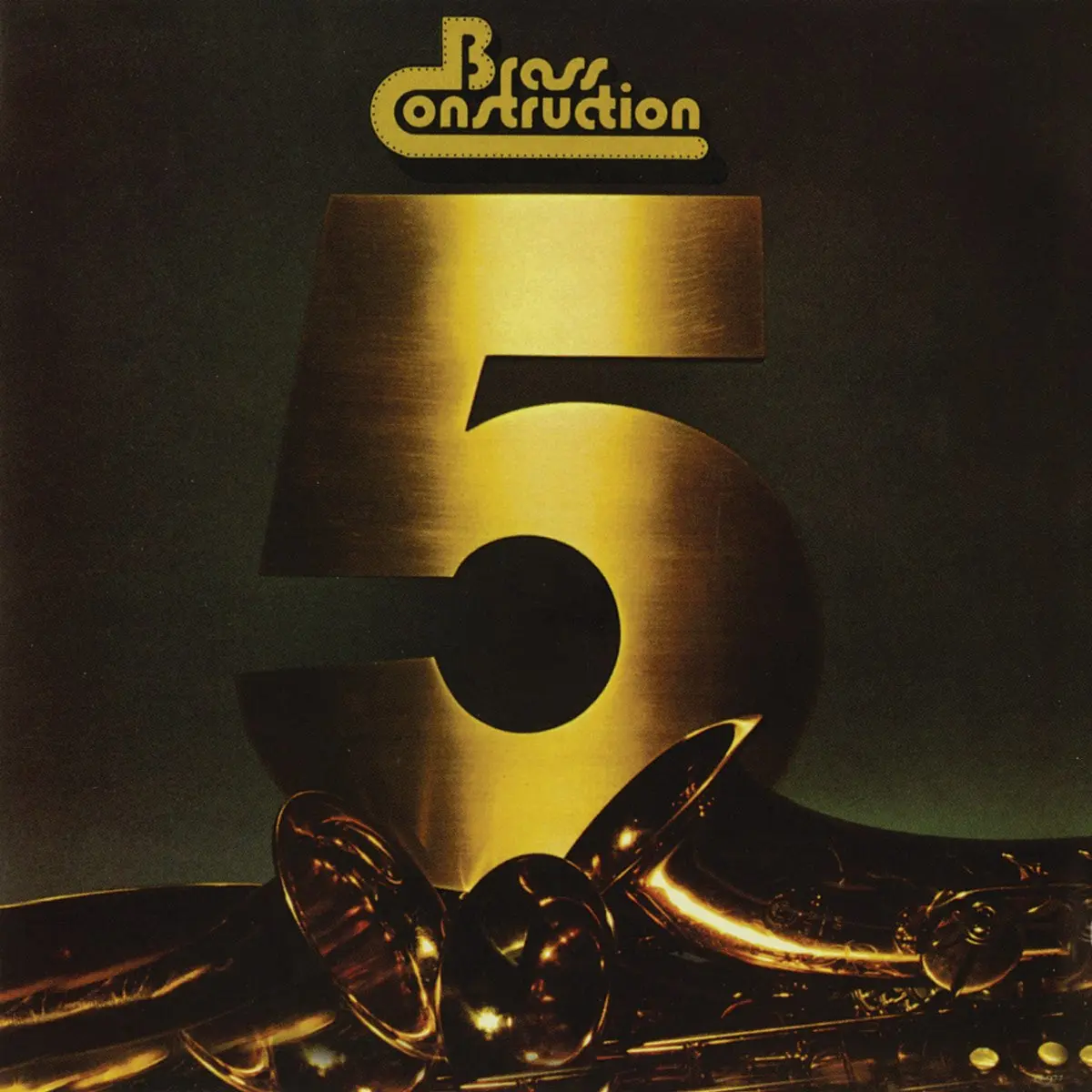 Brass Construction released their fifth numerical album in 1979 on United Artists.
The record restores the band’s funk-disco energy with layered horns, chant-driven vocals, and tight rhythmic interplay, while blending in more expansive, rhythmically diverse arrangements. Randy Muller retains his role as arranger on keys, flute, and timbales, guiding the group through a revitalized performance.
Randy Muller wrote “Get Up To Get Down” and “Watch Out,” and co-wrote “Shakit.” Drummer Larry Payton composed “Music Makes You Feel Like Dancing.” Guitarist Joseph Arthur Wong and saxophonist Michael Grudge co-wrote “It’s Alright,” while Grudge and bassist Wade Williamston co-wrote “Right Place.” “I Want Some Action” was written by P. Barr.
Side one opens with the upbeat chant-driven “Music Makes You Feel Like Dancing,” propelled by drums and brass. “Right Place” balances rhythmic horn stabs with bass and percussion interplay. “Get Up To Get Down” features multi-layered horns over staccato bass, while side two’s “Watch Out” continues the energetic horn-led patterns. “It’s Alright” emphasizes vocal and saxophone interplay, “Shakit” offers a rhythmically dense arrangement, and the album closes with the shorter, direct funk of “I Want Some Action.”
A1. “Music Makes You Feel Like Dancing” (6:32)
A2. “Right Place” (6:32)
A3. “Get Up to Get Down” (6:29)
B1. “Watch Out” (6:31)
B2. “It’s Alright” (4:23)
B3. “Shakit” (6:31)
B4. “I Want Some Action” (3:56)
Sessions occurred at Opal Studios and Soundworks in New York with Jeff Lane producing. Engineers included Akili Walker, Eddie Youngblood, and Lew Horowitz. Mastering was completed by Dominick Romeo.
Brass Construction 5 features photography by Hal Wilson. The album reached No. 18 on the Billboard R&B chart.
Brass Construction 6
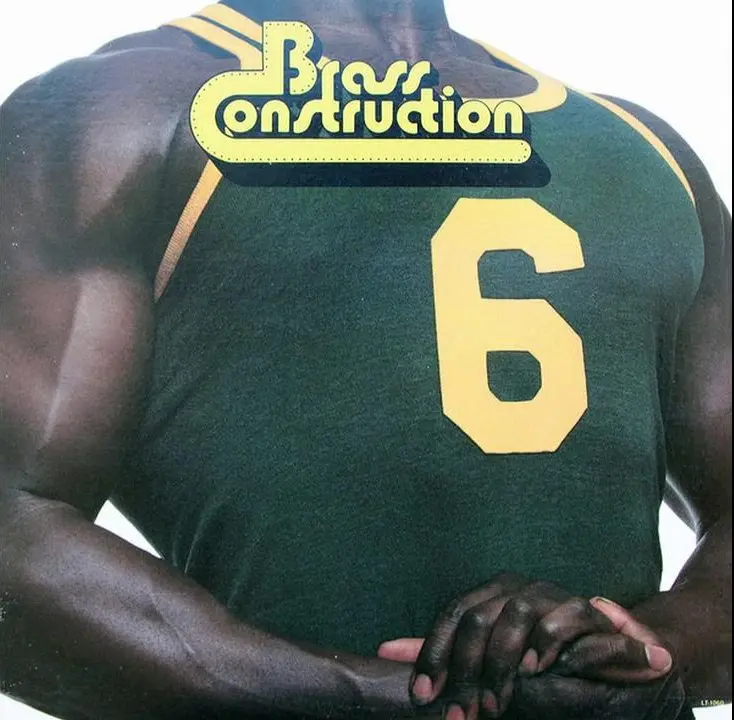 Brass Construction released their sixth numerical album in September 1980 on United Artists.
The album balances the group’s funk-disco foundation with tighter rhythmic precision and layered string arrangements. Randy Muller and Jeff Lane co-arranged the tracks, retaining the ensemble’s horn-driven signature while adding piano, harmonica, and vocal interplay for a more textured sound.
Guitarist Joseph Arthur Wong and saxophonist Michael Grudge wrote “We Can Do It” and “How Do You Do (What You Do To Me).” Morris Price composed “Do Ya.” Drummer Larry Payton wrote “Working Harder Every Day.” Phill Barr composed “We Are Brass.” Alvin Fields, Eltesa Weathersby, and F. Fuchs co-wrote “I’m Not Gonna Stop” and “Don’t Try To Change Me” with additional collaborators C. Houston and E. Weathersby.
“We Can Do It” rides on piano and bass precision with sly vocal turns, harmonica, and wah-dampened guitar figures. “Don’t Try To Change Me” unfolds as a ballad with neo-Philly strings, emotive counter vocals, and medium-slow rhythmic interplay. “We Are Brass” sprints with churning precision and greasy guitar licks; forwarded by the unfinished chorus rhyme (“so move your…”). “I’m Not Gonna Stop” leans on male-female vocal trade-offs (ala Rose Royce) with understated string support, creating a measured, soulful tension.
A1. “Do Ya” (6:17)
A2. “We Can Do It” (5:07)
A3. “I’m Not Gonna Stop” (4:35)
B1. “How Do You Do (What You Do to Me)” (6:38)
B2. “Working Harder Every Day” (4:41)
B3. “We Are Brass” (4:07)
B4. “Don’t Try to Change Me” (4:22)
Sessions occurred at Opal Studios in New York with Jeff Lane producing and Llew Horowitz engineering. Assistant engineers included Frank Castiglione, Linda Randazzo, Roger D’Amato, and Terry L. Rodie. The album was mixed by Jeff Lane and Lindsay Blake and mastered at Frankford Wayne.
Brass Construction 6 features art direction by Sid Maurer and design by Hal Wilson, with strings performed by The Irving Spice Boys and additional harmonica by James Clisset.
Attitudes
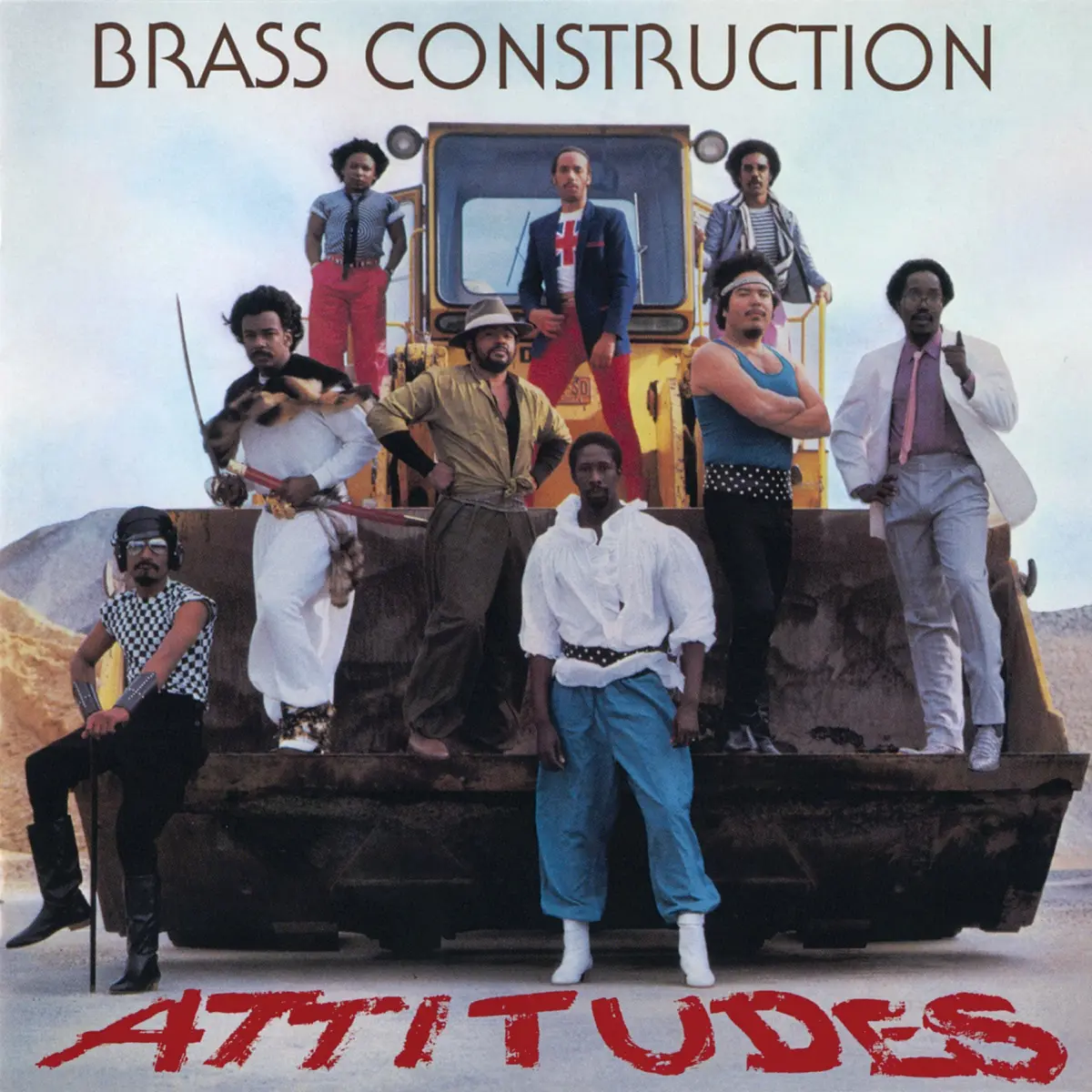 Brass Construction released their seventh album, Attitudes, in 1982 on Liberty.
The album maintains the group’s horn-driven funk foundation while emphasizing layered keyboards, synth textures, and tighter rhythmic arrangements. Randy Muller leads the sessions on keyboards, percussion, and arrangements, with Joe Arthur Wong and Mickey Grudge on guitars and horn contributions from Jesse Ward, Morris Price, and Wayne Parris.
Randy Muller wrote the album’s material, overseeing arrangements and co-mixing several tracks. Guitarists Joe Arthur Wong and Mickey Grudge perform rhythm and lead parts, with Wade Williamston on bass and Larry Payton on drums and backing vocals. Sandy Billups adds percussion and backing vocals, complementing the brass and keyboard structures.
“Hotdog” surges with an arching bassline over a synth-based chordal foundation, sustained through an exclamatory chorus and staccato brass punctuations. “E.T.C.” unfolds as a wordless rhythmic ballad with glistening electric piano, slow bedrock bass, and airy vocoder-inflected vocal textures, creating a sunset-like ambience.
A1. “Can You See the Light” (5:18)
A2. “Funtimes” (4:51)
A3. “Attitude” (6:43)
B1. “Do That Thang” (5:31)
B2. “Forever Love” (4:20)
B3. “E.T.C.” (4:23)
B4. “Hotdog” (4:11)
Sessions occurred at Blank Tape Studios with Randy Muller producing and arranging, and John Bradley engineering and mixing.
Attitudes features art direction and photography by Solomon Roberts Jr., with design by Jim O’Connell and costume design by Denise Proctor Muller. Backing vocals and percussion support came from Larry Payton and Sandy Billups.
Conversations
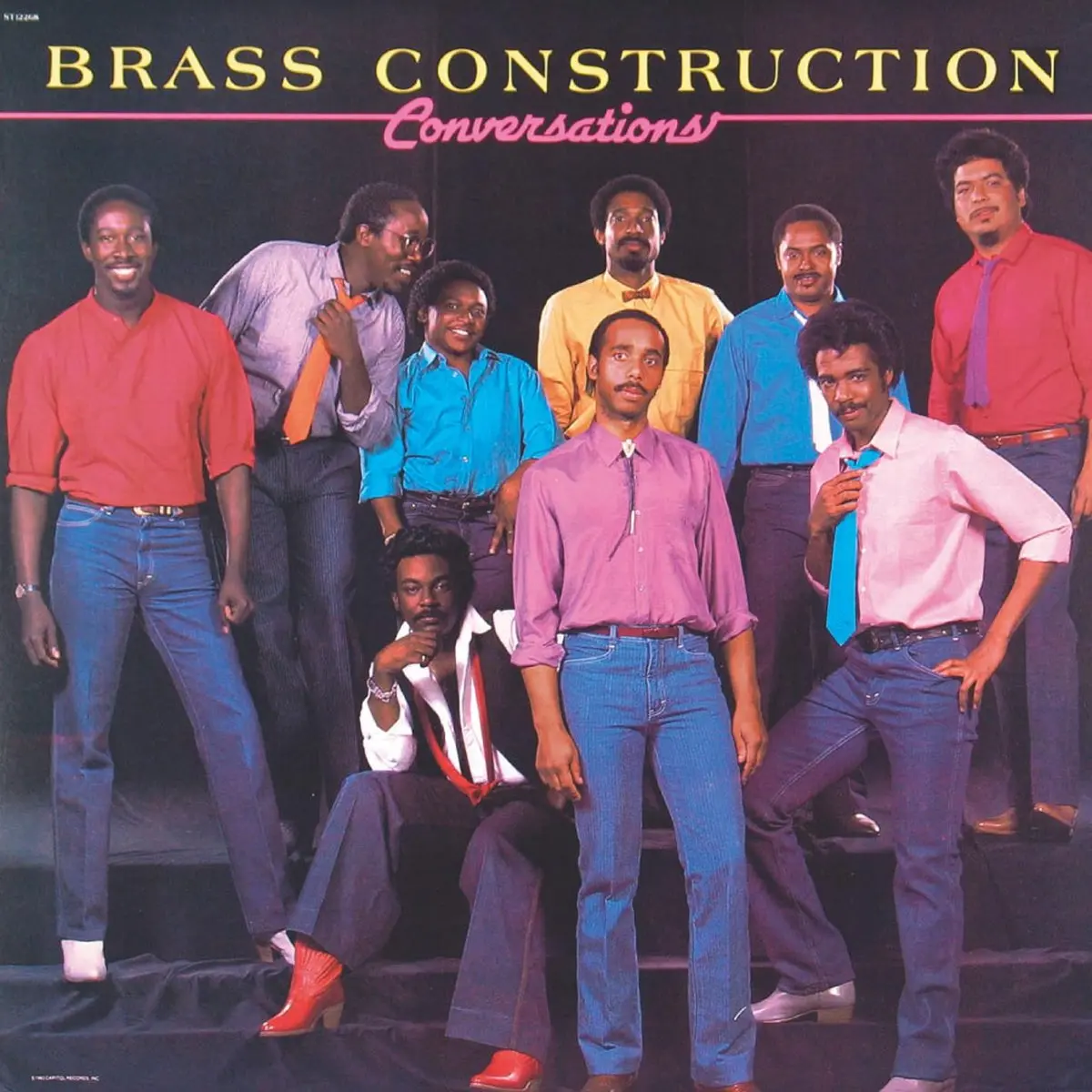 Brass Construction released their eighth album, Conversations, in 1983 on Capitol.
The album blends the band’s signature horn-driven funk with layered keyboards, tight percussion, and precise guitar work, reflecting Randy Muller’s arrangements and production. Sessions feature Joe Arthur Wong and Mickey Grudge on guitars, Wade Williamston on bass, Larry Payton on drums and vocals, and brass from Jesse Ward, Morris Price, and Wayne Parris.
Randy Muller wrote the majority of the material, arranging and performing keyboards, percussion, and flute. Guitarists Joe Arthur Wong and Mickey Grudge support rhythm and lead lines, while Larry Payton co-wrote “No Communication” with Muller and Wong/Grudge co-wrote “It’s A Shame.” Sandy Billups adds percussion and vocals, complementing the horn and keyboard textures.
A1. “We Can Work It Out” (5:12)
A2. “Walkin’ the Line” (5:01)
A3. “Physical Attraction” (5:14)
A4. “Easy” (3:46)
B1. “Breakdown” (4:38)
B2. “I Do Love You” (5:20)
B3. “It’s a Shame” (4:50)
B4. “No Communication” (4:05)
Sessions occurred at Blank Tapes Studios, New York, with Randy Muller producing and arranging, and John Bradley engineering and co-mixing.
Conversations features artwork by Jim O’Connell, photography by Marlis Momber, and wardrobe and make-up coordination by Denise P. Muller and Esia, Inc. Backing and lead vocals were performed by Larry Payton, Randy Muller, and Sandy Billups.
Renegades
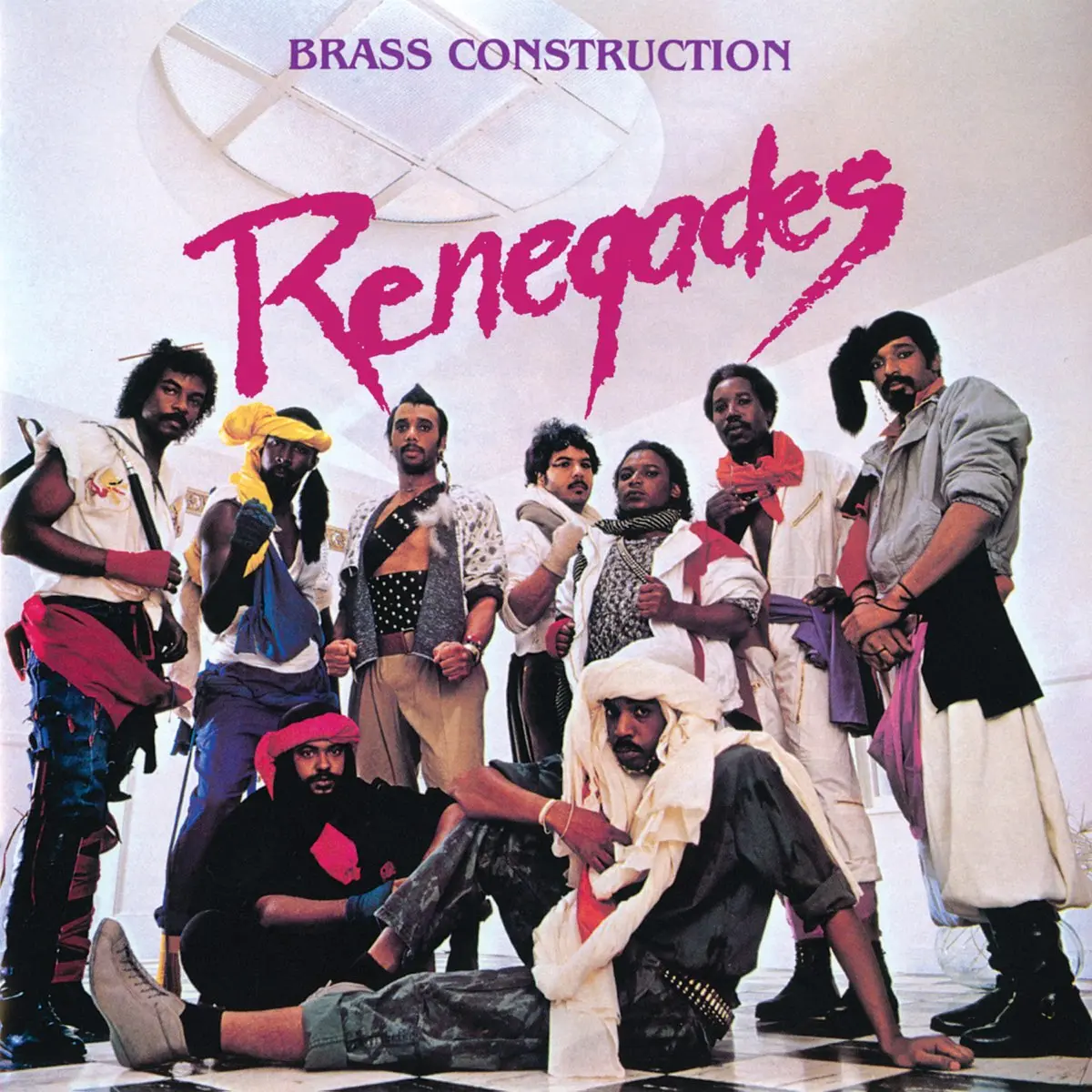 Brass Construction released their ninth album, Renegades, in 1984 on Capitol.
The album extends the band’s horn-driven funk into tightly arranged keyboards, layered percussion, and precise guitar lines. Randy Muller leads arrangements and production, supported by Joe Arthur Wong on lead and rhythm guitars, Wade Williamston on bass, Larry Payton on drums, and brass from Jesse Ward, Michael Grudge, Morris Price, and Wayne Parris.
Randy Muller wrote most of the material, with Jeff Smith contributing “We Can Bring It Back” and Larry Payton co-writing “What Is The Law ??” with Muller. Guitarist Joe Arthur Wong performs lead and rhythm parts, while Muller adds keyboards and percussion, backed by Sandy Billups on percussion and vocals.
A1. “International” (5:32)
A2. “Never Had a Girl” (3:24)
A3. “We Can Bring It Back” (4:16)
A4. “Fascinating You” (5:24)
B1. “Partyline” (4:30)
B2. “Renegades” (5:20)
B3. “Dangerous” (3:55)
B4. “Closer To You” (3:45)
B5. “What Is the Law ??” (2:15)
Sessions occurred at Blank Tapes Studios, New York, with Randy Muller producing and arranging. John Bradley engineered and co-mixed all tracks except “We Can Bring It Back,” assisted by Pete Robbins.
Conquest
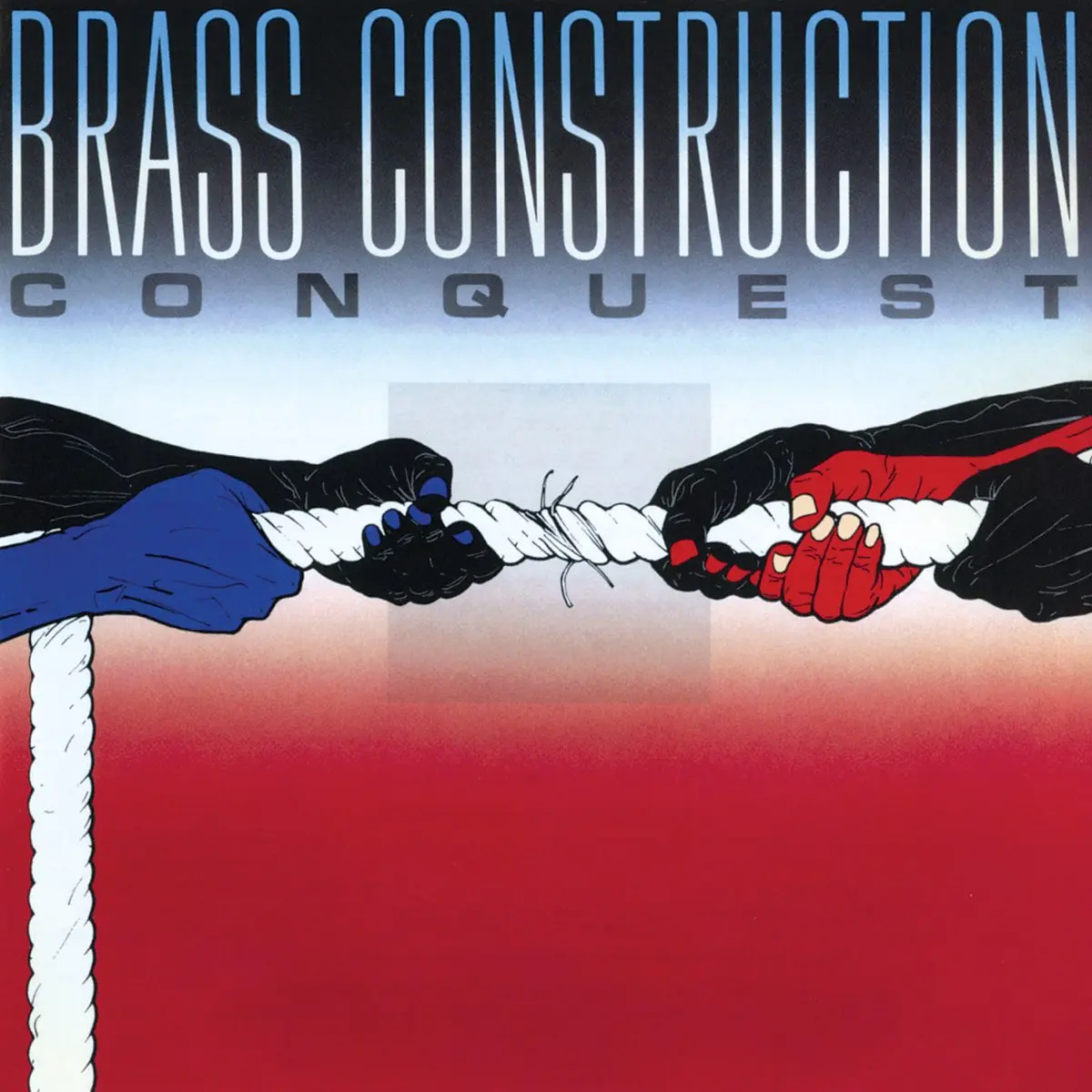 Brass Construction released their tenth and final studio album, Conquest, in 1985 on Capitol.
The album blends layered keyboards, horn sections, and precise percussion with a shift toward polished 1980s production textures. Randy Muller oversees arrangements, production, and programming, supported by Joe Arthur Wong on guitar, Wade Williamston on bass, Larry Payton on drums and vocals, Sandy Billups on percussion and vocals, and a brass section featuring Jesse Ward, Mickey Grudge, and Morris Price.
Randy Muller wrote most of the material, with Larry Payton and Wade Williamston contributing “My Place.” Guitarists Joe Arthur Wong, Anibal Sierra, Fareed Haqq, Ron Thomas, and Solomon Roberts provide lead and rhythm parts, while backing vocals feature Lisa Fischer, Keija Bostic, Vaneese Thomas, Bonnie Barrino, Dolores Milligan, Denise Crawford, and Terri Gonzalez.
A1. “Goodnews” (5:17)
A2. “Modern Touch” (5:12)
A3. “Give And Take” (4:10)
A4. “Startin’ All Over Again” (4:50)
B1. “Comeback” (4:21)
B2. “Zig Zag” (3:55)
B3. “Secret Lover” (4:29)
B4. “My Place” (4:33)
B5. “Conquest” (4:30)
Sessions occurred at Shakedown Sound Studios, with Randy Muller producing, arranging, programming, and co-mixing. Andy Wallace engineered and mixed, assisted by Claude Campbell, Gail King, Louie Ortiz, Mark Russak, and Rob Paustian. Mastering took place at Atlantic Studios, New York.
Conquest features art direction by Roy Kohara, design by Koji Takei, and illustration by Istvan Banyai. Photography was handled by Paul Cox.
Discography:
- “Two Timin’ Lady” / “Take It Easy” (1970)
- Brass Construction (1975)
- Brass Construction II (1976)
- Brass Construction III (1977)
- Brass Construction IV (1978)
- Brass Construction 5 (1979)
- Brass Construction 6 (1980)
- Attitudes (1982)
- Conversations (1983)
- Renegades (1984)
- Conquest (1985)
Sources:
- Discogs: Brass Construction
- 45worlds: Brass Construction
- 45cat: Brass Construction
- MusicBrainz: Brass Construction
Artist/Album Pages:
Hazel O'Connor (born May 16, 1955) is an English new wave singer and actress who starred in the 19...
The Ohio Players were an American soul-funk band that emerged from Dayton, Ohio, in 1959 under the...
Positive Force was an American soul-funk band from Pennsylvania that released a self-titled album ...
Judy Roberts is an American jazz vocalist from Chicago who released three albums between 1979 and ...
Willis Jackson (April 25, 1932 – Oct. 25, 1987) was an American tenor saxophonist who released more ...
Klockwerk Orange was an Austrian symphonic-rock band behind the 1974 CBS album Abrakadabra. Memb...
Melissa Manchester is an American singer–songwriter who released two 1973–74 albums on Bell Record...
I Roy — aka Roy Samuel Reid (June 28, 1944 — Nov. 27, 1999) — was a Jamaican dub/reggae artist and...
Al Foster (Jan. 18, 1943 — May 28, 2025) was an American jazz-funk drummer who first recorded in 1...
Runner was an English-American melodic-rock band that released a self-titled album on Island/Acrobat...
Soft Cell was an English electro-pop duo from Leeds, composed of singer–lyricist Marc Almond and k...
S.O.U.L. — short for Sounds of Unity and Love — was an American soul-funk band from Cleveland that...