

Noel Pointer (1954–1994) was an American jazz-funk violinist, composer, and producer who released the 1977 Blue Note album Phantazia, followed by three albums on United Artists (1978–80) and two on Liberty (1981–82). He died of a stroke one week before his fortieth birthday.
Background
Noel Pointer was born on December 26, 1954, in Brooklyn, where he took up violin as a youth. At 13, he performed Vivaldi with the Symphony of the New World. He attended the High School of Music and Art and the Manhattan School of Music.
Phantazia
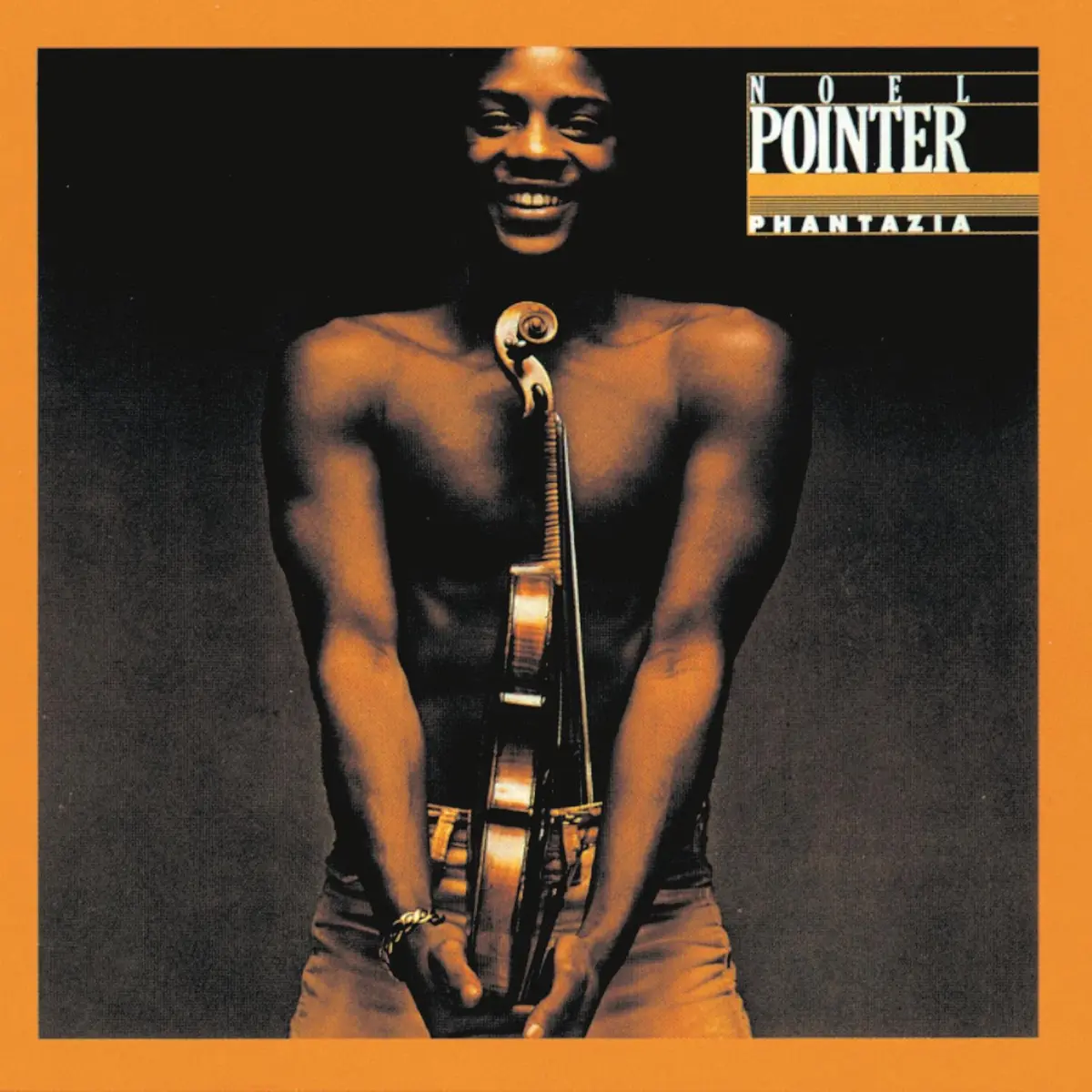 Noel Pointer released his debut album, Phantazia, in April 1977 on Blue Note.
The album introduces New York violinist Noel Pointer as a leading figure in late-1970s fusion, blending electric jazz, soft funk, and light symphonic textures with acoustic string phrasing. Produced and arranged by pianist Dave Grusin with co-producer Larry Rosen, the album presents a polished studio sound that emphasizes interplay between electric rhythm section, layered synthesizers, and lush strings. Pointer alternates between electric and acoustic violin, projecting tone and clarity across rhythmic contrasts that range from Caribbean to orchestral.
Pointer composed four of the seven tracks and performs alongside guitarist Earl Klugh, drummers Steve Gadd, percussionist Ralph MacDonald, bassists Will Lee and Francisco Centeno, and keyboardist Dave Grusin (Fender Rhodes, synthesizer). Guitarists John Tropea and Lee Ritenour appear on select tracks, with saxophonist Tom Scott and flutist Dave Valentin among the supporting woodwind players. The album also includes two contemporary covers: Stevie Wonder’s “Living for the City” and “Fiddler on the Roof” from the 1964 stage musical popularized by Topol.
The set alternates atmospheric jazz-fusion and rhythmically kinetic pieces. “Phantazia” opens with layered strings and rhythmic counterpoint under Pointer’s fluid bowing. “Night Song” and “Mirabella” sustain lyrical interplay between violin and acoustic guitar, while “Rainstorm” unfolds from a calypso-like pulse into samba and disco-shaded sections, propelled by Gadd’s inventive accents and Pointer’s aqueous tone. “Wayfaring Stranger” contrasts the modern arrangements with a reflective solo performance on acoustic violin. The closer, “Fiddler on the Roof,” merges show tune motifs with jazz phrasing and electric rhythm in climactic fashion.
A1. “Phantazia” (5:55)
A2. “Night Song” (6:48)
A3. “Living for the City” (6:36) — originated as a 1973 single by Stevie Wonder, written and first recorded by Wonder on Innervisions.
B1. “Rainstorm” (6:46) — transitions through calypso, samba, and disco pulses under violin improvisation.
B2. “Wayfaring Stranger” (6:55) — traditional folk spiritual arranged for solo violin and electric piano.
B3. “Mirabella” (5:07)
B4. “Fiddler on the Roof” (4:10) — derived from the 1964 Broadway musical by Jerry Bock and Sheldon Harnick; popularized by Topol in the 1971 film version.
Sessions occurred at Camp Columby Studio in New City, New York, and at Kendun Recorders in Burbank, California, with Rosen engineering and Grusin conducting string arrangements. Mixing and mastering also took place at Kendun with engineers John Golden, Jo Hansch, and Tom Wilson.
Phantazia features orchestration by Grusin and a large ensemble of Los Angeles session strings and reeds, uniting New York rhythm players with West Coast studio forces in a refined debut that positioned Pointer among the emerging electric jazz soloists of the late 1970s.
Hold On
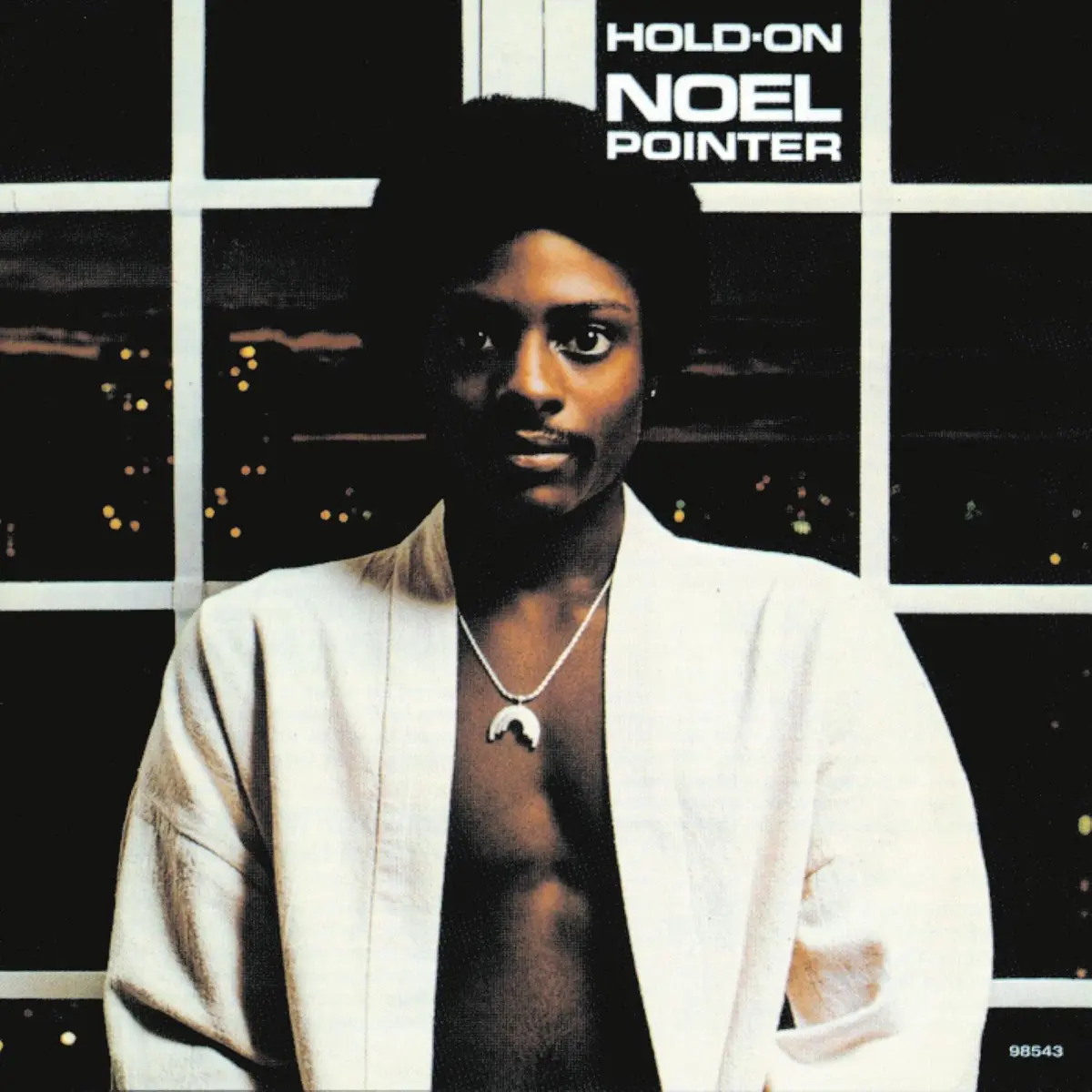 Noel Pointer released his second album, Hold On, in March 1978 on United Artists.
The album continues Noel Pointer’s exploration of orchestral jazz-fusion with symphonic and R&B elements under the production guidance of pianist and arranger Dave Grusin and engineer–producer Larry Rosen. Compared to Phantazia, Hold On expands Pointer’s range with lead vocals on select tracks and a deeper use of electronic textures, balancing electric violin and acoustic strings with rhythm-section precision and layered backing vocals.
Sessions feature a compact New York–Los Angeles studio ensemble that includes drummer Steve Gadd, percussionists Ralph MacDonald and Sammy Figueroa, bassist Anthony Jackson, guitarist Eric Gale, and keyboardist Dave Grusin (acoustic piano, Fender Rhodes, Oberheim Polyphonic, Mini-Moog). Vocal support comes from Patti Austin, Gwen Guthrie, Vivian Cherry, Lani Groves, Bill Eaton, Frank Floyd, Milt Grayson, and Yolanda McCullough. Cellist Ulysses Kirksey, violist Theodore Israel, and violinists Barry Finclair and David Nadien augment the string passages.
Pointer wrote two pieces (“Stardust Lady,” “Movin’ In”) and co-wrote others within a program dominated by Grusin’s arrangements and collaborations with Quincy Jones, Caiphus Semenya, Bill Summers, and other contributors. The album includes a cover of Stevie Wonder’s “Superwoman (Where Were You When I Needed You)” and closes with an interpretation of Capriccio Stravagante by 17th-century composer Carlo Farina.
The set opens with “Hold On,” an expansive electric violin showcase over steady R&B rhythm. “Stardust Lady” introduces Pointer as a vocalist, blending fusion tone with soft-soul phrasing. Side One’s centerpiece, the three-part “Roots Suite,” moves through “Introduction & Pastorale,” “Mama Aifambeni,” and “Oluwa (Many Rains Age),” where African percussion, marimba, and kalimba merge with Oberheim synthesizer textures and call-and-response choral layers. “Superwoman” adapts Wonder’s 1972 ballad into a slow, string-laden instrumental piece led by violin over Rhodes piano. The reflective “Staying With You” and the syncopated “Movin’ In” balance acoustic piano and rhythmic phrasing, while “Capriccio Stravagante” closes the album in a baroque-fusion vein with string quartet interplay and electric synthesizer coloration.
A1. “Hold On” (5:19)
A2. “Stardust Lady” (4:11)
A3a. “Introduction & Pastorale” (0:56)
A3b. “Mama Aifambeni” (4:09)
A3c. “Oluwa (Many Rains Age)” (4:18)
B1. “Superwoman (Where Were You When I Needed You)” (4:18) — originated as a 1972 song by Stevie Wonder on Music of My Mind, written and first recorded by Wonder.
B2. “Staying With You” (3:53)
B3. “Movin’ In” (5:55)
B4. “Capriccio Stravagante” (5:08) — derived from Carlo Farina’s 1627 orchestral suite, arranged by Dave Grusin for electric violin and strings.
Sessions occurred at Kendun Recorders in Burbank and additional New York facilities under the direction of producers Grusin and Rosen, with mastering and lacquer cutting handled at Masterdisk.
Hold On features cover photography by Greg Heisler and art direction by Bill Burks.
United Artists promoted the album with the title track, backed with “Stardust Lady.”
Feel It
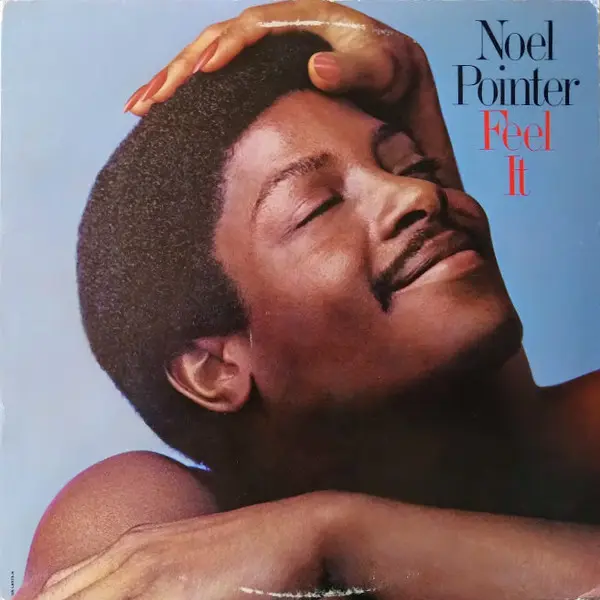 Noel Pointer released his third album, Feel It, on July 24, 1979, on United Artists.
The album presents Noel Pointer’s electric violin as a leading voice across expansive jazz-funk and R&B–inflected arrangements. It emphasizes orchestral textures, synthesizer layers, and rhythm-section precision, with Pointer sharing lead vocal duties for the first time while retaining his signature electric violin phrasing.
Sessions feature drummer Quinten Dennard, percussionists Eddie “Bongo” Brown and Neil Clarke, bassists Will Lee and Neil Jason, guitarists Hiram Bullock and Barry Finnerty, keyboardists Onaje Allan Gumbs (piano, Fender Rhodes), Richard Tee (clavinet), and synthesist Michael Boddicker (Moog, AR 2600R). Backing vocals appear from The Jones Girls, Louvinia Pointer, Jon Lucien, Frank Floyd, Gwen Guthrie, Ray Simpson, and Yvonne Lewis. String conduction is handled by Noel Pointer and Paul Riser, who also arranged and orchestrated the sessions.
Pointer composed the majority of the album, singing on “There’s a Feeling (When You Touch Me)” and co-writing with Riser and collaborators on extended arrangements. Tracks include original compositions and genre explorations that balance layered electric violin lines, clavinet stabs, Fender Rhodes textures, and percussive depth across disco, funk, and concerto-inspired pieces.
A1. “Captain Jarvis” (7:40)
A2. “Feel It” (8:21)
B1. “There’s a Feeling (When You Touch Me)” (4:32)
B2. “For You (A Disco Concerto)” (8:03)
B3. “Niteroi” (6:42)
Sessions occurred at studios under the direction of producer and engineer Barney Perkins, with mixing by Bruce Hawes and Lionel Job, and production oversight from Pointer and Paul Riser.
Noel Pointer produced Feel It with orchestration and arrangements by Paul Riser. United Artists issued the album on standard LP format, pressed by the label.
The album emphasizes the interplay between Pointer’s electric violin, layered keyboards, and the rhythmic foundation provided by Dennard, Clarke, Lee, and Jason, enhanced by the vocal and string arrangements of Riser.
Calling
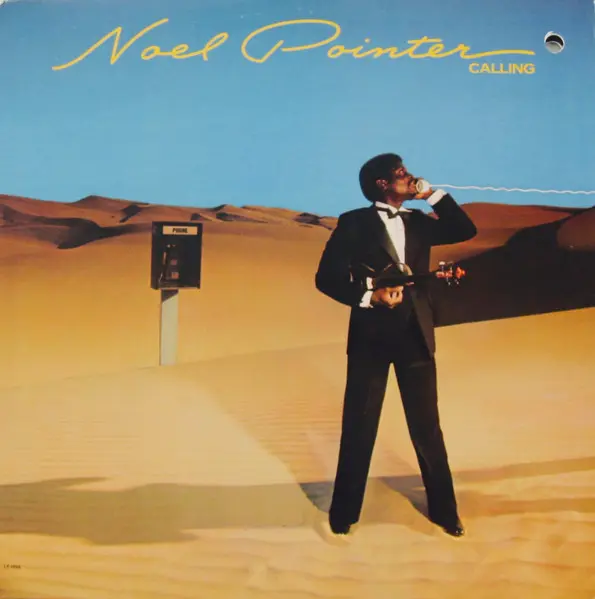 Noel Pointer released his fourth album, Calling, in 1980 on United Artists.
The album showcases Noel Pointer’s electric violin front and center, blending R&B, jazz, and orchestral textures with vocal contributions from Scherrie Payne and layered instrumental arrangements. Pointer expands his compositional palette, alternating between concise song forms and extended pieces, with orchestration and conduction handled by Richard Evans.
Sessions feature drummer and percussion coverage implied but unspecified, bassists including William Pointer, guitarists Artis Phillips, keyboardists Richard Evans (arrangements, conductor), and Pointer on violin. Pointer composed the majority of the material, sharing co-writing credits with Evans, Bruce Hawes, Artis Phillips, and others on select tracks.
Tracks range from concise, vocal-led numbers to instrumental preludes and extended title pieces, combining sharp violin lines, keyboard harmonies, and orchestral touches with a controlled, steady rhythmic pace.
A1. “As Long As I Know” (4:00) — features vocals by Scherrie Payne
A2. “Morning Song” (3:25) — co-written with Richard Evans
A3. “Love Is” (4:16) — co-written with Bruce Hawes
A4. “‘Tween the Lines” (3:34)
A5. “I Don’t Care” (4:18) — written by Artis Phillips, B. Fisher, and Kenny Moore
B1. “Prelude” (1:28)
B2. “Higher Than Heaven” (3:56) — written by Alan Bellink, John Forster, Ted Drachman
B3. “Precious Pearl” (3:03)
B4. “Peace on Earth” (4:08) — co-written with William Pointer
B5. “Take a Look” (3:17)
B6. “Calling” (6:21)
Sessions occurred under producer oversight from Noel Pointer and Richard Evans, with engineering by Bill Bradley. Richard Evans arranged and conducted the orchestral and instrumental sections, while Pointer contributed violin and composition.
United Artists issued Calling with design and reissue artwork by Roger Williams, and liner notes by Kevin L. Goins. Alan Wilson handled later remastering.
The album emphasizes the interplay of Pointer’s electric violin with Evans’ orchestration, combining concise vocal tracks and extended instrumental passages, balancing steady rhythmic foundations with layered harmonic and string textures.
All My Reasons
 Noel Pointer released his fifth album, All My Reasons, in 1981 on Liberty.
The album places Noel Pointer’s electric and acoustic violin at the forefront, integrating R&B, jazz, and orchestral elements with layered vocal performances. Pointer alternates between lead vocals, solo violin passages, and collaborative arrangements, supported by orchestration and conduction from Richard Evans and Pointer himself.
Pointer composed the majority of the material, with additional songwriting contributions from Artis Phillips Jr., Phil Perry, Denzil A. Miller Jr., Randy Goodrum, Shelton Becton, Marion Hicks, and Chuck Mangione. Sessions featured drummer James Gadson, bassists Larry Ball, pianists and keyboardists Denzil “Broadway” Miller, Phil Perry, Noel Pointer, and Kenny Moore, guitar by Ross Traut, harpist Dorothy Ashby, percussionist Derf Reklaw, and an extensive string and horn section including Sol A. Bobrov (concertmaster/contractor), Arnold Roth, Arnold Isklar, and others.
Tracks range from vocal-led R&B numbers to expansive instrumental pieces, combining angular violin lines with steady rhythmic foundations, orchestrated harmonies, and subtle percussive textures.
A1. “Classy Lady” (3:54) — written by Artis Phillips Jr. and Phil Perry, featuring Pointer on lead vocals and Stroh violin
A2. “East St. Louis Melody” (3:47) — written by Phil Perry, Pointer on piano, violin, and solo lines
A3. “All the Reasons Why” (3:57) — written by Phillips Jr. and Perry, Pointer on lead vocals
A4. “Brookline (Brooklyn, a New York City)” (4:14) — written by Denzil A. Miller Jr., featuring effects on electric violin and layered backing vocals
A5. “Savin’ It Up” (3:57) — written by Randy Goodrum, Pointer on lead vocals
B1. “Virgie” (4:10) — written by Denzil A. Miller Jr., Pointer on solo violin
B2. “I Feel Your Soul” (5:10) — written by Shelton Becton, Pointer on lead vocals and violin
B3. “Oh What a Beautiful City” (3:58) — written by Marion Hicks, Pointer on violin and piano, Dorothy Ashby on harp
B4. “Land of Make Believe” (7:10) — written by Chuck Mangione, Pointer on violin, Denzil “Broadway” Miller on Fender Rhodes, James Gadson on drums, Larry Ball on electric bass
Sessions occurred at Redwing Studios, Tarzana, CA (Nov–Dec 1980 / Jan 1981), Universal Studios, Chicago, IL (Dec 1980 / Jan 1981), and P.S. Recording Studios, Chicago, IL (Dec 1980), with producers Noel Pointer and Richard Evans. Recording engineers included Denby Allen, Greg Whitehead, Paul Serrano, Kirk Butler, Bill Bradley, and remixing by Barney Perkins and Kirk Butler.
Pointer conducted the orchestra, with Evans co-arranging and orchestrating alongside rhythm arrangements from Phillips Jr., Miller, and Perry. The extensive string, horn, and woodwind sections feature top session players coordinated by Sol A. Bobrov.
The album emphasizes tight interaction between Pointer’s violin, rich orchestration, and layered vocals, creating passages that shift between controlled rhythmic patterns, expansive string textures, and contoured instrumental lines.
Direct Hit
 Noel Pointer released his sixth album, Direct Hit, in 1982 on Liberty.
The album emphasizes Noel Pointer’s electric and acoustic violin against orchestrated arrangements and layered backing vocals, combining R&B, jazz, and pop-inflected textures. Pointer alternates between solo violin passages, lead vocals, and conduction of the orchestral sections, working closely with arranger and co-producer Richard Evans.
Tracks range from rhythm-driven R&B numbers to lush instrumental passages, with Pointer’s violin weaving angular lines over steady rhythmic structures, contoured string arrangements, and vocal harmonies.
A1. “Direct Hit” (4:58) — written by Richard Evans, features Pointer on violin
A2. “We Took the Long Way Home” (3:57) — written by Alan Bellink, L. Schere, R. Roberts
A3. “Play the Part” (5:31) — co-written by Alexandria Brown and Pointer, Pointer on violin
A4. “Don’t Do It Again” (4:56) — co-written by Brown and Kenny Moore
B1. “Life Time of Love” (4:23) — written by Geoffrey Leib
B2. “Catch Me” (4:31) — co-written by Brown, Pointer, and Evans
B3. “When Love Walks in the Door” (4:31) — written by Dutch Robinson
B4. “Living Through the Ghost” (4:18) — written by B. Cooper and L. Jones
Sessions featured drummer James Gadson, bassists Larry Ball, keyboardists Denzil Miller, Geoff Lieb, Noel Pointer, and Russell Ferrante, guitarists Charles Fearing, Dennis Herring, Larry Lingle, and Phil Upchurch, percussionist Derf Reklaw, extensive string and horn sections including concertmaster Bill Henderson, violinists Gina Kronstadt and Sid Page, violists Brenton Banks and Joel Soultanian, trombonists Dick Hyde and Lew McCreary, and trumpeters Charles Findley, Gary Grant, and Steven Madaio. Backing vocals included Alexandria Brown, Alice Echols, Darryl Phinnessee, Mortonette Jenkins, Phil Perry, Kevin Sanlin, and Pointer himself.
Sessions occurred at Redwing Sound, Tarzana, California, and Paramount Studios, Hollywood, California, in September, October, and November 1981, with producers Noel Pointer and Richard Evans. Recording and mixing engineers included Kirk Butler, John Pooley, Larry Hinds, Larry Boden, Ron Lewter, and Terri Fiyalko.
Pointer conducted the orchestra, with Evans arranging and orchestrating, coordinating extensive strings, horns, woodwinds, and brass sections. Backing vocalists and session musicians contributed to dense textural layering, emphasizing rhythmic and angular violin passages throughout the album.
Discography:
- Phantazia (1977)
- Hold On (1978)
- Feel It (1979)
- Calling (1980)
- All My Reasons (1981)
- Direct Hit (1982)
Sources:
- Discogs: Noel Pointer
- 45worlds: Noel Pointer
- 45cat: Noel Pointer
- MusicBrainz: Noel Pointer
- Noel Pointer Foundation
Artist/Album Pages:
Anacrusa was an Argentine progressive folk-rock band behind two self-titled albums in 1973/74 on ...
Terje Rypdal is a Norwegian jazz-rock guitarist who's released more than 25 albums since 1968 in s...
The Ensemble Al-Salaam was an American spiritual-jazz septet that released the 1974 album The Sojo...
Ruby Starr — aka Constance Henrietta Mierzwiak (Nov. 30, 1949 — Jan. 14, 1995) — was an American s...
Full Moon Trio was a Belgian avant-jazz/rock band behind a 1975 self-titled album on Dwarf Records...
Buki-Yamaz was a Danish jazz-rock/funk band that made a 1975 self-titled album on Hookfarm, follow...
Арсенал (Arsenal) are a Russian jazz-rock big band, active from 1973 in Moscow. Inspired by the U....
Blackjack was an American hard-rock band behind the 1979/80 Polydor albums Blackjack and Worlds A...
Enrico Rava (born Aug. 20, 1939) is an Italian trumpeter, composer, and bandleader with more than ...
Dog Soldier was an English hard-rock supergroup from Preston, Lancashire, that released a 1975 sel...
Einzelgänger — German for "individualist" — was the name used by Italian keyboardist/producer Gior...
Tangerine was a French folk-rock band that debuted with the album De l'autre côté de la forêt on A...
The song “Rainstorm” by Noel Pointer starts with a martial Calypso-type pattern. As the track progresses, the rhythmic elements evolve: It transitions into a Samba-type pattern. Later, it begins to sound and feel more disco. Towards the end, the track enters a “rhythmically oblique” and “jerky” section, described as avant-garde, ultimately fading out in a much different territory from where it began. Noel Pointer’s violin playing is described as having a purity of tone and smoothness and fluidity. his violin work “runs like watery waves over the… velvety keyboard Fender backdrop,” making everything mesh perfectly. Steve Gadd’s drum work on “Rainstorm” is noted for its creativity, particularly his strange accents and the way he places the downbeats. Zaragon also highlights the Marshall fills Gadd incorporates into the snare. Later, it’s mentioned that Gadd throws in some “really deft fills” that are so creative they could almost stand alone as an interesting track. His drumming is described as counterintuitive, as if he meticulously studied the track’s cadence and progression to add accents that make it even more “punctual” and “impenetrable”