

The Pale Fountains were an English sophisti-pop band that debuted in 1982 on Les Disques du Crépuscule and made the 1984/85 Virgin albums Pacific Street and …From Across the Kitchen Table. Frontman Michael Head made five subsequent albums with Shack.
Members: Michael Head (guitar, vocals), John Head (guitar), Chris McCaffery (bass), Thomas Whelan (drums), Andy Diagram (trumpet)
Background
The Pale Fountains originated in Liverpool circa 1980 when singer-guitarist Michael Head teamed with bassist Chris “Biffa” McCaffery, a fellow resident of Kensington. At seventeen, Head acquired his first guitar from his employer, Brian Green Business Machines. At Probe Records, Teardrop Explodes keyboardist David Balfe introduced Head to David “Yorkie” Palmer, who exposed him to The Byrds and Love. Head approached McCaffery with a copy of Forever Changes, which cemented their musical partnership.
Head and McCaffery studied flamenco and classical guitar techniques and learned Burt Bacharach songs from sheet music. After a brief spell as the Dance Party, they adopted the name Love Fountains. With drummer Thomas “Jock” Whelan, they developed an acoustic framework with twelve-string guitar and semi-acoustic bass. Head also drew on the bossa nova repertoire of Antônio Carlos Jobim and Sérgio Mendes & Brasil ’66.
Nathan McGough, an early adviser to the trio, joined on congas. He played bass in the Liverpool experimental post-punk band The Royal Family and the Poor, who shared the 1980 Factory double album A Factory Quartet with the Durutti Column, Blurt, and Kevin Hewick. McGough also appeared on their 1982 Factory maxi-single “Art on 45.” With Royal Family vocalist Arthur McDonald, he established the Liverpool concert venue Plato’s Ballroom.
On April 26, 1982, The Pale Fountains supported Dislocation Dance at the Barracuda Club on Baker Street, London. They befriended trumpeter Andy Diagram through a mutual appreciation of Love and invited him onstage. Diagram hailed from London, where at thirteen he discovered Miles Davis and explored free improvisation through upstairs neighbor Maggie Nicols. In Manchester, he doubled as Diagram Brothers bassist and Dislocation Dance trumpeter on their respective 1981 New Hormones albums Some Marvels of Modern Science and Music Music Music.
Early Singles
 At the Barracuda engagement, The Pale Fountains attracted Patrick Moore, who ran Operation Twilight, the UK branch of Belgian label Les Disques du Crépuscule. With an £800 budget, they booked May sessions at Pluto Studios in Manchester, where McGough enlisted violinist William Robinson.
In June 1982, Crépuscule issued the three-track twelve-inch “(There’s Always) Something on My Mind” with “Just a Girl” and “Lavinia’s Dream.” Operation Twilight paired the first two tracks on a July seven-inch.
A. “(There’s Always) Something on My Mind” (2:42)
B. “Just a Girl” (4:24)
On July 19, The Pale Fountains cut their sole session for BBC Radio One DJ John Peel, whose 8/3 broadcast aired a recent maxi-single track (“Lavinia’s Dream”), a future a-side (“Thank You”), and two rarities (“Longshot for Your Love,” “The Norfolk Broads”). They played summer dates at Plato’s Ballroom, the Brighton Xtremes, and the Manchester Haçienda. Their live repertoire included “Walk on By,” “Scarborough Fair,” and the Love number “Maybe the People Would Be the Times or Between Clark and Hilldale.”
 Operation Twilight earmarked “Thank You” and “Longshot for Your Love” for a September single. In October, The Pale Fountains signed a reported £150,000 deal with Virgin. They honored their Crépuscule commitments with Belgian dates alongside Antena, Tuxedomoon, Cabaret Voltaire, and 23 Skidoo on the Move Back – Bite Harder tour.
During the Belgian excursion, The Pale Fountains cut the John Barry–Hal David number “We Have All the Time in the World” from the James Bond film On Her Majesty’s Secret Service, with Tuxedomoon violinist Blaine L. Reininger. They also paid tribute to Crépuscule designer Benoît Hennebert with “Benoît’s Christmas” for the label compilation Ghosts of Christmas Past.
 In November 1982, The Pale Fountains made their Virgin debut with “Thank You” (b/w “Meadow of Love”), an orchestral single that reached No. 48 on the UK chart. The sleeve shows the members canoeing in their trademark 1930s attire.
A. “Thank You” (3:04)
B. “Meadow of Love” (3:03)
For the May 1983 follow-up, “Palm of My Hand” (b/w “Love’s a Beautiful Place”), they worked with Associates instrumentalist Alan Rankine and budding producer Greg Walsh, a later soundman for The Bible and Then Jerico. The band co-produced their first album with soundman Howard Gray at multiple studios, including the Manor in Oxfordshire.
A. “Palm of My Hand” (3:45)
B. “Love’s a Beautiful Place” (4:13)
Pacific Street
 The Pale Fountains released their debut album, Pacific Street, on February 27, 1984, on Virgin Records.
The album combines acoustic guitar-based pop with bossa nova rhythms, orchestral arrangements, and elements of Latin jazz and Sixties soul. Diagram alternates trumpet fanfares with lyrical counterpoint to Head, who ranges from intimate crooning (“Unless”) to emphatic pop refrains (“Reach”). The group contrasts the angular guitar chords of “Natural” with the orchestral romanticism of “Beyond Fridays Field” and the flute-accented “Southbound Excursion.” They bookend side two with “Faithful Pillow,” a two-part miniature with Spanish guitar and trumpet.
The Pale Fountains revisit their 1982 debut single “Something on My Mind” in a new arrangement. Guest musicians include cellist Marc L’Etarjet, flutist Julie Andrews, keyboardist Trixi, and percussionist Miguel “Miggy” Barradas (steel drums).
 A1. “Reach” (4:10)
A2. “Something on My Mind” (3:55)
A3. “Unless” (4:40)
A4. “Southbound Excursion” (2:32)
A5. “Natural” (3:20)
B1. “Faithful Pillow (Pt. 1)” (1:39)
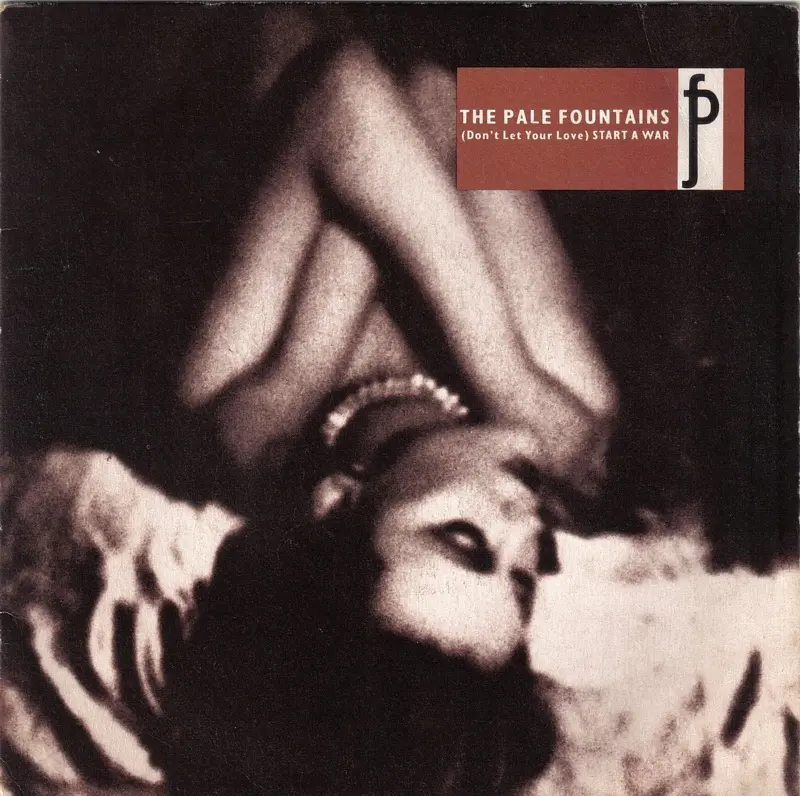
B2. “(Don’t Let Your Love) Start a War” (3:38)
B3. “Beyond Fridays Field” (4:03)
B4. “Abergele Next Time” (3:49)
B5. “Crazier” (3:40)
B6. “Faithful Pillow (Pt. 2)” (1:59)
Sessions occurred throughout 1983 at Village Way Studios in Harrow, The Manor in Oxfordshire, Ridge Farm Studios in Surrey, and Nova Sound Studios in London. The Pale Fountains arranged and co-produced the material with former Townhouse soundman Howard Gray, who engineered Pacific Street amid 1983/84 work on albums by (Labour of Love), (Mummer), Simple Minds (Sparkle in the Rain), and Endgames (Building Beauty).
 The Pale Fountains designed the sleeve in conjunction with T&CP Associates. The front cover incorporates a monochrome photograph of a young Hungarian insurgent with an ammunition belt, captured during the 1956 Budapest uprising by Italian photojournalist Mario De Biasi, a longtime correspondent for the illustrated weekly Epoca. The sleeve also features photography by Mark Baker, who documented the group in their early Edwardian street-urchin attire and contributed the cover photograph for the 1982 Microdisney debut single “Hello Rascals.”
Virgin previewed Pacific Street in January 1984 with “Unless” (b/w “Natural”) and followed the album in March with a remixed “(Don’t Let Your Love) Start a War” (b/w “Love Situation”). Both singles appeared in extended 12-inch versions.
Pacific Street reached No. 85 on the UK Albums Chart.
…From Across the Kitchen Table
 The Pale Fountains released their second album, …From Across the Kitchen Table, in February 1985 on Virgin.
The album presents twelve songs in a guitar-intensive pop-rock idiom with prominent backbeats and intermittent orchestral accents. The Head brothers combine ringing chord patterns with brisk electric guitar figures on “Shelter” and “These Are the Things,” while Michael adopts a more plaintive vocal inflection on “Bicycle Thieves.” The group retain elements of chamber pop in the string arrangement of “Jean’s Not Happening” and embrace a brisk folk-rock cadence on “September Sting.”
Guest musicians include Brazilian percussionist Geraldo D’Arbilly (berimbau) and string players Anne Stephenson and Audrey Riley. A singer credited as Marge provides backing vocals on “Bruised Arcade.”
 A1. “Shelter” (3:12)
A2. “Stole the Love” (3:52)
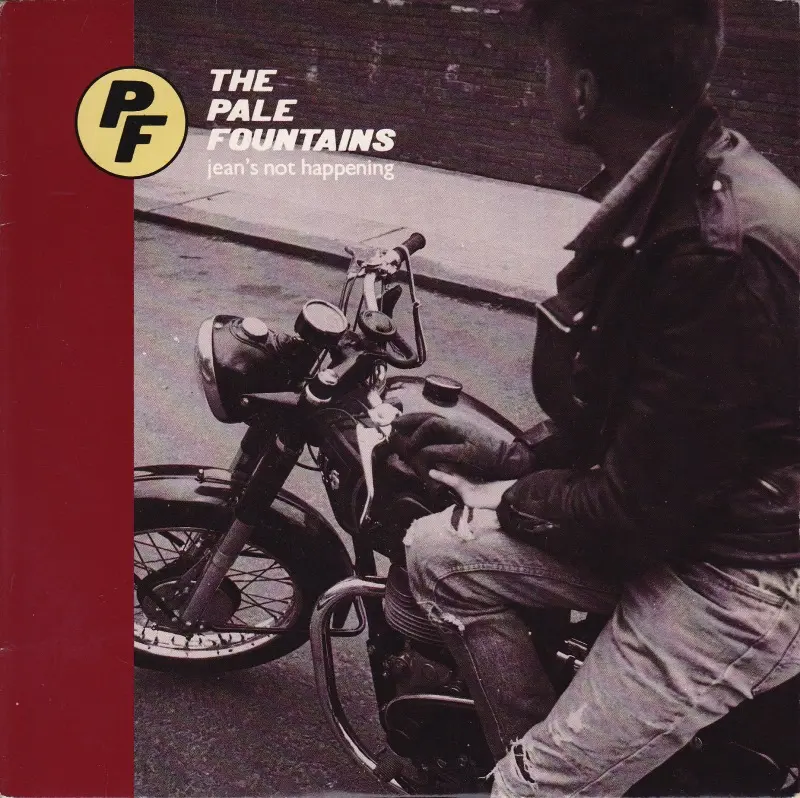
A3. “Jean’s Not Happening” (4:04)
A4. “Bicycle Thieves” (4:05)
A5. “Limit” (3:50)
A6. “27 Ways to Get Back Home” (2:48)
B1. “Bruised Arcade” (4:15)
B2. “These Are the Things” (3:48)
B3. “It’s Only Hard” (3:06)
B4. “…From Across the Kitchen Table” (3:55)
B5. “Hey” (3:48)
B6. “September Sting” (3:33)
Sessions occurred at Highland Studios in Inverness, Amazon Studios in Liverpool, and two London facilities (Britannia Row and the Townhouse). The Pale Fountains recorded the album with producer Ian Broudie, the former Big in Japan and Original Mirrors guitarist who oversaw the 1983 Echo & the Bunnymen album Porcupine and subsequent singles by Bourgie Bourgie.
Amazon soundman Gil Norton co-engineered the sessions with former RAK engineer Ian Caple . Norton engineered the 1984 Bunnymen album Ocean Rain and subsequently reunited with Broudie on the 1985 Wall of Voodoo album Seven Days in Sammystown. Both engineers also worked with Broudie on material by the Colourfield.
 Paul Hardiman remixed “Shelter,” “Jean’s Not Happening,” “27 Ways to Get Back Home,” and “These Are the Things” amid production work for The The (Soul Mining) and Lloyd Cole & the Commotions (Rattlesnakes).
The Pale Fountains retained Town and Country Planning for the sleeve design with photography by Liverpool portraitist John Stoddart. The front cover superimposes fragments of faces, hands, and a guitar neck in muted brown and amber tones around a cream square with a circular red PF insignia. Stoddart also contributed photography to 1984/85 sleeves for Frankie Goes to Hollywood (Welcome to the Pleasuredome), Propaganda (A Secret Wish, Wishful Thinking), and Madness (Mad Not Mad).
Virgin previewed the album in January 1985 with “Jean’s Not Happening” (b/w “Bicycle Thieves”). In June, the label issued new versions of the title track and “Bicycle Thieves” with production by Gordian Troeller. The 12-inch single contains an extended title-track mix, while a limited double-seven-inch package revives two 1982 single sides, “Thank You” and “Just a Girl.”
…From Across the Kitchen Table reached No. 94 on the UK Albums Chart.
The 1989 Virgin CD substitutes the Troeller productions for the corresponding album tracks. The 2004 Japanese CD restores both original Broudie versions.
Postlude
In 1986, the Pale Fountains parted with Virgin. The group disbanded in 1987 after a May 21 engagement at the Majestic Club in Liverpool. Michael and John Head formed Shack, whose December live debut preceded the Ian Broudie-produced 1988 Ghetto album Zilch. In 1989, Chris “Biffa” McCaffery died of a brain tumor. Thomas Whelan left music and drove taxis in Liverpool.
Andy Diagram joined Manchester pop-rockers James in 1989 for their 1990/92 Fontana albums Gold Mother and Seven. With drummer Richard Harrison, Diagram played in the free-jazz ensemble The Honkies and formed the electro-acoustic duo Spaceheads, who issued a 1995 self-titled album on Dark Beloved Cloud. Diagram and guitarist Keith Moliné teamed with Pere Ubu frontman David Thomas as Two Pale Boys for the 1996 release Erewhon.
In 1991, Shack cut their second album with producer Chris Allison. A fire at Star Street Studios destroyed the masters, but Allison retained a digital copy that furnished the October 1995 Marina release Waterpistol. Meanwhile, the Head brothers backed Love frontman Arthur Lee on 1992 European dates. French promoter Stéphane Bismuth financed sessions for Michael Head & The Strands, who made the 1997 Megaphone album The Magical World of the Strands.
The Head brothers reactivated Shack in 1998 with bassist Ren Parry and Strands drummer Iain Templeton. They made three further albums: the 1999 London release H.M.S. Fable, the 2003 North Country title Here’s Tom with the Weather, and the 2006 Sour Mash release The Corner of Miles and Gil. Marina gathered early Pale Fountains recordings, BBC sessions, and unreleased tracks on the 1998 anthology Longshot for Your Love.
Reunion and Later Projects
In February 2008, the Head brothers reunited with Diagram and Whelan for Pale Fountains concerts at Liverpool Carling Academy and London Shepherd’s Bush Empire. Shack associates Iain Templeton and bassist Martyn Campbell augmented the lineup. Michael formed the Red Elastic Band in 2012 and debuted with the 2013 Violette EP Artorius Revisited. Diagram played trumpet on their 2017 album Adiós Señor Pussycat.
Michael Head & The Red Elastic Band reached UK No. 6 and 10 with their respective 2022/24 Modern Sky albums Dear Scott and Loophole. After the December 2022 death of Templeton, the Head brothers reconvened Shack for an April 2025 UK tour with returning bassist Pete Wilkinson, Coral drummer Ian Skelly, and Red Elastic Band guitarist Nathaniel Laurence. That summer, Cherry Red gathered both Pale Fountains albums, demos, remixes, and alternate takes on the four-CD box The Complete Virgin Years.
-
Discography:
- Pacific Street (1984)
- …From Across the Kitchen Table (1985)
Non-album shortplayers:
- “(There’s Always) Something on My Mind” / “Just a Girl” (1982)
- “Thank You” / “Meadow of Love” (1982)
- “Palm of My Hand” / “Love’s a Beautiful Place” (1983)
Sources:
References and notes
- Gerry Corner, Liverpool Confidential – October 18, 2017. Michael Head recounts his first guitar, McCaffrey partnership, and Love introduction. (Head interview)
- Michael Head official biography – undated. Documents David Palmer, Love Fountains, early influences, and Andy Diagram connection. (Official biography)
- Record Mirror – July 10, 1982. Contemporary interview establishes instrumental development, band naming, and early personnel. (1982 interview)
- Johnny Waller, Sounds – August 14, 1982. Interviews Head, McCaffrey, and McGough about rehearsals, influences, and management. (Sounds feature)
- Geoff King, Les Disques du Crépuscule – undated. Documents Barracuda concert, Patrick Moore, Pluto sessions, violinist recruitment, and Belgian tour. (Label history)
- Andy Diagram, Past Bands – undated. Firsthand account confirms Diagram Brothers, Dislocation Dance, and Pale Fountains memberships. (Diagram memoir)
- Diagram Brothers official discography – undated. Confirms Andy Diagram on bass and the 1981 New Hormones album. (Band discography)
- LTM Recordings, Dislocation Dance biography – undated. Documents the 1981 debut, Diagram participation, and 1982 London concerts. (Label biography)
- John Peel Wiki – undated. Establishes July 1982 session date, August broadcast, and four songs. (Peel session)
- 45cat – undated. Identifies Operation Twilight and Virgin singles, catalog numbers, and release chronology. (Singles discography)
- Pacific Street original album credits – 1984. Confirms producer, personnel, recording studios, and Virgin catalog number. (Sleeve credits)
- Kieron Tyler, The Arts Desk – July 27, 2025. Examines earliest performances, formation names, Virgin history, and John Head membership. (Historical account)
Artist/Album Pages:
The Red Crayola was an American psychedelic rock band from Houston that released the experimental...
Miroslav Vitous (born Dec. 6 1947) is a Czech jazz-rock bassist, active on the international scene...
The Kalahari Surfers are a South African avant-garde/experimental rock band that juxtaposed manic,...
The Parker Brothers were an American jazz-rock/soul band behind a 1981 self-titled album on Crown ...
Nona Hendryx (born Oct. 9, 1944) is an American soul singer who emerged as one-third of funk lege...
Madness are an English new wave band that released five albums between 1979 and 1984 on Stiff Record...
Ñu was a Spanish hard-rock band that released four albums on Chapa between 1978 and 1984, followed...
Marsupilami was an English post-psych six-piece band that released two albums on Transatlantic Rec...
Mockba Music was a Swedish synthpop trio that released three singles and a self-titled album betwe...
Teru’s Symphonia was a Japanese symphonic-rock band led by ex-Novela guitarist Terutsugu Hirayama,...
Kajagoogoo was an English synthpop band whose 1983 global hit "Too Shy" made them part of the Seco...
Halmens was a Japanese new wave band that released two albums in 1980/81 on Flying Dog. Members...
2020 draft:
Formed in 1980 Liverpool, The Pale Fountains were part of the city’s post-Deaf School musical renaissance.