

The Passage was an English post-punk band assembled by drummer, keyboardist, and songwriter Dick Witts. They released two 1978–79 EPs on Manchester indie Object, followed by the 1980 album Pindrop. In 1981, a revised lineup issued For All and None on Virgin-subsidiary Night & Day, followed by the 1982–83 releases Degenerates and Enflame on Cherry Red.
Members: Dick Witts (drums, percussion, keyboards, vocals), Tony Friel (vocals, guitar, bass, 1978-79), Lorraine Hilton (keyboards, 1978-80), Joe McKechnie (drums, 1980-81, 1982-83), Lizzy Johnson (vocals, 1980-81), Andy Wilson (guitar, 1980-83), Paul Mahoney (drums, 1981-82)
Background
The Passage formed in March 1978 when classical academic Richard Witts of the Manchester Musicians Collective (MMC) teamed with Tony Friel, the original Fall bassist.
Witts hailed from Cleethorpes, a town on the Humber estuary in North East Lincolnshire. From age eleven, he attended Clee Grammar School for Boys and played percussion in the Cleethorpes & District Brass Band. He also learned cello and played in the Grimsby Light Orchestra>. After Clee, he enrolled at the Royal Manchester College of Music. In the mid-Seventies, he played percussion in the Hallé Orchestra (Manchester’s leading symphony orchestra since 1858) and wrote for Contact, a contemporary classical magazine.
In April 1977, Witts assembled the MMC with fellow composer/academic Trevor Wishart, who organized basement MMC events on Manchester’s King Street. Witts formed the NorMedia Band, a contemporary ensemble with bassist Louise Alderman Price. NorMedia performed Wishart compositions at the MMC events, which also featured the city’s new underground rock acts, including The Fall, Warsaw, and Price’s other band, The Manchester Mekon.
That summer, Witts performed with the Palm Beach Orchestra on Wishart’s “Beach Singularity,” an extended avant-garde piece later edited for release by York Electronic Studios. Meanwhile, the MCC held subsequent events through 1977 at Band On the Wall, a club night at the Sawyer’s Arms pub in Deansgate. Witts befriended Friel through the MCC events>.
Friel (b. May 4, 1958) came from Birkenhead on the Wirral Peninsula. He attended Heys School in Prestwich, Greater Manchester, and befriended classmate Martin Bramah. In late 1976, the pair met Broughton-born muso Mark E. Smith and his then-girlfriend, Una Baines. They formed The Fall, a central band of Manchester’s late-Seventies musical renaissance. Friel took up bass for The Fall and remained with the band for one year. Weeks before his exit, they cut an EP (later released as Bingo-Master’s Break-Out!) that contains the Smith/Friel composition “Psycho Mafia.”
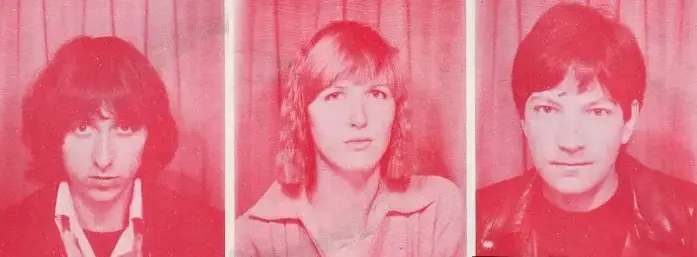 Witts and Friel formed The Passage as a trio with Bob Dickinson, the original Magazine keyboardist, who soon cleared for Tony’s friend, Lorraine Hilton>. On June 18, 1978, they played an MCC event with two punk bands: Frantic Elevators (with Mick Hucknall) and Fast Cars (named after the Buzzcocks song). The Passage linked with Object Music, the upstart indie venture of Spherical Objects frontman Steve Solamar.
New Love Songs
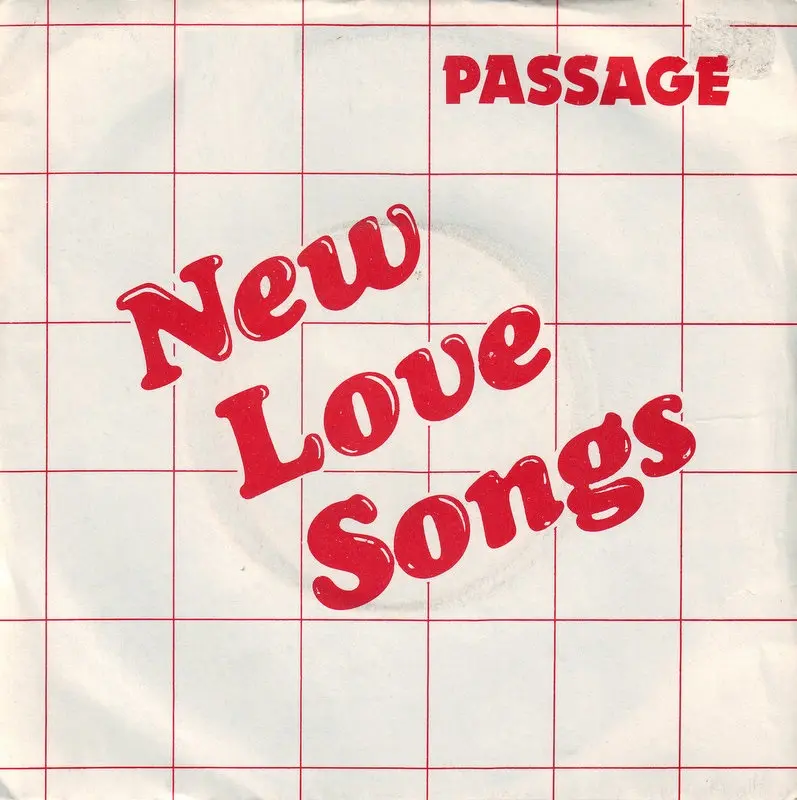 In December 1978, The Passage debuted with New Love Songs, a four-song maxi-single on Object Music. It features two songs each by Dick Witts (“Love Song,” “$lit Machine”) and Tony Friel (“The Competition,” “New Kind of Love”). Friel plays bass and guitar.
A1: “Love Song” (1:47)
A2: “The Competition” (1:46)
B1: “$lit Machine” (1:30)
B2: “New Kind of Love” (1:44)
New Love Songs appeared as Object’s second 7″ (OM 02) between singles by Spherical Objects (“The Kill”) and Steve Miro (“Smiling In Reverse”). The picture sleeve contains photos without names of the three players.
For the next year, The Passage functioned as a part-time operation. Friel joined two additional bands, The Teardrops (with early Buzzcocks bassist Steve Garvey) and Contact (with Spherical Objects keyboardist Duncan Prestbury). He wrote two songs (“Someone Like You,” “Fascinated By Time?”) on Future / Past, Contact’s 1979 Object EP.
About Time
 In October 1979, The Passage released About Time, their second of two Object maxi-singles. It features two songs each by Dick Witts (Side B) and Tony Friel (Side A), who added lyrics to Witts’ “16 Hours.”
Witts plays cello, drums, and percussion on About Time, which features string machine effects by him and Lorraine Hilton, who plays the Roland Organ.
A1: “Taking My Time” (2:44)
A2: “Clock Paradox” (2:34)
B1: “16 Hours” (3:35)
B2: “Time Delay” (3:32)
The Passage co-produced About Time with David Cunningham, a soundman on titles by This Heat and Wayne County & the Electric Chairs. Cunningham’s own project, The Flying Lizards, scored a recent surprise hit with a skewed electro-pop take on Barrett Strong’s early Motown classic “Money.”
About Time sports a blue monochrome sleeve by NME photojournalist Kevin Cummins, whose photography also appears on sleeves for Big In Japan, The Drones, Slaughter & The Dogs, and the 1979 Buzzcocks’ albums A Different Kind of Tension and Singles Going Steady.
Soon after this release, Friel and Hilton parted ways with Witts, who upheld The Passage as a solo venture before a new lineup took shape. Friel played on The Teardrops’ 1980 album Final Vinyl and later served as a Blue Orchids soundman.
Pindrop
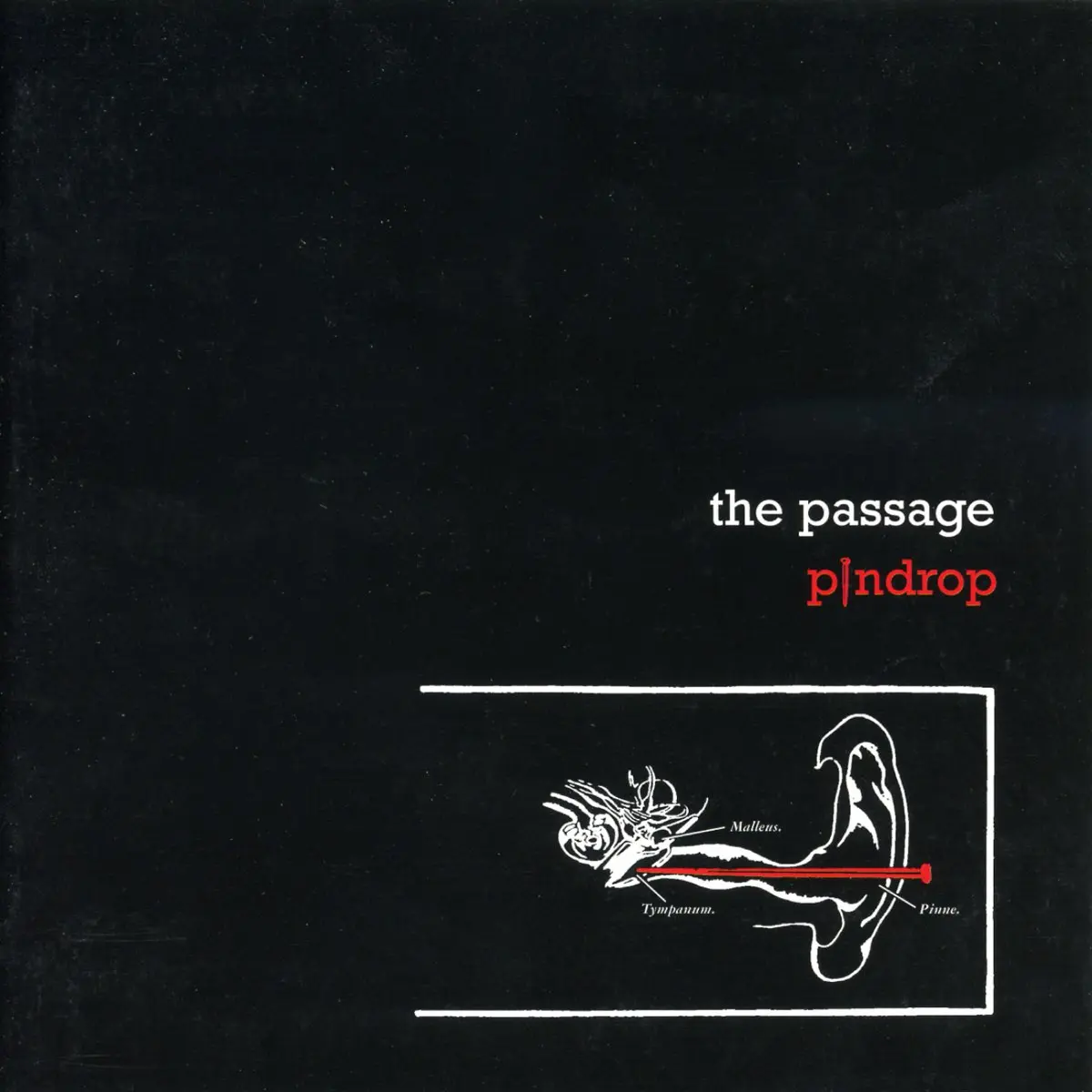 The Passage released their debut album, Pindrop, in November 1980 on Object. Recorded between Passage lineups, Pindrop is a one-man effort by Dick Witts, who’s credited with vocals and “effects.”
Pindrop features twelve self-performed Witts originals and one track (“16 Hours”) co-written by ex-member Tony Friel. The album’s title splits across Sides One (Pin) and Two (Drop).
Pin Side
1. “Fear” (2:19)
2. “Troops Out” (2:09)
3. “Carnal” (3:05)
4. “Watching You Dance” (3:29)
5. “Hunt” (3:22)
6. “Anderton’s Hall” (1:49)
7. “From the Heart” (2:18)
Drop Side
8. “Locust” (3:30)
9. “2711” (3:12)
10. “16 Hours” (3:08)
11. “Carmen” (1:48)
12. “A Certain Way to Go” (2:56)
13. “Prelude” (3:36)
Sessions occurred in July 1980 at Graveyard Studios, a newly opened Prestwich facility owned by Stewart Pickering, who engineered Pindrop in sequence with titles by A Certain Ratio, Crispy Ambulance, and The Modernaires.
Pindrop sports a minimalist cover design by Jeremy Greenwood, Witt’s ongoing graphic associate whose three-tone scheme (black, white, red) appears on all subsequent Passage sleeves. The illustration shows a tympanic membrane (eardrum) poked by a red pin.
Witts pulled no singles from Pindrop but re-recorded “Troops Out” with a subsequent Passage lineup.
Non-album Singles
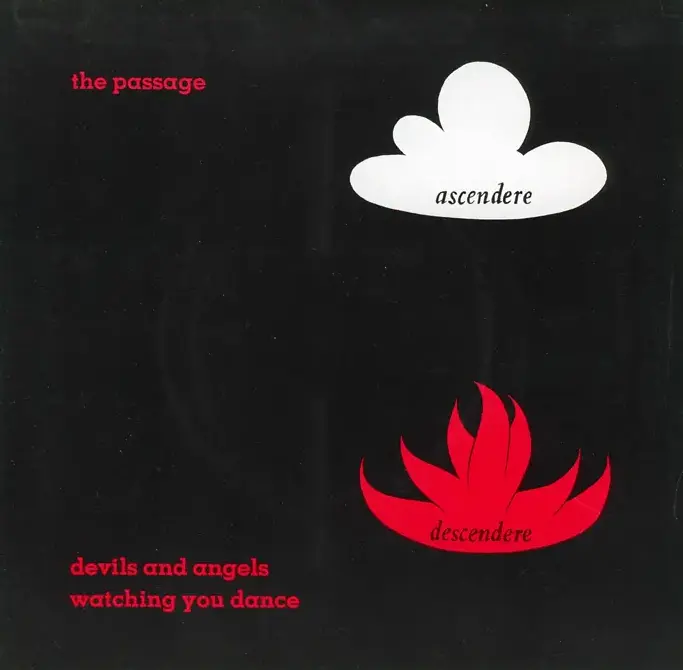 On November 18, The Passage cut its first session for BBC Radio One DJ John Peel, whose 11/27 broadcast aired in-studio performances of one upcoming single side (“Devils and Angels”) and three songs earmarked for the second Passage album: “Dark Times,” “Shave Your Head,” and “The Shadows.”
The Peel session marked the debut of a new Passage lineup with guitarist Andy Wilson and drummer Joe McKechnie. Wilson came from Portion Control, which made a cassette album of lo-fi electronic music. McKechnie co-founded Modern Eon and played on their 1979 EP Pieces and recent single “Euthenics.”
In February 1981, The Passage released its third non-album single: “Devils and Angels” backed with “Watching You Dance,” both Dick Witts originals recorded with Wilson, McKechnie, and singer Lizzy Johnson.
A. “Devils and Angels”
B. “Watching You Dance”
Pickering engineered “Devils and Angels” in December 1980 at Graveyard ahead of titles by Durutti Column, Dislocation Dance, and Ludus. The single appeared on Night & Day, a self-run label marketed by Virgin.
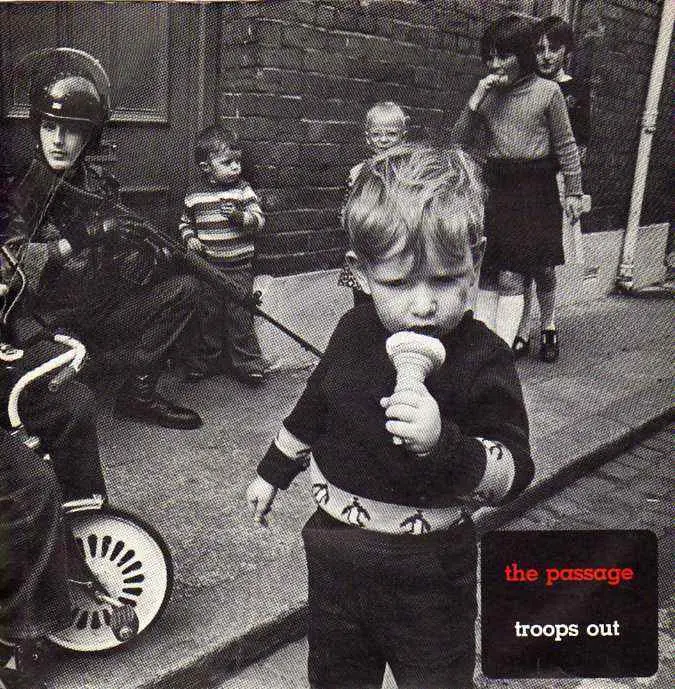 In May 1981, Night & Day issued the fourth Passage single: a remade “Troops Out” backed with “Hip Rebels,” recorded with Wilson and McKechnie.
A. “Troops Out”
B. “Hip Rebels”
In a deviation of Passage sleeves, “Troops Out” shows human subjects photographed by Peter Marlow of the international Magnum Photos cooperative.
Watts repurposed “Hip Rebels” for the subsequent album track “A Good and Useful Life.”
For All and None
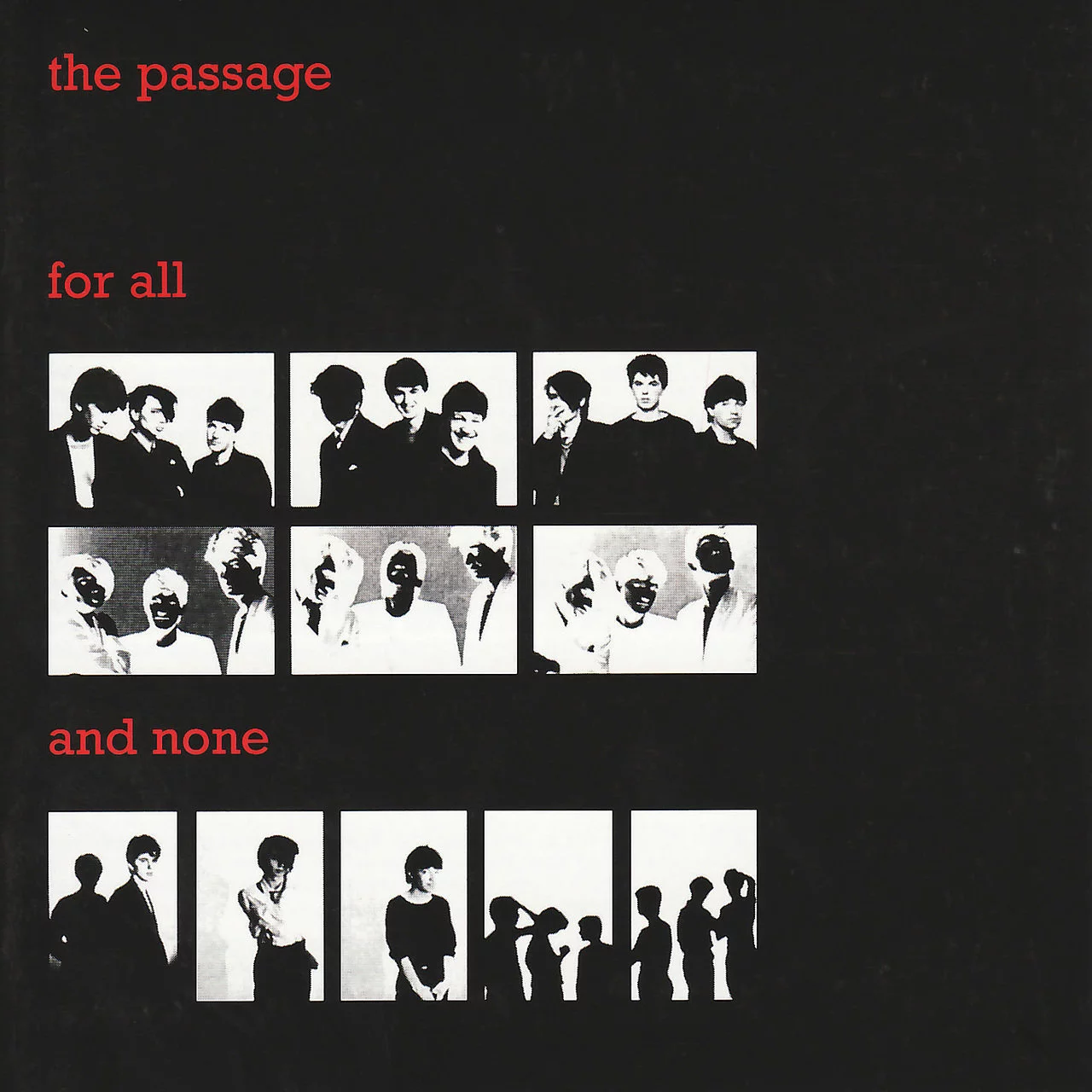 The Passage released their second album, For All and None, in July 1981 on Night & Day. This is Dick Witts’ sole full-length accompanied by the second trio lineup with Andy Wilson and Joe McKechnie.
For All and None contains twelve songs with “music texts and treatments” by Witts. “The Shadows” features vocals by group associate Teresa Shaw.
A1. “Dark Times” (3:30)
A2. “Lon Don” (4:30)
A3. “The Shadows” (4:50)
A4. “Do the Bastinado” (4:13)
A5. “One To One” (3:10)
A6. “A Good and Useful Life (Begun)” (2:18)
B1. “A Good and Useful Life (Revived)” (3:54)
B2. “Flag Night” (3:35)
B3. “Shave Your Head” (3:14)
B4. “Tangled” (3:44)
B5. “Photo Romance” (3:20)
B6. “The Great Refusal” (5:00)
Sessions occurred in February 1981 at Graveyard, where Pickering engineered For All and None amid work with The Mercurian and singer/songwriter Tim Green.
Greenwood’s cover displays monochrome pics in assorted styles (b&w, photo-negative, silhouetted) by Francesco Mellina, an Italian-British Mersey-scene photographer whose main client, Nightmares In Wax, recently changed their name to Dead Or Alive.
New Label
On September 30, 1981, The Passage cut their second Peel session for the DJ’s 10/14 broadcast, which aired two unique songs (“Rod of Iron,” “Form and Void”) and another two (“Man of War,” “Love Is As”) earmarked for future albums.
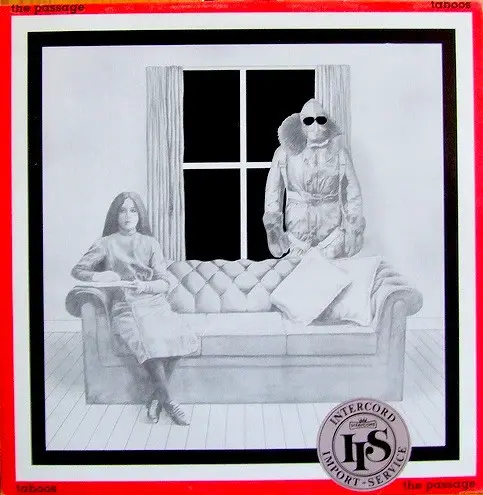 In November, The Passage released “Taboos,” a standalone single backed with a dub version.
A. “Taboos” (5:45)
B. “Taboodub” (5:45)
Dick Witts and Andy Wilson recorded “Taboos” in August 1981 at Strawberry Studios, an advanced Stockport facility once operated by 10cc. Greenwood’s sleeve uses a pencil art by British illustrator Brian Mills, whose sketch depicts two subjects (a domestic woman and an arctic airman) apart inside a plain living room.
“Taboos” was the first Passage release on Cherry Red, a London-based indie with an assortment of UK post-punk and American underground acts.
Degenerates
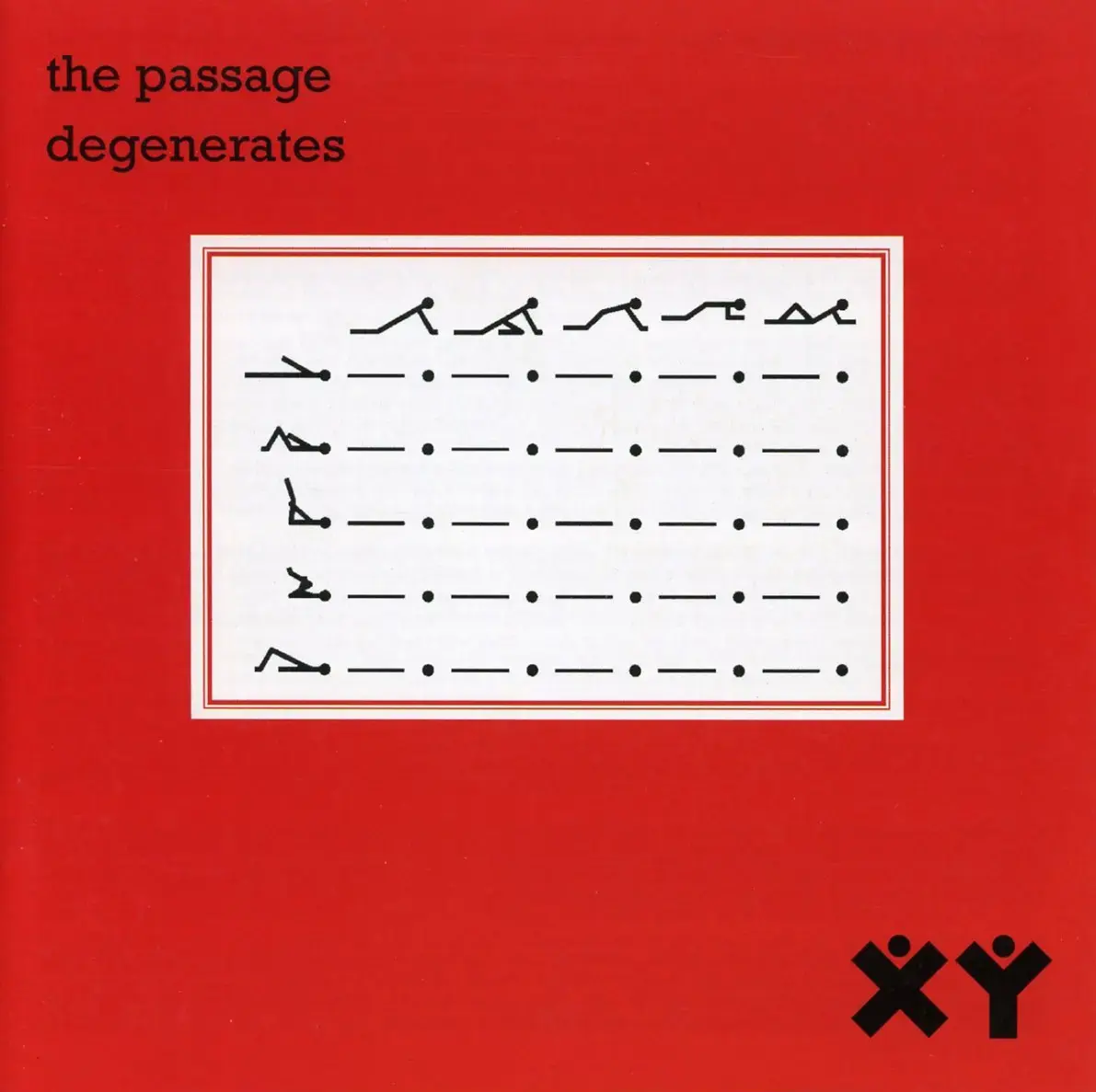 The Passage released their third album, Degenerates, in June 1982 on Cherry Red. Degenerates features ten songs with “music texts and treatments” by Dick Witts, including the sing “XOYO.”
For Degenerates, Dicks assembled the third Passage trio lineup with Andy Wilson and Ludus drummer Paul Mahoney.
A1. “XOYO” (3:56)
A2. “Fleck” (3:25)
A3. “Revelation” (5:12)
A4. “Love Is As” (4:38)
A5. “Born Every Minute” (5:33)
B1. “(Ourselves)” (4:31)
B2. “Go To Seed” (4:22)
B3. “Armour” (4:47)
B4. “Time Will Tell” (5:49)
B5. “Empty Words” (4:48)
Sessions occurred in October 1981 at Strawberry Studios with staffer Chris Nagle, a soundman on late-Seventies titles by Amon Duul II, Barclay James Harvest, and Mandalaband. Nagle engineered Degenerates in sequence with titles by Kissing the Pink, Minny Pops, New Order, Orchestre Rouge, and The Wake.
Degenerates was mixed in February 1982 at London’s Red Bus Studios by Steve Taylor, a longtime associate of Rupert Hine with credits on Seventies jazz-rock titles by Brand X, Bruford, Gong, and Soft Machine. Taylor’s contemporary credits included Waving Not Drowning and the Hine client acts Saga and The Fixx.
Greenwood’s cover inverts the trademark three-tone scheme with dominant use of red. The illustration panel depicts a line-dot character in various horizontal stretch positions. The X and Y letters at the bottom right reference the male chromosomes and the gender commentary in “XOYO.” Original copies contain an illustrated insert with a chronological list of The Passage’s then-52 song count.
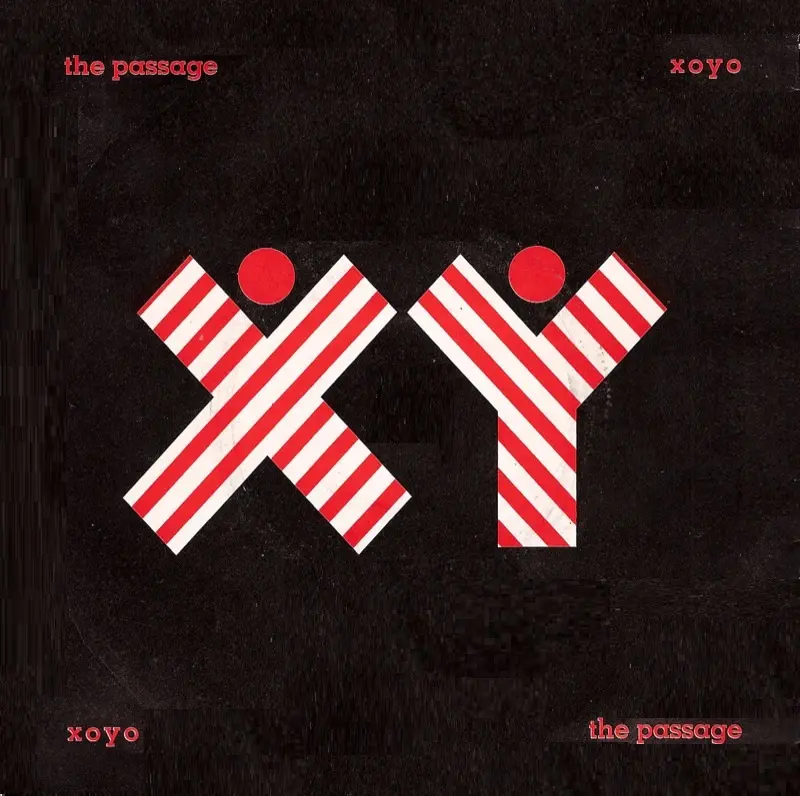 Cherry Red previewed Degenerates with “XOYO,” issued as a May 1982 single with “Animal in Me,” a non-album Witts original.
B. “Animal in Me”
“XOYO” was Cherry Red’s 35th 7″ release, numbered between spring ’82 maxi-singles by The Nightingales (“Use Your Loaf,” CHERRY 34) and Everything But the Girl (“Night and Day,” CHERRY 37). Radio One listeners voted “XOYO” as the 41st best song of 1982 on John Peel’s Festive Fifty.
“XOYO” appears on Pillows & Prayers, a 1982 Cherry Red comp with cuts by the Monochrome Set (“Eine Symphonie des Grauens”), Eyeless In Gaza (“No Noise”), Thomas Leer (“All About You”), Felt (“My Face Is On Fire”), Italian composer Piero Milesi (“Modi 2 (Extract)”), and old-time eccentrics Kevin Coyne (“Love In Your Heart”) and Quentin Crisp (“Stop the Music for a Minute”). Pillows highlights the future star-duo Everything But the Girl with one group track (“On My Mind”) and a song apiece by each member (Tracey Thorn and Ben Watt), plus an earlier track by Marine Girls, Thorn’s former twee-pop combo.
Third Peel Session | “Wave”
On June 7, 1982, The Passage cut their third Peel session for the DJ’s 6/7 broadcast, which aired one Degenerates cut (“Empty Words”), one unique song (“A Day”), and a number earmarked for their next album (“Horseplay”).
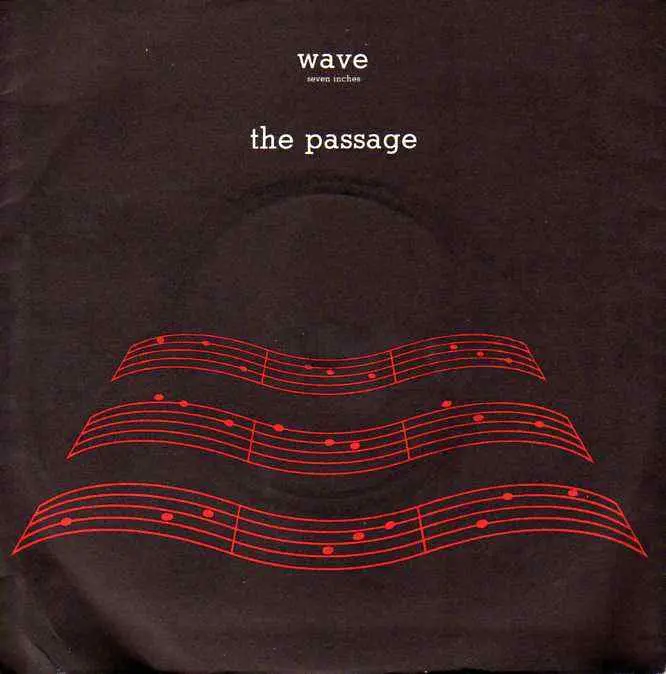 On November 5, 1982, The Passage released their seventh single: “Wave” backed with “Angleland,” both non-album Dick Witts originals.
A. “Wave”
B. “Angleland”
The 12″ version contains an additional track, “Drugface,” which appears on the fourth Passage album. The Passage recorded “Wave” in Liverpool at Amazon Studios, where staffer Geoff Higgins engineered the single in sequence with titles by China Crisis and The Room. “Wave” appeared as Cherry Red’s 50th 7″ release, between singles by Kevin Coyne (“So Strange”) and the Monochrome Set (“Cast a Long Shadow”).
Enflame
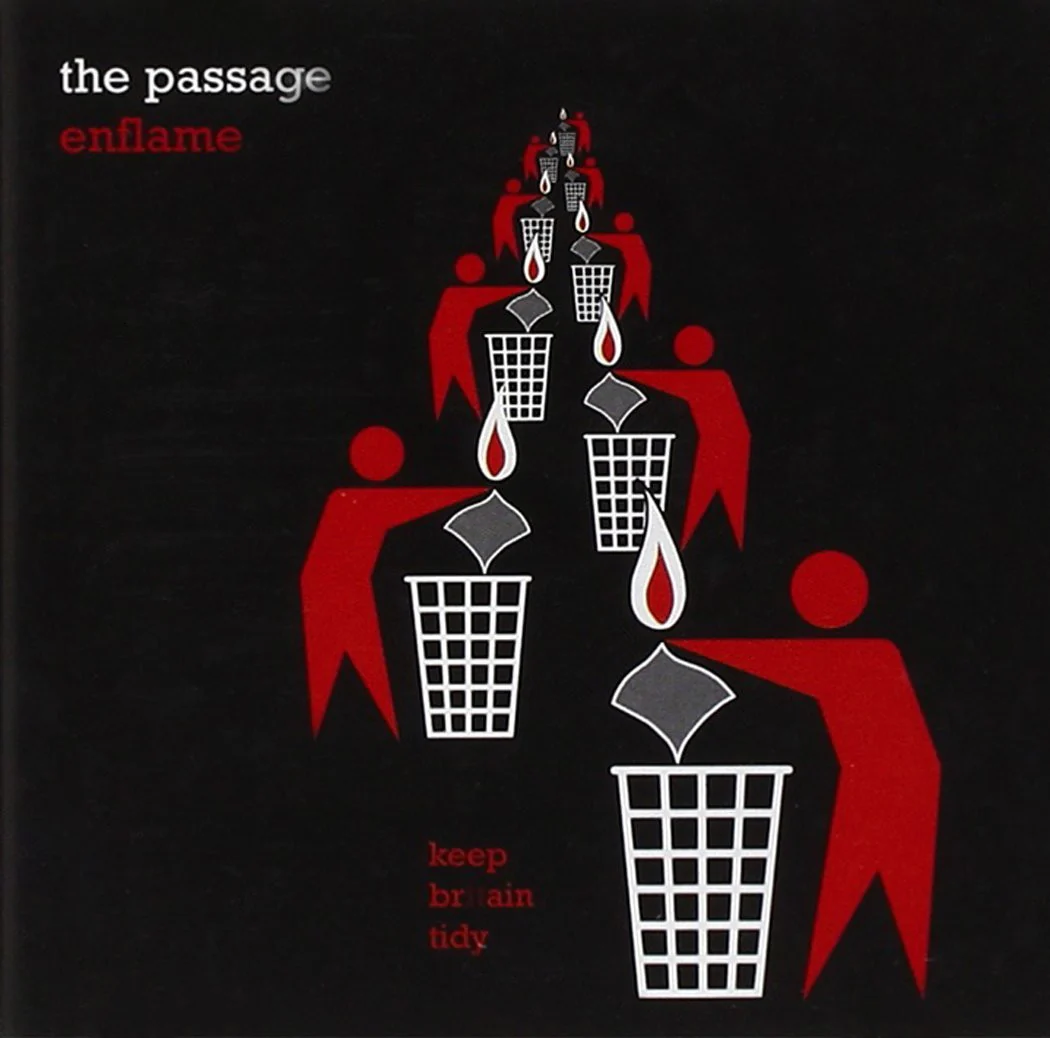 The Passage released their fourth album, Enflame, in March 1983 on Cherry Red.
Enflame features ten originals with “music texts and treatments” by Dick Witts, including the pre-released “Drugface” and the Peel-previewed “Horseplay,” plus the single sides “Sharp Tongue” and “BRD USA DDR JFK.”
For Enflame, Witts and Andy Wilson welcomed back For All and None drummer Joe McKechnie.
A1. “Sharp Tongue” (3:05)
A2. “Clear As Crystal” (3:50)
A3. “Drugface” (3:45)
A4. “Man Of War” (1:45)
A5. “The Half Of It: Twats” (5:00)
B1. “The Half Of It: Sissies” (3:20)
B2. “Dogstar @th Day” (6:15)
B3. “Horseplay” (4:35)
B4. “BRD USA DDR JFK” (3:30)
B5. “Sunburn” (4:30)
Sessions occurred in December 1982 at Camden’s Sound-Suite Studios, where Steve Taylor engineered Enflame in sequence with titles by The Fixx (Reach the Beach), The Waterboys, and Melbourne’s Little Heroes. Select tracks date from late-summer ’82 sessions at Amazon (the pre-released “Drugface”) and Strawberry (“BRD USA DDR JFK”).
Greenwood’s art depicts red figures lighting flames above trash cans. Cherry Red lifted “Sharp Tongue” as the final Passage single (b/w “BRD USA GDR JFK”).
Discography:
- New Love Songs (EP, 1978)
- About Time (EP, 1979)
- Pindrop (1980)
- For All and None (1981)
- Degenerates (1982)
- Enflame (1983)
Sources:
- Discogs: The Passage
- 45cat: The Passage
- RYM: The Passage
- RichardWitts.com: biography
- ThePassage.co.uk: history
- BandOnTheWall.org: Manchester Musicians Collective
Artist/Album Pages:
Gayle Adams is an American soul singer who released two albums on Prelude Records and scored danc...
Luna was a Yugoslav goth-rock band behind the 1984 Helidon album Nestvarne Stvari. Members: Slob...
Blonker was a German acoustic/symphonic band headed by guitarist Dieter Geike. After the 1978 Germ...
Ensemble Havadià was an Italian avant-garde band that released a self-titled album on L'Orchestra ...
Neuschwanstein was a German symphonic-rock band that released the 1979 album Battlement on Racket ...
Patrick Gauthier is a French keyboardist and composer who played in Heldon, Magma, and Weidorje du...
éVoid are a South African new wave band from Brakpan, centered on singer-songwriter brothers Lucie...
Teclados Fritos were a Spanish art-rock band that released two albums on Movieplay and Mayra betwe...
Zed was the performance moniker of French electronic musician Bernard Szajner, who used the namepl...
Ted Curson (June 3, 1935 — Nov. 4, 2012) was an American post-bop/jazz-funk trumpeter, composer, ...
The Psychedelic Furs are an English new wave band from London that released six albums between 198...
Jigsaw was a Swiss jazz-rock band that self-released the 1981 album Puzzle on Soundshine Records, ...