

Everything but the Girl was an English sophisti-pop duo formed in 1982 by Ben Watt and Tracey Thorn in Kingston upon Hull. Both had prior solo careers on Cherry Red Records, with Watt releasing the single “Can’t” (1981) and the EP Summer Into Winter (1982), leading to his 1983 solo album North Marine Drive. Thorn, from the band Marine Girls, released Beach Party (1981) and a solo mini-album, A Distant Shore (1982). The duo’s collaboration began with the 1982 Cherry Red single “Night and Day.”
Between 1984 and 1988, Everything but the Girl released four albums and various singles on Blanco y Negro. Their debut album, Eden (1984), featured “Each and Every One,” followed by Love Not Money (1985) with singles like “When All’s Well.” Baby, the Stars Shine Bright (1986) included “Come on Home,” while Idlewild (1988) saw the release of “These Early Days” and a cover of “I Don’t Want To Talk About It.” This period also included several non-album singles and a 1984 US compilation of early tracks.
The duo continued releasing titles on Atlantic into the early 1990s, expanding their discography with The Language of Life (1990), which spawned the US AC hit “Driving.” In 1995, they scored a global dance hit with “Missing.”
Members: Ben Watt (vocals, guitar, piano, programming), Tracey Thorn (vocals, guitar)
Background
Everything but the Girl formed in 1982 when musicians Ben Watt and Tracey Thorn, both signed to post-punk indie Cherry Red Records as solo artists, decided to pool their talents into a joint venture.
Watt (b. Dec. 6, 1962) debuted with the 1981 single “Can’t” (b/w “Tower of Silence” / “Aubade”), produced by folkster Kevin Coyne. Another track from that pairing, “Departure,” appears on the Cherry Red multi-artist comp Perspectives and Distortion along with tracks by Robert Fripp, the Lemon Kittens, Matt Johnson, and Eyeless in Gaza.
In 1982, he collaborated with Robert Wyatt on the five-song EP Summer Into Winter. That September, he recorded his debut solo album North Marine Drive, issued the following year. On it, he handles guitar, piano and vocals, accompanied only by saxophonist Peter King.
Thorn (b. Sept. 26, 1962) hailed from the Marine Girls, a post-punk quartet that released the album Beach Party on small-press Whaam! Records, followed by the single “On My Mind” (b/w “The Lure of the Rockpools”) on In Phaze, both in 1981. She made her solo debut with the mini-album A Distant Shore, released in 1982 on Cherry Red. The Marine Girls wrapped with the 1983 Cherry single “Don’t Come Back” (b/w “You Must Be Mad”).
Watt and Thorn took the name “Everything but the Girl” from an advertising slogan used by the retail outlet Turner’s Furniture, located on Beverley Road in Kingston upon Hull.
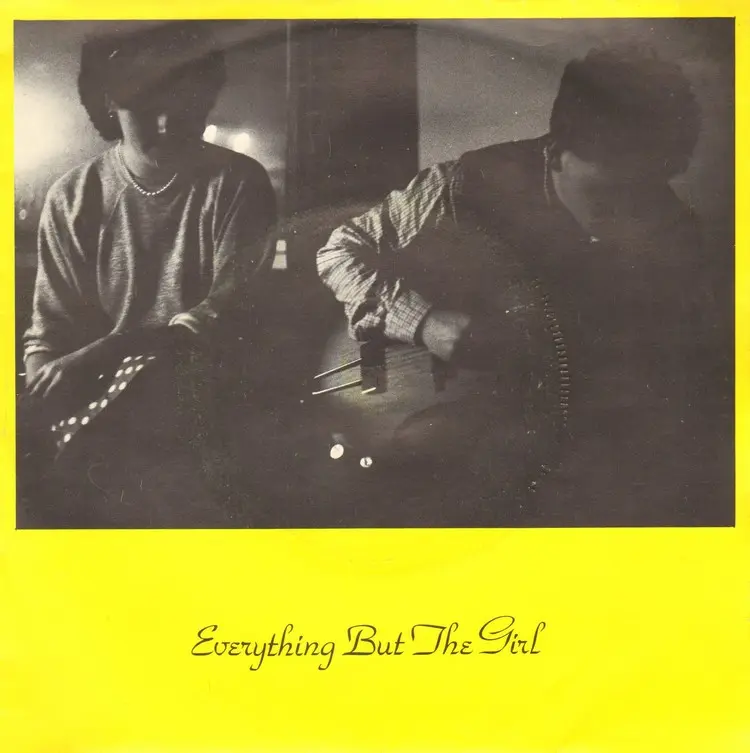 In March 1982, Everything but the Girl released their debut single on Cherry Red. It features the Cole Porter cover “Night and Day,” backed with a song apiece by Watt (“Feeling Dizzy”) and Thorn (“On My Mind”).
A1. “Night and Day” (2:56) A 50s jazz-inspired guitar/vocal piece featuring unaccompanied, matted clean Gibson guitar and vocals, punctuated by a flowing, legato solo.
B1. “Feeling Dizzy” (4:16) A finger-snapping guitar/vocal 50s jazz track characterized by faint plucked guitar and languid harmonies.
B2. “On My Mind” (3:11) A faint, harmonized guitar/voice track in A minor and D minor, distinguished by echoing notes and haunting vocal trade-offs.
Eden
 Everything but the Girl released their debut album, Eden, on June 4, 1984, on Blanco y Negro. The album explores themes of strained relationships, emotional distance, and the passage of time through a blend of bossa nova, jazz, and acoustic folk, featuring intricate instrumentation and introspective lyrics.
Ben Watt composed “Tender Blue,” “Crabwalk,” and the final two tracks. He co-wrote three songs (“Each and Every One,” “Another Bridge,” “Frost and Fire”) with Tracey Thorn, who wrote the album’s balance.
Thorn handles lead vocals and acoustic guitar on Eden, which features Watt on guitar, Hammond organ, and backing vocals (lead on “Tender Blue” and “Soft Touch”).
Eden features musical backing by Working Week guitarist Simon Booth (ex-Weekend), Camberwell Now drummer Charles Hayward (ex-Quiet Sun, This Heat), Brazilian percussionist Joao Bosco De Oliveira (Paz), Colombian double-bassist Chucho Merchán (Cayenne, Nucleus), flugelhornist Dick Pearce (Quincicasm, Landscape), BBC Radio tenor saxophonist Nigel Nash, and North Marine Drive alto saxist Pete King.
A1. “Each and Every One” (2:48) A mid-tempo bossa nova featuring a horn intro, slick bridge, elegant vocals, and a prominent sax solo. The narrator expresses frustration with someone who promises change but ultimately delivers the same manipulative behavior, offering conditional freedom and advice while maintaining control. They lament the repetitive nature of this dynamic, feeling trapped in a cycle where attempts at kindness are merely a means of submission. “I thought all that was over and done / But I still get the same from Each and Everyone.”
A2. “Bittersweet” (2:50) An acoustic strum in A minor driven by rattling shaker percussion, creating a melancholic atmosphere. The song explores the internal struggle to maintain self-control and resist the allure of a captivating, yet deceptive, presence. The narrator grapples with the realization that their own actions may have set a path for another, while recognizing the destructive nature of blindly following others. “Oh but it’s hard when you leave me on the shelf.”
A3. “Tender Blue” (3:05) A clean cocktail jazz piece with light brush drums and a 50s lounge vibe, highlighted by Ben’s vocals and a flugelhorn solo. This song delves into the quiet despair and emotional distance within a relationship, portraying a couple lying awake, restless and unspoken, burdened by their individual fears and resentments. It highlights a strained connection, symbolized by the unpainted hall and the unacknowledged parentage of the baby. “All of those questions that never arose.”
A4. “Another Bridge” (2:13) An uptempo jangly electric strum in G major, transitioning to a C minor bridge with a piercing Hammond organ. The lyrics reflect on a fading friendship, marked by unspoken distance and the painful realization that a once-needed connection has grown cold. The narrator acknowledges the passage of time and the impossibility of clinging to every past bond, accepting that some relationships become distant memories. “Time’s gone by and all the things we did / Are now so much water under another bridge.”
A5. “The Spice of Life” (3:30) A ballad characterized by intricate plucked acoustic/electric guitar interplay, soft hand percussion, and airy vocals. The song explores the painful disarray of a relationship due to distance and a fundamental shift in understanding. The narrator struggles to communicate and reconcile with a loved one who seems to have changed independently, leading to a sense of helplessness and irreversible harm. “How can I explain that I had no choice / The sound of the waves fills her ears and drowns out my voice.”
A6. “The Dustbowl” (1:39) A brief, unaccompanied track featuring blue-grass style fingerpicking on electric guitar alongside vocals. This track depicts a cycle of destructive behavior and self-sabotage in a relationship, where attempts to fix things quickly devolve into conflict and regret. The narrator reflects on a past dependency, realizing that what once seemed a source of sanity might have been the catalyst for their downfall. “I used to think that you were all that kept me sane / When all else failed.”
B1. “Crabwalk” (2:02) A 50s jazz-pop instrumental featuring tight guitar, perky horns, and flowing sax trade-offs over a strutting beat.
B2. “Even So” (3:24) A bossa nova track driven by crisp, plucked acoustic guitar and laidback vocals. The lyrics express a vulnerability in love, questioning whether promises of unwavering commitment are realistic or merely fleeting words. The narrator grapples with a partner’s reluctance to offer assurances, fearing the loss of a cherished connection despite their own strong feelings. “My only fear’s of losing something I adore.”
B3. “Frost and Fire” (2:31) Features faint organ and percussion with persistent, flowing vocals and an echoing harmonic guitar middle/outro. The song contrasts the dreams of youth with the compromises of adult life, highlighting a sense of unfulfilled potential and differing levels of ambition within a relationship. The narrator observes a partner content with limited horizons, while feeling a restless desire for more that sets them apart. “We’re as unlike as Frost and Fire.”
B4. “Fascination” (3:06) A bossa nova (in Cmaj7) with plucked acoustic chords and resonant, unaccompanied vocals. The narrator navigates a newfound comfort and openness in a relationship, allowing for discussions of the past while still harboring a cautious reluctance to delve into certain painful details. Despite a desire for complete transparency, a lingering fear of what might be revealed keeps some truths unspoken. “Fascination makes us ask for more / Than we’d like to know.”
B5. “I Must Confess” (3:20) A bossa nova on electric hollow-body with hissing percussion, billowing tenor sax, and flowing vocals. This song recounts the abrupt end of a relationship, marked by a terse farewell and a surprising sense of agreement from the narrator. In retrospect, the initial pain of separation gives way to a realization that the perceived “love” was a burden rather than a gift. “I must confess I agree.”
B6. “Soft Touch” (3:12) Characterized by clean plucked guitar, faint contrabass, and poignant Ben Watt vocals. The lyrics paint a bleak, fragmented picture of societal decay and personal disillusionment, where idealism gives way to harsh realities and subtle oppression. It describes a world where truth is distorted, dreams are crushed, and underlying tensions inevitably escalate to conflict. “There’s a soft touch finally come to blows.”
Sessions occurred in January 1984 at the Power Plant in Northwest London, where La Varieté soundman Robin Millar produced Eden in sequence with titles by Sade and The Bluebells. Onetime Renaissance/ELO soundman Mike Pela (Eldorado, Turn of the Cards) engineered Eden ahead of titles by the Kane Gang, Pale Fountains, and Sade’s Diamond Life.
Eden displays cover art by Cherry Red illustrator Jane Fox, Thorne’s erstwhile Marine Girls colleague. Fox’s current act, Grab Grab the Haddock, mined like-minded territory on two 1984 Cherry Red singles.
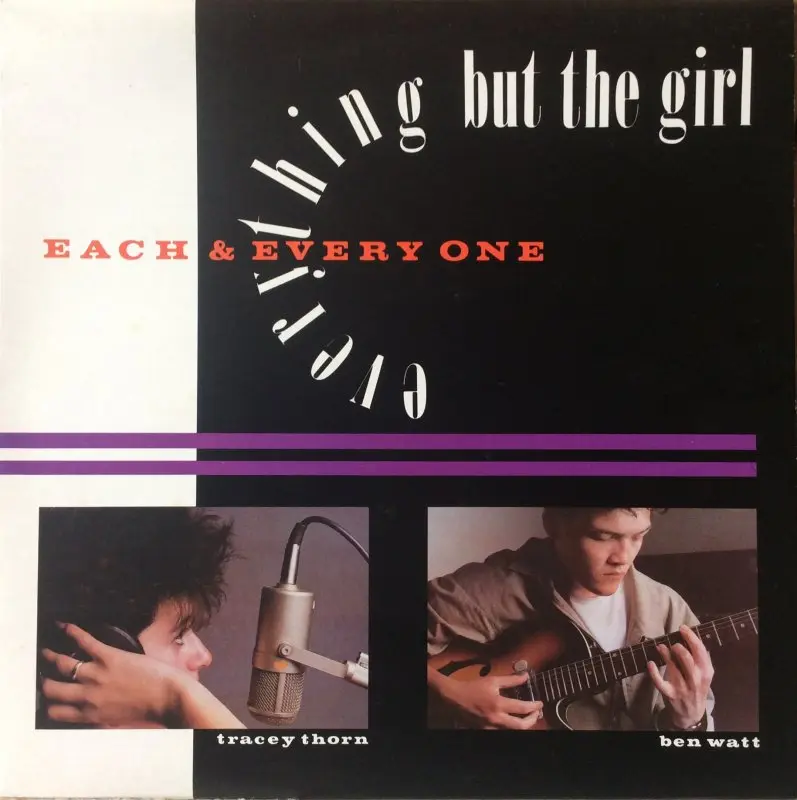 In May, “Each and Every One” appeared as the sole Eden a-side, backed with Tracy’s non-album “Laugh You Out the House.” The 12″ adds the Watt exclusive “Never Could Have Been Worse.”
B1. “Laugh You Out the House” (1:49) A brisk, unrelenting track driven by an Emaj7 strum and shaker percussion, featuring steady vocals punctuated by harmonized interjections. The song offers conflicting advice on emotional expression: urging boys to suppress tears for societal acceptance while encouraging girls to assert their will. It critiques the hypocrisy of talking about love when it’s an unknown concept, emphasizing the uncomfortable closeness of such discussions. “Don’t show your tears boy they’ll laugh you out the house.”
B2. “Never Could Have Been Worse” (2:47) This song is built on a staccato guitar figure, a droning bass, and a clicking beat, providing a relaxed backdrop for its laidback vocals. This song depicts a relationship marked by indifference and veiled abuse, where one person’s suffering is evident despite attempts to conceal it. The lyrics convey a sense of grim acceptance, implying that while things could have been better, they’ve reached a baseline of negativity that won’t worsen. “Oh, could have been better, / Never could have been worse.”
Eden reached No. 3 in the Netherlands and No. 14 on the UK Albums Chart.
Non-album Singles
 After the release of Eden, Everything but the Girl continued to issue standalone singles and compile their early material for the North American market.
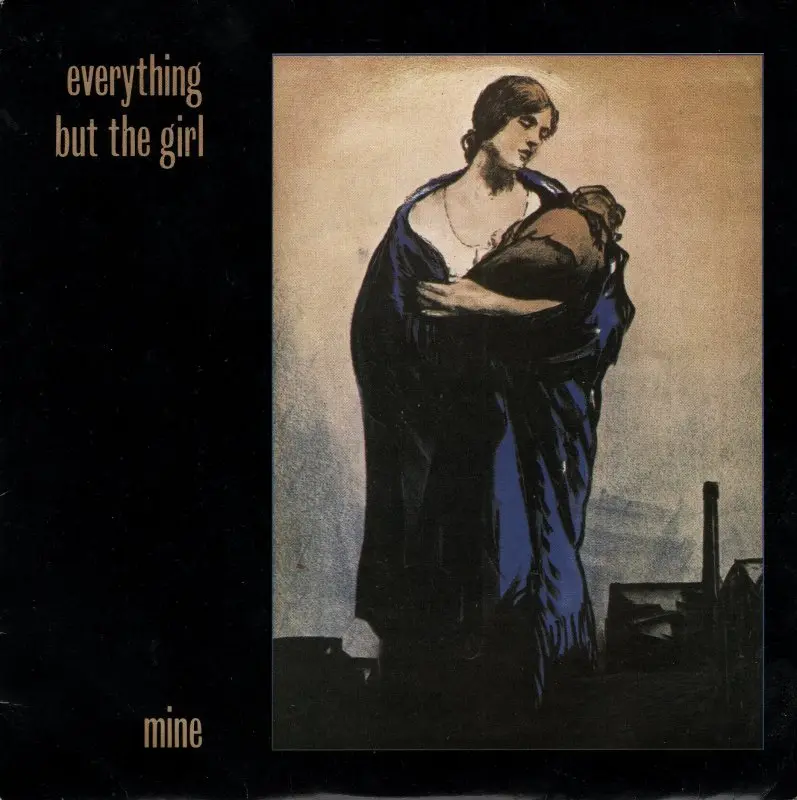
In July 1984, the duo released the single “Mine,” a Tracey Thorn composition, backed with Ben Watt’s “Easy as Sin.”
A. “Mine” (3:21) This track features a faint, spacious guitar with rhythmic pauses, airy vocals, a booming tambourine bass beat, and a vibraphone outro. This track portrays a fiercely independent woman navigating life and single motherhood after a man’s transient departure, defiantly asserting her self-sufficiency. Despite external pressure to conform, she rejects societal expectations, choosing to endure challenges on her own terms. “And I don’t need his name, thank you / Mine fits me nicely and mine will do.”
B. “Easy As Sin” (2:58) Characterized by clean, staccato guitar (reminiscent of Durutti Column) and laidback yet commanding double-tracked vocals. The lyrics describe a restless, troubled existence on Salisbury Street, marked by sleeplessness, regret, and the constant pull between good and evil. The narrator reflects on the ease of succumbing to negative impulses versus the difficulty of pursuing virtuous actions. “To do bad is as easy as sin / A tale complete from Salisbury street.”
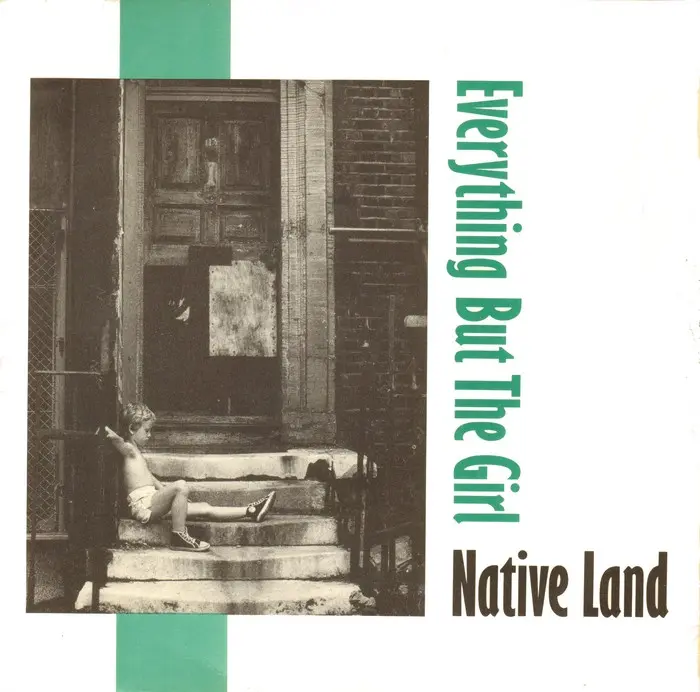 The latter track also featured on the subsequent September 1984 maxi-single for “Native Land,” a Thorn/Watt co-write backed with “Riverbed Dry” as its B-side. This maxi-single also included the exclusive tracks “Gun Cupboard Love” and the John Martyn cover “Don’t You Go.” These releases demonstrated the duo’s prolific songwriting beyond their album tracks.
A1. “Native Land” (3:05) The song expresses exasperation with persistent ignorance and a cynical view of societal progress, questioning whether efforts for change are futile. It defiantly rejects a resigned acceptance of hardship, urging a fight against division within shared communities. “But can’t you see we share this town, / so why should we fight on our native land?”
B1. “Riverbed Dry” (2:42) This song conveys a deep sense of despair and the futility of resisting an emotional low point, suggesting an acceptance of a barren internal landscape. The narrator feels weary of their environment and questions whether any relief or change is truly possible. “Riverbed dry, this is my terrain. / I’ll never feel that way again.”
B3. “Gun Cupboard Love” (2:53) A beatnik jazz-vibe track, evoking Carmel, complete with bongos, elegant vocals, faint billowing sax, and sliding bass.
B4. “Don’t You Go” (3:24)
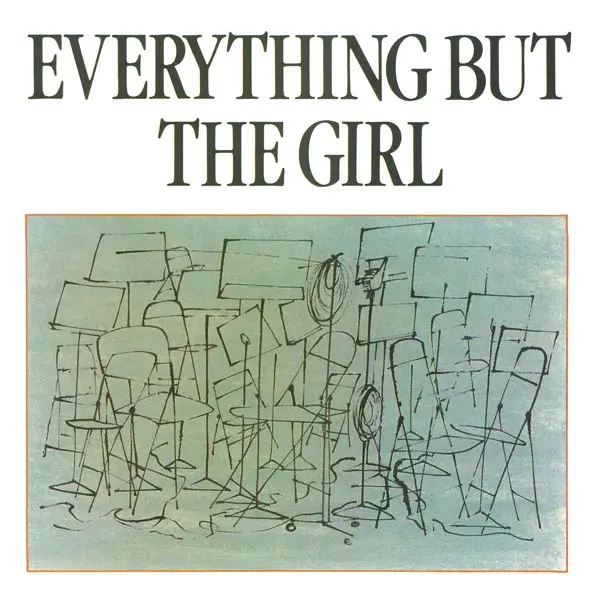 In 1984, a US self-titled compilation appeared on Sire. Everything but the Girl drew heavily from Eden, featuring tracks such as “Each and Every One,” “Tender Blue,” “Another Bridge,” “Frost and Fire,” “Fascination,” and the instrumental “Crabwalk.” The compilation also included two earlier b-sides (“Never Could Have Been Worse,” “Laugh You Out the House”) and the recent standalones “Mine,” “Easy as Sin,” “Native Land,” and “Riverbed Dry.”
Love Not Money
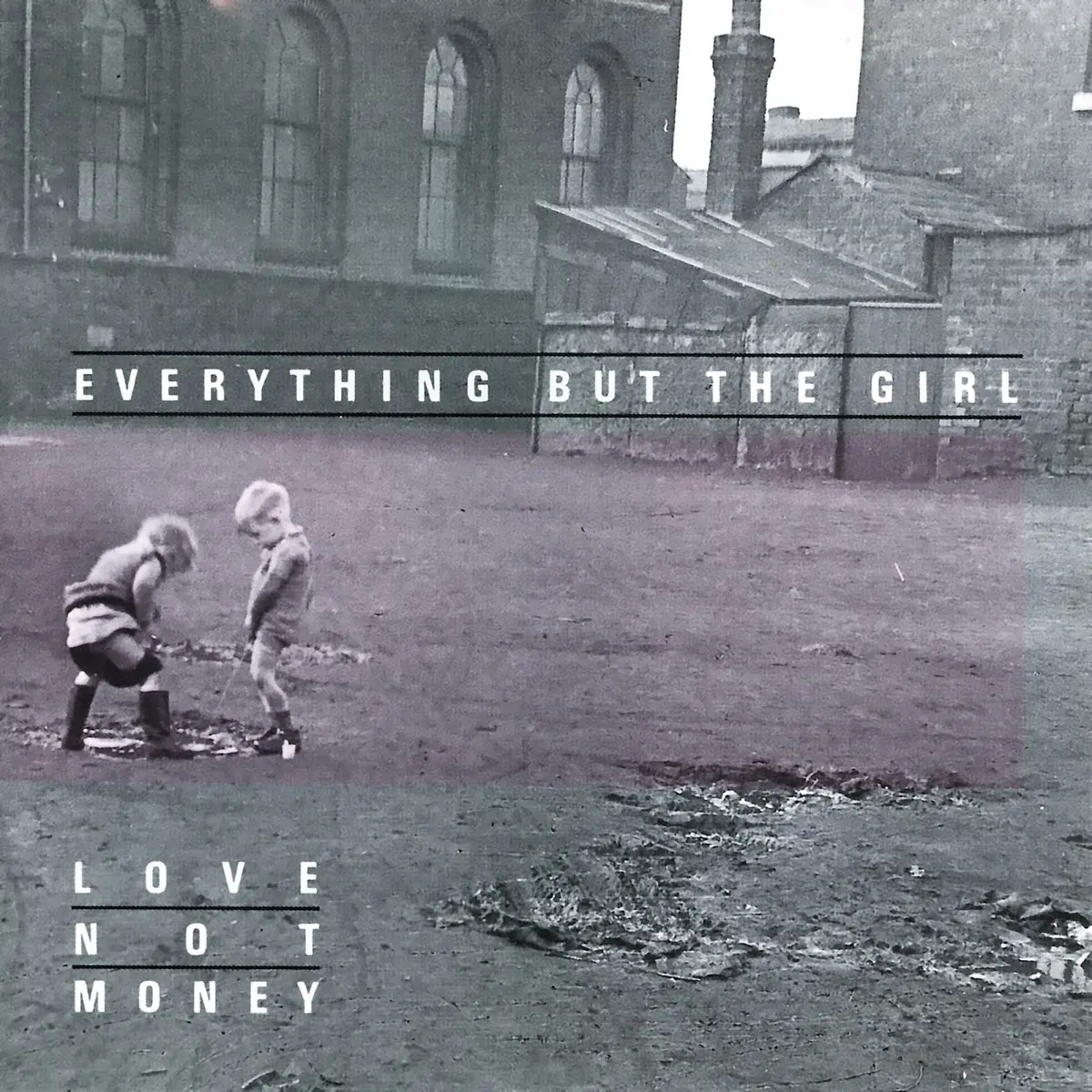 Everything but the Girl released their second album, Love Not Money, on April 15, 1985, on Blanco y Negro.
Tracey Thorn wrote “Ugly Little Dreams” while Ben Watt submitted “When All’s Well” and the interior tracks (“Sean,” “Ballad of the Times,” “Anytown”). They co-wrote the album’s balance.
Watt plays electric/acoustic guitar, piano, and organ on Love Not Money, which features eleven auxiliary players, including bassist Philip Moxham (Young Marble Giants, Gist), drummer June Miles-Kingston (Mo-dettes, Fun Boy Three), banjoist Chris Thompson, tin whistler Dave Golding, steel guitarist B.J. Cole (Cochise), and Eden hornists Dick Pearce, Nigel Nash, and Peter King.
Love Not Money showcases Everything but the Girl’s evolving sophisti-pop sound, blending diverse musical styles with poignant social commentary. The songs range from uptempo guitar pop (“When All’s Well,” “Are You Trying to Be Funny?”) to rustic ballads (“Ugly Little Dreams”) and R&B-infused tracks (“Shoot Me Down”), all driven by Tracey Thorn’s vocals. “Ballad of the Times” and “Anytown” utilize jangly guitar to deliver critiques of societal constraints and community loss.
The album also delves into darker territory with the organ-driven “This Love (Not for Sale)” and explores gender roles in the neo-psych-tinged “Trouble and Strife.” The powerful ballad “Angel” closes the album, serving as a stark commentary on societal indifference, demonstrating the duo’s commitment to addressing both personal and global concerns through their distinctive musical arrangements.
A1. “When All’s Well” (3:03) is uptempo Commotions-style guitar pop (in C major) with clean chords (slight jangle), harmonized vocals and buoyant sax against a tambourine Sixties beat. The narrator expresses unwavering affection despite acknowledged personal flaws and the pervasive negativity of the world. They promise loyalty and a steadfast love that cuts through dishonesty and grief, blooming even in difficult times. “When all’s well / My love is like cathedral bells.”
A2. “Ugly Little Dreams” (2:54) is a Tracey/June-harmonized rustic ballad (in E) with twangy slow strum, light piano, and a snare-laden middle. This song is a biting critique of societal expectations placed on women, urging resistance against conformity and the “ugly little dreams” sold to them. It highlights the injustice faced by intelligent and spirited women in a world that prefers them “stupid and sweet.” “There’s some ugly little dreams / For pretty girls to buy.”
A3. “Shoot Me Down” (4:13) is a medium-slow R&B number with faint Hammond against a prominent backbeat, overlaid with horn charts and Tracey’s rich vocal delivery. The lyrics depict tense confrontations, first with a lover who seeks to undermine the narrator, then with a mother whose long-held resentments surface. Despite the verbal battles, there’s an underlying recognition of an unbreakable bond that will endure. “Did you come here to shoot me down / Bury my on my own home ground.”
A4. “Are You Trying to Be Funny?” (3:18) is an uptempo jangle pop (in G) with Tracey’s effortless vocal command. This song satirizes the hypocrisy of wealthy individuals who offer minimal financial support while justifying their actions with false piety and a disdain for material desire in others. The narrator questions the sincerity of such gestures, implicitly challenging the notion that love should be secondary to money or spiritual bliss. “What d’you mean you need love not money? / You expect to live in a land of milk and honey.”
A5. “Sean” (3:32) is a Watt-sung Irish-folk-inspired ballad with martial percussion, tin whistle, and a booming bass drum. The lyrics paint a somber picture of sectarian violence and lost youth in Belfast, recounting personal tragedies intertwined with broader political conflict. The narrator’s heart is heavy with lead, conveying a profound weariness and the imperative to remember and recount the harsh realities of their experience. “Mother my heart is full of lead / And it weighs me down and I just can’t cry.”
B1. “Ballad of the Times” (3:29) is a mid-tempo jangle-pop with a picked guitar motif (in C) and angular chordal shifts and vocal counterpoint in the chorus and bridge. This song criticizes societal constraints and the illusion of progress, highlighting how individuals are trapped in cycles of poverty and false promises. It reflects on the sacrifices made by ordinary people in a world where dreams are often crushed by harsh realities. “Your pockets are lined with promises / When did you promise ever pay for shoes?”
B2. “Anytown” (3:27) is an uptempo song (in A) with jangly guitar and a locomotive rhythmic churn. The song laments the destruction of cherished communities and the resulting loss of identity, as familiar places are replaced by generic, soulless “Anytowns.” It emphasizes the enduring pain of displacement and the irreplaceable value of shared history and belonging over material gain. “They came and tore it down / And now this place could be Anytown.”
B3. “This Love (Not for Sale)” (3:07) is a dark, desolate, Procol-like organ ballad (in G minor) with poignant vocals, mournful sax, and light vibrato guitar interjections. The lyrics question the pursuit of success within a seemingly compromised society, challenging the notion that ideals must be sacrificed for advancement. It’s a defiant declaration that genuine love and principles are not commodities to be bought or sold, despite societal pressures to conform. “God must know by now / This love is not for sale.”
B4. “Trouble and Strife” (3:08) is a mid-tempo guitar/vocal song that intersperses jangle with neo-pysch licks (Echo-like) around a smooth bassline. This song critically examines gender roles and the burdens placed upon women, particularly the transition from a carefree childhood to the confined expectations of adulthood. It highlights the inherent inequality in a “man’s man’s man’s world” and expresses a resistance to traditional wifely duties. “From a childhood clear / Through teenage years / That always seem to be more / Trouble than strife.”
B5. “Angel” (5:37) is a medium-slow ballad (in A minor) with impassioned vocals with ensemblic organ, piano, and light guitar around descending chordal passages. The song exposes profound societal indifference to suffering, particularly towards vulnerable children and the impoverished, contrasting it with superficial displays of festivity. It underscores a desperate plea for compassion, lamenting humanity’s lack of empathy for its own kind. “If she were a kitten / Someone would take her home / But we’ve no pity for our own kind / Our hearts are stone.”
 Sessions occurred in January/February 1985 at the Power Plant, where Eden soundman Robin Millar produced Love Not Money ahead of titles by Big Country, The Fine Young Cannibals, and Sade (Promise). His ongoing assistant, Mike Pela, co-engineered Love Not Money with Microdisney soundman Ben Rogan.
Love Not Money appeared in a gatefold sleeve designed by Caryn Gough, featuring cover photography by Humphrey Spender, taken from Worktown People: Photographs from Northern England 1937–38. The inner-bag photograph is by Richard Haughton and Jean-Louis Gregoire. Gough also designed 1984/85 sleeves for The Associates and The Smiths, the latter with tinted subjects from vintage stock photos.
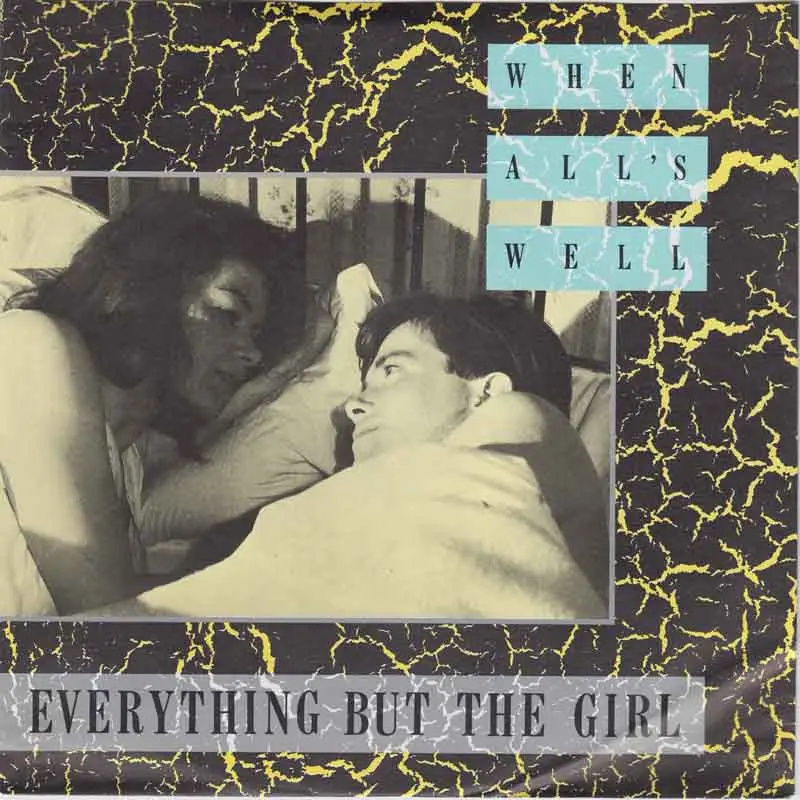
 In March, “When All’s Well” appeared as the lead single, backed with the non-album co-write “Heaven Help Me.”
B1. “Heaven Help Me” (3:20) is a medium-slow piano ballad (in E) with impassioned vocals and Spectorian wall-of-sound-flourishes. The narrator struggles with self-worth and a tendency to undermine good fortune, questioning why they receive undeserved love while simultaneously lashing out. They express a poignant conflict between a desire for simple comfort and a persistent self-sabotaging nature that resists true goodness. “I only want a room to call my own / And a bright shiny hearth to call my home.”
B2. “Kid” (3:46) is a sparse cover of the 1979 Pretenders classic, performed with trebly, echoing guitar jangle and Tracey’s airy multi-tracked vocals.
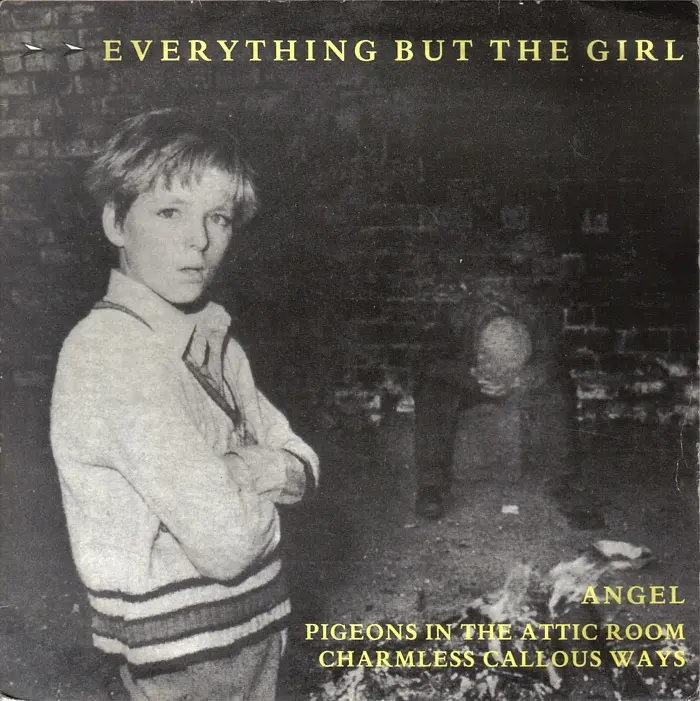
In May, “Angel” appeared on a maxi-single with “Pigeons In the Attic Room,” the 1984 b-side “Easy As Sin,” and one exclusive track, “Charmless Callous Ways.”
B2. “Pigeons In the Attic Room” (1:43)
B3. “Charmless, Callous Ways” (2:00)
Love Not Money reached No. 10 on the UK Albums Chart, No. 26 on the Dutch Albums Chart, and No. 38 on the New Zealand Albums Chart.
Baby, the Stars Shine Bright
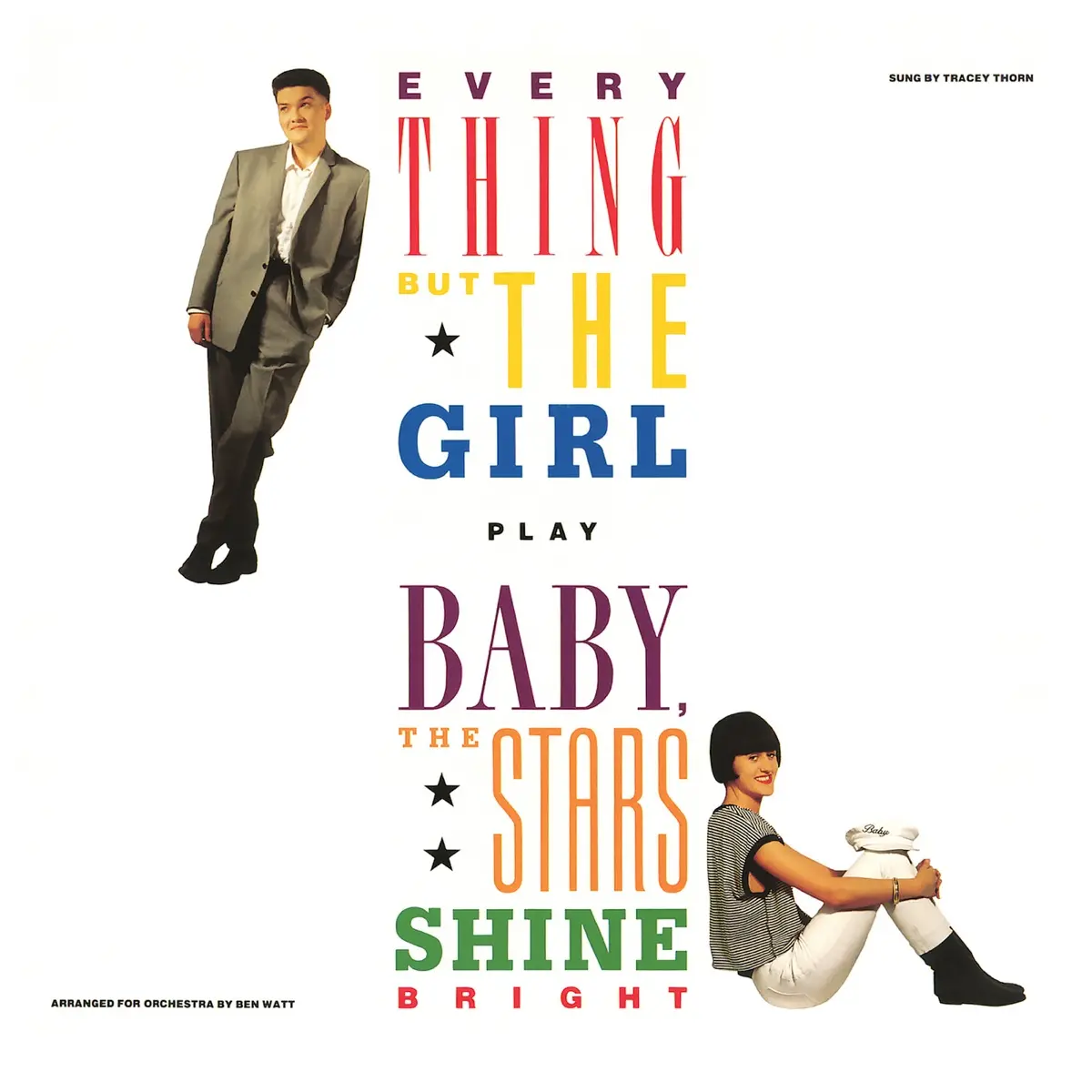 Everything but the Girl released their third album, Baby, the Stars Shine Bright, on August 25, 1986, on Blanco y Negro.
Ben Watt wrote “Don’t Let the Teardrops Rust Your Shining Heart” and “Careless.” Tracey Thorn composed “A Country Mile” and “Little Hitler.” They co-wrote the remaining six tracks.
Watt handles guitar and orchestral arrangements on Baby, the Stars Shine Bright, which features the backup core of bassist Micky Harris, drummer Rob Peters, and organist/pianist Cara Tivey. Nick Ingman conducted the album’s 32-piece string/brass orchestra, which includes returning saxist Peter King and ex-Landscape trombonist Peter Thoms.
Baby, the Stars Shine Bright also features four auxiliary percussionists and eight backing vocalists, including Clare Torry, a noted Pink Floyd sidewoman (“The Great Gig In the Sky”) heard recently behind the Culture Club (“War Song”).
 A1. “Come on Home” (3:21)
A2. “Don’t Leave Me Behind” (3:15)
A3. “A Country Mile” (3:04)
A4. “Cross My Heart” (3:41)
A5. “Don’t Let the Teardrops Rust Your Shining Heart” (3:21)
 B1. “Careless” (3:26)
B2. “Sugar Finney” (3:34)
B3. “Come Hell or High Water” (3:22)
B4. “Fighting Talk” (3:20)
B5. “Little Hitler” (4:05)
 Sessions occurred in March/April 1986 at Abbey Road Studios, London, where Everything but the Girl co-produced Baby, the Stars Shine Bright with Mike Hedges.
Baby, the Stars Shine Bright appeared in a sleeve designed by Caryn Gough, featuring photography by Richard Haughton.
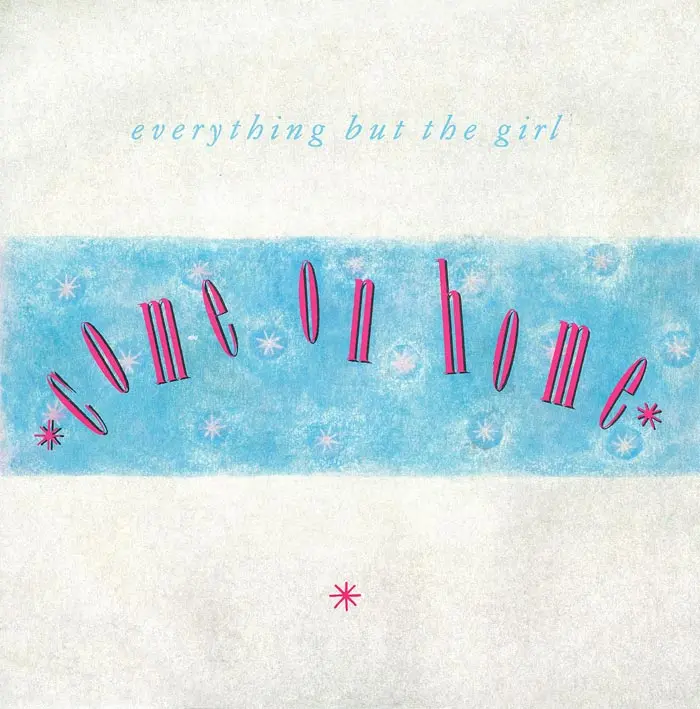
In July 1986, “Come On Home” appeared as the lead single, backed with the non-album track “Draining the Bar.”
B. “Draining the Bar” (2:05)
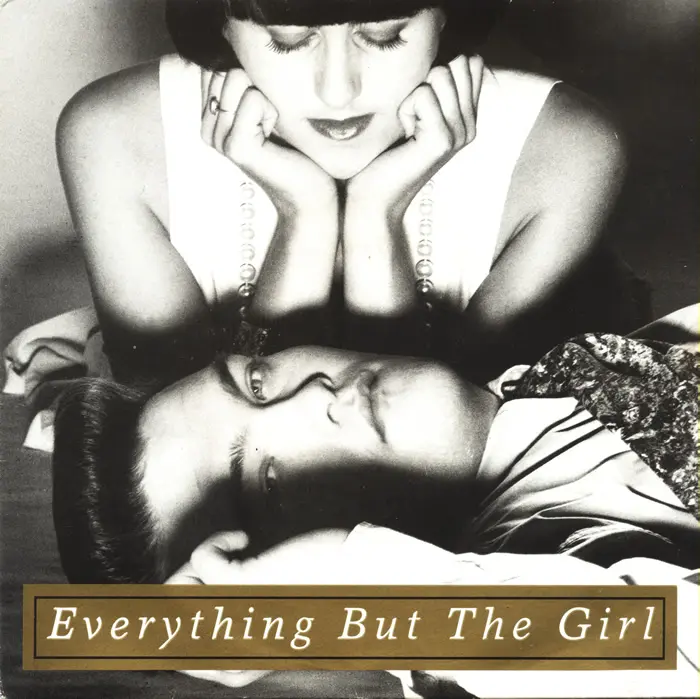 In September 1986, “Don’t Leave Me Behind” became the second single, backed with the non-album track “Alfie.” A double-pack release included “Come On Home” (Piano and Vocal only) and “Always On My Mind.”
B. “Alfie” (-)
double-pack
C. “Come On Home” (Piano and Vocal only)
D. “Always On My Mind” (-)
Baby, the Stars Shine Bright reached No. 22 on the UK Albums Chart, No. 30 on the Dutch Albums Chart, and No. 40 on the New Zealand Albums Chart.
Idlewild
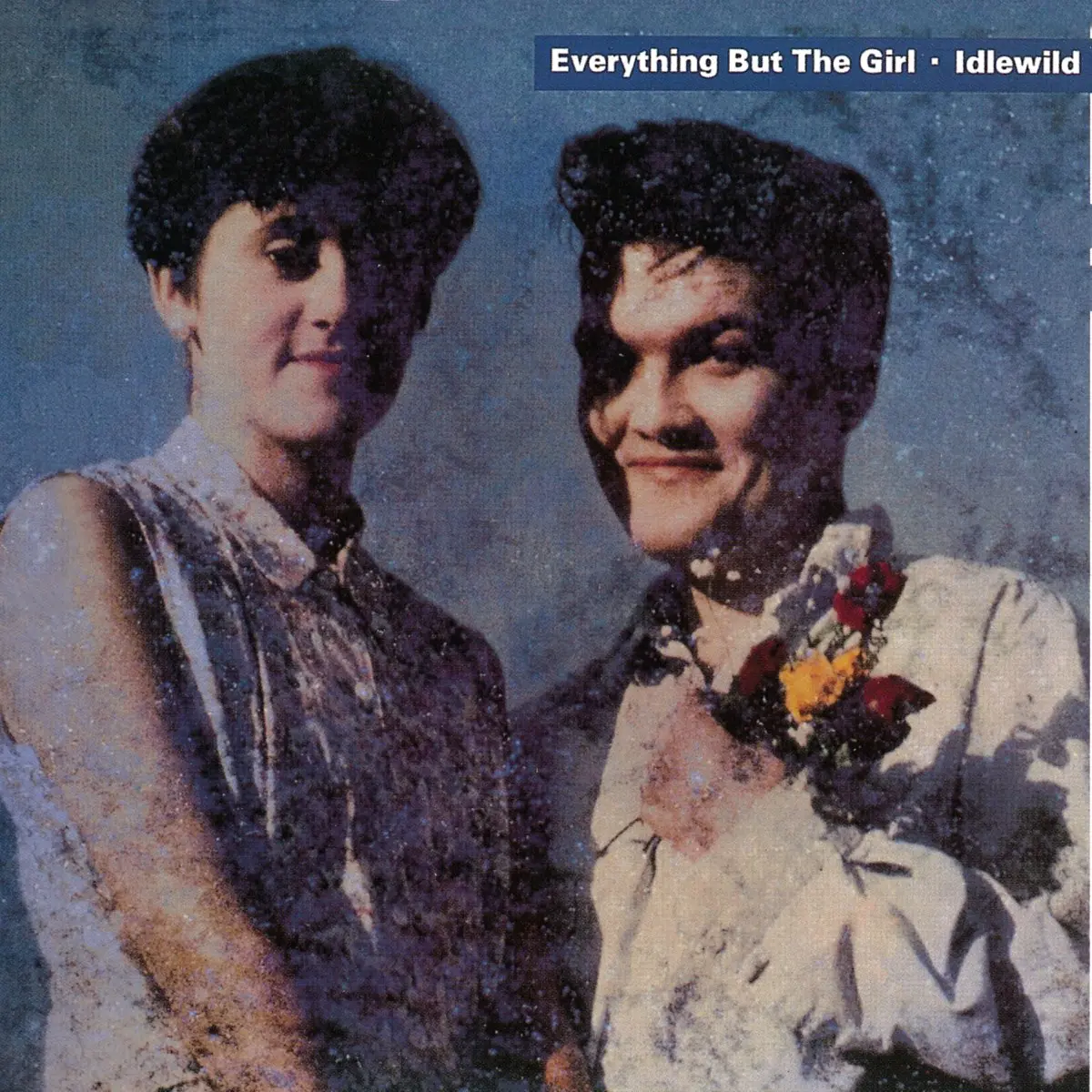 Everything but the Girl released their fourth album, Idlewild, on February 29, 1988, on Blanco y Negro.
The album contains two songs by Ben Watt (“The Night I Heard Caruso Sing,” “Tears All Over Town”) and three by Tracey Thorn (“These Early Days,” “Oxford Street,” “Shadow on a Harvest Moon”). They co-wrote the album’s six remaining tracks.
Idlewild features musical backing by bassist Steve Pearce (Black), tenor saxophonist Ian Fraser (Shriekback), trumpeter James McMillan (Sade), pianist/synthesist Damon Butcher (Morrissey Mullen, Beautiful South), and ongoing alto saxist Peter King. “Lonesome for a Place I Know” features bassist Chucho Merchán, a recent Eurythmics and Pete Townshend sideman.
A1. “Love Is Here Where I Live” (3:55)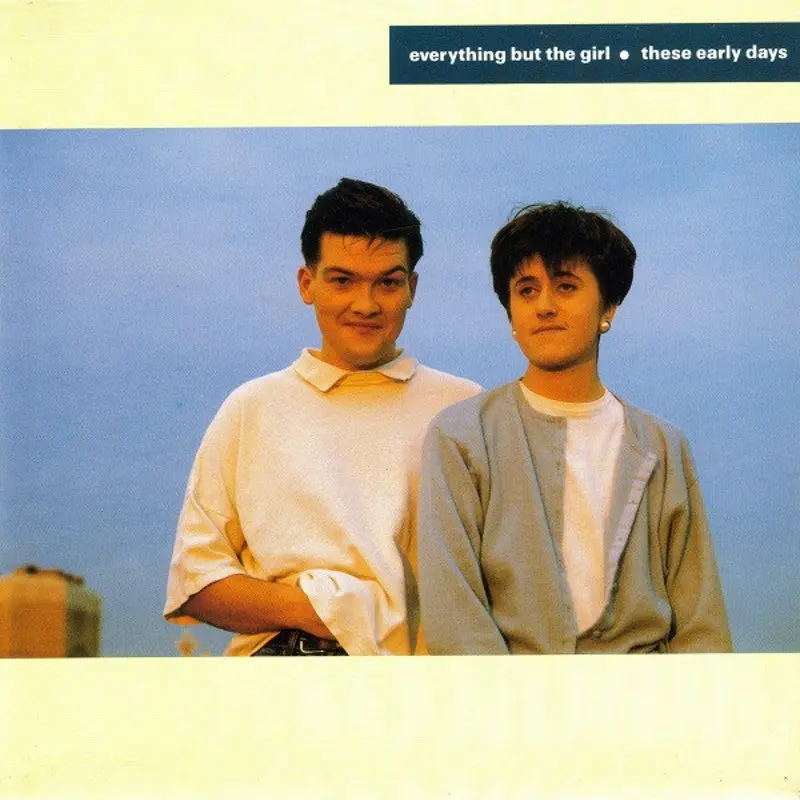
A2. “These Early Days” (3:50)
A3. “I Always Was Your Girl” (4:00)
A4. “Oxford Street” (3:21)
A5. “The Night I Heard Caruso Sing” (2:55)
B1. “Goodbye Sunday” (4:00)
B2. “Shadow on a Harvest Moon” (3:38)
B3. “Blue Moon Rose” (3:37)
B4. “Tears All Over Town” (4:35)
B5. “Lonesome for a Place I Know” (4:02)
B6. “Apron Strings” (3:07)
 Watt produced Idewild in the Autumn of 1987 at Livingston Recording Studios in North London, where the album was engineered by staffer Jerry Boys, a decorated Seventies soundman (Argent, CMU, Focus, Fotheringay) with recent credits behind 1,000 Maniacs, Dagmar Krause, Level 42, and Richard Thompson.
Everything But the Girl lifted “These Early Days” as the first single, released as a 7″ with the non-album “Dyed In the Grain.” The single also appeared as a maxi with a second exclusive, “No Place Like Home.”
B1. “Dyed In the Grain” (5:05)
B2. “No Place Like Home” (4:22)
In March, “I Always Was Your Girl” became the second single, backed with the non-album watt/Thorn “Hang Out the Flags.” The 12″ contains a third track, Tracey’s “Home From Home.”
B1. “Hang Out the Flags” (3:19)
B2. “Home From Home” (3:03)
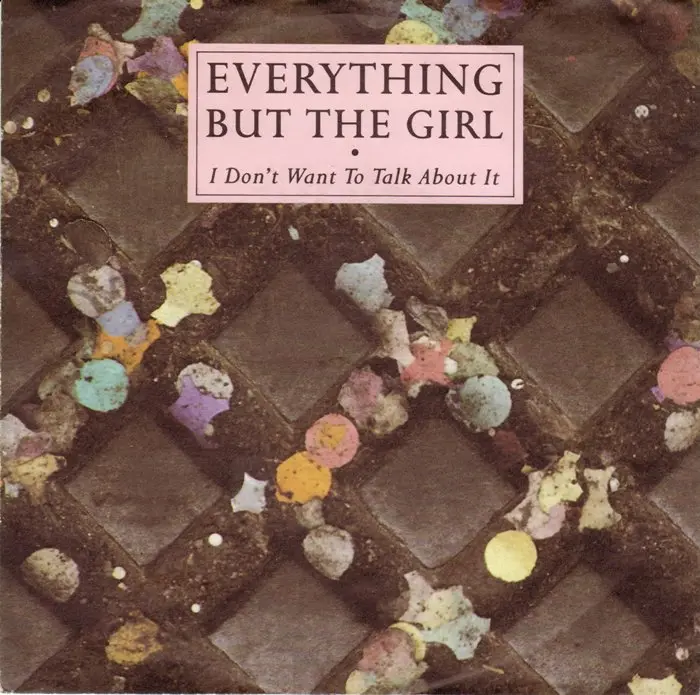 In July 1988, Everything But the Girl” released a non-LP cover of “I Don’t Want To Talk About It,” a Crazy Horse song popularized by Rod Stewart.
A. “I Don’t Want To Talk About It” – is a 1971 song by Crazy Horse, written by their guitarist Danny Whitten (1943–1972).
The single appeared as 7″ (b/w “Oxford Street”) and as 12″ maxi with an instrumental version and another album track, “Shadow On a Harvest Moon.” Subsequent CD versions of Idlewild feature “I Don’t Want To Talk About It” appended to the tracklist.
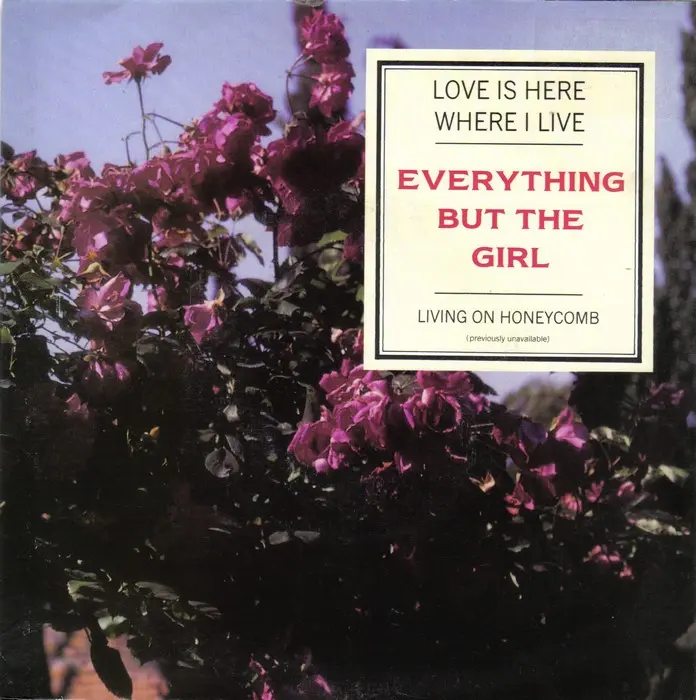
In September, “Love Is Here Where I Live” appeared as a fourth single (b/w “Living On Honeycomb”).
Idlewild reached No. 13 on the UK Albums Chart and No. 38 on the New Zealand RMNZ.
The Language of Life
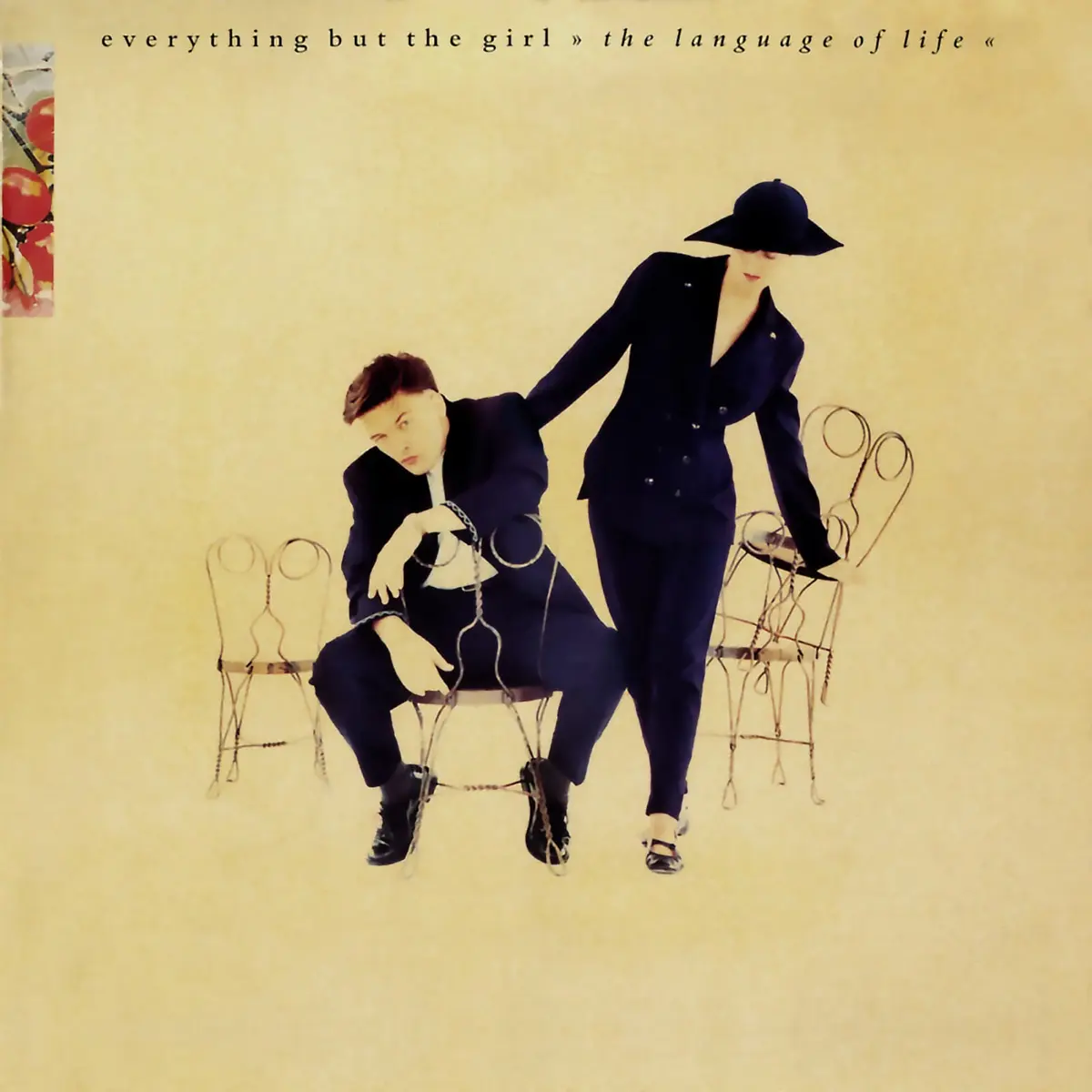 Everything but the Girl released their fifth album, The Language of Life, on February 5, 1990, on Blanco y Negro.
The album contains six Ben Watt originals and three Trace Thorn co-writes: “Meet Me in the Morning,” “Me and Bobby D,” and “The Language of Life.” They include one cover, “Take Me,” a 1986 song by Womack & Womack.
Watt plays guitar and piano on The Language of Life, supplemented by bassist John Patitucci (Chick Corea Elektric Band), drummer Omar Hakim (Miles Davis, Weather Report), percussionist Lenny Castro (Boz Scaggs, Stevie Wonder), keyboardist Larry Williams (Michael Jackson, Rufus), guitarist Michael Landau (Joni Mitchell), and two members of the Yellowjackets: pianist Russell Ferrante and alto saxophonist Marc Russo.
Select tracks feature ex-Seawind flugelhornist Jerry Hey (“Meet Me in the Morning,” “The Road”), Brecker Brothers tenor saxist Michael Brecker (“Driving,” “Letting Love Go”), and tenor sax legend Stan Getz (“The Road”). Crusaders pianist Joe Sample plays on the title track. “Imagining America” features drummer Vinnie Colaiuta (Al Di Meola, Allan Holdsworth).
 1. “Driving” (3:57)
2. “Get Back Together” (3:55)
3. “Meet Me in the Morning” (3:49)
4. “Me and Bobby D” (4:09)
5. “The Language of Life” (4:01)
6. “Take Me” (4:08)
7. “Imagining America” (4:58)
8. “Letting Love Go” (4:45)
9. “My Baby Don’t Love Me” (3:40)
10. “The Road” (3:46)
Sessions occurred in 1989 at four Los Angeles studios: Sunset Sound, Ocean Way Recording, Willyworld, and Bill Schnee Studios. Everything But the Girl recorded the album under producer Tommy LiPuma, a decorated Sixties soundman (Claudine Longet, Sandpipers) with recent credits behind Aztec Camera, Randy Crawford, Miles Davis, and the Yellowjackets.
 The engineer, Al Schmitt, produced pre-Beatles RCA Victor titles by Lena Horn, Ann-Margret, Henry Mancini, and Duane Eddy.
On The Language of Life, Thorn and Watt posed for photographer Nick Knight, whose lighted images grace late-Eighties sleeves by The Blow Monkeys, Go West, Prefab Sprout, and The Style Council.
A radio-edited “Driving” predated the album (b/w “Me and Bobby D”). In March, they lifted “Take Me” as the second single, backed with an acoustic “Driving.”
The Language of Life reached No. 10 on the UK Albums Chart and No. 19 in New Zealand.
Discography:
- Everything but the Girl (1984)
- Eden (1984)
- Love Not Money (1985)
- Angel (EP, 1985)
- Baby, the Stars Shine Bright (1986)
- Idlewild (1988)
- The Language of Life (1990)
Sources:
- Discogs: Everything but the Girl
- MusicBrainz: Everything but the Girl
- RYM: Everything but the Girl
- 45cat: Everything but the Girl
- azlyrics: Everything but the Girl
Artist/Album Pages:
Hunter Muskett was an English chamber-folk combo that released the 1970 album Every Time You Move ...
Lady Zu is a Brazilian soul-funk singer behind the 1978/79 Philips albums A Noite Via Chegar and F...
Vicious Pink was the English electro-pop duo of keyboardist Brian Moss and vocalist Josie Warden. ...
Cold Fire was an American soul-funk band that released the 1981 Capitol album Too Cold. Members:...
Strangeness Beauty was a Canadian jazz-rock trio that made the 1982 album Back to Nowhere on C-not...
Spoons were a Canadian synthpop band that released three albums on Ready Records between 1981 and ...
Kate Bush is an English singer–songwriter who released five albums between 1978 and 1985 on EMI. S...
Nada was a German jazz-rock/soul band that self-released the 1979 album Song for a Happy Girl on C...
The Triffids were an Australian underground rock band that released five studio albums between 198...
Gayle Adams is an American soul singer who released two albums on Prelude Records and scored danc...
Curved Air are an English symphonic-psych band that released four albums on Warner Bros. between 197...
David Bowie (January 8, 1947 – January 10, 2016) was an English singer, songwriter, multi-instrument...