

The Waterboys are an English rock band that released five albums between 1984 and 1990 on Ensign.
Scottish musician/songwriter Mike Scott formed the band in 1981 in London with saxophonist Anthony Thistlethwaite and drummer Kevin Wilkinson. This lineup released their 1983 self-titled debut album with multiple collaborators. Soon after, they hired keyboardist Karl Wallinger and released “The Big Music,” a single that defined their lavish folk-rock hybrid.
The band gained renown with the 1984/85 albums A Pagan Place and This Is the Sea, the latter with the international hit “The Whole of the Moon.” After Wallinger left and formed World Party, The Waterboys embraced Celtic folk on their 1988 album Fisherman’s Blues, recorded with a new lineup that included violinist Steve Wickham and bassist Trevor Hutchinson.
Members: Mike Scott (vocals, guitar, piano, drums, bouzouki), Anthony Thistlethwaite (saxophone, bass, mandolin, 1982-91, 2013), Kevin Wilkinson (drums, 1982-85), Norman Rodger (bass, 1983), Preston Hayman (drums, 1983), Adrian Johnston (drums, piano, 1983, 1985), Karl Wallinger (keyboards, bass, 1983-85), Roddy Lorimer (trumpet, 1983-90, 2007), Martyn Swain (bass, 1984-85), John Caldwell (guitar, 1984), Eddi Reader (vocals, 1984), Chris Whitten (drums, 1984-85), Frank Biddulph (fiddle, 1985), Marco Sin (bass, 1985), Lu Edmonds (bass, 1985), Max Edie (vocals, 1985), Guy Chambers (piano, 1985-86), David Ruffy (drums, 1985-86), Steve Wickham (fiddle, mandolin, 1985-90, 2001-present), Trevor Hutchinson (bass, bouzouki, 1986-91, 2013), Peter McKinney (drums, 1986-88), Fran Breen (drums, 1986-88), Liam O’Connor (accordion, 1987), Vinnie Kilduff (uilleann pipes, tin whistle, 1987-89), Colin Blakey (flute, whistle, piano, 1987-90), Tomás Mac Eoin (vocals, 1988-89), Jay Dee Daugherty (drums, 1988-89, 2001), Sharon Shannon (accordion, fiddle, 1989-1990, 2004), Noel Bridgeman (drums, 1989-90)
Background
The Waterboys was the second-recorded band of Mike Scott after Another Pretty Face (aka Funhouse), a Scottish new wave group behind five 1979–82 new wave singles.
Scott (b. December 14, 1958, Edinburgh) developed childhood literary interests through his mother Anne, an English teacher. At 12, the Scotts moved to Ayre, a Southwest coastal town where Mike acquired his first guitar, inspired by Hank Williams and the single “Last Night In Soho” by Dave Dee, Dozy, Beaky, Mick & Tich. In the early 1970s, Scott and classmate John Caldwell formed Karma, a Hindu-named band with assorted rock and folk influences (The Beatles, Bob Dylan, David Bowie). Scott’s second band, White Heat, instigated local punk activities.
During the 1977–78 school year, Scott studied literature and philosophy at the University of Edinburgh. He started the music fanzine Jungleland, which ran for nine issues with features on Bowie, The Boomtown Rats, Cafe Jacques, The Damned, John Cale, Iggy Pop, The Stranglers, Richard Hell & The Voidoids, Roy Harper, Television, Ultravox, and The Velvet Underground.> After a spell in Edinburgh punks The Bootlegs, he re-teamed with Caldwell in Another Pretty Face.
Another Pretty Face / Funhouse Singles
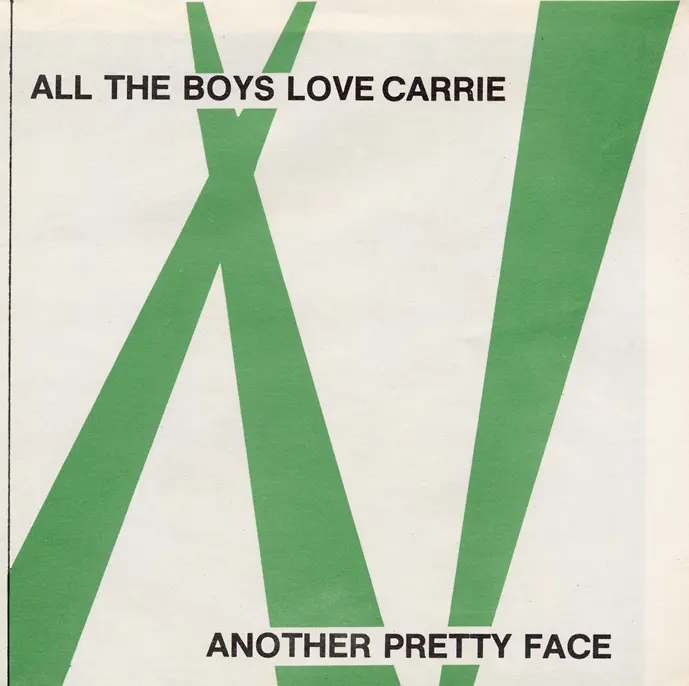 Another Pretty Face released their first single, “All the Boys Love Carrie” b/w “That’s Not Enough,” in May 1979 on New Pleasures. It received ‘Single of the Week’ honors in the New Musical Express (NME).
A. “All the Boys Love Carrie”
B. “That’s Not Enough”
On February 15, 1980, Virgin Records issued the second APF single: “Whatever Happened to the West?” b/w “Goodbye 1970’s.” It coincided with a Sounds cover feature and their opening for Stiff Little Fingers.
A. “Whatever Happened to the West?”
B. “Goodbye 1970’s”
 In December 1980, Another Pretty Face released “Heaven Gets Closer Everyday” b/w “Only Heroes Live Forever,” their first of two singles on Chicken Jazz.
A. “Heaven Gets Closer Everyday”
B. “Only Heroes Live Forever”
On February 18, 1981, Another Pretty Face cut a sessions for BBC Radio One DJ John Peel, whose 2/25 broadcast aired four APF songs: one upcoming a-side (“Out of Control”) and three exclusives (“I’ll Give You Fire,” “Lightning That Strikes Twice,” and “This Time It’s Real”).
 In April 1981, Another Pretty Face released a Chicken Jazz maxi-single: “Soul to Soul” b/w “A Woman’s Place” and “God On the Screen.”
A1. “Soul to Soul”
B1. “A Woman’s Place”
B2. “God On the Screen”
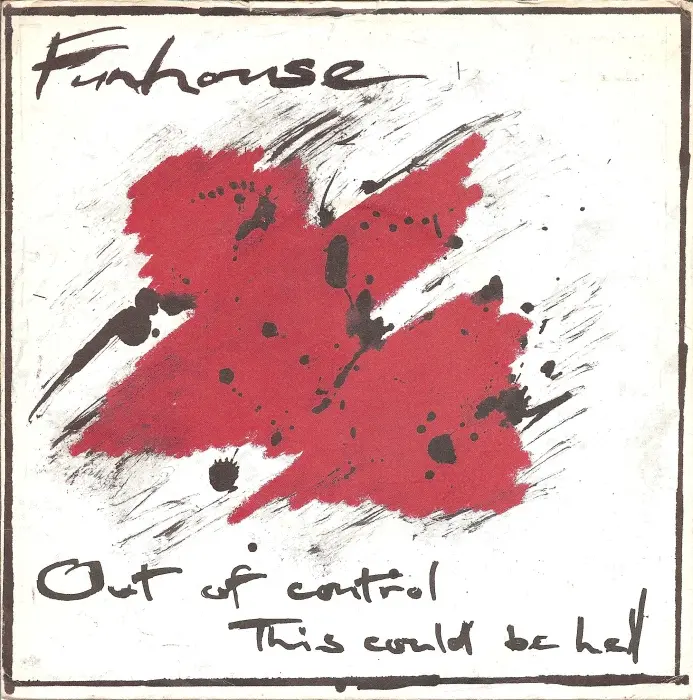
Another Pretty Face moved to London and adopted the name Funhouse for their 1982 Ensign singe: “Out of Control” b/w “This Could Be Hell.”
A. “Out of Control”
B. “This Could Be Hell”
The Waterboys Form
In December 1981, Mike Scott booked time at London’s Redshop Studios. Aided by a drum machine, he self-recorded five songs Aided by a drum machine, including “December” and “The Three Day Man.” Inspired by the (and Ensign’s encouragement), he disbanded Funhouse and started work on a solo album. In February and April, 1982, he held further Redshop sessions that produced the songs “Gala,” “It Should Have Been You,” “Savage Earth Heart,” and “Where Are You Now When I Need You?”
Despite his new solo contract with Ensign, Scott recruited musicians for a new band, tentatively called The Red and The Black. He invited saxophonist Anthony Thistlethwaite, a Lutterworth native who plays on “A Girl Called Johnny,” Scott’s ode to Patti Smith.
Thistlethwaite (b. August 31, 1955) busked for a time in the Parisian Latin Quarter and played on 1981 albums by ex-Soft Boys frontman Robin Hitchcock (Groovy Decay) and Swell Maps mastermind Nikki Sudden (Waiting on Egypt). Scott — who knew Sudden through underground zine circles during APF’s run — liked Anthony’s sax part on the Egypt track “Johnny Smiled Slowly.”
Anthony invited his drummer friend Kevin Wilkinson (1958–1999), a recent member of Robert Fripp‘s League of Gentlemen and a backing player for ex-Holly & The Italians frontwoman Holly Beth Vincent. With the addition of bassist Nick Linden, Scott held another Redshop session in November 1982 that yielded “I Will Not Follow.”
Scott named his new band The Waterboys, taken from the line “I am the Water Boy, the real game’s not over here” from “The Kids,” a song by Lou Reed on his 1973 album Berlin.
The Waterboys
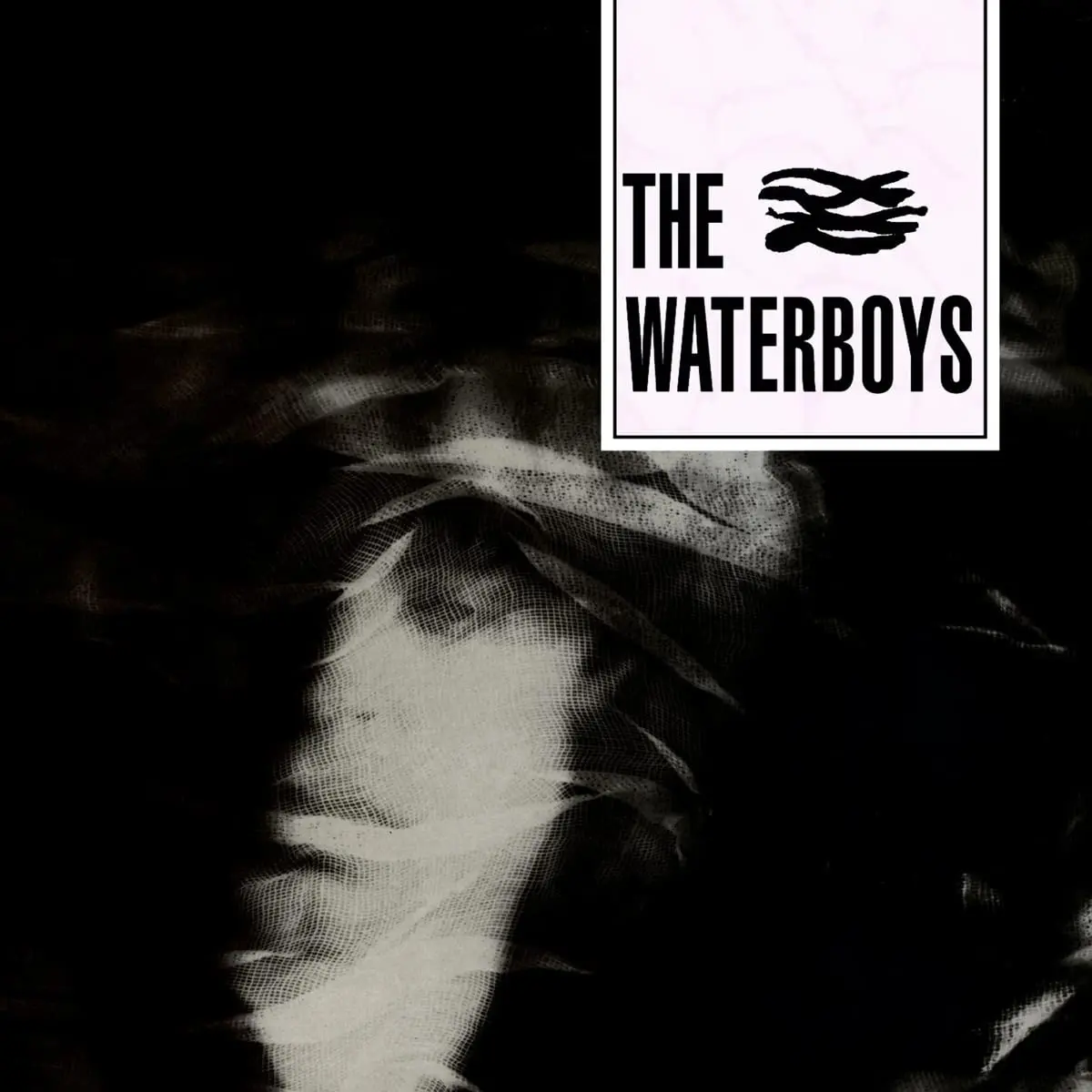 The Waterboys released their self-titled debut album in July 1983 on Ensign.
The album contains nine original by Mike Scott, who self-produced the album apart from “A Girl Called Johnny,” an advance single recorded with veteran musician/producer Rupert Hine. Scott plays piano, bass, mandolin, and multiple guitars, including the teardrop-shaped Danelectro Bellzouki electric 12-string. He also plays organ under the pseudonym Delahaye.
The Waterboys presents a trio lineup with saxophonist Anthony Thistlethwaite and drummer Kevin Wilkinson. The album features three bassists: TV21‘s Norman Rodger (“It Should Have Been You”), Nick Linden (“I Will Not Follow”), and engineer Stephen W Tayler (everything else).
A1. “December” (6:48)
A2. “A Girl Called Johnny” (3:57)
A3. “The Three Day Man” (4:08)
A4. “Gala” (9:31)
B1. “I Will Not Follow” (5:18)
B2. “It Should Have Been You” (4:30)
B3. “The Girl in the Swing” (4:27)
B4. “Savage Earth Heart” (6:40)
Sessions spanned December 1981 through November 1982 at Redshop Studios in London, where Taylor engineered The Waterboys in sequence with Hine-produced 1981/82 albums by Saga, The Fixx, Chris De Burgh, and Rupert himself (Waving Not Drowning). Hine produced “A Girl Called Johnny” at Farmyard Studios, his converted barn in Little Chalfont, Buckinghamshire.
Photographer Panni Charrington (Any Trouble, Leisure Process, Wooden Tops) took monochrome Waterboys cover shot, which shows Scott obscured in chiffon drapery.
“A Girl Called Johnny” first appeared in March 1983 as an advance single, backed with “The Late Train to Heaven,” a Scott-produced exclusive. The 12″ replaces that b-side with two exclusives (“Ready for the Monkey House,” “Somebody Might Wave Back”) plus “Out of Control” from Scott’s Peel session with Another Pretty Face.
B. “The Late Train to Heaven” (3:34)
B1. “Ready for the Monkey House” (4:02)
B2. “Somebody Might Wave Back” (2:51)
In October, Ensign lifted “December” as the album’s second single, backed with “Where Are You Now That I Need You,” a fourth exclusive from the Redshop sessions. The 12″ version instead contains “The Three Day Man” and the lengthy “Red Army Blues,” an advance taster of their second album.
B. “Where Are You Now That I Need You” (5:06)
In September 1983, Scott hired Welsh keyboardist Karl Wallinger (b. October 19, 1957, Prestatyn), an alumnus of Charterhouse Public School for boys (the breeding ground of Genesis) who’d played in the unsigned bands Pax and Quasimodo, a precursor to The Alarm.
A Pagan Place
 The Waterboys released their second album, A Pagan Place, in June 1984 on Ensign (UK) and Island Records (abroad).
The album contains eight Mike Scott originals, including the pre-released “Red Army Blues” and one advance single, “The Big Music,” their self-descriptive number.
Scott plays piano, bass, guitar, and the Bellzouki 12-string on A Pagan Place, which features Anthony Thistlethwaite on saxophone, bass, mandolin, and Karl Wallinger on piano, organ, and percussion.
Musical guests include Last Chance violinist Tim Blanthorn, China Crisis auxiliary trumpeter Roddy Lorimer, Style Council session trumpeter Barbara Snow (“All The Things She Gave Me”), and three backing singers: ex-Adverts frontman TV Smith, recent Fun Boy Three sidewoman Ingrid Schroeder, and future Fairground Attraction singer Eddi Reader.
A1. “Church Not Made with Hands” (6:05)
A2. “All The Things She Gave Me” (4:34)
A3. “The Thrill Is Gone” (4:33)
A4. “Rags” (5:21)
B1. “Somebody Might Wave Back” (2:43)
B2. “The Big Music” (4:45)
B3. “Red Army Blues” (8:06) interpolates the traditional “Song of the Steppes.”
B4. “A Pagan Place” (5:13)
Scott self-produced the album in September 1983 at Rockfield Studio in Monmouth, Wales. A Pagan Place lists five engineers, including prior soundman Stephen W Tayler and Rockfield staffer Ted Sharp, also credited on 1983/84 titles by Bad Manners, Peter Hammill, Saint-Preux, and Tones on Tail. The album sports dark monochrome imagery by photographer Sheila Rock.
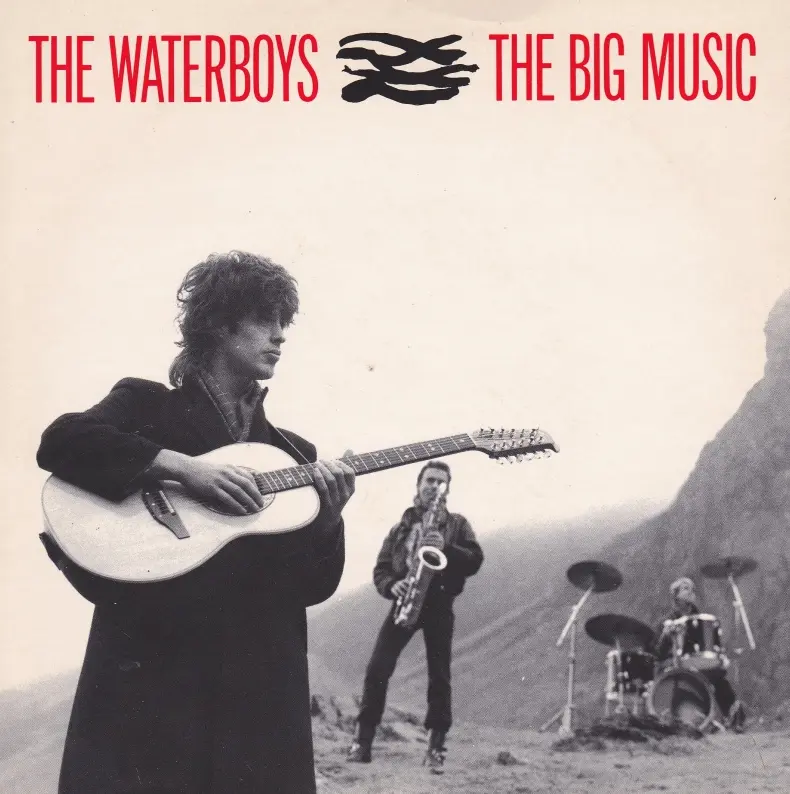 “The Big Music” first appeared in March 1984 with “The Earth Only Endures,” a rearranged Sioux Death trad song. The 12″ contains another rarity, “Bury My Heart.” In Australia, Island issued “All the Things She Gave Me” as an Australian single (b/w “The Big Music”) and “Church Not Made With Hands” as a New Zealander single (b/w “The Thrill Is Gone”).
B1. “Bury My Heart” (-)
B2. “The Earth Only Endures” (-)
This Is the Sea
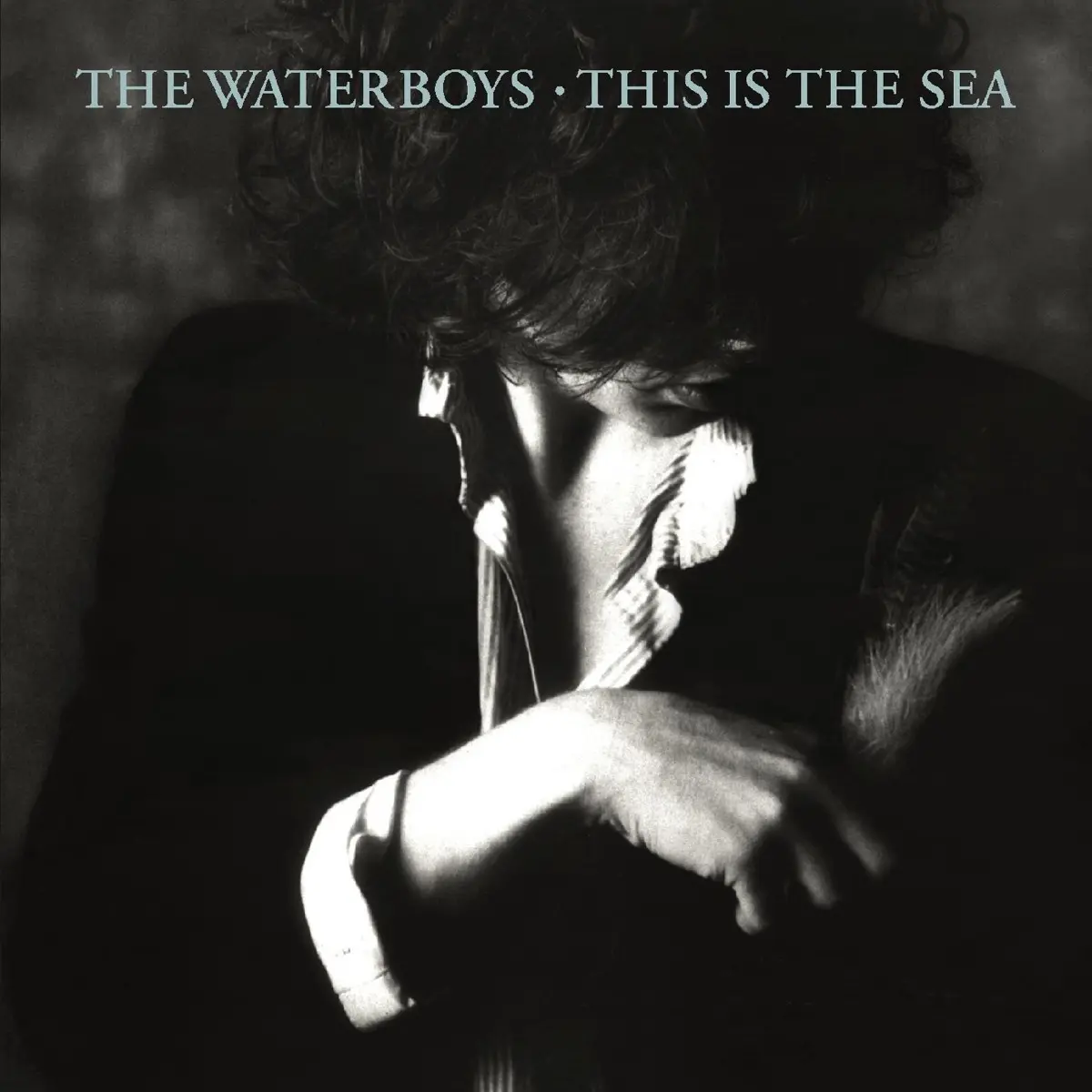 The Waterboys released their third album, This Is the Sea, on September 16, 1985, on Ensign.
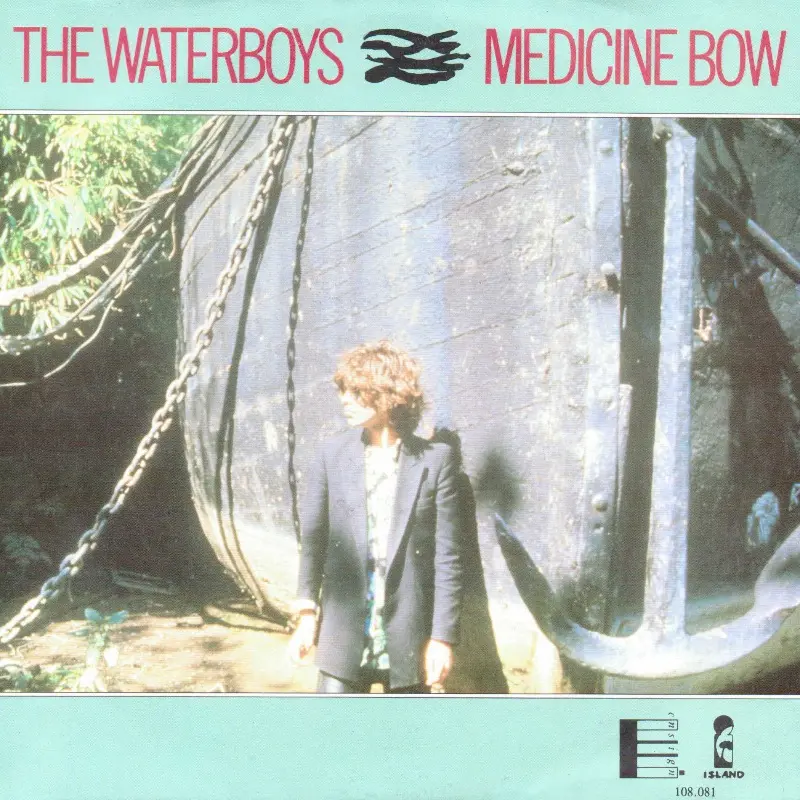
The album contains nine originals by Mike Scott, who co-wrote one song each with Karl Wallinger (“Don’t Bang the Drum”) and Anthony Thistlethwaite (“Medicine Bow”).
This Is the Sea features Scott on guitar, piano, percussion, synthesizer, bells, and sundry effects. Thistlethwaite plays sax, mandolin, contrabass and electric bass. Wallinger multi-tasks on celeste, percussion, piano, organ, and multiple synth/keyboards. Drummer Kevin Wilkinson (relegated here to auxiliary status) doubles on bass.
Musical guests include In Tua Nua violinist Steve Wickham (“The Pan Within”), Attractions drummer Pete Thomas (“Old England”), Soft Boys bassist Matthew Seligman (“Be My Enemy”), and Mekons bassist Lu Edmonds (“Medicine Bow”).
A1. “Don’t Bang the Drum” (6:46)
A2. “The Whole of the Moon” (4:58)
A3. “Spirit” (1:50)
A4. “The Pan Within” (6:13)
B1. “Medicine Bow” (2:45)
B2. “Old England” (5:32)
B3. “Be My Enemy” (4:16)
B4. “Trumpets” (3:37)
B5. “This Is the Sea” (6:29)
 Sessions spanned March through July 1985 at Park Gates Studio in Hastings, England, where Scott self-produced the album with select assistance by Wallinger (“Spirit”), and Cult/Gene Loves Jezebel soundman John Brand (“The Pan Within”). The album’s principal engineer, Mick Glossop, co-produced Side B in sequence with titles by The Alarm, Pallas, Rueflex, and Xmal Deutschland.
This Is the Sea displays a monochrome photo of Scott by Lynn Goldsmith, a veteran celebrity portrait photographer credited on mid-Eighties sleeves for Hall & Oates, Tom Waits, and Utopia. The inner-sleeve includes a reproduction of Peace, an 1896 etching (based upon Isaiah 11:6–7) by English artist William Strutt (1825–1915).
The Waterboys lifted “The Whole of the Moon” as the only UK single, backed with “Medicine Jack,” a Mike Scott exclusive. In Germany, Island lifted an edit of “Don’t Bang the Drum” as a single with “The Ways of Men,” a Scott/Wallinger exclusive.
B. “Medicine Jack” (4:10)
B. “The Ways of Men” (6:33)
This Is the Sea reached No. 4 in the Netherlands, No. 6 in New Zealand, No. 23 in Australia, and No. 37 on the UK Albums Chart.
Soon after this album, Karl Wallinger left The Waterboys and launched World Party, whose 1986 debut Private Revolution gained international renown with “Ship of Fools” and the title track.
Fisherman’s Blues
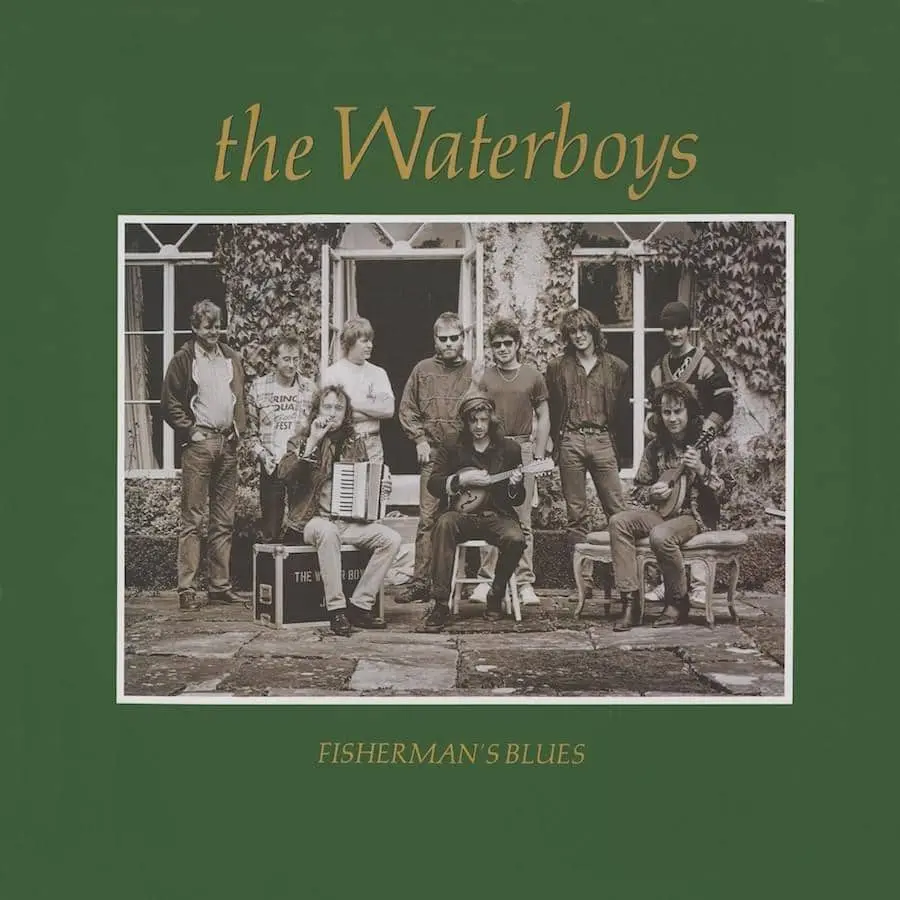 The Waterboys released their fourth album, Fisherman’s Blues, in October 1988 on Ensign. This was their first release conceived for the compact disc format (54:37 duration).
The album mixes Celtic folk with Americana, recorded by a four-piece lineup of co-founders Mike Scott, Anthony Thistlethwaite, and two new recruits: bassist Trevor Hutchinson and prior guest violinist Steve Wickham. Scott plays guitar, piano, bouzouki, and splits Hammond organ tracks with Thistlethwaite, who plays saxophone, mandolin, and harmonica.
Fisherman’s Blues contains mostly collaborative compositions, written by Scott with Thistlethwaite (“Strange Boat”), Wickham (the title track), and both (“And a Bang on the Ear” and the CD-only “Jimmy Hickey’s Waltz”). Ex-member Karl Wallinger has a co-writing credit on “World Party,” named after his current band. Scott himself lone-wrote “We Will Not Be Lovers,” “When Ye Go Away,” and “Has Anybody Here Seen Hank?” Wickham contributed the interlude “Dunford’s Fancy.”
They utilized fifteen auxiliary musicians, three side vocalists, and the Abergavenny Male Voice Choir. Notable guests include prior Waterboys drummer Kevin Wilkinson and former Babe Ruth singer Jenny Haan.
1. “Fisherman’s Blues” (4:26)
2. “We Will Not Be Lovers” (7:03)
3. “Strange Boat” (3:06
4. “World Party” (4:01
5. “Sweet Thing” (7:14) originated on Astral Weeks, the 1968 second album by Van Morrison.
6. “Jimmy Hickey’s Waltz” (CD only, 2:06)
7. “And a Bang on the Ear” (9:14)
8. “Has Anybody Here Seen Hank?” (3:19)
9. “When Will We Be Married?” (3:01) is a Scott-arranged traditional.
10. “When Ye Go Away” (3:45)
11. “Dunford’s Fancy” (1:04)
12. “The Stolen Child” (6:55) Scott composed this song around a poem by Irish statesman W.B. Yeats (1865–1939).
13. “This Land Is Your Land” (CD only, 0:56) is a folk standard by Woody Guthrie.
The first round of sessions spanned January–March 1986 at Windmill Lane Studio in Dublin. After a second Windmill round between March and August 1987, they finished the album at Scott’s residence, the Spiddal House in Galway, Ireland.
Scott produced the album with help on select tracks by early U2 soundman Vinnie Kilduff (“Strange Boat”) and Sixties Dylan/Simon & Garfunkel producer Bob Johnston (“We Will Not Be Lovers”).
The song “Fisherman’s Blues” became the album’s first single with the non-album “Lost Highway.” The cassette single includes an elongated version of their 1985 song “Medicine Bow” (5:18).
B. “Lost Highway” (4:18) originated as a 1948 Bullet Records b-side by blind American country singer Leon Payne
In June 1989, “And a Bang on the Ear” appeared as the album’s second single with two edits (6:45 / 7:25), backed with the non-album “The Raggle Taggle Gypsy,” a Scottish traditional ballad.
B. “The Raggle Taggle Gypsy” (4:35)
Fisherman’s Blues reached No. 7 in Norway (VG-lista), No. 13 in the UK (OCC), No. 15 in New Zealand (RMNZ), and No. 18 in Sweden (Sverigetopplistan).
Discography:
- The Waterboys (1983)
- A Pagan Place (1984)
- This Is the Sea (1985)
- Fisherman’s Blues (1988)
- Room to Roam (1990)
Sources:
Artist/Album Pages:
Cultural Noise was an Austrian electronic trio that released the 1980 CBS album Aphorisms Insane. ...
Belfegore was a German goth-rock band that released the 1983 album A Dog Is Born on Pure Freude, f...
Frey, Tiepold, Thierfelder were a German chamber-jazz/rock trio comprised of keyboardist Matthias ...
Morgan was an English symphonic-rock band that released the album Nova Solis on RCA in 1972. The f...
Herbie Hancock (born April 12, 1940) is an American jazz and funk keyboardist active since the late ...
Joe Walsh (born Nov. 20, 1947) is an American guitarist, vocalist, and songwriter from Wichita, K...
Kimiko Kasai — 笠井紀美子 (born Dec. 10, 1945) — is a Japanese jazz vocalist who released a clutch of liv...
El Último de la Fila was the rock duo two Spanish new wave veterans: singer-percussionist Manolo G...
Doctor Nerve was an American avant-rock band from NYC that released the 1984 album Out to Bomb Fr...
Red Box was an English art-pop duo from London that released a standalone single on Cherry Red in ...
Flamen Dialis was a French electro-symphonic/folk project headed by Didier Le Gallic, responsible ...
Budgie was a Welsh hard-rock band that released 10 albums between 1971 and 1982 on MCA, A&M, a...