

The Edge was an English new wave/post-punk band from London that debuted with a 1978 single on Albion Records, followed by two 1979 singles on Hurricane Records. That same year, they backed American singer Jane Aire as “The Belvederes” on her singular album for Virgin. The band’s own album, Square 1, appeared in 1980 on Hurricane.
Bassist Glyn Havard played years earlier in Icarus and Jade Warrior and held a current slot in Yachts. Keyboardist Gavin Povey subsequently headed the ambient-jazz combo A Tent, while drummer Jon Moss soared to fame as one-fourth of the global pop sensation Culture Club. Guitarist Lu Edmonds later resurfaced in The Mekons, Shriekback, and Public Image Ltd.
Members: Glyn Havard (vocals, bass), Lu Edmonds (guitar), Gavin Povey (vocals, keyboards), Jon Moss (drums)
Background
The Edge formed in early 1978 as a Damned splinter group. Lu Edmonds emerged in the five-piece Damned lineup that recorded their late-1977 second album Music for Pleasure, produced by Nick Mason. On their January 1978 tour, Moss deputized Damned drummer Rat Scabies just before the band’s initial implosion.
Moss (b. Jonathan Aubrey Moss; September 11, 1957) formed his first band, Pig Williams, as a Highgate School pupil with classmate (and future Wang Chung co-founder) Nick Feldman. In early 1977, he sat in with The Clash before they found a permanent drummer in Topper Headon. His next stop was London, a punk band headed by friend Riff Regan under the auspices of Japan manager Simon Napier-Bell, the onetime Svengali of Marc Bolan’s pre-fame John’s Children. London released three 1977 shortplayers and the 1978 MCA album Animal Games. (Their song “Siouxsie Sue” is not about the Banshees frontwoman.)
Edmonds and Moss formed the Edge with singer–keyboardist Gavin Povey, a recent sideman of blues harpist Lew Lewis, an original member of Eddie & The Hot Rods. Glyn Havard completed the lineup after a lengthy absence from the music scene. In the late 1960s, he cut two singles with psych-rockers Icarus and joined a late-period lineup of Unit 4+2 with July guitarist Tony Duhig. This led to their formation of Jade Warrior, which cut three albums in 1971/72 for the Vertigo “swirl” label. Duhig and co-founder Jon Field continued that band as a new age duo on Island Records. In the interim, Havard had a brief stint with Chicory Tip.
1978–79 Singles
On September 29, 1978, The Edge debuted with “Macho Man,” a brisk cut with downstroke chords, pummeling drum fills, faint organ accents, and taut vocals by Glyn Havard, who exhibits range on “I’m Cold,” a harmonized rocker with clipped interplay and spatial drum patterns that snap across the stereo field. Havard co-wrote both songs with Moss and Povey.
 A. “Macho Man” (3:00)
B. “I’m Cold” (3:44)
The Edge cut both sides with producer Neil Slaven, a prior soundman for Egg, Khan, Stray, Hemlock, Trapeze, Chicken Shack, Savoy Brown, and the Keef Hartley Band. Albion Records issued “Macho Man” in a pink picture sleeve as the label’s third release (ION 4) between singles by Sore Throat and Ian Gomm.
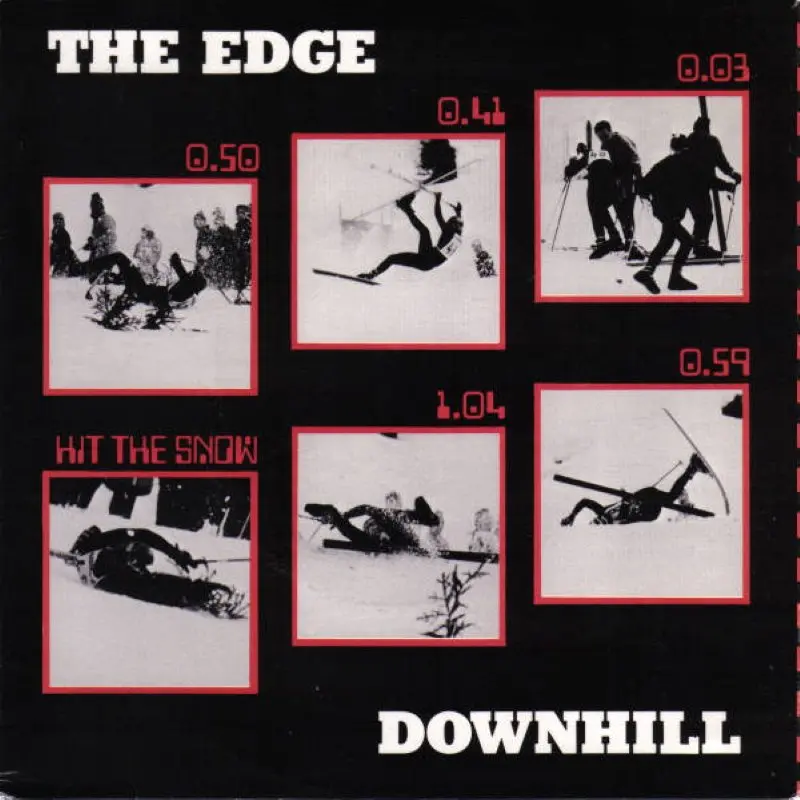
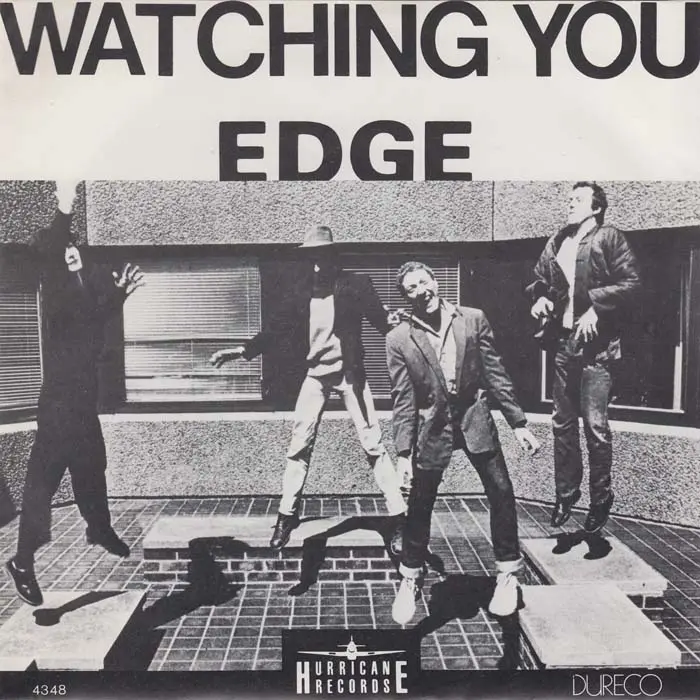
Between June 1 and August 3, 1979, The Edge unleashed two singles on Hurricane Records, a WEA-distributed upstart that also snapped Sore Throat and The Paranoids. The Edge group-wrote all four tracks, which emphasize fast tempos and trebly riff-laden structures with faint organ accompaniment. “Downhill” exudes urgent, dramatic intensity akin to The Skids, while the upbeat “Watching You” glides with Yachts-like buoyancy.
 A. “Downhill” (2:42)
B. “American Express”
A. “Watching You” (2:31)
B. “Overtaking”
The Edge recorded “Watching You” at the China Shop with American producer Liam Sternberg, a native of Akron, Ohio, who entered the London scene through a distribution deal with Stiff Records, which signed his first two clients, Rachel Sweet and Jane Aire (aka Jane Ashley), both expat singers from the Midwest.
Aire debuted with the April 1978 Stiff single “Yankee Wheels” (b/w “Nasty Nice”), an early production of Sternberg, who wrote both sides and linked her with The Edge for her July 1979 second single “Call Me Every Night” (b/w “Lazy Boy”). Liam and The Edge formed her ad hoc backing group, The Belvederes.
Jane Aire and The Belvederes
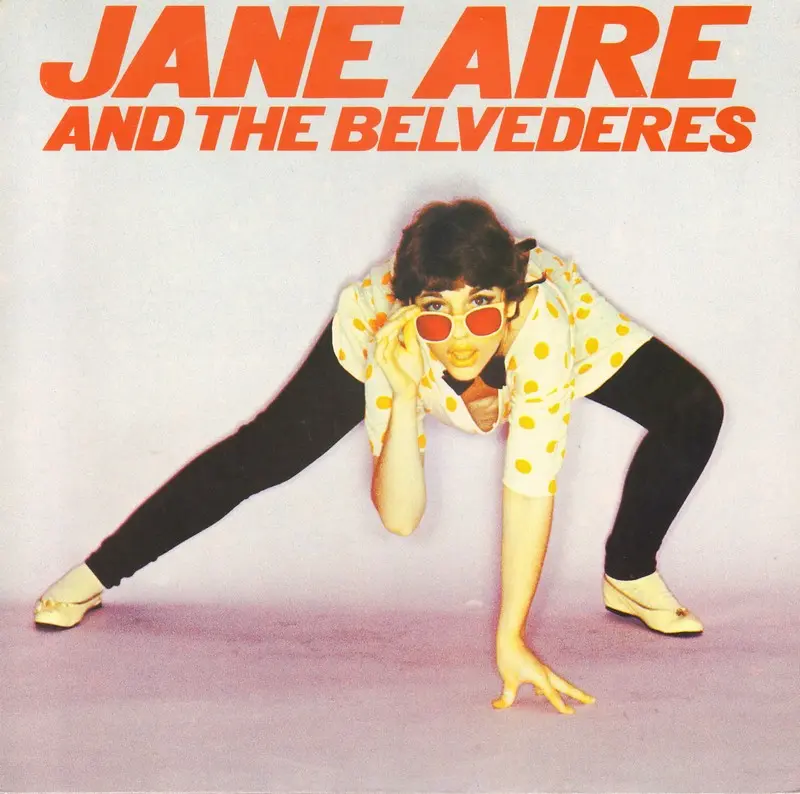 Jane Aire and The Belvederes released their self-titled album on September 28, 1979, on Virgin.
The album features four covers amid six originals penned by Liam Sternberg, who plays supplemental guitar and keyboards under the pseudonym Pietro Nardini. Glyn Havard and Jon Moss form the rhythm section throughout, while Lu Edmonds splits further guitar tracks with engineer Chris Jenkins.
Musically, the album weds new-wave pop with harmonies and vignettes reminiscent of the girl-group era. Jane’s sister, Joan Ashley, sings backing vocals alongside Rachel Sweet and Kirsty MacColl, another recent purveyor of the retro sound. They consolidate Sixties vibes with a six-piece horn section, comprised of two saxophonists (Jeff Daley, Ray Warleigh), two trumpeters (Martin Drover, Michael Davis), and two trombonists (Chris Pyne, Malcolm Griffiths), all veterans of the jazz and rock scenes. Penguin Cafe string arranger Gavyn Wright enhances the album’s lush moments.
A1. “Breaking Down the Walls of Heartache” (2:53) — originated as a 1968 CBS–Direction a-side by Rochester soulsters Johnny Johnson & The Bandwagon, whose version reached No. 4 on the UK Singles Chart. Its writers, Sandy Linzer and Denny Randell, also wrote Sixties hits for The Toys (“A Lover’s Concerto”) and the Four Seasons (“Working My Way Back to You,” “Let’s Hang On!”).
A2. “No More Cherry Icing” (2:50)
A3. “Driving” (3:26) — originated as a May 1979 a-side by the San Francisco new wave band Pearl Harbor & The Explosions.
A4. “When You Cant Be Loved” (3:17)
A5. “Take It to the Next Wave” (2:25)
B1. “Duke of Love” (3:16)
B2. “Come See About Me” (3:33) — originated as an October 1964 a-side by The Supremes, written by the Motown songwriting team Holland–Dozier–Holland.
B3. “Life After You” (2:32)
B4. “Wind Up” (3:12)
B5. “Love Is a Fire” (3:19) — is a song first recorded by (ex-Ten Wheel Drive) singer Genya Ravan for the soundtrack to The Warriors, co-written by Leo Sayer songwriters Johnny Vastans (“I Hear the Laughter”) and Vinnie Poncia (“You Make Me Feel Like Dancing”).
Sternberg produced Jane Aire and The Belvederes in sequence with “They Don’t Know,” the Spectorian solo debut of Kirsty MacColl, who later re-recorded the song with comedian Tracey Ullman.
On the cover, a track-posed Aire models retro casual attire and rose shades for Paddy Eckersley, whose photography also graces recent sleeves for Bethnal, Sailor, Dire Straits, Generation X, Magna Carta, and the Easy Street/Nasty Pop spinoff Twist.
Virgin lifted “Breaking Down the Walls of Heartache” as an autumn single (b/w “Life After You”). In 1980, Dexys Midnight Runners recorded their version as the b-side to “Geno,” a UK No. 1 single.
Soon after the album, Aire married Boomtown Rats bassist Pete Briquette. Meanwhile, Moss moonlit as ‘Terry 1 & 2’ on “Car Trouble,” a 1979 Adam & The Ants single from their transitory lineup stage. Elsewhere, Povey appeared on one cut (“If Time Could Turn Backwards”) on First Offense, the debut album by R&B pub-rockers The Inmates.
Aire reemerged for one further single, the 1982 Stiff release “I Close My Eyes and Count to Ten” (b/w “Heat of the City”), recorded with a different Belvederes lineup that included former Scrounger keyboardist Ian Curnow and ex-Deaf School saxophonist Ian Ritchie.
Square 1
 The Edge released their singular album, Square 1, in 1980 on Hurricane.
The album contains thirteen group-written originals driven by clipped bass motion, taut drum attack, bright keyboard lines, and guitar parts that cut across the beat in short strokes.
Havard and Moss hold the backbone, Povey places brisk keyboard figures across the top line, and Edmonds answers with wiry guitar accents. Most tracks keep to compact forms, quick entries, and centered vocal placement.
A1. “Edge Theme” (3:16)
A2. “Weekend Return” (3:14)
A3. “Wallflowers” (3:23)
A4. “Winning Streak” (3:30)
A5. “Isn’t It Strange?” (3:02)
A6. “Hanging Man” (3:42)
B1. “Friday the 17th” (3:01)
B2. “I Give Up” (2:41)
B3. “Let Go” (3:16)
B4. “Take Off” (2:11)
B5. “Here and Now” (1:48)
B6. “Next In Line” (3:33)
B7. “New World” (3:05)
Sternberg produced Square 1 as his final London-based project before his return to the states, where he worked on 1981–83 albums by The Dickies, The Unknowns, Burning Rome, and Joe “King” Carrasco & The Crowns. In 1986, he worked with Annabel Lamb while his song “Walk Like an Egyptian,” first recorded but unreleased by Lene Lovich, became a global hit for The Bangles.
Damned Damned Damned engineer Barry “Bazza” Farmer worked on Square 1 in sequence with the debut album by Any Trouble. In 1981, he retained Edmonds, Havard, and Povey for Desperate Character, the debut album by Belvederes auxiliary Kirsty MacColl.
Postlude
In December 1980, Jon Moss drummed in the final lineup of punk rockers The Nips, which (despite a recent Paul Weller-produced demo) folded after a show at London’s Music Machine. (Their frontman, Shane MacGowan, resurfaced months later in Pogue Mahone, which morphed into The Pogues.) In 1981, Theatre of Hate frontman Kirk Brandon notified Moss of a new band in development by DJ Mickey Craig and club fixture George O’Dowd. With guitarist Roy Hay, they rocketed to fame as Culture Club.
Glyn Havard played on Without Radar, the 1980 second and final album by Yachts, the Farfisa-driven combo whose original bassist, Martin Dempsey, jumped over to Pink Military, an edgier Liverpool group fronted by ex-Big In Japan singer Jayne Casey.
Lu Edmonds laid trebly riffs across Spikey Dream Flowers, the second full-length Spizz album, released under their 1981 moniker Spizzles. In 1985, Edmonds surfaced on albums by Shriekback (Oil and Gold) and The Waterboys (This Is the Sea). He played on two albums by the reformed Mekons and joined PiL for their 1987–89 albums Happy and 9.
Gavin Povey spearheaded A Tent, an experiment/ambient act behind the 1981 Cherry Red Records release Six Empty Places. He interacted with Edmonds on 6ix of 1ne and ½ a Dozen of the Other, the 1982 release by former Audience/Moonbeams frontman Howard Werth. With MacColl, Povey co-engineered the title track to You Broke My Heart In 17 Places, the 1983 album by Tracey Ullman, whose version of “They Don’t Know” (with MacColl on the high-register “baybee” refrain) became an international evergreen.
Discography:
- “Macho Man” / “I’m Cold” (1978)
- “Edge Theme” (flexi, 1979)
- “Downhill” / “American Excess” (1979)
- “Watching You” / “Overtaking” (1979)
- Square 1 (1980)
Sources:
- Discogs: The Edge
- 45cat: The Edge
- 45cat: Jane Aire and the Belvederes
- SecondHandSongs: Jane Aire and the Belvederes
- NostalgiaCentral: Jane Aire and the Belvederes
Artist/Album Pages:
Neuronium are a Spanish electronic combo from Barcelona, formed in 1976 by keyboardist Michel Huyg...
Manfred Schoof (born April 6, 1936) is a German trumpeter and bandleader with over 200 album credi...
Kansas are an American symphonic/hard-rock band that released nine albums and a live double-LP on ...
Jorge Ben is a Brazilian samba-soul singer-songwriter who released twenty-three albums between 196...
Robin Trower (born March 9, 1945) is an English rock/blues guitarist with a musical career that date...
Hajime Tachibana — 立花ハジメ (born Oct. 28, 1951) — is a Japanese guitarist from Tokyo who recorded th...
Jane Birkin (Dec. 14, 1946 – July 13, 2023) was a French-based chanson-pop singer and actress, ori...
Trickster was an English rock band that released the album Find the Lady on Jet in 1977, followed ...
János Gonda (January 11, 1932 – March 10, 2021) was a Hungarian jazz pianist, composer, and educat...
Animal Nightlife was an English sophisti-pop band that released four singles and the 1985 Island a...
Eye to Eye was an English/American duo behind the 1982/83 Warner albums Eye to Eye and Shakespeare S...
Ronald Shannon Jackson (Jan. 12, 1940 — Oct. 19, 2013) was an American jazz-funk drummer on the Ne...