

Neuronium are a Spanish electronic combo from Barcelona, formed in 1976 by keyboardist Michel Huygen. In 1977, the band debuted with Quasar 2c361, their first of two albums on Harvest. Starting with their 1980 album Digital Dream, they released music on the self-run Neuronium Records.
Members: Michel Huygen (keyboards), Carlos Guirao (keyboards, guitar, 1976-82), Albert Giménez (keyboards, guitar, 1976-78), Santi Picó (guitar, 1980-present)
Background
Neuronium formed in 1976 in Barcelona when keyboardist-synthesist Michel Huygen teamed with guitarist Albert Giménez and two unnamed rhythm players. Huygen was a Spanish synthesist of Belgian origin who began the decade in psychedelic-rock groups.
The first Neuronium lineup played space rock before the rhythm section left the group. Huygen and Giménez on-boarded keyboardist-guitarist Carlos Guirao, a prior member of unsigned Barcelona rockers Atlanta. The reconfigured trio embraced the ethereal sounds of the Berlin School and linked with EMI Harvest.
Quasar 2c361
 Neuronium recorded their debut album, Quasar 2c361, in November 1977 for Harvest.
The album presents four electronic pieces performed by keyboardist Michel Huygen (organ, synthesizer), multi-instrumentalist Carlos Guirao (flute, acoustic guitar, Logan String Ensemble), and guitarist Albert Giménez (audiogenerator effects). “Quasar 2C361” occupies side A with an extended keyboard-and-effects construction. Side B places the shorter “Catalepsia,” “El Valle de Rimac,” and “Turo Park” in sequence.
“Quasar 2C361” drifts through slow-blooming electronic sequences, soft-edged swells, and long suspended passages. The title suite alternates quiet haze with sequencer motion, then lets flute and guitar details cross the surface before a softened final cadence. “Catalepsia” glides through an atmospheric lead line with spacious guitar tone. “El Valle De Rimac” thins the arrangement into low-lit ambient drift and a more inward tonal arc. “Turo Park” resolves the album with a slow, hymn-like ascent and a glassy electronic refrain.
A. “Quasar 2C361” (26:32)
B1. “Catalepsia” [Catalepsy] (8:34)
B2. “El Valle de Rimac” [The Valley of Rimac] (5:15)
B3. “Turo Park” (4:22)
Neuronium recorded Quasar 2c361 in Barcelona in November 1977 with engineer Jordi Vidal.
Vuelo Químico
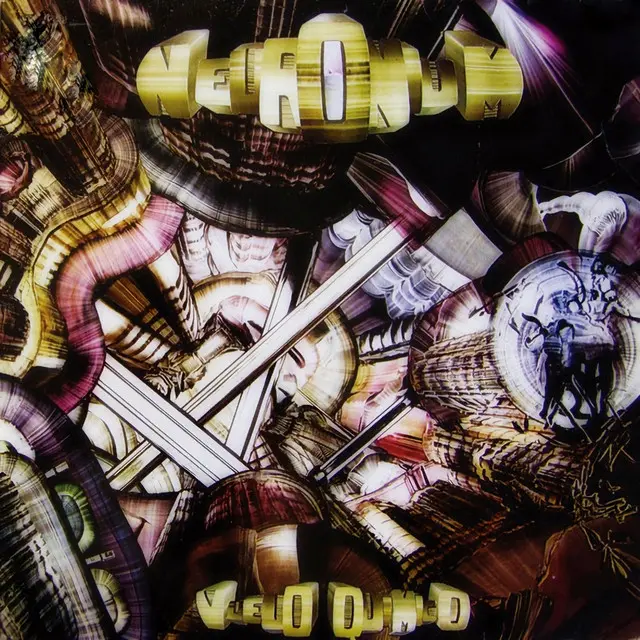 Neuronium released their second album, Vuelo Químico, in 1978 on Harvest.
The album contains three electronic works by Huygen, Guirao, and Giménez, with “Abismos de terciopelo” split into three internal sections across side A. The title piece includes a Poe-derived recitation by Nico, with choral arrangement and direction by A. Doménech.
Vuelo Químico drifts through long electronic spans, slow-cycling sequence, and low-lit sustained tone. “Abismos de Terciopelo” unfurls through soft pulses and suspended haze, with its motion stretched across a darkened arc. “Vuelo Químico” darkens around Nico’s Poe recitation, with the spoken line set inside vaporous electronic sustain. The album holds its contours in gradual swells, narrow section turns, and a muted final cadence.
A. “Abismos de terciopelo” [Velvet Abysses] (19:55)
— a. “El regreso de Ganímedes” [The Return of Ganymede]
— b. “La llamada del vacío” [The Call of the Void]
— c. “Abismos de terciopelo” [Velvet Abysses]
B1. “Viento solar” [Solar Wind] (2:43)
B2. “Vuelo químico” [Chemical Flight] (14:45)
Michel Huygen produced Vuelo Químico at EMI Studio Barcelona on September 4–7, 1978, with engineer Juan José Moreno. Harvest lifted “Vuelo Químico” as a 1978 single (b/w “Abismo de Terciopelo”).
Digital Dream
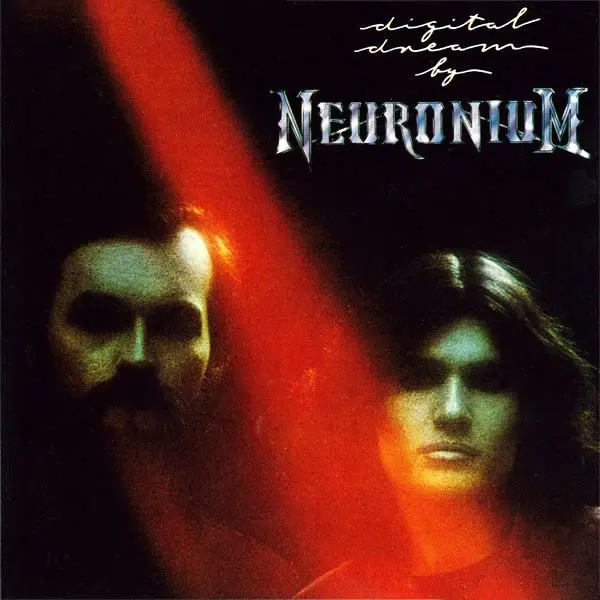 Neuronium released their third album, Digital Dream, in October 1980 on Neuronium Records.
The album contains two Huygen–Guirao pieces and one Huygen composition, with side A occupied by the two-part “Flying Over Kai-Tak.” Huygen and Guirao form a two-keyboard lineup with sequencer, vocoder, string-synthesizer, grand-piano, and rhythm-machine credits. Guitarist Santi Picó adds Gibson guitar and Roland Paraphonic guitar synthesizer.
Digital Dream sharpens Neuronium’s long-form electronic language with clearer themes and firmer rhythmic bases. “Flying Over Kai-Tak” glides through an expansive suite, with echoed grand piano and sharp-toned keyboard lines cutting across its sectional course. “Privilege” pulses around a defined theme and a sustained rhythmic base. “Les Tours du Silence” alternates subtle guitar effects with a long solo passage, then releases into keyboard-led closing figures. The album’s larger pieces sustain an aerial arc through glassy tone, gradual ascent, and extended finale movement.
A. “Flying Over Kai-Tak (Part One and Part Two)” (25:27) – Guirao / Huygen
B1. “Privilege” (4:10) – Guirao / Huygen
B2. “Les tours du silence” [The Towers of Silence] (17:13) – Huygen
Neuronium self-produced Digital Dream during 1980 at Estudios Moraleda in Barcelona with engineer Albert Moraleda. For these sessions, Huygen’s arsenal featured polyphonic synthesizer, sequencer, string synthesizer, grand piano, and vocoder.
Tomás C. Gilsanz illustrated the cover package. Neuronium Records lifted “Privilege” as a 1980 single (b/w “Digital Overture”).
The Visitor
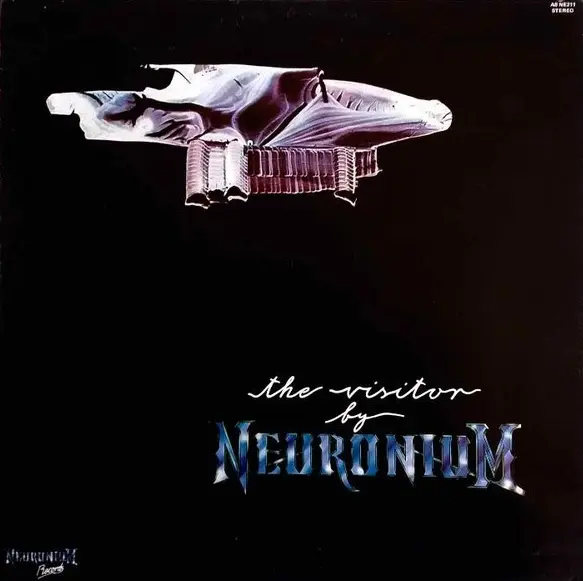 Neuronium released their fourth album, The Visitor, in April 1981 on Neuronium Records.
The album contains four Huygen–Guirao compositions performed by the core duo. Picó returns on electric guitar, with added parts by drummer José María Ciria and vocalist Miguel Guillamat.
The title piece combines choir-like vocoder tone with acoustic-guitar arpeggios. Guillamat recites a Dylan Thomas poem on the title piece. “A Strange Affair” uses a Sennheiser-vocoder chant over chordal synthesizer parts and rhythm-machine patterning.
Neuronium sets sung lines and vocoder choirs inside the electronic base on The Visitor. “The Visitor” opens with a pastoral arpeggio, choir-like voices, and a Dylan Thomas setting. “A Strange Affair” chants through vocoder haze while sequencer motion cycles beneath broad chordal banks. “Rendez-Vous” glides through lighter futuristic motion, with guitar figures placed above the electronic bed. “The Light of Your Eyes” recalls the opening theme, then rises into bubbling sequencer motion before a softened acoustic coda.
A1. “The Visitor” (4:52)
A2. “A Strange Affair” (12:46)
B1. “Rendez-Vous” (5:27)
B2. “The Light of Your Eyes” (13:24)
Huygen and Guirao recorded The Visitor in February 1981 at Estudios Moraleda in Barcelona with engineer Alberto Moraleda. Neuronium produced and arranged the album, and Moraleda mixed the sessions with the group.
Tomás C. Gilsanz created the gatefold artwork for The Visitor. José María Padullés photographed the package.
Chromium Echoes
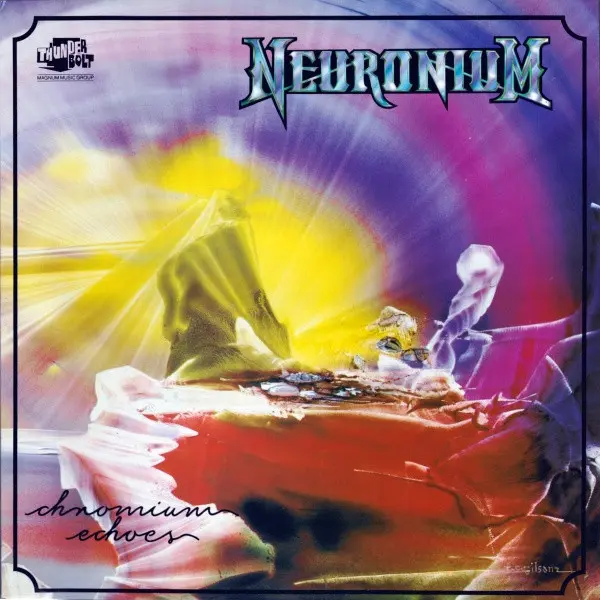 Neuronium released their fifth album, Chromium Echoes, in 1982 on Neuronium Records.
The album contains three Huygen–Guirao pieces, with “Prelude” and the title track on side A and “The Neutron Age” across side B, performed with synthesizers, vocoder, sequencers, acoustic guitar, rhythm-computer patterns, and Pearl Syncussion. Vocalists José Mena and Miguel Guillamat appear during the side-B piece.
Chromium Echoes compresses the format into one short prelude and two extended electronic pieces. “Prelude” circles a repeated keyboard figure over acoustic arpeggio. “Chromium Echoes” begins with distorted voice, then settles into a sequencer base and layered leads. “The Neutron Age” starts in a calmer register, tightens after its opening span, and threads acidic leads through a brief sung passage. The record favors clear episode changes and firm rhythmic motion, with long sustained tone across the transitions.
A1. “Prelude” (4:09)
A2. “Chromium Echoes” (14:18)
B. “The Neutron Age” (18:00)
Neuronium recorded Chromium Echoes during December 1981 at Moraleda Studios in Barcelona with engineer Alberto Moraleda. Huygen and Guirao produced, arranged, and programmed the album, with Moraleda on the mix.
Tomás C. Gilsanz painted the sleeve, and Juan Vila photographed the package. Neuronium Records lifted “Prelude” as a 1982 single (b/w “Rendez-Vous”).
Invisible Views
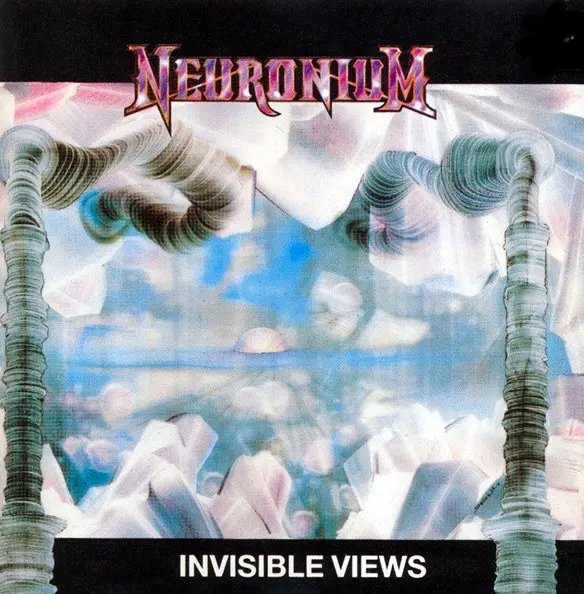 Neuronium released their sixth album, Invisible Views, in 1983 on Edigsa.
The album contains four Huygen compositions performed by Huygen with guitarist Santi Picó and drummer José María Ciria.
Invisible Views shifts toward brighter digital edges, shorter themes, and firmer song-form profiles. “Decision” sets clipped rhythm-machine motion against bright synthesizer phrases and guitar figures. “L’éternelle Renaissance” expands the electronic pattern into a steadier sequence. “Fullness” tightens into a plain-lined theme. “Invisible Views” returns to extended sustained tone, repeated loops, and a restrained closing drift.
A1. “Decision” (5:40)
A2. “L’éternelle Renaissance” [The Eternal Rebirth] (11:02)
B1. “Fullness” (3:50)
B2. “Invisible Views” (14:03)
Huygen recorded Invisible Views during December 1982 at Moraleda Studios in Barcelona with engineer Alberto Moraleda. Huygen produced, arranged, and mixed the album.
Michel Huygen designed the cover package, with painting by Tomás C. Gilsanz and photography by José Mena. Edigsa lifted “Decision” as a 1983 promotional single (b/w “Fullness”).
Heritage
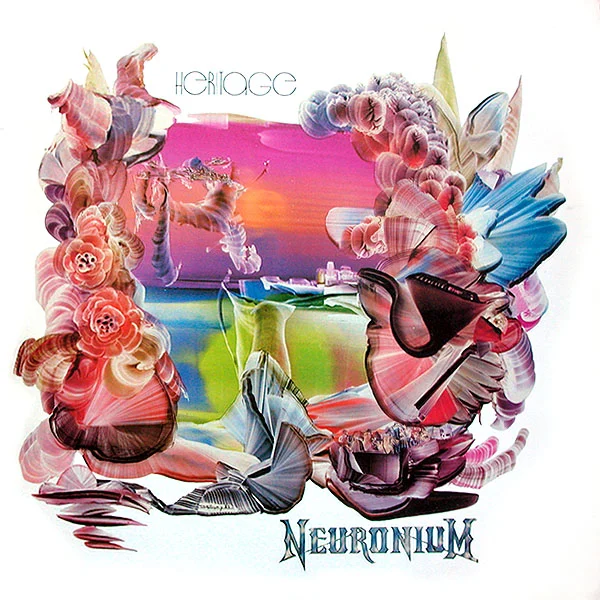 Neuronium released their seventh album, Heritage, in 1985 on Jive.
The album contains four Huygen compositions performed by keyboardist Michel Huygen with guitarist Santi Picó.
“Secret Audience” unfurls from sustained electronic wash into a warmer contoured theme, then turns toward programmed propulsion and a brief electric guitar solo. “Reprisal” winds down the side with upper-register keyboard lines and compact coda motion. “Torquemada” pulses through mid-paced fragments and steady programmed rhythm. “Lethal Dose” opens on quiet chords, holds its low-pressure contour, and settles into a soft-edged close.
A1. “Secret Audience” (18:30)
A2. “Reprisal” (2:35)
B1. “Torquemada” (5:54)
B2. “Lethal Dose” (14:16)
Huygen recorded Heritage in Barcelona during June 1984. Huygen composed, arranged, and produced the album.
Tomás C. Gilsanz painted the sleeve. José Mena photographed the package.
Alma
Neuronium released the anniversary compilation album, Alma, in February 1987 on DRO.
The album contains remixed and remastered Neuronium pieces from Chromium Echoes and Invisible Views, with the previously unreleased “Amigo” added to the sequence. “Prelude” retains Carlos Guirao on synthesizer and acoustic guitar. “Invisible Views” includes guitarist Santi Picó, and “The Neutron Age” includes vocalists Miguel Guillamat and José Mena.
A1. “Prelude” (3:55)
A2. “Invisible Views” (13:51)
B1. “Amigo” [Friend] (3:37)
B2. “The Neutron Age” (17:54)
Huygen remixed, remastered, and edited Alma for the tenth anniversary of Neuronium recordings. Tomás C. Gilsanz created the artwork.
Supranatural
 Neuronium released their ninth album, Supranatural, in October 1987 on DRO.
The album contains five Huygen compositions, with four shorter side-A pieces and the side-long “Sundown at Tanah Lot” on side B. Huygen performs alone with programmed electronic parts.
“When the Goblins Invade Madrid” flickers through short digital-edged effects and brisk pattern changes. “Digitron” cycles a compact electronic motif with brittle signal-like tone. “Priorité Absolue” steadies the record into a longer sequence with spare surface movement. “Europe Is Europe” brightens the same programmed palette with a clearer theme. “Sundown at Tanah Lot” hovers across a long low-variation close, with repeated electronic patterns and gradual dissolves.
A1. “When The Goblins Invade Madrid” (3:35)
A2. “Digitron” (3:55)
A3. “Priorité absolue” [Absolute Priority] (6:43)
A4. “Europe Is Europe” (5:44)
B. “Sundown at Tanah Lot” (17:30)
Huygen recorded Supranatural in Barcelona between December 1986 and March 1987. Huygen completed the final mix in June 1987.
Sonia Sheridan created the portrait design and computer treatment. José Mena painted the cover.
Discography:
- Quasar 2c361 (1977)
- Vuelo Químico (1978)
- Digital Dream (1980)
- The Visitor (1981)
- Chromium Echoes (1982)
- Invisible Views (1983)
- Heritage (1985)
- Alma (1987)
- Supranatural (1987)
- From Madrid to Heaven (1988)
- Numerica (1989)
- Olim (OST, 1990)
- Sybaris (1991)
Sources:
Artist/Album Pages:
Tantra was a Portuguese symphonic-rock band that made the 1977/78 Epic albums Mistérios e ...
Ryo Fukui — 福居良 (June 1, 1948 — March 15, 2016) — was a Japanese hard-bop pianist who cut the 1976...
Tabletom was a Spanish rock band behind the 1980 RCA album Mezclalina, followed by the 1983 Fonodi...
Gloria Mundi was an English art-rock/punk band from London that released two albums on RCA Victor ...
Shanghai was an English hard-rock/blues band that released a self-titled album on Warner Bros. in...
Modern Eon was an English post-punk band from Liverpool that released the 1979 EP Pieces on self-p...
Michael Quatro is an American keyboardist, singer, composer, and arranger from Detroit who releas...
Cedar Walton (Jan. 17, 1934 — Aug. 19, 2013) was an American jazz pianist from Dallas. He played ...
Nancy Wilson (Feb. 20, 1937 — Dec. 13, 2018) was an American soul and jazz singer who released thi...
The Nits are a Dutch art-pop band from Amsterdam, formed in 1974 by vocalist/multi-instrumentalist...
French TV was an American jazz-rock band that self-released a 1984 eponymous album, followed in 1...
Oddelek 8 was a Yugoslav ethno-jazz sextet behind the 1979 album Quartar on Helidon. Members: Be...