

Chicken Shack was an English blues-rock band that released four 1968–70 albums on Blue Horizon, followed by two 1972–73 titles on Deram.
They emerged amid the British blues boom. Guitarist/singer Stan Webb formed the band, joined early on by bassist Andy Sylvester, drummer Dave Bidwell, and keyboardist Christine Perfect. Their 1968 debut 40 Blue Fingers, Freshly Packed and Ready to Serve established their sound: raw, emotive blues rooted with piano/brass arrangements.
Their second album O.K. Ken?, highlighted Perfect’s vocal presence, which drove their cover of Etta James’ “I’d Rather Go Blind” into the UK Top 20. After her departure to Fleetwood Mac, Chicken Shack hired keyboardist Paul Raymond for the 1969/70 album 100 Ton Chicken and Accept, which steered them toward a heavier, more guitar-centric approach.
As Webb became the band’s sole constant member, Chicken Shack morphed from blues purists into a hard-edged trio with the 1972 release Imagination Lady, which embraced wah-wah drenched, proto-metal power blues. The following year’s Unlucky Boy tempered the heaviness with horns and R&B influences, aided by pianist Tony Ashton and saxophonist Chris Mercer.
Webb paused Chicken Shack after 1973 but revived the name in the late Seventies.
Members: Stan Webb (guitar, vocals), Andy Silvester (bass, 1965-71), Alan Morley (drums, 1965-68), Christine Perfect (vocals, piano, 1968-69), Al Sykes (drums, 1968), Hughie Flint (drums, 1968), Dave Bidwell (drums, 1968-71), Paul Raymond (keyboards, 1969-71), John Glascock (bass, 1971-72), Pip Pyle (drums, 1971), Paul Hancox (drums, 1971-72), David Wilkinson (keyboards, 1972-74, 1986-93), Bob Daisley (bass, 1972, 1979-80), Rob Hull (bass, 1972-74), Alan Powell (drums, 1972-74), Dave Winthrop (saxophone, 1976-79, 1986-87, 2008-12), Robbie Blunt (guitar, 1976-79), Ed Spevock (drums, 1976-79), Paul Martinez (bass, 1976-78), Steve York (bass, 1978-79), Paul Butler (guitar, 1979-81), Keef Hartley (drums, 1979-80), Ric Lee (drums, 1980-81), Alan Scott (bass, 1980), Andy Pyle (bass, 1980-86), Miller Anderson (guitar, 1981-86), Russ Alder (drums, 1981-83), Tony Ashton (keyboards, 1981)
Background
Chicken Shack sprung from Sounds of Blue, a Stourbridge R&B group formed in 1964 by bassist Andy Silvester. In 1965, guitarist Stan Webb (b. Feb 3, 1945; Fulham) joined from local rivals The Shades 5. Silvester, Webb, and drummer Alan Morley formed the first lineup, which named itself after the 1963 Blue Note release Back at the Chicken Shack by soul-jazz organist Jimmy Smith.
(Chicken shacks — roadside chicken stands — were mid-century American fixtures referenced in early R&B songs, namely the 1948 Aladdin b-side “Chicken Shack Boogie” by boogie-woogie pianist Amos Milburn.)
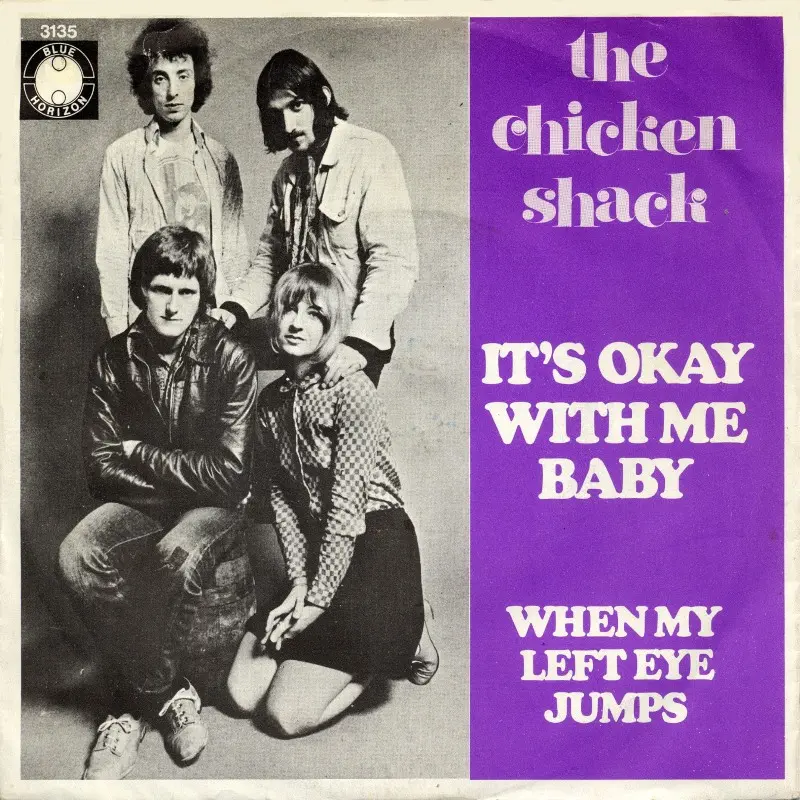 Morley cleared for Bluesbreakers drummer Hughie Flint, who soon left to form McGuinness Flint. In 1967 Chicken Shack stabilized as a four-piece with Webb, Silvester, drummer Dave Bidwell, and keyboardist Christine Perfect. They signed with Blue Horizon, a label established by producer Mike Vernon as a home for the burgeoning British blues-rock movement.
In January 1968, Chicken Shack released their first single: “It’s Okay With Me Baby,” a Perfect original backed with “When My Left Eye Jumps,” a Buddy Guy cover.
A. “It’s Okay With Me Baby”
B. “When My Left Eye Jumps”
40 Blue Fingers, Freshly Packed and Ready to Serve
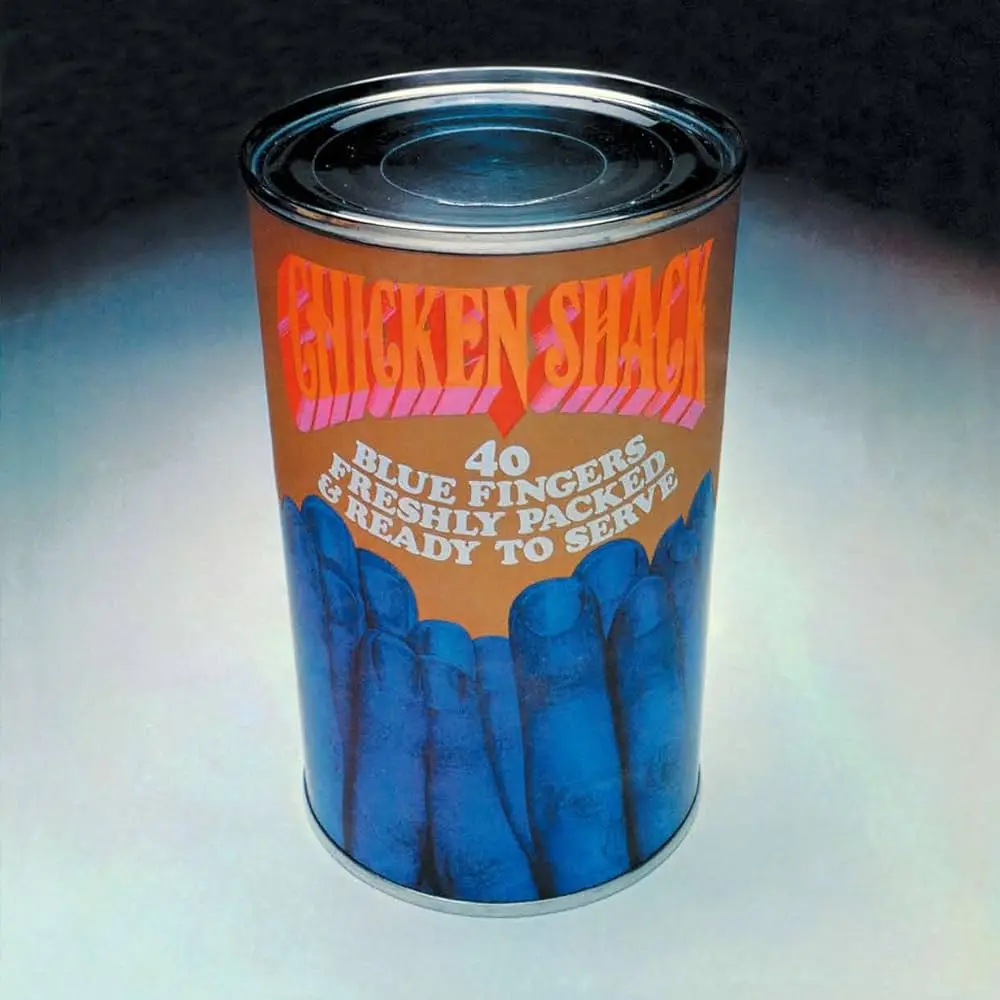 Chicken Shack released their debut album, 40 Blue Fingers, Freshly Packed and Ready to Serve, in June 1968 on Blue Horizon. The title references guitarist Stan Webb’s fleet-fingered prowess.
The album contains two songs each by Webb (“Webbed Feet,” “What You Did Last Night”) and Christine Perfect (“When the Train Comes Back,” “You Ain’t No Good”).
The remaining tracks are blues standards by B.B. King (“The Letter”), Freddie King (“Lonesome Whistle Blues,” “San-Ho-Zay,” “See See Baby”), John Lee Hooker (“King of the World”), and Little Brother Montgomery (“First Time I Met the Blues”).
Webb sang all of his own songs as well as all of the covers, while Perfect took lead vocals only on her own material. 40 Blue Fingers features select backing by trumpeter Alan Ellis and two Bluesbreakers: saxophonists Dick Heckstall-Smith (tenor) and Johnny Almond (alto).
 A1. “The Letter” (4:25) originated as a 1964 Kent Records a-side by Mississippi blues legend B.B. King, co-written by Joe Josea.
A2. “Lonesome Whistle Blues” (3:02) originated as an April 1961 Federal Records side by Texan blues guitarist Freddie King, written by Alan Moore, Elson Teat, and Rudy Toombs.
A3. “When the Train Comes Back” (3:32)
A4. “San-Ho-Zay” (3:02) originated as a July 1961 instrumental b-side by Freddie King, co-written with pianist Sonny Thompson and covered in 1966 by Jr. Walker & The All Stars.
A5. “King of the World” (4:59) is a John Lee Hooker song included on a 1965 live document (The American Folk Blues Festival Live ’65) and covered in 1967 by Dutch blues-rockers Cuby + Blizzards.
B1. “See See Baby” (2:22) was the King/Thompson a-side to their July 1961 Federal single.
B2. “First Time I Met the Blues” (6:24) originated as a 1937 Bluebird side by Louisiana boogie-woogie pianist Eurreal Wilford “Little Brother” Montgomery, covered in 1960 by Buddy Guy.
B3. “Webbed Feet” (2:53)
B4. “You Ain’t No Good” (3:35)
B5. “What You Did Last Night” (4:36)
Mike Vernon produced the sessions, which occurred on February 5–7, 1968, at CBS Studios, London. Mike Ross served as engineer. Terence Ibbott handled photography and design. Vernon handled 40 Blue Fingers in succession with 1968 titles by Fleetwood Mac (Fleetwood Mac, Mr. Wonderful), John Mayall (Bare Wires, Blues from Laurel Canyon, Diary of a Band Vol. 1 & 2), Savoy Brown (Getting to the Point), Eddie Boyd, Johnny Shines, Gordon Smith, and The Web.
Late 1968 Singles
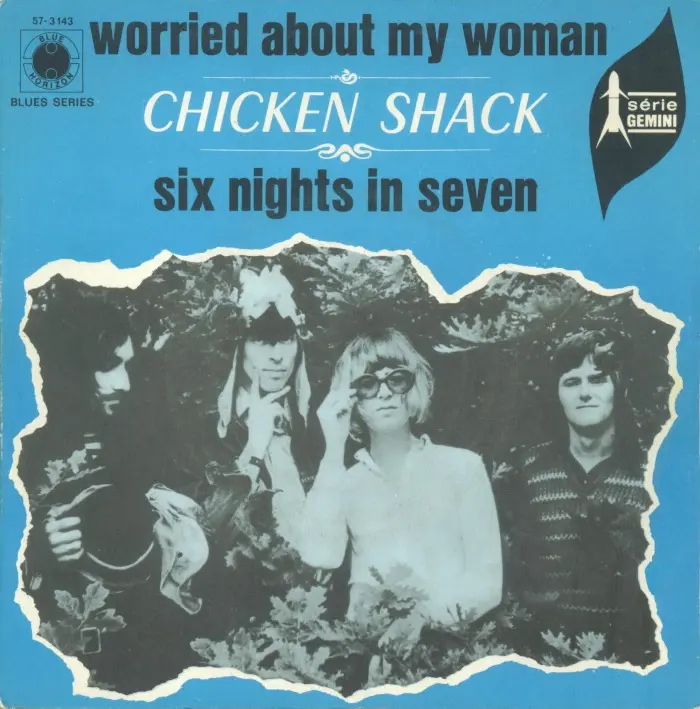 On September 27, 1968, Chicken Shack released their second standalone single: “Worried About My Woman” backed with “Six Nights In Seven,” both Stan Webb originals.
A. “Worried About My Woman”
B. “Six Nights In Seven”
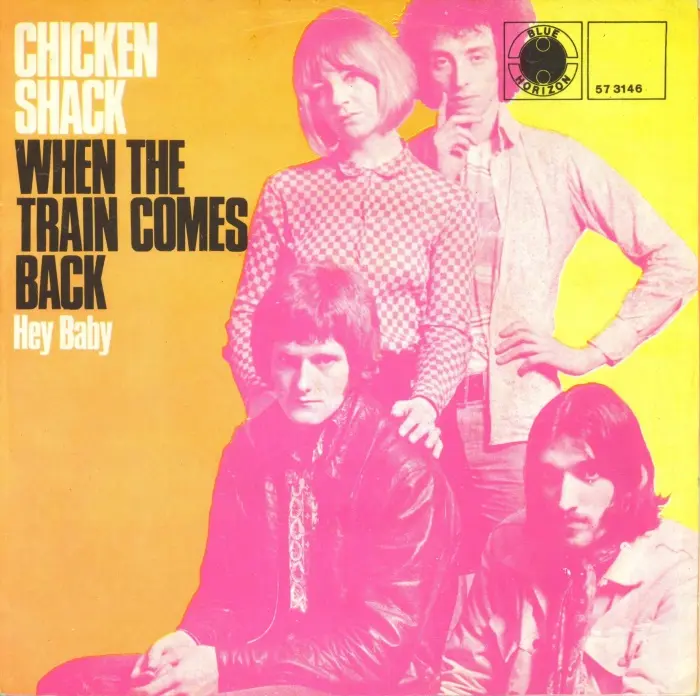
On December 13, Christine’s 40 Blue Fingers contribution “When the Train Comes Back” reappeared as the a-side of “Hey Baby,” a non-album track co-written by Webb and Perfect with Mike Vernon.
A. “When the Train Comes Back”
B. “Hey Baby”
O.K. Ken?
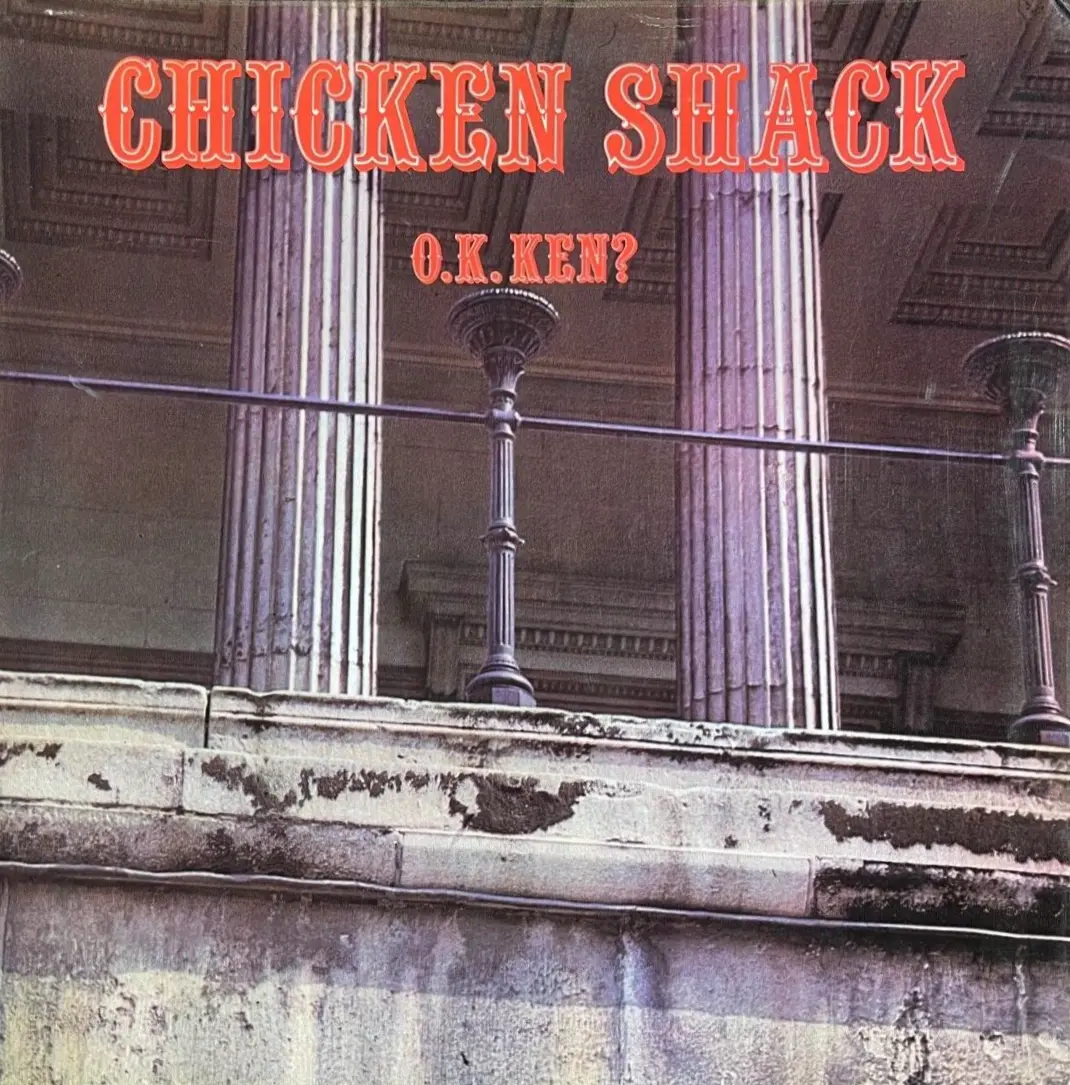 Chicken Shack released their second album, O.K. Ken?, in February 1969 on Blue Horizon.
The album contains five blues covers and six originals. Stan Webb composed the first two tracks, plus “Pony and Trap” and “Fishing in Your River.” He co-wrote “Get Like You Used to Be” and “A Woman Is the Blues” with Christine Perfect.
The covers include one Howlin’ Wold chestnut, two songs from T-Bone Walker’s repertoire, and the lengthy blues ballad “Sweet Sixteen,” a much-covered song with a tangled history.
Webb sang all four of his solo compositions and shared vocals with Perfect on “A Woman Is the Blues.” Perfect sang lead on the Perfect/Webb composition “Get Like You Used to Be” and two of the album’s covers: “I Wanna See My Baby” and “Mean Old World.” The instrumentals “Pony and Trap” and “Remington Ride” highlight the band’s tight interplay.
O.K. Ken? features seven guests, including Delta blues harpist Walter Horton (born 1921) and six hornists, including Johnny Almond and two members of Reading blues-rockers the Amboy Dukes (not the Detroit garage band): saxophonists Steve Gregory (tenor) and Buddy Beadle (alto, baritone)
A1. “Baby’s Got Me Crying” (2:25) opens the album with a strong mid-tempo pattern, punctuated by brass and driven by a heavy rhythm section and expressive lead guitar.
A2. “The Right Way Is My Way” (2:00) continues in a boogie style with prominent horns and a solid rhythmic foundation.
A3. “Get Like You Used to Be” (3:05) is a piano-led blues boogie featuring lead vocals and accompaniment from Christine Perfect, with added sax licks and no guitar.
A4. “Pony and Trap” (3:00) is a slow instrumental built around Webb’s guitar improvisation, paced to evoke the clop of a horse, with Otis Spann-inspired piano backing.
A5. “Tell Me” (4:40) originated as a February 1960 Chess Records side by Delta bluesman Howlin’ Wolf, credited here under his real name Chester Burnette. Chicken Shack’s version is a riff-based electric boogie with a prominent rhythm section and Webb’s dry-toned guitar fills.
A6. “A Woman Is the Blues” (2:50) moves at an upbeat pace, with alternating vocals by Perfect and Webb and a nuanced, jazz-tinged guitar solo.
B1. “I Wanna See My Baby” (3:30) originated as a live staple by Texas bluesman T-Bone Walker, credited here under his real name Aaron Walker. Chicken Shack’s version is a slow, horn-backed blues with live-in-the-room ambiance and understated guitar work.
B2. “Remington Ride” (2:50) originated as a 1950 King Records instrumental by Western swing banjoist Hank Penny and steel guitarist Herb Remington. Chicken Shack’s version is a fast-paced instrumental that showcases Webb’s dexterity and fluid phrasing on guitar.
B3. “Fishing in Your River” (4:30) blends blues and soul elements with a brass arrangement, plaintive vocals, and a laid-back guitar solo.
B4. “Mean Old World” (3:15) originated as a 1942 recording by T-Bone Walker, co-written with Marl Young but credited here to Chicago blues harpist Marion “Little Walter” Jacobs, who covered the song in 1957. Chicken Shack’s version is a harmonica-laced blues shuffle with Christine Perfect on vocals and subtle instrumental interplay.
B5. “Sweet Sixteen” (6:20) originated as a 1952 Atlantic Records a-side by Joe Turner with Van “Piano Man” Walls and His Orchestra, written by label co-founder Ahmet Ertegun. It entered the blues and rock canons through 1959–61 covers by B.B. King and Chuck Berry (who hit with an earlier original titled “Sweet Little Sixteen”). O.K. Ken? gives erroneous songwriting credits to Riley (B.B.) King and Joe Josea. Chicken Shack render “Sweet Sixteen” as a slow blues with dynamic ensemble playing and expressive vocals and guitar from Webb.
Mike Vernon produced the album from sessions held on June 24 and October 22–23, 1968, at CBS Studios, London. Mike Ross served as engineer and Terence Ibbott handled photography and design. Vernon followed O.K. Ken? with 1969 titles by Otis Spann (The Biggest Thing Since Colossus), Savoy Brown (Blue Matter, A Step Further), Sunnyland Slim (Midnight Jump), Martha Veléz (Fiends and Angels), and Dana Gillespie (Box of Surprises), as well as multiple releases by Fleetwood Mac (English Rose, Blues Jam in Chicago, Pious Bird of Good Omen) and John Mayall (Looking Back).
O.K. Ken? reached No. 9 on the UK Albums Chart. Meanwhile, Chicken Shack reissued “When the Train Comes Back” from the first album with overdubbed horns. The new single (Blue Horizon 57-3146), backed with the O.K. Ken? outtake “Hey Baby,” features Christine Perfect on lead vocals and piano on both sides.
B. “Hey Baby”
When Christine joined Fleetwood Mac, “Get Like You Used to Be” became a staple of their 1970–75 setlist through lineups with guitarists Peter Green, Danny Kirwan, Jeremy Spencer, Bob Welch, Bob Weston, and Lindsey Buckingham.
“I’d Rather Go Blind” and Christine Perfect’s Departure
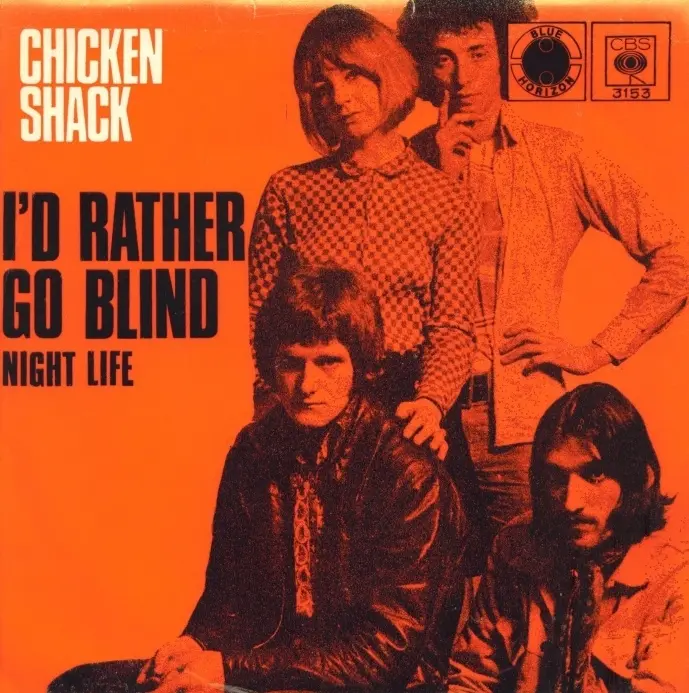 On April 18, 1969, Chicken Shack released a non-album single version of “I’d Rather Go Blind” (b/w “Night Life”), a slow-burning soul-blues ballad originally recorded in 1967 by Etta James and co-credited to Ellington Jordan and Billy Foster. James had composed the piece while visiting Jordan in prison and recorded it at Muscle Shoals’ FAME Studios, issuing the song as the B-side to her 1968 R&B hit “Tell Mama.”
Chicken Shack’s version featured Christine Perfect on piano and lead vocals. The band cut the track out of concern that their success on the album charts (with 40 Blue Fingers and O.K. Ken?) wouldn’t sustain without a radio-friendly single. Their rendition reached the UK Singles Chart and earned Perfect the Top Female Singer award in Melody Maker’s 1969 Readers Poll.
The Chicken Shack version of “I’d Rather Go Blind” also appeared on Perfect’s lone solo album for Blue Horizon, Christine Perfect, released shortly after her departure from the band.
The B-side, “Night Life,” is a Willie Nelson composition inspired by his late-night drives between Pasadena and Houston, Texas. Originally recorded under a pseudonym in 1960 due to label disputes, the song gained prominence through Ray Price’s 1963 cover, which became a country hit. Chicken Shack’s version retains the song’s weary, late-hour sentiment, with Christine Perfect handling lead vocals over a mellow, blues-inflected arrangement.
By the time the single gained traction, Perfect had already resolved to leave Chicken Shack and retire from music. She had quietly married Fleetwood Mac bassist John McVie and wanted to avoid life on the road in a separate band. Her departure followed the overdubbed single release of “When the Train Comes Back” and preceded the 1970 Fleetwood Mac LP Kiln House, on which she sang backing vocals and played uncredited piano.
Fleetwood Mac had long been admired by Perfect, who crossed paths with them frequently during Blue Horizon tours. She previously contributed piano to select tracks on their 1968 release Mr. Wonderful. Her admiration for Peter Green-era Mac and familiarity with their material made her an ideal fit. In 1970, following Green’s exit, the band invited her to join as a full-time keyboardist and co-vocalist. Her first credited appearance with the group came on their 1971 album Future Games.
Meanwhile, Chicken Shack continued with Paul Raymond, the keyboardist/singer of Plastic Penny, a pop-psych band with guitarist Mick Grabham (future Cochise, Procol Harum) and drummer Nigel Olsson (later of the Elton John Band). Raymond played on their 1968 album, Two Sides of a Penny.
100 Ton Chicken
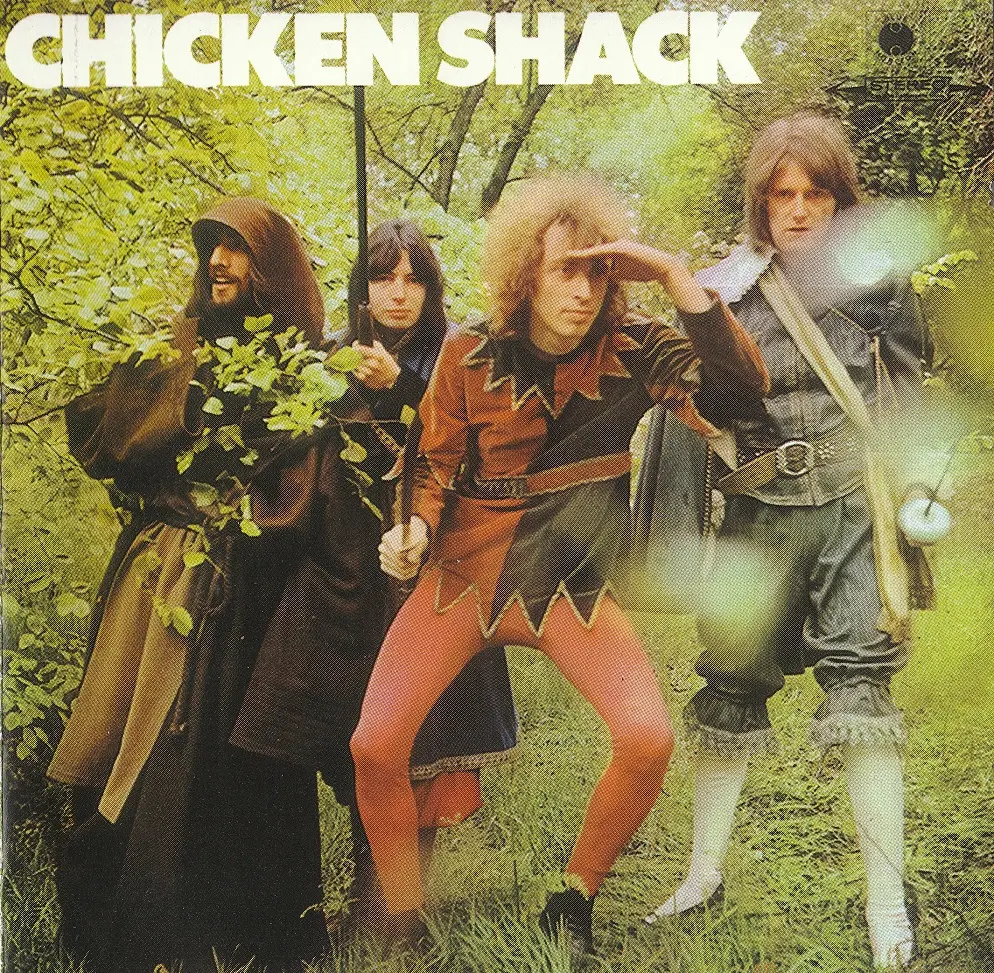 Chicken Shack released their third album, 100 Ton Chicken, on October 19, 1969, on Blue Horizon.
This was their first album with keyboardist Paul Raymond, who replaced Christine Perfect following her departure for Fleetwood Mac. Raymond sings lead on two tracks and contributes organ and electric piano throughout.
The album contains six originals by Stan Webb and six covers spanning the repertoires of Clarence Carter, Lowell Fulson, Clarence “Gatemouth” Brown, and Davy Graham. Chicken Shack also revived two lesser-known numbers associated with Freddy King and T-Bone Walker.
Webb sings lead on all of his originals and most of the covers. Raymond sings lead on “Look Ma, I’m Cryin’” and “Weekend Love.” Instrumentally, the band explores a heavier, more rhythmic blend of blues-rock and R&B, with occasional funk, swing, and acoustic folk flourishes.
A1. “The Road of Love” (3:30) originated as a 1967 single by Alabama soul singer Clarence Carter. Chicken Shack’s version is a brassy mid-tempo pattern with driving rhythm guitar and full-band punch.
A2. “Look Ma, I’m Cryin’” (3:25), first recorded by Freddy King in 1963, is rendered here as a slow-burning electric blues shuffle with organ lead and soulful vocals by Paul Raymond.
A3. “Evelyn” (4:18) is a mid-tempo minor-key original that builds on moody sustained guitar lines and swirling organ tones.
A4. “Reconsider Baby” (3:25) originated as a 1954 West Coast blues classic by Lowell Fulson. Chicken Shack deliver a smooth, swinging rendition with crisp guitar leads and a laid-back vocal.
A5. “Weekend Love” (2:14), another Clarence Carter number, is a perky soul-blues track led by Raymond’s playful vocal and electric piano licks.
 B1. “Midnight Hour” (2:55), a 1954 instrumental by Texas bluesman Clarence “Gatemouth” Brown, is revived here as a taut, horn-tinged shuffle with biting guitar work.
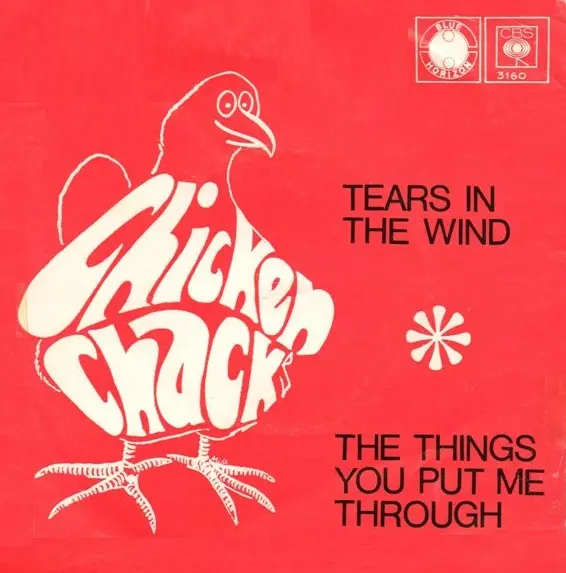
B2. “Tears in the Wind” (2:45) is a Webb original that blends somber vocal lines with wistful guitar and organ textures in a minor-blues ballad style.
B3. “Horse and Cart” (3:36) is a bouncy R&B original with staccato guitar chords and rhythmic organ bursts.
B4. “The Way It Is” (4:29) offers a slow 12-bar blues progression with anguished vocals and expressive guitar phrasing.
B5. “Still Worried About My Woman” (3:12) is a hard-hitting electric blues number with driving rhythm and taut, clipped guitar fills.
B6. “Anji” (1:39), composed in 1961 by British folk guitarist Davy Graham, is a brief fingerstyle acoustic piece performed solo by Stan Webb in homage to Graham’s influential folk-blues style.
100 Ton Chicken was produced by Mike Vernon from sessions held at CBS Studios, London, with Mike Ross as engineer. Vernon also played finger cymbals on “Weekend Love.” Terence Ibbott handled photography and design.
Unlike its two predecessors, 100 Ton Chicken did not chart in the UK. Several outtakes from the sessions later appeared on The Complete Blue Horizon Sessions, including “Smartest Girl in the World,” “Hideaway,” and “The Things You Put Me Through,” the latter first issued in August 1969 as the B-side of the album’s advance single, “Tears in the Wind.”
B. “The Things You Put Me Through” S. Webb
Accept
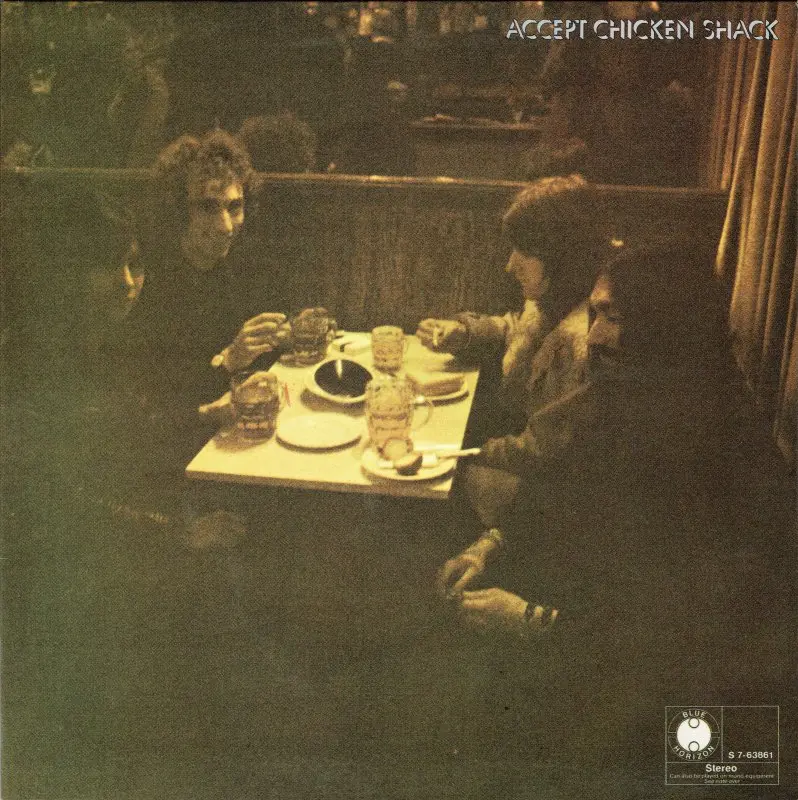 Chicken Shack released their fourth album, Accept, on June 12, 1970, on Blue Horizon.
In place of their earlier brass-laced blues-boogie, Accept broadens into folk-rock, hard rock, and mild psychedelia, with a looser, after-hours atmosphere and multiple song sketches. Paul Raymond takes a larger role here, writing or co-writing eight of the thirteen tracks and handling all organ and piano parts.
Stan Webb composed four tracks and co-wrote a fifth with Raymond. Raymond composed six and co-wrote one with second vocalist Alison Young. The lone outside piece is “Maudie,” a rock ‘n’ roll throwback by American songwriters T. Thompson and J. Becker, issued ahead of the album as a single (b/w “Andalucian Blues”). Accept also includes one brief gag track: the two-second closer “Apple Tart.”
A1. “Diary of Your Life” (4:20) opens with a searing, fuzz-toned riff that reasserts Webb’s guitar authority in a heavy mid-tempo shuffle with distorted leads and organ fills.
A2. “Pocket” (3:22) is a driving, stomping rocker with tense rhythm guitar and a Leslie-toned organ, sung by Raymond in a clenched, sardonic tone.
A3. “Never Ever” (2:30) downshifts into a slow electric blues with anguished vocals and melodic guitar figures.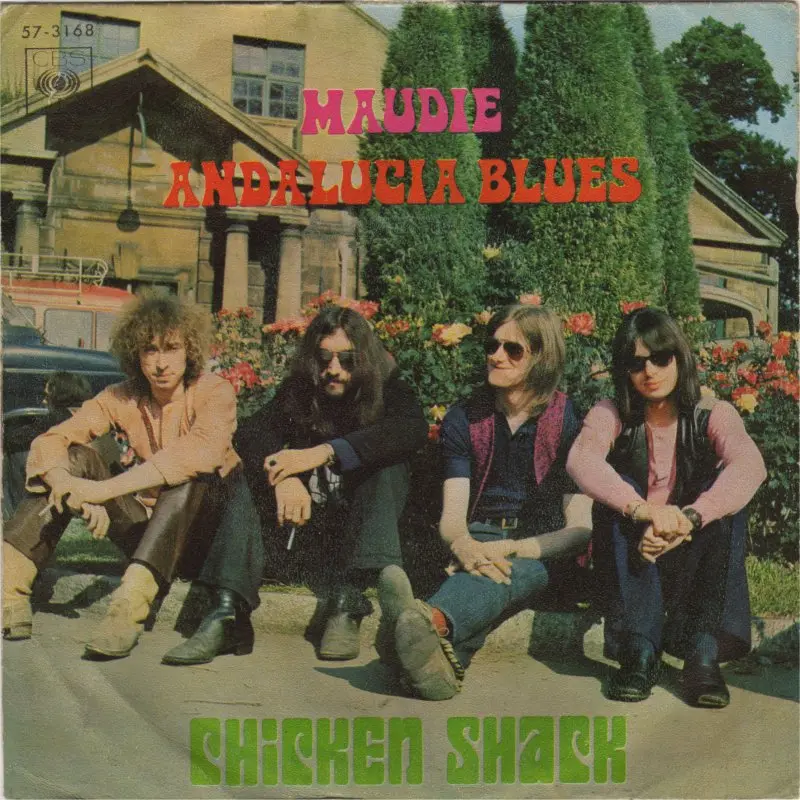 A4. “Sad Clown” (2:40) is a melancholy piano-based instrumental with wistful chord progressions and delicate phrasing, evoking a silent-film aura.
A5. “Maudie” (2:50) jumps with a swampy Creedence-style rhythm and grainy slide guitar over a shuffling backbeat.
A6. “Telling Your Fortune” (3:05) sets bluesy vocals against a kinetic riff and swirling organ work with offbeat rhythmic breaks.
B1. “Tired Eyes” (2:03) is a reflective, minor-key piano ballad with a faintly hymnal feel and tremolo guitar lines.
B2. “Some Other Time” (3:00), with guest vocals by Alison Young, is a harmony-laced duet with airy organ and a lyrical chorus.
B3. “Going Round” (2:40) returns to gritty blues rock territory with thick rhythm chords and a swaggering vocal.
B4. “Andalucian Blues” (2:10) is a flamenco-inspired acoustic instrumental with intricate picking patterns and Iberian folk phrasing—an outlier in the Chicken Shack catalog.
B5. “You Knew You Did You Did” (2:20) plays like a raw garage rocker with clipped rhythm guitar and mocking vocals.
B6. “She Didn’t Use Her Loaf” (3:10) features punchy riffs and comical, taunting lyrics set to a pub-rock stomp.
B7. “Apple Tart” (0:02) ends the album with a two-second outburst: an irreverent nod to the album’s whimsical leanings.
 Mike Vernon produced Accept from sessions held between December 1, 1969, and March 11, 1970, at CBS Studios (New Bond Street) and Recorded Sound Studios (Bryanston Street), London. Mike Ross engineered the bulk of the tracks, with Mike Bobak overseeing “Maudie” and “Andalucian Blues.” Terry Noonan arranged and directed the chamber-like backing on “Tired Eyes” and “Some Other Time.”
Accept marks the final appearance of longtime bassist Andy Sylvester, drummer Dave Bidwell, and keyboardist Paul Raymond. It also concludes the band’s four-album run on Blue Horizon. Six years after its release, the German hard rock band Accept took their name from this album.
“Maudie” first appeared on January 16, 1970, as an advance single (b/w “Andalucian Blues”). Blue Horizon promoted the album’s release with “Sad Clown” (b/w “Tired Eyes”).
Imagination Lady
 Chicken Shack released their fifth album, Imagination Lady, on February 2, 1972, on Deram. It features four Stan Webb originals and covers of blues chestnuts by Don Nix (“Going Down”), Tim Hardin (“If I Were a Carpenter”), and Tampa Red (“Crying Won’t Help You Now”).
The album introduced a new power trio lineup with bassist John Glascock and drummer Paul Hancox joining founding guitarist–vocalist Stan Webb. In contrast to the blues-boogie of prior releases, Imagination Lady shifts to a heavier, more guitar-centric sound—mixing wah-drenched hard rock, aggressive blues, and moments of folk introspection. Webb supplied four original compositions and selected three covers that showcase his reverence for both traditional blues and American singer-songwriters.
Webb handled vocals and guitar on all seven tracks. Glascock, formerly of The Gods and Toe Fat, provides solid and at times storming basslines, while Hancox anchors the trio with responsive, jazz-inflected drumming.
A1. “Crying Won’t Help You Now” (5:10), originally by Tampa Red and popularized by B.B. King, opens the album with thick, fuzzy guitar tones and crashing drums. Chicken Shack’s version is raw and ferocious, anchored by Glascock’s slamming bass and Webb’s anguished vocals.
A2. “Daughter of the Hillside” (3:53) is a tense, hard-driving original with forceful riffing and a galloping rhythm. Webb’s impassioned vocal delivery heightens the song’s dramatic energy.
A3. “If I Were a Carpenter” (6:35), written by folk troubadour Tim Hardin, is reimagined as a sweeping blues-rock ballad. The song alternates between soft, syncopated verses and explosive choruses with soaring guitar leads.
A4. “Going Down” (3:33), a 1969 song by Memphis rocker Don Nix (first recorded by Moloch), is delivered in high-octane fashion, with Webb’s jagged leads and the trio’s relentless drive.
B1. “Poor Boy” (5:11) is a mournful slow blues with wide vibrato and extended vocal phrasing, underpinned by Glascock’s cavernous bass and restrained, echoing cymbals.
B2. “Telling Your Fortune” (11:11) expands a two-chord vamp into an extended jam, with dynamic shifts between solo showcases for guitar and drums. Hancox’s energetic fills and Webb’s expressive soloing build a hypnotic tension across its length.
B3. “The Loser” (2:32) closes the album with an unexpectedly breezy pop-blues feel, built on a bright melody and upbeat rhythm—underscoring the trio’s versatility.
Neil Slaven produced Imagination Lady for Gruggy Woof Productions from sessions held in October 1971 at Olympic Studios, London. George Chkiantz engineered the recordings. Brian Ward provided inner photography, and David Anstey illustrated the surrealist cover painting.
Imagination Lady became the sole release with this lineup. Glascock departed soon after and later joined Carmen and Jethro Tull. Over time, the album gained cult status for its heavy blues-rock aesthetic and raw trio interplay, often compared to contemporaries like Mountain, Leaf Hound, and early Led Zeppelin.
Unlucky Boy
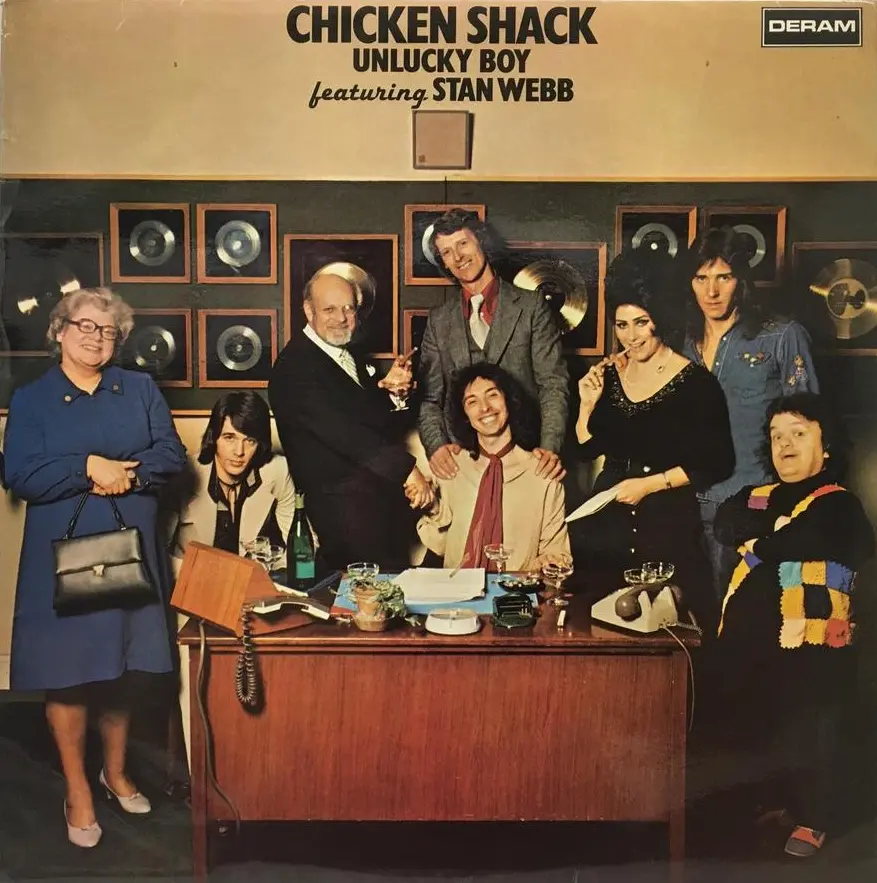 Chicken Shack released their sixth album, Unlucky Boy, in July 1973 on Deram.
The album marked a new stylistic turn as Stan Webb retained drummer Paul Hancox and brought in bassist Bob Daisley (ex-Kahvas Jute)., later of Rainbow, Widowmaker, and Ozzy Osbourne’s band). Saxophonist Chris Mercer and pianist Tony Ashton (of Ashton, Gardner & Dyke) appear throughout the album, adding an R&B character that contrasted sharply with the heavy power-trio format of Imagination Lady. Neil Slaven returned as producer, and the string arrangements on one track were handled by Terry Noonan.
Webb wrote six of the nine songs and continued to lean into American blues and rhythm and blues for inspiration. As with prior albums, he balanced gritty originals with selective covers, this time drawing from Big Mama Thornton, Lonnie Johnson, and Jimmy McCracklin.
A1. “You Know You Could Be Right” (3:47) opens with stabbing chords and syncopated riffs that shift between menace and swagger. Mercer’s doubled sax tracks create a faux horn section above Webb’s clipped phrasing.
A2. “Revelation” (5:13) follows with a slow-burning pace and features a string arrangement by Noonan and a violin solo by Nick Pickett. The track broods with late-night atmosphere and smolders with restrained emotion.
A3. “Prudence’s Party” (3:14) is a brisk instrumental built on sharp guitar figures and upbeat momentum, showcasing Webb’s concise, melodic soloing.
A4. “Too Late to Cry” (3:10), by early blues pioneer Lonnie Johnson, is rendered with subdued brushwork, soft rhythm, and minimalistic guitar.
A5. “Stan the Man” (4:25) closes the side with a mid-tempo jam featuring Ashton’s rollicking piano runs and Webb’s dry, cutting licks.
B1. “Unlucky Boy” (2:34), written by Big Mama Thornton and Champion Jack Dupree, is a compact blues shuffle delivered with tight interplay between sax, keys, and rhythm section.
B2. “As Time Goes Passing By” (4:46) reintroduces the string section for a melancholic ballad over a descending chord progression.
B3. “Jammin’ With the Ash” (7:04) lives up to its title—a drawn-out figure where Webb and Ashton trade leads over a locked-in rhythm bed.
B4. “He Knows the Rules” (4:05), originally by West Coast bluesman Jimmy McCracklin, closes the album with swinging rhythm, snappy sax punctuation, and Webb’s growling guitar tone.
Unlucky Boy was recorded between Olympic and Island Studios, with engineering by Anton Matthews (Olympic) and John Burns (Island, also remix). David Wedgbury took the album photography.
Though less explosive than its predecessor, Unlucky Boy brought a looser, R&B-leaning spirit to the band’s sound, aided by the presence of seasoned guests and Webb’s more focused songwriting. The album would be the last under the Chicken Shack name for several years, as Webb shifted to other projects before reviving the name later in the decade. Daisley did subsequent stints in Rainbow, Widowmaker, and Ozzy Osbourne’s band.
Discography:
- 40 Blue Fingers, Freshly Packed and Ready to Serve (1968)
- O.K. Ken? (1969)
- 100 Ton Chicken (1969)
- Accept (1970)
- Imagination Lady (1972)
- Unlucky Boy (1973)
- Go Live [aka Goodbye Chicken Shack] (live, 1974)
- The Creeper (1978 • Stan Webb’s Chicken Shack)
- That’s the Way We Are (1979)
- Roadies Concerto (live, 1981)
- 39 Bars (1986)
Sources:
Artist/Album Pages:
Dogfeet were an English hard-rock/psych band from Shrewsbury, Shropshire, that released a self-tit...
Siloah was a German ethno-folk/psych band that self-issued a 1971 eponymous album, followed by the...
Andromeda was a German organ-rock/psych band that released a self-titled album on Vogue in 1970. ...
Leon Ware (1940–2017) was an American R&B singer, songwriter, and producer who released a 1972...
Nolan Porter (1949–2021) was an American soul singer from Los Angeles who released the 1971/72 al...
Saxon are an English hard-rock/metal band that released six albums and a live disc between 1979 an...
Blitzkrieg was an English metal band that first emerged with the 1981 NWOBHM single "Buried Alive....
Blue Sun were a Danish band from Copenhagen that debuted with the live album Peace Be Unto You on...
Hudson-Ford were an English pop-rock band that released three albums on A&M between 1973 and 1...
Carla Bley (May 11, 1936 – October 17, 2023) was an American jazz pianist and composer who appeare...
The Planets was an English new wave band that released the 1979–80 Rialto albums Goon Hilly Down and...
The Doors were an American rock band that released six studio albums between 1967 and 1971 on Ele...