

Crawler was an English/American hard-rock band that evolved from Back Street Crawler after the death of guitarist Paul Kossoff. Under the scalloped name, they made the 1977/78 Epic albums Crawler and Snake, Rattle & Roll.
Members: Terry Wilson-Slesser (vocals, bass), Mike Montgomery (keyboards), Tony Braunagel (drums), John “Rabbit” Bundrick (keyboards), Geoff Whitehorn (guitar)
Background
Crawler came out of Back Street Crawler, a transatlantic band headed by ex-Free guitarist Paul Kossoff. That band (named after his 1973 solo album) made the 1975/76 ATCO albums The Band Plays On and 2nd Street. The latter appeared three months after Kossoff’s death on March 19, 1976, from a pulmonary embolism.
Back Street Crawler featured Tyneside singer Terry Slesser (ex-Beckett) and three members of American hard-rockers Bloontz: bassist Terry Wilson, keyboardist Mike Montgomery, and drummer Tony Braunagel. On 2nd Street, they welcomed American keyboardist John “Rabbit” Bundrick, who first partnered with Kossoff on the 1972 album , cut between Free’s two active phases. He joined the reconstituted Free and played a prominent role on their 1973 swan song Heartbreaker.
In the aftermath of Kossoff’s passing, the surviving 2nd Street lineup hired English guitarist Geoff Whitehorn, a late-period If member who backed assorted folkies (Richard Diggance, Gay & Terry Wood) and cut a 1974 solo album, Whitehorn, for the Dutch Pink Elephant label. The reconstituted band shortened their name to Crawler, which acknowledged their new composition and slotted among the era’s mononymic hard-rock monikers (Avalanche, Bandit, Boxer, Bullfrog, Derringer, Detective, Driver, Flame, Geeza, Moxy, Mustang, Nutz, Ocean, Quartz, Stretch, Totty).
Crawler
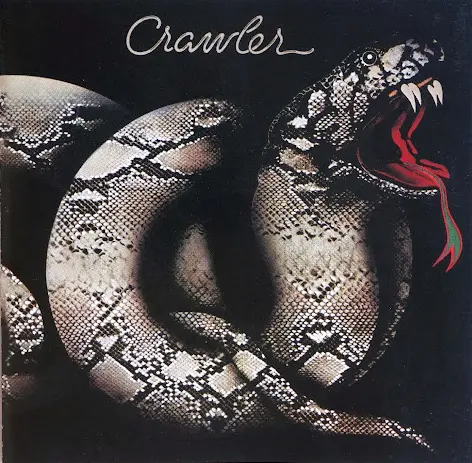 Crawler released their self-titled debut album in August 1977 on Epic.
The album keeps one foot in late-period Back Street Crawler and pushes the rest toward a tighter, more American hard-rock shape. Geoff Whitehorn cuts across the center with sharp, blues-bent guitar lines, John “Rabbit” Bundrick fills the spaces with organ and piano, and Terry Wilson plus Tony Braunagel hold a firm backbone. Terry Slesser commands throughout with rough, assured phrasing that suits the band’s compact, mid-tempo attack as well as its slower, heavier turns.
“Without You Babe” opens the album on a lurching pulse with raunchy guitar figures and vocals that lean hard into the refrain. “You Got Money” syncopates amid Leslied licks and swelling Hammond breaks, while “Sold on Down the Line” rides a straighter boogie pull with thicker rhythm-guitar emphasis. “One Too Many Lovers” takes funky turns with clipped rhythmic contours and soulful backing interjections. They slow down for “You Are My Saviour,” a spiritual ballad with gospel restraint. Side B shifts toward darker weight through “Pastime Dreamer,” “Never Loved a Woman,” and “You and Me.” “Stone Cold Sober” closes the album in a slower, heavier stretch, with Bundrick’s keyboards and Whitehorn’s guitar pushing the arrangement toward a broader, more open finish.
A1. “Without You Babe” (3:29) — Wilson
A2. “You Got Money” (3:30) — Bundrick
A3. “Sold on Down the Line” (3:48) — Wilson, Braunagel
A4. “One Too Many Lovers” (3:59) — Whitehorn, Rutherford
A5. “You Are My Saviour” (4:47) — Bundrick
B1. “Pastime Dreamer” (4:33) — Wilson
B2. “Never Loved a Woman” (4:12) — Wilson
B3. “You and Me” (4:03) — Bundrick
B4. “Stone Cold Sober” (5:33) — Bundrick
Crawler recorded the album with co-producer Alan Callan and engineers Graeme Meek, Guy Bidmead, Phil Brown, and Rhett Davies. Gary Lyons handled the remix. Future Night singer Stevie Lange appears as a backing vocalist. Crawler also features guest musicianship by saxophonist Lord Ted Bunting, percussionist Tony Carr, and former Traffic reedist Chris Wood, whose flute imparts Barleycorn touches on the spacious numbers.
Crawler features cover art by Polish illustrator Roslav Szaybo, whose coiled snake creation served as the group’s mascot and appeared on a limited-edition US picture-disc version. Szaybo’s art also graces mid-Seventies releases by Jet, Moon, Argent, Lone Star, David Essex, Russ Ballard, Mott the Hoople, and Starry Eyed and Laughing.
Epic UK issued “Stone Cold Sober” as a July 1977 single (b/w “Sold on Down the Line”), which ultimately gained medium-rotation on American FM radio after its stateside release that autumn. In the US, Epic lifted “Without You Babe” as a winter single (b/w “You Are My Saviour”).
Snake, Rattle & Roll
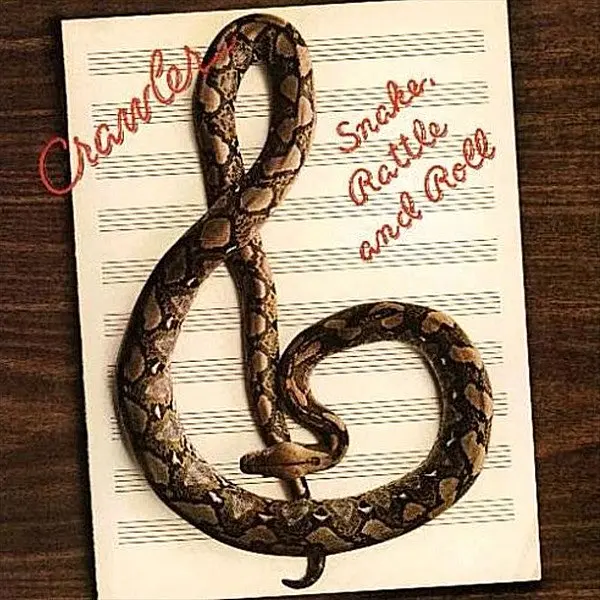 Crawler released their second album, Snake, Rattle & Roll, in September 1978 on Epic. The album’s title, in line with their snake mascot, puns the 1954 Bill Haley & The Comets classic “Shake Rattle and Roll,” the world’s first major rock hit.
Snake, Rattle & Roll trims the sound down to the working quintet and tightens the writing into shorter, cleaner song forms. Whitehorn keeps the guitar attack lean and pointed, Bundrick answers with piano, organ, and accordion, and Wilson plus Braunagel drive the material with a firmer pulse than the debut. The playing still carries blues weight, but the arrangements cut faster and cleaner, with less decorative studio traffic around the band.
“Sail On” opens on a compact, rolling stride and sets the album’s cleaner surface at once. “Disc Heroes” and “First Class Operator” push the pace with sharper rhythmic edges, while “How Will You Break My Heart” and “Where Is the Money?” bring Whitehorn’s guitar closer to the center. “Muddy Water” and “Liar” keep the band in a hard, clipped mid-tempo lane, “Hold On” passes quickly as a brief connective piece, and “Midnight Blues” plus “One Way Street” let the group stretch into a heavier late-album close.
A1. “Sail On” (3:59) — Bundrick
A2. “Disc Heroes” (3:17) — T. Wilson, Braunagel
A3. “How Will You Break My Heart” (3:47) — Rutherford, Whitehorn
A4. “Muddy Water” (4:07) — Bundrick
A5. “First Class Operator” (3:20) — Bundrick
B1. “Where Is the Money?” (4:18) — Rutherford, Whitehorn
B2. “Hold On” (1:44) — Bundrick
B3. “Midnight Blues” (4:18) — T. Wilson
B4. “Liar” (3:42) — Bundrick
B5. “One Way Street” (4:46) — Bundrick
Crawler recorded the album at Caribou Ranch with producer-engineer Gary Lyons. Phil Bonanno and Gino Giogini assisted on the sessions, Chicago Recording Company handled the mix, and George Marino mastered the album at Sterling Sound.
Photographer Bud Endress and designer Paula Scher created the cover, which follows the titular snake theme predicated by Szaybo’s earlier artwork.
Epic promoted Snake, Rattle & Roll with a Hollywood billboard ad on the Sunset Strip. “How Will You Break My Heart” became a transatlantic autumn single (b/w “Hold On”), followed with “Sail On” (b/w “Disc Heroes”).
Crawler Live
Epic issued Crawler Live in 1978 as a US-only promo release in the E/P/A Live Concert Series. The album documents the band at My Father’s Place and focuses mostly on material from the debut, with “Keep On Running” and “Worn Out Dream” extending the live set beyond the studio LP. The performances keep the songs leaner and rougher than the album versions, with longer stretches in “You and Me” and “Stone Cold Sober.” Frank Rand and Rick Swig recorded and edited the set.
A1. “Without You Babe” (3:35) — T. Wilson
A2. “You Got Money” (3:28) — J. Bundrick
A3. “Keep On Running” (5:01) — J. Bundrick
A4. “You and Me” (5:59) — J. Bundrick
B1. “Pastime Dreamer” (4:15) — J. Bundrick
B2. “Sold on Down the Line” (4:18) — T. Wilson, T. Braunagel
B3. “Worn Out Dream” (3:43) — T. Wilson
B4. “Stone Cold Sober” (7:07) — J. Bundrick
Postlude
John “Rabbit” Bundrick almost played on the 1978 Who album Who Are You, but broke his arm while en rout to the studio. His association stemmed from work on Rough Mix, the 1977 collaborative album between Pete Townshend and ex-Faces bassist Ronnie Lane. Bundrick ultimately served as a live Who fifth wheel, starting with their 1979 tour that introduced Kenney Jones into the lineup.
Terry Slesser joined Tyneside rockers Geordie in their post-record stretch after their original singer, Brian Johnson, replaced Bon Scott in AC/DC. In 1981, he audition for Paul Di’Anno’s vacated slot in Iron Maiden, who ultimately chose ex-Samson singer Bruce Dickinson. Slesser then joined Charlie for their self-titled seventh album that spawned the 1983 US hit “It’s Inevitable,” which gained MTV rotation with its pie-fight video. He also harmonized with Chris Thompson and producer Robert “Mutt” Lange as part of The Leopardettes, the studio backing singers on the blockbuster third Def Leppard album Pyromania.
Geoff Whitehorn joined the backing band of ex-Family/Streetwalkers singer Roger Chapman. He also played on early Eighties albums by Billy Ocean, Elkie Brooks, Gerald Masters, Marsha Hines, and Manfred Mann’s Earth Band.
Discography:
- Crawler (1977)
- Snake, Rattle & Roll (1978)
Sources:
Artist/Album Pages:
Ripple was an American funk band that made a 1973 self-titled album on GRC, followed by the 1977 S...
Augustus “Gussie” Clarke (born March 26, 1954) is a Jamaican reggae producer and sound engineer wh...
Barbara Mason is an American soul singer and songwriter, best known for her 1965 hit "Yes, I'm Rea...
Atlantide was an Italian hard-rock band that released the 1976 album Francesco ti Ricordi on self-...
Richard Schneider Jr. is a German space-rock musician behind the 1977–80 albums Dreamlike Land and...
Joe Cocker (May 20, 1944 — Dec. 22, 2014) was an English soul-rock singer from Sheffield who relea...
Moonkyte was an English folk-psych band from West Yorkshire that released the 1971 album Count Me ...
Fernando Yvosky is a Venezuelan musician, singer, and composer who self-released the 1975 symphoni...
Mike Longo (March 19, 1937 — March 22, 2020) was an American jazz pianist, composer, arranger, and...
Biglietto per l'Inferno was an Italian symphonic-rock band that released a 1974 self-titled album....
The Godfathers are an English rock band that released three albums on Epic between 1988 and 1991. Th...
Klockwerk Orange was an Austrian symphonic-rock band behind the 1974 CBS album Abrakadabra. Memb...
You might want to add that Terry Wilson played bass on these Crawler recordings. He appears In the center of the picture of Crawler. Terry along with drummer Tony Braunagel came over to England from Houston, Texas and joined the band Backstreet Crawler in the mid-seventies. After Paul Kossoff passed, they continued to play and record in the band Crawler.
There’s actually more information on the Back Street Crawler page, linked from here. Both pages are under development.