

Rhésus O was a French jazz-rock/psych band that cut a self-titled 1971 album on Epic. They featured three bassists, including Francis Moze, who played on the 1970/71 albums Magma and 1001° Centigrades by chamber-rock heavyweights Magma.
Members: Serge Lenoir (Bass), Francis Moze (Bass, Acoustic Guitar, Xylophone), Guy Pedersen (Double Bass, Bass), Thierry Blanchard (Drums, Percussion), Jean-Pol Asseline (Electric Piano, Harpsichord), Alain Monier (Organ, Percussion), Alain Hatot (Saxophone, Flute)
Background
Rhésus O sprung from Cigue, a post-psychedelic jazz-rock unit formed by keyboardist Jean-Pol Asseline and drummer Thierry Blanchard. The two jammed initially with bassist Gerard Prevost, who later did stints with ZAO, Forgas, Rahmann, and (Transit Express violinist) David Rose.
They soon welcomed second keyboardist Alain Monier, Prevost’s then bandmate behind French pop singer Frida Boccara. Cigue became five with saxophonist Alain Hatot, a veteran of jazz groups (Claude Cagnasso Big Band, Michel Sardaby Quintet) who also played on albums by Egyptian singer Claude François and Jamaican trumpeter Sonny Grey.
Prevost cleared for Serge Lenoir, their sole bassist during early rehearsals at the seaside home of Monier’s parents at Port Winston in Arromanches, Normandy. The Moniers ran a Paris cellar (across from the Odeon Metro) where the band gave its first performance. After multiple 1970 gigs, their Gibus Club show impressed Claude Delcloo, a CBS soundman and talent scout who drummed for the Full Moon Ensemble and assorted American avant-jazz players (Archie Shepp, Arthur Jones, Clifford Thornton, Dave Burrell) on the French BYG label.
Lenoir (a national service conscriptee) juggled band duties with ex-Zorgones bassist Francis Moze, an emerging sessionist (Gilles Elbaz, Françoise Moreau, Castel & Vendome) who recently played on Magma’s debut album. The newly renamed Rhésus O commenced sessions at the Château d’Hérouville with a seventh member: Guy Pedersen (b. 1930), a veteran jazz double-bassist with numerous Fifties-era credits behind American vibraphonist Lionel Hampton.
Rhésus O (the album)
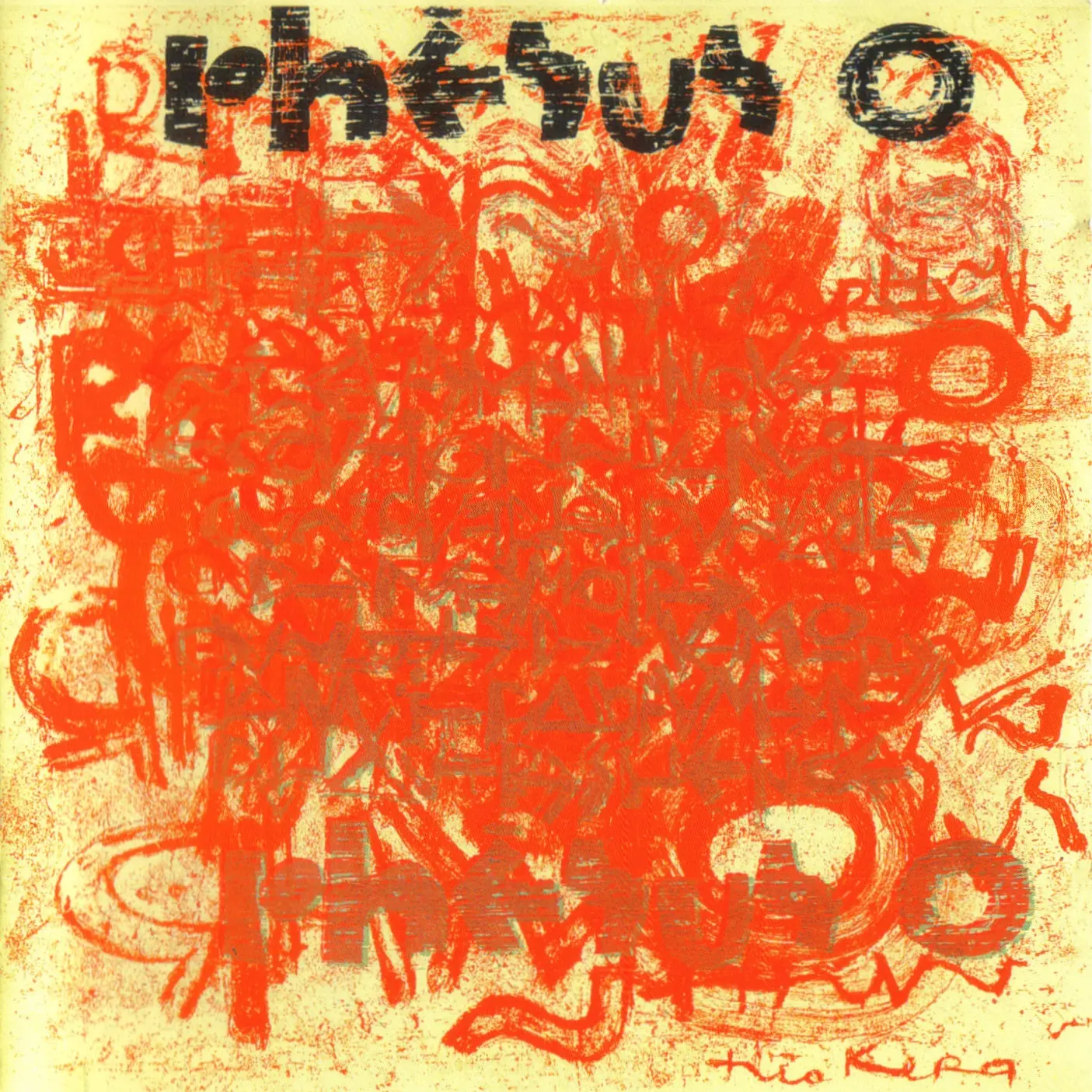 Rhésus O released their self-titled album in September 1971 on Epic. It features nine originals co-composed by Jean-Pol Asseline (electric piano, harpsichord) and Alain Monier (organ, percussion).
Rhésus O showcases Alain Hatot on flute and multi-sax (soprano, tenor, and baritone). Contrabassist Guy Pedersen supplements the electric basswork of Serge Lenoir and Francis Moze, who also plays xylophone and acoustic guitar.
A1. “Cigüe” (2:45) is a mid-tempo jam (primarily in B) with running organ and slithering saxophone, intercut with chromatic free-falls and clean guitar runs.
A2. “Crier Pour Donner” (6:55) opens with a Hammond organ floodgate; soon cleared with faint free-form. Midway, the sax and rhythm section coalesce on a jerky 10/8 pattern (3+3+4) amid running organ sustain. Later (5:30), Hatot cuts loose on soprano against a choppy Fender Rhodes passage.
A3. “Maldonne” (5:35) is a modest allegro (in C#m) with fluid sax that engages a compound bass ostinato (3+3+2) while organ runs in the background. They cut to a jerky 5/4 sequence (ala Soft Machine) that heralds a lively post-bop passage with free-range sax, running bass, and staccato Fender Rhodes fills.
A4. “Le Prophète Égaré” (2:10) is a brisk jazz-rock short with bass, organ, guitar, and sax interlocked with a jerky upward pattern (3+3+4 in D minor) across a pounding down-beat. They pause then resume the rhythmic pattern, this time with sax billowing overhead.
B1. “Préambule” (6:20) is a jerky uptempo jazz-rock exercise with an arching sax riff inter-cut with rising/falling bass/keyboard refrains. Hatot plays free-form across a hailstorm of running bass and percussion (1:00–3:00), which clears for a passage of quiet organ sustain, soon overlaid with soprano sax and martial drumming.
B2. “Éveil” (4:35) opens quietly with a four-note flute melody and sustained bass notes. The remainder (1:00-onward) is a dense jam with hyperactive Fender and ride cymbals.
B3. “Outre Tombe” (2:35) begins modestly with sax, which forms the dominant theme as the track thickens and accelerates. Midway, Hatot veers between thematic and free-form sax amid the band’s stormy rhythmic currents.
B4. “Parcours” (3:50) develops over a pensive mono-key bassline (in E♭). Saxophone (thematic and free-form) dominates amid turbulent drums and tight, distorted guitar fills.
B5. “Nos Baignoires Sont Enchantées” (0:45) is an outro miniature of keyboard and xylophone.
Claude Delcloo produced Rhésus O amid 1971 Epic singles by the French groups Cameleon, Cristal, and Prologue. Sessions occurred inside the haunted Château d’Hérouville between bookings by T. Rex and fellow French jazz-rockers Zoo and Coeur Magique.
Rhésus O appeared exclusively on the French branch of CBS Records’ Epic division, which filed the album under Delcloo’s adventurous AKT series, which also featured titles by Michel Portal and subsequent clients Cane & Able and the Moving Gelatine Plates. Abroad, the track “Cigüe” appeared on Epic Pop Music Festival, a Dutch Epic compilation with cuts by Argent, Chase, Spirit, Chelsea Beige, Don ‘Sugarcane’ Harris, and Sly & the Family Stone.
Later Activity
Rhésus O made 1971/72 radio appearances with shifting personnel that included bassist Bernard Paganotti (Cruciferius, Weidorje, Paga Group) and ex-Magma reedist Richard Raux. The final lineup featured saxist Jean-Michel Hervé and drummer Christian Ducamps (not the Ange frontman). They demoed at least one new track (“Saravah”) but disbanded in 1973 with no new output.
Alain Hatot played on 1971 albums by Manu Dibango and Janko Nilovic‘s Giant. In 1972, he played on Elton John‘s Château d’Hérouville sessions that yielded the mega-selling albums Honky Château and Don’t Shoot Me, I’m Only the Piano Player. His sax is heard alongside Giant bandmate Jean-Louis Chautemps on Elton’s “Honky Cat,” a saloon-style evergreen. Magma enlisted Hatot for two tracks (“Soleil D’Ork,” “Üdü Wüdü”) on their 1976 album Üdü Wüdü. In 1977, played on albums by Alan Stivell (Raok Dilestra), André Ceccarelli, and Françoise Hardy.
Jean-Paul Asseline surfaced in Magma (under the alias Urtëjp) for their 1975 Utopia Records release Magma Live. He also played on one track (“Om Zanka”) that surfaced on Inédits, a 1977 Magma bootleg on Tapioca Records. In one of his final credits, Asseline played on the 1978 solo album by ex-Eden Rose/Sandrose guitarist Jean-Pierre Alarcen.
Francis Moze drifted back to Magma for their 1971 second album and continued with their alter ego, Univeria Zekt, for their 1972 album The Unnamables. Moze also played on 1972/73 titles by Claude Engel, Troc, and Magma bandmate Zabu. As Francis Bacon, he joined British-French space rockers Gong for Flying Teapot, the first of their Radio Gnome Invisible trilogy. In 1976, he surfaced on albums by Pascal Duffard and Pierre Moerlen’s Gong. After further credits behind Dan Ar Braz, Jacques Higelin, and Laurent Thibault, Moze cut a 1982 jazz-rock solo album.
Rhésus O first reappeared in 1996 as a CD reissue on Musea. In 2017, French archivists Replica Records repressed the album on 180g vinyl.
Discography:
- Rhésus O (1971)
Sources:
Artist/Album Pages:
Grootna was an American psych-rock/soul band from Berkeley that released a 1971 self-titled album...
Wings was an American folk-rock/psych band behind a 1968 self-titled album on ABC-Dunhill. Memb...
Cravinkel was a German rock band that released the 1970/71 Philips albums Cravinkel and Garden of ...
Carly Simon (born June 25, 1943) is an American singer/songwriter from the Bronx who released eigh...
Mauro Pelosi (born Aug. 26, 1949) is an Italian singer-songwriter who emerged with the 1972/73 Pol...
Jane Birkin (Dec. 14, 1946 – July 13, 2023) was a French-based chanson-pop singer and actress, ori...
Steel Mill was an English post-psych hard rock band that released the 1972 album Green Eyed God on...
Jean-Pierre Massiera (July 10, 1941 — December 28, 2019) is a French library musician, composer, a...
Alpha Ralpha was a French symphonic/space-rock band that released a self-titled album in 1977 on W...
Frederic Rabold Crew was a German jazz-rock band that released six albums between 1972 and 1980, m...
Nadavati was a French jazz-rock band that released the 1978 IPG album Le Vent de l'esprit Souffle ...
Haikara was a Finnish symphonic/jazz-rock band that made the 1972–74 albums Haikara and Geafar, fo...