

McCoy Tyner (1938–2020) was an American jazz pianist, active for six decades. He earned his earliest credits on 1960 albums by Curtis Fuller, Freddie Hubbard, and Art Farmer’s Jazztet. During his four-year stint with John Coltrane (1961–65), he cut six titles for Impulse! In 1967, he made his Blue Note debut with The Real McCoy.
Tyner codified his brisk post-bop style on 1972’s Sahara, the first of his nineteen-album Milestone Records run that also includes the 1974–76 albums Sama Layuca, Atlantis, Fly with the Wind, and Focal Point.
Background
He was born Alfred McCoy Tyner on December 11, 1938, in Philadelphia; the first of three children born to Jarvis and Beatrice (née Stevenson) Tyner. His younger brother, Jarvis Jr., later served as the vice chairman of the Communist Party USA.
Beatrice maintained a piano at her beauty salon and encouraged young Alfred to play the instrument; a notion seconded by bebop piano legend Bud Powell, a family friend. From age 13, Tyner studied piano and music theory at the Granoff School of Music. His favorite pianist was Thelonious Monk, whose staccato runs influenced Tyner’s approach to the instrument.
Early Activity
As a teenager, Tyner led his first band, The Houserockers. He impressed Granoff alumnus John Coltrane, who recorded an early Tyner composition, “The Believer,” on January 10, 1958, at Van Gelder Studio in Hackensack, New Jersey, with pianist Red Garland (included on Coltrane’s April 1964 Prestige release, The Believer).
Tyner launched his professional career with a six-month stint in The Jazztet, led by trombonist Art Farmer and saxophonist Benny Golson. He played on their debut album, the 1960 Argo release Meet the Jazztet, recorded on January 6–10 at Nola Penthouse Studios in New York. Tyner also played on 1960 albums by trumpeter Freddie Hubbard (Open Sesame), Julian Priester (Spiritsville), and Jazztet trombonist Curtis Fuller (Imagination).
With John Coltrane
In the autumn of 1960, Tyner joined Coltrane’s new quartet, which also featured bassist Steve Davis and drummer Elvin Jones. Coltrane (who stepped away from Miles Davis that spring) recently took up the soprano saxophone, a rarity in jazz during the prior decade. In late October, they cut My Favorite Things, an album of standards by Broadway composers (George Gershwin, Cole Porter, Oscar Hammerstein) released in March 1961 on Atlantic.
In Coltrane’s reconfigured classic quartet with Jones and bassist Jimmy Garrison, Tyner played on the saxophonist’s landmark November 1961 recording “Live” at the Village Vanguard, released in February 1962 on Impulse!
As John’s sole pianist through 1965, Tyner backed Coltrane on the 1963/64 Impulse! titles Ballads, John Coltrane and Johnny Hartman, Live at Birdland, Crescent, and A Love Supreme. With 1965’s Ascension (Coltrane’s first with percussionist Pharoah Sanders), Tyner grew disenchanted with Coltrane’s embrace of noise and free-form.
Impulse! Era
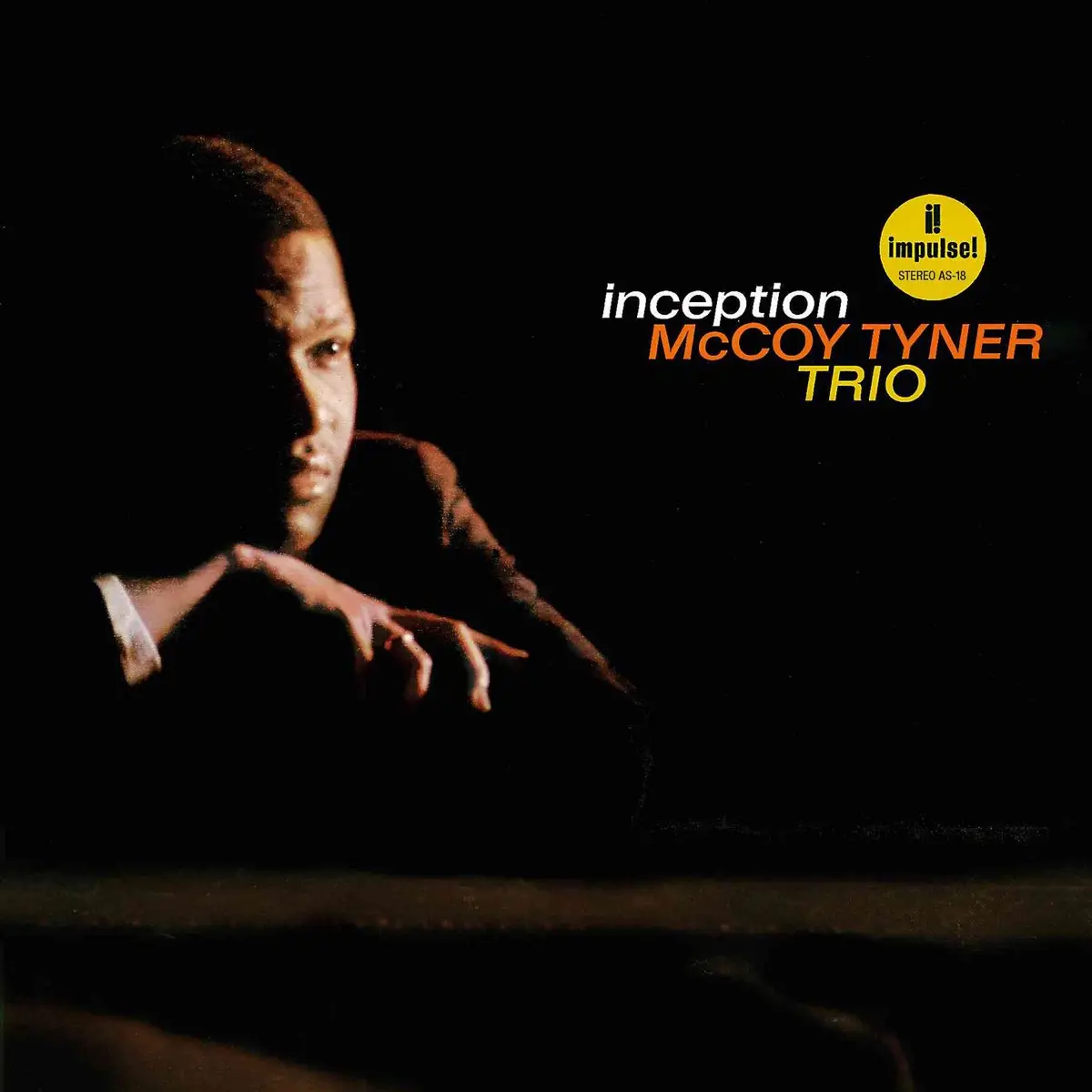 Early into Tyner’s Coltrane run, Impulse! producer Bob Thiele asked the pianist to make lighter music with a backing trio. Enlisting Jones and bassist Art Davis, Tyner made his debut as a bandleader with Inception, released in June 1962 on Impulse! The album features four originals plus covers of Isham Jones (“There Is No Greater Love”) and Kurt Weill (“Speak Low”).
Between November 1962 and December 1964, Tyner cut five further Impulse! titles: Reaching Fourth, Nights of Ballads & Blues, Today and Tomorrow, Live at Newport, and McCoy Tyner Plays Ellington.
While signed with Impulse!, Tyner played on 1962–64 Blue Note titles by Hubbard (Ready for Freddie), Wayne Shorter (Night Dreamer), and Joe Henderson (Page One). In 1966, he enlisted Henderson for a new combo with Jones and bassist Ron Carter.
The Real McCoy
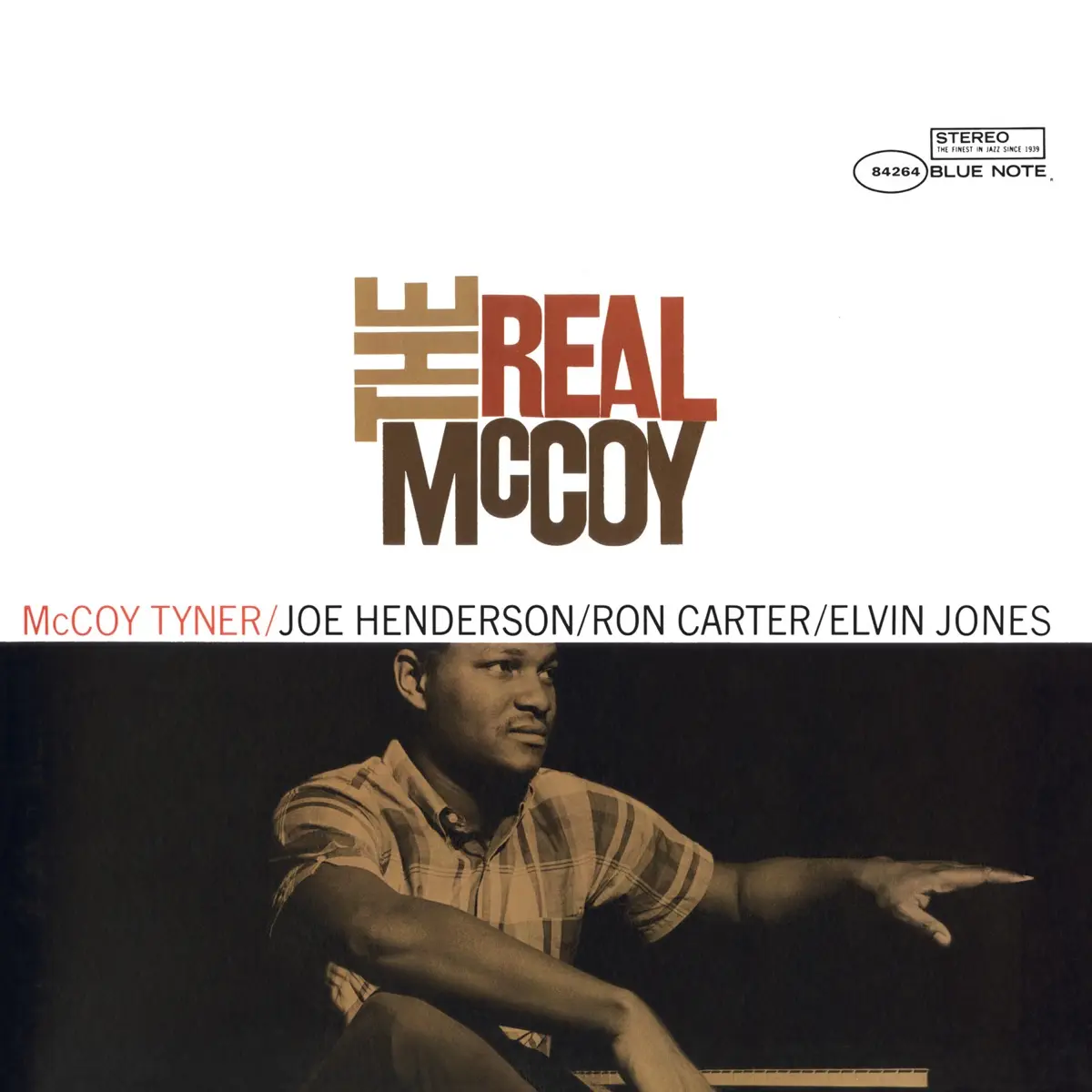 McCoy Tyner made his Blue Note debut with the October 1967 release The Real McCoy, his seventh album as a bandleader.
The album finds Tyner working with tenor saxophonist Joe Henderson, bassist Ron Carter, and drummer Elvin Jones. Two years removed from his Coltrane Quartet tenure, he reasserts himself as a leader by extending the modal and rhythmically dense language he helped shape earlier in the decade. The record became a touchstone of Tyner’s style and stands as one of producer Alfred Lion’s final sessions before stepping away from Blue Note.
Tyner wrote all five tracks on The Real McCoy, presenting his first set of wholly original material for Blue Note.
The program alternates between percussive, trance-like structures and reflective, lyrical pieces. “Passion Dance” opens with a rolling, incantatory figure that Jones drives forward with pounding accents. “Contemplation” moves at a restrained pace, structured as an introspective meditation. “Four by Five” returns to brisk interplay, with Henderson tracing sharp spirals over Tyner’s clustered voicings. “Search for Peace” slows into a hymn-like statement of spiritual surrender. The set closes on “Blues on the Corner,” a buoyant evocation of Tyner’s Philadelphia youth.
A1. “Passion Dance” (8:47) – Driving piece that unfolds with insistent rhythms and angular piano figures, invoking the ritualistic energy suggested by its title. Henderson’s tenor lines stretch and coil against Tyner’s percussive clusters, while Jones and Carter push the momentum forward with unrelenting force.
A2. “Contemplation” (9:12) – Reflective work marked by spacious phrasing and meditative pacing. Tyner’s chords cast a solemn atmosphere, against which Henderson traces long, searching phrases, giving the piece a sense of inward dialogue.
B1. “Four by Five” (6:37) – Built around shifting accents and quick rhythmic turns, this composition tests the quartet’s precision and fire. Tyner and Henderson trade incisive statements over Jones’s driving patterns, creating a taut interplay that brims with urgency.
B2. “Search for Peace” (6:32) – Calm, hymnlike offering where Tyner’s phrasing leans toward suspension and release, evoking surrender. The ensemble plays with restraint, allowing the music to unfold in spacious arcs that suggest quiet devotion.
B3. “Blues on the Corner” (5:58) – Closing on a lighter note, Tyner recalls street-corner banter with a brisk, good-natured blues. The rhythm section moves with buoyant pace as Henderson injects sharp phrasing, while Tyner stitches bright, rolling lines through the texture.
Sessions took place on April 21, 1967, at Van Gelder Studio in Englewood Cliffs, New Jersey, with producer Alfred Lion and engineer Rudy Van Gelder.
Tender Moments
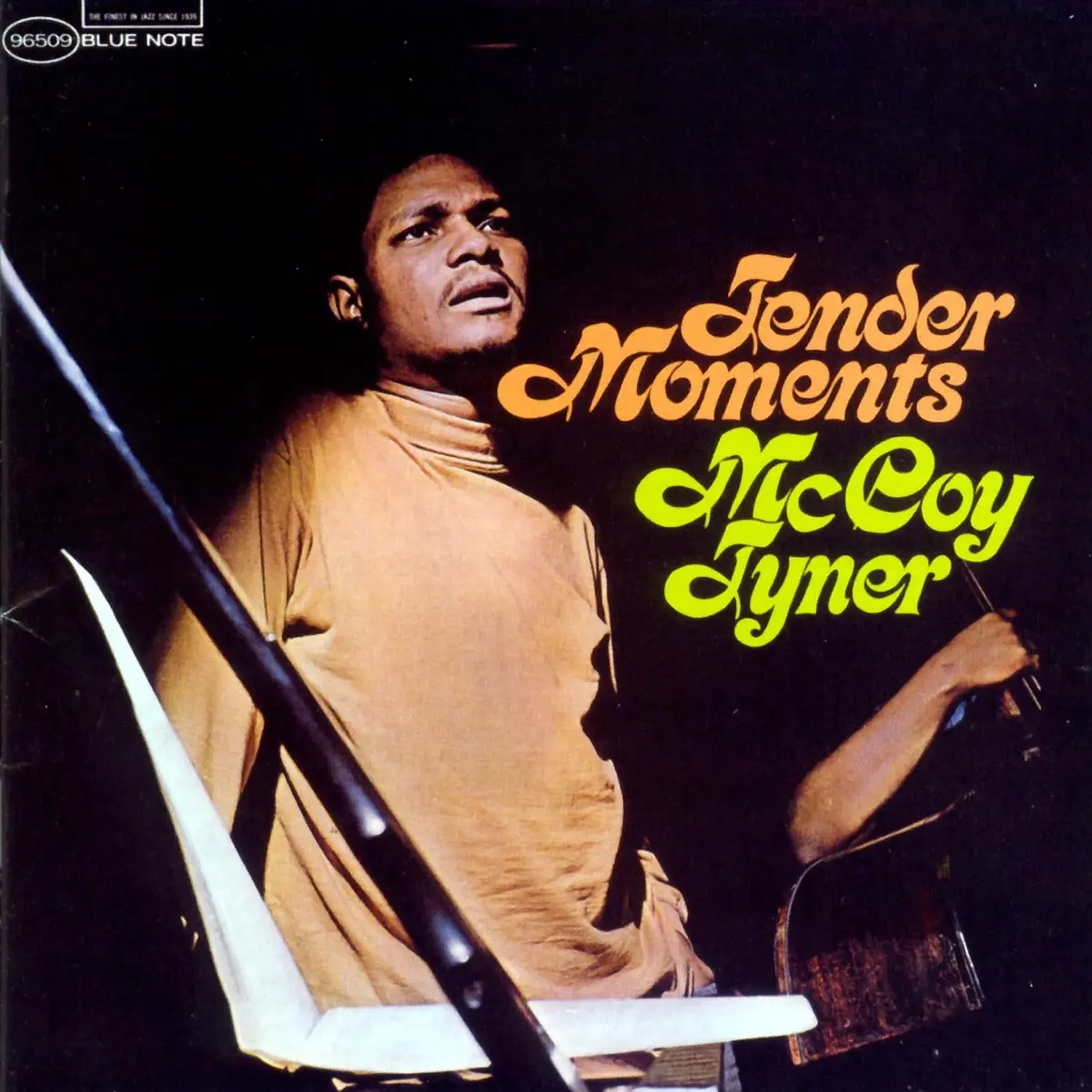 McCoy Tyner released his eighth album, Tender Moments, in September 1968 on Blue Note.
The album expands Tyner’s sound beyond the small-combo format of The Real McCoy. He leads a nine-piece group that includes trumpeter Lee Morgan, trombonist Julian Priester, altoist James Spaulding, tenorist Bennie Maupin, French hornist Bob Northern, and tubist Howard Johnson, anchored by bassist Herbie Lewis and drummer Joe Chambers. The larger instrumentation gave Tyner a chance to explore denser horn voicings within his modal and post-bop framework. Tyner composed all six pieces on Tender Moments.
The set opens with “Mode to John” and “Man from Tanganyika,” both driven by layered horns over Chambers’ restless pulse. “The High Priest” takes a more angular, Monk-like shape, while “Utopia” builds around shifting horn swells with a lyrical turn by Spaulding. “All My Yesterdays” offers a darkly shaded ballad, enriched by the ensemble’s weight. The album closes with “Lee Plus Three,” a leaner blues vehicle for Morgan with just Tyner, Lewis, and Chambers.
A1. “Mode to John” (5:42) – Coltrane tribute that channels the legend’s influence through modal design and layered brass voicings. The horns swell in dense colors, while Tyner presses forward with incisive phrasing over Chambers’ restless propulsion.
A2. “Man from Tanganyika” (6:54) – Built on vigorous rhythmic undercurrents, the piece unfolds with darting lines and sharply contoured themes. Morgan’s trumpet and Spaulding’s alto carve through the ensemble texture, set against Tyner’s surging harmonies.
A3. “The High Priest” (6:08) – Playful theme with angular turns that nod toward Monk’s phrasing, yet stamped with Tyner’s harmonic depth. The brass and reeds punctuate with crisp interjections, while the rhythm section keeps the pace taut.
B1. “Utopia” (7:37) – Expansive in scope, the composition stretches across shifting tonal centers and layered ensemble passages. Tyner threads through the horns with ringing chords, while Spaulding’s flute casts a lyrical contrast within the structure.
B2. “All My Yesterdays” (6:04) – Reflective ballad enriched by the ensemble’s dark-hued harmonies. Tyner’s touch conveys quiet gravity, and the horns rise and recede in waves, shaping a soundscape of solemn resonance.
B3. “Lee Plus Three” (5:35) – Stripped to a quartet, the closer swings with brisk pace and blues phrasing. Morgan takes the foreground with incisive lines, anchored by Lewis’s steady bass and Chambers’ restless drive, while Tyner’s sharp figures stitch the performance together.
Sessions occurred on December 1, 1967, at Van Gelder Studio in Englewood Cliffs, New Jersey, with producer Francis Wolff and engineer Rudy Van Gelder.
Time for Tyner
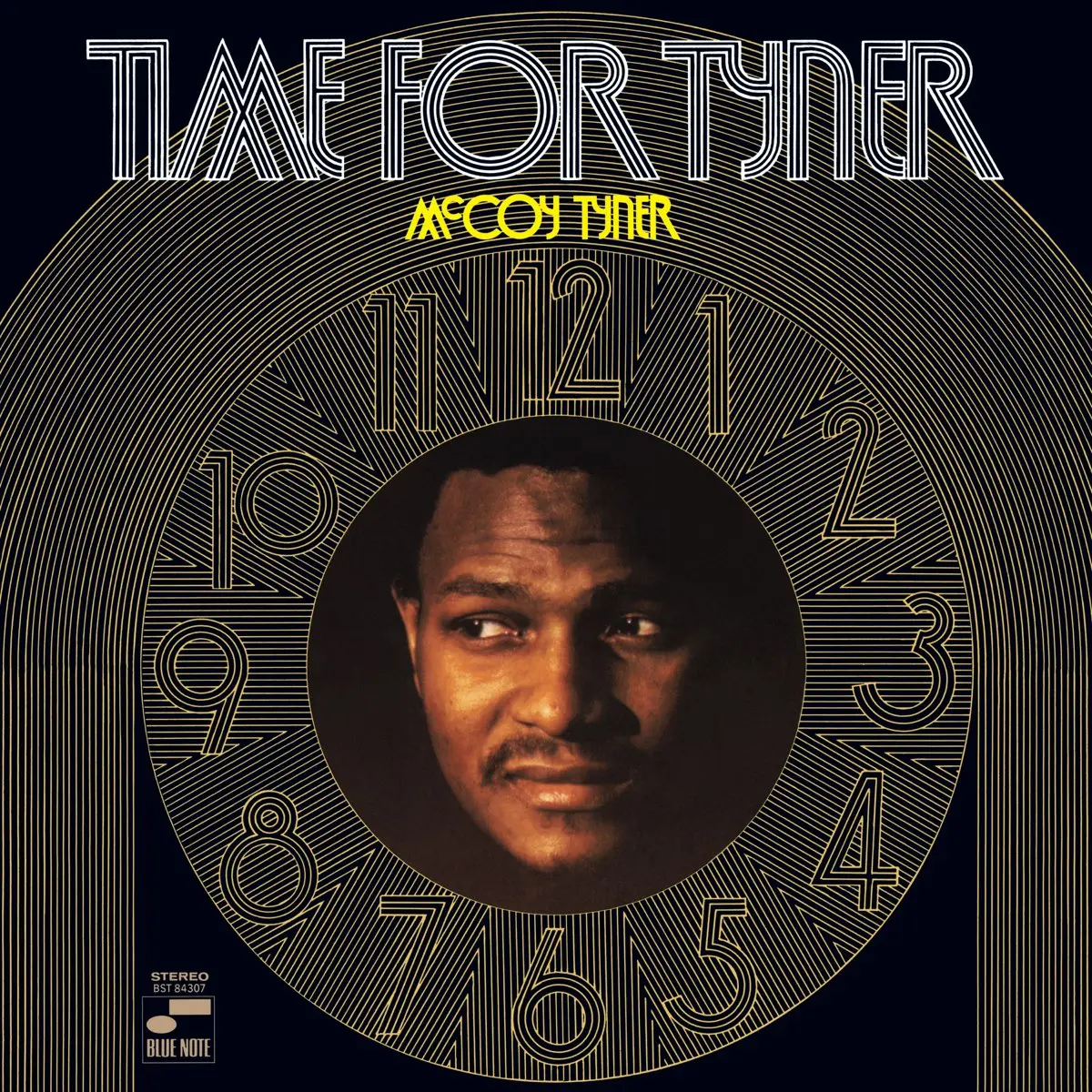 McCoy Tyner released his ninth album,Time for Tyner, in August 1969 on Blue Note.
The album pairs Tyner with vibraphonist Bobby Hutcherson, bassist Herbie Lewis, and drummer Freddie Waits. Recorded in 1968, it captures Tyner exploring modal expansions with Hutcherson as a melodic foil, shifting from quartet interplay to trio passages and an unaccompanied piano closer.
Tyner wrote three of the six numbers. The remaining pieces are covers of songs popularized in musical theater: Richard Rodgers and Lorenz Hart (“I Didn’t Know What Time It Was”), Rodgers and Oscar Hammerstein II (“The Surrey with the Fringe on Top”), and Frederick Loewe and Alan Jay Lerner (“I’ve Grown Accustomed to Her Face”).
The three Tyner originals showcase a more exploratory edge, with the extended “African Village” driven by Lewis’s riff foundation and Hutcherson’s ascending–descending motif, while “Little Madimba” and “May Street” maintain a modal tension. The standards on side two shift to lighter trio readings, with the final ballad played as a piano solo.
A1. “African Village” (12:11) – Propulsive bass introduces a three-part theme voiced by Hutcherson, its rising and falling contours driving the ensemble into dense harmonic exchanges. Tyner fuels the energy with clustered chords and rapid bursts, matched by the quartet’s insistent pace.
A2. “Little Madimba” (8:34) – Spacious phrasing opens room for Hutcherson’s lines to arc above Tyner’s harmonic currents. The group balances lyrical contour with measured pacing, shaping each phrase with clarity and restraint.
A3. “May Street” (5:22) – Crisp rhythmic interplay underpins a concise theme, with Tyner and Hutcherson trading sharp turns in close dialogue. Lewis and Waits lock the framework, giving the piece its compact drive.
B1. “I Didn’t Know What Time It Was” (7:10) – Modal touches and shifting rhythm recast the standard in fresh colors. Tyner’s phrasing moves between tolling chords and sudden runs, while Hutcherson adds crystalline counterlines.
B2. “The Surrey with the Fringe on Top” (5:12) – Trio format highlights buoyant pacing, with Tyner’s spry figures riding atop Lewis’s steady pulse and Waits’s nimble accents. The familiar theme is stretched with playful momentum.
B3. “I’ve Grown Accustomed to Her Face” (4:27) – Closing solo performance shaped by reflective pacing and suspended harmonies. Tyner lingers on the melody, turning it into a quiet meditation that ends the record in restraint.
Sessions took place on May 17, 1968, at Van Gelder Studio in Englewood Cliffs, New Jersey, with producer Duke Pearson and engineer Rudy Van Gelder.
Expansions
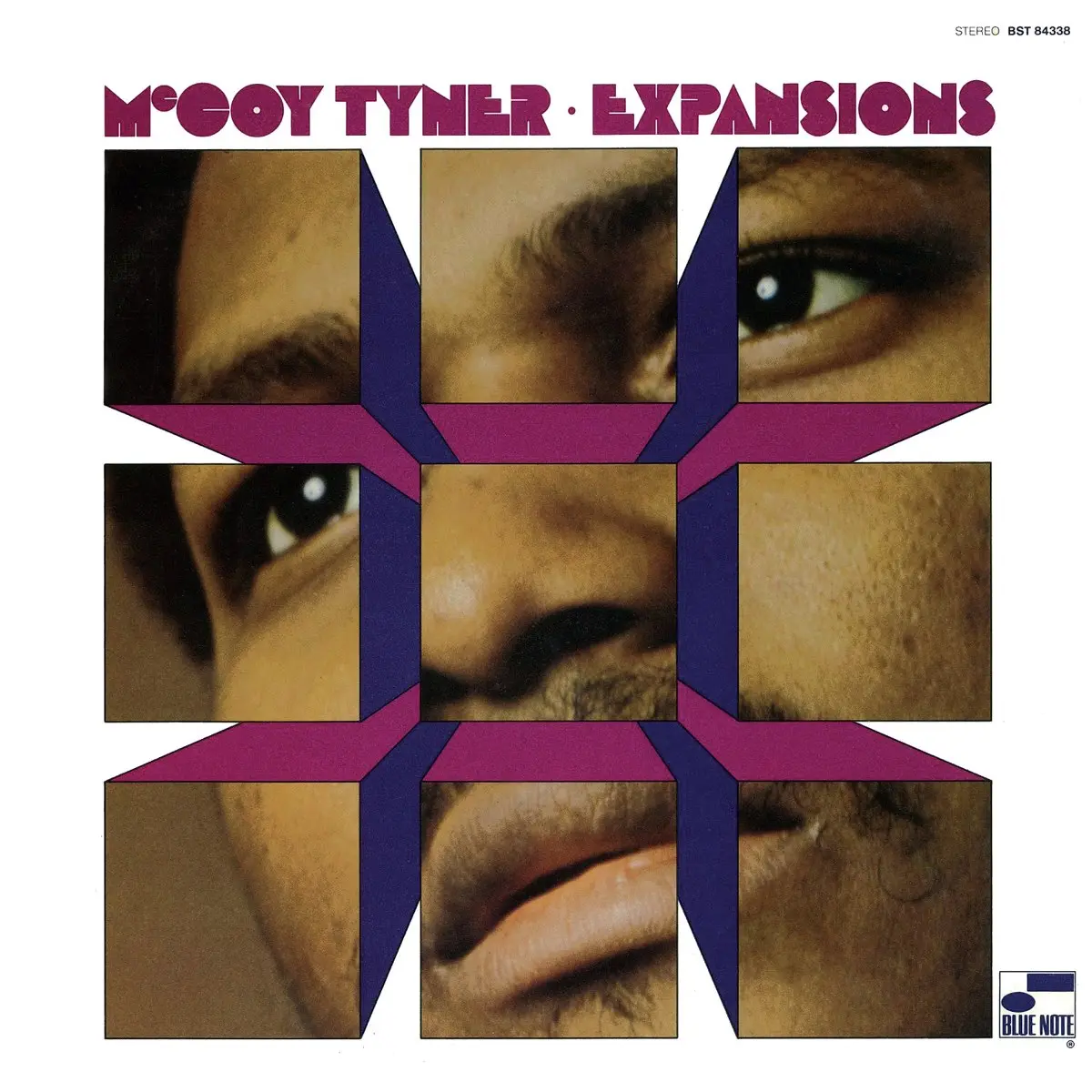 McCoy Tyner released his tenth album, Expansions, in June 1970 on Blue Note.
The album presents a large ensemble with Tyner joined by trumpeter Woody Shaw, alto saxophonist Gary Bartz, tenor saxophonist Wayne Shorter, bassist Ron Carter on cello, bassist Herbie Lewis, and drummer Freddie Waits. The expanded instrumentation allows Tyner to move between dense ensemble passages, spiritual themes, and chamber-like textures.
Tyner wrote four of the five numbers. Trumpeter Cal Massey supplied the closing ballad “I Thought I’d Let You Know.”
The album opens with the driving “Vision,” where Tyner’s chords surge against Waits’s shifting polyrhythms. “Song of Happiness” stretches into spiritual territory, underscored by Carter’s resonant cello lines. “Smitty’s Place” adds a lighter character, while “Peresina” draws from Latin pacing. The Massey piece closes the set with a direct, lyrical statement.
A1. “Vision” (12:18)
A2. “Song of Happiness” (12:00)
B1. “Smitty’s Place” (5:21)
B2. “Peresina” (10:21)
B3. “I Thought I’d Let You Know” (6:25)
Sessions occurred on August 23, 1968, at Van Gelder Studio in Englewood Cliffs, New Jersey, with producer Duke Pearson and engineer Rudy Van Gelder.
Extensions
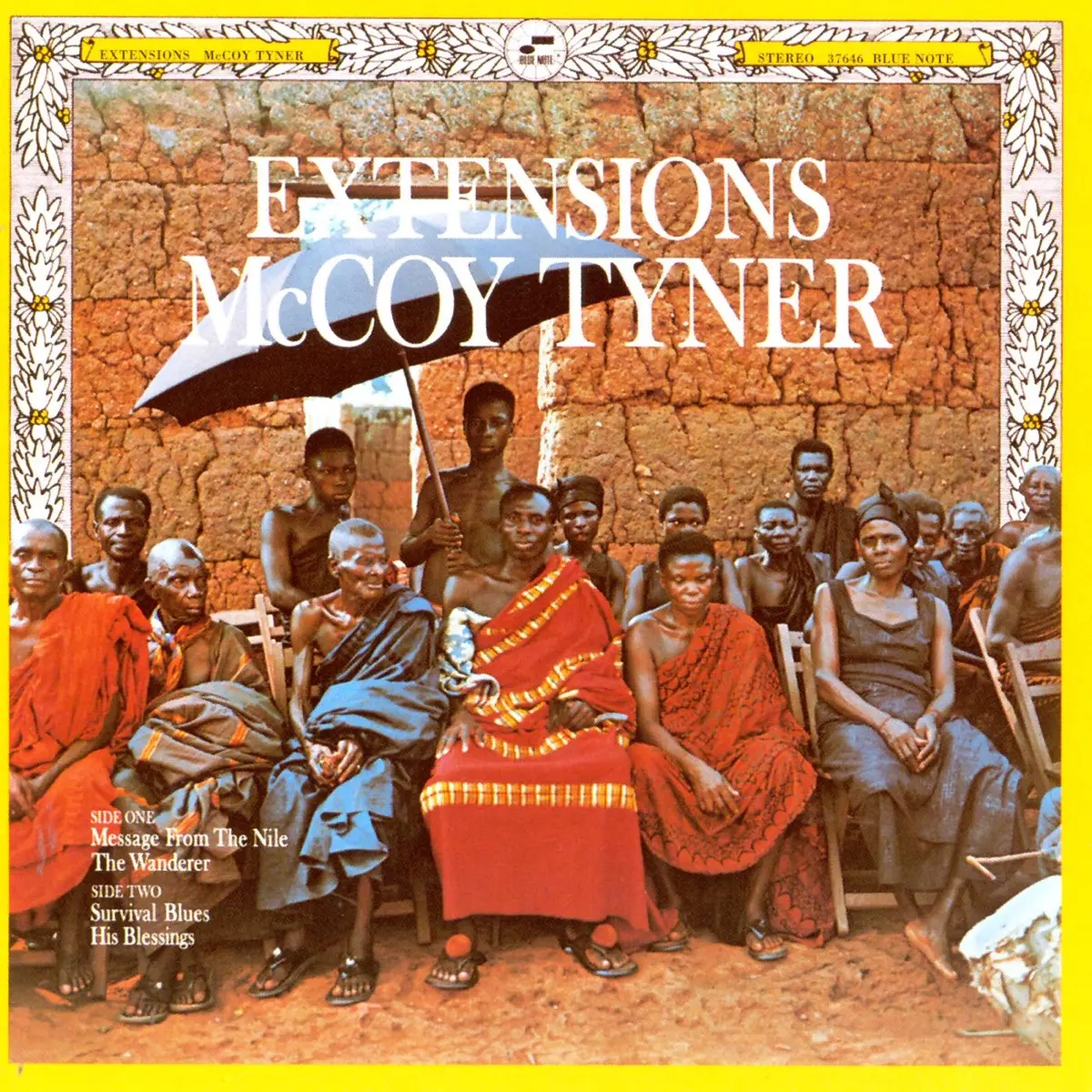 McCoy Tyner recorded his eleventh album, Extensions, in February 1970 for Blue Note, which vaulted the contents until January 1973 after he’d left the label.
The album features Tyner in a sextet with alto saxophonist Gary Bartz, tenor and soprano saxophonist Wayne Shorter, bassist Ron Carter, drummer Elvin Jones, and Alice Coltrane on harp. The combination of Coltrane’s sweeping textures and the front line of Bartz and Shorter places the session in a spiritual and orchestral zone within Tyner’s modal framework. Tyner composed all four pieces on the album.
“Message from the Nile” builds gradually from Carter’s bass to a layered ensemble statement, with solos by Tyner, Shorter, Bartz, and Coltrane. “The Wanderer” charges forward at bop tempo with Jones in fiery command. “Survival Blues” unfolds as an melancholy modal blues, where Shorter’s phrasing deepens the theme before Coltrane’s harp provides an ethereal release. The closing “His Blessings” serves as a reflective hymn, sustained by bowed bass and harp.
A1. “Message from the Nile” (12:22) – The ensemble enters in stages: Carter’s bass, Coltrane’s harp, Jones’ off-kilter percussion, then Tyner’s piano. Shorter and Bartz burst forth together before yielding to a sequence of expansive solos, each one layering intensity until Coltrane’s sweeping harp draws the piece into a spiritual realm.
A2. “The Wanderer” (7:43) – Jones drives a relentless pulse while horns carve sharp lines over Tyner’s shifting harmonies. The piece surges with unbroken energy, culminating in a fierce drum solo that underlines its restless spirit.
B1. “Survival Blues” (13:15) – Tyner opens with stark blues figures, shaping the foundation for shifting solo turns. Shorter voices the theme with anguished force, Carter answers with a resonant solo marked by the sound of bells, and Coltrane’s harp closes the long arc with a spectral shimmer.
B2. “His Blessings” (6:50) – Coltrane’s harp introduction sets a luminous atmosphere that the group develops with hushed interplay. Carter bows the bass in long phrases, and the horns move gently around Tyner’s chords, sustaining a reflective calm that lingers into silence.
Sessions occurred on February 9, 1970, at Van Gelder Studio in Englewood Cliffs, New Jersey, with producer Duke Pearson and engineer Rudy Van Gelder.
Cosmos
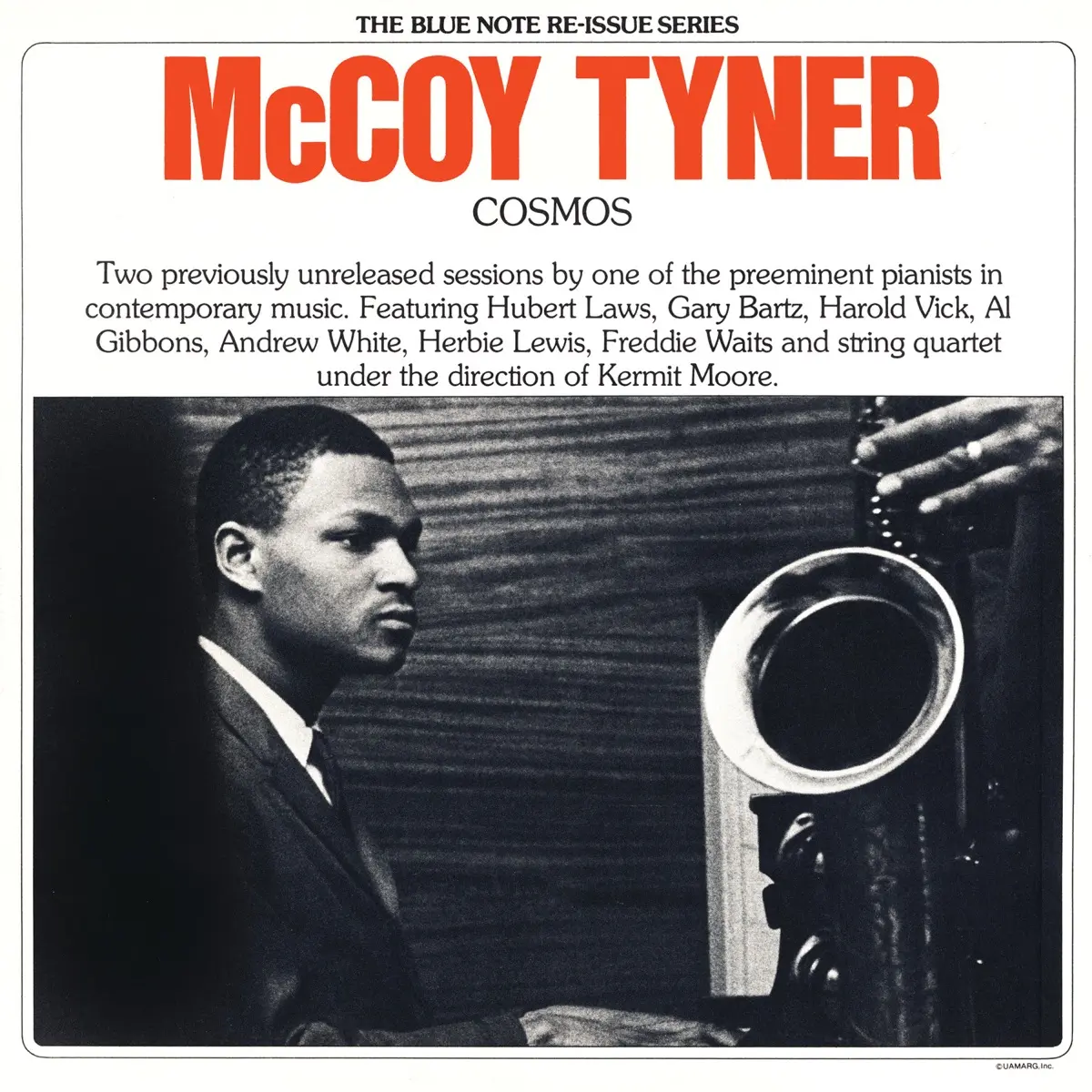 Between November 1968 and July 1970, McCoy Tyner stockpiled material that Blue Note withheld until Cosmos, a July 1976 archival release.
The album spans post-bop and modal explorations, shifting between intimate trio settings, mid-sized groups with strings, and a sextet featuring flutes and saxophones. Tyner’s piano dominates each context, moving from percussive, angular runs to lyrical, extended improvisations. Tyner composed all eight tracks on the album.
The trio pieces highlight tight, interactive dialogues between Tyner, bassist Herbie Lewis, and drummer Freddie Waits, blending rhythmic elasticity with percussive color from timpani and chimes. String quartet arrangements accompany the larger group performances, providing harmonic counterpoints to Tyner’s piano and the saxophones of Harold Vick and Al Gibbons. The sextet tracks feature Hubert Laws on flute, with Andrew White and Gary Bartz on woodwinds, creating layered textures that alternate between contemplative passages and surging post-bop energy.
A1. “Song for My Lady” (7:30)
A2. “Cosmos” (9:00)
B1. “Shaken, But Not Forsaken” (11:30)
B2. “Vibration Blues” (8:40)
C1. “Forbidden Land” (13:50) – Dense front line of oboe, flute, and saxophone winds around Tyner’s piano, creating contoured lines over Lewis’s firm bass foundation.
C2. “Planet X” (7:40)
D1. “Asian Lullaby” (7:27) – Flute leads with a delicate, suspended theme, gradually opening space for Tyner’s understated commentary. The ensemble holds to a subdued pace, keeping the atmosphere hushed.
D2. “Hope” (14:14) – Long horn lines open into expansive solo stretches, with Tyner driving the ensemble through forceful left-hand patterns. The rhythm section sustains momentum, giving the closing track a determined thrust.
Sessions occurred at Van Gelder Studio, Englewood Cliffs, New Jersey, on November 22, 1968; April 4, 1969; and July 21, 1970, produced by Duke Pearson.
Asante
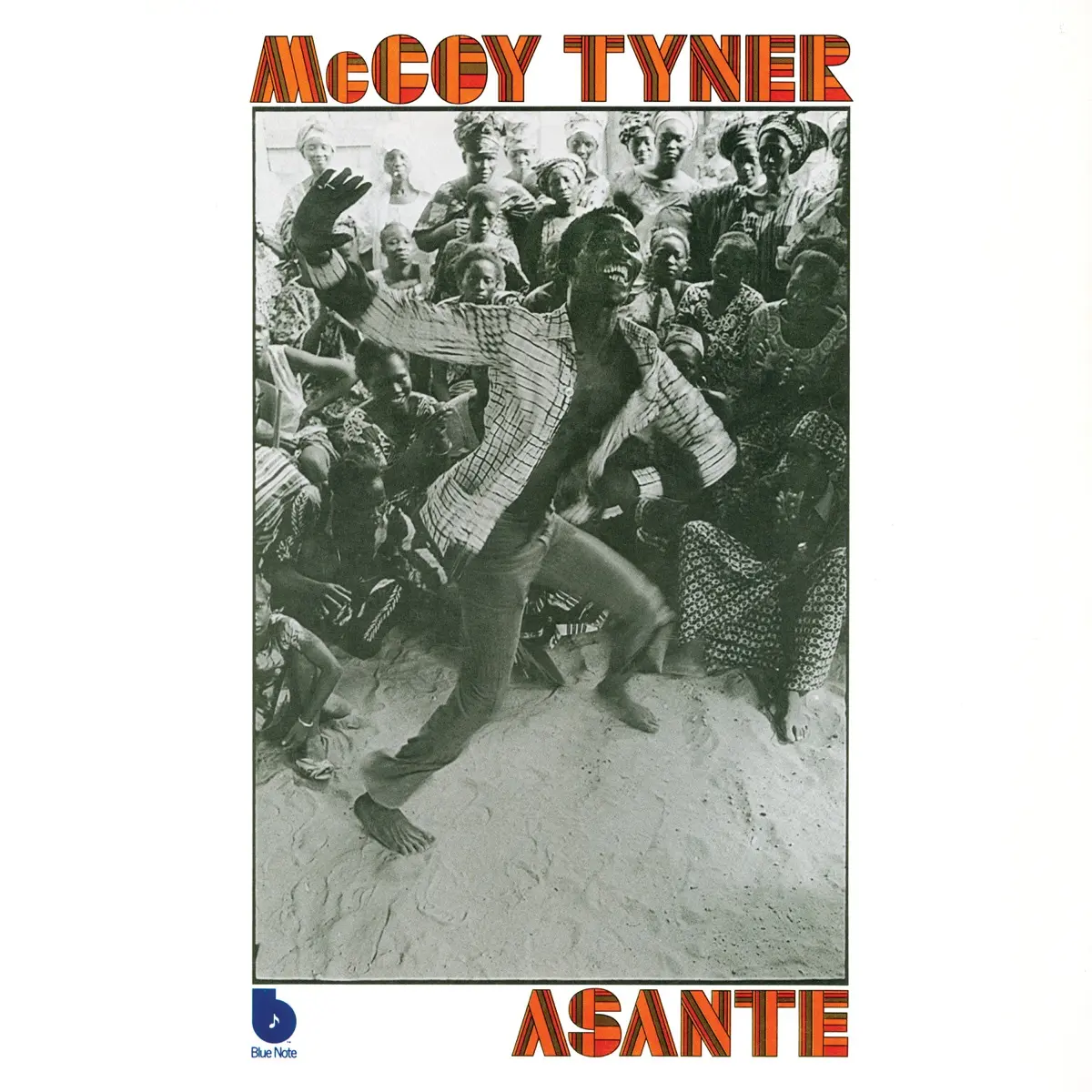 On September 10, 1970, McCoy Tyner recorded Asante, his final album for Blue Note, which vaulted the contents until April 1974, two years after his Milestone debut.
The album features Tyner with alto saxophonist Andrew White, guitarist Ted Dunbar, bassist Buster Williams, drummer Billy Hart, percussionist Mtume, and vocalist Songai Sandra Smith, who appears on two tracks. The ensemble integrates African-inspired percussion with Tyner’s modal piano and introduces electric guitar into his sound world. Tyner composed all four numbers on the original release.
The opener “Malika” layers White’s alto with Songai’s wordless lines above a dense rhythm pattern from Hart, Williams, and Mtume. Songai also sings on the title track, which unfolds with a softer, reflective pace. “Goin’ Home” places Dunbar’s guitar in a funk-tinged role, while the closing “Fulfillment” stretches into an extended modal workout with Tyner’s piano in full flight.
A1. “Malika” (14:02) – Layers of percussion and bass establish a dense rhythmic ground for White’s alto and Songai’s wordless vocals, which rise and fall with chant-like intensity. Tyner shapes his solo in waves, cutting through the texture with surging force.
A2. “Asante” (6:12) – A slower pulse leaves space for Songai’s sustained lines to hover over Tyner’s shifting chords. The rhythm section moves with restraint, letting the piano and voice entwine in measured phrases.
B1. “Goin’ Home” (7:39) – Dunbar’s guitar threads pointed riffs against Tyner’s angular runs, while Hart and Mtume lock into a driving rhythm. The horns reinforce the theme in clipped bursts, pushing the ensemble toward a lean, propulsive close.
B2. “Fulfillment” (14:00) – Tyner launches into a long, athletic solo framed by rapid exchanges between drums and percussion. White answers with sharp alto phrasing, and the ensemble sustains high intensity across the piece’s extended arc.
Sessions occurred at Van Gelder Studio in Englewood Cliffs, New Jersey, with producer Duke Pearson and engineer Rudy Van Gelder.
Sahara
 McCoy Tyner made his Milestone debut with Sahara, released in July 1972 as his twelfth chronological (thirteenth recorded) album.
Tyner leads a quartet with saxophonist Sonny Fortune, bassist Calvin Hill, and drummer Alphonse Mouzon. All four double on secondary instruments, with Tyner adding koto, flute, and percussion, Fortune contributing flute, Hill adding reeds and percussion, and Mouzon playing trumpet and extra percussion. The album integrates post-bop drive with African and Eastern elements and expands into extended ensemble textures. Tyner wrote all five pieces on the album.
The opener “Ebony Queen” pushes forward with piano improvisations against Mouzon’s torrid drumming. “A Prayer for My Family” acts as the reflective piece of the set, while “Valley of Life” stands apart with Tyner’s koto and Fortune’s flute in a chamber-like spiritual frame. “Rebirth” returns to full quartet interplay, highlighted by Fortune’s alto solo. The sidelong “Sahara” begins with flute, reeds, and percussion before evolving into a sprawling 23-minute piano-centered exploration that builds through free and modal sections.
A1. “Ebony Queen” (9:00) – Tyner drives the opening with fierce piano runs, matched by Fortune’s sharp soprano lines and Mouzon’s torrential drumming. The ensemble sustains a relentless pace, breaking only for brief solo turns before surging back together.
A2. “A Prayer for My Family” (4:48) – Quiet meditation led by Tyner’s piano, voiced with spacious chords and gentle movement. The trio maintains a restrained pulse, shaping a reflective interlude.
A3. “Valley of Life” (5:19) – Tyner shifts to koto and flute, joined by Fortune on flute and Hill on percussion. The ensemble layers delicate textures, evoking a soundscape closer to ritual than song.
A4. “Rebirth” (5:20) – Fortune’s alto pushes forward in urgent arcs over Tyner’s vigorous left-hand figures. The quartet channels raw intensity into concise statements, closing the side with compressed power.
B1. “Sahara” (23:27) – Extended exploration that begins with flutes, reeds, and percussion in free dialogue before giving way to Tyner’s commanding piano solo. The piece evolves through shifting episodes of energy, each musician taking turns to extend and reshape the vast form.
Sessions occurred in January 1972 at Decca Recording Studio in New York City with producer Orrin Keepnews.
Sahara marked Tyner’s breakthrough as a leader, selling more than 100,000 copies and receiving two Grammy nominations.
Echoes of a Friend
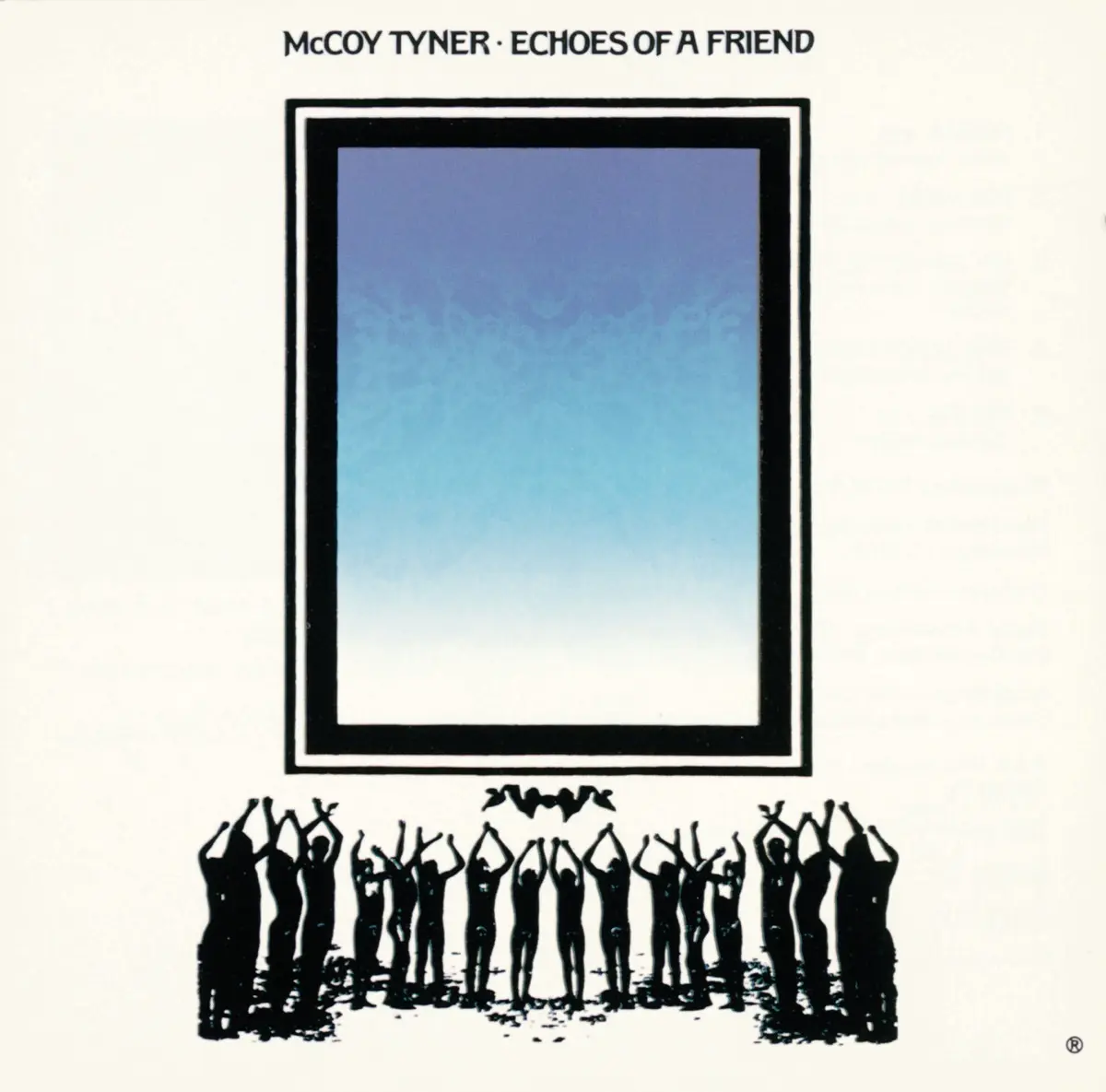 In late 1972, JVC (Japan) issued Echoes of a Friend, McCoy Tyner’s tribute to John Coltrane, performed unaccompanied on November 11 in Tokyo.
The album presents Tyner in a solo piano setting, using expansive phrasing and dense harmonies to honor Coltrane’s legacy while asserting his own rhythmic and harmonic identity.
Tyner wrote two of the five tracks and performs three works associated with Coltrane: his renditions of Coltrane’s “Naima” and “Promise,” and a reworking of Rodgers and Hammerstein’s “My Favorite Things,” a standard immortalized by Coltrane.
The opening sequence draws directly on Coltrane’s repertoire. “Naima” emerges with delicate voicing and gradually ascends into rolling, left-hand-driven momentum. “Promise” maintains a searching intensity, while “My Favorite Things” unfolds with elastic pacing that transforms the theme into a modal meditation. Tyner’s original centerpiece, “The Discovery,” stretches across seventeen minutes with thunderous runs offset by sudden lyrical turns, while the closer, “Folks,” balances bright figures with shifts into darker, weightier chords.
A1. “Naima” (6:43) – Tyner honors Coltrane’s ballad with expansive chords that stretch the harmony while his right hand shapes contoured phrases that keep the piece in forward motion.
A2. “Promise” (6:14) – The pianist sharpens the tune’s lyric core, driving it through rhythmic swells and crisp turns that emphasize its devotional weight.
A3. “My Favorite Things” (8:44) – Rodgers and Hammerstein’s theme becomes a platform for Tyner’s surging invention, where circling motifs accelerate into dense cascades before pulling back into poised reflection.
B1. “The Discovery” (17:35) – An extended journey beginning with a dramatic gong strike, it unfolds in shifting terrains, from storming right-hand flurries to moments of spacious reprieve, each passage tethered by an underlying sense of direction.
B2. “Folks” (7:33) – The closing piece balances clarity and playfulness, its crystalline opening giving way to dynamic contrasts that fuse light-footed motion with emphatic accents.
Sessions occurred live at a Tokyo concert hall on November 11, 1972, with Orrin Keepnews producing for JVC.
Song for My Lady
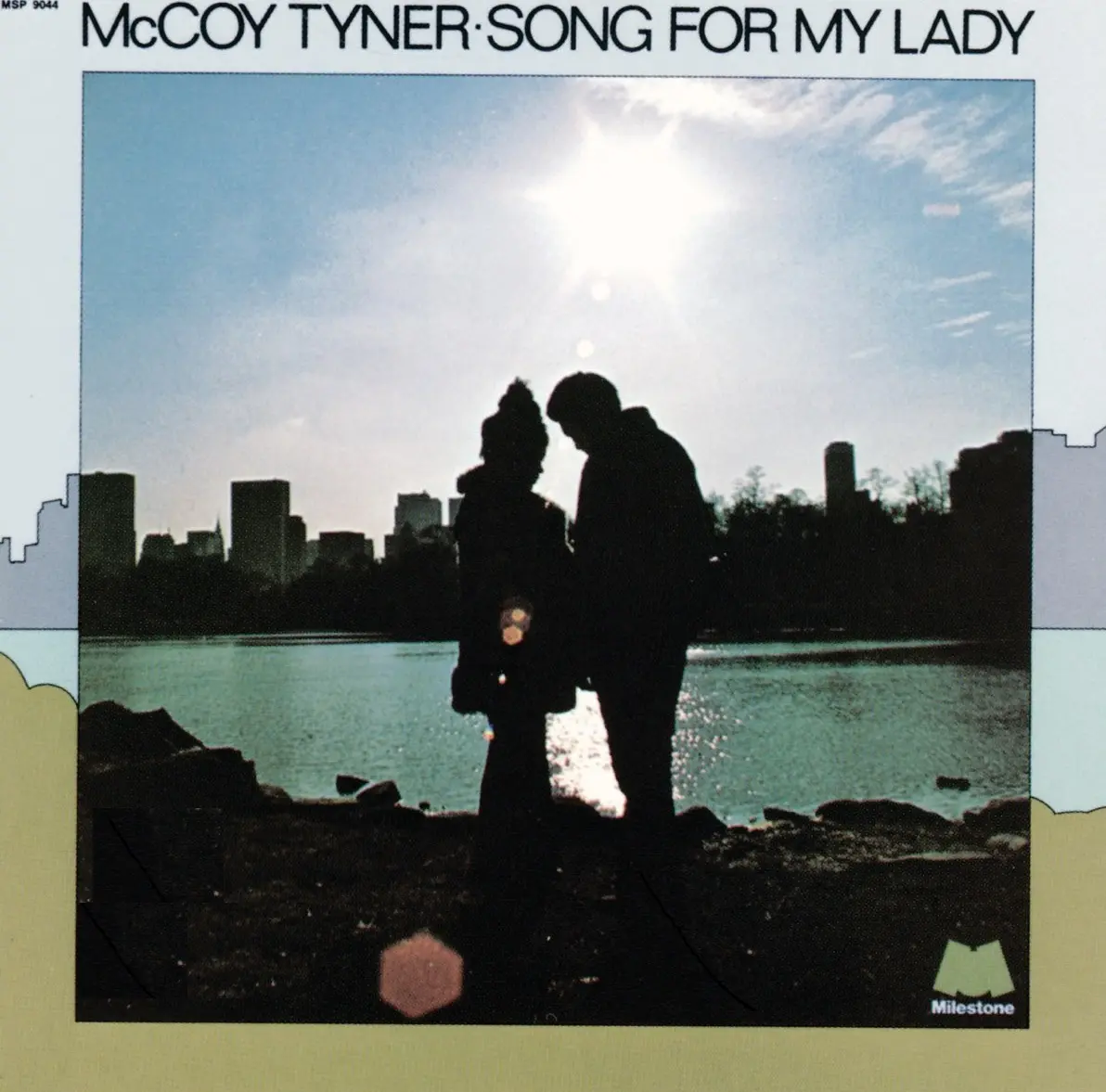 McCoy Tyner released his fifteenth studio album, Song for My Lady, in February 1973 on Milestone.
The album balances Tyner’s forceful piano style with an expanded ensemble, featuring horns, violin, and percussion alongside his rhythm section. The music alternates between long, exploratory pieces with dense rhythmic layering and more compact works that emphasize lyricism.
Tyner wrote four of the five tracks. The remaining number, “The Night Has a Thousand Eyes,” is a standard by Jerry Brainin and Buddy Bernier, popularized in the jazz idiom by John Coltrane.
The two extended ensemble pieces, “Native Song” and “Essence,” stretch across shifting tempos with contributions from violinist Michael White, trumpeter Charles Tolliver, and percussionist Mtume. The title track showcases Tyner’s interplay with saxophonist Sonny Fortune, who doubles on flute and soprano. “A Silent Tear” offers a concise, lyrical contrast, while “The Night Has a Thousand Eyes” presents a fiery reinterpretation of the well-worn standard.
A1. “Native Song” (13:00)
A2. “The Night Has a Thousand Eyes” (8:17)
B1. “Song for My Lady” (7:37)
B2. “A Silent Tear” (4:30)
B3. “Essence” (11:20)
Sessions occurred at Mercury Sound Studios in New York City on September 6 and November 27, 1972, with Orrin Keepnews producing.
Song of the New World
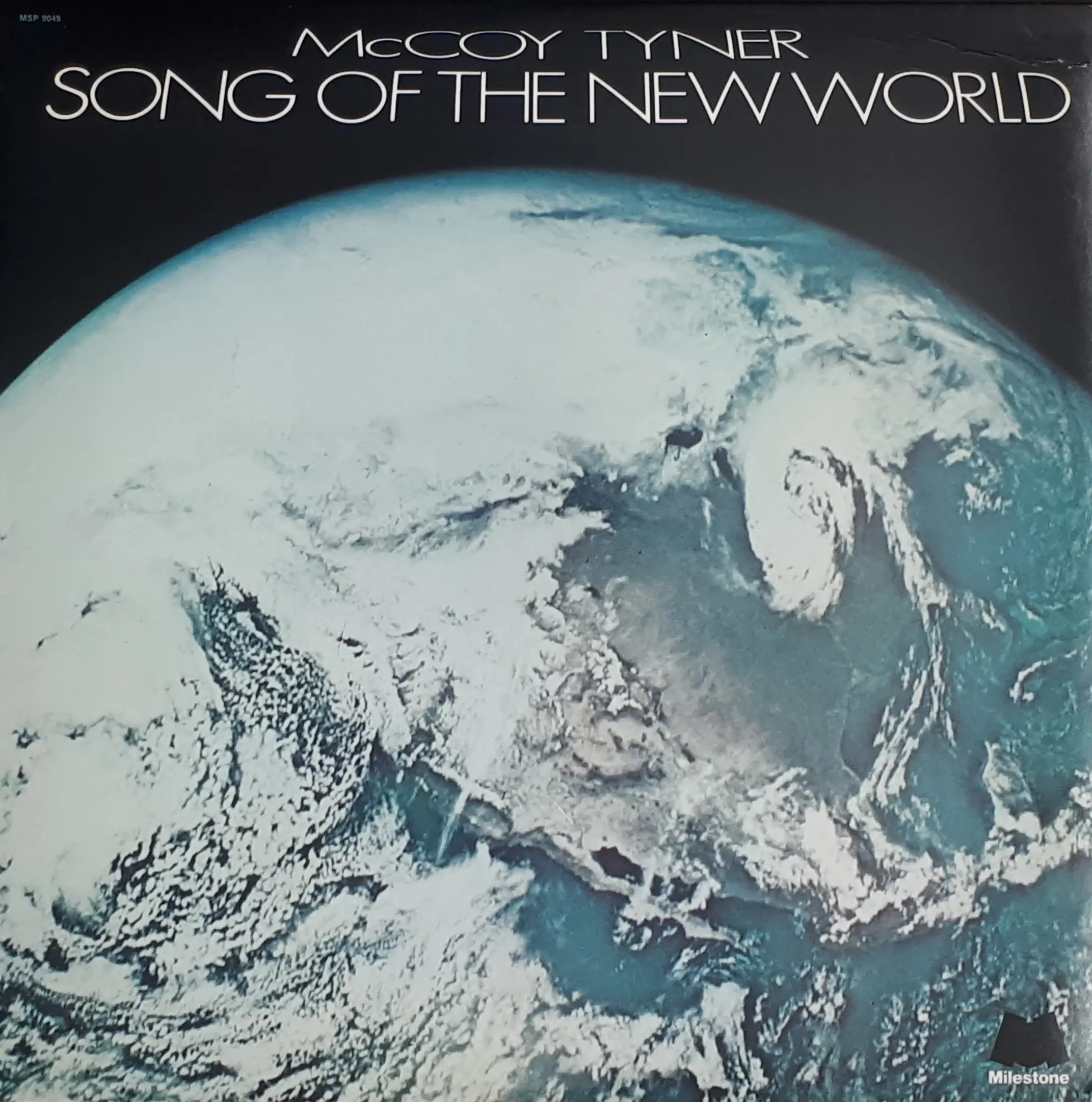 McCoy Tyner released his sixteenth studio album, Song of the New World, in July 1973 on Milestone.
The album expands Tyner’s signature piano approach into big-band territory, combining a brass section, full strings on two tracks, and a rhythm section that includes saxophone, flute, bass, and drums. The music integrates tribal and African-American rhythmic influences within expansive post-bop arrangements.
Tyner wrote four of the five tracks. The remaining piece, “Afro Blue,” is by Mongo Santamaría, popularized in jazz by John Coltrane.
The opening number, “Afro Blue,” sets a percussive, polyrhythmic tone, while “Little Brother” and “The Divine Love” explore layered textures with piano and horns interweaving through strings and flutes. “Some Day” presents a concise, contemplative statement, and the title track layers brass, strings, and rhythm in a triumphant, rhythmically charged finale.
A1. “Afro Blue” (10:01)
A2. “Little Brother” (10:12)
B1. “The Divine Love” (7:31)
B2. “Some Day” (6:50)
B3. “Song of the New World” (6:50)
The ensemble included Tyner on piano and percussion, Sonny Fortune on alto and soprano saxophones and flute, Hubert Laws on piccolo and flute, Joony Booth on bass, Alphonse Mouzon on drums, and a brass section with trumpets, trombones, French horns, euphonium, and tuba, with strings conducted by William Fischer on tracks 1 and 2.
Sessions occurred at A & R Studios in New York City on April 6 and 9, 1973, with Orrin Keepnews producing.
Enlightenment (live)
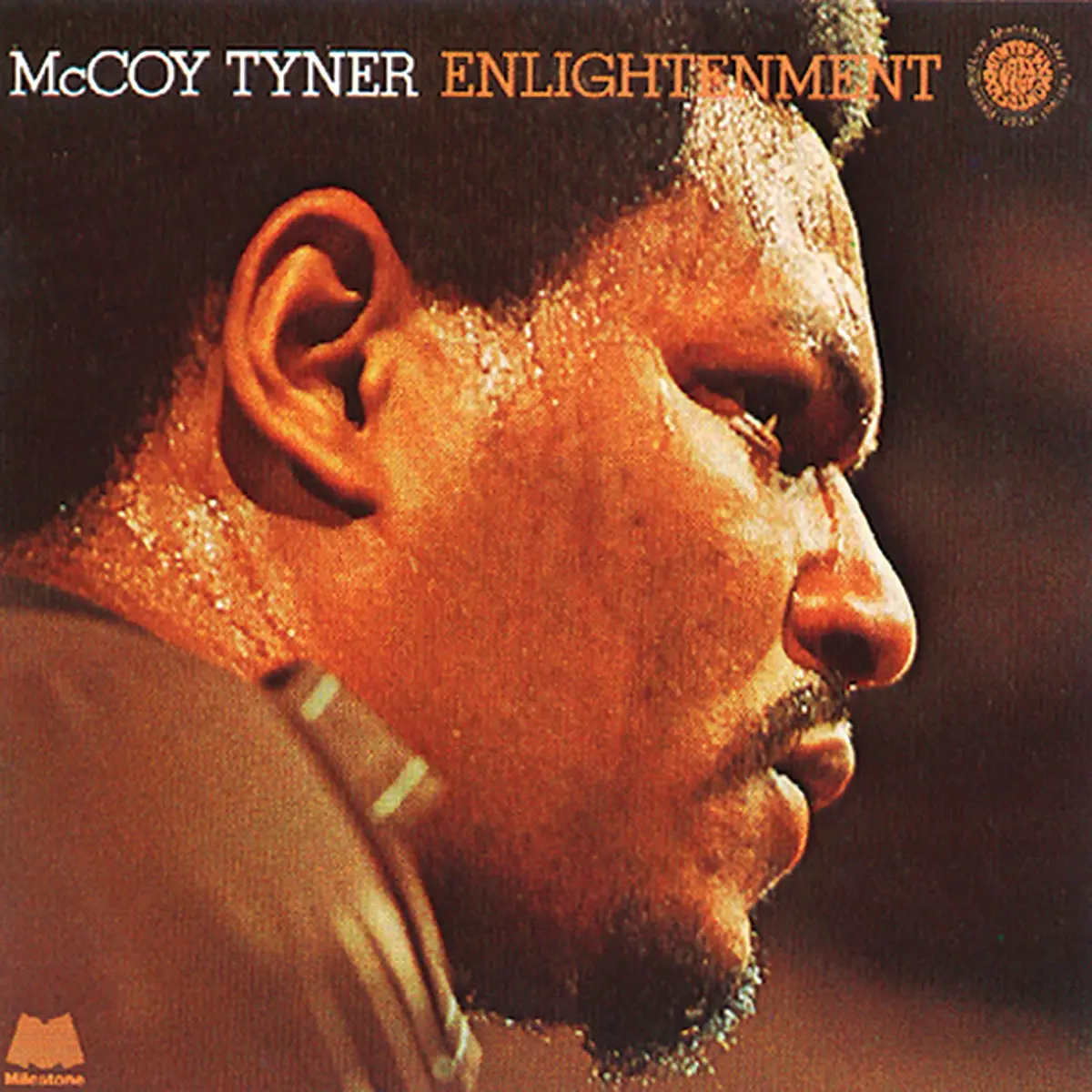 In late 1973, Milestone issued Enlightenment, a two-record document of McCoy Tyner’s July 7 set at the Montreux Jazz Festival.
The album captures Tyner’s quartet in full force, emphasizing his percussive, expansive piano style alongside tenor and soprano sax, bass, and drums. The performance stretches post-bop forms into spiritual and modal frameworks, blending rapid runs, polyrhythmic layers, and moments of near-atonal intensity over long-form compositions.
Tyner composed all seven tracks, developing multi-part suites that balance ensemble interplay with extended solo sections.
The “Enlightenment Suite” unfolds across three movements, moving from energetic thematic statements to reflective, solo piano passages. “Walk Spirit, Talk Spirit” dominates the set with extended, high-intensity exchanges, featuring prominent solos from saxophonist Azar Lawrence and bassist Juini Booth, while the remainder of the suite demonstrates tightly coordinated rhythmic drive from drummer Alphonse Mouzon and responsive interaction across the quartet. The album opens with a brief introduction by DJ Pierre Lattès and progresses through both concise and sprawling compositions that exploit dynamics, tension, and release.
A1. “Presenting the McCoy Tyner Quartet” (1:19) – A brief spoken introduction sets the stage before the quartet launches into the extended suite.
A2. “Enlightenment Suite, Part 1 – Genesis” (10:02) – Tyner’s opening chords ignite surging interplay, the quartet building dense layers that expand and contract in shifting cycles.
A3. “Enlightenment Suite, Part 2 – The Offering” (4:00) – A solo piano meditation balances rapid runs with spacious chords, framing a moment of inward reflection.
B1. “Enlightenment Suite, Part 3 – Inner Glimpse” (10:04) – The group reenters at full force, with saxophone lines cutting across Tyner’s storming left hand and Mouzon’s unyielding drive.
B2. “Presence” (10:35) – A measured pace anchors unfolding variations, Booth’s bass grounding Tyner’s cascades and Lawrence’s angular lines.
C1. “Nebula” (9:39) – The quartet thins the texture, allowing bass and saxophone to stretch freely before converging in bursts of rhythmic urgency.
C2–D. “Walk Spirit, Talk Spirit” (24:04) – The finale extends into a marathon statement: a patient bass introduction, ensemble expansions that accelerate into towering climaxes, and a long fade that carries the energy outward.
The performance was recorded live at the Montreux Jazz Festival, Casino De Montreux, Switzerland, on July 7, 1973, with Orrin Keepnews producing.
The quartet consisted of Tyner on piano and percussion, Azar Lawrence on tenor and soprano saxophones, and the rhythm section of bassist Juini Booth and drummer Alphonse Mouzon.
Sama Layuca
 McCoy Tyner released his seventeenth studio album, Sama Layuca, in 1974 on Milestone.
Recorded in late March 1974, the album features Tyner’s modal piano framed by a large ensemble including three percussionists, three horn players, and vibraphonist Bobby Hutcherson. The compositions explore dense polyrhythms, layered textures, and extended improvisation, combining spiritual and modal jazz with expansive ensemble passages.
Tyner composed all five tracks, developing pieces that move between high-intensity ensemble sections and intricate solo interplay.
The album opens with the propulsive title track, featuring layered percussion, horns, and piano creating a dense, forward-driving rhythm. “Above the Rainbow” pairs Tyner with Hutcherson in a shimmering piano-vibes duet, providing a delicate counterpoint to the ensemble’s broader textures. “La Cubaña” emphasizes Afro-Cuban rhythmic elements, while “Desert Cry” offers a more introspective tone. The closing track, “Paradox,” stretches across sixteen minutes, balancing searing solos with complex ensemble interactions, highlighting each player’s contributions across the large lineup.
A1. “Sama Layuca” (8:37) – The ensemble opens with interlocking percussion, Tyner pushing dense harmonies against Bartz and Lawrence’s sharp lines, while Hutcherson shades the texture with shimmering counterpoints.
A2. “Above the Rainbow” (3:02) – Piano and vibes intertwine in a compact duet, Tyner’s phrasing weaving through Hutcherson’s resonant chime.
A3. “La Cubaña” (10:26) – Layered percussion frame drives expansive solos, saxophones and piano trading angular figures before settling into flowing exchanges.
B1. “Desert Cry” (4:57) – Stubblefield’s oboe leads with plaintive arcs, Tyner answering in measured chords that turn the piece toward restrained intensity.
B2. “Paradox” (16:27) – The longest cut builds from Williams’s steady bass foundation into wide-ranging statements, the ensemble rising and receding in extended cycles of momentum.
The ensemble includes McCoy Tyner on piano, John Stubblefield on oboe and flute, Gary Bartz on alto saxophone, Azar Lawrence on tenor and soprano saxophones, Bobby Hutcherson on vibraphone and marimba, Buster Williams on bass, Billy Hart on drums, and percussionists Guilherme Franco and Mtume.
Sessions occurred March 26–28, 1974, with Orrin Keepnews producing. Sama Layuca delivers maximalist piano energy, expansive percussion textures, and rich harmonic layering, balancing large-ensemble complexity with moments of intimate, focused interplay, particularly between Tyner and Hutcherson.
Atlantis
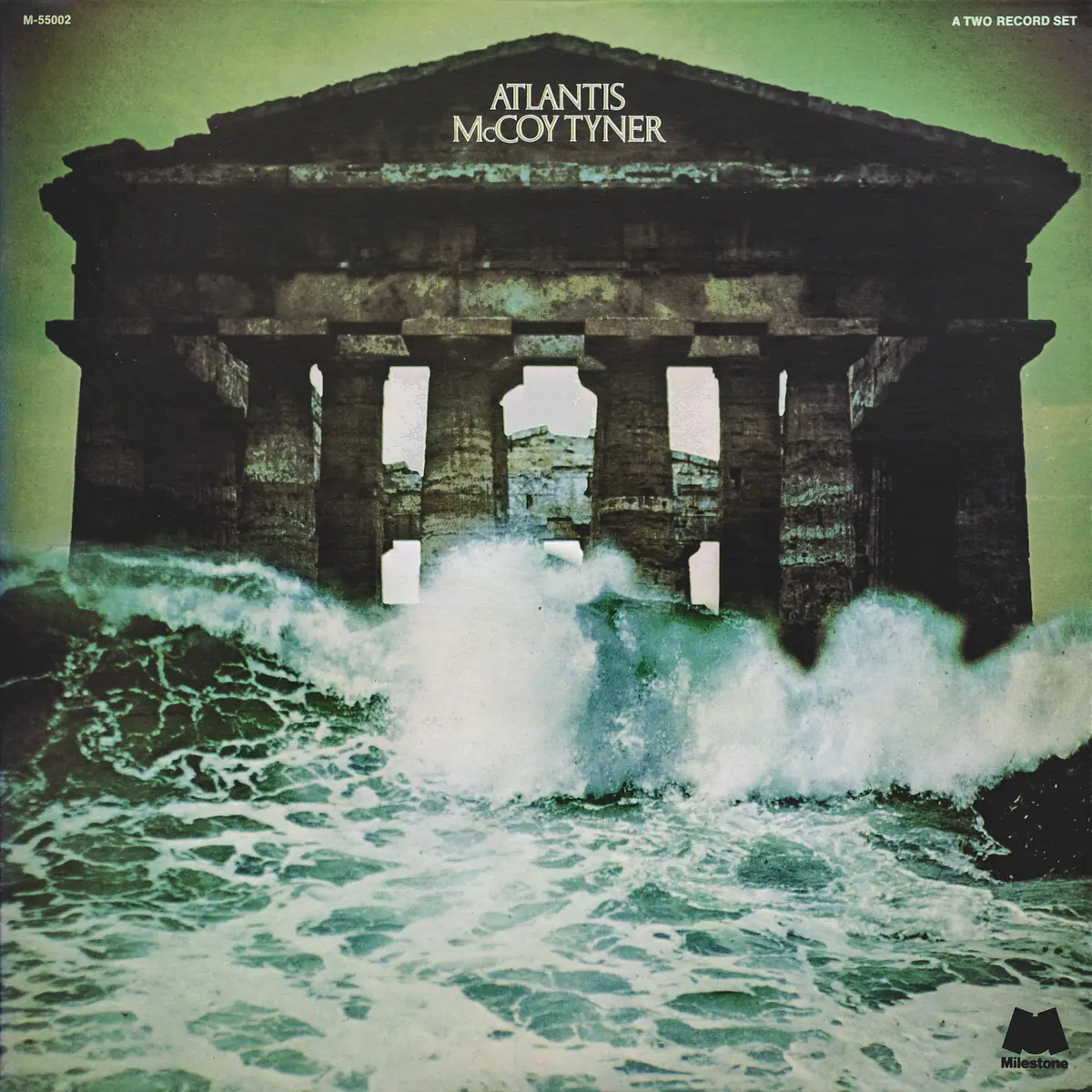 In June 1975, McCoy Tyner released Atlantis, a two-record document of his August 31–September 1, 1974, shows at the Keystone Korner jazz club in San Francisco.
The album captures Tyner’s modal and post-Sahara piano style in a live club setting, combining dense, layered textures with extended improvisations. The ensemble includes tenor/soprano saxophonist Azar Lawrence, bassist Joony Booth, drummer Wilby Fletcher, and Brazilian percussionist Guilherme Franco, blending Tyner’s previous live approaches with broader rhythmic and tonal palettes.
Tyner composed three of the six tracks, while the album also features covers of Duke Ellington’s “In a Sentimental Mood” and Guy Wood and Robert Mellin’s “My One and Only Love.”
The opening title track stretches over seventeen minutes, establishing the ensemble’s layered interplay and Tyner’s powerful, expansive piano lines. “In a Sentimental Mood” delivers a solo piano tribute to Ellington, offering a reflective contrast to the surrounding intensity. “Makin’ Out” and “Pursuit” feature energetic ensemble passages with angular, soaring solos, while “Love Samba” incorporates Brazilian rhythms, highlighting Franco’s percussion and Tyner’s exploratory modal passages. “My One and Only Love” retains a lyrical, contemplative focus, punctuating the set with quiet precision.
A. “Atlantis” (17:59) – The set opens with a sweeping canvas, Tyner’s left hand driving torrents of sound while Lawrence’s tenor cuts sharp arcs above the rhythm section. Franco’s percussion widens the field, adding depth to the ensemble’s surging cycles.
B1. “In a Sentimental Mood” (5:39) – Tyner reshapes Ellington’s ballad in spare figures, tracing the melody with open harmonies and subtle turns that suspend the flow in quiet space.
B2. “Makin’ Out” (13:04) – Lawrence launches into insistent lines against Tyner’s cascading runs, the group pressing forward with mounting intensity before releasing into freer passages.
C1. “My One and Only Love” (9:59) – The standard unfolds in long-breathed phrases, Lawrence’s soprano singing over Tyner’s sustained chords and reflective pace.
C2. “Pursuit” (9:20) – The quartet drives at clipped speed, Tyner hammering polyrhythms beneath spiraling saxophone figures, the ensemble propelling the chase through tight accelerations.
D. “Love Samba” (15:56) – Franco’s percussion anchors shifting patterns as Tyner and Lawrence stretch across extended phrases, the performance expanding in waves that circle back to relentless motion.
The ensemble consists of McCoy Tyner on piano, Azar Lawrence on tenor and soprano saxophones, Joony Booth on bass, Wilby Fletcher on drums, and Guilherme Franco on percussion.
Atlantis continues Tyner’s exploration of expansive, post-Sahara soundscapes, integrating freer, modal improvisation with Brazilian rhythmic textures, extended solos, and dynamic ensemble interplay, preserving the intensity and complexity of his live performance for a two-disc recording.
Trident
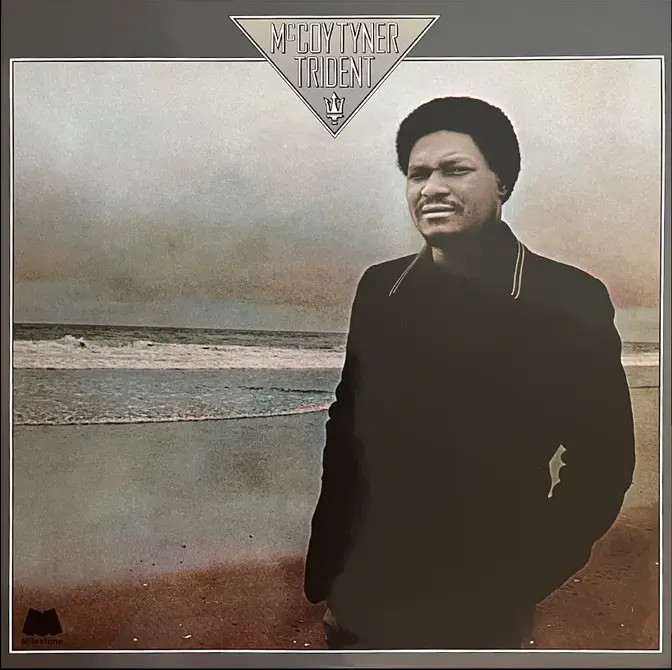 McCoy Tyner released his eighteenth studio album, Trident, in 1975 on Milestone, featuring a trio with bassist Ron Carter and drummer Elvin Jones.
The album presents Tyner’s piano work in a stripped-down trio context, exploring both spiritual jazz and post-bop/modal textures. Tyner expands his palette by including harpsichord and celeste alongside piano, allowing the trio to generate a larger, more luminous sound despite the absence of horns or additional instrumentation.
Tyner composed four of the six tracks, while the album also includes covers of Antônio Carlos Jobim’s “Once I Loved,” John Coltrane’s “Impressions,” and Thelonious Monk’s “Ruby, My Dear.”
The opener, “Celestial Chant,” establishes a soaring, expansive framework with bright harpsichord flourishes. “Once I Loved” emphasizes contoured phrasing and subtle harmonic shifts, highlighting Tyner’s nuanced interpretation of Jobim’s melody. “Elvin (Sir) Jones” foregrounds the drummer’s dynamic interplay and rhythmic propulsion. “Land of the Lonely” develops angular piano lines over Carter’s anchored bass. The trio interprets “Impressions” with post-bop intensity, trading energetic solos, while the closing “Ruby, My Dear” demonstrates Tyner’s willingness to engage with Monk’s harmonic language and lyrical restraint.
A1. “Celestial Chant” (7:00) – Harpsichord leads the trio into bright clustered figures, its metallic resonance offset by Carter’s grounding bass and Jones’s rolling accents.
A2. “Once I Loved” (7:53) – Tyner turns to celesta, sketching the Jobim theme in ringing tones before moving back to piano for a layered expansion.
A3. “Elvin (Sir) Jones” (5:27) – Piano and drums lock in tight exchanges, Jones shaping the direction with bursts that spark Tyner’s rapid runs.
B1. “Land of the Lonely” (7:33) – Harpsichord and celesta return in shifting textures, Tyner weaving sustained figures around Carter’s steady pulse.
B2. “Impressions” (5:03) – Coltrane’s theme accelerates through clipped statements, Tyner driving with relentless chords while Carter and Jones fuel the pace.
B3. “Ruby, My Dear” (7:51) – Monk’s ballad unfolds in spacious lines, Tyner sustaining clarity while allowing pauses to frame each turn of the melody.
Sessions occurred February 18–19, 1975, at Fantasy Studios in Berkeley, California, with Orrin Keepnews producing.
Fly with the Wind
 McCoy Tyner released his nineteenth studio album, Fly with the Wind, in 1976 on Milestone, featuring a trio with bassist Ron Carter, drummer Billy Cobham, flutist Hubert Laws, and a full string section.
The album blends jazz trio improvisation with orchestral and classical textures, creating a third-stream synthesis that emphasizes both compositional structure and expansive soloing. Tyner incorporates piano as the central voice while interacting with flute and percussion, supported by strings that enhance the harmonic and dynamic range.
Tyner composed four of the five original tracks, while the album also includes a cover of Brown and Kahn’s “You Stepped out of a Dream.”
The title track opens with layered piano lines and fluttering flute over sustained strings, establishing a broad, flowing rhythm. “Salvadore de Samba” extends Tyner’s improvisation over complex, syncopated percussion patterns provided by Cobham, combining jazz intensity with orchestral coloration. “Beyond the Sun” slows the pace, foregrounding lyrical piano phrasing and gentle string textures. “You Stepped out of a Dream” offers a structured, slightly ostinato-driven interpretation of the standard. “Rolem” concludes with accelerated interplay among piano, bass, drums, and strings, showcasing dynamic range and rhythmic intricacy.
A1. “Fly with the Wind” (8:30) – Strings and woodwinds frame Tyner’s forceful chords, the trio surges beneath as Laws’s flute arcs above shifting rhythmic layers.
A2. “Salvadore de Samba” (12:13) – Latin percussion inflects the ensemble drive, Tyner pressing angular lines against Carter’s pulse while Cobham sustains restless pace.
B1. “Beyond the Sun” (5:33) – Reflective atmosphere takes shape with contoured piano figures under flute phrases that linger over quiet orchestral support.
B2. “You Stepped out of a Dream” (6:55) – The standard reemerges through strings and flute, Tyner reshaping the theme with sharp turns that propel the arrangement forward.
B3. “Rolem” (5:43) – Tyner anchors vigorous exchanges with rapid chords, the trio tightening momentum before yielding to sweeping orchestral accents.
Sessions occurred January 19–21, 1976, at Fantasy Studios in Berkeley, California, with Orrin Keepnews producing.
CD bonus tracks:
6. “Beyond the Sun” [alternate take] (5:08) – Alternate version pares back detail, giving flute and piano space to stretch across a thinner frame.
7. “Rolem” [alternate take] (5:15) – The trio moves with clipped urgency, textures streamlined while retaining the core intensity of the original.
Focal Point
 McCoy Tyner released his twentieth studio album, Focal Point, in 1976 on Milestone, recorded with a septet that included three reed players—Gary Bartz, Joe Ford, and Ron Bridgewater—alongside Charles Fambrough on bass, Eric Kamau Gravatt on drums, and percussionist Guilherme Franco.
The album explores post-bop and modal jazz through layered horn arrangements, intricate piano work, and occasional world-music textures, including tabla and dulcimer. Overdubs expand the horn section, creating a rich, sometimes dense ensemble sound, while Tyner’s improvisations remain central.
Tyner composed all six tracks, including the dulcimer-led “Mode for Dulcimer” and the drum-piano duo “Parody.”
Tracks open with “Mes Trois Fils,” a structured ensemble piece emphasizing reed counterpoint and rhythm section propulsion. “Parody” pares down to piano and drums, spotlighting Gravatt’s dynamic soloing and Tyner’s percussive chordal responses. “Indo-Serenade” and “Mode for Dulcimer” incorporate world-music elements, with tabla and dulcimer accenting modal lines. “Departure” returns to expansive horn and rhythm interactions, and “Theme for Nana” closes with a reflective, flute-accented tribute.
A1. “Mes trois fils” (7:56) – Horns overlap in layered voicings, the ensemble pressing forward over Tyner’s driving chords and Gravatt’s insistent rhythm.
A2. “Parody” (6:55) – Stark piano/drum duo; Tyner hurls dense runs against Gravatt’s shifting accents, closing with a fierce solo exchange.
A3. “Indo-Serenade” (5:35) – The reeds trace winding lines as Tyner stretches the harmony outward, percussion coloring the frame with light detail.
B1. “Mode for Dulcimer” (8:59) – Tyner’s hammered strings strike a bright resonance, tablas joining to evoke an altered tonal space distinct from the piano-led pieces.
B2. “Departure” (5:58) – Ensemble lines pivot between tightly written passages and open bursts, the rhythm section urging sudden shifts in pace.
B3. “Theme for Nana” (5:14) – Gentler close with contoured flute theme as Tyner shapes spare, lyrical accompaniment beneath.
Sessions occurred August 4–7, 1976, at Fantasy Studios in Berkeley, California, with Orrin Keepnews producing.
The ensemble features McCoy Tyner on piano and dulcimer (“Mode for Dulcimer”), Joe Ford on alto and soprano saxophones and flute, Gary Bartz on alto and soprano saxophones, sopranino sax, and clarinet, Ron Bridgewater on tenor and soprano saxophones, Charles Fambrough on bass, Eric Kamau Gravatt on drums, and Guilherme Franco on congas, percussion, and tabla.
Supertrios
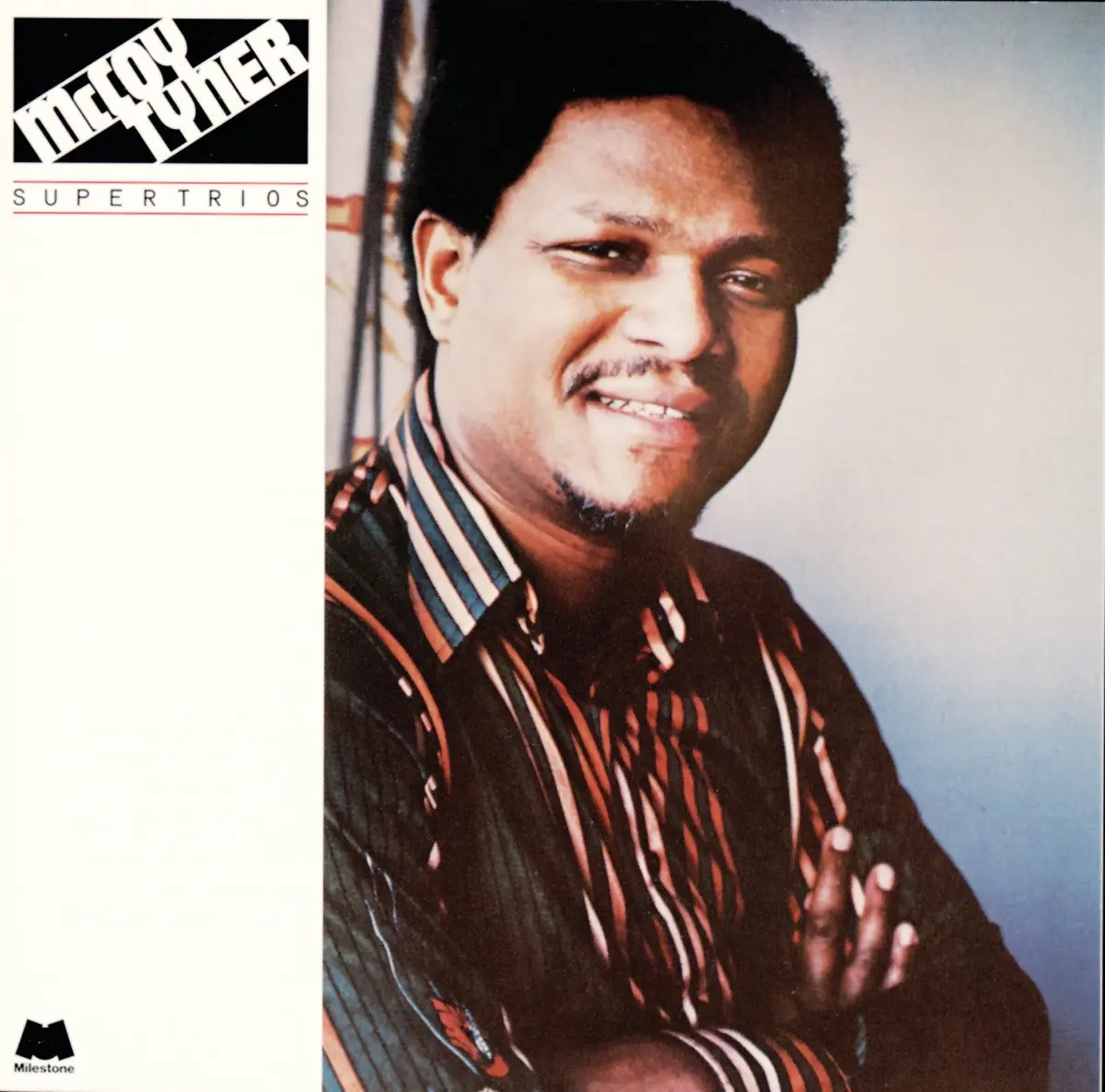 McCoy Tyner released his 21st studio album, the two-record Supertrios, in 1977 on Milestone, recorded with two separate trios: Ron Carter and Tony Williams on the first half, Eddie Gómez and Jack DeJohnette on the second.
The album alternates between standards and Tyner originals, exploring hard bop and modal jazz through highly interactive trio settings. Each trio provides a distinct energy: the Carter/Williams pairing is explosive and propulsive, while the Gómez/DeJohnette trio maintains clarity with more deliberate interplay. Tyner’s percussive piano and expansive improvisation unify both sides.
Tyner composed six tracks, with the remaining six drawn from standards by Jobim (“Wave”), Hawkins and Monk (“I Mean You”), Ellington, Gordon, and Mills (“Prelude to a Kiss”), Coltrane (“Moment’s Notice”), Washington and Young (“Stella by Starlight”), and Strayhorn (“Lush Life”).
The album begins with “Wave,” a flowing interpretation of Jobim, and continues with the fiery Tyner original “Blues on the Corner.” “Parody” style improvisation appears in Tyner’s duos, while renditions of standards like “I Mean You” and “Prelude to a Kiss” reveal fresh rhythmic and harmonic approaches. Later tracks such as “Four by Five” reprise Tyner originals with renewed intensity, and “Lush Life” concludes the set with measured, expressive phrasing.
A1. “Wave” (7:27) – Jobim’s theme expands under Tyner’s dense voicings, while Carter steadies the line and Williams fractures the rhythm with sudden strikes.
A2. “Blues on the Corner” (6:28) – The trio trades terse figures across a quick pulse, Tyner threading sharp runs against shifting accents.
A3. “I Mean You” (5:21) – Monk’s angular design sparks a nimble exchange, piano darting through the form as bass and drums answer in clipped phrases.
B1. “The Greeting” (7:49) – Long arcs build over insistent rhythm, Tyner pressing forward with sustained force as the trio swells in intensity.
B2. “Prelude to a Kiss” (4:35) – Ellington’s ballad slows the pace, Tyner spacing his chords with weight while the rhythm section recedes to quiet motion.
B3. “Moment’s Notice” (5:49) – Coltrane’s fast-moving changes ignite quick interplay, the trio pushing through abrupt turns at unrelenting pace.
C1. “Hymn-Song” (5:11) – A stately theme rises in measured steps, Gómez grounding the motion as DeJohnette shades the line with subtle color.
C2. “Consensus” (9:34) – Written passages break open into free surges, the trio splintering and rejoining in shifting episodes.
C3. “Four by Five” (5:30) – Tyner reopens his earlier piece with fierce drive, the head propelling taut improvisations from each player.
D1. “Stella by Starlight” (8:05) – The familiar standard stretches across extended phrasing, Tyner widening the harmony with expansive chords.
D2. “Lush Life” (6:24) – Strayhorn’s ballad emerges in weighted tones, Tyner voicing broad contours against a hushed backdrop.
D3. “Blues for Ball” (4:53) – The set closes on compact blues form, rhythm earthy and direct as Tyner punctuates each chorus with emphatic attack.
Sessions occurred at Fantasy Studios in Berkeley, California, on April 9–10 for the Carter/Williams trio (record one) and April 11–12 for the Gómez/DeJohnette trio (record two), with Orrin Keepnews producing.
Inner Voices
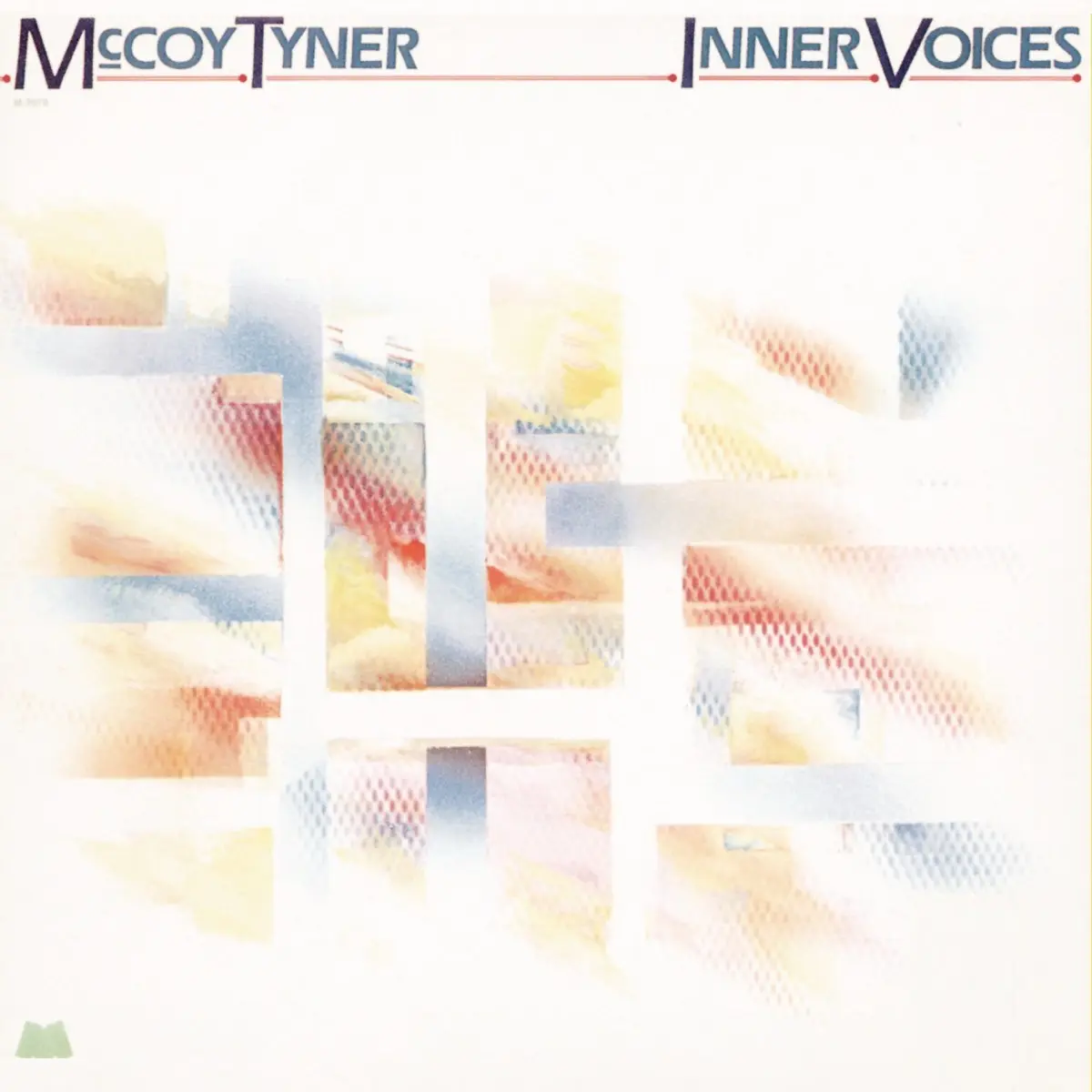 McCoy Tyner released his 22rd studio album, Inner Voices, in 1977 on Milestone, featuring a seven-member vocal choir alongside a twelve-piece horn section and rhythm section including Ron Carter, Earl Klugh, Jack DeJohnette, and Eric Gravatt.
The album blends post-bop piano with expansive orchestration, integrating choir and horns as thematic and harmonic accents. Tyner alternates between intimate duets and full ensemble passages, maintaining his signature percussive phrasing and angular improvisation throughout. Tyner wrote all five tracks.
The album opens with “For Tomorrow,” a piano and drums duet punctuated by the choir, while “Uptown” features a driving post-bop rhythm with horn backing and acoustic guitar. “Rotunda” spotlights Klugh’s acoustic guitar against wordless vocal textures, and “Opus” combines horns, choir, and Gravatt’s drums in high-energy interaction. The closing “Festival in Bahia” layers Brazilian percussion, guitar, and horns over Tyner’s piano, creating a dense, dynamic ensemble sound.
A1. “For Tomorrow” (6:07) – Piano opens against the chorus, phrases rising and breaking as Carter underlines the motion with bass resonance.
A2. “Uptown” (7:30) – Horns and rhythm section drive a forward pace, Tyner pressing angular runs while Gravatt sustains the charge.
A3. “Rotunda” (6:46) – Guitar threads through Tyner’s harmonies, chorus voicing the theme in sharp bursts over DeJohnette’s shifting patterns.
B1. “Opus” (9:35) – Expansive structure unfolds in layered sections, horns and voices alternating with sudden rhythmic accelerations.
B2. “Festival in Bahia” (10:08) – Piano introduction gives way to Klugh’s guitar and Brazilian percussion, the choir and brass joining in a sweeping call-and-response.
Sessions occurred at Electric Lady Studios in New York City on September 1–8, 1977, with Orrin Keepnews producing.
The Greeting
In 1978, McCoy Tyner released The Greeting, a document of his March 17–18 showcase at the Great American Music Hall, featuring a sextet with George Adams, Joe Ford, Charles Fambrough, Woody Theus, and Guilherme Franco.
The album captures Tyner’s post-bop piano within a high-energy live setting, alternating between full-band intensity and solo expression. The ensemble blends percussion, saxophones, and flute with Tyner’s percussive, angular piano lines to create expansive, dynamic textures.
Tyner wrote four of the five tracks, while John Coltrane composed the piano solo “Naima.”
The set opens with “Hand in Hand,” featuring Tyner’s piano against dual flutes, orchestral bells, and berimbau accents. “Fly with the Wind” employs driving bass and sax interplay with extended solos. “Pictures” continues the post-bop energy with intricate saxophone harmonies. Tyner’s solo on “Naima” transforms Coltrane’s composition into an emotive, forceful statement, while “The Greeting” closes with collective improvisation across the sextet, emphasizing percussive and harmonic density.
A1. “Hand in Hand” (6:18) – Flutes move in tandem over percussion colors, Tyner laying out the theme with a gentler cast before the ensemble thickens the sound.
A2. “Fly with the Wind” (14:54) – Extended form unfolds in waves, saxophones pressing against the piano’s surging figures while the rhythm section sustains a high pace.
A3. “Pictures” (7:57) – Tyner sets a broad canvas, horns tracing bold arcs as the ensemble swells and contracts around his percussive drive.
B1. “Naima” (4:44) – Solo piano reimagines Coltrane’s ballad, Tyner shaping the harmony in sustained chords and cascading runs.
B2. “The Greeting” (8:55) – Sextet closes in force, piano and horns breaking forward in sharp exchanges carried by insistent drums and percussion.
Sessions occurred live at the Great American Music Hall, San Francisco, California, on March 17 and 18, 1978, produced by Orrin Keepnews.
The Greeting showcases Tyner’s live post-bop approach, combining solo expression, ensemble density, and high-energy interaction, reinforcing the intensity and improvisational breadth characteristic of his 1970s live recordings.
Discography:
- Inception (1962, Impulse!)
- Reaching Fourth (1962, Impulse!)
- Nights of Ballads & Blues (1963, Impulse!)
- Today and Tomorrow (1963, Impulse!)
- Live at Newport (1964, Impulse!)
- McCoy Tyner Plays Ellington (1964, Impulse!)
- The Real McCoy (1967, Blue Note)
- Tender Moments (1967, Blue Note)
- Time for Tyner (1968, Blue Note)
- Expansions (1968, Blue Note)
- Cosmos (1968–1970, Blue Note)
- Extensions (1970, Blue Note)
- Asante (1970, Blue Note)
- Sahara (1972, Milestone)
- Song for My Lady (1972, Milestone)
- Echoes of a Friend (1972, JVC/Milestone)
- Song of the New World (1973, Milestone)
- Enlightenment (1973, Milestone)
- Sama Layuca (1974, Milestone)
- Atlantis (1974, Milestone)
- Trident (1975, Milestone)
- Fly with the Wind (1976, Milestone)
- Focal Point (1976, Milestone)
- Supertrios (1977, Milestone)
- Inner Voices (1977, Milestone)
- The Greeting (1978, Milestone)
- Passion Dance (1978, Milestone)
- Counterpoints: Live in Tokyo (1978, Milestone)
- Together (1978, Milestone)
- Horizon (1979, Milestone)
- Quartets 4 X 4 (1980, Milestone)
- 13th House (1981, Milestone)
- La Leyenda de La Hora (1981, Columbia)
- Looking Out (1982, Columbia)
- Love & Peace (1982, Trio)
- Dimensions (1984, Elektra)
- It’s About Time (1985, Blue Note)
- Just Feelin’ (1985, Palo Alto)
- Double Trios (1986, Denon)
- Major Changes (1985, Blue Note)
- Bon Voyage (1987, Timeless)
- Blues for Coltrane (1987, Impulse!)
- Live at the Musicians Exchange Cafe (1987, Who’s Who in Jazz)
- Revelations (1988, Blue Note)
- Uptown/Downtown (1988, Milestone)
- Live at Sweet Basil (1989, King)
- Things Aint What They Used to Be (1989, Blue Note)
Sources:
- Discogs: McCoy Tyner
- 45worlds: McCoy Tyner
- JazzMusicArchives: McCoy Tyner
- MusicBrainz: McCoy Tyner
- RYM: McCoy Tyner
Artist/Album Pages:
Lee Michaels is an American organist, singer, and songwriter who released six studio albums and a li...
Andy Fraser (July 3, 1952 — March 16, 2015) was an English bassist and songwriter who rose to prom...
Ose was a French electronic project formed by multi-instrumentalist Hervé Picart along with the co...
Swegas was an English brass-rock band behind the 1971 albums Child of Light and Beyond the Ox. M...
Mellow Candle was an Irish folk-rock band, first formed in 1963 as a girl trio. After a one-off si...
Fuchsia was an English folk-rock band from Exeter, Devon, that released a self-titled album on the P...
Bang was an American hard-rock/psych trio from Philadelphia that released three albums in 1972/73...
First Choice was an American soul-funk vocal trio from Philadelphia. Between 1973 and 1980, they m...
The Hastings Street Jazz Experience was an American post-bop ensemble from Detroit that recorded t...
Péloquin Sauvageau was a Québécois electro-psych duo that released the 1972 Polydor album Laissez-...
Waves of Dreams is the third album by American saxophonist Sonny Fortune. Released in 1976 on A&...
Luiz Bonfá (Oct. 17, 1922 — Jan. 12, 2001) was a Brazilian samba-jazz guitarist and composer who e...