

Lee Morgan (July 10, 1938 — February 19, 1972) was an American jazz trumpeter of the hard bop era and a central figure on the Blue Note label. By his late teens, he recorded with John Coltrane, Curtis Fuller, and Dizzy Gillespie, then became a regular in Art Blakey’s Jazz Messengers. His work as sideman and leader balanced forceful hard bop with exploratory post-bop, establishing him as a major voice in modern jazz.
At 18, Morgan joined Dizzy Gillespie’s Big Band for an 18-month stint. In 1958, he entered the Jazz Messengers, appearing on Moanin’ and debuting his writing with “The Midget” and “Haina.” After Benny Golson’s departure, Morgan urged Blakey to recruit Wayne Shorter, solidifying one of the band’s most celebrated lineups. His years with the Messengers secured his standing as both soloist and composer.
In 1963, Morgan returned to New York and cut The Sidewinder. Its title track became a rare jazz crossover, entering the pop and R&B charts and surfacing in national commercials. The hit broadened his profile, yet he pursued deeper artistic ground on sessions like Grachan Moncur III’s Evolution. The contrast between commercial success and avant-leaning work underscored his versatility.
Through the 1960s, Morgan recorded steadily as leader and collaborator. He briefly rejoined the Messengers and appeared on albums by Wayne Shorter, Stanley Turrentine, and Hank Mobley. His 1964 album Search for the New Land reached the R&B top 20 and revealed his broad compositional scope. In the early 1970s, he led a band with Billy Harper or Bennie Maupin, Harold Mabern, and Jymie Merritt, documented on the live double set Live at the Lighthouse, which captured his final era of innovation and performance.
Background
He was born Edward Lee Morgan on July 10, 1938, in Philadelphia, the youngest of four children. As a child, he first took up vibraphone, then trumpet and alto saxophone. For his thirteenth birthday, his sister gave him a trumpet. His initial inspiration was Clifford Brown, who Morgan tutored under during the early 1950s.
In 1956, 18-year-old Morgan joined Dizzy Gillespie’s Big Band. That same year, he made his first two appearances on record, both on Savoy Records: Jazz Message #2 by tenor saxophonist Hank Mobley, directly preceded by Introducing Lee Morgan, credited to Lee Morgan with Hank Mobley’s Quintet.
Lee Morgan Indeed!
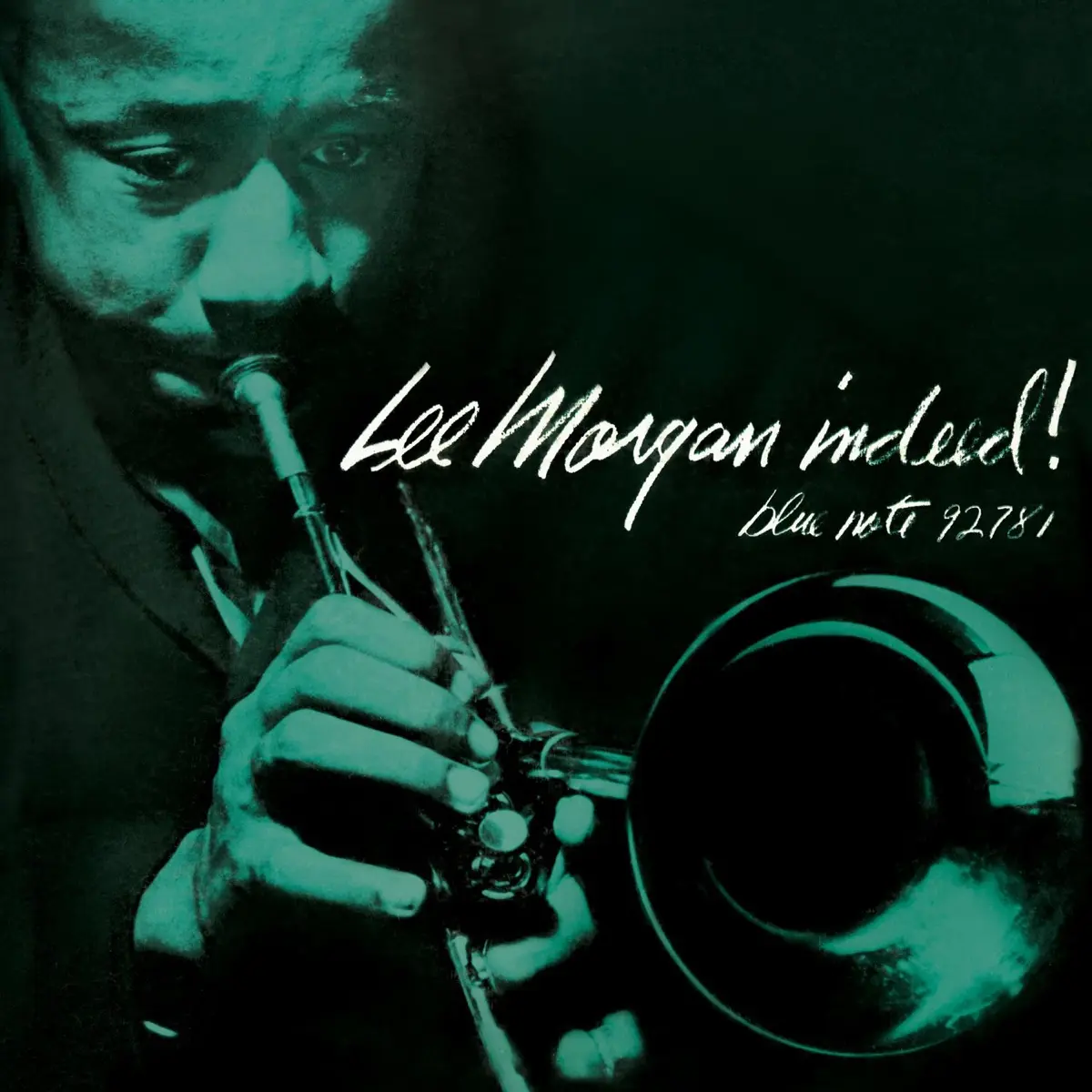 Lee Morgan released his debut album, Lee Morgan Indeed!, in February 1957 on Blue Note. The sessions occurred one day before those his concurrent Savoy release, Introducing Lee Morgan.
The album presents Morgan at 18 fronting a quintet with saxophonist Clarence Sharpe, pianist Horace Silver, bassist Wilbur Ware, and drummer Philly Joe Jones. The set balances sharp hard bop themes with contrasting ballad and blues numbers, giving Morgan a chance to establish his tone against established sidemen.
Morgan did not contribute original material; the six tracks include two pieces by Benny Golson (“Reggie of Chester,” “Stand By”), two by Owen Marshall (“The Lady,” “Gaza Strip”), one by Horace Silver (“Roccus”), and one by trumpeter Donald Byrd (“Little T.”).
“Roccus” opens the album with a bluesy head and extended piano runs by Silver. Byrd’s “Little T.” stretches into a driving workout with layered trumpet–sax voicings. Marshall’s “The Lady” functions as the sole ballad, led primarily by Morgan. “Gaza Strip” follows with brisk pace and accented horn stabs. Golson’s themes provide sharp lines that Sharpe and Morgan trade in unison before opening into solos.
A1. “Roccus” (8:18) – Opens with a robust trumpet line that moves with precise, angular phrasing, supported by interlocking, syncopated rhythms from the rhythm section.
A2. “Reggie of Chester” (4:55) – Features tightly woven horn interplay as the melody twists sharply, while the rhythm pulses steadily beneath, giving the composition a driving momentum.
A3. “The Lady” (6:47) – Moves with a tender, contoured trumpet line, highlighted by soft, deliberate rhythmic shifts that lend a reflective air to the piece.
B1. “Little T.” (8:23) – Unfolds through flowing trumpet phrases with clear, angular turns, accompanied by a rhythm section that alternates between brisk and relaxed pulses.
B2. “Gaza Strip” (3:56) – A brisk, compact performance with sharp horn exchanges, underpinned by a rhythm that varies subtly in pace to accentuate each phrase.
B3. “Stand By” (5:51) – Features a measured trumpet line with finely contoured articulation, framed by rhythmic patterns that shift smoothly between tension and release.
CD bonus tracks:
7. “Little T.” (alternate take) (8:07) – Revisits the earlier composition with slight variations in phrasing and tempo, giving each instrument moments to explore subtle rhythmic nuances.
Sessions occurred on November 4, 1956, at Van Gelder Studio in Hackensack, New Jersey, with producer Alfred Lion and engineer Rudy Van Gelder.
Lee Morgan Indeed! appeared with cover design by Reid Miles and photography by Francis Wolff. Leonard Feather supplied the liner notes.
Lee Morgan, Vol. 3
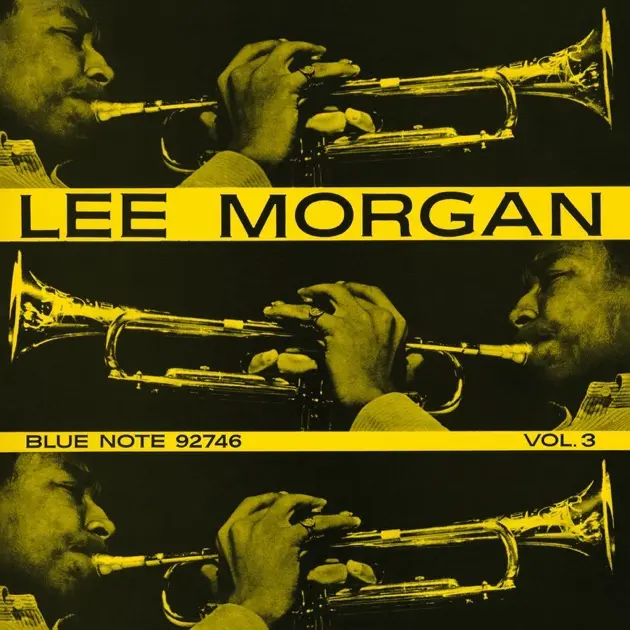 Lee Morgan released his fourth album, Lee Morgan, Vol. 3, in October 1957 on Blue Note.
He fronts a sextet with alto saxophonist Gigi Gryce (also flute), tenor saxophonist Benny Golson, pianist Wynton Kelly, bassist Paul Chambers, and drummer Charlie Persip.
All five tracks were composed and arranged by Benny Golson. The selection includes “I Remember Clifford,” a tribute to the recently deceased trumpeter Clifford Brown. The set reflects Morgan’s preference for a sextet format, blending composed lines with improvisational interplay.
The album opens with “Hasaan’s Dream,” which combines expressive flute and piano with underscored trumpet and tenor lines to create an Asiatic-tinged atmosphere. “Domingo” delivers straight hard bop with tightly interlocked horns. “Mesabi Chant” uses a 34-bar structure to develop a layered, intricate composition. Morgan’s solo work peaks on “I Remember Clifford,” where he delivers a heartfelt and controlled performance, while “Tip-Toeing” features playful drumming by Persip with blues-tinged solos from Chambers and the horns.
A1. “Hasaan’s Dream” (8:44) – Opens with a floating flute line over subtle piano and bass, as the trumpet and tenor weave angular phrases that build tension across shifting rhythms.
A2. “Domingo” (9:22) – Three horns interlock in contoured lines, while the rhythm section alternates between brisk and measured pulses, driving the composition forward.
B1. “I Remember Clifford” (7:07) – Features a heartfelt trumpet lead supported by soft, deliberate horn responses, with a rhythm that moves steadily and underlines the tribute’s solemnity.
B2. “Mesabi Chant” (6:09) – Develops through sharp turns in the horn lines, paired with a complex, subtly shifting rhythm pattern that mirrors the piece’s structured design.
B3. “Tip-Toeing” (6:39) – Moves with playful, staccato trumpet motifs against Persip’s fanciful drumming, with bass and piano weaving intricate, measured pulses.
Sessions occurred on March 24, 1957, at Van Gelder Studio with producer Alfred Lion and engineer Rudy Van Gelder.
Lee Morgan, Vol. 3 features photography by Francis Wolff and design by Harold Feinstein. Liner notes were written by Ira Gitler. The CD edition includes an alternate take of “Tip-Toeing.”
The Cooker
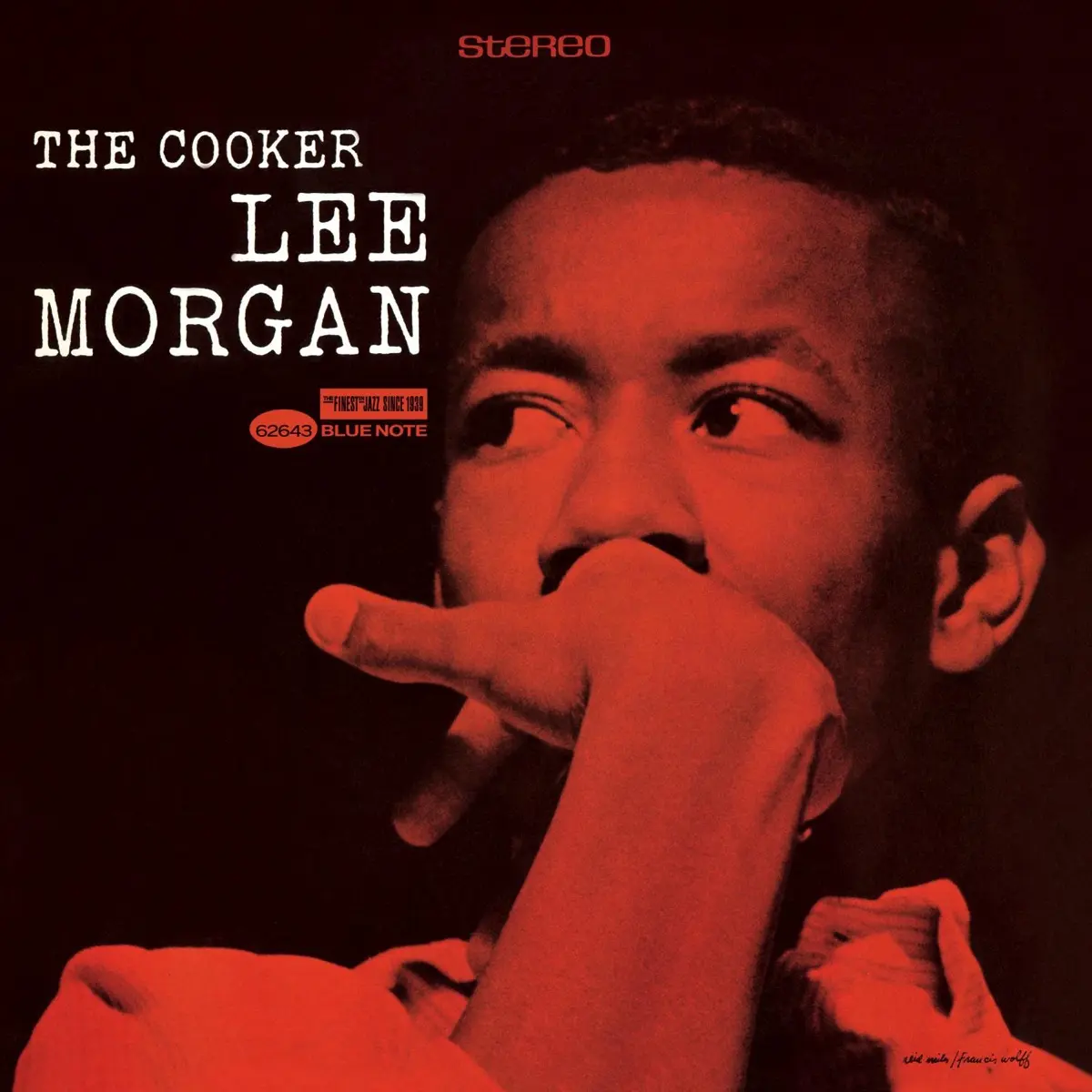 Lee Morgan released his sixth album, The Cooker, in January 1958 on Blue Note.
The album features Morgan at 19 fronting a quintet with baritone saxophonist Pepper Adams, pianist Bobby Timmons, bassist Paul Chambers, and drummer Philly Joe Jones.
The Cooker demonstrates Morgan’s early hard bop virtuosity, highlighting his developing trademarks such as clipped notes, upward slurs, half-valving, and triple-tonguing. The set mixes original compositions with interpretations of standards, showcasing fast-paced improvisation and dense ensemble interplay.
Morgan contributed two originals, “Heavy Dipper” and “New-Ma,” while the album opens with Dizzy Gillespie’s “A Night in Tunisia” and includes Cole Porter’s “Just One of Those Things” and the ballad “Lover Man” (Jimmy Davis, Ram Ramirez, Jimmy Sherman).
“A Night in Tunisia” delivers rapid-fire trumpet lines over shifting rhythmic accents, while “Lover Man” contrasts with restrained phrasing and sustained tones. “Heavy Dipper” and “New-Ma” highlight Morgan’s angular phrasing and precise articulation, supported by Adams’ baritone sax and Timmons’ energetic piano. “Just One of Those Things” adds a brisk, swinging tempo with alternating solos.
A1. “A Night in Tunisia” (9:24) – Opens with sharp trumpet motifs that leap over the baritone’s low lines, supported by rhythmic pulses that shift between brisk and driving.
A2. “Heavy Dipper” (7:05) – Features rapid trumpet figures intertwined with baritone lines, as the rhythm section alternates between tight and flowing patterns.
B1. “Just One of Those Things” (7:18) – Moves with contoured horn lines layered over subtle shifts in tempo, giving each phrase a lively, pointed motion.
B2. “Lover Man” (6:50) – Unfolds with tender, angular trumpet lines over measured, flowing rhythms from the ensemble, highlighting interplay and restraint.
B3. “New-Ma” (8:14) – Develops through sharp turns in trumpet and baritone exchanges, while the rhythm section varies pace to maintain tension and release.
Sessions occurred on September 29, 1957, at Van Gelder Studio with producer Alfred Lion and engineer Rudy Van Gelder.
The Cooker features design by Reid Miles, photography by Francis Wolff, and liner notes by Robert Levin. The CD edition adds an alternate take of “Just One of Those Things.”
Lee-Way
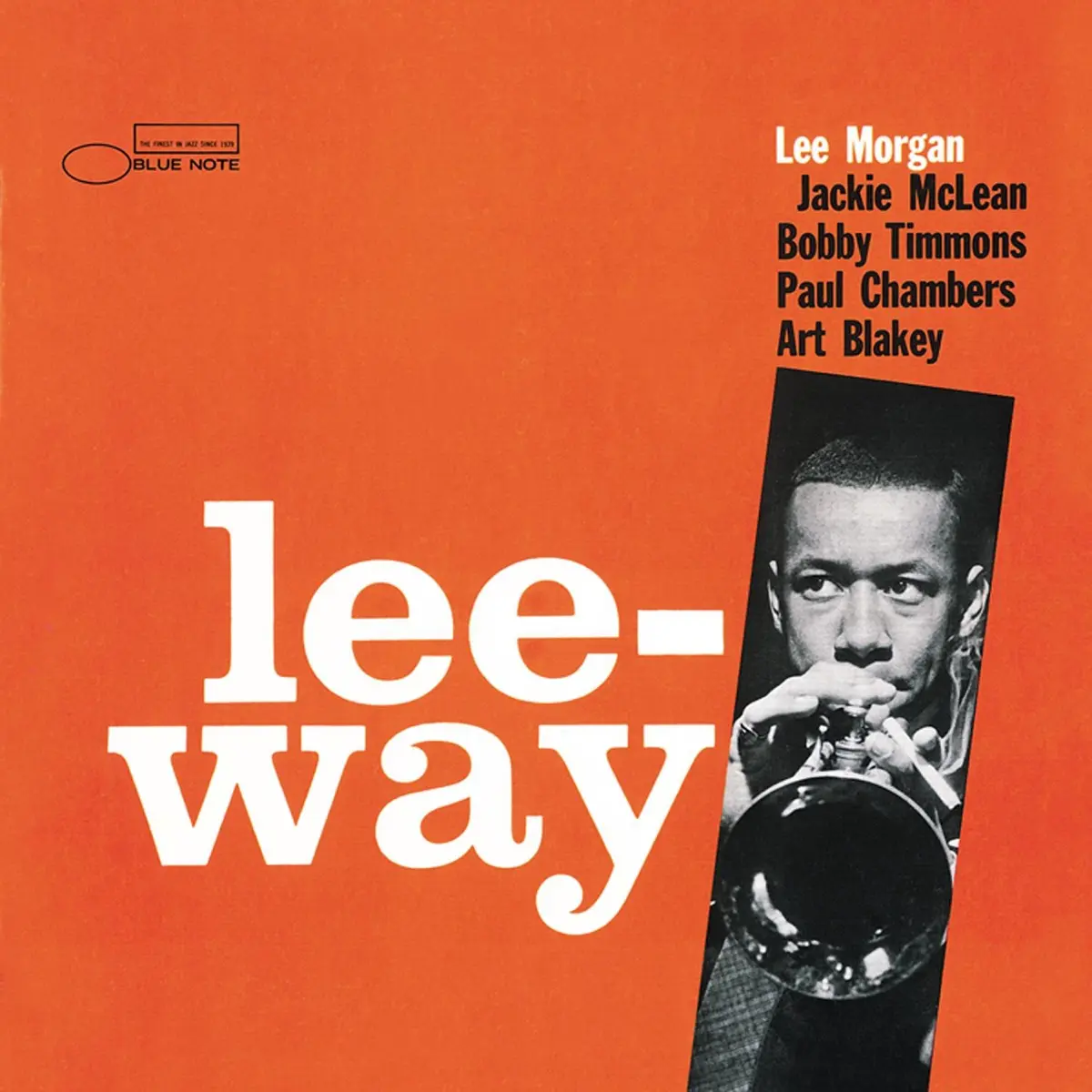 Lee Morgan released his ninth studio album, Lee-Way, in May 1961 on Blue Note.
The quintet features Morgan on trumpet, alto saxophonist Jackie McLean, pianist Bobby Timmons, bassist Paul Chambers, and drummer Art Blakey.
Lee-Way delivers hard bop infused with soul, combining angular phrasing, blues-tinged lines, and rhythmic variation. The program balances Morgan’s original composition with works by McLean and two pieces by composer Calvin Massey, providing a mix of minor-key tension and medium-tempo swing.
Morgan wrote one track, “The Lion and the Wolff,” while Massey contributed two compositions and McLean added “Midtown Blues.”
“These Are Soulful Days” (Massey) opens with a medium blues feel, featuring Paul Chambers’ rhythmically secure bass solo and angular contributions from Timmons and McLean, with Morgan concluding on a bold, energized solo. “The Lion and the Wolff” pairs a sinister, boogie-inflected piano motif with blues-inflected horn lines, highlighted by Morgan’s confident soloing. McLean’s “Midtown Blues” offers a 12-bar stop-and-start blues with occasional harmonic deviations, while Massey’s “Nakatini Suite” presents a 64-bar minor melody, allowing Timmons and Blakey to extend dynamic, controlled solos.
A1. “These Are Soulful Days” (9:25) – Opens with a blues-inflected theme, as trumpet and alto interweave angular lines over shifting, deliberate rhythms that underline each phrase.
A2. “The Lion and the Wolff” (9:40) – Develops through minor-key trumpet motifs and baritone responses, with piano and drums creating a tense, syncopated pulse beneath the horns.
B1. “Midtown Blues” (12:09) – A stop-and-start 12-bar structure drives trumpet and alto into sharp turns, while the rhythm section alternates between measured and brisk passages.
B2. “Nakatini Suite” (8:09) – Unfolds over a 64-bar form, featuring contoured trumpet lines and subtle horn interplay, as the rhythm section varies pace and accent to frame the solos.
Sessions occurred on April 28, 1960, at Van Gelder Studio with producer Alfred Lion and engineer Rudy Van Gelder.
Lee-Way features cover design by Reid Miles, photography by Francis Wolff, and liner notes by Nat Hentoff.
The Sidewinder
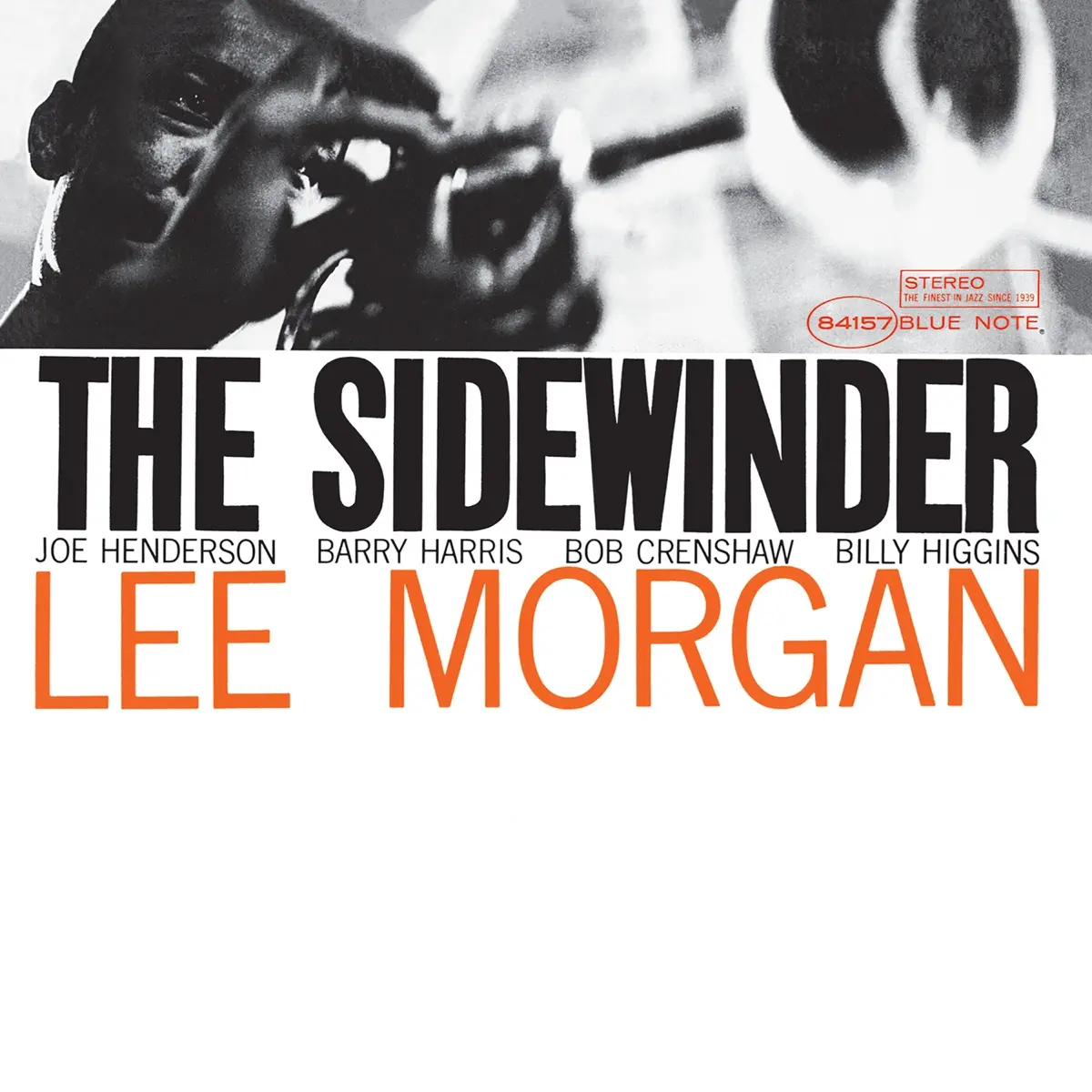 Lee Morgan released his twelfth album, The Sidewinder, in July 1964 on Blue Note.
The Sidewinder showcases Morgan’s hard bop approach, anchored in blues and boogaloo rhythms. The album pairs his precise trumpet lines with tenor saxophonist Joe Henderson’s fluid solos, Barry Harris’ angular piano comping, Bob Cranshaw’s steady bass, and Billy Higgins’ inventive drumming, establishing tight, responsive interplay across all tracks.
Morgan composed all five original tracks, marking the first album entirely under his authorship.
The title track opens with a 24-bar theme built on a sinuous minor-key figure, interweaving solos from Morgan, Henderson, Harris, Cranshaw, and Higgins before returning to the head. “Totem Pole” contrasts straight swing and Latin-inflected rhythms, producing unresolved tension that propels the ensemble. “Gary’s Notebook” presents a waltz feel, with horn lines and rhythm section responding to each other through subtle rhythmic twists. “Boy, What a Night” employs a 12/8 blues framework, while “Hocus-Pocus” concludes with hard-swinging, bebop-derived sequences and interlocking phrasing.
A1. “The Sidewinder” (10:25) – Opens with a sinuous 24-bar theme, trumpet and tenor intertwining in angular phrases over shifting, taut rhythmic pulses that tighten and release.
A2. “Totem Pole” (10:11) – Alternates straight swing and Latin-inflected patterns, horns exchanging contoured motifs as the rhythm section varies pace with subtle tension.
B1. “Gary’s Notebook” (6:03) – A waltz-based blues where trumpet and tenor navigate sharp turns while piano and drums respond with measured, syncopated accents.
B2. “Boy, What a Night” (7:30) – Moves in triple-feel blues, trumpet lines twisting through the harmonic framework as the rhythm section swings with elastic timing.
B3. “Hocus-Pocus” (6:21) – Concludes with bebop-inspired runs, trumpet and tenor executing tightly wound phrases over a rhythm section that alternates propulsion and restraint.
CD bonus:
6. “Totem Pole” [Alternative take] (9:57) – Revisits the earlier theme with minor adjustments, horns contouring through the same interplay while rhythmic shifts emphasize subtle contrasts.
Sessions occurred on December 21, 1963, at Van Gelder Studio in Englewood Cliffs, New Jersey, with producer Alfred Lion and engineer Rudy Van Gelder.
The album features cover design by Reid Miles and photography by Francis Wolff.
The single “The Sidewinder, Parts 1 & 2” reached number 81 on the Billboard Hot 100 in January 1965.
Search for the New Land
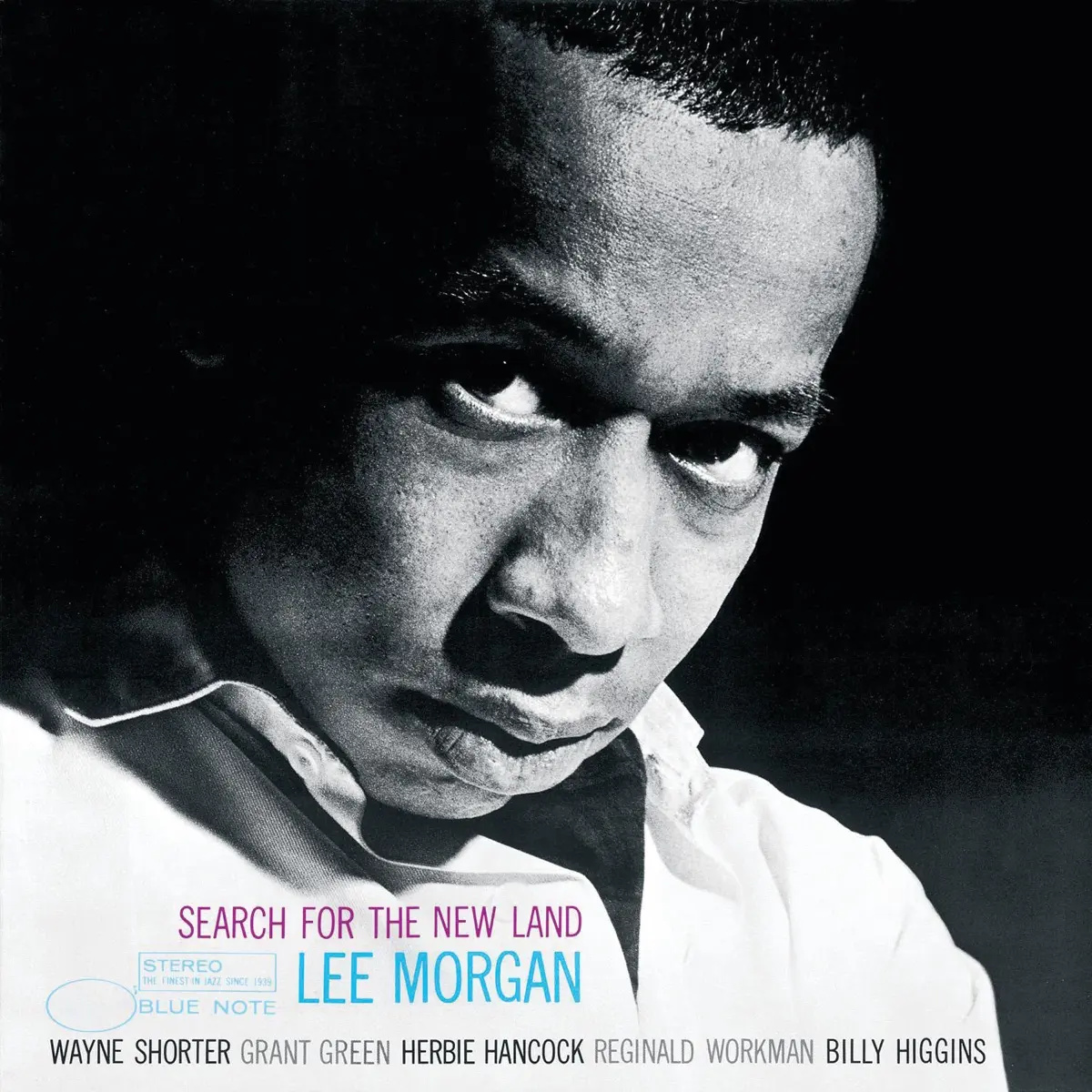 Lee Morgan released his thirteenth album, Search for the New Land, in August 1966 on Blue Note.
Search for the New Land finds Morgan expanding beyond the hard bop framework that defined The Sidewinder, moving toward a more exploratory post-bop approach while retaining his signature intensity. The sessions feature a sextet of regular Blue Note collaborators, combining Morgan’s trumpet with Wayne Shorter (tenor saxophone), Herbie Hancock (piano), Grant Green (guitar), Reggie Workman (double bass), and Billy Higgins (drums), creating a versatile ensemble capable of both collective interplay and individual solos.
Morgan wrote four of the five tracks, with compositions ranging from extended, atmospheric explorations to concise, playful numbers. The album includes no covers, placing the compositional spotlight firmly on Morgan’s writing and the ensemble’s interpretive abilities.
The opening title track, “Search for the New Land,” spans over fifteen minutes and unfolds through sequential melodic loops and evolving harmonic textures, giving each soloist space to shape the narrative. “The Joker” offers lighter, rollicking exchanges between trumpet, saxophone, piano, and guitar. “Mr. Kenyatta” presents rhythmic tension and African-inspired inflections. “Melancholee” slows the pace with a tender, elegiac ballad, while “Morgan the Pirate” closes with a playful, buoyant energy.
A1. “Search for the New Land” (15:45) – Opens with looping motifs that evolve gradually, trumpet and tenor tracing contoured lines over shifting, expansive rhythmic textures while solos emerge and interweave.
A2. “The Joker” (5:04) – Presents a playful, syncopated dialogue among trumpet, tenor, and piano, with guitar punctuating and rhythm section adjusting pace to maintain fluid tension.
B1. “Mr. Kenyatta” (8:43) – Alternates staccato bursts and sustained phrasing, horns and rhythm exchanging angular motifs over a subtly propulsive foundation.
B2. “Melancholee” (6:14) – Languid, elegiac lines unfold with careful pacing, trumpet and guitar responding to each other’s sharp turns while the ensemble maintains measured motion.
B3. “Morgan the Pirate” (6:30) – Balances buoyant thematic material with playful rhythmic shifts, piano, guitar, and horns weaving intricate contours while the rhythm section drives with flexible momentum.
Sessions occurred on February 15, 1964, at Van Gelder Studio in Englewood Cliffs, NJ, with producer Alfred Lion and engineer Rudy Van Gelder.
Search for the New Land features cover design by Reid Miles and photography by Francis Wolff, with Morgan’s trumpet gaze captured in a striking, contemplative portrait.
Tom Cat
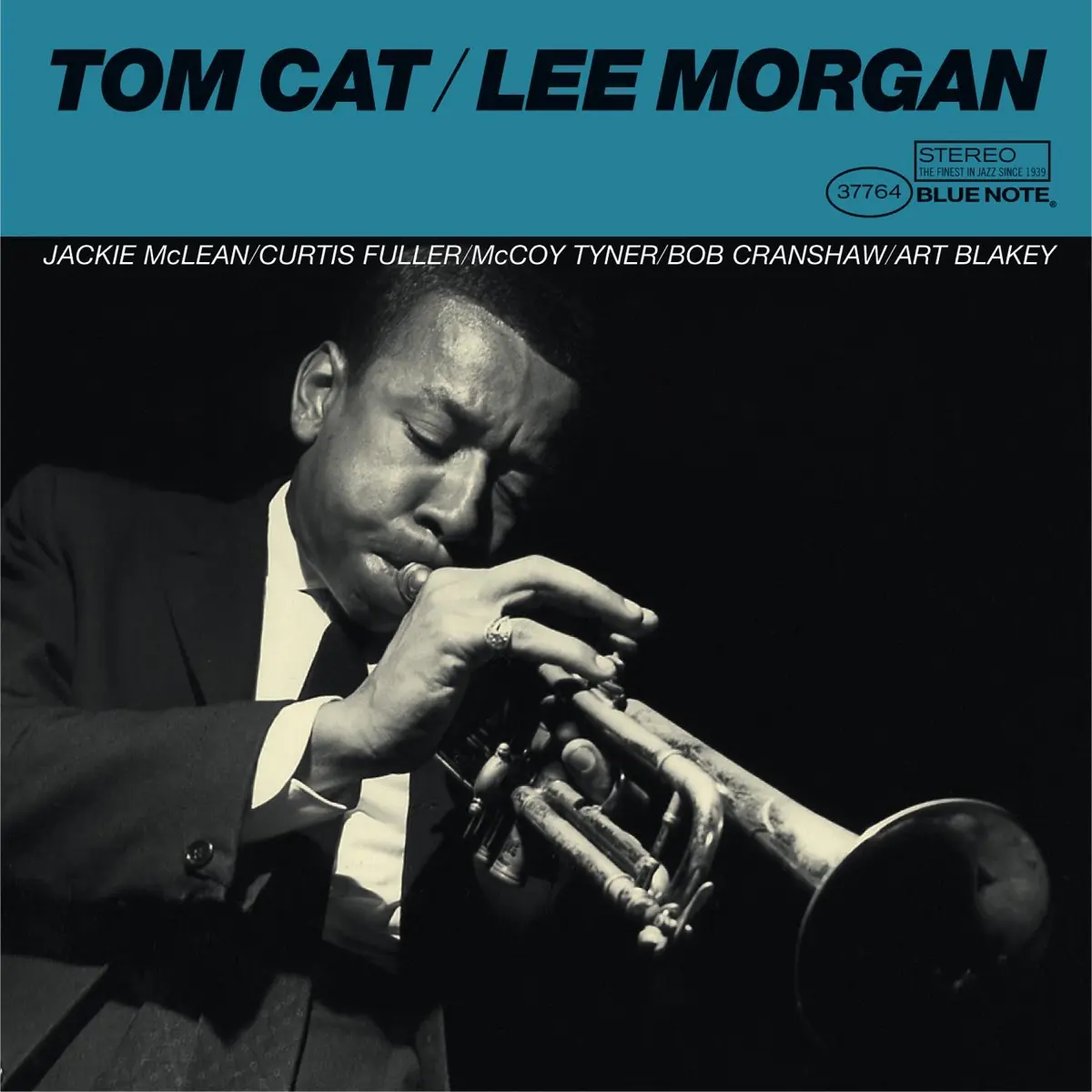 In 1980, Blue Note issued Tom Cat, the long-vaulted sixteenth-recorded studio album by Lee Morgan.
Tom Cat assembles a sextet of Morgan’s Blue Note contemporaries, navigating hard bop with varied tempos and moods. Morgan leads trumpet with Curtis Fuller (trombone), Jackie McLean (alto saxophone), McCoy Tyner (piano), Bob Cranshaw (double bass), and Art Blakey (drums), creating a flexible ensemble that balances layered horn textures with shifting rhythmic foundations.
Morgan wrote four of the five tracks, with pianist McCoy Tyner contributing “Twilight Mist.” No other covers appear, emphasizing original material and group interplay.
The title track, “Tom Cat,” sets a noir-like tone with a restrained, prancing motif. “Exotique” explores Latin-tinged passages with interwoven solos. “Twice Around” features dynamic, propulsive swing and prominent drum textures. Tyner’s “Twilight Mist” offers a poised, elegant contrast. “Rigormortis” channels the rougher, nocturnal energy reminiscent of The Sidewinder, combining punchy horn lines and rhythmically charged accompaniment.
A1. “Tom Cat” (9:50) – Opens with dark piano figures and punctuated trumpet lines, horns and trombone weaving angular phrases over a flexible, prancing rhythm.
A2. “Exotique” (9:34) – Expands with Latin-inspired rhythmic shifts, solos trading between trumpet, alto, and trombone atop a subtly rolling pace.
B1. “Twice Around” (7:36) – Features charging, cyclical patterns with drums and bass driving brisk momentum, horns carving contoured lines through layered textures.
B2. “Twilight Mist” (6:57) – Ballad with smooth, measured pacing; piano leads with flowing, sharp-turning motifs while the ensemble sustains restrained motion.
B3. “Rigormortis” (7:27) – Alternates tense and playful passages, trumpet and horns tracing angular arcs over a rhythm section that modulates intensity with precision.
Sessions occurred on August 11, 1964, at Van Gelder Studio in Englewood Cliffs, NJ, with producer Alfred Lion and engineer Rudy Van Gelder.
Tom Cat remains notable for the ensemble chemistry between Morgan, McLean, Fuller, Tyner, and Blakey, highlighting post-Sidewinder experimentation within a hard bop context.
Cornbread
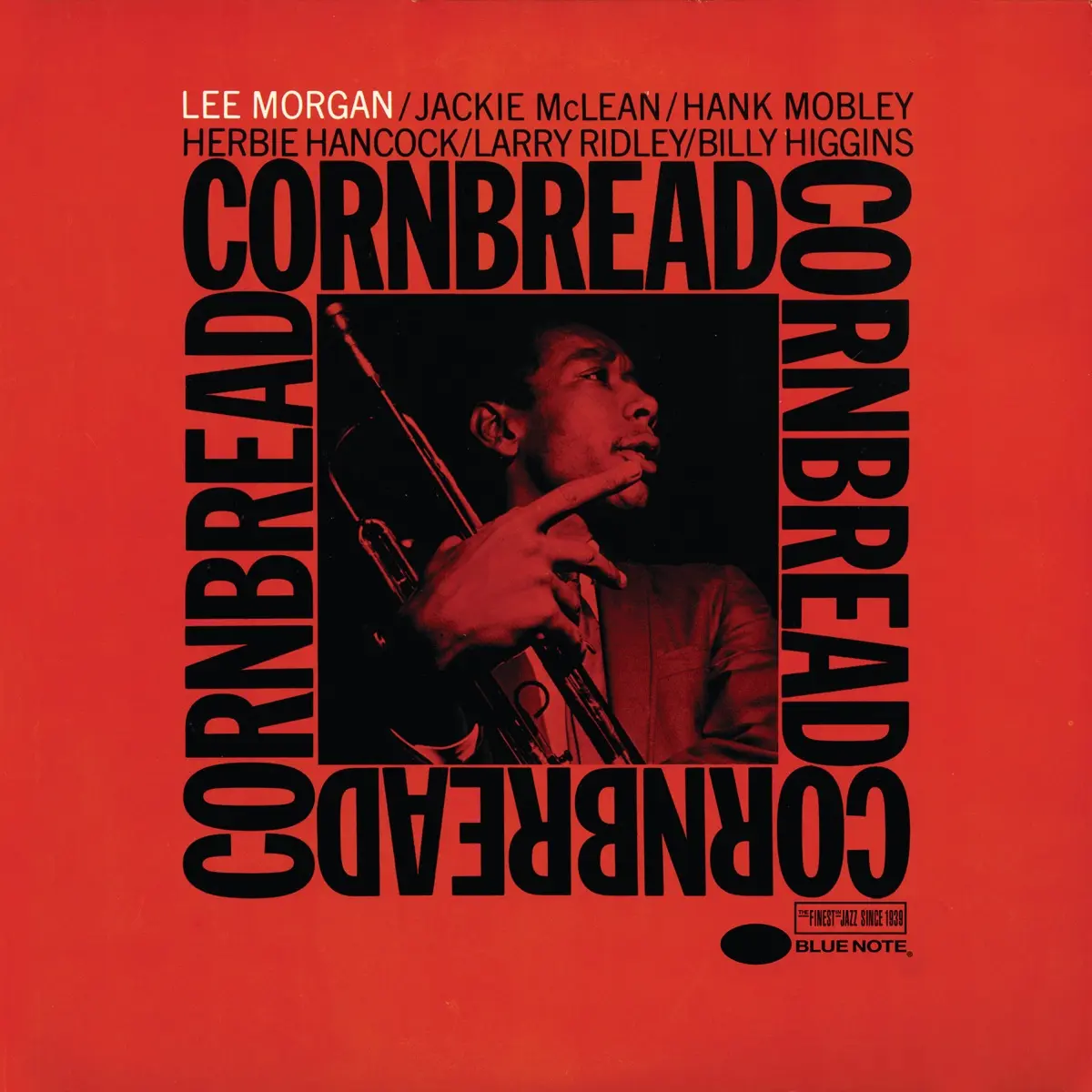 Lee Morgan released his seventeenth-recorded studio album, Cornbread, in January 1967 on Blue Note.
Cornbread showcases Morgan leading a sextet of core Blue Note collaborators, blending hard bop and soul jazz with shifting tempos and textural interplay. The ensemble features Morgan (trumpet), Jackie McLean (alto saxophone), Hank Mobley (tenor saxophone), Herbie Hancock (piano), Larry Ridley (bass), and Billy Higgins (drums), producing intricate horn harmonies and supple rhythm support throughout.
Morgan wrote four of the five tracks, with the standard “Ill Wind” credited to Harold Arlen and Ted Koehler.
The title track opens with an assertive, bossa-tinged theme. “Our Man Higgins” emphasizes three-horn interplay over brisk, rhythmically dynamic foundations. “Ceora” adopts a samba-based pace, highlighting melodic phrasing and fluid solos. “Ill Wind” slows the pace with contemplative, restrained execution. “Most Like Lee” closes with a relaxed, lyrical approach that spotlights bass and ensemble dialogue.
A1. “Cornbread” (9:03) – Opens with a bright, angular trumpet theme, supported by interlocking horn lines and a brisk, energetic rhythm that propels the ensemble.
A2. “Our Man Higgins” (8:54) – Features layered three-horn passages, drums punctuating sharp shifts in pace, and solos that navigate tightly contoured turns.
B1. “Ceora” (6:23) – Moves with a flowing bossa rhythm, trumpet and saxophones tracing smooth arcs while piano and bass maintain a steady, gentle propulsion.
B2. “Ill Wind” (Harold Arlen, Ted Koehler) (7:59) – Unfolds slowly with a reflective pace, trumpet and horns articulating delicate, contoured phrases over sustained, measured motion.
B3. “Most Like Lee” (6:49) – Balances crisp rhythmic interplay with solos that rise and fall through angular passages, bass lines flowing and accentuating each shift in tempo.
Sessions occurred on September 18, 1965, at Van Gelder Studio in Englewood Cliffs, NJ, with producer Alfred Lion and engineer Rudy Van Gelder.
Cornbread reached number seven on the U.S. Billboard Jazz Albums chart. “Ceora” has become a recognized jazz standard and has been interpreted by several later jazz musicians.
The Gigolo
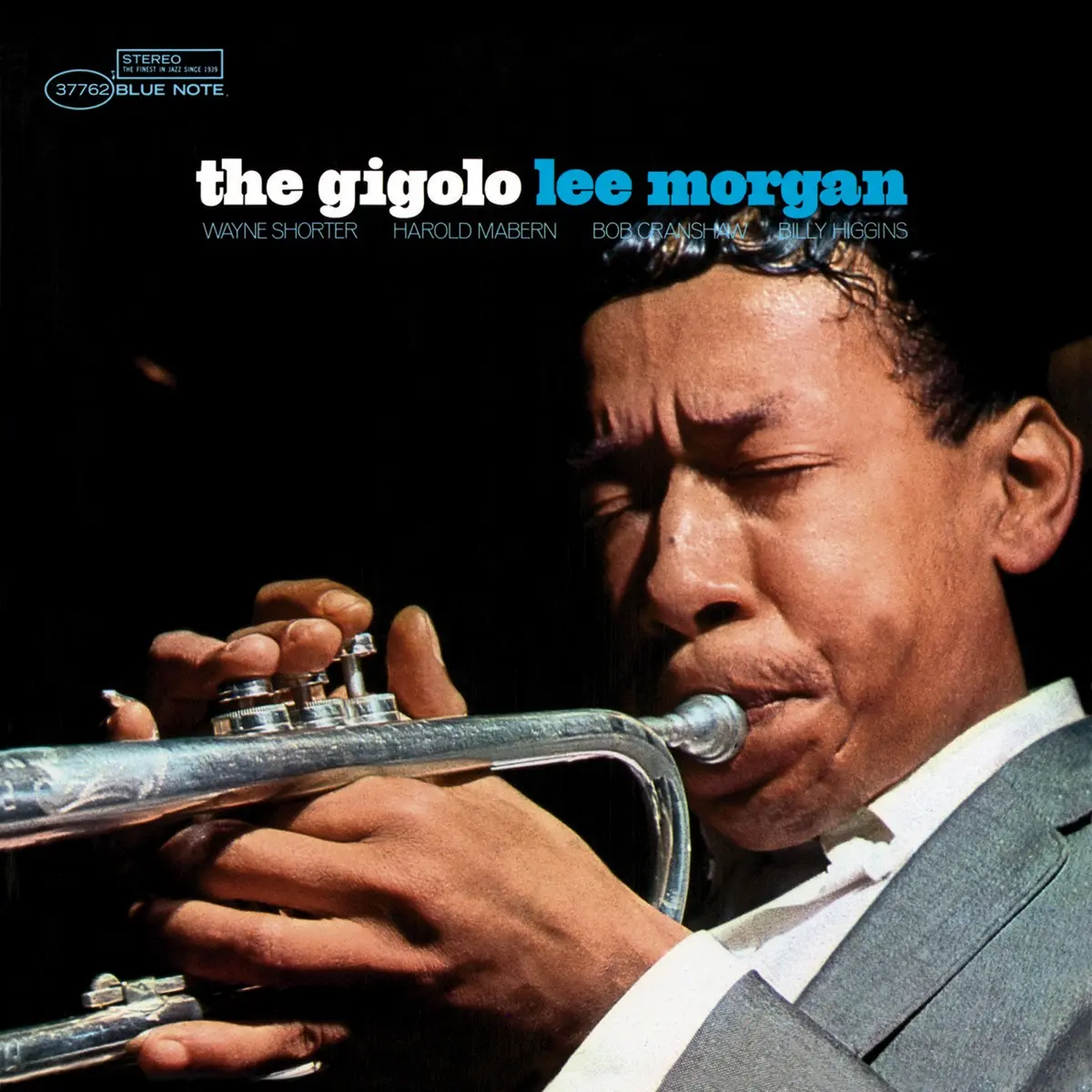 Lee Morgan released his fifteenth-recorded album, The Gigolo, in June 1968 on Blue Note.
The Gigolo presents Morgan leading a hard bop quintet through intense, high-energy sessions that alternate between fiery originals and a single ballad interpretation. The ensemble features Morgan (trumpet), Wayne Shorter (tenor saxophone), Harold Mabern (piano), Bob Cranshaw (bass), and Billy Higgins (drums), blending sharp turns in the horns with vigorous piano and rhythm support.
Morgan composed three of the six tracks, with Wayne Shorter contributing one (“Trapped”) and the standard “You Go to My Head” credited to J. Fred Coots and Haven Gillespie.
The album opens with the urgent, fast-paced “Yes I Can, No You Can’t,” anchored by Cranshaw’s bassline and Mabern’s forceful piano comping. Shorter’s “Trapped” and Morgan’s “Speedball” deliver blistering tempo and energetic solo exchanges. The title track stretches into an eleven-minute experimental piece of intricate horn lines and stretched improvisation. The sessions close with a slower, reflective interpretation of “You Go to My Head.”
A1. “Yes I Can, No You Can’t” (7:26)
A2. “Trapped” (5:59)
A3. “Speedball” (5:32)
B1. “The Gigolo” (11:07)
B2. “You Go to My Head” (7:22)
CD bonus:
6. “The Gigolo” [Alternate Take] (10:04)
Sessions occurred in 1965 on June 25 (A2) and July 1 (the rest) at Van Gelder Studio with producer Alfred Lion and engineer Rudy Van Gelder.
The album has remained a defining statement of 1960s hard bop, with “Speedball” and the title track becoming staples in Morgan’s live repertoire.
Charisma
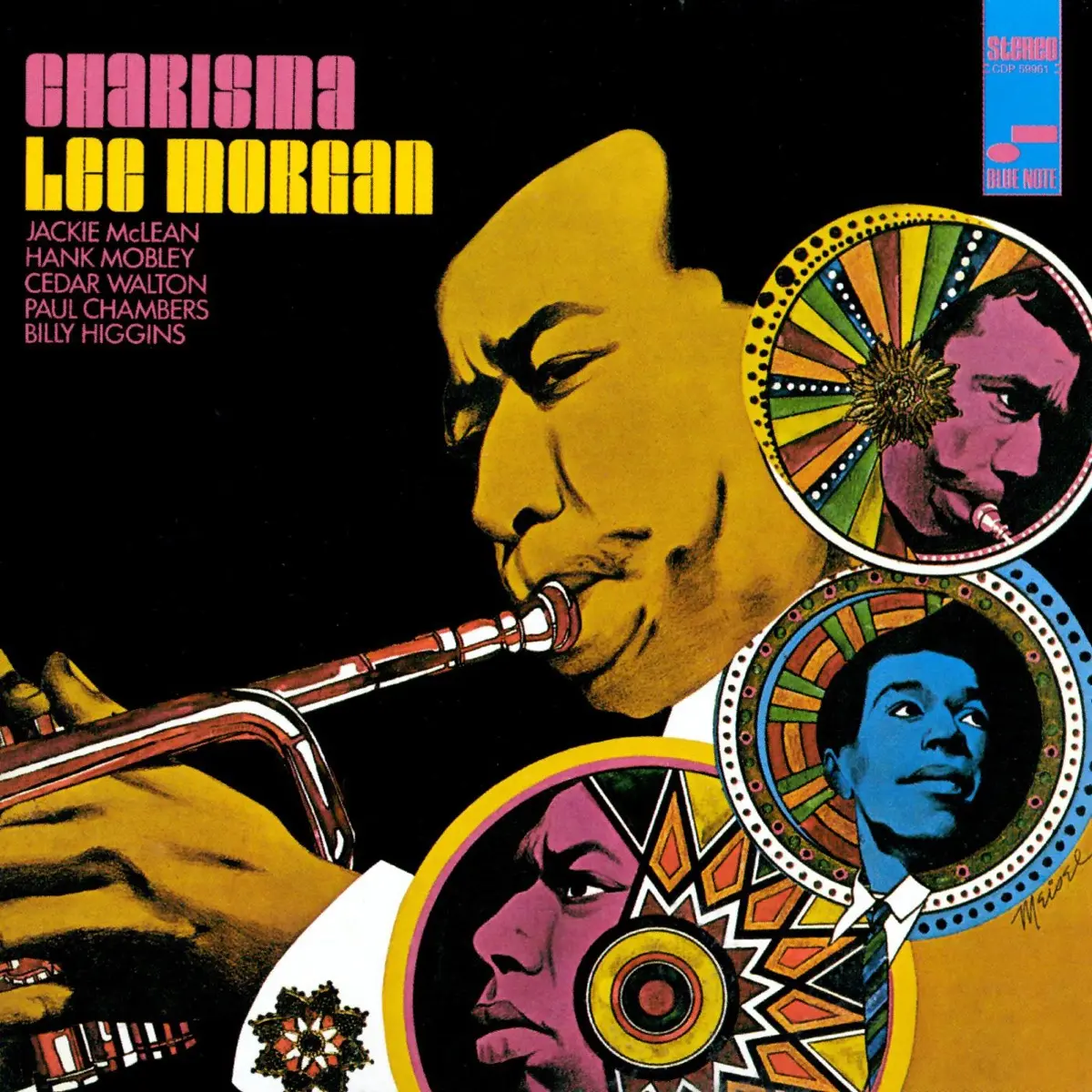 Lee Morgan released his twentieth-recorded album, Charisma, in May 1969 on Blue Note.
Charisma captures Morgan leading a hard bop sextet through tightly structured compositions that highlight individual voices within a three-horn frontline. The ensemble features Morgan (trumpet), Jackie McLean (alto saxophone), Hank Mobley (tenor saxophone), Cedar Walton (piano), Paul Chambers (bass), and Billy Higgins (drums).
Morgan wrote four of the six tracks, with pianist Cedar Walton contributing “Rainy Night” and Duke Pearson providing “Sweet Honey Bee.”
The album opens with Morgan’s energetic “Hey Chico,” featuring angular trumpet lines and driving rhythm from Higgins and Chambers. “Somethin’ Cute” continues the brisk pace with tightly interwoven horn lines. Walton’s “Rainy Night” offers a contemplative contrast, while Pearson’s “Sweet Honey Bee” delivers a rhythmic, precise medium-tempo statement. Morgan closes the set with “The Murphy Man” and “The Double Up,” combining extended improvisation with intricate ensemble interplay.
A1. “Hey Chico” (7:17)
A2. “Somethin’ Cute” (5:39)
B1. “Rainy Night” (5:39)
B2. “Sweet Honey Bee” (6:54)
B3. “The Murphy Man” (7:34)
B4. “The Double Up” (6:01)
Sessions occurred on September 29, 1966, at Van Gelder Studio in Englewood Cliffs, NJ, with producer Francis Wolff and engineer Rudy Van Gelder.
Charisma exemplifies mid-1960s hard bop, with each horn voice distinctly articulated while maintaining cohesive ensemble dynamics.
Live at the Lighthouse
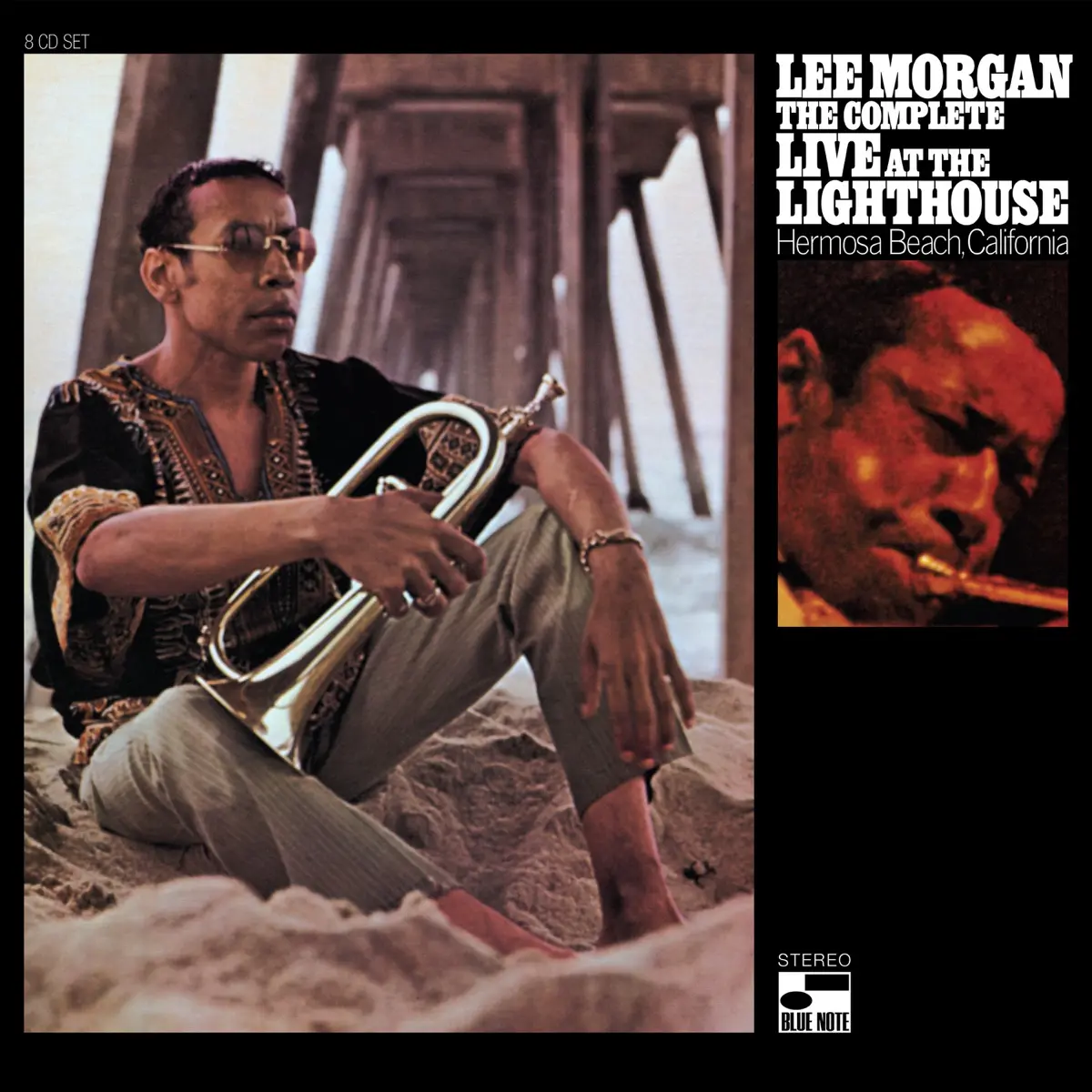 In April 1971, Blue Note issued Live at the Lighthouse, a document of Lee Morgan’s July 10–12, 1970, engagement at the Lighthouse Café in Hermosa Beach, California.
Morgan’s music had become more modal by this time, influenced by John Coltrane, and he led a quintet that explored extended, side-long performances. The set favors original compositions by the group and moves away from earlier soul-jazz and funk-oriented approaches, highlighting extended improvisation, shifting rhythms, and dynamic interplay among the musicians.
Morgan’s core backing players were tenor saxophonist Bennie Maupin, pianist Harold Mabern, electric upright bassist Jymie Merritt, and drummer Mickey Roker. Jack DeJohnette joins on drums for “Speedball” only.
All four tracks on the original double LP are composed by the band members: Merritt wrote two pieces, Mabern and Maupin each contributed one composition.
The music divides into expansive modal explorations and group-centered improvisations. “Absolutions” and “Nommo” feature Merritt’s electric bass lines driving angular phrasing, while Maupin’s “Neophilia” highlights tenor saxophone contours and flute colorations. Mabern’s “The Beehive” interweaves sharp harmonic turns with energetic piano phrasing. Morgan’s trumpet navigates the ensemble with wide, bold statements that soar above the rhythm section.
A. “Absolutions” (19:40) – Opens with a slowly unfolding motif, horns and rhythm section weaving angular phrases over shifting tempos, building tension through measured interplay.
B. “The Beehive” (16:23) – Pulsing patterns and layered horns create a dense texture, solos explore contoured lines while drums and bass accentuate variations in pace.
C. “Neophilia” (19:05) – Features fluid exchanges between tenor and trumpet, saxophone lines twist through modal sequences atop a propulsive rhythm section.
D. “Nommo” (18:00) – Moves with deliberate, undulating pulses, trumpet and saxophone exchange sharp, angular phrases, supported by responsive bass and drums.
The 1996 three-CD box set expanded the original album with 13 bonus tracks, including a remake of Morgan’s “Speedball” and additional compositions by Maupin and Mabern, bringing the total runtime to over 180 minutes. The full 12-LP/8-CD box set of all three nights was released in August 2021, documenting the complete engagement and celebrating the album’s fiftieth anniversary.
Lee Morgan (1972)
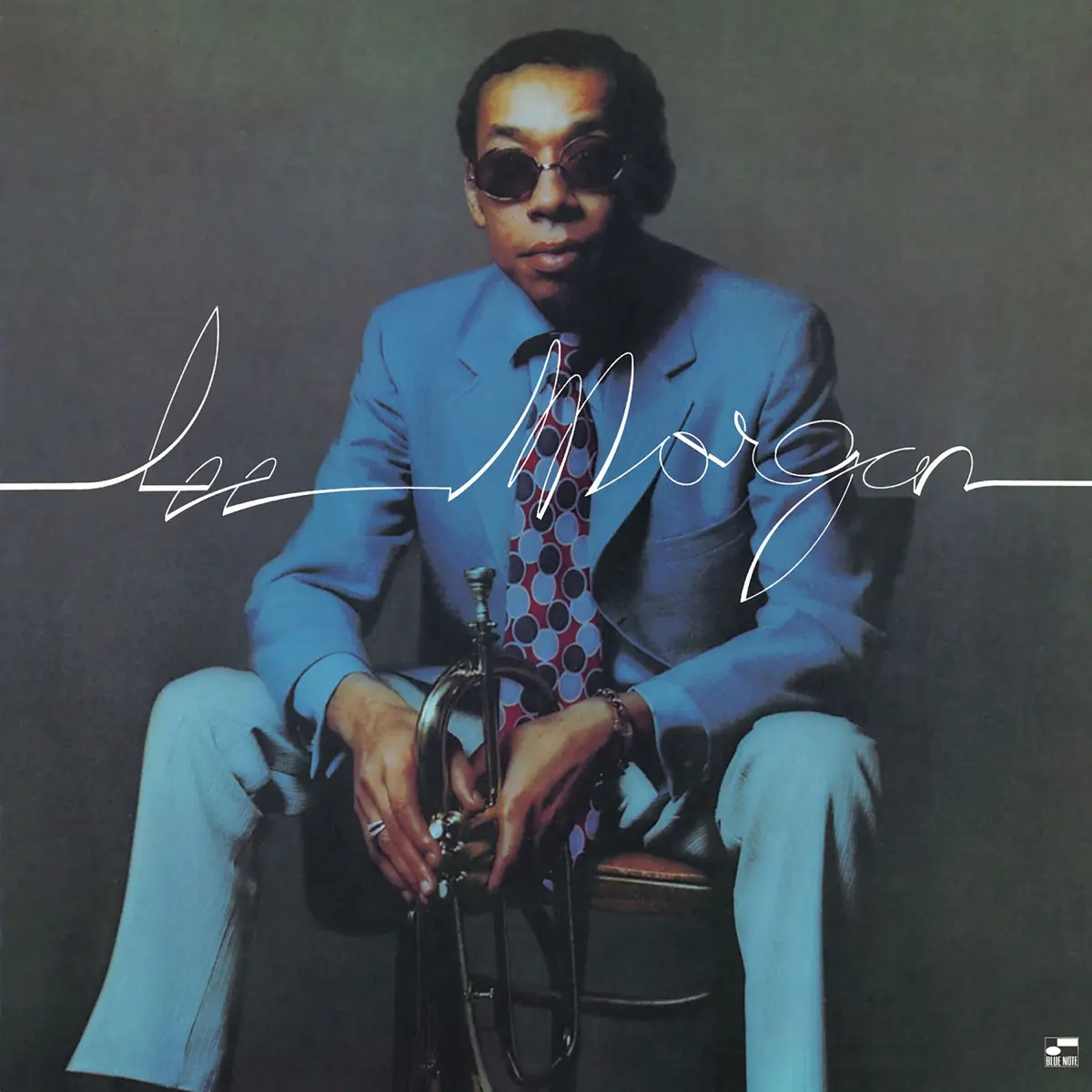 In May 1972, Blue Note posthumously issued Lee Morgan’s 29th-recorded and final studio album as a self-titled release, alternately known as The Last Session.
The album finds Morgan exploring post-bop and early jazz fusion textures with an expanded octet, moving beyond his signature hard bop. The core ensemble features Morgan (trumpet), Grachan Moncur III (trombone), Bobbi Humphrey (flute), Billy Harper (tenor saxophone, alto flute), Harold Mabern (piano, electric piano), Reggie Workman (bass, percussion), Jymie Merritt (electric upright bass), and Freddie Waits (drums, recorder).
All five tracks are composed by sidemen: Billy Harper wrote “Capra Black” and “Croquet Ballet,” Harold Mabern wrote “In What Direction Are You Headed?,” Jymie Merritt wrote “Angela,” and Freddie Waits wrote “Inner Passions Out.”
The album opens with Harper’s “Capra Black,” a solemn, processional piece underpinned by dual bass interplay and dramatic horn statements, highlighting Morgan’s expressive trumpet and Harper’s commanding tenor. Mabern’s “In What Direction Are You Headed?” layers electric piano with fluid rhythmic textures, while Merritt’s “Angela” navigates meditative modal passages. Harper’s waltz “Croquet Ballet” balances structured harmonies with extended soloing, and Waits’ “Inner Passions Out” closes the album with dense, impressionistic textures, combining Afro/Eastern motifs, layered percussion, twin flutes, and soaring trumpet excursions.
A1. “Capra Black” (15:31) – Opens with a solemn, processional theme, layered over interweaving electric and acoustic bass lines; trumpet, trombone, and tenor sax trace sharp, contoured phrases while the ensemble maintains a measured, swinging pace.
A2. “In What Direction Are You Headed?” (16:29) – Moves through shifting modal textures, electric piano and flute weaving angular passages, with percussion and bass accentuating dynamic variations in tempo and rhythm.
B1. “Angela” (6:24) – Develops on delicate, meditative contours, trumpet and bass exploring fluid interactions over a sustained, gentle pulse, allowing each voice to articulate subtle turns and phrasing.
B2. “Croquet Ballet” (10:51) – Opens with waltz-like motion, horns executing interlaced, angular statements; piano and percussion layer densely woven textures while tempo shifts heighten structural tension.
B3. “Inner Passions Out” (17:36) – Evolves from a quiet, pedal-centered motif to complex polyrhythmic layers; horns, flutes, and percussion interlock with trumpet excursions in a measured yet intense progression, closing with a return to tranquil tonal space.
Sessions occurred on September 17–18, 1971, at Van Gelder Studio with producer George Butler.
Discography:
- Introducing Lee Morgan With Hank Mobley’s Quintet (1957 • Lee Morgan With Hank Mobley’s Quintet)
- Lee Morgan Indeed! (1957)
- Lee Morgan Sextet (1957)
- Lee Morgan, Vol. 3 (1957)
- The Cooker (1958)
- City Lights (1958)
- Candy (1958)
- Monday Night at Birdland (1958 • Hank Mobley, Billy Root, Curtis Fuller, Lee Morgan)
- Another Monday Night at Birdland (1959 • Hank Mobley, Billy Root, Curtis Fuller, Lee Morgan)
- Peckin’ Time (1959 • Hank Mobley – Lee Morgan)
- Here’s Lee Morgan (1960)
- Leeway (1961)
- Expoobident (1961)
- Take Twelve (1962 • Lee Morgan Quintet)
- The Sidewinder (1964)
- The Rumproller (1966)
- Search for the New Land (1966)
- Cornbread (1967)
- Delightfulee Morgan (1967)
- The Gigolo (1968)
- ¡Caramba! (1968)
- Charisma (1969)
- The Sixth Sense (1970)
- Live at the Lighthouse (1971)
- Lee Morgan (1972)
- Lee Morgan All-Star Sextet (archival, 1978)
- Sonic Boom (archival, 1979)
- Tom Cat (archival, 1980)
- Taru (archival, 1980)
- Infinity (archival, 1981)
- The Rajah (archival, 1984)
- Standards (archival, 1998)
- Double or Nothin’ (archival, 2003 • Conte Candoli & Lee Morgan)
Sources:
- Discogs: Lee Morgan
- RYM: Lee Morgan
- JazzDisco.org: Lee Morgan
- JazzMusicArchives: Lee Morgan
- MusicBrainz: Lee Morgan
- SecondHandSongs: Lee Morgan
Artist/Album Pages:
Larry Ridley (born Sept. 3, 1937) is an American jazz bassist from Indianapolis who released the a...
Billy Harper (born Jan. 17, 1943) is an American post-bop tenor saxophonist and composer from Hous...
Dexter Wansel is an American keyboardist, singer, composer, and producer who cut a 1973 album with...
Freddie Hubbard (1938–2008) was an American jazz trumpeter who released seven post-bop albums on B...
Patti LaBelle is an American soul singer who fronted The Blue Belles during the 1960s. In 1970, th...
The Futures were an American soul group from Philadelphia that scored a 1975 R&B hit with “Ca...
Red Clay is an album by American jazz trumpeter Freddie Hubbard, released in June 1970 on CTI. ...
Don Juan's Reckless Daughter is the ninth studio album by Canadian singer–songwriter Joni Mitchell, ...
Sama Layuca is an album by American post-bop pianist McCoy Tyner, released in 1974 on Milestone. The...
Daryl Hall and John Oates — commonly known as Hall & Oates — were an American musical duo, activ...
John Coltrane (September 23, 1926 — July 17, 1967) was an American post-bop/jazz saxophonist and ...
Azar Lawrence is an American jazz saxophonist who released three albums between 1974 and 1976 on P...