
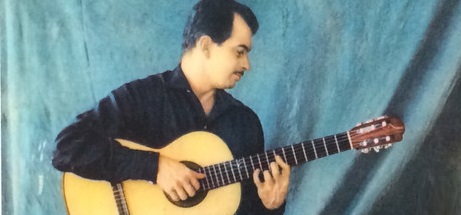
Luiz Bonfá (Oct. 17, 1922 — Jan. 12, 2001) was a Brazilian samba-jazz guitarist and composer who emerged during the 1940s with Rádio Nacional and the Quitandinha Serenaders. He made his first LP for Continental in 1955 and composed “Manhã de Carnaval” and “Samba de Orfeu” for the 1959 film Black Orpheus.
Bonfá released numerous albums on Odeon, Verve, Dot, and RCA, including the 1968–72 titles Black Orpheus Impressions, The New Face of Bonfá, Sanctuary, and Introspection, culminating with the 1973 jazz-rock album Jacarandá. He resumed solo recording with the 1989 Chesky release Non-Stop to Brazil.
Background
Luiz Bonfá was born Luiz Floriano Bonfá on October 17, 1922, in Rio de Janeiro, Brazil. He grew up in Santa Cruz, where his father, guitarist Luiz Bonfá, hosted musical gatherings with figures such as Pixinguinha and Bororó. Bonfá took up guitar at eleven and studied with Uruguayan classical guitarist Isaías Sávio, traveling by train to Santa Teresa for private lessons. He performed on Rádio Guanabara by 1935 and placed third in the 1936 Hora do Guri competition on Rádio Tupi with a piece by Francisco Tárrega.
In 1944, Bonfá joined the Paraguayan Trio Campesino under Amado Smendel and played casino dates in Niterói and Santos. The group cut a July 1945 Continental single with “Nu Vai” and the Bonfá–Smendel rumba “Buenas Noches Señorita.” Bonfá also made three Continental 78s with drummer Gaúcho, including the self-penned foxtrots “My Boogie Woogie” and “Remember to You.”
Guitarist Garoto brought Bonfá to Rádio Nacional in 1946 for Clube da Bossa. The two also performed a guitar duet on Um Milhão de Melodias and played at the Casablanca nightclub in Urca. Bonfá concurrently joined the Quitandinha Serenaders with Luís Teles, Francisco Pacheco, and Alberto Ruschel. Named after the Hotel Quitandinha in Petrópolis, the vocal quartet cut singles for Continental and Odeon through 1952 and appeared in films including Esse Mundo É um Pandeiro and Aí Vem o Barão.
After Quitandinha, Bonfá led short-lived studio groups on electric guitar. Singer Dick Farney cut his songs “Ranchinho de Palha,” “Perdido de Amor,” and “Sem Esse Céu.” Bonfá also partnered with pianist Antônio Carlos Jobim on pieces including “O Barbinha Branca.” Their association carried into the 1955 Continental ten-inch Luiz Bonfá, which included accordionist João Donato, drummer Juca Stockler, flutist Altamiro Carrilho, and violinist Cláudio.
In September 1956, Bonfá played guitar in Orfeu da Conceição, a stage production by poet Vinicius de Moraes at Theatro Municipal in Rio, with Jobim as composer and Leo Peracchi conducting the orchestra. Odeon issued the stage music the following month. Bonfá toured the United States with singer Mary Martin in 1957 and made the Odeon albums Alta Versatilidade and Violão Boêmio. He also cut ¡Amor! The Fabulous Guitar of Luiz Bonfá for Atlantic.
French director Marcel Camus enlisted Bonfá for the 1959 film adaptation Orfeu Negro. The guitarist teamed with lyricist Antônio Maria on “Manhã de Carnaval” and “Samba de Orfeu,” both featured in the film. Bonfá continued with the 1962 Odeon album O Violão e o Samba and joined the November 1962 bossa nova concert at Carnegie Hall in New York.
In February 1963, Bonfá shared sessions at Webster Hall with saxophonist Stan Getz, pianist-guitarist Jobim, and singer Maria Helena Toledo for the Verve album Jazz Samba Encore!. He also teamed with Toledo for the 1965 Philips release Braziliana. Bonfá composed the score for the 1966 Burt Balaban film The Gentle Rain, with orchestral arrangements by Eumir Deodato.
In January 1967, manager Arthur Miller negotiated a Paramount agreement that gave Bonfá a recording contract with Dot Records. Deodato arranged his 1967 Dot album Luiz Bonfá, produced by Charles R. Grean. Bonfá continued his Dot association with producer Gerry Granahan and arrangers Deodato and Arnold Goland for the 1968 release Black Orpheus Impressions.
Discography:
- Black Orpheus Impressions (1968)
- The New Face of Bonfá (1970)
- Sanctuary (1971)
- Introspection (1972)
- Jacarandá (1973)
- Manhattan Strut (1974)
- The Best of Brazil (1974)
- Bonfa Burrows Brazil (1980 • Luiz Bonfá & Don Burrows)
- Non-Stop to Brazil (1989)
References and notes
- Acervo Violão Brasileiro — Jorge Carvalho de Mello, Luiz Bonfá. Detailed biography based on period newspapers and interviews. Establishes family background, Sávio studies, 1935–36 broadcasts, Trio Campesino, Garoto, Quitandinha, and original 78-rpm chronology. (Historical research)
- Smithsonian Folkways — Anthony Weller, Solo in Rio 1959, 2005. Liner-note history with Bonfá recollections of Sávio, Garoto, early performance work, the Mary Martin tour, and Orfeu Negro. (Liner notes, PDF)
- Dicionário Cravo Albin — Luiz Bonfá. Corroborates birth details, early groups, Dick Farney recordings, and the 1956 stage engagement. (Biography)
- IMMuB — Luiz Bonfá, Continental LPP-21. Confirms the 1955 first LP and credits for Jobim, Donato, Carrilho, Stockler, and other players. (Original album documentation)
- Instituto Antônio Carlos Jobim — Orfeu da Conceição. September 1956 stage premiere, Leo Peracchi, Bonfá guitar, and October Odeon LP. (Archive catalog)
- Stan Getz Discography — Jazz Samba Encore! Confirms February 8–9 and 27, 1963, New York sessions and the Getz–Bonfá–Jobim–Toledo personnel. (Session discography)
- AFI Catalog — The Gentle Rain. Verifies the Burt Balaban film, Bonfá score, and January 1966 release. (Film documentation)
- Cash Box — January 21, 1967. Contemporary announcement of the Paramount and Dot contracts negotiated by Arthur Miller. (Industry report, PDF)
- BSN Publications — Dot Records discography. Confirms the 1967 Dot LP, DLP-25804, and the label chronology. (Catalog research)
- AllMusic — Black Orpheus Impressions. Confirms the 1968 release, Gerry Granahan production, Deodato and Arnold Goland arrangements, and album personnel. (Album credits)
Artist/Album Pages:
Skyeros was an American folk-rock/psych band from Missouri that released a self-titled album on t...
Matuskela was a Brazilian folk-rock band that released a 1973 self-titled album on Chantecler. M...
Uncle Chapin was an American brass-rock band from New York that released a 1971 self-titled album...
ID was an American space-rock/jam band that released the 1976 album Where Are We Going on Aura Re...
Deaf School are an English art-rock band that released three albums on Warner Brothers between 1976 ...
Tapimán was a Spanish hard-rock/psych band that cut two singles and a 1972 self-titled album on Ed...
Vitamin E was an American soul-funk combo from Oakland that released the 1977 Buddah album Sharing...
Buki-Yamaz was a Danish jazz-rock/funk band that made a 1975 self-titled album on Hookfarm, follow...
Dragon was a Belgian symphonic-rock band behind a 1976 self-titled album on Acorn. In 1977, they d...
The Attack was an English psych-rock band that released four 1967–68 singles on Decca. The first two...
Mama Lion was an American soul-rock band that released the 1972–73 albums Preserve Wildlife and G...
Beto Guedes (born Aug. 13, 1951) is a Brazilian singer-songwriter and multi-instrumentalist who em...