

Tony Williams (1945–1997) was an American jazz drummer who emerged in the second Miles Davis Quintet. As Anthony Williams, he cut the 1965/66 Blue Note albums Life Time and Spring.
After Miles, Williams formed Lifetime, a pioneering jazz-rock band that cut the 1969–72 Polydor albums Emergency!, Turn It Over, Ego, and The Old Bum’s Rush. On Columbia, he formed New Lifetime for the 1975/76 albums Believe It and Million Dollar Legs.
Background
He was born Anthony Tillmon Williams on December 12, 1945, in Chicago and raised in Boston. At age 11, he studied drums under Alan Dawson, a former Fort Dix Army Band drummer who toured behind vibist Lionel Hampton.
At 13, Williams got his first gig behind saxophonist Sam Rivers. After a stint behind saxist Jackie McLean, Williams (at 17) was hired by Miles Davis for his second quintet, which also featured pianist Herbie Hancock, saxist Wayne Shorter, and bassist Ron Carter. The group, later dubbed Miles’ Second Great Quintet, cut the 1964–68 albums E.S.P., Miles Smiles, Sorcerer, Nefertiti, Miles in the Sky, and Filles de Kilimanjaro.
In 1964, Williams played on Blue Note albums by pianist Andrew Hill (Point of Departure) and reedist Eric Dolphy (Out to Lunch!).
Life Time
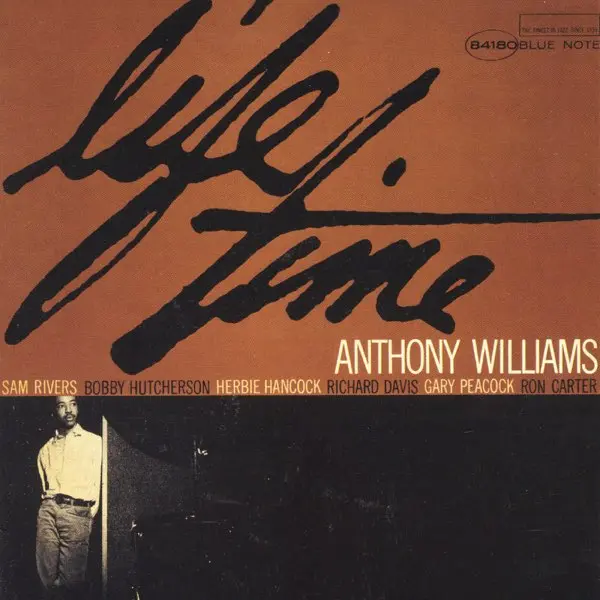 Anthony Williams released his debut album, Life Time, in January 1965 on Blue Note.
Williams leads small-group and duo settings with tenor saxophonist Sam Rivers, vibraphonist Bobby Hutcherson, pianist Herbie Hancock, and bassists Richard Davis, Gary Peacock, and Ron Carter. He composed all tracks. Davis and Peacock perform on select pieces, Hutcherson and Hancock appear on the final two tracks, and Rivers plays tenor saxophone on the first three, navigating open, spacious arrangements.
Side A opens with “Two Pieces of One: Red,” introducing an eerie, quietly intense melody over dual bowed bass arpeggios before moving into restrained soloing atop Williams’ textured drums and percussion. “Two Pieces of One: Green” extends the concept, with Rivers’ tenor weaving through layered tom and snare patterns, producing a spacious but assertive improvisational space. “Tomorrow Afternoon” leans toward hard bop phrasing and rhythm while fracturing into open, floating sections.
Side B features vibraphone textures on “Memory,” paired with Williams’ percussion and Hancock’s restrained piano chords, producing sparse, angular exchanges over nearly bassless accompaniment. The album closes with “Barb’s Song to the Wizard,” a piano and bass duet with no drums, where Hancock and Carter explore tension and release through interlocking patterns. The sound relies on space, contrast, and dynamic subtlety, with Williams’ drumming anchoring and conversing with the ensemble throughout.
A1. “Two Pieces of One: Red” (8:06) – An austere opening unfolds with bowed basses weaving against hushed percussion, creating long stretches of space where Rivers’ tenor emerges sparingly, shaping phrases that dissolve as quickly as they form. Williams keeps the atmosphere taut, letting silence act as an equal partner in the dialogue.
A2. “Two Pieces of One: Green” (10:40) – The ensemble expands into freer motion, Rivers pressing into overtones while Williams draws color from toms and snare. Rather than building to density, the group fractures time into shifting layers, pushing the improvisation outward without losing its center of gravity.
A3. “Tomorrow Afternoon” (5:35) – The piece nods toward a familiar swing before gradually dismantling it, peeling back layers until rhythm and line scatter into wide, echoing intervals. The players use restraint as momentum, letting fragments of motion hover between structure and dissolution.
B1. “Memory” (8:06) – Without bass, Hutcherson and Williams establish a lattice of textures, vibraphone resonance meeting sharp woodblock and brushed accents. Hancock steps in sparingly, his sudden harmonic gestures magnified by the openness, each chord arriving like a dramatic shift in light.
B2. “Barb’s Song to the Wizard” (5:58) – The closing duet between Hancock and Carter strips the ensemble to essentials, piano and bass entwining in a tense, deliberate exchange. Their interplay bends between austerity and release, leaving the album suspended on a stark and unresolved cadence.
Sessions occurred on August 21 (Side A) and August 24 (Side B), 1964, at Van Gelder Studio in Englewood Cliffs, NJ, with producer Alfred Lion and engineer Rudy Van Gelder.
Spring
 Anthony Williams released his second album, Spring, in 1966 on Blue Note.
Spring continues Williams’ exploration of free-form jazz with tenor saxophonist Wayne Shorter, who joins returning collaborators Sam Rivers, Herbie Hancock, and Gary Peacock. The album mixes dueling tenors, sparse piano, and rhythmic experimentation, alternated with structured thematic content.
Williams composed all five cuts. Shorter appears on the odd-numbered entries.
“Extras” opens with dueling tenors over intricate snare and cymbal patterns. “Echo” follows with a brief, high-energy drum solo. “From Before” unites the two saxophones in tense unison passages amid Hancock’s harmolodic keyboards. “Love Song” presents a structured, lyrical performance led by Williams’ gentle swing, Rivers’ fluid solo lines, and Hancock’s chordal support. “Tee” closes the album with a semi-cacophonous melody that unfolds into floating solos, anchored by Williams’ distinctive drumming and cymbal work.
A1. “Extras” (8:10) – The piece opens with Shorter and Rivers locked in shifting counterpoint, their lines twisting over Williams’ brisk snare patterns and Peacock’s tensile bass, setting a charged, unsettled atmosphere.
A2. “Echo” (5:02) – Williams takes the spotlight alone, shaping a concise study in color and pulse where crisp cymbal strikes and rolling toms carve alternating densities of sound.
A3. “From Before” (6:50) – The ensemble binds around a unison saxophone figure that fractures into wide-ranging improvisations, Hancock’s piano guiding the transitions with stark harmonic turns.
B1. “Love Song” (8:25) – Williams moderates the pace into a loose swing, Hancock threading luminous chords while Rivers and Shorter exchange lyrical solos that retain their edge within the gentler frame.
B2. “Tee” (10:29) – A knotted theme launches the closing track, unraveling into expansive stretches of improvisation where Hancock and Peacock roam freely before Williams asserts command with surging cymbal currents.
Sessions took place at Van Gelder Studio on August 12, 1965, with Alfred Lion and Rudy Van Gelder.
Emergency!
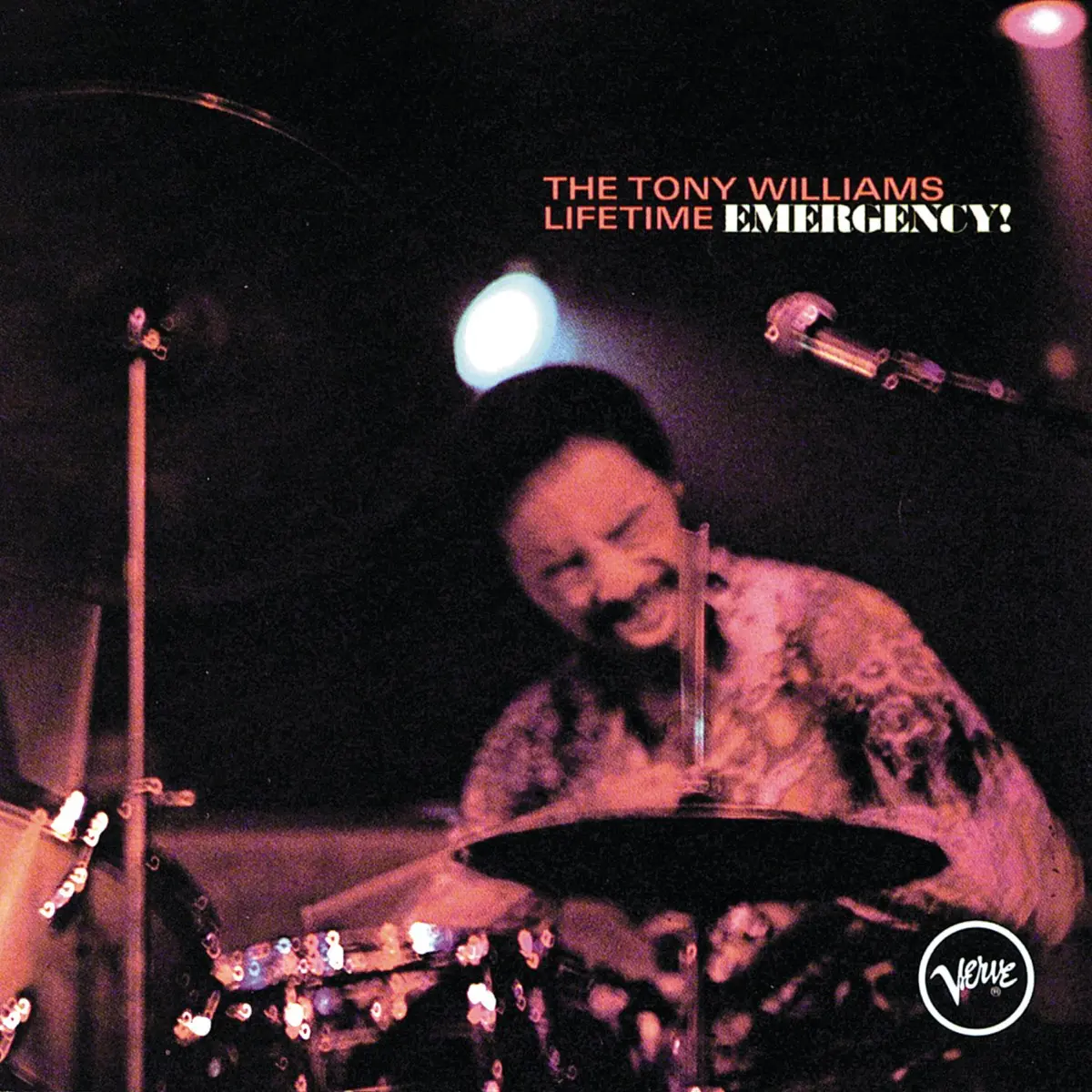 The Tony Williams Lifetime released their debut double-album, Emergency!, in September 1969 on Polydor. It features his first power-trio with organist Larry Young and English guitarist John McLaughlin.
The album captures the trio’s fusion of heavy amplified rock with free-form and modal jazz, framed by Williams’ explosive drumming, McLaughlin’s distorted guitar work, and Young’s organ lines that cover both chordal textures and bass foundations.
Williams wrote four of the album’s eight numbers. McLaughlin contributed two pieces and co-wrote one with Williams. Young played throughout but did not compose. They also tackled pieces by Carla Bley (“Vashkar”) and the late Big-band violinist Dave Herman (“Something Spiritual”).
The set moves between long-form rock-influenced improvisations and exploratory jazz textures. “Emergency” opens with distorted guitar chords over pounding drums and organ pedal tones. Williams recites spoken passages on “Beyond Games,” which rides a blues progression. “Where” alternates vocal sections with open improvisation, while Bley’s “Vashkar” provides a concise, shifting structure. The second disc contains the duo-written “Via the Spectrum Road,” the frenetic McLaughlin piece “Spectrum,” Williams’ extended “Sangria for Three,” and Herman’s closing meditation “Something Spiritual.”
A1. “Emergency” (9:37) – Williams sets the pace with pounding drums against distorted guitar surges, while Young’s organ anchors the low end and pushes harmonic swells into the foreground. The trio shifts abruptly between fire and restraint, letting fractured rhythms drive the tension.
A2. “Beyond Games” (8:19) – A blues-tinged progression underpins Williams’ spoken reflections, with guitar shadows and organ pulses circling his voice. The static frame gives way to subtle shifts in color, creating a taut but unsettled atmosphere.
B1. “Where” (12:11) – Sparse beginnings leave space for Williams’ fractured vocal lines before the trio builds in intensity. McLaughlin cuts through with serrated runs, Young layers faint textures, and Williams’ cymbal play sharpens the edges of each ascent.
B2. “Vashkar” (5:01) – Carla Bley’s composition is recast with jagged phrasing, organ swells, and quick volleys between guitar and drums. Stop-start exchanges heighten its restless energy, pulling the piece into rock-inflected urgency.
C1. “Via the Spectrum Road” (7:51) – Looser and more songlike, this duet of voices rides over swampy rhythm and staggered guitar figures. Williams and Young use restraint here, leaving McLaughlin’s biting fills to punctuate the forward motion.
C2. “Spectrum” (8:52) – The group pushes forward at breakneck pace, organ doubling as both bass engine and soloist while Williams drives with relentless precision. McLaughlin alternates abrasive shards with sudden bursts of lyricism, sustaining unbroken momentum.
D1. “Sangria for Three” (13:08) – Expansive and shifting, the piece veers from hard-driving riffs to suspended, exploratory passages. Surges of dense interplay give way to open stretches, balancing force with experimentation.
D2. “Something Spiritual” (5:40) – Repetitive guitar-organ cycles create a trance-like ground while Williams injects restless detail into the surface. The track builds not through harmonic change but through sheer endurance and layered intensity.
Sessions took place on May 26 and 28, 1969, at Olmsted Sound Studios in New York City with producers Monte Kay and Jack Lewis and engineer Gene Radice.
Emergency! features cover design by Elaine Gongora with photography and art direction by Sid Maurer.
Turn It Over
 The Tony Williams Lifetime released their second album, Turn It Over, in December 1970 on Polydor.
On this album, Williams and his two returning sideman — guitarist John McLaughlin and organist Larry Young — welcome ex-Cream bassist/singer Jack Bruce.
Turn It Over delivers dense, psych-tinged jazz-rock fusion with heavily amplified instruments and high-volume energy. Williams wrote “This Night This Song,” “Right On,” and “Vuelta Abajo.” Fellow Miles’ sideman Chick Corea composed the intro medley. The album also contains covers of John Coltrane (“Big Nick”), Antônio Carlos Jobim (“Once I Loved”), and one track each by McLaughlin (“A Famous Blues”) and Young (“Allah Be Praised”).
Corea’s two-part “To Whom It May Concern” opens the album with heavy riffs under distorted guitar and organ. “This Night This Song” follows, with Williams’ intense drumming and vocals. “Big Nick” adds Coltrane-indebted jazz phrasing over psychedelic textures. “Right On” delivers a concise, forceful statement, and “Once I Loved” layers Williams’ vocals over spacious organ. “Vuelta Abajo” pushes dense, repetitive proto-metal riffs. “A Famous Blues” and “Allah Be Praised” close the album with organ-driven, layered improvisations, highlighting angular exchanges between guitar, organ, and drums.
A1. “To Whom It May Concern – Them” (4:18) – Corea’s piece opens with restrained tension before organ and guitar tear through thick textures, Williams pushing the pace into a raw, amplified charge.
A2. “To Whom It May Concern – Us” (2:58) – Flowing directly from the first part, the group drives the motif further, Young’s organ wailing against McLaughlin’s jagged lines while Williams locks the momentum in relentless motion.
A3. “This Night This Song” (3:45) – Williams adds his own voice to the storm, threading stark vocals through dense guitar and organ layers, the track unfolding like a brief, distorted incantation.
A4. “Big Nick” (2:43) – Coltrane’s theme is reshaped with gritty edges, Young stretching long tones over a steady pulse while McLaughlin outlines terse figures around it.
A5. “Right On” (1:52) – A compact eruption where organ swells and heavy drumming collide, punctuated by sharp guitar bursts that vanish as quickly as they arrive.
B1. “Once I Loved” (5:05) – Jobim’s ballad turns spectral, Williams’ vocals hovering over sustained organ chords and sparse guitar lines, its stillness undercut by an unsettled undercurrent.
B2. “Vuelta Abajo” (4:57) – Built on a grinding riff, the track surges forward with searing guitar and weighty organ, Williams driving the band into near-metallic density.
B3. “A Famous Blues” (4:15) – McLaughlin’s piece stretches the blues form into darker terrain, organ leading the way with distorted harmonies as the rhythm section keeps the foundation heavy and unyielding.
B4. “Allah Be Praised” (4:39) – Young’s composition closes the set with a spiraling organ theme, Williams pressing from beneath while McLaughlin ignites soaring guitar lines before the ensemble gathers in a forceful end.
Sessions occurred in July 1970 at Olmsted Sound Studios in New York City with co-producers Monte Kay, Jack Lewis, and engineer Gene Radice.
Turn It Over appeared with a stark black sleeve that echoed the band’s confrontational stance.
The album followed “One Word” (3:45), an October 1970 UK standalone single backed with “Two Worlds,” a Williams original that reappeared on the third Lifetime album. McLaughling co-wrote “One Word” with one Eve Wright. Both songs feature Bruce on vocals.
Ego
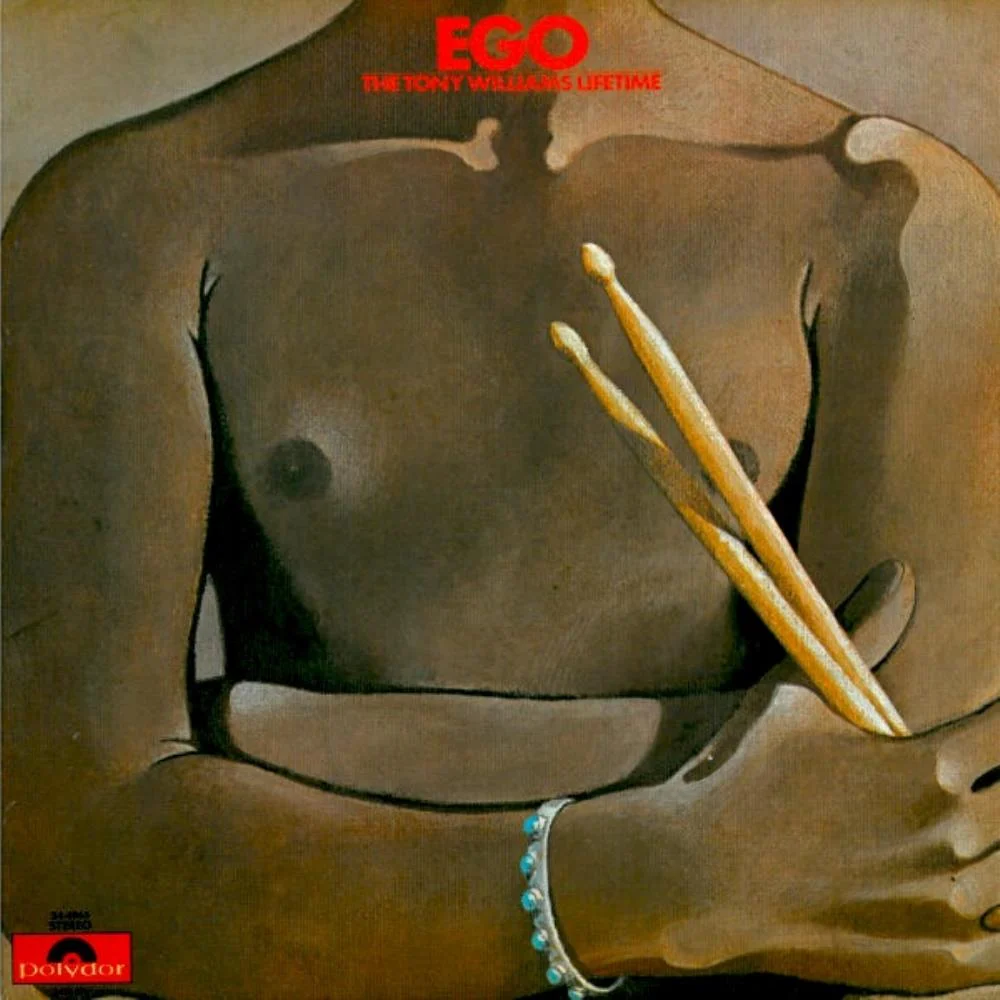 The Tony Williams Lifetime released their third album, Ego, in 1971 on Polydor.
Ego features a retooled lineup with guitarist Ted Dunbar, bassist Ron Carter, organist Larry Young, and percussionists Don Alias and Warren Smith. Jack Bruce returns for a vocal spot on “Two Worlds.” The music blends post-bop, fusion, and psychedelic textures. Williams composed all nine tracks.
The album opens with the percussion vignette “Clap City” and moves into the descending-riff drama of “There Comes a Time,” which pairs Williams’ vocal lines with layered organ. “Piskow’s Filigree” emphasizes rapid rhythmic turns and a tropic-dawn contour, while “Circa” rests on Ron Carter’s contrabass spine beneath organ textures and electronic accents. Side two begins with the percussion interlude “Some Hip Drum Shit” before the extended “Lonesome Wells (Gwendy Trio),” which pairs organ lines with guitar improvisation. “Mom and Dad” offers a gentler, organ-driven pause before the percussion-heavy “The Urchins of Shermêse” closes the set.
A1. “Clap City” (0:54)
A2. “There Comes a Time” (5:54)
A3. “Piskow’s Filigree” (3:52)
A4. “Circa” (6:27)
A5. “Two Worlds” (4:26)
B1. “Some Hip Drum Shit” (1:31)
B2. “Lonesome Wells (Gwendy Trio)” (7:29)
B3. “Mom and Dad” (5:42)
B4. “The Urchins of Shermêse” (6:25)
Sessions occurred during February and March 1971 with producer Jack Lewis.
The Old Bum’s Rush
 The Tony Williams Lifetime released their fourth album, The Old Bum’s Rush, in 1972 on Polydor.
The album features a new lineup with Williams joined by vocalist Linda “Tequila” Logan, bassist Herb Bushler, keyboardist David Horowitz, and organist Webster Lewis. Tillmon Williams contributes tenor saxophone and Don Alias appears on percussion. Produced by Ben Sidran, the record marks Lifetime’s most vocal-driven work, moving away from the guitar-led fusion of their earlier albums toward a more eclectic mix of funk rhythms, electronics, and extended ensemble passages.
Williams composed most of the material. He co-wrote “You Make It Easy” and “What It’s About” with Logan, “The Boodang” with Sidran, and the closing title track with Horowitz, Bushler, Logan, and Lewis.
The album’s first side emphasizes Logan’s lead vocals on “You Make It Easy,” “What It’s About,” and “What’cha Gonna Do Today,” followed by the extended, dissonant textures of “Mystic Knights of the Sea.” Side two opens with “Changing Man,” sung by Williams, and moves into the streetwise funk pacing of “The Boodang.” The eleven-minute title track shifts between raw jazz improvisation, funk interludes, and experimental electronic noise before closing with bursts of percussion and ensemble jamming.
A1. “You Make It Easy” (5:20)
A2. “What It’s About” (5:37)
A3. “What’cha Gonna Do Today” (3:40)
A4. “Mystic Knights of the Sea” (5:12)
B1. “Changing Man” (4:50)
B2. “The Boodang” (5:20)
B3. “The Old Bum’s Rush” (10:17)
Sessions took place at Intermedia Sound in Boston with producer Ben Sidran and engineer Berred, with mixing handled by Bruce Botnick at Capitol Studios in Los Angeles.
The cover features artwork by the design group Camouflage.
Believe It
 The New Tony Williams Lifetime released their first album, Believe It, in late 1975 on Columbia.
The album features a new quartet with Williams joined by British guitarist Allan Holdsworth, keyboardist Alan Pasqua, and bassist Tony Newton. The record balances complex fusion interplay with funk-driven passages and marked Holdsworth’s first major showcase outside his UK projects.
Songwriting duties are divided between the four members. Newton wrote “Snake Oil” and “Red Alert.” Holdsworth composed “Fred” and “Mr. Spock.” Pasqua contributed “Proto-Cosmos.” Williams wrote “Wildlife.” Later CD reissues add two Holdsworth-penned bonus tracks, “Celebration” and “Letsby.”
The set opens with Newton’s rhythm-heavy “Snake Oil” and moves into the shifting keyboard patterns of Holdsworth’s “Fred.” Pasqua’s “Proto-Cosmos” builds on tight rhythmic phrasing, while Newton’s “Red Alert” spotlights Holdsworth in an extended solo. Williams’ “Wildlife” contrasts atmospheric passages with sharper ensemble turns. The album closes with “Mr. Spock,” where Holdsworth’s angular lines cut through Newton’s driving bass and Williams’ explosive percussion.
A1. “Snake Oil” (6:30) – Newton’s bass carves a taut rhythmic base, over which Holdsworth and Pasqua trade sharp phrases while Williams shifts from restraint to flurries that loosen the structure.
A2. “Fred” (6:48) – Holdsworth’s composition layers suspended harmonies, with Pasqua’s electric piano solo drawing out color before Holdsworth takes flight, all anchored by Williams’ restless rhythmic accents.
A3. “Proto-Cosmos” (4:02) – Pasqua’s tune moves with brisk forward motion, its jagged contours sharpened by Holdsworth’s angular lines and Williams’ eruptive bursts.
A4. “Red Alert” (4:39) – A jagged riff clears into open space for Holdsworth’s searing guitar, followed by Pasqua’s wiry piano statements, while Williams and Newton keep the momentum taut and volatile.
B1. “Wildlife” (5:22) – A slow, suspended theme unravels into shifting textures, with Pasqua’s keys and Holdsworth’s guitar weaving subtle variations as Newton and Williams add understated propulsion.
B2. “Mr Spock” (6:15) – Alternating between heavy drive and sudden restraint, the piece spotlights Pasqua’s probing piano solo and Holdsworth’s scorching runs, with Williams’ drumming constantly bending the pulse.
CD bonus tracks:
7. “Celebration” (4:01) – Williams’ composition condenses the band’s interplay into a compact statement, layering bright keyboard figures and incisive guitar against quick rhythmic turns.
8. “Letsby” (6:34) – Holdsworth’s piece unfurls at length, granting space for shifting guitar textures and an expansive Williams showcase that heightens the tension and release.
Sessions took place in July 1975 with producer Bruce Botnick.
Artwork was directed by Ed Lee with photography by Eric Meola and hand lettering by Gerard Huerta.
Million Dollar Legs
 The New Tony Williams Lifetime released their second album, Million Dollar Legs, in late 1976 on Columbia.
The lineup features Williams with guitarist Allan Holdsworth, keyboardist Alan Pasqua, and bassist/vocalist Tony Newton. The album expands on the jazz fusion sound of the first New Lifetime album while incorporating funk-leaning basslines, ARP and Moog synthesizers, clavinet textures, and layered horn and string arrangements by Jack Nitzsche.
Williams wrote three tracks while Newton contributed “Joy Filled Summer,” “Inspirations of Love,” and “You Did It to Me Baby,” the last with input by Motown staffer Al Cleveland. Pasqua composed the Side B opener “Lady Jane.”
The music alternates between hard-rocking motifs and spacious funk sections, with tracks like “Sweet Revenge” blending repeating power chords and disciplined drum patterns, while “Joy Filled Summer” integrates extended solos and complex interplay. Slower compositions such as “Lady Jane” and “What You Do to Me” emphasize piano and keyboard textures, punctuated by restrained guitar and bass. The final track, “Inspirations of Love,” features an extended drum solo and orchestrated passages combining strings, horns, and layered keyboards.
A1. “Sweet Revenge” (6:03) – Williams drives the piece with a hard-edged pulse, shifting midway into a looser funk undercurrent where Newton’s bass line anchors the interplay of sharp keyboard stabs and restrained guitar bursts.
A2. “You Did It to Me Baby” (3:45) – Newton’s vocals ride a compact R&B structure, reinforced by bright horn lines and steady rhythmic motion, with Pasqua’s keyboards coloring the space behind the voice.
A3. “Million Dollar Legs” (6:38) – Built on a muscular bass figure and clavinet accents, the track layers synthesized textures and clipped guitar phrases, its momentum sustained by Williams’ firm rhythmic command.
A4. “Joy Filled Summer” (5:50) – Newton’s composition flows with a radiant theme, Pasqua’s keys carrying the forefront before Holdsworth and Williams inject contrasting bursts of energy that stretch the form.
B1. “Lady Jane” (3:56) – Pasqua sets a delicate frame with Rhodes and strings, sketching a reflective miniature whose atmosphere contrasts the heavier passages elsewhere on the record.
B2. “What You Do to Me” (6:38) – The band locks into a disciplined funk rhythm, each player layering precise variations while Pasqua’s lines trace shifting contours over Newton’s steady vocal lead.
B3. “Inspirations of Love” (9:48) – Opening with a broad ensemble statement, the piece dissolves into a spacious interlude of bass and piano before surging into extended solo flights. Williams commands the center with a long, textural drum showcase before the group reconvenes in a sweeping finale.
Sessions occurred at Caribou Ranch in Colorado with producer Bruce Botnick.
The album art features photography by Eric Meola, hand lettering by Gerard Huerta, and art direction by Ed Lee.
The Joy of Flying
 Tony Williams released his third solo album, The Joy of Flying, in 1979 on Columbia.
The record features duet and quartet numbers with assorted musicians, including guitarist George Benson, keyboardists Jan Hammer and Herbie Hancock, bassists Paul Jackson and bassist Stanley Clarke, lyriconist Tom Scott, free jazz pianist Cecil Taylor, and three rock players: guitarist Ronnie Montrose, keyboardist Brian Auger, and bassist Mario Cipollina.
The first side opens with Hammer’s “Going Far,” which sets a spacious, keyboard-driven tone with angular lines and layered textures. Benson’s “Hip Skip” combines electric guitar with percussion and horns, creating dense, shifting patterns across the ensemble. Scott contributes the lyricon-led “Hittin’ on 6,” where the wind instrument leads a sharp interplay over Hancock’s keyboard harmonies and Clarke’s bass lines. Montrose closes Side A with “Open Fire,” a rock-quartet piece with Auger, Cipollina, and Williams.
Side B highlights Clarke’s “Tony,” a bass-centered composition with layered keyboard and lyricon textures. Hammer’s “Eris” and “Coming Back Home” feature his signature synthesizer sounds, alternating between duets with Williams and fuller quartet arrangements that explore shifting time signatures and sparse, angular phrasing. The album concludes with Taylor’s “Morgan’s Motion,” a piano-led exploration with dense, percussive runs that interact with Williams’ drums to create a continuously evolving sonic landscape.
A1. “Going Far” (4:13) with Hammer on Fender Rhodes, Moog, Oberheim, and Polymoog
A2. “Hip Skip” (8:03) with Benson, Jackson, Hammer (Fender Rhodes, Mini-Moog), percussionist Ralph McDonald, trombonist Barry Rogers, trumpeters and Jon Faddis and Randy Brecker, and saxophonists Michael Brecker (tenor), David Sanborn (alto), and Ronnie Cuber (baritone).
A3. “Hittin’ on 6” (6:16) with Clarke, Scott, and Hancock (Hohner D6 Clavinet, Fender Rhodes, Mini-Moog)
A4. “Open Fire” (6:16) originated on Ronnie Montrose’s 1978 solo album of the same name.
B1. “Tony” (6:50) with Clarke, Scott, and Hancock (piano, Fender Rhodes, Oberheim, Prophet V)
B2. “Eris” (3:33) with Hammer on Moog, Oberheim, and Polymoog
B3. “Coming Back Home” (6:06) with Benson, Jackson, and Hammer (Fender Rhodes, Moog)
B4. “Morgan’s Motion” (8:18) with Taylor on Bösendorfer concert grand piano
Williams produced the album in New York at Red Gate (A1, B2, B4) and CBS Recording Studios (A2, B3). Fred Catero engineered the Clarke/Scott numbers at The Automatt in San Francisco. “Open Fire” comes from a summer 1978 live performance at Denin Coliseum in Tokyo.
Cipollina resurfaced in Huey Lewis & The News.
Play or Die
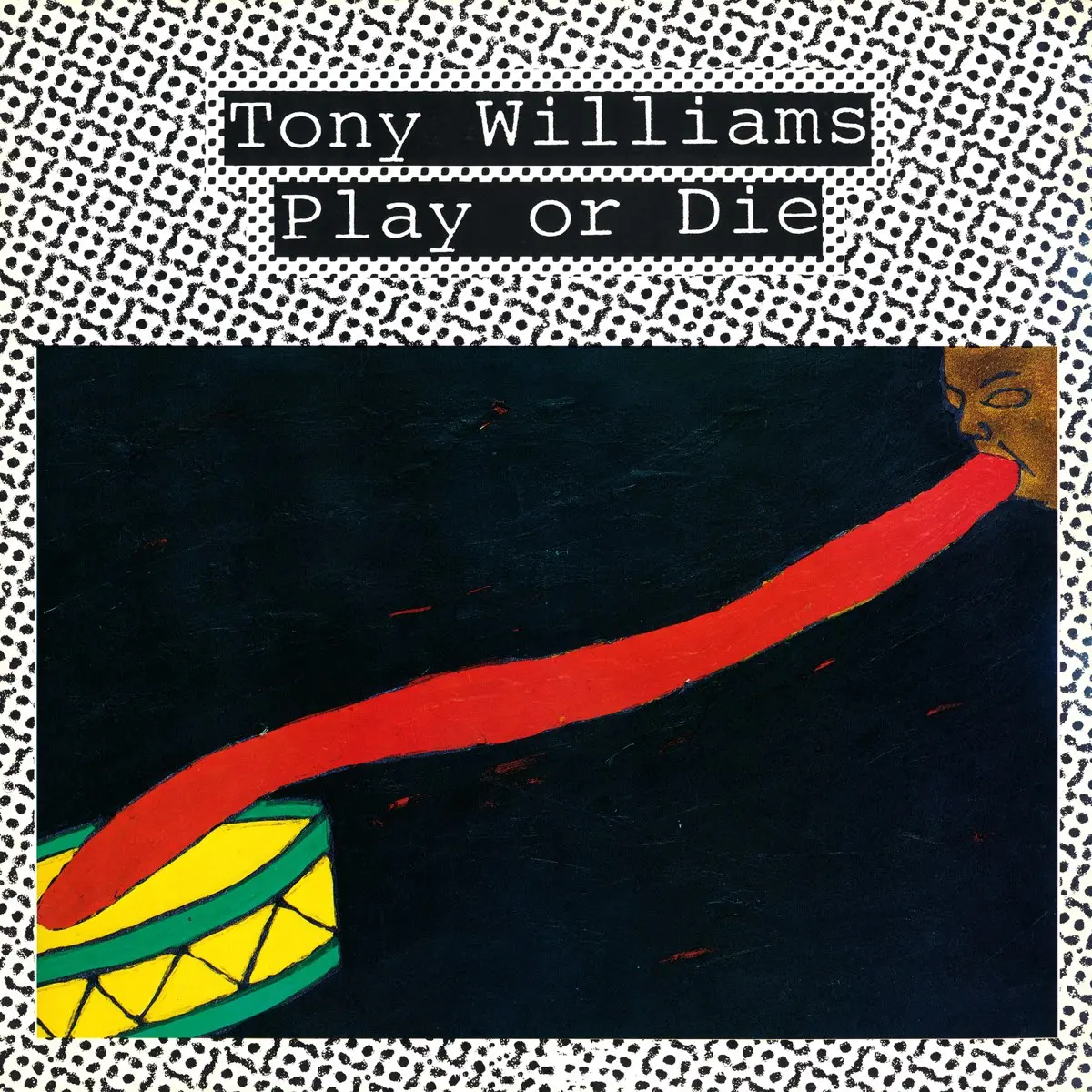 Tony Williams released his fourth solo album, Play or Die, in 1980 on PS Productions.
The album presents Williams in a trio setting with keyboardist Tom Grant and Group 87 bassist Patrick O’Hearn.
Side A opens with O’Hearn’s compositions “The Big Man” and “Beach Ball Tango,” both of which emphasize electric bass patterns interacting with Williams’ drums over spacious keyboard textures. Williams, O’Hearn, and Grant co-wrote “Jam Tune,” a collaborative track that blends layered synthesizer harmonies with interlocking bass and drum rhythms.
Side B features Williams’ own compositions: “Para Oriente” and “There Comes a Time,” which explore shifting time signatures and percussive phrasing, with Grant’s keyboards and O’Hearn’s bass providing angular accompaniment.
A1. “The Big Man” (6:41)
A2. “Beach Ball Tango” (11:11)
A3. “Jam Tune” (9:43)
B1. “Para Oriente” (6:33)
B2. “There Comes a Time” (5:38)
Sessions occurred May 30–31, 1980, at Tonstudio Zuckerfabrik in Stuttgart with Tony Williams producing and Ch. Wertz engineering. Peter Schnyder is credited as producer, and Friedrich-Wilhelm Meyer provided liner notes.
Foreign Intrigue
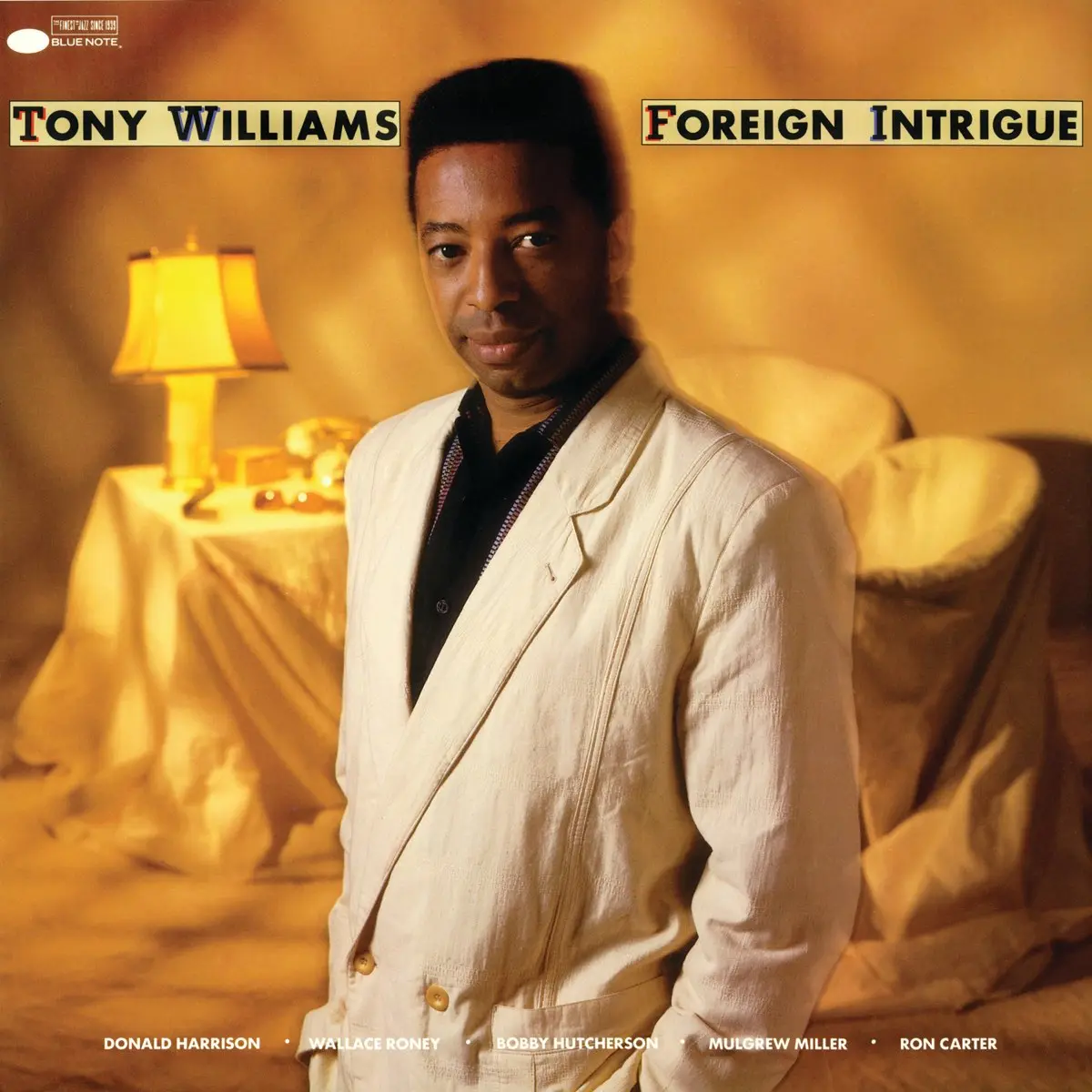 Tony Williams released his fifth solo album, Foreign Intrigue, in 1985 on Blue Note.
The album presents Williams in a post-bop/hard-bop setting, combining acoustic and electronic drums with piano, vibraphone, and brass. Key collaborators include pianist Mulgrew Miller, vibraphonist Bobby Hutcherson, bassist Ron Carter, trumpeter Wallace Roney, and alto saxophonist Donald Harrison.
Side A opens with Williams’ own compositions “Foreign Intrigue,” “My Michele,” and “Life of the Party.” “Foreign Intrigue” establishes layered percussion textures over shifting piano voicings, while “My Michele” features vibraphone and trumpet interplay, emphasizing rhythmic contours. “Life of the Party” blends brass and piano lines with electronic drum accents, producing a continuously moving rhythmic landscape.
Side B continues with “Takin’ My Time,” “Clearways,” “Sister Cheryl,” and “Arboretum,” all written by Williams. “Takin’ My Time” balances flowing piano and vibraphone motifs over interlocking drum and bass patterns. “Clearways” foregrounds Harrison’s alto saxophone over Williams’ subtle electronic textures, and “Sister Cheryl” contrasts vibraphone harmonies with dense drum phrasing. The album closes with “Arboretum,” where layered brass and piano interact with Williams’ percussion to create angular turns and shifting rhythmic momentum.
A1. “Foreign Intrigue” (5:25)
A2. “My Michele” (6:52)
A3. “Life of the Party” (6:09)
B1. “Takin’ My Time” (6:42)
B2. “Clearways” (5:05)
B3. “Sister Cheryl” (6:58)
B4. “Arboretum” (5:56)
Sessions occurred June 18–19, 1985, at M&I Recording Studios, New York City, with Tony Williams producing alongside Michael Cuscuna and Peter Darmi engineering. The album was mixed at the same studio, lacquer cut by JCP, and designed by Paula Scher. Photography is by Michele Clements, and the album was pressed and distributed by Pathé Marconi EMI.
Discography:
- Life Time (1965 • Anthony Williams)
- Spring (1966 • Anthony Williams)
- Emergency! (1969 • The Tony Williams Lifetime)
- Turn It Over (1970 • The Tony Williams Lifetime)
- Ego (1971 • The Tony Williams Lifetime)
- The Old Bum’s Rush (1973 • The Tony Williams Lifetime)
- Believe It (1975 • The New Tony Williams Lifetime)
- Million Dollar Legs (1976 • The New Tony Williams Lifetime)
- Third Plane (1977 • Ron Carter, Herbie Hancock & Tony Williams)
- The Joy of Flying (1979)
- Play or Die (1980)
- Herbie Hancock Trio With Ron Carter + Tony Williams (1981 • Herbie Hancock Trio With Ron Carter + Tony Williams)
- The Trio (1983 • Tommy Flanagan, Ron Carter & Tony Williams)
- Foreign Intrigue (1985)
- Civilization (1987)
- Angel Street (1988)
- Native Heart (1990)
- The Story of Neptune (1992)
- Pride of Lions (1992 • Billy Childs, Philip Bailey, Roy Hargrove, Bobby Watson & Tony Williams)
- Tokyo Live! (1993)
- A Tribute to Miles (1994 • Herbie Hancock, Wayne Shorter, Ron Carter, Wallace Roney & Tony Williams)
- Wilderness (1996)
- Young at Heart (1996)
Sources:
- Discogs: Tony Williams
- ProgArchives: Tony Williams
- MusicBrainz: Tony Williams, Tony Williams Lifetime, New Lifetime
Artist/Album Pages:
Instant Funk was an American soul-funk band that released the 1976 TSOP album Get Down With the Ph...
David Essex (born July 23, 1947) is an English vocalist, songwriter, and actor who first recorded a ...
Telegraph Avenue was a Peruvian psychedelic hard-rock band that debuted with a 1971 album on Mag, ...
Maxophone was an Italian symphonic-rock band that released a 1975 self-titled album and a 1977 sta...
Fat Larry's Band was an American soul-funk band from Philadelphia that released six albums between...
Wisse Scheper is a Dutch art-pop musician who made the 1972 CBS album Topaz, named after his backi...
Johnnie Taylor (1934–2000) was an American soul singer who first recorded for Sam Cooke's SAR labe...
Mike Santiago & Entity were an American jazz-rock quintet that released the 1977 Chiaroscuro a...
Compost was an American jazz-rock band from N.Y.C. that released the 1971–73 albums Take Off Your ...
Táta Vega (born Oct. 7, 1951) is an American soul singer from New York who did early Seventies sti...
Urszula Dudziak is a Polish jazz vocalist who first recorded in the late-1960s jazz combo Urbaniak...
Sun was an Australian jazz-rock-soul band from Sydney that released the album Sun 1972 on RCA Victor...