

Kathe Green (born Sept. 22, 1944) is an American vocalist, songwriter, and actress who released the album Run the Length of Your Wildness on Deram/Decca in 1969, followed by a self-titled album on Prodigal/Motown in 1976.
Background
She was born Kathe Jennifer Green on September 22, 1944, in Beverly Hills, California; the daughter of MGM film composer Johnny Green and model/actress Bunny Waters. Johnny scored the 1940s musicals Bathing Beauty, Easy to Wed, Something in the Wind, and Easter Parade.
Kathe acted from age five and worked as a child model. Bunny enrolled her at a Whittier boarding school, where she rode horseback. Her music influences included Frank Sinatra, Rodgers and Hammerstein, Samuel Barber, George Gershwin, Elvis Presley, and 1950s rock and roll. She also admired her father’s work on Raintree County, the 1957 epic historical romantic drama starring Montgomery Clift and Elizabeth Taylor. In 1960, she appeared as a love interest (Esme Lauterbach) on the CBS sitcom The Many Loves of Dobie Gillis (“Who Needs Elvis?” aired September 27, 1960).
At sixteen, Kathe departed for Switzerland in the custody of family friends Doe and Peter Howard, whom she regarded as surrogate parents. She later appeared in Howard’s 1962 musical Space Is So Startling, which toured India, Germany, Japan, Italy, Spain, and England. Mid-decade, Howard gathered Green and other young performers—including a teenage Glenn Close—for a Montreux stage production that spawned Up With People, a progressive song-and-dance organization. Meanwhile, Green and Close performed as the Green Glenn Singers.
By 1967, Green returned to California and secured an agent. Blake Edwards then cast her as Molly Clutterbuck in The Party, a 1968 comedy starring Peter Sellers. Soon after, she accompanied her father to England, where he scored director Carol Reed’s adaptation of the 1960 musical Oliver! For the film and soundtrack, she overdubbed the singing voice of the titular character, played by child actor.
Meanwhile, English actor/singer Richard Harris brought her into a circle that included “MacArthur Park” composer Jimmy Webb, whose orchestral pop inspired her own musical path. She demoed a set of originals on acoustic guitar for Decca Records, which linked her with Welsh-born Liverpudlian Wayne Bickerton, a journeyman musician (Remo Four, Pete Best Four) now hired as a producer for the label’s psychedelic division, Deram.
Run the Length of Your Wildness
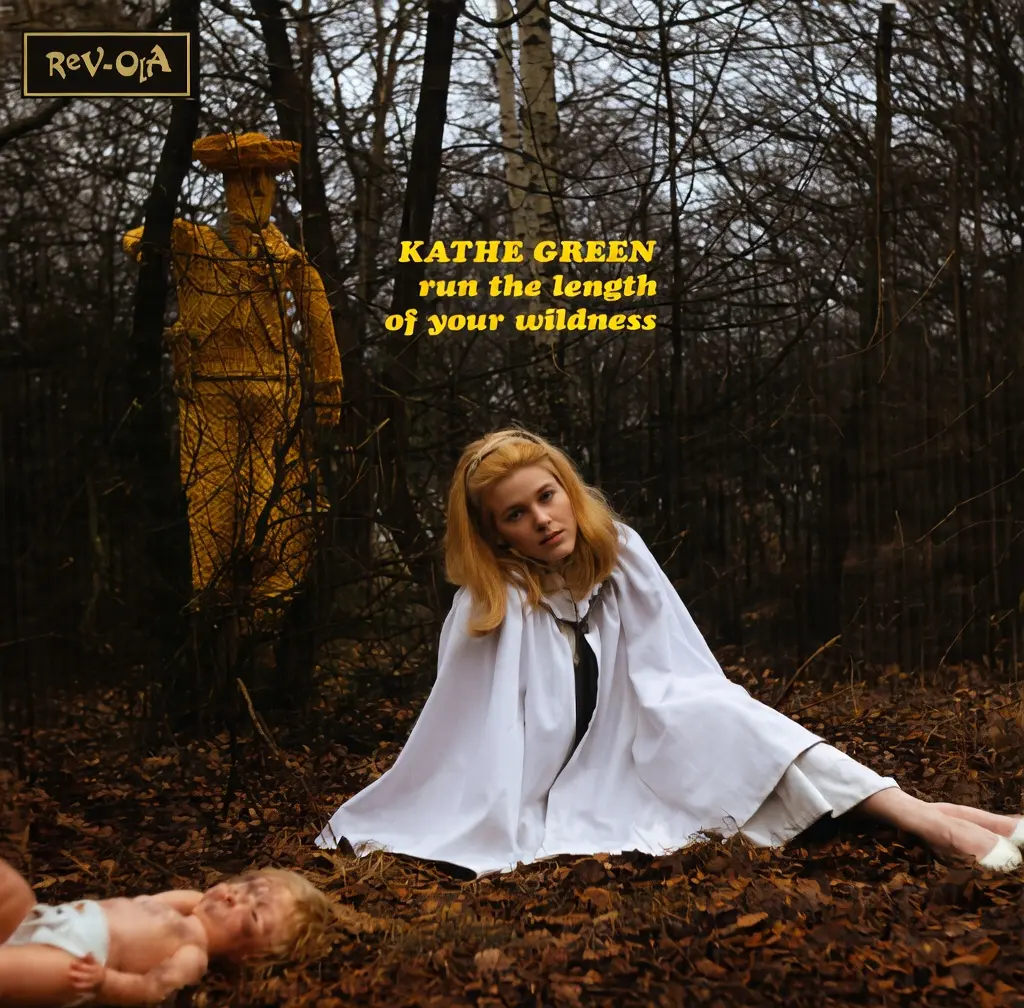 Kathe Green released her debut album, Run the Length of Your Wildness, in 1969 on Deram.
The album includes nine originals, including four co-written with off-record partner Liz Sacks. String arranger John Cameron composed one piece and co-wrote the epic title track. She also covers “Only a Fool,” a song by Beatles associate Jackie Lomax.
Musically, Run the Length is an orchestrated potpourri of intimate ballads that rise from hushed openings to fuller refrains. “Primrose Hill” and “Part of Yesterday” are romantic laments with slow rise, suspended tension, and emotional chorus expansions. “Only a Fool” and “I’ll Never Forget” stress minor descents, tonal shifts, and sharper strains of apprehension. “Why? (The Child’s Song)” and “Bossa Nova” cut the sequence into smaller forms with lighter motion and brief atmospheric detours.
A1. “Primrose Hill” (3:47) — Green, Sacks; orchestral beat subdued harp/piano intro and a string-swept chorus with swelling showtune vocals.
A2. “Ring of String” (3:25) — Green; tender ballad with plucked acoustic guitar, sweet strings and glockenspiel accents.
A3. “Only a Fool” (2:17) — Lomax, Wayne Bickerton; tense orchestral mid-tempo number with descending minor scales that underscore Kathe’s romantic apprehension. First recorded as a 1968 single by American R&B singer Clyde McPhatter.
A4. “Why? (The Child’s Song)” (1:51) — Green; airy folk-pop ballad where Kathe’s angelic vocals enmesh with flute and harp across plucked acoustic backing.
A5. “Bossa Nova” (1:53) — Green; thematic number with breezy overdubbed vocables and transcontinental samba ambience.
A6. “Tears in My Eyes” (3:04) — Tony Waddington, Wayne Bickerton; moderate ballad with lush vocals strings, woven with psych-tinged orchestration across a tumbling rhythmic pattern.
A7. “If I Thought You’d Ever Change Your Mind” (3:10) — John Cameron; mournful piano/orchestral ballad popularized in Sweden by Tages.
B1. “Promise of Something New” (2:38) — Green, Glenn Close; buoyant orchestral pop-ballad with a jovial brassy showtune chorus.
B2. “Once There Was You” (2:43) — Green, Sacks; light orchestral/brass ballad with airy vocals and shifting minor and major-seventh modalities.
B3. “Part of Yesterday” (3:46) — Green, Sacks; orchestral ballad with graceful vowel extensions across subdued verses that swell to a lavish middle.
B4. “I’ll Never Forget” (2:54) — John Cameron; piano ballad with subtle strings and reflective lyrics amid shifting keys that build to a soaring chorus.
B5. “Run the Length of Your Wildness” (5:16) — Green, Sacks, John Cameron; orchestral epic with spacious verses, roaming layered multi-part bridges, and a banner harmonized chorus.
B6. “I Love You (’Though You Are Not Here)” (0:43) — Green, Pat Lewis; orchestral postlude to the prior track.
 Wayne Bickerton produced the album in sequence with titles by Dana Gillespie, The Flirtations, Giles Giles & Fripp, and World of Oz; most involving engineer Derek Varnals, a prior Moody Blues soundman who also worked on 1969 albums by Web, Martha Velez, East of Eden, and the Keef Hartley Band. Cameron, who orchestrated recent albums by Donovan, arranged Run the Length with string-psych touches similar to his contemporary work with Edwards Hand, Françoise Hardy, Gordon Haskell, and Tim Hollier.
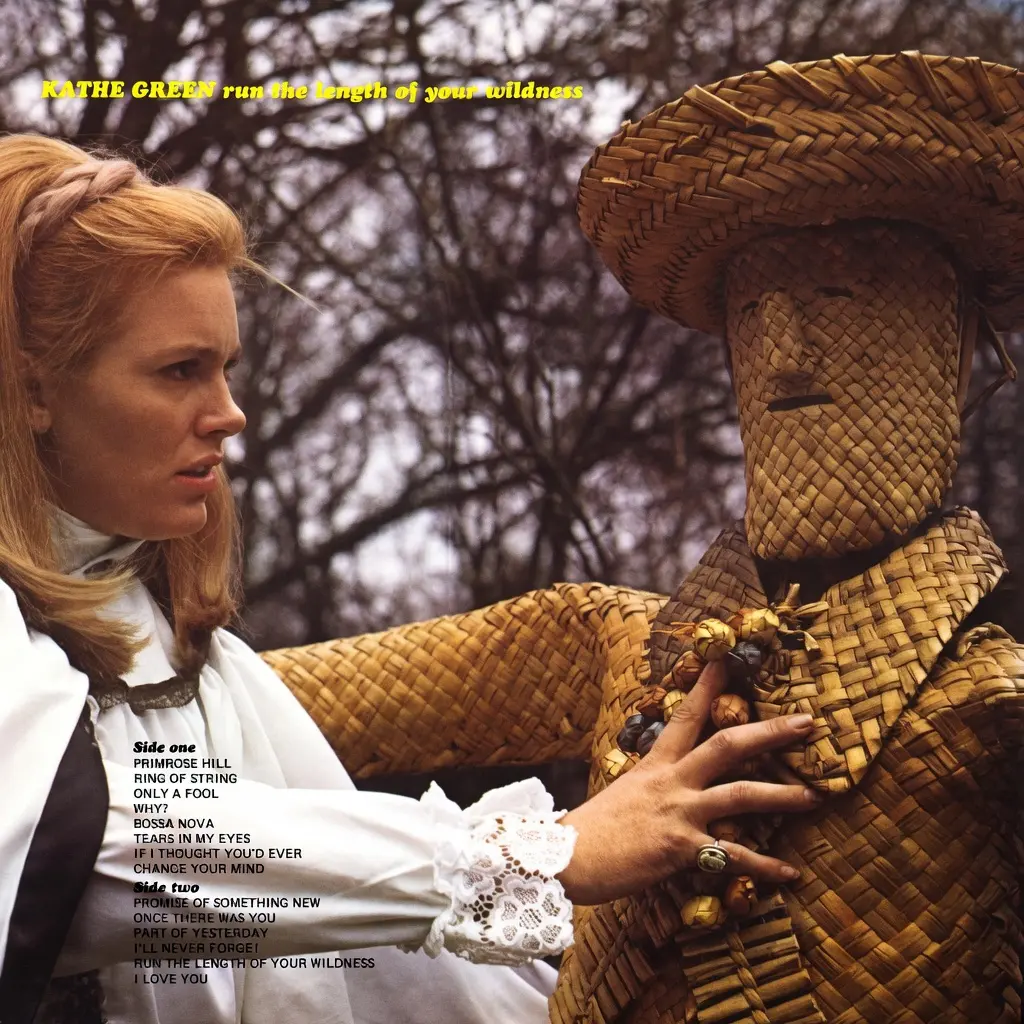
Run the Length of Your Wildness appeared in a gatefold sleeve with outer photography by Terence Ibbott, who captured Kathe in a leafless woodland under a gray sky. She’s clad in a loose white dress near a scorched baby doll and a tall wicker figure, which appears face-to-face on the backside. The image sets innocence, damage, and ritualized romance inside one bleak autumn tableau. Ibbott photographed similar fantasy scenes for 1968/69 Blue Horizon covers by Chicken Shack and Fleetwood Mac.
 The inner-gates feature monochrome pics of the six-foot-tall singer along with liner notes by Bickerton and Bunny Lewis, plus comments on Kathe by David Frost, Peter Sellers, Rex Harrison, Simon Dee, and Stuart Henry. Sellers placed her in the “elite few” of artists like “Leonard Cohen Laura Nyro, Judy Collins, Joan Baez, and Antonio Carlos Jobim.” Frost quipped that “Kathe Green and John Cameron make up a splendid team fit to be quoted with the other great teams of musical history, like Burke and Hair, Jekyll and Hyde, and Ann Ziegler and Webster Booth.”
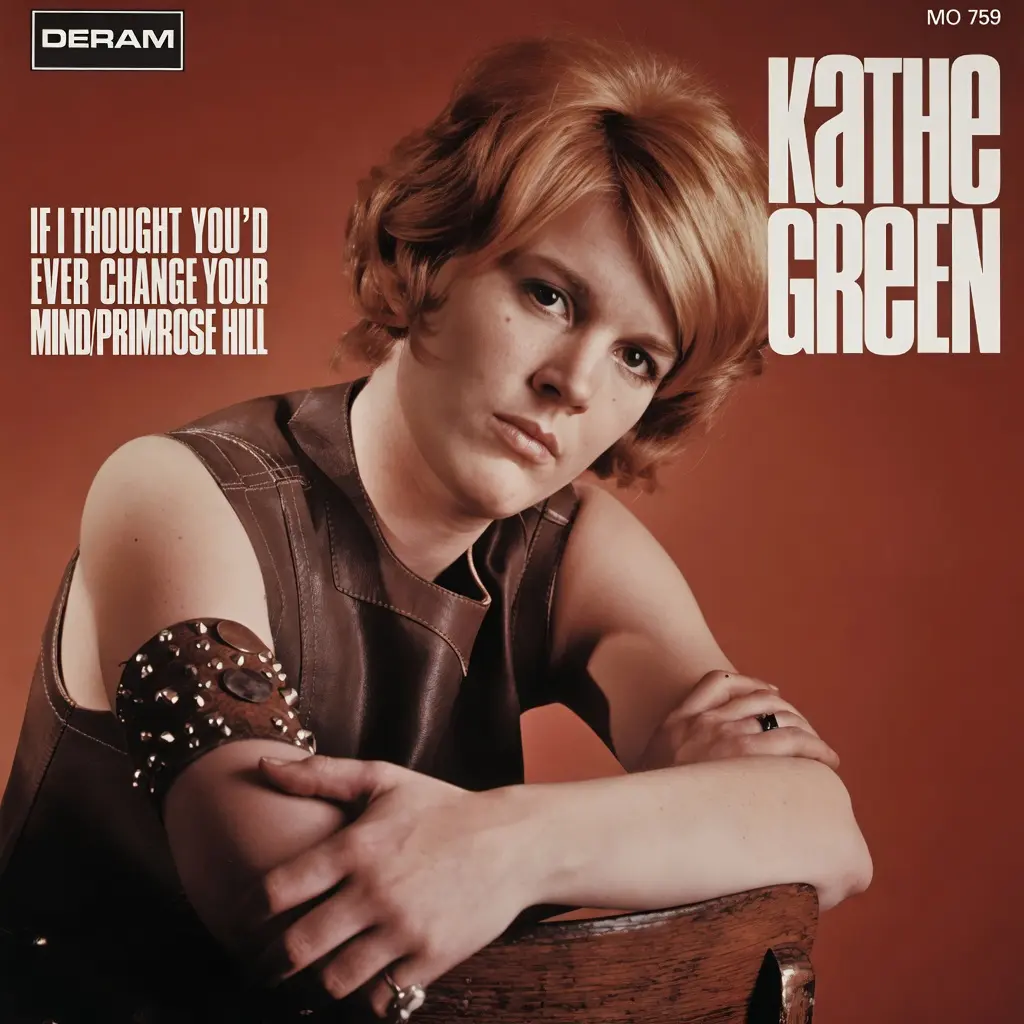
On November 14, 1969, Deram issued “If I Thought You’d Ever Change Your Mind” as a UK single, backed with “Primrose Hill,” which appeared as the US A-side (b/w “Bossa Nova”). When promotions wrapped, Kathe returned to California.
Interim
Kathe reappeared as the lithe voice on the Cyril Ornadel ballad “Marianne,” heard during the opening sequence of Die Screaming, Marianne, a 1971 British crime thriller starring Susan George and Barry Evans. She also wrote three songs — “Sing Your Sadness,” “Ba Ka Da,” and “Nuances” — for Clay Pigeon, a 1971 MGM action film starring Telly Savalas.
In 1972, Kathe embarked on a year of club dates in New York City, where she sang alongside future Manhattan Transfer member Laurel Massé on the chorus for “Could It Be Magic,” the epic ballad on the 1973 debut album by Barry Manilow.
In 1975, she secured a deal with Motown, who placed her on their newly acquired Prodigal division.
Kathe Green
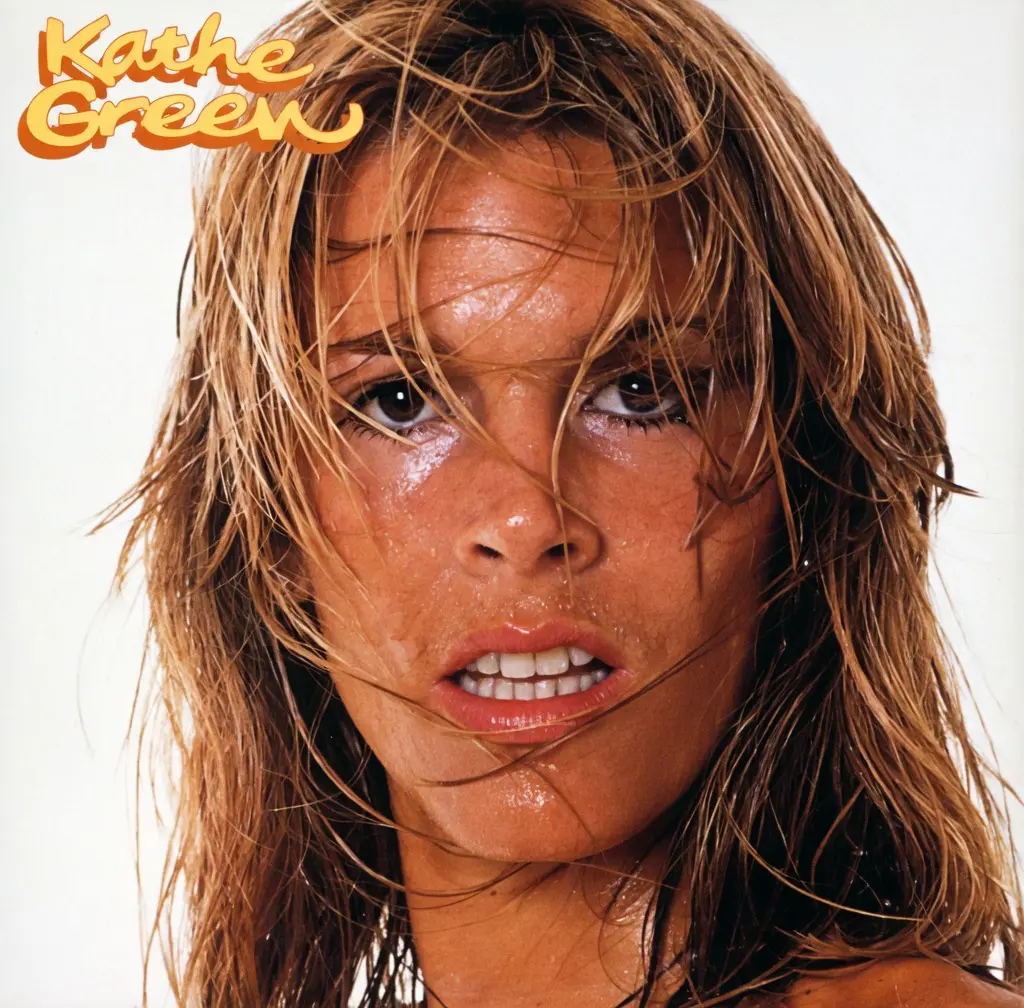 Kathe Green released her self-titled second album in August 1976 on Prodigal
The album revolves around poised ballads, uplift numbers, and two longer emotional set pieces. “Beautiful Changes” and “Color World” land with close-verse phrasing, rising refrains, and a hopeful tone that alternates assurance with tremor. “Love City” resorts to quicker motion, brighter group response, and a sharper social setting. On side two, she alternates solitary pieces with the album’s two most dramatic arcs.
“And So You Go” starts in a hushed, plaintive register, with Green holding the center through a breath-lit line and a restrained keyboard base. The arrangement widens by degrees, then opens into a fuller rise where glockenspiel and string lift sharpen the emotional crest. Green stretches key vowels with a fine quiver, and the climactic harmonic turn through a B major seventh gives the chorus a suspended glow that suits the lyric’s struggle with memory, setback, and forward motion.
“Solo Ride” begins with the same inward poise, then pushes toward a larger closing arc built on swelling strings, firm cadence, and Green’s sustained upper-register control. Her voice keeps its body as the arrangement expands, which gives the refrain a stronger sense of self-command. The lyric sets out a solitary path, and the music answers with a steady build from private reflection to open declaration about fate, self-reliance, and the fact that no one else can live that life.
She recorded the album with nineteen backing musicians, including L.T.D. bassist Henry Davis, Lalo Schifrin pianist Mike Melvoin, Love Unlimited Orchestra guitarist Ray Parker Jr., future Toto drummer Jeff Porcaro, and jazz percussionists Bobbye Hall and Emil Richards. Kathe composed six songs and co-wrote two with film composer David Shire, who wrote “First Thing in the Morning.”
A1. “Beautiful Changes” (3:26) — Green, Shire; piano/orchestral number with refined, assured verses and a swelling, flamboyant chorus where Kathe, enthralled in a new romance, emotes with joyous melisma.
A2. “Help Me Sing My Song” (3:33) — Green; subdued piano ballad with soaring vocals across a modest orchestral chorus.
A3. “Color World” (2:30) — Green; piano-based number with moderate acceleration amid shifting key centers and Kathe’s exuberant soprano.
A4. “First Thing in the Morning” (4:00) — Shire; moderate piano-pop number with upright closed-cadence verses and a flowing refrain.
A5. “Love City” (2:52) — Green; uptempo R&B number with neo-Motown sway and girl group harmonies around a red-light theme.
B1. “Solo Ride” (5:07) — Green; epic torch song with subdued piano-ballad verses and multi-bridge acceleration amid Kathe’s soaring independence declarations, culminating in the sweeping maxim:
You came into this world alone, didn’t you?
And you’ll be going out alone, you know that it’s true
And no one here has any answers for you
What can you do?
No one else can live your life for you
B2. “Alone Again and Free” (2:34) — Green; moderate piano ballad with humble, airy vocals and light ivory filigree.
B3. “What Kind of Man Are You” (3:00) — Green; barren ballad with lithe-yet-earnest vocals and sparse piano accompaniment.
B4. “And So You Go” (4:14) — Green, Shire; introspective ballad with naked vocal/harpsichord verses and a circular, swelling chorus where Kathe isolates the subject of romantic disconnect with vivid metaphor:
You know the truth but you won’t believe it
You see what you had and you try to retrieve it
But love is gone, you can’t pretend you don’t know
You must go
Sessions occurred in Los Angeles at Motown/Hitsville and Crystal Sound studios with producer Frank Edward Wilson, who worked in sequence on titles by Eddie Kendricks, Freda Payne, Lenny Williams, The Originals, Renee Geyer, and Marilyn McCoo & Billy Davis, Jr.
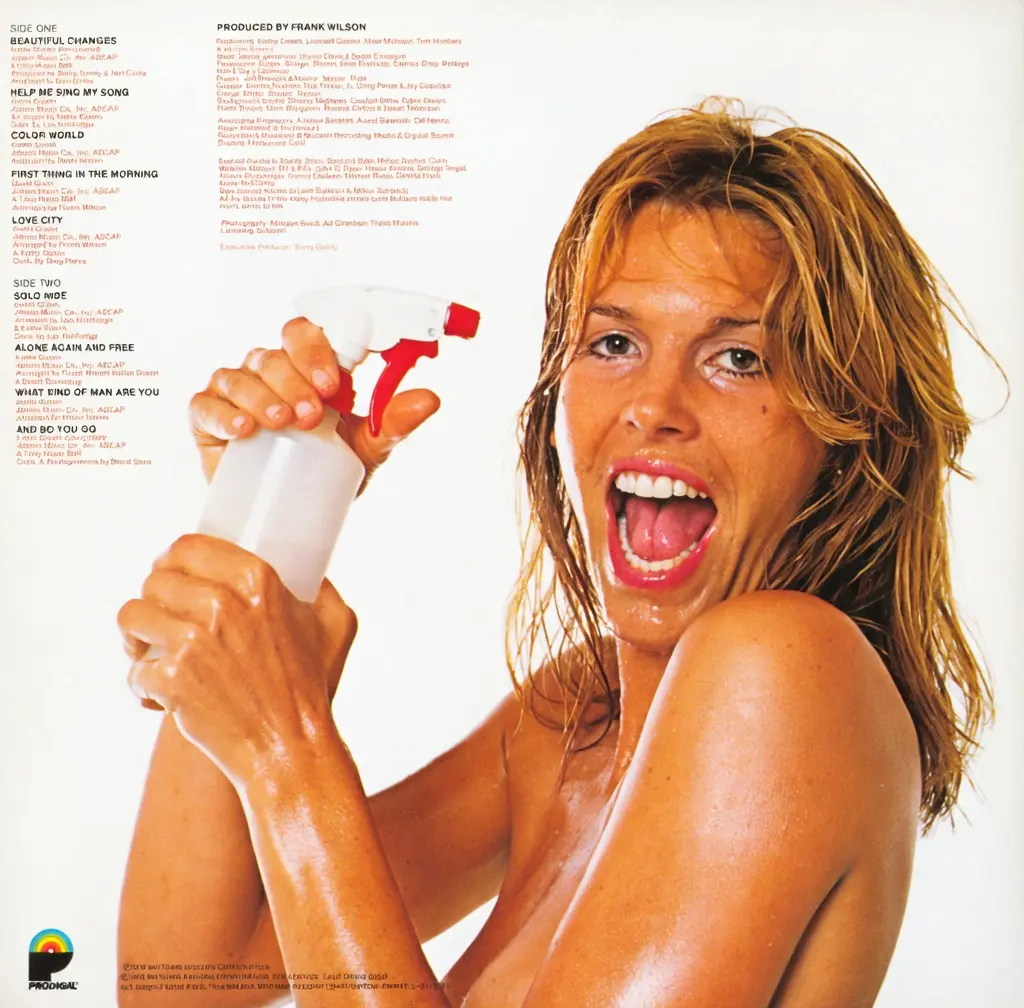 For the front and back cover, Kathe posed damp, tan, and topless for Norman Seeff, whose photography also graces 1975/76 albums by Al Green, Carly Simon, The Emotions, The Jacksons, Joni Mitchell, Maria Muldaur, Peter Allen, Phoebe Snow, Ramsey Lewis, and Tata Vega.
Kathe Green features typography by the Gribbitt!, whose signature cursive fonts appear on numerous late-70s jazz titles on the Pablo label.
Motown first issued “Beautiful Changes” as a promo mono/stereo single, then lifted “Love City” as a proper single (b/w “What Kind of Man Are You”). In the Philippines, “Alone Again and Free” appeared as a single (b/w “Love City”).
Postlude
Kathe Green resurfaced as the co-author of “Love’s Got a Line on You,” a 1983 hit for Patty Smyth and Scandal.
Discography:
- Run the Length of Your Wildness (1969)
- Kathe Green (1976)
Sources:
- Discogs: Kathe Green
- RYM: Kathe Green
- MusicBrainz: Kathe Green
- Zaragon: “Solo Ride” / “And So You Go” spotlight
Artist/Album Pages:
Sam Rivers (Sept. 25, 1923 — Dec. 26, 2011) was an American avant-jazz multi-reedist and pianist ...
Be-Bop Deluxe was an English rock band led by guitarist and songwriter Bill Nelson. The first lineup...
Roderick Falconer (aka Rod Taylor) is an American musician, poet, and television producer. As Rod ...
Earth and Fire was a Dutch symphonic art-rock band that released eight albums and numerous singles...
Dimmornas Bro was a Swedish art-rock band behind the 1977–79 albums Dimmornas Bro and Mål on Silen...
Marconi Notaro (July 10, 1949 — Oct. 24, 2000) was a Brazilian folk-psych singer/songwriter behind...
Karthago was a German rock band formed around guitarist/vocalist Joey Albrecht and keyboardist Ing...
Hank Crawford (Dec. 12, 1934 — Jan. 29, 2009) was an American post-bop/jazz-funk alto saxophonist...
Roy Ayers (1940–2025) was an American vibraphonist, composer, and producer who debuted with the 19...
Little Free Rock was an English hard-rock/psych trio that released a self-titled album on Transatl...
George Gruntz (June 24, 1932 — Jan. 10 2013) was a Swiss pianist, composer, arranger, and bandlead...
The Holy Mackerel was an American studio-assembled psych–pop group formed in 1968 by singer–songw...