

Lalo Schifrin (June 21, 1932–June 26, 2025) was an Argentinian pianist, composer, and arranger who began his career in the mid-1950s. During his first active decade, he served as a backing musician for Ástor Piazzolla, Xavier Cugat, Duke Ellington, and Dizzy Gillespie.
Schifrin’s first headlining album was the 1959 release Piano Espanol on Tico Records. In 1965, he scored Gone With the Wave, his first of many soundtracks. His Hollywood association would span more than 20 years and include scores for The Cincinnati Kid (1965), The Fox (1968), Bullitt (1968), Enter the Dragon (1973), Voyage of the Damned (1976), Rollercoaster (1977), and The Amityville Horror (1979). For the late-’60s action/spy television drama Mission Impossible, he produced one of that decade’s most iconic themes.
The mid-to-late ’70s saw Schifrin intersperse his soundtrack work with proper albums, including the jazz-funk/Rare Groove classics Black Widow (1976) and Towering Toccata (1977).
Background
Lalo Schifrin was born Boris Claudio Schifrin on June 21, 1932, in Buenos Aires, Argentina, and he took “Lalo” from the common diminutive of Claudio. Raised in a household tied to the Buenos Aires Philharmonic through his father Luis Schifrin, he entered formal piano study as a child and absorbed harmony and compositional training alongside an early pull toward jazz.
In the early 1950s, he pursued university studies in Buenos Aires, then moved overseas on scholarship to attend the Conservatoire de Paris. He studied composition with Olivier Messiaen and Charles Koechlin, expanded into percussion study, and worked nights as a jazz pianist in Paris clubs. In 1955, he played piano with Ástor Piazzolla and appeared in Paris festival settings that placed him in the international jazz orbit.
After returning to Argentina in his twenties, Schifrin formed a 16-piece jazz big band and placed it in a weekly Buenos Aires television context, while taking steady film, radio, and television assignments. He issued his first albums as a leader—Spectrum (1957) and Piano español (1959)—and built a widening credit trail as a pianist, arranger, and composer across Latin and jazz-related sessions during the same period.
In 1956, he met Dizzy Gillespie and proposed an extended work for the trumpeter’s big band, completing Gillespiana in 1958. The piece, released on record in 1960, secured further high-profile Gillespie-associated credits in the early 1960s, establishing Schifrin as a jazz composer with orchestral range as he moved toward a broader international career.
Bossa Nova: New Brazilian Jazz
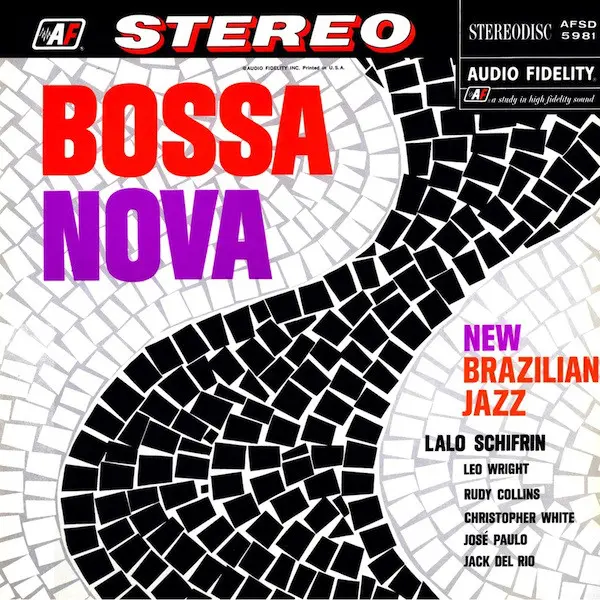 Lalo Schifrin released his third bandleader album, Bossa Nova: New Brazilian Jazz, in 1962 on Audio Fidelity.
The album centers on Schifrin’s piano and Brazilian-style arrangements, performed by a quintet but referenced as an orchestra. Reedist Leo Wright (alto saxophone, flute) shifts the front-line contour, underpinned by bassist Christopher White and drummer Rudy Collins with percussive accents from Jose Paulo and Carmen Costa.
A1. “Boato (Bistro)” [Rumor] (2:26) – João Roberto Kelly
A2. “Chora Tua Tristeza” [Cry Your Sadness] (2:38) – Oscar Castro-Neves, Luvercy Fiorini
A3. “Poema Do Adeus” [Farewell Poem] (3:19) – Luís Antônio
A4. “Apito No Samba” [Whistle in the Samba] (2:50) – Luís Antônio, Luís Bandeira
A5. “Chega de Saudade” [No More Blues] (5:19) – Antônio Carlos Jobim, Vinicius de Moraes
A6. “Bossa Em Nova York” [Bossa in New York] (1:52) – Jose Paulo, Dom Madrid
B1. “O Amor E A Rosa” [Love and the Rose] (3:34) – João Pernambuco, Antônio Maria
B2. “O Menino Desce O Morro (Little Brown Boy)” [The Boy Comes Down the Hill] (2:28) – Maria De Rosa, Vera Brasil
B3. “Menina Feia” [Ugly Girl] (2:25) – Oscar Castro-Neves
B4. “Ouça” [Listen] (3:56) – Maysa Matarazzo
B5. “Samba de uma Nota Só” [One-Note Samba] (3:44) – Antônio Carlos Jobim, Newton Mendonça
B6. “Patinho Feio (aka Ugly Duckling)” [Ugly Duckling] (3:01) – Oscar Castro-Neves
Schifrin recorded the album in June 1962 in New York City. New Brazilian Jazz peaked at No. 35 on the Billboard Albums Chart in 1963.
Piano, Strings and Bossa Nova
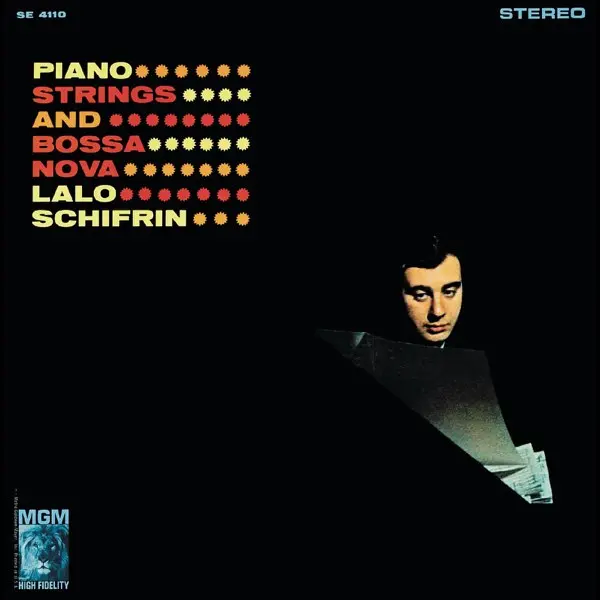 Lalo Schifrin released his seventh bandleader album, Piano, Strings and Bossa Nova, in 1963 on Audio Fidelity.
The album centers on Schifrin’s piano and arranging, pairing guitar from Jim Hall with a rhythm section anchored by Christopher White and Rudy Collins and punctuated by Latin percussion from Jose Paulo and Carmen Costa. Harp and strings expand the texture around the small-group core, keeping the program framed by Schifrin’s written lines and voicings.
A1. “The Wave” (2:43)
A2. “Insensatez” [Foolishness] (2:22) – Vinicius de Moraes, Antonio Carlos Jobim
A3. “You and Me (Voce e Eu)” [You and I] (1:48) – Vinicius de Moraes, Carlos Lyra
A4. “Lalo’s Bossa Nova (Samba Para Dos)” [Samba for Two] (2:17)
A5. “Silvia” (3:11)
A6. “Murmurio” [Murmur] (2:01) – Luiz Antonio, Djaima Ferreira
B1. “Maria” (2:29) – Leonard Bernstein, Stephen Sondheim
B2. “Rapaz de Bem” [Good Guy] (2:34) – Johnny Alf
B3. “Samba Do Perroquet (Parrot Samba)” [Parrot Samba] (2:04) – Djaima Ferreira, Ivono Rebella
B4. “Rio After Dark” (2:33)
B5. “Time for Love” (2:26) – Leonard Feather
B6. “Four Leaf Clover” (1:50) – Harry M. Woods, Mort Dixon
Schifrin recorded the album in New York City on October 23 (Side A) and October 24 (Side B), 1962, with producer Creed Taylor.
The Cincinnati Kid
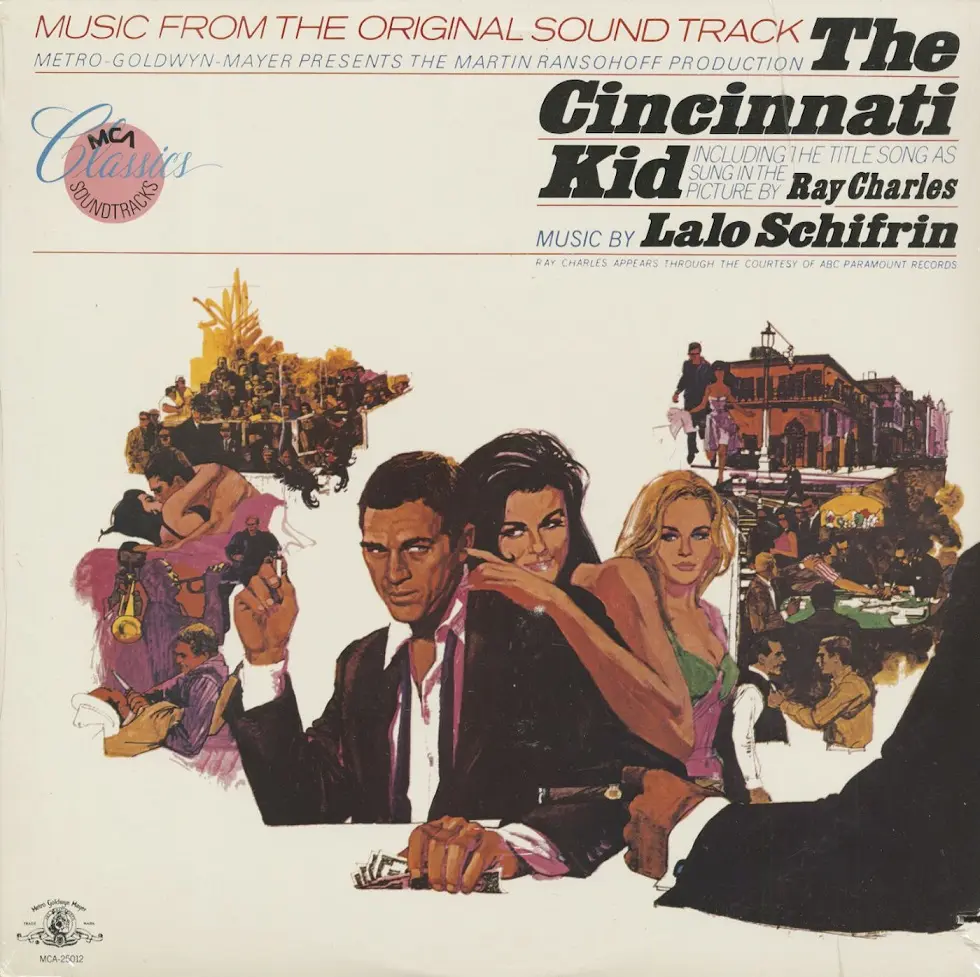 In October 1965, Lalo Schifrin released The Cincinnati Kid, the MGM soundtrack to the period poker film starring Steve McQueen, Ann-Margret, Tuesday Weld, Karl Malden, and Edward G. Robinson.
Set in 1930s New Orleans, the film follows Eric “The Kid” Stoner (McQueen), an up-and-coming five-card-stud player who sets his sights on Lancey “The Man” Howard (Robinson), the older master regarded as the standard to beat. Howard warms up in a long, punishing game against William Jefferson Slade (Rip Torn), then Slade targets Shooter (Malden)—the Kid’s friend and the game’s dealer—by forcing him toward crooked dealing through debt and threats tied to Shooter’s wife, Melba (Ann-Margret). The Kid rebuffs Melba’s advances while Christian Rudd (Tuesday Weld) remains his partner, but Melba later succeeds in seducing him, and Christian catches the aftermath. At the table, the Kid confronts Shooter and demands an honest deal, maneuvers to replace Shooter with Lady Fingers (Joan Blondell), and pushes Howard to the edge before losing the climactic pot when Howard’s queen-high straight flush beats the Kid’s aces-over-tens full house; the Kid then reconnects with Christian after the game.
Norman Jewison directed the film for Metro-Goldwyn-Mayer.
Ray Charles sings the title theme, which appears on the soundtrack with the Schifrin score cues, including an instrumental reprise of the theme.
A1. “The Cincinnati Kid” (2:17) – Ray Charles (vocals)
A2. “So Many Times” (2:02)
A3. “New Orleans procession” (3:14)
A4. “Shooter” (3:18)
A5. “The Man” (2:35)
A6. “The Cock Fight” (1:35)
B1. “The Cincinnati Kid” (Instrumental) (2:55)
B2. “Melba” (3:59)
B3. “Dialogue In The Rain” (2:59)
B4. “The Chase” (1:40)
B5. “All Packed” (1:20)
B6. “The Game” (2:00)
B7. “At The Farm” (3:17)
Schifrin composed the music and wrote the arrangements, conducted by Robert Armbruster conducting. Producer Jesse Kaye recorded the album on July 15–16 and 22, 1965, at the MGM Scoring Stage (Culver City) and RCA (Hollywood).
The film premiered on October 15, 1965, at the Saenger Theatre in New Orleans and opened nationally on October 27, 1965; it reported $7 million in rentals. Alternate cuts used a different ending, British censors cut a cockfight scene, and Blondell earned a Golden Globe nomination for supporting actress.
The Dissection and Reconstruction of Music From the Past
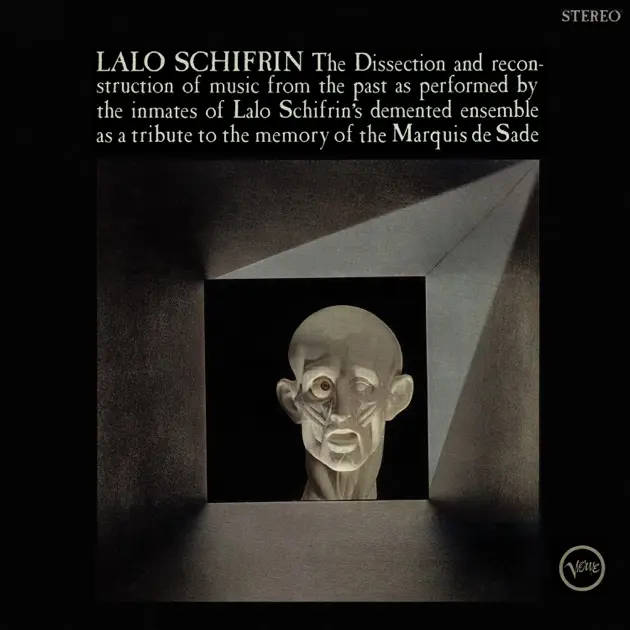 Lalo Schifrin released his ninth studio bandleader album, The Dissection and Reconstruction of Music From the Past, in June 1966 on Verve.
Schifrin writes the full program and leads a large ensemble built around his arranging and conducting, with harpsichord and piano set inside a mixed brass, reeds, strings, harp, and guitar palette. Jerome Richardson and Romeo Penque color the upper register with alto and bass flutes alongside tenor saxophone, while the brass section expands through trumpets, French horns, trombones, bass trombone, and tuba; Richard Davis and Grady Tate hold the rhythmic base, with Rose Marie Jun added for vocals.
On Dissection and Reconstruction, Schifrin drops 18th-century-shaped themes into a jazz ensemble that keeps the rhythm section in a loose swing almost end to end, with big-band weight on some cuts and smaller-combo clarity on others. The writing treats period-flavored motifs as raw material for brisk brass figures, compact guitar comping, and flute lines that slip between lead voice and bright counterline, while the drumming stays light on its feet and drives the phrasing forward. “Beneath a Weeping Window Shade” breaks the pattern: Rose Marie Jun delivers a madrigal-like vocal line over multiphonic flute, a string quintet, and Schifrin’s harpsichord comments, with the parts set in tense, clipped layers. “Aria” runs a 9/8 cycle that turns through sharp, contoured figures, with the ensemble snapping accents into the meter and then opening short lanes for the front line to push against the pulse. Elsewhere, pieces such as “The Wig,” “Marquis De Sade,” and “Aria” lean on quick arrangement pivots—brass blocks, flute bursts, and tight chord shifts—that keep the antique contours audible while the band presses the momentum.
A1. “Old Laces” (4:23)
A2. “The Wig” (2:44)
A3. “The Blues for Johann Sebastian” (3:38)
A4. “Renaissance” (3:29)
A5. “Beneath a Weeping Willow Shade” (2:33)
B1. “Versailles Promenade” (4:04)
B2. “Troubadour” (3:07)
B3. “Marquis de Sade” (2:50)
B4. “Aria” (2:36)
B5. “Bossa Antique” (3:29)
Schifrin recorded the album on April 27–28, 1966, at Van Gelder Studio in Englewood Cliffs, New Jersey, with producer Creed Taylor and engineers Rudy Van Gelder and Val Valentin. Acy Lehman designed the cover, and Paul De Barros contributed the liner notes.
Technically, Verve issued this released under a 171-character title: The Dissection and Reconstruction of Music From the Past as Performed by the Inmates of Lalo Schifrin’s Demented Ensemble as a Tribute to the Memory of the Marquis de Sade.
Music from Mission: Impossible
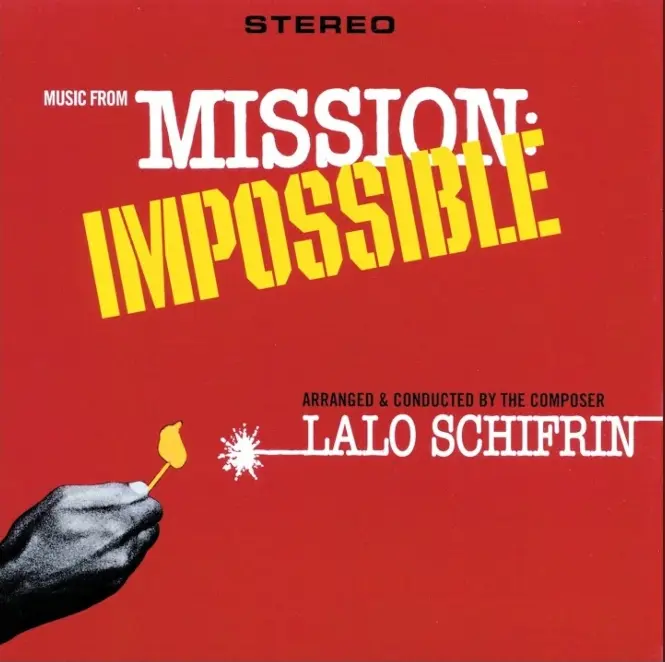 In December 1967, Lalo Schifrin released Music from Mission: Impossible, the Dot Records soundtrack to the CBS prime-time espionage series.
The series follows the Impossible Missions Force, a covert team whose parent agency stays unnamed and whose assignments rely on staged identities, timed misdirection, and carefully engineered setups aimed at hostile governments, dictators, industrial criminals, and organized crime figures. Each episode begins with a recorded briefing that sets the operation in motion and ends with the standing disclaimer that the Secretary will disavow the team if they are caught or killed, keeping the work framed as deniable and procedural rather than personal.
Dan Briggs (Steven Hill) leads IMF for the show’s first season, then Jim Phelps (Peter Graves) takes command for the remaining seasons, typically building missions around a core group that includes Cinnamon Carter (Barbara Bain), Rollin Hand (Martin Landau), Barney Collier (Greg Morris), and Willy Armitage (Peter Lupus), with additional specialists rotated in as needed. Bruce Geller created the format for Desilu Productions and structured it around minimal character development, clockwork execution, and prominent music scoring, with the show running on CBS from September 17, 1966, through March 30, 1973.
Schifrin composed the theme and the episode scores, and this album presents re-recorded, extended versions originally commissioned for the series.
A1. “Mission: Impossible” (2:31)
A2. “Jim on the Move” (3:12)
A3. “Operation Charm” (2:55)
A4. “The Sniper” (3:20)
A5. “Rollin Hand” (2:48)
A6. “The Plot” (2:25)
B1. “Wide Willy” (2:03)
B2. “Cinnamon (The Lady Was Made to Be Loved)” (2:36) – Jack Urbont, Bruce Geller
B3. “Barney Does It All” (2:30)
B4. “Danger” (2:44)
B5. “Mission: Accomplished” (2:40)
The soundtrack features piano and harpsichord by Schifrin, who arranged and conducted the Hollywood sessions in October 1967 with co-producer Tom Mack. The personnel list includes trumpeter Ray Triscari, trombonist Billy Byers, reedist Ronald Langinger, keyboardist Paul Beaver, guitarist Tommy Tedesco, bassist Ray Brown, drummer Earl Palmer, percussionist Emil Richards, and sitarist Bill Plummer, plus a full string section with harpist Dorothy Remsen.
Schifrin’s work for the first series earned two Grammys at the 10th Grammy Awards, and the album later charted in 1968 on Billboard’s album and jazz listings. In late 1968, Paramount issued More Mission: Impossible, comprised of further Schifrin cues.
The Fox
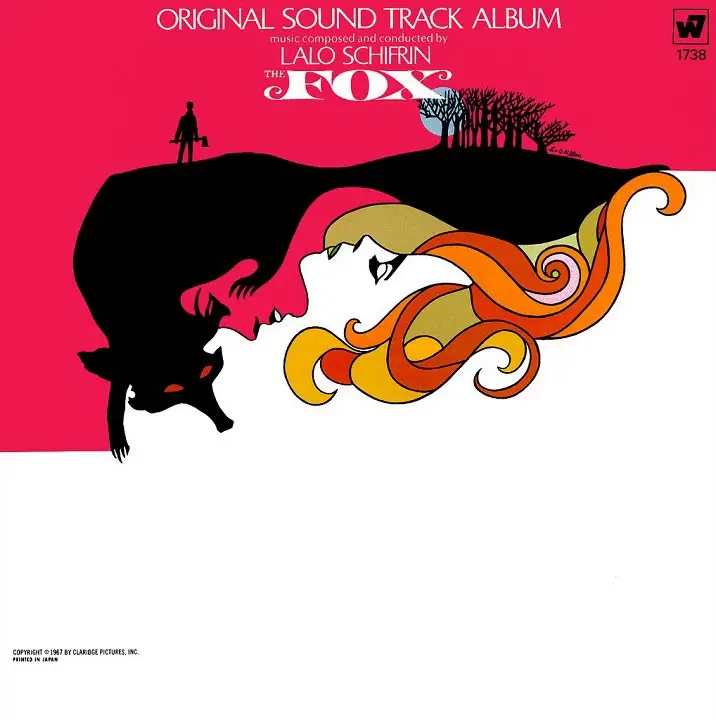 In February 1968, Lalo Schifrin released The Fox, the Warner Bros. soundtrack to the Canadian love-triangle drama starring Sandy Dennis, Anne Heywood, and Keir Dullea.
The Fox follows two women, Jill Banford (Sandy Dennis) and Ellen March (Anne Heywood), who keep their chicken operation alive through winter isolation on an isolated Ontario farm, where Jill runs the house and accounts while Ellen handles outside work and fends off a coop-raiding fox.
They’re visited by a merchant seaman, Paul Grenfel (Keir Dullea), who takes leave in search of his grandfather, the onetime farm owner. In exchange for his labors, they allow him to stay in the spare room. Tensions ensue as Paul, attracted to Ellen, sparks jealousy in Jill. When Paul asks Ellen to marry him, Jill tries to buy his exit. He eventually kills the fox, then makes a final push—sex, an elopement pitch, and a demand for a choice—while Ellen refuses to leave Jill behind.
After he ships out, Jill consummates with Ellen, who rejects Paul’s proposal by mail. Weeks later, he reappears during the women’s attempt to bring down a dying oak. As Paul chops the teetering tree, he tells Jill to clear its path but she doesn’t heed his warning. The tree falls and kills her. Spring resets the landscape but not the damage: Ellen sells the farm and leaves with Paul, and their closing exchange lands on Ellen’s grief rather than closure.
Mark Rydell directed the film in his feature debut for Warner Bros.-Seven Arts (through Claridge Pictures).
Schifrin’s score anchors the album with a main theme and a cycle of winter-set cues, and the track list includes two vocal performances credited within the program.
A1. “Theme from the Fox” (2:26)
A2. “Frost Trees” (2:19)
A3. “Soft Clay” (1:58)
A4. “Ellen’s Image” (3:27)
A5. “Dead Leaf” (2:50)
A6. “Foxhole” (2:11)
B1. “That Night” (2:39) – Norman Gimbel
B2. “Foxtail” (2:11)
B3. “Paul’s Memories” (2:04)
B4. “Roll It Over” (2:17) – Norman Gimbel
B5. “Trembling” (2:40)
B6. “Lonely Road” (2:04)
B7. “Dripping Icicles” (3:02)
Schifrin composed, arranged, and conducted the music, recorded in January 1968 in Hollywood with producer Jimmy Hilliard and a large string-and-brass orchestra that included pianist Artie Kane, percussionist Emil Richards, harpist Dorothy Remsen, and singers Sally Stevens (“That Night”) and Anne Heywood (“Roll It Over”).
The film opened in Canada on December 13, 1967, and in the United States on February 7, 1968, and it reported $19.1 million at the box office. Schifrin’s score drew major awards attention with nominations at the Academy Awards and Grammy Awards, and the film won the Golden Globe for Best English-Language Foreign Film while earning additional Golden Globe nominations including Best Director and Best Actress (Drama) for Heywood. In 1968, a screening in Jackson, Mississippi led to the arrest of theater owner Irene McGrew and seizure of the film under a state obscenity statute, and the resulting federal case upheld the conviction by a 2–1 district court vote.
Bullitt
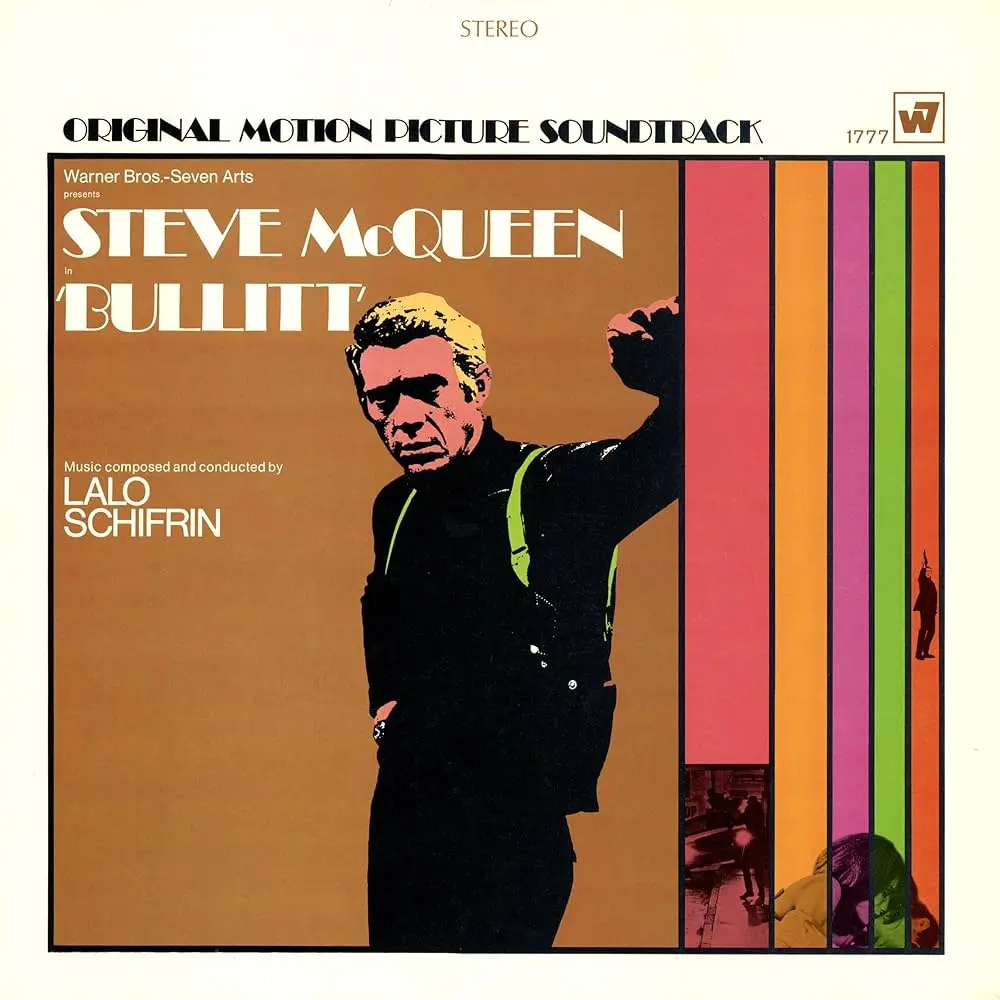 In January 1969, Lalo Schifrin released Bullitt, the Warner Bros. soundtrack to the American action-chase thriller starring Steve McQueen, Robert Vaughn, and Jacqueline Bisset.
The film follows San Francisco police lieutenant Frank Bullitt (McQueen), assigned by federal prosecutor Walter Chalmers (Vaughn) to guard mob witness Johnny Ross. Pending a Monday Senate appearance, Bullitt stands guard for Ross in a cheap Embarcadero hotel. However, two hitmen break in after midnight Sunday, shoot Bullitt’s partner Stanton, and mortally wound Ross.
Bullitt conceals the death and sends the body to the morgue as a John Doe. He breaks the case through a San Mateo phone lead and surveillance that spawns a car-chase from San Francisco to Brisbane, where the hitmen die in a gas-station explosion. A second murder follows, and Bullitt’s relationship with architect Cathy (Bisset) takes the strain as she confronts the cost of his work.
Passport applications expose the setup: Chalmers used Bullitt as a decoy while the real Ross assumed another man’s identity to flee the country. Bullitt intercepts the move at San Francisco International Airport, pursues Ross through the terminal, and shoots him after Ross kills a deputy. Early Monday, Bullitt returns home to find Cathy asleep in his bed, choosing to stay.
Peter Yates directed the film for Warner Bros.-Seven Arts.
Schifrin’s score drives the album with re-recorded versions of the film cues, tightening the program into standalone cuts built around the main title theme, interrogation figures, and the extended chase material.
A1. “Bullitt (Main Title)” (2:08)
A2. “Room ‘26’” (2:23)
A3. “Hotel Daniels” (2:53)
A4. “The Aftermath of Love” (2:49)
A5. “Music to Interrogate By” (2:50)
A6. “On the Way to San Mateo” (2:31)
B1. “Ice Pick Mike” (3:00)
B2. “A Song for Cathy” (2:13)
B3. “Shifting Gears” (3:17)
B4. “Cantata for Combo” (3:05)
B5. “The First Snowfall” (3:03) – Sonny Burke, Paul Francis Webster
B6. “Bullitt (End Title)” (2:39)
Schifrin arranged and conducted the sessions, produced by Jimmy Hilliard and recorded in Hollywood on December 6–7, 1968. The personnel list centers on a large ensemble that includes trumpeter Tony Terran, trombonist Lew McCreary, reedist Ronnie Lang, organist Mike Melvoin, guitarist Bob Bain, drummer Stan Levey, and bassists Max Bennett and Carol Kaye.
The film opened in the United States on October 17, 1968, and it grossed $42.3 million worldwide while winning the Academy Award for Best Film Editing and earning a second nomination for Best Sound. Later soundtrack editions separated the album versions from the film versions: Schifrin recreated the original movie arrangements with the WDR Big Band in Cologne in 2000, and Film Score Monthly issued the original score recordings heard in the film in 2009 alongside the 1968 album program.
Enter the Dragon
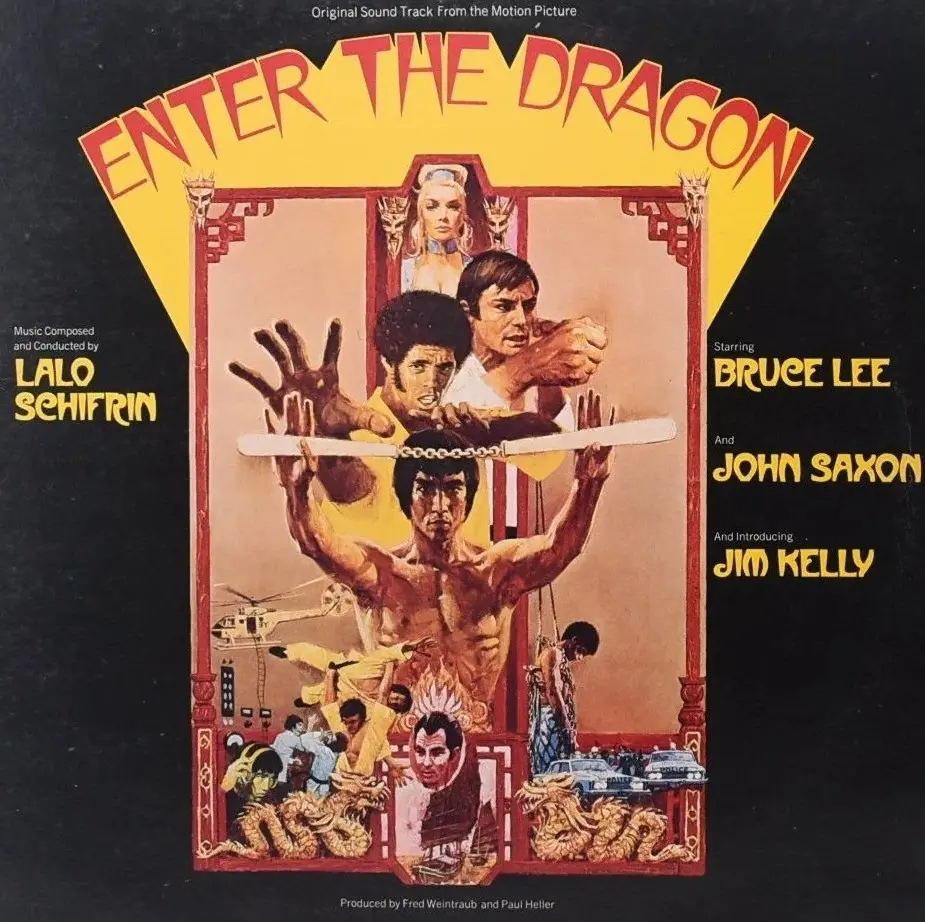 In August 1973, Lalo Schifrin released Enter the Dragon, the Warner Bros. soundtrack to the Hongkongese martial-arts thriller starring Bruce Lee, John Saxon, and Ahna Capri.
The film follows Lee (Bruce Lee), a Shaolin-trained martial artist recruited by British intelligence agent Braithwaite (Geoffrey Weeks) to infiltrate a tournament on the private island of crime lord Han, a drug-trafficker and pimp who hides his operations under the guise of a martial-arts school. Lee enters with two other invitees—Roper (Saxon), a gambler on the run from the mob, and Williams (Jim Kelly), an activist fleeing police trouble in Los Angeles—while Han’s rules keep the island isolated from firearms and formal outside jurisdiction.
Lee ties the mission to a personal target after learning Han’s bodyguard O’Hara (Bob Wall) killed his sister Su Lin (Angela Mao Ying), then uses the first night to probe the compound and locate an underground base. Han answers the breach by tightening control, killing guards through his enforcer Bolo (Yang Sze), and staging Lee’s match with O’Hara, which ends with Lee killing O’Hara after a bottle attack from behind.
Han pivots to intimidation, murders Williams with his iron prosthetic hand, and forces Roper toward collaboration by showing the underground operation and using Williams’s corpse as leverage. Lee returns to the base, signals Braithwaite, and gets trapped and imprisoned, then the tournament collapses into open combat as Han orders Lee and Roper killed and Mei Ling (Betty Chung) releases the prisoners. Lee corners Han in a mirror-filled room, breaks the illusion by smashing the mirrors, and kills him as the military arrives to secure the island.
Robert Clouse directed the film for an American–Hong Kong co-production released through Golden Harvest in Hong Kong and Warner Bros. internationally.
Schifrin’s score cues the album around the main theme and a closing reprise, framing a short program of island-set and combat-titled pieces recorded in June 1973.
A1. “Theme from Enter the Dragon” (2:23)
A2. “Sampans” (1:57)
A3. “The Monk” (3:25)
A4. “The Gentle Softness” (2:42)
A5. “The Big Battle” (3:36)
B1. “Han’s Island” (2:57)
B2. “The Human Fly” (3:14)
B3. “Bamboo Bird Cage” (2:42)
B4. “Broken Mirrors” (2:40)
B5. “Theme from Enter the Dragon (reprise)” (1:07)
Schifrin arranged and conducted the sessions, produced by Nick Redman and recorded in June 1973 in Burbank, California, with a large ensemble that includes trumpeter Eugene E. Young, trombonist Hoyt Bohannon, reedist Jack Marsh, keyboardist Joe Sample, guitarist Larry Carlton, bassist Max Bennett, and percussionist Joe Porcaro.
The film premiered in Hong Kong on July 26, 1973, six days after Lee’s death, and opened in the United States on August 19, 1973; it was later selected for preservation in the U.S. National Film Registry. The release became a worldwide box-office phenomenon, with estimates placing total grosses above $400 million against an $850,000 budget.
Black Widow
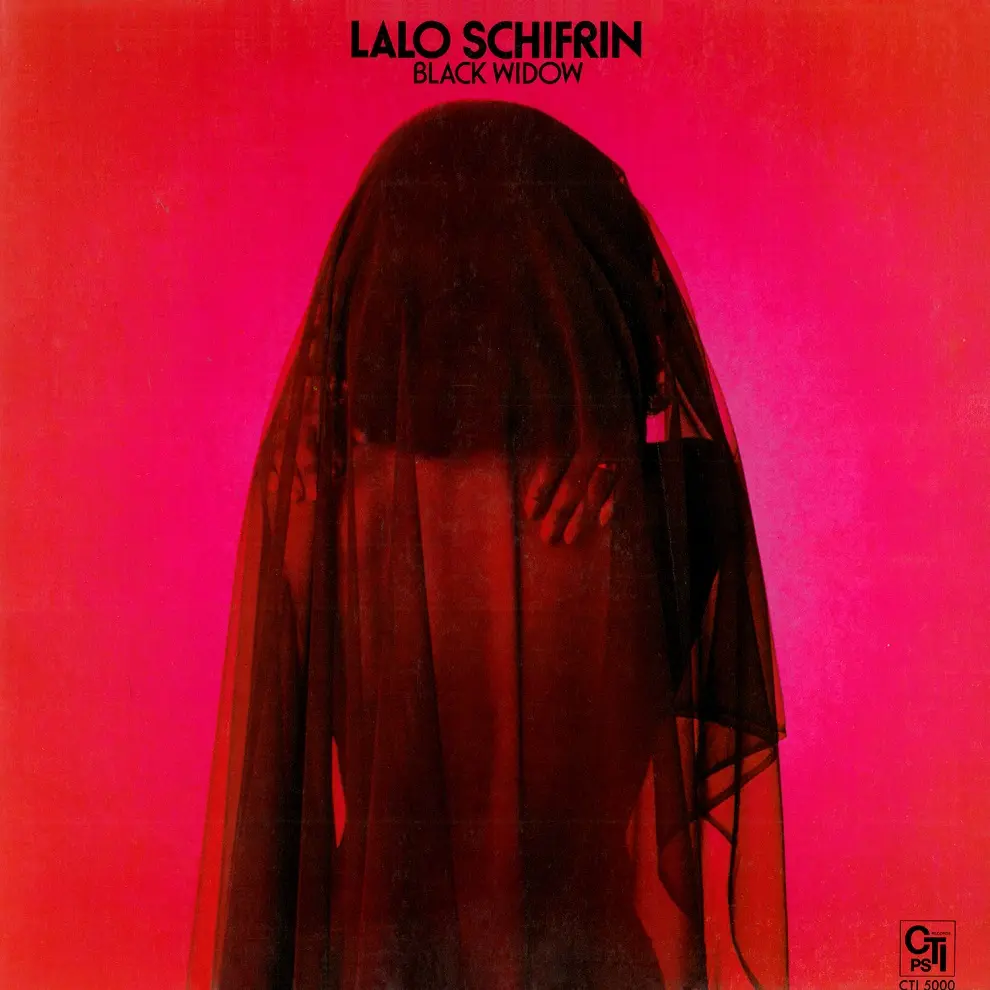 Lalo Schifrin released his first jazz-funk studio album, Black Widow, in June 1976 on CTI Records.
Schifrin leads the sessions as arranger and conductor from piano and keyboards, setting his charts against a large ensemble that combines horns, flutes, guitars, strings, and a percussion-heavy rhythm section. Trombonist Jon Faddis fattens the low register, while reedists Pepper Adams (baritone saxophone) and Joe Farrell (alto sax, flute) offer harmolodic contrast. Bassist Anthony Jackson and drummer Andy Newmark underpin the set with singer Patti Austin as a special guest.
Soundwise, Black Widow presents a steady four-on-the-floor pulse with layered strings, glistening electric piano, and bright synthesizer accents. “Quiet Village” recasts the exotica theme as a slow, heat-haze vamp with wide pockets of space and synth swells that sit above a clipped rhythm bed. “Moonglow & Theme From Picnic” pushes familiar film themes into a simple, insistent beat frame, with the keyboards carrying the harmonic turns and the band locking the accents in place. Lalo’s take on “Jaws” drives the ominous motif through wah-wah guitar, night-lit keyboard runs, and a percolating low-end figure that sustains tension without rushing the tempo. The title track turns into a straight keyboard showcase, with surging strings and shifting electric textures wrapping a repeating bass pattern; across the set, the playing stays tight and responsive, even when the constant pulse starts to feel like a long haul.
A1. “Black Widow” (4:11)
A2. “Flamingo” (4:31) – Edmund Anderson, Ted Grouya
A3. “Quiet Village” (5:45) – Les Baxter
A4. “Moonglow/Theme from Picnic” (6:13) – Will Hudson, Irving Mills, Eddie DeLange / George Duning, Steve Allen
B1. “Jaws” (6:01) – John Williams
B2. “Baia” (4:49) – Ary Barroso, Ray Gilbert
B3. “Turning Point” (3:29)
B4. “Dragonfly” (5:45)
Schifrin recorded the album at Mediasound Studios in New York City on March 29–30, 1976, with producer Creed Taylor.
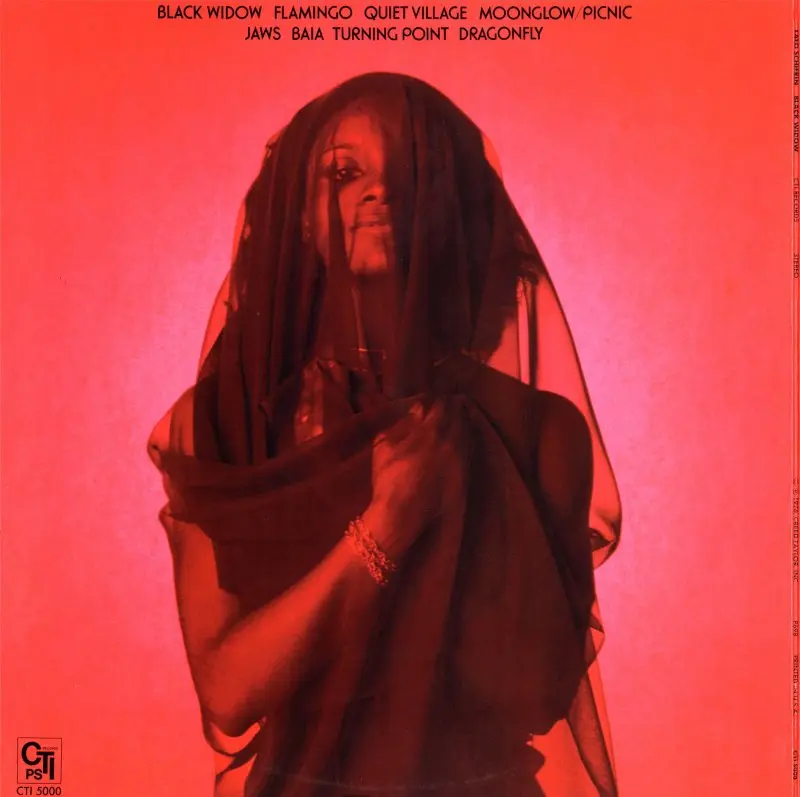 Black Widow features veiled red-scale photography of an unidentified model by Pete Turner, whose imagery graces 1960s Verve/Impulse! classics by Lee Konitz (Motion), Stan Getz (Focus), John Coltrane (Live at the Village Vanguard), and 1970s A&M/CTI titles by Freddie Hubbard (Straight Life), Eumir Deodato (Prelude), Airto Moreira (Fingers), Randy Weston (Blue Moses), John Hammond (Gambler’s Life), and Jim Hall (Concierto). Turner’s red theme reflects a trend seen on 1976 album covers by Sylvia Robinson (Sylvia), Be-Bop Deluxe (Sunburst Finish), and the Spiders from Mars.
The Black Widow CD reissue adds four tracks:
9. “Frenesi” (3:53) – Alberto Dominguez
10. “Tabú” (4:33) – Margarita Lecuona
11. “Baia” (7:44) – Ary Barroso, Ray Gilbert
12. “Con Alma” (6:30)
Voyage of the Damned
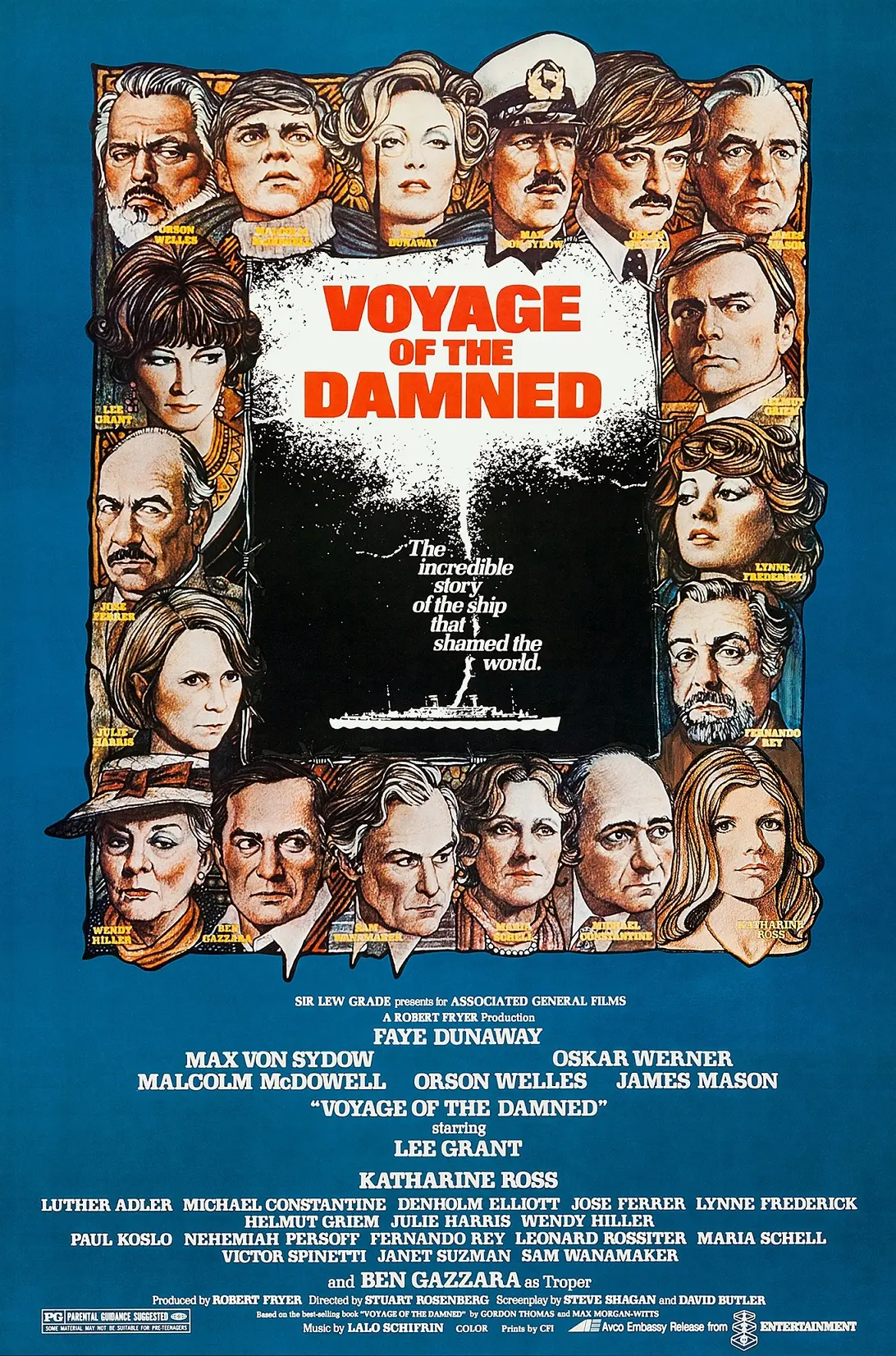 In April 1977, Lalo Schifrin recorded Voyage of the Damned, the Entr’acte soundtrack to the 1976 historical refugee drama with a transatlantic ensemble cast, including Faye Dunaway, Malcolm McDowell, Orson Welles, Lee Grant, and Ben Gazzara.
Inspired by the 1939 voyage of the German-flagged MS St. Louis, the film tracks 937 Jewish refugees who leave Hamburg for Havana believing the crossing offers an escape route from intensifying persecution, then watch the plan collapse as governments close the doors ahead of them.
While the ship is still at sea, Cuba cancels entry, and the desperate reroute brings the liner to the United States and then toward Canada, where rejection follows again, forcing Captain Schroeder (Max von Sydow) to turn back toward Europe. The passengers’ fear sharpens into collective threat when the captain receives a letter signed by 200 people promising mass suicide at sea rather than return to Germany, and he answers with his own contingency plan: run the ship onto an English reef so rescue can override policy.
Near the end, Belgium, France, the Netherlands, and the United Kingdom agree to take portions of the passengers, and the film closes by pairing the on-board relief with footnoted outcomes indicating that more than 600 of those resettled on the continent were later deported and murdered.
Stuart Rosenberg directed the film for ITC Entertainment, released by Rank Film Distributors in the United Kingdom and Avco Embassy Pictures in the United States.
Schifrin’s score runs as a sequence of titled cues that move between onboard routine, private scenes, and end-credit dance framing, assembled as a standalone Entr’acte album program.
A1. “Main Title” (2:21)
A2. “House Painter March” (1:49)
A3. “Hotel Nacionale” (2:18)
A4. “What’s Past is Past; Affirmation of Love” (2:51)
A5. “Lament” (2:30)
A6. “The Arrival; Theme of Hope” (3:21)
B1. “The Captain; Goodbye Aunt Jenny; We Need Help” (3:11)
B2. “So Many Things I Wanted to Say” (2:08)
B3. “To Be A Woman” (2:07)
B4. “Tragedy; Time Pulse” (3:59)
B5. “Our Prayers Have Been Answered” (2:16)
B6. “End Credits (Foxtrot)” (2:30)
Schifrin composed, arranged, and conducted the music, produced by John Lasher and recorded on April 12–13, 1977, in Wembley, England, performed by the London Studio Orchestra.
The film premiered on December 19, 1976, and opened in New York and Los Angeles on December 22, 1976. Lee Grant received an Academy Award nomination for Best Supporting Actress, and Schifrin earned Academy Award and Golden Globe nominations for Best Original Score, with additional nominations including Best Screenplay for David Butler and Steve Shagan and a Golden Globe win for Katharine Ross in Supporting Actress.
Towering Toccata
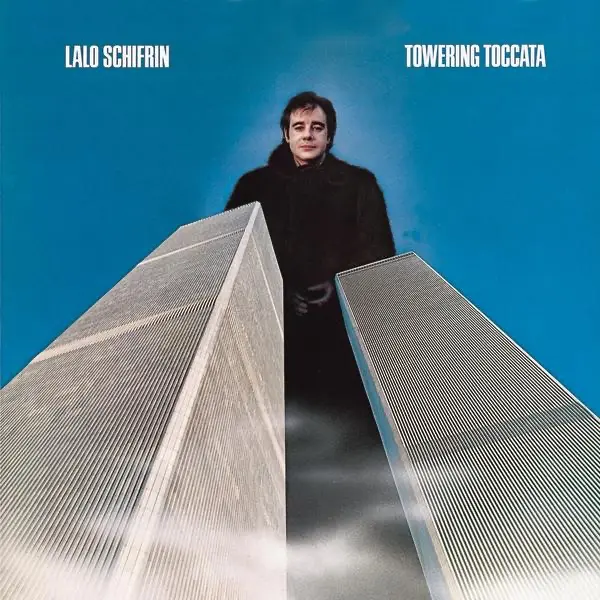 Lalo Schifrin released his second jazz-funk studio album, Towering Taccota, in March 1977 on CTI Records.
Schifrin leads from piano and keyboards as arranger and conductor, setting his material for a large ensemble that folds brass, reeds, flutes, guitars, and strings into a single session-band palette. Multiple saxophones and flutes share the front line alongside trumpet and trombone, while Will Lee and Steve Gadd hold the rhythmic base, with Clark Spangler adding additional keyboards.
The title track drives Bach’s “Toccata and Prelude in F Minor” through a mid-tempo workout with clipped rhythm-guitar scratches, a pronounced backbeat, and jazzy keyboard lines that dart across the chord changes. “Most Wanted Theme” shifts into a thicker, symphonic-leaning frame, with brass and strings pushing stabs and sustained chords over a locked rhythm pattern.
“Rollercoaster” runs on a simple vamp that leaves space for small keyboard turns and arrangement shifts, built to sit comfortably inside the album’s pulse-first design. “Theme From King Kong” drops the tempo into heavier low-end weight, with wah-wah guitar and synth bass under atmospheric horn and flute lines that widen the upper register. The originals “Macumba” and “Midnight Woman” stay inside the same late-night tempo grid and sound palette, while “France’s Theme” pulls the sequence toward a smoother, less tense mood that breaks the album’s momentum.
A1. “Towering Toccata” (5:04) – Johann Sebastian Bach
A2. “Frances’ Theme” (4:19)
A3. “Macumba” (6:12)
A4. “Eagles in Love” (2:51)
B1. “Theme from King Kong” (4:12) – John Barry
B2. “Most Wanted Theme” (2:44)
B3. “Midnight Woman” (6:07)
B4. “Roller Coaster” (4:45)
Schifrin recorded the album at Van Gelder Studio in Englewood Cliffs, New Jersey, on October 18 and 20 and December 21, 1976, with Creed Taylor producing the sessions.
“Roller Coaster” was later re-recorded for Schifrin’s soundtrack to the 1977 film Rollercoaster.
Rollercoaster
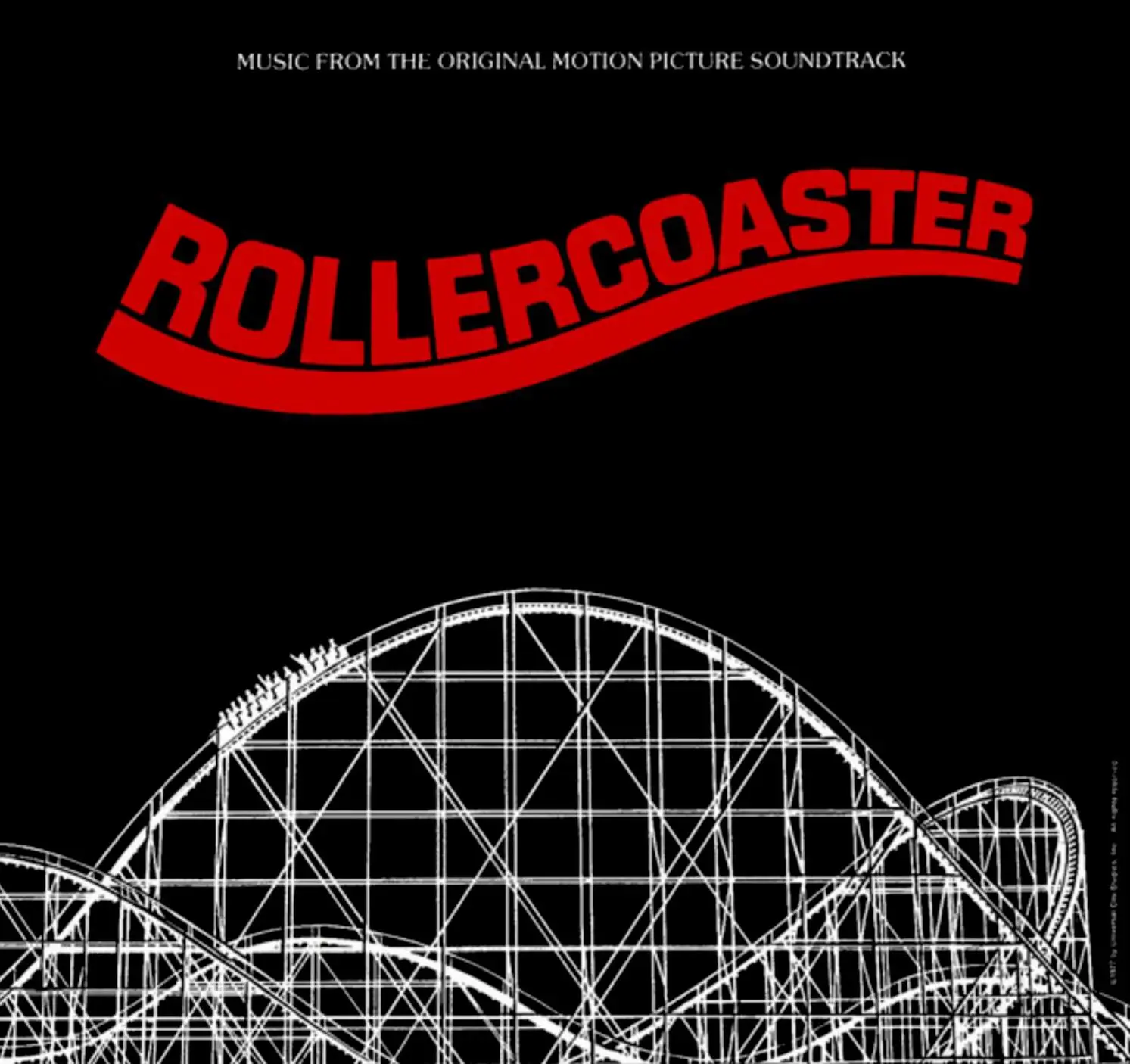 In June 1977, Lalo Schifrin released Rollercoaster, the MCA soundtrack to the American disaster-suspense film starring George Segal, Susan Strasberg, and Henry Fonda.
The film opens with an anonymous bomber, who plants a radio-controlled device on “The Rocket,” a wooden coaster that derails with multiple casualties. The incident pulls safety inspector Harry Calder (Segal) back into a case he initially cleared. A second incident—an arson attack on a dark ride in Pittsburgh—pushes Calder toward a wider pattern. During a Chicago meeting of major amusement-park executives, a taped demand for $1 million surfaces.
FBI agent Hoyt (Richard Widmark) assigns Calder to the delivery plan at Kings Dominion, where the bomber forces him onto rides while controlling him by two-way radio and then reveals the radio itself contains the bomb, rigged to detonate if Calder discards it into crowds below. Calder follows the instructions, leaves the money, and exits. However, the FBI’s decision to mark the cash breaks the bomber’s rules and triggers a new threat.
Calder predicts the next strike will target the debut of the Revolution at Magic Mountain on July 4, and the search turns up a bomb on the track, but the bomber still boards the inaugural run by buying a “Gold Ticket,” plants a device under his seat, and moves to trigger it during the second cycle. Calder recognizes the voice, chases him into the restricted area below the coaster, and the final confrontation ends with the bomber struck and killed by the moving train; the park reopens afterward.
James Goldstone directed the film for Universal Pictures, staged as one of the few features presented in Sensurround, using low-frequency bass to simulate vibration during the coaster sequences.
Schifrin’s album program alternates suspense scoring with park-specific source cues. The film’s launch-concert sequence features the band Sparks performing “Fill ’Er Up” and “Big Boy” from their 1976 album Big Beat.
A1. “Prologue, Montage” (5:28)
A2. “Magic Carousel” (2:44)
A3. “Portrait of Harry” (2:36)
A4. “Movement from String Quartette (Young Man’s Theme)” (2:33)
A5. “Penny Arcade” (2:25)
A6. “Cotton Candy” (2:34)
A7. “One Track Mind” (2:17)
B1. “Merry-Go-Round” (2:36)
B2. “Calliope of Death” (2:06)
B3. “Rollercoaster” (4:00)
B4. “Children’s Ride” (1:52)
B5. “Another Side of Harry” (2:25)
B6. “Apple Turnover” (3:53)
B7. “Magic Carousel – End Title” (1:46)
Schifrin wrote the score and served as arranger and conductor, with Sonny Burke producing the album, recorded on April 20, 1977, in Hollywood, California. The session personnel list centers on Clark Spangler, Ralph Grierson, and Bill Mays (keyboards), Dennis Budimer and Lee Ritenour (guitar), Anthony Jackson (bass), James Gadson (drums), and the Hollywood Studio Symphony, with Sandy DeCrescent as orchestra manager.
Universal released the film on June 10, 1977, built around real amusement-park locations including Ocean View Park (Norfolk), Kings Dominion (Doswell), and Magic Mountain (Valencia), with the Revolution coaster staged as the climax ride.
Discography:
- Spectrum (1957)
- Piano español (1959)
- Bossa Nova (1962)
- Lalo Brilliance (1962)
- Between Broadway & Hollywood (1963)
- Samba para dos (Bob Brookmeyer • 1963)
- Piano, Strings and Bossa Nova (1963)
- New Fantasy (1964)
- Gone With the Wave (1965)
- Music From the Motion Picture “Once a Thief” and Other Themes (1965)
- The Cincinnati Kid (1965)
- The Liquidator (1965)
- The Dissection and Reconstruction of Music From the Past as Performed by the Inmates of Lalo Schifrin’s Demented Ensemble as a Tribute to the Memory of the Marquis de Sade (1966)
- Cool Hand Luke (1967)
- Murderers’ Row (1967)
- Music From Mission: Impossible (1967)
- Sol Madrid (1968)
- The Fox (1968)
- There’s a Whole Lalo Schifrin Goin’ On (1968)
- The Rise and Fall of the Third Reich (1968)
- Che! (1969)
- Mannix (1969)
- More Mission: Impossible (1969)
- Bullitt (1969)
- Kelly’s Heroes (1970)
- Medical Center and Other Great Themes (1970)
- Rock Requiem (1971)
- Enter the Dragon (1973)
- Johnny Hodges (Johnny Hodges • 1974)
- Black Widow (1976)
- Rollercoaster (1977)
- Voyage of the Damned (1977)
- Towering Toccata (1977)
- Coogan’s Bluff (1978)
- Great Adventure Film Scores – The Four Musketeers / The Eagle Has Landed (1978)
- Gypsies (1978)
- Nunzio (1978)
- Boulevard Nights (1979)
- No One Home (1979)
- The Amityville Horror (1979)
- Jackie Chan in Battle Creek Brawl (1980)
- Offside 7 (Escape to Athena) (1980)
- The Competition (1980)
- La pelle (1981)
- Ins and Outs (1982)
- The Sting II (1982)
- The Osterman Weekend (1983)
- A.D. Anno Domini (1985)
- Mission Impossible (1987)
- The Fourth Protocol (1987)
- Berlin Blues (Julia Migenes • 1988)
- Concierto para bandoneón; Tres tangos (Astor Piazzolla • 1988)
- Petrouchka / Concerto pour contrebasse et orchestre / Ma mère l’Oye (Igor Stravinsky, Maurice Ravel, Gary Karr • 1988)
- Hitchcock: Master of Mayhem (Bernard Herrmann, Franz Waxman, Charles Gounod • 1990)
- Romancing the Film (Rochester Pops Orchestra • 1992)
- Jazz Meets the Symphony (1993)
- Don Quixote (1994)
- More Jazz Meets the Symphony (1994)
- Firebird – Jazz Meets The Symphony No. 3 (1995)
- 100 ans de cinéma : les plus belles musiques de films (Orchestre philharmonique de Marseille • 1996)
- Metamorphosis: Jazz Meets the Symphony #4 (1998)
- Film Classics (1998)
- Rush Hour (1998)
- Jazz Mass in Concert (1998)
- Something to Believe In (1999)
- Tango (1999)
- The Eagle Has Landed (1999)
- Latin Jazz Suite (1999)
- Esperanto (2000)
- Brazilian Jazz (2000)
Sources:
- Discogs: Lalo Schifrin
- RYM: Lalo Schifrin
- 45cat: Lalo Schifrin
- JazzMusicArchives: Lalo Schifrin
- MusicBrainz: Lalo Schifrin
Artist/Album Pages:
Maneige was a Québécois chamber|jazz-rock band that released the 1975 Harvest albums Maneige and ...
The Impressions were an American soul group from Chicago that launched the careers of Jerry Butler...
Hillary Blaze was an American space-rock band from Arizona that released the 1977 album Exposure o...
Chemin Blanc was a French folk band that made two self-titled albums in 1976/77 on RCA and Hexagon...
Bipsautru was a Québécois folk-psych duo that self-released the 1978 album Chu Content.... Membe...
Foxy was an American Latin-funk band from Miami that made four albums between 1976 and 1979 on Da...
Chris Squire (March 4, 1948 — June 27, 2015) was an English bassist who emerged in The Syn, a psyc...
Sky King was an American jazz-funk band from Michigan that released the 1975 album Secret Sauce o...
Eela Craig was an Austrian rock band that made a 1971 post-psych album and the 1974 single "Storie...
Unicorn was an English rustic-rock band behind the 1971 album Uphill All the Way on Transatlantic ...
The Beach Boys are an American pop-rock band that released 15 albums on Capitol between 1962 and ...
Willie Wright (July 7, 1939 – June 29, 2020) was an American soul singer who released the 1971 alb...