

Eddie Kendricks (born Dec. 17, 1939 — Oct. 5, 1992) was an American soul singer, who served as the lead tenor vocalist in The Temptations between 1961 and 1971. He’s most recognized for his falsetto voice on the hits “The Way You Do the Things You Do,” “Get Ready,” and “Just My Imagination (Running Away with Me).”
As a solo singer, he released nine soul-funk albums on Tamla between 1971 and 1977, scoring hits with “Keep on Truckin’ (Part 1),” “Boogie Down,” “Son of Sagittarius,” “Shoeshine Boy,” and “Get the Cream Off Top.”
Background
Kendricks was born on December 17, 1939 in Union Springs, Alabama, one of five children (and four boys) borne to Johnny and Lee Bell Kendrick. He was mostly raised in the Ensley neighborhood of Birmingham, where he befriended Paul Williams, a fellow member of the children’s church choir. In 1955, they teamed with two fellow peers in the doo-wop combo The Cavaliers.
Early Career
After gigging the Birmingham clubs, The Cavaliers linked with manager Milton Jenkins, who moved them to Detroit and renamed them The Primes. Jenkins also formed a female counterpart, The Primettes, that later became The Supremes.
In 1961, when Primes singer Kell Osborne flew west to work with Phil Spector, Kendricks and Williams joined three ex-members of Detroit soulsters The Distants. This new five-piece named itself The Elgins, then signed to Motown as The Temptations.
The Temptations
Kendricks first took lead on The Temptations’ third single, “(You’re My) Dream Come True,” released in 1962 on Motown’s Gordy imprint. Though technically a tenor, he typically sang falsetto, as heard on their first big hit, “The Way You Do the Things You Do,” a Billboard #11 and R&B #1 in 1964. Later that year, he sang on the Top 30 hit “Girl (Why You Wanna Make Me Blue).”
In 1965, The Temptations hit #1 with the Smokey Robinson-penned ballad “My Girl,” sung by new member David Ruffin, their featured vocalist on most hits up through 1968. Kendricks mostly sang background and harmonies during this period, but took the lead on “You’ve Got to Earn It” (the popular b-side of “Since I Lost My Baby,” 1965) and their 1966 anthem “Get Ready.” He trades verses with Ruffin on the 1968 hit “You’re My Everything” (#6 Pop, #3 R&B).
After Ruffin’s departure, Kendricks sang joint lead with the other four Temptations on the 1969/70 hits “Cloud Nine,” “Don’t Let the Joneses Get You Down,” “I Can’t Get Next to You,” “Psychedelic Shack,” and “Ball of Confusion,” produced by Norman Whitfield. Kendricks himself duets with Diana Ross on “I’m Gonna Make You Love Me,” a joint hit between The Supremes and The Temptations.
Kendricks trades leads with Williams on the wintry ballad “Just My Imagination (Running Away with Me),” a 1971 chart-topper. Immediately after its release, Kendricks — tired of Whitfield’s psych-leanings but inspired by Ruffin’s solo success — left the Temptations.
All By Myself
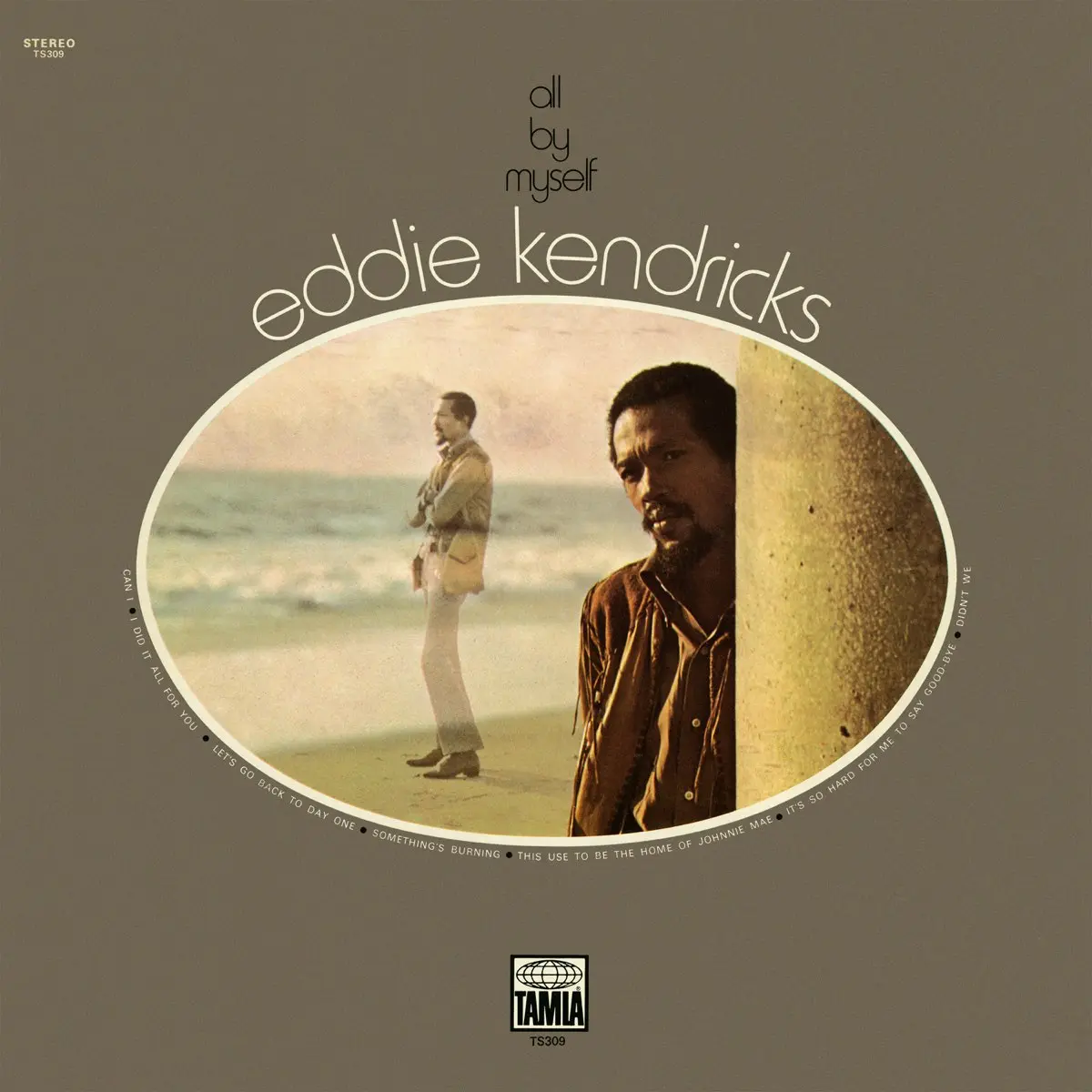 Eddie Kendricks released his debut solo album, All By Myself, in April 1971 on Tamla.
The album draws on the Detroit session talent of the Funk Brothers and moves across soul ballads, lush orchestral settings, and stretches of loose jam-inflected playing. Kendricks’ falsetto operates as the constant element across shifting textures — reverb-soaked and testifying on the uptempo numbers, restrained and intimate on the slower material. Arranger Paul Riser frames the fuller productions.
“Let’s Go Back to Day One” opens on a charged, reverb-heavy pulse that pushes Kendricks into a declarative register. “This Used to Be the Home of Johnnie Mae” extends past five minutes, pulling from gospel foundations with spoken narration woven into the lead. “I Did It All for You” and the Jimmy Webb cover “Didn’t We” move through lush string arrangements in a vein close to the Philadelphia soul records emerging at the time. “Can I” closes the album in a laid-back, jazz-shaded setting where Kendricks sustains a quietly intimate delivery across six minutes, culminating in a passage drawn from the Spinners'”Don’t Let the Green Grass Fool You.”
A1. “Let’s Go Back to Day One” (3:30) — Gloria Jones, Patrice Holloway
A2. “This Used to Be the Home of Johnnie Mae” (5:40) — Leonard Caston, Jr., Samuel Small
A3. “I Did It All for You” (2:58) — Frank Wilson, Jimmy Webb
A4. “It’s So Hard for Me to Say Good-Bye” (3:08) — Frank Wilson, Pam Sawyer
B1. “Something’s Burning” (4:27) — Mac Davis
B2. “Can I” (6:12) — Hal Davis, Herman Griffith
B3. “Didn’t We” (3:09) — Jimmy Webb
Kendricks recorded All by Myself at Hitsville U.S.A., Detroit, during 1970–1971, with producer Frank Wilson.
Tamla issued “This Used to Be the Home of Johnnie Mae” backed with “It’s So Hard for Me to Say Good-Bye” as a single in March 1971. “It’s So Hard for Me to Say Good-Bye” reached number 88 on the Billboard Hot 100 and number 37 on the R&B chart. Tamla followed with “I Did It All for You” backed with “Can I” in July 1971; “Can I” reached number 37 on the R&B chart.
People…Hold On
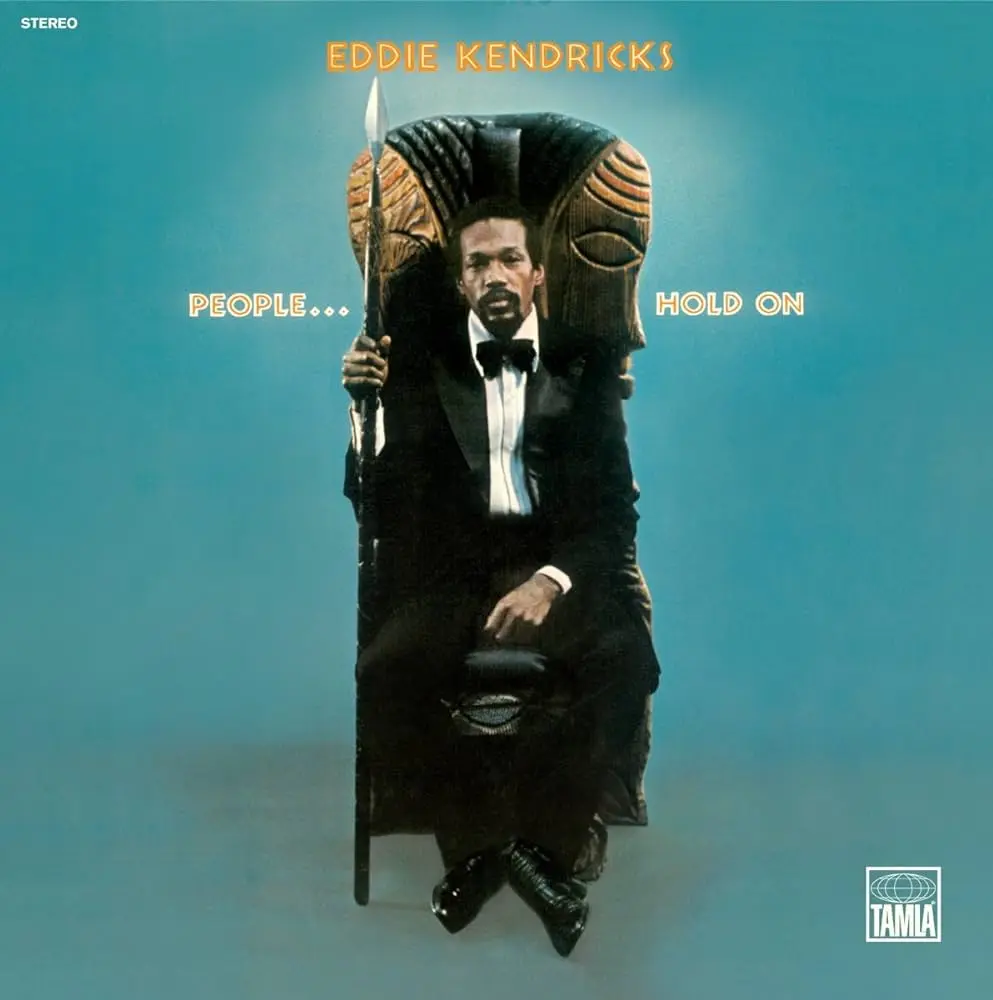 Eddie Kendricks released his second solo album, People…Hold On, on May 21, 1972, on Tamla.
The Washington D.C.-based Young Senators, who had begun touring with Kendricks in 1971, anchor the rhythm section, and their two-step rhythms and horn charts give the record a harder, more street-level texture than its predecessor. Moog synthesizer by Cal Harris, guitarist Joe Messina, and congas by Eddie “Bongo” Brown add further color; arrangers David Van De Pitte and Leroy Fleming frame the fuller productions. The album was one of the last sessions completed at Hitsville U.S.A. before Motown’s relocation to Los Angeles.
“If You Let Me” opens with a bright, brisk tempo built for Kendricks’ upper register. “Let Me Run into Your Lonely Heart” drives on distortion and wah-wah guitar, the clavinet cutting through in a syncopated exchange against Kendricks’ falsetto. “Day by Day” leans on organ and piano runs in a slow, devotional frame. The nearly eight-minute “Girl You Need a Change of Mind” builds on a kick-drum backbeat and deep bassline, with Kendricks’ falsetto riding over piano, horns, and gospel-influenced strings before the track opens into a dramatic breakdown and rebuild; the lyric engages directly with the women’s liberation movement.
“Someday We’ll Have a Better World” takes a mid-tempo optimistic stance and references the violence of the Vietnam era in its lyric. “My People…Hold On” uses African percussion and a syncopated chant, with Kendricks alternating between falsetto and a deeper voice in a call-and-response structure he described as a spiritual song about holding on to love. “Date with the Rain” pulls back to a quiet, atmospheric ballad, and “Just Memories” closes the album in a slow, string-framed setting.
A1. “If You Let Me” (3:10) — Frank Wilson
A2. “Let Me Run into Your Lonely Heart” (2:59) — Frank Wilson, Anita Poree
A3. “Day by Day” (3:07) — Leonard Caston Jr., Terri McFaddin
A4. “Girl You Need a Change of Mind” (7:30) — Anita Poree, Leonard Caston Jr.
A5. “Someday We’ll Have a Better World” (3:35) — Norma Toney
B1. “My People…Hold On” (5:40) — Anita Poree, Leonard Caston Jr.
B2. “Date with the Rain” (2:42) — Bobby Miller
B3. “Eddie’s Love” (3:20) — Anita Poree, Leonard Caston Jr.
B4. “I’m on the Sideline” (2:56) — Penelope McClendon
B5. “Just Memories” (5:50) — Anita Poree, Leonard Caston Jr.
Kendricks recorded People…Hold On at Hitsville U.S.A., Detroit, in January 1972, with producers Frank Wilson, Leonard Caston Jr., and Bobby Miller.
People…Hold On reached number 131 on the Billboard 200 and number 13 on the Soul LPs chart.
Tamla issued “Eddie’s Love” as a single on March 23, 1972; it reached number 35 on the R&B chart. “If You Let Me” followed on August 31, 1972, reaching number 17 R&B. Tamla issued “Girl You Need a Change of Mind (Part 1)” as a single on January 9, 1973; it reached number 87 on the Billboard Hot 100 and number 13 on the R&B chart.
Eddie Kendricks
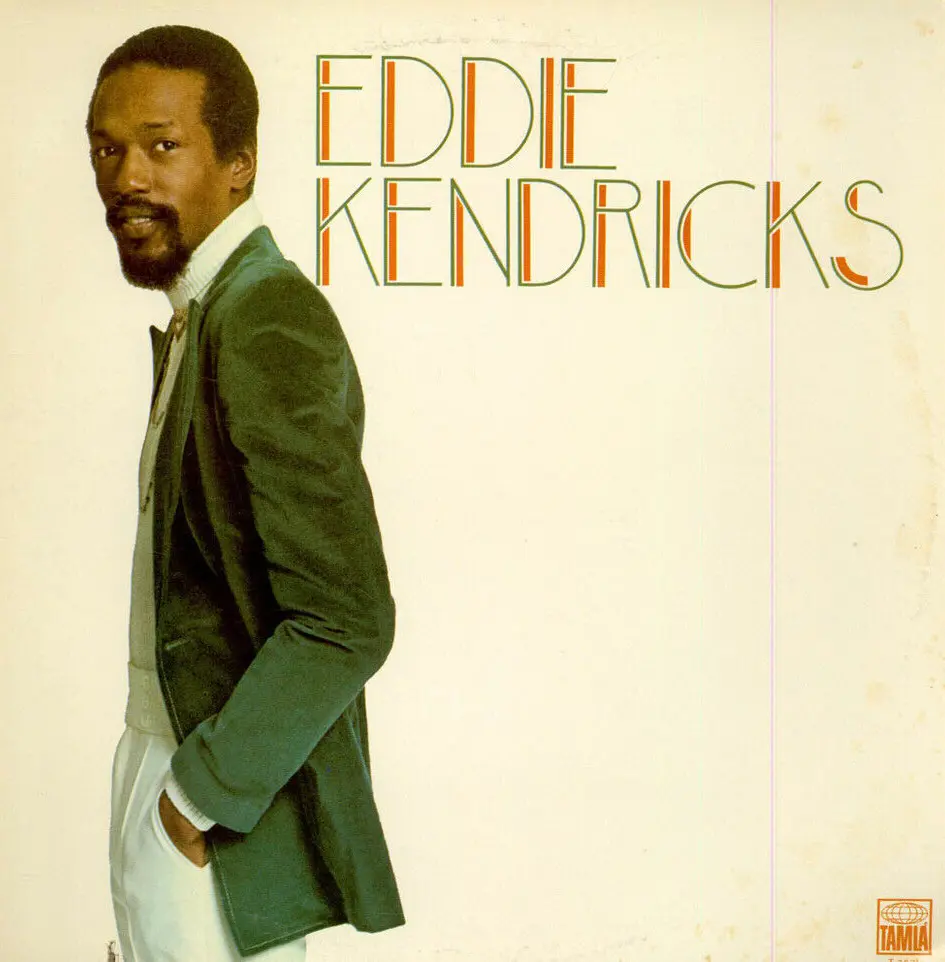 Eddie Kendricks released his self-titled third solo album on May 18, 1973, on Tamla.
The album continues the dance-oriented direction of People…Hold On while pulling back on the socially conscious themes of that record. Bassists James Jamerson and Darrell Clayborn anchor the low end; the guitar section runs across dean Parks, Greg Poree, and Billy Cooper; drummers Ed Greene and Kenny “Spider” Rice share the backbeat, and congas by King Errisson add percussion color. Keyboardists Harold Johnson and Leonard Caston Jr. cover keyboards and organ. Arranger James Anthony Carmichael, alongside Wilson and Caston, frames the larger productions; orchestration direction by Jerry Long.
“Only Room for Two” opens with a lightly orchestrated texture that keeps space around Kendricks’ falsetto as it moves above an even, churning tempo. “Darling Come Back Home” opens in a dark, low-register frame before giving way to a brighter, steel-drum-inflected mid-section. “Each Day I Cry a Little” extends past seven minutes, opening with a spoken narration before Kendricks’ lead takes hold; the ballad builds in slow sustained phrases with extended runs in his upper register. “Keep On Truckin'” runs nearly eight minutes on a wah-wah guitar riff and a four-on-the-floor backbeat driven by Caston’s clavinet lines; Kendricks’ lyric contains a direct reference to his years with the Temptations. The Burt Bacharach and Bob Hilliard standard “Any Day Now” allows Kendricks a clean, unadorned vocal over a mid-tempo arrangement.
A1. “Only Room for Two” (3:02) — Don Daniels, Terri McFaddin
A2. “Darling Come Back Home” (4:07) — Frank Wilson, Kathy Wakefield, King Errisson
A3. “Each Day I Cry a Little” (7:14) — Leonard Caston, Terri McFaddin
A4. “Can’t Help What I Am” (4:24) — Frank Wilson, Kathy Wakefield, Leonard Caston
B1. “Keep On Truckin'” (8:02) — Anita Poree, Frank Wilson, Leonard Caston
B2. “Any Day Now” (5:09) — Bob Hilliard, Burt Bacharach
B3. “Not on the Outside” (4:35) — Larry Roberts, Sylvia Robinson
B4. “Where Do You Go (Baby)” (3:24) — Gloria Jones, Pam Sawyer
Kendricks recorded Eddie Kendricks with producers Frank Wilson and Leonard Caston Jr. “Keep On Truckin'” was recorded at Motown’s Los Angeles studios with Crystal Sound Recording Players.
Eddie Kendricks peaked at number 18 on the Billboard 200 and number 5 on the R&B albums chart — his highest pop album chart position.
Tamla issued “Darling Come Back Home” as a single on April 19, 1973; it reached number 67 on the Hot 100 and number 26 R&B. Tamla issued “Keep On Truckin’ (Part 1)” backed with “Keep On Truckin’ (Part 2)” in July 1973; the single reached number 1 on both the Billboard Hot 100 and the R&B chart, and number 18 on the UK Singles Chart.
Boogie Down
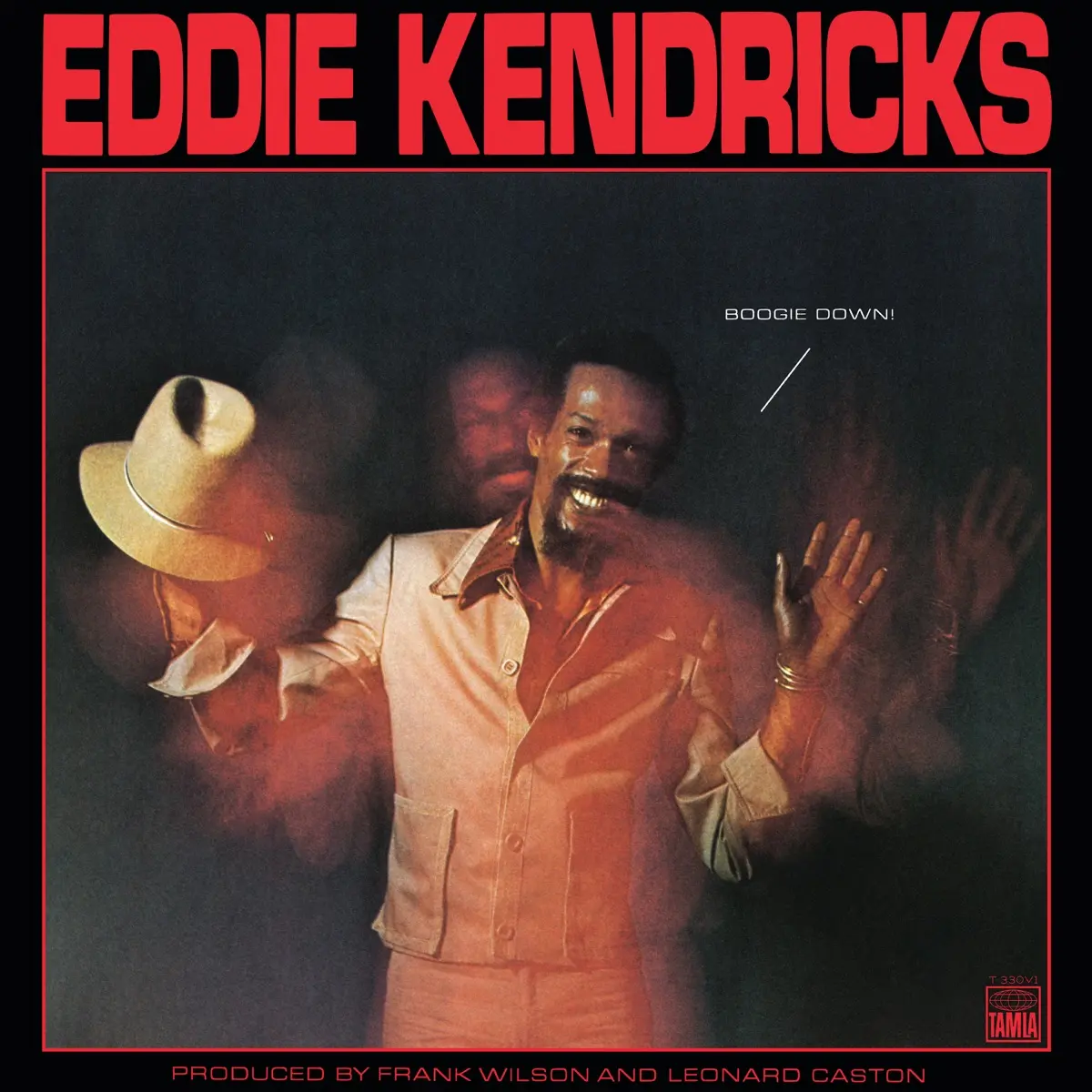 Eddie Kendricks released his fourth solo album, Boogie Down, on February 25, 1974, on Tamla.
The album draws on an expanded session pool and divides roughly equally between uptempo dance material and slower ballads, moving between the two without sharp breaks in atmosphere. Guitarists Melvin “Wah-Wah” Ragin, Greg Poree, Dean Parks, and Dennis Coffey share rhythm and lead duties; bassists James Jamerson and Darrell Clayborne anchor the low end; a large drum ensemble including Ed Greene, James Gadson, Gene Pello, Aaron Smith, and Roger Bethelmy provides the backbeat. Keyboardist Leonard Caston handles clavinet, piano, and multiple keyboards, while keyboardist Jerry Peters adds additional keys and keyboardist Harold Johnson covers organ and electric piano. Percussionist Jack Ashford and congas by King Errisson complete the rhythm section.
“The Thin Man” opens at a clipped, mid-fast pace with a clean guitar figure over a tight rhythm. The title track extends past seven minutes on a locked bass-and-clavinet pattern, building with rising horns and Kendricks’ falsetto riding high over the four-on-the-floor structure. “Son of Sagittarius” keeps a similar density at a shorter length. “Honey Brown” and “You Are the Melody of My Life” are the album’s central ballads; the former moves in slow, sustained phrases that allow Kendricks extended expressive range, the latter in a more restrained melodic frame. “Girl of My Dreams” takes a retro orchestral approach with a string-heavy arrangement.
A1. “The Thin Man” (3:40) — Anita Poree, Frank Wilson, Leonard Caston
A2. “Tell Her Love Has Felt the Need” (4:30) — Kathy Wakefield, Leonard Caston
A3. “Son of Sagittarius” (3:41) — Anita Poree, Frank Wilson, Leonard Caston
A4. “Boogie Down” (7:07) — Anita Poree, Frank Wilson, Leonard Caston
A5. “Hooked on Your Love” (3:30) — Don Daniels, Frank Wilson, Terri McFaddin
B1. “Honey Brown” (5:18) — Don Daniels, Frank Wilson, Terri McFaddin
B2. “You Are the Melody of My Life” (4:00) — Don Daniels, Terri McFaddin
B3. “Trust Your Heart” (4:13) — Frank Wilson, Leonard Caston, Terri McFaddin
B4. “Girl of My Dreams” (3:28) — Kathy Wakefield, Leonard Caston
B5. “Loving You the Second Time Around” (3:12) — Frank Wilson, Leonard Caston, Pam Sawyer
Kendricks recorded Boogie Down! with producers Frank Wilson and Leonard Caston Jr. Recording engineers: Russ Terrana, Art Stewart, Cal Harris, and Andrew Berliner; mixing by Frank Wilson and Andrew Berliner.
Boogie Down! reached number 30 on the Billboard 200 and number 1 on the Soul Albums chart.
Tamla issued “Boogie Down” backed with “Can’t Help What I Am” in December 1973; it reached number 2 on the Billboard Hot 100 and number 1 on the R&B chart, holding that position for three weeks. It also reached number 39 on the UK Singles Chart. “Son of Sagittarius” followed on April 16, 1974, reaching number 28 pop and number 5 R&B. “Tell Her Love Has Felt the Need” was issued July 2, 1974, reaching number 50 pop and number 8 R&B.
For You
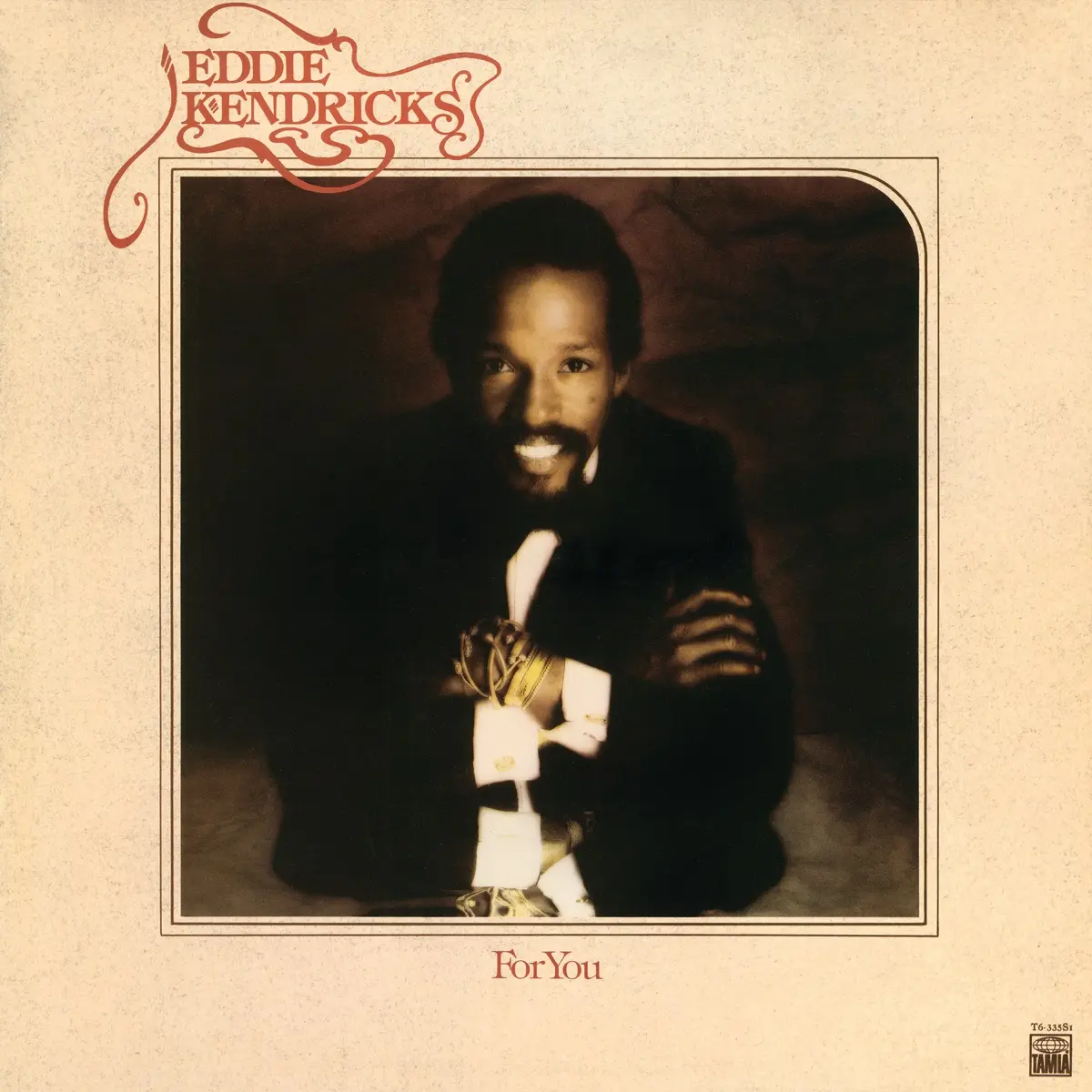 Eddie Kendricks released his fifth solo album, For You, on November 13, 1974, on Tamla.
The fifth album under the Wilson–Caston production partnership, the tracklist divides between new compositions and two outside covers — Jim Croce’s “Time in a Bottle” and David Gates'”If” — both established as pop hits in recent years. Arrangers Jimmie Haskell, Leonard Caston Jr., Jerry Long, Sanford Shire, and Greg Poree give the record a smoother, more orchestrated surface than Boogie Down!.
“Please Don’t Go Away” opens the album in a mid-tempo arrangement with sustained orchestral color. “One Tear” builds a lush backing over a single emotive premise. “Shoeshine Boy” takes a relatively upbeat, light-arrangement approach built around praise for a street-level worker. “Deep and Quiet Love” is the album’s most expansive ballad, moving through harmonic shifts with extended phrasing that draws out Kendricks’ range at length. “Let Yourself Go” opens side two in a longer, more uptempo framework before the album settles into its softer second half, including the Croce and Gates covers.
A1. “Please Don’t Go Away” (4:57) — Leonard Caston
A2. “One Tear” (4:00) — Leonard Caston
A3. “Shoeshine Boy” (3:14) — Harry Booker, Linda Allen
A4. “Deep and Quiet Love” (5:34) — Frank Wilson, Kathy Wakefield
B1. “Let Yourself Go” (5:45) — Bradley “Mbaji” Ridgell, Harold Clayton, Leonard Caston, Sigidi
B2. “If” (3:09) — David Gates
B3. “If You Think (You Can)” (3:59) — Barbara Dickerson, Leonard Caston
B4. “Time in a Bottle” (2:59) — Jim Croce
Kendricks recorded For You at Motown Recording Studios, Hollywood, California, with producers Frank Wilson and Leonard Caston Jr.
For You reached number 108 on the Billboard 200 and number 8 on the R&B albums chart.
Tamla issued “One Tear” on November 5, 1974; it reached number 71 on the Hot 100 and number 8 on the R&B chart, with a number 14 peak on the dance chart. Tamla issued “Shoeshine Boy” backed with “Hooked on Your Love” on January 13, 1975; it reached number 18 on the Billboard Hot 100 and number 1 on the R&B chart, and number 15 on the dance chart.
The Hit Man
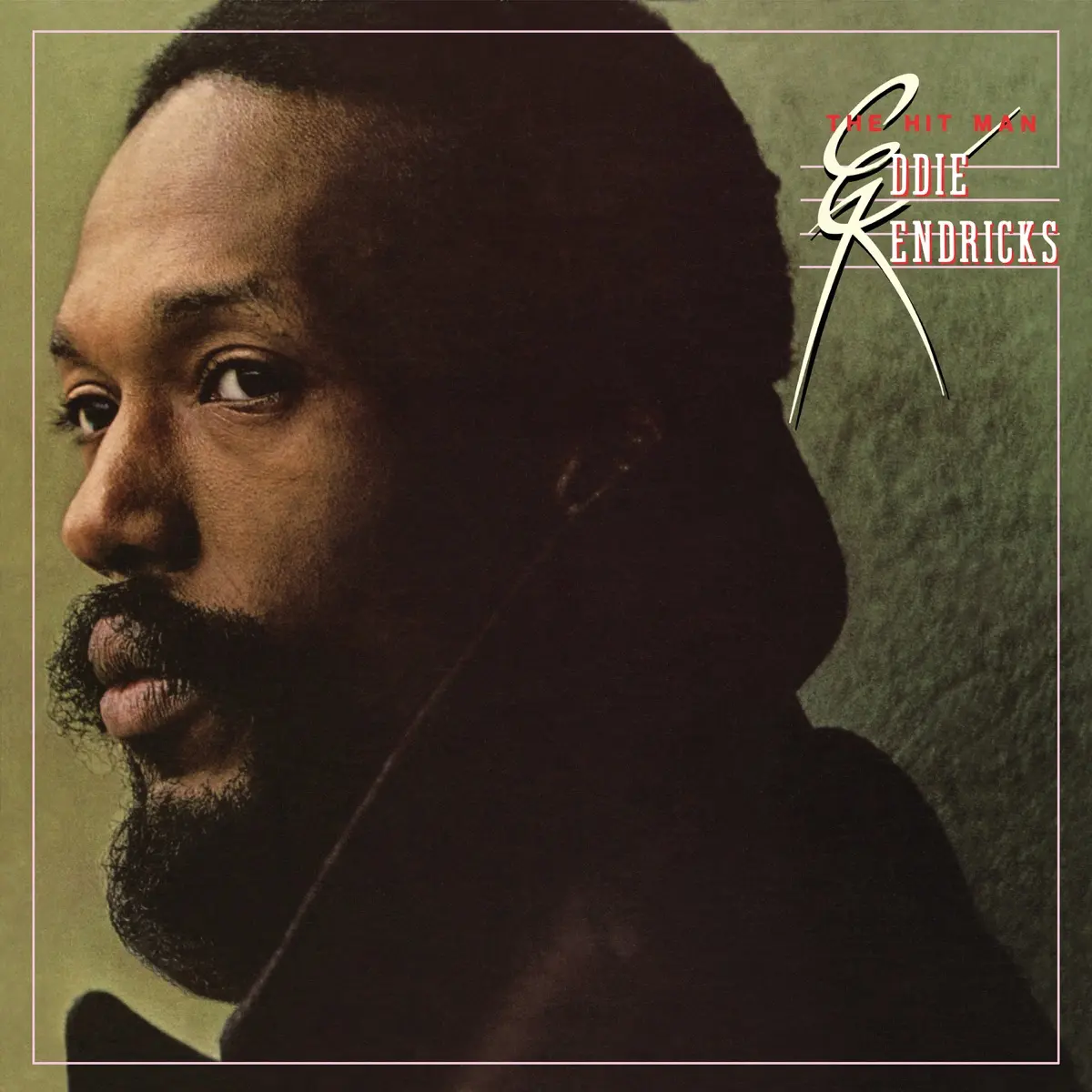 Eddie Kendricks released his sixth solo album, The Hit Man, in June 1975 on Tamla.
Kathy Wakefield co-wrote the majority of the material, partnering with Caston or Wilson on most tracks. Bassist James Jamerson anchors the low end; keyboardists Harold Johnson and Leonard Caston Jr. cover the midrange; guitarists Jay Graydon, Johnny McGhee, Melvin “Wah-Wah” Ragin, and Ray Parker Jr. divide rhythm and lead duties; drummers Earl Palmer, Ed Greene, Harvey Mason, and James Gadson share the backbeat. Percussionists Bobbye Hall, Gary Coleman, and Gene Estes handle additional rhythm, with congas by Eddie “Bongo” Brown. The album’s eight tracks run from compact mid-tempo soul to longer, slower ballad forms.
“Get the Cream Off the Top,” written by Brian and Eddie Holland, is an uptempo, loosely erotic number built on a stripped rhythm. “Happy” runs over five minutes in a mid-tempo setting with a choral feel. “Skippin’ Work Today” sets Kendricks in a soft, airy falsetto over a light, unhurried arrangement that carries a daydream premise. “Body Talk” extends past six minutes in a slow, atmospheric frame, and “I’ve Got to Be” closes the album past seven minutes in a sustained ballad structure.
A1. “If Anyone Can” (3:22) — Kathy Wakefield, Leonard Caston
A2. “Happy” (5:13) — Kathy Wakefield, Leonard Caston
A3. “Get the Cream Off the Top” (3:04) — Brian Holland, Eddie Holland
A4. “Body Talk” (6:41) — Frank Wilson, Kathy Wakefield
B1. “Fortune Teller” (3:32) — Barrett Strong
B2. “Skippin’ Work Today” (4:35) — J. Christopher Fox
B3. “You Loved Me Then” (2:30) — Kathy Wakefield, Leonard Caston
B4. “I’ve Got to Be” (7:48) — Kathy Wakefield, Leonard Caston
Kendricks recorded The Hit Man with producers Frank Wilson, Leonard Caston, and Brian Holland.
The Hit Man reached number 63 on the Billboard 200 and number 9 on the R&B albums chart.
Tamla issued “Get the Cream Off the Top” on June 18, 1975; it reached number 50 on the Hot 100 and number 7 R&B. “Happy” followed in September 1975, reaching number 66 pop and number 8 R&B.
He’s a Friend
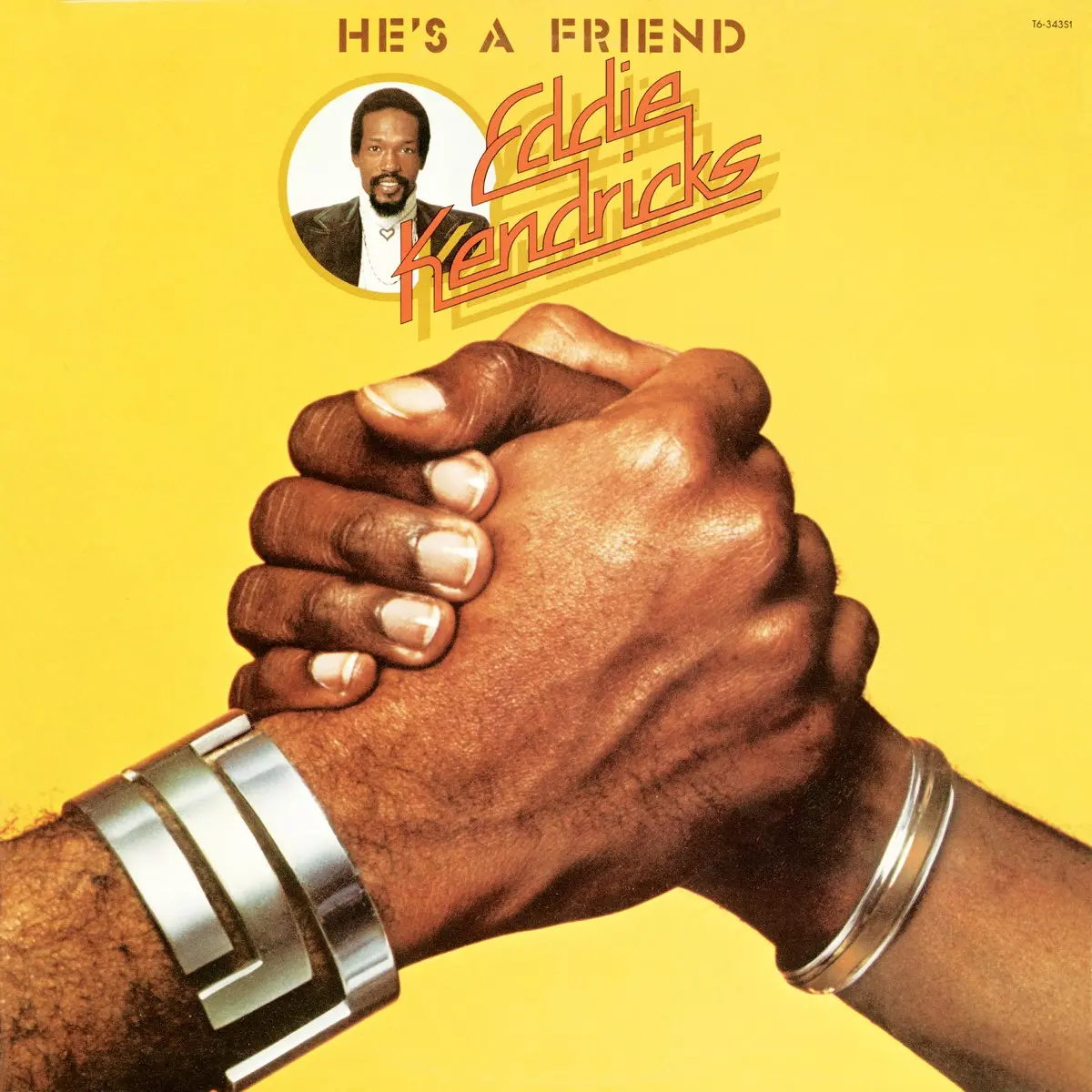 Eddie Kendricks released his seventh solo album, He’s a Friend, on January 6, 1976, on Tamla.
Kendricks’ first album made outside the Motown studio system, the sessions draw on a largely Philadelphia-based ensemble. Guitarist Norman Harris leads the fretwork alongside guitarists Bobby Eli and T.J. Tindall; bassists Ron Baker and Michael “Sugar Bear” Foreman anchor the low end; drummers Charles Collins and Earl “The Pearl” Young share the backbeat.
Vibraphonist Vincent Montana Jr. adds texture throughout; keyboardists T.G. Conway, Carlton Kent, and Ron “Have Mercy” Kersey cover the midrange; keyboardist and percussionist Allan Felder handles vocal arrangements and additional parts. Congas by Larry Washington and horns and strings directed by Don Renaldo complete the sound. Backing vocalists Barbara Ingram, Carla Benson, and Evette Benton add a dense choral texture. Songwriting credits come primarily from Felder in various combinations with Harris, Bruce Gray, and Conway.
The title track opens the album with an inspirational lyric — praise directed toward God without naming him — over a mid-tempo disco-inflected arrangement built on a steady four-four pulse and string accents. “A Part of Me” and “I Won’t Take No” are shorter, tighter soul constructions. “Never Gonna Leave You” keeps a warm, sustained tempo with prominent string scoring. “Get It While It’s Hot” carries a Caribbean-flavored lilt with active female backing vocals. “The Sweeter You Treat Her” and “On My Way Home” — both written by the team of Buddy Turner, Jerry Akines, Johnny Bellmon, and Victor Drayton — are mid-length soul tracks that round out the album’s slower material.
A1. “He’s a Friend” (4:36) — Allan Felder, Bruce Gray, T.G. Conway
A2. “A Part of Me” (3:16) — Allan Felder, Norman Harris, Ron Tyson
A3. “I Won’t Take No” (2:55) — Allan Felder, Norman Harris, Ron Tyson
A4. “Never Gonna Leave You” (4:08) — Allan Felder, Bruce Gray, T.G. Conway
A5. “Get It While It’s Hot” (3:09) — Mike Holden, Theodore Life
B1. “Chains” (3:23) — Allan Felder, Bunny Sigler, Norman Harris, Ron Tyson
B2. “The Sweeter You Treat Her” (4:53) — Buddy Turner, Jerry Akines, Johnny Bellmon, Victor Drayton
B3. “It’s Not What You Got” (4:07) — Allan Felder, T.G. Conway
B4. “On My Way Home” (3:49) — Buddy Turner, Jerry Akines, Johnny Bellmon, Victor Drayton
B5. “All of My Love” (2:46) — Allan Felder, Bruce Gray
Kendricks recorded He’s a Friend at Sigma Sound, Philadelphia, during 1975–1976, with producer Norman Harris.
He’s a Friend reached number 38 on the Billboard 200 and number 3 on the R&B albums chart.
Tamla issued “He’s a Friend” as a single on January 16, 1976; it reached number 36 on the Hot 100 and number 2 on the R&B chart, and number 15 on the dance chart. “Chains” reached number 3 on the dance chart. “Get It While It’s Hot” followed on May 18, 1976, reaching number 24 R&B and number 3 on the dance chart. “It’s Not What You Got” reached number 2 on the dance chart.
Goin’ Up in Smoke
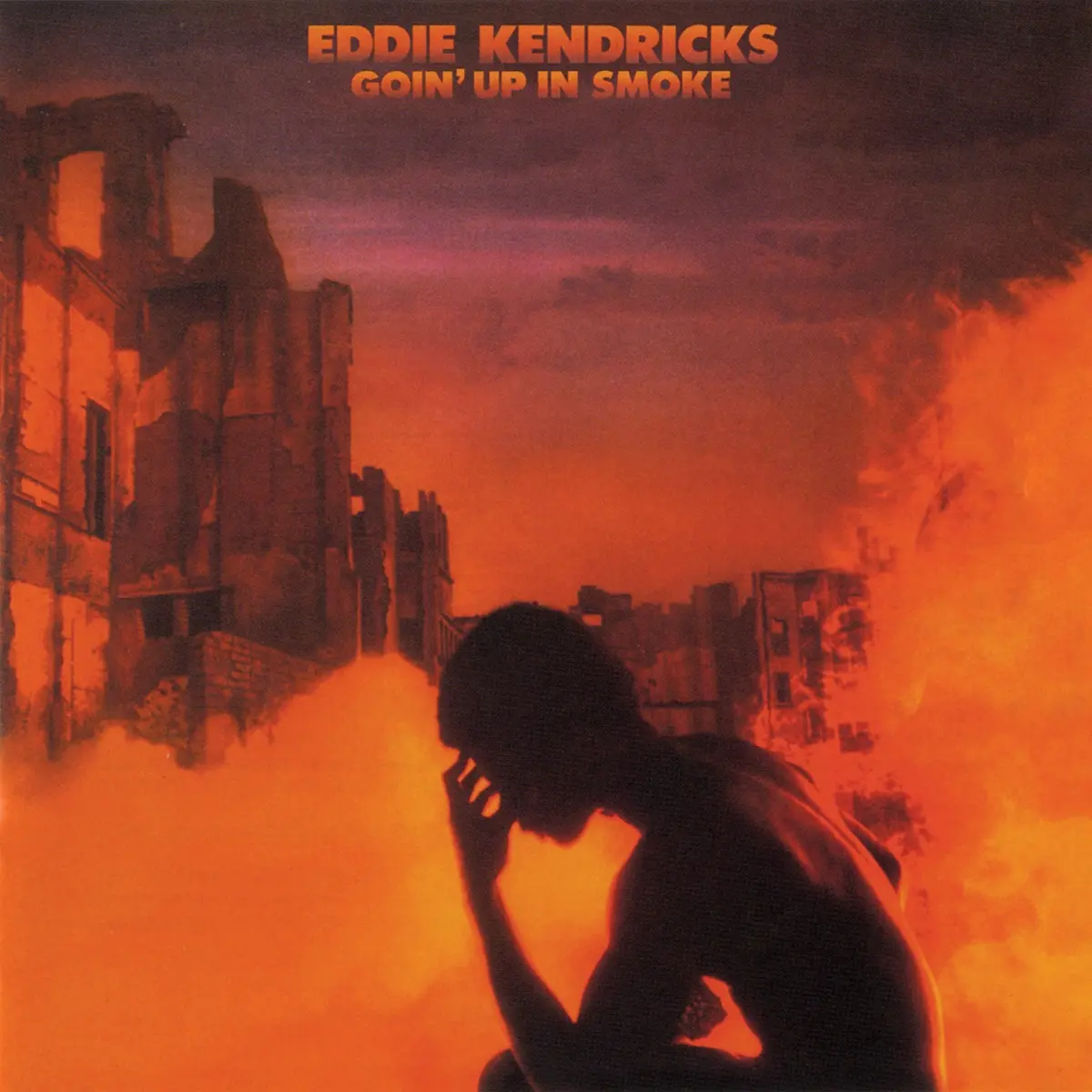 Eddie Kendricks released his eighth solo album, Goin’ Up in Smoke, on September 14, 1976, on Tamla.
A direct continuation of the He’s a Friend sessions, the album reunites the same Sigma Sound ensemble: guitarist Norman Harris leads alongside guitarists Bobby Eli and T.J. Tindall; bassists Ron Baker and Michael “Sugar Bear” Foreman anchor the low end; drummers Charles Collins and Earl “The Pearl” Young share the backbeat. Vibraphonist Vincent Montana Jr. returns; keyboardists T.G. Conway, Carlton Kent, and Ron “Have Mercy” Kersey cover the midrange; percussionist Allan Felder and congas by Robert Cupit and Larry Washington complete the rhythm section. Horns and strings are directed by Don Renaldo. Backing vocalists Barbara Ingram, Carla Benson, Evette Benton, and Phil Hurtt add to the choral texture. Felder wrote or co-wrote the majority of the tracks.
The title track opens with a rising, horn-driven arrangement and takes a lyrical stance of perseverance over hardship. “The Newness Is Gone” is a slow ballad weighted by a dense string arrangement. “Born Again” moves at a mid-tempo pace in a lighter texture. “Music Man” runs nearly five minutes on a steady funk-soul pulse, and “Thanks for the Memories” follows in a more orchestrated ballad framework. “Don’t You Want Light” builds on a four-on-the-floor structure in the vein of contemporary Philadelphia disco productions. “Skeleton in Your Closet” closes the album at just over two and a half minutes in a stripped-down frame.
A1. “Goin’ Up in Smoke” (4:30) — Allan Felder
A2. “The Newness Is Gone” (4:40) — Allan Felder
A3. “Sweet Tenderoni” (4:15) — Allan Felder
A4. “Born Again” (3:26) — Allan Felder
A5. “Don’t You Want Light” (3:47) — Brian Evans, Donald Harmon, John Faison
B1. “Music Man” (4:43) — Jerry Akines, Johnny Bellmon, Reginald Turner, Victor Drayton
B2. “Thanks for the Memories” (4:56) — Bruce Gray, Phil Hurtt
B3. “To You From Me” (3:00) — Bruce Gray, Frank Snowden, Mike Holden, T.G. Conway
B4. “Don’t Put Off Till Tomorrow” (3:53) — Allan Felder, Norman Harris
B5. “Skeleton in Your Closet” (2:36) — Jerry Akines, Johnny Bellmon, Reginald Turner, Victor Drayton
Kendricks recorded Goin’ Up in Smoke at Sigma Sound, Philadelphia, in 1976, with producer Norman Harris.
Goin’ Up in Smoke reached number 114 on the Billboard 200 and number 22 on the R&B albums chart.
Tamla issued “Goin’ Up in Smoke” as a single on October 26, 1976; it reached number 30 on the R&B chart and number 11 on the dance chart. “Born Again” followed on April 21, 1977.
Slick
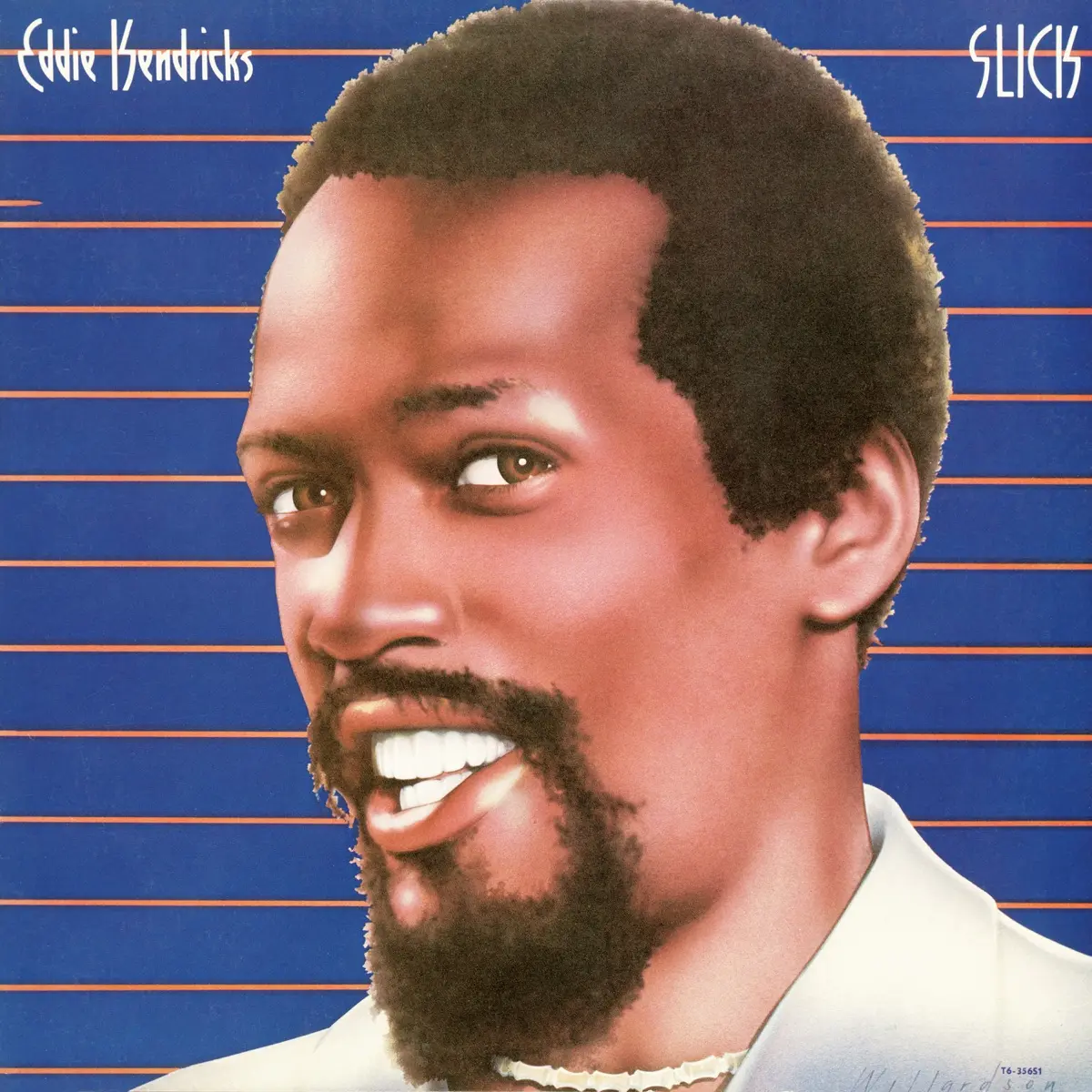 Eddie Kendricks released his ninth solo album, Slick, in August 1977 on Tamla.
Kendricks’ final Tamla album pairs him with a Detroit-based ensemble that includes several first-generation Funk Brothers. Guitarists Eddie Willis and Robert White anchor the fretwork; drummers Uriel Jones and Richard “Pistol” Allen share the backbeat; bassist Roderick Chandler anchors the low end; keyboardists George Roundtree and Leonard Caston Jr. cover the midrange. Percussionist Jack Brokensha and congas by Gerry Paul complete the rhythm section; alto saxophonist Larry Nozero appears on selected tracks. The backing vocal ensemble is notably large, including Cheryl Lynn and Jean Thompson — listed under a pseudonym, but in fact Jean Terrell, former lead singer of the Supremes, who is particularly audible on “Something Shady (Is Going On).” The album was recorded during 1975–1976 but released in 1977; Motown gave it minimal promotion, aware that Kendricks planned to leave the label.
“Something Shady (Is Going On)” opens at a fast, funky pace, driven by guitar and a locked rhythm section. “Baby” moves in a short, retro doo-wop-inflected frame. “I Want to Live My Life with You” is a slow ballad characterized by a sustained sense of longing. “Intimate Friends” extends past five minutes in a smooth, mid-tempo setting that keeps the arrangement spare around the lead vocal. The Seals & Crofts cover “Diamond Girl” takes a jazzy, call-and-response approach between Kendricks and the backing singers. “Then Came You” — unrelated to the Spinners/Dionne Warwick recording of the same title — runs over seven minutes and opens into a loose, extended structure in its second half.
A1. “Something Shady (Is Going On)” (5:07) — Leonard Caston Jr., Ronn Matlock
A2. “Baby” (3:52) — Leonard Caston Jr., Terri McFaddin
A3. “I Want to Live My Life with You” (3:42) — Diane Goosby, Leonard Caston Jr.
A4. “You Got It” (3:25) — Leonard Caston Jr., Terri McFaddin
A5. “Intimate Friends” (5:49) — Garry Glenn
B1. “Diamond Girl” (4:25) — Jim Seals, Dash Crofts
B2. “Then Came You” (7:31) — Diane Goosby, Leonard Caston Jr.
B3. “I’ll Have to Let You Go” (4:34) — Kathy Wakefield, Leonard Caston Jr.
B4. “California Woman” (3:31) — Kathy Wakefield, Leonard Caston Jr.
Kendricks recorded Slick at The Sound Suite and United Sound Systems, Detroit, during 1975–1976, with producer Leonard Caston.
Slick reached number 47 on the Billboard Soul Albums chart.
Tamla issued “Intimate Friends” as a single on December 22, 1977; it reached number 24 on the R&B chart.
Vintage ’78
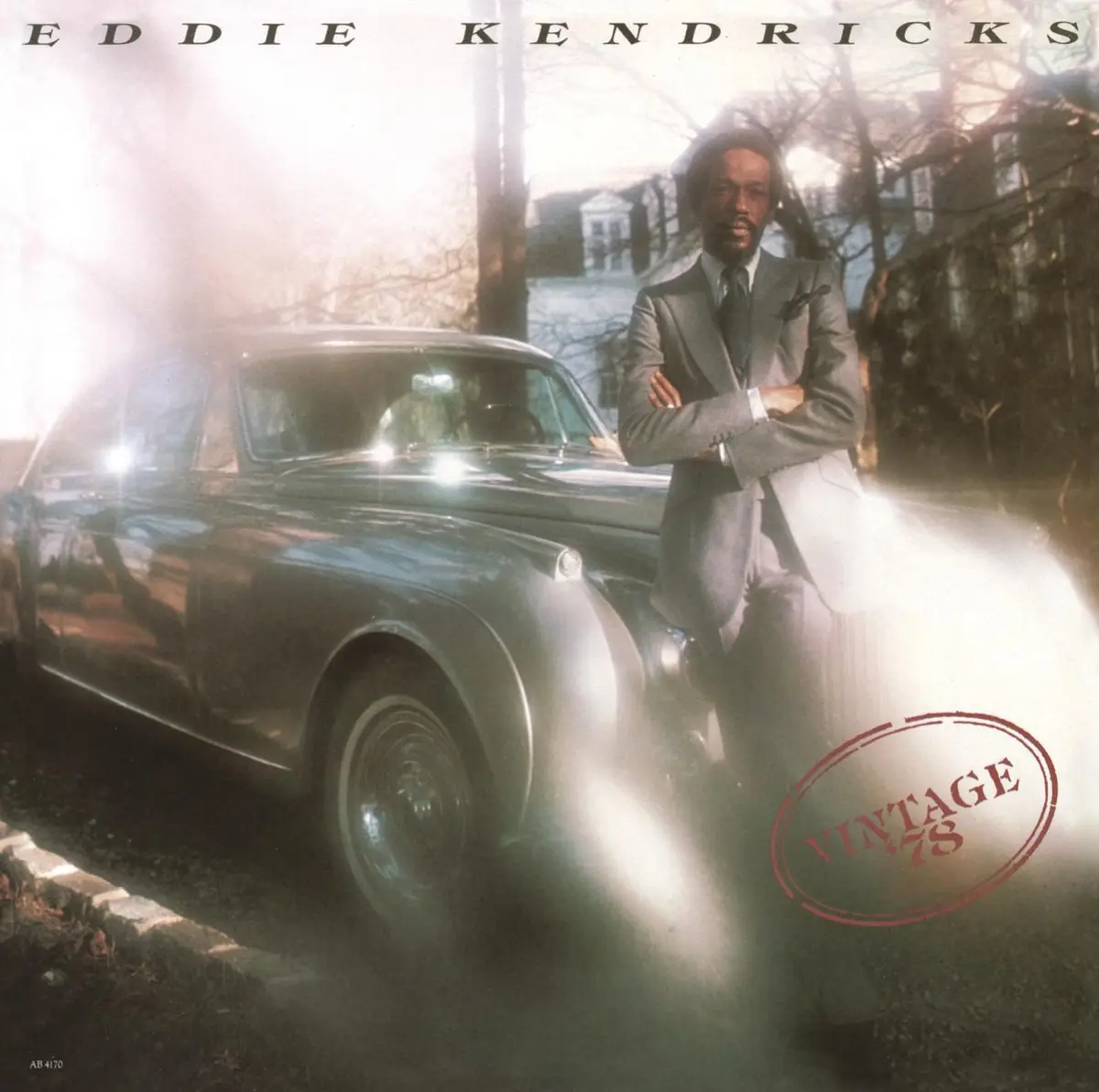 Eddie Kendricks released his tenth solo album, Vintage ’78, in February 1978 on Arista
— his first album outside Motown.
The sessions draw on a New York-based ensemble with strong jazz credentials. Bassists Ron Carter, Milton Hinton, and Bob Cranshaw divide the low end; drummer Andrew Smith keeps the backbeat; electric pianist Patrick Rebillot and guitarists Jeffrey Mironov and Lance Quinn cover the upper register. An extensive orchestral section — strings, French horn, brass, harp, flute, bassoon, English horn, vibraphone, and timpani — frames the full-band productions, all arranged by Andrew Louis Smith. Backing vocalists Barbara Massey, Hilda Harris, Maeretha Stewart, Yolanda McCullough, and Yvonne Lewis round out the sound.
A1. “How’s Your Love Life Baby” (4:09) — G. Perry, S. Barnes, S. Stein
A2. “The Best of Strangers Now” (3:49) — K. Potger, T. Macaulay
A3. “Don’t Underestimate the Power of Love” (4:26) — M. Steals, M. Steals
A4. “Ain’t No Smoke Without Fire” (5:58) — D. Bugatti, F. Musker
A5. “If It Takes All Night” (4:09) — D. Forman
B1. “One of the Poorest People” (4:14) — T.A. Brown
B2. “Whip” (4:00) — E. Matthew, N. Dolph
B3. “Your Wish Is My Command” (4:07) — G. Stephens, T. Macaulay
B4. “Maybe I’m a Fool to Love You” (4:02) — E. Faulkner, S. Wood
B5. “Love, Love, Love” (2:41) — M. Weiner
Kendricks recorded and mixed Vintage ’78 at Music Farm Studios, New York City, with producer Jeff Lane and engineer Eddie Youngblood. Mastered by Domenick Romeo at Frankford/Wayne Mastering Labs.
Vintage ’78 reached number 180 on the Billboard 200 and number 33 on the R&B albums chart.
Arista issued “Ain’t No Smoke Without Fire” as a single; it reached number 13 on the R&B chart and number 20 on the dance chart. “The Best of Strangers Now” also charted, reaching number 58 R&B.
Something More
 Eddie Kendricks released his eleventh solo album, Something More, on November 28, 1979, on Arista.
Produced by Patrick Adams, the album draws on the uptown New York soul and disco production style Adams brought to the sessions. Adams arranged all tracks except “I Never Used to Dance,” which carries an arrangement by Leroy Burgess. Backing vocalists Christine Wiltshire, Norma Garbo, and Yvonne Lewis contribute alongside Kendricks himself.
A1. “Pleasure Man” (6:03) — B. Matthes, P. Adams
A2. “I Just Want to Be the One in Your Life” (4:49) — D. Walsh, M. Price
A3. “Your Love Has Been So Good to Me” (4:32) — R. Matlock
B1. “I Never Used to Dance” (4:29) — J. Calloway, L. Burgess, S. Davenport
B2. “I Can’t Let You Walk Away” (4:21) — B. Carhee, P. Adams
B3. “Something More” (5:16) — L. Johnson, R. Jacobs, S. Martin
B4. “No Wonder (I Can’t Get Over You)” (3:25) — M. Stokes, R. Matlock
Kendricks recorded Something More at Blank Tapes, Sound Palace, and Sound Works, New York City, with producer Patrick Adams.
Something More reached number 68 on the R&B albums chart.
Love Keys
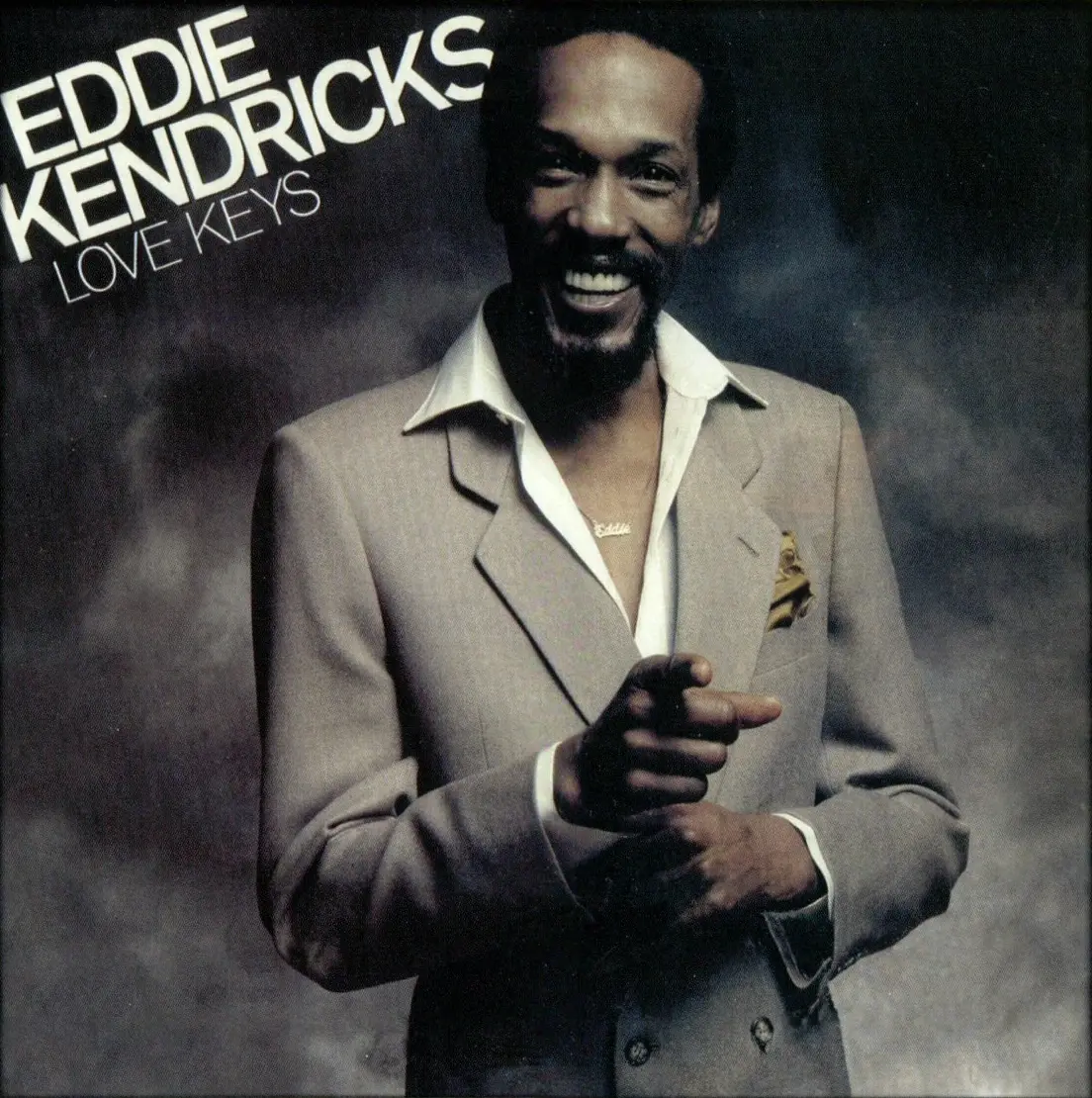 Eddie Kendricks released his twelfth solo album, Love Keys, on June 22, 1981, on Atlantic.
A geographic and sonic shift from the New York Arista sessions, the album draws on Alabama-based session musicians and the Muscle Shoals Horns brass section. Bassist Bob Wray and drummer Owen Hale anchor the rhythm section; guitarists Davis Causey, John Hug, Ken Bell, and Rick Kurtz share the fretwork; keyboardist Steve Nathan handles electric piano and synthesizer; organist Joe Walk and pianists John Jarvis and Steve Nathan cover the midrange. The Muscle Shoals Horns — baritone saxophone by Ronnie Eades, tenor saxophone by Harvey Thompson, trombone by Charles Rose, and trumpeters Ben Cauley and Harrison Calloway — add brass across the ten tracks. Arranger Randy Richards handles the horn charts. The tracklist includes two Holland-Dozier-Holland compositions.
A1. “(Oh I) Need Your Lovin'” (4:06) — Brian Holland, Eddie Holland
A2. “I’m in Need of Love” (3:52) — Lou Courtney
A3. “I Don’t Need Nobody Else” (3:50) — Lou Courtney
A4. “Old Home Town” (3:49) — David Pomeranz
A5. “Bernadette” (3:55) — Stuart Mitchell
B1. “You Can’t Stop My Loving” (3:40) — Brian Holland, Lamont Dozier, Eddie Holland
B2. “Never Alone” (4:19) — Rod Harrison, Ronn Matlock
B3. “Hot” (3:30) — Eric Robinson, Victor Orsborn
B4. “Looking for Love” (5:50) — Randy Richards
B5. “In Love We’re One” (4:27) — Eric Robinson, Victor Orsborn
Kendricks recorded Love Keys at The Music Place Recording Studios, Birmingham, Alabama, with producers Johnny Sandlin and Randy Richards. Recorded by David Pinkston and Johnny Sandlin; mixed by Jerry Masters.
Love Keys reached number 62 on the R&B albums chart.
Atlantic issued “(Oh I) Need Your Lovin'” as a single; it reached number 41 on the R&B chart.
I’ve Got My Eyes on You
 Eddie Kendricks released his thirteenth solo album, I’ve Got My Eyes on You, in 1983 on Ms. Dixie Records.
Kendricks’ only release on an independent label, the album is built around a small core ensemble. Guitarist and multi-instrumentalist Bruno Speight handles guitar and bass on most tracks; drummer Jerome Thomas keeps the backbeat throughout. Keyboardist and synthesizer programmer Jason Bryant covers electric piano, Rhodes, Yamaha keyboards, vocoder, and grand piano. Trombonist Oby and trumpeters Reather Bryant and Tommy Stewart provide brass on most tracks; bassist Ron Harvill and bass vocalist Doc Samuels contribute on two tracks each. The backing vocal arrangements vary by track, with separate male and female ensembles credited. “The Very Thought of You,” the Ray Noble standard, is performed by guest vocalist Liz Lands.
A1. “I Got My Eyes on You” (5:38) — Charles Kendricks, Jason Bryant, Bob Manchurian
A2. “When I’m Close to You” (3:42) — Charles Kendricks, Leroy Brooks, Patricia Brans
A3. “Born to Love You” (4:05) — Hunter, Stevenson
A4. “Reason” (4:20) — I. Brodick
B1. “I’m in Love with You” (3:52) — Jason Bryant
B2. “The Very Thought of You” (3:08) — Ray Noble [vocals: Liz Lands]
B3. “I’ll Never Find Another Like You” (4:18) — Jason Bryant, Reather Bryant
B4. “No Long Conversation” (4:05) — Charles Kendricks, Jason Bryant, Symanthia Manchurian
Kendricks recorded I’ve Got My Eyes on You at Crescendo Recording Studio with producers Eddie Kendricks, Jason Bryant, and Dr. Robert Manchurian. Engineers: Gary Ham and Will Eggleston.
Ms. Dixie issued “I’m in Love with You” as a single.
Discography:
- All By Myself (1971)
- People…Hold On (1972)
- Eddie Kendricks (1973)
- Boogie Down (1974)
- For You (1974)
- The Hit Man (1975)
- He’s a Friend (1976)
- Goin’ Up in Smoke (1976)
- Slick (1977)
- Vintage ’78 (1978)
- Something More (1979)
- Love Keys (1981)
- I’ve Got My Eyes on You (1983)
Sources:
- Discogs: Eddie Kendricks
- 45worlds: Eddie Kendricks
- 45cat: Eddie Kendricks
- MusicBrainz: Eddie Kendricks
Artist/Album Pages:
Paris was an American post-psych hard rock trio that released two albums on Capitol in 1976. The b...
Olivia Byington is a Brazilian singer/songwriter who debuted with the 1978 Continental album Corra...
Dianne Brooks (Jan. 3, 1939 — April 29, 2005) was an American jazz and soul singer who emerged with ...
Ibio was a Spanish symphonic-folk band that released the 1978 album Cuevas de Altamira on Moviepla...
Emil Viklický (born Nov. 23, 1948) is a Czech pianist, composer, and bandleader who played on the ...
Pulsar was a French space-rock band that released the albums Pollen (1975) and The Strands of the ...
Bad Company was an English hard-rock supergroup led by Free vocalist Paul Rodgers. They released s...
M.O.T.U.S was a French jazz-rock band that released the 1972 album Machine of the Universal Space ...
Aucan was an Argentine folk-rock sibling quartet that made a 1977 self-titled album on Diorama, fo...
The Mystery Kindaichi Band (ミステリー金田一バンド) was a Japanese jazz-funk band of anonymous studio players...
Oko was a Yugoslav hard-rock band from Ljubljana, Slovenia, that issued a single on ZKP RTVLJ in 1...
Funk, Inc. was an American soul-funk band from Indianapolis that released five albums between 1971...