

Phoebe Snow (July 17, 1950 — April 26, 2011) was an American singer/songwriter from New York, best known for the songs “Harpo’s Blues” and “Poetry Man” from her 1974 debut album. Between 1976 and 1978, she released four albums on Columbia.
Background
She was born Phoebe Ann Laub to Merrill and Lili Laub, a Jewish couple from New York City. Phoebe’s father collected antiques and had a vast knowledge of American music, film, and theater. Her mother taught dance and performed for choreographer Martha Graham. Merrill played records nonstop, exposing Phoebe from an early age to blues, Dixieland, Broadway show tunes, folk, and classical music.
The family resided in Teaneck, New Jersey, where Laub graduated from Teaneck High School in 1968, the same class as film critic Leonard Maltin, filmmaker Roger Birnbaum (Who’s That Girl), and one year ahead of musician/producer Chris Jasper (Isley Brothers). After school, she hit the Greenwich Village folk club circuit with her Martin 000-18 acoustic guitar in hand. She got her stage name from a white-clad fictional woman in a 1900s advertisement for Delaware, Lackawanna and Western Railroad.
Snow got her break at The Bitter End, a coffee house on Bleecker St. where she was spotted by English producer Denny Cordell (The Move, The Moody Blues, Procol Harum, Joe Cocker). He signed her to Shelter Records, a label he co-founded three years earlier with American songwriter Leon Russell.
Phoebe Snow
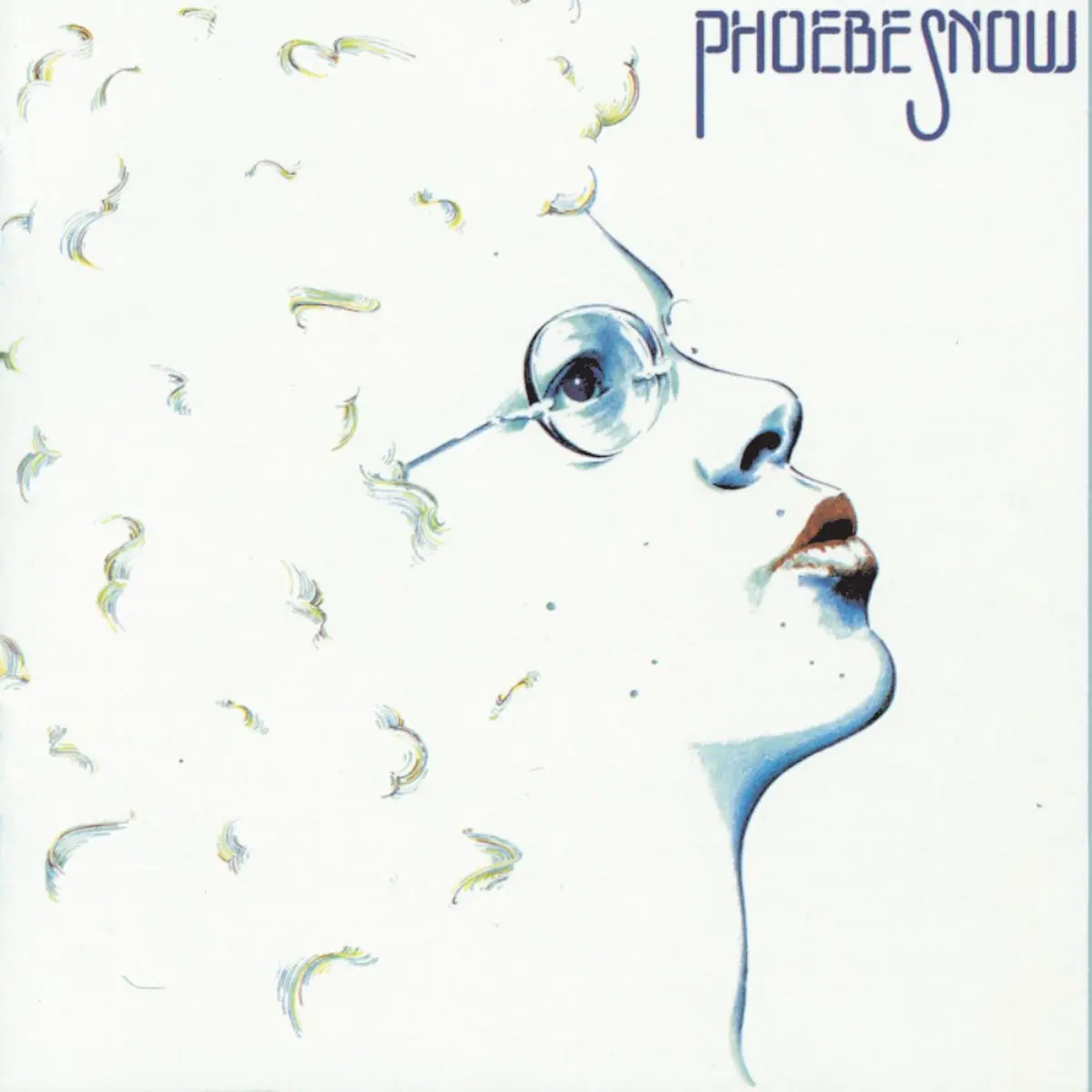 Phoebe Snow released her self-titled debut album in July 1974 on Shelter.
The album presents a stylized blend of acoustic songcraft, jazz voicings, and blues phrasing. It contrasts Snow’s confessional originals with two choice covers and marks her only album for Shelter before a long legal hiatus. “Poetry Man,” released five months after the LP, became her breakout hit.
Snow plays acoustic guitar throughout and sings in a restrained upper range with deliberate phrasing and shifting inflection. Bob James adds organ on five tracks, joined by jazz luminaries Teddy Wilson (piano) and Zoot Sims (tenor sax). Dave Mason and Steve Burgh split lead guitar duties while David Bromberg contributes dobro and acoustic rhythm on “Either or Both.” Chuck Domanico and Chuck Israels handle upright bass, offset by Hugh McDonald on electric. Ralph MacDonald adds congas and shakers; The Persuasions sing harmonies on “Good Times.”
Snow wrote seven of the album’s nine tracks. She opens with “Good Times,” a 1964 R&B hit by Sam Cooke, and closes Side A with Jesse Fuller’s “San Francisco Bay Blues.” The remaining songs reflect her early club repertoire of originals sparked by encouragement from Shelter’s Dino Airali.
The album opens with short phrases and mid-tempo movement on “Good Times,” where gospel harmonies from The Persuasions punctuate clipped guitar and bright organ fills. “Harpo’s Blues” builds on acoustic piano, soft cymbal taps, and suspended vocal lines that widen across verses; Sims enters with a single-note tenor motif that shadows the melodic line. “Poetry Man” layers tremolo guitar, rising vocal leaps, and interwoven saxophone counterlines over a lightly syncopated percussion base. “Either or Both” features tight interplay between dobro and acoustic guitar with vocal phrasing alternating between syncopated and legato forms. “San Francisco Bay Blues” shifts to upbeat fingerstyle and nasal phrasing, staying close to Fuller’s one-man-band template.
On Side B, “I Don’t Want the Night to End” moves between triple-meter verses and chorus refrains. “Take Your Children Home” alternates long-held phrasing and clipped rhythm guitar across a slow pulse. “It Must Be Sunday” unfolds in episodic movements, starting with descending piano figures and quiet harmonies that stretch into longer, sequential verse lines. “No Show Tonight” ends the album with doubled guitars and sharp vocal cadence.
A1. “Good Times” (2:20) — originated as a 1964 single by Sam Cooke, written by Cooke; covered by Dan Seals, The Animals, and others
A2. “Harpo’s Blues” (4:22)
A3. “Poetry Man” (4:36) — reflects a brief affair with a married man; Snow later distanced herself from its subject matter
A4. “Either or Both” (3:52)
A5. “San Francisco Bay Blues” (3:29) — originated as a 1954 song by Jesse Fuller; widely covered by Peter, Paul & Mary, Eric Clapton, and Paul McCartney
B1. “I Don’t Want the Night to End” (3:55)
B2. “Take Your Children Home” (4:15)
B3. “It Must Be Sunday” (5:50)
B4. “No Show Tonight” (2:57)
Sessions occurred in 1973 at A&R Recording in New York and Producer’s Workshop in Hollywood with producers Dino Airali, Denny Cordell, and Phil Ramone. Ramone also engineered and mixed the album.
Phoebe Snow features cover art by Mick Haggerty with photography by Ed Caraeff.
Shelter issued “Poetry Man” (b/w “Either or Both”) as a single in December 1974. It entered the Billboard Hot 100 that winter and peaked at No. 5 in April 1975. The single also reached No. 1 on the Billboard Adult Contemporary chart and No. 4 in Canada. The song earned Snow a 1975 Grammy nomination for Best New Artist and remains her signature piece.
DCC reissued the album in 1994 on CD with seven bonus tracks: the original b-side “Easy Street” and six unreleased demos from the 1973 sessions, including alternate versions of “Poetry Man,” “Harpo’s Blues,” and “It Must Be Sunday.”
Second Childhood
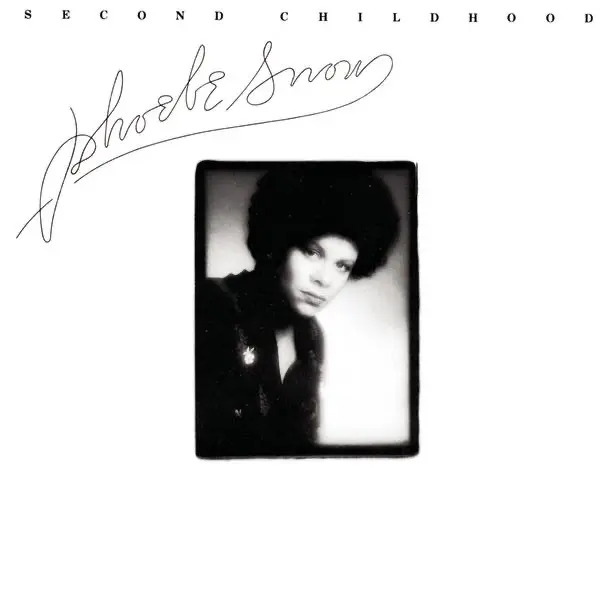 Phoebe Snow released her second album, Second Childhood, in January 1976 on Columbia.
The album expands her acoustic-jazz palette with orchestrated arrangements, layered vocal textures, and electric instrumentation. It follows her 1974 Shelter debut but marks her first release under Columbia after a two-year legal impasse.
Snow sings lead throughout and plays acoustic guitar on four tracks. She’s joined by a cross-section of New York session players: Richard Tee, Don Grolnick, and Ken Ascher rotate across pianos and organs; John Tropea and Hugh McCracken handle lead and rhythm guitars; Will Lee, Tony Levin, Gordon Edwards, and Ron Carter split electric and acoustic bass. Drummers include Steve Gadd, Grady Tate, and Jimmy Young, with Ralph MacDonald on percussion. David Sanborn plays alto sax solos on “Two Fisted Love” and “Sweet Disposition.” The Jessy Dixon Singers add gospel backing to “Cash In.”
Snow wrote seven of the album’s ten tracks. She offsets those with three outside covers: “No Regrets,” a 1936 chestnut by Harry Tobias and Roy Ingraham; “Going Down for the Third Time,” a Holland–Dozier–Holland b-side for The Supremes; and “There’s a Boat Dat’s Leavin’ Soon for New York,” a number from Porgy and Bess by George and Ira Gershwin and DuBose Heyward.
“Two Fisted Love” opens with parallel phrasing between guitar, piano, and Sanborn’s alto sax, layered under clipped vocals and stacked backing harmonies. “Cash In” places Snow’s doubled vocals over a rising gospel progression with call-and-response choruses from The Jessy Dixon Singers. “Inspired Insanity” alternates verses of angular vocal jumps and clipped guitar with choruses framed in sliding harmonic movement. “Sweet Disposition” contrasts stepwise phrasing and long vocal arcs over a slow, accentuated rhythm.
“All Over” stays mid-tempo with a sequenced phrase across organ, bass, and electric guitar. “Isn’t It a Shame” returns to Snow’s solo guitar phrasing, opening into a slow ballad structure. “Going Down for the Third Time” compresses its changes into staccato delivery and syncopated rhythm lines. “Pre-Dawn Imagination” cycles between quiet piano voicings and suspended vocal phrasing, held in rubato tempo. “There’s a Boat Dat’s Leavin’ Soon for New York” closes the album with orchestral swells, tuba textures, and a shifting pace between narrative and melodic phrasing.
A1. “Two Fisted Love” (4:03)
A2. “Cash In” (5:44)
A3. “Inspired Insanity” (3:56)
A4. “No Regrets” (2:58) — originated as a 1936 song by Harry Tobias and Roy Ingraham; popularized in multiple traditional pop renditions
A5. “Sweet Disposition” (4:04)
B1. “All Over” (3:29)
B2. “Isn’t It a Shame” (3:56)
B3. “Going Down for the Third Time” (2:33) — originated as the 1967 b-side to “Reflections” by The Supremes; written by Holland–Dozier–Holland
B4. “Pre-Dawn Imagination” (3:28)
B5. “There’s a Boat Dat’s Leavin’ Soon for New York” (5:27) — from Porgy and Bess, written by George Gershwin, Ira Gershwin, and DuBose Heyward; performed by Louis Armstrong, Ella Fitzgerald, Barbra Streisand
Sessions occurred in 1975 at A&R Recording in New York City with producer Phil Ramone, who also engineered the album with Glenn Berger.
Second Childhood features cover design by Ed Lee with photography by Frank Laffitte. Hand-lettering by Robert Biro and Andy Engel.
The album reached No. 13 on the Billboard 200 and No. 71 in Australia. It earned gold certification from the RIAA on July 9, 1976.
It Looks Like Snow
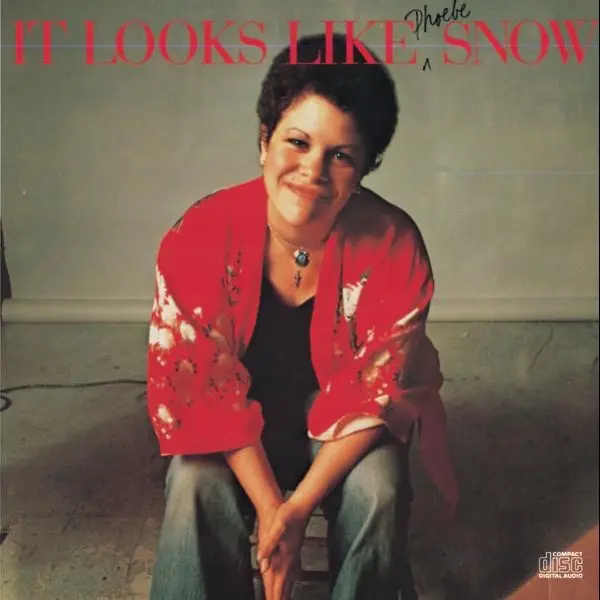 Phoebe Snow released her third album, It Looks Like Snow, in late 1976 on Columbia.
The album expands her repertoire with increased stylistic breadth, covering 1950s jazz, 1960s R&B, and 1970s funk and soul while maintaining her core of introspective songwriting. It follows Second Childhood as her second release on Columbia and her third studio album overall.
Snow sings and plays guitar across the album and adds backing vocals on multiple tracks. Sonny Burke handles keyboards and strings, with contributions from David Pomeranz (keyboards), Ray Parker Jr. and David Bromberg (guitar), Reggie McBride and Chuck Domanico (bass), and drummers Harvey Mason, Ed Greene, and James Gadson. The Waters Family provide backing vocals. Kurt McGettrick arranged horns for a section that includes Hadley Caliman and Mel Martin; Andy Narell plays steel drums, and the Golden Age Jazz Band performs on the opening track.
Snow wrote six of the album’s ten tracks. She includes four covers: “Teach Me Tonight,” a 1953 jazz standard by Gene de Paul and Sammy Cahn; “In My Girlish Days,” a blues number by Ernest Lawlars popularized by Memphis Minnie; the Beatles’ 1969 b-side “Don’t Let Me Down” by Lennon–McCartney; and “Shakey Ground,” a 1975 hit by The Temptations co-written by Eddie Hazel of Funkadelic.
“Autobiography (Shine, Shine, Shine)” opens with trad-jazz brass voicings and choral refrains from the Golden Age Jazz Band before shifting into a stride-based swing. “Teach Me Tonight” moves in half-time with back-phrased vocals and ascending string fills. “Stand Up on the Rock” cycles between clipped vocal phrasing and guitar downstrokes across a moderate rhythm. “In My Girlish Days” suspends vocal lines over electric piano and tremolo guitar with a blues triple feel. “Mercy on Those” combines a slow piano ostinato and thickened vocal phrasing with harmonic shifts, widening in the coda with full string support.
“Don’t Let Me Down” adapts the Beatles structure with long vowel sustain and sharp tonal accents. “Drink Up the Melody (Bite the Dust, Blues)” presents call-and-response phrasing, varied vocal register, and a staggered rhythm section. “Fat Chance” compresses the form into clipped guitar fills and rapid lyrical cycles. “My Faith Is Blind” unfolds as a gospel reflection with sequential melodic movement and minor-mode progression. “Shakey Ground” closes with sharp chord stabs, an anchored bass figure, and syncopated phrasing over a tightened funk rhythm.
A1. “Autobiography (Shine, Shine, Shine)” (5:15)
A2. “Teach Me Tonight” (4:30) — originated in 1953 as a jazz standard by Gene de Paul and Sammy Cahn; recorded by Dinah Washington, The DeCastro Sisters, and Al Jarreau
A3. “Stand Up on the Rock” (3:58)
A4. “In My Girlish Days” (4:48) — originated as a blues number by Ernest Lawlars, popularized by Memphis Minnie
A5. “Mercy on Those” (6:06)
B1. “Don’t Let Me Down” (5:51) — originated as the 1969 b-side to “Get Back” by the Beatles; written by Lennon and McCartney, performed with Billy Preston
B2. “Drink Up the Melody (Bite the Dust, Blues)” (5:51)
B3. “Fat Chance” (2:56)
B4. “My Faith Is Blind” (5:54)
B5. “Shakey Ground” (4:18) — originated as a 1975 single by The Temptations, written by Eddie Hazel, Jeffrey Bowen, and Angelo Bond
Sessions occurred in 1976 at Cherokee Studios (Los Angeles) and Wally Heider Studios (San Francisco) with producer David Rubinson, who also engineered the album with Fred Catero. Phil Brown and George Horn mastered the LP at Columbia Studios, San Francisco.
It Looks Like Snow features photography by Norman Seeff and Phil Kearns. The back cover includes a portrait of Snow with her daughter, taken by Kearns.
The album peaked at No. 29 on the Billboard 200 and No. 64 on the Australian Kent Music Report.
Never Letting Go
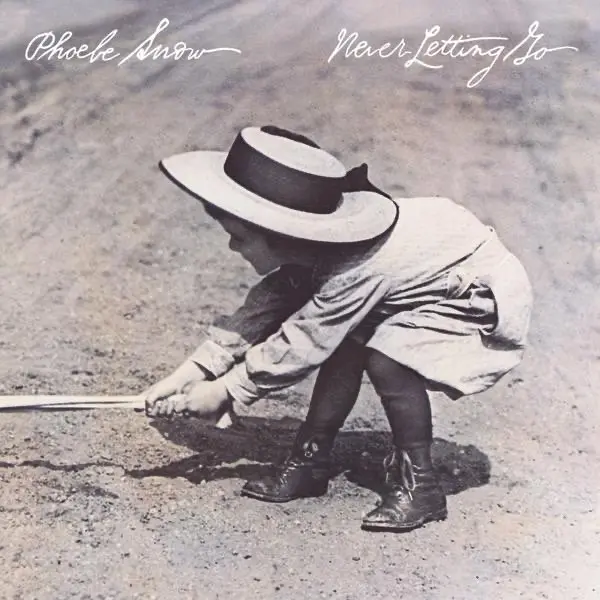 Phoebe Snow released her fourth album, Never Letting Go, in September 1977 on Columbia.
The album pivots from folk-blues roots toward orchestrated pop with soft jazz textures, marking her continued collaboration with producer Phil Ramone. It follows It Looks Like Snow and introduces expanded brass and string arrangements, studio duets, and new songwriting voices.
Snow sings lead throughout and plays acoustic guitar on two tracks. Kenny Ascher, Bob James, and Richard Tee divide piano duties, joined by guitarists Steve Khan, Hugh McCracken, and Steve Burgh. Will Lee and Tony Levin alternate on bass; Chris Parker, Grady Tate, and Steve Gadd rotate on drums. Michael Brecker, Hubert Laws, Eddie Daniels, and Phil Woods handle solos on saxophone, flute, and clarinet. Gwen Guthrie, Lani Groves, and Patti Austin provide backing vocals on key tracks, with Kenny Loggins appearing on “We’re Children.” A full chamber section supports the orchestrations by William Eaton, Robert Freedman, and David Nadien.
Snow wrote six of the album’s ten tracks. Covers include “Love Makes a Woman,” first cut in 1968 by Barbara Acklin; Paul Simon’s 1973 ballad “Something So Right”; the title track by Stephen Bishop; and “Garden of Joy Blues” by 1920s jug band leader Clifford Hayes.
“Love Makes a Woman” opens with clustered piano chords, ensemble brass fills, and multi-part harmonies under Snow’s high-range vocal lead. “Majesty of Life” unfolds as a mid-tempo ballad with soft acoustic framing and woodwind inflections. “Ride the Elevator” contrasts slide guitar bursts with harmonica flourishes over a suspended mid-range vocal line. “Something So Right” adapts Simon’s structure with a fuller string and horn treatment, layering vocal phrasing over sustained chords. “Never Letting Go” floats on keyboard voicings and a gentle vocal blend, retaining the phrasing of Bishop’s original.
“We’re Children” shifts to folk-pop inflection with guitar counterpoint and Loggins’ doubled vocal support. “The Middle of the Night” overlays piano arpeggios with clarinet and acoustic interplay. “Electra” builds momentum through 12-string electric phrasing, sequential sax breaks, and harmonic stacking. “Garden of Joy Blues” adopts a ragtime rhythmic structure with guitar and clarinet pairing over a descending vocal pattern.
A1. “Love Makes a Woman” (3:21) — originated as a 1968 single by Barbara Acklin; written by Carl Davis, Eugene Record, William Sanders, and Gerald Simms
A2. “Majesty of Life” (3:36)
A3. “Ride the Elevator” (3:55)
A4. “Something So Right” (4:02) — originated on Paul Simon’s 1973 album There Goes Rhymin’ Simon; covered by multiple artists including Annie Lennox
A5. “Never Letting Go” (3:12) — written by Stephen Bishop
B1. “We’re Children” (3:01) — features duet vocal by Kenny Loggins
B2. “The Middle of the Night” (3:33)
B3. “Electra” (3:53)
B4. “Garden of Joy Blues” (4:31) — originated in the 1920s repertoire of Clifford Hayes’ Louisville Jug Band
Sessions occurred in 1977 at A&R Recording in New York City with producer Phil Ramone, who also engineered and remixed the album with Jim Boyer.
Never Letting Go features design by Gene Greif and Paula Scher. The album did not match the commercial impact of Snow’s earlier Columbia releases, though her cover of “Love Makes a Woman” reached No. 87 on the Billboard Soul chart.
Against the Grain
 Phoebe Snow released her fifth album, Against the Grain, in September 1978 on Columbia.
The album presents a conscious move toward rock and R&B idioms, diverging from the jazz-tinged sound of her earlier Columbia output. It pairs co-producers Phil Ramone and Barry Beckett and marks her final release for the label after a steady decline in promotional support.
Snow sings lead on all tracks, contributes backing vocals on eight, and plays acoustic guitar on two. Beckett handles acoustic and electric keyboards across most tracks, with additional keys from Richard Tee, Dave Grusin, and synthesizer layers on four songs. Steve Khan, Steve Burgh, Hugh McCracken, and Jeff Mironov split electric and acoustic guitar duties. Will Lee, Hugh MacDonald, and Doug Stegmeyer cover bass; Rick Marotta plays drums on most tracks, with Liberty DeVitto featured on one. Ralph MacDonald contributes percussion, and orchestral texture comes from David Matthews (horn arrangements), Corky Hale (harp), and soloists Jon Faddis and Michael Brecker. The chorus section includes Lani Groves, Gwen Guthrie, and Margo Chapman.
Snow wrote five of the album’s ten tracks. She opens with Paul McCartney’s 1970 ballad “Every Night” and includes additional outside material: “Do Right Woman, Do Right Man,” a 1967 soul staple by Aretha Franklin; “He’s Not Just Another Man,” credited to Clyde Wilson and Brian Holland; “In My Life,” by Patti Austin; and “The Married Men,” written by Maggie Roche of The Roches.
“Every Night” opens with layered acoustic guitars and a vocal line that alternates between tight phrasing and wide interval jumps. “Do Right Woman, Do Right Man” unfolds with gospel harmonies and organ voicings under Snow’s reverent melodic lead. “He’s Not Just Another Man” compresses its form into clipped refrains and syncopated piano figures. “Random Time” builds across held vocal tones and rhythmic bursts over a slow-burning pulse. “In My Life” glides at a moderate pace with string pads and vocal layering.
“You Have Not Won” shifts between minor progressions and slow dynamic lifts. “Mama Don’t Break Down” relies on clipped guitar rhythm and an open mid-range vocal melody. “Oh L.A.” adds pedal steel flourishes to a lightly swung tempo. “The Married Men” retains Roche’s original form with rich backing vocals and suspended guitar figures. “Keep a Watch on the Shoreline” closes with arpeggiated acoustic chords and slow interludes of piano and electric guitar.
A1. “Every Night” (3:31) — originated on Paul McCartney’s 1970 debut solo album McCartney
A2. “Do Right Woman, Do Right Man” (4:08) — originated as a 1967 single by Aretha Franklin, written by Chips Moman and Dan Penn
A3. “He’s Not Just Another Man” (2:59) — written by Clyde Wilson and Brian Holland; originally recorded by 8th Day as “She’s Not Just Another Woman” in 1971
A4. “Random Time” (3:39)
A5. “In My Life” (5:02) — written by Patti Austin
B1. “You Have Not Won” (4:22)
B2. “Mama Don’t Break Down” (3:06)
B3. “Oh L.A.” (3:17)
B4. “The Married Men” (3:44) — written by Maggie Roche; originally recorded by The Roches
B5. “Keep a Watch on the Shoreline” (4:39)
Sessions occurred in 1978 at A&R Recording in New York City and Muscle Shoals Sound Studios in Sheffield, Alabama, with Barry Beckett and Phil Ramone sharing production duties. Engineers included Glenn Berger, Jim Boyer, and Elliot Scheiner; Ted Jensen mastered the album at Sterling Sound in New York.
Against the Grain features design by Paula Scher and photography by Benno Friedman. The album peaked at No. 100 on the Billboard 200 and No. 9 in Australia. Snow’s cover of “Every Night” reached No. 79 on the UK Singles Chart.
Rock Away
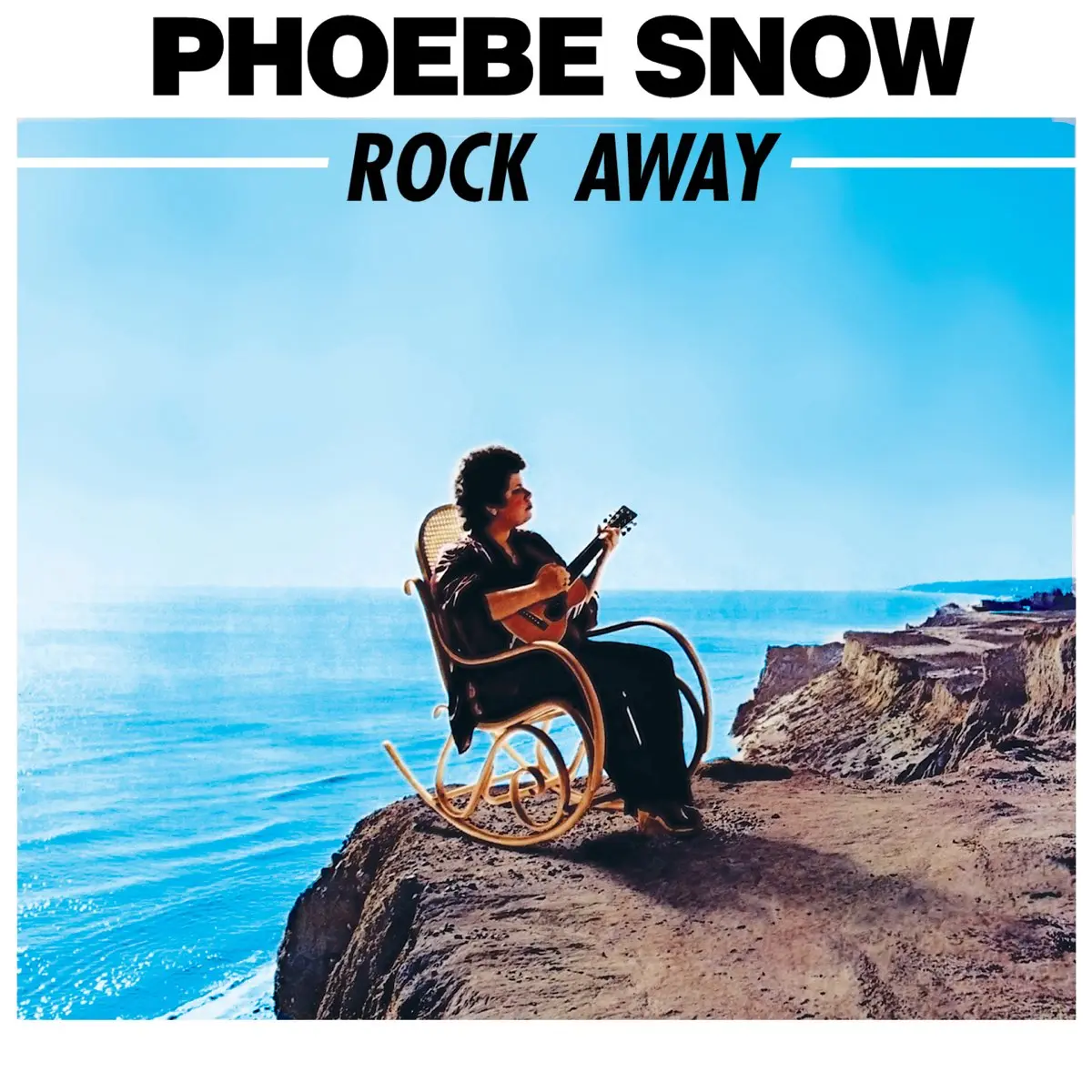 Phoebe Snow released her sixth album, Rock Away, in March 1981 on Mirage.
The album marks her full embrace of mainstream rock production with session musicians drawn from both coasts and a reduced emphasis on her own songwriting. It follows a three-year break after Against the Grain and was her first release for Mirage, ending her tenure at Columbia.
Snow sings lead throughout and contributes acoustic guitar on the title track. Richie Cannata and Greg Ladanyi co-produced the sessions, which draw heavily on members of Billy Joel’s band: Liberty DeVitto plays drums on eight tracks; Doug Stegmeyer covers most bass parts; and David Brown and David Landau alternate across electric guitars. LA players Bill Payne, Russ Kunkel, Waddy Wachtel, and Danny Kortchmar appear on the advance single “Games.” Craig Doerge, Robbie Kondor, Ralph Schuckett, and Bill Payne handle keyboards, with Randy Brecker adding trumpet and Cannata playing multiple saxophones. Snow provides select backing vocals, including harmonies on “Down in the Basement.”
Snow wrote three of the album’s ten tracks. Covers include Don Covay’s 1964 soul hit “Mercy, Mercy”; Rod Stewart’s “Gasoline Alley”; Allen Toussaint’s “Shoo-Rah Shoo-Rah”; Bob Dylan’s gospel-era ballad “I Believe in You”; and two newer tracks: “Cheap Thrills” by country writer Bob McDill and “Baby Please” by New York rocker Carolyne Mas.
“Cheap Thrills” opens with thick electric guitar voicings, steady snare hits, and high-register vocal belting over a 4/4 mid-tempo. “Baby Please” tightens the pace with clipped phrasing and bright organ layers. “Gasoline Alley” draws on acoustic textures and phrasing modulation across its rising vocal intervals. “Rock Away” contrasts sharply as a sparse, pastoral track with solo guitar and a lower vocal register. “Mercy, Mercy” compresses the Covay original into two and a half minutes with strong brass punctuation and syncopated rhythm guitar.
“Games” introduces layered keyboards and reverbed guitar lines under arching melodic refrains. “Down in the Basement” shifts to dark lyrical humor and dry staccato phrasing. “Shoo-Rah Shoo-Rah” echoes Toussaint’s style with unison lines, rolling organ, and rhythmic horn hits. “Something Good” slows the pace with long verse buildup and harmonic vocal refrains. “I Believe in You” stretches over five minutes in with escalating phrasing and gospel inflections.
A1. “Cheap Thrills” (3:35) — written by Bob McDill; originally recorded by McDill for his 1977 LP Short Stories
A2. “Baby Please” (4:22) — written by Carolyne Mas
A3. “Gasoline Alley” (3:07) — originated on Rod Stewart’s 1970 album Gasoline Alley; written by Stewart and Ronnie Wood
A4. “Rock Away” (2:50)
A5. “Mercy, Mercy” (2:29) — originated as a 1964 R&B hit by Don Covay; also recorded by The Rolling Stones
B1. “Games” (3:46) — written by Vince Melamed and Andrea Farber
B2. “Down in the Basement” (2:21)
B3. “Shoo-Rah Shoo-Rah” (2:36) — originated as a 1973 single by Betty Wright; written and first recorded by Allen Toussaint
B4. “Something Good” (4:07)
B5. “I Believe in You” (4:58) — originated on Bob Dylan’s 1980 album Slow Train Coming
Sessions occurred in 1980 at the Power Station in New York City and Record One in Los Angeles with producers Greg Ladanyi and Richie Cannata. Bill Schnee engineered the “Games” sessions in LA; other engineers included Jim Boyer and Elliot Scheiner. Ted Jensen mastered the album at Sterling Sound, NYC.
Rock Away features photography by Benno Friedman and design by Paula Scher. Snow promoted the album with the February 1981 single “Games” (b/w “Down in the Basement”), which reached No. 46 on the Billboard Hot 100. A second single, “Mercy, Mercy” (b/w “Something Good”), followed in May and peaked at No. 52. Though Rock Away climbed to No. 51 on the Billboard 200, Snow’s vocal injury that June curtailed her tour and ended her relationship with Mirage, who shelved her follow-up recordings.
Something Real
Phoebe Snow released her seventh album, Something Real, in March 1989 on Elektra.
The album marked her return after an eight-year hiatus and blends adult contemporary pop, balladry, and soft R&B arrangements. It follows her 1981 release Rock Away and reflects a more restrained production approach, with four original songs amid covers and outside contributions.
Snow sings lead throughout and adds acoustic guitar on two tracks. She also contributes backing vocals and harmonies on multiple cuts. Ricky Fataar and Rob Fraboni co-produced the majority of sessions, with Russ Titelman and Phil Ramone helming select tracks. Session players include Mick Taylor, Ivan Neville, and Anthony Jackson; Robbie Kondor, Jeff Bova, and Rob Mounsey alternate across keyboards. Tom Scott and Lou Marini lead a brass section that includes Randy Brecker, Jon Faddis, and Bob Mintzer. David Frank and Joy Askew handle programming and arrangements on later tracks.
Snow wrote four of the album’s ten tracks. Covers include the 1977 Emotions hit “Best of My Love” and songs by Rhonda Schuster (“We Might Never Feel This Way Again,”) and Allen Toussaint protégé Jae Mason (“Soothin’”). The title track revisits the lyrical territory of “Poetry Man,” reframed with maturity and resignation.
“Something Real” opens with synth pads, acoustic phrasing, and vocal lines that descend on each refrain; Snow moves from lyrical ambiguity to direct statement. “Mr. Wondering” adds gospel harmonies and staggered phrasing over a soul-pop base. “Touch Your Soul” stretches vocal intervals across open chords and slow electronic textures. “We Might Never Feel This Way Again” carries romantic regret in clipped delivery and choral backing. “I’m Your Girl” pivots to personal tone with piano backing and sustained phrasing.
“If I Can Just Get Through the Night” drives forward with sequenced rhythm and chorus lifts. “Stay Away” alternates verse stillness and chorus expansion. “Soothin’” cycles on layered synths and rhythmic precision with sliding vocal phrasing. “Best of My Love” contrasts tight brass and breathy upper-register vocals. “Cardiac Arrest” closes with minor-key acoustic guitar, rhythmic modulation, and lyrical escalation.
A1. “Something Real” (3:50)
A2. “Mr. Wondering” (3:21) — written by Don Yowell
A3. “Touch Your Soul” (4:36)
A4. “We Might Never Feel This Way Again” (3:50) — written by Rhonda Schuster
A5. “I’m Your Girl” (5:21)
B1. “If I Can Just Get Through the Night” (4:09) — written by Peter Anders
B2. “Stay Away” (4:14) — written by Sue Sheridan and Sue Shifrin
B3. “Soothin’” (4:06) — written by Jae Mason
B4. “Best of My Love” (3:48) — originated as a 1977 single by The Emotions, written by Al McKay and Maurice White
B5. “Cardiac Arrest” (3:34)
Sessions occurred at the Power Station and Hit Factory in New York City with producers Rob Fraboni, Ricky Fataar, Russ Titelman, and Phil Ramone. Steve Boyer and Steve Rinkoff handled recording and mixing; Bob Ludwig mastered the album at Masterdisk.
Something Real features art direction by Carol Bobolts and photography by Michele Clement. It reached No. 75 on the Billboard 200 and produced two Adult Contemporary hits: “If I Can Just Get Through the Night” (No. 13) and “Something Real” (No. 29). Snow did not complete her follow-up for Elektra, and her next studio album did not appear until 1998.
Discography:
- Phoebe Snow (1974)
- Second Childhood (1976)
- It Looks Like Snow (1976)
- Never Letting Go (1977)
- Against the Grain (1978)
- Rock Away (1981)
- Something Real (1989)
Sources:
Artist/Album Pages:
Crosby, Stills and Nash (CSN) were an English–American folk-rock/harmony super-trio comprised of ...
Mad Unity was a Belgian jazz-funk studio project behind the 1975 album Funky Tramway on Vogue. M...
Coïncidence was a French jazz-rock band that made a 1977 self-titled album on Disques Tromblas, fo...
Bohemia was a Czech symphonic/jazz-rock spinoff of Modry Efekt and Flamengo. They made the 1978 Pa...
The Beginning of the End was a funk band from Nassau, Bahamas, that released two albums on Atlanti...
Bandit was an English hard-rock/funk band that released a self-titled album in 1976 on Arista, fol...
François "Faton" Cahen (July 24, 1944 — July 13, 2011) was a French keyboardist who played on the ...
Mother's Finest was an American funk-rock band from Atlanta that made a 1973 self-titled album on ...
Affirmation was an American west coast jazz-rock band behind the 1980 album Lost Angeles on Inner ...
The Bowles Brothers Band was an English Western-swing/folk group that released the 1978 Decca albu...
The Runaways were a teenage, all-female American hard-rock band that released four studio albums bet...
Tequila was a Danish jazz-pop spin-off of Dr. Dopo Jam that made the 1975/76 Metronome albums Out ...