

Ronnie Foster is an American organist and arranger who released eight albums between 1972 and 1986 and played on more than 200 jazz, funk, and soul titles.
Background
Ronnie Foster was born on May 12, 1950, in Buffalo, New York. He took an interest in music as a small child and studied accordion for one month. A self-taught keyboardist, he played professionally from age fifteen. He attended Lafayette High School four grades after Ten Wheel Drive saxophonist Dave Liebman.
In 1970, Foster earned his first credit on Alive!, a Blue Note live release by guitarist Grant Green, recorded August 15 at the Cliche Lounge, Newark, New Jersey with vibraphonist Willie Bivens and drummer Idris Muhammad.
Two Headed Freap
 Ronnie Foster released his debut album, Two Headed Freap, in November 1972 on Blue Note.
The album blends jazz-funk with soul jazz, placing Foster’s organ at the center of percolating arrangements, supported by guitarist Gene Bertoncini, drummer Jimmy Johnson, conguero Arthur Jenkins, harpist George Bianco, vibraphonist George Devens, and bassists George Duvivier and Gordon Edwards, with arrangements by Wade Marcus.
Foster composed five tracks and tackles tunes by Al Green (“Let’s Stay Together”), Wilson Pickett (“Don’t Knock My Love”), and Joe Simon (“Drowning In the Sea of Love”).
Foster’s compositions range from kinetic, rhythm-driven funk and languid, psychedelic-inflected pieces. “Chunky” surges with propulsive pace, while the title track shifts tempos to change momentum. “Summer Song” drifts with relaxed swing, “Mystic Brew” adds near-psychedelic color, and “Kentucky Fried Chicken” carries a menacing, cinematic tone. The covers act as accessible interludes, keeping the organ dominant as bass and percussion provide grounding contrast.
A1. “Chunky” (4:50)
A2. “Drowning In the Sea of Love” (4:00)
A3. “The Two Headed Freap” (4:19)
A4. “Summer Song” (5:20)
B1. “Let’s Stay Together” (4:50)
B2. “Don’t Knock My Love” (4:30)
B3. “Mystic Brew” (4:13)
B4. “Kentucky Fried Chicken” (5:00)
Sessions occurred at Van Gelder Studio, Englewood Cliffs, New Jersey, on January 20 and 21, 1972, produced by George Butler and engineered by Rudy Van Gelder with Don Hahn handling remix duties.
Blue Note lifted “Chunky” as a single (b/w “Summer Song”).
Sweet Revival
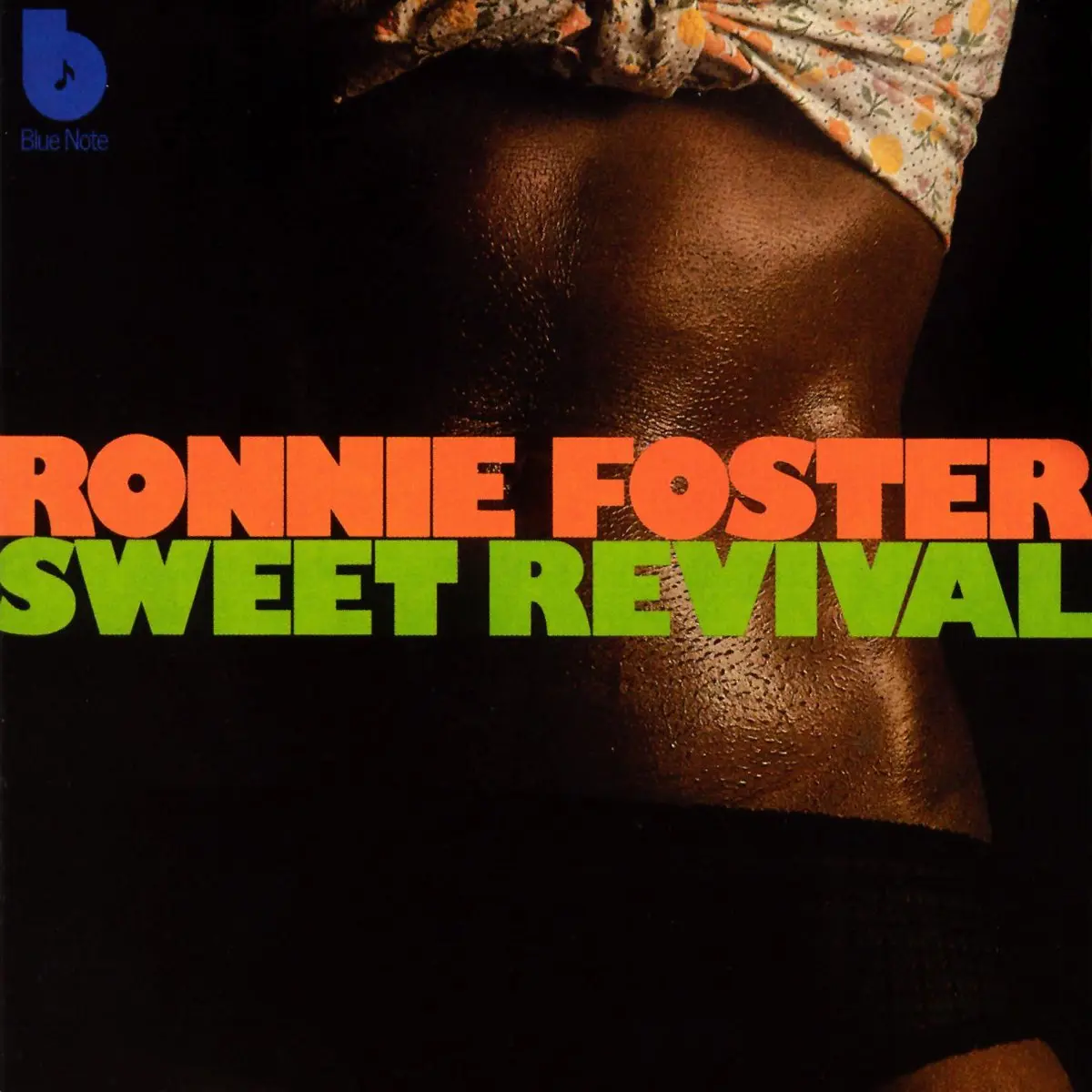 Ronnie Foster released his second album, Sweet Revival, in 1973 on Blue Note.
The album expands Foster’s jazz-funk and soul-jazz palette, centering his organ within lush, layered arrangements that feature Bernard Purdie on drums, Wilbur Bascomb Jr. on Fender bass, David Spinozza and John Tropea on electric guitars, Ernest Hayes on electric piano, with horn and string sections arranged and conducted by Horace Ott.
Foster composed three tracks and interprets contemporary pop and soul hits by The O’Jays (“Back Stabbers”), Billy Paul (“Me and Mrs. Jones”), Gilbert O’Sullivan (“Alone Again (Naturally)”), Stevie Wonder (“Superwoman”), The Crusaders (“Sweet Revival,” “It’s Just Gotta Be That Way”), and the Roberta Flack/Donny Hathaway ballad “Where Is the Love?”
Foster’s originals alternate between kinetic funk and smoother, mid-tempo soul jazz. “Inot” thrives on propulsive, syncopated rhythms while “Some Neck” jolts with staccato licks and hi-hat-driven churn. “Lisa’s Love” emphasizes lushness with fluttering violins and Coral electric sitar. The covers are reimagined through layered strings, wah-wah and fuzzed guitars, slap bass, and subtle vocal choruses, framing the organ at the forefront while providing cinematic, color-rich textures.
A1. “Sweet Revival” (3:52) Joe Sample
A2. “Lisa’s Love” (5:20)
A3. “Back Stabbers” (3:20) G. McFadden, J. Whitehead, L. Huff
A4. “Me And Mrs. Jones” (4:23) C. Gilbert, K. Gamble, L. Huff
A5. “Alone Again (Naturally)” (4:05)
B1. “Where Is The Love?” (5:26) R. MacDonald, W. Salter
B2. “Some Neck” (4:43)
B3. “It’s Just Gotta Be That Way” (3:49) Wayne Henderson
B4. “Superwoman” (5:00)
B5. “Inot” (5:03)
Sessions occurred at Generation Sound Studio, New York, New York, on December 14 and 15, 1972, produced by George Butler and arranged and conducted by Horace Ott, with Tony May as recording and remix engineer.
Design was handled by Mike Salisbury, with photography by Marty Evans.
On the Avenue
 Ronnie Foster released his third album, On the Avenue, in 1974 on Blue Note.
The album blends mid-’70s jazz-funk with soul jazz, favoring mellow, nuanced rhythms over the kinetic funk of earlier Foster releases. Foster’s organ remains central, supported by guitarist and bassist Phil Upchurch, drummer Marvin Chappell, percussionist Ray Armando, and horn players including Dean Robert Pratt, John E. Gatchell, Gerald Ray Chamberlain, and Joel L. Kaye, with horn arrangements by Alfred Ellis. Producer George Benson contributed to the overall sound and direction.
Foster composed everything apart from the covers of Stevie Wonder (“Golden Lady”) and Freddie Hubbard (“First Light”).
Foster’s originals alternate between mid-tempo funk and lyrical soul jazz. “Serenade to a Rock” and the title track favor smooth, contoured rhythms, while “Big Farm Boy Goes to a Latin City” incorporates Afro-Cuban textures. “To See a Smile” introduces Foster’s vocals for the first time on LP, and covers are interpreted with layered instrumentation that emphasizes the organ while offering color-rich harmonic textures.
A1. “Serenade to a Rock” (6:14)
A2. “On the Avenue” (6:14)
A3. “What Happened to the Sunshine” (5:01)
B1. “Golden Lady” (4:44)
B2. “To See a Smile” (4:07)
B3. “Big Farm Boy Goes to a Latin City” (3:36)
B4. “First Light” (4:34)
Sessions occurred at Electric Lady Studios, New York City, on May 1 and 2, 1974, produced by George Benson and engineered/remixed by Dave Wittman and Don Hahn.
Live at Montreux
 In 1974, Ronnie Foster released Live at Montreux, a document of his set at the 1973 Montreux Jazz Festival. Due to the label text, the title is often misinterpreted as Cookin’ With Blue Note at Montreux.
The recording captures Foster’s organ-led quartet in a live setting, emphasizing extended improvisation and dynamic interplay over structured arrangements. Foster is supported by guitarist Gregory Miller and drummer Marvin Chappell, with George Butler producing.
Foster composed everything apart from “East of Ginger Trees,” an extended reinterpretation of a Seals & Croft tune.
The set alternates between kinetic funk and flowing soul-jazz textures. “East of Ginger Trees” opens with a contemplative, extended interpretation, while “Chunky” showcases rhythmic propulsion. “Boogie Juice” extends into a driving, percussive jam, and “Sameness” closes with expansive, swirling organ lines.
A1. “East Of Ginger Trees” (11:48)
A2. “Chunky” (8:12)
B1. “Boogie Juice” (14:00)
B2. “Sameness” (11:24)
The performance was recorded live at the Montreux Jazz Festival, Switzerland, and manufactured by United Artists Records. George Butler produced, and Foster performed on organ with Gregory Miller on guitar and Marvin Chappell on drums.
Cheshire Cat
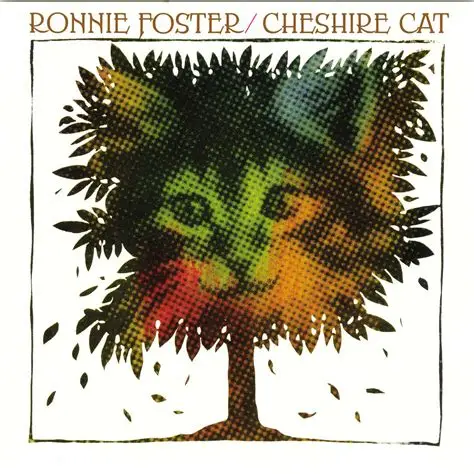 Ronnie Foster released his fourth studio album, Cheshire Cat, in July 1975 on Blue Note.
The album blends soul jazz with funk and pop-inflected arrangements, featuring Foster on organ and keyboards with occasional vocals. Guitarists George Benson and Joe Beck, drummers Dennis Davis, bassists William Allen and Gary King, and percussionist James Mtume support Foster, who also handles arrangements and uncredited keyboards, with backing vocals and production input from Benson.
Foster composed six tracks, with a cover of Stevie Wonder’s “Tuesday Heartbreak” providing the sole outside composition.
Foster’s originals alternate between propulsive funk and mid-tempo soul jazz. “Fly Away” and “Funky Motion” carry staccato-driven rhythms, while the title track unfolds with layered organ textures over a measured pace. “Like a Child” emphasizes harmonic clarity within a pop-soul framework, and “Heartless” closes with concise, organ-led phrasing. Wonder’s “Tuesday Heartbreak” adapts to Foster’s instrumentation while maintaining its contoured melodic lines.
A1. “Like a Child” (4:57)
A2. “Tuesday Heartbreak” (4:47)
A3. “Fly Away” (6:18)
B1. “Funky Motion” (8:13)
B2. “Cheshire Cat” (8:10)
B3. “Heartless” (3:45)
Sessions occurred at A & R Recording, New York, with George Benson producing and Don Hahn engineering, assisted by Dave Smith and Sam Ginsberg. Al Brown handled mastering.
Cheshire Cat features design and art direction by Bob Cato, photography by Eric Cato, and extensive liner notes by Steven Marks.
Between 1975 and 1977, Ronnie Foster played on albums by Roy Ayers Ubiquity (Mystic Voyage), Stevie Wonder (Songs In the Key of Life), Jimmy Ponder (Illusions), Jorge Dalto (Chevere), Harvey Mason (Funk In a Mason Jar), Roberta Flack (Blue Lights In the Basement), and Roy Buchanan (Loading Zone).
He joined George Benson’s backing band for a string of top-selling albums: In Concert: Carnegie Hall, Good King Bad, Breezin’, and In Flight.
Love Satellite
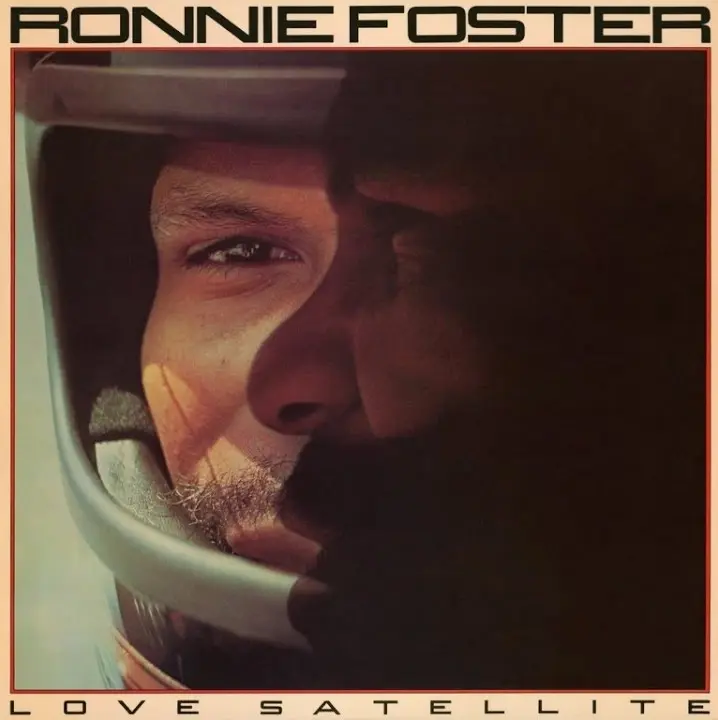 Ronnie Foster released his fifth studio album, Love Satellite, in 1978 on Columbia.
The album blends jazz, funk, and R&B with Foster on keyboards and lead vocals, backed by a rotating cast of session players including guitarists, percussionists, and prominent drummers like Dennis Davis, Harvey Mason, and Ndugu “Leon” Chancler. Roy Ayers appears on vibraphone, and Alphonso Johnson and Byron Miller supply bass across various tracks. Foster also arranged and wrote the album, with Jerry Peters producing and contributing keyboards and background vocals.
Foster’s originals vary from mid-tempo R&B-infused funk to full-bodied jazz-funk jams. “Midnight Plane” emphasizes layered keyboards and syncopated percussion, while “Love Satellite” features vibraphone and timbales textures over measured rhythms. “Happy Song” showcases drums from Stevland Morris, delivering subtle swing within a funk-oriented setting. Covers such as “A Soft Heart” adapt to Foster’s instrumentation, blending synthesizers, electric piano, and vocal layers for textural contrast.
Foster’s originals move between mid-tempo R&B-infused funk and expansive jazz-funk jams. “Midnight Plane” emphasizes layered keyboards and syncopated percussion, while “Love Satellite” features vibraphone and timbales textures over measured rhythms. “Happy Song” showcases drums from Stevland Morris, delivering subtle swing within a funk-oriented setting. “A Soft Heart” emphasizes lush electric piano and synthesizer textures.
A1. “Why Don’t You Look Inside” (4:37)
A2. “A Soft Heart” (5:15)
A3. “Happy Song” (4:44)
A4. “Shooting Star (Sound Effects)”
A5. “Midnight Plane” (6:26)
B1. “I Want To Bring My Love Home” (4:40)
B2. “Easier Said Than Done” (4:45)
B3. “Nassau Day” (4:48)
B4. “Love Satellite” (5:29)
Sessions occurred at Total Experience Studios with Jerry Peters producing, F. Byron Clark engineering and mixing, and George Butler serving as executive producer. Bob Higgins assisted on engineering, and Carolyn Hervey coordinated production.
Love Satellite features cover photography and design by Tony Lane, with back-cover photography by Fred Valentine.
Delight
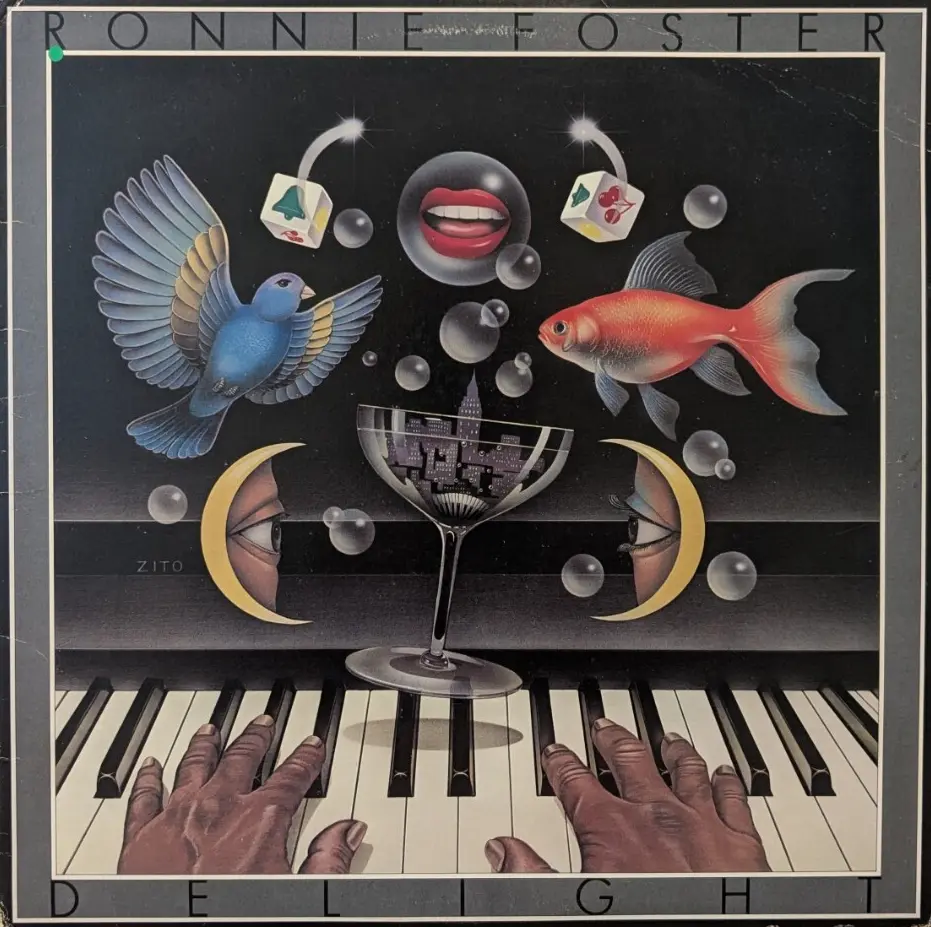 Ronnie Foster released his sixth studio album, Delight, in 1979 on Columbia.
Delight continues Foster’s exploration of jazz-infused R&B and funk, emphasizing smooth textures, layered keyboards, and vocal performances. The album features high-profile session players including Nathan Watts on bass, Dennis Davis and Leon “Ndugu” Chancler on drums, and guest vocals from George Benson.
Foster’s compositions shift between mid-tempo, body-oriented funk and expansive R&B-jazz fusions. “Argentina” drives with precise, layered rhythms, while “You’re the One” and “Let Me In Your Life” foreground vocal lines over lush keyboard textures. “Feet” and “Delight” employ syncopated percussion and measured tempos, framing Foster’s organ and synthesizer at the center of each arrangement.
A1. “Argentina” (3:51)
A2. “You’re The One” (5:35)
A3. “We As Love” (4:25)
A4. “Let Me In Your Life” (5:32)
B1. “Feet” (6:44)
B2. “When Will I Write You A Song?” (4:07)
B3. “Delight” (3:39)
B4. “I’ve Got Your Love” (5:21)
Sessions occurred at Devonshire Sound Recorders in North Hollywood, California, and The Village Recorders in West Los Angeles, California with producer Jerry Peters and engineers Peter Granet and Steve Hirsch.
Delight features artwork by Andy Zito with design by Tony Lane and photography by Beverly Parker.
Session Work
Between 1979 and 1985, Ronnie Foster played on albums by Flora Purim (Carry On), Lips (Lips), Charles Jackson (Gonna Getcha’ Love), Lalo Schifrin (No One Home), Stanley Clarke (I Wanna Play For You), The Jacksons (Triumph), Ronnie Laws (Every Generation), John Klemmer (Magnificent Madness), Earl Klugh (Crazy For You, Low Ride, Wishful Thinking), Chaka Khan (What Cha’ Gonna Do For Me), Jimmy Smith (The Cat Strikes Again), Djavan (Luz, Samurai, Sina), Barry White (Dedicated), Pepeu Gomes (Masculino e Feminino), Eddy Yamamoto (Dream Hunter), and The Temptations (Truly For You).
He cut two albums as part of The Chocolate Jam Co., a studio funk act led by Leon “Ndugu” Chancler. They released the 1979/80 Epic albums The Spread of the Future and Do I Make You Feel Better? Foster and Ndugu also partook in Fuse One, a jazz-funk supergroup that toured Japan and cut two albums for CTI Records.
The Racer
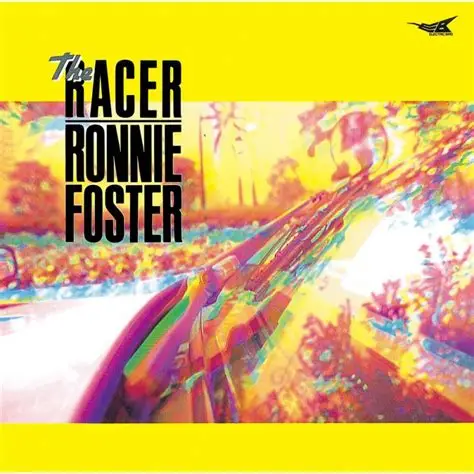 Ronnie Foster returned with his seventh studio album, The Racer, in 1986 on the German Electric Bird label.
The Racer continues Foster’s emphasis on keyboard-led jazz-funk and R&B textures with hi-tech synthesizers and measured rhythmic frameworks. The album features drummers Harvey Mason, Jonathan “Foot” Moffett, and Ndugu alongside percussionist Paulinho Da Costa and guitarists Phil Upchurch and Mike O’Neil.
The album alternates between mid-tempo funk and more expansive jazz-funk explorations. “Europe” and “The Racer” employ layered keyboards over syncopated percussion, while “Festival Do Brasil” and “Ipanema Walk” integrate Latin-influenced rhythms. “Linne’s Theme” and “Love Will Last” emphasize sustained harmonic textures and measured tempos, framing Foster’s vocals and keyboards at the center of each piece.
A1. “Europe” (5:00)
A2. “The Racer” (4:01)
A3. “Linne’s Theme” (4:23)
A4. “Squirt” (4:48)
B1. “Night Life” (3:08)
B2. “Festival Do Brasil” (5:54)
B3. “Love Will Last” (4:14)
B4. “Ipanema Walk” (4:02)
Sessions occurred at Yamaha R & D Studio with Foster producing and Keith Seppanen engineering. Mastering was completed by Akira Makino with lacquer cut by SST Brüggemann GmbH.
Discography:
- Two Headed Freap (1972)
- Sweet Revival (1973)
- On the Avenue (1974)
- Live (1974)
- Cheshire Cat (1975)
- Love Satellite (1978)
- Delight (1979)
- The Racer (1987)
Sources:
Artist/Album Pages:
Jack DeJohnette (Aug. 9, 1942 – Oct. 26, 2025) was an American jazz drummer, pianist, composer, a...
Jigsaw was an English pop-rock band from Coventry that released a trio of singles on MGM/Music Fac...
The Holy Mackerel was an American studio-assembled psych–pop group formed in 1968 by singer–songw...
Shocking Blue was a Dutch rock band from Den Haag, best known for their 1969 global hit "Venus." F...
Abel was an American Latin-rock/psych band from San Francisco that released the 1971 album Please...
Harvey Mason is an American drummer, producer, and composer who played on Seventies jazz-funk albu...
Univers Zéro is a Belgian chamber-rock/Zeuhl ensemble that debuted with a 1977 self-titled Atem rele...
Demi-Heure was a Québécois symphonic-folk band that released an eponymous album in 1978 through Le...
Atlas was an Austrian soul-funk band behind a 1977 self-titled album on Bacillus/Bellaphon. Memb...
Judy Roberts is an American jazz vocalist from Chicago who released three albums between 1979 and ...
Oriental Wind was a multinational avant/ethno-jazz ensemble named after the 1977 solo album by Tur...
Ñu was a Spanish hard-rock band that released four albums on Chapa between 1978 and 1984, followed...