

Wilson Pickett (March 18, 1941 – Jan. 19, 2006) was an American soul singer who released ten albums on Atlantic between 1965 and 1971, scoring hits with “In the Midnight Hour,” “Land of 1,000 Dances,” “Mustang Sally,” and “Funky Broadway.” During the 1970s, he released five soul-funk albums on RCA Victor.
Background
Wilson Pickett was born on March 18, 1941, in Prattville, Ala., the fourth of eleven children in a sharecropping family. He sang in Baptist church choirs and heard the field moan while picking cotton with his family. After repeated violence from his mother, Pickett left Alabama in 1955 to live in Detroit with his father, a Dodge assembly-line worker.
In Detroit, Pickett sang on street corners, then joined The Violinaires, a gospel quartet that recorded for Chess and toured on the gospel circuit. He featured on the 1957 Violinaires single “Sign of Judgement.” In 1959, after four years of gospel work, Pickett replaced singer Joe Stubbs in The Falcons, a Detroit vocal group with singer Eddie Floyd and singer-songwriter Mack Rice.
Pickett cut early secular sides in Detroit during the 1959–62 period, among them “Let Me Be Your Boy.” The Falcons cut “I Found a Love” for Lu Pine in 1962 with Pickett as lead singer and co-writer. Pickett closed the year with a No. 6 R&B hit and a clear bridge from group work into his first solo sessions.
It’s Too Late
 Wilson Pickett released his debut album, It’s Too Late, in 1963 on Double L.
The album gathers eleven early solo sides from the Double L period. Pickett wrote “Peacebreaker” and “It’s Too Late,” while Robert Bateman wrote or co-wrote “If You Need Me,” “I’m Gonna Love You,” and “R.B. Special.” The remaining titles credit Don Juan Mancha, Willie Schofield, Fred Bridges, Harrison Smith, Willie Witherspoon, D. Irwin, J. Willingham, and Wallace. Pickett uses direct lead lines and short refrains across the early sides. The arrangements place slow pleas beside clipped mid-tempo numbers and compact backbeats.
“If You Need Me” pleads through a steady ballad line, with Pickett shaping the refrain through close gospel-derived ascent. “It’s Too Late” tightens around the final refrain after a rasped yelp, with the band clamping down behind the lead line. “I’m Down to My Last Heartbreak” shuffles through a lean regret figure without softening the sung complaint. The remaining Double L sides favor compact early-1960s backing, short pledge phrases, and street-corner reply patterns.
A1. “If You Need Me” (2:35) – Bateman, Sanders, Pickett
A2. “I’m Gonna Love You” (2:10) – Bateman
A3. “Baby Don’t You Weep” (2:09) – Bridges, Smith
A4. “Peacebreaker” (2:37) – Pickett
A5. “I’m Down to My Last Heartbreak” (2:49) – Irwin, Willingham
A6. “R.B. Special” (2:26) – Bateman
B1. “I Can’t Stop” (2:32) – Schofield
B2. “It’ll Never Be the Same” (2:35) – Wallace
B3. “Baby Call on Me” (2:25) – Mancha
B4. “Give Your Lovin’ Right Now” (2:25) – Witherspoon
B5. “It’s Too Late” (3:03) – Pickett
Robert Bateman produced “It’s Too Late” at United Sound Systems in Detroit in 1963.
Double L issued “If You Need Me” in 1963 (b/w “Baby, Call on Me”), which reached No. 30 on Billboard R&B and No. 64 on the Hot 100. “It’s Too Late” followed in 1963 (b/w “I’m Gonna Love You”) and reached No. 7 on Billboard R&B and No. 49 on the Hot 100. “I’m Down to My Last Heartbreak” appeared in 1963 (b/w “I Can’t Stop”) and reached No. 27 on Billboard R&B and No. 95 on the Hot 100.
Correc-Tone issued “My Heart Belongs to You” (b/w “Let Me Be Your Boy”) outside the album sequence. A 1965 reissue reached No. 109 on the Hot 100.
In the Midnight Hour
 Wilson Pickett released his second album, In the Midnight Hour, in June 1965 on Atlantic.
The album combines Stax-cut Memphis tracks with New York, Detroit, and Cincinnati recordings from the Atlantic period. Pickett co-wrote nine of the twelve songs, including four Steve Cropper collaborations and one Don Covay collaboration. Pickett uses clipped refrains and sharp title calls on the Memphis sides. The New York material places his lead line against arranged brass and backing replies. The sequence also reaches back to “I Found a Love,” a Falcons title with Pickett on lead voice.
“In the Midnight Hour” saunters on a clipped backbeat, with punchy horn-line punctuation and Pickett’s lead pressed between growled plea and clean refrain. “Don’t Fight It” snaps through brassy chorus hits and compact Stax-band drive. “Come Home Baby” pairs Pickett with Tami Lynn in a foreground duet, then swells through brassy crescendos and a muted trombone bridge. “I’m Gonna Cry” bounces through celebratory call phrases, while “For Better or Worse” slows into darker ballad pacing with shouted peaks and backing replies.
A1. “In the Midnight Hour” (2:30) – Cropper, Pickett
A2. “Teardrops Will Fall” (2:27) – Dickey Doo, Smith
A3. “Take a Little Love” (2:18) – Pickett
A4. “For Better or Worse” (2:45) – Mancha, Pickett
A5. “I Found a Love” (2:25) – Pickett, Schofield, West
A6. “That’s a Man’s Way” (2:19) – Cropper, Pickett
B1. “I’m Gonna Cry” (2:19) – Covay, Pickett
B2. “Don’t Fight It” (2:34) – Cropper, Pickett
B3. “Take This Love I’ve Got” (2:14) – Rice, Floyd, Pickett
B4. “Come Home Baby” (2:35) – Mann, Weil
B5. “I’m Not Tired” (2:44) – Cropper, Pickett
B6. “Let’s Kiss and Make Up” (2:32) – Schofield
Pickett cut “In the Midnight Hour,” “That’s a Man’s Way,” “Don’t Fight It,” and “I’m Not Tired” at Stax Studios in Memphis on May 12, 1965, with producers Jim Stewart and Jerry Wexler. The Stax date features bassist Donald “Duck” Dunn, drummer Al Jackson, guitarist Steve Cropper, pianist Joe Hall, trumpeter Wayne Jackson, and saxophonists Floyd Newman, Charles “Packy” Axton, and Andrew Love.
Atlantic lifted “In the Midnight Hour” as a June 1965 single (b/w “I’m Not Tired”), which reached No. 1 on Billboard R&B, No. 21 on the Hot 100, and No. 12 on the UK singles chart. “Don’t Fight It” became the second single in November 1965 (b/w “It’s All Over”) and reached No. 4 on Billboard R&B, No. 53 on the Hot 100, and No. 29 in the UK.
In the Midnight Hour reached No. 107 on the Billboard 200 and No. 3 on Billboard R&B Albums.
The Exciting Wilson Pickett
 Wilson Pickett released his third album, The Exciting Wilson Pickett, in August 1966 on Atlantic.
The Exciting Wilson Pickett joins Memphis and Muscle Shoals recordings from the preceding Atlantic sessions. The album blends horn-marked Stax material with FAME-recorded sides, performed by Pickett with rhythm-section players from both studios. Steve Cropper appears in five writer credits, including three Pickett co-writes.
“Land of 1000 Dances” barrels through count-off commands, wordless chant, coda rolls, and clipped band hits around Pickett’s shouted lead. “Something You Got” stays in the same opening-night lane with a tighter dance-floor gait and hard vocal edges. “634-5789” shuffles on downbeat-aligned number phrases, crisp snare, background replies, and a fuller Stax production profile. “Ninety-Nine and a Half (Won’t Do)” grinds through a rough guitar figure and an insistent title refrain. “In the Midnight Hour” returns with jerky mid-tempo motion and a controlled seduction cadence, while “Danger Zone” cuts the album’s late stretch into short, strutting phrases.
A1. “Land of 1000 Dances” (2:28) – Kenner
A2. “Something You Got” (2:58) – Kenner
A3. “634-5789 (Soulsville, U.S.A.)” (3:00) – Cropper, Floyd
A4. “Barefootin’” (2:22) – Parker
A5. “Mercy, Mercy” (2:30) – Covay, Miller
A6. “You’re So Fine” (2:38) – Finney, Schofield, West
B1. “In the Midnight Hour” (2:36) – Cropper, Pickett
B2. “Ninety-Nine and a Half (Won’t Do)” (2:44) – Cropper, Floyd, Pickett
B3. “Danger Zone” (2:12) – Cropper, Pickett
B4. “I’m Drifting” (2:54) – Banks, Pickett, Porter
B5. “It’s All Over” (2:21) – Cropper, Pickett
B6. “She’s So Good to Me” (2:17) – Womack
Pickett recorded the album material between May 1965 and May 1966 at Stax Studios in Memphis and FAME Studios in Muscle Shoals. Guitarist Steve Cropper shared production credits with Tom Dowd, Rick Hall, Jim Stewart, and Jerry Wexler.
Pickett worked on the Memphis dates with Cropper, bassist Donald “Duck” Dunn, drummer Al Jackson Jr., pianists Joe Hall and Isaac Hayes, trumpeter Wayne Jackson, and saxophonists Charles “Packy” Axton, Andrew Love, and Floyd Newman. The Muscle Shoals dates feature bassists Tommy Cogbill and Albert “Junior” Lowe, drummer Roger Hawkins, guitarists Jimmy Johnson and Chips Moman, keyboardist Spooner Oldham, trumpeter Jack Peck, and saxophonist Charles Chalmers.
The Exciting Wilson Pickett appeared in a sleeve designed by Haig Adishian with front-cover photography by Nick Samardge.
Atlantic issued “634-5789 (Soulsville, U.S.A.)” in January 1966 (b/w “That’s a Man’s Way”), which reached No. 1 on Billboard R&B Singles, No. 13 on the Billboard Hot 100 chart, and No. 36 in the UK. “Ninety-Nine and a Half (Won’t Do)” followed in May 1966 (b/w “Danger Zone”) and reached No. 13 on Billboard R&B Singles and No. 53 on the Billboard Hot 100 chart.
“Land of 1000 Dances” appeared in July 1966 (b/w “You’re So Fine”) and reached No. 1 on Billboard R&B Singles, No. 6 on the Billboard Hot 100 chart, and No. 22 in the UK.
The Exciting Wilson Pickett reached No. 21 on the Billboard 200 and No. 3 on Billboard R&B Albums.
The Wicked Pickett
 Wilson Pickett released his fourth album, The Wicked Pickett, in January 1967 on Atlantic.
The Wicked Pickett draws most of its program from FAME sessions in Muscle Shoals. The album contains two Pickett singles from late 1966 and early 1967, a Don Covay–Ron Miller B-side, two Dan Penn–Lindon Oldham titles, and songs by Mack Rice, Frank Guida, Joseph Royster, Bobby Hebb, Jessie Hill, Steve Cropper, Eddie Floyd, Norman Meade, and Bobby Womack. The arrangements place Pickett against short brass replies, clipped stop-time accents, and organ-centered FAME rhythm parts.
“Mustang Sally” saunters through repeated title calls and clipped backing replies, with Pickett stretching the command phrases across a steady mid-tempo gait. “Everybody Needs Somebody to Love” hollers through call-and-response turns and faster band accents. “Ooh Poo Pah Doo” charges through shouted chant phrases and rough-edged ensemble hits. “Knock On Wood” rasps across clipped hard accents and near-shouted refrain peaks. “Time Is On My Side” flares with brassy punctuation and a hoarse lead, turning the title phrase into a hard declaration. “You Left the Water Running” pleads over a leaner breakup cadence, while “Up Tight Good Woman” settles into a plainspoken request line. “Three Time Loser” laments failed romance with a direct title refrain and stripped-back phrasing.
A1. “Mustang Sally” (3:08) – Rice
A2. “New Orleans” (2:30) – Guida, Royster
A3. “Sunny” (3:09) – Hebb
A4. “Everybody Needs Somebody to Love” (2:20) – Burke, Russell, Wexler
A5. “Ooh Poo Pah Doo” (2:32) – Hill
A6. “She Ain’t Gonna Do Right” (2:15) – Oldham, Penn
B1. “Knock on Wood” (2:39) – Cropper, Floyd
B2. “Time Is on My Side” (2:34) – Meade
B3. “Up Tight Good Woman” (2:30) – Oldham, Penn
B4. “You Left the Water Running” (2:28) – Franck, Hall, Penn
B5. “Three Time Loser” (2:21) – Covay, Miller
B6. “Nothing You Can Do” (2:13) – Womack
Pickett recorded the FAME material in May and October 1966 at FAME Studios in Muscle Shoals. Rick Hall and Jerry Wexler produced the sessions. Tom Dowd and Hall engineered them. The rhythm-section credits include keyboardist Spooner Oldham, bassists Tommy Cogbill and Albert “Junior” Lowe, drummer Roger Hawkins, and guitarists Jimmy Johnson and Chips Moman. The horn credits include trumpeters Gene Miller and Wayne Jackson and saxophonists Charles Chalmers, Andrew Love, Floyd Newman, Gilbert Caples, and Eddie Logan.
Atlantic issued “Mustang Sally” in November 1966 (b/w “Three Time Loser”), which reached No. 6 on Billboard R&B Singles, No. 23 on the Billboard Hot 100 chart, and No. 28 in the UK. “Everybody Needs Somebody to Love” followed in January 1967 (b/w “Nothing You Can Do”) and reached No. 19 on Billboard R&B Singles and No. 29 on the Billboard Hot 100 chart.
The Wicked Pickett reached No. 42 on the Billboard 200 and No. 5 on Billboard R&B Albums.
The Sound of Wilson Pickett
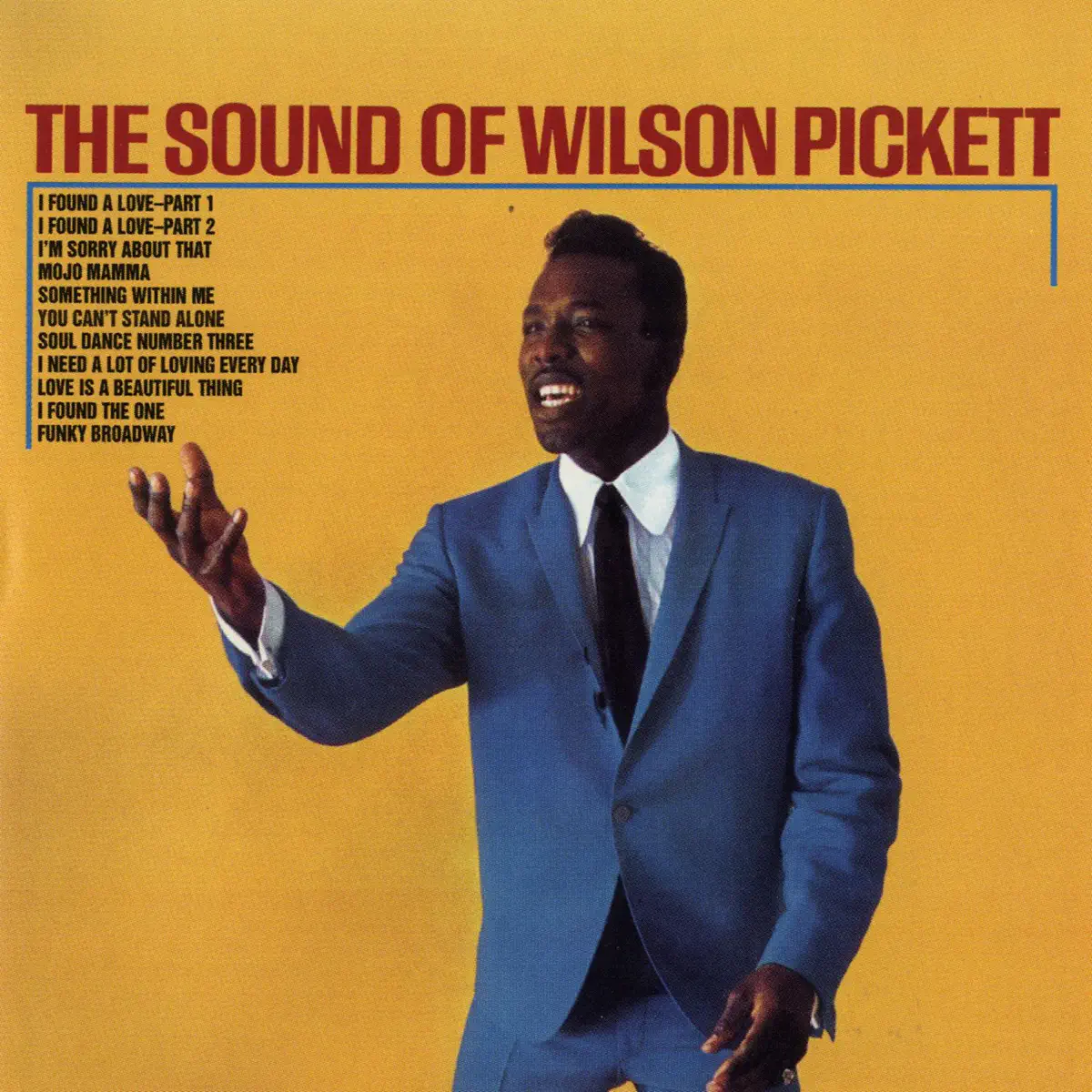 Wilson Pickett released his fifth album, The Sound of Wilson Pickett, in July 1967 on Atlantic.
The Sound of Wilson Pickett presents eleven FAME-centered Atlantic tracks, with a two-part remake of “I Found a Love” at the center of side one. The sequence contains three Bobby Womack songs, two Pickett co-writes, a Rudy Clark title, a Dan Penn–Lindon Oldham song, and one Arlester “Dyke” Christian title. The arrangements place Pickett over organ, clipped guitar, brass replies, and two-part title refrains.
“Soul Dance Number Three” locks into a riff-based pattern and turns dance instructions into a call-led chant, naming the boogaloo, skate, and shing-a-ling before Pickett’s “hit-it” turnaround. “Funky Broadway” bounces at a quicker clip, with repeated exhortations and a syncopated low-register figure. “I Found a Love, Part I” returns Pickett to the pleading Falcons-era line, while “Part II” extends the same cry through a second single-side pass. “You Can’t Stand Alone” jumps from its up-tempo love-song gait into a brief organ solo. “Mojo Mamma” rolls through the following side with fast sequential energy and backing replies.
A1. “Soul Dance Number Three” (2:38) – Pickett, Wexler
A2. “Funky Broadway” (3:33) – Christian
A3. “I Need a Lot of Loving Every Day” (2:20) – Oldham, Penn
A4. “I Found a Love, Part I” (2:30) – Pickett, Schofield, West
A5. “I Found a Love, Part II” (2:59) – Pickett, Schofield, West
A6. “You Can’t Stand Alone” (2:47) – Clark
B1. “Mojo Mamma” (1:59) – Berns, Wexler
B2. “I Found the One” (2:30) – Womack
B3. “Something Within Me” (3:40) – Womack
B4. “I’m Sorry About That” (3:03) – Womack
B5. “Love Is a Beautiful Thing” (2:12) – Brigati, Cavaliere
Pickett recorded the album’s FAME sides in Muscle Shoals with Rick Hall, Tom Dowd, and Jerry Wexler as producers. Hall and Dowd engineered the sessions. The rhythm-section credits include keyboardist Spooner Oldham, bassists Tommy Cogbill and Albert “Junior” Lowe, drummer Roger Hawkins, and guitarists Chips Moman and Jimmy Johnson. The horn credits include trumpeters Wayne Jackson and Gene Miller and saxophonists Andrew Love, Charles Chalmers, James Mitchell, and Floyd Newman.
The Sound of Wilson Pickett appeared in a sleeve designed by Haig Adishian with cover photography by Nick Samardge.
Atlantic issued “I Found a Love, Part I” in March 1967 (b/w “I Found a Love, Part II”), which reached No. 6 on Billboard R&B Singles and No. 32 on the Billboard Hot 100 chart. “Soul Dance Number Three” followed in May 1967 (b/w “You Can’t Stand Alone”); both sides charted, with “Soul Dance Number Three” at No. 10 on Billboard R&B Singles and No. 55 on the Billboard Hot 100 chart and “You Can’t Stand Alone” at No. 26 on Billboard R&B Singles and No. 70 on the Billboard Hot 100 chart. “Funky Broadway” appeared in July 1967 (b/w “I’m Sorry About That”) and reached No. 1 on Billboard R&B Singles, No. 8 on the Billboard Hot 100 chart, and No. 43 in the UK.
The Sound of Wilson Pickett reached No. 54 on the Billboard 200 and No. 7 on Billboard R&B Albums.
I’m in Love
 Wilson Pickett released his sixth album, I’m in Love, in February 1968 on Atlantic.
I’m in Love extends Pickett’s Atlantic run through July 1967 American Studios material from Memphis. The album contains four Bobby Womack compositions or co-compositions, one Don Covay title, one Sam Cooke title, one Don Robey title, and two titles from the Rodger Collins and Lloyd Price repertoires. Pickett places most leads in a hard upper register, with brass replies, organ support, and short backing-voice answers around the refrain.
“Jealous Love” bops through a lean Womack-penned dance figure, with Pickett clipping the title complaint into short phrases. “Stag-O-Lee” barrels from a rapid snare opening into a machine-gun low line, brass ricochets, and an extended warning coda. “I’m in Love” glides as a slow love song, with Pickett lowering the rasp and holding the declaration close to the center of the arrangement. “We’ve Got to Have Love” bops through a “looky-here” address and tight replies. “She’s Lookin’ Good” struts in a boogaloo-paced pattern, with Pickett turning the praise line into a raised dance command. “I’ve Come a Long Way” pleads through a sensual low-volume close.
A1. “Jealous Love” (2:47) – Curtis, Womack
A2. “Stagger Lee” (2:19) – Logan, Price
A3. “That Kind of Love” (2:09) – Covay
A4. “I’m in Love” (2:30) – Womack
A5. “Hello Sunshine” (2:31) – Curtis, Miller
B1. “Don’t Cry No More” (2:14) – Robey
B2. “We’ve Got to Have Love” (2:07) – Pickett, Womack
B3. “Bring It on Home to Me” (3:05) – Cooke
B4. “She’s Looking Good” (2:21) – Collins, Dickens
B5. “I’ve Come a Long Way” (3:10) – Womack
Sessions for the main album date occurred between July 1 and July 3, 1967, at American Studios in Memphis with Jerry Wexler producing and Tom Dowd engineering. Pickett recorded with bassist Tommy Cogbill, drummer Gene Chrisman, guitarists Bobby Womack and Reggie Young, organist Bobby Emmons, pianist Bobby Wood, trumpeter Gene “Bowlegs” Miller, baritone saxophonist Floyd Newman, and tenor saxophonists Charles Chalmers and King Curtis.
Atlantic lifted “I’m in Love” as a December 1967 single (b/w “Stagger Lee”), which reached No. 4 on Billboard R&B Singles and No. 45 on the Hot 100. “Jealous Love” followed in February 1968 (b/w “I’ve Come a Long Way”); “Jealous Love” reached No. 18 on Billboard R&B Singles and No. 50 on the Hot 100, while “I’ve Come a Long Way” reached No. 46 on Billboard R&B Singles and No. 101 on the Hot 100. “She’s Looking Good” appeared in April 1968 (b/w “We’ve Got to Have Love”) and reached No. 7 on Billboard R&B Singles and No. 15 on the Hot 100.
I’m in Love reached No. 70 on the Billboard 200 and No. 9 on Billboard R&B Albums.
The Midnight Mover
 Wilson Pickett released his seventh album, The Midnight Mover, in July 1968 on Atlantic.
The Midnight Mover combines 1968 Memphis and New York recordings with two earlier Atlantic-period titles. Bobby Womack wrote or co-wrote six songs, including the title track, “It’s a Groove,” “I Found a True Love,” “Trust Me,” “Remember, I Been Good to You,” and “Let’s Get an Understanding.” Pickett moves between short brass-backed calls and slower complaints, with piano figures, handclap accents, and backing replies around the choruses.
“I’m a Midnight Mover” barrels through a dance-tempo lead, with Pickett throwing the title phrase across a hard Womack-Pickett refrain. “Remember, I Been Good to You” worries over a suspected rival in a warmer mid-tempo address. “I Found a True Love” chugs through warbling guitar, brass accents, and a compact dance-band churn. “Down by the Sea” settles into an easier swaying line with a worn pledge at the center. “Trust Me” lowers the voice into a mid-tempo torch-ballad cadence. “Let’s Get an Understanding” chugs under Pickett’s spoken shout, then opens into a looser late-section band break. “For Better or Worse” closes on a growled pledge with a more compressed single-mix feel.
A1. “I’m a Midnight Mover” (2:23) – Pickett, B. Womack
A2. “It’s a Groove” (2:48) – B. Womack, L. Womack
A3. “Remember, I Been Good to You” (2:57) – Carter, Tynes, B. Womack
A4. “I’m Gonna Cry” (2:18) – Covay, Pickett
A5. “Deborah” (3:06) – Sigman, Conte, Pallavicini
B1. “I Found a True Love” (2:22) – B. Womack, Young
B2. “Down by the Sea” (2:53) – Pickett
B3. “Trust Me” (3:10) – B. Womack
B4. “Let’s Get an Understanding” (2:09) – Carter, Pickett, B. Womack
B5. “For Better or Worse” (2:42) – Mancha, Pickett
Pickett cut the March 4, 1968 Memphis titles with Tom Dowd producing and arranging. Atlantic recorded “Deborah” and “Down by the Sea” in New York on January 4, 1968 with Nesuhi Ertegun producing and Arif Mardin arranging; the date included bassist Jerry Jemmott, drummer Bernard Purdie, guitarists Carl Lynch and Ronald Miller, keyboardist Arif Mardin, baritone saxophonist Joe Grimaldi, tenor saxophonist King Curtis, and trumpeters Melvin Lastie and Joe Newman. Atlantic also placed “I’m Gonna Cry” and “For Better or Worse” from earlier Atlantic sessions on the sequence.
Atlantic issued “I’m a Midnight Mover” in June 1968 (b/w “Deborah”), which reached No. 6 on Billboard R&B Singles, No. 24 on the Hot 100, and No. 38 in the UK. “I Found a True Love” followed in September 1968 (b/w “For Better or Worse”) and reached No. 11 on Billboard R&B Singles and No. 42 on the Hot 100.
The Midnight Mover reached No. 91 on the Billboard 200 and No. 10 on Billboard R&B Albums.
Hey Jude
 Wilson Pickett released his eighth album, Hey Jude, in February 1969 on Atlantic.
Hey Jude presents FAME recordings from Muscle Shoals, anchored by Atlantic singles from late 1968 and mid-1969. The album contains three George Jackson collaborations, two Bobby Womack titles, one Don Covay title, songs by The Beatles and Steppenwolf, and one Isaac Hayes–David Porter song. Pickett extends the title track into a long closing coda, while the remaining titles favor shorter refrains, horn replies, and compact rhythm-section movement.
“Hey Jude” stretches the source refrain into a long coda, with Pickett climbing through the repeated “na-na” passage and a forward guitar line cutting across the final release. “Back in Your Arms” pleads through a full-band ballad setting, with brass accents and a hard return to the “wish I was back” line. “Toe Hold” digs into a chugging piano pattern and clipped band accents.
“Night Owl” shouts through “looky here” cues, grunted interjections, and a fast dance-band charge. “My Own Style of Loving” leans on a forward-mixed guitar line while Pickett turns the boast into a hard-sung address. “Sit Down and Talk This Over” drives through a Womack-style chug, while “People Make the World (What It Is)” closes on a slower, weightier ballad line.
A1. “Save Me” (2:37) – Jackson, Greer
A2. “Hey Jude” (4:07) – Lennon, McCartney
A3. “Back in Your Arms” (2:57) – Chambers, Jackson, Leakes, Moore
A4. “Toe Hold” (2:50) – Hayes, Porter
A5. “Night Owl” (2:22) – Covay
A6. “My Own Style of Loving” (2:44) – Jackson, Leakes, Moore
B1. “A Man and a Half” (2:52) – Chambers, Jackson, Leakes, Moore
B2. “Sit Down and Talk This Over” (2:21) – Pickett, B. Womack
B3. “Search Your Heart” (2:46) – Jackson, Moore
B4. “Born to Be Wild” (2:46) – Bonfire
B5. “People Make the World” (2:46) – B. Womack
Pickett recorded the album in November 1968 at FAME Studios in Muscle Shoals with Rick Hall and Tom Dowd producing. The FAME personnel includes drummer Roger Hawkins, guitarists Duane Allman, Jimmy Johnson, and Albert “Junior” Lowe, bassists Jerry Jemmott and David Hood, pianist Barry Beckett, organist Marvell Thomas, trumpeters Gene “Bowlegs” Miller and Jack Peck, tenor saxophonists Joe Arnold and Aaron Varnell, baritone saxophonist James Mitchell, and backing singers the Sweet Inspirations.
Hey Jude appeared in a sleeve designed by Loring Eutemey with cover photography by Jim Cummins.
Atlantic issued “A Man and a Half” in November 1968 (b/w “People Make the World (What It Is)”), which reached No. 20 on Billboard R&B Singles and No. 42 on the Hot 100. “Hey Jude” followed in December 1968 (b/w “Search Your Heart”) and reached No. 13 on Billboard R&B Singles, No. 23 on the Hot 100, and No. 16 in the UK. “Born to Be Wild” appeared in May 1969 (b/w “Toe Hold”) and reached No. 41 on Billboard R&B Singles and No. 64 on the Hot 100.
Hey Jude reached No. 97 on the Billboard 200 and No. 15 on Billboard R&B Albums.
Right On
 Wilson Pickett released his ninth album, Right On, in February 1970 on Atlantic.
Right On collects twelve late-1969 Atlantic recordings, cut after the FAME and American Studios period. Pickett wrote or co-wrote four titles, including “Groovy Little Woman,” “Funky Way,” “This Old Town,” and “She Said Yes.” The album also includes songs by The Archies (“Sugar, Sugar”), The Sweet Inspirations (“Sweet Inspiration”), The Supremes (“You Keep Me Hangin’ On”), Dr. John (“Lord, Pity Us All”), George Jackson (“Woman Likes to Hear That”), and Billy Roberts (“Hey Joe”). Pickett places short title chants beside longer refrains, with brass answers, backing-voice replies, and stretched closing cadences.
“Groovy Little Woman” clips its lead phrases into an older hard-dance pattern. “Funky Way” churns with a chugging guitar figure and a clipped exhortation line. “Sugar Sugar” brightens the refrain into a lighter, sing-song Pickett vehicle. “This Old Town” warns through social-survival lines and a sterner verse cadence. “You Keep Me Hangin’ On” stretches the familiar refrain into a heavier Pickett reading. “Woman Likes to Hear That” turns its advice lines into a spoken-sung parable. “Hey Joe” adds a psych-tinged guitar edge to the murder-ballad narrative. “Steal Away” testifies through a gospel-edged close, with female replies backing Pickett’s final plea.
A1. “Groovy Little Woman” (2:38) – Smith, Pickett
A2. “Funky Way” (2:29) – Pickett, Crawford
A3. “Sugar, Sugar” (2:56) – Barry, Kim
A4. “Sweet Inspiration” (2:53) – Penn, Oldham
A5. “This Old Town” (3:23) – Stevenson, Covay, Pickett
A6. “You Keep Me Hangin’ On” (4:54) – Holland, Dozier, Holland
B1. “Lord, Pity Us All” (3:19) – Rebennack
B2. “It’s Still Good” (2:36) – Williams, Bonds
B3. “Woman Likes to Hear That” (2:51) – Jackson
B4. “She Said Yes” (3:13) – Pickett, Stevenson, Covay, Nash
B5. “Hey Joe” (3:03) – Roberts
B6. “Steal Away” (3:50) – traditional; arranged by Dowd
Pickett recorded the album material in late 1969 at Criteria Studios in Miami with producers Dave Crawford, Jerry Wexler, Rick Hall, and Tom Dowd. The sessions feature guitarists Eddie Hinton, Jimmy O’Rourke, and Jimmy Johnson, bassists David Hood and Harold Cowart, keyboardists Barry Beckett and Billy Carter, and drummers Roger Hawkins and Ron “Tubby” Ziegler. The backing-voice parts include Cissy Houston, Jackie Verdell, John Utley, and Judy Clay.
Haig Adishian designed the sleeve, with photography by Jim Cummins and Stephen Paley.
Atlantic issued “Hey Joe” in July 1969 (b/w “Night Owl”), which reached No. 29 on Billboard R&B Singles and No. 59 on the Hot 100. “You Keep Me Hangin’ On” followed in November 1969 (b/w “Now You See Me, Now You Don’t”) and reached No. 16 on Billboard R&B Singles and No. 92 on the Hot 100.
“Sugar, Sugar” appeared in April 1970 (b/w “Cole, Cooke & Redding”) and reached No. 4 on Billboard R&B Singles and No. 25 on the Hot 100; the reverse side reached No. 11 on Billboard R&B Singles and No. 91 on the Hot 100. “She Said Yes” followed in August 1970 (b/w “It’s Still Good”) and reached No. 20 on Billboard R&B Singles and No. 68 on the Hot 100.
Right On reached No. 197 on the Billboard 200 and No. 36 on Billboard R&B Albums.
Wilson Pickett in Philadelphia
 Wilson Pickett released his tenth album, Wilson Pickett in Philadelphia, in August 1970 on Atlantic.
Wilson Pickett in Philadelphia places Pickett with the Sigma Sound rhythm section and the Gamble–Huff production team. Kenny Gamble and Leon Huff wrote or co-wrote “Run Joey Run,” the two-part “Get Me Back on Time, Engine Number 9,” and “Ain’t No Doubt About It.” The remaining titles draw on Philadelphia writers Bobby Eli, Victor Drayton, Reginald Turner, Bunny Sigler, Ugene Dozier, Bernard Broomer, and Lee Phillips. Pickett delivers clipped lead lines over string charts, short brass figures, repeated chants, and a long two-part break on “Engine Number 9.”
“Run Joey Run” struts through a hard Philly backbeat, with sharp brass punctuation and backing replies around Pickett’s growled lead. “Help the Needy” pleads through softer strings and a hurt central line before the arrangement thickens behind the refrain. “Come Right Here” swings from a pensive piano figure into brassy call-and-reply motion. “Don’t Let the Green Grass Fool You” kicks through a jaunty uptempo gait, with Pickett driving the warning phrase across bright ensemble replies.
“Get Me Back on Time, Engine Number 9” broods on a low line, then turns hollers, yelps, and rock-edged guitar into a longer vamp. “Days Go By” darkens from hard opening accents into a despairing lead, with the final rise set against sweeping strings and brass. “Ain’t No Doubt About It” tightens the close around a brooding low-register entry and forceful response figures.
A1. “Run Joey Run” (2:37) – Gamble, Huff
A2. “Help the Needy” (2:31) – Eli
A3. “Come Right Here” (2:35) – Drayton, Turner
A4. “Bumble Bee (Sting Me)” (2:13) – Drayton, Sigler, Turner
A5. “Don’t Let the Green Grass Fool You” (2:46) – Akines, Bellmon, Drayton, Turner
B1. “Get Me Back on Time, Engine Number 9 (Part I)” (2:46) – Gamble, Huff
B2. “Get Me Back on Time, Engine Number 9 (Part II)” (3:37) – Gamble, Huff
B3. “Days Go By” (2:24) – Dozier, Sigler
B4. “International Playboy” (2:26) – Broomer, Dozier, Phillips, Sigler
B5. “Ain’t No Doubt About It” (2:19) – Gamble, Huff
Pickett recorded the album in 1970 at Sigma Sound Studios in Philadelphia with producers Kenny Gamble and Leon Huff and engineer Joe Tarsia. The sessions feature bassist Ronnie Baker, drummer Earl Young, guitarists Bobby Eli, Roland Chambers, and Norman Harris, organist Thom Bell, keyboardists Gene Dozier and Lenny Pakula, and vibraphonist/percussionist Vincent Montana Jr. Sam Reed led the horn section, and Don Renaldo led the string section. Bobby Martin arranged most of the album, with Lenny Pakula on “Bumble Bee (Sting Me)” and “Don’t Let the Green Grass Fool You” and Roland Chambers on “International Playboy.”
Atlantic issued “Engine Number 9” in September 1970 (b/w “International Playboy”), which reached No. 3 on Billboard R&B Singles and No. 14 on the Hot 100.
“Don’t Let the Green Grass Fool You” followed in January 1971 (b/w “Ain’t No Doubt About It”) and reached No. 2 on Billboard R&B Singles and No. 17 on the Hot 100. Atlantic later returned to “International Playboy” in 1973, and the single reached No. 30 on Billboard R&B Singles.
Wilson Pickett in Philadelphia reached No. 64 on the Billboard 200 and No. 12 on Billboard R&B Albums.
Don’t Knock My Love
 Wilson Pickett released his eleventh album, Don’t Knock My Love, in December 1971 on Atlantic.
Don’t Knock My Love returns Pickett to Muscle Shoals after the Philadelphia sessions. The album contains the two-part title track, two later 1971 singles, and songs by Free (“Fire and Water”), Randy Newman (“Mama Told Me Not to Come”), Johnny Ace (“Pledging My Love”), and Stevie Wonder (“You Can’t Judge a Book by Its Cover”). Pickett uses clipped title phrases, brass replies, conga accents, and string-scored breaks across the program.
“Fire and Water” pounds the source riff into a harder Pickett reading, with the lead voice riding clipped accents and raised refrain peaks. “A Mighty Long Way” vows devotion through a blues-leaning line and a steadier pledge cadence. “Covering the Same Old Ground” pleads for reconciliation in short, repeated phrases. “Don’t Knock My Love, Part 1” snaps back toward an older hard-dance format, while “Part 2” answers with brass, strings, and a psychedelic guitar edge. “Call My Name, I’ll Be There” testifies through bright reassurance phrases and direct chorus replies. “Mama Told Me Not to Come” burns through comic warning lines with a rougher spoken-sung angle. “Women Let Me Down Home” closes on a defiant title complaint.
A1. “Fire and Water” (3:33) – Fraser, Rodgers
A2. “(Your Love Has Brought Me) A Mighty Long Way” (3:03) – Avery, McWilliams, Simms
A3. “Covering the Same Old Ground” (3:25) – Jackson, Moore, Dotson
A4. “Don’t Knock My Love (Part 1)” (2:23) – Pickett, Shapiro
A5. “Don’t Knock My Love (Part 2)” (4:05) – Pickett, Shapiro
A6. “Call My Name, I’ll Be There” (2:27) – Crawford, Martin, Shapiro
B1. “Hot Love” (3:04) – Clarke, Reid, Shapiro
B2. “Not Enough Love to Satisfy” (3:05) – Dunbar, Wilson
B3. “You Can’t Judge a Book by Its Cover” (2:58) – Cosby, Moy, Wonder
B4. “Pledging My Love” (3:23) – Washington, Robey
B5. “Mama Told Me Not to Come” (2:45) – Newman
B6. “Woman, Let Me Be Down Home” (3:06) – Otis, Pickett
Pickett recorded most of the album at Muscle Shoals on January 27, 1971, with producers Dave Crawford and Brad Shapiro and arranger Wade Marcus. The core January date features bassist David Hood, drummer Roger Hawkins, guitarists Tippy Armstrong and Dennis Coffey, keyboardists Barry Beckett and Dave Crawford, conga player Eddy Brown, percussionist Jack Ashford, trumpeter Wayne Jackson, tenor saxophonist Andrew Love, and unidentified strings. Pickett cut “Call My Name, I’ll Be There” and “Woman, Let Me Be Down Home” at Muscle Shoals on July 14, 1971.
Atlantic issued “Don’t Knock My Love (Part 1)” in April 1971 (b/w “Don’t Knock My Love (Part 2)”), which reached No. 1 on Billboard R&B Singles and No. 13 on the Hot 100. “Call My Name, I’ll Be There” followed in August 1971 (b/w “Woman, Let Me Be Down Home”) and reached No. 10 on Billboard R&B Singles and No. 52 on the Hot 100.
“Fire and Water” appeared in December 1971 (b/w “Pledging My Love”) and reached No. 2 on Billboard R&B Singles and No. 24 on the Hot 100. “Mama Told Me Not to Come” followed in October 1972 (b/w “Covering the Same Old Ground”) and reached No. 16 on Billboard R&B Singles and No. 99 on the Hot 100.
Don’t Knock My Love reached No. 132 on the Billboard 200 and No. 23 on Billboard R&B Albums.
Mr. Magic Man
 Wilson Pickett released his twelfth studio album, Mr. Magic Man, in 1973 on RCA Victor.
Mr. Magic Man begins Pickett’s RCA run after his Atlantic period. The album draws from Philadelphia and Muscle Shoals sessions, with Dave Crawford and Brad Shapiro as the main production team. Pickett shares writer credit on seven titles, including “Love Is Beautiful,” “I Sho’ Love You,” “What It Is,” and “I Keep Walking Straight Ahead.” Bobby Eli and Carl Fisher wrote the title track. Pickett recuts “If You Need Me” with a slower cadence, piano-led support, and a softened backing-voice frame.
“Mr. Magic Man” glides through a warm mid-tempo dancer, with Pickett placing the title phrase over a smoother RCA-period backing. “Only I Can Sing This Song” aches through a lost-love address and lets the family-strength line widen the lyric stance. “I Sho’ Love You” slows into a pleading declaration, with Pickett holding the word “please” as the emotional hinge.
“Sin Was the Blame” rises into the album’s fiery rave-up, cutting the side with a sharper shout line. “What It Is” simmers as a pain-lined slow jam with a smoother sympathetic backing. “If You Need Me” revisits the early pledge in simpler form, with piano under the opening call-and-answer phrase. “I Can’t Let My True Love Slip Away” steadies the late stretch around another direct devotion line.
A1. “Mr. Magic Man” (3:20) – Eli, Fisher
A2. “Only I Can Sing This Song” (3:08) – Pickett
A3. “Love Is Beautiful” (2:49) – Shapiro, Crawford, Pickett
A4. “I Sho’ Love You” (4:14) – Shapiro, Crawford, Pickett
A5. “Baby Man” (3:40) – Bailey
B1. “Sin Was the Blame” (3:58) – Shapiro, Pickett
B2. “What It Is” (3:33) – Shapiro, Crawford, Pickett
B3. “If You Need Me” (3:44) – Bateman, Sanders, Pickett
B4. “I Can’t Let My True Love Slip Away” (3:25) – Shapiro, Crawford, Pickett
B5. “I Keep Walking Straight Ahead” (3:08) – Shapiro, Crawford, Pickett
Pickett recorded the album material in Philadelphia and Muscle Shoals with Crawford and Shapiro. The Philadelphia sides use rhythm-section players associated with Sigma Sound, including bassist Ronnie Baker, drummer Earl Young, guitarists Bobby Eli and Norman Harris, and percussionist Larry Washington. David Van DePitte arranged the string parts.
RCA Victor issued “Mr. Magic Man” in 1973 (b/w “I Sho’ Love You”), which reached No. 16 on Billboard Hot Soul Singles and No. 98 on the Hot 100.
Mr. Magic Man reached No. 187 on the Billboard 200 and No. 30 on Billboard Soul LPs.
Miz Lena’s Boy
 Wilson Pickett released his thirteenth studio album, Miz Lena’s Boy, in 1973 on RCA Victor.
Miz Lena’s Boy moves Pickett’s RCA work to Nashville. Pickett and Brad Shapiro produced, arranged, and conducted the album. Pickett shares writer credit on five titles, including “Take a Closer Look at the Woman You’re With,” “You Lay’d It on Me,” and “Two Women and a Wife.” The outside material includes Chuck Berry’s “Memphis, Tennessee” and Kris Kristofferson’s “Help Me Make It Through the Night.” The album also includes the Addrisi Brothers title “Never My Love” and the Troy Seals–Will Jennings–Don Goodman title “Soft Soul Boogie Woogie.”
“Take a Closer Look at the Woman You’re With” clips the warning line over a harder backbeat, with Pickett launching the verse from a spoken “Lord have mercy” cue. “Memphis, Tennessee” recasts the story over a primitive programmed tick, with sparse backing replies and a single horn accent at the edge. “Soft Soul Boogie Woogie” claps through handclaps and short rhythmic syllables, with Pickett treating the words as part of the beat. “Help Me Make It Through the Night” steps at an unusual uptempo pace, with the pledge line pulled into a direct Pickett address. “Never My Love” slows into a smoother ballad reading, with the refrain held in a more rounded delivery. “Is Your Love Life Better” leans toward a harder dance pattern, while “Two Women and a Wife” jokes through clipped romantic arithmetic.
A1. “Take a Closer Look at the Woman You’re With” (2:52) – Shapiro, Pickett
A2. “Memphis, Tennessee” (3:50) – Berry
A3. “Soft Soul Boogie Woogie” (2:37) – Goodman, Seals, Jennings
A4. “Help Me Make It Through the Night” (3:00) – Kristofferson
A5. “Never My Love” (4:26) – D. Addrisi, D. Addrisi
B1. “You Lay’d It on Me” (3:16) – Shapiro, Covay, Pickett
B2. “Is Your Love Life Better” (3:15) – Raleigh, Fox
B3. “Two Women and a Wife” (2:45) – Shapiro, Pickett
B4. “Why Don’t You Make Up Your Mind” (2:45) – Shapiro, Pickett
B5. “Take the Pollution Out Your Throat” (2:45) – Shapiro, Pickett
Pickett recorded Miz Lena’s Boy at RCA’s Nashville studios with Shapiro. The album places clipped spoken asides, handclap-marked refrains, brass replies, and country-derived song material into the RCA-period Pickett format.
RCA Victor issued “Take a Closer Look at the Woman You’re With” in 1973 (b/w “Two Women and a Wife”), which reached No. 17 on Billboard Hot Soul Singles and No. 90 on the Hot 100. “Soft Soul Boogie Woogie” followed in 1974 (b/w “Take the Pollution Out Your Throat”) and reached No. 20 on Billboard Hot Soul Singles and No. 103 on the Hot 100.
Miz Lena’s Boy reached No. 34 on Billboard Soul LPs.
Pickett in the Pocket
 Wilson Pickett released his fourteenth studio album, Pickett in the Pocket, in July 1974 on RCA Victor.
Pickett in the Pocket returns Pickett to Muscle Shoals Sound Studios with Brad Shapiro as co-producer and co-arranger. Pickett shares writer credit on “I Was Too Nice,” “Don’t Pass Me By,” and “What Good Is a Lie.” George Jackson wrote “Iron It Out,” Jesse Winchester wrote “Isn’t That So,” and Clyde Otis wrote “Take a Look.” The second side places Doc Pomus and Phil Spector’s “Young Boy Blues” beside Bobby Charles and Paul Butterfield’s “Take Your Pleasure Where You Find It.” Jackie Verdell’s “You’re the One” closes the album with an extended six-minute frame.
“Iron It Out” hits at full stride, with Pickett driving the title command through a hard Muscle Shoals backbeat. “Isn’t That So” testifies through raised chorus replies and a heated church-inflected cadence. “Take a Look” warns through socially pointed address lines without softening the delivery. “I Was Too Nice” eases into regret phrases and lets the complaint settle into a looser mid-tempo gait. “Don’t Pass Me By” drives through a compact dance-band pattern. “What Good Is a Lie” pleads for a horn break, then lets brass answer the line. “Young Boy Blues” returns Pickett to a hurt ballad stance with backing replies around the lead. “Take Your Pleasure Where You Find It” cuts a clipped dance figure, while “You’re the One” stretches into a spoken boast and late-song monologue.
A1. “Iron It Out” (3:00) – Jackson
A2. “Isn’t That So” (3:12) – Winchester
A3. “Take a Look” (3:25) – Otis
A4. “I Was Too Nice” (3:45) – Shapiro, Crawford, Pickett
A5. “Don’t Pass Me By” (2:55) – Beckett, Shapiro, Pickett
B1. “What Good Is a Lie” (2:37) – Beckett, Shapiro, Pickett
B2. “Young Boy Blues” (3:19) – Pomus, Spector
B3. “Take Your Pleasure Where You Find It” (2:34) – Charles, Butterfield
B4. “You’re the One” (6:38) – Verdell
Pickett recorded Pickett in the Pocket at Muscle Shoals Sound Studios in Sheffield, Alabama, and RCA Studios in New York City. Shapiro and Pickett produced and arranged the album, with engineers Gregg Hamm, Jerry Masters, and Jim Crotty. The sessions feature the Muscle Shoals Swampers rhythm section, the Memphis Horns, and backing voices by Rhodes, Chalmers & Rhodes.
Acy R. Lehman oversaw the cover package with photography by Nick Sangiamo.
RCA Victor issued “Take Your Pleasure Where You Find It” in 1974 (b/w “What Good Is a Lie”), which reached No. 68 on Billboard Hot Soul Singles. “I Was Too Nice” followed in 1974 (b/w “Isn’t That So”).
Join Me and Let’s Be Free
 Wilson Pickett released his fifteenth studio album, Join Me and Let’s Be Free, in 1975 on RCA Victor.
Join Me and Let’s Be Free puts Pickett in Los Angeles with producer-arranger Yusuf Rahman after the Muscle Shoals sessions behind Pickett in the Pocket. Pickett appears in five writer credits, while Rahman appears in six. The album frames Pickett with piano-centered mid-tempo pieces, backing-voice replies, synthesizer programming, and softened chorus movement.
“Join Me and Let’s Be Free” rises through a warm church-tinged invitation, with Pickett turning the robe-and-sadness lines into a communal refrain. “I’ve Got a Good Friend” holds the devotional address in a longer, slower cadence. “Smokin’ in the United Nations” seethes through a spoken Los Angeles aside, then turns the title image into a confrontational payoff. “Good Things” strolls at a loose pace, with harmonica replies set against the waiting-line refrain. “Higher Consciousness” keeps the album in its lighter Los Angeles-session lane, while “Mighty Mouth” closes the set with a broader chant profile.
A1. “Join Me & Let’s Be Free” (4:17) – Pickett
A2. “Let’s Make Love Right” (2:56) – Terry, Pickett, Rahman
A3. “I’ve Got a Good Friend” (4:41) – Pickett, Rahman
A4. “Smokin’ in the United Nations” (3:40) – Beamish, Pickett, Rahman
A5. “Gone” (3:17) – Rahman
B1. “Good Things” (4:46) – Wright, Welch
B2. “Higher Consciousness” (3:02) – Rahman
B3. “Bailin’ Hay on a Rainy Day” (3:26) – Pickett
B4. “Mighty Mouth” (3:25) – Raifman, Rahman
Pickett recorded Join Me and Let’s Be Free at Crystal Industries, Clover Recorders, and Centaur Music Productions in Los Angeles. Rahman produced and arranged the album, while Pickett also received arrangement credit. Recording engineer Chris Huston, mixing engineer Michael Boshears, and synthesizer programmers Malcolm Cecil and Robert Margouleff shaped the session record.
Acy Lehman oversaw the cover package with cover art by John W. Martin.
Chocolate Mountain
 Wilson Pickett released his sixteenth studio album, Chocolate Mountain, in 1976 on Wicked Records.
Chocolate Mountain followed Pickett’s RCA period and became his only LP on the short-lived Wicked label. Brad Shapiro produced and arranged the album at Sound Shop Studio in Nashville.
Pickett shares three writer credits with Shapiro and Albhy Galuten, while the remaining program includes songs by Mack Rice, Clarence Reid and Willie Clarke, Neil Sedaka and Howard Greenfield, Sax Karli, Ron Pennington, Donnie Fritts and Billy Blackburn, and Paul Mitchell. Pickett uses hard-edged refrains, spoken asides, backing-voice answers, slide-guitar color, and slower country-soul phrasing across the ten-track sequence.
“I’m Gonna Do It All Over” bounces through an uptempo line, with Pickett’s rasp set against handclaps and brisk backing replies. “Let Me Know” struts through a southern dance pattern and gives the lead voice a clipped command shape. “The Best Part of a Man” kicks through punchy accents and a direct title refrain. “Sweetwater Jail” raps through its jailhouse complaint over a swampier pace, with one slide-guitar figure cutting through the song’s rougher midsection.
“I’m Changed” answers Pickett with female replies and turns the refrain into a fast church-derived exchange. “How Will I Ever Know” lopes through suspicion lines at a steadier mid-tempo gait. “That Woman” slows into a country-tinged plea, while “Are You Ready” opens with a “Swing Low Sweet Chariot” verse before the jogging rhythm lifts the closing chant.
A1. “I’m Gonna Do It All Over” (2:47) – Galuten, Shapiro, Pickett
A2. “Let Me Know” (2:50) – Rice
A3. “The Best Part of a Man” (3:07) – Reid, Clarke
A4. “Love Will Keep Us Together” (2:28) – Sedaka, Greenfield
A5. “Sweetwater Jail” (3:55) – Karli
B1. “It’s Gonna Be Good” (2:58) – Galuten, Shapiro, Pickett
B2. “I’m Changed” (3:33) – Pennington
B3. “How Will I Ever Know” (3:10) – Galuten, Shapiro, Pickett
B4. “That Woman” (3:00) – Blackburn, Fritts
B5. “Are You Ready” (4:44) – Mitchell
Wicked issued “The Best Part of a Man” in late 1975 (b/w “How Will I Ever Know”), which reached No. 26 on Billboard Hot Soul Singles. “Love Will Keep Us Together” followed in 1976 (b/w “It’s Gonna Be Good”) and reached No. 69 on Billboard Hot Soul Singles.
A Funky Situation
 Wilson Pickett released his seventeenth studio album, A Funky Situation, in 1978 on Big Tree.
A Funky Situation returns Pickett to Muscle Shoals through a FAME production for Big Tree, then distributed by Atlantic. Rick Hall and Don Daily produced the album, with horn arrangements by Harrison Calloway Jr. The program contains songs by Calloway, Curtis Wilkins, Wilson Pickett, Tony Joe White, Eddie Brigati and Felix Cavaliere, Ava Aldridge and Alan Cartee, Charles Feldman and John Grazier, Rita Grimm and Yvonne Norman, and Mack Rice. Pickett works through extended dance-tempo tracks, brass replies, backing-voice refrains, and longer chorus cycles.
“Dance With Me” clips the invitation into a full-band dancer, with Pickett’s command phrases riding a dense Rick Hall–Don Daily production. “She’s So Tight” struts through a taut title phrase and lets the chorus answer the lead. “Dance You Down” turns its title into a direct floor command. “Hold On to Your Hiney” kicks through a comic Tony Joe White line with harder southern accents. “Lay Me Like You Hate Me” testifies through the album’s bluntest plea, with Pickett’s own title phrase compressed into a hard-sung demand. “Funky Situation” rides the album’s densest horn-line profile, while “Time to Let the Sun Shine On Me” loosens into a brighter late-side release. “Who Turned You On” closes with a sharper question-and-answer charge.
A1. “Dance with Me” (4:49) – Calloway
A2. “She’s So Tight” (3:37) – Grimm, Norman
A3. “The Night We Called It a Day” (4:07) – Feldman, Grazier
A4. “Dance You Down” (3:35) – Aldridge, Cartee
A5. “Hold on to Your Hiney” (3:36) – White
B1. “Groovin’” (3:48) – Brigati, Cavaliere
B2. “Lay Me Like You Hate Me” (3:52) – Pickett
B3. “Funky Situation” (4:00) – Wilkins
B4. “Time to Let the Sun Shine on Me” (4:08) – Rice, Pickett
B5. “Who Turned You On” (3:37) – Wilkins
Pickett recorded A Funky Situation at FAME Studios in Muscle Shoals. The sessions include keyboardist Randy McCormick, bassist Bob Wray, guitarists Ken Bell and Larry Byrom, and drummer Roger Clark. Roger Hawkins appears on “Time to Let the Sun Shine on Me,” with percussionist Mickey Buckins. The backing-voice credits name Charles Chalmers, Donna Rhodes, Sandra Rhodes, Ava Aldridge, Cindy Richardson, and Suzy Storm; the Muscle Shoals Horns appear under Calloway.
Lynn Dreese Breslin designed the album package with cover photography by Jim Houghton.
Erva issued “Love Dagger” in 1977 (b/w “Time to Let the Sun Shine on Me”) before the album sequence. Big Tree issued “Who Turned You On” in 1978 (b/w “Dance You Down”), which reached No. 59 on Billboard Hot Soul Singles. “Groovin’” followed in 1978 (b/w “Time to Let the Sun Shine on Me”) and reached No. 94 on Billboard Hot Soul Singles.
I Want You
 Wilson Pickett released his eighteenth studio album, I Want You, in 1979 on EMI America.
I Want You places Pickett at Le Studio in Morin Heights, Quebec, with producer André Perry. The album gives most of the authorship to keyboardist Jean Roussel and drummer-arranger Marty Simon, who co-wrote five of the seven tracks. Pickett shares credits on “I Want You,” “Shameless,” “Live With Me,” and “Granny,” while Don Covay appears with Pickett on “Live With Me.” The first side uses mid-tempo refrains, string frames, brass lines, and backing-voice replies. The second side lengthens the tracks around dance-metered keyboard patterns and repeated city calls.
“I Want You” glides through a polished slow-dance arrangement and places Pickett’s lead close to the center of the mix. “Shameless” pleads from the album’s first-side vocal stance, with the rasp held upfront against softer backing. “Live With Me” works the same R&B-side placement and lets Pickett carry the request line without crowding the arrangement. “Groove City” rides light synth figures against the rougher lead voice and turns the city roll-call into its main chant. “Superstar” leans into a firmer low-end pattern with a brighter dance-floor contour. “Granny” snaps through a comic refrain and backing-singer replies around Pickett’s amused lead.
A1. “I Want You” (4:10) – Roussel, Simon, Pickett
A2. “Love of My Life” (4:00) – Roussel, Simon
A3. “Shameless” (5:22) – Roussel, Simon, Colton, Pickett
A4. “Live With Me” (6:12) – Covay, Pickett
B1. “Groove City” (5:52) – Roussel, Simon
B2. “Superstar” (4:07) – Roussel, Simon
B3. “Granny” (5:02) – Watson, Roussel, Pickett
Pickett recorded I Want You at Le Studio with Perry producing for Good Noise Productions, Paul Northfield engineering, and Nick Blagona as additional engineer. The sessions include bassist Jerry Knight, guitarist Walter Rossi, keyboardist Jean Roussel, drummer Marty Simon, percussionist Jimmy Tanaka, trumpeter Clyde Kerr, saxophonist Gary Brown, and backing singers Billy Nelson, Petsye Powell, and Gary Wilson. Leon Aronson arranged the strings, and Simon directed the music and arranged the horns.
EMI America issued “I Want You” in 1979 (b/w “Love of My Life”), which reached No. 41 on Billboard Hot Soul Singles. “Live With Me” followed in 1980 (b/w “Granny”) and reached No. 95 on Billboard Hot Soul Singles.
I Want You reached No. 69 on Billboard Soul LPs.
Right Track
 Wilson Pickett released his nineteenth studio album, Right Track, in 1981 on EMI America.
Right Track pairs Pickett with producer Jeff Lane and co-arranger/conductor Andrew Langston. The album contains seven extended tracks built around dance-length rhythm sections, keyboard-led refrains, and clipped guitar figures. Pickett wrote “Help Me Be Without” and co-wrote “Ain’t Gonna Give You No More” with Lane and M. Waleck. The outside material includes the Mark Radice song “If You Can’t Beat ’Em, Join ’Em” and the Melvin and Mervin Steals composition “Don’t Underestimate the Power of Love.”
“Back on the Right Track” cruises through an extended title refrain, with Pickett using the comeback line as a steady first-person chant. “If You Can’t Beat ’Em, Join ’Em” repeats its proverb-like phrase over a longer dance-band run. “Help Me Be Without” softens the set into a pleading breakup address. “Ain’t Gonna Give You No More” tightens around a refusal line and places the title phrase in the foreground. “Maybe This Time” settles into a slower pledge cadence, while “Don’t Underestimate the Power of Love” treats the warning phrase as the album’s late-side declaration. “It’s You” closes the record with a direct address and a cleaner Capitol-era finish.
A1. “Back on the Right Track” (5:17) – Skinner, Weathersby, Zager
A2. “If You Can’t Beat ’Em, Join ’Em” (6:19) – Radice
A3. “Help Me Be Without” (5:14) – Pickett
B1. “Ain’t Gonna Give You No More” (5:09) – Lane, Pickett, Waleck
B2. “Maybe This Time” (5:04) – Davis, Weathersby, Vear
B3. “Don’t Underestimate the Power of Love” (5:11) – M. Steals
B4. “It’s You” (4:37) – Brown, Smith
Jeff Lane produced Right Track. Pickett and Langston arranged and conducted the album. The sessions include keyboardist Andrew Langston, guitarists Pete Bartee and Rich Tarbox, bassists Eluriel Barfield, Clyde Bullard, and Wilbur Bascomb Jr., and drummers Gordon Jones and Sylvester Randolph.
EMI America issued “Ain’t Gonna Give You No More” in 1981 (b/w “Don’t Underestimate the Power of Love”). “Back on the Right Track” followed in 1981 (b/w “It’s You”).
Discography:
- It’s Too Late (1963)
- In the Midnight Hour (1965)
- The Exciting Wilson Pickett (1966)
- The Wicked Pickett (1967)
- The Sound of Wilson Pickett (1967)
- I’m in Love (1968)
- The Midnight Mover (1968)
- Hey Jude (1969)
- Right On (1970)
- Wilson Pickett in Philadelphia (1970)
- Don’t Knock My Love (1971)
- Mr. Magic Man (1973)
- Miz Lena’s Boy (1973)
- Pickett in the Pocket (1974)
- Join Me and Let’s Be Free (1975)
- Chocolate Mountain (1976)
- A Funky Situation (1978)
- I Want You (1979)
- The Right Track (1981)
- American Soul Man (1987)
- It’s Harder Now (1999)
Sources:
Artist/Album Pages:
John Paul Young (born June 21, 1950) is a Scottish-Australian soul-pop singer who scored a run of ...
Fat Larry's Band was an American soul-funk band from Philadelphia that released six albums between...
Stomu Yamash'ta — 山下 勉 (born March 15, 1947) — is a Japanese classical/jazz-rock percussionist, ke...
Laurence Vanay is a French keyboardist and composer who made the 1974 album Galaxies on SFP. In 19...
Cargoe was an American pop-rock band from Oklahoma that released a self-titled album on Ardent Recor...
Banten was a Dutch avant-jazz-rock band that released a 1972 self-titled album on BASF. Members:...
39.4 was a Mexican brass-rock band behind a 1972 self-titled album on CBS. Pre-LP members formed t...
Litto Nebbia (born 1948) is an Argentinian multi-instrumentalist, vocalist, and composer with a care...
Pete Fine is an American is an American guitarist, singer, composer, and orchestrator from New Yo...
Eyes were an American art-rock/pop band from Cleveland, Ohio, that released the 1977 album Stroke...
Ruby Starr — aka Constance Henrietta Mierzwiak (Nov. 30, 1949 — Jan. 14, 1995) — was an American s...
Beckett was an English rock band from Newcastle that released a self-titled album on Raft Records in...