

Chaka Khan (born March 23, 1953) is an American soul singer who first emerged as the featured vocalist of Chicago funksters Rufus.
She fronted the band on a string of 1970s hits, including “Tell Me Something Good,” “Sweet Thing,” and “Ain’t Nobody,” before launching a solo career in 1978 with Chaka and its crossover anthem “I’m Every Woman.”
Khan scored further success with What Cha’ Gonna Do for Me (1981) and the Grammy-winning I Feel for You (1984), whose Prince-penned title track became one of her signature songs. Across the 1980s she alternated between funk, R&B, and rock-leaning projects such as Naughty (1980), Chaka Khan (1982), and Destiny (1986).
Later releases included CK (1988), The Woman I Am (1992), and the standards set ClassiKhan (2004). Widely known as the “Queen of Funk,” she has earned multiple Grammys and remains one of the most distinctive voices in soul and pop.
Background
Chaka Khan was born Yvette Marie Stevens on March 23, 1953, in Chicago, the oldest of five children in a bohemian household. Her sister, Yvonne Stevens (b. 1954), also had a successful singing career under the name Taka Boom. Their brother, Mark Stevens, sang in soul-funksters Aurra.
As a child, her grandmother introduced her to jazz music. As tweens, both sisters sang in the girl group Crystalettes. At age 13, Yvette was christened Chaka Adunne Aduffe Hodarhi Karifi by a Yoruba Baba. For a time in the late 1960s, she sang in Lyfe, the backing band of electric blues guitarist Cash McCall. In 1970 at age 17, she married her then-boyfriend Hassan Khan. Despite their eventual divorce, she kept his surname.
Rufus
In 1971, Khan served as a latter-day replacement for the late Baby Huey in his backing band The Babysitters. The following year, she was spotted by two members of an up-and-coming local act, Rufus. Between 1973 and 1981, she recorded six albums with the band, scoring a huge hit in 1974 with the Stevie Wonder-penned “Tell Me Something Good.”
Chaka (1978)
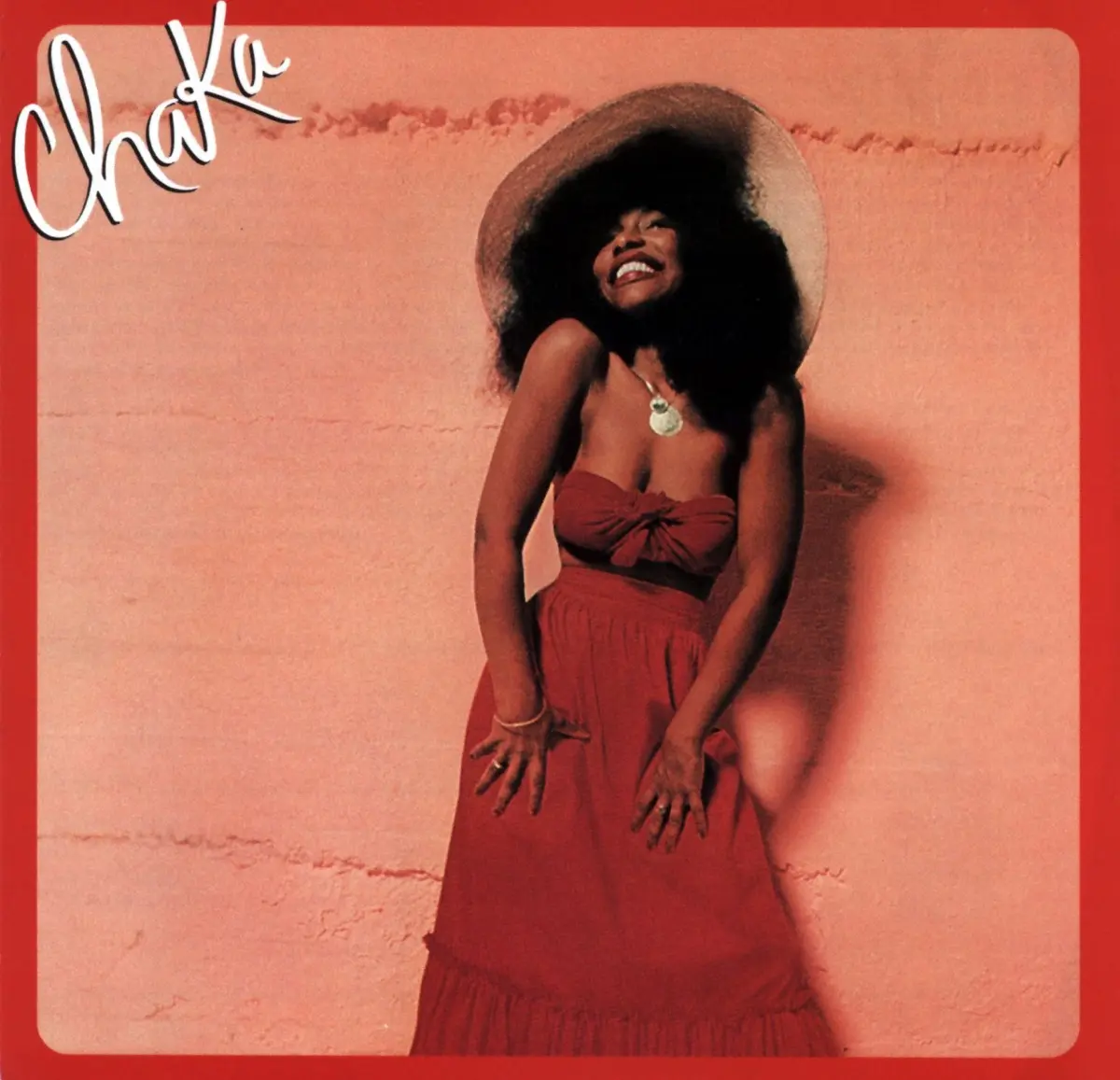 Chaka Khan released her debut solo album, Chaka, on October 12, 1978, on Warner Bros.
She’s backed by an array of musicians, including the Brecker Brothers, percussionist Airto Moreira, keyboardist Richard Tee, Rufus bandmate Tony Maiden, and Average White Band guitarist Hamish Stuart.
Ashford & Simpson provided the opening number, while Lalomie Washburn contributed “The Message in the Middle of the Bottom.” Guitarist George Benson supplied and dueted on “We Got the Love.” The early Stevie Wonder hit “I Was Made to Love Her” appears here under the gender-switched title “I Was Made to Love Him.”
Chaka opens with the anthem “I’m Every Woman,” followed by the orchestrated soul of “Love Has Fallen on Me” and the gospel ballad “Roll Me Through the Rushes.” “Life Is a Dance” and “The Message in the Middle of the Bottom” sustain a fast, rhythm-driven pace, while “Sleep on It” and “A Woman in a Man’s World” take a more relaxed approach. “Some Love” combines heavy brass and woodwinds with driving bass, and the set closes with the Wonder cover.
A1. “I’m Every Woman” (4:07) — Opens with layered orchestration, bright strings, and syncopated bass; celebrates female empowerment and universal strength.
A2. “Love Has Fallen on Me” (4:52) — Combines gospel-inflected chord progressions with shifting rhythms, reflecting the arrival of love as a profound, uplifting force. Written by Charles Stepney and Lloyd Cleveland Webber; originated as a late-1960s Rotary Connection track.
A3. “Roll Me Through the Rushes” (4:42) — Adapts a Rosie track with smooth vocal phrasing over gospel-tinged harmonies, evoking protective and nurturing imagery. Written by David Lasley and Lana Marrano; first recorded in 1976 by Rosie on Better Late Than Never.
A4. “Sleep on It” (4:21) — Alternates between contemplative piano lines and subtle percussion, exploring patience and reflection in decision-making. Written by Andrew Kastner and Larry John McNally.
A5. “Life Is a Dance” (4:20) — Celebrates motion and rhythm with energetic bass and syncopated percussion, emphasizing joy and movement as metaphors for life. Written by Gavin Christopher.
B1. “We Got the Love” (3:27) — Duet with George Benson; intertwines vocal lines over gentle rhythmic shifts, conveying mutual support and partnership.
B2. “Some Love” (5:50) — Anchored by deep bass and brass textures; examines the intensity and complexity of romantic attachment. Written by Chaka Khan, Keith Boyd Jr., Traude Sapik, and Mark Stevens.
B3. “A Woman in a Man’s World” (3:56) — Combines assertive vocal lines with precise instrumental interplay, reflecting themes of gender equality and personal agency. Written by Andrew Kastner and Larry John McNally.
B4. “The Message in the Middle of the Bottom” (4:15) — Interlaces brass and woodwind textures with steady pacing to highlight hidden truths in challenging circumstances.
B5. “I Was Made to Love Him” (3:23) — Gender-switched cover of Stevie Wonder’s 1967 song; maintains contoured vocal lines while expressing unwavering affection.
Sessions took place at Atlantic Recording Studios in New York City with producer Arif Mardin and engineer James Douglass, assisted by Bill Dooley, Michael O’Reilly, Randy Mason, Sheridan Eldridge, and Anthony D’Amico. Lew Hahn and Gene Paul handled additional recording and remixing. Additional backing players included guitarist Phil Upchurch, bassist Anthony Jackson, drummer Steve Ferrone, trumpeter Barry Rogers, and saxophonists David Sanborn (alto) and Ronnie Cuber (baritone).
Warner Bros. promoted Chaka with “I’m Every Woman” (b/w “A Woman in a Man’s World”), which reached No. 1 on the Billboard R&B chart, No. 21 on the Hot 100, and No. 11 in the UK. A follow-up single, “Life Is a Dance” (b/w “Roll Me Through the Rushes”), reached No. 40 on the Billboard R&B chart in early 1979.
Whitney Houston covered “I’m Every Woman” in 1992 on The Bodyguard soundtrack, taking the song to No. 4 on the Hot 100 and No. 4 in the UK.
Naughty
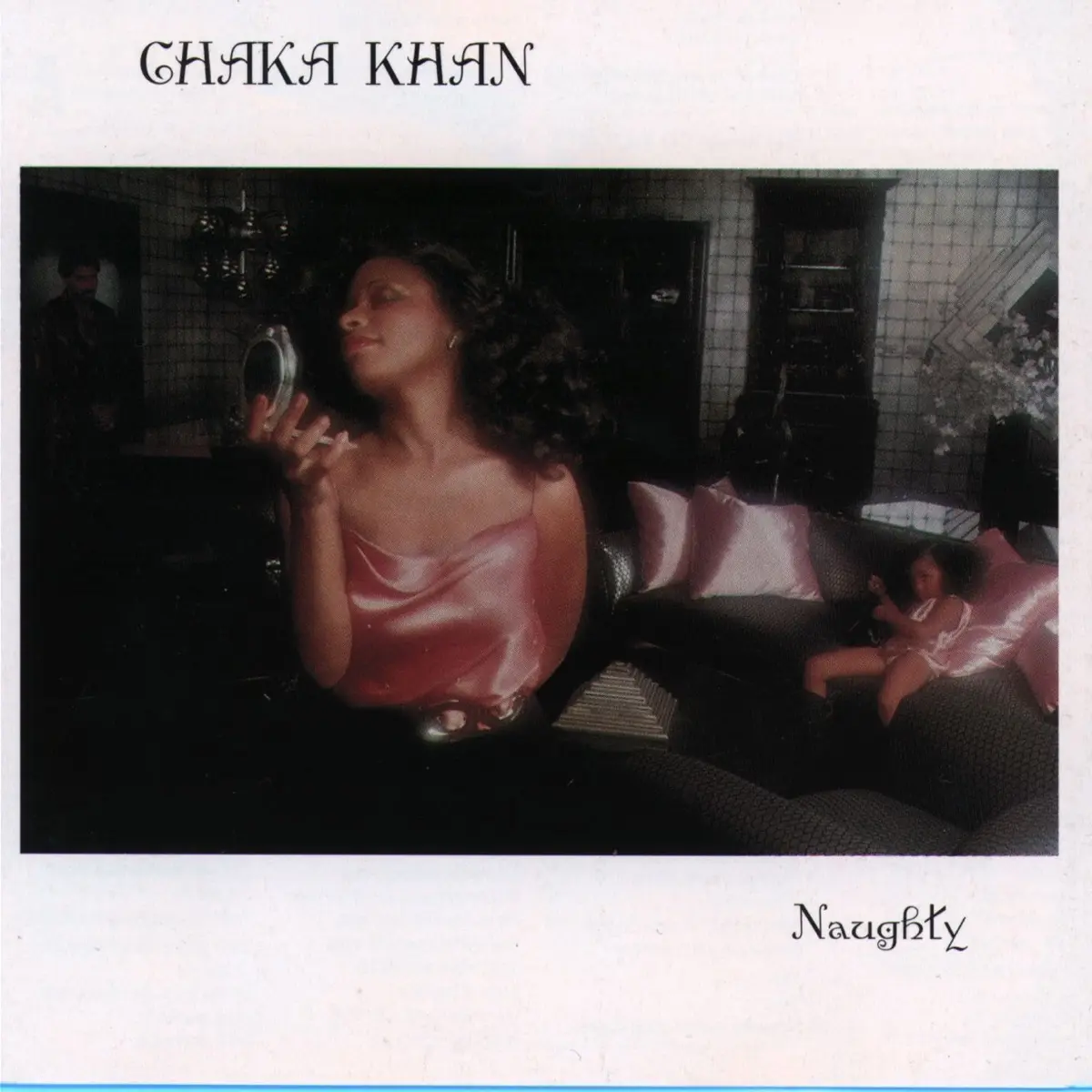 Chaka Khan released her second solo album, Naughty, on March 26, 1980, on Warner Bros.
The album continued her partnership with producer Arif Mardin, who set her vocals against layered brass, strings, and synthesizer textures with contributions from an ensemble of New York session players.
Nickolas Ashford and Valerie Simpson wrote the album’s bookend songs. Chaka herself co-wrote “What You Did” with her brother Mark Stevens, who also sang and played bass on several tracks.
“Clouds” balances brisk rhythm with layered vocals by Chaka, Cissy Houston, and a then-teenage Whitney Houston. Luther Vandross joins the Houstons on “Our Love’s in Danger,” which closes the album in a disco-soul vein. “Move Me No Mountain” unfolds as a gospel-inflected ballad framed by Anthony Jackson’s bass and Ferrone’s drumming. “Too Much Love” injects a Latinized rock-funk pace, while “So Naughty” and “All Night’s All Right” ride brisk funk arrangements. The centerpiece “Papillon” builds as a sleek disco production with Hugh McCracken’s harmonica lead and a chorus of background singers.
A1. “Clouds” (4:28) — Layers of backing vocals by Whitney Houston, Cissy Houston, and Chaka Khan accentuate a celebration of love’s arrival, carried by flowing chordal shifts and rhythmic variations.
A2. “Get Ready, Get Set” (3:42) — Pulsing electric piano and steady bass drive a sense of urgency and preparation, while angular guitar lines punctuate the vocal exhortations.
A3. “Move Me No Mountain” (4:14) — Gospel-tinged harmonies weave around contoured Rhodes piano, with bass and drums reinforcing persistence and resilience in love. Originated as a 1975 ballad by Love Unlimited, written by Jerry Ragovoy and Aaron Schroeder.
A4. “Nothing’s Gonna Take You Away” (3:42) — Saxophone and soft percussion frame a message of steadfast devotion, blending layered vocals with dynamic rhythmic patterns.
A5. “So Naughty” (3:56) — Marked by precise brass hits and basslines, the track explores playful temptation through shifting rhythmic momentum.
B1. “Too Much Love” (3:53) — Rapid rhythmic patterns intertwine with jazz-funk textures, highlighting tension and intensity in emotional expression.
B2. “All Night’s All Right” (4:26) — Electric violin and syncopated percussion energize a nocturnal dance of freedom and exhilaration. Written by George D. Greer, Andrew Kastner, and Jeff Wilson.
B3. “What You Did” (3:58) — Smooth bass and percussive layers underscore a reflective recounting of past actions, with vocals emphasizing controlled emotional shifts. Co-written by Chaka Khan and Mark Stevens.
B4. “Papillon (a.k.a. Hot Butterfly)” (4:08) — Multi-layered backing vocals, harmonica, and saxophone converge to frame liberation and transformation, with kinetic phrasing in both voice and instruments. First recorded in 1978 by Gregg Diamond’s Bionic Boogie.
B5. “Our Love’s in Danger” (3:36) — Strings and synthesizer accentuate tension in a faltering relationship, while layered vocals convey urgency and vulnerability. Written by Ashford & Simpson; backing vocals by Luther Vandross and Cissy Houston.
The core band includes bassist Anthony Jackson, guitarist Jeff Mironov, drummer Steve Ferrone, keyboardist Leon Pendarvis (piano, electric piano, synthesizer), and percussionist Arthur Jenkins, augmented by a large horn and string section. Sessions occurred at Atlantic Studios in New York City with producer Arif Mardin and engineer Lew Hawn. Michael O’Reilly assisted while George Marino mastered the album.
Warner Bros. promoted Naughty with “Clouds” (b/w “So Naughty”), which reached No. 10 on the Billboard R&B chart. “Papillon (a.k.a. Hot Butterfly)” followed in June (b/w “Too Much Love”) and peaked at No. 22. The third single, “Get Ready, Get Set” (b/w “All Night’s All Right”), appeared in September and reached No. 48 R&B.
What ‘Cha Gonna Do for Me
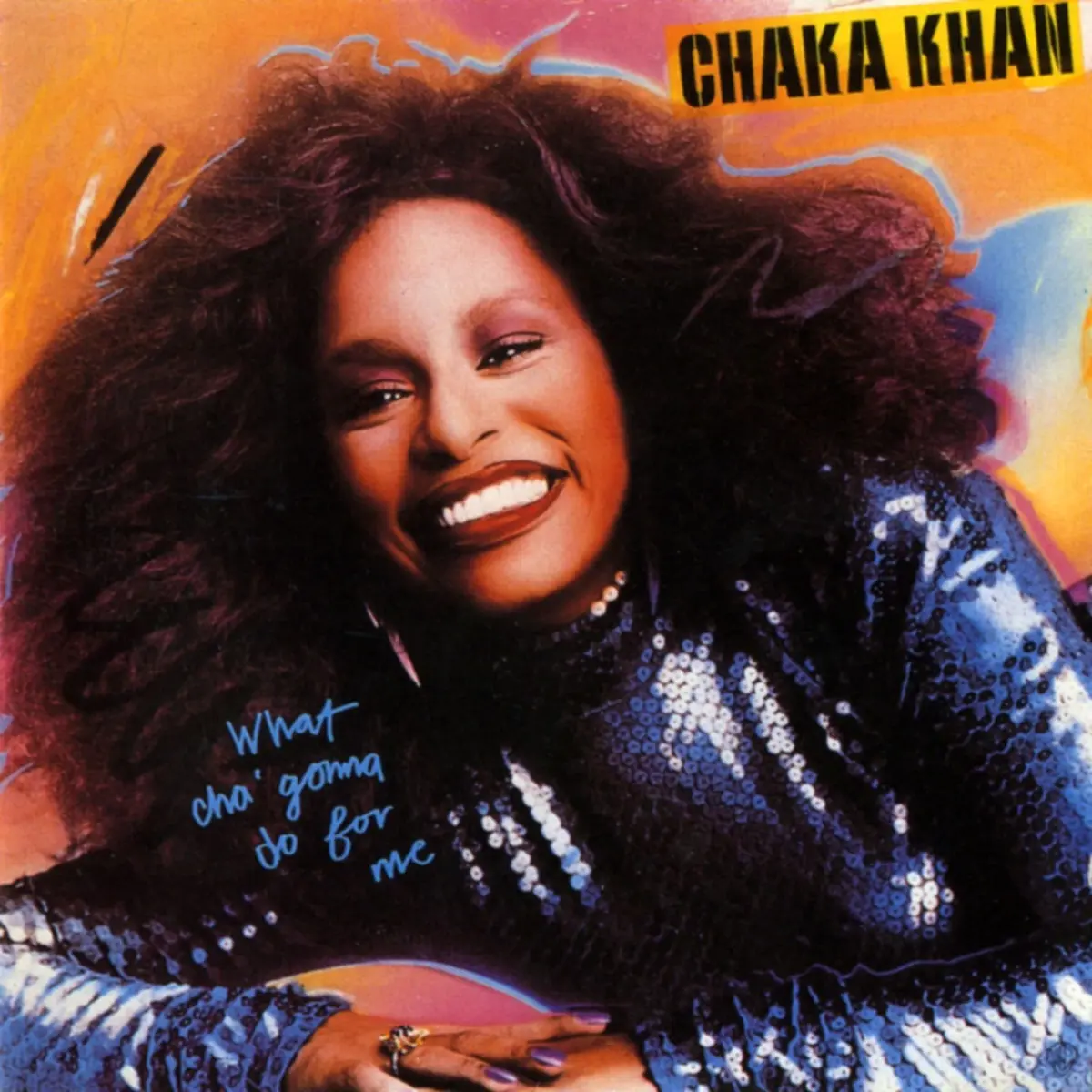 Chaka Khan released her third solo album, What ‘Cha Gonna Do for Me, on April 15, 1981, on Warner Bros.
The album marked her third consecutive project with producer Arif Mardin, who framed her voice in an expansive sound that mixes brass, strings, and synthesizers with a rhythm section anchored by drummer Steve Ferrone, bassist Anthony Jackson, and guitarists David Williams and Hamish Stuart. Larry Williams handled multiple roles on keyboards, synthesizer, flute, and saxophone.
Khan co-wrote two numbers with Mardin and contributed to three others, while her brother Mark Stevens co-wrote “Heed the Warning” and duets on “We Got Each Other.” The set also contains outside material, including covers of songs popularized by The Beatles (“We Can Work It Out”), the McCrarys (“Any Old Sunday”), and Dizzy Gillespie (“Night in Tunisia”), the latter reworked as “And the Melody Still Lingers On (Night in Tunisia)” with Gillespie himself on trumpet. “What ’Cha Gonna Do for Me” originated on the 1980 Average White Band album Shine.
The program opens with a brisk, funk-oriented take on “We Can Work It Out” that places Khan’s vocals against Gregory Phillinganes’ synthesizer layers and Paulinho da Costa’s percussion. The title track blends sharp horn charts with a vocal arrangement that became a fixture of Khan’s live sets. “I Know You, I Live You” unfolds as synth-driven funk accented by Khan’s own percussion. “Night Moods” slows the pace into quiet-storm balladry, while “Fate” rides a contoured rhythm that decades later provided the foundation for Stardust’s “Music Sounds Better With You.” “And the Melody Still Lingers On” honors bebop pioneers with lyrics by Khan and a featured appearance by Herbie Hancock on clavitar and Gillespie on trumpet, alongside an excerpt of Charlie Parker’s 1946 alto break.
A1. “We Can Work It Out” (3:43) — Synthesizer and layered percussion push the Beatles cover into a rhythmic, brash terrain, while Khan’s vocal lines navigate angular phrasing. Written by John Lennon and Paul McCartney; first recorded by the Beatles in 1965 and covered since by Stevie Wonder (1970) and Deep Purple (1975)
A2. “What Cha’ Gonna Do for Me” (3:54) — Tense bass and drums underpin a dialogue of desire and challenge, with tenor sax punctuating vocal contours and accelerating emotional shifts. Written by Ned Doheny and Hamish Stuart; originated on the 1980 Average White Band album Shine.
A3. “I Know You, I Live You” (4:29) — Bass and drum interplay drive the exploration of intimacy and understanding, complemented by precise percussive accents and vocal dexterity. Co-written by Chaka Khan and Arif Mardin.
A4. “Any Old Sunday” (3:37) — Warm brass highlights and steady rhythms accompany reflections on enduring affection and domestic serenity. Written by Linda and Alfred McCrary; first recorded by the McCrarys on their 1980 Capitol album Just for You.
A5. “We Got Each Other” (3:56) — Duet vocals convey mutual support and emotional solidarity, layered over shifting rhythmic patterns and horn punctuations. Co-written by Khan, Alan Baboff, and Fred Lederman; duet with Mark Stevens.
B1. “And the Melody Still Lingers On (Night in Tunisia)” (5:04) — Khan and Mardin fuse jazz history with funk-infused textures, blending Dizzy Gillespie trumpet lines, Herbie Hancock clavitar, and sampled Charlie Parker fragments to meditate on musical legacy.
B2. “Night Moods” (4:21) — Soft string arrangements and gentle synthesizer textures evoke intimate reflection and evening contemplation. Written by Jerry Ragovoy.
B3. “Heed the Warning” (4:32) — Alerting lyrics unfold over precise synthesizer solos and layered percussion, underscoring cautious advice within interpersonal dynamics. Co-written by Khan, Mark Stevens, Ellison Chase, and Arthur Jacobson.
B4. “Father He Said” (3:52) — Bass-driven rhythms frame familial counsel and guidance, interweaving vocal narrative with measured harmonic shifts. Written by Deborah Ash and Mike Campagna.
B5. “Fate” (3:14) — Clavinet riffs and percussive accents propel the contemplation of destiny, while vocal phrasing arcs over accelerating rhythmic variations. Written by Dominic Bugatti and Frank Musker.
B6. “I Know You, I Live You (Reprise)” (1:22) — A condensed reprise distills the emotional core of intimacy, layering sparse instrumentation with expressive vocal inflections.
Sessions occurred at Atlantic Studios in New York City with producer Arif Mardin and engineer Lew Hahn. George Marino mastered the album.
Warner Bros. promoted What ’Cha Gonna Do for Me with its title track (b/w “Lover’s Touch”), which topped the Billboard R&B chart. “We Can Work It Out” followed in June (b/w “Only Once”) and reached No. 34 R&B. “Any Old Sunday” appeared in August (b/w “We Got Each Other”) and peaked at No. 68 R&B. “I Know You, I Live You” was issued as a fourth single in November, backed with the reprise.
The instrumental opening of “Fate” was widely sampled in the 1990s, most prominently on Stardust’s 1998 hit “Music Sounds Better With You.”
Chaka Khan (1982)
 Chaka Khan released her self-titled fourth solo album on November 17, 1982, on Warner Bros.
The album marked her fourth consecutive collaboration with producer Arif Mardin, who set her vocals in a high-gloss mix of funk, R&B, and electronic textures with brass, saxophone, percussion, and synthesizer arrangements.
Khan contributed vocal arrangements while Mardin oversaw the bulk of the material, supplied by outside writers. Bunny Sigler co-wrote the opener, while Dominic Bugatti and Frank Musker (aka The Dukes) provided “Best in the West.” The centerpiece, “Be Bop Medley,” strings together themes by jazz composers Tadd Dameron, Lou Stein, Thelonious Monk, Charlie Parker, Dizzy Gillespie, and John Coltrane.
The program opens with “Tearin’ It Up,” a six-minute funk track marked by dense rhythm shifts and synth textures. James duets with Khan on “Slow Dancin’,” a mid-tempo number with searing vocal interplay. “Best in the West” places funk against fiddle, harmonica, and jaw harp accents. “Got to Be There” slows the pace with a ballad setting that reimagines Jackson’s youthful original. Side two begins with “Be Bop Medley,” where Khan improvises across modernized treatments of bebop standards with Henderson’s tenor sax featured. “Twisted” combines sharp guitar with expansive synthesizer lines. The sequence closes with “So Not to Worry” and “Pass It On (A Sure Thing),” the latter a vocoder-led funk track in Rufus tradition.
A1. “Tearin’ It Up” (6:39) — Written by Bunny Sigler and Jane Lumibao; uptempo funk track with extended instrumental sections. Pulsing rhythms and layered percussion drive a fervent narrative of desire, while abrupt synth accents and squelching bass shape a tense, unpredictable sonic path.
A2. “Slow Dancin’” (5:22) — Written by Loz Netto; duet with Rick James on a slow funk rhythm. Dark, simmering textures heighten intimacy, as measured rhythmic shifts underpin a slow, commanding seduction.
A3. “Best in the West” (4:00) — Written by Bugatti/Musker; incorporates country-western instrumentation. Fiddle, harmonica, and percussive gunshot effects intersect with funk-driven bass and guitar to create a playful, kinetic story of bravado and romantic challenge.
A4. “Got to Be There” (3:50) — Written by Elliot Willensky; originated as Michael Jackson’s 1971 debut solo single, also recorded by The Miracles and Black Ivory; Khan’s version reframes it as a mature soul ballad with smooth instrumental contours, supporting reflective lyrics on longing and emotional arrival.
B1. “Be Bop Medley” (5:22) — Jazz standards merge into a seamless arc of bebop and funk, with saxophone and synth flourishes tracing contoured improvisations. Written by Tadd Dameron, Lou Stein, Thelonious Monk, Charlie Parker, Dizzy Gillespie, and John Coltrane; medley of “Hot House,” “East of Suez,” “Epistrophy,” “Yardbird Suite,” “Con Alma,” and “Giant Steps,” arranged with modern funk elements
B2. “Twisted” (4:12) — Widescreen synth and guitar layers mirror a personal tale of entanglement and obsession, with Khan’s vocal lines spiraling through sharp emotional turns. Written by Colin Campsie and George McFarlane; dramatic piece with heavy synthesizers and guitar accents
B3. “So Not to Worry” (4:55) — Written by Mark McMillan; dance-oriented track with bright rhythm layers. Light percussion and buoyant synth underpin a narrative of discreet infidelity, flowing through measured, relaxed rhythms.
B4. “Pass It On (A Sure Thing) (Pásalo Está Seguro)” (4:32) — Written by Lalomie Washburn and Tony Maiden; funk track with vocoder vocals in Rufus tradition. Vocoder effects and driving bass punctuate a communal, celebratory message, moving through brisk rhythmic cycles with unflagging momentum.
Sessions occurred at Atlantic Studios in New York with producer Arif Mardin and engineer Lew Hahn. Her core team included drummer Steve Ferrone, bassist Anthony Jackson, guitarists Hiram Bullock, Paul Jackson Jr., Ray Gomez, and Hamish Stuart, keyboardists Robbie Buchanan (synthesizers) and Lenny Underwood (electric piano), saxophonists Michael Brecker (alto) and Joe Henderson (tenor), harmonica player Robert Bonfiglio, and percussionist Sammy Figueroa. Rick James guests on one track.
Warner Bros. promoted the album with “Got to Be There” (b/w “Be Bop Medley”), which reached No. 5 on the Billboard R&B chart and No. 67 on the Hot 100. “Tearin’ It Up” followed as a second single (b/w “So Not to Worry”) and peaked at No. 48 R&B. A 12-inch mix of “Tearin’ It Up,” remixed by Larry Levan, extended the track to 7:21 with an 8:07 instrumental.
“And the Melody Still Lingers On” from Khan’s prior album What ’Cha Gonna Do for Me carried into this set with the extended jazz tribute “Be Bop Medley,” which won Khan and Mardin the Grammy Award for Best Vocal Arrangement for Two or More Voices at the 26th annual ceremony.
I Feel for You
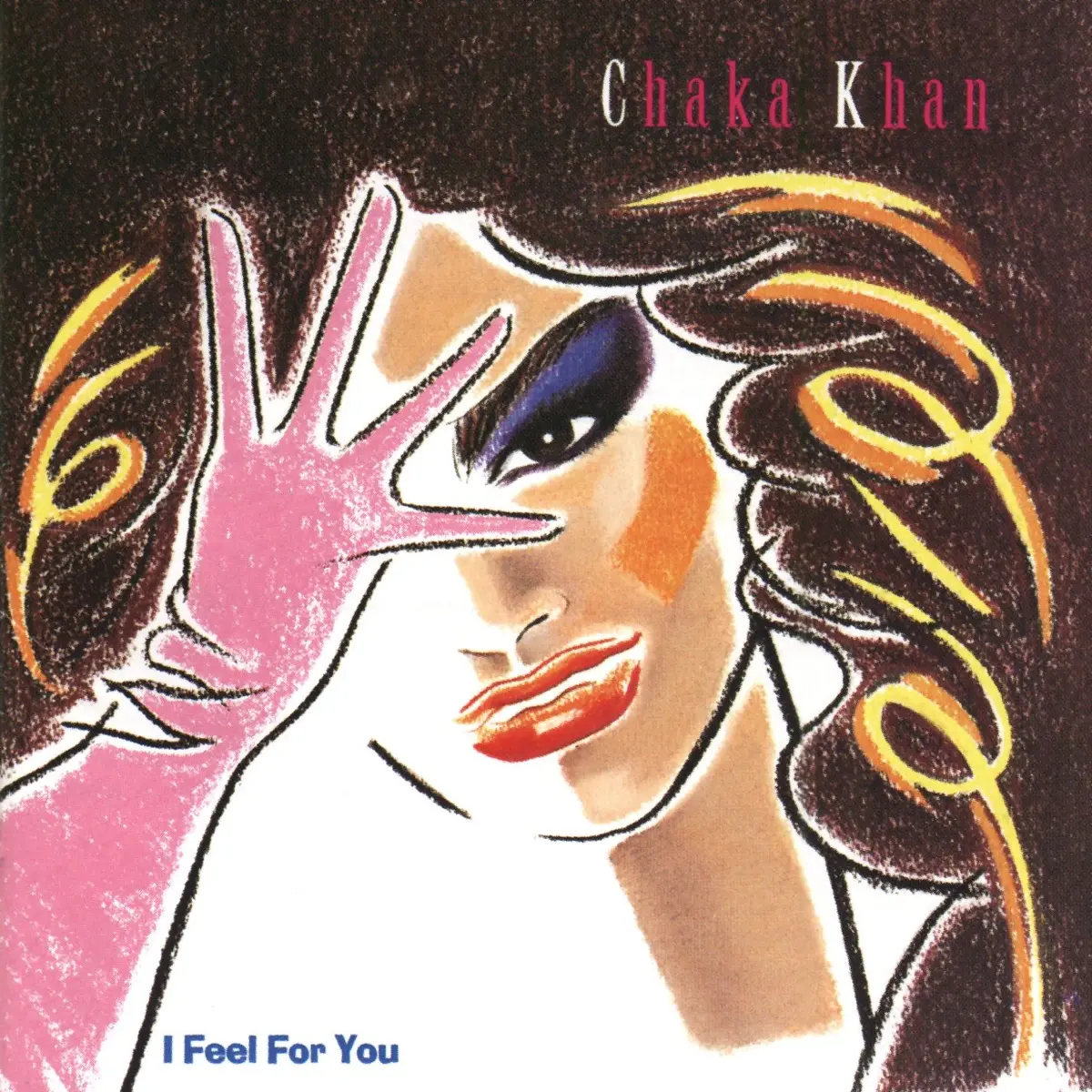 Chaka Khan released her fifth solo album, I Feel for You, on October 1, 1984, on Warner Bros.
The album embraces mid-1980s electronic R&B with layered synthesizers, sequenced rhythms, and programmed bass, marking a shift from her 1970s work with Rufus.
Prince originated the title track, reinvented here as turntable scratch rap. I Feel for You also contains covers of Gary Wright (“My Love Is Alive”) and Carole Bayer Sager (“Stronger Than Before”). The album also includes material from multiple songwriting teams, including French composer Philippe Saisse and lyricisy Rhoda Roberts, who coauthored “La Flamme” and “Chinatown.”
The program opens with “This Is My Night,” an uptempo dance track built on sequenced synth layers, followed by “Stronger Than Before,” a flowering ballad. “My Love Is Alive” and “Eye to Eye” fuse electro-pop textures with bright keyboard lines, while “La Flamme” and “Chinatown” add angular rhythmic turns. The title track combines rap, harmonica, and synthesizer bass, updating Prince’s song with a hip hop accent. “Hold Her” features a harder-edged rock arrangement, while “Through the Fire” closes Side A with a soaring adult contemporary ballad.
A1. “This Is My Night” (4:38) – Retro-futuristic synths and pulsing drum machines frame a declaration of personal empowerment, with Khan’s voice cutting through angular electronic textures. Written by David Frank and Mic Murphy (aka The System).
A2. “Stronger Than Before” (4:21) — Softly undulating rhythms support lyrics of resilience and romantic commitment, flowing through measured, sustained movements. Originated on Bayer Sager’s 1981 third album, Sometimes Late at Night, a project with her then-husband, co-writer Burt Bacharach.
A3. “My Love Is Alive” (4:42) — Sharp synth motifs and sporadic electronic flourishes accompany an urgent tale of love’s vitality, creating a tense, contoured energy. Originated as a 1975 track by Gary Wright, who wrote and recorded it on The Dream Weaver. Wright’s version reached No. 2 on the Billboard Hot 100.
A4. “Eye to Eye” (4:38) – Layered keyboards and restrained percussion shape a dialogue of intimacy and trust, with vocal lines rising and falling across angular intervals. Written by Don, Danny, John, and Michael Sembello.
A5. “La Flamme” (4:27) — Smooth bass and synth textures sustain a narrative of desire and longing, punctuated by gentle rhythmic variations.
B1. “I Feel for You” (5:44) — High-tech funk merges with rap and harmonica, opening with Melle Mel’s vocal repetition and Stevie Wonder’s chromatic lines; lyrics celebrate exuberant attraction over sharply shifting electronic beats. Written by Prince and first issued on his 1979 self-titled album.
B2. “Hold Her” (5:14) – Analog synth bass and dynamic guitar underpin a cautionary tale of vigilance in romance, moving through brisk, propulsive rhythms. Written by James Newton Howard and David “Hawk” Wolinski.
B3. “Through the Fire” (4:47) – Orchestral keyboards and guitar arpeggios trace a path of devotion and risk in love, with vocal lines stretching across dramatic contours. Written by David Foster, Tom Keane, and Cynthia Weil
B4. “Caught in the Act” (3:45) — Abrupt starts and stops punctuate playful secrecy in romantic entanglements, layered with angular synth textures and percussive emphasis.
B5. “Chinatown” (4:37) — Dense electronic flourishes and layered keyboards create a bustling, chaotic backdrop for lyrics exploring urban complexity and intrigue.
Sessions occurred at studios in Los Angeles and New York with producers Arif Mardin (most tracks), Russ Titelman (“Eye to Eye”), John Robie (“My Love Is Alive”), Robbie Buchanan (“Stronger Than Before”), James Newton Howard and David “Hawk” Wolinski (“Hold Her”), David Foster (“Through the Fire”), and Joe Mardin (“Caught in the Act”). Engineers included Lew Hahn, Elliot Scheiner, Humberto Gatica, and Michael O’Reilly.
Khan recorded with a rotating cast of players, including keyboardists David Frank (synthesizer, programming), Robbie Buchanan (synthesizer, Fairlight), Philippe Saisse (keyboards), James Newton Howard (synthesizer, piano), David Foster (synthesizer), John Robie (synthesizer, programming), and Steve Porcaro (synthesizer), guitarists Steve Lukather, Dann Huff, Paul Pesco, and Michael Landau, bassist Nathan East, drummer John Robinson, and percussionist Steve Ferrone. Guest spots include Stevie Wonder (chromatic harmonica) and Grandmaster Melle Mel (rap).
Warner Bros. promoted I Feel for You with multiple singles. “I Feel for You” (b/w “Chinatown”) topped the UK Singles Chart and the US R&B and Dance charts, and reached No. 3 on the Billboard Hot 100. “This Is My Night” (b/w “Caught in the Act”) hit No. 1 on the US Dance chart and No. 11 R&B. “Through the Fire” (b/w “La Flamme”) reached No. 15 R&B, No. 60 Hot 100, and No. 16 Adult Contemporary. “Eye to Eye” (b/w “La Flamme”) went Top 20 in the UK and Ireland. “Stronger Than Before” appeared as a fifth single in select markets.
Destiny
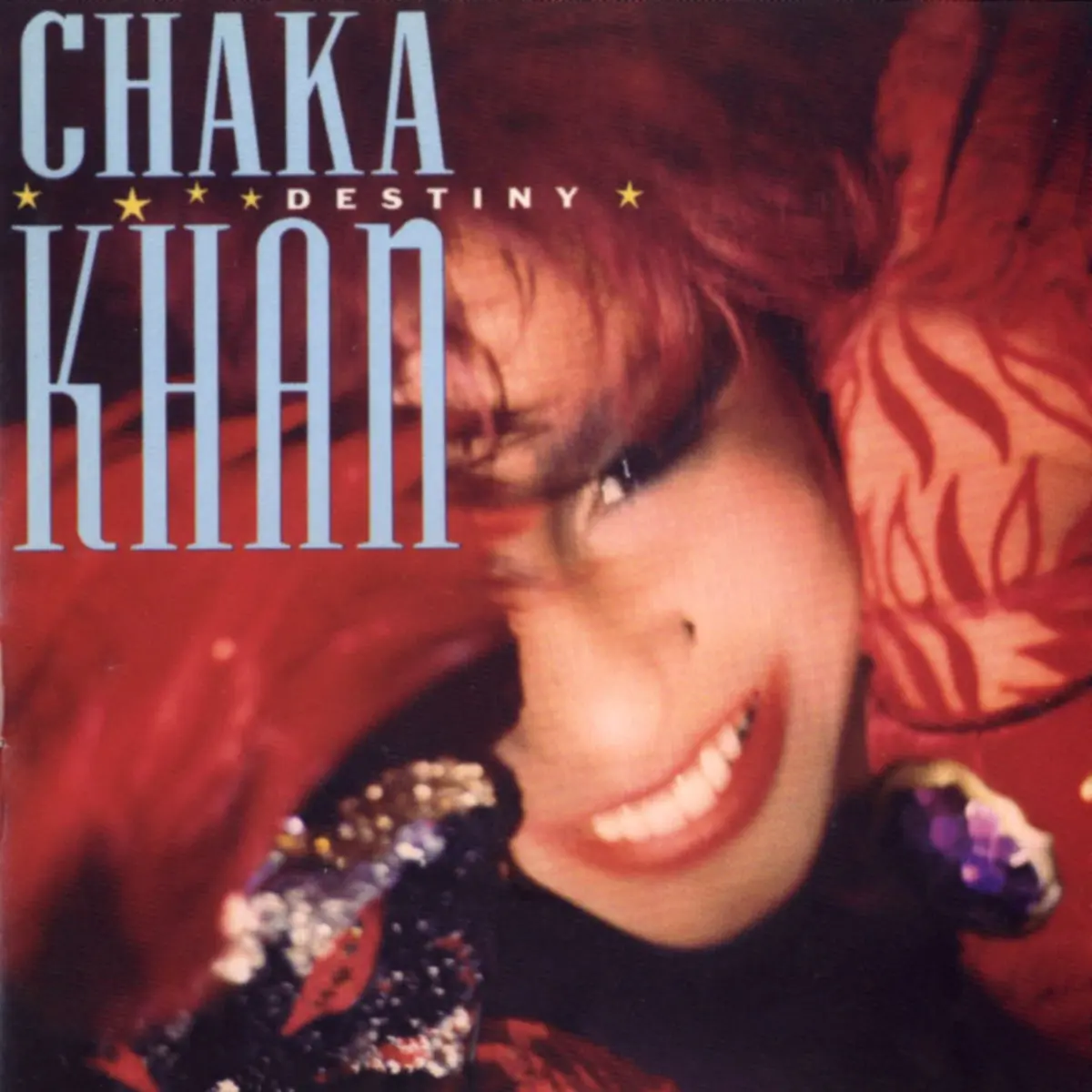 Chaka Khan released her sixth solo album, Destiny, in July 1986 on Warner Bros.
The album followed I Feel for You with a high-tech production style that paired her vocals with rock and pop-leaning arrangements. Multiple producers and engineers handled sessions, which yielded a set split between uptempo dance tracks, ballads, and crossover pop songs. Drummer Phil Collins appears on “Watching the World,” which also features his backing vocals.
Khan wrote one song, “My Destiny,” and co-wrote the closing tribute “Coltrane Dreams” with Julie and Arif Mardin. Outside writers supplied the remaining tracks, including David Gamson and Green Gartside of Scritti Politti (“Love of a Lifetime”), Charlie Singleton of Cameo (“Earth to Mickey”), members of Mr. Mister (“Watching the World”), and Genesis guitarist Mike Rutherford with B. A. Robertson (“The Other Side of the World”), which had earlier appeared on the soundtrack to White Nights.
The program opens with “Love of a Lifetime,” a bright dance-pop track with layered backing vocals by Gartside. “Earth to Mickey” pairs satirical lyric lines with a half-sung, half-rapped delivery by Khan and keyboardist Reggie Griffin. Collins anchors the widescreen “Watching the World,” while Rutherford’s co-write “The Other Side of the World” presents a dramatic ballad setting. Khan’s own “My Destiny” later served as the theme to Richard Pryor’s film Jo Jo Dancer, Your Life Is Calling. Mid-tempo R&B comes through on “Tight Fit” and “It’s You,” while “So Close” and “Who’s It Gonna Be” lean toward polished rock textures. The album ends with “Coltrane Dreams,” a short collage built on samples of Khan’s voice with tenor saxophone by Sam Rivers.
A1. “Love of a Lifetime” (4:21) — Bright synth textures and layered backing vocals support a declaration of enduring affection, combining Chaka Khan’s lead with Green Gartside’s harmonies over agile, pulsing rhythms.
A2. “Earth to Mickey” (5:37) — Playful R&B instrumentation underpins a satirical dialogue, punctuated by Chaka’s singing and Reggie Griffin’s rapped persona, moving through erratic electronic accents.
A3. “Watching the World” (4:44) — Expansive production with Phil Collins on drums frames a global observation, blending soaring guitars and sequenced synths with vocal layers that rise and fall sharply.
A4. “The Other Side of the World” (3:41) — Lush synth arrangements accompany reflective lyrics, flowing with measured rhythmic shifts across a narrative of distance and longing. First appeared on the 1985 soundtrack White Nights.
A5. “My Destiny” (4:39) — Driving rock-tinged instrumentation carries a personal declaration of self-direction, with contouring vocal lines tracing determination and resolve.
B1. “I Can’t Be Loved” (4:30) — Synth programming and layered percussion underpin lyrics of emotional restraint, weaving angular keyboard lines with vocal interplay.
B2. “It’s You” (4:19) — Tight keyboard sequences and saxophone punctuations shape a direct address to a significant other, accentuated by dynamic shifts in pace and contour.
B3. “So Close” (4:19) — Electric guitar and synth bass support a narrative of near intimacy, with vocal lines navigating sharply angled turns across an expansive rhythm.
B4. “Tight Fit” (4:39) — Smooth, slinky rhythms guide a ballad of relational tension, allowing space for Khan’s voice to rise and dip with controlled expression.
B5. “Who’s It Gonna Be” (4:37) — Rock-oriented percussion and programmed drums carry competitive questioning in love, layered with dense synth textures and impassioned vocal lines.
B6. “Coltrane Dreams” (1:39) — Fragmented tenor sax and sampled vocals create a tribute to John Coltrane, moving through abrupt, experimental textures and irregular rhythmic shifts.
Sessions occurred between 1985 and 1986 with producer Arif Mardin across multiple studios in New York and Los Angeles. Contributions came from bassist Anthony Jackson, bassist–guitarist Marcus Miller, drummers Steve Ferrone and Fred Maher, guitarist Dan Huff, and keyboardists Joe Mardin, Robbie Buchanan, Reggie Griffin, Philippe Saisse, and Beau Hill. Collins played drums on “Watching the World” with additional horns by Michael Brecker (tenor saxophone), Randy Brecker (trumpet), and Tom Malone (trombone).
Warner Bros. promoted Destiny with “Love of a Lifetime” (b/w “Coltrane Dreams”), which reached No. 21 on the Billboard R&B chart, No. 53 on the Hot 100, and No. 52 in the UK. “Tight Fit” followed in March 1986, charting at No. 28 R&B. “The Other Side of the World” appeared that spring, peaking at No. 81 R&B, and “Earth to Mickey” charted at No. 93 in early 1987. “Watching the World” rounded out the single releases but did not chart. Extended remixes appeared on 12″ formats of all five singles.
In the same period, Khan contributed vocals to two global hits: Steve Winwood’s “Higher Love” and Robert Palmer’s “Addicted to Love,” the latter originally intended as a duet.
Discography:
- Chaka (1978)
- Naughty (1980)
- What ‘Cha Gonna Do for Me (1981)
- Chaka Khan (1982)
- I Feel for You (1984)
- Destiny (1986)
- C.K. (1988)
Sources:
Artist/Album Pages:
Picchio dal Pozzo are an Italian avant-jazz/rock band from Genova, Liguria, formed in 1973. The band...
Allan Holdsworth (Aug. 6, 1946 — April 16, 2017) was an English guitarist from Bradford, West York...
Himiko Kikuchi — 菊池ひみこ (born March 2, 1953) — is a Japanese jazz-funk keyboardist and composer who...
Rozetta Stone was an American hard-rock vocalist who released the 1980 album Where's My Hero on 20...
Mystic Merlin was an American soul-funk band from N.Y.C., noted for their mix of music and magical...
Le Orme are an Italian symphonic-rock band from Marghera, Veneto, formed in 1966. The band release...
Dio was an American metal band that Ronnie James Dio formed in 1982 after his split from Black Sab...
Larry Young (October 7, 1940 – March 30, 1978) was an American organist who released eleven albums...
Lady Zu is a Brazilian soul-funk singer behind the 1978/79 Philips albums A Noite Via Chegar and F...
Cowboys International were an English New Wave/synthpop band that released the album The Original ...
Kyoji Yamamoto — 山本恭司 (March 23, 1956) — is a Japanese guitarist, best known as the founder and ma...
Croox was a German NDW band that released the 1980–82 albums A and Geld Her!, both on Ink Records. ...