

The Bar-Kays were an American soul-funk band from Memphis that released the album Soul Finger on Volt in 1967. Following a plane crash that claimed four of the original six members, survivors Ben Cauley and James Alexander formed a second lineup of the band.
The reformed Bar-Kays released four albums on Volt, starting with Gotta Groove in 1969. This period saw the band evolve from session players into a full ensemble, blending Memphis soul, Southern funk, and rock. Albums like Black Rock (1971) introduced psychedelic textures and heavier guitar work, featuring new lead singer Larry Dodson. They continued to refine their sound on Do You See What I See? (1972) and Coldblooded (1974), which incorporated rock-driven funk, wah-wah guitars, and horn-heavy arrangements.
In 1976, the Bar-Kays signed with Mercury and released 11 albums over the next 13 years. During this period, the band transitioned toward a more R&B-oriented, dance-driven funk sound. Albums like Flying High on Your Love (1977) and Light of Life (1978) emphasized tight horn lines and precise rhythms. By the early 1980s, the group had embraced a sleek, contemporary R&B style, with albums such as Propositions (1982) and Dangerous (1984) featuring synthesizers and club-ready rhythms that produced hits like “Freakshow on the Dance Floor.”
Members: James Alexander (bass, 1966-86, 1991-present), Ben Cauley (trumpet, 1966-71), Jimmy King (guitar, 1966-67), Ronnie Caldwell (organ, 1966-67), Phalon Jones (saxophone, 1966-67), Carl Cunningham (drums, 1966-67), Harvey Henderson (saxophone, 1968-89), Michael Toles (guitar, 1968-71), Willie Hall (drums, 1968-71), Ronnie Gordon (organ, 1968-70), Larry Dodson (lead vocals, 1970-89, 1991-present), Winston Stewart (keyboards, 1970-89), Barry Wilkins (guitar, 1971-72), Alvin Hunter (drums, 1971-72), Charles Allen (trumpet, 1972-83), Vernon Burch (guitar, 1972-73), Lloyd Smith (guitar, 1973-86), Frank Thompson (trombone, 1973-86), Michael Beard (drums, 1973-77), Mark Bynum (keyboards, vocals, 1978-86), Sherman Guy (drums, 1978-83)
First Formation
The Bar-Kays formed in 1966 as a Memphis session group comprised of six teenage musicians: bassist James Alexander, trumpeter Ben Cauley, guitarist Jimmy King, organist Ronnie Caldwell, saxophonist Phalon Jones, and drummer Carl Cunningham. They were initially mentored by Booker T. & the M.G.’s. In 1967, Otis Redding selected the Bar-Kays as his backing band.
As a recording outfit in their own right, the Bar-Kays scored a hit in April 1967 with the instrumental “Soul Finger.” It reached No. 3 on the Billboard R&B chart and No. 17 on the Hot 100. On March 30 and June 23, the Bar-Kays held sessions for an album.
Soul Finger
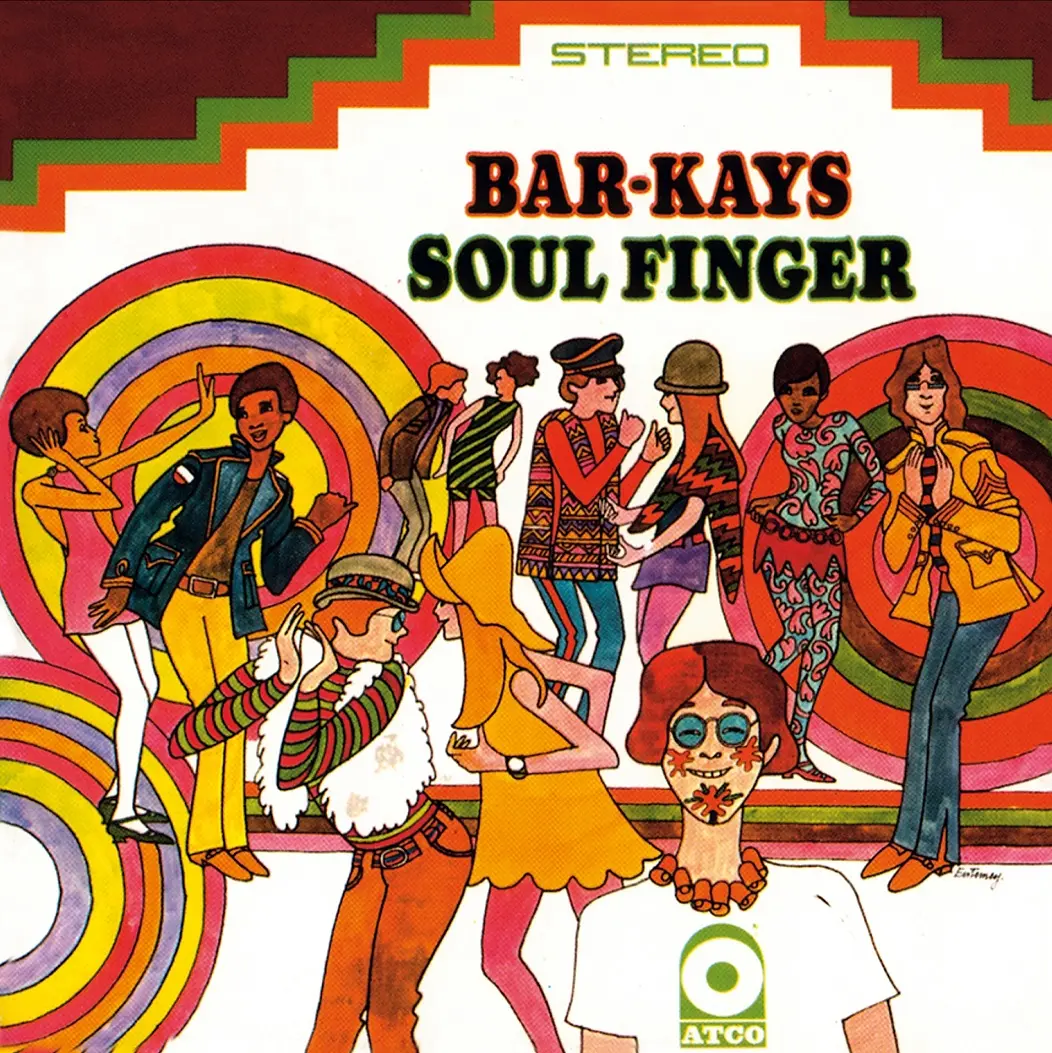 The original Bar-Kays released their sole album, Soul Finger, on July 10, 1967, on Volt.
Stax co-founder Jim Stewart produced Soul Finger, which features eleven songs, including four group-composed originals: “Bar-Kay’s Boogaloo,” “House Shoes”, “Don’t Do That,” and the brassy title-track. Other tracks include co-writes by Isaac Hayes (“Pearl High”) and Booker T. Jones (“Knucklehead”).
Soul Finger balances high-energy instrumentals with slower, contemplative numbers, showcasing the Bar-Kays’ command of the Memphis soul sound. The title track launches the album with a celebratory, neighborhood-kid-voiced chant layered over punchy horns and driving drums, establishing the unit’s exuberant tone. Mid-tempo selections like “Hole in the Wall” and “I Want Someone” emphasize contoured keyboard lines, with Caldwell’s organ leading melodic turns against a restrained rhythmic pulse. More dramatic pieces, such as “Theme From Hells Angels,” build tension through staccato rhythms and distorted guitar, recalling orchestral structures while highlighting improvisational interplay. Tracks like “Bar-Kays Boogaloo” and “You Can’t Sit Down” reinforce the ensemble’s cohesion, combining swinging horn lines with tight, propulsive pacing, and keeping the energy consistently dynamic across the set.
A1. “Soul Finger” (2:18)
A2. “Knucklehead” (2:25)
A3. “With a Child’s Heart” (2:56)
A4. “Bar-Kays Boogaloo” (2:16)
A5. “Theme From Hell’s Angels” (2:45)
B1. “You Can’t Sit Down” (3:05)
B2. “House Shoes” (2:45)
B3. “Pearl High” (2:32)
B4. “I Want Someone” (3:08)
B5. “Hole In the Wall” (2:31)
B6. “Don’t Do That” (2:47)
Soul Finger sports a cartoon-psych cover with color-clad partygoers cavorting around rainbow rings. It was designed by graphic illustrator Loring Eutemey, who did similar artwork for albums by Archie Bell & the Drells, The Young Rascals, and The Last Words. An alternate cover, on French Atco, shows a closeup of the brass instruments with gold overlay.
Plane Crash, New Band
In September 1967, the Bar-Kays returned with their second Volt single, the brass rave-up “Give Everybody Some,” co-written between the band and Stax staff-writer David Porter. They embarked on a string of live shows and TV appearances with Otis Redding.
Tragedy struck on December 10, 1967, when five Bar-Kays boarded Redding’s Beechcraft H18 aircraft with associate Matthew Kelly. Since it was only designed for seven passengers, James Alexander flew in a separate plane. Under heavy weather, en route from Cleveland to Madison, Wisc., Redding’s plane crashed into Lake Monona, killing everyone on board except Ben Cauley.
Alexander and Cauley formed a new Bar-Keys with guitarist Michael Toles, organist Ronnie Gorden, drummer Willie Hall, saxophonist Harvey Henderson, and former Temprees singer Larry Dodson.
Gotta Groove
 The new Bar-Kays premiered with Gotta Groove, released in May 1969 on Volt.
The album contains covers of The Beatles (“Yesterday,” “Hey Jude”), Marvin Gaye (“If This World Were Mine”), and The Mar-Keys (“Grab This Thing”). Arranger Allen Jones co-wrote three songs with engineer Bobby Manuel and another three (“In the Hole,” “Street Walker,” “Humpin”’) with bassist James Alexander. Gotta Groove includes one self-contained original, “Jiving Around,” co-written by drummer Willie Hall, saxist Harvey Henderson, and organist Ronnie Gorden.
Gotta Groove delivers relentless instrumental funk anchored by thick rhythms and sharp-edged horn and keyboard lines. The title track sets the tone with driving bass and percussion, while “In the Hole” layers descending horn patterns over lurching drums and rock-tinged guitars. Two-part jam “Don’t Stop Dancing (To the Music)” channels Sly & The Family Stone, with fractured rhythms and psych-leaning accents pushing the ensemble’s intensity.
“Funky Thang” uses jangling, psych-blues guitar riffs, contrasting with the smoother horn-led textures of “Jiving ’Round,” which emphasizes Hall’s fatback drumming. “Grab This Ring” introduces playful chaos through loping bass, sassy sax lines, and party-like chatter, while the LP’s hardest funk appears on “Street Walker” and “Humpin’,” both propelled by piercing guitars, thick organ stretches, brass accents, and the band’s aggressive, punchy percussion.
A1. “Don’t Stop Dancing (To the Music) Part 1” (2:53)
A2. “If This World Were Mine” (3:10) was a 1967 hit for Marvin Gaye and Tammi Terrell; written by Ashford & Simpson.
A3. “In the Hole” (2:54)
A4. “Funky Thang” (3:09)
A5. “Jiving Around” (3:15)
A6. “Grab This Thing” (2:14) originated on the 1966 Mar-Keys albums The Great Memphis Sound; co-written by Stax executive Alvertis Isbell and M.G.’s guitarist Steve Cropper.
B1. “Don’t Stop Dancing (To the Music) Part 2” (2:21)
B2. “Street Walker” (3:20)
B3. “Yesterday” (3:19)
B4. “Humpin'” (2:44)
B5. “Hey Jude” (6:04)
Jones produced and arranged Gotta Groove on sequence with Isaac Hayes 1969 second album Hot Buttered Soul, which features musical backing by Alexander, Hall, and guitarist Michael Toles.
With the subsequent departure of Ben Cauley, Alexander became the sole surviving original member.
Black Rock
 The third Bar-Kays album, Black Rock, appeared in February 1971 on Volt.
The album contains covers of Sly & The Family Stone (“Dance to the Music”), Aretha Franklin (“Baby I Love You”), Jerry Butler (“I’ve Been Trying”), Sam & Dave (“You Don’t Know Like I Know”), and Bobby Bloom (“Montego Bay”). Side B contains three songs written for the band by Stax/Volt staff writers.
Black Rock presents a reconfigured Bar-Kays septet comprised of bassist James Alexander, singer/vibraphonist Larry Dodson, reedist Harvey Henderson (tenor sax, flute), and four new members: guitarist Barry Wilkins, keyboardist Winston Stewart, drummer Alvin Hunter, and trumpeter Charles Allen.
Black Rock traverses heavy psychedelic funk and soul-infused rock, with the Bar-Kays pushing their arrangements into expansive, guitar-driven territory. The opening “Baby I Love You” stretches Aretha Franklin’s original into a sprawling, horn-laden, and phased-sounding epic with extended guitar and organ improvisations. “I’ve Been Trying” adopts an Isaac Hayes-style slow burn, while “You Don’t Know Like I Know” layers distorted guitars over jagged, drawn-out rhythms.
“Dance to the Music” channels Sly Stone through faux-live energy, and “Give Me a Piece of Your Peace” fuses horn punctuations with tight, syncopated percussion. The droning, politically tinged “Six O’Clock News Report” features fuzzed bass, wah-wah guitars, and stutter-step drums, creating a dense, ominous backdrop. Softer textures appear on “How Sweet It Would Be,” where piano and Hammond organ provide a warm counterpoint, and the album closes with a reimagined, horn-driven take on “Montego Bay,” maintaining rhythmic intensity despite a more restrained approach.
A1. “Baby I Love You” (8:36) was a 1967 R&B No. 1 for Aretha Franklin, written by Roosevelt Shannon.
A2. “I’ve Been Trying” (4:13) was a 1964 hit for Jerry Butler, written by his ex-Impressions bandmate Curtis Mayfield.
A3. “You Don’t Know Like I Know” (6:30) was a 1966 Sam & Dave hit, written by Isaac Hayes and David Porter.
B1. “Dance to the Music” (5:22) originated as a 1967 Family Stone single from their namesake album, written by Sylvester “Sly” Stone.
B2. “A Piece of Your Peace” (4:03) was co-written by Stax staff writers Bettye Crutcher and Bobby Manuel.
B3. “Six O’Clock News Report” (4:02) was co-written by Volt session guitarist Chuck Brooks with James Banks.
B4. “How Sweet It Would Be” (3:45) is the first recording of a song co-written by singer Tommy Tate with Memphis dancer Helen Washington.
B5. “Montego Bay” (2:44) was a 1970 hit for singer/songwriter Robert Bloom, co-written with his producer Jeff Barry.
The Bar-Kays recorded Black Rock with engineer Terry Manning and arranger Allen Jones, who produced everything apart from “Montego Bay,” a co-production by Al Bell and Tom Nixon. The album appeared in a gatefold with smokey down-shots of the costumed septet by Stax photographer Bob Smith.
Black Rock reached No. 12 on the R&B Albums Chart and No. 90 on the Billboard 200.
Do You See What I See?
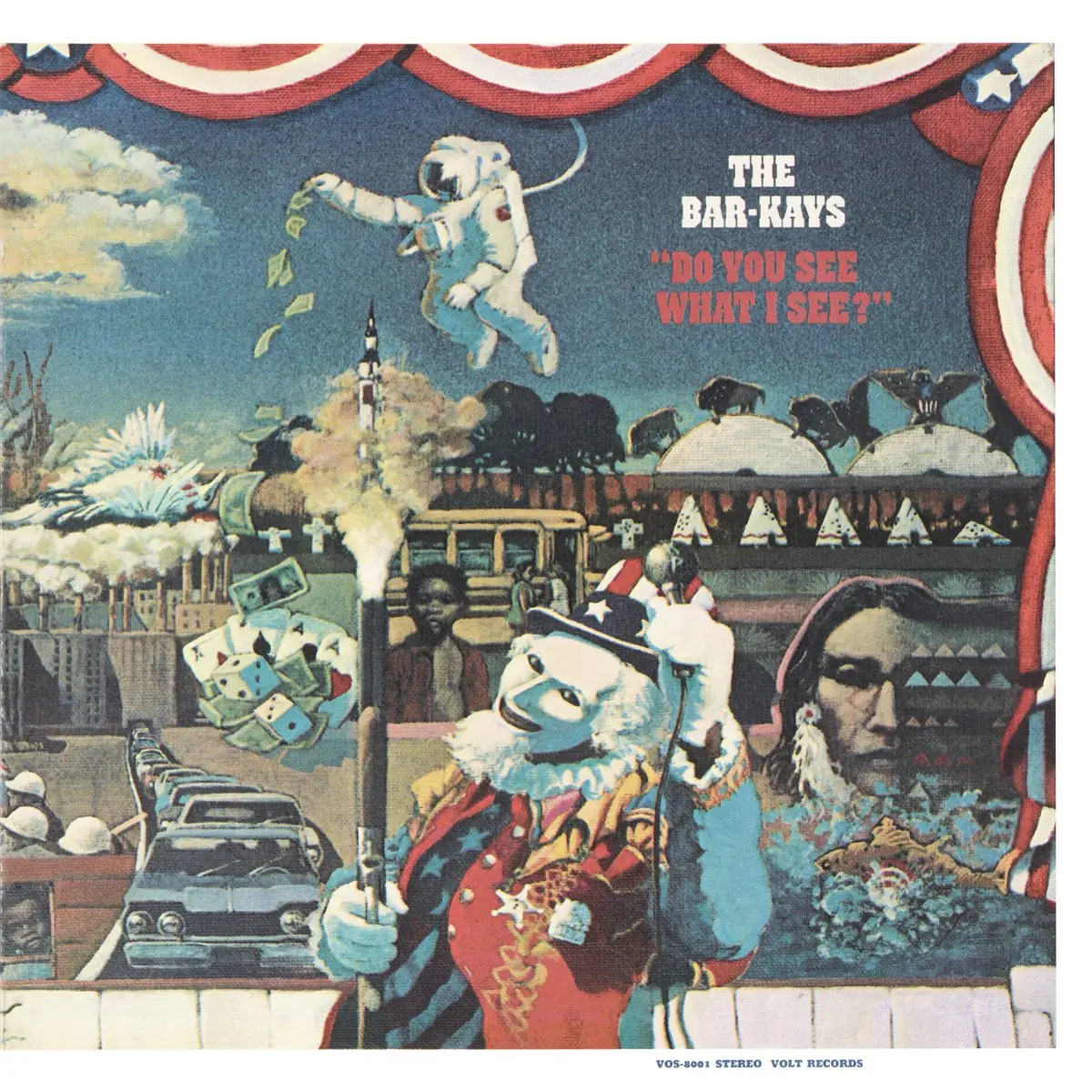 The Bar-Kays released their fifth album, Do You See What I See?, on January 9, 1972, on Volt.
The album contains six originals by producer/arranger Allen Jones, who co-wrote the first three songs and “People, Unite to Save Humanity” with saxist/flutist Harvey Henderson. They also tackle songs by Lou Rawls (“Your Good Thing Is About to Come to an End”) and Stevie Wonder (“I Was Made to Love Her”).
Stax writers Eddie Marion, Henderson Thigpen, and James Banks group-wrote “You’re Still My Brother” and “It Ain’t Easy,” a song first intended for the Staple Singers (not to be confused with the then-ubiquitous Ron Davies composition popularized by David Bowie).
Do You See What I See? retains the Black Rock personnel, who (apart from Henderson and guitarist Barry Wilkins) have all adopted nicknames: bassist James “Knuck” Alexander, singer/vibraphonist Larry “The Eye” Dodson, keyboardist Winston “Waterberry” Stewart, drummer Alvin “The Body” Hunter, and trumpeter Charles “Scoops” Allen.
Musically, Do You See What I See? mixes hard funk, protest-driven rock, and soulful ballads with tightly wound rhythms and layered arrangements. The title track drives with urgent, angular patterns and punctuated horn stabs while addressing political and social unrest. “You’re the Best Thing That Ever Happened to Me” begins as a slow burn and builds into an extended, frenetic vamp reminiscent of Sly & the Family Stone.
Wonder’s “I Was Made to Love Her” receives a sleaze-funk reinterpretation, complete with a spoken-word intro echoing Wonder’s phrasing. “Be Yourself” stomps with pride and power, while “God Is Watching” offers a brooding, reflective counterpoint with contoured instrumental textures. Country-tinged funk appears on “You’re Still My Brother,” featuring dynamic breaks and restrained harmonic shifts. The album closes with rallying, percussion-driven numbers like “Love Pollution” and “People, Unite to Save Humanity,” blending horn bursts, layered rhythm, and vigorous basslines to create a sustained, high-energy finish.
A1. “Do You See What I See?” (6:32)
A2. “God Is Watching” (3:53)
A3. “Be Yourself” (3:35)
A4. “You’re the Best Thing That Ever Happened to Me” (4:49)
A5. “You’re Still My Brother” (3:30)
B1. “I Was Made to Love Her” (4:35) was a 1967 hit for Stevie Wonder, co-written with producer Henry Crosby and Motown staff writer Sylvia Moy.
B2. “Your Good Thing Is About to Come to an End” (4:40) was a 1969 hit for Lou Rawls, written by Isaac Hayes and David Porter.
B3. “It Ain’t Easy” (3:36)
B4. “Love Pollution” (3:25)
B5. “People, Unite to Save Humanity” (4:11)
Stax soundman William Brown engineered the album in sequence with 1971/72 titles by Carla Thomas, Margie Joseph, The Emotions, The Soul Children, The Temprees, and Hayes’ Shaft soundtrack.
The Bar-Kays honored Hayes with the 1972 non-album single “Son of Shaft,” which reached No. 10 on the R&B chart. Porter produced its flipside, “Sang and Dance.”
Do You See What I See? appeared in an illustrated gatefold with an American imagery collage by Jack Martin, a prior psychedelic cover artist (Afterglow, Neighb’rhood Childr’n) who illustrated subsequent covers for Lonnie Liston Smith.
Cold Blooded
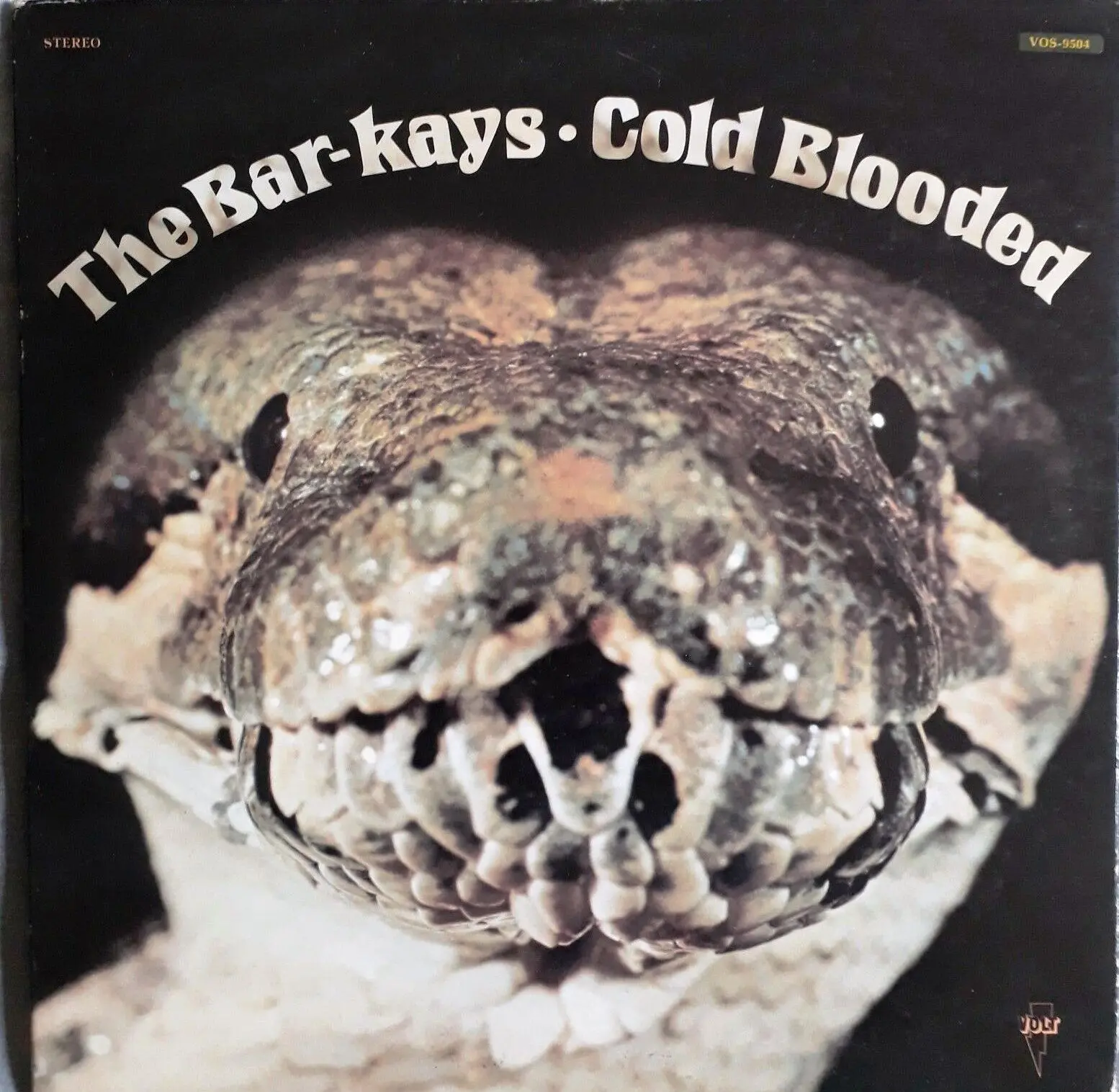 The Bar-Kays released their sixth album, Cold Blooded, in 1974 on Volt.
The album includes a Gladys Knight & the Pips cover (“(I’ve Got To) Use My Imagination”) and two songs (“Harmony,” “Smiling, Styling & Profiling”) by Stax staff writer Joe Shamwell. Producer Allen Jones wrote five songs with select input by reedist Harvey Henderson and singer/vibist Larry Dodson. Trumpeter Charles Allen co-wrote “In The Scheme of Things” with new guitarist Lloyd Smith, who co-wrote the title track with founder James Alexander and The Memphis Horns.
Cold Blooded finds sixth-sevenths of the prior Bark-Kays lineup — Allen, Alexander, Dodson, Henderson, keyboardist Winston Stewart, drummer Willie Hall — joined by Smith and Hot Buttered Soul, a female vocal trio comprised of Diane Lewis, Pat Lewis, and Rose Williams.
Musically, Cold Blood delivers a dense, hard-hitting Southern funk infused with jazz-funk and rock textures. The title track opens with a pent-up, stampeding rhythm, punctuated by brass and sharp, loping percussion. “Harmony” and “In the Scheme of Things” mix wah-wah guitars, clavinet runs, and sustained horn lines over simmering and percussive variations in pace, while “Waiting and Hating” stretches into murky, bass-heavy blues with vocal modulation through a Leslie speaker.
“Smiling, Styling and Profiling” combines twanging guitars, wailing harmonica, and incisive, driving rhythms. Tracks like “Frame of Mind” and “(I’ve Got To) Use My Imagination” contrast mellow clavinet intros with sudden bursts of rock-infused brass and guitar textures. The politically charged “Fightin’ Fire With Fire” escalates from subdued passages to dense, layered funk-rock intensity, while “Would If I Could” and “Be Yourself” revisit Sly Stone–inspired rhythmic patterns with horn accents and persistent, syncopated percussion, sustaining the album’s high-energy momentum.
A1. “Coldblooded” (5:49)
A2. “Harmony” (3:36)
A3. “In the Scheme of Things” (4:21)
A4. “Waiting and Hating” (3:57)
A5. “Smiling, Styling & Profiling” (3:19)
B1. “Frame of Mind” (4:37)
B2. “(I’ve Got To) Use My Imagination” (4:20) was a recent No. 4 pop hit and R&B chart-topper by Gladys and the Pips from their 1973 album Imagination, written by Gerry Goffin and Barry Goldberg.
B3. “Fightin’ Fire With Fire” (4:24)
B4. “Would I If I Could” (3:37)
B5. “Be Yourself” (3:32)
William Brown engineered Cold Blooded in sequence with 1973/74 albums by Black Nasty, Frederick Knight, The Mad Lads, The Sweet Inspirations, Rufus Thomas, and Round Robin Monopoly.
Cold Blooded appeared in a gatefold with a zoomed viper that frames a backside live pic of the Bar-Kays, who appear costumed, wigged, and war-painted on the inner-gates.
Too Hot to Stop
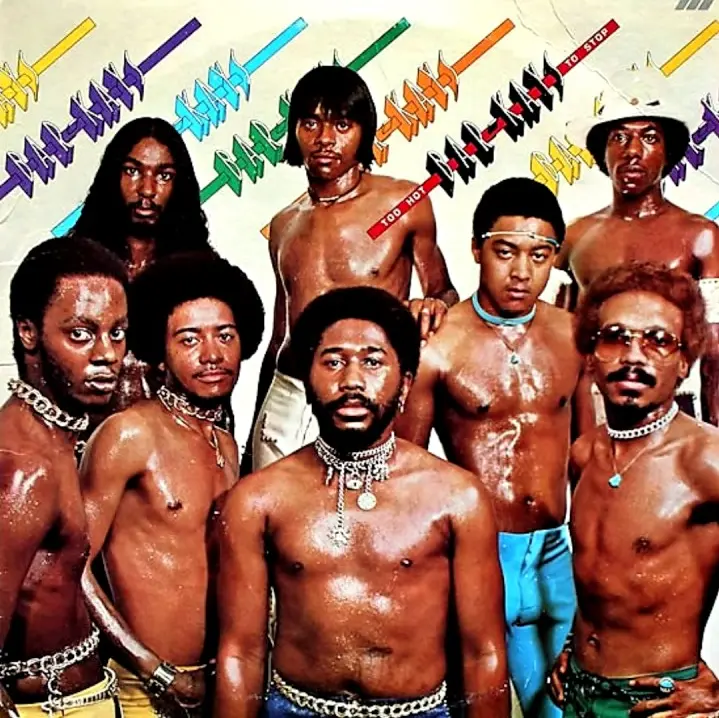 The Bar-Kays released their seventh album, Too Hot to Stop, in October 1976 on Mercury.
The album marked their transition from Stax/Volt into a new era of tightly arranged, high-energy funk. It captures the group’s P-Funk–era touring alignment with Parliament-Funkadelic while emphasizing their own brass-driven Memphis attack.
Producer Allen Jones oversaw a stable nine-piece unit: bassist James “Knuck” Alexander, singer Larry “D” Dodson, guitarist Lloyd “Lucious Lloyd” Smith, keyboardist Winston “Winnie” Stewart, drummer Michael “Buckboard” Beard, saxist Harvey “Joe” Henderson, trumpeter Charles “Scoop” Allen, and trombonist Frank “Capt. Disaster” Thompson. This core wrote the bulk of the album, apart from “Cozy” and “Spellbound” by Stax writers James Banks and Henderson Thigpen, and “Whitehouseorgy” by L. Kendricks, H. Redmond, P. Kimble, and R. CoCo.
The set ranges from relentless, horn-punctuated funk workouts (“Shake Your Rump to the Funk,” the two-part title track, “Bang, Bang”) to smoother, mid-tempo pieces (“You’re So Sexy,” “Summer of Our Love”) and extended instrumentals (“Spellbound”). Closing cut “Whitehouseorgy” pushes the ensemble into frantic, breakneck pacing.
A1. “Too Hot to Stop (Part 1)” (6:27)
A2. “Cozy” (3:31)
A3. “Bang, Bang (Stick’em Up)” (3:44)
A4. “Spellbound” (5:04)
B1. “Shake Your Rump to the Funk” (3:49)
B2. “You’re So Sexy” (3:48)
B3. “Summer of Our Love” (4:22)
B4. “Whitehouseorgy” (4:00)
Sessions occurred at Ardent Studios in Memphis with Jones producing and William Brown engineering and remixing, assisted by Robert Jackson.
Too Hot to Stop features cover design by Jim Schubert with photography by Belinda Taylor.
Mercury lifted three singles: “Shake Your Rump to the Funk” (R&B No. 5, US No. 23, UK No. 41, Canada No. 41), “Too Hot to Stop” (R&B No. 8, US No. 74), and “Spellbound” (R&B No. 29). The album itself reached No. 8 R&B and No. 69 on the Billboard 200.
Flying High on Your Love
 The Bar-Kays released their eighth album, Flying High on Your Love, in October 1977 on Mercury.
The record fuses brass-heavy funk with disco rhythms, extending the direction of Too Hot to Stop while broadening into ballads and shorter interludes. It also marks their first gold-certified LP.
Producer Allen Jones guided the established eight-man lineup: singer Larry Dodson, guitarist Lloyd Smith, bassist James Alexander, keyboardist Winston Stewart, drummer Michael Beard, saxist Harvey Henderson, trumpeter Charles Allen, and trombonist Frank Thompson. Together they wrote all but two tracks, with string arrangements by Lester Snell.
The set opens with “Shut the Funk Up,” a hard-driving anthem built on stacked horns and Dodson’s commanding vocal. “Woman of the Night” and “Let’s Have Some Fun” apply the same high pace with disco accents, while “Standing on the Outside” and “Whatever It Is” tighten into brisk miniatures. The mood shifts on the tender “Can’t Keep My Hands Off You” and the slow-building closer, “Flying High on Your Love.”
A1. “Shut the Funk Up” (4:20)
A2. “Standing on the Outside” (4:18)
A3. “Woman of the Night” (3:50)
A4. “Whatever It Is” (2:10)
A5. “Can’t Keep My Hands Off You” (3:20)
B1. “Let’s Have Some Fun” (6:05)
B2. “Attitudes” (2:01)
B3. “You Can’t Run Away” (4:50)
B4. “Flying High on Your Love” (3:50)
Sessions occurred at Ardent Studios in Memphis with Jones producing and William C. Brown III engineering, assisted by Robert Jackson.
Flying High on Your Love features an illustrated sleeve by John Youssi with photography by David Alexander. The inner package displayed each member’s zodiac sign.
Mercury issued two singles: “Let’s Have Some Fun” (R&B No. 11) and “Attitudes” (R&B No. 22). The album itself reached No. 7 R&B and No. 47 on the Billboard 200, earning gold certification in the United States.
Money Talks
In October 1978, Stax released Money Talks, a collection of unearthed Bar-Kays tracks recorded between 1972 and 1975, shortly before the group’s move to Mercury.
Though assembled after the fact, the record holds together as a unified set of extended funk workouts and murky ballads. It became the band’s most successful Stax-era release since Black Rock, driven by the unexpected chart success of “Holy Ghost.”
Songwriting is divided between core members and Stax staffers. James Alexander’s bass drives the title track, which he co-created with guitarist Lloyd Smith, while Larry Dodson fronts “Mean Mistreater.” Eddie Marion, Henderson Thigpen, and James Banks provided “Holy Ghost” and its reprise, as well as “Money Talks.” William C. Brown III wrote “Monster,” and the band covered Traffic’s “Feelin’ Alright” and Grand Funk Railroad’s “Mean Mistreater.”
The opener “Holy Ghost” is lean and ferocious, shaped by Alexander’s slap bass and shifting horn figures. “Feelin’ Alright” takes Traffic’s rock framework into swampy Memphis funk, its languid pulse breaking only in a wah-wah coda. “Monster” drifts on a subdued, late-night pace with synth undercurrents and muted horns, while “Money Talks” stretches into communal celebration with sharp rhythms and massed horns. The Grand Funk ballad “Mean Mistreater” slows to a sparse, blues-drenched arrangement that leaves room for Dodson’s plaintive vocal before the closer, “Holy Ghost (Reborn),” retools the original with added synth textures.
A1. “Holy Ghost” (3:56)
A2. “Feelin’ Alright” (4:56)
A3. “Monster” (6:50)
B1. “Money Talks” (6:51)
B2. “Mean Mistreater” (5:45)
B3. “Holy Ghost (Reborn)” (6:01)
Sessions occurred at Stax Recording Studios in Memphis and Fantasy Studios in Berkeley with Allen Jones producing the basic tracks and Phil Kaffel overseeing later overdubs and mixes. William C. Brown III and Robert Jackson engineered the original sessions, with John Golden mastering at Kendun. Dale Warren handled horn arrangements.
Money Talks features artwork by Brian Zick under the direction of Phil Carroll, with photography by William R. Eastabrook.
Stax promoted the album with “Holy Ghost,” which reached No. 9 on the R&B chart, becoming the group’s biggest Stax single since “Son of Shaft.”
Light of Life
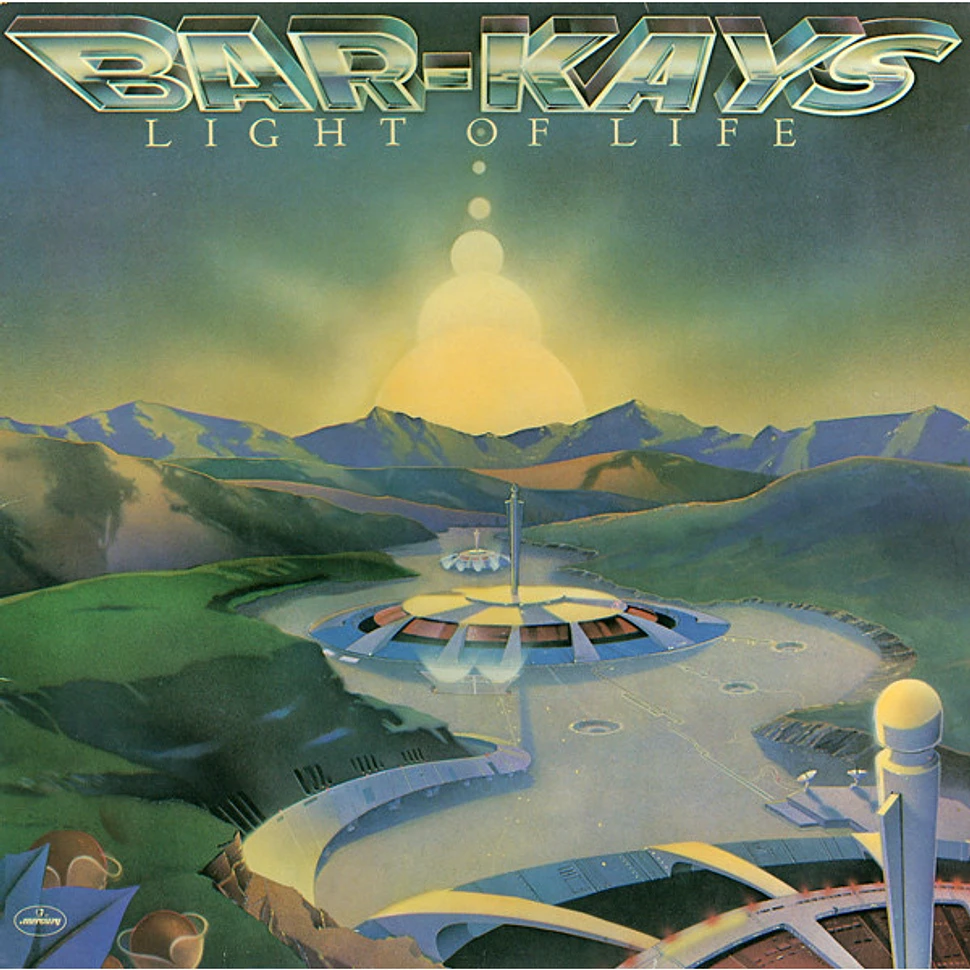 The Bar-Kays released their ninth studio album, Light of Life, in December 1978 on Mercury.
The album carries forward the high-energy funk and disco-infused sound of their recent Mercury work, performed by a newly expanded ten-piece lineup. Alongside driving dance cuts, the record highlights the group’s developing strength with ballads.
All tracks were written by producer Allen Jones with Charles Allen, Frank Thompson, Harvey Henderson, James Alexander, Lloyd Smith, Michael Beard, and Winston Stewart, apart from “We’re the Happiest People in the World,” co-written by Memphis Horns saxist Lewis Collins and former Bar-Kay Michael Toles.
“Get Up ’n Do It” and “Give It Up” open the set with effusive, fast-paced funk, the latter referencing Hamilton Bohannon’s “Disco Stomp” and the rhythmic punch of “Theme From Shaft.” The group slows for “We’re the Happiest People in the World,” a ballad marked by smoother vocal phrasing, while “Shine” balances tight rhythm patterns with soaring chorus lines. “Are You Being Real” moves on a brisk, clipped beat that gave the band another chart single.
A1. “Get Up ‘n Do It” (3:39)
A2. “Shine” (3:41)
A3. “I Lean On You (You Lean On Me)” (3:12)
A4. “Give It Up” (4:30)
B1. “Love’s What It’s All About” (3:03)
B2. “I’ll Dance” (3:38)
B3. “We’re the Happiest People in the World” (3:16)
B4. “Are You Being Real” (2:59)
B5. “Angel Eyes” (2:55)
Sessions occurred at Mercury’s facilities with Allen Jones producing.
“Shine” reached No. 14 on the R&B chart, “I’ll Dance” hit No. 26, and “Are You Being Real” climbed to No. 61. The album itself peaked at No. 15 on the R&B albums chart and No. 86 on the Billboard 200.
Injoy
 The Bar-Kays released their tenth studio album, Injoy, in October 1979 on Mercury.
The record marked the band’s commercial peak, blending tight funk rhythms with disco-influenced textures and ballads. Its mix of uptempo dance numbers and slower vocal features cemented the Bar-Kays’ late-’70s transition into the mainstream.
All tracks were written collectively by producer Allen Jones with Charles Allen, Frank Thompson, Harvey Henderson, James Alexander, Lloyd Smith, Michael Beard, Winston Stewart, and Larry Dodson.
“Move Your Boogie Body” dominates the set with clipped bass runs under strings and synths, building into one of the group’s best-known dance singles. “More and More” and “Up in Here” drive harder funk arrangements, the latter layering in synth figures reminiscent of Euro-disco. In contrast, “Girl I’m on Your Side” and “Running In and Out of My Life” slow the pace with ballad phrasing, the latter led by Mark Bynum.
A1. “More and More” (4:27)
A2. “Move Your Boogie Body” (6:17)
A3. “Running In and Out of My Life” (4:44)
A4. “Girl I’m On Your Side” (3:59)
B1. “Loving You Is My Occupation” (4:59)
B2. “Today Is the Day” (3:11)
B3. “You’ve Been” (4:01)
B4. “Up in Here” (5:07)
Sessions occurred in Memphis with Allen Jones producing.
“Move Your Boogie Body” reached No. 3 on the R&B chart, No. 57 pop, and No. 90 dance, while “Today Is the Day” peaked at No. 25 R&B and No. 60 pop. Injoy climbed to No. 2 on the R&B albums chart, No. 35 on the Billboard 200, and earned gold certification.
As One
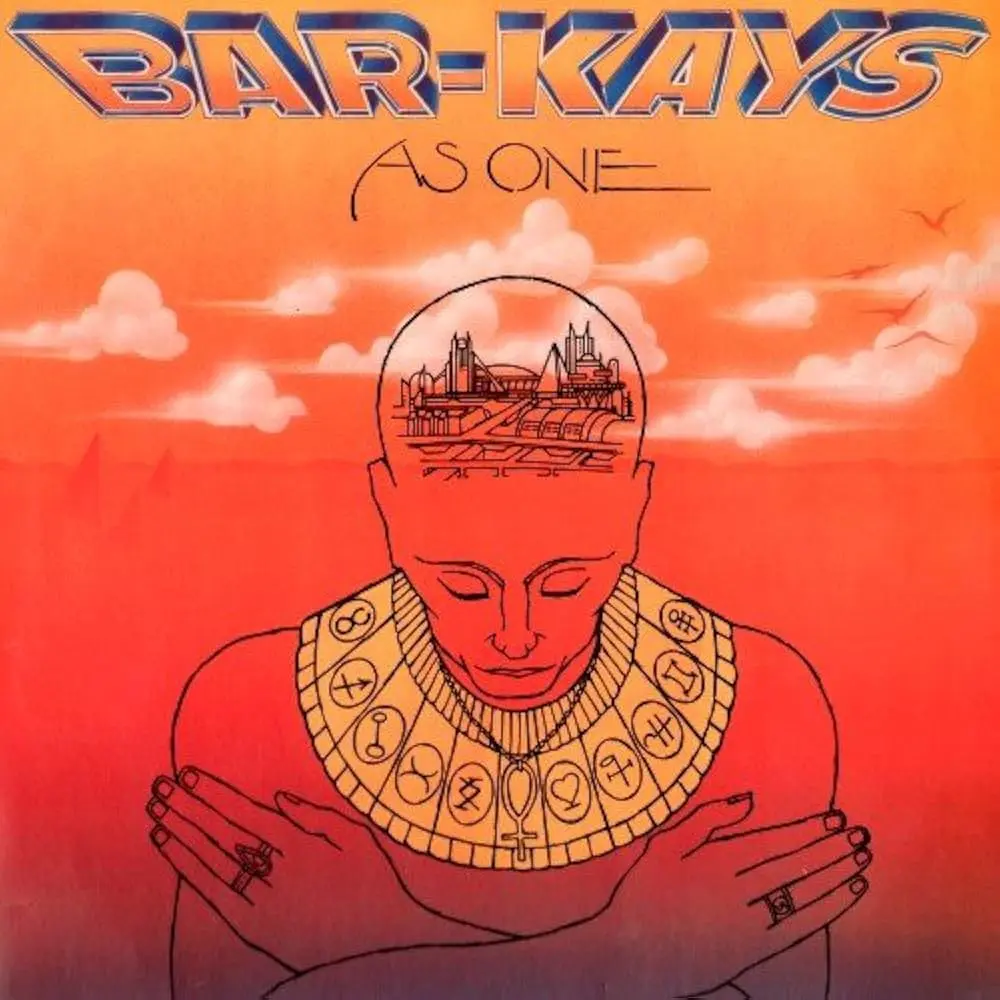 The Bar-Kays released their eleventh studio album, As One, in November 1980 on Mercury.
The record continued the late-’70s formula of funk-driven arrangements with disco textures, though several ballads show the band straddling the line between old-school R&B and contemporary dance styles. Its mix of uptempo funk workouts and slower numbers reflected the Bar-Kays’ established studio approach while debuting new vocal elements. They group-wrote all tracks with producer Allen Jones.
“Boogie Body Land” opens with female lead vocals from Mable Bealer over layered funk rhythms. The title track and “Body Fever” maintain high-energy funk intensity, while “Open Your Heart” leans toward disco phrasing. Ballads such as “Say It Through Love” and “Take the Time to Love Somebody” slow the pace with multi-part vocal arrangements, highlighting the band’s range but remaining less commanding than the uptempo numbers.
A1. “Boogie Body Land” (5:49)
A2. “Say It Through Love” (3:54)
A3. “Work It Out” (4:30)
A4. “Body Fever” (4:10)
B1. “As One” (4:26)
B2. “Take The Time To Love Somebody” (4:09)
B3. “Open Your Heart” (4:12)
B4. “Deliver Us” (4:53)
Sessions occurred with Allen Jones producing and William C. Brown III recording and engineering.
“Body Fever” and the title track contributed to the LP reaching No. 6 on the Billboard Top Soul Albums chart and No. 57 on the Billboard 200.
Nightcruising
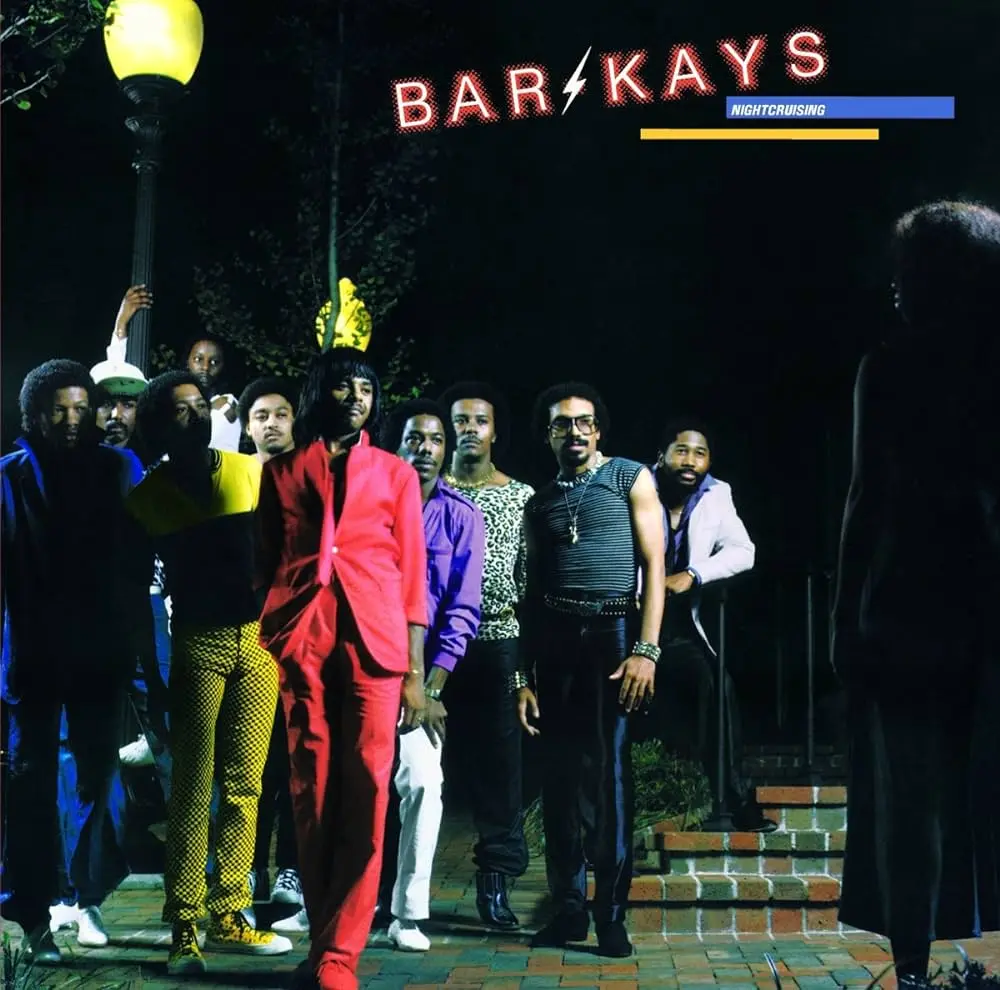 The Bar-Kays released their twelfth studio album, Nightcruising, in November 1981 on Mercury.
The album emphasizes contemporary urban dance and synth-driven R&B while retaining the band’s funk foundation. Its sound is bright and punchy, highlighting tight arrangements and electronic textures, though ballads slow the pace without matching the intensity of the uptempo tracks.
All tracks were group-written with producer Allen Jones, except “Freaky Behavior,” co-written by Howard Redmond, Jr. Strings and horn arrangements on “Unforgettable Dream” were composed and arranged by Marvell Thomas.
The title track and “Hit and Run” lead with aggressive, dance-focused funk. “Freaky Behavior” layers electronic effects over playful rhythms, hinting at Rick James–style funk. Traditional stylings appear on “Touch Tone” and “Traffic Jammer,” while ballads such as “Feels Like I’m Falling in Love” and “Backseat Driver” slow the set’s pace.
A1. “Nightcruising” (4:18)
A2. “Hit And Run” (5:51)
A3. “Feels Like I’m Falling In Love” (3:50)
A4. “Freaky Behavior” (5:10)
B1. “Touch Tone” (4:15)
B2. “Unforgettable Dream” (4:35)
B3. “Traffic Jammer” (5:50)
B4. “Backseat Driver” (3:54)
Sessions occurred at Ardent Studios with Allen Jones producing and recording, supported by engineers Henry Bush, Robert Jackson, and William C. Brown III. Bernie Grundman handled mastering.
“Hit and Run” and “Freaky Behavior” reached the R&B charts, helping Nightcruising reach No. 6 on the US Top Soul Albums chart and No. 55 on the Billboard 200.
Propositions
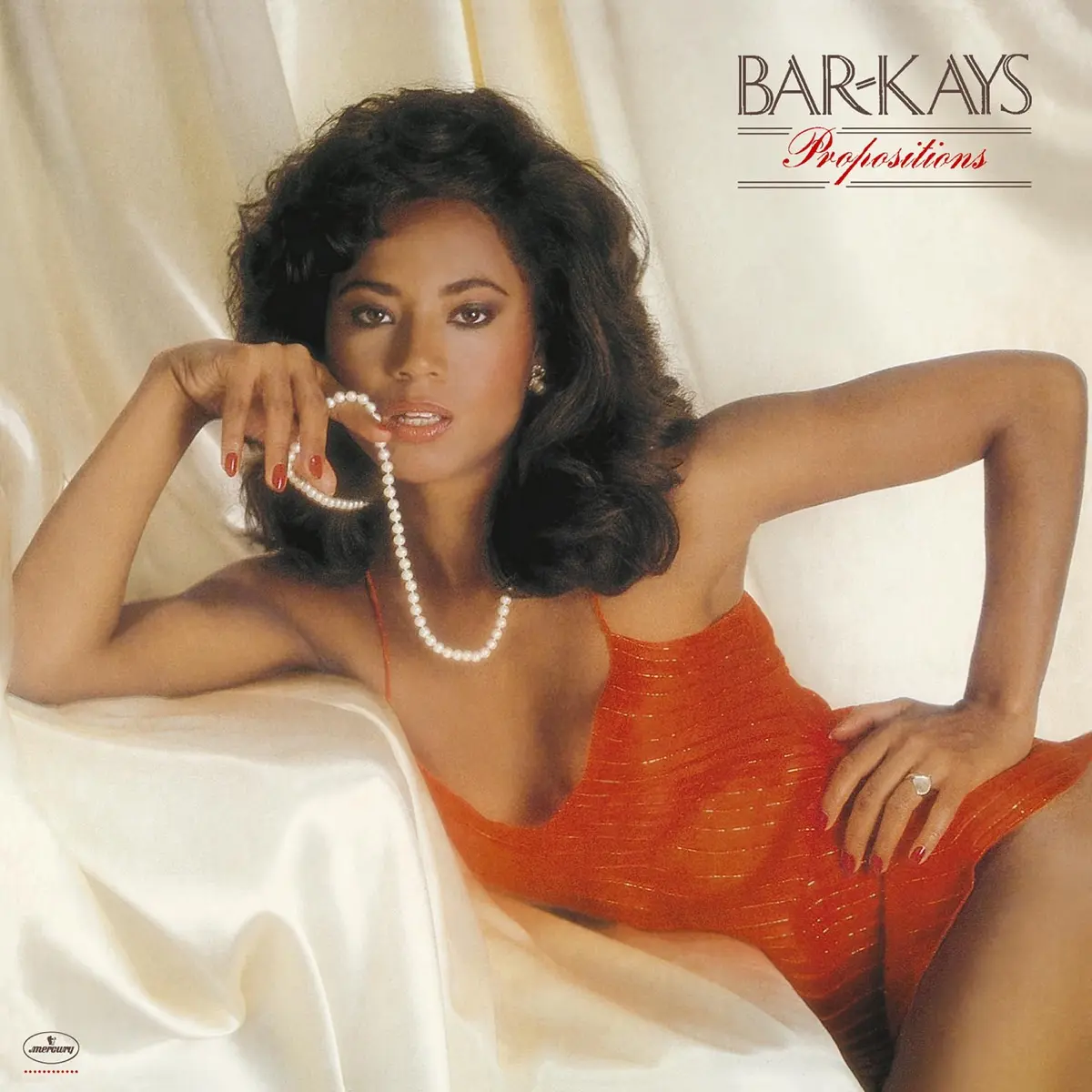 The Bar-Kays released their thirteenth studio album, Propositions, on November 9, 1982, on Mercury.
The album blends electronic funk with contemporary R&B and pop, highlighting synth-driven arrangements while retaining the band’s rhythmic foundation. It balances uptempo dance tracks with soul/rock ballads and traditional funk numbers.
All tracks were group-written with Allen Jones, with Michael Toles contributing to “Tripping Out,” “Anticipation,” and “Do It (Let Me See You Shake).” Arrangements were handled by Allen Jones and the Bar-Kays.
Synth-heavy dance cuts include the title track and “Tripping Out,” while “Do It (Let Me See You Shake)” channels Prince-inspired energy. Ballads such as “Anticipation” and “I Can’t Believe You’re Leaving Me” slow the pace, and older-school funk surfaces on “(Busted)” and “You Made a Change in My Life,” allowing the band’s rhythmic precision to dominate.
A1. “Propositions” (5:49)
A2. “Tripping Out” (4:54)
A3. “Anticipation” (5:46)
A4. “(Busted)” (2:05)
B1. “Do It (Let Me See You Shake)” (6:02)
B2. “She Talks to Me With Her Body” (6:06)
B3. “I Can’t Believe You’re Leaving Me” (4:04)
B4. “You Made a Change In My Life” (4:18)
Sessions occurred at Ardent Recording Studio with Allen Jones producing and engineering alongside Henry Bush, Robert Jackson, and William C. Brown III. Jack Skinner handled mastering.
“Do It (Let Me See You Shake)” reached the R&B Top Ten, and “She Talks to Me With Her Body” also charted, helping Propositions reach No. 9 on the US Top Soul Albums chart and No. 51 on the Billboard 200.
Dangerous
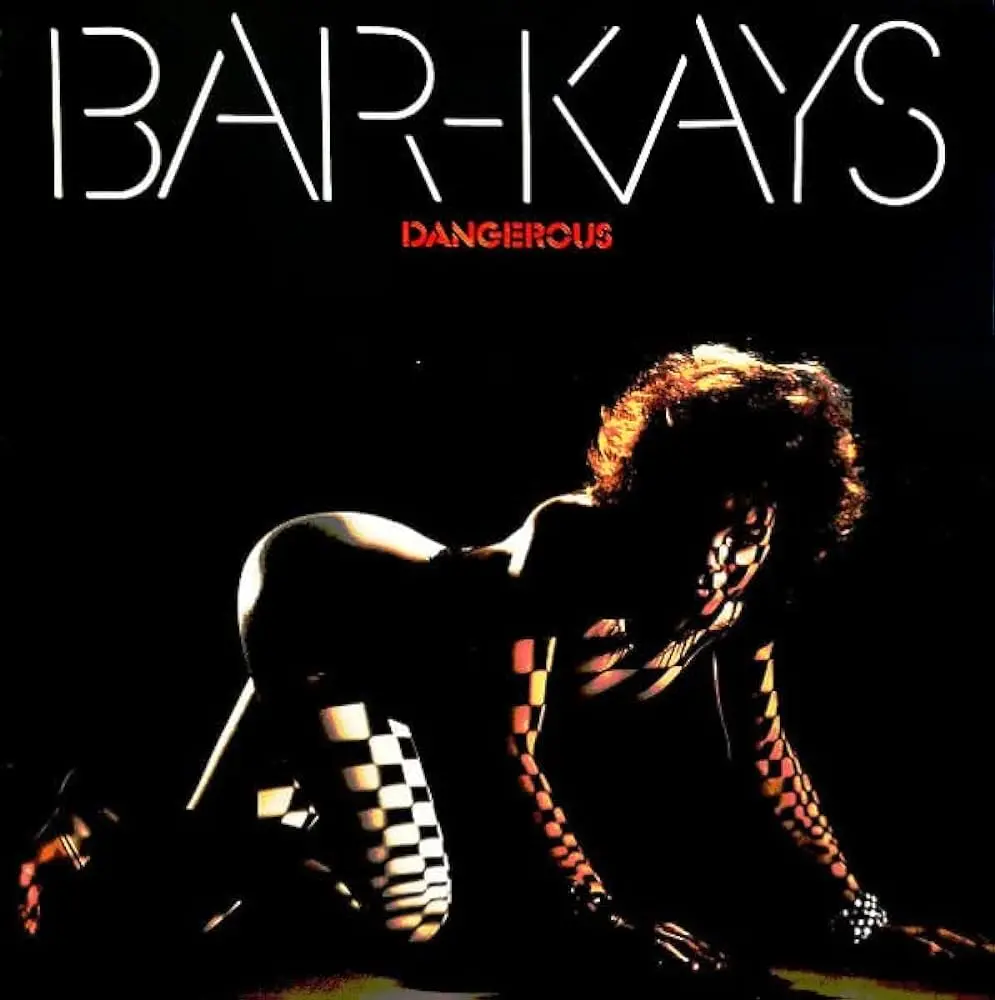 The Bar-Kays released their fourteenth studio album, Dangerous, on April 15, 1984, on Mercury.
The album fuses contemporary R&B and dance with the band’s funk roots, integrating synth textures and Euro-disco flourishes. Reduced to an octet, the Bar-Kays maintain tight rhythmic precision while exploring urban dance trends of the mid-1980s. All tracks were written and arranged by Allen Jones and the Bar-Kays.
Singles-driven dance tracks dominate, including the title track, “Freakshow on the Dancefloor,” “Dirty Dancer,” and “Sexomatic,” which nod to Midnight Starr, Michael Jackson, and Prince, respectively. The album also features the mid-tempo ballad “Lovers Should Never Fall in Love,” while other cuts such as “Dangerous” and “Dance, Party, Etc.” continue the high-energy, synth-heavy funk-pop approach.
A1. “Dangerous” (5:26)
A2. “Dirty Dancer” (4:35)
A3. “Make Believe Lover” (5:13)
A4. “Dance, Party, Etc.” (5:20)
B1. “Freakshow On The Dancefloor” (6:36)
B2. “Lovers Should Never Fall In Love” (3:53)
B3. “Loose Talk” (4:20)
B4. “Sexomatic” (5:21)
Sessions occurred with Allen Jones producing and arranging alongside the band.
“Freakshow on the Dancefloor” contributed to the Breakin’ soundtrack and charted widely, while “Sexomatic” and “Dirty Dancer” also reached R&B audiences, helping Dangerous climb to No. 7 on the US Top Soul Albums chart and No. 52 on the Billboard 200.
Discography:
- Soul Finger (1967 • Bar-Kays)
- Gotta Groove (1969)
- Black Rock (1971 • Bar-Kays)
- Do You See What I See? (1972)
- Cold Blooded (1974)
- Too Hot to Stop (1976)
- Flying High on Your Love (1977 • Bar-Kays)
- Light of Life (1978 • Bar-Kays)
- Money Talks (1978)
- Injoy (1979 • Bar-Kays)
- As One (1980)
- Nightcruising (1981 • Bar-Kays)
- Propositions (1982 • Bar-Kays)
- Dangerous (1984)
- Banging the Wall (1985 • Bar-Kays)
- Contagious (1987)
- Animal (1989)
Sources:
- Discogs: The Bar-Kays
- 45worlds: The Bar-Kays
- 45cat: The Bar-Kays
- RYM: The Bar-Kays
- MusicBrainz: The Bar-Kays
Artist/Album Pages:
Anglo-Saxon Brown was an American soul-funk band that released the 1976 Atlantic album Songs for E...
Greg Phillinganes (born May 12, 1956) is an American R&B keyboardist from Detroit who served ...
Clarence "Fuzzy" Haskins (June 8, 1941 – March 17, 2023) was an American R&B-funk vocalist an...
Ripple was an American funk band that made a 1973 self-titled album on GRC, followed by the 1977 S...
Leo's Sunshipp was an American soul-funk band that released the album We Need Each Other on Lyon's...
Platinum Hook was an American soul-funk band behind the 1978/79 Motown albums Platinum Hook and I...
Haze was an American Twin Cities soul-funk band that released a 1974 self-titled album on ASI Reco...
Kleeer was an American soul-funk band from NYC that released seven albums between 1979 and 1985 on...
Sunrize was an American soul-funk band that released a 1982 self-titled album on the Boardwalk Ent...
Automatic Man was an American space-funk band from San Francisco that released the 1976–77 albums ...
Gene Dunlap (born June 19, 1954) is an American R&B-funk vocalist, multi-instrumentalist, song...
Rufus was an American soul-funk band from Chicago, best known for the 1974 hit "Tell Me Something ...