

The Staple Singers were an American soul group from Chicago, formed in 1948 and active for the entire second half of the 20th century. They made numerous gospel recordings between 1953 and 1968 on Vee Jay, Riverside, and Epic.
Between 1968 and 1974, the Staple Singers made six albums on Stax and scored R&B crossover hits with “Respect Yourself,” “If You’re Ready (Come Go with Me),” “Heavy Makes You Happy,” and the 1972 No. 1 “I’ll Take You There.” In 1975, they teamed with Curtis Mayfield on Let’s Do It Again, a soundtrack to the Sidney Poitier film.
As The Staples, they cut three late-Seventies albums on Warner Bros. and charted with “Unlock Your Mind.” They scored a final hit with the Talking Heads cover “Slippery People” from their 1984 Private I release Turning Point.
Members: Pops Staples (guitar, vocals), Mavis Staples (vocals), Pervis Staples (vocals, 1948-69), Cleotha Staples (vocals), Yvonne Staples (vocals, 1970-2000)
Background
The Staple Singers started as a family musical act in 1948 when 33-year-old Roebuck “Pops” Staples (December 28, 1914 – December 19, 2000) assembled his children Cleotha (April 11, 1934 – February 21, 2013), Pervis (November 18, 1935 – May 6, 2021), and Mavis (b. July 10, 1939). When Roebuck’s lone son Pervis was drafted into the US Army, second daughter Yvonne (October 23, 1937 – April 10, 2018) took his place.
Roebuck was born in Winona in central Mississippi; the youngest of fourteen children. He grew up in Drew (66 miles northwest of Winona), where he lived on a cotton plantation and jammed with local bluesmen Charlie Patton, Robert Johnson, and Son House. Once grown and married, his wife Oceola had their firstborn, Cleotha, in Drew before the family settled in Chicago, where Pervis, Yvonne, and Mavis were born and raised. Roebuck earned money as a steelworker and meatpacker.
In 1948, they debuted as singing group at Chicago’s Mount Zion Church, where the Rev. Chester Staples (Roebuck’s brother) served as pastor.
Early Gospel Recordings
In 1953, the Staple Singers made their first two gospel singles, released as 10″ shellacs on the Chicago labels Royal and United. They signed with Vee Jay Records and scored their first hit with the 1956 single “Uncloudy Day,” an early influence on Bob Dylan.
Between 1961 and 1963, the Staple Singers cut two gospel albums on Vee Jay and three on Riverside. In 1965, they signed with Epic, which issued their next six albums. Their 1967 release For What It’s Worth (named after their cover of the Buffalo Springfield song) marked their embrace of contemporary pop and soul.
The Staple Singers signed with Stax Records and linked with songwriter Homer Banks (Sam & Dave, Johnnie Taylor) and Mar-Keys founder Steve Cropper, who produced their August 1968 label debut: Homers’ “Long Walk to DC” backed with the Mavis original “Stay With Us.”
Soul Folk in Action
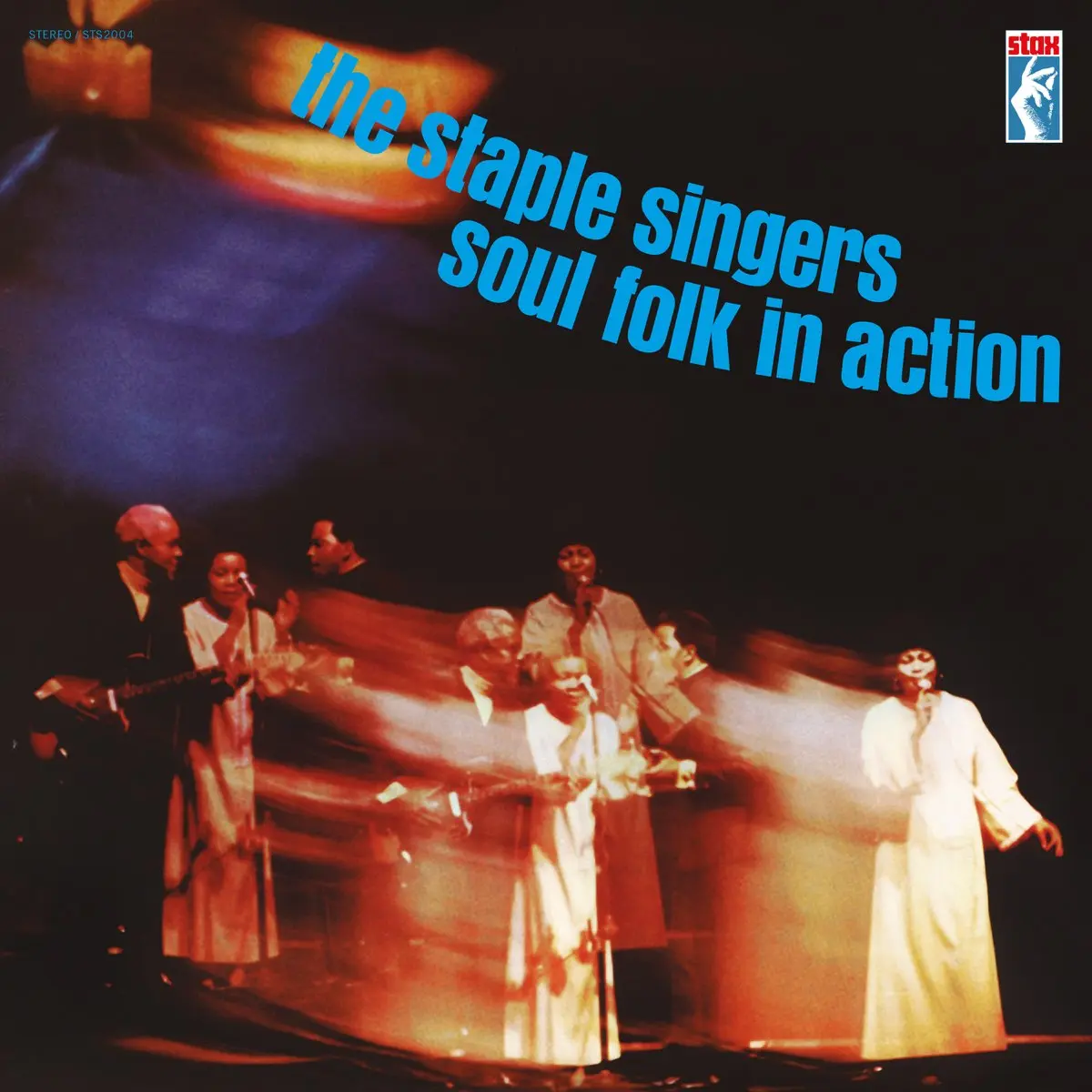 In December 1968, the Staple Singers released Soul Folk in Action, their first Stax longplayer and sixteenth overall album. It features “Long Walk to DC” and three songs co-written by producer Steve Cropper: “Slow Train,” “People My People,” “This Year,” and “(Sittin’ On) the Dock of the Bay,” a posthumous hit for Otis Redding.
Fellow in-house writer Bettye Crutcher co-wrote “Top of the Mountain” and (with Banks and Bonnie Bramlett) “The Ghetto,” the Staples’ second Stax single. In March 1969, Stax lifted “(Sittin’ On) the Dock of the Bay,” the twentieth some-odd cover of Redding’s classic since the original’s January 1968 chart peak (also recorded that year by Jerry Butler, OC Smith, Glen Campbell, and Archie Bell & The Drells).
We’ll Get Over
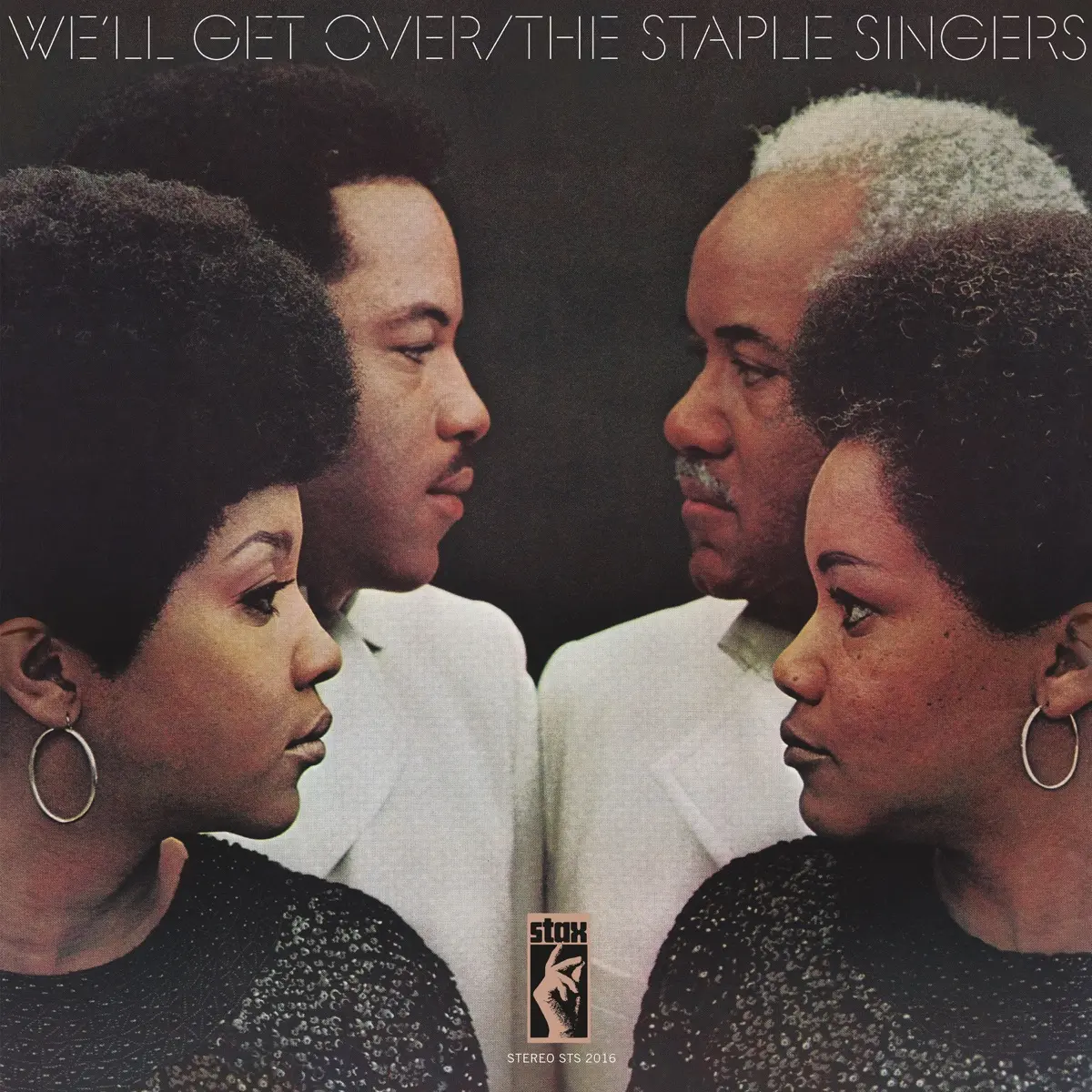 The Staple Singers released their seventeenth album, We’ll Get Over, in May 1969 on Stax.
The album combines Southern Soul intensity with gospel-rooted vocals and socially conscious themes. It balances raw, earthy rhythms with occasional orchestral flourishes reminiscent of Detroit and Chicago soul, delivering both message-driven anthems and reflective mid-tempo numbers.
The lineup features Pops Staples (vocals, guitar), Mavis Staples (vocals), Cleotha Staples (vocals), and Pervis Staples (vocals). Sessions were supported by Stax house musicians, including guitarists, keyboardists, and a rhythm section under producer Steve Cropper, who also arranged the tracks.
Primary songwriting comes from the Staples themselves and Steve Cropper, with contributions from outside writers on selected tracks. Covers include Sly & the Family Stone (“Everyday People”) and The Guess Who (“A Wednesday in Your Garden”).
The album opens with the fat, anthemic soul of “We’ll Get Over,” led by Mavis Staples and punctuated by Pops’ blues-inflected guitar. “Give a Damn” layers orchestration over message-driven vocals, while “The Challenge” fuses Memphis grit with Detroit-style soul strut. Their rendition of “Everyday People” slows the pace into a more churchly rhythm, and “A Wednesday in Your Garden” hews closely to the original. Pops’ guitar drives the mid-tempo “The End of Our Road” and the country-blues-soul stomp “Tend to Your Own Business.” The traditional Japanese folk song “Solon Bushi” receives a culturally aware interpretation, while “God Bless the Children” and “The Gardener” convey pointed socio-political commentary. Gospel energy animates Joe South’s “Games People Play,” and the album closes with the reflective “When Will We Be Paid (For the Work We Did).”
A1. “We’ll Get Over” (3:40) — anthem of resilience, Mavis leads with Pops’ bluesy guitar
A2. “Give a Damn” (3:53) — heavily orchestrated, socially conscious message
A3. “Everyday People” (3:09) — cover of Sly & the Family Stone; church-influenced adaptation
A4. “The End of Our Road” (3:03) — mid-tempo loper with sharp guitar chanks
A5. “Tend to Your Own Business” (2:20) — country-blues-soul stomp
A6. “Solon Bushi (Japanese Folk Song)” (2:38) — culturally rooted interpretation, arranged by Pervis Staples
B1. “The Challenge” (2:53) — hard-driving soul strut blending Memphis and Detroit styles
B2. “God Bless the Children” (3:14) — message-driven socio-political tune
B3. “Games People Play” (3:24) — gospel-infused cover of Joe South’s original
B4. “A Wednesday in Your Garden” (2:32) — cover of The Guess Who, faithful to original
B5. “The Gardener” (2:16) — baroque arrangement with social commentary
B6. “When Will We Be Paid” (1:30) — poignant closing on labor and justice
Sessions occurred at Stax Studios in Memphis with producer and arranger Steve Cropper.
The album was promoted with the singles “We’ll Get Over” and “Give a Damn,” though neither charted.
Following these sessions, Pervis Staples left the group, replaced by sister Yvonne, and the family relocated to Muscle Shoals for subsequent recordings.
The Staple Swingers
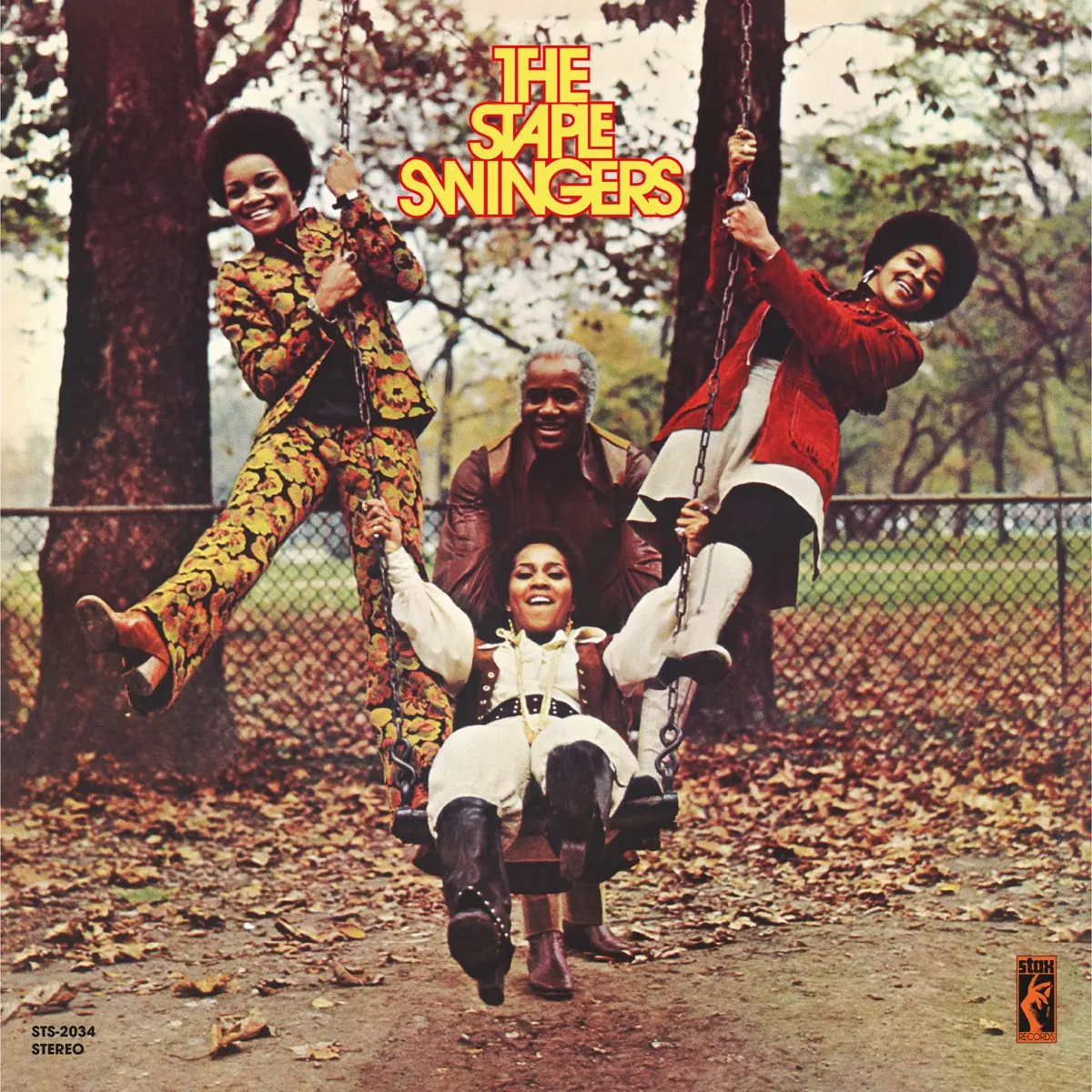 The Staple Singers released their eighteenth album, The Staple Swingers, in March 1971 on Stax.
The group shifted operations from Memphis to Muscle Shoals for their first album with producer Al Bell. The move coincided with a personnel change as Yvonne Staples replaced older brother Pervis Staples, joining Mavis and Cleotha Staples around their father, Roebuck “Pops” Staples. The album retains their gospel-rooted vocal sound but frames it in a contemporary soul production with sharper rhythmic contours and expanded instrumentation.
Sessions took place at Muscle Shoals Sound Studios in Muscle Shoals, Alabama, and Ardent Studios in Memphis, Tennessee. The backing ensemble includes the Muscle Shoals Rhythm Section with additional arrangements by Dale Warren and horns by the Bar-Kays. The Memphis Symphony Orchestra provide strings and horns. Terry Manning contributes melodica, guitar, harmonica, and vibraphone.
Stax staff writers Bettye Crutcher and Mack Rice account for multiple songs on the album. Guitarist Pops Staples co-wrote one song. The set also includes covers of songs by Smokey Robinson (“You’ve Got to Earn It”), O.V. Wright (“You’re Gonna Make Me Cry”), Bobby Bloom (“Heavy Makes You Happy (Sha-Na-Boom Boom)”), and the Bee Gees (“Give a Hand, Take a Hand”).
“This Is a Perfect World” opens with militaristic sound effects and accelerates into a fervent, socially conscious statement. “What’s Your Thing” moves with a blues-inflected pace, while “You’ve Got to Earn It” places the group’s harmonies against snappy brass and rhythmic harmonica. Mavis Staples delivers a weighty vocal turn on “You’re Gonna Make Me Cry,” a ballad addressed from a parental perspective. “Little Boy” conveys a cautionary message aimed at youth, sung by Pops. On “Almost,” the arrangement evokes late-1960s psychedelic soul, while “I Like the Things About You” applies a slower, country-soul lilt. “Give a Hand, Take a Hand” closes the set with a subdued orchestral tone.
A1. “This Is a Perfect World” (4:20) – Written by Bettye Crutcher, Mack Rice, and Tommy Tate, the track opens with machine-gun fire and a snippet of “Of Thee I Sing” before Mavis Staples delivers a powerful lead over dense harmonies. The song blends gospel fervor with a brisk, insistent rhythm, framing a socially conscious message about the world’s injustices.
A2. “What’s Your Thing” (4:21) – Written by Mack Rice, Mavis leads a contemplative vocal over slinky, undulating guitar lines and understated percussion. The lyrics encourage self-awareness and individual responsibility, while horn accents punctuate the track’s sharp rhythmic turns.
A3. “You’ve Got to Earn It” (3:28) – Written by Smokey Robinson and Cornelius Grant, Mavis articulates a tale of self-empowerment over strutting horns and country-style harmonica. The arrangement alternates between bold brass statements and tight rhythmic pulses, highlighting the necessity of effort and integrity. Originated as a 1964 Temptations B-side on Gordy.
A4. “You’re Gonna Make Me Cry” (5:04) – Written by Deadric Malone, the track presents a blues-inflected lament of sorrow, interpreted from the perspective of a mother confronting her son’s struggles. Mavis’ expressive phrasing rides over somber string arrangements, while harmonies deepen the track’s emotional resonance.
A5. “Little Boy” (3:25) – Written by Carson Whitsett, Pops Staples leads this mid-tempo reflection on a youth facing life’s challenges. Mavis enters midway, layering harmonic counterpoint and accentuating the lyrical optimism with gentle rhythmic variations.
A6. “How Do You Move a Mountain” (2:34) – Written by Myrna March and Morris Levy, the sisters’ vocal interplay dominates the track, supported by a steady, measured beat. The lyrics explore perseverance, though the restrained arrangement keeps the message subdued.
B1. “Almost” (4:14) – Written by Harold Thomas and Leroy Mason, Mavis delivers a lead that rides psychedelic-soul–infused textures. Horn stabs and subtle studio effects accompany the angular rhythm, evoking late-1960s Stax production stylings.
B2. “I’m a Lover” (3:43) – Written by James Mabone and Charles Bevel, Pops Staples takes the lead with a laid-back, country-soul approach. Rhythmic phrasing is gentle and fluid, supporting a lyric that emphasizes simplicity and heartfelt connection.
B3. “Love Is Plentiful” (2:30) – Written by Bettye Crutcher and Bobby Manuel, Mavis’ vocal commands the track with determined phrasing over bright horn accents. The song’s lyrical focus on abundance and affirmation is mirrored by crisp, driving percussive patterns.
B4. “Heavy Makes You Happy (Sha-Na-Boom Boom)” (2:58) – Written by Jeff Barry and Bobby Bloom, Mavis leads a buoyant track propelled by booming drums and warm keyboard tones. The repetitive, chant-like chorus emphasizes joy, with rhythmic shifts that maintain forward momentum. Bloom’s concurrent version was a minor UK hit.
B5. “I Like the Things About You” (3:21) – Written by Martha Stubb and Roebuck Staples, Pops Staples provides a slinky, country-soul lead. The lyric celebrates self-confidence and individuality, while the interplay of strings and percussion traces a subtle, undulating rhythm.
B6. “Give a Hand, Take a Hand” (3:55) – Written by Barry Gibb and Maurice Gibb, the song closes the album with layered harmonies over a controlled, plodding beat. The lyrics advocate mutual support and cooperation, while the arrangement remains understated and reflective.
Sessions occurred at Muscle Shoals Sound Studios and Ardent Studios with producer Al Bell and engineers Jimmy Evans, Larry Hamby, and Terry Manning. Dale Warren arranged strings and horns; the Bar-Kays handled horn arrangements.
Stax promoted The Staple Swingers with “Love Is Plentiful” (b/w “Heavy Makes You Happy (Sha-Na-Boom Boom)”) in late 1970. “Heavy Makes You Happy (Sha-Na-Boom Boom)” followed as the second single in 1971, reaching No. 6 on the Billboard R&B chart and No. 27 on the Hot 100. “You’ve Got to Earn It” appeared later that year and reached No. 11 R&B and No. 97 Pop.
“Heavy Makes You Happy (Sha-Na-Boom Boom)” has since been covered by Gladys Knight & the Pips, The Alabama State Troupers, Claudja Barry, The Solution, and Keb’ Mo’.
Be Altitude: Respect Yourself
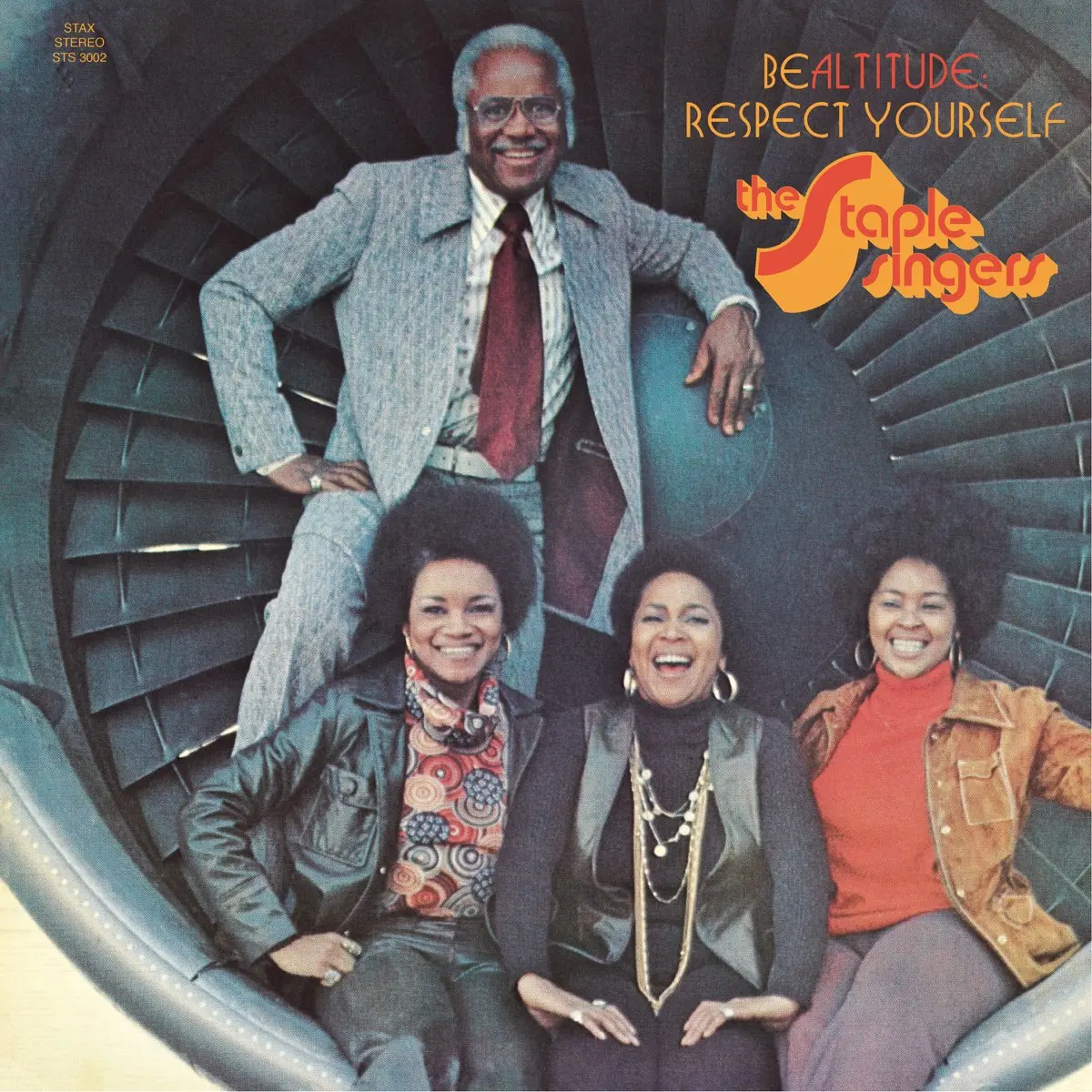 The Staple Singers released their nineteenth album, Be Altitude: Respect Yourself, in February 1972 on Stax.
The group continued its partnership with producer Al Bell and the Muscle Shoals Rhythm Section, building on the sonic template of The Staple Swingers with sharper rhythmic pacing and anthemic themes. Their sound blends gospel-rooted vocal delivery with layered horns, fuzz guitar accents, and overdubbed Mellotron and Moog synthesizer textures by Terry Manning.
The Muscle Shoals Rhythm Section consists of guitarist Jimmy Johnson, bassist David Hood, drummer Roger Hawkins, and keyboardist Barry Beckett (Wurlitzer electric piano). Terry Manning contributes overdubbed lead and fuzz guitar, harmonica, Mellotron, Moog synthesizer, vibraphone, and marimba. Eddie Hinton adds lead guitar on “I’ll Take You There” with Raymond Banks on additional guitar. The Memphis Horns — including trumpeter Wayne Jackson and saxophonist Andrew Love — appear throughout with Ben Cauley augmenting the section.
Stax executive Al Bell wrote one song, “I’ll Take You There,” under his birth name Alvertis Isbell. Luther Ingram and Mack Rice co-wrote “Respect Yourself,” which became one of the group’s signature songs. Additional songs stem from Stax writers Homer Banks, Bettye Crutcher, and Raymond Jackson, with covers of songs popularized by Don Covay (“This Old Town (People in This Town)”) and Bobby Bloom (“Who”).
“This World” opens the album with a brassy, full-bodied arrangement anchored by Hood’s syncopated bass line and Mavis Staples’ commanding vocal. “Respect Yourself” presents a call-and-response sermon on dignity and self-worth against a clipped beat and swelling horns. “I’ll Take You There” pairs gospel exhortation with a loping rhythm lifted from the reggae instrumental “The Liquidator.” Pops Staples delivers a gravelly, slow-burning lead on “Who Do You Think You Are (Jesus Christ the Superstar),” while “We the People” builds a steady, low-end pulse with rising horn breaks. The closing “Who” offers a subdued, devotional tone.
A1. “This World” (3:36) – Written by William Friedman and Herb Schapiro, Mavis leads a forceful call over layered brass, deep bass, and steady percussion. The lyrics address social inequities, urging awareness and action, while the rhythmic foundation propels the message forward with urgency.
A2. “Respect Yourself” (4:54) – Written by Luther Ingram and Mack Rice, Pops Staples opens the track before Mavis takes over, stressing self-empowerment and dignity. Fuzz guitar accents, subtle tempo shifts, and harmonized vocals reinforce the song’s exhortative lyric.
A3. “Name the Missing Word” (4:00) – Written by Homer Banks, Bettye Crutcher, and Raymond Jackson, the track combines thundering drums, Pops’ reverberating guitar, and organ jabs to drive a pointed message about societal neglect. The vocal delivery alternates between calm assertion and emphatic bursts, tracing the lyrical tension.
A4. “I’ll Take You There” (4:43) – Written by Alvertis Isbell, Mavis guides a call-and-response chorus over a two-chord progression with bass and percussion anchoring the track. Pops and the sisters seemingly perform solos that are executed by the Muscle Shoals Rhythm Section, while the lyric invites listeners to a transcendent, hopeful place. The song’s bassline derives from “The Liquidator,” a 1969 single by the Harry J Allstars, with Eddie Hinton on the featured guitar solo and Manning on harmonica
A5. “This Old Town (People in This Town)” (4:39) – Written by Don Covay, Wilson Pickett, and William Stevenson, Mavis narrates a vignette of communal life over chanking guitar, horn stabs, and steady percussion. The lyrics reflect social unity and the pursuit of harmony in everyday surroundings. First recorded by Covay as a 1967 single.
B1. “We the People” (3:50) – Written by Booker T. Jones and Carl Smith, the track rides a slow-paced, bass-driven rhythm, with horns accentuating lyrical declarations of collective strength. The vocal layering conveys solidarity while the pacing conveys persistent forward motion.
B2. “Are You Sure” (4:27) – Written by Homer Banks and Raymond Jackson, Mavis delivers a reflective lead over a lazy, country-soul rhythm. The lyrics raise moral and existential questions, and the sisters’ harmonies underscore the contemplative tone.
B3. “Who Do You Think You Are (Jesus Christ the Superstar)?” (4:10) – Written by Pops Staples, the track blends swampy southern soul with restrained gospel intensity. Pops leads the vocals while the arrangement emphasizes a pulsing rhythmic drive, supporting the lyrical inquiry into faith and identity.
B4. “I’m Just Another Soldier” (3:50) – Written by Homer Banks and Raymond Jackson, Pops’ lead and the sisters’ harmonies deliver a meditative reflection on duty and perseverance. The track’s measured pacing and droning instrumental backdrop enhance the solemnity of the message.
B5. “Who” (3:13) – Written by Jeff Barry and Bobby Bloom, the closing track features contemplative vocals over a soft, fluid rhythm. The lyrics ponder spiritual and personal awareness, with Pops and Mavis alternating leads that carry the reflective conclusion of the album.
Sessions occurred at Muscle Shoals Sound Studios in Sheffield, Alabama, with producer Al Bell and engineers Terry Manning, Jerry Masters, and Ralph Rhodes. Additional overdubs took place at Ardent Studios in Memphis. Johnny Allen arranged the horn and string parts.
Stax promoted Be Altitude: Respect Yourself with “Respect Yourself” (b/w “You’re Gonna Make Me Cry”) in late 1971, which reached No. 2 on the Billboard R&B chart and No. 12 on the Hot 100. “I’ll Take You There” followed in February 1972 (b/w “I’m Just Another Soldier”), spending one week at No. 1 on both the R&B and Hot 100 charts. “This World” appeared as the third single, reaching No. 6 R&B and No. 38 Pop.
“I’ll Take You There” has since been covered by BeBe & CeCe Winans (1991), General Public (1994), and sampled by Salt-N-Pepa on “Let’s Talk About Sex” (1991). “Respect Yourself” was later covered by The Kane Gang in 1984.
Be What You Are
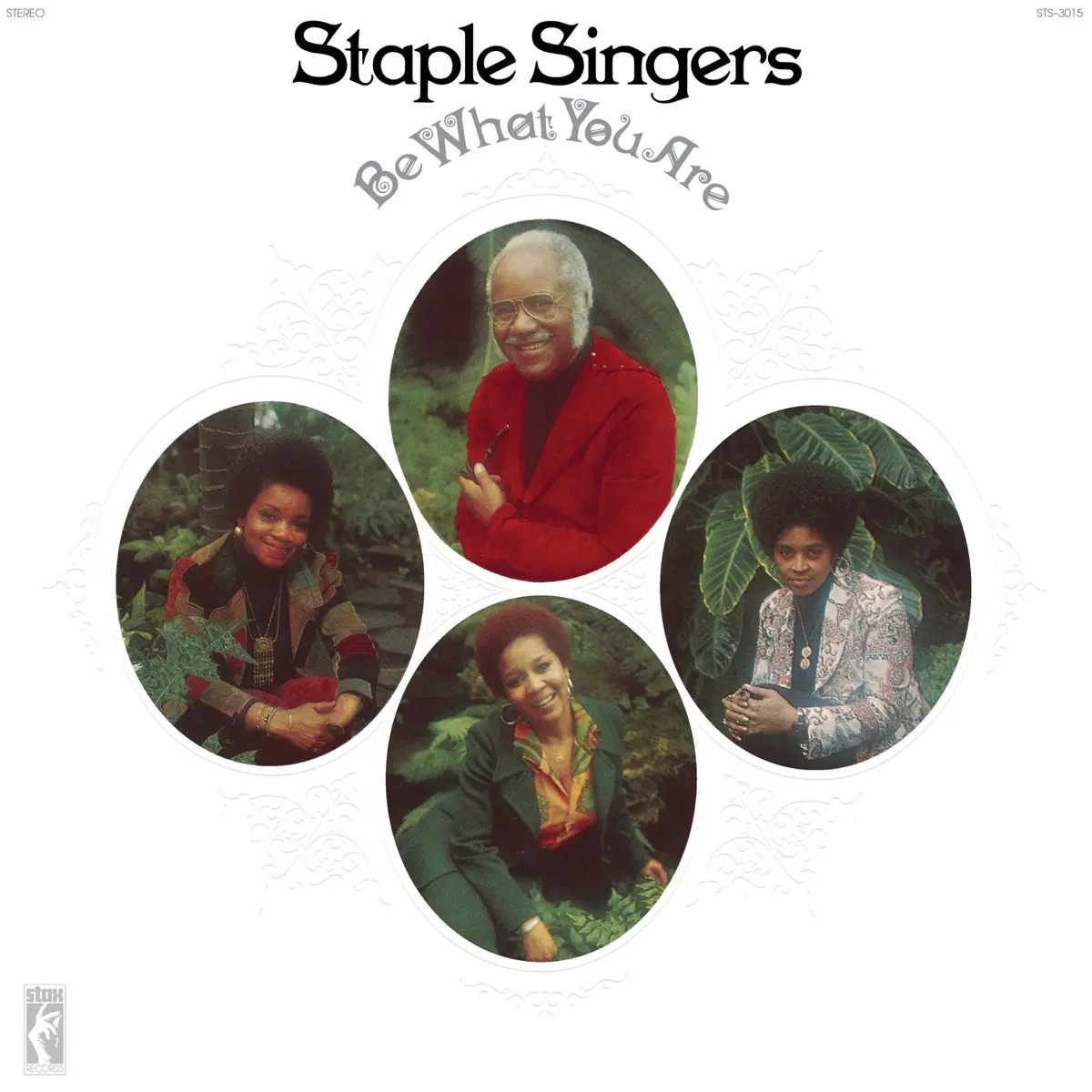 The Staple Singers released their twentieth album, Be What You Are, in August 1973 on Stax.
The group returned to Muscle Shoals with producer Al Bell to continue the sound that defined their breakthrough period. Their gospel-rooted vocals are framed by smooth string and horn arrangements, folk-tinged acoustic guitar textures, and crisp rhythmic pacing. Terry Manning contributes overdubs on multiple instruments, and guitarist Jimmy Page guests on the closing track.
The backing lineup includes the Muscle Shoals Rhythm Section: guitarist Jimmy Johnson, bassist David Hood, drummer Roger Hawkins, and keyboardist Barry Beckett (Wurlitzer electric piano). Terry Manning contributes harmonica, Mellotron, Moog synthesizer, marimba, vibraphone, and additional guitar. The Memphis Horns appear throughout. Jimmy Page plays electric and acoustic guitar on “Heaven.”
Stax house writers Homer Banks, Raymond Jackson, and Carl Hampton wrote six songs. Bettye Crutcher and Carl Smith co-wrote the medley “Love Comes in All Colors/Tellin’ Lies.” Darryl Carter and Mack Rice co-wrote “I Ain’t Raisin’ No Sand,” and Manning wrote “Heaven.” The album also contains a cover of Bill Withers’ “Grandma’s Hands.”
The optimistic title track serves as the thematic centerpiece, urging pride and self-acceptance over a steady rhythmic drive. “If You’re Ready (Come Go with Me)” mirrors the pacing of “I’ll Take You There” with added acoustic flourishes and orchestral layering. “Love Comes in All Colors/Tellin’ Lies” stretches across eight minutes, blending testimonial delivery with loose, country soul. “Touch a Hand, Make a Friend” and “Bridges Instead of Walls” convey bright, upbeat messages with marimba punctuation, while “I Ain’t Raisin’ No Sand” delivers its political statement against sober string settings. “Grandma’s Hands” provides a tender acoustic interlude, and “Heaven” closes the album with Page’s chiming guitar lines against a spacious, devotional arrangement.
A1. “Be What You Are” (5:03) – Written by Homer Banks, Raymond Jackson, and Carl Hampton, the Staples deliver an anthem of self-acceptance and empowerment. Pulsing R&B rhythm underpins sharp guitar accents and layered harmonies, while the lyrics stress pride in personal identity.
A2. “If You’re Ready (Come Go with Me)” (4:29) – Written by Homer Banks, Raymond Jackson, and Carl Hampton, Mavis leads a call-and-response chorus over acoustic and electric guitars with simmering string arrangements. The song extends the invitation of communal uplift, emphasizing togetherness and readiness for positive change.
A3. “Medley: Love Comes in All Colors/Tellin’ Lies” (8:51) – Written by Bettye Crutcher and Carl Smith, the medley fuses Alabama country soul with layered percussive textures. Vocals alternate between solemn testimony and spirited assertion, with lyrics promoting equality while confronting dishonesty and societal hypocrisy.
A4. “Touch a Hand, Make a Friend” (4:04) – Written by Homer Banks, Raymond Jackson, and Carl Hampton, the track emphasizes connection and compassion through lightly Caribbean-tinged rhythms, chiming marimbas, and gently syncopated percussion supporting harmonized vocals.
A5. “Drown Yourself” (4:38) – Written by Bettye Crutcher, Mavis delivers a brooding, blues-inflected lead over electric piano and guitar fills. Lyrics caution against self-destructive behavior, while subtle shifts in rhythm heighten the song’s tension.
B1. “I Ain’t Raisin’ No Sand” (6:33) – Written by Darryl Carter and Mack Rice, Pops leads a politically pointed mid-tempo track with clavinet, strings, and syncopated guitar interludes. Lyrics advocate moral integrity and social responsibility, with harmonies reinforcing the assertive message.
B2. “Grandma’s Hands” (2:43) – Written by Bill Withers, Pops’ and Mavis’ vocals interpret Withers’ ode to familial guidance over acoustic bottleneck slide, harmonica embellishments, and gentle percussion. The song captures tender recollection and generational wisdom.
B3. “Bridges Instead of Walls” (4:04) – Written by Homer Banks, Raymond Jackson, and Carl Hampton, Mavis sings of unity and reconciliation. Caribbean-tinged rhythmic accents and sparse strings punctuate the optimistic message, emphasizing outreach over division.
B4. “I’m on Your Side” (4:00) – Written by Homer Banks, Raymond Jackson, and Carl Hampton, Mavis’ lead vocal conveys steadfast support over restrained R&B rhythms and subtle horn flourishes. The lyrics stress loyalty and emotional solidarity.
B5. “That’s What Friends Are For” (4:16) – Written by Parsons, Penney, and Mack Rice, the track layers lively harmonies, syncopated e-piano, and bottleneck guitar to celebrate friendship and communal bonds. Rhythmic shifts enhance the upbeat, inclusive narrative.
B6. “Heaven” (3:36) – Written by Terry Manning, the album closes with ethereal vocals and chiming piano interwoven with blistering electric guitar leads, including an uncredited solo by Jimmy Page. The lyrics and arrangement evoke transcendence and spiritual reflection.
Sessions occurred at Muscle Shoals Sound Studios in Sheffield, Alabama, with producer Al Bell and engineers Terry Manning, Jerry Masters, and Ralph Rhodes. Additional overdubs took place at Ardent Studios in Memphis. Johnny Allen arranged strings and horns.
Stax promoted Be What You Are with “Be What You Are” (b/w “I’m on Your Side”) in September 1973. “If You’re Ready (Come Go with Me)” followed in October 1973 (b/w “Love Comes in All Colors”) and reached No. 1 on the Billboard R&B chart and No. 9 on the Hot 100. “Touch a Hand, Make a Friend” appeared in 1974 (b/w “Tellin’ Lies”), peaking at No. 3 R&B and No. 23 Pop.
“If You’re Ready (Come Go with Me)” was later covered by Ruby Turner and Jonathan Butler in 1985.
City in the Sky
 The Staple Singers released their 21st album, City in the Sky, in August 1974 on Stax.
The album blends the group’s gospel-rooted vocals with socially conscious lyrics and funk-tinged arrangements. Their Stax-era sound incorporates layered strings, punchy horns, and rhythmic electric and acoustic guitars, while Caribbean-flavored percussion and occasional mini-Moog accents add subtle texture.
The lineup features Pops Staples (vocals, guitar), Mavis Staples (vocals), Cleotha Staples (vocals), and Pervis Staples (vocals). Producer Al Bell oversaw sessions, with Stax house musicians contributing guitar, keyboards, and rhythm parts, and Larry Nix providing additional instrumentation and songwriting input. Primary songwriting comes from Mack Rice, who penned four tracks.
The album opens with “Back Road Into Town,” a poignant tale of hardship set to a lowdown country church rhythm. The title track, “City in the Sky,” delivers an uptempo, celebratory feel with bouncy mini-Moog accents. “Washington We’re Watching You” and “Something Ain’t Right” deliver simmering, politically charged funk, while “Today Was Tomorrow Yesterday” showcases acoustic textures, strings, and soft vocals.
The flipside emphasizes gospel and Caribbean-inflected rhythms: “My Main Man” bounces with rhythmic flair, “There Is a God” presents a melodic gospel theme, and “Who Made the Man” includes Pops’ sermon-like vocals. “Blood Pressure” confronts political frustration over a slinky, mid-tempo arrangement, and the closer, “Getting Too Big for Your Britches,” offers a grounded, folk-tinged reflection.
A1. “Back Road into Town” (4:19) – Written by Osbie Burnett McClinton, the track unfolds a poignant tale of hardships in the rural South. Mavis’ searching vocal rides a lowdown, church-inflected rhythm, while Pops’ guitar punctuates the story of perseverance and urgency.
A2. “City in the Sky” (3:51) – Written by Charles Chalmers, Donna Rhodes, and Sandra Rhodes, this fast-paced, celebratory number envisions heavenly Jerusalem. Bouncy Mini-Moog fills and brisk percussion accentuate the lyrical imagery of spiritual elevation and freedom.
A3. “Washington We’re Watching You” (3:54) – Written by Homer Banks, Carl Hampton, and Ray Jackson, the song delivers simmering, politically charged commentary over a stuttering, funk-driven rhythm. Pops and Mavis share lead vocals in a performance of righteous indignation.
A4. “Something Ain’t Right” (3:48) – Written by Mack Rice, Pops and Mavis trade lead lines atop a tense, rhythmic backdrop. The lyrics interrogate societal inequities and underscore the Staples’ activist perspective.
A5. “Today Was Tomorrow Yesterday” (4:16) – Written by Betty Cropper and Mack Rice, Mavis leads a gently flowing arrangement with acoustic guitar, soft strings, and subtle vibes. The song meditates on the passage of time and fleeting opportunities.
B1. “My Main Man” (2:12) – Written by Bettye Crutcher, Bobby Manuel, Larry Nix, and Mack Rice, the track mixes Caribbean rhythmic accents with churchy hand-claps. It celebrates spiritual and personal devotion with sprightly, syncopated energy.
B2. “There Is a God” (3:01) – Written by Bettye Crutcher, Mavis and the Staples proclaim faith over a restrained, deliberate R&B rhythm. Harmonized vocals and subtle instrumental flourishes reinforce the contemplative lyrical message.
B3. “Blood Pressure” (3:31) – Written by Homer Banks, Raymond Jackson, and Carl Hampton, the track channels frustration and urgency through Pops’ reverbed guitar and a slinky, slow-burning rhythmic pace. Lyrics confront societal tensions and personal strain.
B4. “If It Ain’t One Thing It’s Another” (4:42) – Written by Mack Rice and Eddie Floyd, the song layers Pops’ and Mavis’ vocals atop light funk rhythms and understated instrumentation. Lyrics offer wry reflection on life’s persistent challenges.
B5. “Who Made the Man” (4:13) – Written by Mack Rice, Pops delivers a pulpit-like sermon over dark, contoured rhythms. The song engages with spiritual and existential inquiry, enhanced by subtle instrumental restraint.
B6. “Getting Too Big for Your Britches” (4:42) – Written by Mack Rice, Pops’ earthy lead vocal anchors a reflective, down-to-earth arrangement. The song delivers moral commentary and folk-infused wisdom on human pride and overreach.
Sessions occurred at Ardent Studios in Memphis in October 1972, with Al Bell producing and Larry Nix mastering.
Stax promoted the album with “City in the Sky” (b/w “That’s What Friends Are For”), which reached No. 79 on the Billboard Pop chart. “Back Road Into Town” (b/w “My Main Man”) and “My Main Man” (b/w “Who Made the Man”) followed as singles, with “My Main Man” peaking at No. 76 Pop.
Let’s Do It Again (OST, with Curtis Mayfield)
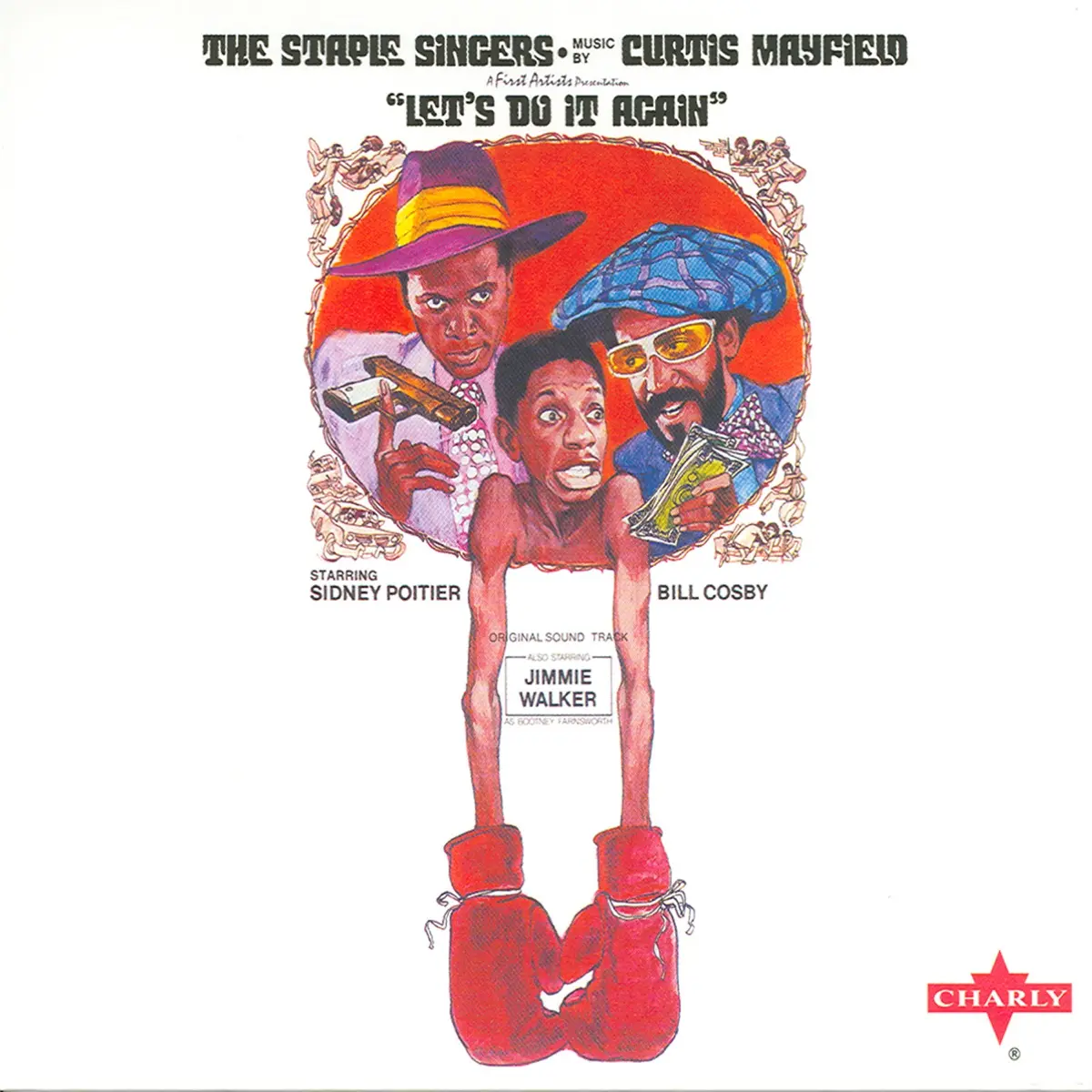 The Staple Singers collaborated with writer/producer Curtis Mayfield on the September 1975 Curtom release Let’s Do It Again, the soundtrack to the action comedy co-starring Sidney Poitier, Bill Cosby, and Jimmie Walker (of the Norman Lear-produced CBS sitcom Good Times).
The album blends the Staple Singers’ gospel-inflected vocal harmonies with Mayfield’s polished, Southern soul production. Most of side one features vocal tracks anchored by Mavis Staples’ lead, while side two primarily consists of instrumentals written for the film’s narrative sequences. Gil Askey and Rich Tufo handled the arrangements.
Mayfield wrote seven of the eight tracks, with “Chase” co-written by Quinton Joseph, Philip Upchurch, Gary Thompson, Floyd Morris, and Joseph Scott. Keyboardists Floyd Morris and Rich Tufo, guitarists Curtis Mayfield, Gary Thompson, and Phil Upchurch, drummer Quinton Joseph, percussionist Henry Gibson, and bassist Lucky Scott comprise the core backing ensemble.
Side one opens with the title track, a smooth and sharp-turning number that frames the Staple Singers’ harmonies over Mayfield’s rhythmic textures. “Funky Love” and “New Orleans” continue in a lively vein, while “A Whole Lot of Love” presents a gospel-tinged ballad with prominent bass and backing vocals. Side two moves into instrumental territory: “I Want to Thank You” retains the vocal group’s spiritual resonance, while “Big Mac,” “After Sex,” and “Chase” provide cinematic underscore with varied rhythmic pace and guitar flourishes.
A1. “Let’s Do It Again” (4:52) – Opens with lush, sensual textures, pairing Mavis’ smooth lead and Pops’ understated harmonies. The lyrics explore romantic anticipation, set to a slow, contoured rhythm that emphasizes the song’s intimate tone.
A2. “Funky Love” (4:48) – Mavis leads a performance that blends soft Southern soul with Mayfield’s signature silky arrangements. Angular vocal turns and a lightly syncopated pace underscore the interplay between longing and affirmation in the lyrics.
A3. “A Whole Lot of Love” (3:52) – Foregrounds Mavis’ gospel-inflected voice over gentle, flowing instrumentation. Lyrics offer expressions of devotion and emotional generosity, while Lucky Scott’s wandering bass punctuates the softer orchestral layers.
A4. “New Orleans” (4:23) – Pairs city-themed imagery with rhythmic propulsion and sharp instrumental turns. The arrangement emphasizes dynamic shifts and layered percussion, enhancing the narrative of urban life and celebration.
B1. “I Want to Thank You” (5:22) – Mavis delivers a gospel-tinged affirmation over a deliberate, measured pace. Harmonized vocals highlight gratitude and reverence, bridging secular and spiritual themes.
B2. “Big Mac” (6:05) – Anchored by a whispering refrain and blaxploitation-inflected rhythms. Guitar lines and bass motifs interact dynamically, creating tension and release over a mid-tempo pulse.
B3. “After Sex” (6:43) – This mostly instrumental track features airy textures and minimal vocalization from Mavis. Pastoral instrumentation and a gentle, flowing pace evoke introspection and respite.
B4. “Chase” (4:14) – Uses fast, angular rhythmic motifs and layered instrumentation to suggest pursuit and cinematic tension.
Sessions occurred at Curtom Studios in Chicago with Curtis Mayfield producing.
Record label promoted the album with the single “Let’s Do It Again” (b/w “After Sex”), which reached No. 1 on both the Billboard Hot 100 and Hot Soul Singles charts in December 1975, marking the Staple Singers’ last major hit.
The album accompanied the film Let’s Do It Again, a 1975 action comedy about two friends who rig a boxing match to raise money for their fraternal lodge. Billy Foster and Clyde Williams use hypnosis to transform an underdog fighter into a champion, navigating rival gangsters and comedic escapades across Atlanta and New Orleans before resolving the scheme and returning home.
Discography:
- A Gospel Program (w/ The Caravans) (Gospel/Savoy, 1958)
- Uncloudy Day (Vee Jay, 1959)
- Will the Circle Be Unbroken (Vee Jay, 1960)
- Swing Low (Vee Jay, 1961)
- Hammer and Nails (Riverside, 1962)
- The Twenty-Fifth Day of December (Riverside, 1962)
- This Land (Riverside, 1963)
- Swing Low Sweet Chariot (Vee Jay, 1963)
- Amen! (Epic, 1965)
- Freedom Highway (Epic, 1965)
- This Little Light (Riverside, 1965)
- Why (Epic, 1966)
- Pray On (Epic, 1967)
- For What It’s Worth (Epic, 1967)
- What the World Needs Now is Love (Epic, 1968)
- Soul Folk in Action (Stax, 1968)
- We’ll Get Over (Stax, 1969)
- The Staple Swingers (Stax, 1971)
- Be Altitude: Respect Yourself (Stax, 1972)
- Be What You Are (Stax, 1973)
- Use What You Got (live archival, 1973)
- City in the Sky (Stax, 1974)
- Let’s Do It Again [OST] (Curtom, 1975, w/ Curtis Mayfield)
- Pass It On (Warner Bros., 1976 • The Staples)
- Family Tree (Warner Bros., 1977 • The Staples)
- Unlock Your Mind (Warner Bros., 1978 • The Staples)
- Hold On to Your Dream (20th Century-Fox, 1981)
- This Time Around (1981)
- Turning Point (Private I, 1984)
- The Staple Singers (Epic, 1985)
Sources:
- Discogs: The Staple Singers
- 45worlds: The Staple Singers
- 45cat: The Staple Singers
- MusicBrainz: The Staple Singers
Artist/Album Pages:
Sunhouse was a Belgian jazz-rock band behind a 1977 self-titled album on JW's Records. Bassist Ala...
Roger Rodier is a Québécois folk-psych singer-songwriter behind the 1972 Columbia album Upon Velve...
Alan Skidmore (born April 21, 1942) is an English tenor saxophonist from London who appeared on 19...
The Red Crayola was an American psychedelic rock band from Houston that released the experimental...
The Heavy Metal Kids were an English hard-rock/pop band from London that released a self-titled al...
Morka was a Greek folk-psych ensemble that released six songs across two shortplayers in 1972 on P...
Mandalaband was the symphonic-rock project of English composer/arranger David Rohl, a later Egypto...
Heaven & Earth were an American soul group from Chicago behind the 1976 GEC album I Can't See...
General Crook is an American soul singer who released a 1974 Wand album and scored R&B hits w...
Milk 'n' Cookies were an American pop-rock band from New York that released a self-titled album in 1...
Booty People were an American soul-funk band that made the Bicentennial single "Spirit of '76" on ...
Jane Birkin (Dec. 14, 1946 – July 13, 2023) was a French-based chanson-pop singer and actress, ori...