

Ashford & Simpson were an American soul-pop duo from N.Y.C. comprising the husband-and-wife musical team of Nickolas Ashford (May 4, 1941 – Aug. 22, 2011) and Valerie Simpson (b. Aug. 26, 1946). The pair debuted with a standalone single in 1964, followed by a half-decade behind the scenes as staff writers for Motown. The couple began recording again in 1971, releasing two albums under Simpson’s name, followed by a run of titles as a duo.
Background
Ashford was born in Fairfield, SC, and Simpson in the Bronx. Soon after his birth, the Ashford family moved to Ypsilanti, Mich., where Nick joined the Christ Temple Baptist Church and sang with the Hammond Singers. After graduating high school, he headed to New York to pursue his music career. He met Simpson at the White Rock Baptist Church in Harlem. They became romantic and music partners.
Valerie & Nick
Ashford and Simpson first recorded as Valerie & Nick on small-press Glover, where they issued three 1964 singles: “I’ll Find You” (b/w “Lonely Town”), “Don’t You Feel Sorry” (b/w “Somebody’s Lying On Love”), and “It Ain’t Like That” (b/w “You Don’t Owe Me Anything”).
That last a-side was co-written by singer and former-Ikette Joshie Jo Armstead, who joined forces with the pair.
Songwriting
As a songwriting trio, Ashford, Simpson, and Armstead wrote songs recorded by The Chiffons (“The Real Thing”), Maxine Brown (“One Step at a Time”), Betty Everett (“The Shoe Doesn’t Fit”), The Jewels (“Smokey Joe“), Candy & The Kisses (“Keep On Searchin'”), Mitty Collier (“I’m Satisfied”), and The Shirelles (“My Heart Belongs to You”). In 1966, Ray Charles scored an R&B No. 1 with the trio’s “Let’s Go Get Stoned,” also recorded by Manfred Mann.
As a songwriting duo, Ashford and Simpson joined Motown, where they wrote songs for Marvin Gaye and Tammi Terrell (“Ain’t No Mountain High Enough,” “You’re All I Need to Get By,” “Ain’t Nothing Like the Real Thing”), Brenda Holloway (“Starting the Hurt All Over Again”), The Marvelettes (“Destination: Anywhere”), The Temptations (“This Is My Beloved“), David Ruffin (“What You Gave Me“), Gladys Knight & the Pips (“Didn’t You Know You’d Have to Cry Sometime”), and Diana Ross (“Reach Out and Touch (Somebody’s Hand)”).
Their composition “California Soul,” originally cut as a b-side by Milwaukee psych-rockers The Messengers, was also recorded during the late 1960s by Marlena Shaw, Gaye-Terrell, The Miracles, The 5th Dimension, and the Brazilian samba-jazz combos Som Três and Tamba 4.
Separate Recordings
While their songs were being recorded by other artists, Ashford and Simpson each tried solo careers. Nickolas Ashford cut three solo singles on Verve between 1966 and 1968, followed by “Dead End Kids” on ABC in 1970. Meanwhile, Valerie Simpson (along with Melba Moore) sang in the soul chorus on Child Is Father to the Man, the 1968 debut album by Blood, Sweat and Tears. She then released the 1971/72 solo albums Exposed and Valerie Simpson on Motown’s Tamla division. In 1973, the now-married couple signed to Warner Bros. as a duo.
Gimme Something Real
 Ashford & Simpson released their debut album, Gimme Something Real, in September 1973 on Warner Bros.
The album moves at a restrained, largely ballad-paced tempo throughout, with the arrangements stripped of the orchestral density the pair had favored in their Motown work. Electric piano carries most of the melodic weight, with vocals set high in the mix. Pianist Valerie Simpson anchors the harmonic center while guitarist John Tropea and Jerry Friedman weave spare lines around her. Bassist Robert Babbit and drummers Andrew Smith and Charles Collins underpin the session with a light, unobtrusive pulse. Saxophonist Seldon Powell contributes a solo turn, and arranger Paul Riser shapes the horn and string parts.
The album covers considerable lyrical ground: the title track examines love with a direct, incisive gaze; “Can You Make It Brother” turns toward social commentary; and “Have You Ever Tried It” makes broader humanist statements. “Ain’t That Good Enough” and “Time” aim for a pleasant mid-register tone. The overall character is low-key, deliberate, and at some remove from the polished soul productions Ashford & Simpson had been crafting for other artists.
A1. “Bend Me” (3:18)
A2. “Time” (4:40)
A3. “Have You Ever Tried It” (3:25)
A4. “Gimme Something Real” (6:33)
B1. “Can You Make It Brother” (4:27)
B2. “I’m Determined” (3:18)
B3. “Ain’t That Good Enough” (3:12) — Joshie Armstead/Nickolas Ashford/Valerie Simpson
B4. “I Need Your Light” (3:41)
B5. “Anywhere” (5:00)
Ashford & Simpson recorded Gimme Something Real at Generation Sound Studios, Hit Factory, and Regent Sound with engineers Tony May, Jon Child, and Bob Liftin. Paul Riser arranged the album.
Warner Bros. issued “(I’d Know You) Anywhere” as a single in 1973. It reached number 88 on the Billboard Hot 100 and number 37 on the R&B chart.
I Wanna Be Selfish
 Ashford & Simpson released their second album, I Wanna Be Selfish, in June 1974 on Warner Bros.
The album returns to the warmer, more buoyant sound the pair had established in their songwriting work, with arrangements from Paul Riser that bring strings and horns into fuller play than on the debut. Simpson’s piano sits at the center of each track, and the rhythm section — bassist Francisco Centeno alternating with Robert Babbit, drummers Andrew Smith and Charles Collins — moves with more confidence and variety. Guitarists Cornell Dupree and Jerry Friedman contribute fills and runs, while Seldon Powell returns for saxophone passages.
The opening “Spoiled” takes a brisk, upbeat shape, and the title track and “Everybody’s Got to Give It Up” sustain that forward energy. The album’s slower half tilts toward warmth and sentiment: “Ain’t Nothin’ But a Maybe” and “Take All the Time You Need” stretch into more patient arrangements where Riser’s string writing takes on a larger role.
A1. “Spoiled” (3:00)
A2. “Everybody’s Got to Give It Up” (3:27)
A3. “I Wanna Be Selfish” (3:13)
A4. “I Had a Love” (4:41)
A5. “Main Line” (3:13)
B1. “Ain’t That Something” (2:27)
B2. “Don’t Fight It” (2:30)
B3. “Ain’t Nothin’ But a Maybe” (3:45)
B4. “Over to Where You Are” (4:10)
B5. “Take All the Time You Need” (5:07)
Ashford & Simpson recorded I Wanna Be Selfish at Generation Sound Studios, A&R Studios, and Electric Lady Studios with engineers Tony May and Elliot Scheiner. Paul Riser arranged the album.
Warner Bros. issued “Have You Ever Tried It” as a single in 1974. It reached number 77 on the R&B chart. “Main Line” followed as a single and reached number 37 on the R&B chart. Warner Bros. also issued “Everybody’s Got to Give It Up,” which peaked at number 53 on the R&B chart.
Come as You Are
 Ashford & Simpson released their third album, Come as You Are, in March 1976 on Warner Bros.
The album carries the imprint of arranger William Eaton on seven of its eight tracks, with Al Gorgoni taking “Caretaker” alone. The arrangements run slick and orchestrated, with thickly applied strings throughout most of the record. Guitarist Eric Gale appears on the majority of tracks, with Hugh McCracken picking up slide guitar and soloist duties on “Tell It All,” alongside honky-tonk piano that sets it apart from the surrounding material. Keyboardists Richard Tee and Don Grolnick divide session duties, drummer Steve Gadd drives the rhythm, and bassist Francisco Centeno holds the low end. Simpson’s piano appears only on “Sell the House.”
“It’ll Come, It’ll Come, It’ll Come” and “Somebody Told a Lie” run at a quieter pace and lighter touch, closer to the feel of the earlier records. “One More Try,” written by Simpson’s brother Raymond and Bobby Gene Hall, pushes into a disco-fusion framework built around an extended Eric Gale guitar solo. “Believe In Me” moves at a slower, more obvious melodic pace.
A1. “It’ll Come, It’ll Come, It’ll Come” (2:53)
A2. “One More Try” (3:26) — Raymond Simpson/Bobby Gene Hall, Jr.
A3. “Believe In Me” (5:20)
A4. “Caretaker” (3:53)
B1. “Somebody Told a Lie” (5:49)
B2. “Tell It All” (5:15)
B3. “Sell the House” (3:20)
B4. “It Came to Me” (3:53)
Ashford & Simpson recorded Come as You Are with chief engineer Elliot Scheiner and associate engineers Glen Berger, Kevin Herron, and Malcolm Addey. The album was mastered at Sterling Sound.
Warner Bros. issued “It’ll Come, It’ll Come, It’ll Come” as a single in 1976; it reached number 96 on the R&B chart. “Somebody Told a Lie” followed, reaching number 58 on the R&B chart. “One More Try” reached number 9 on the Canadian chart.
So So Satisfied
 Ashford & Simpson released their fourth album, So So Satisfied, in January 1977 on Warner Bros.
The album opens with its most concentrated stretch of writing, then levels off into more uneven terrain. Arranger Al Gorgoni handles “Tried, Tested and Found True,” “Destiny,” and “It’s You,” while William Eaton takes the remaining tracks. Richard Tee plays piano on most of the album, with Simpson contributing on “Destiny,” “Maybe I Can Find It,” and “It’s You.” Drummers Steve Gadd and Rick Marotta share the kit across different tracks, with bassist Francisco Centeno and Eric Gale on bass alternating through the session. Eric Gale and Hugh McCracken split guitar duties, and Ralph MacDonald drives the percussion.
“Tried, Tested and Found True” opens on a swinging piano figure and builds toward a syncopated middle passage where strings cut against the rhythm. “Couldn’t Get Enough” runs at a faster, more propulsive pace. “Destiny” sits in a calmer, more open frame. The seven-minute title track pulls back into slower, more deliberate territory, and “Over and Over” settles into lighter, less eventful motion.
A1. “Tried, Tested and Found True” (5:27)
A2. “Couldn’t Get Enough” (3:37)
A3. “Maybe I Can Find It” (5:15)
A4. “Destiny” (3:54)
B1. “So So Satisfied” (7:04)
B2. “Over and Over” (4:21)
B3. “It’s You” (3:52)
B4. “If You’re Lying” (5:04)
Ashford & Simpson recorded So So Satisfied at Rosebud Recording Studio and A&R Studios with chief engineer Richard Alderson. The album was mastered at Sterling Sound.
Warner Bros. issued “Tried, Tested and Found True” as a single in 1976; it reached number 52 on the R&B chart and number 34 on the Canadian chart. “So So Satisfied” followed and reached number 27 on the R&B chart. “Over and Over” reached number 39 on the R&B chart.
Send It
 Ashford & Simpson released their fifth album, Send It, in September 1977 on Warner Bros.
The arrangements gain density here, with Paul Riser’s string and horn writing more prominent than on any previous Ashford & Simpson record, and the first appearance of synthesizer — a Moog, handled by Phillip Woo on the opening track. Guitarists Eric Gale and Steve Khan divide the session between them, and drummer Christopher Parker takes the kit on “By Way of Love’s Express” and “Don’t Cost You Nothing,” with John Sussewell filling the seat elsewhere. Bassist Francisco Centeno and Ray Chew on clavinet anchor the rhythm. The extended instrumental “Bourgié Bourgié” closes the album with a six-minute track that later received lyrics for a Gladys Knight & the Pips recording.
The title track and “By Way of Love’s Express” operate in the pair’s established sentimental mode, while “Don’t Cost You Nothing” and “Top of the Stairs” push into more direct, rhythmically forward territory. “Let Love Use Me” sustains a smooth, mid-tempo pace.
A1. “By Way of Love’s Express” (3:36)
A2. “Let Love Use Me” (4:41)
A3. “Don’t Cost You Nothing” (4:53)
A4. “Send It” (4:27)
B1. “Top of the Stairs” (4:39)
B2. “Too Bad” (3:27)
B3. “Bourgié Bourgié” (Instrumental) (6:07)
B4. “I Waited Too Long” (4:39)
Ashford & Simpson recorded Send It at Sigma Sound Studios and A&R Studios, New York, with chief engineer Mike Hutchinson. Paul Riser arranged the album.
Warner Bros. issued “Don’t Cost You Nothing” as a single in 1978; it reached number 79 on the Billboard Hot 100, number 10 on the R&B chart, and number 23 on the Canadian chart. “By Way of Love’s Express” followed, reaching number 35 on the R&B chart.
Send It peaked at number 52 on the Billboard 200 and number 10 on the R&B album chart, and was certified Gold by the RIAA.
Is It Still Good to Ya
 Ashford & Simpson released their sixth album, Is It Still Good to Ya, in August 1978 on Warner Bros.
The album finds the pair working at a tighter, more meticulously assembled level of production, with Paul Riser’s horn and string arrangements more carefully integrated into the texture than before. Ray Chew handles Fender Rhodes and synthesizer across most of the tracks, while Simpson’s acoustic piano fills the harmonic space on several numbers. Steve Jordan drums on half the album, with John Sussewell taking the remaining sessions. Bassist Francisco Centeno and guitarist Eric Gale form the consistent core of the rhythm section throughout.
“It Seems to Hang On” opens the album with a frantic, high-energy construction that breaks from the soft verse into a sharply articulated chorus and vamp. The title track moves at a slow, intimate tempo, with the pair delivering the melody in close, sustained tones. “You Always Could” carries a more expansive melodic arch, supported by warm horn voicings. “Get Up and Do Something” tilts toward a disco-flavored framework, while “Flashback” runs more lightly through a disco-adjacent structure.
A1. “It Seems to Hang On” (5:08)
A2. “Is It Still Good to Ya” (3:49)
A3. “The Debt Is Settled” (3:50)
A4. “Ain’t It a Shame” (4:54)
B1. “Get Up and Do Something” (4:52)
B2. “You Always Could” (3:32)
B3. “Flashback” (3:55)
B4. “As Long as It Holds You” (3:58)
Ashford & Simpson recorded Is It Still Good to Ya at Sigma Sound Studios, New York, with engineer Mike Hutchinson. Strings were recorded at Celebration Studio, New York; horns at Sigma Sound. Paul Riser arranged strings and horns.
Warner Bros. issued “It Seems to Hang On” as a single in 1978; it reached number 2 on the R&B chart and number 48 on the UK chart, remaining on the R&B chart for seventeen weeks including five consecutive weeks at number 2. “Is It Still Good to Ya” followed and reached number 12 on the R&B chart. “Flashback” reached number 70 on the R&B chart.
Is It Still Good to Ya peaked at number 20 on the Billboard 200 and number 1 on the R&B album chart and was certified Gold by the RIAA.
Stay Free
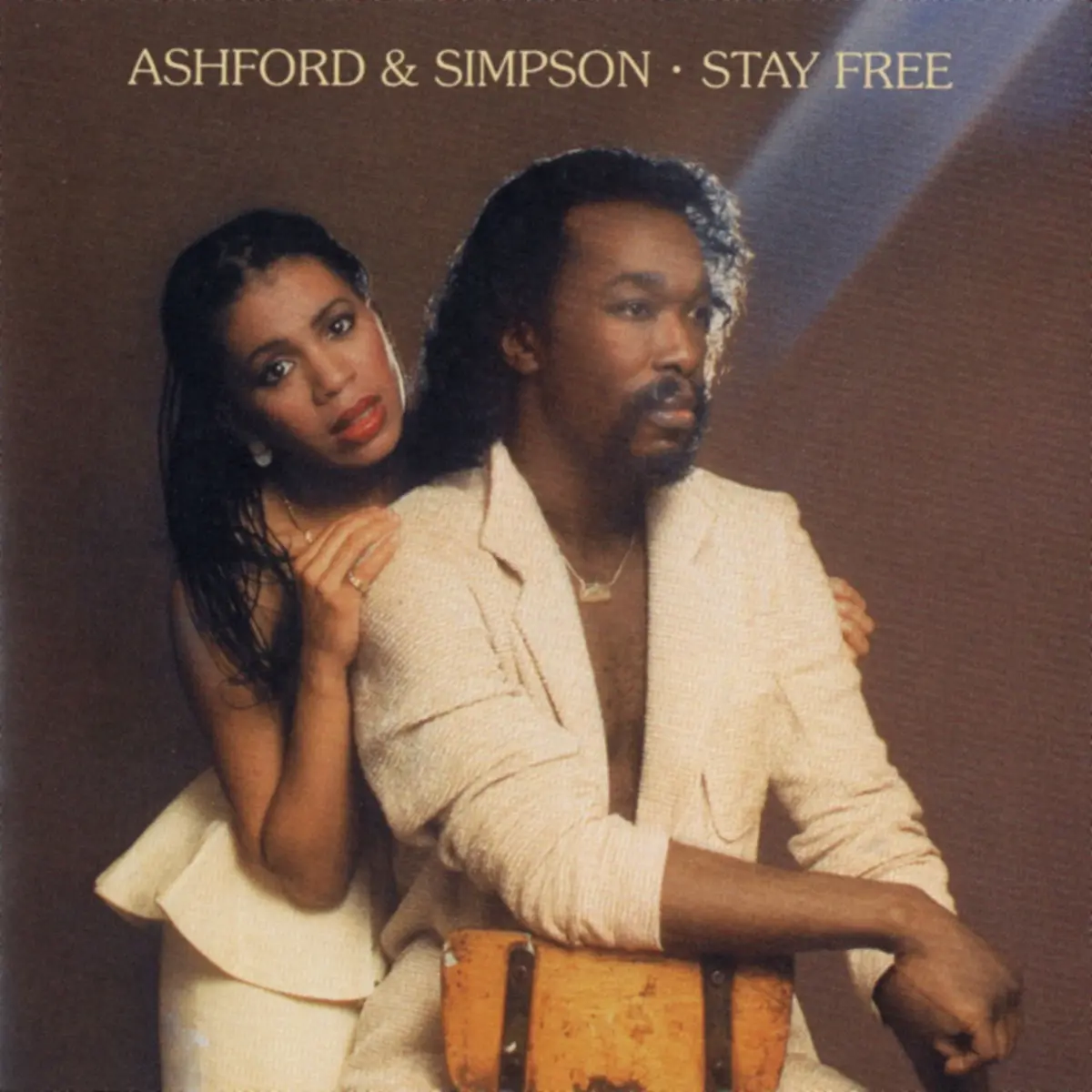 Ashford & Simpson released their seventh album, Stay Free, in August 1979 on Warner Bros.
The album splits between its two most carefully constructed tracks and a set of longer, more diffuse numbers oriented toward the dance floor. Rob Mounsey arranges horns and strings on “Found a Cure” and “Stay Free,” with Paul Riser and John Davis handling orchestration on the remaining tracks. Guitarist Eric Gale plays across the record. Chris Parker drums on “Found a Cure,” “Stay Free,” “Crazy,” and “Finally Got to Me,” with Steve Gadd anchoring “Nobody Knows” and syndrum patterns from Ralph MacDonald shaping the rhythm of “Dance Forever.” Bassist Francisco Centeno provides the low end on all but “Dance Forever,” where Anthony Jackson takes the role. Ray Chew contributes Minimoog on several tracks.
“Found a Cure” opens with a dense, intricately voiced horn and string arrangement and runs close to seven minutes, building through a series of shifting textures. “Stay Free” operates in a similar register, with close-voiced orchestration and a stately, unhurried pace. “Dance Forever” and “Nobody Knows” occupy extended disco formats where the arrangements focus on pulse and repetition. “Crazy” and “Follow Your Heart” slow the pace considerably, the latter built around a Mantovani-style string arrangement.
A1. “Found a Cure” (6:59)
A2. “Stay Free” (5:27)
A3. “Dance Forever” (5:48)
B1. “Nobody Knows” (6:33)
B2. “Crazy” (3:39)
B3. “Finally Got to Me” (4:40)
B4. “Follow Your Heart” (4:46)
Ashford & Simpson recorded Stay Free at Sigma Sound Studios, New York, with engineer Mike Hutchinson.
Warner Bros. issued “Found a Cure” as a single in 1979 with “You Always Could” on the B-side. It reached number 2 on the US R&B chart, number 1 on the US Billboard Disco Top 80 for two weeks, number 36 on the Billboard Hot 100, and number 65 on the Canadian chart. Stay Free peaked at number 23 on the Billboard 200 and number 3 on the R&B album chart and was certified Gold by the RIAA.
A Musical Affair
 Ashford & Simpson released their eighth album, A Musical Affair, in July 1980 on Warner Bros.
The album continues in the same general arrangement style as Is It Still Good to Ya, with Paul Riser and Rob Mounsey splitting orchestration duties and the core band — guitarist Eric Gale, Ray Chew on keyboards, bassist Francisco Centeno, drummer Chris Parker, and Ralph MacDonald on percussion — mostly in place. Simpson’s piano appears throughout. Mounsey arranges horns and strings on the majority of the record, with Riser taking the strings on “You Never Left Me Alone” and flute on “Rushing To.” The album divides between midtempo dance tracks and slower ballads.
“Love Don’t Make It Right” opens with a snappy clavinet figure and moves at a brisk pace. “Rushing To” settles into a slower, more contemplative frame, with flute carrying the melodic line above a patient rhythm. “I Ain’t Asking for Your Love” develops its lyrical argument across a steady, measured arrangement. “Happy Endings” closes the album with an extended ballad where Mounsey’s string writing takes an expansive turn and Simpson’s vocal delivery sustains a heightened emotional weight.
A1. “Love Don’t Make It Right” (4:21)
A2. “Rushing To” (5:23)
A3. “I Ain’t Asking for Your Love” (4:00)
A4. “Make It to the Sky” (3:52)
B1. “We’ll Meet Again” (3:51)
B2. “You Never Left Me Alone” (3:47)
B3. “Get Out Your Handkerchief” (3:58)
B4. “Happy Endings” (5:14)
Ashford & Simpson recorded A Musical Affair with engineer Mike Hutchinson and mixed the album at Sigma Sound Studios, New York. The album was mastered at Sterling Sound.
Warner Bros. issued “Love Don’t Make It Right” as a single in 1980; it reached number 6 on the R&B chart and number 7 on the Canadian chart. “Happy Endings” followed, reaching number 35 on the R&B chart. A Musical Affair peaked at number 38 on the Billboard 200 and number 8 on the R&B album chart.
Performance
In September 1981, Ashford & Simpson issued Performance, a double-album with three sides recorded live and a fourth with studio material.
The live sides draw from across the pair’s catalog. The set opens with an instrumental treatment of “Bourgié Bourgié,” moves through “Nobody Knows,” and covers a medley of Marvin Gaye and Tammi Terrell recordings — “You’re All I Need,” “Ain’t Nothing Like the Real Thing,” and “Ain’t No Mountain High Enough” — at a swift, compressed pace. “It Seems to Hang On” and “Don’t Cost You Nothing” appear in extended form, and a medley running through “Landlord,” “Clouds,” “The Boss,” and “Is It Still Good to Ya” takes Simpson to the piano. “Clouds” and “The Boss” form the emotional center of the sequence.
The three studio tracks on side four — “It Shows in the Eyes,” “It’s the Long Run,” and “Come On, Pretty Baby” — carry the polished, synthetic-drum-driven character of the preceding studio albums. “It Shows in the Eyes” opens with more dramatic momentum than the other two.
Live sides:
A1. “Bourgié Bourgié” (Instrumental) (1:26)
A2. “Nobody Knows” (4:52)
A3. Medley: “You’re All I Need” / “Ain’t Nothing Like the Real Thing” / “Ain’t No Mountain High Enough” (5:37)
A4. “It Seems to Hang On” (6:32)
B1. “Don’t Cost You Nothing” (3:50)
B2. Medley: “Landlord” / “Clouds” / “The Boss” / “Is It Still Good to Ya” (13:15)
C1. “I Need Your Light” (3:51)
C2. “Love Don’t Make It Right” (3:23)
C3. “Gimme Something Real” (8:55)
C4. “Found a Cure” (4:10)
Studio:
D1. “It Shows in the Eyes” (4:02)
D2. “It’s the Long Run” (5:03)
D3. “Come On, Pretty Baby” (4:27)
Ashford & Simpson recorded Performance with engineer Michael Hutchinson. The album was mastered at Sterling Sound.
Warner Bros. issued “It Shows in the Eyes” as a single in 1981; it reached number 34 on the R&B chart.
Street Opera
 Ashford & Simpson released their ninth studio album, Street Opera, in 1982 on Capitol.
The album opens with four self-contained tracks before giving over all of side two to a thirteen-minute narrative suite. Leon Pendarvis arranges horns and strings throughout, with Ray Chew contributing rhythm arrangements. Guitarist Eric Gale and drummer Yogi Horton anchor the rhythm section alongside bassist Francisco Centeno. Richard Tee appears on “I’ll Take the Whole World On.” The side-one tracks move at varying tempos, mixing upbeat, funk-leaning numbers with slower material. The “Street Opera” suite on side two follows a single narrative line — a relationship strained by poverty — across several linked sections, moving between spare and full orchestration as the story develops.
“Love It Away” opens with a funky, rhythmically direct feel. “Make It Work Again” settles into a slower, more yearning register. “Who Will They Look To” and “Times Will Be Good Again” operate within the suite’s more restrained, emotionally pitched framework, while “Street Corner” pushes back into upbeat, rhythmically propulsive territory.
A1. “Love It Away” (4:26)
A2. “Make It Work Again” (4:17)
A3. “Mighty Mighty Love” (4:45)
A4. “I’ll Take the Whole World On” (5:11)
Street Opera:
B1. “Working Man” (2:04)
B2. “Who Will They Look To” (3:01)
B3. “Street Corner” (4:20)
B4. “Times Will Be Good Again” (2:36)
B5. “Working Man” (Reprise) (1:15)
Ashford & Simpson recorded Street Opera at Sigma Sound Studios, New York, with engineer Mike Hutchinson. The album was mastered at Frankford/Wayne Mastering Labs.
Capitol issued “Street Corner” as a single in 1982; it reached number 56 on the Billboard Hot 100, number 9 on the R&B chart, and number 11 on the Canadian chart. “Love It Away” followed and reached number 20 on the R&B chart. Street Opera peaked at number 45 on the Billboard 200 and number 5 on the R&B album chart.
High Rise
 Ashford & Simpson released their tenth studio album, High Rise, in 1983 on Capitol.
Synthesizers take a dominant role here, with Ed Walsh and Pete Cannarozzi credited on the majority of tracks. Ray Chew handles Yamaha electric piano throughout, with Valerie Simpson contributing acoustic piano on “It’s Much Deeper.” Yogi Horton drums on “High-Rise,” “Side Effect,” “It’s a Rush,” “I’m Not That Tough,” and “Still Such a Thing,” with Steve Gadd taking “Experience (Love Had No Face),” “My Kinda Pick Me Up,” and “It’s Much Deeper.” Guitarist Sidney McGinnis appears across most of the album, and bassist Francisco Centeno holds the low end. Horn and string arrangements come from Ray Chew on most tracks, with Paul Riser handling “Still Such a Thing” and Leon Pendarvis handling “Experience (Love Had No Face).”
The title track and most of side one run at an aggressive synthesizer-heavy pace, with Walsh and Cannarozzi’s programming layered over Chew’s electric piano in a way that crowds the texture. “Experience (Love Had No Face)” stands apart with a quieter, more acoustic arrangement where acoustic piano and Pendarvis’s strings carry the track. “I’m Not That Tough” develops its anti-macho lyric across a mid-tempo frame. “Still Such a Thing” closes the album in slow, inspirational mode with Riser’s strings providing the orchestral backdrop.
A1. “High-Rise” (5:35)
A2. “Side Effect” (4:07)
A3. “Experience (Love Had No Face)” (4:38)
A4. “It’s a Rush” (5:06)
B1. “My Kinda Pick Me Up” (3:09)
B2. “I’m Not That Tough” (4:34)
B3. “It’s Much Deeper” (6:30)
B4. “Still Such a Thing” (5:13)
Ashford & Simpson recorded High Rise at Penny Lane Studios and mixed it at Sigma Sound Studios. The album was mastered at Frankford/Wayne Mastering Labs.
Capitol issued “High-Rise” as a single in 1983; it reached number 17 on the R&B chart and number 41 on the Canadian chart. “It’s Much Deeper” followed, reaching number 45 on the R&B chart. High Rise peaked at number 84 on the Billboard 200 and number 14 on the R&B album chart.
Solid
 Ashford & Simpson released their eleventh studio album, Solid, on October 12, 1984, on Capitol.
Synthesizers and electronic percussion dominate the majority of the album. Ed Walsh handles synthesizer programming on the title track and “Babies,” with Joseph Joubert contributing synthesizer arrangements on “Outta the World,” “Cherish Forever More,” and “Tonight We Escape.” Valerie Simpson plays synthesizer and, on several tracks, bass and keyboards. Guitarist Sid McGinnis appears on the title track, “The Jungle,” and “Babies,” and bassist Francisco Centeno carries the rhythm on the tracks built around live bass. Drummer Chris Parker plays on the title track and “Tonight We Escape,” with drum programming otherwise handling the backbeat. “Closest to Love” carries separate production credits — James Newton Howard handled drum programming and keyboards, with Elliot Scheiner co-producing. Michael Brecker plays saxophone on “Cherish Forever More.”
The title track, “Solid,” opens the album with a mid-tempo, synthesizer-and-brass construction that combines live horns — Vinny Della Rocca on saxophone, Joe Mosello on trumpet — with programmed drums and a tight bass line. “Outta the World” and “The Jungle” push into more aggressive programmed-drum territory. “Honey I Love You” and “Tonight We Escape” pull back to quieter, more acoustic arrangements.
A1. “Solid” (5:04)
A2. “Outta the World” (5:48)
A3. “The Jungle” (2:51)
A4. “Honey I Love You” (3:58)
B1. “Babies” (5:00)
B2. “Closest to Love” (4:10) — Phil Gladston/Phil Ramone
B3. “Cherish Forever More” (3:48)
B4. “Tonight We Escape (We Make Love)” (3:14)
Ashford & Simpson recorded Solid with recording engineer Tim Cox. The album was mastered at Sterling Sound.
Capitol issued “Solid” as a single in September 1984 with “Solid (Dub Version)” on the B-side. It reached number 1 on the US R&B chart, number 12 on the Billboard Hot 100, number 1 in New Zealand, number 2 in West Germany and Belgium, number 3 in the UK, the Netherlands, and Switzerland, number 4 in Austria, and number 5 in Canada and Ireland.
Solid peaked at number 29 on the Billboard 200 and number 1 on the R&B album chart and was certified Gold by the RIAA and Gold in both the UK and Canada. Capitol also issued “Outta the World” as a single in 1985; it reached number 4 on the R&B chart and number 102 on the Billboard Hot 100. “Babies” followed, reaching number 29 on the R&B chart.
Real Love
 Ashford & Simpson released their twelfth studio album, Real Love, in 1986 on Capitol.
Programmed drums and synthesizer lines form the rhythmic and harmonic foundation across most of the album. Joseph Joubert arranged the synthesizer parts and handles the majority of the electronic instrumentation. Bassist Francisco Centeno plays on approximately half the tracks, and Steve Gadd contributes live drums on several numbers. Sammy Figueroa adds live percussion to “Relations.” Stevie Wonder plays harmonica on “Nobody Walks in L.A.” Vocalists Raymond Simpson and Ullanda McCullough contribute backing parts throughout. Mixers François Kevorkian and Ron St. Germain handle “Count Your Blessings” and “Real Love,” with Mike Hutchinson taking the remaining tracks.
The album moves at a midtempo pace across most of its eight tracks, with a largely consistent sonic character that runs from opener to closer. “Count Your Blessings” and “What Becomes of Love” carry more distinct melodic profiles. “Nobody Walks in L.A.” lightens the texture slightly with Wonder’s harmonica over a less densely programmed arrangement.
A1. “Count Your Blessings” (4:53)
A2. “Real Love” (4:03)
A3. “Nobody Walks in L.A.” (5:38)
A4. “How Does It Fit” (4:08)
B1. “Relations” (5:17)
B2. “What Becomes of Love” (5:59)
B3. “Way Ahead” (4:01)
B4. “10th Round” (4:22)
Ashford & Simpson recorded Real Love at 39th Street Music Studio, Blank Tape Studios, and Unique Recording, and mixed it at 39th Street Music Studio and Soundmixers, New York City. The album was mastered at Sterling Sound by George Mareno.
Capitol issued “Count Your Blessings” as a single in 1986; it reached number 4 on the R&B chart and number 84 on the Billboard Hot 100. Real Love peaked at number 74 on the Billboard 200 and number 12 on the R&B album chart.
Discography:
- “I’ll Find You” / “Lonely Town” (1964 • Valerie & Nick)
- Exposed (1971 • Valerie Simpson)
- Valerie Simpson (1972 • Valerie Simpson)
- Gimme Something Real (1973)
- I Wanna Be Selfish (1974)
- Come as You Are (1976)
- So So Satisfied (1977)
- Send It (1977)
- Is It Still Good to Ya (1978)
- Stay Free (1979)
- A Musical Affair (1980)
- Performance (live, 1981)
- Street Opera (1982)
- High Rise (1983)
- Solid (1984)
- Real Love (1986)
- Love or Physical (1989)
Sources:
- Discogs: Ashford & Simpson
- 45worlds: Ashford & Simpson
- 45cat: Ashford & Simpson
- MusicBrainz: Ashford & Simpson
Artist/Album Pages:
Ten Years After were an English blues-rock band that released five 1967–70 studio albums and a liv...
Bemibem was a Polish soul-pop band behind the 1974 album Bemowe Frazy on Polskie Nagrania Muza. ...
Soft Machine was an English jazz-rock band that was active between the late 1960s and early 1980s. T...
Colin Blunstone is an English singer who fronted The Zombies, which charted with the British Invas...
Bobbye Hall is an American jazz-funk percussionist from Detroit who released the 1977 album Body ...
Fraction was an American psych-rock band from Los Angeles that released the 1971 album Moon Blood...
Serge Locat is a Québécois keyboardist and composer who joined the mid-Seventies Harmonium lineup....
Carolyn Crawford (born July 19, 1949) is an American soul singer from Detroit who had shortplayer ...
Sade are an English jazz–pop–soul band fronted by namesake Nigerian–British singer Sade Adu. They ...
Stone Alliance was an American jazz-rock ensemble formed in New York City by bassist Gene Perla, d...
Denise LaSalle (1934–2018) was an American soul singer and songwriter from Northeast Mississippi w...
Sweet Charles — aka Charles Emanuel Sherrell (born March 8, 1943) — is an American soul singer fro...