

Marvin Gaye (April 2, 1939 — April 1, 1984) was an American R&B vocalist, songwriter, and producer from Washington, D.C., who was musically active for a quarter-century, achieving worldwide renown as one of Tamla/Motown’s leading performers.
Gaye rose to fame with a string of duets, first with Kim Weston and then with Tammi Terrell, his singing partner between 1967 and 1970. Staying with the label after the loss of his partner, he exerted greater artistic control with his 1971 release What’s Going On, his first in a series of soul-funk albums over the subsequent decade.
Background
Gaye was born Marvin Pentz Gay Jr. in Washington, D.C., on April 2, 1939. He grew up in the city’s rundown housing projects with his three siblings. His father, Marvin Gay Sr., was a church minister who beat his son regularly.
Gay started singing in church choirs at age four. As a teen, he became the leading voice in the Randall Junior High Glee Club. In high school, he joined several doo-wop vocal groups, including the Dippers and the D.C. Tones. To escape his contentious home life, he dropped out of school at age 17 and enlisted in the Army for a brief stint.
The Marquees / New Moonglows
In 1957, Gay joined The Marquees, a D.C. doo wop group under the auspices of Bo Diddley. Their one single, “Hey Little School Girl” (b/w “Wyatt Earp”), appeared that year on Okeh with Diddley on guitar and Gay singing baritone. They were then hired by singer Harvey Fuqua as replacements for his crumbling act The Moonglows. As the New Moonglows, they cut six sides on Chess, including “Mama Loochie,” the first recording of Gay on lead vocals. They also worked as session vocalists for Chuck Berry on the songs “Back in the U.S.A.” and “Almost Grown.”
In 1960, Gay moved to Detroit, where he worked as a session drummer for Tri-Phi Records. That Christmas, he performed at Motown founder Berry Gordy’s house. Impressed with Gay’s singing, Gordy signed him to Motown subsidiary Tamla. To avoid innuendo and distance himself from his father, Gay added an e to his surname.
The Soulful Moods of Marvin Gaye
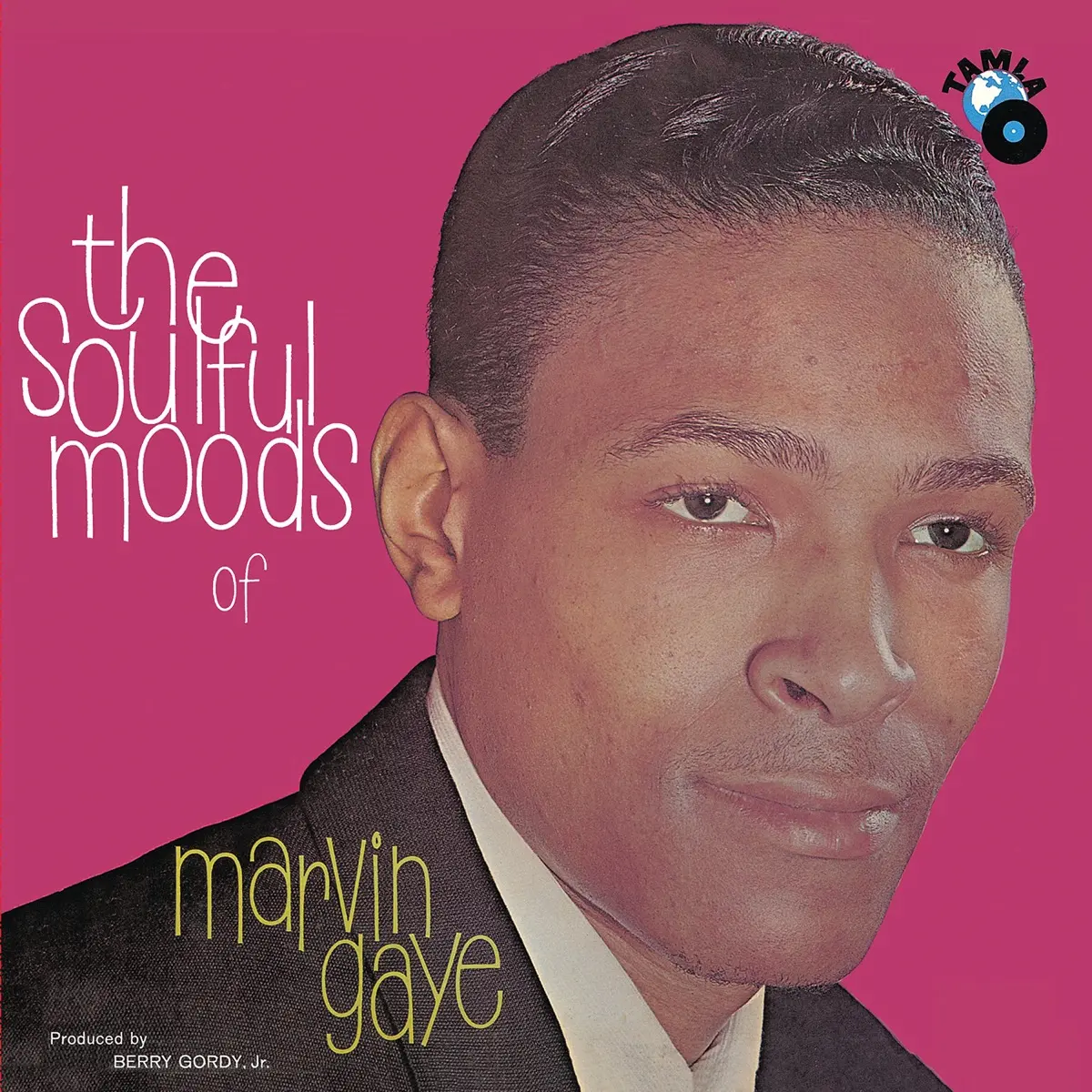 Marvin Gaye released his debut album, The Soulful Moods of Marvin Gaye, on June 8, 1961, on Tamla.
The album presents Gaye in a crooner role with a repertoire of jazz and pop standards in the tradition of Nat King Cole and Billy Eckstine. Alongside this material, he cut two R&B numbers that pointed to the musical direction that later secured his place at Motown. His core backing came from members of the Funk Brothers with background vocals by the Andantes.
Berry Gordy produced the album and wrote “Let Your Conscience Be Your Guide.” Anna Gordy and Harvey Fuqua co-wrote “Never Let You Go (Sha-Lu-Bop).” The remaining nine songs are covers of standards popularized by Billie Holiday (“Easy Living”), Frank Sinatra (“Witchcraft”),and showtunes from Babes in Arms (“My Funny Valentine”), Two for the Show (“How High the Moon”), and The New Yorkers (“Love for Sale”).
The program divides between torch ballads and mid-tempo standards. Gaye sings in a relaxed tenor, eschewing gospel inflections in favor of phrasing associated with nightclub singers. His take on Gordy’s “Let Your Conscience Be Your Guide” adds a restrained R&B sensibility, while Fuqua and Gordy’s “Never Let You Go” carries a stronger backbeat.
A1. “(I’m Afraid) The Masquerade Is Over” (5:08) — originated as a 1939 ballad by Larry Clinton and His Orchestra, written by Herbert Magidson and Allie Wrubel
A2. “My Funny Valentine” (3:26) — originated as a 1937 show tune from Rodgers and Hart’s Babes in Arms
A3. “Witchcraft” (2:22) — originated as a 1957 single by Frank Sinatra, written by Cy Coleman and Carolyn Leigh
A4. “Easy Living” (3:05) — originated as a 1937 film theme sung by Billie Holiday with Teddy Wilson’s Orchestra, written by Ralph Rainger and Leo Robin
A5. “How Deep Is the Ocean (How High Is the Sky)” (3:08) — originated as a 1932 ballad by Irving Berlin
A6. “Love for Sale” (2:54) — originated as a 1930 Broadway number from Cole Porter’s The New Yorkers
B1. “Always” (2:59) — originated as a 1925 ballad by Irving Berlin
B2. “How High the Moon” (2:28) — originated as a 1940 Broadway number from Nancy Hamilton and Morgan Lewis’ Two for the Show
B3. “Let Your Conscience Be Your Guide” (3:01)
B4. “Never Let You Go (Sha-Lu-Bop)” (2:41)
B5. “You Don’t Know What Love Is” (3:53) — originated as a 1941 film song by Gene DePaul and Don Raye, first sung by Carol Bruce
Sessions took place at Hitsville U.S.A. in Detroit with Gordy producing and Gaye on vocals, drums, and piano.
Tamla issued “Let Your Conscience Be Your Guide” (b/w “Never Let You Go”) as the album’s advance single in May 1961. Mary Wells covered “Let Your Conscience Be Your Guide” on her 1961 debut album Bye Bye Baby I Don’t Want to Take a Chance.
That Stubborn Kinda’ Fellow
 Marvin Gaye released his second album, That Stubborn Kinda’ Fellow, on January 31, 1963, on Tamla.
The album shifted him from jazz crooner aspirations to a rhythm-and-blues framework that aligned with Motown’s emerging soul sound. Gaye sang in a grainier tenor, supported by instrumentation from the Funk Brothers and layered backing vocals by Martha and the Vandellas, the Love Tones, the Andantes, and contributions from the Temptations and Supremes. He also played piano and drums on select tracks.
Gaye wrote or co-wrote eight of the album’s eleven songs, often collaborating with William “Mickey” Stevenson. George Gordy, Barrett Strong, Norman Whitfield, Clarence Paul, Anna Gordy, and Ricardo Wallace supplied additional credits. The only outside entry was “Soldier’s Plea,” composed by Stevenson, Gordy, and Williams.
The uptempo material included the singles “Stubborn Kind of Fellow,” “Hitch Hike,” and “Pride and Joy,” all paced by handclaps and call-and-response refrains. Mid-tempo tracks like “Wherever I Lay My Hat (That’s My Home)” and “Get My Hands on Some Lovin’” leaned toward emerging soul balladry, while slower numbers such as “It Hurt Me Too” and “Hello There Angel” reflected doo-wop and blues influences.
A1. “Stubborn Kind of Fellow” (2:44)
A2. “Pride and Joy” (2:36)
A3. “Hitch Hike” (2:32)
A4. “Get My Hands on Some Lovin’” (2:25)
A5. “Wherever I Lay My Hat (That’s My Home)” (2:12)
B1. “Soldier’s Plea” (2:43)
B2. “It Hurt Me Too” (2:35)
B3. “Taking My Time” (2:17)
B4. “Hello There Angel” (2:45)
B5. “I’m Yours, You’re Mine” (2:01)
Sessions occurred at Hitsville U.S.A. in Detroit between April and September 1962 with Stevenson producing.
Tamla issued “Soldier’s Plea” as a pre-album single in May 1962. “Stubborn Kind of Fellow” followed in July and became Gaye’s first hit, reaching No. 8 R&B and No. 46 pop. “Hitch Hike,” released that December, peaked at No. 12 R&B and No. 30 pop, sparking a short-lived dance craze. “Pride and Joy,” issued in April 1963, marked his first top ten pop hit, reaching No. 10 while rising to No. 2 R&B.
“Wherever I Lay My Hat (That’s My Home)” reemerged in 1983 as a UK number-one hit for Paul Young. The Rolling Stones, the Sonics, the Grass Roots, and Alison Moyet all covered “Hitch Hike” in the 1960s–80s. The Jackson 5 later recorded “Pride and Joy,” issued posthumously on their 1976 set Joyful Jukebox Music.
When I’m Alone I Cry
 Marvin Gaye released his third studio album, When I’m Alone I Cry, on April 1, 1964, on Tamla.
The album framed Gaye as a jazz balladeer with orchestral accompaniment arranged by Jerome Richardson, Melba Liston, and Ernie Wilkins. Clarence Paul produced the sessions with instrumentation by New York and Chicago jazz players, including Richardson (tenor saxophone). Gaye overdubbed vocals in Detroit after returning from a Motortown Revue tour.
Gaye co-wrote two songs with Avery Vandenberg and Fredericka Foreman, while William “Mickey” Stevenson co-produced and contributed to their composition. The remaining eight numbers are covers of standards by Billie Holiday (“You’ve Changed,” “I’ll Be Around”), Cecil Gant (“I Wonder”), Cab Calloway (“I’ll Be Around”), Larry Clinton (“Because of You”), and Louis Armstrong (“When Your Lover Has Gone”), plus songs from Broadway and film sources such as My Fair Lady (“I’ve Grown Accustomed to Her Face”).
The set alternates between torch ballads and mid-tempo swing. On “You’ve Changed,” Gaye navigates descending chromatic lines with restraint, while his phrasing on “I Don’t Know Why (I Just Do)” reflects supper-club poise. “When I’m Alone I Cry” and “If My Heart Could Sing” provide the few moments where his phrasing touches closer to R&B inflection.
A1. “You’ve Changed” (3:33) — originated as a 1941 recording by Harry James and His Orchestra (vocal by Dick Haymes), written by Carl Fischer and Bill Carey; later covered by Billie Holiday on her 1958 album Lady in Satin
A2. “I Was Telling Her About You” (4:48) — originated as a 1956 side by Jack Jones, written by Morris Charlap and Don George
A3. “I Wonder” (3:46) — originated as a 1944 side by Cecil Gant, later covered by Roosevelt Sykes (1945) and Louis Armstrong (1945); re-cut in the 1960s by Etta Jones and Aretha Franklin
A4. “I’ll Be Around” (4:09) — originated as a 1942 recording by Cab Calloway and His Orchestra, written by Alec Wilder and William Engvick; the Mills Brothers had a 1943 hit version
A5. “Because of You” (3:34) — originated as a 1940 recording by Larry Clinton and His Orchestra, written by Arthur Hammerstein and Dudley Wilkinson
B1. “I Don’t Know Why (I Just Do)” (2:46) — originated as a 1931 song published by Fred Ahlert and Roy Turk, recorded that year by Russ Columbo and Wayne King, later sung by Frank Sinatra on A Date With Judy (1943)
B2. “I’ve Grown Accustomed to Her Face” (3:32) — originated as a 1956 show tune from My Fair Lady, first sung by Rex Harrison
B3. “When Your Lover Has Gone” (4:40) — originated as a 1931 recording by Louis Armstrong, written by Einar Aaron Swan, also recorded by Nat King Cole and Sonny Rollins
B4. “When I’m Alone I Cry” (2:47) — written by Avery Vandenberg, Morris Broadnax, and Fredericka Foreman
B5. “If My Heart Could Sing” (3:20) — written by Avery Vandenberg and Morris Broadnax
Sessions occurred at studios in New York City and Chicago with Clarence Paul producing and William “Mickey” Stevenson assisting. Gaye overdubbed vocals at Detroit’s Graystone Ballroom.
Tamla issued no singles from When I’m Alone I Cry. Several of the standards (“I Wonder,” “I’ll Be Around,” “When Your Lover Has Gone”) had ongoing currency in the jazz repertoire and were recorded by later artists such as Sonny Rollins, Aretha Franklin, and Nat King Cole.
Greatest Hits
Marvin Gaye released his first compilation, Greatest Hits, in March 1964 on Tamla. It gathered his earliest singles and introduced newer listeners to the uptempo R&B style that defined his first wave of solo success.
Holland–Dozier–Holland wrote and produced three songs, including the non-album singles “Can I Get a Witness” and “You’re a Wonderful One.” Clarence Paul and William “Mickey” Stevenson co-wrote four further numbers with Berry Gordy or Gaye, who co-authored “Stubborn Kind of Fellow,” “Hitch Hike,” and “Pride and Joy.” Outside material includes Stevenson’s “One of These Days,” Pat Ballard’s “Sandman,” and “It Hurt Me Too,” co-credited to Gaye, Stevenson, and Joe Ricciardo.
Songs range from gospel-charged stomps like “Can I Get a Witness” to brisk love declarations such as “You’re a Wonderful One” and “Pride and Joy.” “Sandman” adapts the mid-1950s pop novelty by the Chordettes into a Motown context, while “It Hurt Me Too” reflects the plaintive side of Gaye’s early balladry.
A1. “Can I Get a Witness” (2:46)
A2. “You’re a Wonderful One” (2:48)
A3. “Stubborn Kind of Fellow” (2:45)
A4. “I’m Crazy ’bout My Baby” (2:43)
A5. “Pride and Joy” (2:08)
A6. “Hitch Hike” (2:30)
B1. “Sandman” (2:31)
B2. “Hello There Angel” (2:44)
B3. “One of These Days” (2:59)
B4. “I’m Yours, You’re Mine” (1:55)
B5. “Taking My Time” (2:29)
B6. “It Hurt Me Too” (2:43)
Sessions occurred at Motown’s Hitsville U.S.A. studio in Detroit with Brian Holland and Lamont Dozier producing the Holland–Dozier–Holland material, and Stevenson producing most of the remainder.
Tamla lifted three non-album singles later included here: “Can I Get a Witness” (b/w “I’m Crazy ’bout My Baby”) in September 1963, “You’re a Wonderful One” (b/w “When I’m Alone I Cry”) in February 1964, and “Sandman” in mid-1964. “Can I Get a Witness” reached No. 22 on the Billboard Hot 100 and made Gaye a fixture in London and northern England dance clubs. “You’re a Wonderful One” hit No. 15 on the Hot 100 and No. 3 R&B.
“Can I Get a Witness” has been covered by the Rolling Stones, Dusty Springfield, Stevie Wonder, and Elton John, among others, and later entered the repertoire of Lee Michaels and Sam Brown.
In June 1965, Gaye scored another non-album hit with “I’ll Be Doggone” (b/w “Now That You’ve Won Me”), written with Clarence Paul and David Hamilton. Produced by Paul, it became his first No. 1 R&B single and peaked at No. 25 on the Hot 100. Cash Box called it “a lyrical, chorus-backed funky romancer soulfully rendered by the songster.”
Together (w/ Mary Wells)
 On April 15, 1964, Motown issued Together, an album of duets by Marvin Gaye and Mary Wells.
It was Gaye’s first charting LP and his only collaboration with Wells, who departed the label shortly after its release. The album mixes romantic ballads and showtunes with two contemporary originals that became singles.
Clarence Paul and William “Mickey” Stevenson co-produced the sessions with Barney Ales contributing lyrics. Paul, Stevenson, and Ales co-wrote two songs while the remaining eight tracks are covers of material popularized by Ben Bernie (“‘Deed I Do”), Count Basie with Joe Williams (“Until I Met You”), Paul Whiteman (“Together”), Nat King Cole (“(I Love You) for Sentimental Reasons,” “The Late, Late Show”), Al Hibbler (“After the Lights Go Down Low”), Duke Ellington (“Just Squeeze Me”), and Ray McKinley (“You Came a Long Way from St. Louis”).
The set balances lighthearted exchanges with torch-style ballads. “Once Upon a Time” and “What’s the Matter with You Baby” showcase the singers in call-and-response mode, while their readings of “‘Deed I Do” and “Together” revive standards from the 1920s jazz and vaudeville era. On “Until I Met You” and “After the Lights Go Down Low,” Gaye and Wells alternate leads across languid tempos.
A1. “Once Upon a Time” (2:32) — written by Clarence Paul, Barney Ales, Dave Hamilton, William “Mickey” Stevenson
A2. “‘Deed I Do” (3:00) — 1926 vaudeville number popularized by Ben Bernie, written by Walter Hirsch and Fred Rose
A3. “Until I Met You” (3:26) — originated as “Corner Pocket,” recorded in 1956 by Count Basie with Joe Williams, written by Freddie Green and Donald Wolf
A4. “Together” (2:49) — 1928 hit by Paul Whiteman, written by Buddy DeSylva, Lew Brown, and Ray Henderson
A5. “(I Love You) for Sentimental Reasons” (2:35) — 1946 recording by Nat King Cole, written by William Best and Deek Watson
B1. “The Late, Late Show” (2:42) — originated as a 1957 single by Nat King Cole, written by Roy Alfred and Murray Berlin
B2. “After the Lights Go Down Low” (2:53) — 1956 hit for Al Hibbler, written by Phil Belmonte, Leroy Lovett, and Allen White
B3. “Just Squeeze Me (Don’t Tease Me)” (2:32) — 1941 Duke Ellington standard with lyrics by Lee Gaines
B4. “What’s the Matter with You Baby” (2:24) — written by Stevenson, Paul, and Ales
B5. “You Came a Long Way from St. Louis” (2:52) — 1948 side by Ray McKinley, written by John Brooks and Bob Russell
Sessions occurred between February and April 1963 at Hitsville U.S.A. in Detroit with producers Stevenson and Paul. Dave Hamilton played vibraharp on “Once Upon a Time.” Backing vocals were supplied by the Love Tones and the Andantes, with instrumentation by the Funk Brothers.
“Once Upon a Time” appeared as the lead single in April 1964, backed with “What’s the Matter with You Baby.” Both songs entered the US Top 20, peaking at No.’s 19 and 17, respectively. In the UK, “Once Upon a Time” reached No. 50.
Hello Broadway
 Marvin Gaye released his fourth solo studio album, Hello Broadway, on November 12, 1964, on Tamla.
The album presents Broadway standards and film themes filtered through Gaye’s emerging crooner style, reflecting his aspiration toward Nat King Cole– and Frank Sinatra–influenced phrasing rather than Motown’s R&B formulas. Arrangers Gene Page and Jerry Long shaped the instrumental backing, with Long specifically arranging “Walk on the Wild Side.”
Gaye interprets material from contemporary musicals alongside popular standards, including songs popularized by Barbra Streisand (“People”), Anthony Newley (“What Kind of Fool Am I?”), Frank Sinatra (“My Kind of Town”), Louis Armstrong (“Hello Dolly!”), and Brook Benton (“Walk on the Wild Side”), along with Broadway numbers from My Fair Lady (“On the Street Where You Live”), Funny Girl (“People”), Robin and the 7 Hoods (“My Kind of Town”), and the 1962 film Days of Wine and Roses (“Days of Wine and Roses”).
T“People” conveys a tender, yearning quality, while “On the Street Where You Live” emphasizes a contoured melodic line. “What Kind of Fool Am I?” exhibits dramatic phrasing, and “Walk on the Wild Side” channels the gospel-tinged jazz of New Orleans.
A1. “Hello Broadway” (3:11) — written by Ronald Miller and William O’Malley
A2. “People” (3:03) — composed by Jule Styne with lyrics by Bob Merrill; introduced by Barbra Streisand in Funny Girl (1964)
A3. “The Party’s Over” (3:02) — music by Jule Styne, lyrics by Betty Comden and Adolph Green
A4. “On the Street Where You Live” (2:24) — from My Fair Lady, written by Frederick Loewe and Alan Jay Lerner
A5. “What Kind of Fool Am I?” (3:40) — introduced by Anthony Newley in Stop the World – I Want to Get Off, written by Leslie Bricusse and Anthony Newley
B1. “My Kind of Town” (2:36) — written by Jimmy Van Heusen and Sammy Cahn for Robin and the 7 Hoods (1964)
B2. “Days of Wine and Roses” (3:36) — music by Henry Mancini, lyrics by Johnny Mercer, from the 1962 film of the same name
B3. “This Is the Life” (2:36) — written by Charles Strouse and Lee Adams
B4. “My Way” (2:53) — written by Richard Jacques and Ronald Miller
B5. “Hello Dolly!” (2:53) — was a 1964 No. 1 hit for Louis Armstrong, written by by Jerry Herman for the Broadway musical Hello Dolly!
B6. “Walk on the Wild Side” (2:18) — written by Mack David and Elmer Bernstein for the 1962 film of the same name, previously recorded instrumentally by Jimmy Smith.
Sessions occurred at Graystone Ballroom, Detroit, Michigan, with Hal Davis and Marc Gordon producing.
“People” was issued as a single with “I Am Woman,” Gaye’s solo rendition of Funny Girl material.
How Sweet It Is to Be Loved by You
 Marvin Gaye released his fifth solo studio album, How Sweet It Is to Be Loved by You, in January 1965 on Tamla.
The record centers on contemporary soul and R&B arrangements, featuring Gaye’s signature phrasing supported by core backing players: trumpeters Marcus Belgrave and Russell Conway, trombonists Paul Riser and Patrick Lanier, saxophonists Henry Cosby (tenor) and Mike Terry (baritone), keyboardists George Fowler (organ) and Johnny Griffith (piano), bassist James Jamerson, guitarist Robert White, and drummer Richard “Pistol” Allen, alongside The Funk Brothers’ ensemble instrumentation.
Berry Gordy produced the album. Holland–Dozier–Holland wrote four tracks, Gaye co-wrote two with Clarence Paul and Harvey Fuqua, William “Mickey” Stevenson contributed two, and Lamont Dozier, Brian Holland, and Freddie Gorman collaborated on one. The remaining two songs were written by outside writers: Smokey Robinson (“Now That You’ve Won Me”) and Barrett Strong with Norman Whitfield (“Me and My Lonely Room”).
Songs oscillate between uptempo soul numbers and emotive ballads. The title track emphasizes rollicking rhythmic variation and piano motifs. “Try It Baby” slows the pace with blues-inflected phrasing, highlighted by The Temptations’ harmonies and a trumpet solo by Maurice Davis. “Baby Don’t You Do It” features layered vocals from The Andantes over propulsive instrumentation. “You’re a Wonderful One” introduces angular brass and vocal interplay, integrating elements of Chuck Berry’s “Memphis.”
A1. “You’re a Wonderful One” (2:45) — written by Holland–Dozier–Holland; Supremes provide backing vocals; Funk Brothers play instruments; incorporates elements of Chuck Berry’s “Memphis”
A2. “How Sweet It Is (to Be Loved by You)” (2:58) — Holland–Dozier–Holland; The Andantes provide backing vocals; Funk Brothers instrumentation; previously issued as a single
A3. “Try It Baby” (2:51) — written by Berry Gordy, Jr.; The Temptations provide backing vocals; trumpet solo by Maurice Davis; Funk Brothers instrumentation
A4. “Baby Don’t You Do It” (2:38) — Holland–Dozier–Holland; The Andantes provide backing vocals; Mike Terry plays baritone saxophone; Funk Brothers instrumentation
A5. “Need Your Lovin’ (Want You Back)” (2:15) — written by Marvin Gaye and Clarence Paul
A6. “One of These Days” (3:00) — written by William “Mickey” Stevenson
B1. “No Good Without You” (2:43) — William “Mickey” Stevenson
B2. “Stepping Closer to Your Heart” (2:43) — Marvin Gaye and Harvey Fuqua
B3. “Need Somebody” (2:51) — Ivy Hunter and William “Mickey” Stevenson
B4. “Me and My Lonely Room” (2:52) — Barrett Strong and Norman Whitfield
B5. “Now That You’ve Won Me” (2:40) — Smokey Robinson
B6. “Forever” (2:20) — Lamont Dozier, Brian Holland, Freddie Gorman; B-side originally released by The Marvelettes on Tamla (1963)
Sessions occurred at Hitsville USA, Detroit, Michigan, with Brian Holland, Lamont Dozier, Berry Gordy, and William “Mickey” Stevenson producing.
Singles included “You’re a Wonderful One” (b/w “When I’m Alone I Cry”), “Try It Baby,” “Baby Don’t You Do It,” and “How Sweet It Is (to Be Loved by You).” “How Sweet It Is” peaked at number six on the Billboard Hot 100 and number three on the R&B chart.
The album’s material has been revisited by later artists: James Taylor covered “How Sweet It Is (to Be Loved by You)” in 1975, and The Who recorded “Baby Don’t You Do It” in 1971.
A Tribute to the Great Nat “King” Cole
Marvin Gaye released his sixth studio album, A Tribute to the Great Nat “King” Cole, in November 1965 on Tamla.
The album interprets the repertoire of Nat King Cole with a focus on intimate phrasing and smooth tonal control, highlighting Gaye’s crooner-influenced delivery. Core backing players include The Funk Brothers providing instrumentation throughout, with Gaye contributing vocals, occasional piano, and congas.
Songs vary from lyrical ballads to mid-tempo swing numbers. “Nature Boy” emphasizes ethereal phrasing over a subdued instrumental backdrop. “Unforgettable” conveys sustained vocal control and dynamic contouring, while “Straighten Up and Fly Right” reflects rhythmic propulsion reminiscent of Cole’s original style. Romantic standards like “Mona Lisa” and “Too Young” retain classical phrasing with understated accompaniment.
A1. “Nature Boy” (2:49) — is a song by proto-hippie California woodsman eden ahbez; first recorded in 1948 by Cole
A2. “Ramblin’ Rose” (2:50) — Joe Sherman, Noel Sherman; Nat King Cole popularized
A3. “Too Young” (3:47) — Sylvia Dee, Sidney Lippman; popularized by Nat King Cole
A4. “Pretend” (2:53) — Cliff Parman, Frank Lavere, Lew Douglas; popularized by Nat King Cole
A5. “Straighten Up and Fly Right” (2:22) — Nat King Cole, Irving Mills; Nat King Cole
A6. “Mona Lisa” (3:01) — Ray Evans, Jay Livingston; Nat King Cole
B1. “Unforgettable” (3:40) — written by Irving Gordon; first recorded in 1952 by Nat King Cole, whose version posthumously underwent a 1991 virtual duet with his daughter, Natalie Cole.
B2. “To the Ends of the Earth” (2:18) — Joe Sherman, Noel Sherman; Nat King Cole
B3. “Sweet Lorraine” (2:47) — Cliff Burwell, Mitchell Parish; Nat King Cole
B4. “It’s Only a Paper Moon” (2:25) — Harold Arlen, E.Y. “Yip” Harburg, Billy Rose; Nat King Cole
B5. “Send for Me” (2:57) — Ollie Jones; Nat King Cole
B6. “Calypso Blues” (4:04) — Don George, Nat King Cole; Nat King Cole
Sessions occurred at Hitsville USA, Detroit, Michigan, with Motown staff overseeing recording.
Moods of Marvin Gaye
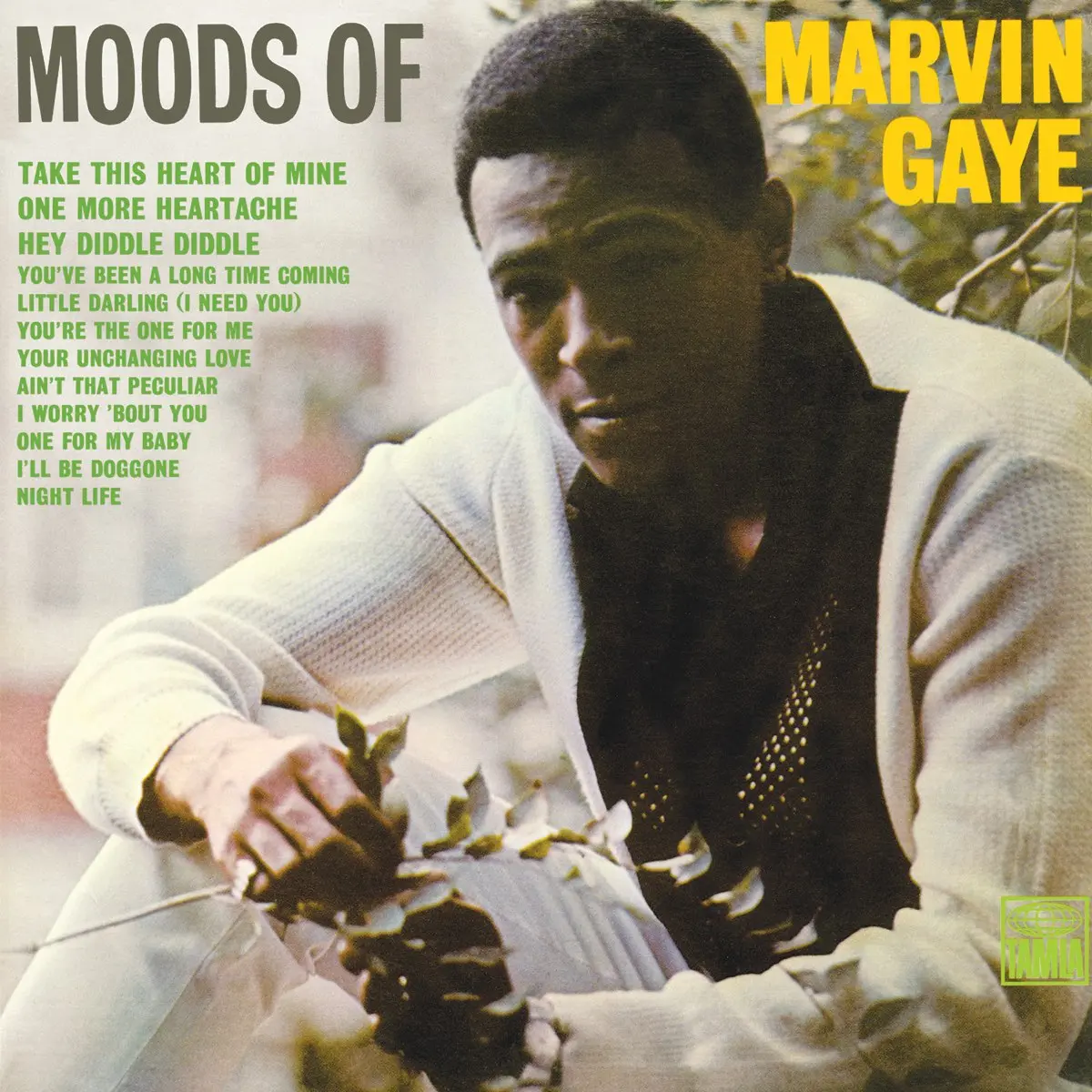 Marvin Gaye released his seventh studio album, Moods of Marvin Gaye, on May 23, 1966, on Tamla.
The album blends upbeat R&B numbers with smooth soul ballads, marking Gaye’s continued development as a versatile solo performer. Core backing players include The Funk Brothers on instrumentation, Marv Tarplin on guitar, and The Andantes and The Miracles providing backing vocals on select tracks.
The material features a mix of original compositions and outside contributions. Gaye co-wrote four tracks with Smokey Robinson, Pete Moore, Bobby Rogers, and Marv Tarplin. Holland–Dozier–Holland wrote three songs, and other tracks are by Johnny Bristol, Harvey Fuqua, Stevie Wonder, Harold Arlen and Johnny Mercer, Norman Mapp, and Willie Nelson. Each song is arranged to showcase Gaye’s phrasing, rhythmic articulation, and controlled dynamic range, with backing vocals enhancing tonal layers.
Songs divide into energetic, rhythm-driven hits and tender ballads. “I’ll Be Doggone” and “Ain’t That Peculiar” feature sharply punctuated rhythm and vocal interplay with The Miracles and The Andantes. Mid-tempo tracks like “Take This Heart of Mine” and “One More Heartache” emphasize rhythmic tension and angular vocal contours. Ballads such as “Your Unchanging Love” and “One for My Baby (and One More for the Road)” employ smoother phrasing and restrained instrumental accompaniment.
A1. “I’ll Be Doggone” (2:47) — Moore, Robinson, Tarplin
A2. “Little Darling (I Need You)” (2:35) — Holland–Dozier–Holland
A3. “Take This Heart of Mine” (2:49) — Moore, Robinson, Tarplin
A4. “Hey Diddle Diddle” (2:30) — Bristol, Fuqua, Gaye
A5. “One More Heartache” (2:42) — Moore, Robinson, Rogers, Tarplin, White
A6. “Ain’t That Peculiar” (3:00) — Moore, Robinson, Rogers, Tarplin
B1. “Night Life” (3:05) — Breeland, Buskirk, Nelson; Nelson popularized
B2. “You’ve Been a Long Time Coming” (2:13) — Holland–Dozier–Holland
B3. “Your Unchanging Love” (3:13) — Holland–Dozier–Holland
B4. “You’re the One for Me” (3:24) — Broadnax, Paul, Wonder
B5. “I Worry ’Bout You” (3:24) — Mapp
B6. “One for My Baby (and One More for the Road)” (4:30) — Arlen, Mercer
Sessions occurred at Hitsville USA, Detroit, with producers Smokey Robinson, Brian Holland, Lamont Dozier, and Clarence Paul. Singles from the album rolled out over 1965–1967.
“I’ll Be Doggone” first appeared as a February 1965 single (b/w “You’ve Been a Long Time Coming”), reaching No. 1 on the Billboard R&B chart and No. 8 on the Hot 100.
“Ain’t That Peculiar” followed in September 1965 (b/w “She’s Got to Be Real”), also hitting No. 1 R&B and No. 8 Hot 100.
“One More Heartache” arrived in January 1966 (b/w “When I Had Your Love”), reaching No. 4 R&B and No. 29 Hot 100.
“Take This Heart of Mine” appeared in May 1966 (b/w “Need Your Lovin’ – Want You Back”), peaking at No. 16 R&B and No. 44 Hot 100.
“Little Darling (I Need You)” followed in July 1966 (b/w “Hey Diddle Diddle”), reaching No. 16 R&B and No. 47 Hot 100.
“Your Unchanging Love” completed the singles run in June 1967 (b/w “I’ll Take Care of You”), reaching No. 7 R&B and No. 33 Hot 100.
Later covers extended the album’s reach: “I’ll Be Doggone” was recorded by Tages, Albert King, Paul Revere & the Raiders, and Solomon Burke; “Ain’t That Peculiar” by Fanny and Diamond Reo; and “One More Heartache” by the Butterfield Blues Band.
Take Two (w/ Kim Weston)
 On August 25, 1966, Tamla issued Take Two, a duets album by Marvin Gaye and Kim Weston.
The set captures the R&B and soul chemistry between the Motown labelmates, centering on the success of their Top 5 R&B hit “It Takes Two.” Core backing players include The Funk Brothers on instrumentation, with The Andantes providing layered harmonies on most tracks and The Spinners supporting one selection.
William “Mickey” Stevenson and Sylvia Moy wrote four songs, while additional tracks come from Holland–Dozier–Holland, Henry Glover and Sally Nix, Vernon Bullock, Paul Francis Webster and Sammy Fain, Meredith Willson, Alphonso Higdon, and Kim Weston herself. Stevenson also co-wrote several tracks with Moy and Bullock, with outside compositions including covers of Four Tops (“Baby I Need Your Loving”), Bull Moose Jackson (“I Love You, Yes I Do”), Doris Day (“Secret Love”), and Meredith Willson (“’Til There Was You”).
The album balances upbeat, rhythm-driven duets with smoother, ballad-oriented numbers. “It Takes Two” and “Baby Say Yes” emphasize sharply punctuated interplay and tightly articulated phrasing between Gaye and Weston, while “What Good Am I Without You” and “’Til There Was You” use restrained instrumental backing and contoured vocal lines. Mid-tempo tracks like “I Want You ’Round” and “Heaven Sent You, I Know” combine rhythmic drive with precise harmonic layering.
A1. “It Takes Two” (3:00) — originated as a 1966 single by Gaye and Weston, written by Moy and Stevenson
A2. “I Love You, Yes I Do” (2:22) — originated as a 1947 single by Bull Moose Jackson, written by Glover and Nix
A3. “Baby I Need Your Loving” (3:14) — originated as a 1964 single by the Four Tops, written by Holland–Dozier–Holland
A4. “It’s Got to Be a Miracle (This Thing Called Love)” (3:31) — Bullock, Moy, Stevenson
A5. “Baby Say Yes” (3:16) — Stevenson, Weston
A6. “What Good Am I Without You” (2:55) — Higdon, Stevenson
B1. “’Til There Was You” (2:28) — Willson
B2. “Love Fell on Me” (2:29) — Moy, Stevenson
B3. “Secret Love” (2:48) — Fain, Webster
B4. “I Want You ’Round” (2:27) — Robinson, Stevenson
B5. “Heaven Sent You, I Know” (3:05) — Bullock, Moy, Stevenson
B6. “When We’re Together” (2:40) — Bullock, Moy
Sessions occurred at Hitsville USA, Detroit, with producers William “Mickey” Stevenson and Harvey Fuqua and engineering by Motown staff.
Singles supported the album over 1964–1966. “What Good Am I Without You” first appeared in September 1964 (b/w “I Want You ’Round”), reaching No. 28 on the Cash Box R&B chart and No. 61 on the Hot 100. “It Takes Two” followed in May 1966, peaking at No. 4 R&B and No. 14 Pop in the US and No. 16 on the UK singles chart in early 1967.
Later covers include “It Takes Two” by Rod Stewart and Tina Turner, while “Baby I Need Your Loving” and “Secret Love” have appeared in renditions by numerous soul and jazz performers.
United (w/ Tammi Terrell)
 Marvin Gaye and Tammi Terrell released their first duo album, United, on August 29, 1967, on Tamla.
The album captures the energetic interplay and emotional clarity that defined the pair’s early Motown collaborations, blending rhythm-driven duets with tender ballads. Core backing players include The Funk Brothers on instrumentation, with The Andantes, The Originals, The Spinners, and Gaye himself providing layered background vocals.
Harvey Fuqua and Johnny Bristol wrote or co-wrote six tracks, while Berry Gordy, Jr., Hal Davis, Ashford & Simpson, Marvin Gaye, Vernon Bullock, C. Carson Parks, Etta James, Brook Benton, Frank Wilson, and Vance Wilson contributed the remaining compositions. Notable covers include Marv Johnson (“You Got What It Takes”), C. Carson Parks (“Somethin’ Stupid”), and Loe & Joe (“Little Ole Boy, Little Ole Girl”), with Ashford & Simpson providing their signature material on “Ain’t No Mountain High Enough” and “Your Precious Love.”
The album divides between upbeat, rhythmically driven duets and slower, intimate ballads. “Ain’t No Mountain High Enough” and “If I Could Build My Whole World Around You” feature sharply articulated vocal turns and interwoven phrasing. Ballads like “If This World Were Mine” and “Give a Little Love” employ restrained accompaniment and contoured dynamics. Mid-tempo tracks such as “Your Precious Love” and “Two Can Have a Party” emphasize pacing and layered harmonies.
A1. “Ain’t No Mountain High Enough” (2:32) — Ashford, Simpson
A2. “You Got What It Takes” (2:59) — originated as a 1959 single by Marv Johnson, written by Berry Gordy, Jr., Gwen Gordy, Tyran Carlo
A3. “If I Could Build My Whole World Around You” (2:26) — Fuqua, Bristol, Bullock
A4. “Somethin’ Stupid” (2:46) — originated as a 1966 single by C. Carson Parks, covered in 1967 by Frank and Nancy Sinatra
A5. “Your Precious Love” (3:07) — Ashford, Simpson
A6. “Hold Me Oh My Darling” (2:50) — Fuqua
B1. “Two Can Have a Party” (2:19) — Bristol, Fuqua, Thomas Kemp
B2. “Little Ole Boy, Little Ole Girl” (2:46) — Fuqua, Etta James, Benton
B3. “If This World Were Mine” (2:46) — Marvin Gaye
B4. “Sad Wedding” (3:27) — Bristol, Jackey Beavers
B5. “Give a Little Love” (3:01) — Bristol, Fuqua, Clyde Wilson
B6. “Oh How I’d Miss You” (2:37) — Davis, Wilson, Vance Wilson
Sessions occurred at Hitsville USA, Detroit, with Harvey Fuqua, Johnny Bristol, Hal Davis, and Berry Gordy, Jr. producing.
Singles supported the album across 1967. “Ain’t No Mountain High Enough” first appeared in April 1967, peaking at No. 10 on the US Hot 100 and No. 2 R&B. “Your Precious Love” followed in August 1967, reaching No. 5 Pop and No. 2 R&B. “If I Could Build My Whole World Around You” with B-side “If This World Were Mine” issued in November 1967, hitting No. 10 Pop and No. 2 R&B.
Later covers include Luther Vandross and Cheryl Lynn’s rendition of “If This World Were Mine” and Diana Ross’s 1970 version of “Ain’t No Mountain High Enough.”
You’re All I Need (w/ Tammi Terrell)
 Marvin Gaye and Tammi Terrell released their second duo album, You’re All I Need, on August 29, 1967, on Tamla.
The album extends the pair’s duet signature with a mix of rhythm-focused tracks and intimate ballads, foregrounding their vocal interplay over the backing of The Funk Brothers and layered contributions from The Andantes, The Originals, The Spinners, and Ashford & Simpson.
Nickolas Ashford and Valerie Simpson wrote or co-wrote six songs and produced the singles “Ain’t Nothing Like the Real Thing,” “Keep on Lovin’ Me Honey,” and “You’re All I Need to Get By.” Harvey Fuqua and Johnny Bristol produced five additional tracks, often combining Terrell’s pre-recorded solo vocals with Gaye’s overdubs. Robert Gordy and other Motown writers contributed the remaining songs.
The album separates into soaring duets and gently paced ballads. Up-tempo tracks like “Ain’t Nothing Like the Real Thing” and “Keep on Lovin’ Me Honey” emphasize pacing and call-and-response phrasing, while “You’re All I Need to Get By” and “You Ain’t Livin’ ’Til You’re Lovin’” rely on contoured, gospel-influenced turns. Mid-tempo numbers such as “Baby Don’t Cha Worry” and “Give In, You Just Can’t Win” balance rhythm and harmonic layering, often with intricate background vocal interplay.
A1. “Ain’t Nothing Like the Real Thing” (2:12) — Ashford, Simpson
A2. “Keep on Lovin’ Me Honey” (2:24) — Ashford, Simpson
A3. “You’re All I Need to Get By” (2:43) — Ashford, Simpson
A4. “Baby Don’t Cha Worry” (2:36) — Bristol, Jackey Beavers
A5. “You Ain’t Livin’ ’Til You’re Lovin’” (2:49) — Ashford, Simpson
A6. “Give In, You Just Can’t Win” (2:28) — Fuqua, Bristol
B1. “When Love Comes Knocking at My Heart” (2:39) — Fuqua, Bristol, Gladys Knight, Bullock
B2. “Come On and See Me” (2:37) — Fuqua, Bristol
B3. “I Can’t Help But Love You” (2:41) — Robert Gordy, Thomas Kemp, Marvin Gaye
B4. “That’s How It Is (Since You’ve Been Gone)” (2:50) — Fuqua, Bristol, Bullock
B5. “I’ll Never Stop Loving You Baby” (2:43) — Fuqua, Bristol, Beatrice Verdi
B6. “Memory Chest” (2:25) — Fuqua, Bristol
Sessions occurred at Hitsville USA, Detroit, with Ashford & Simpson, Harvey Fuqua, Johnny Bristol, and Robert Gordy producing.
Singles supported the album throughout 1968. “Ain’t Nothing Like the Real Thing” issued March 28, peaking at No. 8 Hot 100 and No. 1 R&B, with B-side “Little Ole Boy, Little Ole Girl.” “You’re All I Need to Get By” followed July 9, reaching No. 7 Hot 100 and No. 1 R&B. “Keep on Lovin’ Me Honey” appeared the same day, peaking at No. 24 Hot 100 and No. 11 R&B, with B-side “You Ain’t Livin’ ’Til You’re Lovin’.”
In the Groove
 Marvin Gaye released his eighth solo studio album, In the Groove, on August 26, 1968, on Tamla.
In the Groove marked Gaye’s return to solo work after a two-year hiatus spent recording successful duets with Kim Weston and Tammi Terrell. The album blends gospel-inflected soul with sharper vocal contours, showcasing his transition toward more expressive, dynamic phrasing. Core backing included The Funk Brothers on instrumentation, The Andantes and The Originals on background vocals, and orchestral textures from the Detroit Symphony Orchestra.
Gaye co-wrote two tracks with Anna Gordy Gaye and Elgie Stover. Additional songs came from Motown writers Norman Whitfield, Barrett Strong, Ivy Jo Hunter, Frank Wilson, Ashford & Simpson, Stevie Wonder, and the songwriting teams of Gerry Goffin–Carole King and Benjamin Nelson–Lover Patterson–George Treadwell. Several tracks were covers of earlier Motown or R&B hits, including “Some Kind of Wonderful” (popularized by the Drifters), “Loving You Is Sweeter Than Ever” (Four Tops), and “There Goes My Baby” (The Drifters).
The album opens with energetic soul numbers, including “You” and “Tear It on Down”, featuring heightened falsetto and pronounced rhythmic drive. Mid-album, “Chained” and “At Last (I Found a Love)” combine sharp-turn vocal phrasing with gospel-infused intensity. The centerpiece, “I Heard It Through the Grapevine”, features tense, contoured vocal lines over a dense, layered arrangement, with strings and background vocals from The Andantes creating dramatic tension. Covers and reinterpretations, such as “Some Kind of Wonderful” and “Loving You Is Sweeter Than Ever”, balance smoother, soulful pacing against the album’s more restless energy.
A1. “You” (2:25) — written by Jeffrey Bowen, Jack Goga, Ivy Jo Hunter
A2. “Tear It on Down” (2:35) — written by Nickolas Ashford, Valerie Simpson
A3. “Chained” (2:38) — written by Frank Wilson
A4. “I Heard It Through the Grapevine” (3:14) — written by Barrett Strong, Norman Whitfield; previously recorded by Gladys Knight & the Pips (1967), who took it to number one on the R&B chart and number two on the pop chart
A5. “At Last (I Found a Love)” (2:37) — written by Marvin Gaye, Anna Gordy Gaye, Elgie Stover
A6. “Some Kind of Wonderful” (2:19) — written by Gerry Goffin, Carole King; originated with the Drifters, 1961
B1. “Loving You Is Sweeter Than Ever” (2:43) — written by Ivy Jo Hunter, Stevie Wonder; popularized by Four Tops, 1966
B2. “Change What You Can” (2:37) — written by Marvin Gaye, Anna Gordy Gaye, Elgie Stover
B3. “It’s Love I Need” (2:54) — written by Stephen Bowden, Ivy Jo Hunter
B4. “Every Now and Then” (3:06) — written by Eddie Holland, Frank Wilson
B5. “You’re What’s Happening (In the World Today)” (2:19) — written by George Gordy, Robert Gordy, Allen Story
B6. “There Goes My Baby” (2:24) — written by Benjamin Nelson, Lover Patterson, George Treadwell; popularized by The Drifters, 1959
Sessions occurred at Motown studios in Detroit with producers Norman Whitfield, Ivy Jo Hunter, and Frank Wilson.
In the Groove was reissued as I Heard It Through the Grapevine following the single’s success, which reached number one in the US and UK. Singles included “You” (Tamla, December 1967, b-side Change What You Can, Billboard Hot 100 34, R&B 7), “Chained” (August 1968, Hot 100 32, R&B 8), and “I Heard It Through the Grapevine” (October 1968, Hot 100 1, R&B 1). Nat Adderley later covered “You” as a jazz instrumental, retitled “You, Baby,” on his 1968 album of the same name.
M.P.G.
 Marvin Gaye released his ninth solo album, M.P.G., on April 30, 1969, on Tamla.
M.P.G. blends soulful intensity with psychedelic soul flourishes, highlighting Gaye’s command of contoured vocal phrasing and emotive expression. Core backing included The Funk Brothers on instrumentation, The Andantes and The Originals on background vocals, and Gladys Knight & The Pips on a track-specific contribution.
Gaye co-wrote one track with Anna Gordy Gaye and Allen Story, while additional material came from Norman Whitfield and Barrett Strong, Ivy Jo Hunter, William “Mickey” Stevenson, Rodger Penzabene, Warren Moore, Smokey Robinson, Henry Cosby, James Dean, Stevie Wonder, and the Holland–Dozier–Holland team. The album also includes covers of earlier R&B hits, including “This Magic Moment” (popularized by the Drifters), “Too Busy Thinking About My Baby” (Temptations), “That’s the Way Love Is” (Isley Brothers), and “The End of Our Road” (Gladys Knight & The Pips).
Tracks divide into high-energy, rhythm-driven numbers, lush, orchestrated ballads, and introspective, slower-tempo pieces. “Too Busy Thinking About My Baby” conveys an unrelenting preoccupation with love over a dense instrumental bed, recalling Whitfield’s arrangement for Gaye’s earlier “I Heard It Through the Grapevine”. “That’s the Way Love Is” transforms the Isley Brothers’ up-tempo recording into a slower, layered psychedelic soul meditation. “The End of Our Road” revisits a Pips hit with orchestral flourishes and tightly sculpted vocal turns. Mid-album compositions like “Seek and You Shall Find” and “Memories” combine sharp-turn phrasing with sustained emotional resonance, while covers such as “This Magic Moment” and “It Don’t Take Much to Keep Me” balance more gentle pacing against the album’s rhythmic intensity.
A1. “Too Busy Thinking About My Baby” (2:56) — originally recorded by The Temptations for their 1966 album Gettin’ Ready, produced by Norman Whitfield, lead by Eddie Kendricks, with Whitfield/Strong/Bradford songwriting, covered by Jimmy Ruffin (unreleased until 1997), then by Marvin Gaye as a trans-Atlantic Top 5 hit
A2. “This Magic Moment” (2:44) — originated as a 1960 single by the Drifters, written by Doc Pomus and Mort Shuman, also covered by Jay and the Americans in 1968
A3. “That’s the Way Love Is” (3:35) — recorded originally by the Isley Brothers in 1967, written by Whitfield/Strong, reinterpreted by Gaye in 1969
A4. “The End of Our Road” (2:47) — first recorded by Gladys Knight & The Pips in 1967, Whitfield/Penzabene/Strong composition, Gaye’s version issued as a single in 1970
A5. “Seek and You Shall Find” (3:40) — written by Ivy Jo Hunter and William “Mickey” Stevenson
A6. “Memories” (2:47) — written by Lawrence Brown, Marvin Gaye, Anna Gordy Gaye, Allen Story
B1. “Only a Lonely Man Would Know” (3:02) — Hunter/Beatrice Verdi
B2. “It’s a Bitter Pill to Swallow” (3:15) — Warren Moore/Smokey Robinson
B3. “More Than a Heart Can Stand” (2:57) — Hunter/Stevenson
B4. “Try My True Love” (3:00) — Henry Cosby, James Dean, Stevie Wonder
B5. “I Got to Get to California” (2:53) — Shena DeMell, Hunter
B6. “It Don’t Take Much to Keep Me” (2:39) — Holland–Dozier–Holland
Sessions occurred at Hitsville USA in Detroit, with Norman Whitfield, Brian Holland, and Lamont Dozier producing.
Singles from the album include “Too Busy Thinking About My Baby” (April 2, 1969), which held No. 1 on the R&B charts for six weeks and peaked at No. 4 on the Billboard Hot 100, “That’s the Way Love Is” (August 7, 1969), which reached No. 2 on the soul chart and No. 7 pop, and “The End of Our Road” (May 19, 1970), which peaked at No. 40 pop and No. 7 R&B.
“Too Busy Thinking About My Baby” features the male narrator declaring he has no time for anything but his love, while “That’s the Way Love Is” slows the Isley Brothers’ up-tempo original into a reflective, preacher-like delivery. “The End of Our Road” continues Whitfield’s orchestral-psychedelic approach, reinterpreting a Pips hit with tense, layered vocals.
Easy (w/ Tammi Terrell)
 Marvin Gaye and Tammi Terrell released their third and final duo album, Easy, on September 16, 1969, on Tamla.
Easy presents the duo’s signature blend of soul and pop-inflected R&B, though several tracks feature Valerie Simpson on lead alongside Gaye due to Terrell’s illness. The album emphasizes angular vocal interplay and concise, rhythmically driven arrangements. Core backing included The Funk Brothers on instrumentation, The Originals, The Andantes, and The Spinners on background vocals, with Simpson contributing lead and background vocals on select tracks.
Nickolas Ashford and Valerie Simpson wrote and produced eight of the twelve tracks. Additional compositions include Holland–Dozier–Holland’s “Baby I Need Your Loving”, Dan Penn and Spooner Oldham’s “I’m Your Puppet”, and Harvey Fuqua, Johnny Bristol, and Clyde Wilson contributions on two tracks originally recorded by Terrell solo. Several tracks reinterpret earlier R&B hits, including “California Soul” (5th Dimension), “I’m Your Puppet” (James & Bobby Purify), and “Baby I Need Your Loving” (Four Tops).
Songs divide into three categories: socially conscious numbers, tender duets, and mid-tempo pop-soul interpretations. The lead single, “Good Lovin’ Ain’t Easy to Come By”, features tight, interweaving vocals over upbeat instrumentation. “The Onion Song” pairs a buoyant rhythmic foundation with pointed social commentary. Ballads such as “Love Woke Me Up This Morning” and “This Poor Heart of Mine” highlight contoured vocal lines and emotional dynamics. Covers like “California Soul”, “I’m Your Puppet”, and “Baby I Need Your Loving” reframe previous hits with the duo’s harmonic phrasing, though Simpson’s presence occasionally replaces Terrell’s vocal timbre.
A1. “Good Lovin’ Ain’t Easy to Come By” (2:30) — written and produced by Ashford & Simpson
A2. “California Soul” (2:55) — written by Ashford & Simpson, originally a 1967 single by the Messengers, later covered by the 5th Dimension and Edwin Starr
A3. “Love Woke Me Up This Morning” (2:34) — Ashford & Simpson
A4. “This Poor Heart of Mine” (2:45) — Ashford & Simpson
A5. “I’m Your Puppet” (3:02) — written by Spooner Oldham and Dan Penn, popularized by James & Bobby Purify, also covered by Sam & Dave, Geno Washington & the Ram Jam Band, The Box Tops, and Dandy Livingstone
A6. “The Onion Song” (3:01) — Ashford & Simpson
B1. “What You Gave Me” (2:47) — Ashford & Simpson
B2. “Baby I Need Your Loving” (3:15) — Holland–Dozier–Holland, originally by the Four Tops
B3. “I Can’t Believe You Love Me” (2:47) — Harvey Fuqua and Johnny Bristol, overdubbed with Gaye’s vocals over Terrell’s original solo
B4. “How You Gonna Keep It (After You Get It)” (2:55) — Ashford & Simpson
B5. “More, More, More” (2:32) — Fuqua, Bristol, Clyde Wilson, overdubbed with Gaye
B6. “Satisfied Feelin’” (2:58) — Ashford & Simpson
Sessions occurred at Hitsville USA in Detroit with producers Ashford & Simpson and, on two tracks, Harvey Fuqua and Johnny Bristol.
Singles include “Good Lovin’ Ain’t Easy to Come By” (January 14, 1969), which reached No. 30 pop and No. 26 UK, “What You Gave Me” (November 6, 1969), which peaked at No. 49 pop and No. 6 R&B, and “The Onion Song” (March 20, 1970), Terrell’s final single, which reached No. 50 pop and No. 18 R&B in the U.S. and No. 9 UK.
Several tracks, including “California Soul” and “I’m Your Puppet”, were later covered by jazz- and soul-relevant artists such as Edwin Starr, Marlena Shaw, and Diana Ross.
That’s the Way Love Is
 Marvin Gaye released his tenth solo album, That’s the Way Love Is, on January 8, 1970, on Tamla.
The album continues Gaye’s exploration of soul and emerging psychedelic soul, pairing socially conscious material with emotive vocal performances. His interpretations of contemporaneous Motown hits and covers of pop standards underscore angular phrasing and shifting rhythmic emphasis. Core backing included The Funk Brothers on instrumentation, The Andantes and The Originals on background vocals, and Los Angeles session players—Wilton Felder and Ron Brown (bass), Gene Pello and James Gadson (drums), Louie Shelton and Don Peake (guitar), Joe Sample (piano and keyboards), and Gene Page (arrangement and conduction)—on tracks recorded at the Sound Factory in West Hollywood.
Primary songwriter Norman Whitfield contributed eight tracks, often collaborating with Barrett Strong. Additional covers include The Temptations’ songs “I Wish It Would Rain”, “How Can I Forget?”, and “Cloud Nine”, Jimmy Ruffin’s “Gonna Give Her All the Love I’ve Got” and “Don’t You Miss Me a Little Bit Baby”, The Isley Brothers’ “That’s the Way Love Is”, The Marvelettes’ “No Time for Tears”, and Dion’s “Abraham, Martin & John”.
The album’s content splits into three main categories: introspective ballads, psychedelic soul reinterpretations of Motown hits, and socially conscious pop covers. “That’s the Way Love Is” and “I Wish It Would Rain” display contoured vocal lines over shifting rhythmic textures. Ballads such as “How Can I Forget?” and “Don’t You Miss Me a Little Bit Baby” emphasize tender phrasing and dynamic pacing. “Abraham, Martin & John” layers somber reflection with restrained instrumental movement, becoming a notable UK hit.
A1. “Gonna Give Her All the Love I’ve Got” (3:21) — originally by Jimmy Ruffin, written by Barrett Strong and Norman Whitfield
A2. “Yesterday” (3:26) — originally by The Beatles, written by Lennon–McCartney
A3. “Groovin’” (2:57) — originally by The Young Rascals, written by Eddie Brigati and Felix Cavaliere
A4. “I Wish It Would Rain” (2:50) — originally by The Temptations, written by Roger Penzabene, Strong, Whitfield
A5. “That’s the Way Love Is” (3:44) — originally by The Isley Brothers, written by Strong and Whitfield
A6. “How Can I Forget?” (2:04) — originally by The Temptations, written by Strong and Whitfield
B1. “Abraham, Martin & John” (4:30) — originally by Dion, written by Dick Holler
B2. “Gonna Keep On Tryin’ Till I Win Your Love” (2:46) — originally by The Temptations, written by Strong and Whitfield
B3. “No Time for Tears” (2:26) — originally by The Marvelettes, written by Eddie Holland and Whitfield
B4. “Cloud Nine” (3:19) — originally by The Temptations, written by Strong and Whitfield
B5. “Don’t You Miss Me a Little Bit Baby” (2:14) — originally by Jimmy Ruffin, written by Penzabene, Strong, Whitfield
B6. “So Long” (2:27) — written by Holland, R. Dean Taylor, and Whitfield
Sessions occurred at Hitsville USA in Detroit and the Sound Factory in West Hollywood with producer Norman Whitfield.
Singles include “That’s the Way Love Is” (August 4, 1969), “How Can I Forget?” (December 16, 1969) with B-side “Gonna Give Her All the Love I’ve Got”, and “Abraham, Martin & John”, which reached No. 9 in the UK. “How Can I Forget?” peaked at No. 41 pop and No. 18 R&B.
Several tracks, including “I Wish It Would Rain”, “Gonna Give Her All the Love I’ve Got”, and “Abraham, Martin & John”, were subsequently covered by jazz- and soul-relevant artists such as Gladys Knight & the Pips, Tom Clay, and Bob Dylan.
What’s Going On
 Marvin Gaye released his eleventh solo album, What’s Going On, on May 21, 1971, on Tamla.
The album marked a turning point for Gaye as both writer and producer, presenting a cycle of interlinked songs that address poverty, war, addiction, and environmental collapse. Backed by members of the Funk Brothers and arranged with orchestral parts conducted by David Van De Pitte, Gaye used layered vocals and flowing transitions to create a continuous suite that unfolds like a narrative.
Gaye wrote most of the album himself, handling production and performance duties. He co-wrote the opening title track with Renaldo “Obie” Benson and Al Cleveland, and collaborated with James Nyx Jr. on “What’s Happening Brother” and “Inner City Blues (Make Me Wanna Holler).” Benson and Cleveland also co-wrote “Save the Children,” while Gaye’s then-wife Anna Gordy and Elgie Stover joined in on “God Is Love.” Earl DeRouen supplied lyrics to “Right On.”
Songs move between personal testimony, spiritual appeals, and social commentary. “What’s Going On” sets the tone with its conversational alto saxophone lead and double-tracked vocal, followed by “What’s Happening Brother,” which speaks from the viewpoint of a disillusioned Vietnam veteran. “Flyin’ High (In the Friendly Sky)” deals with heroin dependence, while “Save the Children” and “God Is Love” deliver direct moral pleas. “Mercy Mercy Me (The Ecology)” laments environmental destruction with Wild Bill Moore’s tenor saxophone line, while “Right On” stretches into a Latin-soul jam. The cycle closes on “Inner City Blues (Make Me Wanna Holler),” where Bob Babbitt’s bass underpins lyrics on systemic inequality and urban despair.
A1. “What’s Going On” (3:51) – Opening with layered voices and gentle horns, the song frames scenes of unrest through a plea for understanding. Gaye’s lines, inspired by protest and police violence, weave empathy with quiet urgency.
A2. “What’s Happening Brother” (2:57) – Written for Gaye’s brother Frankie, recently returned from Vietnam, the track captures the veteran’s dislocation as he questions war, unemployment, and cultural shifts at home.
A3. “Flyin’ High (In the Friendly Sky)” (3:40) – Borrowing its title from an airline slogan, the song portrays heroin dependence with stark imagery, pairing soaring metaphors with confessional despair.
A4. “Save the Children” (4:03) – A spoken-sung appeal that contrasts measured narration with impassioned cries, urging listeners to safeguard vulnerable children against a world in decline.
A5. “God Is Love” (2:31) – A brief devotional interlude, placing faith at the center of Gaye’s cycle. Its concise phrasing links spirituality with human compassion.
A6. “Mercy Mercy Me (The Ecology)” (3:05) – A lament for environmental destruction, the track highlights vanishing nature and poisoned skies, punctuated by Wild Bill Moore’s plaintive tenor saxophone.
B1. “Right On” (7:20) – A long-form piece propelled by shifting Latin-tinged rhythms, where Gaye weighs hope against inner conflict, ultimately turning toward love as a guiding force.
B2. “Wholy Holy” (3:20) – Anchored in gospel tradition, the song calls for collective unity, framing love as salvation and urging a shared spiritual awakening.
B3. “Inner City Blues (Make Me Wanna Holler)” (5:28) – Closing the cycle with dark funk textures, Gaye evokes economic hardship, systemic neglect, and the weight of urban poverty, his cry of “make me wanna holler” carrying both anguish and resilience.
Sessions took place between June 1970 and March 1971 at Hitsville U.S.A., Golden World, and United Sound in Detroit, and at The Sound Factory in West Hollywood, with Gaye producing and engineering assistance from Steve Smith and Kenneth Sands.
Tamla promoted What’s Going On with four singles. “What’s Going On” appeared in January 1971 (b/w “God Is Love”), reaching No. 2 on the Billboard Hot 100 and topping the R&B chart. “Mercy Mercy Me (The Ecology)” followed in June (b/w “Sad Tomorrows”) and reached No. 4 on the Hot 100 and No. 1 R&B. “Inner City Blues (Make Me Wanna Holler)” came in September (b/w “Wholy Holy”), reaching No. 9 on the Hot 100 and also No. 1 R&B. In November, Tamla issued “Save the Children” (b/w “God Is Love”), which charted modestly in the UK.
Later covers of songs from this album include Aretha Franklin’s 1972 version of “Wholy Holy,” Donny Hathaway’s live medley of “What’s Going On,” and later renditions of “Inner City Blues” by Gil Scott-Heron and Sarah Vaughan.
You’re the Man (shelved)
 Marvin Gaye readied his twelfth-recorded solo album, You’re the Man, for an intended mid-1972 release.
The album was conceived as a follow-up to What’s Going On, with lyrics that extend Gaye’s social concerns into political commentary, urban conditions, and personal reflection. Sessions featured members of the Funk Brothers along with associates from Hamilton Bohannon’s band.
Gaye wrote nine songs himself, including “Symphony” (co-written with Smokey Robinson), “I Want to Come Home for Christmas” (co-written with Forest Hairston), and the title track (co-written with Kenneth Stover). Gloria Jones and Pamela Sawyer co-wrote “Piece of Clay,” while Larry Mizell and Larry Gordon co-wrote “Where Are We Going?” and “Woman of the World.” Willie Hutch contributed four numbers: “I’m Gonna Give You Respect,” “Try It, You’ll Like It” (co-written with Kathy Wakefield), “You Are That Special One,” and “We Can Make It Baby.” Ezra Bolton, Marilyn McLeod, Mel Bolton, and Robert Gordy wrote “The World Is Rated X.”
Songs divide between pointed political statements and personal material. “You’re the Man” questions presidential candidates during the 1972 election and challenges hypocrisy within politics. “The World Is Rated X” indicts social decline with a sermon-like vocal set against strings and horns. “Piece of Clay” and “Where Are We Going?” offer reflective balladry, while Hutch’s contributions add concise funk rhythms. “I Want to Come Home for Christmas” addresses the plight of Vietnam POWs with a somber holiday frame, and “My Last Chance” originated from earlier What’s Going On sessions and was later revised as “I Love You Secretly” for The Miracles.
A1. “You’re the Man” (5:46) — Gaye and Kenneth Stover wrote this election-year funk piece, issued as a March 1972 single. Gaye addresses the ’72 election season with pointed skepticism, calling out political hypocrisy while mocking hollow promises. His layered vocals move between falsetto pleas and sardonic chants.
A2. “The World Is Rated X” (3:52) — written by Ezra Bolton, Marilyn McLeod, Mel Bolton, and Robert Gordy; a socially critical song later issued in 1986 on Motown Remembers Marvin Gaye. Delivered with sermon-like urgency, the song paints the inner city in stark detail, underscored by sharp brass and tense rhythms. Gaye frames urban decay as both a warning and indictment.
A3. “Piece of Clay” (5:11) — written by Gloria Jones and Pamela Sawyer. A plea for dignity and self-worth, the lyrics ask others not to shape him into something he is not. Gaye’s vocal lines bend and rise with emotional intensity.
A4. “Where Are We Going?” (3:51) — written by Larry Mizell and Larry Gordon. With bright instrumental accents, the track questions societal direction while balancing personal reflection and collective doubt.
A5. “I’m Gonna Give You Respect” (2:56) — written by Willie Hutch.
A6. “Try It, You’ll Like It” (3:57) — written by Hutch and Kathy Wakefield.
A7. “You Are That Special One” (3:38) — written by Hutch.
A8. “We Can Make It Baby” (3:24) — written by Hutch. The track builds around a pulsing rhythm as Gaye promises perseverance through hardship, aligning personal resolve with romantic endurance.
B1. “My Last Chance” (3:40) — a 1970 instrumental later vocalized in 1972; revised by Gaye, Anna Gordy, and Elgie Stover as “I Love You Secretly” for The Miracles in 1973. The song unfolds as a final appeal for reconciliation, its vocal lines circling with a confessional contour.
B2. “Symphony” (2:53) — written by Gaye and Smokey Robinson.
B3. “I’d Give My Life for You” (3:31) — written by Gaye.
B4. “Woman of the World” (3:30) — written by Larry Mizell and Larry Gordon.
B5. “Christmas in the City” (3:48) — written by Gaye.
B6. “You’re the Man (Alternate Version 2)” (4:41) — alternate take of the title track.
B7. “I Want to Come Home for Christmas” (4:46) — written by Gaye and Forest Hairston; composed as a tribute to Vietnam POWs.
B8. “I’m Going Home” (4:42) — written by Gaye.
B9. “Checking Out (Double Clutch)” (4:53) — written by Gaye.
Sessions occurred at Golden World in Detroit and Hitsville West in Los Angeles with production shared between Gaye, Hal Davis, Gloria Jones, Pamela Sawyer, Fonce Mizell, Freddie Perren, and Willie Hutch.
Tamla issued “You’re the Man” (Parts 1 & 2) in March 1972 (b/w “You’re the Man (Part 2)”), which reached No. 7 on the R&B chart and No. 50 on the Hot 100. The album was shelved after Motown declined to promote further singles. “The World Is Rated X” appeared in 1986 as a promo single from Motown Remembers Marvin Gaye.
The material remained unreleased as an album until March 29, 2019, when Motown issued You’re the Man as a posthumous archival release with additional tracks from the 1972 sessions.
Trouble Man (OST)
 On December 8, 1972, Marvin Gaye released Trouble Man, the Tamla soundtrack to the Blaxploitation crime thriller directed by Hogan’s Heroes actor Ivan Dixon for 20th Century Fox.
The album is Gaye’s sole full-length soundtrack and his first project written, arranged, produced, and performed entirely under his creative control. He anchored the set with multiple variations of the title theme, surrounding them with character-driven instrumentals and select vocal pieces. His core lineup included saxophonists Trevor Lawrence (alto, tenor, baritone), Eli Fountain (alto), and Marty Montgomery (soprano), with guitarists Ray Parker Jr. and David T. Walker, drummers Nesbert “Stix” Hooper and Leon “Ndugu” Chancler, and arrangers Gene Page, Dale Oehler, J.J. Johnson, and Robert O. Ragland.
Gaye composed all twelve songs. He cut five different versions of the title track, including an alternate vocal arrangement (used in the film’s opening) and three instrumental settings that foreground his synthesizer lines against saxophone and guitar passages. He also supplied full lead vocals on “Poor Abbey Walsh,” “Cleo’s Apartment,” “Life Is a Gamble,” “Don’t Mess with Mister T,” and “There Goes Mister T.”
The album alternates tight instrumental sketches with moody vocal-driven pieces. “T Plays It Cool” sets a simmering pace with layered saxophone, while “The Break In (Police Shoot Big)” captures tense action with clipped rhythmic bursts. “Life Is a Gamble” contrasts conversational vocal phrasing with shifting rhythmic figures. The vocal centerpiece, “Trouble Man,” conveys resilience and weariness in equal measure, moving between falsetto and a huskier midrange growl.
A1. “Main Theme from Trouble Man (2)” (2:30)
A2. “‘T’ Plays It Cool” (4:27)
A3. “Poor Abbey Walsh” (4:13)
A4. “The Break In (Police Shoot Big)” (1:57)
A5. “Cleo’s Apartment” (2:10)
A6. “Trouble Man” (3:49)
A7. “Theme from Trouble Man” (2:01)
B1. “‘T’ Stands for Trouble” (4:48)
B2. “Main Theme from Trouble Man (1)” (3:52)
B3. “Life Is a Gamble” (2:32)
B4. “Deep-in-It” (1:25)
B5. “Don’t Mess with Mister T” (3:04)
B6. “There Goes Mister T” (1:37)
Sessions took place at Motown’s Hitsville West studio in Los Angeles with Gaye producing and playing piano, synthesizer, and drums.
Tamla promoted the album with “Trouble Man” (b/w “Don’t Mess with Mister T”), which reached No. 7 on the Billboard Hot 100 and No. 4 on the R&B chart in January 1973.
The film Trouble Man follows Los Angeles pool shark and private investigator Mr. T (Robert Hooks), who becomes entangled in a turf war between rival crime bosses while pursued by police captain Joe Marx. Its enduring legacy stems largely from Gaye’s soundtrack, later reprised in films (Se7en, Four Brothers, Captain America: The Winter Soldier) and television (The Falcon and the Winter Soldier).
Let’s Get It On
 Marvin Gaye released his thirteenth solo album, Let’s Get It On, on August 28, 1973, on Tamla.
The album expands Gaye’s sound into funk with elements of smooth soul and doo-wop. Its lyrical focus shifts from the political urgency of What’s Going On to themes of love, desire, and intimacy, conveyed through layered vocals and slow, sensual instrumentation.
Gaye wrote or co-wrote seven of the album’s eight songs. Producer Ed Townsend collaborated with him on four, including the title track. “Distant Lover” credits Gaye with Gwen Gordy and Sandra Greene, while “Just to Keep You Satisfied” lists Gaye, Anna Gordy Gaye, and Elgie Stover.
Songs divide between erotic ballads and reflective laments. “Let’s Get It On” and its reprise, “Keep Gettin’ It On,” present sensual liberation as a life-affirming act. “If I Should Die Tonight” and “Just to Keep You Satisfied” explore vulnerability and disillusion in love, the latter reflecting Gaye’s troubled marriage. “Distant Lover” escalates from a soft plea to impassioned cries of longing, while “You Sure Love to Ball” remains one of his most explicit recordings.
A1. “Let’s Get It On” (4:44) – A hymn to physical intimacy that elevates sex into a near-spiritual act, its swelling cries, fluid rhythm, and sudden bursts of vocal improvisation blur the line between worship and desire.
A2. “Please Don’t Stay (Once You Go Away)” (3:32) – Marvin pleads for a lover’s return, the blues guitar crying behind him as if echoing his desperation. The repeated calls and increasingly urgent rhythm extend the song’s longing beyond its frame.
A3. “If I Should Die Tonight” (3:57) – A confession of gratitude for a fleeting but profound love. Gaye’s voice moves from hushed reverence to aching exultation, as though one night’s connection could justify a lifetime.
A4. “Keep Gettin’ It On” (3:12) – A continuation of the opener, the refrain turns carnal release into social commentary, with Marvin urging love over conflict. The rhythm flows with ease, giving protest the shape of seduction.
B1. “Come Get to This” (2:40) – Reworking Motown’s bright ’60s pulse, Gaye welcomes a long-absent lover home. The rhythm quickens with joy as his voice leaps between playful exuberance and sensual promise.
B2. “Distant Lover” (4:15) – A lament of separation, beginning with restrained yearning before erupting into cries of anguish. Horns, strings, and layered vocals frame the ache of distance as Marvin’s voice strains to close the gap.
B3. “You Sure Love to Ball” (4:43) – Explicit in sound and subject, the track blends sultry saxophone with moans in the margins. Marvin’s delivery is slow-burning, drawing intimacy out of each phrase until the music itself becomes physical.
B4. “Just to Keep You Satisfied” (4:35) – A farewell ballad written out of marital collapse, sung with a tender sorrow that never quite hardens into bitterness. Its string-laden arrangement carries Marvin’s voice like a solemn resignation.
Sessions occurred at Hitsville U.S.A. and Golden World in Detroit and Hitsville West in Los Angeles with Gaye and Townsend producing. Core players included bassist James Jamerson, saxophonists Ernie Watts and Plas Johnson, and keyboardists Joe Sample (piano) and Marvin Gaye (piano). Guitarists Robert White, Eddie Willis, David T. Walker, Melvin Ragin, Louis Shelton, and Don Peake also contributed, with percussion by Eddie “Bongo” Brown and Bobbye Hall Porter.
Tamla promoted the album with “Let’s Get It On” (b/w “I Wish It Would Rain”), which topped the Hot 100 and R&B chart. “Come Get to This” (b/w “Distant Lover”) followed, reaching No. 23 on the Hot 100 and No. 3 R&B. “You Sure Love to Ball” appeared last, charting at No. 50 on the Hot 100 and No. 13 R&B.
“Distant Lover” became a centerpiece of Gaye’s stage shows and was later issued in live form as a 1974 single. The title track has since been recorded by artists across soul and R&B, becoming a touchstone for the quiet storm and slow jam styles. Sylvia Robinson covered “You Sure Love to Ball” on her 1976 red Vibration album.
Diana & Marvin (w/ Diana Ross)
 On October 26, 1973, Motown issued Diana & Marvin, a duets album by Marvin Gaye and Diana Ross.
The album pairs Gaye’s flexible phrasing with Ross’s clear, elegant delivery on a set of ballads and mid-tempo numbers arranged with strings, horns, and rhythm backing from Motown’s Los Angeles session players.
Motown staff writers supplied most of the material. Marilyn McLeod and Mel Bolton co-wrote two songs, while Gloria Jones and Pam Sawyer provided “My Mistake (Was to Love You).” Ashford & Simpson produced and wrote “Just Say, Just Say,” their last contribution before returning to Ross in 1979. The duo also covered Philadelphia soul numbers by Thom Bell and Linda Creed (“You Are Everything,” “Stop, Look, Listen (To Your Heart)”), Wilson Pickett’s 1971 hit “Don’t Knock My Love,” and Johnny Ace’s 1954 ballad “Pledging My Love.”
The album alternates upbeat love songs with tender laments. “Love Twins” and “Include Me in Your Life” play as buoyant declarations, while “My Mistake (Was to Love You)” conveys disillusion through contrasting viewpoints. “Pledging My Love” emphasizes devotion in solemn tones, while “You Are Everything” and “Stop, Look, Listen (To Your Heart)” showcase Bell and Creed’s flowing harmony structures in a duet setting.
A1. “You Are Everything” (3:10) — originated as a 1971 single by the Stylistics, written by Thom Bell and Linda Creed. Its lyrics address complete devotion to a lover despite separation.
A2. “Love Twins” (3:28)
A3. “Don’t Knock My Love” (2:20) — originated as a 1971 hit by Wilson Pickett, co-written with Brad Shapiro. Pickett’s version topped the R&B chart and reached No. 13 on the Hot 100.
A4. “You’re a Special Part of Me” (3:35)
A5. “Pledging My Love” (3:34) — originated as a 1954 hit by Johnny Ace, written by Don Robey and Ferdinand Washington. Its lyrics pledge lifelong fidelity.
B1. “Just Say, Just Say” (4:10) — written and produced by Ashford & Simpson.
B2. “Stop, Look, Listen (To Your Heart)” (2:53) — originated as a 1971 single by the Stylistics, written by Bell and Creed. The lyrics urge openness to romance.
B3. “I’m Falling in Love With You” (2:42)
B4. “My Mistake (Was to Love You)” (2:55) — written by Gloria Jones and Pam Sawyer. Its lyrics recount mutual blame for a failed romance.
B5. “Include Me in Your Life” (3:04)
Sessions occurred between 1971 and 1973 at Motown Recording Studios in Hollywood with producers Hal Davis, Ashford & Simpson, Berry Gordy, Margaret Gordy, and Bob Gaudio. Russ Terrana engineered the tracks, often combining separately recorded vocal takes by Gaye and Ross.
Motown promoted Diana & Marvin with three U.S. singles. “You’re a Special Part of Me” (b/w unlisted) appeared first, reaching No. 4 R&B and No. 12 on the Hot 100. “My Mistake (Was to Love You)” followed in January 1974 (b/w unlisted), peaking at No. 15 R&B and No. 19 on the Hot 100. “Don’t Knock My Love” appeared in June, charting at No. 25 R&B and No. 46 on the Hot 100. In the UK, “Stop, Look, Listen (To Your Heart)” reached No. 25 and “You Are Everything” peaked at No. 5.
“You Are Everything” was later recorded by Billy Ocean with Elaine Paige, while “Stop, Look, Listen (To Your Heart)” resurfaced as a 2003 duet by Michael McDonald and Toni Braxton.
Marvin Gaye Live!
 In June 1974, Tamla issued Marvin Gaye Live!, a document of his January 4 show at the Oakland Arena.
The album captures Gaye’s first full concert tour after a six-year hiatus from stage performance. Backed by a large ensemble with rhythm section, horns, and strings, he performed recent material alongside a condensed medley of his 1960s hits.
Gaye wrote seven of the album’s ten tracks. He also included covers of earlier Motown material: “Let’s Get It On,” co-written with Ed Townsend, and “Inner City Blues (Make Me Wanna Holler),” co-written with James Nyx. He reprised his 1960s hits in the “Fossil Medley,” which strings together numbers by Holland–Dozier–Holland, Smokey Robinson, and William “Mickey” Stevenson that were originally popularized by Gaye in studio form. “Distant Lover” credits Gaye with Gwen Gordy and Sandra Greene.
The performance divides between extended reinterpretations of his early-1970s repertoire and nostalgic nods to earlier singles. He opened with “Trouble Man” in a tense instrumental arrangement, followed by “Inner City Blues (Make Me Wanna Holler)” and a slow, impassioned “Distant Lover” that became a centerpiece of his stage act. He unveiled “Jan,” dedicated to his partner Janis Hunter. The “Fossil Medley” compresses six of his 1960s hits into an 11-minute sequence.
A1. “Introduction” (0:34)
A2. “Overture” (2:24)
A3. “Trouble Man” (6:36)
A4. “Inner City Blues (Make Me Wanna Holler)” (3:55) — co-written with James Nyx; originated as a 1971 What’s Going On single that reflects inner-city tension.
A5. “Distant Lover” (6:14) — co-written with Gwen Gordy and Sandra Greene; first appeared on Let’s Get It On as a ballad of longing, here reworked in slow, dramatic form.
A6. “Jan” (2:56) — Gaye’s dedication to Janis Hunter.
B1. “Fossil Medley” (11:36) — links six of Gaye’s 1960s singles: “I’ll Be Doggone” (written by Smokey Robinson, Warren Moore, and Marvin Tarplin), “Try It Baby” (written by Berry Gordy Jr.), “Can I Get a Witness” (written by Holland–Dozier–Holland), “You’re a Wonderful One” (written by Holland–Dozier–Holland), “Stubborn Kind of Fellow” (written by William Stevenson, George Gordy, and Gaye), and “How Sweet It Is (To Be Loved by You)” (written by Holland–Dozier–Holland).
B2. “Let’s Get It On” (4:43) — co-written with Ed Townsend; a sensual declaration first issued as the 1973 title track.
B3. “What’s Going On” (4:49) — co-written with Renaldo Benson and Al Cleveland; first recorded in 1971 as Gaye’s socially conscious anthem.
Sessions occurred at Oakland Arena with Gaye producing and Tamla engineers capturing the performance.
Tamla promoted the album with the live version of “Distant Lover” (b/w “Anger”), which reached No. 15 on the Billboard R&B chart and No. 28 on the Hot 100 in summer 1974.
Marvin Gaye Live! reached No. 1 on the Billboard R&B chart and No. 8 on the Billboard 200. The album earned Gaye a Grammy nomination for Best Male R&B Vocal Performance.
I Want You
 Marvin Gaye released his fourteenth solo studio album, I Want You, on March 16, 1976, on Tamla.
The album departs from his earlier Motown and doo-wop sound in favor of downtempo, funk-tinged soul with disco undercurrents. It emphasizes erotic themes through layered vocal arrangements and prominent use of synthesizer, marking his first studio set since Let’s Get It On.
Gaye recorded the album with a large Los Angeles session cast that included bassists Chuck Rainey, Wilton Felder, Ron Brown, and Henry Davis; drummer James Gadson; guitarists David T. Walker, Dennis Coffey, Melvin “Wah Wah” Watson, Ray Parker Jr., and Jay Graydon; and keyboardists Jerry Peters, John Barnes, Sonny Burke, and Gaye himself on piano, Fender Rhodes, and ARP synthesizer. Percussion came from Bobbye Hall, Eddie “Bongo” Brown, Gary Coleman, and Jack Arnold. Coleridge-Taylor Perkinson arranged the strings and horns.
Most of the material was written by producer Leon Ware with Arthur “T-Boy” Ross, who co-composed six tracks. Gaye co-wrote three songs, including “Since I Had You” with Ware and “Soon I’ll Be Loving You Again” with Ware and Ross. Jacqueline Hilliard co-wrote “Come Live With Me Angel” with Ware, and Ware had originally recorded it with Minnie Riperton. Gaye also covers “I Wanna Be Where You Are,” a 1972 hit for Michael Jackson written by Ross and Ware.
The album opens with the title track, a Ware–Ross composition that blends strings, percussion, and layered falsetto vocals. “Come Live With Me Angel” extends into six minutes of intimate address, while “After the Dance” appears in both instrumental and vocal forms — the former with a spacious, synthesizer-led arrangement, the latter as a quiet storm ballad. Gaye intensifies the sensual tone on “Feel All My Love Inside” and “Soon I’ll Be Loving You Again,” while “All the Way Around” and “Since I Had You” play on reunion themes.
A1. “I Want You” (vocal) (4:35) – Strings and percussion weave around Gaye’s layered vocals, his pleas shifting between falsetto and tenor as he calls for mutual desire and devotion. The arrangement blurs disco pulse with intimate confession.
A2. “Come Live with Me Angel” (6:28) – Gaye serenades a lover with promises of patience and pleasure, his multitracked harmonies resting against a supple rhythm that balances invitation and insistence. Also recorded by Leon Ware with Minnie Riperton for his Musical Massage album.
A3. “After the Dance” (instrumental) (4:21) – A spacious instrumental where synthesizer, strings, and percussion intertwine, offering a cinematic prelude to the vocal version. The piece suspends itself in atmosphere rather than direction.
A4. “Feel All My Love Inside” (3:23) – Explicit in tone, the track unfolds as a direct celebration of sexual intimacy. Gaye’s phrasing slows to near-recitative, punctuated by moans and rising instrumental warmth.
A5. “I Wanna Be Where You Are” (1:17) – A brief rendition of the Michael Jackson hit, its brisk tempo and light instrumentation reset the album’s pace before the B-side. Written by Leon Ware and Arthur “T-Boy” Ross, first recorded in 1972 by Jackson, whose version reached No. 16 on the Billboard Hot 100 and No. 2 R&B.
B1. “I Want You (intro jam)” (0:20) – A short improvisational fragment that revisits the title theme, acting as connective tissue rather than full statement.
B2. “All the Way Around” (3:50) – Gaye sings of fractured love, alternating between lament and acceptance. Horns and strings frame his voice as he turns personal loss into a broader reflection on fidelity.
B3. “Since I Had You” (4:05) – A reunion song cast in slow rhythm, where spoken asides and sighs underscore a return to intimacy with a former lover. The repetition conveys both insistence and vulnerability.
B4. “Soon I’ll Be Loving You Again” (3:14) – Desire moves toward urgency, with Gaye addressing his partner in explicitly sensual terms. The arrangement thickens as his voice rises into falsetto pleas.
B5. “I Want You (jam)” (1:41) – An expanded instrumental variation that highlights the rhythm section and strings, reframing the title track as atmosphere rather than confession.
B6. “After the Dance” (vocal) (4:40) – Closing the album, Gaye sings of connection sparked on the dance floor and deepened into romance. His tender phrasing, set against soft orchestration, turns the earlier instrumental motif into a quiet storm ballad.
Sessions occurred at Gaye’s newly built Marvin’s Room on Sunset Boulevard in Los Angeles and at Motown’s Hitsville West, with Gaye, Ware, and Ross producing. Engineers included Fred Ross and Art Stewart.
I Want You features cover art by Ernie Barnes, who adapted his 1971 painting The Sugar Shack with added banners referencing the album’s singles.
Tamla promoted the album with the single “I Want You” (b/w “I Want You (Instrumental)”), which reached No. 1 on the Billboard Soul chart, No. 15 on the Hot 100, and No. 10 on the Disco chart. “After the Dance (Vocal)” followed in July (b/w “After the Dance (Instrumental)”), reaching No. 14 Soul and No. 74 Pop. A third single, “Since I Had You,” appeared later in 1976.
Songs from I Want You have since been covered by artists including Fourplay with El DeBarge (“After the Dance”) and revisited by later soul and R&B singers influenced by the album’s quiet storm and neo-soul templates.
Live at the London Palladium
 In March 1977, Marvin Gaye released Live at the London Palladium, a double-album with three sides sourced from autumn/winter 1976 tour dates. Side Four features “Got to Give It Up,” a new studio track.
The album presents Gaye’s first major European tour dates, performed with a large ensemble of rhythm, horns, backing vocalists, and guest duet singer Florence Lyles. The setlist revisits early Motown singles in extended medleys alongside selections from What’s Going On, Let’s Get It On, and I Want You.
Gaye wrote most of the material and co-wrote “Let’s Get It On” with Ed Townsend and “Distant Lover” with Gwen Gordy and Sandra Greene. He reprises multiple 1960s hits in medleys that include songs popularized by Smokey Robinson (“Ain’t That Peculiar”), Holland–Dozier–Holland (“How Sweet It Is (To Be Loved by You)”), and Norman Whitfield (“I Heard It Through the Grapevine”). Side Four’s studio cut “Got to Give It Up” was self-penned, produced by Art Stewart, and conceived as his response to the rise of disco.
The live portion alternates solo spotlights and crowd-pleasing medleys. “Since I Had You” and “Come Get to This” connect his mid-1970s ballad style with up-tempo audience interaction. Three medleys—each running between nine and twelve minutes—sequence his 1960s singles, his 1970–71 message songs, and his Tammi Terrell duets (sung here with Lyles). He closes with “Distant Lover,” followed by a reprise of “I Want You.” “Got to Give It Up” extends nearly twelve minutes, unfolding as a falsetto-led dance narrative set against hand percussion, saxophone breaks, and party chatter.
A1. “Intro Theme” (2:32)
A2. “All the Way Round” (5:15)
A3. “Since I Had You” (4:15)
A4. “Come Get to This” (2:02)
A5. “Let’s Get It On” (6:40) — co-written with Ed Townsend
B1. “Trouble Man” (6:17)
B2. Medley I (8:40) — “Ain’t That Peculiar” / “You’re a Wonderful One” / “Stubborn Kind of Fellow” / “Pride & Joy” / “Little Darling (I Need You)” / “I Heard It Through the Grapevine” / “Hitch Hike” / “You” / “Too Busy Thinking About My Baby” / “How Sweet It Is (To Be Loved by You)”
B3. Medley II (9:40) — “Inner City Blues (Make Me Wanna Holler)” / “God Is Love” / “What’s Going On” / “Save the Children”
C1. Medley III (12:01) — duet with Florence Lyles: “You’re All I Need to Get By” / “Ain’t Nothing Like the Real Thing” / “Your Precious Love” / “It Takes Two” / “Ain’t No Mountain High Enough”
C2. “Distant Lover” (5:20) — co-written with Gwen Gordy and Sandra Greene
C3. “Closing Theme / I Want You” (3:00)
D1. “Got to Give It Up” (11:53) — recorded January 1977 at Marvin’s Room, Los Angeles; Gaye sings of shedding inhibitions on the dance floor, blending percussion, bottle taps, falsetto vocals, and overlapping background chatter.
Sessions occurred at the London Palladium in October 1976 with Gaye producing. He cut “Got to Give It Up” at his Los Angeles studio with producer Art Stewart and engineer Art Stewart, who also handled the final mix.
Motown promoted the album with “Got to Give It Up (Pt. 1)” (b/w “Got to Give It Up [Pt. 2]”), which reached No. 7 on the UK Singles Chart. On the week of June 18, 1977, the song reached No. 1 on the Billboard Hot 100, where it overtook “Dreams” by Fleetwood Mac and bowed the following week to “Gonna Fly Now” by Bill Conti. On the R&B Singles Chart, “Got to Give It Up (Pt. 1)” spent five non-consecutive weeks at No. 1 between April and June, interrupted for one week each by The Tavares (“Whodunit”) and Stevie Wonder (“Sir Duke”).
Live at the London Palladium reached No. 1 on the Billboard Soul LPs chart and No. 3 on the Billboard 200. Its two million sales placed it among the year’s top U.S. albums. “Got to Give It Up” later influenced Michael Jackson’s “Shake Your Body (Down to the Ground)” and “Don’t Stop ’Til You Get Enough.”
In October 1978, Motown assembled Marvin Gaye along with Diana Ross, Smokey Robinson, and Stevie Wonder to record “Pops, We Love You” as a tribute to Berry Gordy Sr., father of Motown founder Berry Gordy. Gaye recorded his vocals alongside Ross and Robinson in Los Angeles, while Wonder added his part separately. The session also reunited Gaye and Ross for their first duet since 1972, when they cut “I’ll Keep My Light in My Window” together for the project. Both songs appear on the 1979 Motown-roster tribute “Pops We Love You”…The Album.
Here, My Dear
 Marvin Gaye released his fifteenth solo studio album, the two-record Here, My Dear, on December 15, 1978, on Tamla.
The album unfolds as a double-length confessional where Gaye narrates the collapse of his marriage to Anna Gordy Gaye. It alternates between midtempo funk, stately ballads, and experimental R&B structures. Gaye handled most of the instrumentation himself, layering keyboards, bass synth, percussion, and his own vocal arrangements. Guitarists Wali Ali and Gordon Banks, bassist Frank Blair, trumpeter Nolan Andrew Smith, saxophonist Charles Owens, and drummers Bugsy Wilcox and Melvin Webb form the core band, with additional contributions by saxophonists Ernie Fields Jr. and Fernando Harkless, guitarist Cal Green, and percussionists Eddie “Bongo” Brown, Jack Ashford, and Gary Jones.
Gaye wrote ten of the album’s tracks alone and co-wrote three with Ed Townsend, who earlier collaborated with him on Let’s Get It On. Townsend co-wrote “Anger” (with Delta Ashby), “Everybody Needs Love,” and “Sparrow.”
The title track frames the album’s premise as a settlement to Anna, with lyrics that reference their divorce decree. “Here, My Dear” introduces the concept with a direct address to Anna, while the recurring “When Did You Stop Loving Me, When Did I Stop Loving You” provides a fractured centerpiece. “Is That Enough” recounts courtroom proceedings, while “Anna’s Song” dwells on marital breakdown. “Time to Get It Together” and “Anger” confront Gaye’s struggles with addiction and self-doubt. In contrast, “A Funky Space Reincarnation” imagines escapism through a P-Funk styled sci-fi fantasy, and “Falling in Love Again” closes on a note dedicated to his partner Janis Hunter.
A1. “Here, My Dear” (2:48) – Opening with a bitter dedication to Anna Gordy, Gaye frames the entire record as alimony payment, lacing his smooth delivery with biting sarcasm and direct lyrical attack.
A2. “I Met a Little Girl” (4:58) – Told in a doo-wop-inflected style, the track charts the arc of a relationship from innocent beginnings to collapse, merging tenderness with resignation.
A3. “When Did You Stop Loving Me, When Did I Stop Loving You” (6:11) – Unfolding without chorus or bridge, this extended confessional circles around recrimination, regret, and disbelief, its winding form mirroring the unresolved pain it recounts.
A4. “Anger” (3:58) – Part sermon, part self-rebuke, Gaye confronts destructive resentment, blending chastisement with a plea for emotional release.
B1. “Is That Enough” (7:42) – Written straight from the courthouse, Gaye narrates the costs of divorce with exasperation and sarcasm, escalating into one of the album’s most charged instrumental passages.
B2. “Everybody Needs Love” (5:41) – Stepping outside marital discord, this reflection insists on universal need for affection, tinged with spiritual overtones and intimations of his fraught relationship with his father.
B3. “Time to Get It Together” (3:51) – A stark self-portrait of addiction and despair, the track abandons traditional structure, its fractured pacing echoing Gaye’s ongoing struggle for control.
C1. “Sparrow” (6:06) – Cast as a spiritual allegory, Gaye invokes the sparrow as a messenger of reassurance, asking for beauty and guidance in moments of isolation.
C2. “Anna’s Song” (5:49) – Directly naming his ex-wife, Gaye delivers one of the album’s most piercing performances, shifting between vulnerability, accusation, and aching attachment.
C3. “When Did You Stop Loving Me, When Did I Stop Loving You” (Instrumental) (5:59) – Stripped of words, the motif becomes a cyclical lament, the instruments carrying unresolved tension.
D1. “A Funky Space Reincarnation” (8:12) – A playful detour into cosmic fantasy, where Gaye imagines love in a P-Funk-inspired universe, weaving surreal imagery with ironic humor.
D2. “You Can Leave, But It’s Going to Cost You” (5:27) – Cast as a heated marital argument, the song blends irony and blunt declaration, its assertive tone underscoring bitterness over infidelity and control.
D3. “Falling in Love Again” (4:36) – A fragile vow to his new partner, Janis Hunter, the song closes the cycle on a note of weary hope, shadowed by the knowledge that history may repeat.
D4. “When Did You Stop Loving Me, When Did I Stop Loving You (Reprise)” (0:40) – A brief return to the album’s central theme, leaving the narrative unresolved and the wounds still open.
Sessions occurred at Marvin Gaye Studios in Los Angeles between March 1977 and July 1978 with Gaye producing and Art Stewart engineering. Gaye overdubbed vocals, keyboards, synthesizers, and horn arrangements across the two records.
Here, My Dear features artwork by Michael Bryan, who depicted Gaye in a toga within a Roman temple setting. The back cover shows a collapsing “matrimony” temple around a Rodin-inspired couple, while the gatefold portrays divorce as a Monopoly game with houses, cars, and rings on one side and studio gear on the other.
Tamla promoted the album with “A Funky Space Reincarnation” (b/w “Anger”), which reached No. 23 on the Billboard R&B chart. “Anger” followed in August 1979 as a second single.
Here, My Dear reached No. 4 on the Billboard R&B chart and No. 26 on the Billboard 200. Later artists drew on Here, My Dear as a touchstone for autobiographical soul. Daryl Hall’s “Stop Loving Me, Stop Loving You” reworked “When Did You Stop Loving Me, When Did I Stop Loving You” into a structured pop format.
In Our Lifetime
 Marvin Gaye released his sixteenth solo studio album, In Our Lifetime, on January 15, 1981, on Tamla.
In Our Lifetime marked Gaye’s final Motown album, departing from the disco influences of his previous releases toward a soul and funk sound infused with jazz and gospel elements. Recorded across Los Angeles, Honolulu, and London, the album reflects Gaye’s personal and spiritual struggles at the time, blending introspection with broader societal themes.
Gaye handled the bulk of instrumentation and arrangements himself, performing vocals, keyboards, drums, and synthesizers. Core collaborators included guitarist Gordon Banks, bassist Frank Blair, drummer William Bryant, trumpeters Ray Brown, Curtis Anthony Nolen, and Nolan Andrew Smith, vibraphonist Elmira Collins, saxophonists Fernando Harkness and Raphael Ravenscroft, and keyboardists Raymond Crossley (keyboards) and Gaye on piano and synthesizers.
Gaye wrote and produced the entire album, composing six songs and co-writing two others. Outside contributions include the transformed disco number “Praise,” which references Stevie Wonder’s style, and the reinterpretation of material from his aborted Love Man sessions, notably the evolution of “Dance ‘N Be Happy” into “Love Party.”
The album opens with “Praise,” a gospel-influenced track featuring horns, multi-layered vocals, and a propulsive rhythm that encourages perseverance and spiritual reflection. “Life Is for Learning” juxtaposes seductively angled funk instrumentation with lyrics exploring morality, temptation, and personal responsibility. “Love Party” and “Funk Me” rework prior material into funk and gospel-inflected dance tracks. Side B begins with “Far Cry,” a jazz-tinged funk instrumental with intermittent falsetto, followed by “Love Me Now or Love Me Later,” “Heavy Love Affair,” which meditates on romantic isolation, and closes with the title track, “In Our Lifetime,” reflecting existential and societal concerns.
A1. “Praise” (4:51) – Gaye draws on gospel language to urge resilience and love in the face of hardship. He celebrates spiritual renewal while name-checking Stevie Wonder as inspiration, his layered vocals riding a bright, driving rhythm.
A2. “Life Is for Learning” (3:39) – A meditation on the tension between faith and flesh, Gaye frames himself as an artist carrying the burden of truth. His lines weigh temptation against salvation, placing his divided soul at the center of the lesson.
A3. “Love Party” (4:58) – Recast from an earlier disco sketch, the track merges dancefloor call with sacred undertone. Gaye invokes communal joy as a stand against despair, his voice folding sensuality into exhortation.
A4. “Funk Me” (5:34) – An unabashedly erotic plea that blurs spiritual and physical longing. Marvin’s delivery alternates between falsetto cries and playful chants, making desire both celebration and confession.
B1. “Far Cry” (4:28) – An unfinished sketch, half funk vamp and half jazz interlude, where Gaye mutters fragments over sparse instrumentation before slipping into falsetto and piano runs. Its rawness exposes process more than conclusion.
B2. “Love Me Now or Love Me Later” (4:59) – Gaye examines dualities of good and evil, pressing the urgency of love against the inevitability of loss. His phrasing carries both warning and embrace, giving the theme a moral weight.
B3. “Heavy Love Affair” (3:45) – A funk lament that acknowledges his allure while revealing loneliness. Gaye confesses that admiration from many cannot replace intimacy with the one he has lost.
B4. “In Our Lifetime” (6:57) – The title track casts global unrest as a backdrop for personal searching. Gaye blends chant and testimony, questioning whether humanity will face reckoning in its time while still reaching for joy in rhythm.
Sessions occurred at Marvin’s Room in Los Angeles, Seawest Recording Studio in Honolulu, and Odyssey Studios in London, with Gaye producing and engineering alongside Jon Walls. Motown later remixed and added instrumentation to several tracks without Gaye’s consent.
In Our Lifetime features cover photography by Ron Slenzak.
Tamla promoted the album with the single “Praise” (b/w “Funk Me”), which reached No. 18 on the Billboard R&B chart and #101 on the Bubbling Under Hot 100. The second single, “Heavy Love Affair” (b/w “Life Is for Learning”), reached No. 61 on the R&B chart. “Ego Tripping Out,” originally intended for Love Man, was later included on the 1994 reissue.
Midnight Love
 Marvin Gaye released his seventeenth solo studio album, Midnight Love, on November 1, 1982, on Columbia.
Midnight Love fuses soul, funk, R&B, reggae, boogie, and emerging electronic textures, reflecting Gaye’s European influences and use of synthesizers and drum machines. The album marked his commercial resurgence and final studio release during his lifetime. Gaye played a central role in instrumentation and production, joined by key collaborators Gordon Banks (guitar, bass, drums, backing vocals) and Odell Brown (keyboards, co-writing), with additional contributions from Harvey Fuqua (backing vocals, production guidance) and horn players David Stout, Curt Sletten, Harry Kim, Alan Kaplan, and McKinley T. Jackson.
Gaye composed most tracks, with Odell Brown and David Ritz co-writing “Sexual Healing” and Gordon Banks writing “My Love Is Waiting.”
Musically, the album alternates between funk-driven tracks, Caribbean-influenced rhythms, new wave-inflected synth lines, and doo-wop-styled balladry. “Midnight Lady” combines funk rhythms with synth and horn textures; “Sexual Healing” layers reggae-inspired patterns, gospel-tinged harmonies, and TR-808 percussion; “‘Til Tomorrow” serves as the album’s sole ballad with doo-wop harmonies; “Rockin’ After Midnight” merges funk and boogie; “Third World Girl” honors Bob Marley with reggae motifs; “Joy” incorporates gospel elements over funk guitar; “My Love Is Waiting” blends funk, synth, and gospel in its closing tribute.
A1. “Midnight Lady” (5:17) – The track builds gradually from percussion and drum machine patterns into layered keyboards, guitar figures, and horns, holding back Gaye’s entrance until nearly two minutes in. His vocal rides against sharp rhythmic turns, evoking new wave phrasing within a funk-leaning frame.
A2. “Sexual Healing” (4:05) – Anchored by the Roland TR-808, the song mixes reggae pulse and funk textures. Gaye’s lyrics present intimacy as both physical and spiritual restoration, framed by harmonies that recall his gospel and doo-wop roots.
A3. “Rockin’ After Midnight” (6:04) – Emerging from the fusion of two pieces, the track stretches into a nocturnal funk flow. Gaye layers falsetto calls with guitar and synth interplay, emphasizing sensual energy in extended passages.
A4. “‘Til Tomorrow” (4:57) – The album’s only ballad pares back to slow rhythm, saxophone, and doo-wop-inspired harmonies. Gaye’s vocal moves between baritone depth and falsetto lifts, carrying a theme of desire postponed into the night’s quiet hours.
B1. “Turn On Some Music” (5:08) – Initially conceived with spiritual lyrics as “I’ve Got My Music,” the track was reshaped into an erotic celebration. Its synthetic bass lines and layered keyboards frame Gaye’s call for music as both escape and release.
B2. “Third World Girl” (4:36) – A reggae-inspired homage to Bob Marley, the song avoids naming him directly, instead crafting a broader tribute. The rhythm nods to Caribbean cadence while the lyrics honor Marley’s cultural and spiritual influence.
B3. “Joy” (4:22) – A funk-driven dedication to Gaye’s father and his own religious grounding. Its celebratory refrain is punctuated by a guitar solo, blending sacred sentiment with worldly rhythm.
B4. “My Love Is Waiting” (5:07) – Written by Gordon Banks, the song closes the album with layered backing vocals and synthesizer textures. Gaye thanks his collaborators and God before singing of reunion with a lover, a gesture doubled as his return to audiences after years away.
Sessions occurred at Studio Katy (Ohain, Belgium), Devonshire (Los Angeles), Kendun Recorders (Burbank), and Arco (Munich), with Marvin Gaye producing and co-producing alongside Gordon Banks, Harvey Fuqua contributing horn arrangements and production guidance, and engineers Mike Butcher, John Kovarek, and Henri Van Durme. Mastering was by Brian Gardner and Alan Zentz, with Larkin Arnold as executive producer.
The album’s singles included “Sexual Healing” (October 1982), which reached No. 1 on the US R&B chart and No. 3 on the Hot 100; “My Love Is Waiting” (December 1982, UK) reached No. 34 in the UK and No. 5 in the Netherlands; “‘Til Tomorrow” (February 1983, US) peaked at No. 31 R&B; “Rockin’ After Midnight” (1983, EU) and “Joy” (March 1983, UK) reached No. 78 R&B.
Midnight Love influenced future R&B productions, particularly in integrating funk with electronic percussion. “Sexual Healing” became one of Gaye’s most covered songs, sampled by artists in hip-hop and R&B throughout the 1980s and beyond.
The Death of Marvin Gaye
In 1973 Marvin Gaye bought his parents a home in Los Angeles, but his father’s heavy drinking and volatile behavior worsened tensions with the family. By the early 1980s Marvin, returning from Europe after the success of Sexual Healing, moved back into the house to care for his recovering mother. Relations with his father quickly soured, with arguments escalating to police intervention, family members moving out, and Marvin himself expressing paranoia, suicidal thoughts, and fear in the months before his death.
On April 1, 1984, after days of quarrels between his parents over a missing insurance document, Marvin confronted his father for shouting at his mother. The confrontation turned physical, with Marvin shoving and striking his father before being separated. Minutes later, Marvin Sr. retrieved the pistol Marvin had given him months earlier and shot his son twice, the fatal bullet piercing his chest. Marvin Gaye was pronounced dead at 1:01 p.m., one day before his 45th birthday, and his father was immediately arrested.
The news stunned fans and colleagues, many initially refusing to believe it because the day fell on April Fools’ Day. Duran Duran heard the news just before they took the stage for their Arena concert film and dedicated that night’s performance of their 1982 ballad “Save a Prayer” to the fallen legend.
Over 10,000 mourners attended Gaye’s funeral, with tributes delivered by Smokey Robinson, Dick Gregory, and Stevie Wonder. In September 1984, Diana Ross released “Missing You,” a ballad dedicated to Gaye with a video of their appearances together. Included on her RCA release Swept Away, the song became her final Top 10 hit on the Billboard Hot 100. Soul-funk singer Teena Marie included the song “My Dear Mr. Gaye” on her 1984 Starchild album. In 1985, the Commodores charted with “Night Shift,” which honors Gaye in the first two stanzas.
Marvin
He was a friend of mine
And he could sing a song
His heart in every line
Marvin
Sang of the joy and pain
He opened up our mind
And I still can hear him say
Frankie Beverly & Maze appropriated the melody to “What’s Going On” in their 1989 song “Silky Soul.”
Discography:
- The Soulful Moods of Marvin Gaye (1961)
- That Stubborn Kinda’ Fellow (1963)
- When I’m Alone I Cry (1964)
- How Sweet It Is to Be Loved by You (1965)
- Moods of Marvin Gaye (1966)
- United (1967 • Marvin Gaye & Tammi Terrell)
- You’re All I Need (1968 • Marvin Gaye & Tammi Terrell)
- In the Groove (1968)
- M.P.G. (1969)
- Easy (1969 • Marvin Gaye & Tammi Terrell)
- That’s the Way Love Is (1969)
- What’s Going On (1971)
- Trouble Man (OST, 1972)
- Let’s Get It On (1973)
- Diana & Marvin (1973 • Diana & Marvin)
- I Want You (1976)
- Here, My Dear (1978)
- In Our Lifetime (1981)
- Midnight Love (1982)
- Dream of a Lifetime (1985)
- Vulnerable [archival] (1997)
- You’re the Man (2019, recorded 1972)
Sources:
Artist/Album Pages:
Generál was a Hungarian rock band that made five albums between 1973 and 1979 on Pepita, including...
Gordon Giltrap (born April 6, 1948) is an English classical guitarist and composer who released tw...
F.G. Experimental Laboratory was the electronic-music project of Swiss multi-instrumentalist Frédy...
Broth were an American psych-rock/funk band from New Jersey that released a self-titled album on M...
Webster Lewis (Sept. 1, 1943 — Nov. 20, 2002) was an American keyboardist and producer who released ...
Minisex was an Austrian New Wave band from Wien that released a self-titled album on Extraplatte i...
The Abrial Stratageme Group was a French hard-rock/art-rock band that released the 1977 album Mann...
Bette Midler (born Dec. 1, 1945) is an American singer and actress from Honolulu who rose to promi...
East of Eden was an English folk-rock/psych band from Bristol that released the 1969/70 Deram albu...
Boston are an American symphonic/hard-rock band that released two albums on Epic between 1976 and ...
Jobriath Salisbury (1946–1983) was an American singer, pianist, and songwriter who released the 19...
Manchild was an American soul-funk band from Indianapolis that released two albums on Chi Sound Re...