

The Mission are an English goth-rock band formed in Leeds in late 1985 by singer-guitarist Wayne Hussey and bassist Craig Adams. Guitarist-keyboardist Simon Hinkler and drummer Mick Brown completed the original lineup. The quartet released three studio albums and two companion compilations on Mercury across the 1986–90 period. North American releases used the name The Mission U.K.
Members: Wayne Hussey (vocals, guitar), Simon Hinkler (guitar, keyboards), Craig Adams (bass), Mick Brown (drums)
Inception / Wayne Hussey
The Mission formed in Leeds in late 1985 when singer–guitarist Wayne Hussey and bassist Craig Adams left the Sisters of Mercy and assembled the Sisterhood with drummer Mick Brown and guitarist–keyboardist Simon Hinkler.
Hussey was born Jerry Wayne Hussey on May 26, 1958, in Bristol, England. He took up guitar under the influence of Marc Bolan and T. Rex and formed Humph while still at school. Hussey moved to Liverpool in the late 1970s and joined Pauline Murray and the Invisible Girls as a touring guitarist after answering a Melody Maker advertisement.
In 1981, Pete Burns recruited Hussey into Dead or Alive, where he played guitar and co-wrote material for the recordings that became Sophisticated Boom Boom. After his August 1983 departure from Dead or Alive, Hussey accepted an invitation from Sisters of Mercy frontman Andrew Eldritch.
Hussey played on the Sisters singles “Body and Soul,” “Walk Away,” and “No Time to Cry” and contributed songs to their 1985 album First and Last and Always.
The Sisterhood
The Sisters of Mercy began work toward a second album after First and Last and Always. Hussey spent August and September 1985 in Hamburg with singer Eldritch while they worked on material for the proposed album. Eldritch rejected the songs Hussey brought to the project. On day prior to Hussey’s departure, Craig Adams left an October rehearsal over objections to the new Eldritch composition “Torch.”
Adams was born on April 4, 1962, in Otley, Yorkshire, and grew up in Leeds. He played keyboards in the Expelaires before switching to bass for the Sisters of Mercy.
Hussey and Adams booked Slaughterhouse Recording Studios in Driffield at the end of October and recorded a four-song demo while they developed the new group. Several songs rejected from the Sisters project entered the new repertoire, including “Serpents Kiss” and “Wake.” The pair recruited Brown after deciding on live drums for the new band. Hinkler completed the quartet on second guitar and keyboards.
Mick Brown co-founded Red Lorry Yellow Lorry in Leeds in 1981 and played through the Red Rhino singles and the 1985 debut album Talk About the Weather.
Simon Hinkler formed TV Product in Sheffield in 1978 with future Mission manager Tony Perrin and later joined Artery on keyboards and guitar. Hinkler produced the 1983 Pulp mini-album It, where he also played bass, piano, guitar, and mandolin.
The Sisterhood rehearsed through January 1986 and recorded the material that later appeared on the first Chapter 22 releases at Slaughterhouse Studios. The Sisterhood made its live debut on January 20 at the Alice in Wonderland club in London before a European support run with the Cult.
New Name
On the same day as the Wonderland show, Andrew Eldritch released “Giving Ground” through Merciful Release under the Sisterhood name, which ended continued use of the name by Hussey and Adams. BBC Radio 1 billed the quartet as the Wayne Hussey and Craig Adams Band for a February 10 session with Janice Long. The group adopted The Mission by the end of February and introduced the new name at a Birmingham concert in early March.
Manager Tony Perrin arranged an independent release through Birmingham label Chapter 22 while Hussey and Adams remained bound to WEA. The Mission released I in May with “Serpents Kiss,” “Naked and Savage,” and “Wake (RSV),” then toured Europe under the Expedition I banner.
The group followed in July with II, built around “Garden of Delight” and the Neil Young cover “Like a Hurricane.” Hussey and Adams subsequently secured release from their WEA contracts, and the Mission signed a seven-album agreement with Phonogram in July. The Mission played Reading Festival in August as momentum signaled their upcoming album.
God’s Own Medicine
 The Mission released their debut studio album, God’s Own Medicine, in November 1986 on Mercury.
God’s Own Medicine contains ten originals on the LP, with “Blood Brother” and “Island in a Stream” added to cassette and CD editions after their appearance on the “Stay With Me” single. All About Eve singer Julianne Regan adds backing vocals to “Severina.”
“Wasteland” surges from a spoken entrance into octave figures, pounding accents, and sustained E-bow shimmer before a central passage reshapes surrounding layers. “Bridges Burning” charges through ringing strums, whoops, and a faint drone. “Garden of Delight” smolders beneath lush strings as Hussey lowers each phrase into a ceremonial hush. “Stay With Me” swaggers through a piratical sweep and confident delivery. “Let Sleeping Dogs Die” grinds on a repeated figure beneath desperate calls.
“Sacrilege” careens through frantic picking and lower passages before arpeggiated runs crest in a falsetto cry. “Dance on Glass” rolls from an arpeggiated entrance through sustained shimmer. “And the Dance Goes On” veers into an Arabic-tinged interlude before phased effects restore the main pattern. “Severina” shimmers beneath 12-string figures as Julianne Regan shadows Hussey.
A1. “Wasteland” (5:42) — The narrator moves through spiritual abandonment, appetite, violence, and moral uncertainty, still professing faith while doubting any reciprocal divine presence. “God no longer believes in me” reduces that estrangement to its starkest reversal.
A2. “Bridges Burning” (4:08) — The lyric piles up exhaustion, altered states, danger, and self-destruction around the idea of severing every route back. “Blind men cry, but shed no tears” places emotional paralysis inside the song’s repeated images of irreversible choices.
A3. “Garden of Delight (Hereafter)” (3:42) — An encounter with a beautiful stranger becomes an ecstatic mixture of sex, danger, revelation, and promised transcendence. “We’re playing with fire, dancing in the flames” makes pleasure inseparable from damage that may not heal. 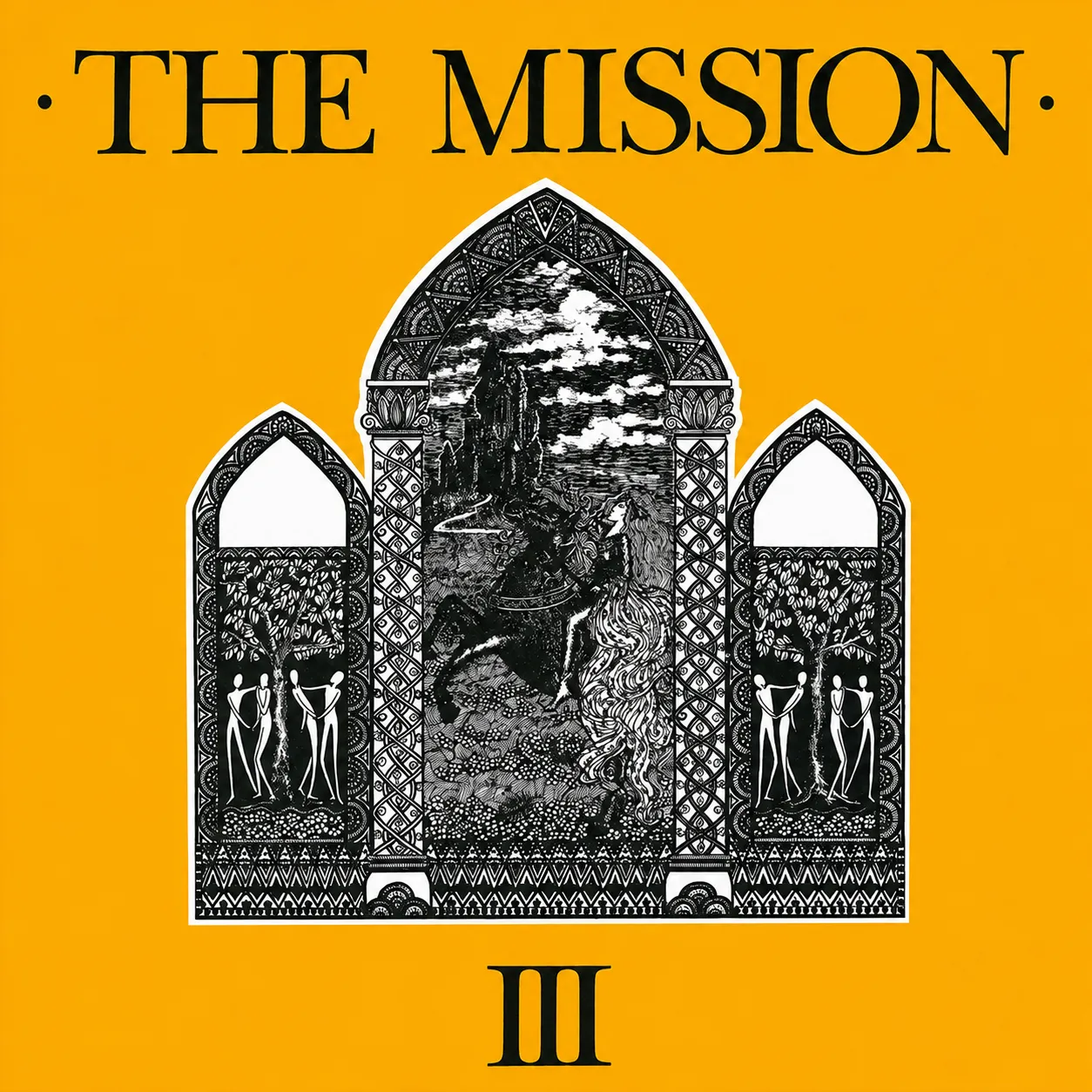 A4. “Stay with Me” (4:37) — A wandering narrator asks for immediate intimacy while admitting that departure remains inevitable; love exists as a temporary refuge among sleepless nights and changing places. “I’ll laugh for you and I’ll dance for you” precedes his refusal to mourn when separation comes
A5. “Let Sleeping Dogs Die” (5:53) — The narrator addresses a relationship poisoned by accusation, betrayal, wounded pride, and competing claims of faith, then argues for leaving the past buried. “No devil so dark as the devil I know” turns familiarity itself into the source of melancholy.
B1. “Sacrilege” (4:45) — Religious imagery merges with addiction, forbidden desire, violence, and ritual transgression as the narrator treats self-destruction as a profane rite. “The taste of ash curls across my tongue” gives that corruption a physical aftertaste.
B2. “Dance on Glass” (5:10) — The lyric presents attraction as a collision of glamour, cruelty, provocation, and physical danger, with romance repeatedly tipping toward injury. “You’ve taken my heart and ripped it from my sleeve” converts emotional exposure into an explicitly violent image.
B3. “And the Dance Goes On” (4:10) — Seduction, wounds, fire, and escape feed a continuing dance in which sinner and saint, heaven and hell, become indistinguishable. “The blade digs deep and the cut begins to sting” makes pain part of the attraction before the pair resume their ritual.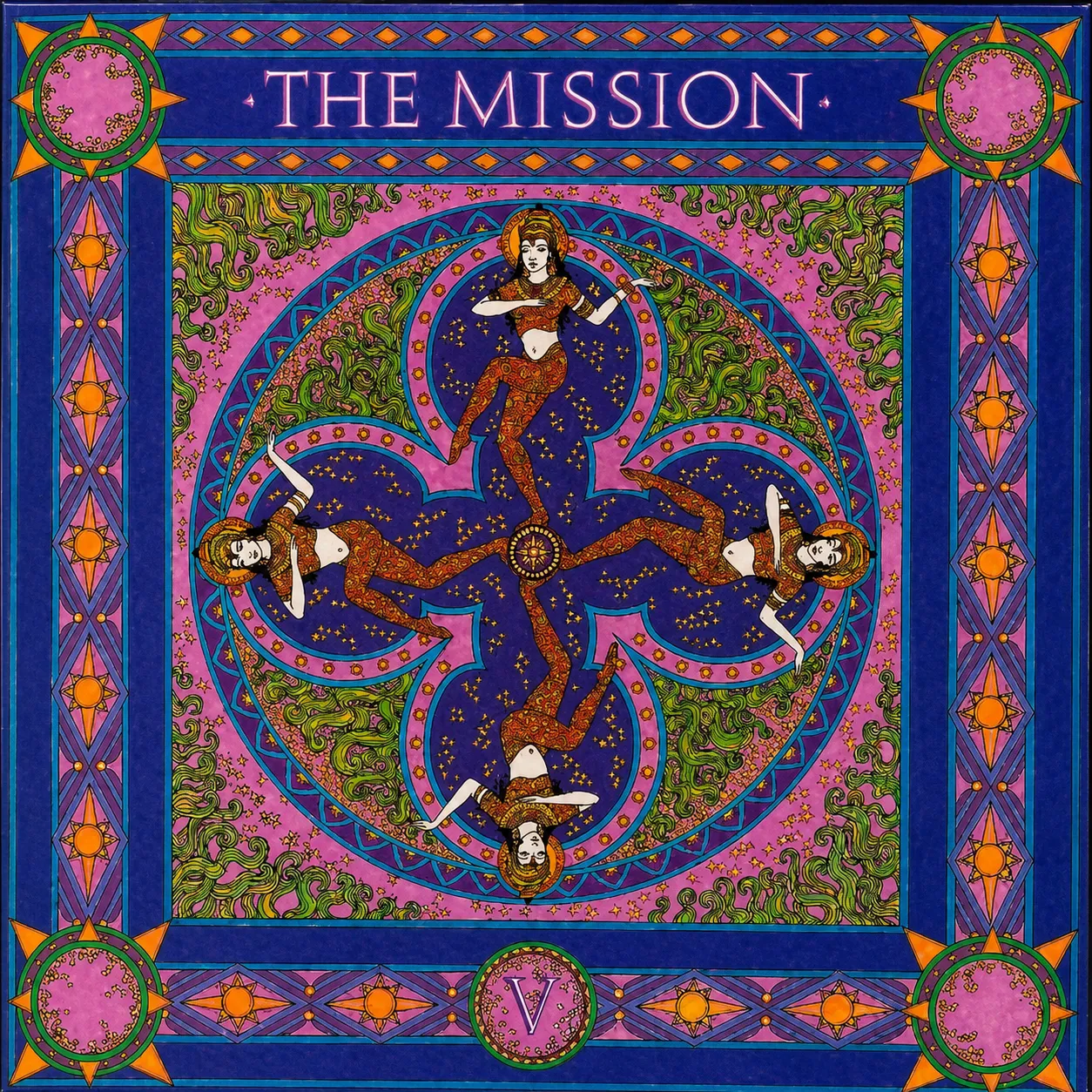 B4. “Severina” (4:15) — Hussey portrays Severina as a dream-bound, moonlit figure defined by angels, gods, trance, secrecy, and romantic mysticism. “She’s got a head full of secrets” condenses the distance between the observer and the woman he idealizes.
B5. “Love Me to Death” (4:38) — Sexual surrender takes the language of worship, fire, flowers, burial, and sacrifice, with love treated as both bodily union and willing annihilation. “Hold me dear, bury me deep” compresses tenderness and death into the same request.
The Mission recorded God’s Own Medicine in August and September 1986 at Ridge Farm Studio in Surrey and Utopia Studios in London. Tim Palmer co-produced with the band. Palmer, a North Shields-born engineer and producer trained at Utopia, also mixed Cutting Crew’s 1986 single “(I Just) Died in Your Arms.”
Gods Own Medicine appeared first in an embossed Mercury gatefold designed by Sandy Ball and The Leisure Process, with an illustrated credits inner. Gold linework places a robed female figure beneath an ornate arch on a dark marbled field, flanked by black standards and reclining lions. Ball had already handled early Mission sleeves for “Serpents Kiss” and II. The Leisure Process carried parallel 1986 design credits for Manfred Mann’s Earth Band (Criminal Tango) and The Alarm (“Knife Edge”).
Mercury issued “Stay with Me” in October 1986, backed with “Blood Brother,” an LP-excluded track included on the cassette and CD editions. “Blood Brother” barrels toward a repeated closing cry, then drops accompaniment beneath Hussey’s final plea. The single reached No. 30 on the UK Singles Chart.
“Wasteland” followed in January 1987, backed with a live version of Bob Dylan’s “Shelter from the Storm.” The single reached No. 11 on the UK Singles Chart.
Mercury issued “Severina” in March 1987, backed with “Tomorrow Never Knows,” a non-album Lennon–McCartney cover. The single reached No. 25 on the UK Singles Chart.
God’s Own Medicine reached No. 14 on the UK Albums Chart and No. 108 on the Billboard 200.
Universal issued a remastered edition in June 2007 with expanded bonus material. The reissue restored the instrumental introduction removed from “Love Me to Death” for the original LP and added the Free cover “Wishing Well,” an anniversary mix of “Wasteland” and the Aqua-Marina mix of “Severina.”
The First Chapter
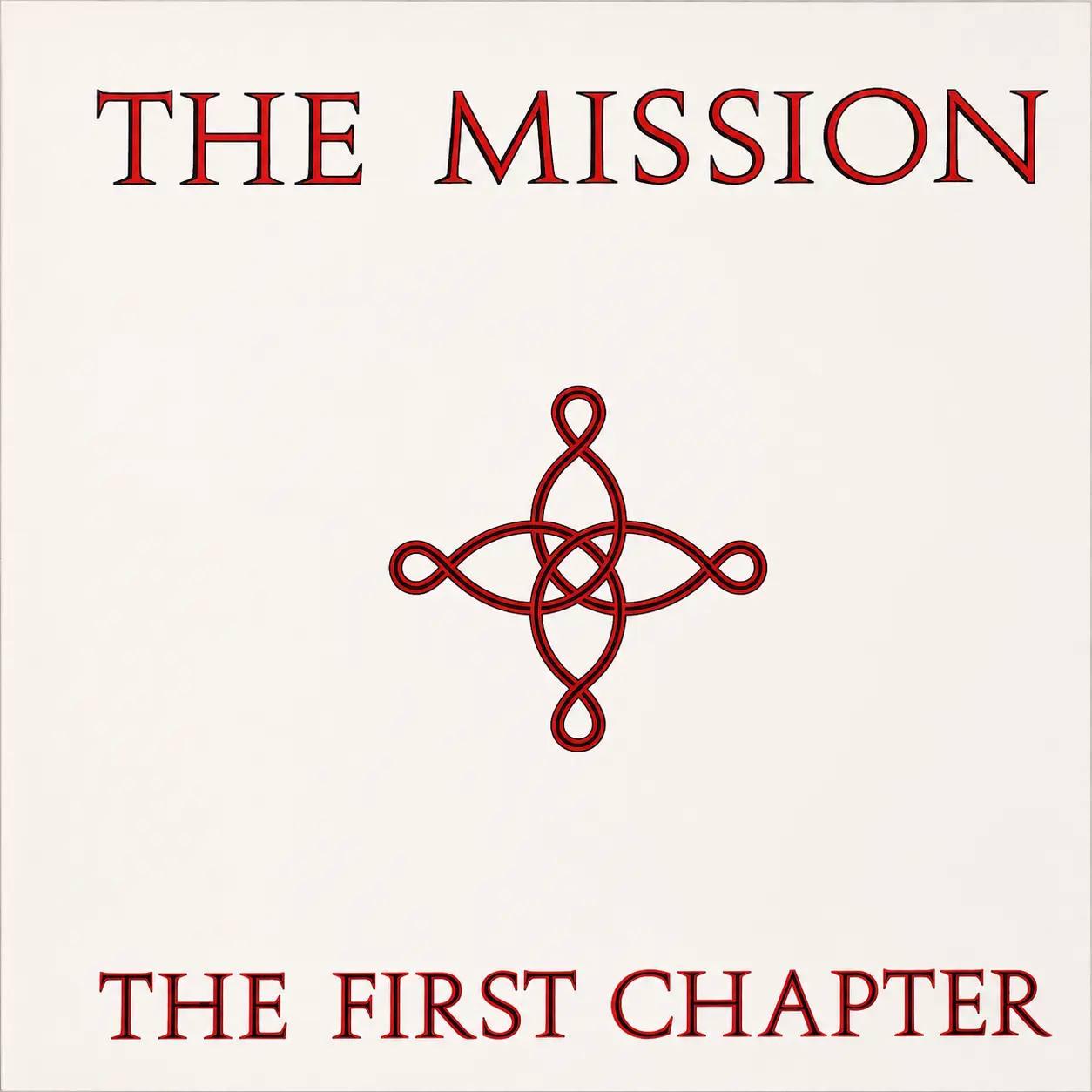 The Mission released the compilation The First Chapter in June 1987 on Mercury.
First Chapter compiles the Chapter 22 material that preceded the Mercury contract. The UK sequence combines six early originals with Patti Smith (“Dancing Barefoot”) and Neil Young (“Like a Hurricane,” standard and extended versions); the US edition drops the extended “Like a Hurricane” and adds The Beatles (“Tomorrow Never Knows”) plus Free (“Wishing Well”).
“Serpents Kiss” surges through chiming 12-string figures and lean ensemble drive. “The Crystal Ocean” shimmers across extended patterns and firm band movement. “Naked and Savage” drifts through a slower, shadowed span. “Wake (RSV)” crawls through drawn-out phrases and dark guitar resonance. “Over the Hills and Far Away” (an original, not a Zeppelin cover) runs on a brisk, driving pulse with ringing guitars and a bass figure that repeatedly circles back through the verses.
A1. “Like a Hurricane” (4:55) – Young; — A fleeting sight of a woman in a hazy bar becomes an image of overwhelming, unattainable love, with the narrator drawn toward her even as the intensity drives him away. “I saw your brown eyes turning once to fire” marks the instant attraction becomes consuming.
A2. “Over the Hills and Far Away” (3:56) — A failed relationship survives in memory as a lost private paradise, where shared dreams and first kisses contrast with betrayal and decay. “Why did you let all the flowers die?” turns that collapse into the song’s recurring accusation.
A3. “Naked and Savage” (4:46) — Desire appears as a primitive, destructive state filled with betrayal, fear, physical degradation, and self-punishment. “Love is the corpse that crawls on dreams” reduces romance to something dead that still consumes what remains.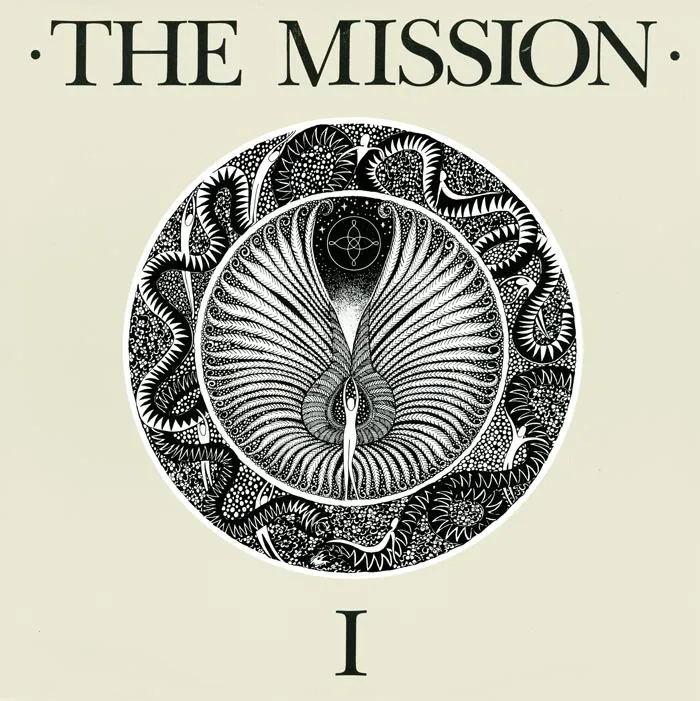 A4. “Serpents Kiss” (4:15) — Sex, intoxication, superstition, and danger blur together as the narrator pursues pleasure despite signs of corruption and revenge. “A love that kills and promises more” states the attraction’s lethal bargain in miniature.
A5. “Dancing Barefoot” (3:05) – Smith, Kral; Smith’s lyric presents erotic surrender as a quasi-religious possession in which attraction dissolves ordinary consciousness and physical control. “Could it be he’s taken over me?” makes desire sound less like choice than takeover.
B1. “The Crystal Ocean” (ext. 7:35) — The narrator mixes biblical allusions, drowning imagery, sunlight, mirrors, blood, and blades into a plea for physical release from confusion and extremity. “Before I drown, kiss me please” makes intimacy the last request before psychic or emotional submersion.
B2. “Garden of Delight” (ext. 5:00)
B3. “Wake (RSV)” (5:00) — The lyric addresses a fallen or compromised figure with bitterness, recalling revenge, dead companions, lost joy, and eventual comeuppance while acknowledging the narrator’s own victimhood. “Alone, in the crumbling tower of power” pictures authority collapsing around someone left without allies.
B4. “Like a Hurricane” (ext. 7:05) – Young
The source recordings date from September and October 1985 sessions at Slaughterhouse Studios in Driffield. The Mission produced the recordings. Slaughterhouse engineer Colin Richardson assisted production on II following his work on the 1985 Chameleons album What Does Anything Mean? Basically.
The First Chapter repackages the Chapter 22 material in a white Mercury sleeve with dark-red serif lettering and the interlaced Mission emblem centered between artist and title. Sandy Ball designed the earlier “Serpents Kiss” and II sleeves; Mercury retained the sparse emblem-and-type scheme for the compilation of material from those first two EPs.
The First Chapter reached No. 35 on the UK Albums Chart. Universal expanded the collection for the June 2007 remaster. The reissue restored two short intermissions and “Swan Song: Vigilante Man,” then added a Slaughterhouse version of “Bridges Burning,” four 1986 live tracks and a later concert version of “Shelter from the Storm.”
Children
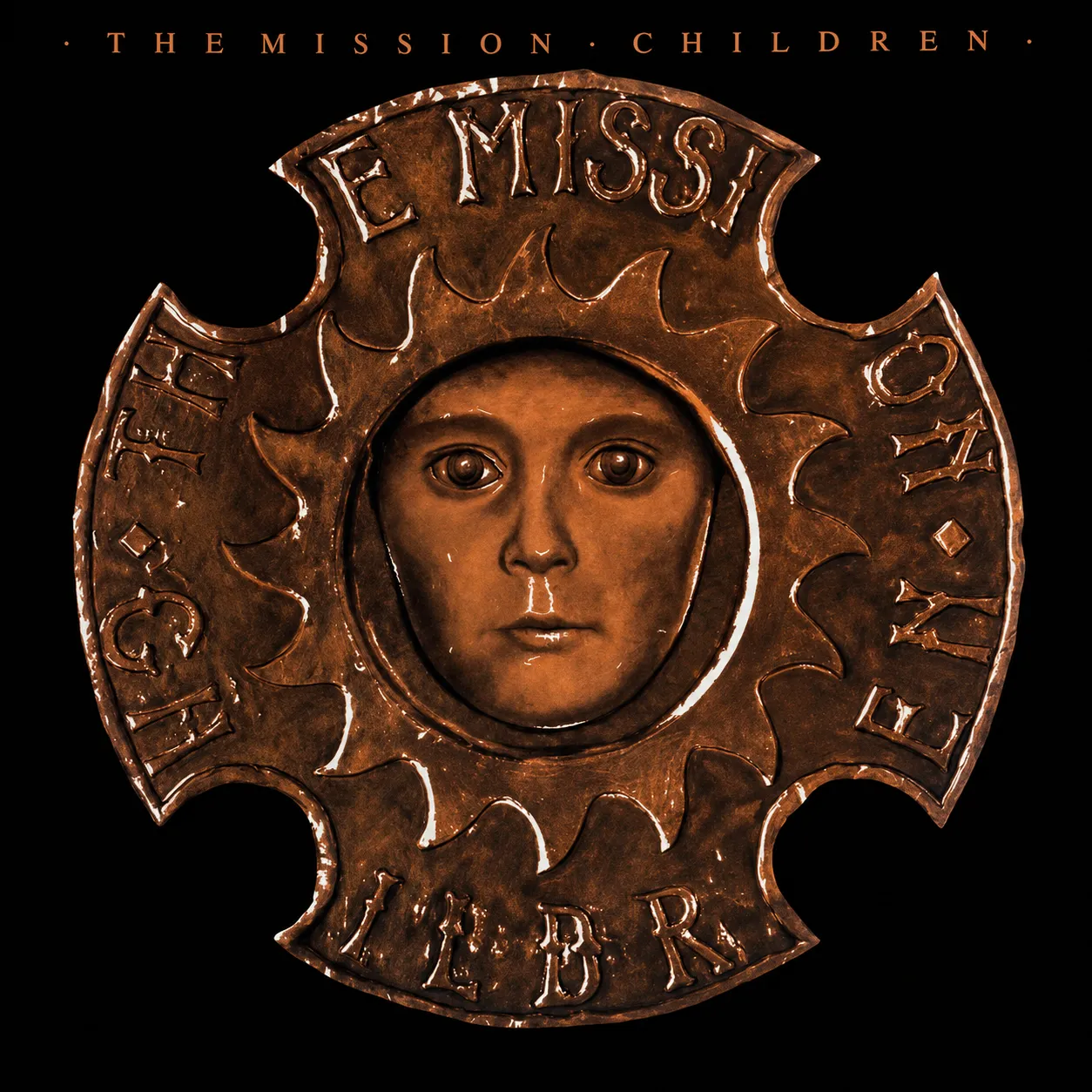 The Mission released their second studio album, Children, in February 1988 on Mercury.
Children retains the four-piece lineup, with producer John Paul Jones also contributing keyboards and programming. Julianne Regan returns on “Beyond the Pale” and “Black Mountain Mist,” the latter with harpist Skaila Kanga. “Shamera Kye” features harmonica by Jez Webb and violin by Michael Ade. Pupils from Woodstock Infant School add voices to “Heat” and “Hymn (for America).”
Hussey supplied the lyrics, while the four members composed the music apart from the brief Webb piece “Shamera Kye.” The CD and cassette add “Fabienne” and a version of the Aerosmith song “Dream On.”
“Beyond the Pale” rises from a long fade through minor-key drone, sitar figures, and measured section changes. “Fabienne” presses a stark lead through dense production. “Heaven on Earth” drifts on acoustic strums beneath a luminous haze. “Tower of Strength” mounts by degrees, widening from acoustic detail into a massed anthem.
“Kingdom Come” strides toward a broad communal chant as layered sections gather scale. “Black Mountain Mist” wanders through a medieval setting, with harp figures beneath Julianne Regan’s delicate phrases. “Heat” bears down through heavy layers and compressed detail. “Dream On” crests in an outsized finale as Regan extends final phrases.
A1. “Beyond the Pale” (7:49) — Storm and sea imagery frame a condemnation of religious violence, tribal division, and humanity’s estrangement from nature, with the narrator cast adrift toward an uncertain liberty. “Treacherous bibles of murder, hate and war” states the political charge directly.
A2. “Wing and a Prayer” (3:41) — Fortune-telling imagery surrounds a reckless attachment in which the narrator discards caution, accepts blame, and entrusts himself to someone who may destroy him. “Throw me a line, I’m sinking fast” catches the mixture of dependence and danger.
A3. “Heaven on Earth” (5:19) — Romantic devotion merges with images of pregnancy and birth as the narrator promises protection, sacrifice, and an earthly future for the beloved and the child within her. “For the child is within you” reveals the literal life beneath the song’s devotional language.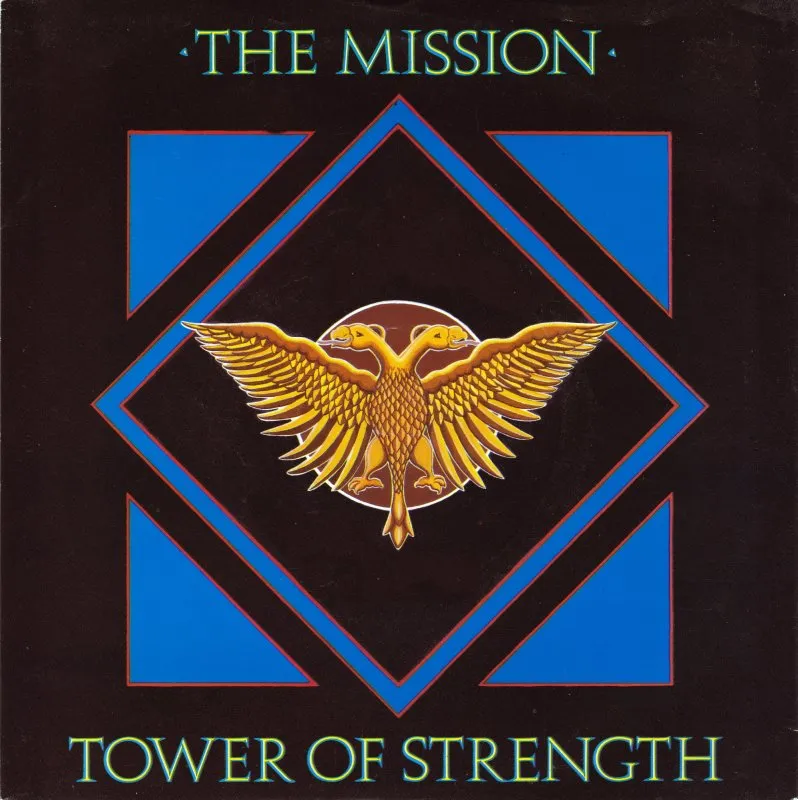 A4. “Tower of Strength” (8:03) — The narrator addresses an unwavering source of emotional support whose presence supplies security, belief, guidance, and salvation against fear and isolation. “You are my faith, my hope, my liberty” defines that dependence in explicitly devotional terms.
B1. “Kingdom Come” (4:50) — Sexual desire and a damaged relationship appear through madness, asylum, animal behavior, distrust, and repeated attempts to forget, dream, and love again. “I build myself a brave asylum” turns emotional self-protection into one of the lyric’s central images.
B2. “Breathe” (1:26) — This brief lyric reduces intimacy to the hope of sharing breath with another person, presented as both the narrator’s deepest wish and furthest emotional risk. “It’s all I ever dared” gives the simple request an undertone of vulnerability.
B3. “Child’s Play” (3:39) — Personifies intoxicants as a cruel, demanding female presence that leaves its users collapsed, pleading, depleted, and still returning for more. “She bleeds me dry and tears me to shreds” makes the relationship explicitly parasitic.
B4. “Shamera Kye” (0:34) – Webb interlude
B5. “Black Mountain Mist” (2:54) — Separation prompts a longing for home and an earlier period of shared innocence, with remembered hills, sunlight, laughter, and hope set against a love now dying. “Love bleeds slowly to death” supplies the emotional break beneath the pastoral imagery.
B6. “Heat” (5:14) — Treats mutual sexual surrender as an escape from restraint, with pride, reason, and resistance dissolving as the lovers give themselves over to physical intimacy. “When you take me deep inside” makes the erotic meaning unmistakable.
B7. “Hymn (for America)” (6:35) — An outsider’s passage through America becomes a catalogue of Los Angeles violence, commodified sex and religion, personal loss, and exhausted flight toward the desert. “Religion for sale” condenses the song’s disillusionment with a culture where even salvation carries a price.
The Mission recorded Children from September through December 1987 at the Manor Studio in Oxfordshire with producer John Paul Jones and engineer Mark “Spike” Stent. Jones, a founding member of Led Zeppelin and veteran studio arranger, also plays keyboards and handles programming. His adjacent production work included the 1986 John Renbourn and Stefan Grossman album The Three Kingdoms and Ben E. King’s 1987 release Save the Last Dance for Me.
Children appeared in an embossed Mercury gatefold designed by Sandy Ball and Mental under Green Ink art direction, with sleeve photography by Tansy Spinks. Front art isolates a bronze-toned cross-shaped relief with a human face at the circular core against black; an illustrated credits inner completes the first UK pressing. Spinks also supplied contemporary sleeve photography for All About Eve (All About Eve) and Killing Joke (“My Love of This Land”).
Mercury issued “Tower of Strength” in February 1988, backed with “Fabienne.” Extended formats included a sung version of “Breathe.” The single reached No. 12 on the UK Singles Chart.
“Beyond the Pale” followed in April 1988, backed with “Tadeusz (1912–1988),” a non-album Mission exclusive. The single reached No. 32 on the UK Singles Chart.
Children reached No. 2 on the UK Albums Chart and No. 126 on the Billboard 200.
The 2007 remaster added “Tadeusz (1912–1988),” a live “Child’s Play,” the Heavenly mix of “Kingdom Come” and Tim Palmer’s version of “Heat.”
Carved in Sand
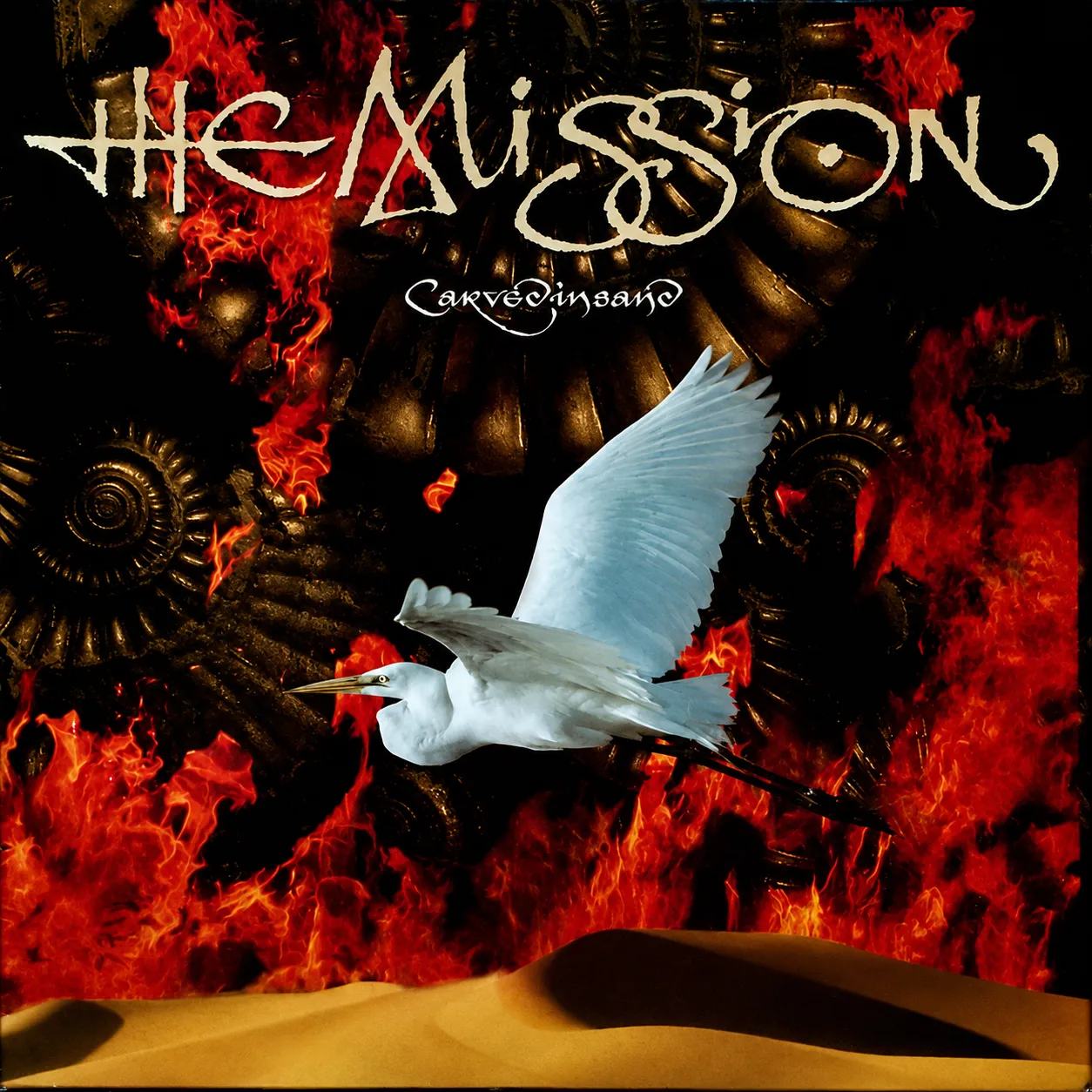 The Mission released their third studio album, Carved in Sand, in February 1990 on Mercury/Phonogram.
Carved in Sand is the last studio album by the original quartet and contains ten group originals. Sitarist Baluji Shrivastav appears on “Sea of Love,” while pianist Guy Chambers joins “Grapes of Wrath.” Guitarist Reeves Gabrels adds guitar to “Into the Blue” and “Hungry as the Hunter.”
“Amelia” strikes in a compact, hard-hitting rush beneath Hussey’s stark delivery. “Butterfly on a Wheel” glides through a delicate romantic sweep with broad, slowly widening sections. “Sea of Love” drifts through psychedelic turns and hazy transitions. “Deliverance” barrels through rollicking momentum and a massed singalong. “Grapes of Wrath” settles into a gentle rural lament. “Hungry as the Hunter” coils from a striking opening riff into a dense swirl.
A1. “Amelia” (2:55) — A child confronts sexual abuse by her father as his language of affection gives way to secrecy, coercion, and threatened violence. “Don’t tell Mama what I did to you” exposes the abuse beneath his repeated claims of love.
A2. “Into the Blue” (4:11) — Two lovers escape into a shared private world amid surreal landscapes, street scenes, madness, and intimations of social decay. “We have seen gold gather rust” places disillusionment beside their determination to disappear together.
A3. “Butterfly on a Wheel” (5:44) — Love first appears as a destructive force that leaves its subject wounded and trapped by memory, then becomes capable of renewal. “You can’t wrap your arms around a memory” fixes the song on loss that physical closeness cannot recover.
A4. “Sea of Love” (5:23) — Avalon, Lorelei, ships, and shorelines turn romantic surrender into a mythic voyage toward refuge in another person. “Then kisses are galleons” converts intimacy into the vessel that carries the dreamer toward that sanctuary.
A5. “Deliverance” (6:03) — Arthurian and pagan imagery frames a plea for spiritual release through myth, ancestral wisdom, Avalon, Beltane, and faith in supernatural guidance. “The sword will rise again from the water” makes rebirth and restoration part of the promised escape.
B1. “Grapes of Wrath” (4:20) — A dispossessed working farmer becomes the emblem of labor exploited by money and power, yet his dignity, faith, and attachment to the land survive. “Money reaps the harvest money demands” reduces the injustice to an economic transaction that steals the worker’s yield.
B2. “Belief” (7:34) — Religious imagery and romantic devotion merge as the narrator searches for truth, forgiveness, hope, and healing through an almost sacred attachment to another person. “Love’s a disease and it rips me apart” makes that faith inseparable from emotional injury.
B3. “Paradise (Will Shine Like the Moon)” (3:54) — Moon, snake, wolf, ritual, and dawn imagery cast a sexual encounter as a nocturnal rite whose promised transcendence lasts only until morning. “This could be forever if you love me right” exposes the wish for permanence beneath the erotic fantasy.
B4. “Hungry as the Hunter” (5:14) — Heroin appears as a seductive, predatory woman who draws an addict from desire into submission, physical dependence, and probable death. “The needle and the damage done” strips the personification back to the addiction at the lyric’s core.
B5. “Lovely” (1:59) — A simple litany affirms faith in happiness, sorrow, friendship, peace, children, dreams, and personal salvation before placing one person above all of them. “But most of all I believe in you” supplies the culminating declaration.
Sessions spanned May through August 1989 at RAK Studios in London and Jacobs Studios in Surrey. Brown recorded the drum parts at RAK before the group continued at Jacobs; Tim Palmer mixed the album at Swanyard Studios in London. Palmer returned as producer following the 1988 Robert Plant release Now and Zen and the 1989 Tin Machine debut.
 Carved in Sand used a gloss-laminated DKB sleeve by Keith Breeden, with a printed inner and band photography by ex-Haysi Fantayzee singer Kate Garner. Front art places a pale great egret photograph by Philippa Scott over black mechanical forms, red flames, and a strip of gold sand beneath a hand-drawn Mission logotype. Garner came to the project with contemporary photography credits on Sinéad O’Connor (The Lion and the Cobra) and Lisa Stansfield (Affection). Breeden founded DKB in 1984, with late-Eighties sleeve work for The Cult (Electric) and Scritti Politti (Provision).
Mercury issued “Butterfly on a Wheel” in January 1990, backed with “The Grip of Disease,” a non-album Mission exclusive. The single reached No. 12 on the UK Singles Chart.
“Deliverance” followed in February 1990, backed with a version of the Kinks song “Mr. Pleasant.” The single reached No. 27 on the UK Singles Chart.
The May 1990 single “Into the Blue” appeared with “Bird of Passage,” a non-album Mission exclusive. The single reached No. 32 on the UK Singles Chart.
Carved in Sand reached No. 7 on the UK Albums Chart and No. 101 on the Billboard 200.
Universal released a two-disc edition in February 2008 with session material and concert recordings. The first disc adds demos and alternate versions from the sessions. The second couples Grains of Sand with nine live covers from December 1989 concerts under the Metal Gurus name at Aston Villa Leisure Centre.
1990 Lineup Change
Simon Hinkler left the Mission on the 1990 Deliverance tour. His departure ended the original quartet before the release of material retained from the Carved in Sand sessions.
Grains of Sand
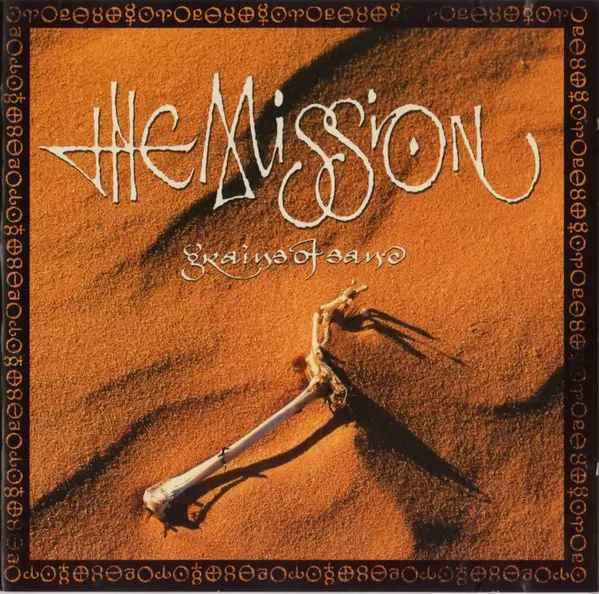 The Mission released the companion compilation Grains of Sand in October 1990 on Mercury.
Grains of Sand serves as a companion compilation to Carved in Sand, combining unused session material with alternate versions of “Tower of Strength” and “Butterfly on a Wheel.” Covers draw from The Kinks (“Mr. Pleasant”) and John Lennon (“Love”). The set also includes “Hands Across the Ocean,” which the band co-produced with XTC leader Andy Partridge.
“Hands Across the Ocean” snaps through concise, direct sections and recurring calls. “Divided We Fall” drives a guitar-led figure beneath Hussey’s distinct delivery. “Kingdom Come (Forever and Again)” recasts the song’s earlier full-band arrangement as bare piano and exposed phrasing. “Mr. Pleasant” sneers through a sardonic cover arrangement.
A1. “Hands Across the Ocean” (3:49) — Separation leaves the narrator unable to suppress memories of someone across the sea, while parties, clothing, and other comforts fail to replace the absent relationship. “There’s not enough heaven here” reduces that dissatisfaction to a single refrain.
A2. “The Grip of Disease” (4:12) — Crucifixion imagery, frozen success, fate, and distrust of absolute truth frame a psychological collapse in which the narrator feels betrayed and overtaken by forces beyond his control. “How cruel the stars, that shine so hard” makes fate itself appear hostile.
A3. “Divided We Fall” (3:40) — The narrator describes pressure, sleeplessness, self-destructive impulses, and internal conflict while insisting that fragmentation guarantees defeat. “It’s always a fight without a winner” extends the political maxim into personal struggle.
A4. “Mercenary” (2:50) – Brown, Hussey — An enraged narrator attacks a money-driven betrayer as a parasite, hypocrite, and opportunist, with nearly every line escalating the abuse. “You took me for a ride” supplies the grievance beneath the barrage of insults.
A5. “Mr. Pleasant” (2:50) – Ray Davies; Satirizes a prosperous, complacent man whose material success disguises a marriage already collapsing behind his back. “Did you know she was flirting around” punctures the polished life presented in the earlier verses.
B1. “Kingdom Come (Forever and Again)” (4:57) — Madness, distrust, broken intimacy, and repeated attempts to forgive or dream again surround a relationship that has lost its former security. “With a flick of the wrist” introduces the ease with which the trusted partner could break his heart.
B2. “Heaven Sends You” (4:54) — An extended erotic litany moves from tender kisses meant to erase fear and past hurt toward increasingly explicit sexual contact. “I’ll kiss away those hurting years” gives the physical devotion a restorative purpose before the lyric turns overtly sexual.
B3. “Sweet Smile of a Mystery” (3:55) — The narrator idealizes woman as comforter, lover, mother, daughter, earthly force, and sacred figure while conceding that she remains unknowable to him. “She brings out the very essence of me” makes his own identity dependent on that feminine presence.
B4. “Tower of Strength” (Casbah Mix) (4:30) — The lyric addresses a person whose constancy supplies protection, faith, hope, and emotional refuge against fear and isolation. “You are my faith, my hope, my liberty” states that dependence in explicitly devotional terms.
B5. “Butterfly on a Wheel” (Troubadour Mix) (4:29) — Love appears first as cruelty and emotional mutilation, with memory trapping someone inside pain that cannot be physically recovered or repaired. “You can’t wrap your arms around a memory” fixes the loss on something permanently beyond reach.
B6. “Love” (1:51) – John Lennon; Defines love through feeling, touch, freedom, knowledge, need, and reciprocity, reducing the idea to a sequence of elemental propositions. “Love is you / You and me” places mutual recognition at the center of the lyric.
B7. “Bird of Passage” (6:28) — A lover’s seasonal departure leaves the narrator alone and grieving, but he treats the separation as temporary and waits for her return with autumn. “Solitude is the cloak I wear” turns his isolation into something carried visibly until she comes home.
Grains of Sand drew heavily from the May–August 1989 Carved in Sand sessions. Partridge co-produced “Hands Across the Ocean” in sequence with the 1990 Peter Blegvad album King Strut & Other Stories.
Palmer produced “The Grip of Disease,” “Divided We Fall” and “Sweet Smile of a Mystery,” then worked with Chris Sheldon on “Mr. Pleasant.” Hussey directed the acoustic and remix selections, with Sheldon joining him on “Heaven Sends You” and “Bird of Passage.” Julian Mendelsohn and the Mission produced “Kingdom Come (Forever and Again).”
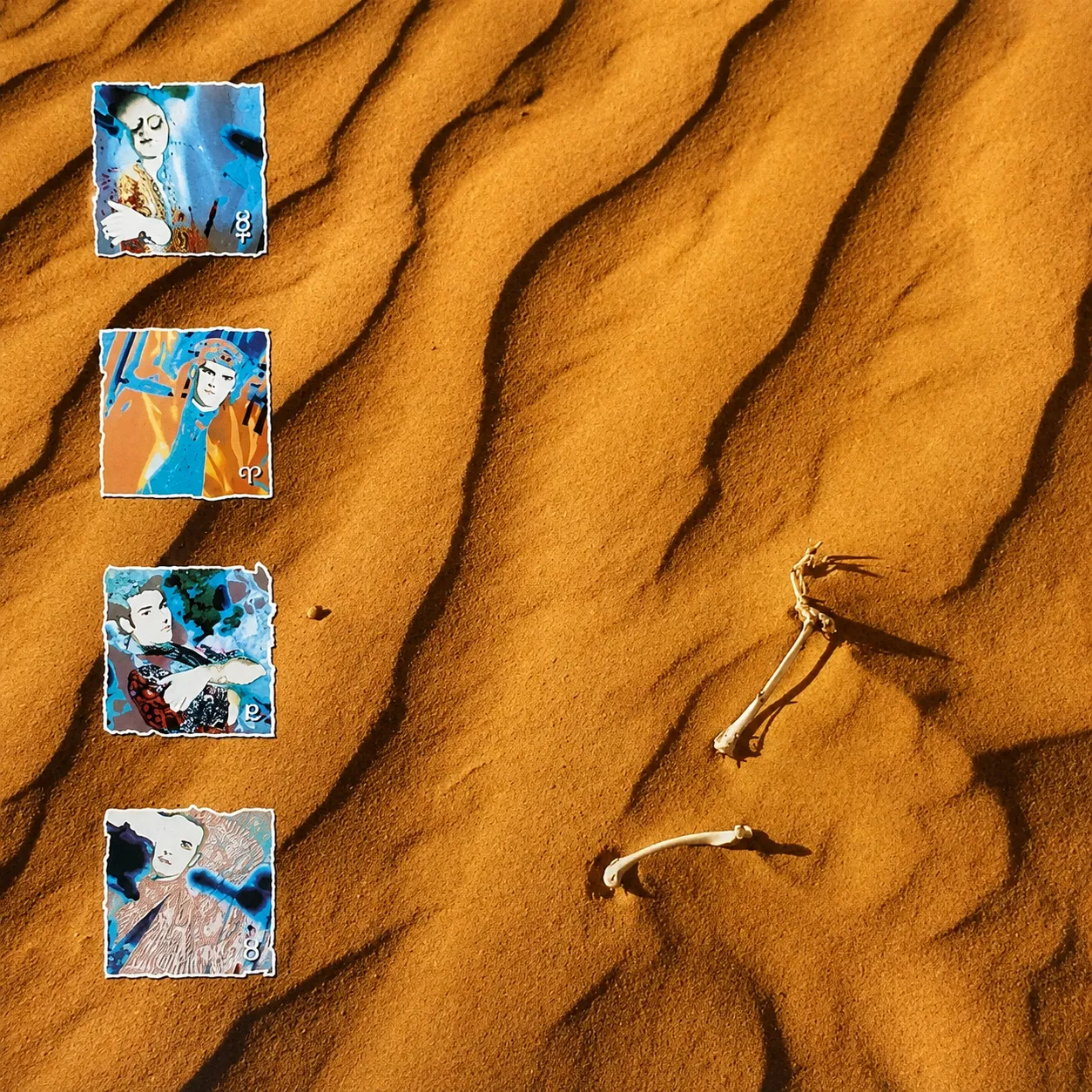
Breeden returned for Grains of Sand, carrying the DKB visual system from Carved in Sand into the companion compilation. Orange sand fills the front beneath the hand-drawn Mission logotype, with a Y-shaped slingshot and long shadow inside a border of repeating black symbols. Breeden drew the Mission calligraphy by hand with ink on paper for the two Sand releases and related singles.
Mercury issued “Hands Across the Ocean” in November 1990, backed with the Lennon cover “Love.” The single reached No. 28 on the UK Singles Chart.
Grains of Sand reached No. 28 on the UK Albums Chart. Universal subsequently incorporated the collection into the 2008 two-disc edition of Carved in Sand.
Discography:
- Gods Own Medicine (1986)
- The First Chapter (1987, comp)
- Children (1988)
- Carved in Sand (1989)
- Grains of Sand (1990, comp)
- Masque (1992)
Sources:
Artist/Album Pages:
Evensong was an English folk-psych duo that released a 1973 self-titled album on Philips. Member...
Hookfoot was an English rustic/hard-rock band that released four albums between 1971 and 1974 on A...
Aditus are a Venezuelan jazz-rock band that self-released the 1977 album A Través de la Ventana, fol...
Locust was an English soul-funk sextet that released the 1976 album Alpha Waves and the single “Fo...
Random Hold was an English New Wave/art-rock band from London that released a self-titled EP and a...
Pablo El Enterrador is an Argentine symphonic-rock ensemble that formed in 1971 and underwent mult...
Taggett was an English rustic-rock supergroup that made a self-titled album in 1973, re-released in ...
Boston are an American symphonic/hard-rock band that released two albums on Epic between 1976 and ...
Bram Stoker was an English post-psych band that released the album Heavy Rock Spectacular on Windm...
UK Decay was an English post-punk/proto-goth band that self-released two 1979/80 singles on Plasti...
Legend was an English heavy metal band from Jersey island that released the 1981–82 albums Legend ...
Moonkyte was an English folk-psych band from West Yorkshire that released the 1971 album Count Me ...