

All About Eve was an English ethereal-goth band that released four singles on Eden Records and the 1988/89 Mercury albums All About Eve and Scarlet and Other Stories, charting with “Our Summer,” “Flowers in Our Hair,” “Wild Hearted Woman,” “Every Angel,” and “Martha’s Harbour.”
Members: Julianne Regan (vocals), Tim Bricheno (guitar), Andy Cousin (bass), Mark Price (drums), Marty Willson-Piper (guitar), Toni Haimi (guitar), Ben Savigear (drums)
Background
All About Eve formed in London in 1984 when singer–songwriter Julianne Regan expanded the Swarm, her project with drummer Manuela Zwingmann, into a four-piece with guitarist Tim Bricheno and bassist Gus Ferguson.
Julie-Ann Regan (b. June 30, 1962; Coventry) received a Woolworths electric guitar from a cousin at fifteen and taught herself the instrument. Regan moved to London at nineteen for music journalism, then wrote for ZigZag after six months of study. She interviewed Gene Loves Jezebel for the magazine and filled their early bass slot.
Zwingmann drummed for Xmal Deutschland for their 1983 album Fetisch and singles “Qual” and “Incubus Succubus II.”
Bricheno (b. July 6, 1963; Huddersfield, Yorkshire) learned guitar by ear and played in a school punk band. His next group, Aemotti Crii, included bassist Andy Cousin (b. June 28, 1963; Lincoln), who grew up in Mirfield and had a brief London spell with Pink and Black.
All About Eve took their name from the 1950 American drama film starring Bette Davis as Margo Channing, an ambitious young actress who insinuates herself into the life of an established Broadway star and manipulates her way toward fame.
1985–87 Singles and Promotions
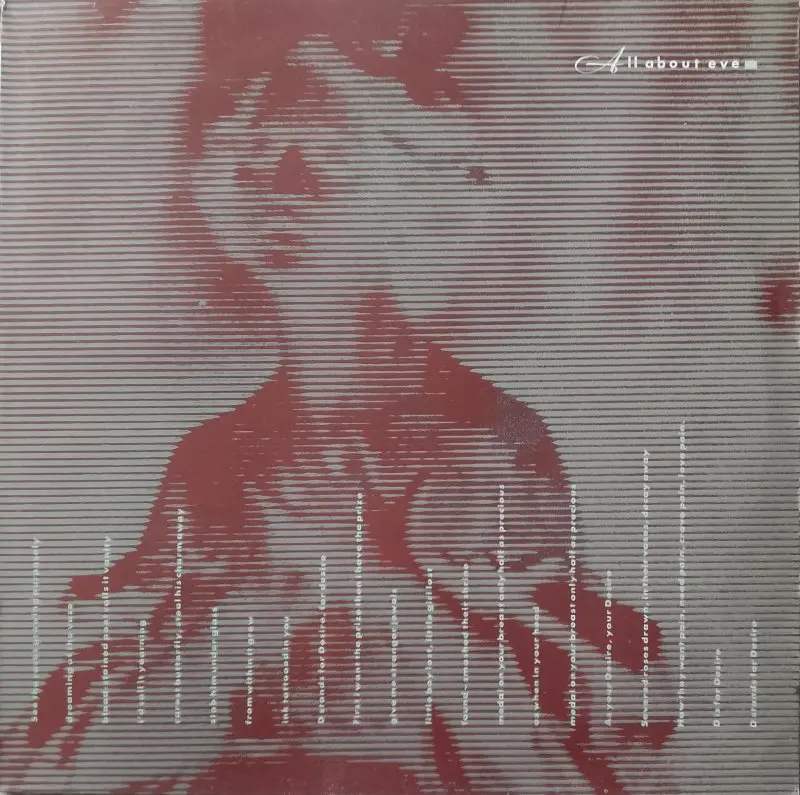 All About Eve established Eden Records as a self-run operation for their first four singles.
In July 1985, All About Eve debuted with “D for Desire,” a 12-inch single backed with “Don’t Follow Me (March Hare),” both Bricheno–Regan originals.
“D for Desire” crouches through rough-edged shimmer and a compressed drive. “Don’t Follow Me (March Hare)” lopes sideways through loose motion and slackened phrasing.
A. “D for Desire” (4:17) – treats desire as an appetite that survives possession and turns beauty into pain. “First I want the prize, then I have the prize” exposes achievement as a brief stage before craving resumes.
AA. “Don’t Follow Me (March Hare)” (4:05) – warns others away while the speaker moves through images of crucifixion, madness, and chemical sleep. “Still no Vincent scissors shall cut my ears” invokes Van Gogh as a refusal to surrender perception through self-destruction.
“In the Clouds” followed in April 1986 backed with “End of the Day” and “Love Leads Nowhere.” The single reached No. 19 on the independent singles chart and appeared in a limited poster edition.
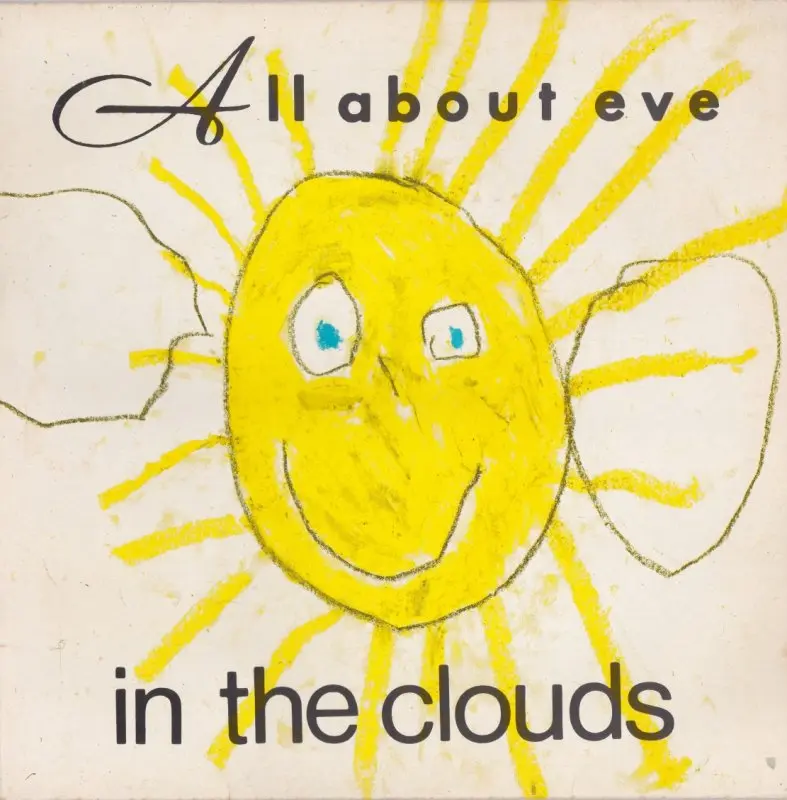 “In the Clouds” glides from cellar-depth murk to an airy crest, then suspends the line on trembly pauses. “End of the Day” broods over a thick bass line, a deep mid-paced pattern, pinch harmonics, and Regan’s wavering alto. “Love Leads Nowhere” hurries through bright impatience as Regan’s voice controls the track.
A. “In the Clouds” (3:12) – sends wishes, secrets, and whispered words upward, where they dissolve like snow. “Just a breath away” makes transcendence feel close but insubstantial.
B1. “End of the Day” (3:59) – gives a condemned killer an unrepentant account of violence committed during a loss of temper. “No shame at the gallows” joins defiance with the recurring image of a body swinging against a burning sky.
B2. “Love Leads Nowhere” (3:50) – presents attraction as a sequence of traps, false signs, and compulsive movement toward danger. “Butterfly ghosts draw closer to the flame” turns desire into a fatal response to light.
Eden issued “Our Summer” in April 1987 backed with “Lady Moonlight.” The twelve-inch placed an extended A-side with “Lady Moonlight” and “Shelter From the Rain.” Simon Hinkler and Wayne Hussey produced the single, which reached No. 2 on the independent chart and No. 87 on the UK singles chart.
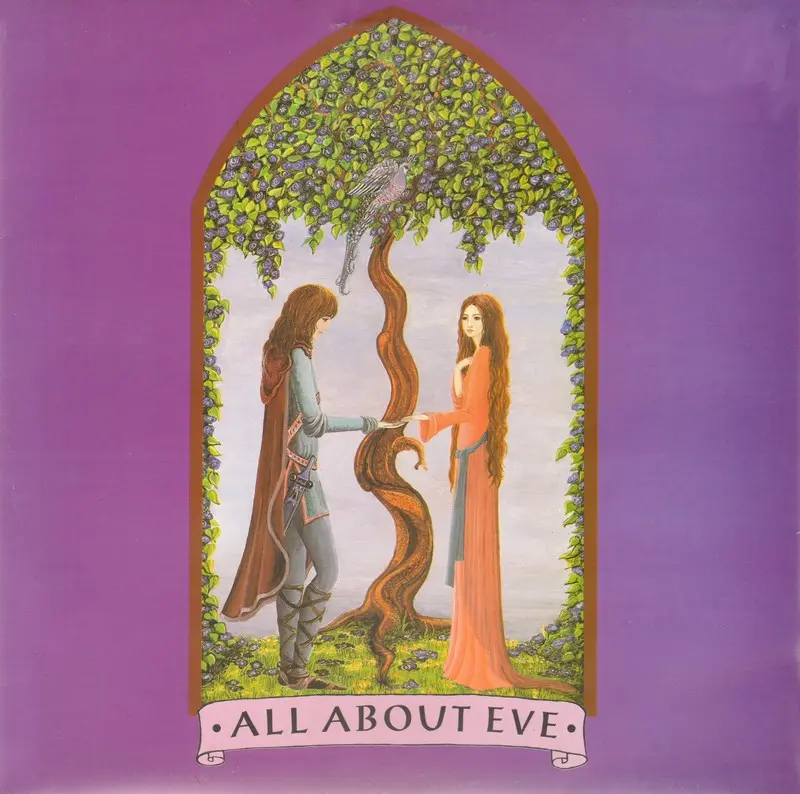 A. “Our Summer” (3:23/4:29) – Bricheno, Cousin; promises that emotional warmth will return despite present separation and winter cold. “Gypsy whispers with her wild eyes” gives the hoped-for change the character of an uncertain prophecy.
B. “Lady Moonlight” (4:28) – seeks comfort, secrecy, and guidance from a feminine lunar presence during despair. “She is Isis, she is Guinevere” combines goddess and legendary queen within one protective figure.
B2. “Shelter From the Rain” (5:19) – presents mutual protection as summer fades and emotional security starts to erode. The plea to “save a flower” turns love into something fragile that must survive weather, jealousy, and flight.
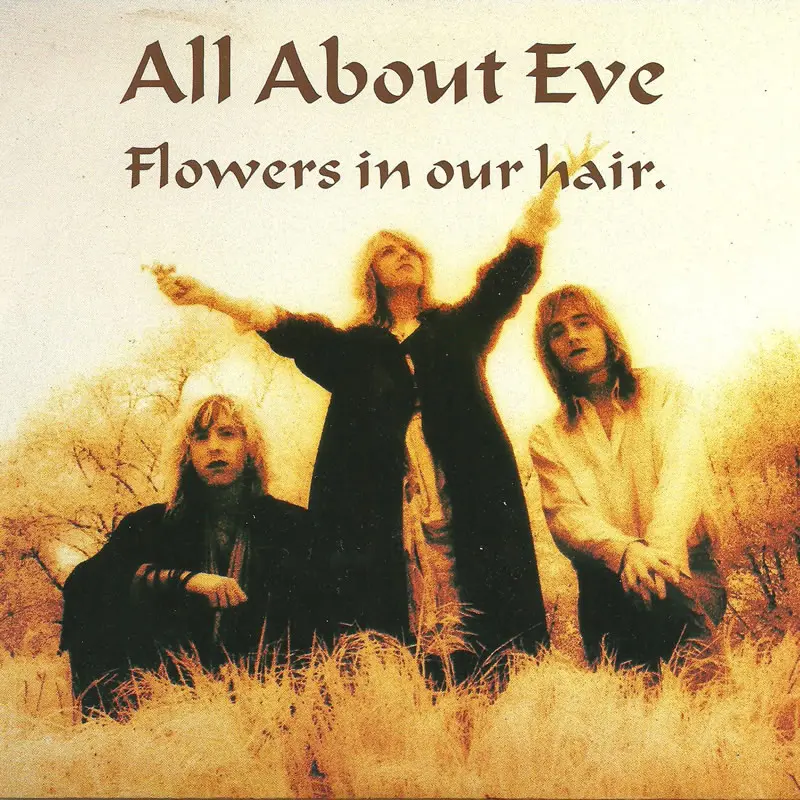
“Flowers in Our Hair” followed in June 1987 backed with “Paradise.” The twelve-inch added “Devil Woman” and a remixed A-side, while the DJ pressing coupled an edit with the full version. The single reached No. 1 on the independent chart and No. 81 on the UK singles chart.
A. “Flowers in Our Hair” (4:07) – addresses former “sun-children” whose countercultural signs have hardened into another uniform. She retains faith in unguarded affection; “the hearts of children” contrasts their openness with adults who need wine before asking for love.
B1. “Devil Woman” (2:58) – Terry Britten, Christine Holmes; first recorded by Kristine Sparkle (aka Holmes) as a 1975 single; popularized in 1976 by Cliff Richard. The song portrays the ominous warnings of fortune teller with malevolent influence.
B2. “Paradise” (3:52) – laments the destruction of innocence through violence, ambition, and humanity’s failure to recognize what it possessed. “A thousand snake mouths open wide” multiplies the Edenic serpent into a continuing field of temptation
 All About Eve recorded a Radio 1 session for Janice Long on August 26, two days before their appearance at the 1987 Reading Festival, where the band performed “She Moves Through the Fair,” “Every Angel,” “In the Clouds,” “Our Summer,” “Gypsy Dance,” “What Kind of Fool,” “Flowers in Our Hair,” “Shelter From the Rain,” “Wild Hearted Woman,” and “In the Meadow.”
Mercury issued “In the Clouds” in October 1987 backed with “She Moves Through the Fair.” The twelve-inch added “Calling Your Name” and an extended A-side. Advance copies used a gatefold wallet with black-and-white photos and cream information sheets. The single reached No. 47 on the UK singles chart.
A. “In the Clouds” (3:33/5:08)
B. “She Moves Through the Fair” (5:22) – trad., arranged AAE
B2. “Calling Your Name” (3:39) – portrays a man haunted by a presence that occupies his dreams, body, and creative impulses. “I’ll turn you pale with ink and second-sight” makes inspiration inseparable from supernatural possession.
All About Eve
 All About Eve released their self-titled debut album in February 1988 on Mercury.
The album recasts the Eden-era catalogue in a full-band studio format and combines remade single titles with new Bricheno–Cousin–Regan material and one traditional arrangement. Mark Price joins the album credits after the early drum-machine phase; Mick Brown and Greg Brimstone retain selected drum credits from the recording period. Guest parts include violinist Ric Sanders, keyboardist Peter-John Vettese, arranger/conductor Adam Peters, and Mission singer Wayne Hussey.
“Flowers In Our Hair” surges through bright strums and broad group dynamics. “Gypsy Dance” winds through violin figures and classical arpeggios. “In the Clouds” hangs in chiming shadow, with Regan’s voice set above a narrow drift. “Martha’s Harbour” suspends Regan’s voice over a lone arpeggio. “Every Angel” drives on a four-on-the-floor pattern and a taut bassline.
“Shelter From the Rain” swells through broad twelve-string strums. “She Moves Through the Fair” slows into a near-still traditional air. “What Kind of Fool” sways through sparse piano touches. “In the Meadow” surges through bent guitar figures. “Lady Moonlight” hovers over plucked figures and a faint string veil. The bonus “Like Emily” returns to acoustic intimacy and lifts Regan into brief upper turns.
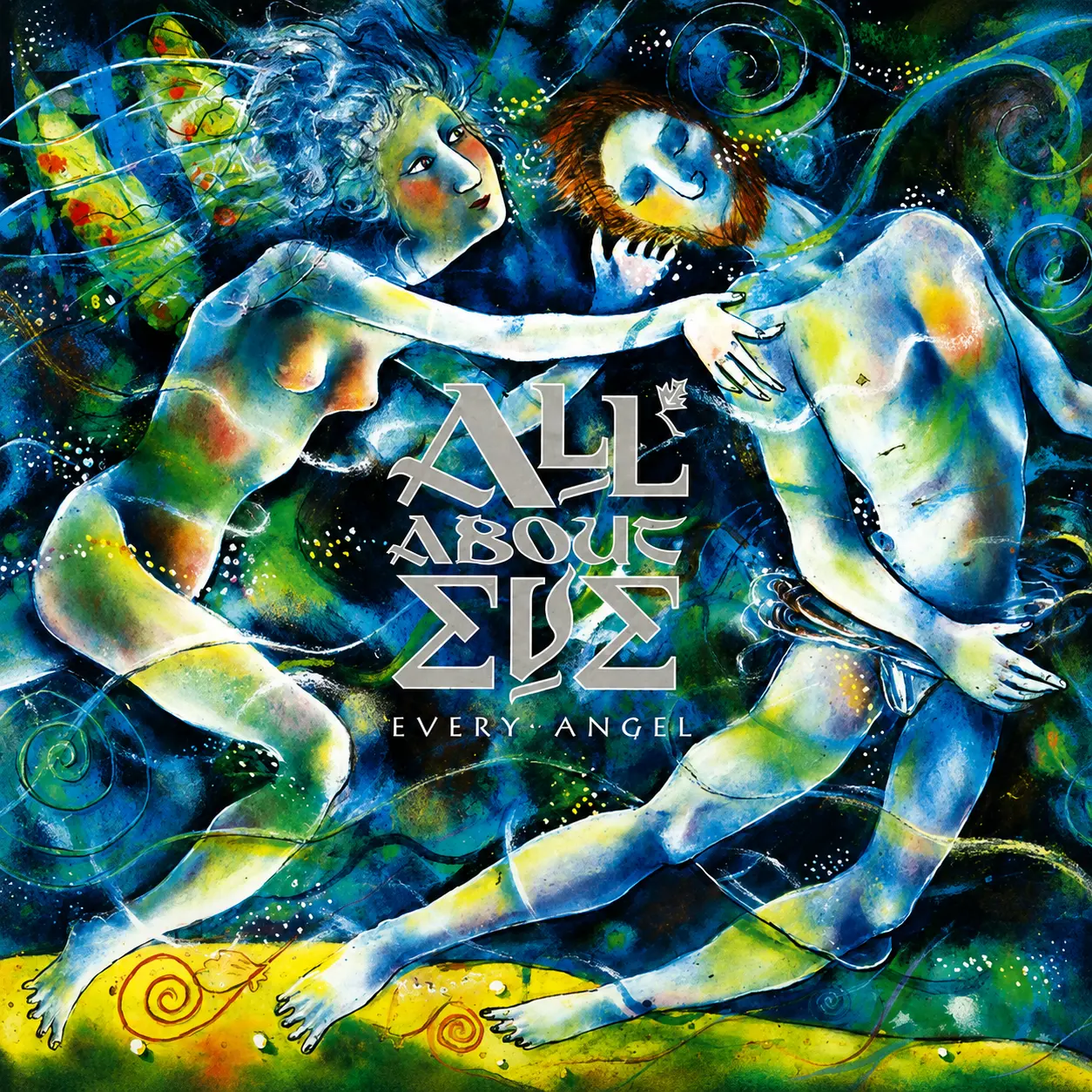 A1. “Flowers in Our Hair” (4:18) – addresses former “sun-children” whose countercultural signs have hardened into another uniform. She retains faith in unguarded affection; “the hearts of children” contrasts their openness with adults who need wine before asking for love.
A2. “Gypsy Dance” (3:57) – seeks temporary release within a nocturnal circle of fire, music, and movement. She rejects predictions because the present will soon become “yesterday’s ghost.”
A3. “In the Clouds” (3:28) – sends wishes, secrets, and whispered words upward, where they dissolve like snow. “Just a breath away” makes transcendence feel close but insubstantial.
A4. “Martha’s Harbour” (3:07) – casts love as an attraction that offers danger, dependence, and possible escape. “I am a galley slave” turns the speaker’s devotion into maritime captivity.
A5. “Every Angel” (3:56) – asks a departing lover to bring emotion back to earth before aspiration ends in loss. “You’re going to burn your wings” gives the separation an Icarian image of fatal ascent.
A6. “Shelter From the Rain” (5:20) – presents mutual protection as summer fades and emotional security starts to erode. The plea to “save a flower” turns love into something fragile that must survive weather, jealousy, and flight.
B1. “She Moves Through the Fair” (5:05) – trad.; follows a promised bride who leaves through the fair and later returns as a supernatural presence to repeat her wedding promise. “My dead love came in” reveals the loss only near the ballad’s end.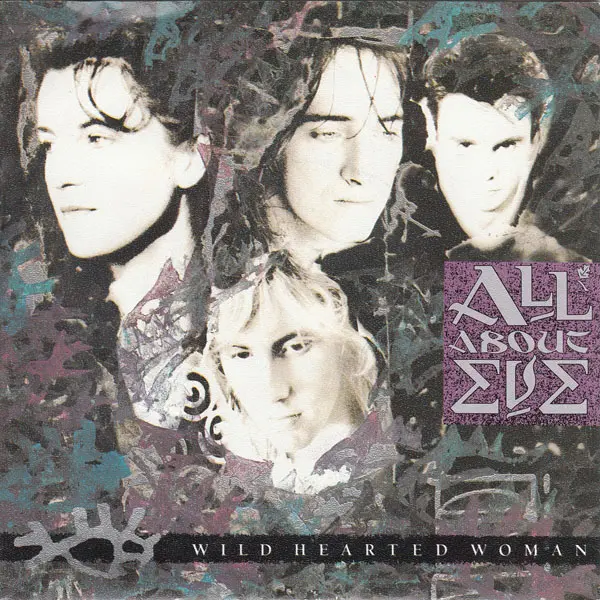 B2. “Wild Hearted Woman” (3:22) – AAE, Brown; portrays a woman caught between romantic intensity, abandonment, and repeated attempts to find comfort. “Every friend a stranger” compresses her emotional isolation into one image.
B3. “Never Promise (Anyone Forever)” (3:49) – joins public fear with private distrust as the speaker retreats into a home that no longer feels secure. “The whitest lie” recasts a lifelong promise as reassurance that neither partner can believe.
B4. “What Kind of Fool” (3:57) – rebukes people who neglect what they possess while reaching for distant ideals. “Treasure to rust” presents belated recognition as waste caused by inattention.
B5. “In the Meadow” (5:33) – contrasts a pristine, ordered girl with a hidden speaker who prepares a scented letter and an indirect confession. “From underground” locates the desire beneath her recipient’s bright, carefully maintained world.
The CD edition adds “Like Emily,” “Apple Tree Man,” and “Lady Moonlight.”
Sessions occurred in late summer 1987 at Ridge Farm in Surrey and The Manor in Oxford, with Paul Samwell-Smith, the onetime Yardbirds bassist and Renaissance producer who preformed recently with Box of Frogs and assisted the comeback of an earlier client, Carly Simon.
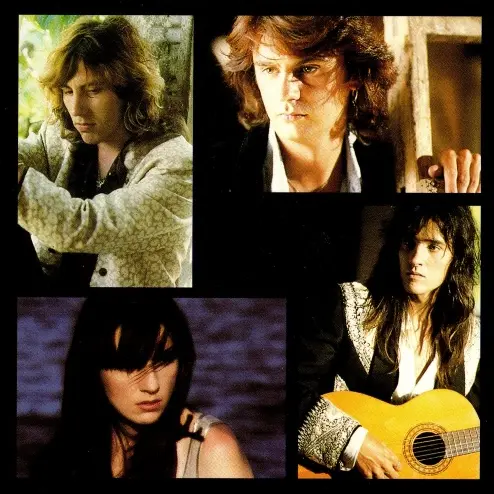 Eel Pie soundman Tony Phillips engineered the album in sequence with titles by Virginia Astley, Silent Running, and Prefab Sprout. All About Eve self-produced “Flowers in Our Hair” before Samwell-Smith remixed the album version. They recorded “Every Angel” with NYC veteran Richard Gottehrer, whose background ranged from Mary Wells and Sylvia Vartan to Blondie and The Voidoids.
Stylorouge designed All About Eve with Tansy Springs photography and Anne Nicol fabric design/styling. The cover shows a group portrait amid dense leaves.
Mercury previewed the album in October 1987 with “In the Clouds,” which reached No. 47 on the UK Singles Chart. “Wild Hearted Woman” appeared in January 1988 backed with “Apple Tree Man” and reached No. 33. “Every Angel” followed in March 1988 with “Wild Flowers” and reached No. 30.
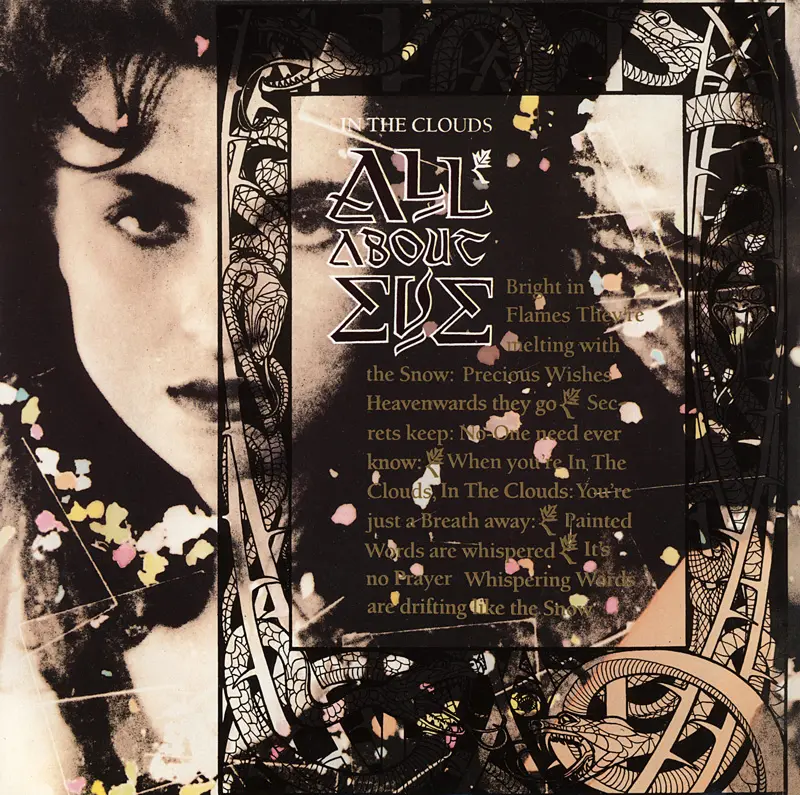 “Martha’s Harbour” appeared in July 1988 backed with “Another Door” and reached No. 10 on the UK Singles Chart. They intended to mime the song for the August 4 Top of the Pops broadcast, but a sound-system failure rendered them without backing tracks. BBC producers booked the group for an August 11 live return.
“What Kind of Fool” followed in October 1988 backed with “Gold and Silver” and reached No. 29. PolyGram gathered the first-album video clips on the May 1989 Evergreen VHS with Mick Mercer interview segments.
All About Eve reached No. 7 on the UK Albums Chart.
Scarlet and Other Stories
 All About Eve released their second album, Scarlet and Other Stories, in October 1989 on Mercury.
The album places Price inside the core quartet after the transitional debut credits. Most titles carry four-way credits apart from four songs — “Dream Now,” “Scarlet,” “Blind Lemon Sam,” and “The Pearl Fishermen” — that predate Price’s arrival. Caroline Lavelle adds cello to “Gold and Silver” and “Tuesday’s Child.” Ric Sanders adds violin to “More Than the Blues” and “The Empty Dancehall.”
“Road to Your Soul” unfurls a wide keyboard wave and lifts Regan into a broad chorus. “Dream Now” turns on wah-wah and a brisk backbeat. “Gold and Silver” pairs Regan with Caroline Lavelle’s cello. “Scarlet” settles close to Regan’s line. “December” lengthens the sweep and crests through Bricheno’s guitar solo. “More Than the Blues” skips through banjo and violin figures. “Tuesday’s Child” places Regan against a bowed cello line. “Hard Spaniard” taps castanet accents under Regan’s line. “The Empty Dancehall” threads Ric Sanders’s violin through a subdued lament.
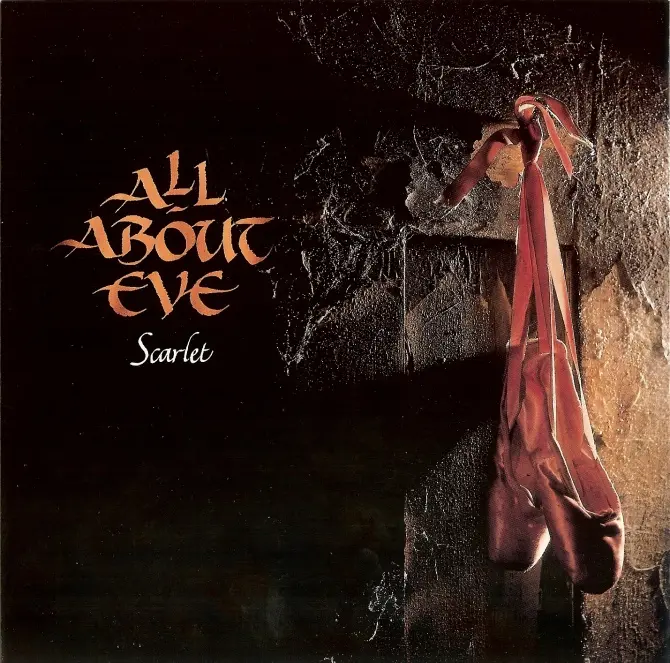 A1. “Road to Your Soul” (5:19) – leaves accumulated guilt and pride behind in search of emotional refuge. A caravan burdened with bad dreams and apologies turns the speaker’s past into baggage that obstructs the journey.
A2. “Dream Now” (3:07) – imagines two lovers escaping ordinary scrutiny through a shared dream that may represent a deeper reality. Fireflies rising toward the clouds make their flight beautiful but uncertain, with the speaker still far from home.
A3. “Gold and Silver” (3:59) – addresses a restless figure whose affection cannot be measured through wealth or possession. Tearful eyes among flowers suggest that freedom and beauty have not brought the spiritual fulfilment she seeks.
A4. “Scarlet” (3:48) – presents dress and display as disguises for shame, confinement, and a false identity. The invitation to discard red shoes and fly recasts liberation as an escape from roles imposed by poets, painters, and spectators.
A5. “December” (7:28) – opens a collection of keepsakes that revives an old relationship during the Christmas season. Trying to restore the past becomes as futile as fastening a chain to a snowflake.
A6. “Blind Lemon Sam” (3:08) – follows a privileged woman who abandons conventional comfort for life with a poor bluesman, then turns to religion when he dies. Fingers tugging at the fabric of her dreams portray social pressure as a force that distorts personal desire.
B1. “More Than the Blues” (3:32) – urges a habitual worrier to abandon solemnity and accept passing moments of pleasure. A solitary house beneath an opening in the sky enlarges private sadness into a bleak landscape without defeating the speaker.
B2. “Tuesday’s Child” (3:15) – constructs a disjointed fairy tale of marriage, madness, disappearance, and uncertain knowledge. Monday’s child searches beyond the universe as one soul among millions tries to find its way home.
B3. “The Empty Dancehall” (3:19) – treats a deserted ballroom as the remains of vanished intimacy and communal ritual. Frayed ribbons from dancing shoes hang like discarded memories while an imagined sarabande summons dancers who no longer answer.
B4. “Only One Reason” (4:20) – confronts fear and isolation before locating purpose in service to people facing loneliness and death. A frightened child during an air raid gives despair a physical setting, while the approaching morning offers limited hope.
B5. “The Pearl Fishermen” (4:28) – tells of two brothers whose competition for the same woman or treasure leads one toward death and leaves both defeated. The coveted pearl proves to be a grain of sand transformed by moonlight, exposing desire as fatal illusion.
The cassette edition adds “Pieces of Our Heart.” The CD edition adds “Pieces of Our Heart” and “Hard Spaniard.”
Sessions occurred at Chipping Norton Recording Studios with Paul Samwell-Smith. All About Eve self-produced “Scarlet” with engineer Simon Humphries; Tony Phillips engineered “Gold and Silver” and “Tuesday’s Child.”
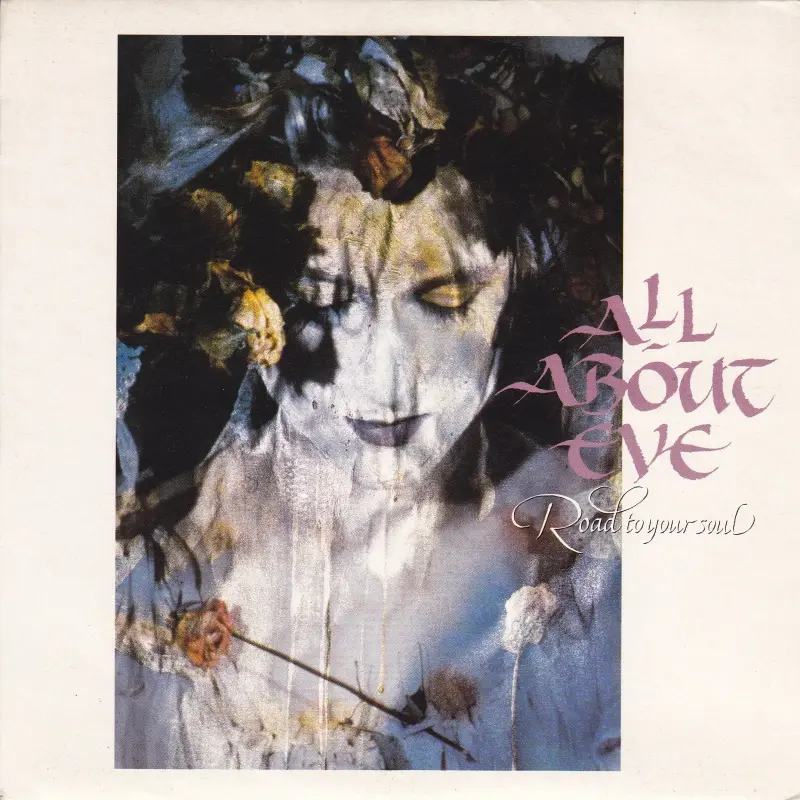 Stylorouge designed and art-directed Scarlet and Other Stories with Holly Warburton photography. The cover builds a layered child-story image around an eight-year-old model, carved letters, aged stone-like overlays, and pearls under water along the right side.
Mercury previewed the album in September 1989 with “Road to Your Soul” backed with “Pieces of Our Heart.” The twelve-inch added “Hard Spaniard,” while radio copies used an edit of the A-side. The single reached No. 37 on the UK singles chart.
“December” followed in December 1989 backed with “Drowning” and reached No. 34. The twelve-inch added “The Witch’s Promise.” “Scarlet” appeared in April 1990 backed with a live “Our Summer” and reached No. 34. The limited live twelve-inch added “Candy Tree” and “Tuesday’s Child” from Hammersmith Odeon.
Scarlet and Other Stories reached No. 9 on the UK Albums Chart.
Discography:
- All About Eve (1988)
- Scarlet and Other Stories (1989)
- Touched by Jesus (1991)
- Ultraviolet (1992)
- Iceland (2002)
Sources:
Artist/Album Pages:
Bachdenkel was an English post-psych band based in France. In 1970, they recorded Lemmings, which ...
APB was a Scottish art-punk/funk band from Ellon, Aberdeenshire, that issued five singles on Oily ...
Uriah Heep are an English hard-rock band that released twenty-five albums between 1970 and 2023. T...
Gerard was a Japanese symphonic-rock band assembled by Novela keyboardist Toshio Egawa for a 1984...
Latin Quarter was an English sophisti-pop band that released the 1985–87 albums Modern Times and M...
Jack the Lad was an English folk-rock band from Newcastle that released three albums during 1974/7...
Guilherme Arantes is a Brazilian singer-songwriter and keyboardist who emerged in the São Paulo ro...
Aviator was an English rock supergroup formed by members of Caravan, Jethro Tull, and Manfred Mann's...
A Flock of Seagulls are an English new wave band from Liverpool, best known for the Eighties classic...
John Mayall (1933–2024) was an English guitarist and bandleader who led multiple lineups of the Bl...
Strife was an English hard-rock band that released the 1975 Chrysalis album Rush, followed by the ...
Section 25 was an English post-punk band that cut two 1980 Factory singles and the 1981 album Alw...