

The Alarm are a Welsh big music band formed in 1981 and first active for ten years. They debuted with an eponymous 1983 EP on I.R.S., followed by five albums, including their 1985 stateside breakthrough Strength. Guitarist–singer Mike Peters reactivated the nameplate in the 21st century.
Members: Mike Peters (lead vocals, guitar), Dave Sharp (guitar, backing vocals, 1981-91), Eddie MacDonald (bass, backing vocals, 1981-91), Nigel Twist (drums, 1981-91)
Background
The Alarm had its roots in The Toilets, a Rhyl punk band formed in 1977 by singer–guitarist Mike Peters and drummer Nigel Buckle.
Peters (b. Michael Leslie Peters, February 25, 1959, Prestatyn) grew up in the Crescent Hotel on Edward Henry St. in Rhyl along with future bandmate Eddie MacDonald. He first worked as an IBM System 3 computer operator for the British convenience retailer Kwik Save. Peters assembled his first band, Hairy Hippie, for his sister’s 21st birthday party on October 10, 1975, at the Talardy Hotel in St Asaph.
On September 13, 1976, Peters traveled with friends Steve Allan Jones and Steff Holt to the English border city of Chester, where they saw the Sex Pistols at the Quaintways nightclub on Northgate St.> Inspired by the band’s raw energy, Peters (under the stagename Eddie Bop) formed The Toilets with Buckle (alias Des Troy) and two musicians known as Steve Shock and Bo Larks. By 1978, they morphed into Quasimodo with guitarist Dave Sharp and (later Waterboys, World Party) keyboardist Karl Wallinger. They based their set on the 1970 Who concert album Live at Leeds.
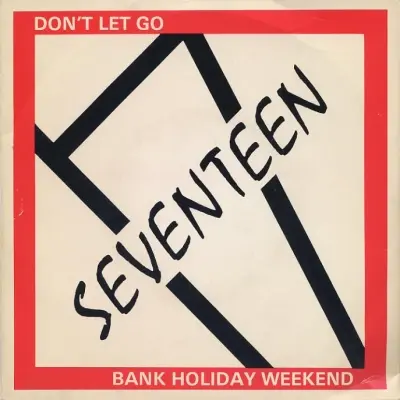 In mid-1978, Peters retained Buckle and Sharp for Seventeen, a mod-rock band with old friend Eddie MacDonald. In March 1980, London three-press Vendetta Records released Seventeen’s sole single: “Don’t Let Go” / “Bank Holiday Weekend.” They toured with the Stray Cats and changed their name to Alarm Alarm. After a brief pause, they reformed as The Alarm. Buckle changed his stagename to Nigel Twist.
The Alarm made their live debut on June 6, 1981, at the Victoria Hotel in Prestatyn. They opened their set with “Shout to the Devil,” a martial Celt rock anthem. In September, they instigated White Cross Records for their first single: “Unsafe Building,” a Peters–MacDonald original backed with Sharp’s “Up For Murder.” Recorded at Manchester’s Pluto Studios with engineer Phil Bush (The Distractions, Ak Band), they split the single into an “electric side” (A) and “acoustic side” (B). They pressed 1,000 of the single, which earned “single of the month” honors in ZigZag magazine.
On Monday December 7, 1981, The Alarm opened for The Fall at The Venue on London’s Victoria Street.> The ensuing Sounds coverage sparked interest in their next show at the West End lounge Upstairs at Ronnie’s, where U2‘s agent, Ian Wilson, watched their set. Impressed, he became their manager and linked them with U2. The Alarm opened for the Irish rockers on their December 22 show at the Lyceum Ballroom. In mid-1982, The Alarm signed with I.R.S. Records.
The Alarm EP
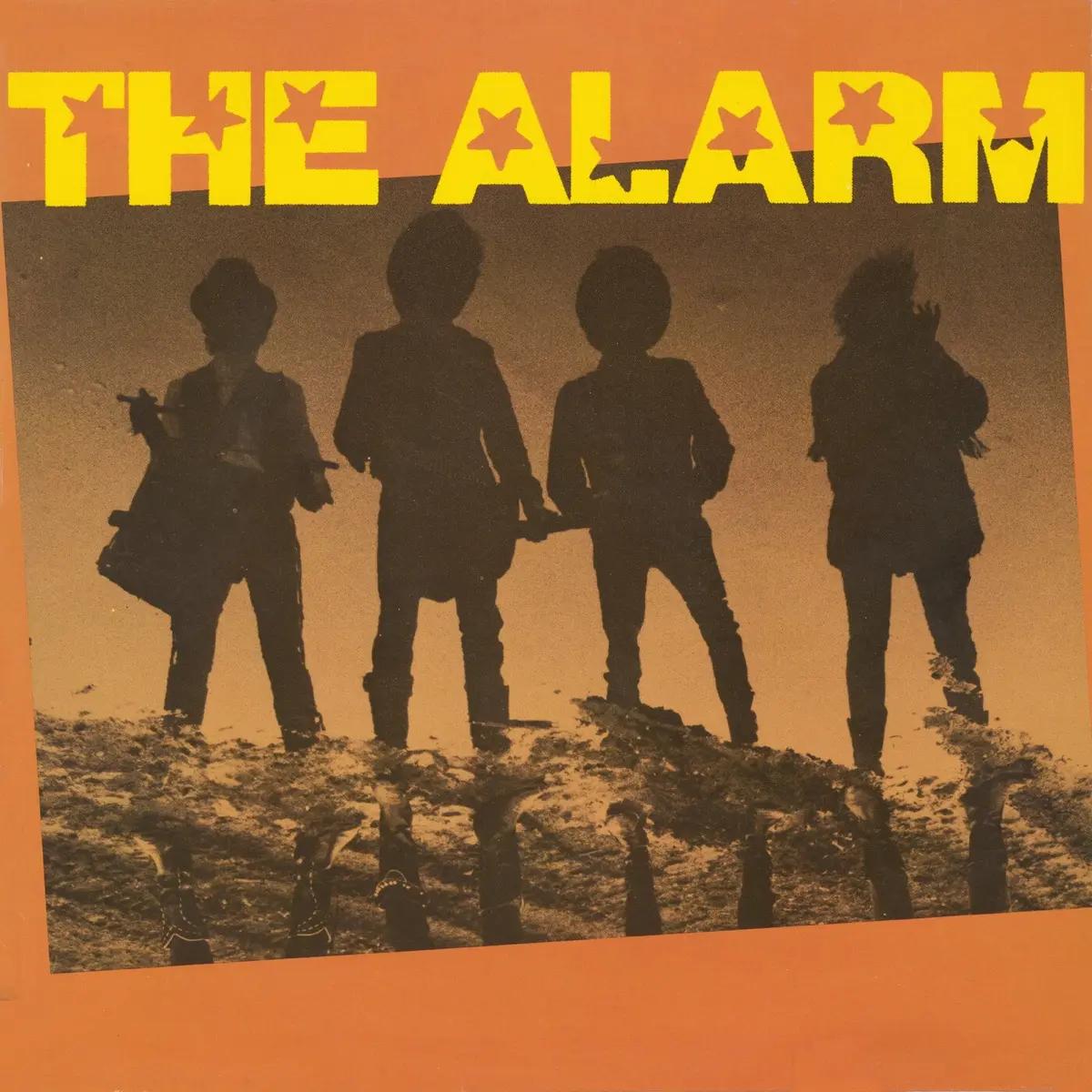 The Alarm released the five-track The Alarm EP in June 1983 on I.R.S. Records. It was the band’s first album-format release and first appeared on 12-inch vinyl and cassette.
Mike Peters foregrounds with rhythm guitar and harmonica amid the lead lines of Dave Sharp while Eddie MacDonald and Nigel Twist lock the rhythm section in place, and Mark Feltham with Angie Knox add harmonica and keyboards on selected tracks.
A1. “The Stand” (3:41) — MacDonald, Peters, Sharp
A2. “Across the Border” (3:39) — Sharp
B1. “Marching On” (3:32) — Peters, MacDonald
B2. “Lie of the Land” (2:31) — Peters, MacDonald
B3. “For Freedom (Live)” (3:25) — Peters, MacDonald
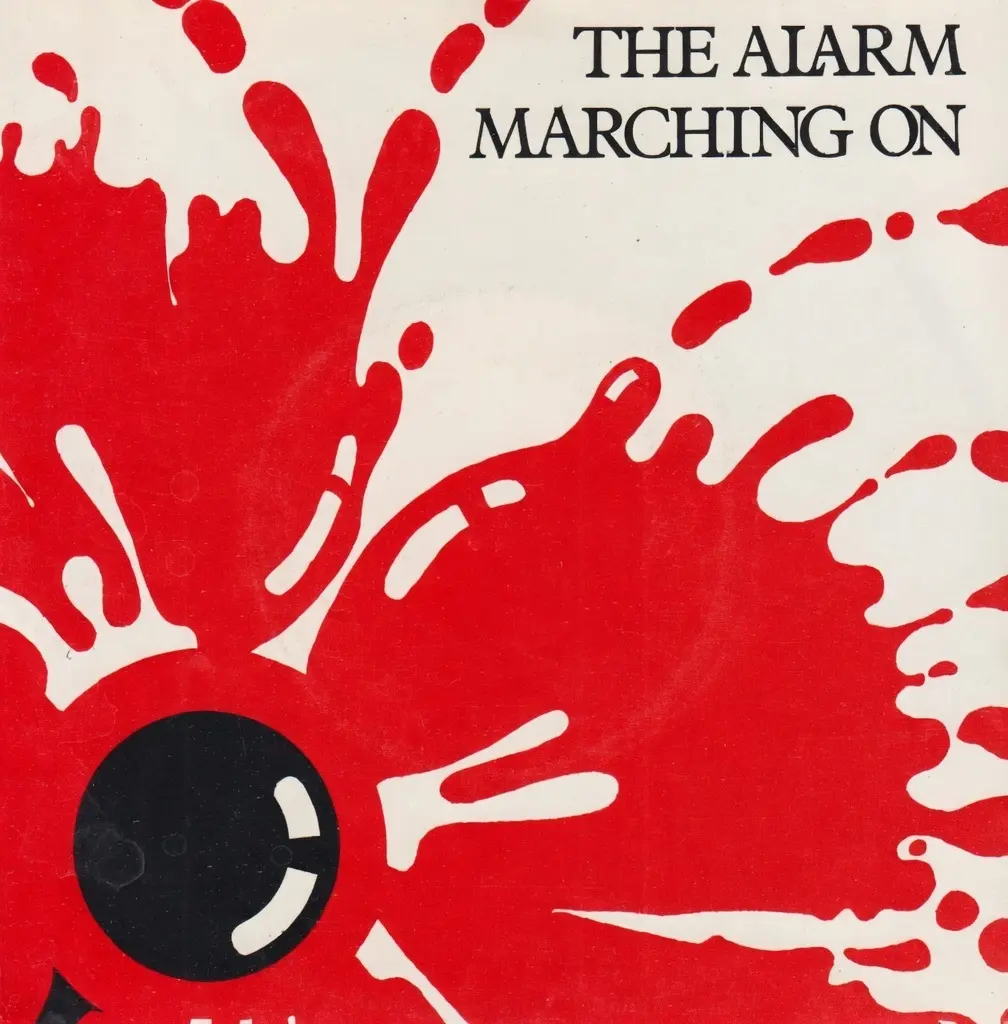 The Alarm recorded “Across the Border,” “Marching On,” and “Lie of the Land” with producers Arisentus, Steve Tannet, Harry Murlowski, and Ian Wilson. Mick Glossop produced “The Stand” and “For Freedom,” and the live cut came from the Marquee on January 30, 1983.
Illegal issued “Marching On” (b/w “Across the Border” and “Lie of the Land”) on October 22, 1982 as a 7-inch. That first single later fed directly into the EP sequence.
April 1983 brought “The Stand” (b/w “Third Light” live) on I.R.S. as the second single tied to this first phase. It became the band’s first UK chart entry at No. 86.
Declaration
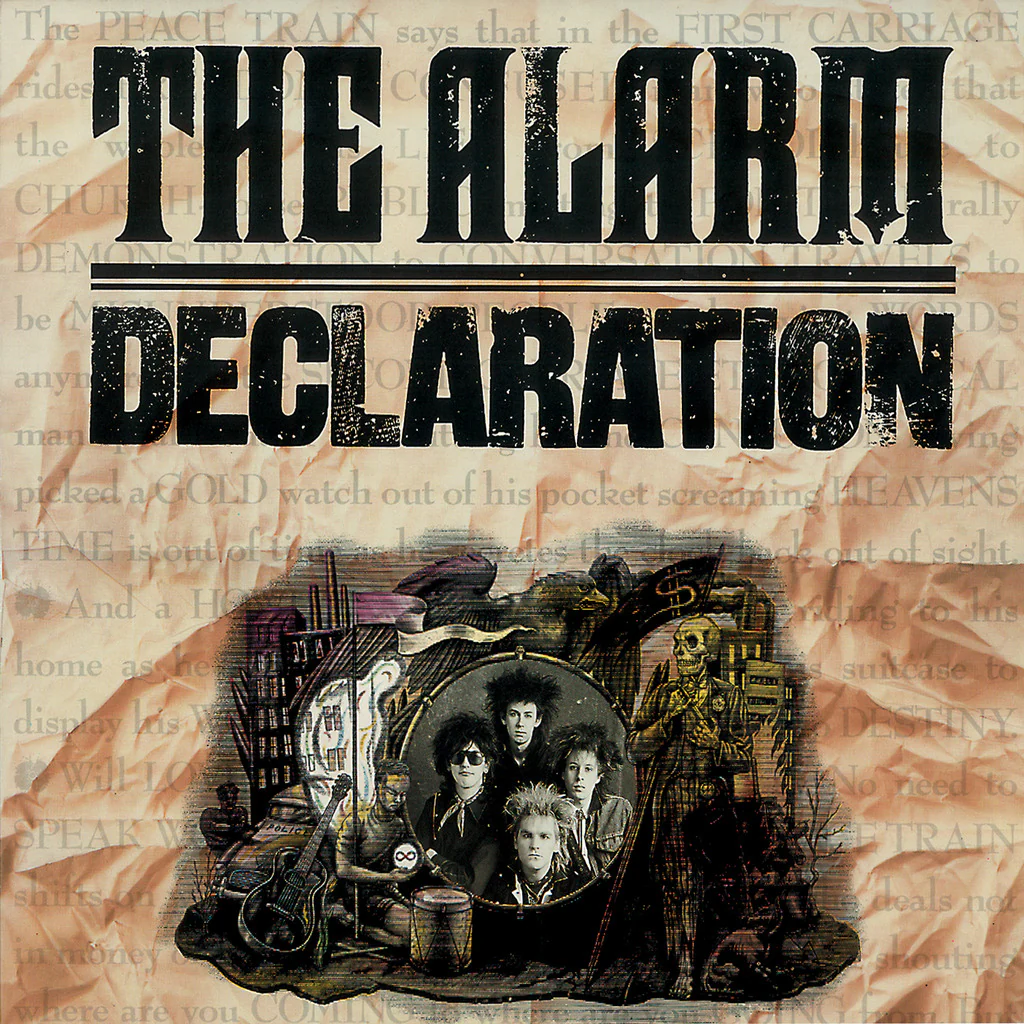 The Alarm released their debut album, Declaration, on February 13, 1984 on I.R.S. Records.
Peters and Sharp stack acoustic and electric guitar across the album. MacDonald adds bass, guitar, and bowed guitar against the backbeat of Twist. Peters’ harmonica give the songs a harder communal thrust.
“Marching On” hits with a brisk acoustic charge and clipped drum drive, then “Where Were You Hiding When the Storm Broke?” pushes harder through a sharper attack and harmonica-edged detail. “Third Light” thickens the surface with heavier guitar chords, while “Sixty Eight Guns” stretches toward six minutes on trumpet fanfare, a firm march pulse, and a quieter bridge at the center. “Tell Me” opens as a ballad and then breaks wide, “Blaze of Glory” rises on a slower, fuller climb, and “Howling Wind” closes in a broad sweep that gives the album its largest finish.
A1. “Declaration” (0:45) — Peters, MacDonald
A2. “Marching On” (3:35) — Peters, MacDonald
A3. “Where Were You Hiding When the Storm Broke?” (2:56) — Peters, MacDonald
A4. “Third Light” (3:25) — Peters, MacDonald
A5. “Sixty Eight Guns” (5:49) — Peters, MacDonald
A6. “We Are the Light” (3:16) — Peters, MacDonald
B1. “Shout to the Devil” (4:10) — Peters, MacDonald, Sharp
B2. “Blaze of Glory” (6:04) — Peters, MacDonald, Sharp
B3. “Tell Me” (3:14) — Sharp
B4. “The Deceiver” (5:05) — Peters, MacDonald
B5. “The Stand (Prophecy)” (1:15) — Peters, MacDonald, Sharp
B6. “Howling Wind” (6:44) — Peters, MacDonald
The Alarm recorded Declaration at Abbey Road and Good Earth in London with producer Alan Shacklock and engineer Chris Porter. Michael Ross and Simon Adamcewski handled the artwork, Robert Mason supplied illustrations, and Stephen Oliver shot the photography.
 “Marching On” and “The Stand” both stayed in play as the band moved from the EP into the debut LP, and I.R.S. then folded them into the album campaign.
“Sixty Eight Guns” (b/w “68 Guns Part II”) gave Declaration its clearest breakthrough. I.R.S. issued it in September 1983, and the single reached No. 17 in the UK, No. 16 in Ireland, No. 39 on Billboard’s Mainstream Rock chart, and No. 106 in the US. The title appeared in both worded and numeric forms across different releases, and the track was recorded at Good Earth and mixed at Abbey Road.
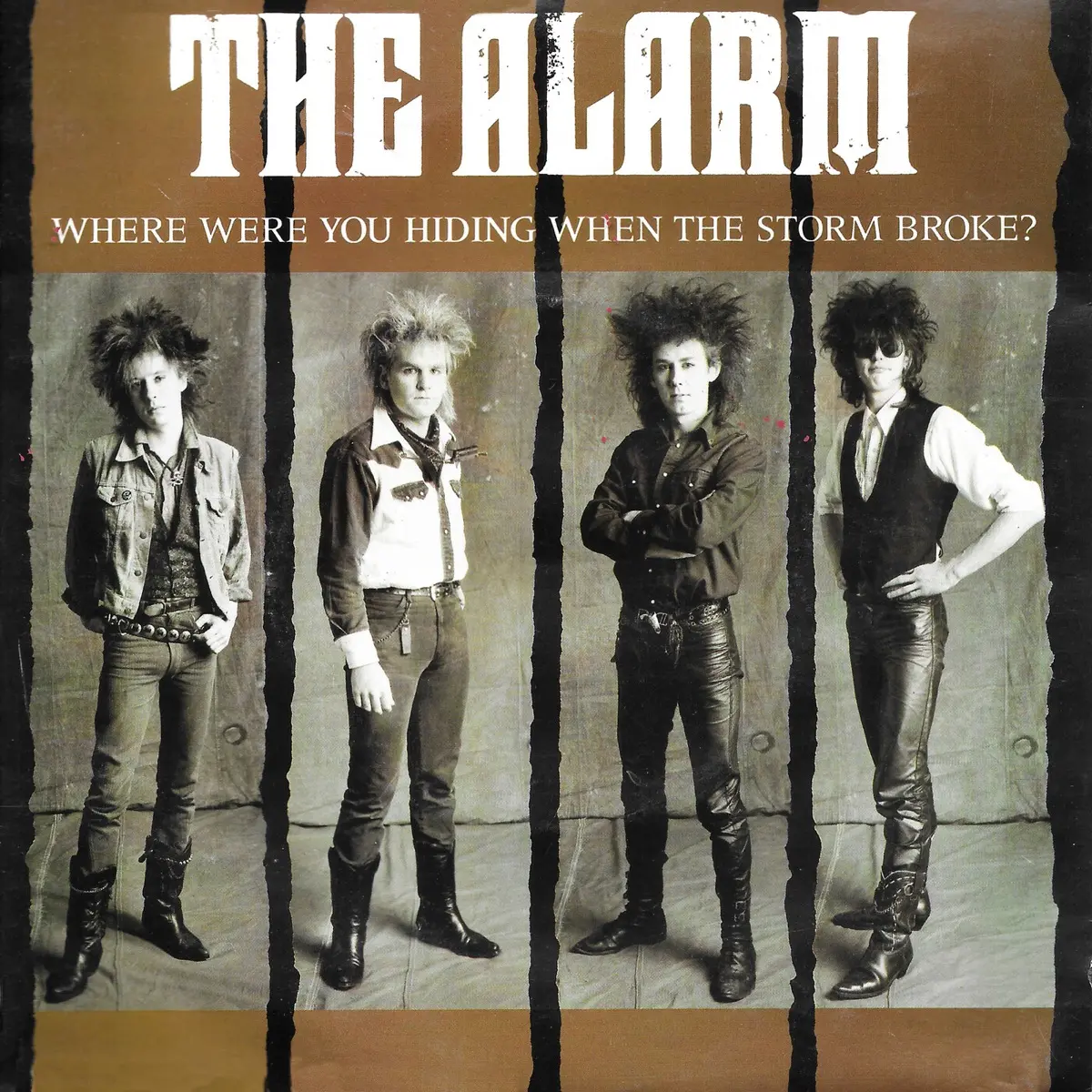
January 1984 brought “Where Were You Hiding When the Storm Broke?” (b/w “Pavilion Steps”). It reached No. 22 in the UK and kept the album campaign active in the weeks around the LP release.
 I.R.S. followed in March 1984 with “The Deceiver” (b/w “Reason 41”). The single reached No. 51 in the UK and No. 104 in the US.
Declaration reached No. 6 in the UK, No. 35 in Canada, No. 14 in Norway, No. 38 in New Zealand, No. 22 in Sweden, and No. 50 in the US, and it earned a silver certification in the UK.
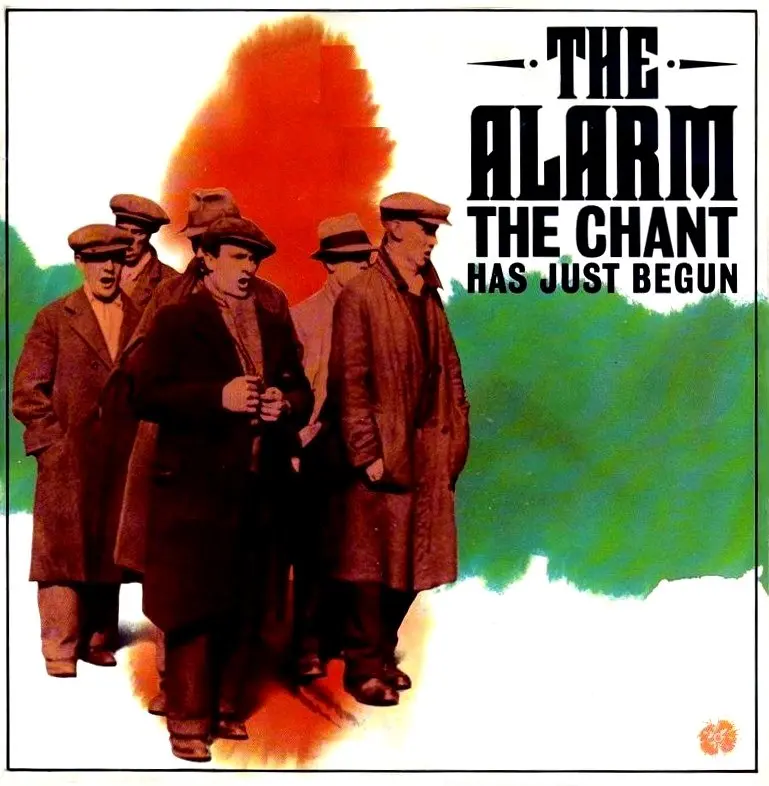
In October 1984, The Alarm dropped “The Chant Has Just Begun,” a non-album MacDonald/Peters/Sharp number backed with “The Bells pf Rhymney,” a Pete Seeger cover produced by the Suicide Squad.
Strength
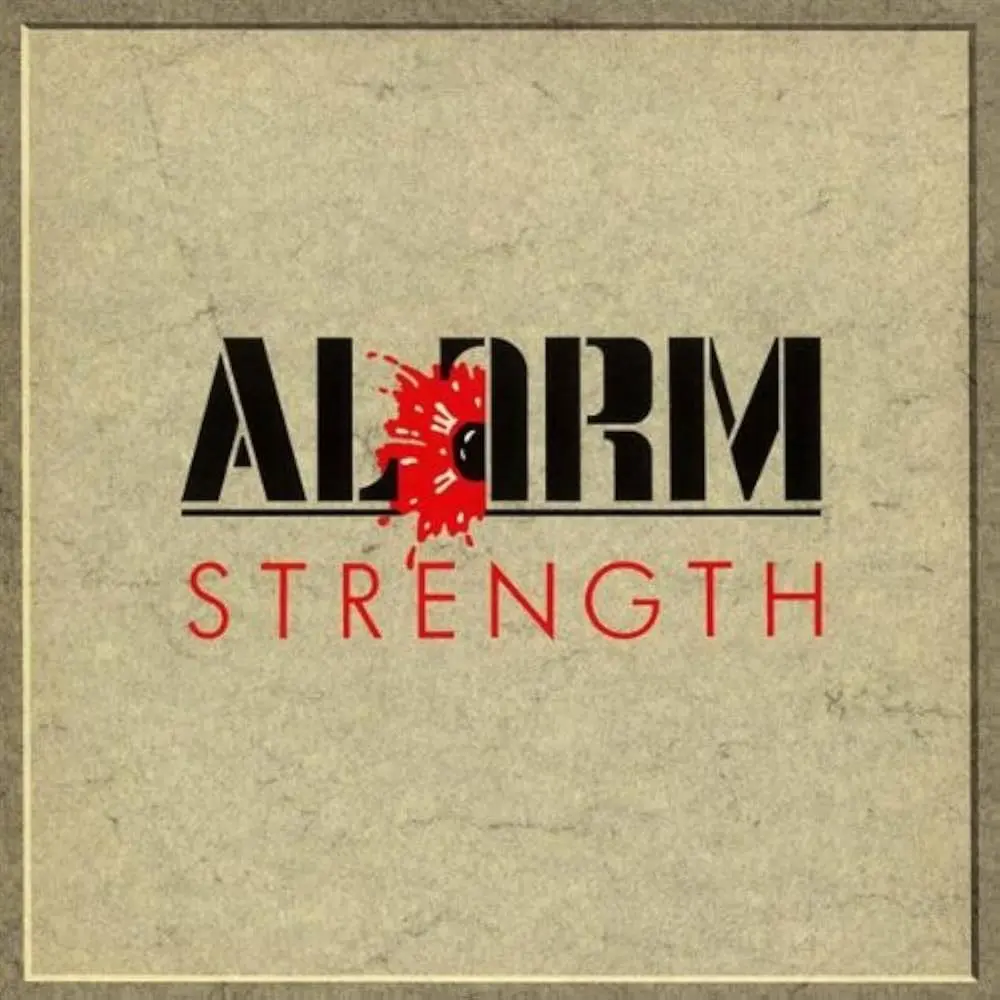 The Alarm released their second album, Strength, in October 1985 on I.R.S. Records. The original UK LP and cassette ran as a nine-track set, while some later versions restored “Absolute Reality.”
Their four-piece core remains intact, aided by keyboardist Rupert Black, who thickens the middle register amid the frontal fire of Peters and Sharp.
Strength pushes harder through denser electric guitar and a firmer drum attack. The title track hits with the album’s broadest charge, “Deeside” snaps through a shorter chant-driven rush, “Spirit of ’76” slows the pace and opens on piano across the longest stretch here, and “Walk Forever by My Side” closes in the same pared-back register.
A1. “Knife Edge” (5:06) — Peters, MacDonald
A2. “Strength” (5:34) — The Alarm
A3. “Dawn Chorus” (5:24) — Peters, MacDonald
A4. “Spirit of ’76” (7:05) — Peters, MacDonald; looks back on 1976 as the year a circle of friends first felt possibility, then measures that early charge against prison, drift, lost ambition, hard work, and survival. The song turns nostalgia into a reckoning: some got out, some broke down, and the singer carries both guilt and resolve into the present. “I’ve seen my friends caught out in the crossfire,” shifts the song from private reminiscence to damage, fallout, and the sense that history kept moving while ordinary lives took the hit.
The title works on three levels at once. On the personal level, ’76 marks the singer’s own origin point: friendship, youth, Liverpool, and the first shock of punk-era release. On the public level, the phrase would also land in the American market as an echo of 1976 as the US Bicentennial year, which gives the title a wider civic charge. On the idiomatic level, “the spirit of ’76” already carries American Revolutionary meaning, so Peters can tap the language of independence, defiance, and self-determination without dropping into a literal history song. That is why the closing vow about “independence” and carving out a future with “two bare hands” matters: it links personal survival, punk self-invention, and the older revolt embedded in the phrase.
B1. “Deeside” (3:08) — Peters, MacDonald
B2. “Father to Son” (4:04) — Peters, MacDonald
B3. “Only the Thunder” (4:06) — Peters, MacDonald
B4. “The Day the Ravens Left the Tower” (4:45) — Peters, MacDonald
B5. “Walk Forever by My Side” (3:32) — Peters, MacDonald
The Alarm recorded Strength at Marcus Studios in London during June and July 1985 with producer Mike Howlett.
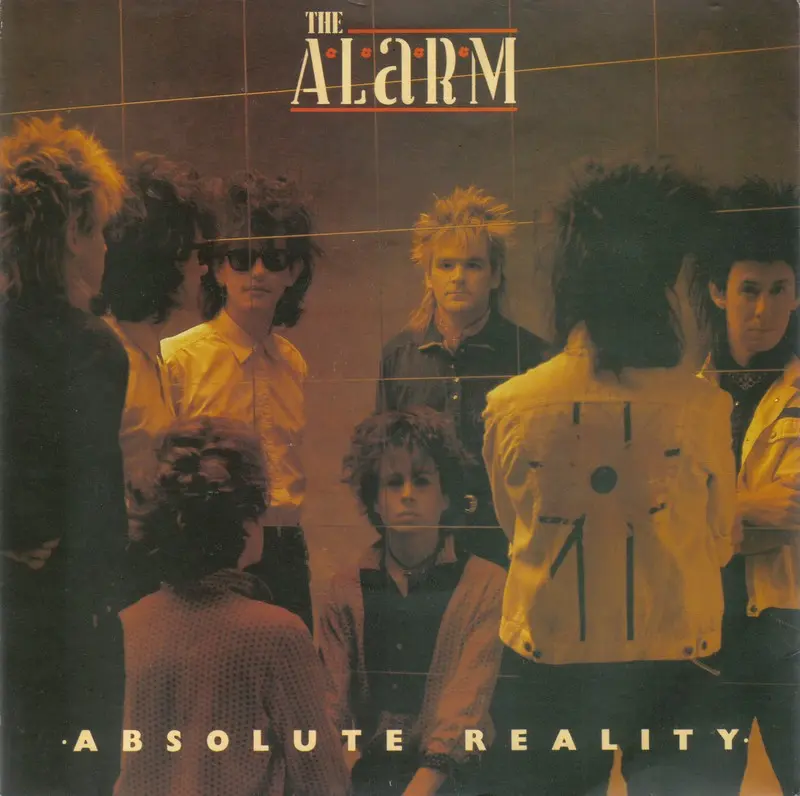 February 1985 brought “Absolute Reality” (b/w “Blaze of Glory”) as a bridge between albums after the Jimmy Iovine plan fell apart. It reached No. 35 in the UK and later turned up on some versions of Strength but remained absent from the original UK LP.
The title track “Strength” led the main album push in September 1985, backed with the exclusive “Majority.” It reached No. 40 in the UK, No. 61 on US Mainstream Rock, and No. 12 on US Alternative. In the album credits it stands apart from the rest of the set as the only song credited to the full band rather than the Peters-MacDonald writing pair.
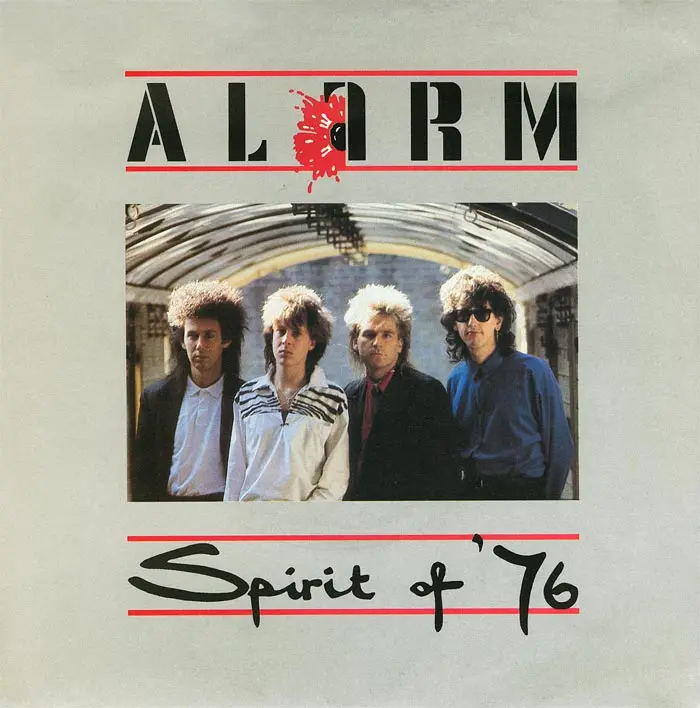 “Spirit of ’76” followed in January 1986 with “Where Were You Hiding When the Storm Broke” on the flip. It reached No. 22 in the UK, No. 23 in Ireland, and No. 29 on US Alternative. I.R.S. closed the run in April 1986 with “Knife Edge” (b/w “Caroline Isenberg”), which reached No. 43 in the UK.
Strength reached No. 18 in the UK, No. 66 in Canada, No. 74 in the Netherlands, No. 12 in Norway, No. 19 in Sweden, and No. 39 in the US, and it also earned silver status in the UK.
Eye of the Hurricane
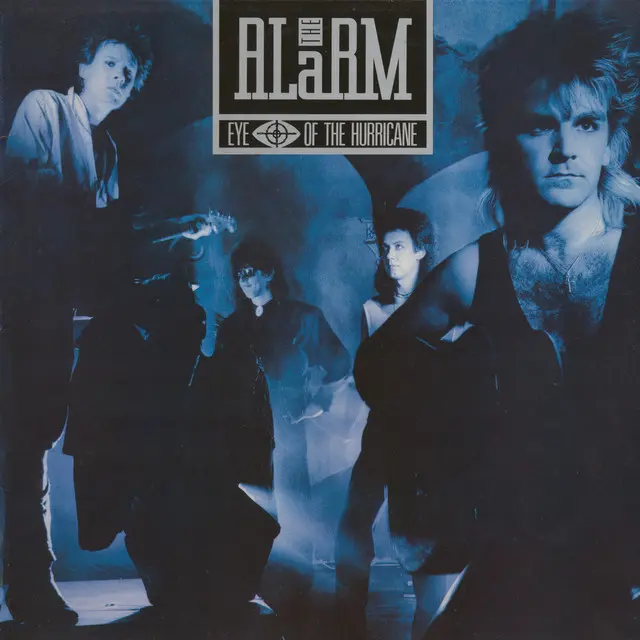 The Alarm released their third album, Eye of the Hurricane, on October 19, 1987 on I.R.S. Records. The band split the original sequence into a “Folklore” side and an “Electric” side.
Peters and Sharp form a dual front-line guitar attack. MacDonald juggles bass synthesizer and keyboards while Twist combines LinnDrum patterns with a standard kit. Chris Stainton and Mark Taylor widen selected tracks with piano, Hammond, and DX7.
Eye of the Hurricane opens with the steady chug of “Rain in the Summertime,” then drops into “Hallowed Ground,” where minor acoustic chords and piano pull the pace down. “One Step Closer to Home” keeps a rougher live edge, and “Permanence in Change” stands out for its bass line and harmonica.
A1. “Rain in the Summertime” (5:12) — Peters, MacDonald
A2. “Newtown Jericho” (4:05) — Peters, MacDonald
A3. “Hallowed Ground” (4:17) — Peters, MacDonald
A4. “One Step Closer to Home” (4:31) — Sharp, Twist
A5. “Shelter” (3:08) — The Alarm
B1. “Rescue Me” (3:19) — Peters, MacDonald
B2. “Permanence in Change” (4:01) — Peters, MacDonald
B3. “Presence of Love” (4:01) — Peters, MacDonald
B4. “Only Love Can Set Me Free” (4:22) — Peters, MacDonald
B5. “Eye of the Hurricane” (3:38) — Peters, MacDonald
The Alarm recorded and mixed Eye of the Hurricane at Great Linford Manor with John Porter as co-producer alongside the band. Tony Platt engineered, David Leonard mixed, and Porter also added programming.
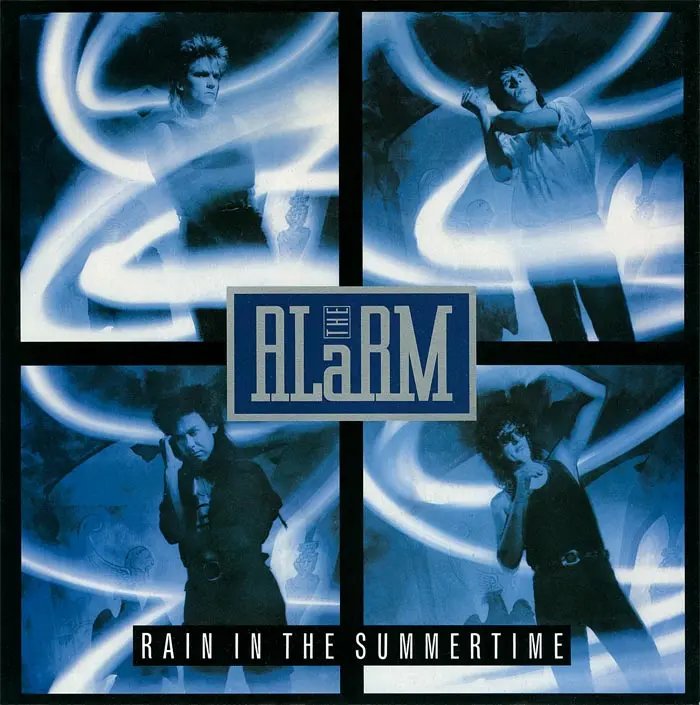 “Rain in the Summertime” (b/w “Rose Beyond the Wall”) gave the album its main hit. The song was the last piece written for the record, grew from a rehearsal-space demo, and reached No. 18 in the UK, No. 44 in Canada, No. 30 in Ireland, No. 48 in New Zealand, No. 71 on the Billboard Hot 100, and No. 6 on US Mainstream Rock. I.R.S. issued it in early October 1987 and also sold a collector’s pack built around the single.
December 1987 brought “Rescue Me” (b/w “My Land Your Land”). It reached No. 48 in the UK and No. 34 on US Alternative. February 1988 then brought “Presence of Love (Laugharne)” (b/w “Knife Edge”), which reached No. 44 in the UK, No. 77 in the US, and No. 16 on US Alternative.
Eye of the Hurricane reached No. 23 in the UK, No. 34 in Canada, and No. 77 in the US, and it earned a silver certification in the UK.
Change
 The Alarm released their fourth album, Change, in September 1989 on I.R.S. Records.
Mark Taylor joins Peters, Sharp, MacDonald, and Twist on keyboards. Peters holds the vocal center, Sharp supplies guitar, MacDonald and Twist drive the rhythm section, and Taylor adds a heavier keyboard layer across the album.
Change opens with “Sold Me Down the River” on aggressive piano, blunt guitar, and a hard forward pulse. “Devolution Workin’ Man Blues” keeps the same pressure with a concise guitar break, “Love Don’t Come Easy” eases into a lighter piano-and-electric setting, “Change II” snaps back with sharper piano accents, and “A New South Wales” closes with choir and orchestra.
A1. “Sold Me Down the River” (5:25) — Peters, MacDonald
A2. “The Rock” (4:39) — The Alarm
A3. “Devolution Workin’ Man Blues” (4:11) — Peters, MacDonald
A4. “Love Don’t Come Easy” (4:08) — Peters, MacDonald
A5. “Hardland” (4:09) — Peters, MacDonald
A6. “Change II” (2:52) — Sharp, Twist
B1. “No Frontiers” (3:53) — Peters, MacDonald
B2. “Scarlet” (4:17) — Peters, MacDonald
B3. “Where a Town Once Stood” (3:48) — The Alarm
B4. “Prison Without Prison Bars” (3:48) — Peters, MacDonald
B5. “Rivers to Cross” (3:42) — The Alarm
B6. “A New South Wales” (4:46) — Peters, MacDonald
Bonus 7-inch:
C1. “Black Sun” (4:30) — The Alarm
D1. “How the Mighty Fall” (4:19) — Peters, MacDonald
The Alarm recorded Change at the Skylight Suite and mixed it at Good Earth Studios with Tony Visconti as producer and engineer. “A New South Wales” was cut at BBC Wales in Cardiff with the Morriston Orpheus Male Voice Choir and members of the Welsh Symphony Orchestra. A Welsh-language counterpart, Newid, followed the same year.
On September 4, 1989, I.R.S. issued “Sold Me Down the River” (b/w “Gwerthoch Fi I Lawr Yr Afon”) as the first single from Change. It reached No. 43 in the UK, No. 19 in Canada, No. 50 in the US, No. 3 on US Alternative, and No. 2 on US Mainstream Rock.
October 1989 brought “A New South Wales” (b/w “The Rock”), which reached No. 31 in the UK and took the band onto both Top of the Pops and Wogan. On October 23, 1989, I.R.S. also issued the Welsh-language “Hwylio Dros y Môr” (b/w “Y Graig”) as a special edition 7-inch tied to Newid.
Change reached No. 13 in the UK, No. 26 in Canada, and No. 75 in the US, and it also earned silver status in the UK.
Postlude
The original lineup reached a fifth studio album with Raw in April 1991, then broke apart later that year after Peters announced his exit onstage at Brixton Academy. A 2000 archival box set brought all four founders back into the same project, and Peters soon revived the name with a new lineup under the Alarm MM++ banner.
In February 2004, Peters’ new version of the band staged the Poppy Fields hoax by issuing “45 R.P.M.” under a fictitious teenage identity, with the Wayriders used to mime the song in the video. The single reached No. 28 in the UK and led into In the Poppy Fields. Later Alarm lineups continued through albums that included Under Attack, Guerilla Tactics, Direct Action, Equals, Sigma, and WAЯ.
Mike Peters died on April 29, 2025 at age 66. The official Alarm site later announced “The Alarm Presented by Evan Peters” for London’s 100 Club on February 26, 2026, which marked the start of the name’s next phase.
Select discography:
- The Alarm (EP, 1983)
- Declaration (1984)
- Strength (1985)
- Eye of the Hurricane (1987)
- Change (1989)
Sources:
- Discogs: The Alarm
- 45cat: The Alarm
- John Peel Wiki: The Alarm
- TVRDb.com: Top of the Pops – The Alarm
Artist/Album Pages:
Barcelona Traction was a Spanish jazz-rock band behind a 1975 self-titled album on Òliba, followed...
Kissing the Pink was an English synthpop band that released three albums between 1983 and 1986 on ...
Hunk Ai was a Danish avant-jazz/rock band that released two albums between 1986 and 1988 on Olufs...
Le Orme are an Italian symphonic-rock band from Marghera, Veneto, formed in 1966. The band release...
Korál was a Hungarian hard-rock band, formed in 1974 by ex-Taurus keyboardist-vocalist Ferenc Balá...
Beto Guedes (born Aug. 13, 1951) is a Brazilian singer-songwriter and multi-instrumentalist who em...
James Brown (May 3, 1933 — December 25, 2006) was an American soul singer who was active as a perf...
Flairck was a Dutch chamber-folk/classical ensemble from that released six Polydor albums between ...
Loose Tubes were an English 21-piece jazz cooperative during the 1984–90 span. In 1988, Editions E...
Egberto Gismonti (born Dec. 5, 1947) is a Brazilian pianist, guitarist, and composer from Carmo, R...
Teddy Pendergrass (March 26, 1950 — Jan. 13, 2010) was an American soul singer from Philadelphia w...
The Jam was an English rock trio that released six albums between 1977 and 1982 on Polydor. They sco...