

News from Babel was an English avant-rock supergroup formed by Henry Cow veterans Chris Cutler, Lindsay Cooper, and Dagmar Krause. They mixed cabaret and art pop on the 1984–86 Rē albums Work Resumed on the Tower and Letters Home, the latter with Robert Wyatt.
Members: Chris Cutler (drums, electronics, percussion, marimba), Dagmar Krause (vocals), Zeena Parkins (harp, electric harp, [prepared] harp, accordion), Lindsay Cooper (keyboards, piano, bassoon, alto saxophone, sopranino saxophone, horns, marimba)
Background
News from Babel formed in 1983 as an English studio project when drummer-lyricist Chris Cutler asked composer-reedist Lindsay Cooper to work on a song-based set with singer Dagmar Krause and harpist-accordionist Zeena Parkins.
Cutler and Cooper worked together in the 1974–78 lineups of Henry Cow, which split when Cutler joined the Art Bears faction with Krause and guitarist Fred Frith. The Art Bears made three albums before Frith focused on his solo career and Cutler formed Cassiber with Goebbels & Harth. Cutler pitched the new project to Cooper while they worked together on a series of score cues (later compiled on her 1986 release Music for Other Occasions). He also summoned Krause and American harpist Zeena Parkins, a recent contact from the Dutch-based Janus Circus project of Chris Wangro.
Cooper was born on March 3, 1951, in Hornsey, London. She began piano lessons at age eleven and shifted to bassoon after several years. She studied classical music and bassoon at Dartington College of Arts and the Royal College of Music. Cooper joined Comus at age twenty and later entered Henry Cow after Ritual Theatre work brought her into contact with the group. Cooper wrote one side of the final Henry Cow album Western Culture. In 1981, she made the cabaret rock opera Rags with singer-filmmaker Sally Potter and ex-Solid Gold Cadillac singer Phil Minton.
Krause was born on June 4, 1950, in Hamburg. She sang in New City Preachers, a Sixties folk group with future Frumpy frontwoman Inga Rumpf. Dagmar then teamed with British songwriter Anthony Moore and American guitarist-lyricist Peter Blegvad in Slapp Happy, which cut two albums and merged with Henry Cow for the 1975 titles Desperate Straights and In Praise of Learning. Krause stayed with Henry Cow after Moore and Blegvad left the collaboration. When Cow disbanded, Krause led the Art Bears faction with Cutler and Frith.
Parkins was born in 1956 in Detroit. She studied the arts at the University of Michigan and Bard College, with harp alongside dance and piano. Her European theater work as an accordionist brought her into contact with Cutler, Krause, Cooper, and Minton.
Cutler took the group name and album frame from the 1975 George Steiner book After Babel and the Tower of Babel story. News from Babel convened at Cold Storage, a converted Brixton cold-cuts freezer used beforehand by This Heat.
Work Resumed on the Tower
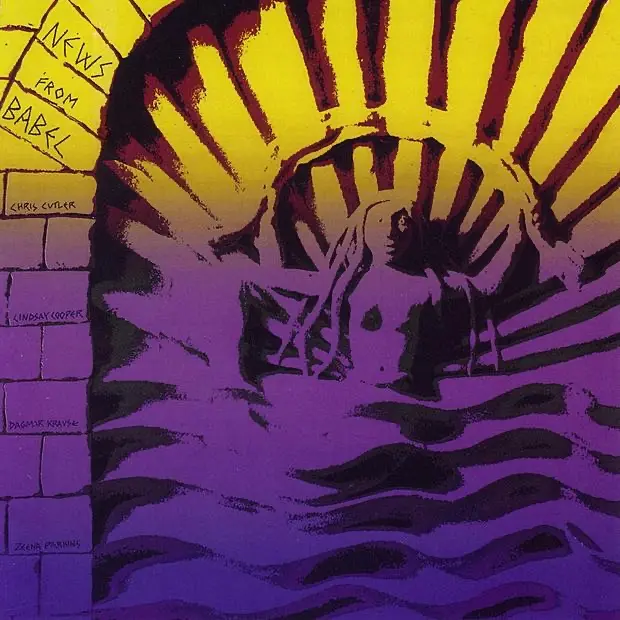 News from Babel released their debut album, Work Resumed on the Tower, in 1984 on Rē Records.
The album presents two song cycles, “Sirens and Silences” (Side A) and “Work Resumed on the Tower” (Side B), both composed by Lindsay Cooper with text by Chris Cutler.
Cooper plays multiple instruments (bassoon, sopranino, alto saxophone, piano, keyboards) alongside Zeena Parkins (prepared/electric harp, accordion) and Dagmar Krause. Bassist Georgie Born appears on “Black Gold,” while singer-trumpeter Phil Minton graces the last two tracks. Collectively, they enmesh dry reed figures, clipped keyboard entries, electric-harp runs, and abrupt percussion breaks.
“Odysseus” cries through a fearful opening, then tightens into suspense as added voices crowd the close. “Auschwitz/Babel” pivots from minimal gestures into clipped music-hall motion with tempo acceleration after the sung entry. “Klein’s Bottle” murmurs through double-tracked vocals in an ominous chamber haze. “Black Gold” rises on a high-register lead, then revs wuth ensemblic density between the sung returns.
“Arcades (of Glass)” recedes from melancholic accordion and spoken lines into sparse fragments, then swells into an urgent central passage before its repeated themes settle. “Victory” threads electric harp through the opening refrain, expands toward piano, saxophone, and bassoon, and returns to a full-ensemble finish after a distant-voice calm. “Anno Mirabilis (In the Year of Miracles)” plods under the lead line, then breaks to an avant horn passage before Krause and Minton closed in a shared message.
A1. “Odysseus” (2:56)
A2. “Auschwitz/Babel” (4:07)
A3. “Klein’s Bottle” (3:17)
A4. “Black Gold” (3:09)
A5. “Devils” (1:16)
A6. “Dry Leaf” (2:51)
B1. “Arcades (of Glass)” (7:44)
B2. “Victory” (5:19)
B3. “Anno Mirabilis (In the Year of Miracles)” (4:08)
News from Babel recorded and mixed the album during October 10–19 and November 2–3, 1983, sessions at Cold Storage Recording Studios in Brixton. “Dry Leaf” stemmed from a third Cold Storage round on January 23, 1984.
Rē issued the original LP at 45 rpm in a leaflet-style sleeve with a nylon outer. The package included a 20-page lyric booklet and a blue label-history card.
“Contraries” / The Last Nightingale
News from Babel released “Contraries” as a one-sided 7″ single in 1984 on Rē Records. Meanwhile, Lindsay Cooper and Chris Cutler appeared on the November 1984 12″ EP The Last Nightingale, a charitable various-artists release.
The single extends the Work Resumed lineup with a Parkins/Cutler piece sung by Dagmar Krause. The recording uses multi-instrumentalist Cooper (bassoon, piano, horns, marimba), drummer Cutler on marimba, and harpist Zeena Parkins (harp, accordion). Rē first issued “Contraries” with subscription copies of Work Resumed on the Tower and later sold the single separately.
A. “Contraries” – Parkins, Cutler
The Last Nightingale contains two Cutler-texted songs by Cooper and ex-Cow colleague Tim Hodgkinson, plus two Adrian Mitchell recitations and a remix of the Henry Cow cut “Bittern Storm over Ülm.”
Robert Wyatt sings “Moments of Delight” and “In the Dark Year” with Cooper, Cutler, Hodgkinson, and Tim’s Work bandmate, bassist-guitarist Bill Gilonis. Mitchell, a longtime anti-war poet with close ties to British left cultural activity, reads “Back in the Playground Blues” and “On the Beach at Cambridge.” Side B contains “Bittern Storm Revisited,” a rework of Frith’s contribution to the 1974 Henry Cow album Unrest.
“Moments of Delight” laments through Wyatt’s exposed lead placement, with the sung line held in terse cadence. “In the Dark Year” darkens the same compact lineup into a colder declamation, with abrupt entries cutting against the lead phrase. “Back in the Playground Blues” recites Adrian Mitchell’s poem as bare spoken address. “Bittern Storm Revisited” fractures the older riff source into added bars, clipped turns, and half-beat displacements. “On the Beach at Cambridge” returns to Mitchell’s recitation and closes the EP on unadorned speech after the instrumental scramble.
 A1. “Moments of Delight” (3:01) – Cutler, Hodgkinson
A2. “In the Dark Year” (3:44) – Cutler, Cooper
B1. “Back in the Playground Blues” (1:49) – Mitchell
B2. “Bittern Storm Revisited” (2:16) – Frith
B3. “On the Beach at Cambridge” (4:22) – Mitchell
Gilonis engineered “Contraries” at Cold Storage, where he recorded “Moments of Delight” and “In the Dark Year” during October 29–31, 1984, with Cooper, Cutler, Wyatt, and Hodgkinson, who co-engineered both tracks. Mitchell recorded his recitations at Cold Storage on October 21, 1984, and Henry Cow remixed “Bittern Storm Revisited” at the same studio.
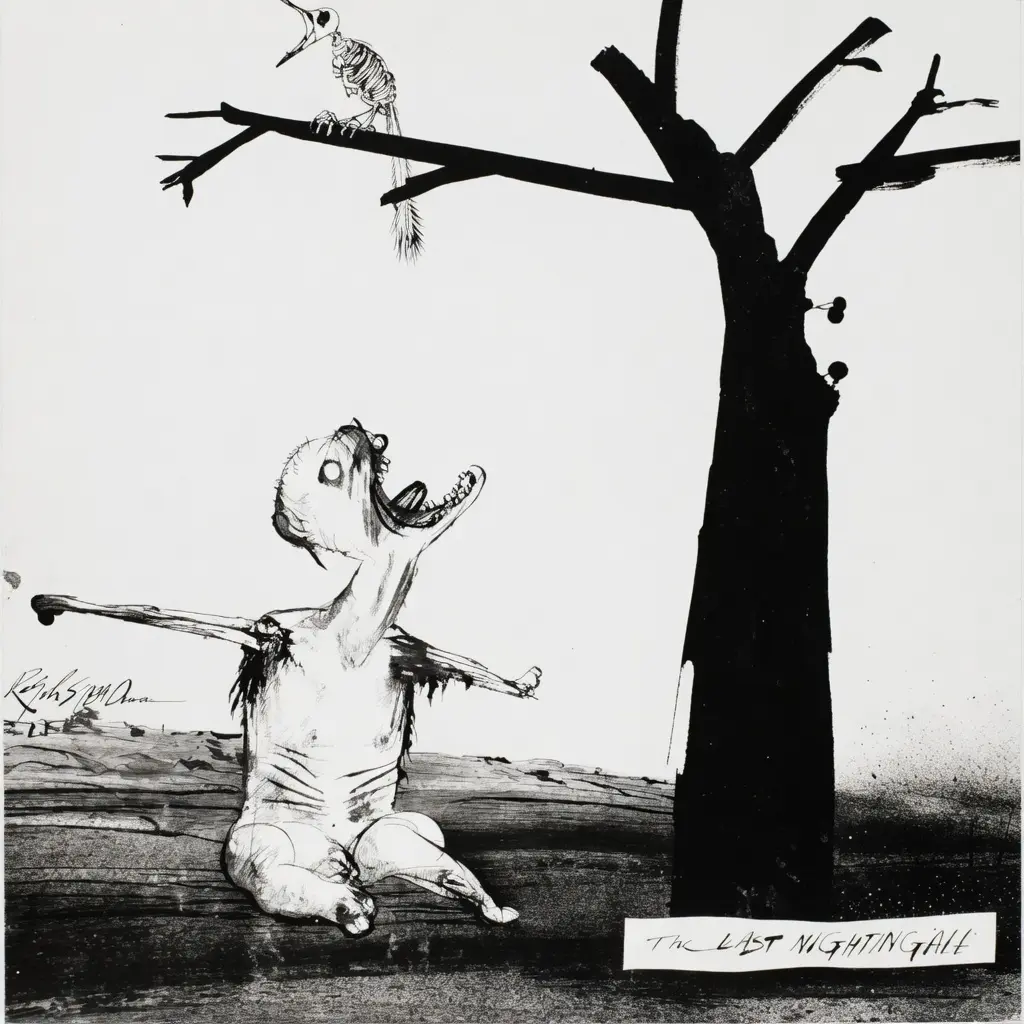
“Contraries” appeared on clear one-sided vinyl with an image screened on the blank side and a lyric/credit insert. Ralph Steadman drew the front cover for The Last Nightingale. Graham Keatley created the back cover while Peter Blegvad designed the EP labels. The EP raised money for the Miners Strike Fund, with artists, studio, label, and distributors waiving fees.
Between News from Babel albums, Zeena Parkins played on The Country of Blinds, the 1986 second album by Skeleton Crew, comprised of Frith and his Curlew bandmate Tom Cora.
Letters Home
 News from Babel released their second album, Letters Home, in 1986 on Rē Records.
The album contains nine Cooper/Cutler pieces performed with Parkins and bassist-guitarist Bill Gilonis. Robert Wyatt sings five titles, including “Who Will Accuse?” and “Late Evening.” Vocalist Sally Potter, a longtime Cooper collaborator, appears on “Banknote” and “Dark Matter,” while Phil Minton takes “A Dragon at the Core.” Dagmar Krause returns on “Fast Food” and shares “Late Evening” with Wyatt.
“Who Will Accuse?” laments through Wyatt’s exposed lead line, with the lyric fixed on cold-country images and exhausted address. “Heart of Stone” jabs through firmer accents, then bends cabaret and dance inflections around the sung refrain. “Banknote” twitches around clavinet figures and Sally Potter’s clipped delivery, with the lyric turning a banknote image into a forest search. “Moss” slows into Wyatt’s disappointed cadence, then dissolves into piano and harp. “Dragon at the Core” lurches on clavinet bass motion and plucked figures, then accelerates at the finale.
“Dark Matter” sways through an off-kilter waltz, with Potter placed inside the science-number phrasing. “Waited/Justice” stalks through a dirge-like tread, interrupted by sudden percussion flurries and saxophone figures before the long final drag. “Fast Food” cycles from mysterious spacing into rock motion and klezmer turns, with Krause cutting verses into sharp social observation. “Late Evening” stays soft and uncertain until the final voice transfer gives the closer its most settled line.
A1. “Who Will Accuse?” (2:39)
A2. “Heart of Stone (Megalopolis)” (3:04)
A3. “Banknote” (3:20)
A4. “Moss” (3:58)
A5. “A Dragon at the Core” (4:43)
B1. “Dark Matter” (4:22)
B2. “Waited/Justice” (5:09)
B3. “Fast Food” (3:13)
B4. “Late Evening” (5:04)
Gilonis engineered Letters Home during autumn and winter 1985–86 at Cold Storage. The package credits E.M. Thomas with cover photographs and silkscreen prints.
Postlude
News from Babel ended after Letters Home, and the four principals continued across song-cycle, theatre-song, improvisation, and studio-collaboration work through the mid-nineties.
Cooper carried the News from Babel song format into larger vocal pieces. In 1987, she composed Oh Moscow with words by Sally Potter. Cooper scored the work for a multinational ensemble with Potter, Minton, saxophonist-clarinetist Alfred Harth, bassist Hugh Hopper, keyboardist Elvira Plenar, and drummer Marilyn Mazur at the 1989 Victoriaville recording. Cutler later played the Russian performances in Moscow and Volgograd. Victo issued the 1991 live album Oh Moscow from the Canadian festival tape.
Cooper collaborated with Australian singer-writer-director Robyn Archer on Sahara Dust, a Gulf War-era vocal work with words by Archer. Intakt issued the 1993 studio album with Minton, Plenar, percussionist Robyn Schulkowsky, keyboardist Dean Brodrick, and trumpeter Paul Jayasinha. Cooper also released the 1991 dance-music collections An Angel on the Bridge and Schroedinger’s Cat, then presented orchestral works for sopranino saxophone and bassoon during the early nineties.
Cutler remained active in Cassiber, which issued the 1986–90 albums Perfect Worlds and A Face We All Know, then closed with 1992 concerts in Japan and Portugal. He then worked with Berlin composer Lutz Glandien on Domestic Stories, a 1992 ReR song cycle that reunited Cutler and Krause with Art Bears colleague Fred Frith, augmented by Harth on reeds and brass.
Krause moved into Brecht, Weill, and Eisler repertory after News from Babel. Hannibal issued her 1986 set Supply and Demand, followed by the 1988 Antilles release Tank Battles, an Eisler tribute. The 1993 Voiceprint Radio Sessions collected live selections from the same repertory. Krause also sang on Tim Hodgkinson’s 1994 album Each in Our Own Thoughts. She worked again with Anthony Moore and Peter Blegvad on the Channel 4 television opera Camera, broadcast during the mid-nineties.
Parkins returned to the New York downtown and teamed with singer-guitarist Chris Cochrane in No Safety, which made the 1989–92 albums This Lost Leg and Spill, capping with the 1993 concert release Live at the Knitting Factory. Parkins also issued the 1987 solo album Something Out There and the 1992 Victo disc Ursa’s Door. Her mid-nineties solo work continued with the 1993 Table of the Elements album Nightmare Alley and the 1995 Avant release Isabelle. During the same span, Parkins appeared on recordings by Frith, John Zorn, Elliott Sharp, Butch Morris, and Tenko, which placed her electric harp and accordion across NYC improvisation, composed music, and post-rock-adjacent ensemble work.
Discography:
- Work Resumed on the Tower (1984)
- “Contraries” (1984)
- Letters Home (1986)
Sources:
- Discogs: News From Babel
- RYM: News From Babel
- ProgArchives: News From Babel
- MusicBrainz: News From Babel
Artist/Album Pages:
The Associates were the Scottish new wave duo of singer Billy MacKenzie and multi-instrumentalist ...
éVoid are a South African new wave band from Brakpan, centered on singer-songwriter brothers Lucie...
Jade Warrior was an English New Age combo that recorded nine albums during the 1970s. Their output w...
Fat Mattress was an English folk-rock/psych band that released two albums on Polydor in 1969 and 1...
The Sex Pistols were an English rock band that spearheaded the London punk scene in the summer of 19...
Duncan Browne (March 25, 1947 — May 28, 1993) was an English singer/songwriter who released the al...
Kevin Ayers (Aug. 16, 1944 — Feb. 18, 2013) was an English singer–songwriter who co-founded Soft M...
Gonzalez was an English soul-funk and Latin-rock big band that released the 1974–75 albums Gonzale...
Cesar Camargo Mariano (born Sept. 19, 1943) is a Brazilian pianist and composer who released eight...
Circus was an English psych-rock band behind a 1969 self-titled album on Transatlantic Records. The...
Soft Machine was an English jazz-rock band that was active between the late 1960s and early 1980s. T...
Chopyn was an English art-rock band that released the 1975 album Grand Slam on Jet Records. They fea...