

Twelfth Night was an English symphonic-rock band that self-released three cassettes and a live album between 1980 and 1982, culminating with their proper debut Fact and Fiction. After the 1983 departure of singer Geoff Mann, they made their second professionally-recorded album, Art and Illusion, on Music For Nations. Their final release from this period was a 1986 self-titled album on Charisma/Virgin.
Members: Andy Revell (guitar, 1978-87, 2007-present), Brian Devoil (drums), Clive Mitten (bass, keyboards, 1978-87, 2007-present), Rick Battersby (keyboards, 1978-81, 1982-87), Electra McLeod (vocals, 1980), Ian Lloyd Jones (vocals, 1981), Geoff Mann (vocals, 1981-83), Axe (vocals, 1983), Andy Sears (vocals, 1983-86, 2007-12), Martyn Watson (bass, vocals, 1986-87)
Formation
Twelfth Night emerged from a musical partnership between guitarist Andy Revell and drummer Brian Devoil, who teamed for a talent competition on February 23, 1978, at Reading University. Their entourage included set painter Geoff Mann and dry ice operator Rick Battersby.
Devoil hailed from reading punk rockers Trash, which cut the 1978 Polydor single “Priorities” and (post-Devoil) auditioned before Roger Daltrey and John Entwistle for the role of the mod club band in the film adaptation of The Who‘s 1973 rock opera Quadrophenia. Revell shifted through multiple unsigned bands in nearby Bournemouth, including Abraxas, The Bubbles, and Joe Soap (not the 1973 Polydor one-off). In late 1978, the pair welcomed bassist Clive Mitten, who dropped by their rehearsal and offered his talent after an unsigned stint in the Brighton act Luna Hare.
1979 Demo Albums
They first gigged as the Andy Revell Band and then renamed their act after Twelfth Night, the 1602 romantic comedy by William Shakespeare. In March 1979, the trio made their first recording, later known as the Skan demo, comprised of five long tracks:
1. “Scales / Fur Helene I” (14:02)
2. “Encore Une Fois” (5:57)
3. “Fur Helene II” (11:49)
4. “Sequences (Short Version)” (9:51)
5. “Four and Three” (5:32)
The three-piece Twelfth Night (Devoil, Mitten, Revell) recorded the tracks inside an empty hall at Reading University on equipment loaned by SKAN PA Hire, a local PA company. With the addition of group associated Mann (vocals) and Battersby (keyboards), Twelfth Night performed at multiple open-air summer events and rehearsed at Mann’s family home in Manchester, where he remained as the other four took their act nationwide. Mann formed the duo God Stars with artist friend Peter Lawrence.
In December 1979, Twelfth Night entered Multium Studios in Wokingham and cut a second demo, the First Tape Album, comprised of two long songs:
1. “(Hats Off To) Freddie Hepburn” (8:27)
2. “Sequences” (17:44)
Twelfth Night [aka The Electra Tape]
Twelfth Night gigged the English pub circuit through the first half of 1980 as an instrumental band. That summer, they placed a Melody Maker ad that drew singer Electra MacLeod, who added lyrics to “Sequences” and three new songs (“The Cunning Man,” “Abacus,” and “Keep The Aspidistra Flying”) that she recorded with the band as part of Twelfth Night, their third demo and second self-released cassette, which also contains the lengthy instrumental “Afghan Red.”
A1. “The Cunning Man” (4:58)
A2. “Afghan Red” (12:07)
B1. “Abacus” (7:32)
B2. “Keep the Aspidistra Flying” (7:43)
Twelfth Night briefly toured this material before Electra’s departure in November 1980. In December, they self-released a 7″ single jokingly titled The First 7″ Album, comprised of “The Cunning Man” and an abbreviated re-recording of “Für Helene” (5:20).
Live at the Target
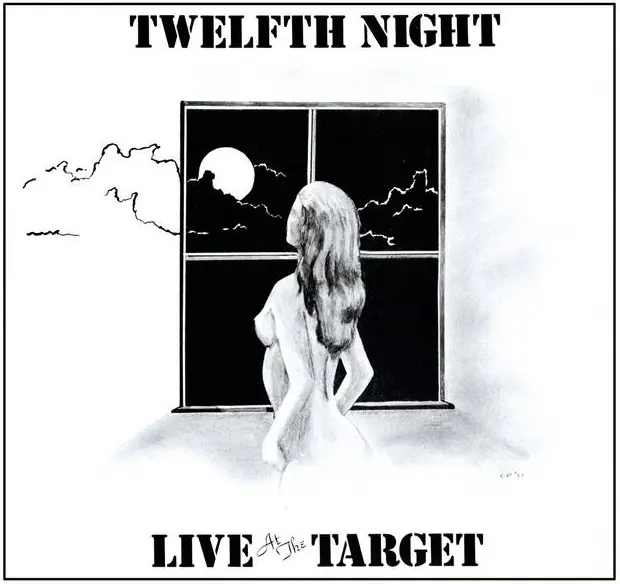 In February 1981, Twelfth Night self-released the vinyl album Live at the Target, a document of their January 15–16 shows at Reading’s Target Club.
Live at the Target moves like four extended scenes built from patient starts, long ramps, and hard pivots in texture. “Für Helene” opens on a rolling, martial drum figure, then drops echo-soaked guitar and six-string bass into the frame; the band slides from airy, sustained layers to a wah-driven riff, with cleanly placed turns that lock the set’s vocabulary in place.
“After the Eclipse” keeps every part sharply separated, letting subtle build-ups do the work; the six-string bass drives across its full range, then breaks into a delay-laced solo that hangs in the air before the band regroups. “East to West” begins in a misty register and keeps widening its dynamics—quiet, suspended passages give way to firmer strikes and shifting atmospheres that feel spontaneous even as the transitions land with intent. “Sequences” takes the widest arc: the quartet leaves large pockets of space for keyboard lines and bass weight to speak, moves through an eerie, low-lit midsection, then releases a long, uncoiling guitar flight before the closing minutes settle into a subdued, melancholic fade.
A1. “Für Helene” (6:46)
A2. “After the Eclipse” (7:31)
A3. “East to West” (10:36)
B. “Sequences” (19:56)
Live at the Target won Twelfth Night a national distribution deal with Pinnacle Records, a seventies pop label with a recent handle on mod, ska, and oi! music. The band gigged throughout the UK, supported on multiple dates by God Stars. They recorded a song with Reading singer Ian Lloyd-Jones for a planned but cancelled single.
Mann rejoined in time for Twelfth Night’s slot at the August 1981 Reading Rock Festival, a three-day weekend event with sets by Atomic Rooster, Afraid of Mice, The Enid, Gillan, Greg Lake (with Gary Moore), The Kinks, Reluctant Stereotypes, Rose Tattoo, Samson, Trust, Wishbone Ash, and the American acts 38 Special and Billy Squier. Twelfth Night opened the first day (Friday the 28th), which also featured Budgie, Girlschool, Nightwing, Saga, Steve Hackett, and Telephone.
Twelfth Night’s Reading set marked the live debut of Mann’s version of “Sequences,” which became the signature piece of their setlist. They were the second hometown act to play the annual event after Automatic Fine Tuning, which played the 1976 Reading Rock Festival. (Note: original flyers don’t mention Twelfth Night or Atomic Rooster, both last-minute additions to the event, which lacked several scheduled acts, including Chicken Shack, Midnight Oil, Outlaws, and Thompson Twins.)>
Smiling at Grief
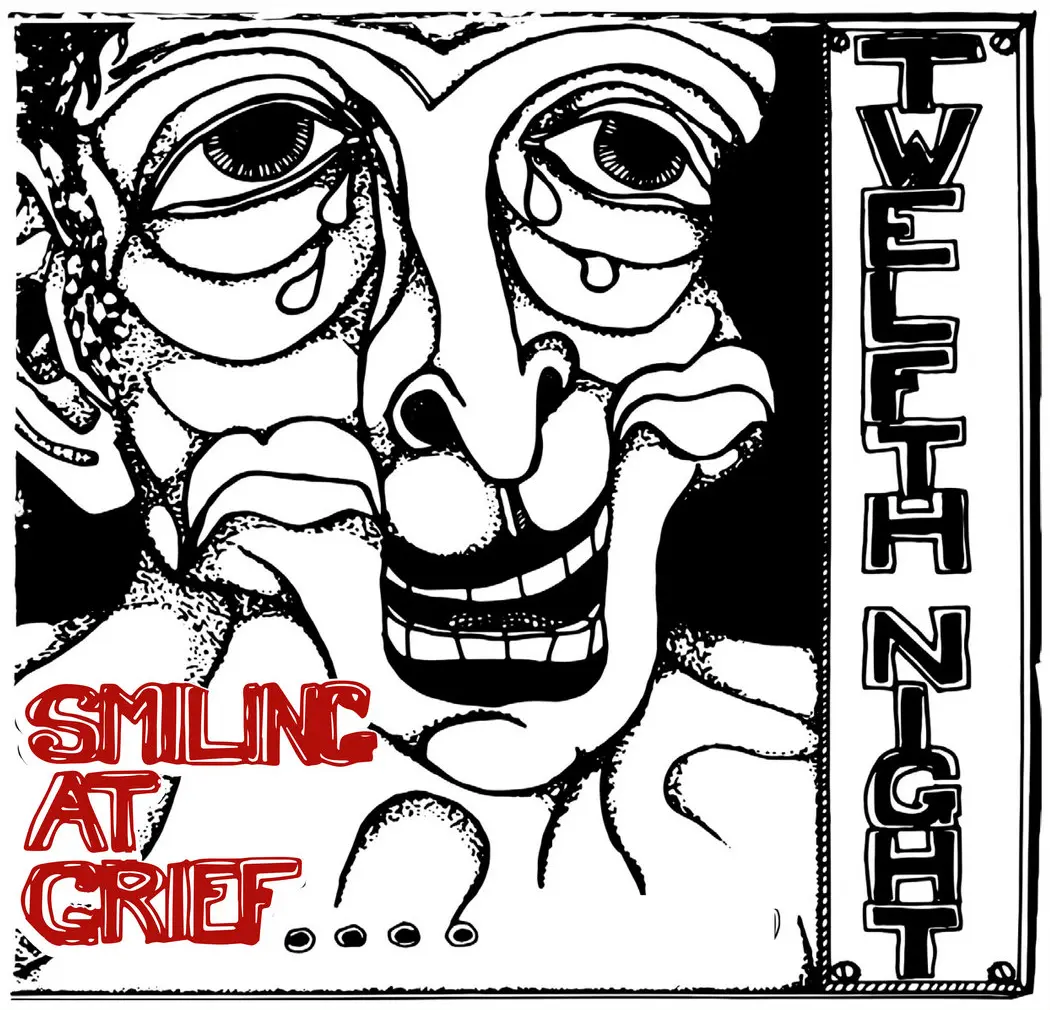 In the autumn of 1981, Twelfth Night demoed new material for their third self-issued cassette album, Smiling at Grief, released in January 1982 with nine tracks:
A1. “East of Eden” (3:29)
A2. “This City” (3:13)
A3. “The Honeymoon Is Over” (2:35)
A4. “Creep Show” (10:13)
A5. “Puppets (Intro)” (1:26)
B1. “Puppets” (2:50)
B2. “Three Dancers” (2:54)
B3. “Makes No Sense” (4:02)
B4. “Fur Helene Pt. II” (10:48)
Battersby departed as Twelfth Night commenced work on their first proper album, Fact and Fiction, recorded between May and late autumn of 1982 with Mitten on bass and keyboards. In June, they performed “East of Eden” for the 6/26 broadcast of the David Essex Showcase, a BBC1 talent show hosted by David Essex.
In October 1982, Twelfth Night issued two non-album songs from the Fact and Fiction sessions as their second single: The Beatles cover “Eleanor Rigby” backed with “East of Eden.” They toured that autumn as a four-piece.
Fact and Fiction
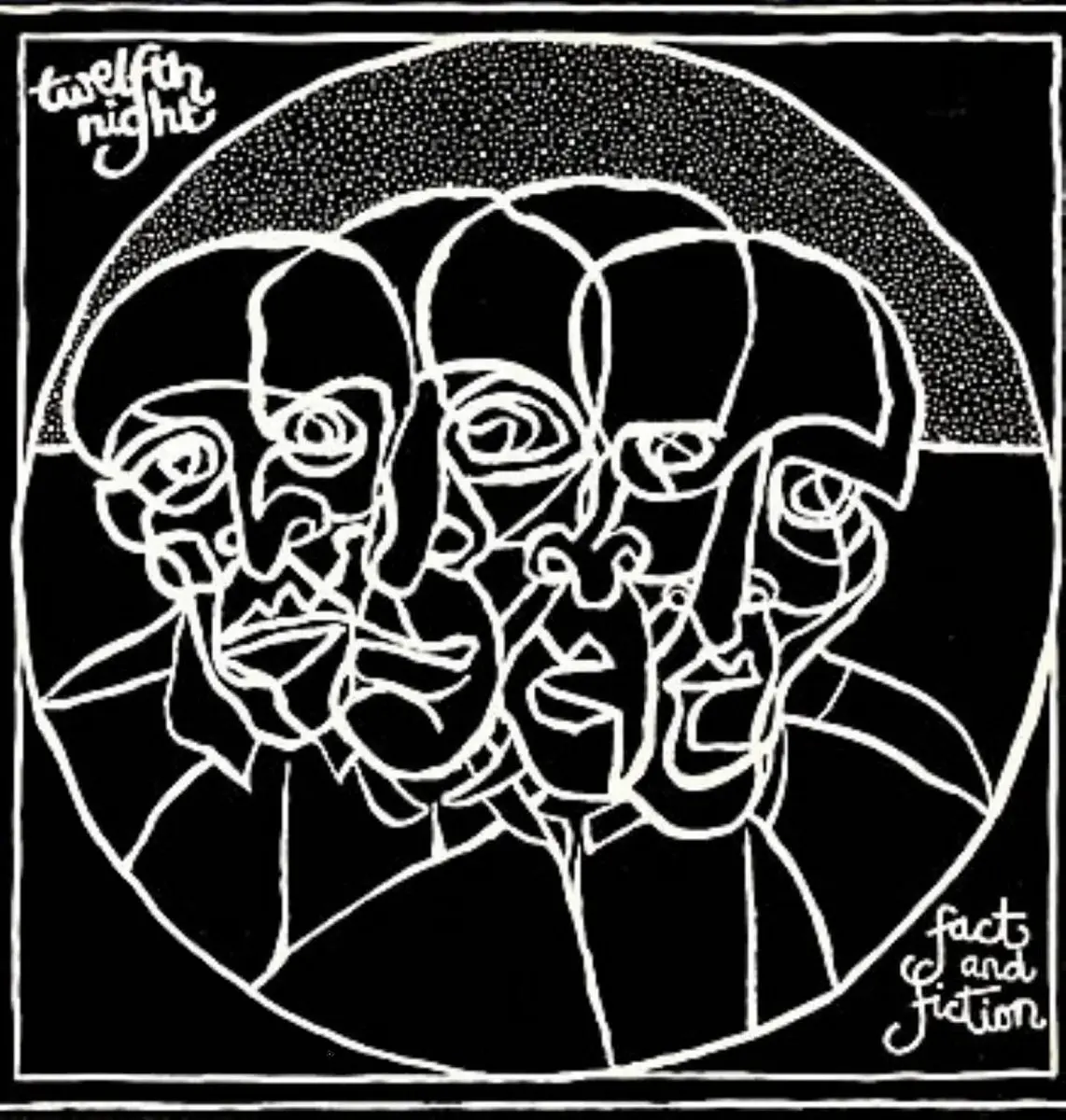 Twelfth Night released Fact and Fiction in December 1982 on cassette (TN-005) and vinyl (TN-006). It features two large-scale epics (“We Are Sane,” “Creepshow”) and the medium-length numbers “Human Being” and “Love Song.” Two songs (“World Without End,” the title track) feature additional vocals by Jane Mann.
Fact and Fiction runs on hard contrasts: “We Are Sane” opens with thin synth strings, radio/room noise, and a choirboy falsetto that drops into a lower register as the track locks into three linked blocks; spoken “File” passages cut the momentum, typewriter clicks replace kit hits for a moment, then arpeggiated chords and a forward drive carry a sequence where Mann snaps the phrases with near-barked emphasis, followed by a late-stage robotic vocal turn and a final surge capped by sharp guitar work.
“Human Being” starts as a stark vocal warning, then fills out with piano touches, weighty bass presence (including a featured bass figure), and a long guitar lead that rises out of the mid-song lift before the tempo eases for a slower, held-note vocal section. “This City” keeps the lights low—childhood ambience under cold keys—then Mann moves from restrained lines to a more strained, emphatic delivery over spare backing. “World Without End” functions as a brief synth-only palate reset, then the title track snaps into a straight pulse that fractures its accents to simulate odd-footed turns, with keys carrying the argument and a “Don’t make me laugh!” refrain that lands like a shouted punchline.
“The Poet Sniffs a Flower” pairs acoustic guitar with layered synth haze, then the drums enter and the pace accelerates into a tighter, louder run-up; from there “Creepshow” stretches into a multi-scene suite—soft entry, spoken invitations, slow pressure, then heavier pounding blocks and a late guitar climax—before “Love Song” closes on classical/acoustic guitar and restrained keys, gradually building tempo and intensity to an emotional solo peak, then a calm fade.
A1. “We Are Sane” (10:27)
i. Te Dium
ii. We Are Sane
iii. Dictator’s Excuse Me
A2. “Human Being” (7:50)
A3. “This City” (4:01)
A4. “World Without End” (1:54)
B1. “Fact And Fiction” (3:59)
B2. “The Poet Sniffs A Flower” (3:51)
B3. “Creepshow” (11:57)
B4. “Love Song” (5:40)
Twelfth Night self-produced Fact and Fiction at Revolution Studios, a Manchester facility also used for 1982 recordings by 52nd Street, A Certain Ratio, Blitz, and Swamp Children.
Battersby rejoined Twelfth Night for the ensuing Fact and Fiction Tour. In mid-1983, they demoed a new epic titled “The Collector.”
Live and Let Live
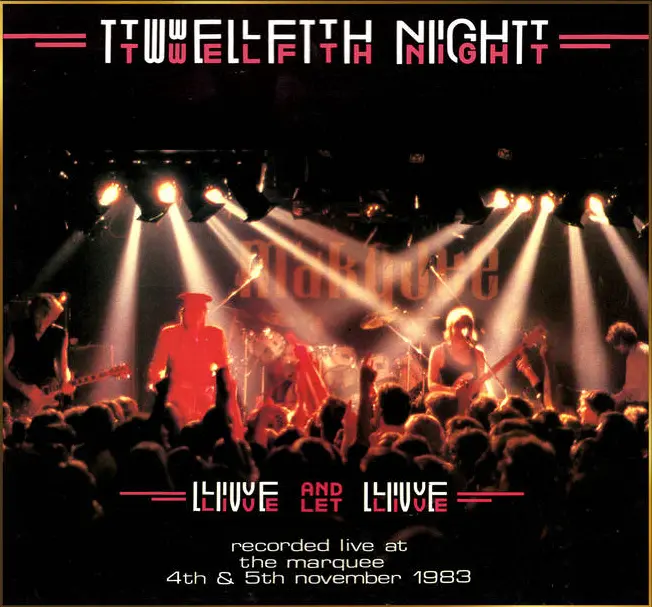 In January 1984, Twelfth Night release on Live and Let Live on Music For Nations.
The six tracks span 50 minutes across two sides and document the band in extended performance at the Marquee Club, the recording drawn from two consecutive nights. Mann handles vocals, tambourine, and timbales throughout. Mitten operates across six-string bass, guitar, classical guitar, Moog Taurus bass pedals, and additional keyboards, making him the ensemble’s most broadly deployed instrumentalist. Revell plays Gibson Les Paul and a second guitar through a Burman combo, adding occasional synthesizer. Battersby’s keyboard setup spans Roland Jupiter 8, Korg Polysix, Korg PE-2000, and Moog Prodigy. Devoil’s drum configuration combines Rogers and Yamaha bass drums, Rogers concert toms, a Ludwig snare, and Paiste cymbals. The album was issued with no overdubs applied.
“The Ceiling Speaks” opens the first side at over eight minutes, establishing the band’s capacity to sustain long-form development from a quiet entry to a louder, more rhythmically active passage. “The End of the Endless Majority” runs the set’s briefest track at just over three minutes, providing a contrast in scale before “We Are Sane” occupies the remainder of the side at twelve minutes, the longest track on side one.
“Fact and Fiction” opens the second side with a mid-length piece whose introduction the Marquee audience delivers from memory before the band enters. “The Poet Sniffs a Flower” follows at four minutes. “Sequences” closes the record at over seventeen minutes, its arrangement building through an extended instrumental passage—incorporating a whistle figure at one of its transitions—before arriving at its final section.
A1. “The Ceiling Speaks” (8:26) – Twelfth Night
A2. “The End of the Endless Majority” (3:18) – Twelfth Night
A3. “We Are Sane” (12:04) – Twelfth Night
B1. “Fact and Fiction” (5:27) – Twelfth Night
B2. “The Poet Sniffs a Flower” (4:03) – Twelfth Night
B3. “Sequences” (17:14) – Twelfth Night / Neptune Music
Twelfth Night recorded Live and Let Live live at the Marquee Club, London, on November 4 and 5, 1983, with Mark Wade and Mike of Marquee Studios recording and Robin Prior and Gary Donald Falkenthal engineering the live sound. The album was remixed at Livingston Studios by Mark Chamberlain, with Felix Kendall and Robin Prior assisting on the remix. Chamberlain and Twelfth Night produced.
Art & Illusion
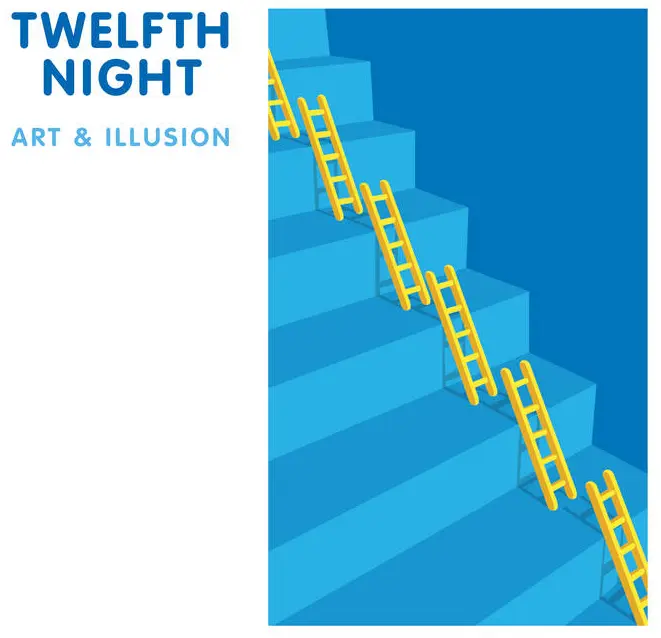 In October 1984, Twelfth Night released Art & Illusion, a 12″ mini-album on Music For Nations.
The five tracks introduce Andy Sears as the new vocalist following Mann’s departure, and present the band in a more concise song format than the extended pieces on Live and Let Live. Sears’s voice anchors a sound that retains Battersby’s keyboard presence alongside Revell’s guitar, Mitten’s bass, and Devoil’s drumming, but the arrangements are tighter and more rhythmically direct than the Mann-era material. “C.R.A.B.” is the set’s sole instrumental. The title track originated in the Mann era; Sears performs it here in a substantially reworked arrangement. The mini-album reached number 83 on the UK Albums Chart.
A1. “Counterpoint” (5:57) – Twelfth Night
A2. “Art & Illusion” (3:51) – Twelfth Night
A3. “C.R.A.B.” (4:34) – Twelfth Night
B1. “Kings & Queens” (5:43) – Twelfth Night
B2. “First New Day” (5:53) – Twelfth Night
Twelfth Night recorded Art & Illusion at Amazon Studios, Liverpool, in August 1984. Gil Norton produced and engineered, with Keith Andrews assisting. The album was mixed at Westside Studios; Irene Kelly assisted on the remix. Tim Young cut the lacquer at CBS Studios, London.
Twelfth Night
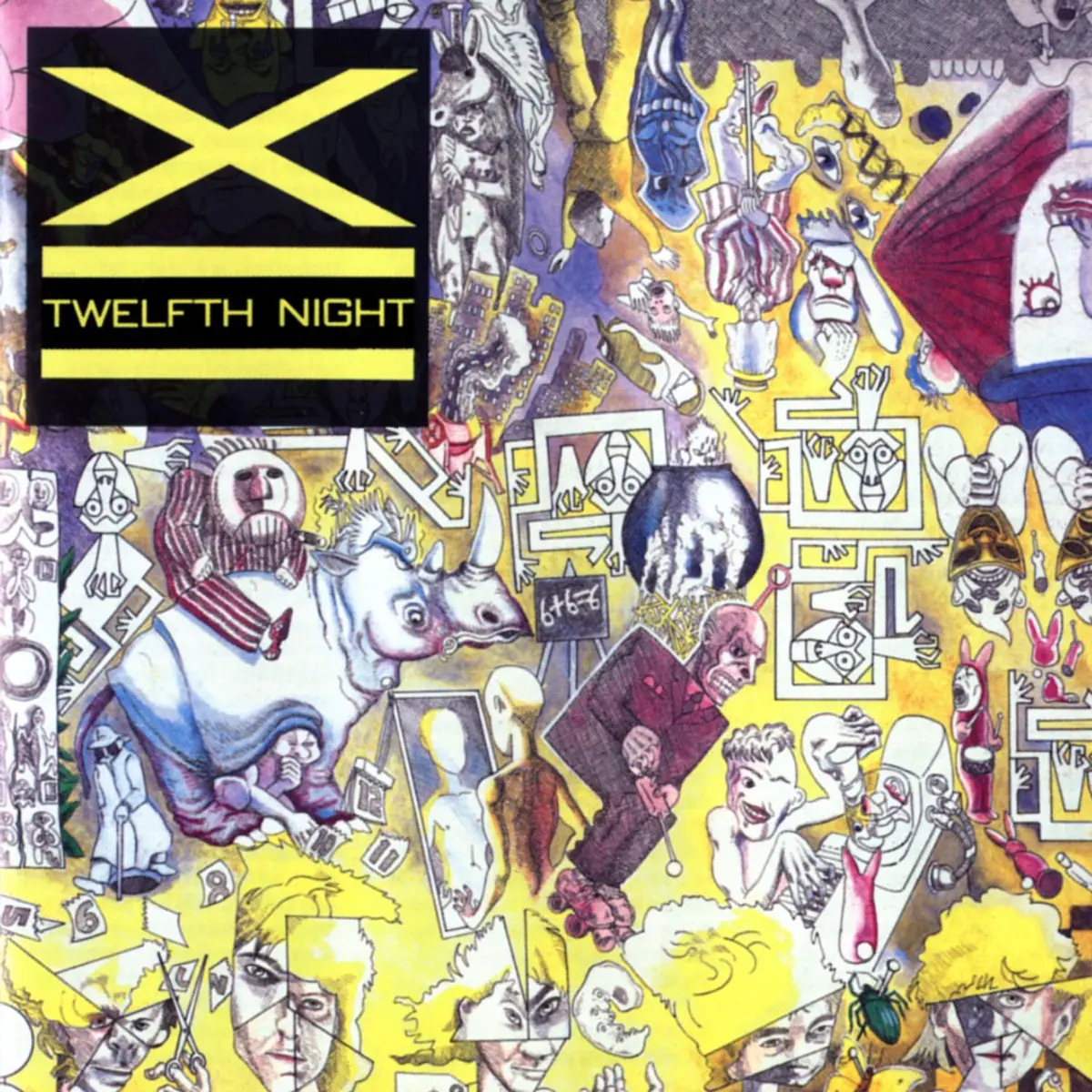 Twelfth Night released their self-titled second proper studio album in July 1986 on Virgin Records.
The nine tracks mark a departure from the extended, dark arrangements of the band’s earlier work, with shorter song structures, more prominent synthesizer programming, and string arrangements on four tracks. Sears supplies all lyrics; Mitten and the band share music credits. Battersby’s keyboard work and Jonathan Sorrel and Ken Campbell’s additional programming give the album a dense electronic texture throughout. Revell’s guitar moves between rhythm and lead functions while Mitten’s bass anchors the ensemble. Devoil’s drumming is framed in a more compressed, contemporary production style than on the band’s earlier releases. The nine-minute album closer “Take a Look” stands apart from the surrounding material in its scope, its arrangement building through distinct sections over its length.
“Last Song” opens the record on a mid-tempo frame with strings prominent in the arrangement, establishing the album’s more produced character from the outset. “Pressure” and “Jungle” sustain a direct, rhythm-forward approach. “The Craft” and “Theatre” carry string arrangements and executive production from Richard Burgess, setting them apart from the rest of the album in texture. “Blue Powder Monkey” runs the A-side’s longest track at five minutes, its more expansive feel anticipating the album’s closing piece. “Shame” and “This Is War” are the album’s two shortest pieces, compact and direct. “Take a Look” closes the record at eleven and a half minutes, its early sections moving through quieter, more pensive passages before the arrangement opens into a more forceful final stretch; Mitten contributes additional guitar.
A1. “Last Song” (4:25) – Mitten/Sears/Twelfth Night
A2. “Pressure” (3:39) – Mitten/Sears/Twelfth Night
A3. “Jungle” (4:16) – Mitten/Sears/Twelfth Night
A4. “The Craft” (4:33) – Mitten/Sears/Twelfth Night
A5. “Blue Powder Monkey” (5:07) – Mitten/Sears/Twelfth Night
B1. “Theatre” (3:49) – Mitten/Sears/Twelfth Night
B2. “Shame” (4:12) – Mitten/Sears/Twelfth Night
B3. “This Is War” (3:40) – Mitten/Sears/Twelfth Night
B4. “Take a Look” (11:29) – Mitten/Sears/Twelfth Night
Twelfth Night recorded the album at Jacobs Studios and Rooster Studios beginning in November 1985. John L. Walters produced and arranged; Adam Moseley engineered. Paul Corkett and Paul Gomersall assisted at Jacobs; Drostyn John Madden assisted at Rooster. The album was mixed at Wessex Sound Studios and Swanyard Studios; Dietmar Schillinger assisted at Wessex and Jay Arthur and Martin Russell assisted at Swanyard. Walters arranged the strings for “The Craft” and “Theatre,” performed by UK Orchestras Ltd. Richard Burgess served as executive producer on those two tracks and on “Theatre.”
Virgin issued “Shame” as a 12” single in June 1986 on the Charisma imprint, with a full mix on the A-side and a 7” version and “Blue Powder Monkey” on the B-side. Virgin issued “Take a Look” as a 12” single in July 1986 on Charisma, backed with “Take a Look (Part 4)” and “Blondon Fair (Extended Mix),” the latter recorded at Matinee Music Studios with Chris Broderick engineering.
Postlude
Andy Sears left the band in late 1986 after concluding that Virgin had no coherent promotional strategy for the album. Martyn Watson replaced him, and Mitten departed in early 1987 to run a recording studio. The Virgin contract was terminated shortly after. The band played a final set of new songs as a four-piece before dissolving quietly.
In 1988, the original lineup of Revell, Devoil, Mitten, Mann, and Battersby reunited to record “The Collector” and a new version of “Love Song,” with Mitten providing studio time. Those recordings formed the basis of the compilation Collector’s Item, released on Music For Nations in early 1991.
Geoff Mann died of cancer in February 1993.
Discography:
- Twelfth Night [aka The Electra Tape, Second Tape Album] (1980)
- Live at the Target (1981)
- Smiling at Grief (1982)
- Fact and Fiction (1982)
- Art and Illusion (1984)
- Live and Let Live (1984)
- Twelfth Night [aka XII, The Virgin Album] (1986)
Sources:
- Discogs: Twelfth Night
- 45worlds: Twelfth Night
- 45cat: Twelfth Night
- Bandcamp: Twelfth Night
- RYM: Twelfth Night
- ProgArchives: Twelfth Night
Artist/Album Pages:
Wall of Voodoo was an American new wave band that mixed jagged electro-pop with Spaghetti Western ...
Bunny Wailer (April 10, 1947 – March 2, 2021) was a Jamaican singer, percussionist, and songwriter...
The Only Ones were an English rock band that released the 1977 single "Lovers of Today" on Vengean...
Live Wire was an English pub-rock band from London that released the 1979–81 A&M albums Pick I...
Sweet Sensation was an English soul-pop octet from Manchester that released ten singles between 1974...
Legend was an English heavy metal band from Jersey island that released the 1981–82 albums Legend ...
P-Model (P-モデル) was a Japanese new wave art-pop band that made the 1979–81 Warner albums In a Mode...
Black White and Co were a French soul-funk band that released three albums on assorted labels betw...
Paz was an English ethno-jazz/funk ensemble, formed in 1972 by vibraphonist Dick Crouch. They debu...
Ñu was a Spanish hard-rock band that released four albums on Chapa between 1978 and 1984, followed...
The Animals were an English rock band that released three albums and nine singles between 1964 and 1...
Bill Fay (September 9, 1943 — February 21, 2025) was an English singer/songwriter who released a sel...