

Dan Hartman (Dec. 8, 1950 — March 22, 1994) was an American vocalist, multi-instrumentalist, and songwriter who emerged as the bassist in The Edgar Winter Group. He wrote and sang their 1974 hit “Free Ride” before launching a solo career that spanned blue-eyed soul, disco, and pop-rock. His 1978/79 hits “Instant Replay” and “Relight My Fire” became club staples, followed by the 1984 chart-topper “I Can Dream About You,” a soul-pop evergreen for the pulp-action film Streets of Fire. Behind the scenes, he wrote and produced for James Brown, Tina Turner, Nona Hendryx, and Steve Winwood.
Background
Dan Hartman was born on December 8, 1950, in West Hanover Township, Pennsylvania, into a musically supportive family with Yugoslav maternal roots. A child prodigy, he studied classical piano and later became active in theater, journalism, and choir during his time at John Harris High School. At age 13, he joined his older brother Dave’s band the Legends as keyboardist, marking his entry into professional music. Though initially steeped in soul and Motown, the band evolved toward psychedelic and hard rock under Hartman’s creative direction. He soon became their chief songwriter and multi-instrumentalist, issuing several local singles through labels like Up, Bridge Society, Railroad House, and his own imprint Heart.
By 1971, Hartman attracted national attention through demo tapes sent to Blue Sky Records president Steve Paul, who introduced him to Edgar Winter. After a brief stint backing the Johnny Winter Band, Hartman joined the newly formed Edgar Winter Group in 1972. He played bass and keyboards, contributed lead vocals, and emerged as a key songwriter on They Only Come Out at Night (1972), Shock Treatment (1974), and Edgar Winter Group with Rick Derringer (1975). Hartman wrote and sang their hit “Free Ride” and composed other notable tracks including “Autumn,” “Easy Street,” and “River’s Risin’.”
In 1976, he launched a solo career with a promotional compilation titled Who Is Dan Hartman and Why Is Everyone Saying Wonderful Things About Him?, signaling his transition from band member to solo artist.
Images
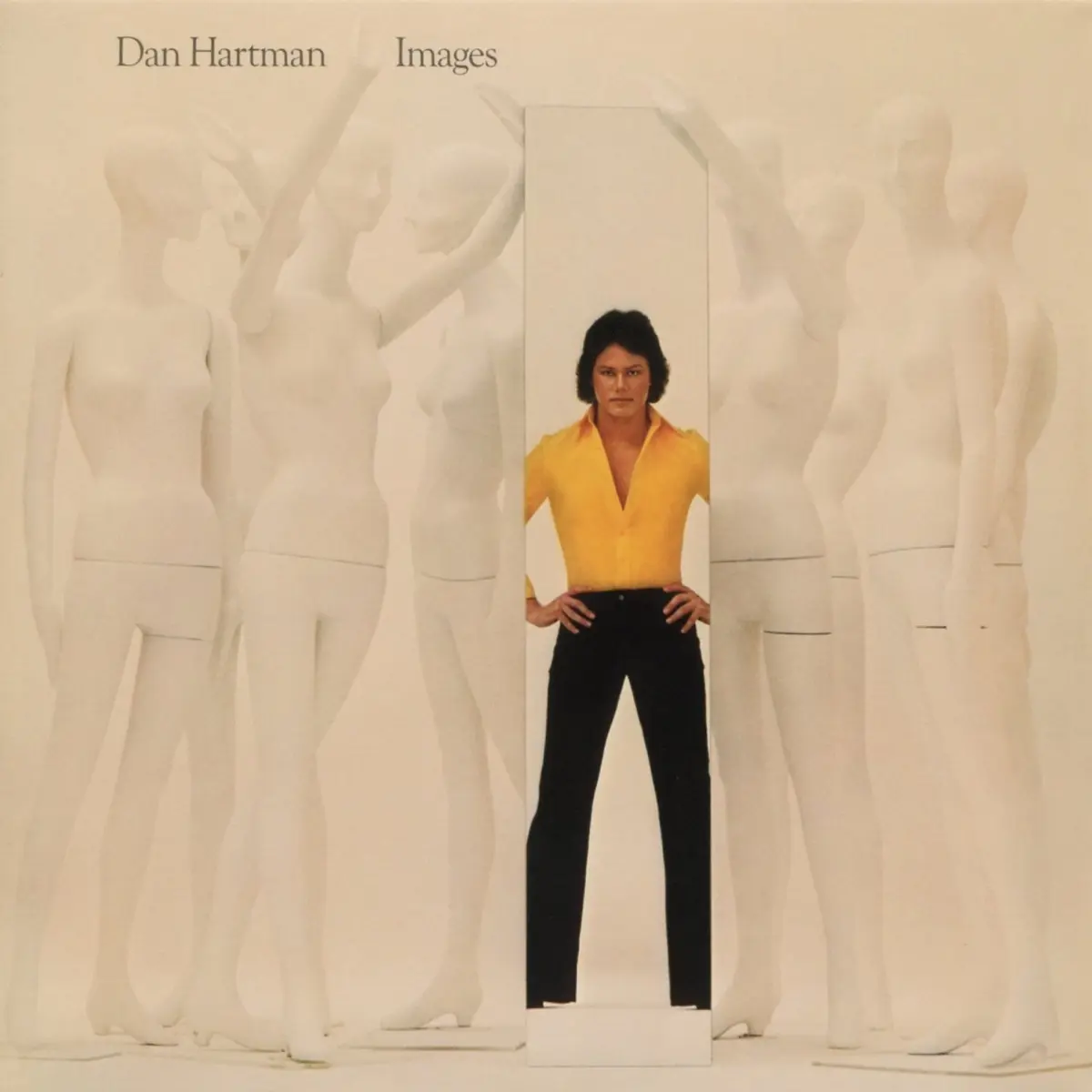 Dan Hartman released his debut solo album, Images, in 1976 on Blue Sky.
The album presents a stylistic cross-section of Hartman’s post-Edgar Winter Group songwriting, balancing soul-inflected pop, hard rock, and ballads with subtle nods to reggae and emerging dance music. He handles most instrumentation himself across the album’s eleven tracks, with select contributions from a circle of noted collaborators.
Guitarist Ronnie Montrose trades leads with Hartman on the twin rockers “High Sign” and “The Party’s in the Back Room,” while Rick Derringer brings acoustic fire to “Thank You for the Good Times.” Edgar Winter joins on horns, sharing section space with Randy Brecker, George Young, and Tony Pagano on “Can’t Stand in the Way of Love.” Clarence Clemons takes a saxophone spotlight on “Shake It Down,” a rhythm-forward track featuring gospel-tinged background vocals by Revelation, who also appear on the reggae-tinged “Love It Too Much.” Hartman arranges fluid passages between strings, brass, and woodwinds, drawing from both orchestral and soul traditions, while Tom Strohman’s flute on “If Only I Were Stronger” adds a chamber-style texture that contrasts the denser horn and rhythm interplay elsewhere.
A1. “Hear My Song” (3:13)
A2. “High Sign” (3:17)
A3. “On the Telephone” (4:18)
A4. “Thank You for the Good Times” (3:03)
A5. “Lighthouse” (2:58)
A6. “My Love” (3:57)
B1. “Shake It Down” (3:53)
B2. “Love It Too Much” (2:58)
B3. “If Only I Were Stronger” (4:30)
B4. “Can’t Stand in the Way of Love” (3:44)
B5. “The Party’s in the Back Room” (3:12)
Hartman recorded and produced the album himself, sharing mix duties with engineer Dave Still. He arranged and conducted the string sections, which appear most prominently on the ballads and R&B-leaning tracks. “High Sign” and “The Party’s in the Back Room” feature guest performances by Ronnie Montrose, who included two Hartman compositions on the 1976 Montrose album Jump On It.
Instant Replay
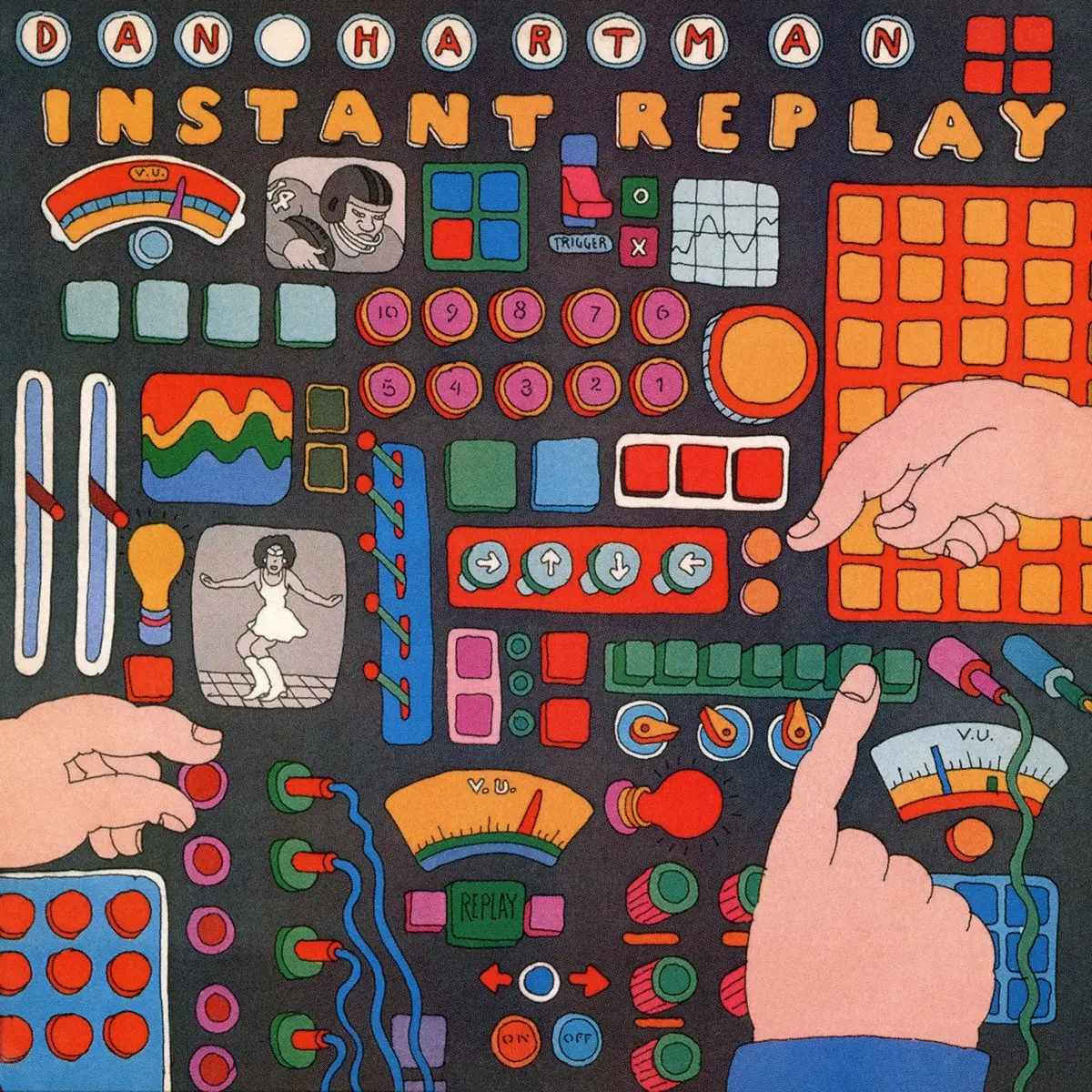 Dan Hartman released his second album, Instant Replay, in June 1978 on Blue Sky (US) and Epic (abroad).
Relight My Fire
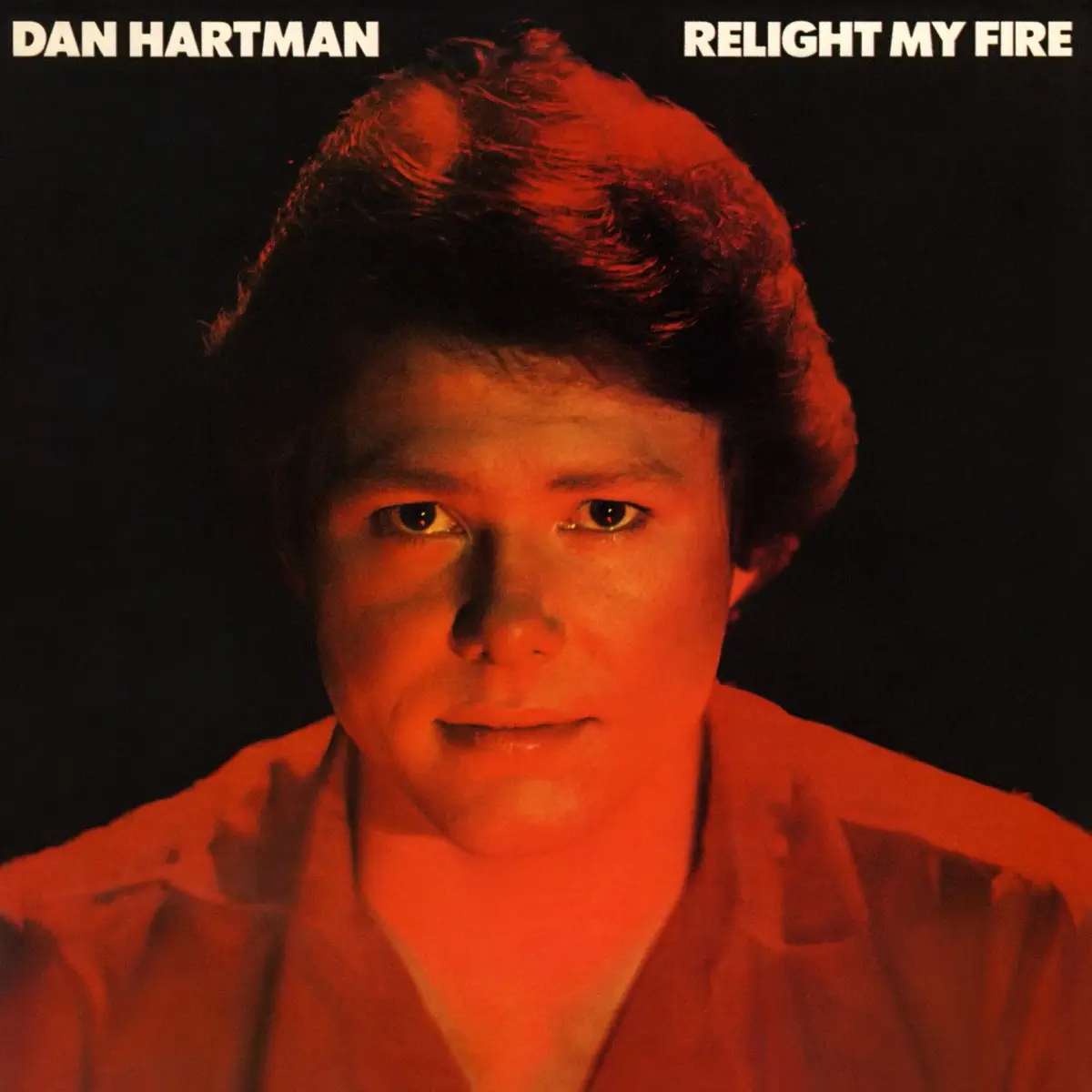 Dan Hartman released his third album, Relight My Fire, in 1979 on Blue Sky.
Shifting further into extended dancefloor arrangements, the album features six tightly produced tracks that blend orchestral sweep, rhythm-forward instrumentation, and multi-part vocal layers. Hartman plays guitar, bass, keyboards, and percussion across the album, anchoring the sessions while ceding lead passages to guest soloists. “Hands Down” opens with a stacked arrangement built around interwoven leads by saxophonist Edgar Winter and harmonica player Stevie Wonder, who trade phrases in the track’s final section.
Guitarists G.E. Smith and Phil Houghton provide contrasting textures throughout the album, with Smith laying foundational rhythm patterns and Houghton punctuating lines on the mid-tempo tracks. The nine-minute centerpiece “Vertigo/Relight My Fire” moves from instrumental buildup into a vocal call-and-response between Hartman and guest singer Loleatta Holloway, whose lead on the refrain shapes the song’s dramatic arc. Craig Peyton adds vibraphone color on select passages, while Blanche Napoleon contributes background vocals.
A1. “Hands Down” (4:11)
A2. “Love Strong” (4:06)
A3. “Vertigo/Relight My Fire” (9:46)
B1. “Just for Fun” (5:42)
B2. “I Love Makin’ Music” (3:54)
B3. “Free Ride” (7:06)
Hartman produced and recorded the album with additional percussion, mixing, and editing support from John Luongo. Michael Barbiero contributed extra percussion, and Don Renaldo conducted the orchestral parts, played by members of MFSB. The sessions emphasized long-form structures built from modular sections, sequenced for extended dancefloor play.
The title track appeared as the lead single and topped the US dance chart for six consecutive weeks between December 1979 and February 1980. In Europe, “Relight My Fire” reached No. 3 on the Dutch Top 40 and No. 7 on the Netherlands Single Top 100. It also charted in Denmark at No. 11. “Free Ride,” newly re-recorded in extended format, was issued as a follow-up single.
It Hurts to Be in Love
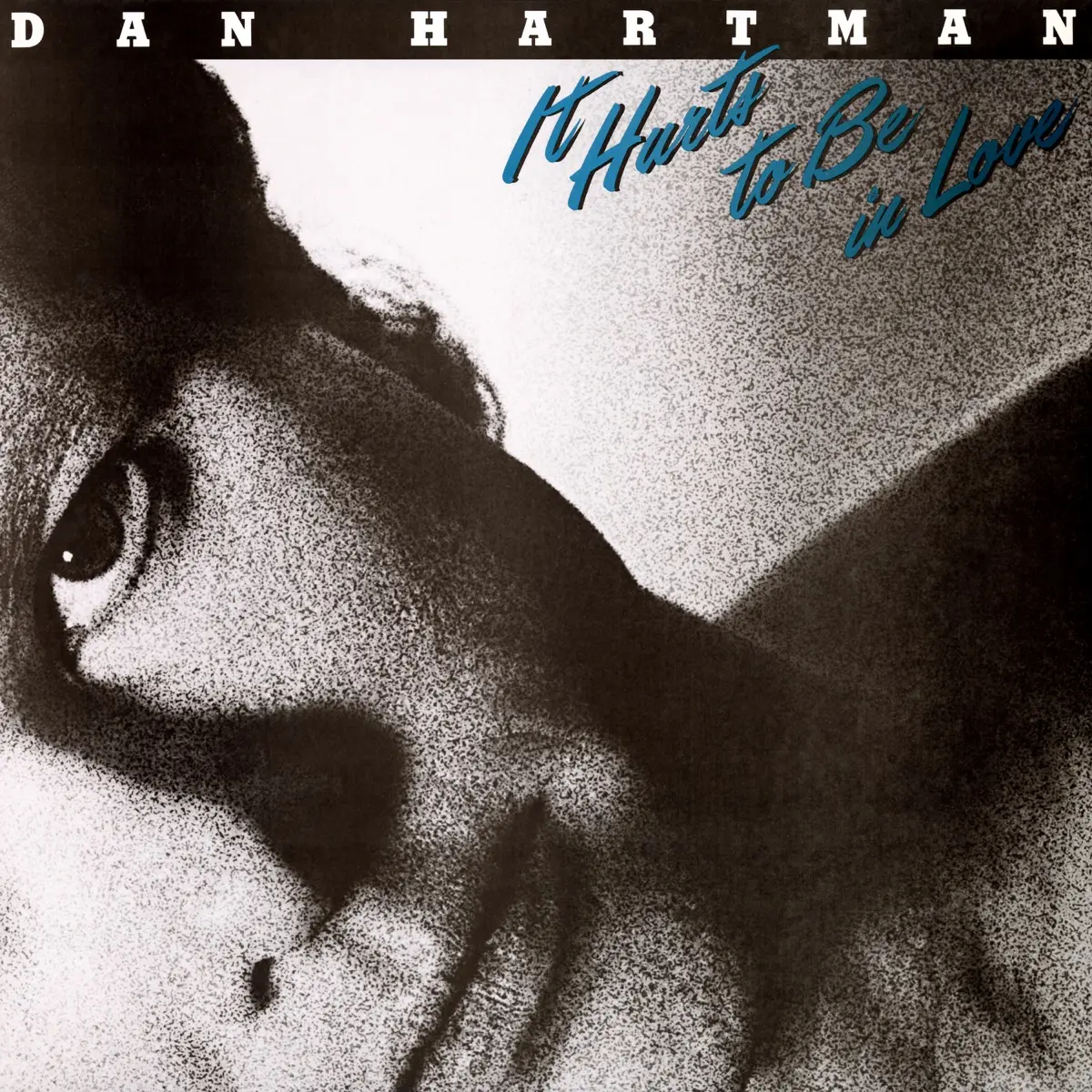 Dan Hartman released his fourth album, It Hurts to Be in Love, in 1981 on Blue Sky.
Departing from the dancefloor intensity of his two prior records, he returns to a more personal, mid-tempo pop-rock style built on smooth layering, keyboard-led arrangements, and romantic themes. Hartman handles all instruments on most tracks aside from drums and synthesizers, drawing warmth from multi-tracked acoustic guitars, piano backings, and soft melodic phrasing.
Guitarist Erik Cartwright adds color to several cuts, providing counterpoint against Hartman’s keys without crowding the harmonic space. Jeff Bova’s synthesizer parts alternate between subtle washes and more pronounced melodic support, particularly on “Positive Forces” and “All I Need.” Blanche Napoleon joins on lead and backing vocals for the title track, supplying harmonic lift across the choruses. The album’s tone pivots between introspective ballads like “I Still Remember” and “Forever in a Moment,” and light rhythmic pop-rockers such as “Pick It Up” and “Letter in a Song,” with Hartman maintaining continuity through consistent instrumental voicing.
A1. “It Hurts to Be in Love” (2:45) – Originally written by Howard Greenfield and Helen Miller for Neil Sedaka, the song charted in 1964 when Gene Pitney replaced Sedaka’s vocal on the backing track. Hartman’s version closely follows the original arrangement, preserving its Brill Building structure while updating the instrumentation with his own production and performance.
A2. “Heaven in Your Arms” (3:34) – Hartman recorded this track entirely at his home studio, layering acoustic guitar with synthesizer textures from Jeff Bova. The song’s video, shot in a vacant department store, featured Venetian blinds as part of a minimal set design conceived by longtime friend Jerry King Musser.
A3. “My Desire” (3:38)
A4. “Forever in a Moment” (3:12)
A5. “All I Need” (4:07) – Hartman opens the arrangement with solo piano and builds toward a layered, string-filled finale. He tracked vocals and instrumentation at the Schoolhouse studio and mixed the final version at Power Station with Neil Dorfsman, creating a wide ambient sound with echo effects across both voice and backing.
B1. “Pick It Up” (3:02)
B2. “I Still Remember” (3:31)
B3. “Positive Forces” (3:15)
B4. “Letter in a Song” (3:43)
B5. “Hello Again” (4:23)
Hartman recorded and produced the album at his private studio, The Schoolhouse, in Westport, Connecticut. He worked with engineer Jeff Jones during tracking, then mixed the album with Neil Dorfsman at Power Station in New York. Ted Jensen mastered the final release at Sterling Sound.
“Heaven in Your Arms” appeared first in February 1981 and peaked at No. 86 on the Billboard Hot 100. The title track, a cover of the 1964 Gene Pitney hit, followed in June and reached No. 72 on the Hot 100 and No. 48 on the Billboard dance chart. “All I Need,” issued in August, peaked at No. 41 on the Adult Contemporary chart and reached No. 10 on the Bubbling Under Hot 100.
I Can Dream About You
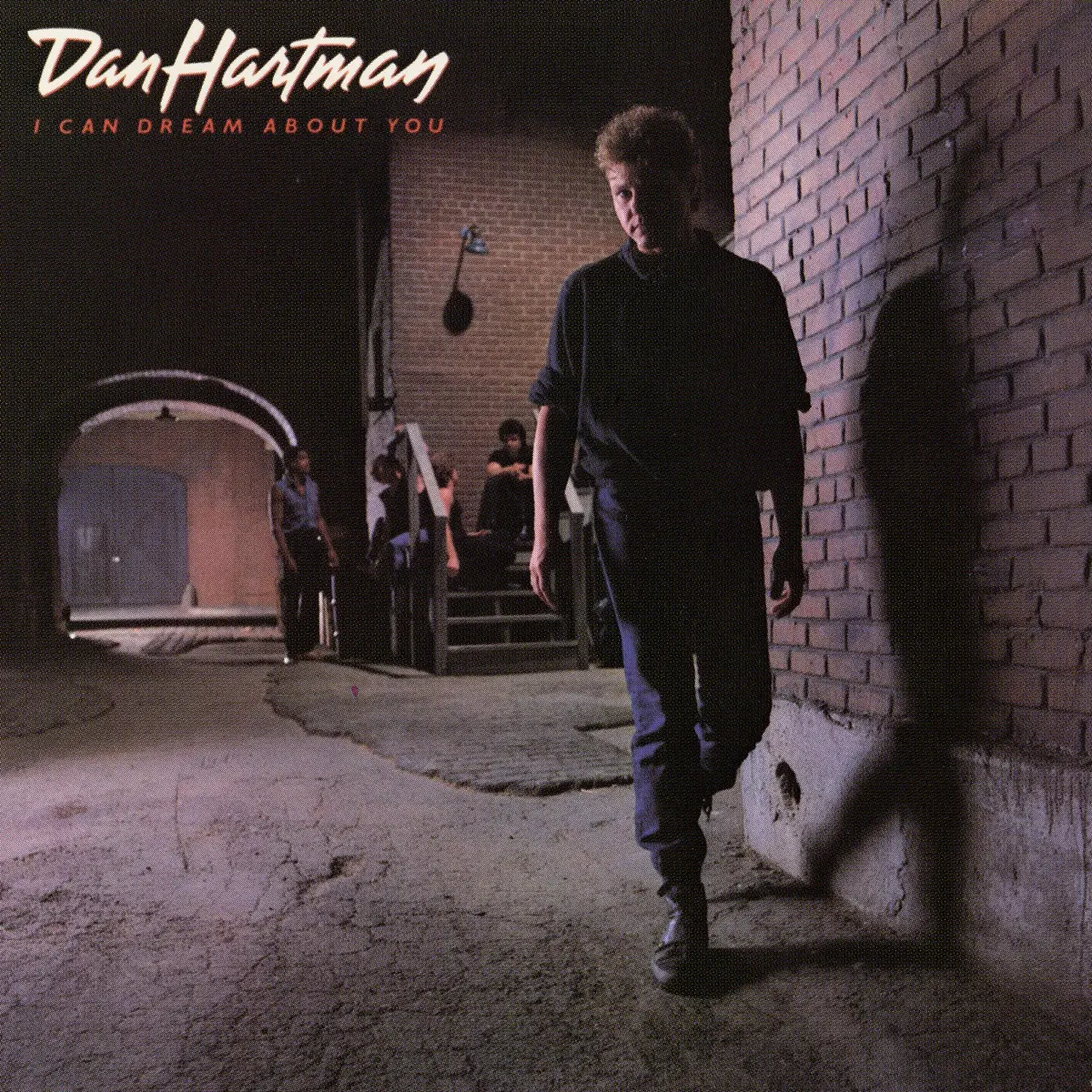 Dan Hartman released his fifth album, I Can Dream About You, on May 3, 1984, on MCA.
The album pivots toward radio-framed pop and synth-lined dance-rock, driven by crisp programmed beats, harmonic choruses, and a blend of electronic textures and live instrumentation. Hartman shares songwriting duties with Charlie Midnight across most tracks, save for the title track and “Electricity,” co-written with Nona Hendryx.
Guitarist Richie Zito reinforces the title track’s build with layered fills, while Bill Payne adds acoustic piano voicing to offset the synth-driven production. “I’m Not a Rolling Stone” features a tenor sax solo by Arno Hecht, who returns with Crispin Cioe and “Hollywood” Paul Litteral for full horn section interplay on “Second Nature,” rounded by Ernie Watts’ tenor lead. Hendryx contributes Oberheim DMX programming on “Electricity,” aligning with Hartman’s processed keyboard and vocal textures. Vocal support comes from Joe Pizzulo and Winston Ford on the title cut, with Ellen Foley, Frank Simms, George Simms, and Midnight contributing to ensemble refrains throughout the record’s second half.
A1. “We Are the Young” (4:20) – Originally written for the film Breakin’, the song was withdrawn by Hartman and repurposed for his own album after producer Jimmy Iovine recognized its potential. Charlie Midnight completed the lyric in one day to meet a deadline, inspiring Hartman to compose the music the same afternoon. Its reallocation led to the creation of a substitute track, “Heart of the Beat,” released under the pseudonym 3V.
A2. “I Can Dream About You” (4:11) – Written years earlier with Hall & Oates in mind, Hartman revived the song for Streets of Fire and fought contractually to ensure his version—not Winston Ford’s film dub—appeared on the single and music video. The production blends Hartman’s own vocals and instrumentation with contributions from Richie Zito, Billy Payne, and backing singers including Joe Pizzulo and the Simms brothers.
A3. “Shy Hearts” (4:39)
A4. “I’m Not a Rolling Stone” (4:32)
A5. “Rage to Live” (3:56)
B1. “Name of the Game” (5:59)
B2. “Power of a Good Love” (4:09)
B3. “Second Nature” (3:57) – Described by Hartman as “a good old love song,” the track expresses the elation of everyday life transformed by love. Featuring a horn section led by Crispin Cioe and Ernie Watts, it builds around gospel-style vocal refrains and was promoted with a large-scale video involving marching bands and high school athletes.
B4. “I Can’t Get Enough” (3:27)
B5. “Electricity” (4:04)
Hartman produced the album with Jimmy Iovine and recorded the sessions at his Westport home studio, Multi-Level. He engineered most tracks and handled instrumental duties, working with a small team of mixers including Juergen Koppers, Humberto Gatica, Shelly Yakus, and himself, with final mastering by Stephen Marcussen at Precision Lacquer in Los Angeles.
The title track, released ahead of the album in April 1984, became Hartman’s biggest solo hit, reaching No. 6 on the Billboard Hot 100. “We Are the Young” followed on September 6 and peaked at No. 25 while topping the Billboard Dance chart. “Second Nature” was released in January 1985 and became his final Hot 100 entry, reaching No. 39. I Can Dream About You peaked at No. 55 on the Billboard 200.
Two official music videos were released for Dan Hartman’s “I Can Dream About You.” The first, created for the Streets of Fire soundtrack, features scenes from the film intercut with a staged performance by The Sorels—the fictional soul group who mime the song during a nightclub concert sequence. In the film, the Sorels are portrayed by actors Stoney Jackson, Grand L. Bush, Mykelti Williamson, and Robert Townsend, lip-syncing to a version sung by session vocalist Winston Ford. The second video, filmed at the Hard Rock Café in London, features Hartman as a bartender serenading actress Joyce Hyser while the Sorels appear onscreen in a bar television broadcast, symbolically resolving confusion over the song’s true vocalist.
Streets of Fire (1984), subtitled “A Rock & Roll Fable,” is a stylized action drama set in a dystopian, retro-futuristic city blending 1950s rock imagery with 1980s aesthetics. Directed by Walter Hill and written with Larry Gross, the film follows ex-soldier Tom Cody (Michael Paré) as he teams up with the tough mechanic McCoy (Amy Madigan) and smarmy manager Billy Fish (Rick Moranis) to rescue his ex-girlfriend, rock singer Ellen Aim (Diane Lane), after she’s kidnapped by the leather-clad gang leader Raven Shaddock (Willem Dafoe) during a concert. The Sorels appear in the second half of the film, aiding the heroes’ escape and later opening for Ellen’s climactic performance. Despite its stylized direction and music-driven sequences, the film underperformed at the box office but later developed a cult following.
The Streets of Fire soundtrack blends 1980s rock, R&B, and theatrical pop to match the film’s stylized retro-futurist tone. It features two Jim Steinman-penned songs in his “Wagnerian rock” style, performed by Fire Inc. (“Nowhere Fast” and “Tonight Is What It Means to Be Young”), alongside Hartman’s “I Can Dream About You.” Contributions from The Blasters (“One Bad Stud,” “Blue Shadows”) underscore the film’s rockabilly undercurrent, while Maria McKee provides the closing ballad “Never Be You.” Ry Cooder and Stevie Nicks also appear, rounding out a soundtrack that fuses cinematic bombast with gritty club rock and stylized soul.
White Boy
In 1986, Dan Hartman completed White Boy, his intended sixth album.
Recorded between 1985 and 1986, the album marked a stylistic shift toward sharper-edged pop with programmed rhythms, experimental synth layering, and lyrical themes that diverged from Hartman’s prior image. Written in full collaboration with longtime partner Charlie Midnight, the album integrates driving keyboard sequences, processed guitar passages, and melodic refrains with layered vocal arrangements.
“The Age of Simulation” and “Simulated Cake” explore synthetic textures and thematic irony, while “Circle of Light” balances warmth and introspection through harmonic pacing. Songs like “The Mystery of Love” and “So Many Nights Alone Without You” pull from romantic ballad structure but embed them in slick, contemporary studio production. No detailed musician credits are confirmed beyond Hartman’s own performance and production, but period sources confirm his involvement across vocals, keyboards, sequencing, and final arrangements.
A1. “Waiting to See You” (3:16)
A2. “I’m Only Foolin’ Myself” (4:19)
A3. “The Mystery of Love” (5:09)
A4. “The Age of Simulation” (5:41)
A5. “Simulated Cake” (1:07)
B1. “In the Heat of the Night” (5:02)
B2. “Circle of Light” (4:38)
B3. “First Impression” (4:03)
B4. “So Many Nights Alone Without You” (4:28)
B5. “Ballerina (Let Me Take You Home)” (3:58)
Hartman recorded White Boy at his private studio and presented the finished album to MCA in mid-1986. Despite the strength of the material, MCA rejected the album based on its lyrical tone and perceived disconnect with Hartman’s established image. A small test pressing was produced at MCA’s Gloversville plant on August 26, 1986, but the album was shelved and remains unreleased.
“Waiting to See You,” intended as the album’s lead single, appeared on the Ruthless People soundtrack in mid-1986 and was released as a standalone single in the UK, Netherlands, and Japan. It reached No. 34 on the Dutch charts and gained MTV rotation through a performance-style video. Hartman also performed the song on UK television alongside “I’m Only Foolin’ Myself,” which was later covered by Paul Young in 1991. “First Impression” resurfaced on Nancy Martinez’s Unpredictable album in 1989. Though unreleased, White Boy continues to circulate via tape copies preserved by Hartman’s close friends and collaborators.
New Green Clear Blue
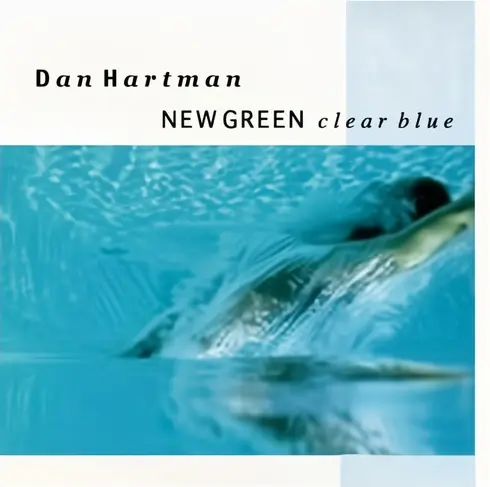 Dan Hartman released his seventh-recorded album, New Green Clear Blue, in April 1989 on Private Music.
Marking a full departure from his song-based pop catalogue, the album consists entirely of ambient instrumentals composed and recorded over a year-long process rooted in meditative tone sequences and subconscious exploration. Hartman performs all instrumental parts, combining evolving synthesizer textures with sparse piano motifs, sustained pads, and atmospheric coloration.
“New Green/Clear Blue” and “Alpha Waves” unfold in layered harmonic cycles, while “Soviet Nights” introduces subtle dissonance with minor shifts in pitch and resonance. “The Swan” features ambient treatment by Peter Baumann, who also mixes “Scaramanga,” contributing noise elements to broaden the spatial depth of Hartman’s arrangements. Piano lines surface gently across “Romance” and “Home,” providing melodic shape without interrupting the overall ambient design.
A1. “Sigh of Relief” (4:35)
A2. “Romance” (5:13)
A3. “New Green/Clear Blue” (5:06)
A4. “The Swan” (4:56)
A5. “Beautiful Mist” (5:27)
A6. “Alpha Waves” (5:44)
B1. “Adrift in a Red Sky” (6:26)
B2. “Scaramanga” (4:08)
B3. “Soviet Nights” (4:27)
B4. “Hope of No End” (4:39)
B5. “Home” (5:23)
Hartman wrote, produced, and engineered the album at his Connecticut home studio between August 1987 and August 1988. Mixing support came from Rod Hui on “Sigh of Relief” and “Home,” with Peter Baumann contributing ambient treatments on “The Swan.” Hartman developed the music through an intuitive, live-recorded process intended to evoke a subconscious response in the listener, influenced by his study of the emotional properties of tonal design. New Green Clear Blue was his final studio album released during his lifetime.
Discography:
- Images (1976)
- Instant Replay (1978)
- Relight My Fire (1979)
- It Hurts to Be in Love (1981)
- I Can Dream About You (1984)
- New Green Clear Blue (1990)
Sources:
Artist/Album Pages:
Granada was a Spanish symphonic/flamenco-rock band that released the 1975–78 Movieplay albums Habl...
Quantum Jump was an English supergroup that fused jazz-funk and space-rock on their 1976–77 albums Q...
True Myth was a Canadian art-rock band that released a 1979 self-titled album on Warner Bros., fol...
Crawler was an English/American hard-rock band that evolved from Back Street Crawler after the dea...
Hi-Gloss was an American soul-funk band that released a 1981 self-titled album on Prelude. Membe...
Metropolis was a German symphonic-rock band that released a self-titled album in 1974 on PAN. Me...
Nutron was an American hard-rock band behind the 1982 album Just Visiting on L.T.B. Records. B...
The Selecter was an English ska band that released the 1980 2 Tone album Too Much Pressure, follow...
Tadeusz Woźniak (March 6, 1947 – July 8, 2024) was a Polish singer-songwriter from Warsaw who emer...
The Soft Boys were an English New Wave/psych band from Cambridge that debuted with a three-song EP...
Full Moon Trio was a Belgian avant-jazz/rock band behind a 1975 self-titled album on Dwarf Records...
Donna Summer (December 31, 1948 — May 17, 2012) was an American soul-funk singer. She began perfo...