

Paul Young is an English soul-pop singer who first recorded with Streetband, which made two albums and charted with the 1978 novelty song “Toast.” In 1980, he fronted the R&B septet Q-Tips on one self-titled Chrysalis album.
As a solo artist, Young released the 1983–86 CBS albums No Parlez, The Secret of Association, and Between Two Fires, followed (after a pause) by the 1990 release Other Voices. His biggest hits include “Come Back and Stay,” “Everything Must Change,” and interpretations of songs by Marvin Gaye (“Wherever I Lay My Hat (That’s My Home)”), the Four Preps (“Love of the Common People”), Hall & Oates (“Everytime You Go Away”), Ann Peebles (“I’m Gonna Tear Your Playhouse Down”), and the Chi-Lites (“Oh Girl”).
At the height of his fame, Young sang the first four lines on “Do They Know It’s Christmas?,” the holiday 1984 global hit by the British all-star charity group Band Aid.
Background
Paul Antony Young was born on January 17, 1956, in Luton, Bedfordshire; the middle child of Doris (a secretary) and Tony Young.> As a teenager, Paul played football with work colleagues at Vauxhall Motors and did stints as a bassist in assorted local bands. His time in the unsigned Kat Kool & the Kool Kats marked his first experience as a lead vocalist.
Streetband
Young first recorded with Streetband, a pop-rock quintet with rhythm guitarist John Gifford, bassist Mick Pearl, drummer–percussionist Vince “Chaulkie” Chaulk (ex-Mr. Big), and lead guitarist Roger Kelly (a late-period Starry Eyed and Laughing member). They signed with Logo, the successor to the folk-oriented Transatlantic Records label with a small roster of singer–songwriters and rock acts (Duncan Browne, Gerry Rafferty, Meal Ticket, The Tourists).
In September 1978, Streetband debuted with “Hold On,” a Young–Gifford–Kelly original backed with “Toast,” a sung-spoken cockney reggae novelty credited to their manager, Bernard Kelly. Blockheads keyboardist Chaz Jankel produced both sides, which Logo flipped after Capitol Radio DJ Kenny Everett put “Toast” in high rotation. The song’s celebration of teatime toast proved timely in light of the 1978 baker’s strike and consequent bread shortage.
 “Toast” reached No. 18 on the UK Singles Chart. Streetband mimed it on the November 2, 1978, broadcast of the BBC music program Top of the Pops (TotP), which featured autumn hits by the Skids (“The Saints Are Coming”), Elton John (“Part Time Love”), Donna Summer (“MacArthur Park”), Frankie Miller (“Darlin”’), Three Degrees (“Giving Up, Giving In”), Elkie Brooks (“Don’t Cry Out Loud”), Queen (“Fat Bottomed Girls”), and ex-Sweeney Todd frontman Nick Gilder (“Hot Child In the City”). Young sports feathered hair and a white leisure suit in the Streetband segment, which intercuts the sound-stage performance with clips of the band preparing toast in a “too many cooks in the kitchen” scenario.
 Streetband released their first album, London, in November 1978 on Logo. It features “Toast” and both sides of the followup single: “One More Step” (a belted uptempo rocker) and “Things Are Never Quite What They Seem” (a jazz-pop harmony number). Jankel produced the album, which features his then-employer Ian Dury on “Mystery,” a gumshoe comedy piece with perky, angular key changes and spoken-word ‘suspense’ sections. Side One houses “Happy Families,” a winding, propulsive song interspersed with power chords. Side Two contains the lyrical ska-tinged “Any Message” and the riff-laden rocker “His Finest Hour,” an abrupt prelude to the disco-fied “Love Sign” and punkish “Loud Music.”
 Streetband’s second album, Dilemma, appeared in 1979 on Logo. It features nine originals, mostly co-written by Gifford, Kelly, and Young, including the opening track “Mirror Star” (not the recent Fabulous Poodles song). Squeeze keyboardist Jools Holland guests on “One Good Reason” and the title track. Former Rabbitt mastermind (and future Yes guitarist) Trevor Rabin plays keyboards on four tracks: “It’s No Problem,” “Here Comes That Man,” “Call Me Soon,” and “Slaughterhouse Five.” The album cover shows the band in stilts and long pants.
Streetband recorded both albums at the Kinks-owned Konk Studios. After Dilemma, Chaulk and Roger Kelly departed while Young, Gifford, and Pearl folded Streetband for a new venture.
The Q-Tips
 In late 1979, Paul Young and Streetband colleagues John Gifford and Mick Pearl formed the Q-Tips with guitarist Dave Lathwell, drummer Barry “Baz” Watts, organist Ian Kewley, and a four-piece horn section composed of trumpeter Tony Hughes and saxophonists Steve Farr (baritone) Richard Blanchchard (tenor), and Oscar Stuart Blandamer (alto).
Kewley had prior stints in Samson, Strider, and Limey. Farr and Bladamer appeared as guests on the 1973 Status Quo album Hello! Lathwell played in the 1974 one-off Dragonfly, a Bliss Band precursor.
The Q-Tips made their live debut on November 18, 1979, at the Queens Arms Hotel in Harrow. In their first four weeks, they notched sixteen shows. By spring, they trimmed to an eight-piece without Lathwell and Blanchchard.
 On March 28, 1980, the Q-Tips released their first single: “S.Y.S.L.J.F.M. (The Letter Song),” a Joe Tex cover backed with the Gifford–Young original “The Dance.” The initial release, on self-press Shotgun Records, impressed Chrysalis, which signed Q-Tips as a sixties-style R&B counterpart to the label’s influx of brassy ska big bands (The Specials, The Selecter).
As sessions commenced on their album, co-founder Gifford cleared for guitarist Garth Watt-Roy, the brother of Blockhead bassist Norman Watt-Roy and a onetime member of Fuzzy Duck, East of Eden, Steamhammer, Limey, and (with Norman) The Greatest Show On Earth, a brass-rock big band responsible for the 1970 Harvest albums Horizons and The Going’s Easy.
 The Q-Tips released their self-titled album in August 1980 on Chrysalis. It features the pre-released a-side “S.Y.S.L.J.F.M.” and both sides of their second single: “Tracks of My Tears,” a cover of the Miracles classic backed with “Different World,” a Gifford–Young original. Q-Tips also contains covers of sixties soul hits by Dobie Gray (“The In Crowd”) and the Soul Brothers Six (“Some Kinda Wonderful,” not the Goffin–King Drifters hit, despite the credits).
Blandamer wrote two songs: “You Are the Life Inside of Me” and the third Q-Tips single “A Man Can’t Lose (What He Don’t Have).” Side One contains the group-written “Please Don’t Stay At Home.” Each side closes with a Young–Watt-Roy co-write: “(Now I’m Left With A) Beautiful Memory” and “Keep Your Shoes On.”
 Onetime Junco Partner Bob Sargeant produced Q-Tips in sequence with titles by Any Trouble, The Beat, The Carpettes, Headline, and the Monochrome Set. The cover shows the Q-Tips posed sixties showband style in matching stage suits (blue on red) against a yellow backdrop with Paul (center) in a reverse scheme (red on blue). The back cover presents the name, titles, and credits in mid-century modern graphics.
The Q-Tips appeared on the UK music programs Rock Goes to College, BBC Television’s In Concert, and The Old Grey Whistle Test.
 In May 1981, the Q-Tips released “Stay the Way You Are,” an XDreamysts cover backed with the Pearl–Far–Watt-Roy originals “Sweet Talk” and “Lookin’ For Some Action,” both live numbers produced by Al Kooper.
Blandamer cleared for saxophonist Nick Payn, a Moon alumni and sessionist on albums by Jasper and Stonebridge McGuinness. Chrysalis released the Q-Tips, which released the Everly Brothers cover “Love Hurts” (a 1974–75 hit for Nazareth and Traffic‘s Jim Capaldi) on the new wave indie label Rewind (backed with the Temptations cover “I Wish It Would Rain”). In Europe, “Love Hurts” appeared in a picture sleeve on RCA (Germany) and Vogue (France).
 In just over two years, the Q-Tips performed approximately 700 shows, including bills with Thin Lizzy, Bob Marley, the Average White Band, After the Fire, and the J. Geils Band. In 1981, they played the Montreux Jazz Festival and opened for The Who on a twelve-date UK tour.
In early 1982, Young signed to CBS as a solo artist and retained Kewley for his new backing band. Adam Ant enlisted Farr, Hughes, Blandamer, and Watts for his transatlantic Friend or Foe tour. Ant retained the musicians (minus Blandamer) for his subsequent Strip tour. Meanwhile, Young (along with Elvis Costello) sang backing vocals on the 1982 Squeeze hit “Black Coffee in Bed.”
Solo Career
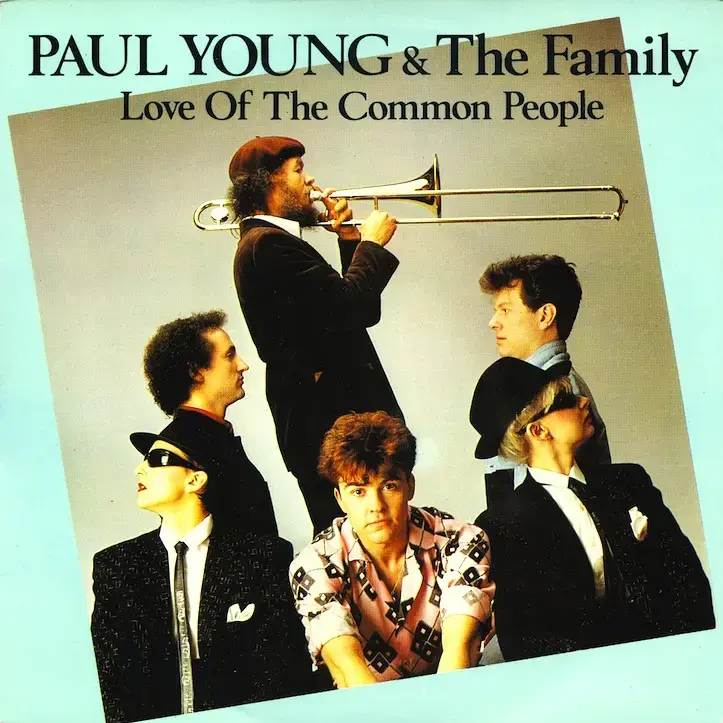 Paul Young assembled a backing band, The Royal Family, with Ian Kewley, guitarist Steve Bolton, drummer Mark Pinder, and fretless bassist Pino Palladino. Bolton did prior stints in Atomic Rooster (1971–73) and Headstone (1974–75) and played on 1977–81 albums by Joe O’Donnell, Zaine Griff, Richard Strange, and (with Pinder, keyboardist Matt Irving, and percussionist–soundman Laurie Latham) Philip Rambow and the Vampire Bats From Lewisham. Palladino’s fretless work dominates I Assassin, the 1982 fourth solo album by Gary Numan.
 Young augmented The Royal Family with the Fabulous Wealthy Tarts, a pair of backing singers (Maz Roberts and Kim Leslie) who appeared on the 1981 album by Jools Holland & His Millionaires.
On October 8, 1982, Paul Young released his debut solo single “Iron Out the Rough Spots,” a Don Covay cover backed with the Young–Kewley original “Behind Your Smile.”
No Parlez
 Paul Young released his first solo album, No Parlez, on July 22, 1983, on CBS.
The album introduced Paul Young’s blue-eyed soul style with a modernist new wave edge shaped by producer Laurie Latham’s layered arrangements. Backed by keyboardist Ian Kewley, guitarist Steve Bolton, fretless bassist Pino Palladino, drummer Mark Pinder, trombonist Rico Rodriguez, and the female duo the Fabulous Wealthy Tarts (Kim Lesley and Maz Roberts), Young combined classic R&B sources with the rhythmic and studio sensibilities of early-1980s British pop.
Young co-wrote two tracks with Kewley (“Broken Man,” “Tender Trap”) and included one by Bolton (“Ku Ku Kurama”). Three selections stem from songwriter Jack Lee, whose “Come Back and Stay” and “Oh Women” appear alongside his lesser-known “Sex.” The album also contains covers of songs popularized by Marvin Gaye (“Wherever I Lay My Hat [That’s My Home]”), Nicky Thomas (“Love of the Common People”), and Joy Division (“Love Will Tear Us Apart”).
 The material alternates between transformed soul standards, new compositions, and atmospheric originals. “Wherever I Lay My Hat” slows Gaye’s 1969 B-side into a stark, yearning ballad framed by Palladino’s fretless bass and Kewley’s minimalist keyboard phrasing.
“Love of the Common People” reimagines a 1967 Everly Brothers number as a stately anthem with choral refrains and brass accents. “Come Back and Stay,” a former Jack Lee tune, opens the set with call-and-response vocals and clipped rhythmic accents. “Broken Man” and “Tender Trap” expose Young’s deeper phrasing and gospel inflection, while “No Parlez” merges chantlike backing voices with abstract percussion and electronic layers.
A1. “Come Back and Stay” (4:57) — features Palladino on the Chapman Stick.
A2. “Love Will Tear Us Apart” (5:00) — reinterprets the 1980 Joy Division single with a slower pulse and choral harmonies.
A3. “Wherever I Lay My Hat (That’s My Home)” (5:18) — originated as a 1969 B-side by Gaye, co-written with Barrett Strong and Norman Whitfield; Young’s version emphasizes loneliness and self-reliance.
A4. “Ku Ku Kurama” (4:19)
A5. “No Parlez” (4:57) — originated as a piano demo by ex-Slapp Happy member Anthony Moore.
 B1. “Love of the Common People” (4:56) — written by John Hurley and Ronnie Wilkins; first sung in 1967 by the Four Preps and later by Nicky Thomas; lyrics describe working-class hardship and endurance.
B2. “Oh Women” (3:35)
B3. “Iron Out the Rough Spots” (4:47) — a 1966 Stax composition first recorded by Booker T. & the MG’s associates; the song advises patience and commitment in love.
B4. “Broken Man” (3:54)
B5. “Tender Trap” (4:32)
B6. “Sex” (4:49)
Sessions occurred at The Workhouse in London with Laurie Latham producing and engineering, and Tim Young mastering at CBS Studios. Kewley’s arsenal included piano, Oberheim OB-X, E-mu Emulator, vocoder, marimbas, and bells. He also received credits for song arrangements and “atmospheric sounds.” No Parlez also features hi-tech instrumentation by Irving (ARP synthesizer, Roland MC-4 Microcomposer) and Pinder (Simmons drums, Roland TR-808).
 No Parlez features cover photography by Eric Watson and sleeve design by Jason Bakx.
CBS promoted the album with four singles: “Love of the Common People” (b/w “Tender Trap”) appeared first in January 1983; “Wherever I Lay My Hat (That’s My Home)” (b/w “Broken Man”) followed in May and reached No. 1 in the UK. “Come Back and Stay” (b/w “Yours”) appeared in September, peaking at No. 4, while the reissue of “Love of the Common People” reached No. 2 in late 1983. A final single, “Love Will Tear Us Apart” (b/w “Behind Your Smile,” live), appeared in early 1984.
The success of No Parlez established Young as a leading UK soul-pop vocalist of the decade, distinguished by Palladino’s fretless tone and Latham’s percussive, chant-laden production approach.
The Secret of Association
 Paul Young released his second solo album, The Secret of Association, on March 25, 1985, on CBS.
The album continues the blue-eyed soul and pop rock hybrid of No Parlez, refined through producer Laurie Latham’s dense, studio-layered sound and Pino Palladino’s fretless bass lines. Young’s band included guitarist Steve Bolton, keyboardist Ian Kewley, drummer Mark Pinder, and the Fabulous Wealthy Tarts (Kim Lesley and Maz Roberts) on backing vocals, along with guest contributions from pedal steel guitarist B.J. Cole, saxophonist Nick Payn, and trombonists Paul Nieman and Jim Paterson. Onetime Dada vocalist Jimmy Chambers (later Londonbeat) is among the seven backing vocalists.
Young and Kewley co-wrote five songs, all grouped on Side B, including “Everything Must Change,” “Tomb of Memories,” and “This Means Anything.” Other writers include Billy Livsey and Graham Lyle (“Bite the Hand That Feeds”), Andrew Barfield (“Standing on the Edge”), Gavin Sutherland (“I Was in Chains”), Tom Waits (“Soldier’s Things”), and Billy Bragg (“Man in the Iron Mask”). Covers include Hall & Oates’ “Everytime You Go Away” and Ann Peebles’ 1972 B-side “I’m Gonna Tear Your Playhouse Down.”
The material alternates between reinterpretations of American soul and inward-facing originals. “I’m Gonna Tear Your Playhouse Down” opens with clipped rhythm and choral interjections, reshaping the Memphis original into an arena-scale statement. “Everytime You Go Away” slows Daryl Hall’s 1980 deep cut into a resonant ballad built on Palladino’s elastic fretless bass and John Turnbull’s electric sitar. “Everything Must Change” merges gospel phrasing and ambient keyboard layers, while “Soldier’s Things,” from Tom Waits’ Swordfishtrombones, unfolds as a slow elegy framed by pedal steel and subdued piano. “Tomb of Memories” and “Standing on the Edge” highlight Young’s own material, both built around tight rhythmic pacing and multi-voiced refrains.
A1. “Bite the Hand That Feeds” (4:31)
A2. “Everytime You Go Away” (5:23) — first recorded by Hall & Oates on their 1980 album Voices; Young’s version reached No. 1 in the U.S. with an arrangement featuring fretless bass and electric sitar.
A3. “I’m Gonna Tear Your Playhouse Down” (5:05) — originated as a 1972 Hi Records single by Ann Peebles, written by Earl Randle and later recorded by Graham Parker & The Rumour on Stick to Me (1977).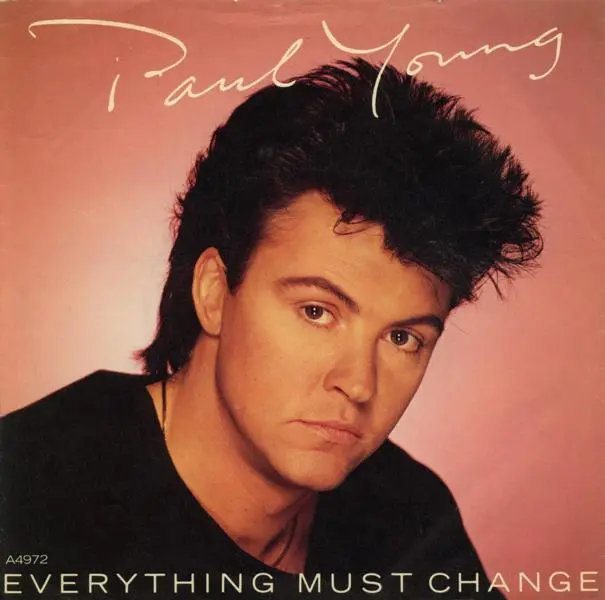 A4. “Standing on the Edge” (4:38)
A5. “Soldier’s Things” (6:21) — originated on Waits’ 1983 release Swordfishtrombones; depicts a war veteran’s possessions sold off piece by piece.
B1. “Everything Must Change” (5:35)
B2. “Tomb of Memories” (3:53) — features backing vocals by Squeeze frontmen Chris Difford and Glenn Tilbrook.
B3. “One Step Forward” (3:42)
B4. “Hot Fun” (4:26)
B5. “This Means Anything” (3:13)
B6. “I Was in Chains” (5:42) — originated on the 1971 debut album by the Sutherland Brothers.
 CD and cassette editions include “Man in the Iron Mask” (3:13), which originated on Braggs’ 1983 debut Life’s a Riot with Spy vs Spy.
Sessions occurred at The Workhouse Studio in London with Laurie Latham producing and engineering, assisted by Stewart Barry and James Illes. Tim Young mastered the album at CBS Studios. The tracks used hi-tech arsenals from Kewley (Yamaha DX7, Oberheim OB-Xa, Fairlight CMI, E-mu Emulator) and Pinder (Simmons drums, LinnDrum, Roland TR-808).
The Secret of Association features photography by Simon Fowler and design by Rob O’Connor.
 CBS promoted the album with four singles. “I’m Gonna Tear Your Playhouse Down” (b/w “One Step Forward”) appeared in October 1984 and reached No. 9 UK / No. 13 US. “Everything Must Change” (b/w “Give Me My Freedom”) followed in November 1984 and charted at No. 9 UK. “Everytime You Go Away” (b/w “This Means Anything”) was issued in February 1985 and hit No. 1 US / No. 4 UK, with a video depicting Young performing onstage amid projected silhouettes. “Tomb of Memories” (b/w “Man in the Iron Mask”) closed the cycle in June 1985.
Young performed “Everytime You Go Away” at Live Aid on July 13, 1985, solidifying his international profile. The album’s orchestration, dense layering, and gospel-inflected delivery established him as a premier British soul interpreter of the mid-1980s.
Between Two Fires
 Paul Young released his third solo album, Between Two Fires, on October 20, 1986, on CBS. It features seven Young–Kewley originals, including the singles “Some People” and “Why Does a Man Have to Be Strong?” They wrote two additional songs (“In the Long Run,” “Prisoner of Conscience”) with bassist Pino Palladino.
The album retains Young’s mix of pop rock and modern soul, framed by warm analog textures and refined ensemble interplay. He recorded with keyboardists Ian Kewley (Hammond organ) and Matt Irving, guitarist Steve Boltz (sitar), bassist Pino Palladino, drummer David Palmer, and percussionist Danny Cummings. Background vocals came from Hamish Stuart, Tony Jackson, and songwriter Betsy Cook, who also contributed the album’s lead single.
Young and Kewley wrote seven songs and co-wrote two others (“In the Long Run,” “Prisoner of Conscience”) with Palladino. Outside material includes Cook’s “Wonderland” and Andrew Barfield’s “War Games.”
“Some People” and “A Certain Passion” highlight Young’s subdued phrasing against intricate rhythm work and layered backing harmonies. “Why Does a Man Have to Be Strong?” and “Between Two Fires” follow more forceful rhythmic contours, while “Wasting My Time” stretches across five minutes of patient modulation and slow harmonic expansion. Cook’s “Wonderland” introduces the album with glassy synths and quietly luminous phrasing, and “War Games” adds sharper motion with gated percussion and choral refrain. The closing “Wedding Day” eases the mood in reflective cadence, expanding on the album’s recurring theme of restraint and endurance.
A1. “Some People” (4:42)
A2. “Wonderland” (4:56) — first recorded by its writer; later reissued by Cook on her 1992 album The Girl Who Ate Herself.
A3. “War Games” (4:16)
A4. “In the Long Run” (4:14)
A5. “Wasting My Time” (5:11)
B1. “Prisoner of Conscience” (4:18)
B2. “Why Does a Man Have to Be Strong?” (4:19)
B3. “A Certain Passion” (4:12)
B4. “Between Two Fires” (3:48)
B5. “Wedding Day” (4:49)
CD bonus track:
11. “Steps to Go” (5:12)
Sessions occurred at Lark Recording Studios in Carimate and Logic Studios in Milan with producers Hugh Padgham, Paul Young, and Ian Kewley. Padgham also engineered, assisted by Paul “Croydon” Cook, with mastering by Bob Ludwig at Masterdisk in New York.
 Between Two Fires features sleeve photography by John Swannell and design by Rob O’Connor of Stylorouge.
CBS issued “Wonderland” as the first single (b/w “A Matter of Fact”) on September 22, 1986; it reached No. 24 on the UK chart. “Some People” followed in November (b/w “Trying to Guess the Rest”) and charted in the UK and US. “Why Does a Man Have to Be Strong?” appeared in January 1987 (b/w “A Certain Passion”). “In the Long Run” and “War Games” appeared as territory singles in the Netherlands and Canada.
In the spring–summer of 1987, Young performed as the opening act for Genesis on their world tour behind their mega-Platinum 1986 release, Invisible Touch.
Discography:
- No Parlez (1983)
- The Secret of Association (1985)
- Between Two Fires (1986)
- Other Voices (1990)
Sources:
- Discogs: Paul Young
- 45worlds: Paul Young
- 45cat: Paul Young
- TVRDb.com: Top of the Pops – Paul Young
- SecondHandSongs: Paul Young
Artist/Album Pages:
Then Jerico was an English sophisti-pop band that released the 1987–89 London albums First (The So...
Pizzicato Five was a Japanese pop group active from 1984 to 2001, centered on songwriter-producer ...
Unicorn was an English rustic-rock band behind the 1971 album Uphill All the Way on Transatlantic ...
Pascal Languirand is a French-Canadian keyboardist who released the 1978 album Minos on Kébec-Disc...
Richard Vimal (born 1952) is a French folk-psych singer/songwriter who debuted with the 1973 Zapa ...
Horace Andy is a Jamaican dub/roots-reggae artist who cut multiple Kingston singles before the 197...
Paul Roland (born Sept. 6, 1959) is an English chamber-pop/psych musician from Kent who headed the...
The Pepper Porter Band was an American hard-rock band from Seattle that released the 1981 album I...
Steps Ahead were an American post-bop/modern-jazz supergroup that released three albums as Steps ...
Voïvod are a Québécois thrash-metal band that spread several cassette-only demos during the early ...
Led Zeppelin was an English rock band, formed in 1968 and active till 1980. Guitarist Jimmy Page for...
Ruth Copeland (born 1946) is an English soul-rock singer who moved stateside in the late 1960s and...