

The Three Degrees were an American soul group from Philadelphia, formed in 1963. After nineteen singles between 1964 and 1972 on SWAN, Metromedia, and Roulette, they charted as a PIR album act with the Gamble/Huff-produced songs “Dirty Ol’ Man” and “When Will I See You Again.”
Members: Fayette Pinkney (1963-76), Shirley Porter (1963), Linda Turner (1963), Helen Scott (1963-66, 1976-present), Janet Harmon [Janet Jones] (1963-66), Sheila Ferguson (1966-86), Sundray Tucker (1967), Sonia Goring (1967), Valerie Holiday (1967-present)
Background
They formed as the 3° Degrees in 1963 when three Philadelphia teenagers — Fayette Pinkney, Linda Turner, and Shirley Porter — were assembled by music manager Richie Barrett, the onetime singer in The Valentines, a Fifties doo-wop combo. He’d since cut solo singles and managed Frankie Lymon & the Teenagers, The Chantels, and Little Anthony & the Imperials.
While still at school, the 3° Degrees underwent rigorous weeknight rehearsals and gigged Philadelphia’s outskirts. In 1964, Barrett secured them a deal with Swan Records, a onetime bootleg label financed by an unsuspecting Dick Clark; now reaping cash from from their licensing of The Beatles‘ early (pre-Capitol) US singles.
1964–66 Swan Singles
Between December 1964 and August 1966, Swan issued seven 3° Degrees singles, all produced by Barrett. The girls debuted with “Gee Baby (I’m Sorry)” (b/w “Do What You’re Supposed to Do”) their only release with Linda Turner and Shirley Porter, who cleared for Janet Harmon and Helen Scott. They cut most Swan sides live in-studio with backing by future MFSB players.
In May 1965, they released “I’m Gonna Need You” (b/w “Just Right for Love”), followed in August by “Close Your Eyes” (b/w “Gotta Draw the Line”). They rounded the year with “Look In My Eyes” (b/w “Drivin’ Me Mad”).
The 3° Degrees greeted February 1966 with “Maybe” (b/w “Yours”), followed in April by “Tales Are True” (b/w “I Wanna Be Your Baby”). They completed their Swan run with “Love of My Life” (b/w “Are You Satisfied”).
The group’s output paused after Swan’s late-1966 collapse. Helen Scott married and cleared out for singer Sheila Ferguson. In 1967, Janet Harmon made way for Valerie Holiday. The lineup of Fayette, Sheila, and Valerie held for the next nine years.
1968–69 Singles
The group, now billed as The Three Degrees, cut one single on Atlantic with Barrett and two for Metromedia with producers Bob Feldman and Gary Kannon. They commenced with their eight single, the May 1968 release “Contact” (b/w “No No Not Again”).
In April 1969, The Three Degrees released “Down In the Boondocks,” a 1965 Billy Joe Royal hit written by Joe South (b/w “Warm Weather Music”). Their Atlantic deal wrapped with the June single “The Feeling of Love” (b/w “Warm Weather Music”).
In February 1970, they reunited with Barrett for the Chess Records one-off single: “What I See” (b/w “Reflections of Yesterday”).
1970–72 Roulette Era
In 1970, the Three Degrees signed with Roulette in a two-year deal that spawned nine singles and one album. In March, they released their twelfth single: “Melting Pot” (b/w “The Grass Will Sing for You”).
Maybe
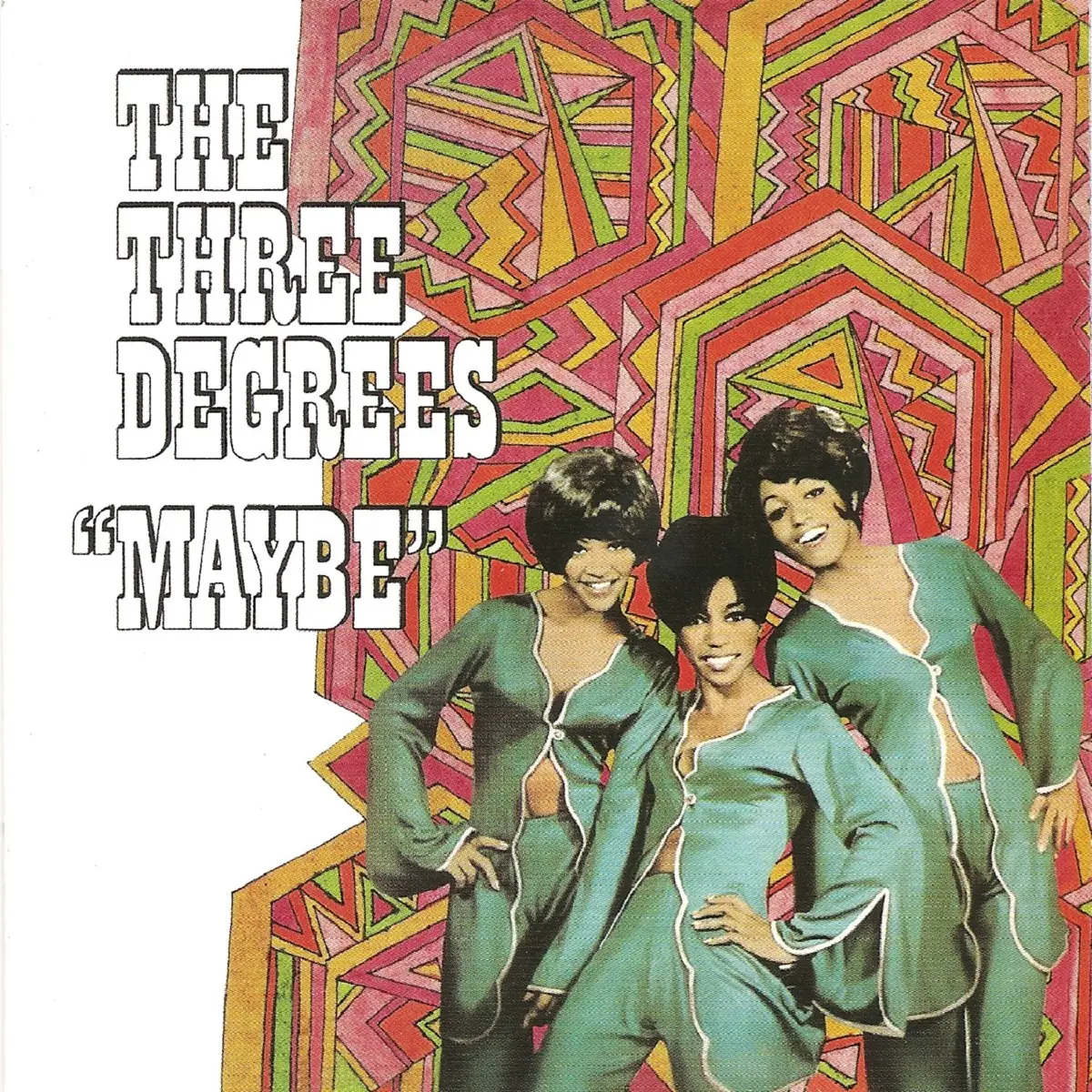 In July 1970, Roulette issued Maybe, the debut album by The Three Degrees.
Produced by longtime manager and songwriter Richard Barrett, Maybe features vocalists Sheila Ferguson, Valerie Holiday, and Fayette Pinkney. The album highlights the trio’s shared lead capabilities, particularly Ferguson on upbeat soul-pop numbers, while Holiday and Pinkney each take turns on ballads and spoken-word pieces.
Maybe includes three Barrett originals and covers of the James Gang, Richard Harris, and Lynn Anderson.
Musically, the album ranged from slinky psych-soul in “Collage” to funk-tinged Sly Stone interpretations, lush orchestrated ballads like “MacArthur Park,” and oldies reworked with contemporary arrangements, as in “Stardust” and “Maybe.” Up-tempo tracks like “I Turn to You” displayed sharp, contoured vocal interplay, while spoken-word openings and extended vamps showcased Holiday’s experimental approaches. Slower numbers including “Sugar on Sunday” and “The Magic Door” leaned toward lounge-style orchestration.
A1. “I Turn to You” (3:12)
A2. “Collage” (2:59) — cover of The James Gang, originally on Yer Album
A3. “You’re the One” (3:23) — originated as the 1970 second single by Little Sister, the vocal backing trio of Sly & The Family Stone.
A4. “Sugar on Sunday” (3:23)
A5. “Maybe” (5:37) — cover of The Chantels, originally credited to George Goldner and “Casey”
B1. “MacArthur Park” (6:43) — cover of Jimmy Webb, first popularized by Richard Harris
B2. “Rosegarden” (2:40) — cover of Joe South’s “Rose Garden,” cultivated by country singer Lynn Anderson
B3. “Stardust” (4:08) — cover of Hoagy Carmichael and Mitchell Parish
B4. “Lonely Town” (2:50)
B5. “The Magic Door” (2:20) — written by Clyde Otis, Serge Lama, Yves Gilbert
B6. “I Wanna Be Your Baby” (2:50) — written by Leon Huff
Roulette lifted “Maybe” as a May 1970 single (b/w “Collage”).
Roulette Singles (cont.)
 In August 1970, Roulette issued the fourteenth Three Degrees single: “I Do Take You” (b/w “You’re the Fool”), followed in December by “You’re the One” (b/w “Stardust”).
Between April and July 1971, the Three Degrees released their sixteenth and seventeenth singles: “There’s So Much Love All Around Me” (b/w “Yours”) and “Ebb Tide” (b/w “Low Down”).
The Three Degrees sing Jimmy Webb’s “Everybody Gets to Go to the Moon” during a cameo scene in The French Connection, director William Friedkin’s 1971 neo-noir action thriller starring Gene Hackman and Roy Scheider.
The girls opened 1972 with “Trade Winds” (b/w “I Turn to You”), followed in May by “I Wanna Be Your Baby” (b/w “Find My Way”). They rounded their Roulette run in November with “I Won’t Let You Go” (b/w “Through Misty Eyes”).
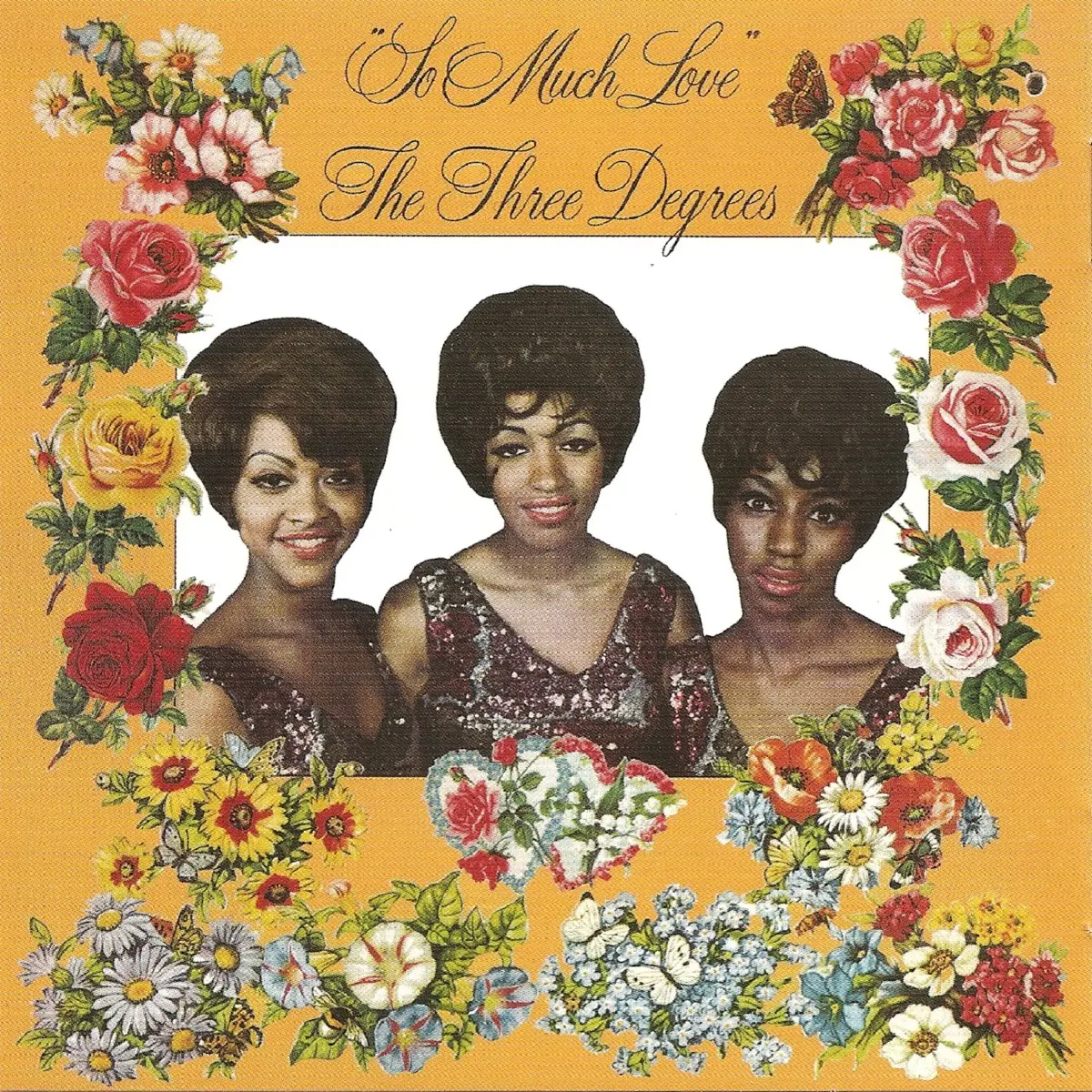
In June 1975, Roulette issued So Much Love, a compilation of early Three Degrees recordings, including four singles sides (“Trade Winds,” “Ebb Tide,” “Maybe,” “There’s So Much Love All Around Me”) and six unearthed tracks: “Magic Mirror,” “I Do Take You,” “Between Two Fires,” “If You Must Leave My Life,” “Who Is She (And What Is She To You),” and the Stephen Stills cover “Love The One You’re With.”
The Three Degrees
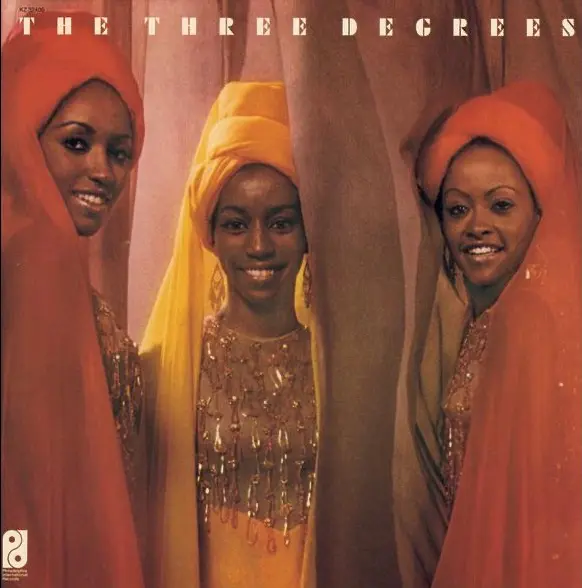 The Three Degrees released their self-titled second album in October 1973 on Philadelphia International.
Produced by Kenneth Gamble and Leon Huff, the album paired the trio—Sheila Ferguson, Fayette Pinkney, and Valerie Holiday—with the full MFSB ensemble, including Bobby Martin, Lenny Pakula, Norman Harris, and Richie Rome on arrangements. The record blends the group’s established R&B harmonies with orchestral Philly soul textures, combining strings, horns, electric guitar, bass, and Hammond organ to bridge smooth soul and early disco. Gamble and Huff wrote four tracks.
The album opens with “Dirty Ol’ Man,” which frames the trio’s harmonies over dramatic strings and rhythmic accents that emphasize lyrical phrasing. “A Woman Needs a Good Man” moves from tender passages into sharper, more assertive moments, while the UK number 1 “When Will I See You Again” pairs breathless vocal lines with flowing strings and countermelodies. Mid-tempo numbers like “I Like Being a Woman” and “If and When” balance rhythmic accents and layered backing vocals, and “Year of Decision” closes with a restrained, contemplative tempo.
A1. “Dirty Ol’ Man” (4:33) — Gamble and Huff set the tone with sweeping strings and sharp brass accents that frame a firm rejection of an exploitative man, the trio’s harmonies amplifying the song’s pointed dismissal.
A2. “Can’t You See What You’re Doing to Me” (2:31) — A brisk arrangement underlines a plea for recognition, as the singers voice frustration at emotional neglect over clipped horn phrases and steady rhythm (Joseph B. Jefferson, Bruce Hawes)
A3. “A Woman Needs a Good Man” (4:19) — Built on layered vocal exchanges, the track shifts between tender and insistent passages, presenting a call for fidelity and support within a relationship (Bunny Sigler, Mikki Farrow, Marvin E. Jackson)
A4. “When Will I See You Again” (2:58) — Every line unfolds as a question, heightening the sense of longing and uncertainty, with delicate orchestration giving space for the trio’s interwoven voices.
B1. “I Didn’t Know” (2:50) — A brisk tempo drives a lyric of realization, the lead vocal flanked by airy harmonies that stress the regret of missed awareness. (Sigler, Jean Lang)
B2. “I Like Being a Woman” (3:56) — With a mid-tempo pace, the singers express traditional affirmations of femininity, balancing a light instrumental backdrop with conversational phrasing. (Jefferson, Hawes)
B3. “If and When” (7:07) — The longest track builds slowly, moving from restrained verses into expansive sections, the lyric centering on the uncertainty of conditional love. (Jefferson, Sigler)
B4. “Year of Decision” (2:42) — Closing with urgency, the trio urges listeners toward resolve and collective action, their voices rising over tight rhythmic accents and brassy flourishes.
Sessions occurred at Sigma Sound Studio in Philadelphia with Gamble and Huff producing and Joe Tarsia engineering.
Record label promoted the album with “Dirty Ol’ Man” (1973), which charted at number 58 in the US, followed by “Year of Decision” (1974), reaching 74 US pop and 13 UK, and “When Will I See You Again” (1974), which topped the UK Singles Chart and reached number 2 on the US Hot 100 and number 4 on the US R&B chart.
The album bridged the trio’s R&B foundations with the orchestral Philadelphia soul sound, prefiguring their later disco-oriented arrangements and solidifying their presence in the label’s roster.
2010 CD reissue bonus tracks:
9. “TSOP (The Sound of Philadelphia)” (MFSB featuring The Three Degrees) (3:45)
10. “Love Is the Message” (MFSB featuring The Three Degrees) (2:41)
11. “Dirty Ol’ Man” (Tom Moulton Mix) (8:21)
International
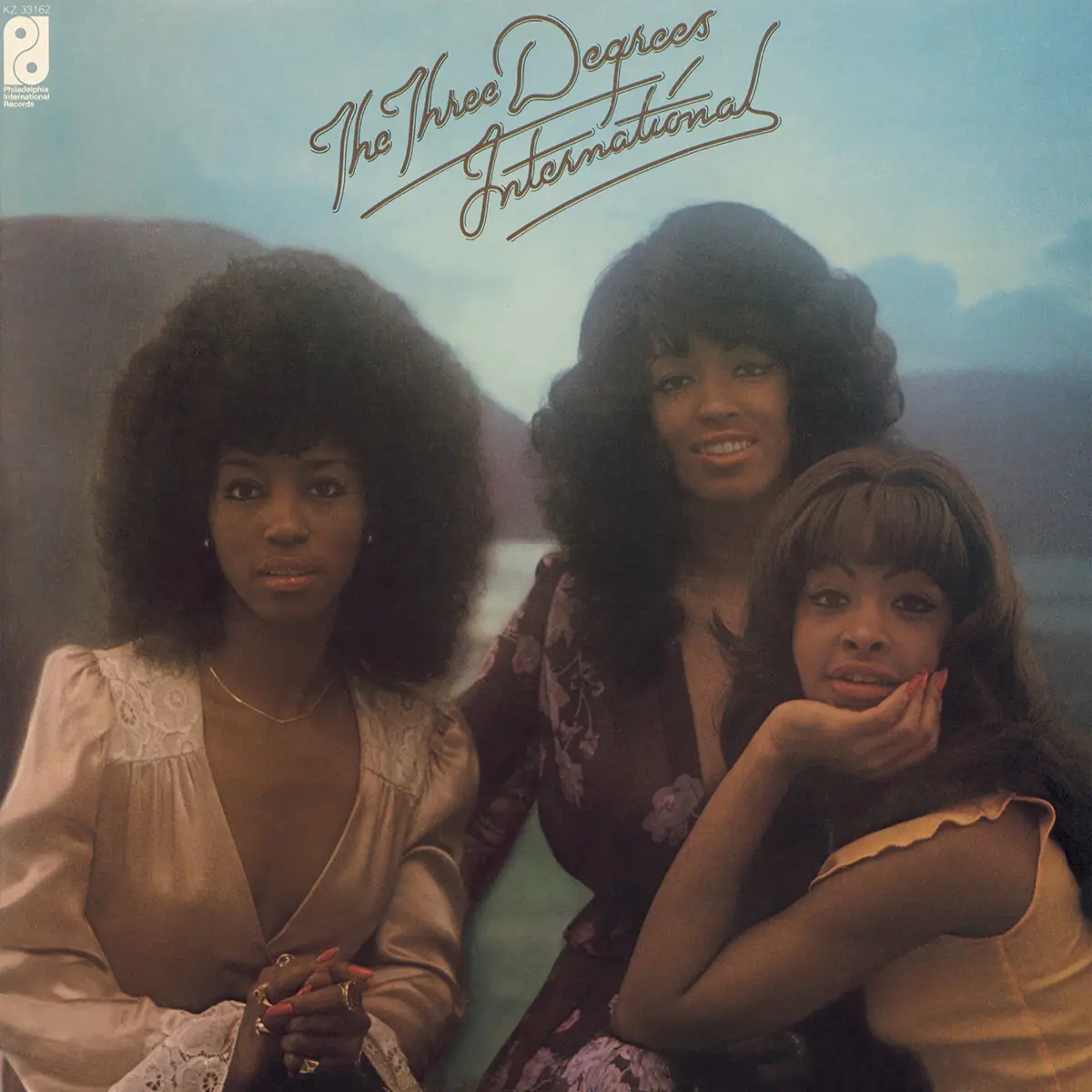 The Three Degrees released their third album, International, in May 1975 on Philadelphia International.
The album continued the trio—Sheila Ferguson, Fayette Pinkney, and Valerie Holiday—working with the full MFSB ensemble. The set combines smooth Philadelphia soul with subtle funk and early disco elements, highlighting the group’s harmonies across orchestral strings, horns, and layered percussion.
Kenneth Gamble and Leon Huff wrote five tracks. Side A includes the Martin Gaye cover “Distant Lover.”
The album opens with “Another Heartache,” a plaintive vocal performance underscored by swirling strings and light percussion. “Take Good Care of Yourself” accelerates into a danceable rhythm with crisp piano and percussion accents. Mid-tempo ballads such as “Distant Lover” and “Loving Cup” emphasize harmonic depth and countermelody. “TSOP (The Sound of Philadelphia)” revisits the 1974 theme for the television program Soul Train, blending string passages, brass flourishes, and brief vocal chants to deliver its signature celebratory rhythm.
A1. “Another Heartache” (4:21) – A lament over betrayal, the vocal delivery leans into plaintive ad-libs as strings and rhythm punctuate the singer’s disbelief at being cast aside.
A2. “Take Good Care of Yourself” (3:26) – A brisk arrangement frames a message of self-preservation after a breakup, urging independence while the rhythm drives steadily forward.
A3. “Get Your Love Back” (3:25) – Sung with urgency, the lyric pleads for reconciliation, the trio’s layered harmonies pushing against tight instrumental phrasing.
A4. “Lonelier Are Fools” (4:05) — With restrained verses that swell into fuller passages, the song reflects on the emptiness of stubborn pride, contrasting vulnerability with composure. (Joseph B. Jefferson, Bruce Hawes, Charles Simmons)
A5. “Distant Lover” (4:04) — Originated on Gaye’s 1973 album Let’s Get It On; co-written by Gwen Gordy Fuqua and Sandra Greene. The Three Degrees stretch the ache of separation through slow-building phrases, each harmony deepening the sense of distance.
B1. “Together” (4:35) – A mid-tempo meditation on unity, the singers weave promises of constancy into a contoured line that rises with orchestral sweep.
B2. “Long Lost Lover” (2:58) — Quick-footed in rhythm, the lyric captures the rush of rekindling passion after absence, framed by clipped brass and urgent percussion. (Gamble, Huff, Cary Gilbert)
B3. “Here I Am” (3:58) — A declaration of presence and availability, the phrasing alternates between tender and direct, underscored by steady rhythmic accents. (Huff, Gilbert)
B4. “TSOP (The Sound of Philadelphia)” (3:45) – Originally the Soul Train theme, MFSB’s orchestration and the trio’s brief refrains summon a celebratory call for connection and dance.
B5. “Loving Cup” (3:09) — Bright and compact, the track pledges devotion in energetic bursts, closing the album on a note of affirming love. (Gamble, Huff, Stephanie Andrews)
Sessions occurred at Sigma Sound Studio in Philadelphia with Gamble and Huff producing and Jay Mark and Joe Tarsia engineering. Ed Lee handled design and Peter Lavery photography.
Record label promoted the album with “TSOP (The Sound of Philadelphia)” (1974), which reached number 1 on the US Hot 100, US R&B, and US Cash Box charts, as well as number 2 in the UK. “Take Good Care of Yourself” followed in 1975, reaching number 64 US R&B and number 9 UK, while “Long Lost Lover” reached number 40 UK.
International balances ballads, mid-tempo songs, and celebratory instrumentals, allowing the trio’s harmonies to navigate orchestral textures, percussive accents, and occasional dance-oriented rhythms. Several tracks, including “TSOP,” have been covered or sampled by later artists such as Dexys Midnight Runners.
2010 CD reissue bonus tracks:
11. “Midnight Train” (4:04) — Japanese single marked by nocturnal imagery, the lyric follows a journey into uncertainty, carried by insistent rhythm and hushed tones. (Haruomi Hosono, Takashi Matsumoto)
12. “Nigai Namida” (3:55) — Sung in Japanese, the song conveys bitterness of tears through delicately rising phrases and a softened instrumental backdrop. (Kazumi Yasui, Kyōhei Tsutsumi)
13. “La Chanson Populaire” (3:41) — A French-language track that circles around the universality of song, its vocal contours blend with buoyant orchestration. (Nicolas Skorsky, Jean-Pierre Bourtayre)
14. “Somos Novios (It’s Impossible)” (3:46) — A Spanish-language rendition of Manzanero’s classic, the trio delivers the lyric’s romantic intensity with understated phrasing. (Armando Manzanero, Sid Wayne)
15. “When Will I See You Again” (2:49) — Gamble, Huff, Akio Shira
16. “TSOP (The Sound of Philadelphia)” (Tom Moulton Mix) (5:49)
The Three Degrees Live
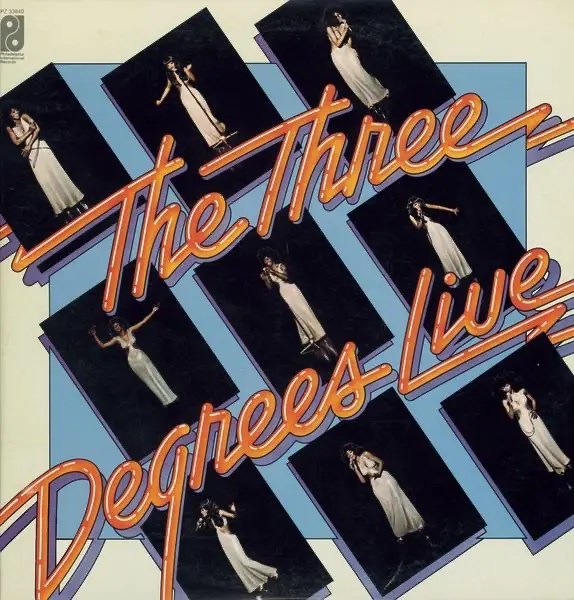 In 1975, Philadelphia International issued The Three Degrees Live, a document of their recent show at Bailey’s nightclub in Leicester, England.
The album presents the group at the height of their live precision, blending tight harmonies with extended instrumental passages and audience interaction, anchored by Sheila Ferguson, Valerie Holiday, and Fayette Pinkney.
Live includes renditions of recent hits and covers of songs by Bill Withers (“Harlem”), Stevie Wonder (“Living for the City”), The O’Jays (“Love Train,” “For the Love of Money”), Thelma Houston (“Everybody Gets to Go to the Moon”), Elton John (“Don’t Let the Sun Go Down on Me”), and the Edgar Winter Group (“Free Ride”).
The set divides between upbeat, rhythm-driven tracks and slower, vocal-focused ballads. Side A opens with the instrumental-heavy TSOP theme and the driving funk of “Free Ride,” moving into expressive interpretations of “Don’t Let the Sun Go Down on Me” and the socially aware medley “Living for the City / For the Love of Money.” Side B highlights signature ballads, including “When Will I See You Again” and “Dirty Ol’ Man,” while ending with the celebratory rhythms of “Love Train.” The arrangements allow the trio to navigate angular phrasing and nuanced rhythmic shifts, emphasizing interplay with the band.
A1. “TSOP (The Sound of Philadelphia)” (3:48)
A2. “Free Ride” (2:41) — originated on the 1972 album their 1972 album They Only Come Out at Night by the Edgar Winter Group, written by keyboardist Dan Hartman and covered by The Tavares.
A3. “Don’t Let the Sun Go Down on Me” (4:35) — originated on Elton’s 1974 album Caribou, co-written with lyricist Bernie Taupin.
A4. “Year of Decision” (3:23)
A5. “Living for the City / For the Love of Money” (8:40) — a medley of songs from Wonders’ Innervisions and the O’Jays’ Ship Ahoy.
B1. “When Will I See You Again” (3:05)
B2. “Dirty Ol’ Man” (6:01)
B3. “Everybody Gets to Go to the Moon” (4:18) — is a Jimmy Webb song first recorded by Thelma Houston on her 1969 album Sunshower.
B4. “Harlem” (3:20) — originated on Withers’ 1971 on his debut album, Just as I Am.
B5. “Love Train” (6:41) — originated on the O’Jays 1972 album Back Stabbers.
Backing the trio were Philadelphia session musicians arranged by Gamble and Huff, with core contributors including pianist/keyboardist Leon Huff (Fender Rhodes, acoustic piano), bassist Ronnie Baker, guitarist Bobby Eli, drummer Earl Young, and a horn section featuring saxophonists Zach Zachery (alto) and Tony Williams (tenor), trumpeter Rocco Bene, and trombonist Fred Joiner. Strings and percussion supplemented the ensemble, reflecting the lush orchestration typical of the Philadelphia sound.
Sessions occurred at Bailey’s nightclub in Leicester, England, with live mixing overseen by Philadelphia International’s production team led by Gamble and Huff.
The Three Degrees Live showcases the group’s blend of Philadelphia soul sophistication and stage charisma, highlighting both ensemble precision and interpretive skill on contemporary pop, R&B, and soul compositions.
Toast of Love
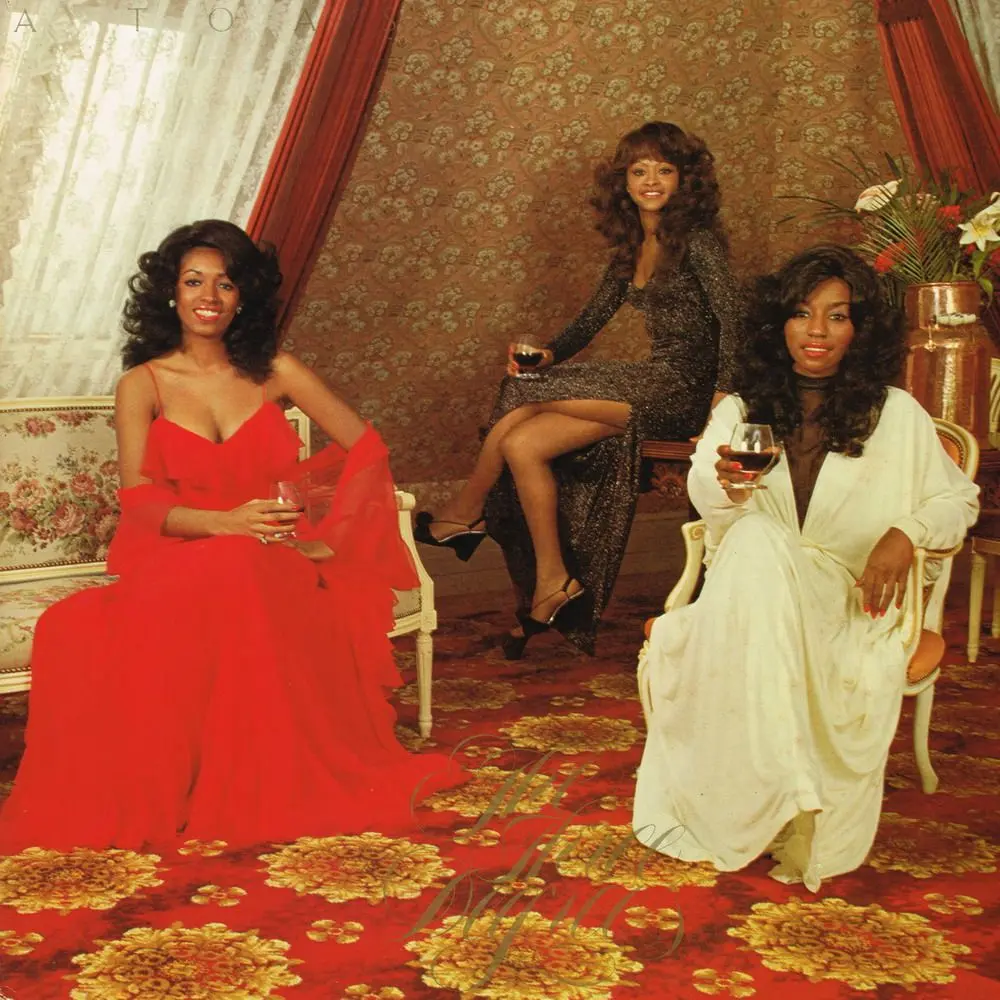 The Three Degrees released their fourth studio album, Toast of Love, in 1976 on CBS/Sony (Japan only).
The album pairs Sheila Ferguson, Fayette Pinkney, and Valerie Holiday with Japanese session musicians, including keyboardist Jun Fukamachi, guitarist Kiyoshi Sugimoto, bassist Kenji Takamizu, and drummer Shuichi Murakami. The set blends the trio’s harmonies with orchestral and jazz-influenced textures, combining bright, angular turns with mid-tempo and contemplative passages.
The album opens with the brief, contemplative instrumental “Sunrise,” followed by the title track, which features Ferguson’s lead over soft percussive accents and orchestral flourishes. “Japanese Cycle 1999” and “Ipi-N-Tombia” deliver intricate, jazz-inflected keyboard lines and shifting rhythms. Ballads such as “From Souvenirs to Souvenirs” and “The Promise” slow the pace, emphasizing harmonic clarity and restrained instrumental color. “Do It (Use Your Mind)” and “Stop in Nevada” drive with rhythmic propulsion, while “Truth” closes with extended, layered instrumentation supporting the trio’s vocals.
A1. “Sunrise” (2:31) — Jun Fukamachi
A2. “Toast of Love” (4:34) — Sheila Ferguson, T. Umegaki
A3. “Japanese Cycle 1999” (4:53) — J. Rock
A4. “I Wanna Say ‘La'” (4:14) — P. Mauriat, S. Ferguson
A5. “From Souvenirs to Souvenirs” (4:34) — R. Constantinos, S. Vlavianos
A6. “The Promise” (2:55) — B. Egnos, G. Lakier
B1. “Do It (Use Your Mind)” (3:42) — J. Rock, S. Ferguson
B2. “Ipi-N-Tombia” (4:28) — B. Egnos, G. Lakier
B3. “Gee Baby (I’m Sorry)” (4:20) — R. Barrett
B4. “Stop in Nevada” (5:24) — B. Joel
B5. “Truth” (8:13) — J. Fukamachi, S. Ferguson
Sessions occurred at CBS Sony Studio in Tokyo during November and December 1975 with Richard Barrett producing and Jun Fukamachi arranging, supported by engineers Tom Suzuki, Satoru Tsuji, and Taka-aki Amano.
The Japanese release included an obi strip, insert, and large folded poster, featuring photography by Akitsugu Yamada, Hideki Hirose, Ryuco Nakamura, and Ryuichi Okano, with design by Akio Ninbari.
Their trip also produced The Three Degrees Live in Tokyo, a 1975 Japan-only two-disc set capturing the vocal trio’s performance at Kose-Nenkin Hall on February 18, 1975. The program spans their Philadelphia soul hits, pop covers, and jazz-inflected standards, performed with Nobuo Hara and His Sharps & Flats. Sheila Ferguson, Valerie Holiday, and Fayette Pinkney navigate tightly arranged harmonies over dynamic big-band and rhythm section support, moving fluidly between upbeat dance numbers, theatrical show tunes, and expressive ballads. The release includes a 4-page insert and a 12-page LP-sized calendar, emphasizing its collector-oriented presentation.
The set opens with TSOP-style instrumentals and funk-driven tracks like “TSOP (The Sound of Philadelphia)” and “Free Ride,” flows through romantic ballads and show tunes including “Somos Novios,” “Good Morning Heartache,” and “Cabaret / Maybe This Time,” and closes with classics like “McArthur Park” and “Love Train.” The ensemble provides rich brass and string textures, underscoring both rhythmic precision and vocal nuance throughout the performance.
Recorded and mixed by Tomoo Suzuki, the album’s design was handled by Akino Ninbari, photography by Akimichi Yuge and Kenji Miura, and direction by Yuji Takahashi, with liner notes by Makoto Yagi.
Standing Up for Love
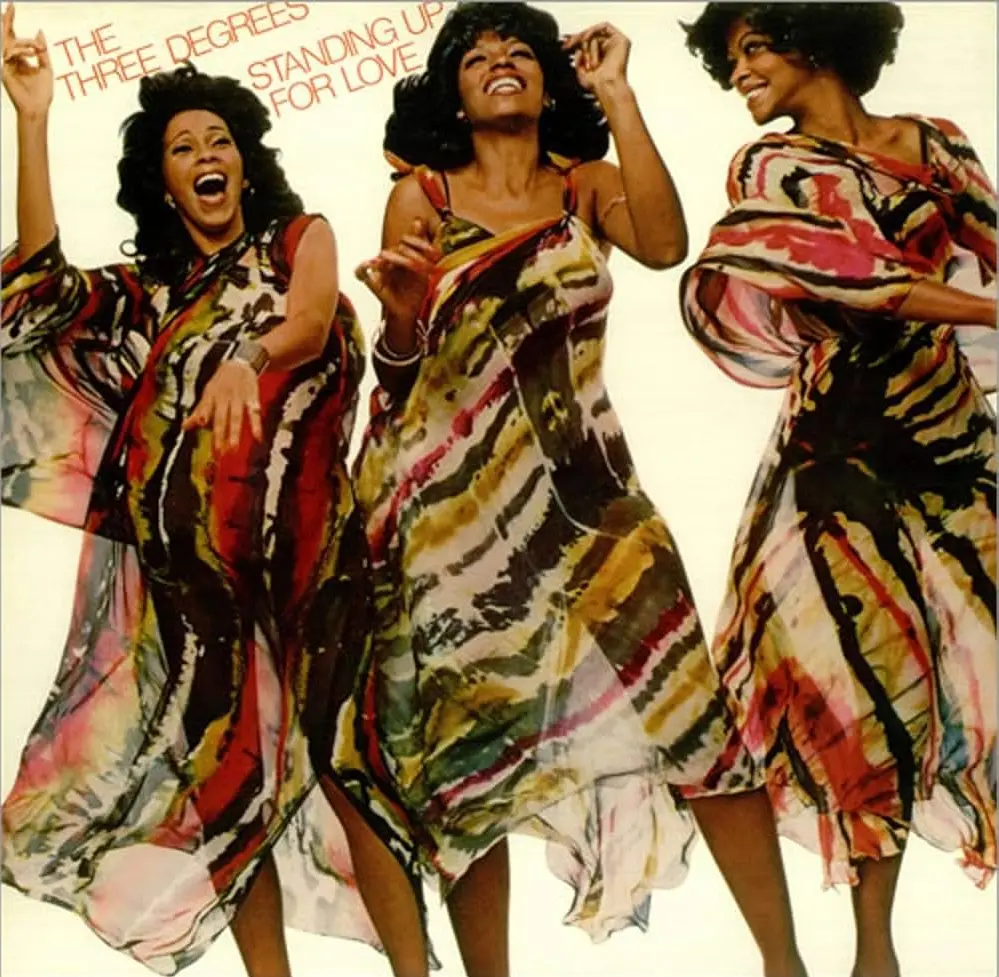 The Three Degrees released their fifth studio album, Standing Up for Love, in February 1977 on Epic. Mid-way through the sessions, Fayette Pinkney (the last original member) resigned and Helen Scott returned after a ten-year absence, completing the lineup of Sheila Ferguson, Valerie Holiday, and Scott.
The album blends covers and original material. Barrett “Gee Baby (I’m Sorry),” a song the group had previously recorded in the 1960s. They also cover songs by Boz Scaggs, George Clinton, and the musical A Chorus Line.
Standing Up for Love balances ballads with lighter disco and funk-oriented tracks. Side A opens with the spirited, socially conscious title track and flows into the theatrical Broadway number “What I Did for Love,” followed by the mid-tempo “Just Leave Me Alone,” the funk-tinged “Macaroni Man,” and Barrett’s soulful “Gee Baby (I’m Sorry).” Side B features romantic expressions in “People with Feeling” and “In Love We Grow.” After the tender ballad “We’re All Alone,” they reprise the title track, which underscores the album’s orchestral soul sensibility.
A1. “Standing Up for Love” (5:15) – The title track sets a tone of resilience, with lyrics affirming devotion in the face of challenges. Rome’s layered orchestration underscores the group’s harmonies, giving the song its sweeping presence. (Clinton)
A2. “What I Did for Love” (3:41) — Is a much-covered ballad by Marvin Hamlisch and Edward Kleban for the 1975 Broadway musical A Chorus Line; also recorded in 1977 by Grace Jones, Aretha Franklin, and Marcia Hines. The ballad reflects on sacrifice and acceptance, with the trio delivering the show tune’s sentiment in a polished, soulful frame.
A3. “Just Leave Me Alone” (5:41) — A plea for independence rendered with sharp vocal exchanges, the track builds its tension on a steady, pulsing rhythm. (Robert Galbraith)
A4. “Macaroni Man” (3:42) — A funk-inflected number marked by brisk pacing and playful lyricism, standing apart from the album’s balladry with its streetwise character. (Jimmy Jules)
A5. “Gee Baby (I’m Sorry)” (2:54) — Revisiting a song from their early catalog, the group delivers contrition through a compact arrangement, balancing sweetness with regret. Richard Barrett
B1. “People with Feeling” (4:41) — A reflective cut that calls for empathy and shared humanity, carried by layered vocal lines and a measured instrumental backing. (T. Rakes, Russ Faith)
B2. “In Love We Grow” (3:57) — The song presents affection as a gradual process, with lyrics tying intimacy to growth and mutual care. (Dennis Belfield)
B3. “We’re All Alone” (3:41) — Originated as an album track on Scaggs’ 1976 release Silk Degrees; also recorded in 1976/77 by Frankie Valli and Rita Coolidge, whose version went Top 20. The Three Degrees render the ballad with lush harmonies, emphasizing the song’s themes of vulnerability and surrender.
B4. “Standing Up for Love (Reprise)” (2:29) — Closing the set, the reprise distills the title track into a brief affirmation, circling the album back to its central message.
Standing Up for Love brought together producer-arranger Richard Barrett, Ritchie Family mastemind Richie Rome, and Millie Jackson producer Brad Shapiro. Sessions occurred at Epic Studios.
Record label promoted Standing Up for Love with the single “Standing Up for Love,” which highlighted Rome and Shapiro’s lush, horn-and-string arrangements. The album emphasizes expressive ballads with occasional funk and light disco textures, bridging the group’s Philadelphia soul roots and the upcoming European disco direction they would adopt with Giorgio Moroder.
New Dimensions
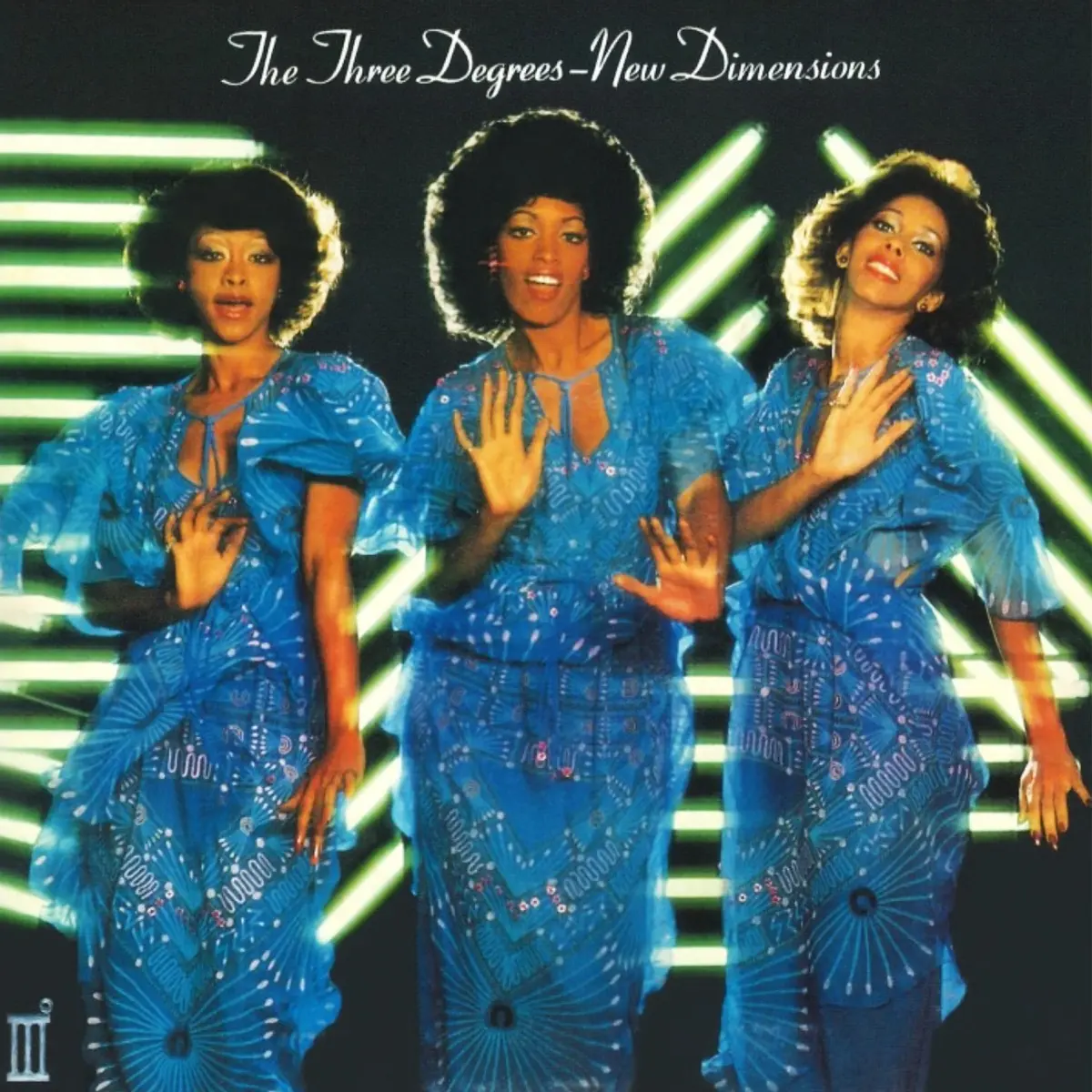 The Three Degrees released their sixth studio album, New Dimensions, in October 1978 on Ariola America.
Produced by Giorgio Moroder, the album marked the group’s full embrace of European disco production while retaining their signature harmonies, and it delivered three UK Top 20 singles.
The album pairs layered vocals with pulsating four-on-the-floor rhythms, bumpy but controlled disco percussion, and lush orchestrations. Core backing musicians included arranger and keyboardist Greg Mathieson, with sessions split between Wessex Studios in London and Westlake/Larrabee Studios in Los Angeles.
Giorgio Moroder and Pete Bellotte wrote four tracks, shaping the album’s Euro-disco character. Sheila Ferguson co-wrote “The Runner.” Dominic Bugatti and Frank Musker (aka The Dukes) contributed “Woman in Love,” previously recorded by Twiggy and pitched beforehand to Sandie Shaw.
The album opens with a continuous medley of “Giving Up, Giving In,” “Falling in Love Again,” and “Looking for Love,” establishing a pulsating disco pace. Side B emphasizes slightly slower tempos: “The Runner” combines Ferguson’s vocals with Moroder’s signature energy, while “Woman in Love” presents a romantic, ballad-style contrast. “Magic in the Air” closes with breezy, semi-fast pop-soul rhythms, providing a lighter counterpoint to the disco intensity.
A1. “Giving Up, Giving In” (6:07) – A declaration of surrender that carries defiance at its core, with the voices weaving through Moroder’s propulsive rhythm to stress both vulnerability and endurance.
A2. “Falling in Love Again” (5:34) – The lyrics capture the rush of rediscovery, while extended instrumental breaks stretch the pace into a continuous, breathing pulse.
A3. “Looking for Love” (5:26) – A restless search unfolds against an unbroken beat, the phrasing turning on sharp vocal accents that underline desire and uncertainty.
B1. “The Runner” (6:18) – Written with Ferguson, the track casts persistence in athletic imagery, urging forward motion with insistent pacing and driving orchestration.
B2. “Woman in Love” (5:16) – A ballad that voices devotion with direct clarity, its perspective framed in intimate terms as a promise of constancy.
B3. “Magic in the Air” (5:45) – The set closes with lyrics evoking anticipation and escape, buoyed by a bright rhythmic undercurrent that sustains its energy.
Sessions occurred at Wessex Studios, London (Side A), and Westlake & Larrabee Studios, Los Angeles (Side B), with Moroder producing, Mathieson arranging, and Jürgen Koppers engineering. The album was mixed at Musicland Studios, Munich.
Epic promoted the album with the lead single “Giving Up, Giving In” (UK No. 12), followed by “Woman in Love” (UK No. 3), a ballad highlighting Ferguson’s expressive delivery. “The Runner” reached UK No. 10, emphasizing the group’s adaptation to Euro-disco.
The 2010 CD reissue includes the non-album Moroder/Bellotte b-side “Out of Love Again” and the soundtrack rarity “The Golden Lady,” written by Ferguson and George Garvarantz for the 1979 British-Hong Kong thriller.
3D
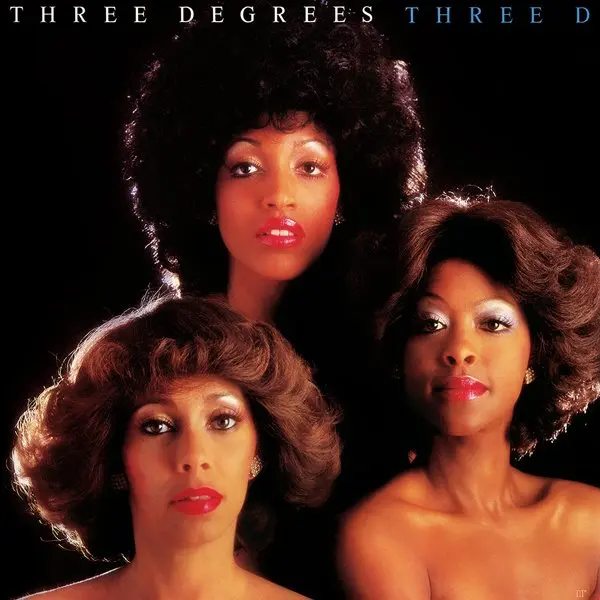 The Three Degrees released their seventh studio album, 3D, in November 1979 on Ariola.
The album pairs the trio’s harmonies with European disco production, combining Moroder’s pulsating rhythms with Harold Faltermeyer’s arrangements, and features Sheila Ferguson, Valerie Holiday, and Helen Scott at full strength.
Giorgio Moroder and Harold Faltermeyer produced the album, with Faltermeyer also arranging alongside Keith Forsey. Core backing musicians included Faltermeyer on keyboards and synthesizers, with Moroder overseeing sequencing and electronic textures.
Moroder and Faltermeyer wrote the majority of tracks, including “Jump the Gun,” “Red Light,” “Set Me Free,” and “Bodycheck.” Keith Forsey co-wrote several songs, while Bugatti and Musker contributed “My Simple Heart.” Munich Machine’s Chris Bennett co-wrote “Red Light” and “Set Me Free.”
The album alternates between pulsating disco tracks and lighter pop-soul numbers. Side A opens with the energetic, club-oriented “Jump the Gun” and continues with the electronic-disco pulse of “Red Light” and “Set Me Free.” Side B softens with “Starlight” and the romantic ballad “My Simple Heart,” closing with the brisk, rhythmic “Bodycheck.”
A1. “Jump the Gun” (6:05) — Faltermeyer/Forsey
A2. “Red Light” (5:43) — Moroder/Bennett
A3. “Set Me Free” (4:36) — Moroder/Bennett
B1. “Starlight” (4:40) — Faltermeyer/Forsey
B2. “My Simple Heart” (4:30) — Bugatti/Musker
B3. “Without You” (4:06) — Faltermeyer/Forsey
B4. “Bodycheck” (3:36) — Moroder/Faltermeyer/Forsey
Sessions occurred at Musicland Studios in Munich with Moroder and Faltermeyer producing and Jürgen Koppers engineering. Faltermeyer and Forsey handled arrangements.
Singles included “Jump the Gun” and “My Simple Heart,” with “Set Me Free” released in the US, gaining traction on club and disco charts. Later 70s/80s artists performing tracks from this album include US and European disco performers influenced by Moroder’s production style.
Album of Love
The Three Degrees released their eighth studio album, Album of Love, in November 1982 as a self-issued title. The lineup features Sheila Ferguson, Valerie Holiday, and Helen Scott performing both original material and reworked versions of earlier hits.
Discography:
- Maybe (1970)
- The Three Degrees (1973)
- International (1975)
- So Much Love (1975)
- Toast of Love (1976)
- Standing Up for Love (1977)
- New Dimensions (1978)
- 3D (1979)
- Album of Love (1981)
- … and Holding (1989)
Sources:
- Discogs: The Three Degrees
- 45worlds: The Three Degrees
- 45cat: The Three Degrees
- MusicBrainz: The Three Degrees
Artist/Album Pages:
Panna Fredda was an Italian symphonic-rock band that released the 1971 album Uno on Vedette Record...
The Pretty Things were an English rock band, originally formed in 1963 by guitarist/vocalist Dick Ta...
The Winkies were an English rustic/hard-rock band that released a 1975 self-titled album on Chrysa...
The V.S.O.P. Quintet was an American post-pop/jazz supergroup featuring the seasoned talents of k...
Curt Cress Clan was a German jazz-rock/funk supergroup led by drummer Curt Cress and featuring gui...
Madison Dyke was a German symphonic-rock band behind the 1977 album Zeitmaschine on Racket Records...
Módulo 1000 was a Brazilian psych-rock band that released the 1972 album Não Fale com Paredes. M...
The Pazant Brothers were the American R&B duo of trumpet/sax siblings Alvin and Eddie Pazant. ...
Eighties Ladies were an American soul-pop act assembled by producer Roy Ayers. The project yielde...
Neil Young is a Canadian singer, guitarist, songwriter, and bandleader whose 1968–89 album sequence ...
Frank Robson (April 27, 1946 – November 16, 2024) was an English–Finnish keyboardist and singer wh...
Tantra was a Portuguese symphonic-rock band that made the 1977/78 Epic albums Mistérios e ...