

The End was an English pop-psych band from Surrey that released six 1965–68 singles on Philips, Sonoplay, and Sonet, followed by the 1969 album Introspection on Decca–London. Rolling Stones bassist Bill Wyman produced and managed the band, which masqueraded under the names Polos Opuestos and Timothy Grass. In early 1970, The End’s final lineup morphed into hard-rockers Tucky Buzzard, which issued five albums through 1973.
Members: Dave Brown (bass, vocals), Nicky Graham (keyboards, vocals), Colin Giffin (guitar, lead vocals, 1965-68), Roger Groome (drums, 1965), Hugh Attwooll (drums, 1965-68), John Horton (saxophone, 1965-?), Gordon Smith (saxophone, 1966-67), Terry Taylor (guitar, 1967-70), Paul Francis (drums, 1968-70), Jimmy Henderson (vocals, 1968-70)
Background
The End formed in 1965 from the remnants of the early 1960s rock ‘n’ roll bands The Tuxedos and The Original Topics. Guitarist–singer Colin Giffin, bassist Dave Brown, and drummer Roger Groom originated in The Tuxedos, which backed singer Bobby Angelo. Saxophonist John Horton and South African-born keyboardist Nick Graham (ex-Classics, Electrons) played in The Original Topics, the backing band of English teen idol Dickie Pride.
The Tuxedos morphed into The Innocents, which backed singer–actor Mike Berry. After a round of 1963–64 singles on Parlophone and His Master’s Voice, Giffin, Brown, and Groom (back from The Nashville Teens) left Berry and teamed with Graham in The End. They first recorded a pair of long-vaulted late-1964 tracks at RG Jones studio in Morden.
After another vaulted recording session (six songs, April 1965), they added Horton and backed teenage singer Helen Shapiro.
1965–67 Singles
In late 1965, The End linked with Billy Wyman, who secured them a spot on the Rolling Stones autumn UK package tour (September 34–October 17) with The Spencer Davis Group, The Checkmates, and Unit 4+2.
Wyman oversaw The End’s first single: the October 1965 Philips release “I Can’t Get Any Joy” backed with “Hey Little Girl,” both Giffin/Brown originals co-produced by Stones engineer Glyn Johns.
A. “I Can’t Get Any Joy”
B. “Hey Little Girl”
 In early 1966, Groom returned to The Nashville teens and The End hired drummer Hugh Attwool. Meanwhile, Horton cleared for saxophonist Gordon “Gordie” Smith. The End’s spring/summer tour dates included bills with The Anteeks, The Knack, The Solents, The Manchester Playboys, and The New York Public Library.
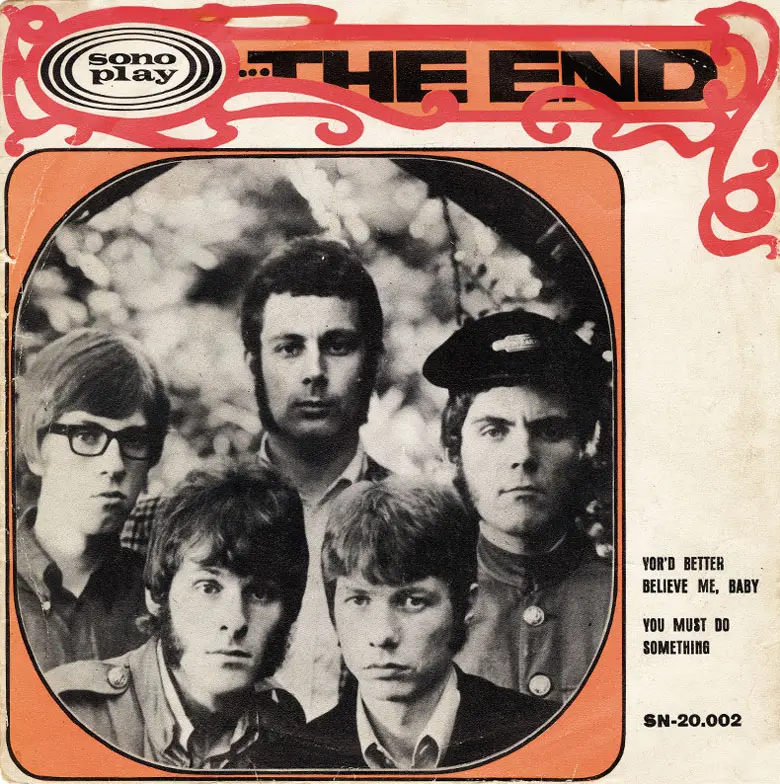
The End re-linked with Wyman for their November 1966 second single: “You’d Better Believe Me, Baby,” a Joe Tex cover backed with Don Covay‘s “You Must Do Something,” released in Spain only on the Sonaplay label.
A. “You’d Better Believe Me, Baby”
B. “You Must Do Something”
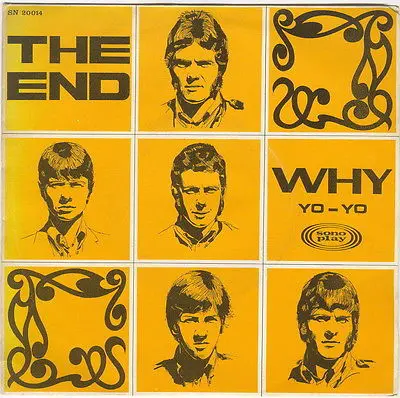 The End closed out 1966 with a three-week residency in Zemmat, Switzerland. In March 1967, they embarked on a three-month tour of Spain, where Sonoplay issued their third single: “Why” backed with “Yo-Yo,” both Giffin/Brown originals.
A. “Why”
B. “Yo-Yo”
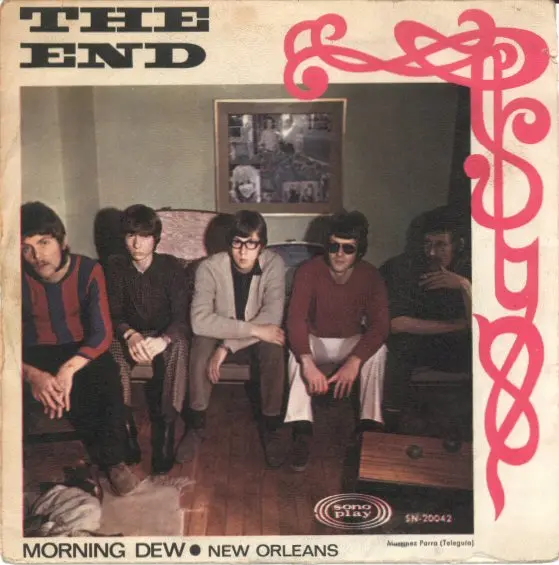 In July 1967, The End (minus Smith) returned to England and cut their third Sonoplay single: A: “Morning Dew,” a Bonnie Dobson composition backed with “New Orleans,” credited to one F. Guidio.
A. “Morning Dew” originated on Bonnie Dobson at Folk City, the Canadian folk singer’s third album. The End single co-credits American singer/songwriter Tim Rose, who erroneously claimed co-authorship of the lyrics on his 1967 version. This version feature lead guitar Lennie Neldret, Graham’s former bandmate in The Original Tropics.
B. “New Orleans”
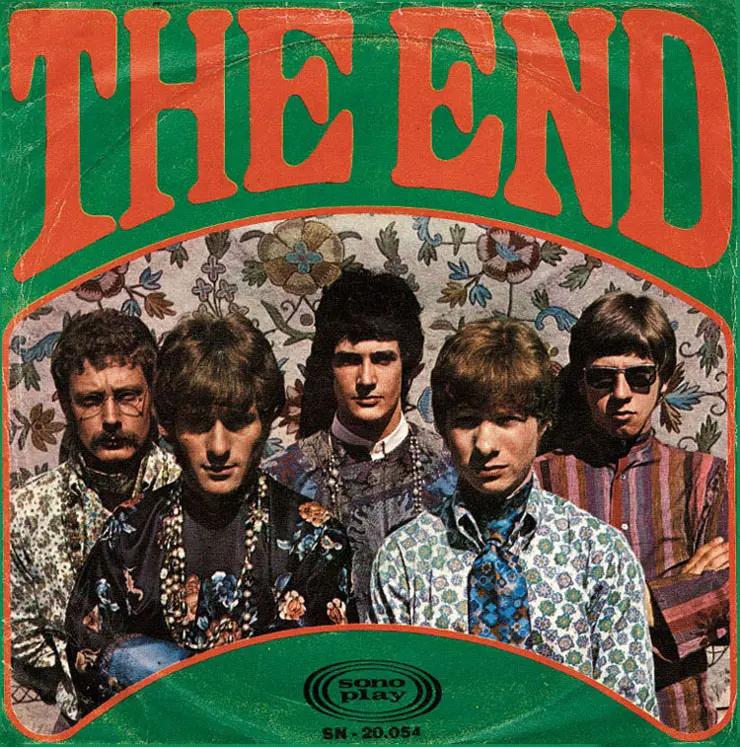 Wyman co-wrote The End’s fourth Sonoplay a-side, “Loving, Sacred Loving,” with Moon’s Train keyboardist Pete Gosling. The b-side, “We’ve Got It Made,” is a Brown/Giffin/Graham original.
A. “Loving, Sacred Loving” features harpsichord by Stones/Kinks sessionist Nicky Hopkins. (Moon Train’s long-vaulted 1966 version appears on the 2005 Castle Music disc The Life I Lead – Rare Recordings 1965-1967.)
B. “We’ve Got It Made”
1968/69 Activities
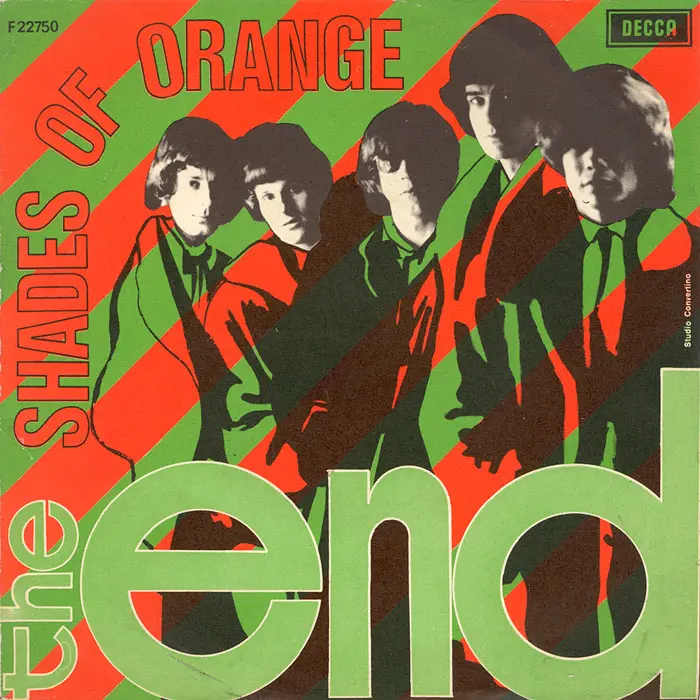 On 8 November 1967, The End cut the Gosling–Wyman composition “Shades of Orange” at Olympic Studios with Wyman producing and Charlie Watts on tabla. John Horton, briefly back in the fold, played sax and conceived the album sleeve design. The track marked The End’s turn to psychedelia and appeared as their second UK single on March 9, 1968, backed with “Loving, Sacred Loving.”
On March 19, 1968, The End began sessions for their planned album at Decca and Olympic. The recordings—intermittent through late June—included the unreleased tracks “Building Up a Dream” (cut 24 April) and “Today Tomorrow” (cut 25 May). Horton exited in early March and was replaced on lead guitar by Terry Taylor, formerly of The Mode. The Daily Mirror ran a piece on 29 February titled “The Beginning of The End” that included Horton’s name and photo.
That spring, The End played live dates including a May 4 show at Queen’s Hall in Narbeth. In December, Giffin left for a solo venture and Attwooll returned to Spain. New drummer Paul Francis had prior stints with The Vibrations, The Stuart James Inspiration, and Pepper. With Francis, The End resumed live work in Madrid at JJs and Piccadilly.
On March 4, 1969, the new lineup recorded “Son of Lightning” at Olympic. Sessions continued into April with “Second Glance” (April 3) and “North Thames Gas Board” (April 15), the latter with pianist Ian Stewart, the Stones’ long-displaced sixth member. “Second Glance” first appeared in 1996 on Incredible Sound Show Stories Vol. 2 (When The Tangerine Strikes Twelve), a compilation of freakbeat/psych rarities on Dig The Fuzz Records, which identified The End as Timothy Grass.
In May 1969, The End played the Star Club in Hamburg alongside The Ace Kefford Stand, a Move spinoff with drummer Cozy Powell. They spent the summer in Spain backing Billie Davis and appearing on Despierta, the 1969 album by Miguel Rios.
Introspection
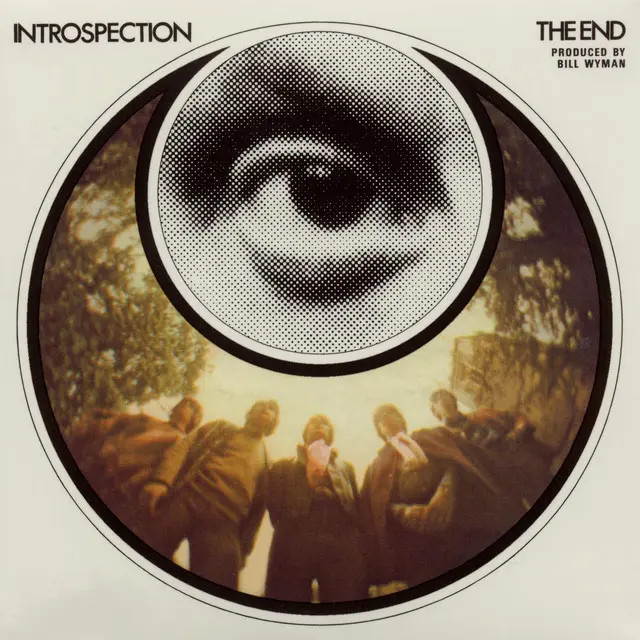 The End released their singular album, Introspection, in October 1969 on Decca (UK) and London Records (US), more than a year after recording its mid-1968 completion.
The album features their three remaining co-founders: bassist Dave Brown, guitarist/saxist Colin Giffin, and organist/pianist Nick Graham (all credited with vocals) joined by two late-period additions: drummer Hugh Attwooll and guitarist/singer Terry Taylor.
Introspection includes both sides of their 1968 “Shades of Orange” and seven new Brown/Giffin/Graham originals, including the twice-occurring title track. Each side contains brief interludes (three total) credited to guest singer George Kenset. Jim Henderson, Taylor’s former Mode bandmate, provides additional harmony vocals on “She Said Yeah,” a Larry Williams cover with saxophonist Ken Leeman (ex–Moon’s Train).
Musically, Introspection blends pastel-toned chamber pop with dense psych textures, marked by contoured vocal layers and rhythm-forward arrangements. Bill Wyman’s production emphasizes low, syncopated bass figures and compact guitar motifs offset by harpsichord, Mellotron, and layered harmonies. “Shades of Orange” highlights clipped brass and tabla patterns (by Charlie Watts), while “Loving, Sacred Loving” sets choral vocals over staccato harpsichord figures.
The two-part title track cycles through minor-key drone, electric bursts, and phased vocals. “Don’t Take Me” leans into a rigid rhythmic base beneath distorted guitar and vocal overlays. “She Said Yeah” departs with theatrical backing vocals and brash sax flourishes.
A1. “Dreamworld” (4:15)
A2. “Under the Rainbow” (3:40)
A3. “Shades of Orange” (2:39)
A4. “Bromley Common” (0:50)
A5. “Cardboard Watch” (2:52)
A6. “Introspection Pt. 1” (4:03)
B1. “What Does It Feel Like” (3:05)
B2. “Linen Draper” (0:14)
B3. “Don’t Take Me” (3:23)
B4. “Loving Sacred Loving” (3:04)
B5. “She Said Yeah” (2:48) originated as a 1959 b-side by New Orleans pianist/singer Larry Williams; co-written by Don Christy (aka Sonny Bono) and Roddy Jackson.
B6. “Jacob’s Bladder” (0:54)
B7. “Introspection Pt. 2” (2:44)
Sessions occurred between March and June 1968 at Decca Studios (West Hampstead) and Olympic Studios (Barnes), were Bill Wyman produced Introspection amid work on the upcoming Stones album, Beggars Banquet. Glyn Johns engineered Introspection after the Olympic sessions for Children of the Future, the debut album by the Steve Miller Band.
Final Activity
The End recorded a final round of material between December 1969 and February 1970. On December 10, they cut two group compositions, “So Free” and “My Friend,” the latter later re-recorded by their successor band Tucky Buzzard.
On January 23, they tracked another collective number, “Turn on Waterstone,” which remained unreleased until 1999. Further sessions took place on February 13 and 14, yielding the group-written “Mistress Bean” — featuring guest guitarist Chris Spedding — and Taylor’s “For Eleanor.” Neither track was issued during the band’s original run.
In mid-1970, the band issued one final single in Spain under the name Polos Opuestos on Hispavox: a Spanish-language cover of Mungo Jerry’s “In the Summertime” (“En El Verano”) backed with The End original “Smartypants,” credited to Brown, Graham, Taylor, and producer Alan Francis.
Shortly afterward, guitarist Terry Taylor brought in his former Mode bandmate Jim Henderson as lead vocalist. With this final lineup change, the band rebranded as Tucky Buzzard and continued under that name into the early 1970s.
Discography:
- Introspection (1969)
Sources:
Artist/Album Pages:
The Troggs were an English rock band, best known for the 1966 British Invasion hit "Wild Thing" from...
Gonzalez was an English soul-funk and Latin-rock big band that released the 1974–75 albums Gonzale...
Ben was an English jazz-rock band that released a self-titled album in 1971 on Vertigo. Members:...
Stump was an English–Irish avant-rock band that released the 1985–86 zolo EPs Mud On a Colon and Q...
Legend was an English heavy metal band from Jersey island that released the 1981–82 albums Legend ...
The Byrds were an American rock band that released twelve albums between 1965 and 1973 on Columbia. ...
Les Fleur de Lys were an English mod-psych band from Southampton that released a string of singles...
Chris Eaton (born Sept. 16, 1958) is an English musician and songwriter from Sedgley, Staffordshir...
Annabel Lamb is an English singer and songwriter who emerged in the early 1980s with a literate, s...
Peter Green (Oct. 29, 1946 – July 25, 2020) was an English blues-rock guitarist from Bethnal Green...
The Higsons were an English post-punk/funk band that released twelve singles between 1981 and 1985 t...
Procol Harum was an English symphonic-rock band that released nine studio albums between 1967 and 19...