

Don Covay (March 24, 1938 — Jan. 31, 2015) was an American soul singer who recorded nine studio albums between Mercy! and Adlib. His catalog includes “Pony Time” and “Mercy, Mercy,” followed by “See Saw” and “I Was Checkin’ Out She Was Checkin’ In.” Solomon Burke and Wilson Pickett recorded Covay songs; Aretha Franklin and the Rolling Stones also drew from his catalog.
Background
Donald James Randolph was born on March 24, 1936, in Orangeburg, South Carolina. His father served as a Baptist preacher and died when Randolph was eight, leaving his mother to raise a large family before the household relocated to Washington, D.C., in the early 1950s.
Randolph sang with the family gospel group the Cherry Keys and entered secular music through the Rainbows, a Washington vocal group that also included Marvin Gaye and Billy Stewart at separate points. The Rainbows recorded “Shirley” in 1956, and the single appeared on Pilgrim and Red Robin pressings. Randolph adopted the name Don Covay as his solo work expanded.
Little Richard hired Covay as a chauffeur and opening act for his 1957 revue. Atlantic issued “Bip Bop Bip” under the name Pretty Boy in 1957, backed by Richard’s Upsetters. Singles for Sue and Big Top preceded releases on Columbia and Cameo.
Covay and John Berry co-wrote “Pony Time,” which the Goodtimers recorded for an early 1961 Arnold single. The single reached No. 60 on the Billboard Hot 100, while Chubby Checker took a cover to No. 1 on the same chart. Cameo followed with “The Popeye Waddle,” which reached No. 75 on the Hot 100.
Roosevelt Music signed Covay and brought him into the Brill Building network. Solomon Burke recorded “I’m Hanging Up My Heart for You,” and Gladys Knight and the Pips cut “Letter Full of Tears.” Wilson Pickett used “I’m Gonna Cry” for his first Atlantic single.
Covay assembled the Goodtimers for a May 1964 session at A-1 Sound in New York. Rosemart issued “Mercy, Mercy” in August 1964, and Atlantic took over distribution after the record entered the national charts.
Mercy!
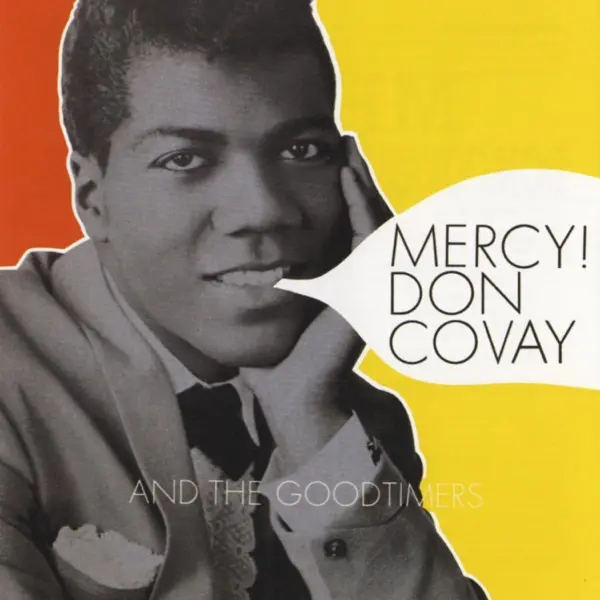 Don Covay and the Goodtimers released their debut album, Mercy!, in January 1965 on Atlantic.
The twelve-song set gathers the Rosemart hit with further Goodtimers recordings. Arranger Horace Ott supplies piano on several selections, while a then-unknown Jimi Hendrix appears on the title track.
“Mercy, Mercy” pleads over a chorded guitar entrance, emphatic accents and a high harmony. “I’ll Be Satisfied” surges through rough lead phrases as Covay stretches each plea into a cry. “Come On In” stomps through dance commands and rapid name-checks. “Can’t Stay Away” drifts beneath a falsetto lead and taut rhythmic backing.
“Take This Hurt Off Me” presses Covay’s lament against repeated “Fool” replies and answering declarations. “Come See About Me” soars through sustained appeals and high-set cries. “Please Don’t Let Me Know” circles a blunt repeated figure with spare accents.
A1. “Mercy, Mercy” (2:26) – Covay, Ronald Miller
A2. “I’ll Be Satisfied” (3:17) – Covay, Miller
A3. “Come On In” (2:19) – Covay, Ott
A4. “Can’t Stay Away” (2:51) – Covay, Ott
A5. “Can’t Fight It Baby” (2:51) – Covay, Ott
A6. “You’re Good for Me” (3:30) – Covay, Ott
B1. “Take This Hurt Off Me” (2:31) – Covay, Miller
B2. “Daddy Loves Baby” (2:22) – Covay, Miller
B3. “Come See About Me” (3:24) – Covay
B4. “You Must Believe in Me” (2:37) – Curtis Mayfield
B5. “Please Don’t Let Me Know” (2:26) – Johnny Terry, Wilbert Smith
B6. “Just Because” (3:26) – Lloyd Price, Harold Logan
Herb Abramson produced “Mercy, Mercy” on May 13, 1964, at A-1 Sound in New York. The Atlantic co-founder ran the studio with engineer Jim Reeves, whose contemporary credits include sessions for Sidney Barnes and the Thymes. Atlantic art director Marvin Israel designed the cover; his adjacent label work includes A Quartet Is a Quartet Is a Quartet by the Modern Jazz Quartet.
Rosemart issued “Mercy, Mercy” in August 1964 (b/w “Can’t Stay Away”), and the single reached No. 35 on the Billboard Hot 100 and No. 1 on the Cash Box R&B chart. “Take This Hurt Off Me” followed later that year and reached No. 97 on the Billboard pop chart.
Hi Horse reissued Mercy! on vinyl in 2009, and WEA Japan followed with a 2012 compact disc edition.
See Saw
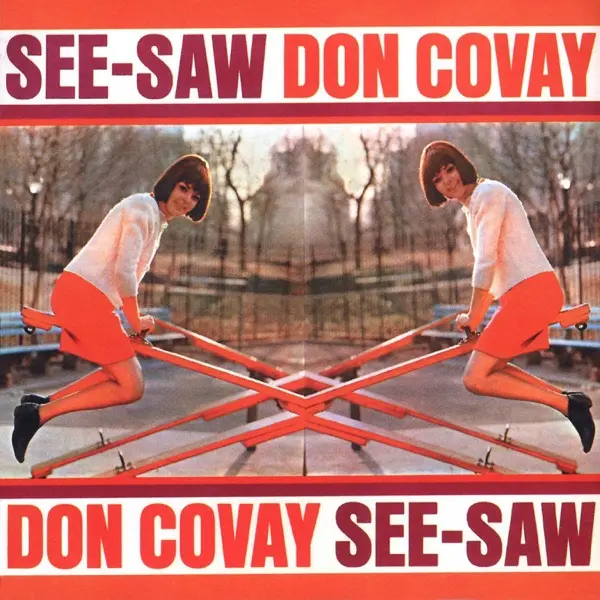 Covay released his second album, See Saw, in 1966 on Atlantic.
See Saw combines New York recordings arranged by Horace Ott with Memphis masters from Booker T. and the M.G.’s. Steve Cropper co-wrote three selections and plays guitar on the Stax dates.
“See-Saw” lopes beneath restrained accents and an unhurried lead. “The Boomerang” struts through direct dance calls. “Everything Gonna Be Everything” stomps through a coarse, crowded beat. “Iron Out the Rough Spots” drives through tight brass punctuations and concise guitar replies. “Sookie, Sookie” churns through organ responses as Covay recedes behind ensemble figures.
A1. “See Saw” (2:57) – Covay, Cropper
A2. “The Boomerang” (1:55) – Covay, Ott, Leroy Randolph
A3. “Everything’s Gonna Be Everything” (2:28) – Covay, Ronald Miller
A4. “Fat Man” (2:32) – Covay, Huey Meaux, Sun Ra, Randolph
A5. “Precious You” (2:43) – Covay
A6. “Iron Out the Rough Spots” (2:20) – Cropper, Booker T. Jones, David Porter
B1. “Please Do Something” (2:43) – Covay, Miller
B2. “I Never Get Enough of Your Love” (2:44) – Covay, Cropper
B3. “The Usual Place” (2:05) – Covay, Randolph
B4. “A Woman’s Love” (2:30) – Covay
B5. “Sookie Sookie” (2:38) – Covay, Cropper
B6. “Mercy, Mercy” (2:21) – Covay, Miller
Atlantic assembled the album from a January 27, 1965 New York date and Memphis sessions on June 30, 1965, and May 26, 1966, at Stax. Producer-arranger Horace Ott directed the New York recordings with drummer Bernard Purdie and bassist Bob Bushnell. Guitarist Billy Butler completed the principal rhythm group. Ott also arranged Nina Simone’s 1966 Philips album Wild Is the Wind.
Stax masters pair guitarist Steve Cropper with keyboardist Booker T. Jones. Bassist Donald “Duck” Dunn works with drummer Al Jackson Jr. Saxophonists Andrew Love and Floyd Newman work beside trumpeter Wayne Jackson. Loring Eutemey designed the sleeve around Jerry Czember’s cover photograph; Eutemey also designed John Coltrane and Don Cherry’s 1966 Atlantic album The Avant-Garde.
Atlantic issued “Please Do Something” in early 1965, and the single reached No. 21 on the Billboard R&B chart. “See Saw” followed in September (b/w “I Never Get Enough of Your Love”) and reached No. 44 on the Hot 100 and No. 5 on the R&B chart.
Hi Horse reissued See Saw in a 2009 vinyl edition. WEA Japan released a compact disc in 2012, and Music on Vinyl returned the album to LP format with a 2015 pressing.
The Soul Clan and Jefferson Lemon Blues Band
Covay organized the Soul Clan with Solomon Burke, Arthur Conley, Ben E. King, and Joe Tex for a 1968 Atlantic project. Atlantic issued “Soul Meeting” (b/w “That’s How It Feels”), which reached No. 91 on the Hot 100 and No. 34 on the R&B chart.
Covay formed the Jefferson Lemon Blues Band in 1969 with guitarist Joe Richardson and guitarist-harmonica player John Hammond Jr. The group entered A-1 Sound in New York for a spring album sequence.
The House of Blue Lights
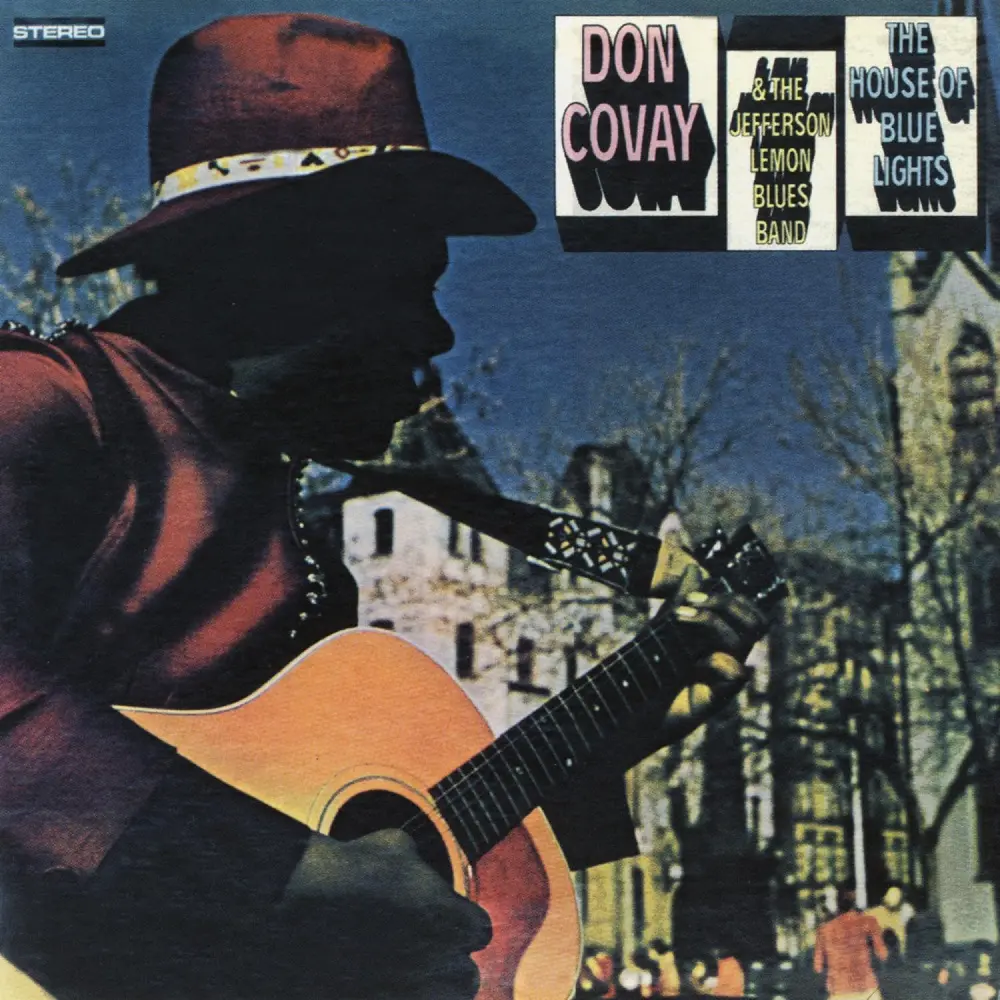 Don Covay and the Jefferson Lemon Blues Band released the third studio album, The House of Blue Lights, in October 1969 on Atlantic.
The House of Blue Lights pairs Covay with guitarists Joe Richardson and John Hammond Jr. Bassists Gerald Jemmott and Butch Valentine work with drummers Daniel Jones and Charles “Honeyman” Otis. Covay and Richardson supplied new material beside songs from the blues repertory.
“Key to the Highway” trudges beneath a muffled lead and spare electric figures. “Mad Dog Blues” barks into a flute break and stinging guitar figures. “The House of Blue Lights, Pt. 1” uncoils through organ drift and faint sitar flourishes beneath a mournful plea. “Four Women” saunters on a jaunty beat as Covay smooths each phrase.
“Steady Roller” ambles through acoustic strokes and sparse accompaniment. “Homemade Love” blooms from a long piano entrance into a fervent duet with Margaret Williams. “But I Forgive You Blues” hunches through a downcast lead and isolated fretwork from one channel. “Shut Your Mouth” twists through harmonica bursts and abrupt section changes. “The House of Blue Lights, Pt. 2” erupts in a full-throated shout.
A1. “Key to the Highway” (2:21) – Big Bill Broonzy, Charles Segar
A2. “Mad Dog Blues” (3:28) – Covay, Richardson
A3. “The Blues Don’t Knock” (3:11) – John Denioa, Sidney Wyche
A4. “Blues Ain’t Nothin’ but a Good Woman on Your Mind” (3:12) – Covay, Richardson
A5. “The House of Blue Lights – Part 1” (7:33) – Covay
B1. “Four Women” (3:34) – Covay
B2. “Steady Roller” (3:17) – Covay, Hammond
B3. “Homemade Love” (6:26) – Covay
B4. “But I Forgive You Blues” (2:31) – Hudson Whittaker
B5. “Shut Your Mouth” (3:23) – Dave Clowney
B6. “The House of Blue Lights – Part 2” (4:09) – Covay
Sessions spanned March through May 1969 at A-1 Sound in New York, with Covay as producer-arranger and studio owner Herb Abramson as engineer. Abramson also engineered the Godz album The Third Testament in the same period. Atlantic art director Haig Adishian designed the sleeve; his earlier label work includes Wilson Pickett’s The Exciting Wilson Pickett.
In 1970, Atlantic issued “Black Woman” (b/w “Ice Cream Man”), and the single reached No. 43 on the Billboard R&B chart. “Key to the Highway” also appeared as an Atlantic single backed with “Everything I Do Goin’ Be Funky.”
Sepia Tone remixed and reissued the album for a 2002 compact disc edition. William Arlt handled the remix, and David Cheppa mastered the audio. Jimmy Hole redesigned the package.
Different Strokes for Different Folks
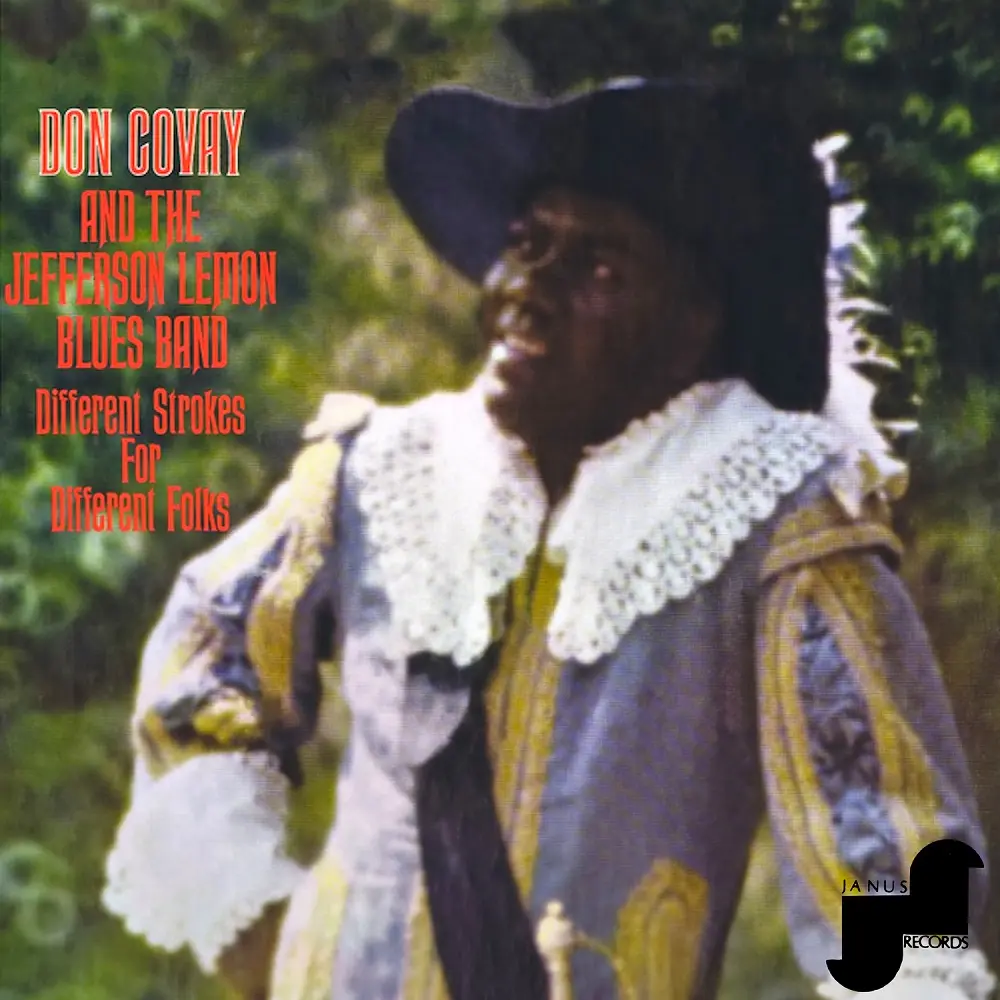 Covay released his fourth studio album, Different Strokes for Different Folks, in 1972 on Janus.
Different Strokes for Different Folks features guitarists Eddie Hinton and Tippy Armstrong with bassist David Hood and drummer Roger Hawkins. Keyboardist Barry Beckett completes the principal Muscle Shoals group. Eva Darby supplied “Daddy Please Don’t Go Out Tonight,” and Peter Callander and Mitch Murray wrote “Hitchin’ a Ride.” Covay wrote the balance alone or with Jimmy Norman.
“Why Did You Put Your Shoes Under My Bed” grinds beneath a gravel-edged lead and hard accents. “Hitching a Ride” drives through a taut beat beneath Covay’s rasped lead. “Stop By” glides beneath a warm, gentle plea. “In the Sweet Bye and Bye” lingers through sustained, tender phrases.
“Standing in the Grits Line” struts on a springy beat. “Bad Luck” sinks into a slow, deep-set figure. “What’s in the Headlines Today” ambles beside a kazoo figure and socially pointed text.
A1. “Sweet Thang” (3:32) – Covay
A2. “Daddy Please Don’t Go Out Tonight” (4:30) – Eva Darby
A3. “Shoes Under My Bed” (3:42) – Covay
A4. “Stop By” (3:20) – Covay, Jimmy Norman
A5. “Bad Luck” (4:15) – Covay
A6. “Hitchin’ a Ride” (3:50) – Peter Callander, Mitch Murray
B1. “Standing in the Grits Line” (4:15) – Covay
B2. “In the Sweet Bye & Bye” (7:15) – Covay
B3. “Ain’t Nothing a Young Girl Can Do” (3:05) – Covay
B4. “If There’s a Will There’s a Way” (3:33) – Covay
B5. “What’s in the Headlines” (4:45) – Covay
Covay produced sessions at Muscle Shoals Sound Studios in Sheffield, Alabama, with engineers Jerry Masters and Steve Melton. Further work took place at Universal Recording Studio in Memphis and RCA Studios in Chicago. The Record Plant in New York handled mixing. Masters and Melton also engineered Candi Staton’s early-1970s Fame recordings. David Krieger directed the Janus package, and Jim Cummings photographed the cover; Cummings also shot the sleeve for Donny Hathaway’s 1972 album Live.
Topline retitled the album Sweet Thang for a 1985 British reissue. Sky Ranch restored the original title and sequence on a 1992 compact disc.
Super Dude I
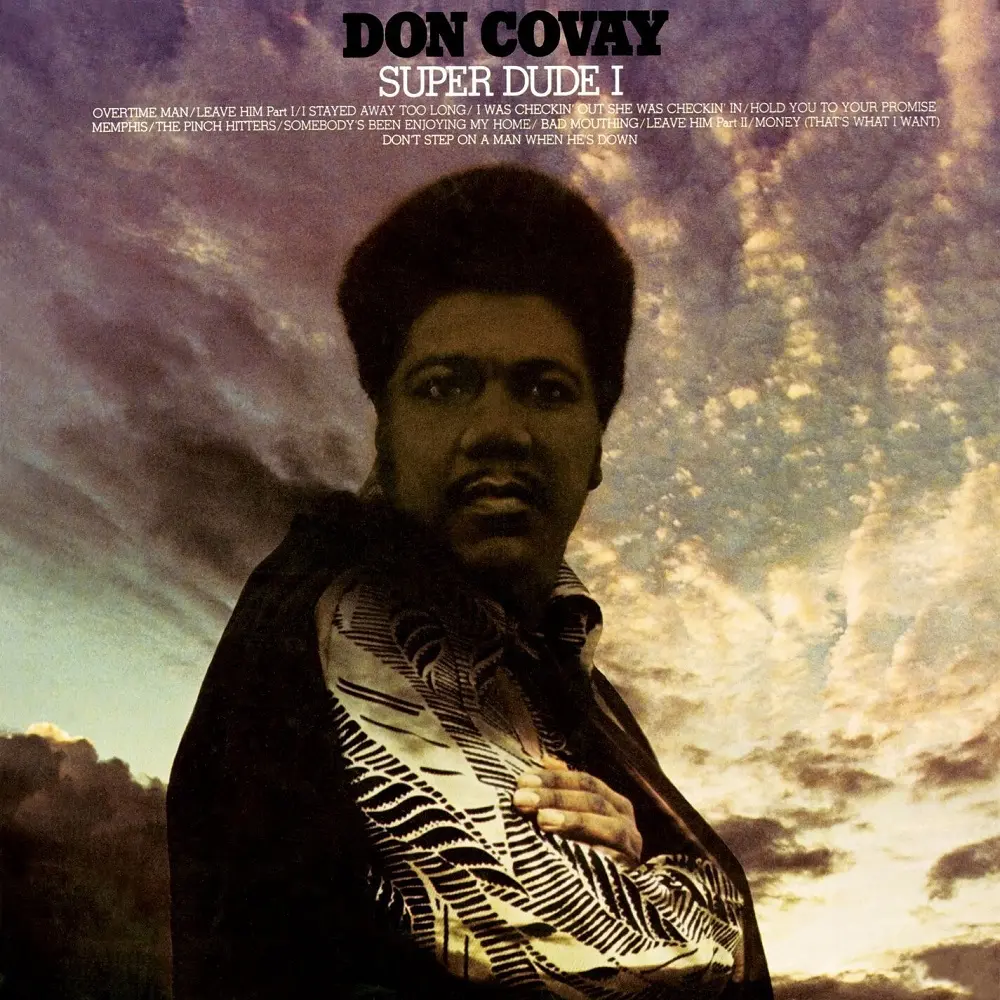 Covay released his fifth studio album, Super Dude I, in April 1973 on Mercury.
Muscle Shoals players Eddie Hinton and David Hood return from the Janus album. Drummer Roger Hawkins and keyboardist Barry Beckett join guitarists Tippy Armstrong and Jimmy Johnson. Horace Ott arranges strings, and Patrick Griffin and Eva Darby contribute song credits.
“Overtime Man” skips on a light-footed beat. “I Stayed Away Too Long” coasts through a light, nimble figure. “I Was Checkin’ Out, She Was Checkin’ In” unspools a long narrative over strings, airy keyboards and a lilting bassline. “Leave Him, Pt. 1” grinds beneath a coarse, pleading lead. “Memphis” loosens into a playful recast with buoyant accents. “Money (That’s What I Want)” bounces through a playful recast.
A1. “Overtime Man” (3:07) – Covay
A2. “Leave Him Part 1” (4:42) – Covay, Patrick Griffin
A3. “I Stayed Away Too Long” (3:18) – Covay
A4. “I Was Checkin’ Out She Was Checkin’ In” (4:22) – Covay
A5. “Hold You to Your Promise” (2:33) – Covay
A6. “Memphis” (3:22) – Chuck Berry
B1. “The Pinch Hitters” (3:11) – Covay
B2. “Somebody’s Been Enjoying My Home” (6:16) – L. Scott, Eva Darby
B3. “Bad Mouthing” (3:27) – Darby, N. Jean
B4. “Leave Him Part 2” (3:24) – Covay, Griffin
B5. “Money (That’s What I Want)” (3:00) – Berry Gordy, Janie Bradford
B6. “Don’t Step on a Man When He’s Down” (2:41) – Covay, H. Hall
Covay produced the album from Muscle Shoals recordings and mixed the masters at Mercury Sound Studios in New York. Jerry Masters and Steve Melton engineered the sessions, while Elvin Campbell mixed the album and Joe Scariza edited the tapes. Campbell returned for Covay’s next Mercury set. David Gahr and Serge Seymour supplied the sleeve photography; Gahr also photographed contemporary album packages for Miles Davis and Bruce Springsteen.
Mercury issued “I Was Checkin’ Out She Was Checkin’ In” in 1973 (b/w “I Stayed Away Too Long”), and the single reached No. 29 on the Billboard Hot 100 and No. 6 on the R&B chart. “Somebody’s Been Enjoying My Home” followed and reached No. 63 on the R&B chart.
RPM and Shout! expanded Super Dude I to eighteen tracks for a 2005 compact disc edition.
Hot Blood
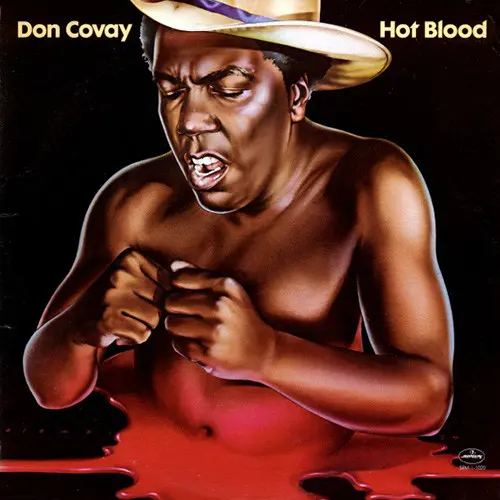 Covay released his sixth studio album, Hot Blood, in December 1974 on Mercury.
Bassist Gerald Jemmott anchors the studio group with guitarist Billy Cadieux. Keyboardist Rodney Beytham and harmonica player Sredni Vollmer complete the principal quartet. Erskin Watts shares three song credits, while Pete Carr co-wrote “I Been Here All the Time.”
“It’s Better to Have (and Don’t Need)” charges through biting guitar replies as call-and-response phrases complete Covay’s declarations.
A1. “It’s Better to Have (And Don’t Need)” (3:00) – Covay, Erskin Watts
A2. “A Mind Is a Terrible Thing to Waste” (5:56) – Covay
A3. “Sexy Lady” (4:58) – Covay
A4. “We Can’t Make It No More” (4:00) – Covay, Antonio Von
A5. “Rumble in the Jungle” (3:30) – Covay, Watts
B1. “What’s Good to You (Don’t Have to Be Good for You)” (3:42) – Covay
B2. “I Been Here All the Time” (7:08) – Covay, Carr
B3. “Hot Blood” (2:45) – Covay, Watts
B4. “Enjoy What You Have” (4:35) – Covay
B5. “Gangster Strut” (4:08) – Covay
Covay produced the album at C.I. Recording Studios in New York with engineer and mix engineer Elvin Campbell. Joe Scariza edited the masters after his work on Super Dude I. Photographer Cosimo Scianna supplied the back-cover portrait after contributing images to Mercury’s 1973 Rod Stewart compilation Sing It Again Rod.
Mercury issued “It’s Better to Have (And Don’t Need)” in May 1974 (b/w “Leave Him – Part I”), and the single reached No. 63 on the Billboard Hot 100 and No. 21 on the R&B chart. British sales sent the release to No. 29 on the UK Singles Chart. “Rumble in the Jungle” followed in December (b/w “We Can’t Make It No More”) and reached No. 83 on the R&B chart.
Shout! and RPM reissued Hot Blood on compact disc in 2005 with one bonus track.
Travelin’ in Heavy Traffic
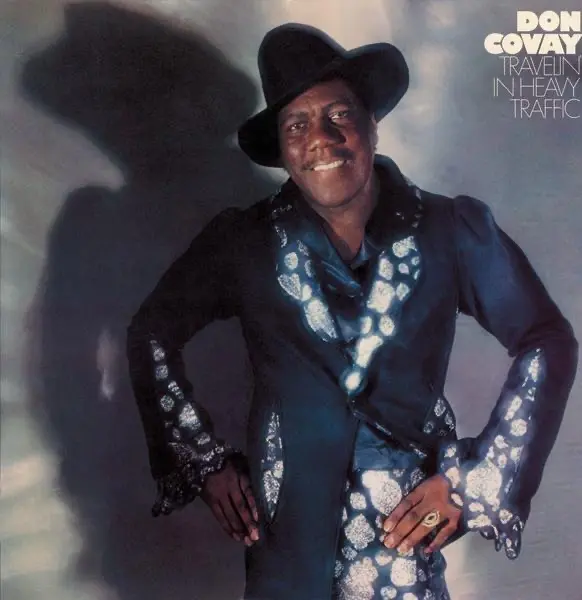 Covay released his seventh studio album, Travelin’ in Heavy Traffic, in May 1976 on Philadelphia International.
Travelin’ in Heavy Traffic divides most arrangements between Bobby Martin and Dexter Wansel; Neil Larsen handles “You Owe It to Your Body.” Bassist Michael Foreman and percussionist Larry Washington form the principal rhythm section. Barbara Ingram and Carla Benson lead the background singers. “Travelin’ in Heavy Traffic” cruises through sparse phrases and a windswept rhythmic line.
A1. “No Tell Motel” (6:40) – Covay, Sredni Vollmer
A2. “Chocolate Honey” (5:38) – R.L. Martin, Covay
A3. “You Owe It to Your Body” (4:06) – Covay
A4. “Travelin’ in Heavy Traffic” (5:10) – Dexter Wansel, Covay
B1. “Feelings” (6:16) – Morris Albert
B2. “Right Time for Love” (3:49) – Eva Darby
B3. “Six Million Dollar Fish (Jaws)” (4:59) – Covay
B4. “SWET (And You Shall Be Rewarded)” (4:00) – Covay, Neil Larsen
Covay produced the album at Sigma Sound Studios in Philadelphia with engineers Jimmy Gallagher and Kenny Present. Gallagher and Present later shared engineering credit on Lou Rawls’s Philadelphia International album Sit Down and Talk to Me. Frankford/Wayne handled the final mastering. Ed Lee and Robert Biro designed the package around Anthony Barboza’s photography. Barboza also supplied original photography for Billy Paul’s 1976 album Let ’Em In.
Philadelphia International issued “No Tell Motel” in June 1976 (b/w “Right Time for Love”). The title track followed in September with a non-album B-side.
Funky Yo-Yo
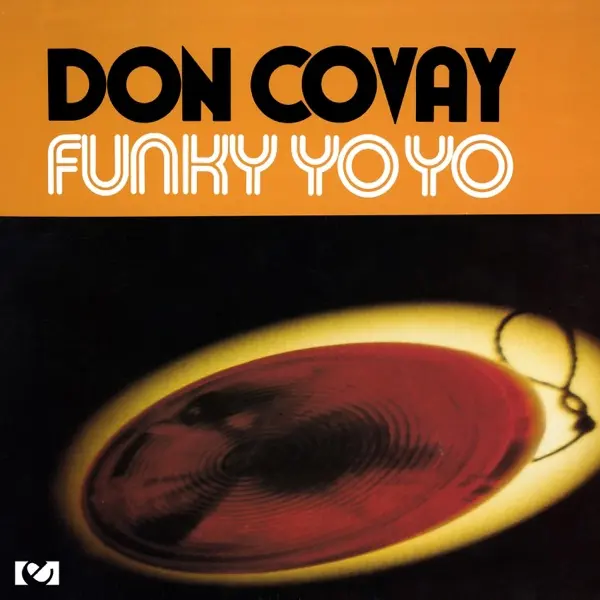 Covay released his eighth studio album, Funky Yo-Yo, in 1977 on Versatile.
The album splits “Yo-Yo” into two parts and pairs Covay’s songs with the Ronald Miller collaboration “Three Time Loser.”
“Yo-Yo, Pt. 1” struts through an uptempo beat, guitar figures, piano riffs and laughing female shouts. “I Don’t Think I Can Make It” sways on a three-quarter beat beneath gentle organ figures and a wounded plea. “Yo-Yo, Pt. 2” erupts through hard-running accents and jubilant replies.
“Love Is Sweeter on the Other Side” slows from soft phrasing into raw, wounded cries. “Your Love Has Got to Me” lingers within a bare arrangement and close-set declarations. “You Can’t Get Something for Nothin’” snaps through rough-edged accents and a compact shout.
A1. “Yo-Yo (Part 1)” (3:56) – Covay
A2. “I Don’t Think I Can Make It” (3:54) – Covay
A3. “Three Time Loser” (4:06) – Covay, Ronald Miller
A4. “An Ugly Woman (Is Twice as Sweet)” (3:15) – Covay
B1. “Yo-Yo (Part 2)” (4:40) – Covay
B2. “Love Is Sweeter on the Other Side” (3:30) – Covay
B3. “You Can’t Get Something for Nothing” (2:32) – Covay
B4. “Your Love Has Got to Me” (2:32) – Covay
Covay produced and arranged the album for Versatile, which issued the set without a named studio engineer. Bob Muller designed the sleeve around Bob Ross’s cover photograph; Muller also designed and photographed Dave McKenna and Wilbur Little’s 1977 album Oil & Vinegar.
Shout! reissued Funky Yo-Yo on compact disc in 2006 with six selections from Different Strokes for Different Folks. Unidisc followed with a 2007 edition, and Essential Media issued a 2013 digital release. Everland returned the album to vinyl and compact disc with a 2019 release.
Later Activity
Covay reduced his recording schedule after Funky Yo-Yo but continued to write and make guest appearances. Newman issued “Badd Boy” in 1980, and the single reached No. 74 on the Billboard R&B chart. The Rolling Stones used him on background vocals for Dirty Work in 1986, renewing a connection that began when the group recorded “Mercy, Mercy” for Out of Our Heads.
Covay suffered a stroke in 1992 that impaired his speech and mobility. Ronnie Wood and Todd Rundgren led the performers on the 1993 tribute album Back to the Streets: Celebrating the Music of Don Covay. The Rhythm and Blues Foundation presented Covay with a 1994 Pioneer Award.
Adlib
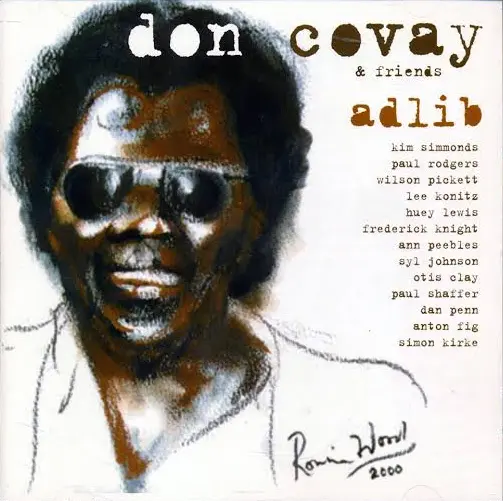 Covay released his ninth and final studio album, Adlib, in September 2000 on Cannonball.
Adlib places producer-guitarist Jon Tiven and bassist Sally Tiven beside drummer Anton Fig and keyboardist Paul Shaffer. Guest singers Wilson Pickett and Otis Clay appear with Ann Peebles and Syl Johnson, while Paul Rodgers contributes another cameo.
1. “Don Covay Boogie” (6:01) – Covay, Jon Tiven, Sally Tiven
2. “Mercy Mercy” (3:49) – Covay, Ronald Miller
3. “One Stop Woman” (4:29) – Covay, Jon Tiven, Sally Tiven
4. “Nine Times a Man” (4:44) – Covay, Wilson Pickett, Jon Tiven, Sally Tiven
5. “Chill Factory” (4:48) – Covay, Jon Tiven, Sally Tiven
6. “The Red Comb Song” (3:42) – Covay, Jon Tiven, Sally Tiven
7. “Chain of Fools” (5:18) – Covay, Miller
8. “Victims” (6:15) – Covay, Jon Tiven, Sally Tiven
9. “B.Y.O.B.” (3:38) – Covay, Jon Tiven, Sally Tiven
10. “He Don’t Know” (4:18) – Covay, Jon Tiven, Sally Tiven
11. “Poontang” (3:14) – Covay, Jon Tiven, Sally Tiven
12. “Hall of Fame” (4:40) – Covay, Jon Tiven, Sally Tiven
13. “Podium” (7:09) – Covay, Jon Tiven, Sally Tiven
14. “Three Time Loser” (3:57) – Covay, Miller
15. “Don Covay Boogie (Slight Reprise)” (3:03) – Covay, Jon Tiven, Sally Tiven
Jon Tiven produced and mixed sessions at Omega Studios in Rockville, Maryland, and Studio 900 in New York. The Warehouse in New York hosted further work, followed by Towery Recording in Memphis. Additional sessions occurred at Turtle Studios in British Columbia and Way Out West in San Rafael, California. Engineer Eric Lemley shared the mixes, while Dennis Ferrante mastered the album. Tiven came from production work on Wilson Pickett’s 1999 album It’s Harder Now. Ronnie Wood supplied the cover illustration after organizing Covay’s tribute project in the preceding decade.
Death
Don Covay died on January 31, 2015, at a hospital in Franklin Square, New York. He was seventy-eight.
Discography:
- Mercy! (1965 • Don Covay & The Goodtimers)
- See-Saw (1966)
- The House of Blue Lights (1969 • Don Covay & The Jefferson Lemon Blues Band)
- Different Strokes for Different Folks (1972 • Don Covay and The Jefferson Lemon Blues Band)
- Super Dude I (1973)
- Hot Blood (1975 • Don Covay & The Jefferson Lemon Band)
- Travelin’ in Heavy Traffic (1976)
- Funky Yo-Yo (1977)
- Adlib (2000)
Sources:
Artist/Album Pages:
Cedric Im Brooks (April 27, 1943 – May 3, 2013) was a Jamaican saxophonist, clarinetist, flutist, ...
Manu Dibango (Dec., 12 1933 — March 24, 2020) was a Cameroonian saxophonist, malletist, and compos...
Life was an English hard-rock band that released the album Life After Death on Polydor in 1974. Th...
Uncle Chapin was an American brass-rock band from New York that released a 1971 self-titled album...
Manchild was an American soul-funk band behind the 1977/78 albums Power and Love and Feel the Phuf...
Swegas was an English brass-rock band behind the 1971 albums Child of Light and Beyond the Ox. M...
Third Ear Band was an English free-folk band that released the 1969–70 albums Alchemy and Third Ea...
Klockwerk Orange was an Austrian symphonic-rock band behind the 1974 CBS album Abrakadabra. Memb...
Flamengo was a Czech psychedelic jazz-rock band that was active for six years, starting in 1966. I...
Nyl was a French psych-rock and Zeuhl band that released a 1976 self-titled album on Urus. Membe...
Ney Matogrosso is a Brazilian singer who emerged in the samba-glam combo Secos & Molhados. Bet...
Forever More was a Scottish post-psych band that released the 1970/71 albums Yours and Words on Bl...