

Peter Green (Oct. 29, 1946 – July 25, 2020) was an English blues-rock guitarist from Bethnal Green who served as Eric Clapton’s successor in John Mayall’s Bluesbreakers, recording one album with the band in 1967 before departing with bassist John McVie to co-found Fleetwood Mac that same year. The band recorded four proper albums and several standalone singles over the ensuing three-year period before Green’s departure in 1970. That same year, he issued his debut solo album on Reprise. After a pair of 1971/72 singles, he resigned from the music scene for a number of years, reemerging at decade’s end with In the Skies on PVK Records. Between 1980 and 1983, he released four albums on Creole Records, followed by a seventh with backing combo Katmandu in 1985.
The End of the Game
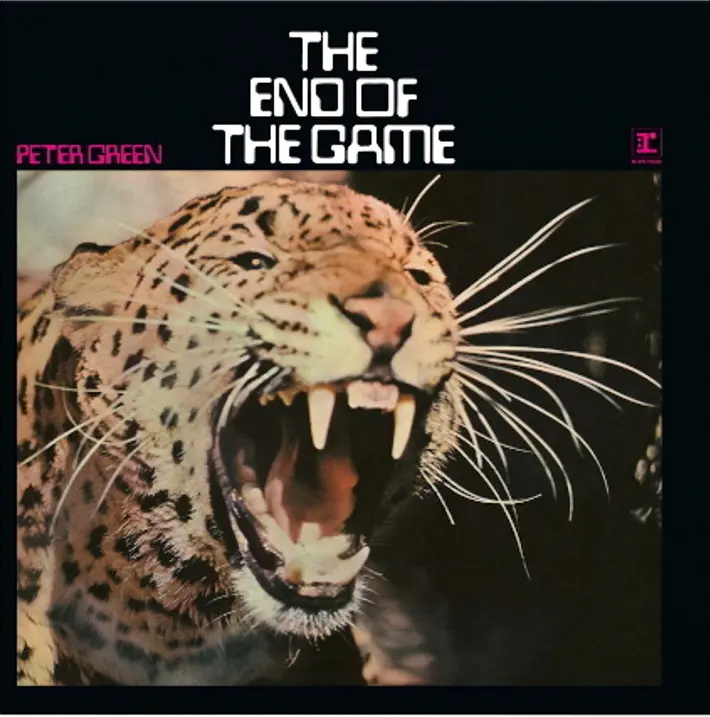 Peter Green released his debut solo album, The End of the Game, in December 1970 on Reprise.
His first post-Fleetwood Mac effort marked a sharp break from structured songwriting, favoring a spontaneous, instrumental format shaped from free-form studio jams.
Green interlocks with keyboardist Zoot Money and organist Nick Buck across fragmented sections that emphasize tonal shifts and unplanned resolution. Bassist Alex Dmochowski—fresh off sessions with the Aynsley Dunbar Retaliation—and percussionist Godfrey McLean supply momentum as Green builds jagged, modal phrases over sparse, transient figures from piano and electric keys.
The six tracks on The End of the Game unfold as segments from a continuous jam, shaped in post-production from hours of improvisation. “Bottoms Up” opens the album with charging momentum—Godfrey Maclean locks into a tight, clipped pulse as Alex Dmochowski’s bass prowls in long, rubbery lines beneath Peter Green’s jagged, spiraling guitar phrases. Zoot Money’s electric piano threads in and out, mirroring Green’s phrasing with brief, chiming counterpoints. “Timeless Time” slows into a sparse, suspended drift, guided by quiet volume swells and open intervals that allow each instrument to linger without anchoring.
“Descending Scale” and “Hidden Depth” both stretch outward with denser interplay: Green’s playing veers between sharp, wordless cries and knotty flurries, pushed forward by surging low-end momentum and drifting keyboard ambience. “Burnt Foot” circles a more defined pulse, led by repetitive, clipped riffs that edge into fractured blues motifs. On the closer, “The End of the Game,” Green tears loose with slashing wah-wah attacks and expressive sustain, while the rhythm section lurches and recedes under shifting, asymmetric phrasing. Throughout, structure emerges through contrast—dense clusters dissolve into quiet interludes, and sharp attacks yield to suspended resonance—producing a mood that is restless, exploratory, and occasionally volatile.
A1. “Bottoms Up” (9:05)
A2. “Timeless Time” (2:37)
A3. “Descending Scale” (8:17)
B1. “Burnt Foot” (5:16)
B2. “Hidden Depth” (4:54)
B3. “The End of the Game” (5:08)
Green recorded the album between May and June 1970 at a time of personal and artistic withdrawal, shortly after leaving Fleetwood Mac. He oversaw the sessions with engineer Martin Birch during a period of deliberate retreat from pop structure and blues formalism. He shaped the album from extended improvisations, editing the material into segments without overdubs or heavy post-processing. Afracadabra designed the cover, and Keystone supplied the photographs.
Reprise issued no singles from the album. During the same period, Green recorded two standalone singles: “Heavy Heart” backed with “No Way Out” and “Beasts of Burden” backed with “Uganda Woman,” the latter featuring guitarist Nigel Watson. All four tracks later appeared as bonus material on the 2020 CD reissue, which reached No. 40 on the UK Independent Albums chart.
In the Skies
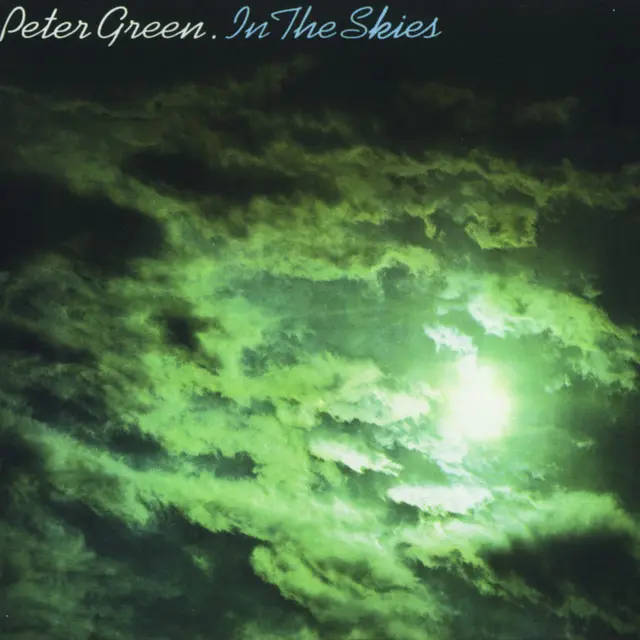 Peter Green released his second solo album, In the Skies, in May 1979 on PVK/EMI.
The album marked his return after an eight-year absence, reintroducing his signature blues phrasing through layered dual-guitar lines with Snowy White, who alternates lead and rhythm roles depending on the track.
Green’s melodic lead phrases intertwine with White’s tonal shading, anchored by bassist Kuma Harada, drummer Reg Isidore (ex-Robin Trower), and percussionist Lennox Langton (Oblivion Express). Keyboardist Pete Bardens (ex-Camel) adds electric piano and Hammond organ textures on the first two cuts. The six players group-wrote “Slabo Day” and “Funky Chunk.”
Green’s wife, Jane, wrote the lyrics to “Seven Stars,” “Just for You,” and the title track. Drummer Godfrey Maclean (Gass, Gonzalez) deputizes Isidore on “Proud Pinto.”
In the Skies opens with its title track—a mid-tempo instrumental shaped around dual guitar lines that trade sustained bends against a layered rhythm, built on slow percussion and conga undertones. “Slabo Day” maintains that languid pace but swaps in a brighter harmonic texture, with Snowy White taking lead over a circular theme that unfolds across clean, restrained phrasing. “A Fool No More” pulls the tempo back further into slow 12-bar form, stretching over seven minutes as Green returns to expressive vocal phrasing and bends his guitar lines into aching, deliberate arcs.
“Tribal Dance” leans on repetitive phrasing and conga patterns, cycling around a narrow, three-note figure without modulation. “Funky Chunk” relies on a one-chord vamp, marked by clavinet rhythm and clipped guitar stabs, circling without release. “Seven Stars” and “Just for You” sit in lighter territory, built on soft vocal lines and muted instrumental motion, with the latter marked by a delicate, descending figure and a subtle shift in tonal weight. “Proud Pinto” introduces a brisker pace with syncopated percussion, giving the track a taut, simmering undercurrent, while “Apostle” closes the album in a loose rubato frame, alternating between electric and acoustic figures that shift between sparse jazz voicings and Iberian-styled flourishes.
A1. “In the Skies” (3:52)
A2. “Slabo Day” (5:12)
A3. “A Fool No More” (7:46)
A4. “Tribal Dance” (4:29)
B1. “Seven Stars” (3:10)
B2. “Funky Chunk” (4:16)
B3. “Just for You” (4:39)
B4. “Proud Pinto” (3:42)
B5. “Apostle” (3:12)
Across the album, rhythm stays subdued and unhurried, creating space for nuanced tonal color over tight structural forms.
Sessions took place in autumn 1977 at multiple London studios, including Lansdowne, Morgan, Vineyard, Ramport, and Advision. PVK founder Peter Vernon-Kell produced the album with mixing handled by Neil Hornby and mastering by Dave Crawford. Two songs, “Tribal Dance” and “Apostle,” originated on a 1978 PVK single.
In the Skies reached No. 12 in Germany and New Zealand, No. 11 in Sweden, No. 14 in Norway, No. 24 in Austria, and No. 32 in the UK.
Little Dreamer
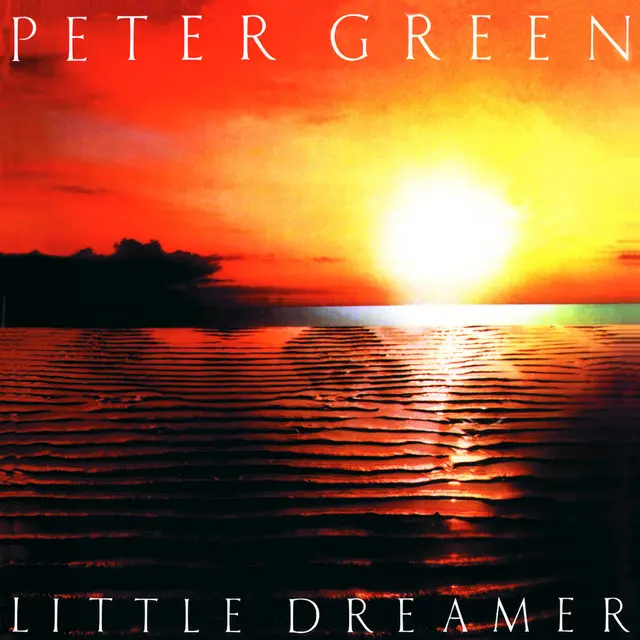 Peter Green released his third solo album, Little Dreamer, in April 1980 on PVK Records.
The album advances Peter Green’s late-1970s shift toward structured blues songwriting with compact forms and a focused studio ensemble. He trades melodic leads with rhythm guitarist Ronnie Johnson across measured arrangements shaped by organist Roy Shipston (Rococo) and bassist Paul Westwood (Zed), with Dave Mattacks (Fairport Convention) driving the pulse on drums.
Morris Pert (Brand X) colors select tracks with congas and auxiliary percussion, while pianist Peter Vernon-Kell underscores “I Could Not Ask for More” with sparse chordal placement. Additional low-end duties fall to John “Rhino” Edwards (Rococo) and Kuma Harada, who returns from In the Skies for “One Woman Love.” Backing vocalists Pam Douglas and Carol Ingram support two cuts with unison harmony lines. Mike Green wrote eight tracks, marking a continued realignment in authorship and direction during this middle-period phase.
Green includes a single outside composition, “Born Under a Bad Sign,” originally written by Booker T. Jones and William Bell and first recorded by Albert King in 1967, a song long embedded in Green’s pre‑Fleetwood Mac repertoire. The title track stands apart as the sole co‑credit between Peter and Mike Green.
A1. “Loser Two Times” (4:34)
A2. “Momma Don’tcha Cry” (3:26)
A3. “Born Under a Bad Sign” (3:01) – Jones, Bell
A4. “I Could Not Ask for More” (5:02)
A5. “Baby When the Sun Goes Down” (5:39)
B1. “Walkin’ the Road” (3:52)
B2. “One Woman Love” (5:34)
B3. “Cryin’ Won’t Bring You Back” (5:09)
B4. “Little Dreamer” (7:01)
Sessions occurred in late autumn 1979 at Rock City Studios in Surrey. Peter Vernon‑Kell produced the sessions with engineering and mixing handled by Mike Cooper, maintaining a direct studio presentation with minimal ornamentation.
PVK issued “Loser Two Times” as a European single in June 1980. Little Dreamer reached No. 7 in Norway, No. 15 in Germany, No. 18 in Sweden, and No. 34 in the UK.
Whatcha Gonna Do?
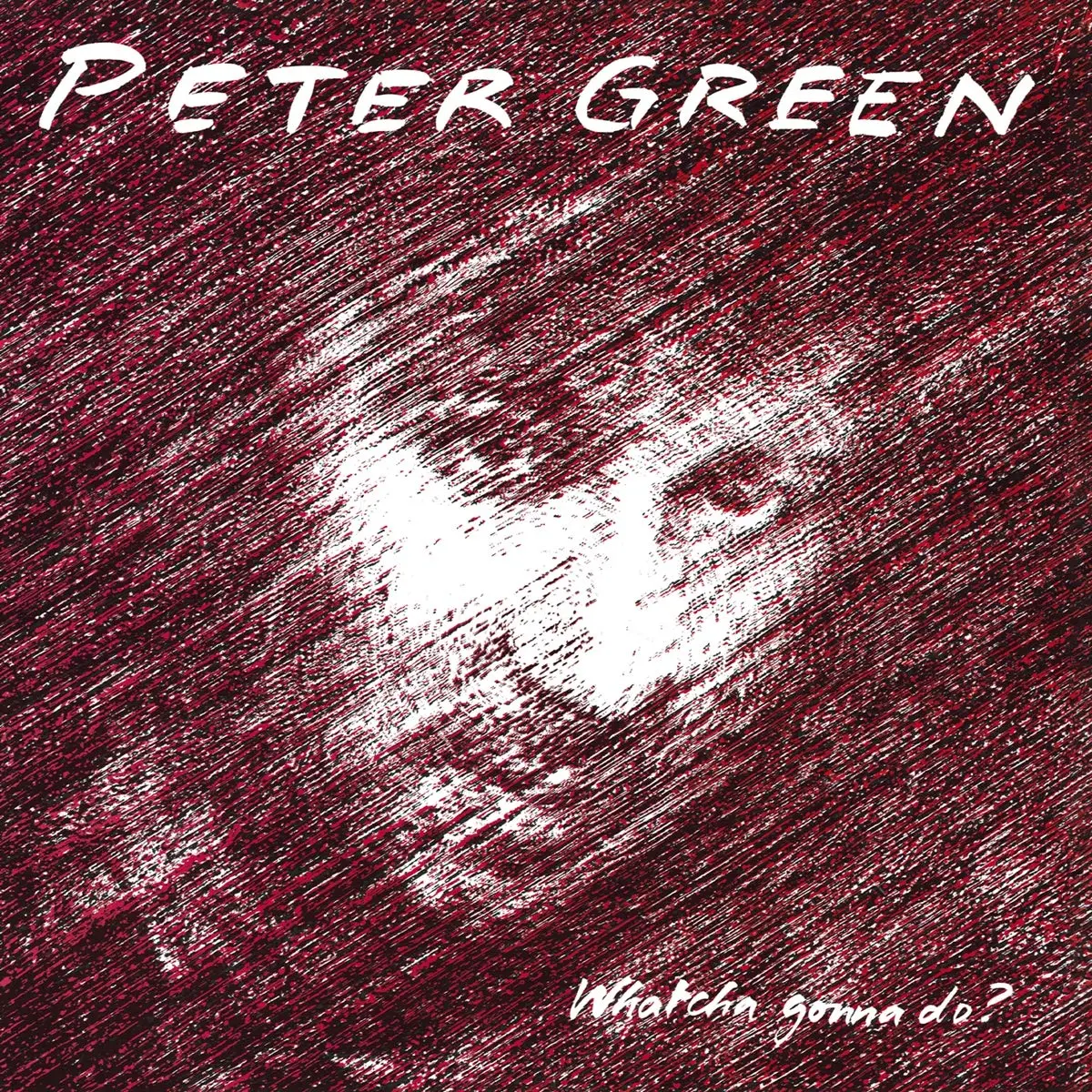 Peter Green released his fourth solo album, Whatcha Gonna Do?, in March 1981 on PVK Records.
The album presents another set of structured, mid-tempo blues originals, written entirely by his brother Mike.
Green’s lead guitar shares the front line with rhythm guitarist Ronnie Johnson, while Roy Shipston reinforces each arrangement with sustained organ and electric piano parts. Saxophonist Jeff Daly appears on select cuts, offering brief melodic commentary against the ensemble’s tightly framed harmonic base.
A1. “Gotta See Her Tonight” (5:46) – M. Green
A2. “Promised Land” (3:29) – M. Green
A3. “Bullet in the Sky” (3:19) – M. Green
A4. “Give Me Back My Freedom” (5:37) – M. Green
A5. “Last Train to San Antone” (5:29) – M. Green
B1. “To Break Your Heart” (3:52) – M. Green
B2. “Bizzy Lizzy” (3:25) – M. Green
B3. “Lost My Love” (5:21) – M. Green
B4. “Like a Hot Tomato” (3:04) – M. Green
B5. “Head Against the Wall” (3:44) – M. Green
Sessions took place in autumn 1980 at Rock City Studios in Surrey and Matrix Studios in London. Peter Vernon-Kell produced and co-arranged the album with Roy Shipston, while Mike Cooper handled engineering and mixing. Bass parts alternate between Paul Westwood and Mo Foster, with Dave Mattacks returning on drums and Lennox Langton adding percussion across select tracks.
PVK issued “Give Me Back My Freedom” as a European single on April 3, 1981, followed by “Promised Land” on July 31. Whatcha Gonna Do? reached No. 33 in Norway, No. 34 in Sweden, and No. 46 in Germany.
White Sky
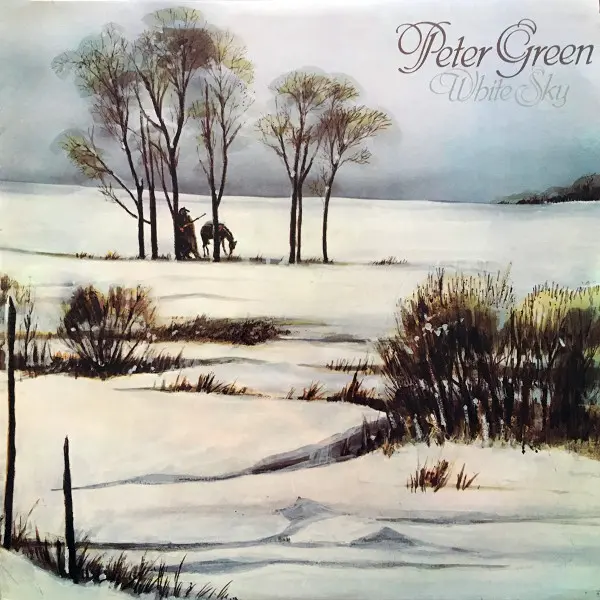 Peter Green released his fifth album, White Sky, in June 1982 on Creole.
The album introduces a looser, rock-oriented sound shaped around extended structures and denser ensemble passages.
Green trades guitar lines with Ronnie Johnson, who takes over the lead during the climax of “The Clown,” while keyboardist Webster Johnson threads melodic accents around their interchanges. Bassist Larry Steele and drummer Reg Isidore lock the foundation, with Jeff Whittaker adding auxiliary textures on percussion. Mike Green, sole writer of all but one track, sings lead on the title piece.
A1. “Time for Me to Go” (3:54) – M. Green
A2. “Shining Star” (3:10) – M. Green
A3. “The Clown” (6:05) – M. Green
A4. “White Sky (Love That Evil Woman)” (8:50) – M. Green
A5. “It’s Gonna Be Me” (3:36) – M. Green
B1. “Born on the Wild Side” (3:02) – M. Green
B2. “Fallin’ Apart” (3:54) – M. Green
B3. “Indian Lover” (3:36) – M. Green
B4. “Just Another Guy” (6:06) – M. Green
Green recorded the album in May 1981 at Ridge Farm Studios in Rusper. He co-produced the sessions with Geoff Robinson, using a Marshall amp routed through a Leslie speaker on some cuts to alter his tone. Simon Heyworth engineered and mixed the album.
Creole issued “The Clown” as a single on June 11, 1982. White Sky reached No. 35 on the Swedish Albums chart.
Kolors
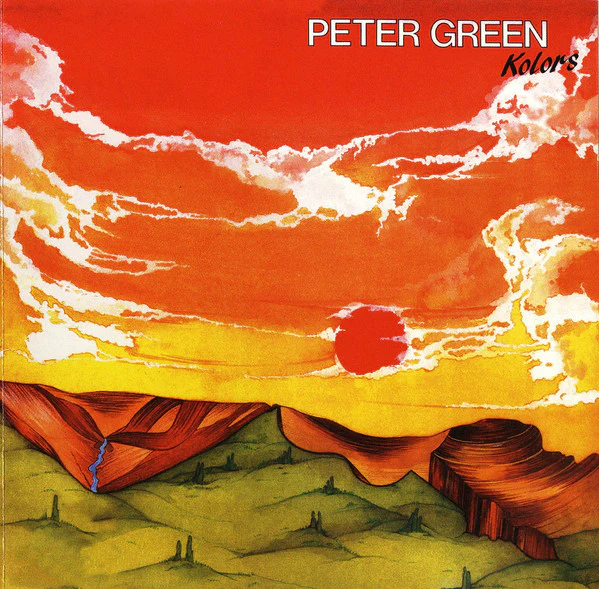 Peter Green released his sixth album, Kolors, in 1983 on Creole.
Drawn from unused material recorded between 1981 and 1982, the album compiles outtakes from Little Dreamer, Whatcha Gonna Do?, White Sky, and earlier single sessions.
Green shares guitar space with Bob Bowman and Ronnie Johnson, whose parts stretch across several tracks with subtle alternation in phrasing and attack. Keyboard roles split between Daniel Boone, Webster Johnson, and Roy Shipston, each layering chordal support under Green’s leads, while pan pipes by Trevor Orton briefly expand the tonal palette.
A1. “What Am I Doing Here?” (3:30) – M. Green
A2. “Bad Bad Feeling” (3:38) – M. Green
A3. “Big Boy Now” (5:55) – M. Green
A4. “Black Woman” (3:59) – M. Green
A5. “Bandit” (3:05) – Greenbaum, M. Green
B1. “Same Old Blues” (3:45) – Traditional
B2. “Liquor and You” (3:49) – M. Green
B3. “Gotta Do It with Me” (4:02) – M. Green
B4. “Funky Jam” (8:14) – Greenbaum
Tracks A1, A4, and A5 stem from Little Dreamer sessions, with “Bandit” also issued in an alternate version on Legend. Tracks A2, B1 through B3 derive from Whatcha Gonna Do?, while tracks A3 and B4 come from White Sky. Green issued all original songwriting credits under his birth name, Peter Greenbaum, while Mike Green contributed the bulk of the material.
Ron Lee produced the compilation with engineering by Dave Lester. Session players include bassists Paul Westwood, Mo Foster, and Larry Steele; drummers Reg Isidore and Dave Mattacks; and percussionist Jeff Whittaker. Backing vocals appear sporadically from Daniel and Lesley Boone.
Katmandu — A Case for the Blues
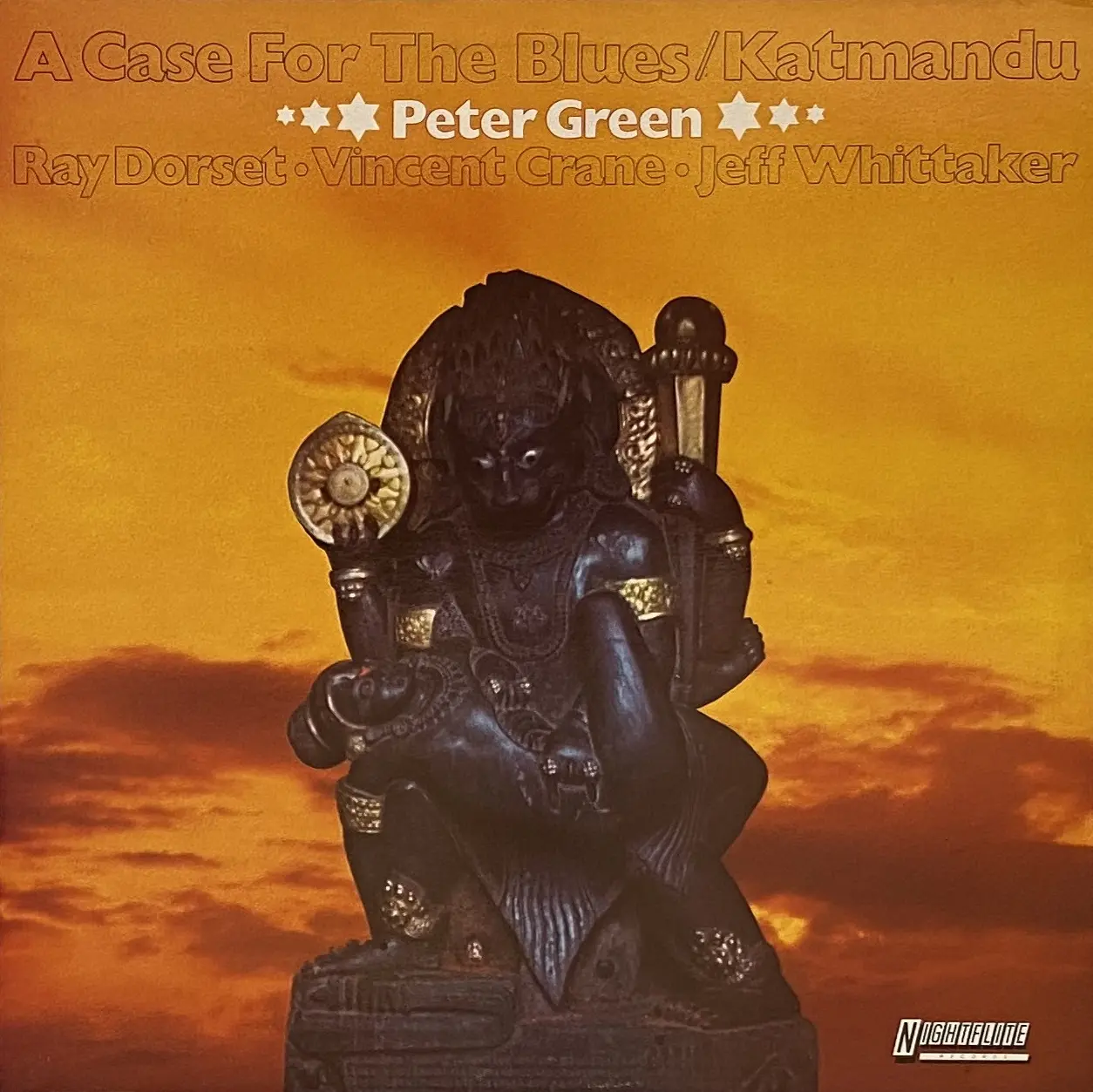 Katmandu released their singular album, A Case for the Blues, in 1985 on Night Life.
The album merges traditional blues motifs with interlocking contributions from players known for rock, boogie, and progressive backgrounds. Peter Green trades guitar and harmonica phrases with Ray Dorset (Mungo Jerry), while Vincent Crane (Atomic Rooster) drives the harmonic field with sharp organ lines and rhythmic electric piano. Jeff Whittaker alternates percussion and vocal duties, layering texture across Crane’s tonal shifts and Green’s lead figures.
A1. “Dust My Broom” (4:21) – Elmore James
A2. “One More Night Without You” (5:28) – Dorset
A3. “Crane’s Train Boogie” (3:18) – Crane
A4. “Boogie All the Way” (4:29) – Dorset
A5. “Zulu Gone West” (3:12) – Whittaker
B1. “Blowing All My Troubles Away” (5:22) – Dorset
B2. “Strangers Blues” (4:54) – Green
B3. “Sweet Sixteen” (3:32) – Crane
B4. “Who’s That Knocking” (4:20) – Crane, Dorset, Green, Whittaker
B5. “The Case” (3:39) – Whittaker
Sessions took place between December 1983 and January 1984 with production shared by Katmandu, Ray Dorset, and Ken Marshall. Green plays both guitar and drums across various tracks, with Dorset contributing guitar, harmonica, and occasional bass. Len Surtees and Greg Terry-Short supply rhythm section support, while Crane’s role dominates the harmonic structure. Whittaker authored two tracks and appears throughout on percussion and vocals.
Discography:
- The End of the Game (1970)
- “Heavy Heart” / “No Way Out” (1971)
- “Beasts of Burden” / “Uganda Woman” (1972 • Nigel Watson & Peter Green)
- In the Skies (1979)
- Little Dreamer (1980)
- Whatcha Gonna Do? (1981)
- White Sky (1982)
- Kolors (1983)
- A Case for the Blues (1985 • Katmandu)
Sources:
Artist/Album Pages:
Nolan Porter (1949–2021) was an American soul singer from Los Angeles who released the 1971/72 al...
Masami Tsuchiya — 土屋昌巳 (born Aug. 22, 1952) — is a Japanese art-pop multi-instrumentalist and comp...
Ramsey Lewis (May 27, 1935 - September 12, 2022) was an American pianist, composer, and bandleader...
Whistler was an English folk-rock band that released the 1971 Deram album HoHum. Members: George ...
Living Life was an Italian symphonic/jazz-rock band that established Shirak Records for the 1975 a...
Wolverlei was a Dutch folk-rock band behind a 1978 self-titled album on Stoof, followed in 1980 by...
Harsh Reality was an English psychedelic hard-rock band behind the 1969 Philips album Heaven & H...
Jean-Baptiste Barrière is a French electronic musician who released two 1979 albums titled Pandémo...
Moving was a French jazz-rock band behind a 1980 self-titled album on Amo. They featured two ex-me...
Snowy Red was the performance moniker of Belgian coldwave musician Marcel Thiel. He released two s...
Savoy Brown was an English blues-rock band that released eleven albums on Decca between 1967 and 197...
Crawler was an English/American hard-rock band that evolved from Back Street Crawler after the dea...