

Roger Glover (born Nov. 30, 1945) is a Welsh bassist, composer, and producer with a six-decade musical career. He first emerged as part of the English sunshine-pop band Episode Six with singer Ian Gillan. The two joined Deep Purple in 1970, completing what became the band’s classic mark II lineup, which released four studio albums and a live set over the next three years.
Glover left Purple in 1974 to concentrate on solo work, releasing the conceptual rock opera The Butterfly Ball and the Grasshopper’s Feast. As a producer, he oversaw 1973–77 albums by Nazareth, Rory Gallagher, and Judas Priest. After his 1978 instrumental opus Elements, he re-teamed with Purple guitarist Richie Blackmore in Rainbow, playing with that band until their 1984 farewell. Later that same year, the classic Deep Purple lineup reconvened for two further albums.
Background
Roger Glover was born Roger David Glover on November 30, 1945, at Brynllicci Farm, Bwlch, near Brecon, South Wales, to Norman and Brenda Glover. The Glover family lived in London during his childhood and settled in Pinner, Middlesex, around 1960.
Glover attended Harrow County School for Boys, where he formed the Madisons with drummer Harvey Shield and guitarist Tony Lander. He started on guitar, then adopted bass after school friends filled the group’s guitar slots. In 1963, he entered Hornsey Art College and remained active with the group.
The Madisons merged with The Lightnings and adopted the Episode Six name. The early lineup included singers Andy Ross and Sheila Carter-Dimmock. Manager Gloria Bristow booked Episode Six for a Frankfurt club residency in April 1965, then brought in vocalist Ian Gillan after Ross left the group. Episode Six signed with Pye Records and debuted with the January 1966 single “Put Yourself in My Place.” Glover and Gillan developed a songwriting partnership during the group’s run of singles and concert work.
Ritchie Blackmore and Jon Lord saw Episode Six in London in June 1969 while Deep Purple sought a replacement for vocalist Rod Evans. They drafted Gillan, who insisted they also hire Glover. The Mark II lineup debuted with the summer 1969 single “Hallelujah” made their first public appearance on July 10 at the Speakeasy in London. Deep Purple then recorded the albums Deep Purple in Rock, Fireball, Machine Head, Who Do We Think We Are, and the live album Made in Japan.
Glover left Deep Purple after the group’s Japanese tour in June 1973. He moved into A&R work at Purple Records and expanded his production credits through albums by Nazareth, Elf, Status Quo, and other label-connected acts. Purple Records then gave Glover the setting for The Butterfly Ball and the Grasshopper’s Feast, a concept album based on the 1804 children’s poem by British banker William Roscoe (1753–1831), who inspired a recent picture book by Alan Aldridge and William Plomer.
The Butterfly Ball and the Grasshopper’s Feast
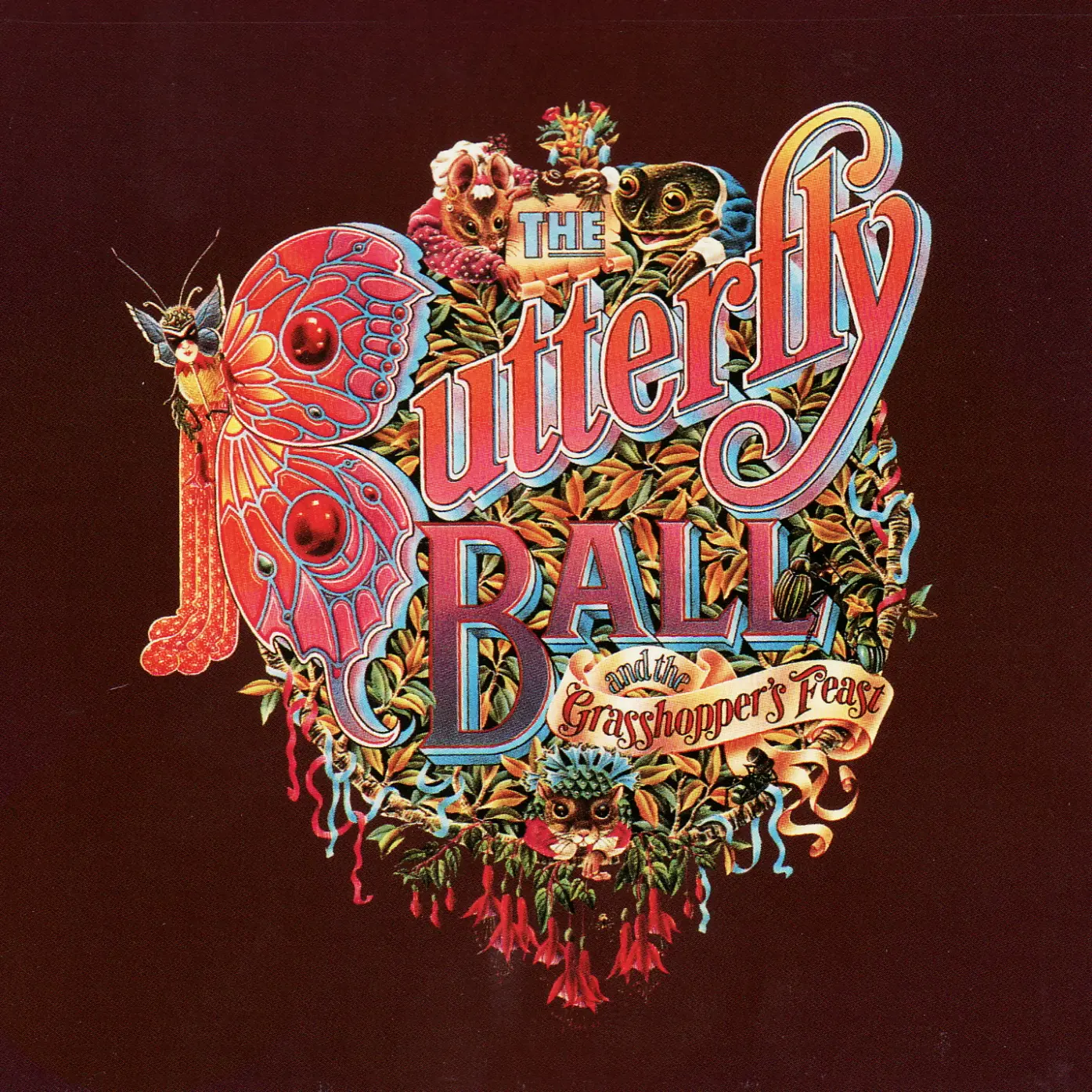 Roger Glover and Guests released The Butterfly Ball and the Grasshopper’s Feast on November 18, 1974, on Purple Records. The US edition followed on October 16, 1975, on UK Records.
The album adapts the 1973 Aldridge–Plomer picture book, which drew on William Roscoe’s 1804 poem.
Butterfly Ball features a studio cast of twenty-eight named performers plus the Mountain Fjord Orchestra, with fourteen lead vocalists assigned across the tracklist. Featured singers include the Gillan/Glover counterparts in the Deep Purple Mark III lineup: David Coverdale and Glenn Hughes. Rainbow singer Ronnie James Dio has three leads on Side B, which also has character leads by soul vet Jimmy Helms, ex-Roxy/Quatermass member John Gustafson, and Lord associate Tony Ashton.
“No Solution” gives the album its sharpest warning piece, with Soule’s front-line vocal set against brass jabs and a taut ensemble response. “Sitting in a Dream” supplies the main dramatic ballad, as Dio sustains long phrases over broad harmonic changes and a widened instrumental passage. “Sir Maximus Mouse” and “Watch Out for the Bat” supply the sharpest character turns through riff impact and clipped title calls. “Love Is All” converts the masque format into a choral finale, with handclaps, brass answers, and Dio’s lead gathered into a communal refrain.
A1. “Dawn” (1:21); “Dawn” rises from ambient haze into electronic tone clusters and birdcall effects. The scene places morning before the call to the Ball.
A2. “Get Ready” (2:06) – Glenn Hughes; “Get Ready” charges through a bright riff, group accents, and a short psychedelic bridge. Hughes wakes the creatures and urges the sleepers toward the feast and Ball.
A3. “Saffron Dormouse and Lizzy Bee” (1:25) – Barry St. John, Helen Chappelle; “Saffron Dormouse and Lizzy Bee” minces through parlor phrasing, clipped exchange, and old-time keyboard color. St. John and Chappelle split a domestic scene as Saffron Dormouse and Lizzy Bee prepare for the day’s spectacle.
A4. “Harlequin Hare” (1:26) – Neil Lancaster; “Harlequin Hare” springs from an antique lead-in into choral replies and a brisk verse. Lancaster presents Harlequin Hare as a showman figure bound for the gathering.
A5. “Old Blind Mole” (1:11) – John Goodison; “Old Blind Mole” crawls through finger-pops and a low-register bass figure under a close comic vocal. Goodison depicts the mole through underground shelter and low-slung self-containment.
A6. “Magician Moth” (1:33); “Magician Moth” darts through a keyboard solo with hard accents and quick tonal turns. The instrumental inserts a magic act before the album’s warning scene.
A7. “No Solution” (3:28) – Mickey Lee Soule; “No Solution” sprints through brass accents and an urgent vocal line. Soule warns the gathered creatures about poisoned water and civic neglect.
A8. “Behind the Smile” (1:46) – David Coverdale; “Behind the Smile” crests around Coverdale’s compressed lead and a dark harmonic turn. Coverdale warns the creatures about a friendly face that hides a predator.
A9. “Fly Away” (2:22) – Liza Strike; “Fly Away” glides from the preceding cadence into a warm vocal part and sustained organ. Strike counsels a young winged creature toward patience, freedom, and arrival at the Ball.
A10. “Aranea” (1:37) – Judi Kuhl; “Aranea” bounces through bright verse replies and a clipped refrain. Kuhl addresses Aranea as a spider dressing for the Ball and descending by silken thread.
B1. “Sitting in a Dream” (3:40) – Ronnie James Dio; “Sitting in a Dream” expands from a ballad opening into a dramatic instrumental passage. Dio lingers before the Ball in a private reverie of guitar, sky, and drifting images.
B2. “Waiting” (3:11) – Jimmy Helms; “Waiting” strides through theater-song turns and angled chord changes under Helms’s clean belt. Helms waits for a favorable turn and treats delay as expectation.
B3. “Sir Maximus Mouse” (2:35) – Eddie Hardin; “Sir Maximus Mouse” hammers a heavy riff under Hardin’s character lead. Hardin portrays Sir Maximus Mouse as a secluded financier who shields his fortune through deals and charity optics.
B4. “Dreams of Sir Bedivere” (4:09); “Dreams of Sir Bedivere” opens on a martial roll, then broadens through orchestral swells and band entry. The instrumental shifts the story into a knightly dream tableau before the final gathering.
B5. “Together Again” (2:05) – Tony Ashton; “Together Again” bolts from fast ensemble riffing into honky-tonk piano under Ashton’s vocal. Ashton reunites the cast after separation and directs the scene toward common celebration.
B6. “Watch Out for the Bat” (1:41) – John Gustafson; “Watch Out for the Bat” stomps through Gustafson’s clipped warnings and a brief orchestral break. Gustafson warns the guests about the bat as a sudden threat within the Ball’s nocturnal cast.
B7. “The Feast” (1:48); “The Feast” rests on a compact solo-piano interlude. The scene clears space for the banquet before the communal refrain.
B8. “Love Is All” (3:14) – Ronnie James Dio; “Love Is All” claps through Dio’s lead and choir replies, with brass fills at the refrain. Dio turns the Ball into a communal code of love, understanding, and mutual support.
B9. “Homeward” (4:12) – Ronnie James Dio; “Homeward” swells from Dio’s reflective lead into children’s choir and a final orchestral cadence. Dio leaves the Ball at daybreak and seeks guidance through darkness. The final image sends the creatures home under fading night.
Glover plays an assortment of instruments (synthesizer, piano, acoustic guitar, bass, percussion), joined by two Fancy members — guitarist Ray Fenwick and bassist Mo Foster — and assorted keyboardists (Eddie Hardin, Ann Odell), drummers (Les Binks, Michael Giles), and string players, including violinist Eddie Jobson. The Mountain Fjord Orchestra appear under leader David Woodcock and conductors Martin Ford, John Bell, and Del Newman.
Sessions took place during summer 1974 at Kingsway Recorders in London with producers Glover and Alan G. Rainer. Alan Aldridge and Harry Willock designed the cover.
“Love Is All” appeared as a UK single in November 1974. The extended-play issue paired it with “Old Blind Mole” and “Magician Moth.” “Little Chalk Blue,” sung by John Lawton, belongs to the non-album single material attached to later editions.
Elements
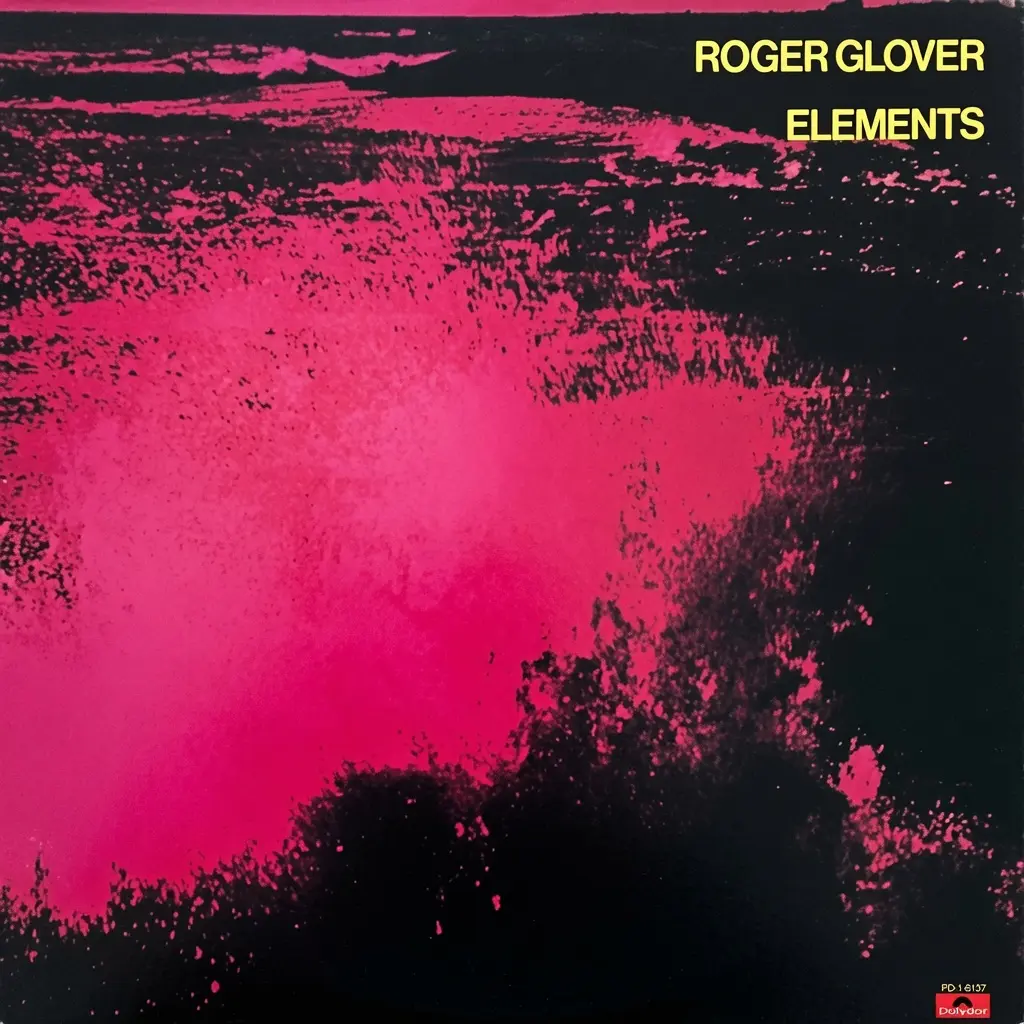 Roger Glover released his second solo album, Elements, in April 1978 on Polydor.
Elements presents a five-part suite keyed to clay, fire, water, wind, and “Finale.” Glover plays an assortment of instruments (synthesizers, bass, percussion, tabla, sitar guitar, acoustic guitar, vibes), backed by drummer Simon Phillips, keyboardist Micky Lee Soule, reedist Ronnie Aspery, and violinist–clarinetist Graham Preskett, who arranged and conducted the Munich Philharmonic strings. Liza Strike and Helen Chappelle sing the vocal sections while Martin Birch adds acoustic guitar and backing vocals.
“The First Ring Made of Clay” grinds over low synthesizer figures as sustained strings thicken the long arc. “The Next a Ring of Fire” quickens through clipped accents, hard turns, and sudden ensemble surges. “The Third Ring’s Watery Flow” unwinds through softened vocal lines and a broad reed lead. “The Fourth Ring’s with the Wind” opens the suite into lighter string passages and clarinet traces. “Finale” folds the cycle into a compact orchestral return.
A1. “The First Ring Made of Clay” (7:45) – Glover
A2. “The Next a Ring of Fire” (9:45) – Glover
B1. “The Third Ring’s Watery Flow” (9:00) – Glover
B2. “The Fourth Ring’s with the Wind” (6:33) – Glover, Birch
B3. “Finale” (2:17) – Glover, Birch
Sessions occurred in 1977 at Musicland Studios in Munich with producers Glover and Birch, who engineered the album with assistant Hans Menzel. Greg Calbi mastered the LP at Sterling Sound in New York.
Elements appeared in a Polydor sleeve with a red-and-black abstract front image and yellow artist/title type at upper right.
Mask
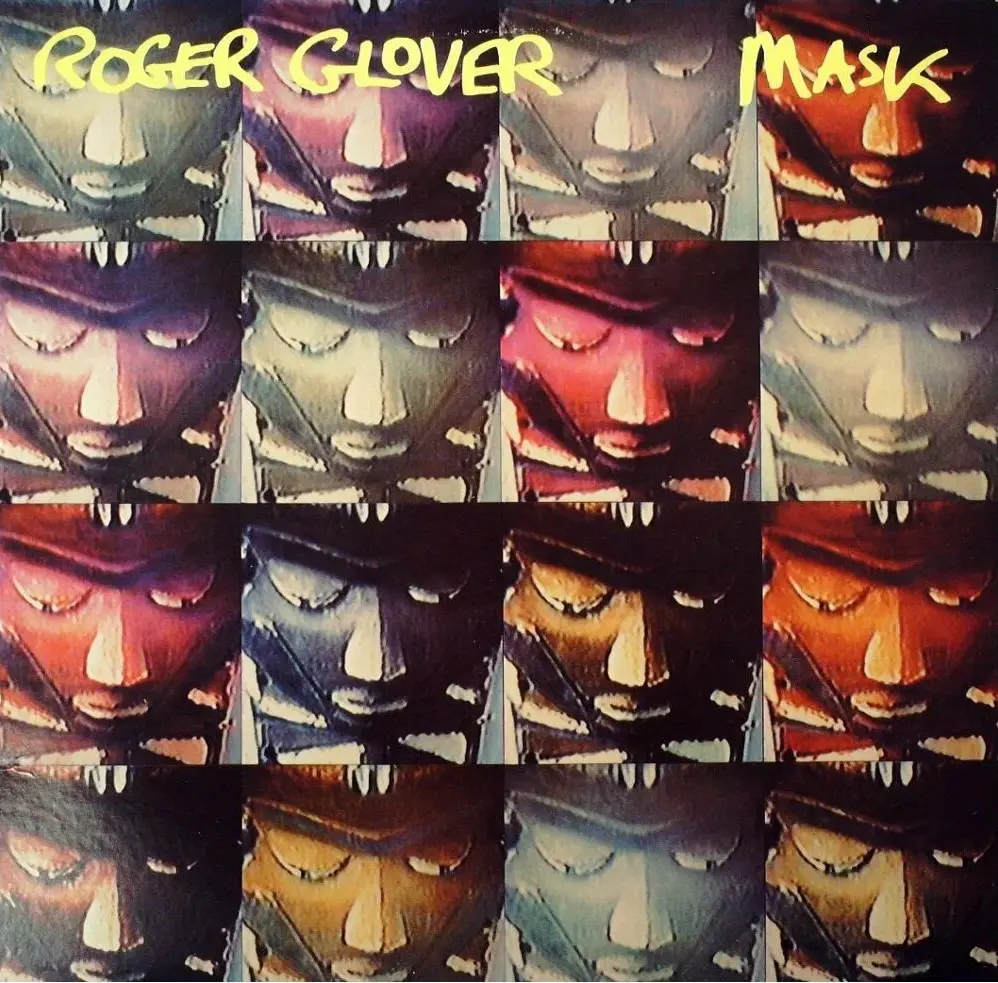 Roger Glover released his third solo album, Mask, in June 1984 on Polydor.
Mask presents an eight-song vocal set with Glover as lead vocalist and bassist. He also plays percussion, synthesizer, acoustic guitar, timbales, and piano on selected tracks. Guitarist Dave Gellis and drummer Chuck Burgi (ex-Brand X) form the core band, joined by keyboardists David Rosenthal and Jean Roussel. Joe Jammer adds guitar on three tracks. Charlie DeChant plays saxophone across Side B. Craig Brooks appears as the main backing vocalist, with Kate McGarrigle on “(You’re So) Remote.”
“Divided World” clips its verse lines against bright keyboard stabs and backing-vocal replies. “Getting Stranger” coils around acoustic color, short synthesizer answers, and a wary lead vocal. “The Mask” stalks through sequenced pulse, chant-like title phrases, and a long middle break. “Fake It” jabs through clipped vocal phrases and timbale accents.
“Dancin’ Again” struts through saxophone replies and a lean backbeat. “(You’re So) Remote” recedes into dub-treated echo and distant backing voices. “Hip Level” locks an extended guitar line to a clipped bass figure. “Don’t Look Down” closes on compact rock-song form and refrain harmonies.
A1. “Divided World” (5:12)
A2. “Getting Stranger” (4:07)
A3. “The Mask” (7:32) – Glover, Roussel
A4. “Fake It” (4:42)
B1. “Dancin’ Again” (3:30) – Glover, Gellis
B2. “(You’re So) Remote” (4:46)
B3. “Hip Level” (7:19) – Glover, Burgi, Gellis
B4. “Don’t Look Down” (3:41)
Sessions occurred in 1983 at BearTracks Studios in Suffern, New York, Boogie Hotel Studios in Port Jefferson, New York, and Le Studio in Morin-Heights, Quebec. Glover produced the album with engineer Nick Blagona and additional engineers Jeffrey Kawalek and Mike Barry. Glover and Blagona mixed the album on the SSL computer and the Sony digital system.
Mask appeared in a sleeve art-directed by Bill Levy and Peter Corriston. Glover created the front-cover and inner-sleeve images, and the front repeats one mask image in four rows of four color variants. Brian Hagiwara photographed the back cover.
Polydor issued “The Mask” as an April 1984 UK single (b/w “(You’re So) Remote”). The US 21 Records issue paired the title track with “Don’t Look Down.” The single reached No. 102 in the US and No. 20 on the Billboard Rock Tracks chart. “Divided World” appeared as a 1984 single (b/w “Dancin’ Again”).
Discography:
- The Butterfly Ball and the Grasshopper’s Feast (1974)
- Elements (1978)
- Mask (1984)
Sources:
Artist/Album Pages:
Amen Corner was a Welsh soul-pop band that released six singles and the 1968 album Round Amen Corner...
Klaus Nomi (Jan. 24, 1944 — Aug. 6, 1983) was a German singer and performance artist based in New ...
Stealers Wheel was a Scottish folk-pop band that released three albums on A&M: Stealers Wheel ...
Aviator was an English rock supergroup formed by members of Caravan, Jethro Tull, and Manfred Mann's...
Dorian Zero — aka Kenneth J. Passante (Jan. 16, 1948 — Jan. 7, 1994) — was an American art-rock m...
Leningrad Sandwich was a German goth-rock band that debuted with the 1980 album Go East on Up Reco...
Bush Tetras were an American No Wave/punk-funk band from NYC that released three shortplayers on ...
Mary Hopkin (born May 3, 1950) is a Welsh folk-pop singer from Pontardawe, Glamorgan, who released...
Cathexis was an American East Coast jazz-rock band that made a 1982 self-titled album, followed in...
Alameda was a Spanish flamenco/jazz-rock band that released four albums between 1979 and 1983 on E...
Eskaton was a French Zeuhl/chamber-rock band that self-released three albums and a standalone sing...
Syl Johnson (July 1, 1936 – February 6, 2022) was an American soul singer from Holly Springs, Miss...