

Glenn Hughes is an English bassist and singer who fronted hard-rockers Trapeze on their first three albums: Trapeze, Medusa (both 1970), and You Are the Music…We’re Just the Band (1972). He replaced Roger Glover in Deep Purple for their 1974/75 albums Burn, Stormbringer, and Come Taste the Band. In 1977, he released the solo album Play Me Out on Safari Records.
Hughes’ partnership with American guitarist Pat Thrall (Automatic Man, Pat Travers Band) spawned the popular 1982 Epic release Hughes / Thrall. In 1985, he played on Gary Moore‘s Run for Cover and partook in the symphonic hard-rock super-project Phenomena with Peter Green and drummer Cozy Powell.
Background
Glenn Hughes was born on August 21, 1951, in Cannock, Staffordshire, in the West Midlands of England. Hughes grew up as an only child in a working-class Black Country household. He entered music through school-orchestra trombone at age twelve, then added classical piano and guitar. His parents bought him a first guitar after Hughes redirected his attention from school music to beat-group instrumentation.
As a guitarist, Hughes passed through multiple local beat groups, including The Hooker-Lees, The Intruders, The In Pack, and The News. When an early Cannock role model, Finders Keepers guitarist Mel Galley, announced an open bass slot, Hughes switch instruments for the role.
Finders Keepers performed as a five-piece with (future Judas Priest) drummer Dave Holland. They issued a cover of “Sadie (The Cleaning Lady)” after Hughes’ late-period entry. By the end of the decade, they outgrew beat and embraced a post-psychedelic hard-rock sound.
Trapeze
Trapeze formed in March 1969 in Cannock when Finders Keepers members Hughes, Galley, and Holland teamed with two Montanas members, vocalist/trumpeter John Jones and keyboardist/flautist Terry Rowley. The group made an early television appearance on BBC2’s Colour Me Pop at Club Lafayette in Wolverhampton. That exposure helped bring Trapeze to Threshold Records, the Moody Blues label tied to bassist John Lodge.
Trapeze recorded their self-titled debut album with the five-piece lineup. Hughes played bass and moved from occasional vocal lines to a larger frontman role after Galley and Holland pressed management to center the band around his voice. Threshold issued Trapeze in May 1970, then Jones and Rowley returned to the Montanas. Hughes, Galley, and Holland continued Trapeze as a trio.
The trio recorded the 1970–72 albums Medusa and You Are the Music… We’re Just the Band. Hughes served as bassist and principal vocalist. Hughes applied phrasing shaped by American soul and R&B records he had heard as a teenager in Walsall. Trapeze built a strong live base in the United States through repeated American tours.
Hughes caught the attention of Deep Purple, who needed a new singer and bassist after the 1973 departures of Ian Gillan and Roger Glover. Jon Lord brought Hughes into discussions with Ritchie Blackmore, Ian Paice, and Deep Purple management during the group’s search for a new lineup. Hughes initially resisted a role limited to bass, but the prospect of a two-vocalist arrangement — first rumored to include Free singer Paul Rodgers — drew him into the band.
Deep Purple
Hughes joined Deep Purple in June 1973 as bassist and co-vocalist. The new Mark III lineup paired Hughes with vocalist David Coverdale, guitarist Ritchie Blackmore, keyboardist Jon Lord, and drummer Ian Paice. The group rehearsed new material at Clearwell Castle in Gloucestershire and recorded their February 1974 release Burn at Montreux with the Rolling Stones Mobile Studio.
Burn introduced Hughes as both bass player and vocal foil to Coverdale. His presence changed the group’s vocal balance through a split-lead arrangement, with Coverdale centered on lower-register blues phrasing and Hughes placed in higher-register counterlines. Hughes also brought a more syncopated bass approach to the group, which became clearer across the Mark III studio run.
For their November 1974 release Stormbringer, Hughes contributed “Holy Man,” “You Can’t Do It Right,” and “Hold On,” where the group left more space for clipped rhythmic figures and call-and-response vocal placement. Blackmore left after the Stormbringer cycle, and Deep Purple brought in American guitarist Tommy Bolin for the next lineup.
In March 1975, the Mark IV lineup recorded Come Taste the Band at Musicland Studios. Hughes co-wrote “Gettin’ Tighter” with Bolin and “This Time Around” with Lord, while “You Keep on Moving” carried a Hughes–Coverdale credit from earlier song work. Deep Purple broke up after the Mark IV touring cycle.
Hughes briefly reassembled with Galley and Holland for a Trapeze reunion after the Purple split. The reunion produced a short North American run and left material that fed into Hughes’s first solo album. Meanwhile, Hughes settled in Los Angeles, where David Bowie house sat during a drug-fueled, sleepless binge between his 1975/76 media (Station to Station, The Man Who Fell to Earth) and his subsequent reemergence in Berlin.
Play Me Out
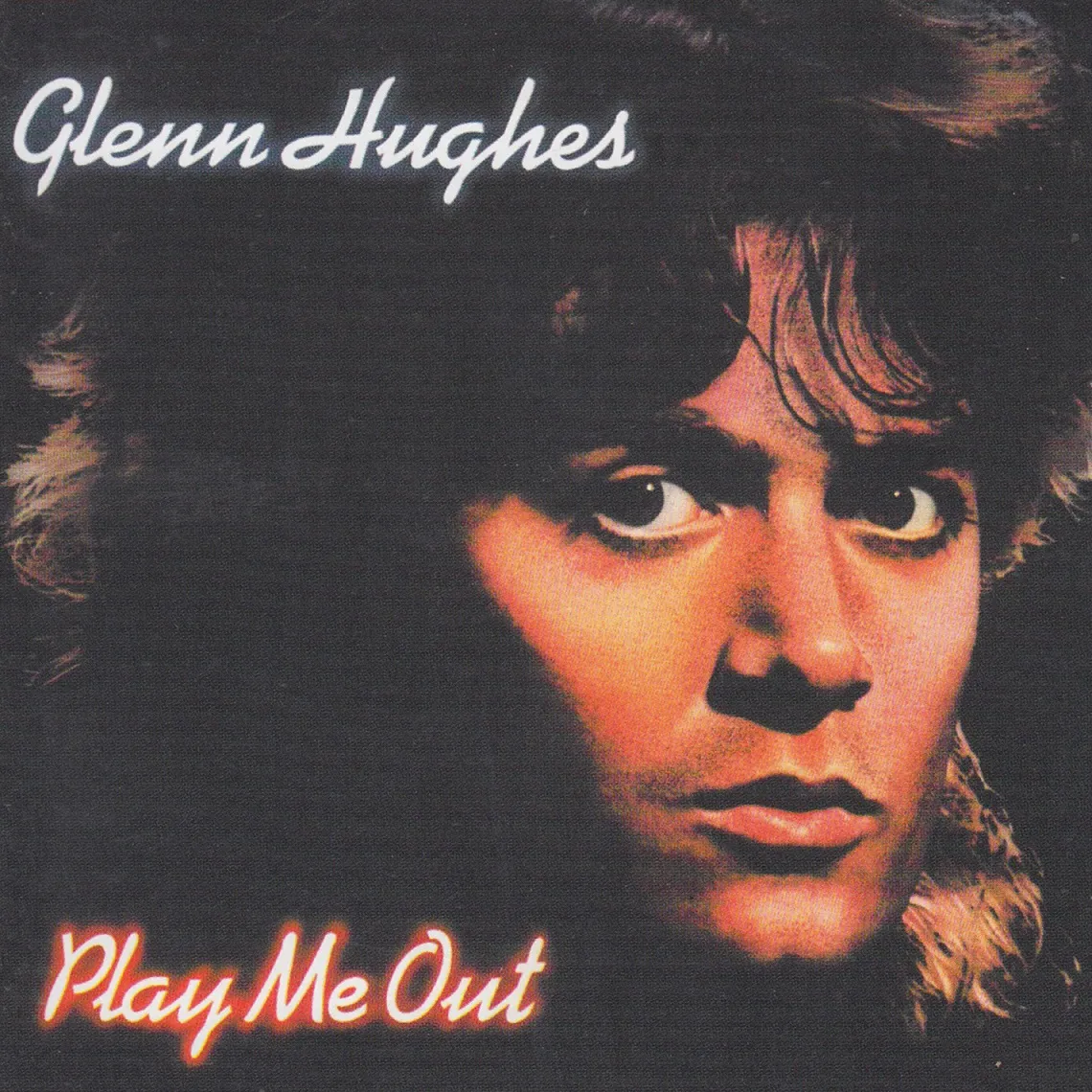 Glenn Hughes released the debut solo album, Play Me Out, in July 1977 on Safari in Germany.
Play Me Out presents nine soul-funk/rock originals by the singing bassist, who multi-tasks on guitar, Fender Rhodes, Mini-Moog, Hohner Clavinet, and ARP String Ensemble. Trapeze drummer Dave Holland plays throughout the set, which includes a reunion with Mel Galley on “Destiny.”
The album also features backing by percussionist Mark Nauseef, saxophonist Ron Asprey, trumpeter Henry Lowther, guitarists Bob Bowman and Pat Travers, pianists Terry Rowley and Robert Bailey, and backing vocalists Liza Strike, Joy Wright, and Helen Chapelle.
“I Got It Covered” struts from a softened opening into horn figures, female replies, and a brief suspended middle passage. “Space High” floats on space-worded lyric imagery, string color, and a hazier rhythmic bed. “It’s About Time” packs the arrangement with dense layers and keeps Hughes’ lead close to the center. “L.A. Cut Off” locks into a crowded chant pattern with firm accents and a party-paced charge. “Well” pares the record to a short, mellow instrumental centered on acoustic picking.
“Soulution” swells through section shifts, easing into a calmer middle passage before the ensemble tightens again. “Your Love Is Like a Fire” slows the delivery, then opens into longer phrases and late instrumental turns. “Destiny” keeps its syncopation clustered around a heavier vocal line. “I Found a Woman” settles into a smoother closing number, with celebratory title text and a relaxed vocal finish.
A1. “I Got It Covered” (5:38)
A2. “Space High” (4:57)
A3. “It’s About Time” (4:59)
A4. “L.A. Cut Off” (4:27)
A5. “Well” (1:29)
B1. “Soulution” (5:40)
B2. “Your Love Is Like a Fire” (6:28)
B3. “Destiny” (4:56) – Hughes, Holland, Galley
B4. “I Found a Woman” (4:03)
Hughes self-produced Play Me Out in 1976 at Lee Sound, Basing Street/Island, and AIR Studios. Brad Davis engineered the sessions, which included Graham Prescott as string arranger.
Play Me Out appeared in a sleeve with cover photography by Gered Mankowitz, whose image shows angled Hughes portraits against a black background.
Safari lifted “I Found a Woman” as a July 1977 German single (b/w “L.A. Cut Off”). The UK Safari edition followed as LONG 2 in an April 1978 issue.
1978–81 Interim Activity
In 1979, Hughes sang uncredited lead vocals for the Casablanca Records one-off Four on the Floor, a disco project co-produced by Al Kooper and Doobies guitarist Jeff Baxter. The album contains slick dance remake of songs by The Drifters, Chuck Jackson, Curtis Mayfield, and a side-long medley of Rolling Stones hits.
Hughes linked with Gary Moore in the early stages of G-Force, an LA-based supergroup with Play Me Out participant Mark Nauseef. However, their 1980 album appeared minus Hughes, who purportedly didn’t match Moore’s sober living terms. In 1981, Hughes sang backing vocals for the Climax Blues Band on “Shake It Lucy,” a track from their album Lucky for Some.
Hughes found a new musical bond in guitarist Pat Thrall, a rock journeyman who cut two space-funk albums with Automatic Man and played on Go, the 1976 super-project by Stomu Yamash’ta, Steve Winwood, and Santana drummer Michael Shrieve (with fellow guests Al Di Meola and Klaus Schulze). Most recently, he recorded with Narada Michael Walden and did a three-album stint with Pat Travers.
Hughes/Thrall
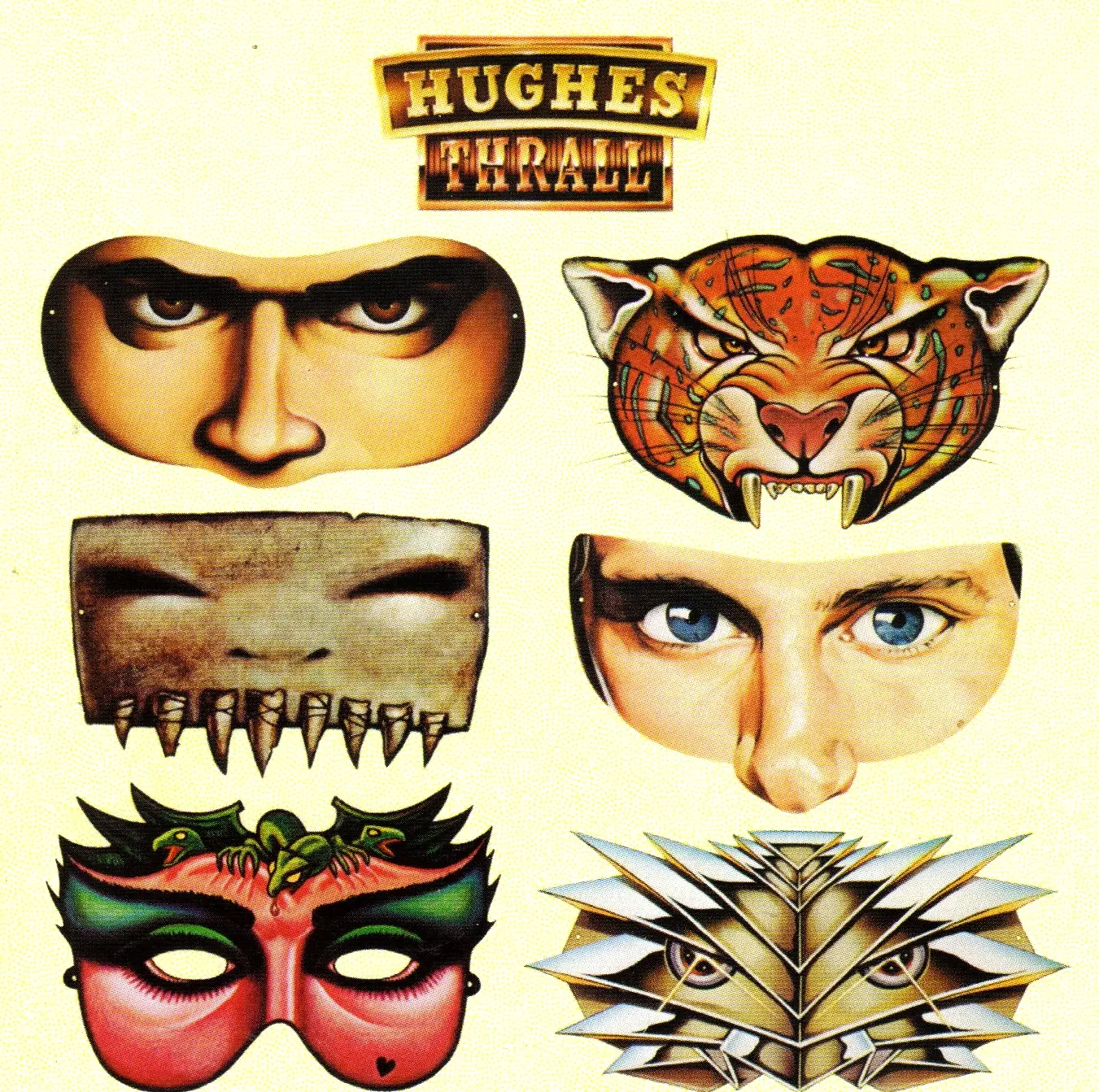 Glenn Hughes and Pat Thrall released their joint album in August 1982 on Boulevard, an Epic-associated label.
Hughes/Thrall imparts Hughes’ soaring voice and punctual bass against Thrall’s guitar/synth sonics. Keyboardist Peter Schless backs the duo with drummers Gary Ferguson, Frankie Banali, and Gary Mallaber. Hughes lone-wrote “Coast to Coast” and co-wrote the balance with Thrall.
“I Got Your Number” bolts through a taut opening drive, with Hughes’ lead placed high against a dense keyboard bed. “The Look In Your Eye” launches open with explosive chordal sustain around encouragement couplets and soars with defiance and taut synth accent; Hughs bellows with assurance across the gliding power-chorus amid Thrall’s sly underlays. “Beg, Borrow or Steal” saunters through a sinuous strut and pulsing keys. “Muscle and Blood” hardens around a heavy riff and the album’s most direct charging pattern.
“Hold Out Your Life” stretches Thrall’s line into a concise, paced lead break. “Coast to Coast” softens around Hughes’ voice and atmospheric guitar color. “First Step of Love” closes with sharper vocal peaks and a harder Thrall part.
A1. “I Got Your Number” (3:37)
A2. “The Look In Your Eye” (3:51)
A3. “Beg, Borrow or Steal” (3:47)
A4. “Where Did the Time Go” (2:59)
A5. “Muscle and Blood” (4:21)
B1. “Hold Out Your Life” (4:47)
B2. “Who Will You Run To” (3:43)
B3. “Coast To Coast” (3:55) – Hughes
B4. “First Step of Love” (5:35)
Sessions occurred at United Western Studios in Hollywood and Shangri-La Studios in Malibu. Andy Johns mixed the album and joined Hughes/Thrall and Rob Fraboni in the production credit for D&B Productions. Johns and Tim Kramer engineered the sessions.
The sleeve credits Margo Nahas for lettering and Steve Carver, Matt Mahurin, John Lykes and Earl Keleny, Nick Taggart, and Andy Zito for illustration.
Boulevard lifted “Beg, Borrow or Steal” as a December 1982 US single (b/w “Who Will You Run To”), which reached No. 79 on the Billboard Hot 100 in the January 15, 1983 chart issue. Hughes and Thrall shot a video to “The Look In Your Eye” in which Nagel-esque models pose in face masks from the album cover.
Discography:
- Play Me Out (1977)
- Hughes / Thrall (1982 • Hughes / Thrall)
- Blues [L.A. Blues Authority Volume II] (1992)
- From Now On… (1994)
- Feel (1995)
- Addiction (1996)
- The Work Tapes (1998 • Glenn Hughes / Geoff Downes)
- The Way It Is (1999)
- A Soulful Christmas (2000)
- From the Archives Volume I: Incense & Peaches (2000)
- Return of Crystal Karma (2000)
- Building the Machine (2001)
- Songs in the Key of Rock (2003)
- The 1996 DEP Sessions (2004 • Iommi with Glenn Hughes)
- Made in Moscow (2005 • Glenn Hughes and Joe Lynn Turner in Michael Men Project)
- Soul Mover (2005)
- Fused (2005 • Tony Iommi & Glenn Hughes)
- Music for the Divine (2006)
- Sweet Revenge (archival, 2008 • Robin George / Glenn Hughes)
- First Underground Nuclear Kitchen (2008)
- Resonate (2016)
Sources:
Artist/Album Pages:
Genre was an American jazz-rock band behind the 1978 album Commercial Success on Black Gold Record...
Ahora Mazda was a Dutch ethno/psych band that released a self-titled album on Catfish in 1970. M...
Dalis Car was an English art-pop duo comprised of former Japan bassist Mick Karn and ex-Bauhaus vo...
Alpha du Centaure was a French jazz-rock band that released the album Contact on Spirales in 1979....
Ahmad Jamal (born July 2, 1930) is an American post-bop/jazz-funk pianist from Pittsburgh. He est...
Minotaurus was a German symphonic-rock band that self-released the 1978 album Fly Away. Members:...
Woody Shaw (December 24, 1944 — May 10, 1989) was an American trumpeter and composer. He recorde...
Keep was a Japanese jazz-rock super-group that released the 1981/82 albums DG-581 and Rock'n Rocke...
The Michael Schenker Group was a German hard-rock/metal band that released four studio albums and ...
Martha Veléz (born August 25, 1945) is an American singer who released the blues-rock-soul albums Fi...
Lacrymosa was a Japanese chamber-rock unit led by composer and multi-instrumentalist Chihiro Saito...
John Thomas & Lifeforce were an American jazz-rock band behind the 1980/81 albums Devil Dance ...