

Tranquility was an English rustic-rock/folk band assembled by manager-producer Ashley Kozak around singer-songwriter Terry Shaddick. They released the 1972 Epic albums Tranquility and Silver, then reconfigured for the 1974 Island single “Midnight Fortune.”
Shaddick later co-wrote the 1981 Olivia Newton-John single “Physical” with Steve Kipner. Bassist Jim Leverton played beforehand with Fat Mattress and Juicy Lucy, then worked with Ellis, Hemlock, Savoy Brown, and Caravan.
Members: Terry Shaddick (vocals, guitar, 1971–74), Tony Lukyn (keyboards, vocals, 1971–74), Kevin McCarthy (guitar, vocals, 1971–74), Jim Leverton (bass, 1971–72), Eric Dillon (drums, percussion, 1971–72), Berkeley Wright (guitar, vocals, 1972–74), Bernard Hagley (bass, flute, 1972–74), Paul Francis (drums, percussion, 1972–74)
Background
Former Donovan manager Ashley Kozak formed Tranquility in 1971 around the songs of Terry Shaddick. Kozak sought a group that could combine English folk material with contemporary rock and pop forms. His recent production work included the 1969 Marc Brierley album Hello and the 1970 self-titled album by Clear Blue Sky.
Keyboardist Tony Lukyn and guitarist Kevin McCarthy joined Shaddick in the formative group. Bassist Jim Leverton and drummer Eric Dillon brought an existing rhythm-section partnership from Fat Mattress, the band they formed with former Jimi Hendrix Experience bassist Noel Redding. John Perry also contributed bass during the first-album sessions.
Epic introduced Tranquility with the November 1971 single “Thank You” (b/w “Saying Goodbye”). The group toured the United States during 1972 before a lineup revision brought guitarist Berkeley Wright, bassist Bernard Hagley, and drummer Paul Francis into the working six-piece.
Tranquility
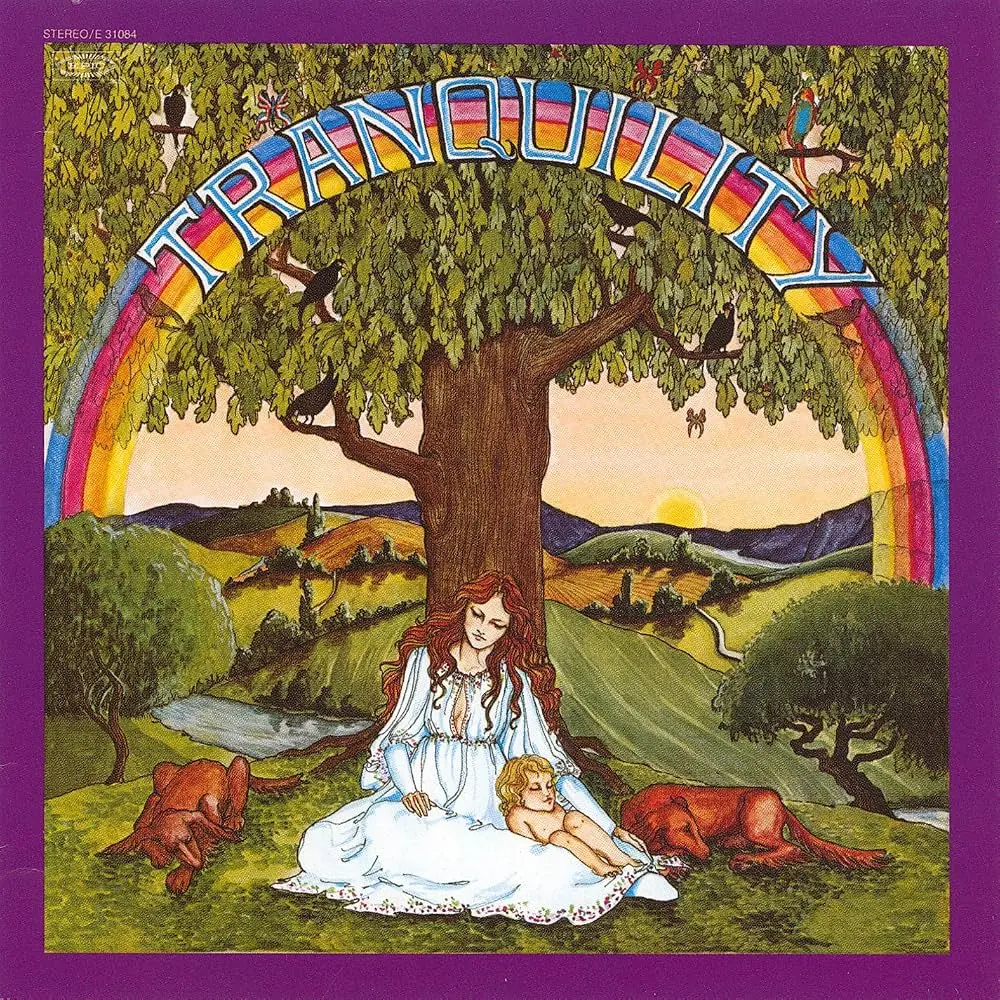 Tranquility released their self-titled debut album in March 1972 on Epic.
The album documents the transition between the early group and the lineup that continued into Silver. Guitarists Shaddick and Berkeley Wright share the lead role, while McCarthy handles acoustic guitar and vocals. Lukyn plays piano, organ, vibraphone, and Mellotron. The rhythm-section credits divide among bassists Bernard Hagley, Jim Leverton, and John Perry, with drummers Eric Dillon and Paul Francis. Shaddick wrote the eleven selections. John Presley shares the credit on “Look at the Time It’s Late,” while Lukyn co-wrote “Thank You.”
“Try Again” breezes through acoustic guitar and close harmonies, then opens into a circling electric solo. “Where You Are (Where I Belong)” gathers harmonized leads around Rhodes figures and propulsive sectional turns. “Thank You” settles into broad, measured chords. “Black Currant Betty” skips through jaunty music-hall piano. “Saying Good-Bye” rises from subdued harmonics into a forceful chorus.
A1. “Try Again” (5:18) – Shaddick
A2. “Ride Upon the Sun” (4:27) – Shaddick
A3. “Where You Are (Where I Belong)” (6:20) – Shaddick
A4. “Look at the Time It’s Late” (2:27) – Shaddick, John Presley
A5. “Lady of the Lake” (3:21) – Shaddick
B1. “Walk Along the Road” (3:24) – Shaddick
B2. “Thank You” (3:55) – Shaddick, Lukyn
B3. “Oyster Catcher” (4:30) – Shaddick
B4. “Blackcurrant Betty” (2:50) – Shaddick
B5. “Happy Is the Man” (3:22) – Shaddick
B6. “Saying Goodbye” (5:40) – Shaddick
Tranquility recorded the album at Olympic Sound Studios in London with producer Ashley Kozak and engineer Keith Harwood. Kozak brought his recent work with Marc Brierley and Clear Blue Sky to the sessions. Harwood came from Olympic assignments with Gypsy and moved into engineering work on Led Zeppelin’s 1973 album Houses of the Holy.
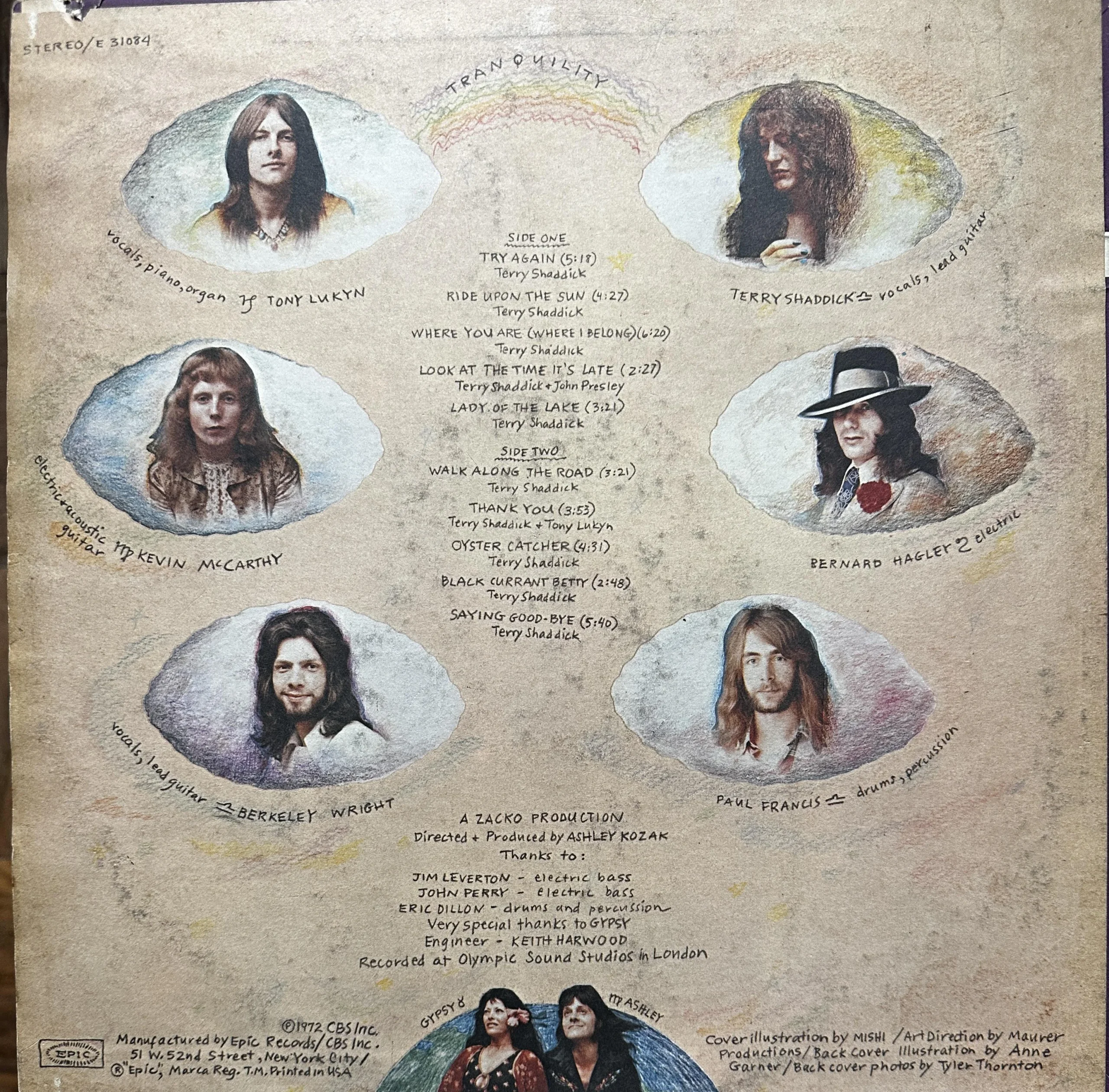 Mishi illustrated the front cover, which places a seated woman and child beneath a large tree as a rainbow arches across the title. Anne Garner supplied the back-cover illustration, Tyler Thornton handled photography, and Maurer Productions directed the package.
Epic introduced “Thank You” in the UK on November 12, 1971 (b/w “Saying Goodbye”). The US edition followed in March 1972 with “Where You Are (Where I Belong)” on the reverse.
In July 1972, Epic reversed the emphasis with “Saying Goodbye” (b/w “Happy Is the Man”) in the UK.
The original LP contains both “Blackcurrant Betty” and “Happy Is the Man.” Several later ten-track editions omit “Happy Is the Man.”
Silver
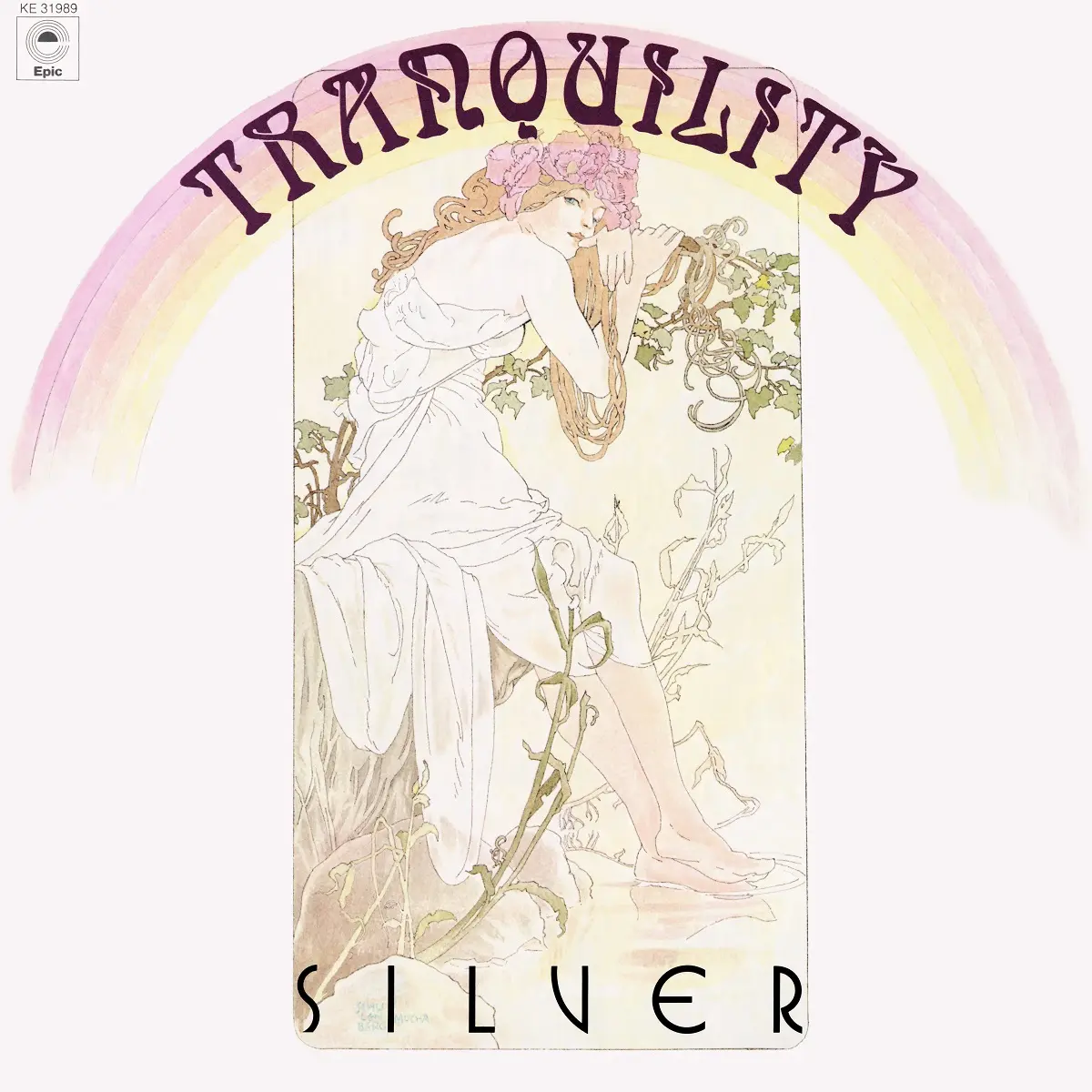 Tranquility released their second album, Silver, on October 25, 1972, through Epic.
Silver presents the settled six-piece of Shaddick, Wright, McCarthy, Lukyn, Hagley, and Francis. Lukyn expands his keyboard role to electric piano and Clavinet, then sings lead on his composition “Linda.” McCarthy takes the lead part on “The Driver’s Engine,” while Hagley adds flute to his bass role. Shaddick wrote nine selections; Lukyn contributed “Linda.”
“Eagle Eye” jangles through bright guitar figures and synthesizer accents beneath close harmonies. “Can I See You” drifts from a hazy opening into sustained sung lines. “Linda” lopes through a homespun ballad figure. “Nice and Easy” glides past faint flute tones into a sustained string passage. “Silver” unfurls with high, blended harmonies.
A1. “Eagle Eye” (3:56) – Shaddick
A2. “Can I See You” (5:44) – Shaddick
A3. “Linda” (4:03) – Lukyn
A4. “Whip Wheel” (5:15) – Shaddick
A5. “The Driver’s Engine” (3:40) – Shaddick
B1. “Couldn’t Possibly Be” (4:19) – Shaddick
B2. “Nice and Easy” (3:16) – Shaddick
B3. “Dear Oh Dear” (3:20) – Shaddick
B4. “Silver” (7:20) – Shaddick
B5. “The Tree” (1:05) – Shaddick
Tranquility recorded Silver in 1972 at CBS Studios on Whitfield Street in London with returning producer Ashley Kozak and engineer Mike Ross-Trevor. Ross-Trevor served on the CBS staff and engineered September/October sessions for the third Iggy and the Stooges album, Raw Power.
Teresa Alfieri designed the cream-colored sleeve around a pale female figure adapted from Alphonse Mucha, with a rainbow arc behind the group name. Bob Schulenberg contributed the front-cover treatment during the same year he supplied artwork for the Blood, Sweat & Tears album New Blood.
Epic issued an edited “Eagle Eye (High Flyer)” in the United States during December 1972 (b/w “Whip Wheel”). “Couldn’t Possibly Be” followed in February 1973 (b/w “Linda”).
“Dear Oh Dear” became the next US single in March 1973 (b/w “Nice and Easy”). Epic issued the same pairing in the UK during May.
Sony Music Japan issued remastered editions of both Tranquility albums on CD on April 4, 2018. The reissue marked the first official CD edition of Silver.
Final Single
In April 1974, Tranquility reappeared on Island Records with a final single: “Midnight Fortune,” a Lukyn number backed with “One Day Lady,” a Shaddick original, both recorded under Zacko Productions.
Postlude
Terry Shaddick continued as a songwriter and later collaborated with ex-Tin Tin frontman Steve Kipner on “Physical.” Olivia Newton-John released the song in September 1981; it spent ten consecutive weeks at No. 1 on the Billboard Hot 100.
Jim Leverton joined Ellis for the 1972 album Riding on the Crest of a Slump and Hemlock for their 1973 self-titled release. He played on the 1974 Savoy Brown album Boogie Brothers and became the bassist of Caravan during the 1990s.
Discography:
- Tranquility (1972)
- Silver (1973)
Sources:
Artist/Album Pages:
Fad Gadget (aka Frank Tovey, 1956–2002) was an English post-punk electronic musician who released ...
Fábio is a Paraguayan-Brazilian singer/songwriter who released several shortplayers and a self-tit...
Ronnie Foster is an American organist and arranger who released eight albums between 1972 and 1986...
Green was an American psychedelic rock band that released two albums between 1969 and 1971 on ATCO. ...
Nick Garrie (born June 22, 1949) is an English folk-psych singer/songwriter from Yorkshire who rel...
Blue Mountain Eagle was an American psych-rock band from Los Angeles that released a 1970 self-tit...
Bad Company was an English hard-rock supergroup led by Free vocalist Paul Rodgers. They released s...
Michael de Albuquerque (born June 24, 1947) is an English musician, singer, and songwriter who cut...
Mick Karn — aka Andonis Michaelides (July 24, 1958 — Jan. 4, 2011) — was an English-Cypriot multi-...
Graham Parker is an English New Wave/soul-rock singer and songwriter who released the popular 1976...
Bronz was an English hard-rock band behind the 1983 album Taken by Storm on Bronze Records. Singer...
Bananarama was an English vocal trio that charted with the 1982 singles "Shy Boy," "Really Saying ...