

Patti LaBelle is an American soul singer who fronted The Blue Belles during the 1960s. In 1970, they morphed into the soul-funk trio Labelle, which released seven albums between 1971 and 1976, scoring a hit with “Lady Marmalade.”
After going solo, she released four albums on Epic, starting with her 1977 release Patti LaBelle. Between 1981 and 1985, she released three albums on PIR, charting with the mid-’80s hits “New Attitude” and “Stir It Up.” In 1986, she had a chart-topping duet with Michael McDonald on the Burt Bacharach / Carole Bayer Sager composition “On My Own.”
Background
LaBelle was born Patricia Louise Holte on May 24, 1944, in Philadelphia. She grew up listening to R&B and jazz and sang in the local choir at Beulah Baptist Church. At age 16, she won a talent contest at John Bartram High School.
The Blue Belles
In 1960, Holte formed her first vocal group, The Ordettes. After the other members quit for domestic reasons, she assembled a new lineup with Cindy Birdsong, Sarah Dash, and Nona Hendryx. In 1962, they successfully auditioned for Newtown Records founder Harold Robinson. He sent them on tour with a new name, The Blue Belles, and had them lip-sync on TV for another Newton act, The Starlets. Amid the bad press and litigation, Robinson gave Holt a stage name, Patti LaBelle.
As Patti LaBelle and The Blue Belles, they charted with the 1963/64 singles “Down the Aisle” (King Records), “You’ll Never Walk Alone,” and “Danny Boy” (both Cameo-Parkway). In 1965, they signed to Atlantic and charted with “All or Nothing” and “Take Me for a Little While.” After the 1966/67 albums Over the Rainbow and Dreamer, Birdsong got picked as Florence Ballard’s replacement in The Supremes. A further round of singles followed in 1968/69 before Atlantic dropped the group.
LaBelle
In 1970, English talent manager Vicki Wickham, formerly of the ITV music program Ready Steady Go!, agreed to manage the group, now comprised of LaBelle, Hendrix, and Dash. To suit the times, Wickham suggested an earthier image and a more succinct group name, Labelle. In this grittier, funkier iteration, they released two albums on Warner Bros. in 1971/72, plus a collaborative album with singer/songwriter Laura Nyro.
After their 1973 RCA release Pressure Cookin’ , the newly costumized Labelle signed to Epic for the 1974–76 albums Nightbirds, Phoenix, and Chameleon, scoring a huge hit from the first of those with “Lady Marmalade.” As the group toured Chameleon, tensions between the three reached the boiling point. After one tumultuous backstage incident during their 12/16/76 show in Baltimore, they agreed to go their separate ways.
Patti LaBelle resigned as a solo artist to Epic and returned to the studio with Chameleon producer David Rubinson.
Patti LaBelle
 Patti LaBelle released her self-titled debut album on August 19, 1977, on Epic.
LaBelle’s first solo effort followed sixteen years leading Labelle and their predecessor, the Bluebelles. The album blends dance numbers, gospel-leaning ballads, and mid-tempo funk, marking her emergence as a solo performer while maintaining ties to her previous collaborators.
James “Budd” Ellison served as the primary songwriter, co-writing with LaBelle and her husband/manager Armstead Edwards on select tracks. Jeffrey E. Cohen and Raydio‘s Ray Parker Jr. contributed additional material on two songs. She also tackles songs by Bob Dylan, Willie Dixon, Barrett Strong and Norman Whitfield.
The album opens with the dance-driven “Joy to Have Your Love” and includes mid-tempo tracks like “I Think About You” and “Dan Swit Me.” Covers such as “Since I Don’t Have You” and “Most Likely You Go Your Way (And I’ll Go Mine)” sit alongside gospel-leaning originals “You Are My Friend” and “Do I Stand a Chance?” The set alternates between contoured ballads, rhythmic funk, and interpretive pop renditions, providing a varied solo showcase.
A1. “Joy to Have Your Love” (5:44) Brass accents and string flourishes frame a shifting rhythm section while LaBelle drives the vocal line with sudden ascents and sustained power.
A2. “Funky Music” (6:24) LaBelle reinterprets the Whitfield–Strong composition with extended phrasing and sharp horn punctuations that push the rhythm into a heavier stride.
A3. “Since I Don’t Have You” (5:40) The Skyliners’ 1958 doo-wop ballad stretches into a slow, orchestral setting, where LaBelle builds her voice from restrained clarity into surging release.
A4. “Dan Swit Me” (5:50) Layered percussion and brisk guitar strokes carry the pace, while LaBelle’s phrasing darts between clipped declarations and long, rising cries.
B1. “You Are My Friend” (4:36) Piano and strings trace a steady foundation as LaBelle unfolds an intimate lyric into a wide, gospel-rooted statement of endurance and devotion.
B2. “You Can’t Judge a Book by the Cover” (4:22) Willie Dixon’s blues framework is re-cast with tightened instrumentation, LaBelle pushing the vocal line with pointed accents and measured fire.
B3. “I Think About You” (4:30) Leo Nocentelli’s writing lends a mid-tempo pulse, the guitar threading through LaBelle’s vocal arcs that bend between contemplative quiet and emphatic peaks.
B4. “Do I Stand a Chance?” (4:21) LaBelle shifts between restrained verses and forceful refrains, the arrangement balancing strings and brass against her dynamic urgency.
B5. “Most Likely You Go Your Way (And I’ll Go Mine)” (6:44) Dylan’s lyric turns into a stretched soul workout, brass interjections cutting through as LaBelle reshapes the phrasing with emphatic holds and sharp breaks.
Musicians on the album include LaBelle on lead and backing vocals with Ellison on keyboards and musical direction. Guitarist Ray Parker Jr. wrote one song and co-wrote two others with LaBelle and Edwards, while Leo Nocentelli contributed a composition and acoustic piano. Bassists Mac Cridlin, George Porter Jr., and David Shields support rhythm alongside drummer James Gadson. Backing vocals feature the Waters family, the Womacks, Yvonne Fair, Norma Harris, and others. Horn and string arrangements were handled by Kurt McGettrick, Gary Herbig, Robert Manchurian, and Dale Warren.
Sessions occurred at The Automatt in San Francisco and Village Recorder in Los Angeles with producer David Rubinson and engineer Fred Catero, assisted by Terry Becker and Chris Minto. George Horn handled mastering.
“Joy to Have Your Love” was released as a single in September 1977. “You Are My Friend” followed in January 1978, becoming a signature ballad despite peaking at No. 61 on the Billboard R&B chart.
2011 Remaster
10. “Joy to Have Your Love” (Single Version) (3:15)
11. “Dan Swit Me” (Single Version) (3:59)
Tasty
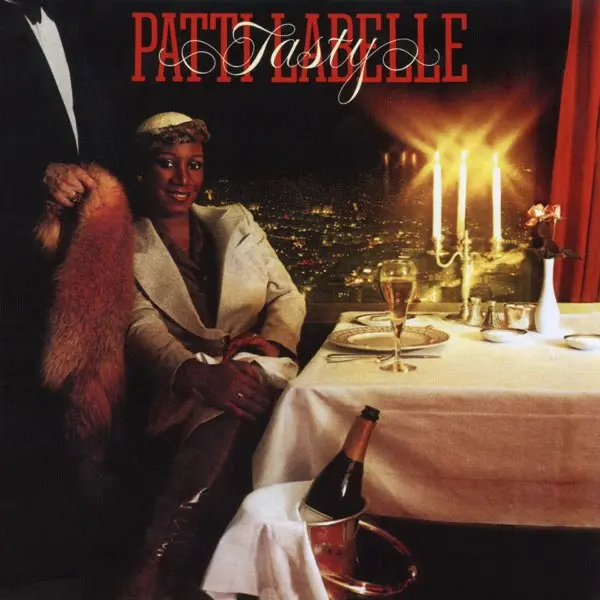 Patti LaBelle released her second solo album, , on May 19, 1978, on Epic.
The album blends soul, disco, and Latin-influenced rhythms, highlighting LaBelle’s transition from her work with Labelle into a solo identity. Key selections include club-oriented tracks, Latin-flavored songs, and gospel-leaning ballads, with LaBelle exploring both covers and self-penned material.
James “Budd” Ellison and Armstead Edwards co-wrote several tracks with LaBelle, while Allee Willis and David Lasley contributed one composition. Pete Wingfield supplied another, and covers include songs by Doc Pomus and Mort Shuman, Michael Franks, Boz Scaggs, Jesse Stone, and The Drifters.
Tracks range from upbeat dance numbers like “Eyes in the Back of My Head” and Latin-inflected “Teach Me Tonight (Me Gusta Tu Baile)” to gospel-leaning ballads such as “Quiet Time” and reflective compositions including “Little Girls.” Covers are reinterpreted with rhythmic and harmonic adjustments, exemplified by “Save the Last Dance for Me” and “You Make It Hard to Say No.” The album alternates high-energy club tracks with contemplative and expressive soul performances.
A1. “Save the Last Dance for Me” (5:05)
A2. “Monkey See Monkey Do” (5:12)
A3. “Little Girls” (6:46)
A4. “You Make It Hard to Say No” (5:35)
B1. “Teach Me Tonight (Me Gusta Tu Baile)” (5:21)
B2. “Quiet Time” (5:05)
B3. “Don’t Let Go” (4:06)
B4. “I See Home” (5:57)
B5. “Eyes in the Back of My Head” (5:25)
LaBelle provides lead vocals, backing vocals, and musical direction. Ellison handles keyboards and vocal arrangements. Guitarists Leo Nocentelli, Ray Parker Jr., and Wah Wah Watson support harmonic and rhythmic textures, while bassists Eddie N. Watkins Jr. and Pablo Tellez anchor the low end. Drummers James Gadson, Ollie E. Brown, and Leon “Ndugu” Chancler drive pace across the set. Steel drums, timbales, and congas appear on select tracks, enhancing Latin and Caribbean inflections. Backing vocals feature the Waters family, Carlos Alomar, Willie Colón, and the Johnny Land Singers. Dale Warren provides orchestral arrangements, with Teresa Adams directing strings led by Nathan Rubin. Al Bent arranged brass parts, and David Rubinson contributed arrangements and production.
Sessions occurred at The Automatt in San Francisco with producer David Rubinson and engineer Fred Catero, assisted by Chris Minto and Cheryl Ward.
Tony Lane directed album art and design, with front cover photography by Benno Friedman and back cover photography by Weldon Andersen.
“Eyes in the Back of My Head” became a club hit and reached the top five of the Italian singles chart.
2014 Remaster
10. “Teach Me Tonight (Me Gusta Tu Baile)” [Single Version] (3:26)
11. “Little Girls” [Single Version] (3:58)
12. “Eyes in the Back of My Head” [12″ Disco Version] (8:00)
13. “Save the Last Dance for Me” [12″ Disco Version] (7:14)
It’s Alright With Me
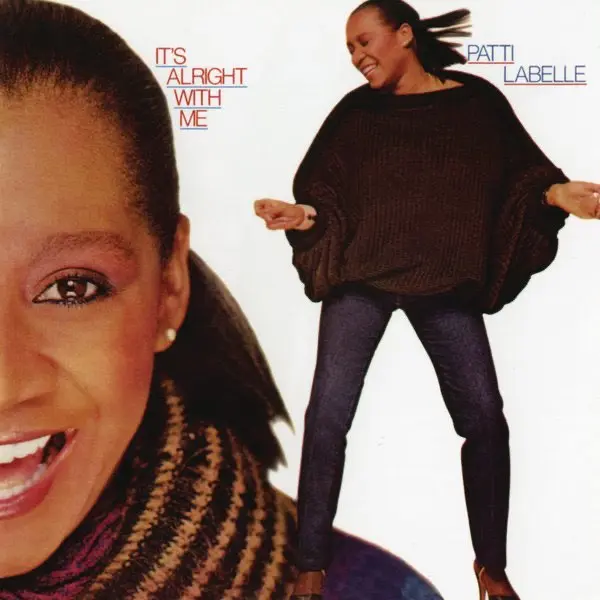 Patti LaBelle released her third solo album, , on March 2, 1979, on Epic.
The album blends romantic ballads, slow jams, and selective up-tempo tracks, reflecting LaBelle’s evolving solo voice two years after Labelle’s breakup. Highlights include dance-leaning “Music Is My Way of Life” and emotive ballads such as “Come What May.”
Skip Scarborough composed the majority of the material, while LaBelle and James Ellison co-wrote one track. David Lasley and Allee Willis supplied another, and Wayne Lee Vaughn with Wanda Hutchinson contributed a separate composition. Franne Golde and Marti Sharron with Gerald Lee provided additional outside material.
Songs alternate reflective ballads like “My Best Was Good Enough” and “Love and Learn” with mid- to up-tempo numbers such as “Deliver the Funk” and “Music Is My Way of Life,” balancing contemplative phrasing with energetic rhythmic sections.
A1. “It’s Alright with Me” (4:16)
A2. “My Best Was Good Enough” (2:47)
A3. “What Cha Doin’ to Me?” (3:46)
A4. “Love Is Just a Touch Away” (3:54)
A5. “Love and Learn” (5:34)
B1. “Deliver the Funk” (4:10)
B2. “Come What May” (4:05)
B3. “You and Me” (3:50)
B4. “Music Is My Way of Life” (8:12)
LaBelle handles lead vocals with Ellison assisting on production. Michael Stanton and Ernest Straughter perform acoustic piano, Fender Rhodes, and clavinet. Guitarists Johnny Graham, John Rowin, Louis Russell, and Spencer Bean provide rhythmic and harmonic support, while bassists Wayne Douglas and Robert Russell anchor the low end. Nate Neblett drives drums, with percussion by Miguel Fuentes and Munyungo Jackson. Orchestra arrangements are by David Crawford, with George Bohanon as horn contractor and Charles Veal directing strings. Backing vocals include the Waters family, Emma Coleman, Scherrie Payne, and The Wright Combination.
Sessions occurred at Total Experience Recording Studios in Hollywood and Alpha International Studios in Philadelphia with producer Skip Scarborough and assistant producer James Budd Ellison. Don Cody handled recording and mixing, assisted by Steve MacMillan and Jerry Williamson. Stuart J. Romaine mastered the album.
Janet Perr and Paula Scher directed art and design, with Bill King providing photography.
“Music Is My Way of Life” achieved dance chart success, reinforcing LaBelle’s presence in disco-influenced club music.
2011 Remaster
10. “It’s Alright with Me” (Single Version) (3:51)
11. “Music Is My Way of Life” (Single Version) (3:19)
12. “Music Is My Way of Life” (Instrumental) (5:52)
Released
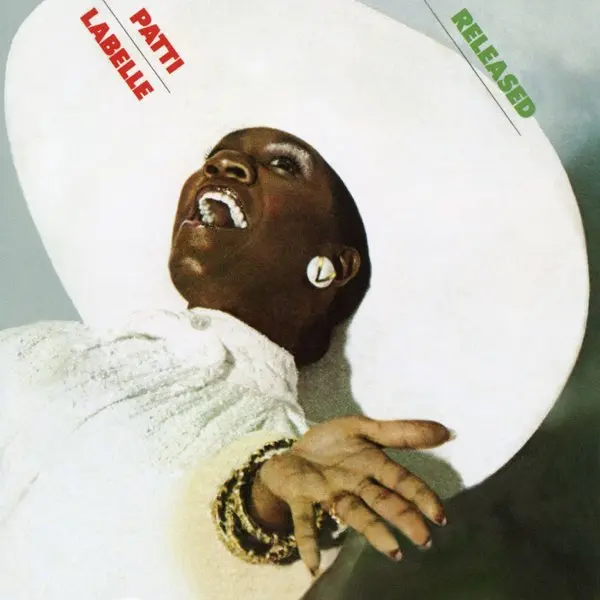 Patti LaBelle released her fourth solo album, Released, on March 14, 1980, on Epic.
The album blends post-disco rhythms with romantic ballads and funk-leaning arrangements, emphasizing LaBelle’s vocal range and dynamic phrasing. It features the title track, “Release (The Tension),” produced by Allen Toussaint, alongside the ballad “I Don’t Go Shopping.”
Allen Toussaint wrote and produced the majority of the material. LaBelle co-wrote the final five tracks with James Budd Ellison, Victor Orsborn, Edward Batts, and Theodore McClean. David Lasley and Peter Allen composed the ballad “I Don’t Go Shopping.”
The album moves between energetic dance tracks such as “Release (The Tension)” and reflective ballads including “I Don’t Go Shopping” and “Love Has Finally Come,” balancing layered instrumentation with LaBelle’s commanding voice.
A1. “Give It Up (The Dawning of Rejection)” (5:40)
A2. “Don’t Make Your Angel Cry” (3:20)
A3. “Release” (3:01)
A4. “I Don’t Go Shopping” (3:54)
A5. “Ain’t That Enough” (3:45)
B1. “Love Has Finally Come” (5:36)
B2. “Come and Dance With Me” (4:28)
B3. “Get Ready (Lookin’ for Loving)” (4:54)
B4. “Find the Love” (5:43)
LaBelle performs lead vocals and acts as associate producer and album conceptualist. Toussaint handles keyboards, vocoder, and synthesizer, with Ellison and Sam Henry Jr. on acoustic and electric piano. Edward Batts and Ron Smith provide guitars and backing vocals, while David Barard anchors bass. Herman Ernest III drives drums with Miguel Fuentes and Kenneth Williams on percussion. Horn arrangements include alto, tenor, and baritone saxophones, trombones, and trumpets, with solo passages by James Rivers. Backing vocals appear from Vernon Manuel and Jay Van Hall.
Sessions occurred at Sea Saint Studios in New Orleans with producer Allen Toussaint, associate producers Patti LaBelle and James Budd Ellison, and engineers Skip Godwin and Danny Jacobs. Jack Skinner mastered the album at Sterling Sound in New York City.
John Berg and Andrea Klein directed art and cover design, with Hiro 51 providing photography.
“Release (The Tension)” reached the top 20 in the Netherlands and Belgium and peaked at number 48 on the U.S. dance chart, while “I Don’t Go Shopping” became LaBelle’s first top 40 R&B single since 1977.
2014 Remaster
10. “Release (The Tension)” (12″ Disco Remix) (3:01)
The Spirit’s in It
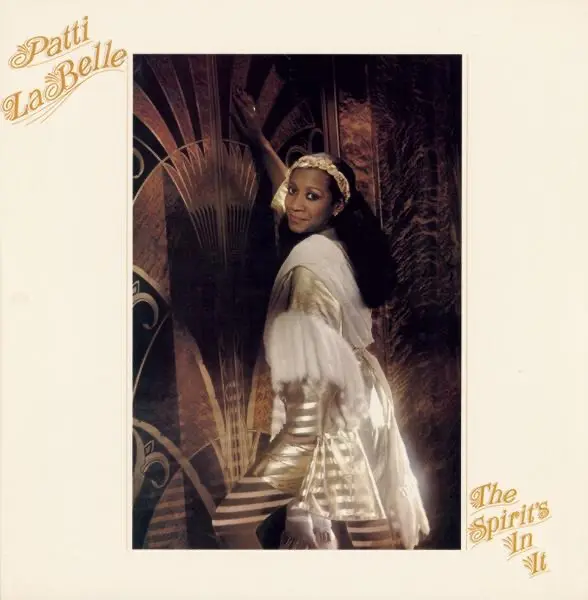 Patti LaBelle released her fifth solo album, The Spirit’s in It, on August 28, 1981, on Philadelphia International.
The album mixes soul, R&B, and post-disco textures, featuring layered orchestration and tight horn and string arrangements that complement LaBelle’s commanding vocals. Production comes from a combination of Kenneth Gamble, Leon Huff, James “Budd” Ellison, Cynthia Biggs, Dexter Wansel, and Cecil Womack.
Kenneth Gamble co-wrote the title track with Cecil Womack, who co-wrote “Love Lives” with Leon Huff, who composed “I Fell in Love Without Warning.” She also sing material by Eric Carman (“Boats Against the Current”), Dexter Wansel (“Shoot Him on Sight”), Dolly Parton (“Here You Come Again”), and the Wizard of Oz ballad “Over the Rainbow.” LaBelle co-wrote the remaining tracks with Ellison, Batts, Womack, and Victor Orsborn.
Tracks alternate between upbeat post-disco and funk-leaning numbers like “Boats Against the Current” and “Shoot Him on Sight,” and soulful ballads such as “I Fell in Love Without Warning” and “Love Lives,” balancing orchestral layers, keyboards, and LaBelle’s vocal intensity.
A1. “The Spirit’s in It” (5:50)
A2. “Here You Come Again” (3:02) written by Barry Mann and Cynthia Weil.
A3. “Love Lives” (2:52)
A4. “I Fell in Love Without Warning” (3:12)
A5. “Boats Against the Current” (4:04)
B1. “Rocking Pneumonia and the Boogie Woogie Flu” (4:25)
B2. “Family” (4:22)
B3. “Shoot Him on Sight” (5:31)
B4. “Over the Rainbow” (3:46)
LaBelle performs lead and backing vocals and contributes to arrangements. Cecil Womack and James Herb Smith play guitars across multiple tracks. Jimmy Williams anchors bass lines while Quinton Joseph and Johnny Ingram handle drums on various tracks. Keyboard duties fall to Leon A. Huff, Joel Bryant, James Budd Ellison, Phillip Woo, Lenny Pakula, and Nathaniel Wilkie. Percussion appears from Miguel Fuentes, and brass and string sections are arranged and conducted by Wansel, Ellison, and Huff, with MFSB supplying additional orchestration. Saxophone, trumpet, trombone, and harmonica punctuate selections, and backing vocals include Carl Helm, Reggie Workman, Edward “Rev” Batts, and LaBelle herself.
Sessions occurred at Sigma Sound Studios in Philadelphia with producers Kenneth Gamble, Leon Huff, James Budd Ellison, Cynthia Biggs, Dexter Wansel, and Cecil Womack. Arthur Stoppe, Dirk Devlin, and Joseph Tarsia engineered the sessions, with Michael Tarsia and Vince Warsavage assisting. The album was mastered at Frankford/Wayne Recording Labs and Customatrix.
Paula Scher directed design, and Rebecca Blake provided photography.
I’m in Love Again
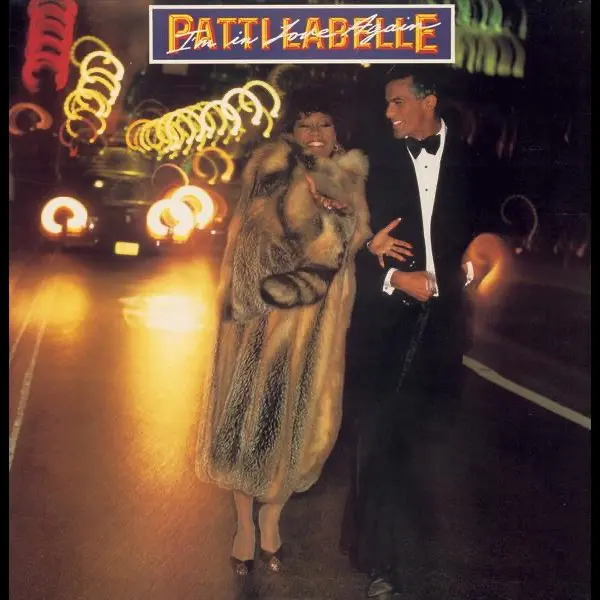 Patti LaBelle released her sixth solo album, I’m in Love Again, on November 25, 1983, on Philadelphia International.
The album blends quiet storm ballads, uptempo R&B tracks, and a jazz standard, placing LaBelle’s voice in arrangements that shift between lush orchestration and synthesizer-driven textures. It became her first major breakthrough as a solo artist.
Bunny Sigler and Kenneth Gamble co-wrote “Love, Need and Want You” while Bunny and his brother James Sigler co-wrote the title track. Dexter Wansel and Cynthia Biggs submitted “If Only You Knew.” Gamble and Huff wrote and produced “I’ll Never, Never Give Up.” Cecil and Linda Womack provided “Love Bankrupt.” James R. Ellison produced “Body Language,” and Joseph Jefferson wrote “When Am I Gonna Find True Love” with Charles Simmons and Richard Roebuck. The album also features a cover of “Lover Man (Oh, Where Can You Be?),” a jazz-pop standard popularized by Billie Holiday.
Side A emphasizes ballads, including the mid-tempo title track, “If Only You Knew,” and “Love, Need and Want You,” featuring layered strings, gentle synths, and LaBelle’s controlled mid-range and full soprano climaxes. Side B offers offers “Body Language” and “I’ll Never, Never Give Up,” both uptempo funk tracks. “Love Bankrupt” leans toward country-soul inflection, while “When Am I Gonna Find True Love” carries a light rhythmic undercurrent.
A1. “I’m in Love Again” (5:38) Strings swell around a steady rhythm as LaBelle carries the lyric with elongated phrasing, building the title refrain into a layered declaration.
A2. “Lover Man (Oh, Where Can You Be?)” (4:05) The jazz standard unfolds in torch-song fashion, LaBelle shaping each line with suspended tones and sudden inflections against a pared-down arrangement.
A3. “Love, Need and Want You” (4:58) A mid-tempo pulse and gentle orchestration allow LaBelle to explore her mid-range, her voice bending around the lyric in measured arcs before opening into sustained phrases.
A4. “If Only You Knew” (4:45) Sparse keyboards and strings anchor LaBelle’s restrained delivery, which gradually swells into high-register power, tracing a steady climb from intimacy to release.
B1. “Body Language” (4:45) A clipped rhythm section drives the pace, brass interjections accenting LaBelle’s pointed vocal shifts between hushed invitation and emphatic command.
B2. “I’ll Never, Never Give Up” (5:20) Propelled by synth accents and an insistent beat, LaBelle stretches her lines with repeated emphasis, reinforcing the lyric’s perseverance through sheer vocal stamina.
B3. “Love Bankrupt” (4:32) With country-soul contours, LaBelle threads plaintive turns through an understated arrangement, her voice moving between fragile restraint and raw outcry.
B4. “When Am I Gonna Find True Love” (4:24) Mid-tempo rhythm and muted funk textures underscore LaBelle’s questioning tone, her phrasing alternating between clipped insistence and long, yearning holds.
LaBelle performs lead and backing vocals throughout, with Cecil Womack and James Sigler on guitar. Bassists and drummers vary per track, with James R. Ellison, Jimmy Williams, Clifford Rudd, and Idress “Skeets” Young contributing rhythm foundations. Keyboards, piano, and synthesizers appear via Leon A. Huff, Dexter Wansel, James Budd Ellison, and others. Saxophones, strings, and horns augment orchestral textures, and backing vocals include Carl Helm, Reggie Workman, Edward “Rev” Batts, and LaBelle herself.
Sessions occurred at Sigma Sound Studios in Philadelphia during 1982–1983 with producers Walter “Bunny” Sigler, Dexter Wansel, Cecil Womack, James Sigler, Joseph B. Jefferson, James R. Ellison, Kenneth Gamble, and Leon A. Huff. Arthur Stoppe, Dirk Devlin, James Gallagher, and Joseph Tarsia engineered the sessions, assisted by John Wisner, Michael Tarsia, Scott McMinn, and Vincent Warsavage.
The album launched the singles “If Only You Knew” (October 1983) and “Love, Need and Want You” (1984). “If Only You Knew” reached No. 1 on the Billboard R&B chart, marking LaBelle’s first R&B chart-topper, and “Love, Need and Want You” reached No. 10.
I’m in Love Again peaked at No. 40 on the US Billboard 200 and No. 4 on the R&B chart.
“New Attitude” | “Stir It Up”
In 1984, Patti LaBelle scored her pop-crossover breakthrough with two songs from the soundtrack to the 1984 action comedy film Beverly Hills Cop.
LaBelle’s contributions combine upbeat dance arrangements with R&B vocal stylings, emphasizing energetic keyboard and synthesizer textures. Both tracks showcase her transition into pop-oriented material and her first singles for MCA Records.
“New Attitude” presents a narrative of personal transformation, framed by bright synthesizers and rhythmic percussion, with backing vocals punctuating the chorus. “Stir It Up” features punchy electronic arrangements and layered vocal interplay, providing an assertive, city-ready energy.
A. “New Attitude” (4:17) Synths and electric guitars drive a brisk pace as LaBelle delivers clipped verses that expand into soaring refrains, matching the lyric’s sense of transformation with vocal ascents. Written by Sharon Robinson, Jon Gilutin, and Bunny Hull.
A. “Stir It Up” (4:25) Percussion-heavy rhythms and bright keyboard accents set an urgent pulse, while LaBelle layers emphatic vocal lines that press forward with unbroken momentum. Written by Dan Sembello and Allee Willis.
Production on “New Attitude” was handled by Rick Chudacoff, Howie Rice, and Peter Burnetta, while Harold Faltermeyer and Keith Forsey produced “Stir It Up.” Sessions occurred at MCA-associated studios in Los Angeles with mastering by Greg Fulginiti.
“New Attitude” reached No. 17 on the US Billboard Hot 100, No. 1 on the Dance Club Songs chart, and No. 3 on the Hot R&B Songs chart. “Stir It Up” reached No. 5 on the Hot R&B Songs and No. 41 on the Billboard Hot 100.
Beverly Hills Cop: Original Motion Picture Soundtrack also features songs by the Pointer Sisters (“Neutron Dance”), Glenn Frey (“The Heat Is On”), Rocki Robbins (“Emergency”), Oingo Boingo frontman Danny Elfman (“Gratitude”), and Faltermeyer’s hi-tech instrumental “Axel F.”
Patti (1985)
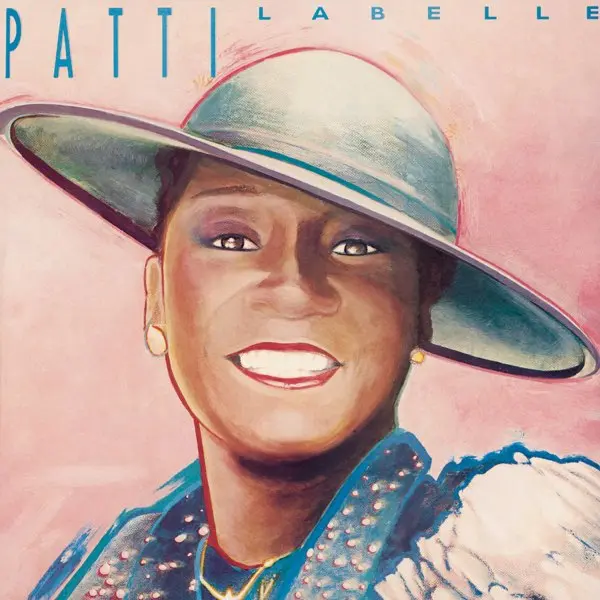 Patti LaBelle released her seventh solo album, Patti, on July 3, 1985, on Philadelphia International.
The record balances late-period Philadelphia International production with ballads, uptempo R&B tracks, and covers, drawing from sessions recorded between 1983 and 1984.
Cecil and Linda Womack co-wrote “Love Symphony” while Cecil collaborated on “Where I Wanna Be” with Kenneth Gamble, who co-wrote “Shy” with Bunny Sigler, who co-wrote “Living Double” with his brother James.
Dexter Wansel produced and co-wrote “I Can’t Forget You” with James Herbert Smith and Terri Wells, while Joseph Jefferson co-wrote and produced “What Can I Do for You” with Charles Simmons and Richard Roebuck. Gamble and Huff composed “If You Don’t Know Me by Now,” first recorded by Harold Melvin & the Blue Notes. The album also includes a rendition of Burton Lane and E.Y. Harburg’s “Look to the Rainbow.”
Ballads such as “If You Don’t Know Me by Now” and “I Can’t Forget You” set LaBelle’s voice against orchestral swells, while “Look to the Rainbow” serves as a theatrical centerpiece. In contrast, uptempo pieces like “Love Symphony,” “Living Double,” and “Shy” lean on synthesizer textures and clipped rhythm sections, with “What Can I Do for You” adding a subtle funk edge. Together the set shifts between orchestral drama, reflective balladry, and electronic-tinged R&B.
A1. “Love Symphony” (3:36)
A2. “Living Double” (4:20)
A3. “Where I Wanna Be” (4:16)
A4. “Shy” (4:26)
B1. “Look to the Rainbow” (4:31)
B2. “I Can’t Forget You” (4:34)
B3. “What Can I Do for You” (4:14)
B4. “If You Don’t Know Me by Now” (8:09)
Sessions occurred at Sigma Sound Studios in Philadelphia with producers Cecil Womack, Reggie Griffin, Kenneth Gamble, Bunny Sigler, Dexter Wansel, and Joseph Jefferson. Engineers included Arthur Stoppe, Joe Tarsia, and Peter Humphreys, with mastering at Frankford/Wayne Recording Labs.
Patti features cover illustration by Diane Best with art direction by Stephen Byram.
Two singles were released: “I Can’t Forget You” and “If You Don’t Know Me by Now,” both charting on the R&B listings. “If You Don’t Know Me by Now” became a lasting part of LaBelle’s concert repertoire.
The album reached No. 72 on the US Billboard 200 and No. 13 on the R&B chart, closing her tenure with Philadelphia International before she signed with MCA Records.
Winner in You
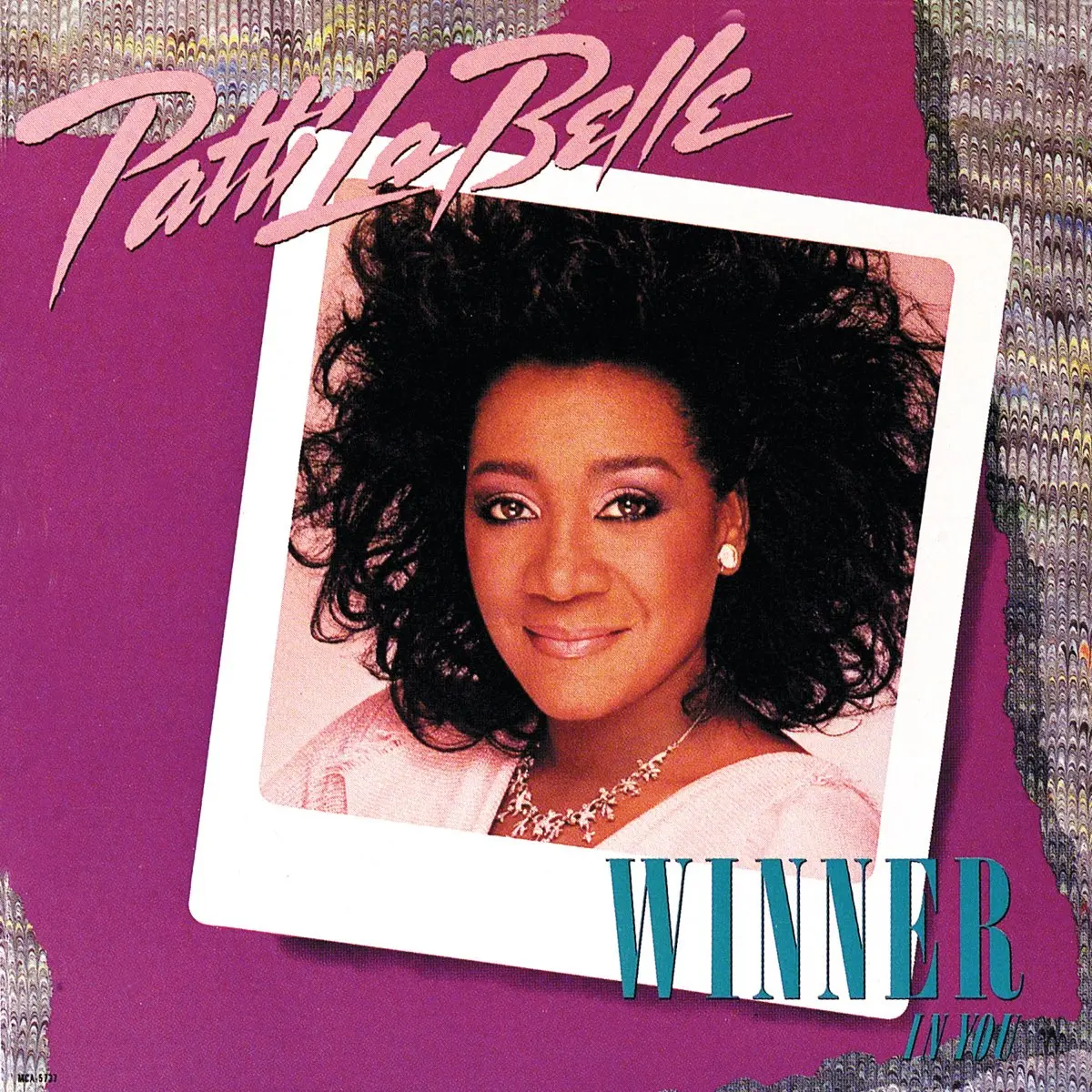 Patti LaBelle released her eighth solo album, Winner in You, on April 28, 1986, on MCA.
The record blends lush ballad arrangements with mid-tempo R&B tracks, balancing acoustic piano textures with layered synthesizers and brass. It marked LaBelle’s only album to top the US album chart and extended her reach to audiences overseas.
Songwriting contributions came from Burt Bacharach and Carole Bayer Sager, who co-wrote and produced “On My Own” and “Sleep With Me Tonight,” while Nickolas Ashford and Valerie Simpson provided “There’s a Winner in You.” Outside writers included Andy Goldmark and Bruce Roberts on “Oh, People,” Alex Brown and Ron Kersey on “Kiss Away the Pain,” and Bill LaBounty on “Twisted.” Guitarist Leo Nocentelli played on and co-wrote “Finally We’re Back Together,” while Ron Kersey both co-wrote and produced “Kiss Away the Pain.”
Several tracks emphasize soaring ballads, such as “On My Own,” which layers acoustic piano with Yamaha DX7 textures while LaBelle and Michael McDonald sing apart yet intertwine during mixing. “Kiss Away the Pain” sets her voice against George Howard’s saxophone, while “Oh, People” carries a call for unity framed by acoustic piano and DX7 tones. In contrast, uptempo numbers like “Something Special (Is Gonna Happen Tonight)” and “Beat My Heart Like a Drum” rely on clipped rhythms, brass stabs, and layered percussion.
A1. “Oh, People” (5:19) – Yamaha DX7
A2. “On My Own” (with Michael McDonald) (4:50) – Yamaha DX7
A3. “Something Special (Is Gonna Happen Tonight)” (4:58)
A4. “Kiss Away the Pain” (4:28) – Yamaha DX7, Yamaha CS-80, Oberheim OB-8
A5. “Twisted” (3:54)
B1. “You’re Mine Tonight” (3:38)
B2. “Finally We’re Back Together” (5:49) – Yamaha DX7
B3. “Beat My Heart Like a Drum” (3:50)
B4. “Sleep With Me Tonight” (3:44) – Yamaha DX7
B5. “There’s a Winner in You” (4:18)
Recording sessions occurred in 1985 and 1986 across Los Angeles, Hollywood, and New York studios. Producers included Richard Perry, Burt Bacharach, Carole Bayer Sager, Howie Rice, Nick Johnson, Ashford & Simpson, and LaBelle’s longtime collaborator James Budd Ellison. Engineers such as Mick Guzauski, Bill Schnee, and Michael Brooks oversaw mixing and tracking.
The album cover features illustration work by Ann Field, with photography by Marc Raboy.
Four singles were issued. “On My Own” topped the US Billboard Hot 100 for three weeks and charted widely overseas. “Oh, People” followed, reaching the US Top 40 and several European charts. “Kiss Away the Pain” entered the R&B Top 20, while “Something Special (Is Gonna Happen Tonight)” also charted on the R&B listings.
Winner in You reached No. 1 on the Billboard 200. It remains LaBelle’s best-selling solo album, certified platinum and estimated at over eight million copies sold worldwide.
Discography:
- Patti LaBelle (1977)
- Tasty (1978)
- It’s Alright With Me (1979)
- Released (1980)
- The Spirit’s in It (1981)
- I’m in Love Again (1983)
- Patti (1985)
- Winner in You (1986)
- Be Yourself (1989)
Sources:
Artist/Album Pages:
Nimbus was a German jazz-rock band that released a 1980 self-titled album. Profile Nimbus emer...
Carol of Harvest was a German symphonic-folk band that released a 1978 self-titled album on Brutka...
Tiger was an English rock band led by veteran session guitarist Big Jim Sullivan. In 1976, they rele...
The Runaways were a teenage, all-female American hard-rock band that released four studio albums bet...
I Signori Della Galassia were an Italian electro/space-funk band behind the 1978 album Qualcosa Si...
Wild Dogs were an American metal band from Portland behind the 1983/84 albums Wild Dogs and Man's...
Griffin was an American Bay Area metal band behind the 1984–86 albums Flight of the Griffin and P...
Les Séguin was a Québécois folk-rock duo comprised of the brother/sister team of Richard Séguin an...
Teru’s Symphonia was a Japanese symphonic-rock band led by ex-Novela guitarist Terutsugu Hirayama,...
Family Circle was an American soul group from Newark that released a 1973 self-titled album on Sk...
The Glove was a side-project of Cure frontman Robert Smith and Siouxsie and the Banshees bassist S...
Jasmine was an American jazz-rock band that made a 1979 album for West 54 Records. They evolved fr...