

The Counts were an American soul-funk band from Detroit that began life as The Fabulous Counts, releasing the album Jan Jan under that name on Cotillion in 1969. After dropping “Fabulous” from the name, the band released the album What’s Up Front That Counts on Westbound in 1971. A string of singles followed under the aliases Bad Smoke and Lunar Funk before the band reverted back to The Counts for two further albums on Aware Records between 1973 and 1975.
Members: Demo Cates, Leroy Emmanuel, Mose Davis, Andreau Gibsont
Background
The Fabulous Counts formed in Detroit, Michigan, in 1964 as a teenage jazz outfit. The founding members were organist Mose Davis, guitarist Leroy Emmanuel, and alto saxophonist Demo Cates. They met through a series of jam sessions held at Davis’ home, which also drew in three neighborhood musicians: conguero Raoul Keith Mangrum, tenor saxophonist Jim White, and drummer Andrew Gibson. Davis, who initially studied classical piano before being drawn to the “screaming organ” of Jimmy Smith, handled the band’s bass parts using his organ’s foot pedals. The group became a popular local act, playing at cabarets, proms, and union halls, and gained acclaim for their instrumental work and as a backing band for other artists.
In 1967, the band met guitarist Leroy Emmanuel at a Wurlitzer Music store downtown, and his diverse playing style—influenced by artists from Wes Montgomery to B.B. King—completed the group’s lineup. The following year, with the addition of Funk Brothers bassist Bob Babbitt, the band recorded a demo for singer Spyder Turner that became his hit version of “Stand By Me.” This success led them to producer Richard “Popcorn” Wylie and DJ Ollie McLaughlin, who was looking for talent for his Moira Records label. They went on to release their instrumental single “Jan, Jan,” which, despite the title referencing Davis’s wife, was inspired by the rhythmic sounds of a sheet metal press at Davis’s job at Chrysler.
“Jan, Jan” became a massive local hit, prompting McLaughlin’s distributor, Atlantic Records, to rush-release a full-length album on its Cotillion imprint in 1969. The band then followed up with two more singles, “Dirty Red” and “Get Down People,” the latter of which became their first chart hit. After leaving Cotillion, they dropped the “Fabulous” from their name and self-produced their next album for Westbound Records.
A West Coast tour with labelmates Funkadelic followed, during which they reportedly outplayed them onstage. However, feeling shortchanged by Westbound, many of the original members departed. The group then relocated to Atlanta and signed with Aware Records. They also began using pseudonyms for some of their singles, such as Bad Smoke and Lunar Funk, as they were still under contract with Westbound.
Jan Jan
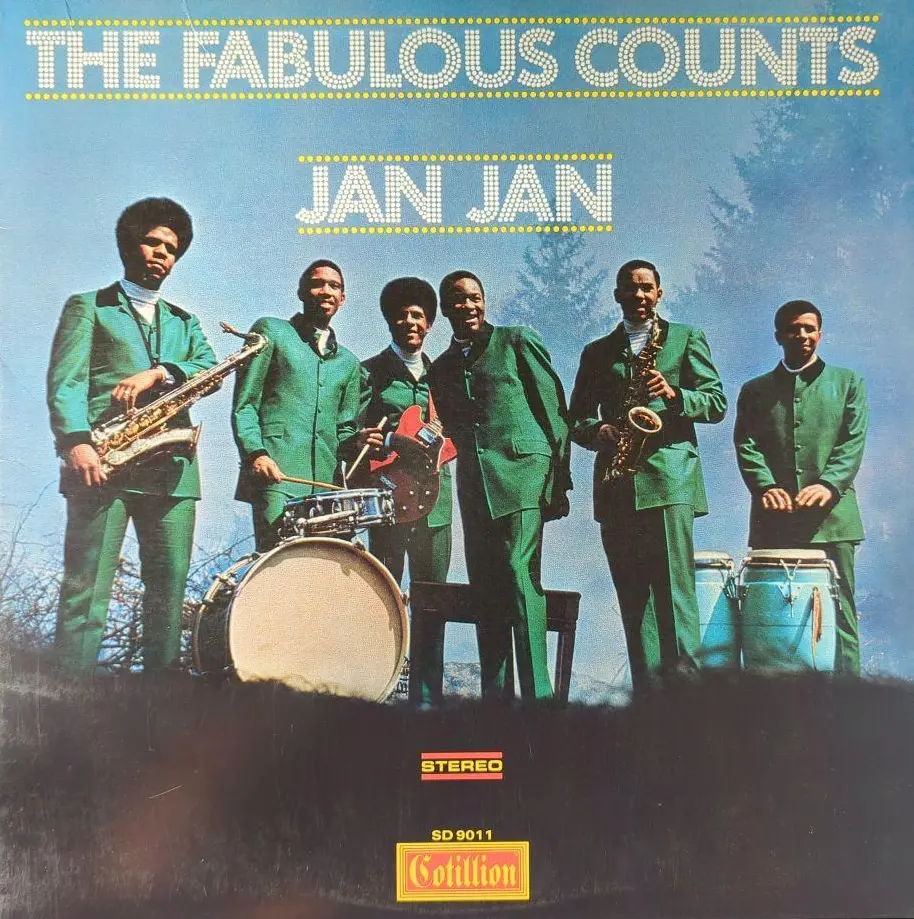 The Fabulous Counts released their debut album, Jan Jan, in 1969 on Cotillion Records.
The album mixes Davis’ Hammond-led funk instrumentals with vocal soul covers, balancing raw Detroit rhythm with lean arrangements. Its release followed the local success of the title track, which became the band’s signature number.
Organist Mose Davis wrote four tracks, including “Jan Jan,” “The Bite,” “Scrambled Eggs,” and “The Other Thing.” Guitarist Leroy Emanuel contributed “Dirty Red.” They also cover songs by James Brown (“It’s a Man’s, Man’s, Man’s World”), Sly Stone & The Family Stone (“Simple Song”), The Beatles (“Hey Jude”), Young-Holt Unlimited (“Soulful Strut’), and Johnnie Taylor (“Who’s Making Love”). Producer Popcorn Wylie provided “Girl From Kenya.”
“Jan Jan” centers on organ riffs and shifting sax lines, while “Dirty Red” emphasizes Emanuel’s sharp-toned guitar lead. “Scrambled Eggs” and “The Bite” stay close to their R&B-jazz roots with compact instrumental pacing. Covers range from elongated takes on “Hey Jude” and Brown’s torch ballad to brisk, rhythmic versions of “Soulful Strut” and “Who’s Making Love.”
A1. “It’s a Man’s, Man’s, Man’s World” (3:59)
A2. “Simple Song” (3:00)
A3. “Hey Jude” (3:35)
A4. “The Bite” (2:47)
A5. “Soulful Strut” (2:28)
B1. “Dirty Red” (2:17)
B2. “Who’s Making Love” (2:20)
B3. “Scrambled Eggs” (2:31)
B4. “The Other Thing” (2:39)
B5. “Girl From Kenya” (2:57)
B6. “Jan Jan” (2:15)
Sessions took place at Tera Shirma Studios in Detroit with producer Richard “Popcorn” Wylie and engineer Russ Terrana.
Jan Jan features cover photography by Ted Robinson and artwork by Haig Adishian.
Cotillion lifted two singles from the album: “Jan Jan” backed with “Girl From Kenya” in November 1968, and “Scrambled Eggs” backed with “Dirty Red” in April 1969. The non-album single “Get Down People” (b/w “Lunar Funk”) appeared in 1970.
What’s Up Front That Counts
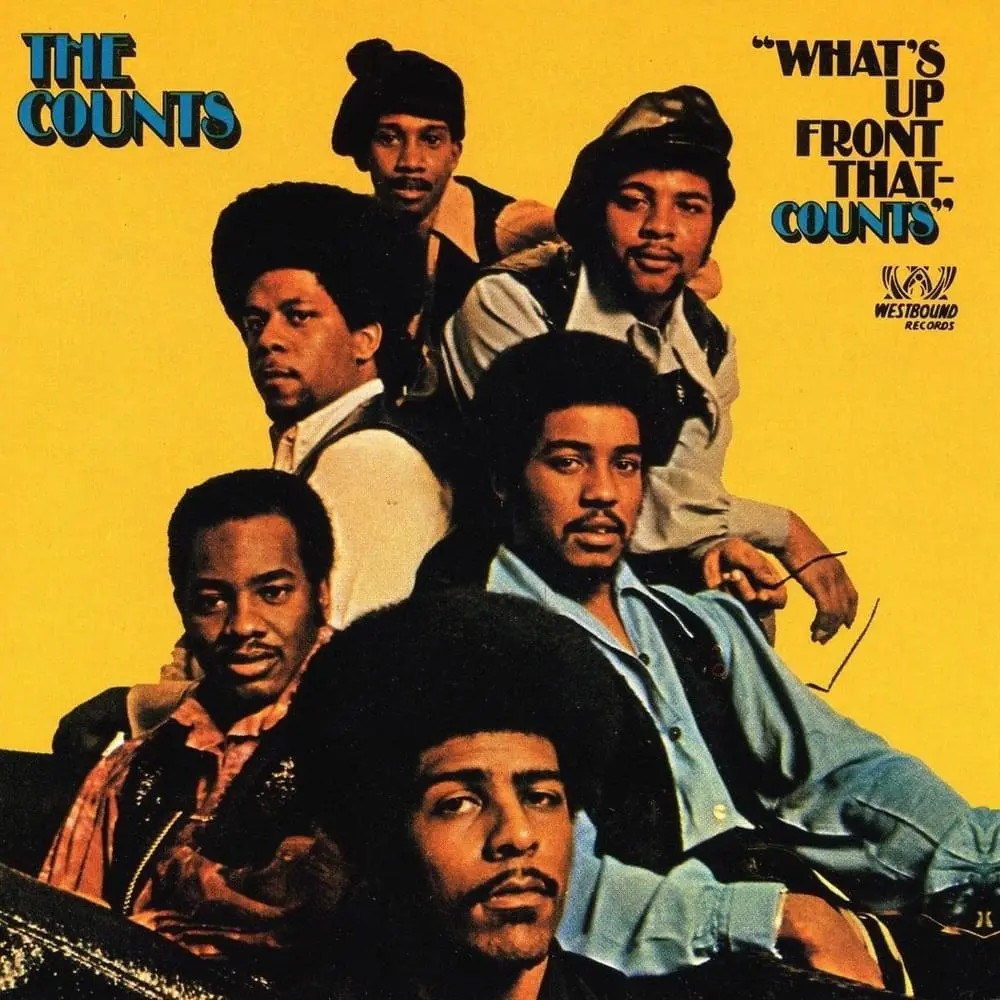 The Counts released their second album, What’s Up Front That Counts, in 1971 on Westbound Records.
The album shifts their focus toward longer, hard-driving funk workouts with a rough Detroit edge, balancing stretched-out jams with compact vocal numbers. It appeared as their first under the shortened name after initial releases as the Fabulous Counts.
Keyboardist Mose Davis wrote three songs (“Rhythm Changes,” “Thinking Single,” and “Bills”). Guitarist Leroy Emanuel contributed “Why Not Start All Over Again.” All five members co-wrote the title track, while saxophonist Demo Cates and vocalist Raoul Keith Mangrum share credits on that piece.
The opening cut, “What’s Up Front That Counts,” runs nearly eight minutes with organ-led riffs, wah-toned guitar, and alternating vocal chants. “Rhythm Changes” rides clipped piano phrases across a taut rhythmic base. Emanuel’s “Why Not Start All Over Again” extends into a six-minute vamp with sharp brass accents, while Davis alternates between brisk, riff-centered funk (“Bills”) and more fluid movements on “Thinking Single” and “Pack of Lies.”
A1. “What’s Up Front That Counts” (7:44)
A2. “Rhythm Changes” (3:07)
A3. “Thinking Single” (3:11)
B1. “Why Not Start All Over Again” (6:44)
B2. “Pack of Lies” (4:10)
B3. “Bills” (2:54)
Sessions occurred under the Counts’ own production with supervision from Bob Scerbo. Engineering and lacquer cutting took place at Mastercraft in Detroit. What’s Up Front That Counts features photography by Joel Brodsky.
Westbound issued “Rhythm Changes” (b/w “Pack of Lies”) as the album’s first single. A second single paired “Why Not Start All Over Again” with “Thinking Single” in November 1971. The album reached No. 35 on the US Black Albums chart.
Later CD pressings added three bonus tracks: “Rhythm Changes Reprise,” “Shortsville,” and “I Know Why.”
1972 Singles
The Counts promoted What’s Up on a West Coast tour with labelmates Funkadelic, during which they reportedly upstaged the headliners. Conflicts with Westbound caused a partial walkout. They used pseudonyms for their next three singles to avoid detection by the label.
As Lunar Funk, they released the January 1972 single “Mr. Penguin (Pt. I)” (b.w “Pt. II”) on Chess Records. In February, their adopted the name Bad Smoke for their second incognito single: “Crawl Y’all (Pt. I)” (b.w “Pt. II”). It appeared on Bell Records, which also issued the April 1972 second Lunar Funk single: “Slip the Drummer One” (b/w “Space Monster”).
The Counts then relocated to Atlanta and signed with Aware Records, a just-launched local label with singers John Edwards and Loleatta Holloway.
Love Sign
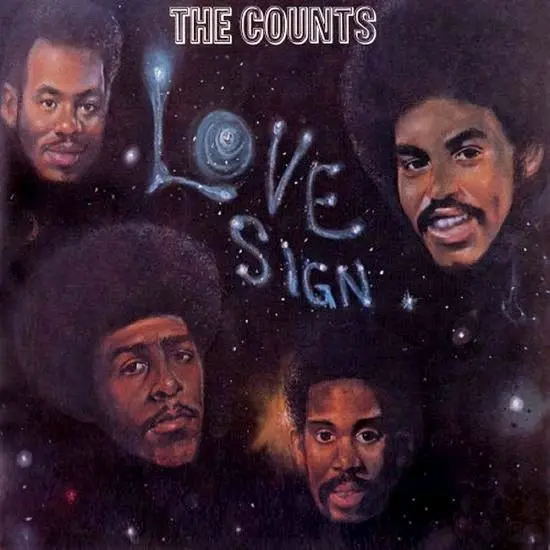 The Counts released their third album, Love Sign, in 1973 on Aware Records.
The album highlights the band’s interplay with stretched-out funk vamps, jazz-inflected solos, and extended instrumental passages. It marks their first release on Aware and their last with drummer Andrew Gibson.
Guitarist Leroy Emmanuel wrote “Love Sign” and “Too Bad (You Don’t Love Me).” Keyboardist Mose Davis contributed “Just You, Just Me” and “Riding High.” Saxophonist Demo Cates provided “Sacrifice,” while all four members share credit on the closing “Counts Medley (Play It Again, Far Out, Counts Blues).”
The title track unfolds across nearly eight minutes of layered riffs and alternating instrumental breaks. “Too Bad (You Don’t Love Me)” compresses the band’s drive into a tighter format with Emmanuel on lead. Davis balances introspective tones on “Just You, Just Me” against the more strident pace of “Riding High.” “Sacrifice” adds compact vocal passages, while “Counts Medley” stitches together three motifs into a nine-minute performance that moves from brisk funk to freer blues stretches.
A1. “Love Sign” (7:52)
A2. “Too Bad (You Don’t Love Me)” (3:35)
A3. “Just You, Just Me” (6:58)
B1. “Riding High” (5:40)
B2. “Sacrifice” (3:20)
B3. “Counts Medley (Play It Again, Far Out, Counts Blues)” (9:35)
Sessions occurred at the Sound Pit in Atlanta with remix engineer Milan Bogdan. The Counts arranged the material themselves with executive production by Emmanuel and Marlin McNichols.
Love Sign features artwork by Overton Lloyd under Wonder Graphics art direction. The inner-gate has an air-brushed depiction of a black Adam and Eve.
Aware lifted “Too Bad” (b/w “Funk”) as a single in April 1974, followed in November by “Funk Pump” (b/w “Sacrifice”). The album reached No. 45 on the US Black Albums chart.
Later CD editions add two bonus tracks: “Funk,” co-written by Emmanuel and Davis, and Davis’ instrumental “The Munchies.”
Drummer Andrew Gibson departed after Love Sign and later surfaced in the band of Detroit jazz clarinetist Wendell Harrison.
Funk Pump
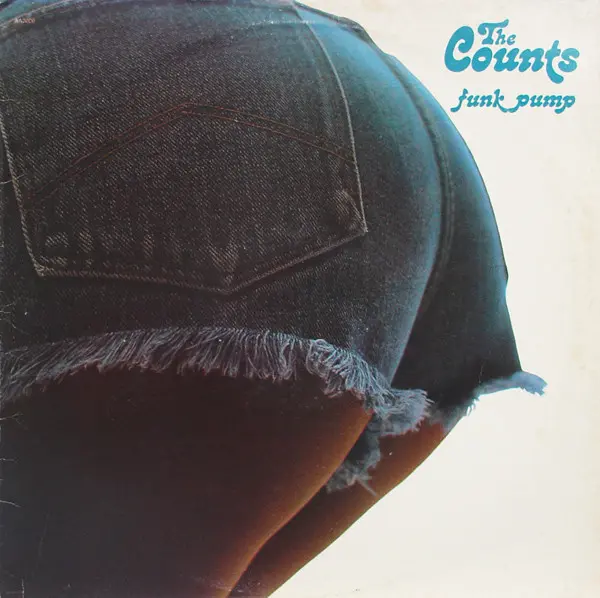 The Counts released their fourth album, Funk Pump, in 1975 on Aware Records.
The album emphasizes streamlined funk structures with concise arrangements, blending vocal-led tracks and extended instrumental showcases. It was their second and final release on Aware.
Keyboardist Mose Davis wrote “Magic Ride,” “Short Cut,” “Since We Said Goodbye,” “Funk Pump,” and “Tecalli.” Guitarist Leroy Emmanuel contributed “Dedicated Man,” “At the Fair,” and “Flies Over Watermelon.” The two co-wrote “I’m the Music.” The only outside composition is Carole King and David Palmer’s “Jazzman.”
The title track drives on clipped organ figures and interlocking rhythm guitar. Davis shapes “Magic Ride” with layered keyboards and measured pace, while “Short Cut” and “Since We Said Goodbye” show his tighter vocal style. Emmanuel takes lead on the brisk “Dedicated Man” and the compact “At the Fair.” “Flies Over Watermelon” explores playful instrumental phrasing, while “Tecalli” closes with a five-minute stretch of atmospheric keys and guitar interplay.
A1. “Jazzman” (3:47)
A2. “Magic Ride” (3:58)
A3. “Short Cut” (3:16)
A4. “Since We Said Goodbye” (3:25)
A5. “Funk Pump” (3:17)
B1. “I’m the Music” (3:44)
B2. “Dedicated Man” (3:18)
B3. “At the Fair” (3:01)
B4. “Flies Over Watermelon” (3:00)
B5. “Tecalli” (5:10)
Sessions occurred at the Sound Pit in Atlanta with producers James McDuffie and William Bell. Glenn Meadows, Milan Bogdan, and Wayne Neuendorf engineered the album, which McDuffie also arranged. Funk Pump features artwork by Ruby Mazur with photography by Suzanne Ayres.
Aware issued “I’m the Music” (b/w “At the Fair”) and “Magic Ride” (b/w “Short Cut”) as singles in 1975. The album reached No. 45 on the US Black Albums chart.
Later CD editions add two bonus tracks: “Chicken Pox” and “Counts Say Goodbye.”
Member Careers Post-Counts
After The Counts disbanded in 1976, its members pursued a variety of solo projects, side gigs, and band work.
Guitarist Leroy Emmanuel became a prolific session musician, touring with artists such as Marvin Gaye, Stevie Wonder, and Al Green. He also worked extensively with Hamilton Bohannon, contributing to numerous albums from 1975 to 1983, including Bohannon, Dance Your Ass Off, and Alive. In 1977, he released the solo single “The Freedom Song (The Ballad of Kunta Kinte)” on Mercury and later released “Your Love Lives Inside Me” in 1981 on Phase II Records Ltd. Emmanuel also played on the 1982 Z.Z. Hill albums Down Home and Bluesmaster. He later co-founded the band the LMT Connection.
Bassist Byron Miller played on The Counts’ final album, Funk Pump, in 1974. He then became an in-demand session musician, working with a wide array of artists from 1975 to 1978. His credits include albums by George Duke (I Love The Blues, She Heard My Cry), Roy Ayers Ubiquity (Mystic Voyage), and Herbie Hancock (Sunlight). Miller also played on albums by Flora Purim, Tom Waits, and Ronnie Foster, among others. His consistent work with George Duke and his involvement in the formation of the Chocolate Jam Co. in 1979 marked a significant phase in his career.
Organist Mose Davis played with the Atlanta funk band the Free Spirits, which backed Tommy Stewart on his 1976 album. In 1978, Davis led the mononymic funk band Moses, which released the album The Coming of Moses. Like Emmanuel, Davis played in Bohannon’s 1975–83 backing band.
Saxophonist Demo Cates relocated to Toronto, Canada, where he embarked on a prolific solo career. He released fourteen studio albums between 1980 and 1991, including Stealing Love, Lady, and Memories of Moments. Cates was also a two-time Juno Award nominee for his R&B/soul recordings. Outside music, he found work as a supporting actor, appearing in films and television shows such as Blues Brothers 2000.
The former members of The Counts continued to collaborate on various projects. In addition to their mutual involvement in Bohannon’s band, Davis and Emmanuel appeared on The Originals‘ 1981 album Yesterday and Today. Emmanuel also backed Cates on his 1981 album Memories of Moments.
Discography:
- Jan Jan (1969 • The Fabulous Counts)
- What’s Up Front That Counts (1971)
- “Crawl Y’all (Part I)” / “Crawl Y’all (Part II)” (1971 • Bad Smoke)
- “Mr. Penguin (Pt. I)” / “Mr. Penguin (Pt. II)” (1972 • Lunar Funk)
- “Slip the Drummer One” / “Space Monster” (1972 • Lunar Funk)
- Love Sign (1973)
- Funk Pump (1975)
Sources:
Artist/Album Pages:
Clarence "Fuzzy" Haskins (June 8, 1941 – March 17, 2023) was an American R&B-funk vocalist an...
Zinc was a soul-funk studio project comprised of American and Italian session musicians assembled ...
Newban was an American soul-funk band that released two albums on the tax-scam Guinness label in 1...
Burton Inc. was an American soul-funk family band that released the 1976 album L.A. Will Make You ...
Vitamin E was an American soul-funk combo from Oakland that released the 1977 Buddah album Sharing...
Wayne Henderson (Sept. 24, 1939 — April 5, 2014) was an American jazz-funk/soul musician and produ...
Moses was an American soul-funk band from Atlanta, Ga., that released the album The Coming of Mose...
Anglo-Saxon Brown was an American soul-funk band that released the 1976 Atlantic album Songs for E...
The Hastings Street Jazz Experience was an American post-bop ensemble from Detroit that recorded t...
Mind & Matter were an American soul-funk band from Minneapolis that released a standalone sing...
Hi-Gloss was an American soul-funk band that released a 1981 self-titled album on Prelude. Membe...
Nile Rodgers (born Sept. 19, 1952) is an American soul-funk musician, songwriter, and producer fro...