

Black Heat was an American soul-funk/psych band that released three albums on Atlantic between 1972 and 1975.
Members: Bradley Owens (vocals, guitar), Johnell Grey (vocals, keyboards), Danny Ray Thompson (Woodwinds), Esco Cromer (drums, vocals), Naamon “Chip” Jones (bass, vocals), Raymond Green (congas, timbales, harmonica), Rodney Edwards (trumpet)
Background
Black Heat formed in New York City in the early 1970s under the leadership of percussionist/vocalist King Raymond Green (congas, timbales, harmonica, vocals). Green, whose early music training included church percussion and local R&B combo work, assembled a group of like-minded musicians for a funk-heavy ensemble.
The core lineup also included keyboardist/vocalist Johnell Gray (organ, vocals), guitarist/vocalist Bradley Owens, bassist/vocalist Naamon “Chip” Jones, drummer/vocalist Esco Cromer, woodwinds specialist Ray Thompson (saxophone/flute), and trumpeter Rodney Edwards. They met via New York club and studio networks—Green had worked with producer/arranger Phil Guilbeau, who introduced the band to Atlantic Records.
After early club shows and studio session work, the group signed to Atlantic and released their debut single “The Jungle – Pt.1” (b/w “The Jungle – Pt.2”) in December 1972.
Black Heat (1972)
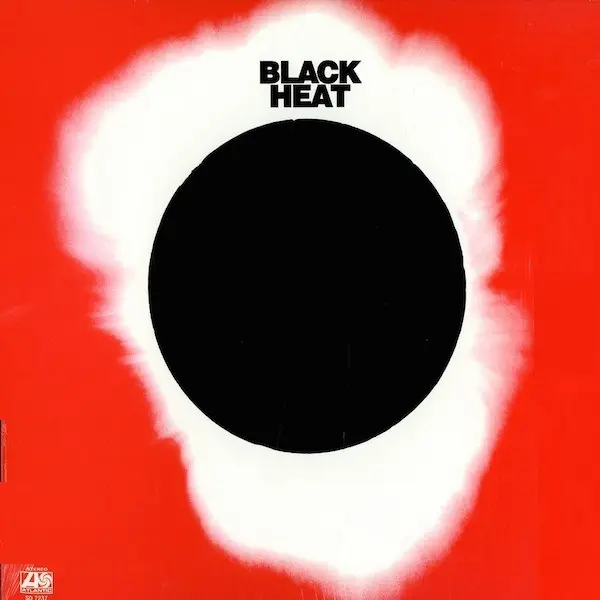 Black Heat released their self-titled debut album in September 1972 on Atlantic Records.
The album presents the group’s foundational style: deep funk rhythms, prominent conga and timbale textures (courtesy of Green), organ-driven grooves from Gray, and a horn and woodwind front accented by Edwards and Thompson. It shows them balancing raw rhythmic drive with soulful vocal elements.
Veteran jazz reedist David “Fathead” Newman guests as the flute and tenor saxophone soloist.
Sessions spanned August 11 through October 21, 1971, at Atlantic Recording Studios in New York with producer Joel Dorn, a veteran radio personality and jazz producer with Sixties credits behind Eddie Harris, Joe Zawinul, Les McCann, Robin Kenyatta, Roland Kirk, Yusef Lateef, and recent soul and rock titles by Eugene McDaniels, Roberta Flack, and the Allman Brothers. Black Heat was engineered by Jimmy Douglass, a recent soundman for Aretha Franklin, Cactus, Gordon Haskell, and Herbie Mann.
Black Heat features a bold eclipse design by Atlantic art director Richard Mantel, a designer on concurrent label releases by Bette Midler, Macondo, Pollution, Ramatam, The New York Rock Ensemble, and earlier Epic Records titles by Attila, Chase, CK Strong, Kaleidoscope, and Tin House.
No Time to Burn
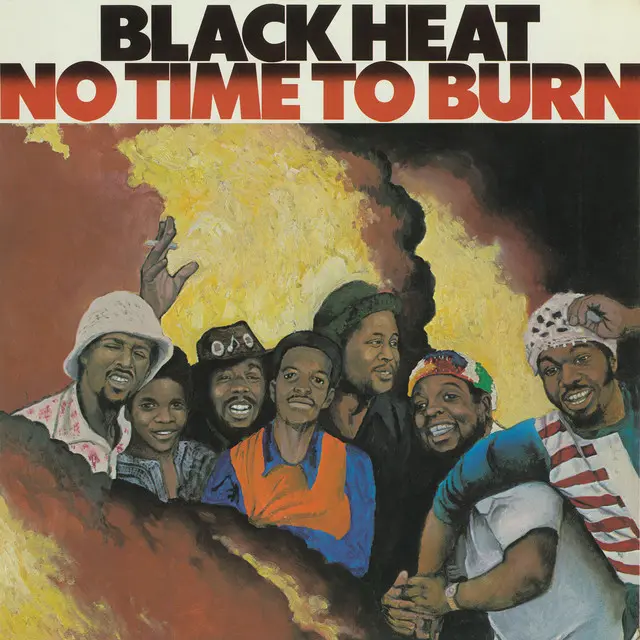 Black Heat released their second album, No Time to Burn, in March 1974 on Atlantic Records.
This set deepens the group’s funk core while expanding into jazz-rock textures and heavier rhythmic layers—organ, flute and sax solos, guitar wah, conga/timbale interplay. Bassist Chip Jones takes a noticeable lead in the rhythm section.
Tracks such as “You Should’ve Listened,” “Check It All Out,” “M & M’s,” and “Times Have Changed” display tight rhythmic modulation, horn-driven passages and shifting pace. “Love the Life You Live” adapts the Kool & the Gang composition to Black Heat’s heavier style.
A1. “No Time to Burn” (3:43) — written by James Duval, Johnell Gray, and Ray Thompson; the title track opens with a taut, percussive funk drive underscored by Esco Cromer’s clipped drumming and Chip Jones’s pulsing bass. Raymond Green delivers urgent vocals about seizing time and purpose, framed by sharp horn bursts and guitar accents that push the pace relentlessly.
A2. “You Should’ve Listened” (5:34) — Duval, Gray, and Thompson; built around thick, syncopated bass and layered percussion, the track delivers a cautionary lyric on ignoring good advice. The interplay between Gray’s clavinet lines and Thompson’s flute creates a tense, circling rhythm that stretches the band’s dynamic range.
A3. “Check It All Out” (6:58) — Duval, Gray, and Thompson; an extended, slowly building composition whose rhythm section locks into a low, hypnotic pace colored by congas and chants. Green’s lead vocal urges awareness and social engagement, while Latin inflections in the percussion and horns lend a ritualistic energy.
A4. “Love the Life You Live” (6:33) — originated as a 1972 track by Kool & the Gang, written by Ronald Bell and Claydes Smith. Black Heat reworks it with heavier rhythm and denser horns, transforming the message of affirmation into a layered call for resilience and creative freedom.
B1. “Super Cool” (3:58) — Duval, Gray, and Thompson; the tempo quickens as guitar distortion and punchy brass lines trade phrases in tight succession. The band balances propulsion with precision, channeling confidence through concise rhythmic interplay.
B2. “M & M’s” (6:53) — Duval, Gray, and Thompson; a sprawling instrumental jam marked by gradually intensifying percussion and Ray Thompson’s searching saxophone. Its structure expands and contracts around rhythmic cues rather than fixed melody, creating a sense of improvisational dialogue among the players.
B3. “Things Change” (5:02) — Duval, Gray, and Thompson; a slower piece emphasizing organ and vocal harmony to express adaptation and endurance. The pacing and phrasing lend the song a reflective weight, contrasting with the album’s denser sections.
B4. “Rapid Fire” (1:33) — Duval, Gray, and Thompson; a brief instrumental interlude centered on clipped horn phrases and abrupt shifts in rhythm, serving as both tension release and prelude to the closer.
B5. “Times Have Changed” (5:39) — Duval, Gray, and Thompson; returns to the album’s social themes with a darker harmonic contour and deliberate pace. The bass line grounds the song’s call for awareness in the face of shifting realities, closing the record on a note of gravity and resolve.
Sessions took place at Atlantic Recording Studios and Regent Sound Studios in New York, once again with producer Joel Dorn and engineer Jimmy Douglass, also credited on 1973/74 albums by the Average White Band, Danny O’Keefe, Donny Hathaway, Hall & Oates, and Margie Joseph.
“No Time to Burn” reached No. 46 on the Billboard R&B singles chart.
Keep On Runnin’
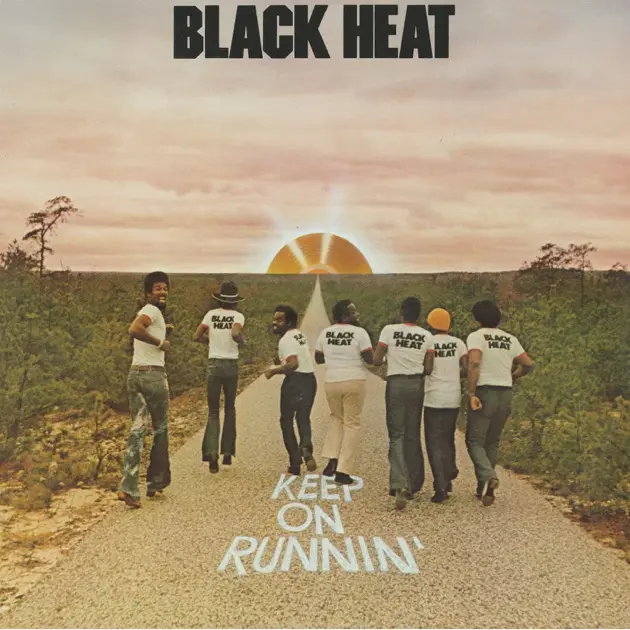 Black Heat released their third and final studio album, Keep On Runnin’, in March 1975 on Atlantic Records.
On this album, the group shifts toward jazz-rock and fusion elements—longer tracks, more solos, interplay between brass and woodwinds, and occasional cover adaptation, while retaining their funk roots.
“Zimba Ku” features clustered rhythm and horn patterns; “Live Together” closes the album with an expansive funk-jam feel. “Drive My Car” repurposes The Beatles’ melody into a funk context.
A1. “Drive My Car” (3:05) — originated as a 1965 track by the Beatles, written by John Lennon and Paul McCartney. Black Heat reinterprets it with assertive horn punctuations, thick bass, and Ray Thompson’s saxophone solo, shifting the original’s pop narrative into a taut funk declaration.
A2. “Zimba Ku” (4:31) — written by James Duval, Johnell Gray, and Ray Thompson; driven by Esco Cromer’s weighty percussion and call-and-response chants, the track builds on a layered horn structure and propulsive bass rhythm that emphasizes unity and endurance through repetition.
A3. “Questions & Conclusions” (4:09) — Duval, Gray, and Thompson; structured around clipped guitar phrases and staggered rhythmic pacing, the lyric frames doubt and self-reflection through terse vocal exchanges, maintaining intensity without overt declaration.
A4. “Something Extra” (3:52) — Duval, Gray, and Thompson; a mid-tempo piece balancing brass and keyboard interplay, its refrain evokes perseverance through restraint rather than volume, extending the ensemble’s sense of collective focus.
A5. “Feel Like a Child” (3:48) — Duval, Gray, and Thompson; unfolds slowly over minor-key progressions and sustained organ tones, its lyric reflecting on vulnerability and renewal. The track’s contoured bass lines and subtle harmonic shifts lend it a reflective cadence.
B1. “Last Dance” (2:38) — Duval, Gray, and Thompson; concise and rhythmically sharp, the arrangement alternates between syncopated horn bursts and interlocking percussion patterns, suggesting both motion and closure.
B2. “Baby You’ll See” (4:05) — Duval, Gray, and Thompson; a restrained soul ballad emphasizing close vocal phrasing and sustained harmonic texture, its message centers on reassurance and emotional clarity.
B3. “Love” (3:16) — Duval, Gray, and Thompson; anchored by dense horn voicings and steady percussion, the song articulates affection through repetition and balance rather than sentimentality.
B4. “Prince Duval” (4:20) — Duval, Gray, and Thompson; introduces jazz inflection through interwoven guitar and horn exchanges, extending the harmonic palette while maintaining rhythmic precision.
B5. “Live Together” (2:49) — Duval, Gray, and Thompson; concludes the album with a collective vocal refrain advocating solidarity. The ensemble sustains momentum through clipped instrumental dialogue, closing with unity rather than emphasis.
Sessions occurred at Atlantic Recording Studios, New York City, with strings tracked at Sound City, Los Angeles. Jimmy Douglass produced the album in sequence with 1975/76 titles by Ace Spectrum, Billy Cobham, Brecker Brothers, Narada Michael Walden, and Willis Jackson.
Postlude
After Keep On Runnin’, Black Heat did not release further studio albums. Their single “No Time to Burn” (1974) remains their best-known track. In 2001 Label M reissued the first two albums under the title Declassified Grooves. The band reunited briefly at a memorial concert for Joel Dorn after more than three decades apart. Over time their early albums have become collector’s items among funk and rare-groove enthusiasts.
Discography:
- Black Heat (1972)
- No Time to Burn (1974)
- Keep On Runnin’ (1975)
Sources:
Artist/Album Pages:
Ingram was an American soul-funk sextet that consisted of a namesake brother/sister musical clan f...
Niteflyte was an American soul-funk duo that released two albums between 1979 and 1981 on Ariola. ...
Black Ice was an American soul-funk band from Los Angeles that released two albums between 1976 an...
Moses was an American soul-funk band from Atlanta, Ga., that released the album The Coming of Mose...
The Ebony Rhythm Funk Campaign was an American funk band that released the album Reach for It on U...
Atlantic Starr was an American soul-funk band that released six albums between 1978 and 1985 on A&...
Wee was an American soul-funk band from Columbus, Ohio, that issued a pair of singles and the 1977...
RAMP was an American soul-funk band from Cincinnati that released the album Come Into Knowledge on...
Raw Soul Express was an American soul-funk band from Miami that released a self-titled album on T....
The Final Solution was an American soul-funk band from Chicago that recorded music for Brotherman,...
Kashmere Stage Band (KSB) was an American funk ensemble comprised of students from Kashmere High S...
Sky was an American soul-funk band that released a 1979 self-titled album on EMI. They reunited si...