

Dalbello — aka Lisa Dal Bello (born May 22, 1959) — is a Canadian vocalist and performer who released two albums on MCA and Talisman in 1977 and 1978, followed by three albums on Capitol between 1981 and 1987. Her first three albums bear her full name, after which she adopted the more recognized “Dalbello” moniker.
Background
Lisa Dal Bello was born on May 22, 1959, in Weston, Ontario, to parents of Italian and British descent. Raised in Toronto and later Vaughan, she began writing songs and playing guitar by age eleven, performing at local venues like the Mariposa Folk Festival and Toronto’s Fiddlers’ Green club.
At thirteen, she entered Summer Sounds ’71, a government-backed music outreach program that placed her in a summer-long touring troupe of young musicians across southern Ontario. One year later, she appeared on a church-sponsored record performing “Blowin’ in the Wind” and “Amazing Grace,” and at fourteen, she cut her first original material for CBC Radio: a four-song EP produced by Jack Budgell featuring her own compositions, including “Mourning in the Morning” and “Come Sun Days.”
Dal Bello continued recording with CBC through 1975, contributing to a Christmas compilation alongside Roy Kenner and Dianne Brooks. In 1976, she signed with MCA Records and relocated to Los Angeles, where she recorded her self-titled debut album with David Foster, a serial keyboardist (Skylark, Attitudes) entering production.
Lisa Dal Bello
 Lisa Dal Bello released her self-titled debut album in 1977 on MCA.
The album blends stylized rock arrangements with ornate pop voicings under the direction of producer David Foster, who contributes Fender Rhodes, Clavinet, and acoustic piano alongside co-writing duties on three tracks. Guitarists Jay Graydon, Steve Lukather, and Larry Carlton exchange melodic figures across shifting textures, with interjections from synthesizer players Richard Baker and David Paich.
Tom Scott adds a saxophone solo on “Stay With Me,” while the Seawind horns accent multiple tracks alongside layered backing vocals from Bill Champlin, Patrice Rushen, and others.
A1. “Look at Me (Millions of People)” (3:36)
A2. “(Don’t Want to) Stand in Your Way” (3:47) – Dal Bello, Kenner
A3. “My Mind’s Made Up” (3:59) – Dal Bello, Foster
A4. “Snow White” (3:02)
A5. “Touch Me” (4:48)
B1. “Talk It Over (Even Though My Body’s Cold)” (4:12)
B2. “Stay with Me” (3:57)
B3. “Day Dream” (3:42) – Dal Bello, Foster
B4. “Milk & Honey” (3:18) – Dal Bello, Foster
B5. “Everything Money Can Buy” (4:53)
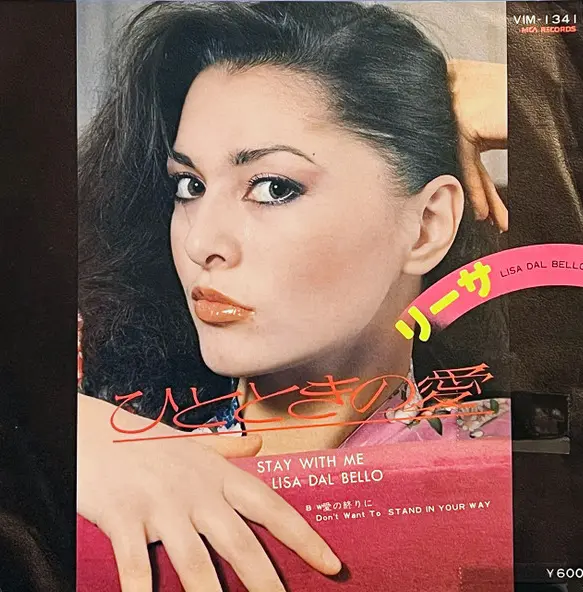 Sessions took place at United Western and Producers Workshop in Hollywood, and at Sound City in Van Nuys. Foster coordinated rhythm arrangements and oversaw tracking with a core group of Los Angeles players, including members of Toto in their pre-debut period. During these sessions, Dal Bello recorded an additional Graydon–Garfield composition, “You’re My Day,” later issued on Graydon’s Past to Present – The 70s (2006).
The album earned Dal Bello the 1978 Juno Award for Most Promising Female Vocalist. MCA issued two singles: “(Don’t Want to) Stand in Your Way” (b/w “Day Dream”) and “My Mind’s Made Up” (b/w “Snow White”). MCA dropped her from the roster shortly after release due to high production costs.
Pretty Girls
 Lisa Dal Bello released her second album, Pretty Girls, in 1979 on Talisman.
The album frames her pop–soul foundation in layered West Coast studio textures, shaped by co-producers Al Ciner and Bob Monaco. Synthesizer lines by Michael Boddicker and Jay Gruska intersect with piano voicings by Fred Mandel and Tom Hensley, while guitarists Steve Lukather and Richie Zito alternate lead phrases across dense harmonic settings. Steve Porcaro handles synthesizer programming. Backing vocalists include Bill Champlin, Roy Kenner, and Michael McDonald.
A1. “Pretty Girls” (3:00)
A2. “Still in Love” (3:35) – Dalbello, Jollitte
A3. “Hollywood” (3:40)
A4. “(Is There) Anything I Can Do” (3:50)
A5. “Talisman” (4:30) – Dalbello, Miquelon, Lausanne
B1. “Make Up Your Mind Paula” (3:08)
B2. “Miracle Maker” (3:40) – Dalbello, Keen
B3. “Lost Without Your Love” (3:52) – Dalbello, Lausanne
B4. “Dreams (Are for Lovers)” (3:48)
B5. “Make It Last” (3:56)
Dal Bello recorded the album independently after parting ways with MCA, working between Los Angeles and Toronto with an expanded team of session players. Mike Porcaro returned on bass, joined by Ron Garant and Dennis Belfield. Capitol Records picked up the album for distribution after its initial release on Talisman.
Talisman issued “Pretty Girls” (b/w “Miracle Maker”) in 1978 and followed with “Still In Love” (b/w “Hollywood”) in February 1979. Dal Bello earned a 1979 Juno nomination for Female Vocalist of the Year.
Melissa Manchester recorded “Pretty Girls” later in 1979 and took it into the US Top 40, giving Dalbello her first international songwriting breakthrough.
Between albums, Dal Bello provided vocal backing to Boz Scaggs (“Miss Sun”) and Chris De Burgh (“Some Things Never Change”).
Drastic Measures
 Lisa Dal Bello released her third album, Drastic Measures, in 1981 on Capitol.
The album explores theatrical and rhythmically layered pop-rock forms with tight ensemble interplay. Guitarists John Goodsall (Brand X) and Garry Nichol alternate jagged accents and melodic runs, while keyboardist Tom Dahl and Prophet 10 operator Paul Delph stack electronic voicings across the arrangements. Bruce Robb inserts a Hammond solo on “It’s Over,” and Ben Mink contributes an electric violin lead to “Just Like You,” recorded during sessions split between Los Angeles and Toronto.
Dal Bello shares writing credits on select tracks with Bryan Adams and her mother Yolanda Dal Bello, marking their only documented studio collaborations.
A1. “Never Get to Heaven” (3:00) – Dal Bello, Dal Bello, Adams
A2. “You Could Be Good for Me” (3:21) – Dal Bello, Adams
A3. “Just Like You” (3:22) – Dal Bello, Thorney
A4. “Princess Telephone” (3:27) – Dal Bello, Dal Bello, Thorney
A5. “She Wants to Know” (3:34) – Dal Bello, Adams
B1. “What Your Mama Don’t Know” (2:52) – Dal Bello, Thorney
B2. “It’s Over” (3:25) – Dal Bello, Thorney
B3. “Bad Timing” (3:04) – Dal Bello, Nichol, Thorney
B4. “Dr. Noble” (3:33) – Dal Bello, Dal Bello, Thorney
B5. “Stereo Madness” (4:39) – Dal Bello, Nichol, Thorney
Bob Esty produced the main sessions at Cherokee Studios in Los Angeles, while Jim Vallance handled basic tracking for “Just Like You,” “Dr. Noble,” and “Stereo Madness” at Toronto’s Manta Sound.
Capitol issued “She Wants to Know” as a March 1981 single (b/w “Bad Timing”), followed in September with “Never Get to Heaven” (b/w “Dr. Noble”) and the January 1982 single “Just Like You” (b/w “What Your Mama Don’t Know”).
Whomanfoursays
 Dalbello released her fourth album, Whomanfoursays, in 1984 on Capitol.
The album adopts a sparse yet layered art-pop style shaped entirely by the interaction between Dalbello and co-producer Mick Ronson, who multi-tasks on guitar, bass, and keyboards. Dalbello alternates between piano, synthesizer, and drum parts, building compact, percussive structures that frame Ronson’s textured guitar lines and processed voicings. Backing vocals by Carole Pope accent “Animal,” while John Forbes contributes sampled textures on Fairlight CMI.
 A1. “Gonna Get Close to You” (4:29)
A2. “Devious Nature” (4:01)
A3. “She Pretends” (4:31)
A4. “Wait for an Answer” (5:38)
B1. “Animal” (4:01)
B2. “Cardinal Sin” (4:06)
B3. “Guilty by Association” (3:34)
B4. “Path of Least Resistance” (5:56)
B5. “Target (My Eyes Are Aimed at You)” (6:03)
 Dalbello wrote and arranged the entire album, recorded at Phase One Studios in Toronto using minimal outside assistance. She and Ronson co-produced and handled all instruments, with engineering by Lenny Derose and final mastering by George Marino.
Capitol issued two singles: “Gonna Get Close to You” (b/w “Guilty by Association”) in July 1984, followed by in October by “Animal” (b/w “Target (My Eyes Are Aimed at You)”).
Whomanfoursays became a source of covers for Queensrÿche (“Gonna Get Close to You”), Heart (“Wait for an Answer”), and Heavens Gate (“Animal”).
“Black on Black”
In 1985, Dalbello partook in Northern Lights, a Canadian all-star charitable project for Ethiopian famine relief, inspired by Band Aid and USA for Africa. The single “Tears Are Not Enough” features lead lines by Neil Young, Joni Mitchell, Anne Murray, Gordon Lightfoot, Dan Hill, Burton Cummings, Geddy Lee, Corey Hart, and Bryan Adams. Loverboy frontman Mike Reno sings the middle-eight. Late in the song, Dalbello trades lines with Zappacosta.
 Later that year, Capitol issued “Black on Black” backed with “Baby Doll,” previews of Dalbello’s fifth album in-progress. The single appeared only in Germany and Benelux as the project stalled over disputes with her label and management.
Elsewhere, Dalbello demoed “I Do What I Do,” written by Duran Duran bassist John Taylor and his Power Station bandmate Michael Des Barres for the sountrack to 9½ Weeks, an American erotic romantic drama directed by Adrian Lyne (Flashdance), starring Mickey Rourke and Kim Basinger. Dalbello ultimately bulked at the sensual lines in “I Do What I Do,” which Taylor performed himself as his first solo single. “Black on Black,” in turn, became her contribution to the 9½ Weeks soundtrack, which also featured songs by Devo, Eurythmics, Luba, Bryan Ferry, Corey Hart, Joe Cocker, and ex-Police drummer Stewart Copeland.
Concurrently, Dalbello and Copeland appeared as guests on The Formula, the 1986 Island release by producer Rupert Hine under the band moniker Thinkman.
Meanwhile, Dalbello’s next album took eighteen months to complete due to label politics. Capitol rejected her first batch of self-produced demos, which she resubmitted under the pseudonym “Bill Da Salleo”—an anagram of her name—which the label enthusiastically approved, unaware of the ruse. She continued work on the album in secret nighttime sessions, eventually revealing Da Salleo’s “death” to avoid scrutiny. When exposed, her Canadian A&R rep Deane Cameron supported her move, but her manager pushed to replace half the album.
She
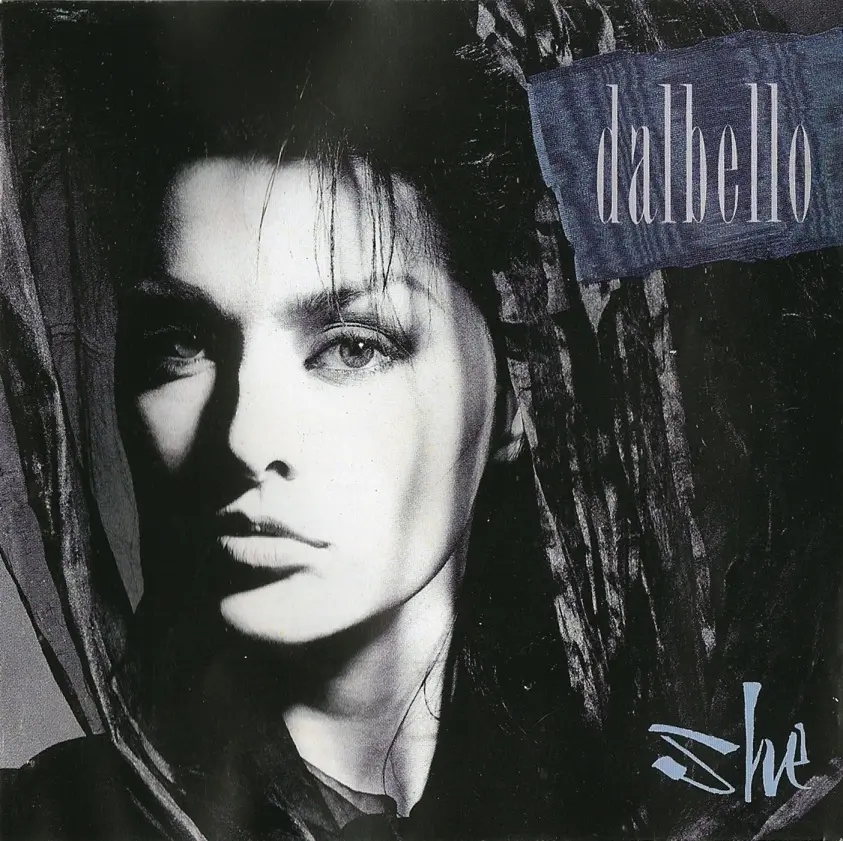 Dalbello released her fifth album, She, in 1987 on Capitol. It features re-recorded versions of “Black on Black” and “Baby Doll” along with her biggest hit, “Tango.”
She produced and arranged the album herself, layering Fairlight samples and synth textures with acoustic and electric instrumentation across a dense, atmospheric sound.
Guitarist Asher Horowitz and keyboardist Scott Humphrey exchange fragmented motifs and electronic patterns, while David Gilmour closes the album with sustained lead phrases on “Immaculate Eyes.” Dalbello plays bass, drums, Hammond organ, and keyboards throughout, working alongside Chapman stick player Fergus Marsh and guest bassist Bernard Edwards on “Tango.”
A1. “Black on Black” (4:23) – distinguished from the 1985 original by Dalbello’s Hammond B3 organ.
A2. “Baby Doll” (4:01)
A3. “Talk to Me” (3:56)
A4. “Danger Danger” (4:33)
A5. “Intimate Secrets” (3:29)
B1. “Tango” (4:05)
B2. “Body and Soul” (4:16) – Dalbello, Horowitz
B3. “Imagination” (3:28)
B4. “Why Stand Alone” (4:04)
B5. “Immaculate Eyes” (4:35)
 Dalbello recorded She at Phase One Studios in Toronto with engineer Lenny Derose, a concurrent soundman for Lee Aaron and Strange Advance.
EMI issued lifted “Tango” (b/w “Why Stand Alone”) followed in 1988 with “Talk to Me” (b/w “Imagination”).
In 1993, Heart recorded an altered “Black on Black” titled “Black on Black II,” co-credited to the Wilson sisters and Dalbello, who sings backing vocals on its parent album, Desire Walks On.
Discography:
- Lisa Dal Bello (1977 • Lisa Dal Bello)
- Pretty Girls (1978 • Lisa Dal Bello)
- Drastic Measures (1981 • Lisa Dal Bello)
- Whomanfoursays (1984)
- She (1987)
- whore (1996)
Sources:
- Discogs: Dalbello
- RYM: Dalbello
- 45cat: Dalbello
- MuseumOfCanadianMusic: Dalbello
- MusicBrainz: Dalbello
Artist/Album Pages:
Didier Lockwood (Feb. 11, 1956 — Feb. 18, 2018) was a French violinist with Seventies stints in Ma...
Masabumi Kikuchi — 菊地 雅章 (Oct. 19, 1939 — July 6, 2015) — was a Japanese jazz pianist and composer...
Fehlfarben (False Colors) are a German Neue Deutsche Welle band that made the 1980/81 albums Monarc...
RAH Band was an English space-funk studio project led by producer, composer, and arranger Richard ...
The Police were an English rock trio that released five albums between 1978 and 1983 on A&M. The...
Nara Leão (January 19, 1942 — June 7, 1989) was a Brazilian singer and actress who carried Rio bos...
Mike Batt (Feb. 6, 1949) is an English composer and arranger from Southampton who conducted a stri...
Kenso was a Japanese symphonic/jazz-rock band that released three studio albums on Pam and Nexus b...
Dial M was an American new wave/synthpop duo behind a 1983 self-titled album on D&D Records. ...
Phileas Fogg was a French avant-jazz/rock band behind the 1986 Sonart album Coma Depasse. Back...
Eskaton was a French Zeuhl/chamber-rock band that self-released three albums and a standalone sing...
Nirgal Vallis was a Mexican symphonic-rock band that partook in a 1984 split album with electronic...